Choosing a factory for one leather wallet is relatively straightforward. Choosing a factory for twelve wallets, four bags, three belts, two card holders, several colors, multiple packaging versions, and different delivery destinations is a different kind of decision. The challenge is no longer limited to whether the factory can stitch leather neatly. You are evaluating whether its people, documents, materials, equipment, suppliers, quality procedures, and communication systems can keep an entire product collection under control.
The right leather goods manufacturer for a multi-SKU project should demonstrate proven leather craftsmanship, broad product capability, SKU-level specifications, controlled material sourcing, structured sampling, realistic production planning, multi-stage quality inspection, accurate packaging, and transparent delivery management. The supplier should be able to explain how every approved sample, BOM, material batch, logo file, barcode, carton, and revision will remain traceable from development through repeat production.
That answer sounds obvious, but many costly sourcing failures begin with a factory that produced one impressive sample. The trouble appears later: one color uses the wrong edge paint, one wallet receives an outdated logo, one bag misses its retail barcode, and one delayed SKU prevents the complete collection from launching. The best time to discover those weaknesses is before the purchase order is signed.
What Makes Multi-SKU Leather Projects Complex?
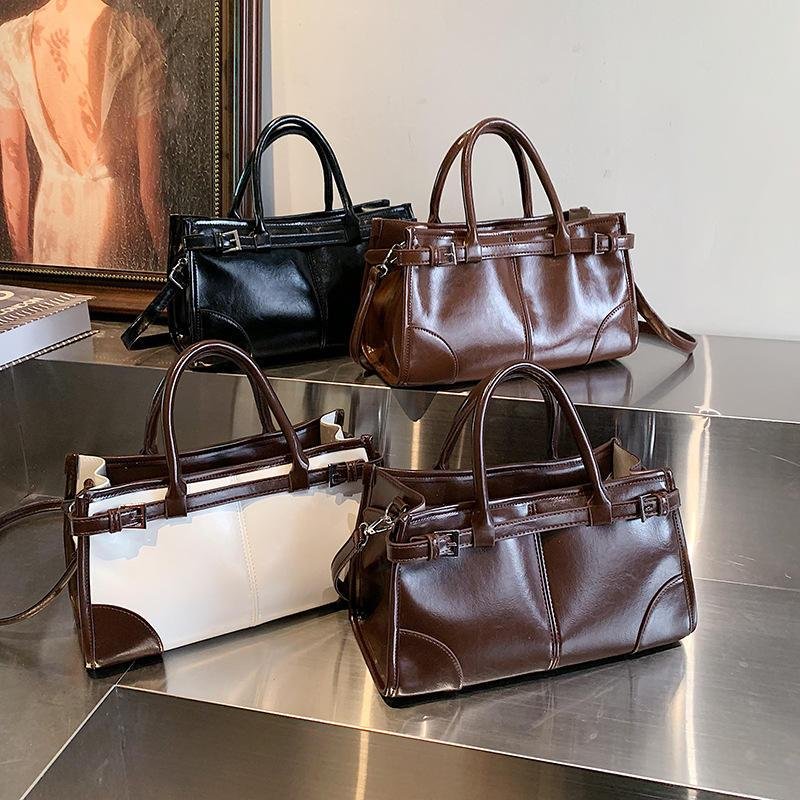
A multi-SKU leather project becomes complex when different products, colors, sizes, materials, hardware finishes, logos, packaging formats, or markets require separate production instructions. Complexity is driven less by total quantity than by the number of combinations the manufacturer must control. A reliable factory must identify every SKU clearly and manage both shared and SKU-specific components without mixing versions.
What Counts as a SKU?
A stock-keeping unit is a separately identifiable product configuration. In leather goods manufacturing, changing one meaningful commercial or production attribute can create another SKU. A black full-grain leather tote and a brown version may share the same pattern, but they require different leather batches and color records. A wallet sold in the United States and the same wallet sold in France may become separate SKUs when they use different packaging languages, barcodes, care labels, or retail prices.
SKU count therefore grows faster than many product teams expect. A collection with four styles, three colors, and two market-specific packaging versions already creates 24 combinations before size, lining, or hardware options are considered.
| SKU Variable | Example Options | Control Required |
|---|---|---|
| Product style | Tote, wallet, belt, card holder | Pattern, BOM, workmanship |
| Leather color | Black, tan, burgundy | Hide batch and color approval |
| Hardware finish | Gold, silver, gunmetal | Plating sample and supplier code |
| Logo process | Debossed, foil stamped, metal logo | Artwork and placement file |
| Packaging | Retail box, dust bag, polybag | Packing instruction and barcode |
| Market version | US, EU, UK | Label language and compliance file |
The first test of a manufacturer is simple: ask it to convert your assortment into a complete SKU matrix. If the team treats the whole order as one product with several “small differences,” production errors are already being invited.
Which Risks Grow With More SKUs?
Every additional SKU creates more opportunities for misinterpretation, material variation, scheduling conflict, and packing errors. A single-product order may have one pattern, one leather, one logo, and one approved sample. A 30-SKU project may contain dozens of controlled files and hundreds of component relationships. The difficulty is not merely storing those files; it is making sure the correct version reaches purchasing, cutting, logo processing, sewing, inspection, and packing.
Typical risks include:
- Purchasing the correct leather color but the wrong thickness.
- Applying gold hardware to a SKU approved with light-gold hardware.
- Cutting bulk production from an earlier pattern revision.
- Using one edge-paint formula across products that require different shades.
- Packing the correct product in the wrong retail box.
- Applying the wrong barcode to an otherwise acceptable item.
- Completing simple SKUs early while complex styles delay the full shipment.
- Reordering materials without checking whether the new batch matches the approved standard.
The effect is cumulative. A two-percent error rate may appear manageable in one SKU, but across 40 SKUs it can create a large number of mismatched units, incomplete assortments, rework tasks, or warehouse discrepancies. This is why the supplier must manage risk at the SKU level rather than relying only on a final order-level inspection.
How Do Shared Components Affect Complexity?
Shared components can reduce costs and simplify sourcing, but only when they are deliberately standardized. Several bags may use the same leather, lining, zipper tape, buckle finish, thread color, or logo plate. Consolidating these items can improve purchasing volume, reduce minimum material quantities, and create a more consistent visual identity across the collection. However, an assumed shared component can become a hidden problem when one SKU actually requires a different thickness, width, finish, or performance level.
A useful component plan divides every item into three categories:
- **Fully shared components:**identical specification and supplier code across all listed SKUs.
- **Related components:**visually similar but different in size, thickness, coating, or construction.
- **SKU-exclusive components:**used only for one product or market version.
For example, a 20 mm buckle and a 25 mm buckle may have the same shape and plating, but they are not interchangeable. Likewise, two black leathers may look close in an office but behave differently during skiving, folding, edge painting, or embossing.
A capable manufacturer should produce a shared-component map before purchasing. This allows the project team to consolidate genuine common parts while protecting the distinctions that affect fit, appearance, durability, or packaging accuracy.
Which Factory Capabilities Matter Most?
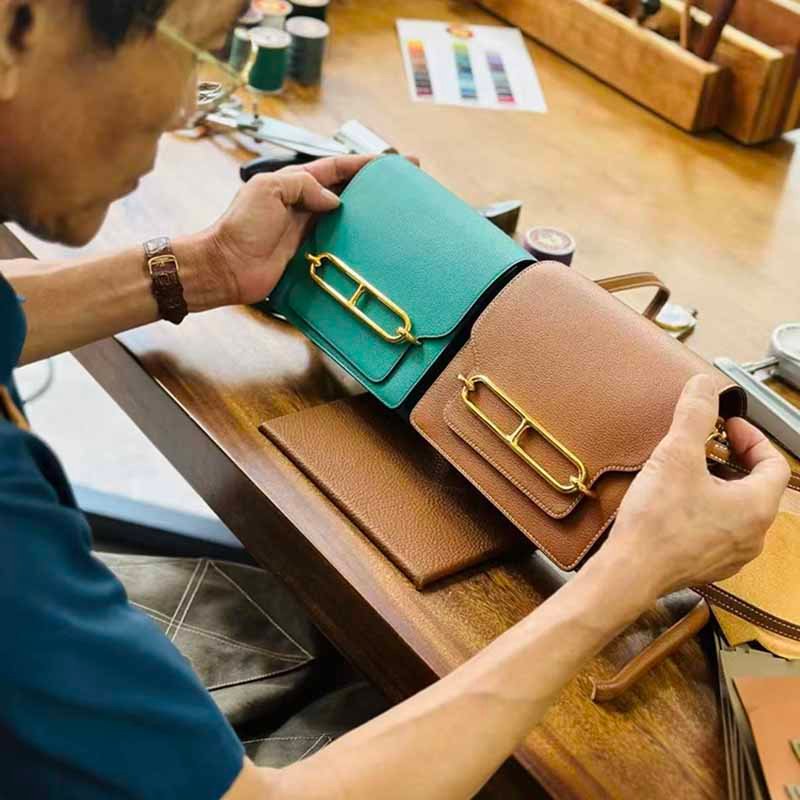
The most important capabilities are relevant product experience, leather-material knowledge, pattern and sample development, controlled production capacity, quality inspection, packaging management, and transparent subcontracting. A factory should prove that it can manufacture the complete assortment—not merely one easy product—and show who will control every SKU when different workshops, production lines, or specialist processes are involved.
Does the Factory Make Multiple Product Types?
A factory that produces excellent handbags is not automatically qualified to manufacture wallets, belts, card holders, luggage tags, watch straps, and rigid leather cases. These categories share leather as a material, but their production methods can differ considerably. A handbag may depend on structural reinforcement, lining assembly, handles, zippers, and three-dimensional shaping. A slim wallet may demand precise skiving, folding, card-slot alignment, edge finishing, and tight thickness control.
Ask the manufacturer to show recent, technically similar products rather than a broad showroom of unrelated samples. The evidence should match the construction challenges in your collection:
- Turned-edge or raw-edge construction.
- Painted edges or folded edges.
- Structured, semi-structured, or soft body shapes.
- Machine stitching or selected hand-finishing operations.
- Complex card slots and interior compartments.
- Adjustable belts with buckle installation.
- Metal logos, embossing, debossing, or foil stamping.
- Leather combined with fabric, microfiber, foam, board, or molded parts.
You should also identify which categories are produced internally and which require specialist partners. Using qualified partners is not necessarily a weakness. The risk comes from undisclosed outsourcing without unified samples, material standards, production instructions, or quality responsibility. The manufacturer should remain accountable for the entire collection even when specialist processes are distributed.
Are Its Leather Skills Proven?
Leather is not an ordinary roll material. Natural variation in grain, shade, scars, softness, stretch, thickness, and moisture response affects cutting yield and finished appearance. Even synthetic leather requires technical understanding because coating type, backing construction, thickness, flexibility, abrasion resistance, hydrolysis performance, and edge behavior can vary widely.
A qualified leather goods manufacturer should be able to discuss:
- Full-grain, top-grain, corrected-grain, split leather, suede, bonded leather, PU, and microfiber alternatives.
- Thickness tolerances for the product and individual components.
- Temper, softness, grain direction, stretch, and folding behavior.
- Color-matching expectations between hides and production batches.
- Skiving requirements at folds, seams, card slots, and wrapped edges.
- Edge-paint adhesion, layer count, drying, sanding, and final appearance.
- Reinforcement choices for handles, belts, closures, and structured panels.
- Logo-test results on the selected leather surface.
Do not accept “genuine leather” as a complete material specification. That phrase does not define animal source, tanning method, surface finish, grade, usable area, thickness, color tolerance, or physical performance. The factory should translate your visual requirement into an auditable material standard. Material expertise is proven when the supplier explains trade-offs before sampling, not after bulk defects appear.
Is Production In-House or Subcontracted?
The practical question is not whether every operation occurs under one roof. The better question is whether the lead manufacturer maintains control wherever work occurs. Leather projects may involve external tanneries, metal-plating suppliers, zipper factories, packaging printers, logo-tooling workshops, testing laboratories, or specialist sewing facilities. A mature manufacturing system coordinates these resources through approved standards and a single accountable project team.
During supplier evaluation, request a process map showing:
- Where patterns and samples are made.
- Where leather is inspected and cut.
- Where logo processes are completed.
- Which location assembles each product category.
- Who conducts in-line and final inspections.
- Where packing and SKU separation occur.
- How nonconforming goods are isolated and corrected.
- Who owns the final shipment responsibility.
Szoneier, for example, combines a factory-based sampling and production system with controlled satellite partners for capacity balancing and specialist categories. Its documented manufacturing structure includes 20,000+ square meters of factory space, 180+ team members, eight sewing lines, 160+ production and support machines, and 10+ approved satellite factories. The system is designed to handle approximately 20–35 projects in parallel while retaining centralized sampling, communication, QC, packing, and delivery control.
The numbers matter less than the management model behind them. Capacity without centralized standards simply creates faster inconsistency.
How Should Materials and BOMs Be Managed?
Materials and BOMs should be controlled through one master project matrix and a separate approved specification for every SKU. Each file should identify leather, lining, reinforcement, thread, zipper, hardware, logo, packaging, quantities, suppliers, colors, dimensions, and revision status. Purchasing and production should begin only after those records match the approved samples and signed project requirements.
Which Leather Specifications Must Be Locked?
A color name and a small swatch are rarely enough to control bulk leather. The approved material standard should describe both appearance and production performance. At minimum, the specification should cover leather type, article or supplier code, color reference, thickness range, surface finish, grain character, backing, softness, usable-area expectations, and any required test standard.
For high-visibility collections, consider locking the following details:
- Approved physical swatch or cutting from the confirmed sample.
- Supplier and leather article number.
- Pantone reference as a communication aid, not the sole approval method.
- Thickness range in millimeters.
- Gloss, grain, touch, and stiffness standard.
- Acceptable natural marks and rejection boundaries.
- Directional cutting or panel-matching requirements.
- Color tolerance between panels and separate products.
- Edge-paint formula and approved edge sample.
- Storage and batch-identification method.
The commercial team should also understand leather yield. Natural hides contain irregular edges and variable usable areas, so two products using the same nominal square footage may have different real consumption depending on panel size and defect tolerance. A large uninterrupted tote panel can create more waste than several small wallet components.
Locking the material does not mean pretending that natural leather has zero variation. It means defining which variations express authentic leather character and which ones would damage brand consistency.
Is There One BOM per SKU?
Yes. Each SKU should have a controlled bill of materials, even when most components are shared. A project-level BOM is useful for consolidation, but it cannot replace SKU-level instructions. The purchasing team needs to know total component demand, while the production and packing teams need to know exactly which component belongs to each SKU.
A useful BOM contains both commercial and technical information.
| BOM Field | Example | Why It Matters |
|---|---|---|
| SKU code | LT-TOTE-BLK-US | Prevents product and market confusion |
| Component | Main leather | Defines where the material is used |
| Supplier code | LTH-2048-BK | Links purchasing to approved source |
| Specification | Top-grain, 1.4–1.6 mm | Controls performance and appearance |
| Color/finish | Black, semi-matte | Prevents finish substitution |
| Consumption | 0.82 m² per unit | Supports costing and purchasing |
| Approved revision | Rev C | Prevents outdated production |
| QC reference | MAT-07 | Links material to inspection criteria |
| Packaging code | PK-US-04 | Controls the correct market pack |
The BOM should include leather, lining, reinforcement board, foam, microfiber, thread, adhesives, edge paint, zippers, sliders, snaps, magnets, buckles, rivets, feet, logo parts, dust bags, boxes, tissue, labels, barcodes, cartons, and protective materials.
When a supplier says a BOM is unnecessary because “the workers know the product,” that knowledge becomes difficult to audit, transfer, reproduce, or use for repeat orders.
How Are Revisions Tracked?
Revision control prevents yesterday’s decision from entering tomorrow’s production. Multi-SKU projects generate changes continuously: a strap becomes longer, a logo moves five millimeters, an edge color changes, a pocket is widened, or one market receives different packaging. The factory needs a simple but disciplined system that makes the latest approved version unmistakable.
Each revision should record:
- SKU and document name.
- Revision number or letter.
- Date of change.
- Exact description of the change.
- Reason for the change.
- Cost and lead-time effect.
- Person requesting the change.
- Person approving the change.
- Samples or photos connected to the revision.
- Departments that received the updated file.
A revision is not complete when an email is sent. It is complete when the old pattern, BOM, artwork, work instruction, and packaging file have been withdrawn or visibly marked obsolete. Production should use a frozen release package containing the approved pattern, BOM, measurement chart, artwork, packing instruction, QC criteria, and sample reference.
Szoneier’s repeat-order system is structured around archiving patterns, BOMs, materials, logo files, packaging files, QC standards, SKU tables, and modification records. This means an approved product does not need to be reconstructed from scattered messages when the next order begins. It can still be reviewed for material-batch or market changes, but the project no longer starts from zero.
How Do Sampling and Production Planning Work?
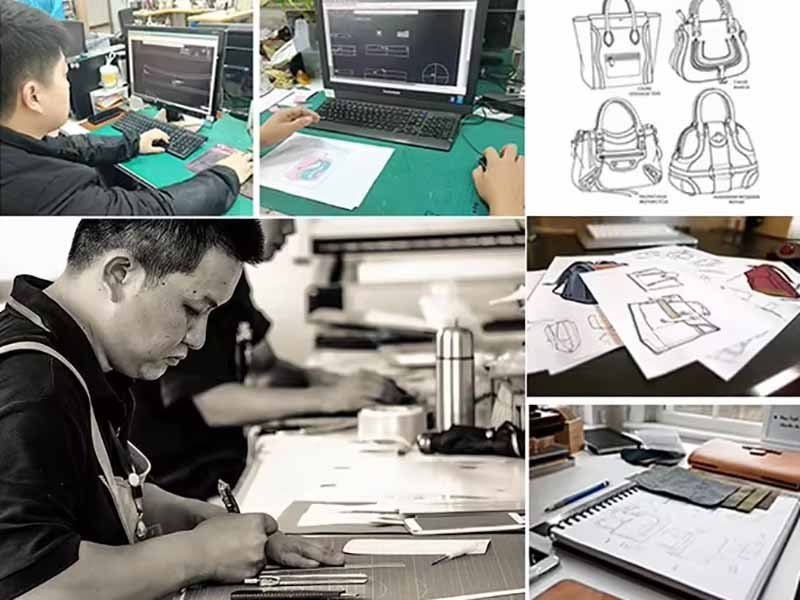
Sampling and production planning should operate as one connected process. Every commercial SKU needs a confirmed reference, but not every minor variation necessarily requires a completely independent physical prototype. The manufacturer should define which samples are required, freeze approved standards, group shared materials, identify bottlenecks, and create a schedule that protects the final collection delivery date.
Should Every SKU Have an Approval Sample?
Every SKU needs an approved reference, but the form of that reference can vary according to risk. A completely different product style normally requires a physical sample. A new leather type, structural change, logo method, hardware system, or packaging format should also be physically reviewed. A color variation may sometimes be approved through a material swatch, logo trial, and digital packaging proof when the construction is unchanged.
A practical sampling matrix may classify SKUs into three groups:
- **Full prototype required:**new pattern, construction, material family, or function.
- **Variation sample required:**shared pattern with meaningful changes in leather, hardware, logo, or interior configuration.
- **Document approval sufficient:**unchanged product with a previously approved component and a low-risk label or barcode update.
This approach reduces unnecessary sample cost without asking the buyer to approve invisible assumptions. The manufacturer should explain what is not being physically sampled and why the remaining risk is controlled.
For multi-SKU projects, the first round should focus on structural accuracy rather than cosmetic perfection alone. Dimensions, opening access, pocket usability, strap length, weight balance, closure function, edge thickness, and manufacturability should be corrected before the project team approves final colors and packaging. A beautiful sample with an unstable construction is not ready for production.
How Are Golden Samples Managed?
A golden sample, sometimes called an approved or sealed sample, is the physical reference used to judge bulk production. It should represent the final approved combination of material, construction, dimensions, logo, hardware, edge finish, lining, and workmanship. Where possible, the buyer and factory should each retain a matching approved sample or an agreed set of high-resolution records.
The sample should be labeled with:
- Buyer or project name.
- Product and SKU code.
- Sample approval date.
- Pattern revision.
- BOM revision.
- Leather and hardware references.
- Logo artwork revision.
- Packaging status.
- Approval signatures or written confirmation.
- Any accepted deviations or special notes.
A golden sample is valuable only when it is connected to controlled documentation. If bulk leather comes from a new batch, the sample alone cannot confirm batch consistency. If the logo file changes, the old sample may no longer represent the current requirement. This is why a pre-production sample remains useful after the golden sample is approved.
Before mass production, the factory should produce or assemble a pre-production reference using bulk materials and released instructions. This verifies that purchasing, patterns, tools, production methods, and packaging files have translated correctly from development into the real manufacturing environment.
Can SKUs Be Developed in Parallel?
Yes, but parallel development needs dependency planning. Developing all SKUs simultaneously may shorten the calendar, yet it can also multiply rework when an early shared decision changes. For example, approving twelve samples before finalizing the common leather, logo size, or hardware finish may force twelve rounds of revision. The most efficient plan develops shared foundations first and then opens parallel SKU workstreams.
A useful sequence is:
- Confirm brand-level standards: leather direction, color palette, logo method, hardware family, lining, packaging style.
- Develop one or two representative products to test the common decisions.
- Freeze reusable components and workmanship standards.
- Launch the remaining SKU samples in organized groups.
- Review complex or long-lead products earlier.
- Align final approvals with material-purchasing deadlines.
Lead times should be treated as ranges, not promises detached from scope. Szoneier’s documented reference is approximately 3–7 days for simple samples, 7–12 days for standard samples, and 12–20 days or more for complex custom products. Bulk production may range from roughly 20–30 days for simple sewn goods to 40–60 days or more for complex products, depending on quantity, material, logo, packaging, schedule, and season.
For a mixed leather collection, the final calendar should be built around the slowest critical SKU and longest-lead component, not the easiest item in the assortment.
How Is Quality Controlled Across SKUs?
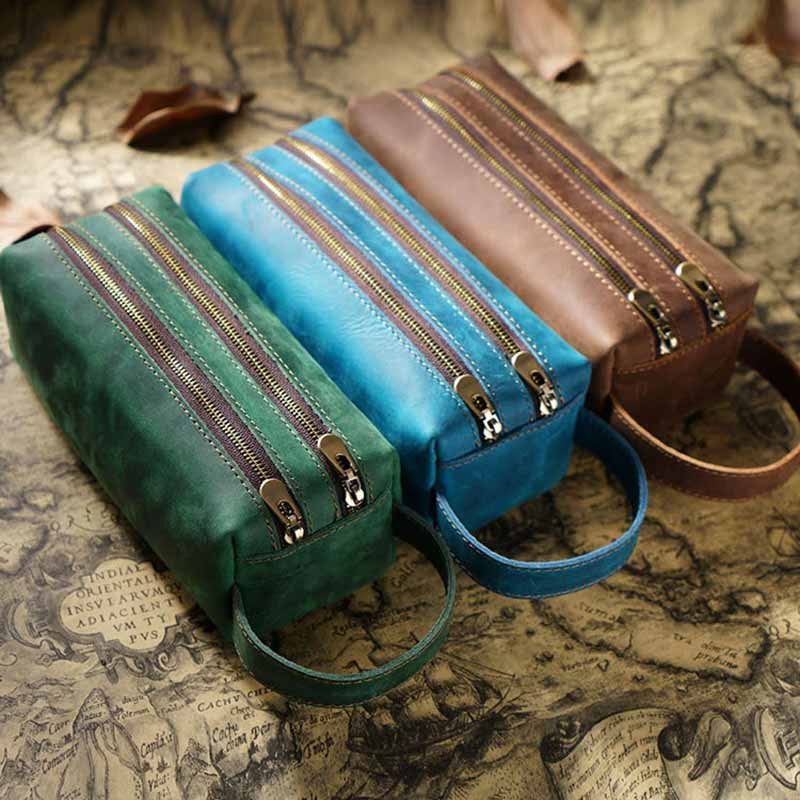
Quality should be controlled through incoming-material inspection, pre-production confirmation, cutting checks, in-line inspection, semi-finished inspection, final product inspection, and packing verification. The inspection plan must be SKU-specific because a wallet, tote, belt, and card holder have different failure points. Order-level sampling alone cannot reliably detect SKU mix-ups or version errors.
What Is Checked Before Production?
Quality control begins before a sewing operator receives the first component. Incoming leather, lining, hardware, zippers, thread, edge paint, adhesives, reinforcement, labels, and packaging should be checked against approved specifications. When an incorrect material enters production, later inspections may identify the problem, but they cannot recover the time and labor already consumed.
Pre-production checks should cover:
- Leather article, color, finish, thickness, softness, grain, and visible defects.
- Shade consistency between hides and across panels intended for one item.
- Hardware dimensions, plating color, function, and surface protection.
- Zipper tape, teeth, slider, puller, and operating smoothness.
- Thread color and thickness.
- Edge-paint color, adhesion trial, and appearance.
- Logo tooling, artwork, depth, color, position, and orientation.
- Pattern revision and measurement chart.
- Packaging artwork, language, barcode, and carton-mark version.
The factory should also conduct a pre-production meeting for the project. Purchasing, pattern, cutting, logo, production, QC, packing, and project-management teams should review the released documents together. High-risk points should be highlighted rather than buried in a general instruction sheet.
For leather goods, cutting approval is especially important. Grain direction, shade pairing, scar placement, stretch, and panel visibility directly affect finished appearance. Once premium leather has been cut incorrectly, the material loss can be expensive and difficult to replace within the original schedule.
How Are In-Line and Final Inspections Run?
In-line inspection is designed to find problems while they can still be corrected without dismantling finished goods. Inspectors should review the first completed units from each SKU and then check production at defined stages. The frequency may vary according to product risk, operator experience, quantity, defect history, and buyer requirements.
Common leather-goods inspection points include:
| Production Stage | Typical Checks |
|---|---|
| Cutting | Pattern, size, shade pairing, grain direction, visible defects |
| Skiving | Thickness, smooth transition, no cut-through |
| Logo process | Position, depth, color, clarity, orientation |
| Assembly | Component identity, reinforcement, alignment |
| Stitching | Stitch density, straightness, backstitch, seam allowance |
| Edge finishing | Color, smoothness, layer consistency, cracking |
| Hardware fitting | Position, strength, function, surface condition |
| Final product | Dimensions, shape, function, appearance, cleanliness |
| Packing | SKU, quantity, barcode, protective materials, carton mark |
Final inspection should combine workmanship checks with functionality and SKU verification. A visually acceptable belt with the wrong length code is still nonconforming. A correctly made wallet with a different card-slot layout from the approved revision is not acceptable merely because the stitching is clean.
Szoneier’s documented QC structure includes a 12-person team covering incoming quality control, in-process inspection, final quality control, and outgoing packing inspection. It can also work with agreed AQL logic, third-party inspection, or customer-appointed inspection requirements.
How Are Packaging and Barcodes Verified?
Packaging is part of the product specification, not an administrative task added after manufacturing. In a multi-SKU program, the finished leather item may be correct while the shipment remains commercially unusable because of the wrong barcode, retail box, care card, language label, price sticker, FNSKU, carton quantity, or destination mark.
An effective packing-control process uses a separate packing specification for each SKU. The file should show the packing sequence, protective materials, orientation, barcode location, label dimensions, box type, carton quantity, carton mark, and any destination-specific requirements. A photographed packing standard can reduce ambiguity, but it should not replace written codes and dimensions.
Before full packing begins, the team should complete a packing-line approval using finished bulk units and production packaging. Barcode scanning is preferable where systems and project scale allow it. At minimum, the product code, inner packaging, retail label, and outer carton must be cross-checked.
Szoneier supports SKU separation, FNSKU labels, retail and outer-carton labels, packing lists, FBA carton marks, split shipments, and multi-address delivery. These services are particularly relevant when one production order must be divided among Amazon warehouses, retail distribution centers, overseas fulfillment partners, or regional inventory locations.
The final shipment report should reconcile ordered quantity, accepted quantity, packed quantity, carton count, SKU allocation, and shipping destination before goods leave the facility.
How Do You Make the Final Choice?
Make the final choice with a weighted supplier scorecard, verified factory evidence, realistic cost and timing analysis, and a controlled pilot order. The best manufacturer is not automatically the one offering the lowest unit price or largest factory. It is the supplier whose systems match your SKU complexity, quality expectations, launch schedule, packaging needs, and repeat-order plans.
Which Criteria Need a Scorecard?
A scorecard prevents one attractive sample, low quotation, or persuasive salesperson from dominating a complex decision. The evaluation categories should reflect the actual risks in your project. A fashion collection with premium leather and retail packaging may assign more weight to material consistency and workmanship. A promotional program with many destinations may give greater weight to production capacity, packing accuracy, and logistics.
A practical 100-point framework could use the following weighting:
| Evaluation Area | Suggested Weight |
|---|---|
| Relevant product and leather experience | 15 |
| Sampling and pattern development | 12 |
| Material and component control | 12 |
| BOM and revision management | 10 |
| Production capacity and scheduling | 10 |
| In-line and final quality control | 15 |
| Packaging and SKU accuracy | 8 |
| Communication and reporting | 6 |
| Compliance and inspection support | 5 |
| Export and delivery capability | 4 |
| Repeat-order documentation | 3 |
| Total | 100 |
Require evidence for every score. Evidence may include factory videos, sample records, anonymized BOMs, QC reports, process photos, material specifications, inspection forms, equipment lists, packaging instructions, references, or a supervised trial.
Also record critical pass-or-fail conditions separately. A manufacturer with a high total score should still be rejected when it cannot meet a mandatory material test, disclose subcontracting, protect intellectual property, or control your required packaging system.
Do MOQ, Cost, and Lead Time Fit?
MOQ, cost, and lead time should be evaluated at three levels: the complete project, each product style, and each material or component variant. A factory may accept a 3,000-unit project but still require minimums for each leather color, hardware finish, box design, or logo part. Those underlying minimums can create surplus materials or increase per-SKU cost.
Ask the supplier to separate:
- Product unit cost.
- Leather and material minimums.
- Custom-color minimums.
- Hardware tooling or plating charges.
- Logo mold, plate, or die costs.
- Pattern and sample charges.
- Packaging setup and printing costs.
- Testing and inspection costs.
- Freight, duty, and delivery terms.
- Rush-production or split-shipment costs.
The lowest unit price can be misleading when it depends on shared assumptions that have not been confirmed. A quotation should state material, thickness, size, construction, hardware, logo, packaging, quantity, quality level, and commercial terms.
Szoneier’s MOQ starts from 200 pieces for selected custom projects, but exact minimums depend on material availability, color count, product construction, custom hardware, logo process, packaging, and testing requirements. That distinction is important for multi-SKU programs. A project-level quantity may be commercially attractive, while an individual leather color or custom metal component remains below its feasible supplier minimum.
Lead time should also include approval delays, material purchasing, testing, packaging printing, production, inspection, correction, and transport—not just sewing days.
What Should a Pilot Order Prove?
A pilot order should test the manufacturer’s system, not simply produce a small quantity of easy items. Include enough SKU variation to expose the real challenges of the future program: different product types, at least two material or color versions, a shared component, an exclusive component, logo application, retail packaging, and barcode separation.
The pilot should measure:
- Accuracy of the initial quotation and BOM.
- Speed and clarity of technical questions.
- Sample revision discipline.
- Leather and hardware consistency.
- Production reporting accuracy.
- Adherence to the approved schedule.
- In-line defect detection and corrective action.
- Final measurement and workmanship results.
- Packing and barcode accuracy by SKU.
- Carton and shipping-document accuracy.
- Response to unexpected issues.
- Quality of records prepared for repeat production.
Do not judge only the finished units. Review how the factory handled changes, communicated risk, recorded approvals, and prevented the same issue from recurring. A strong supplier will not hide every problem; custom manufacturing rarely proceeds without any adjustment. The stronger signal is whether the team identifies issues early, explains the impact honestly, proposes workable options, and closes corrective actions with evidence.
After the pilot, conduct a formal review. Record what must be maintained, improved, or changed before scaling. Update the BOMs, patterns, QC standards, packaging instructions, and approved samples. The goal is to convert pilot learning into a more stable repeat-order system.
A supplier that completes the pilot but cannot preserve the final records may force you to repeat the same development work on the next order.
Choosing a leather goods manufacturer for a multi-SKU project is ultimately a decision about control. You need a partner capable of controlling materials without flattening the natural character of leather, controlling documents without slowing every decision, and controlling production without hiding the specialist suppliers that may support the program.
Szoneier is a Shenzhen-based custom bags and leather goods OEM/ODM manufacturer with more than 18 years of manufacturing experience. Its project system covers material coordination, pattern development, structured sampling, multiple sample revisions, bulk production, multi-stage quality inspection, SKU-level packaging, FBA preparation, export delivery, and repeat-order documentation. The company’s factory-based team can support leather bags, wallets, pouches, accessories, and broader soft-goods collections that require shared materials, multiple designs, coordinated packaging, and long-term replenishment.
To evaluate your project, send Szoneier the following information:
- Product list and estimated SKU count.
- Reference photos, drawings, tech packs, or physical samples.
- Target leather or material direction.
- Dimensions and product functions.
- Color and hardware requirements.
- Logo artwork and branding method.
- Packaging and barcode requirements.
- Quantity per SKU.
- Target market and delivery destination.
- Desired sampling and launch schedule.
- Inspection, testing, or compliance requirements.
- Target price range when available.
Contact Szoneier to send your project documents. The team can review your product portfolio, identify shared and specific SKU components, assess sampling requirements, and prepare practical development, production, quality control, packaging, and delivery plans for your custom leather goods collection.