A leather product can look excellent in a sample photograph and still become a serious commercial problem after launch. The leather may arrive in a different shade, the edge paint may begin to crack, the metal finish may vary between batches, or the packaging may fail to protect the product during delivery. For a Shopify brand, these are not isolated factory issues. They directly affect product reviews, return rates, advertising performance, inventory turnover, and customer trust.
To choose a leather goods manufacturer for a Shopify brand, evaluate the supplier’s product specialization, material knowledge, sampling process, MOQ structure, pricing transparency, quality controls, production capacity, packaging support, shipping options, and ability to reproduce approved standards during reorders. The right manufacturer should support both product development and the commercial rhythm of an online brand, from early photography samples to repeat replenishment.
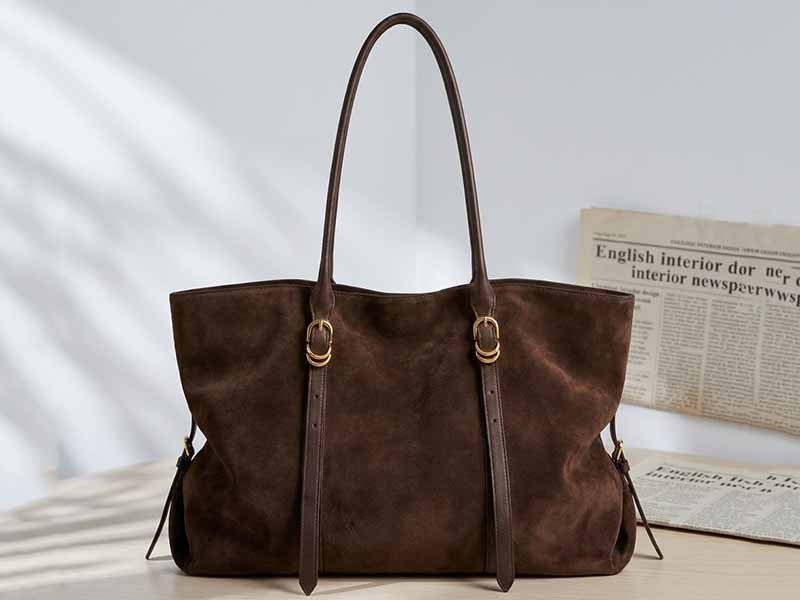
Imagine spending several months building anticipation for a signature leather tote. The product page is finished, advertisements are scheduled, and influencers are ready to publish. The first shipment arrives, but the handle drop is shorter than the approved sample, the brown leather appears noticeably redder, and the metal logo scratches the front panel during shipping. Each issue may look minor inside a workshop, yet together they can undermine the entire launch. Choosing a manufacturer is therefore not about finding someone who can sew leather. It is about finding a partner that can protect the promise made on every product page.
What Does Your Shopify Brand Need?
A Shopify brand should define its product category, target customer, retail price, required margin, launch quantity, packaging experience, sales channels, and future collection plan before comparing manufacturers. A clear commercial brief helps the factory recommend suitable leather, construction, MOQ, and production methods while preventing quotes based on assumptions that later increase costs, delay samples, or weaken product quality.
Product Direction
“Leather goods” is too broad to produce an accurate quotation or meaningful factory comparison. A structured handbag, soft tote, wallet, card holder, belt, laptop sleeve, travel organizer, and leather backpack require different materials, machinery, sewing skills, reinforcement systems, edge treatments, and inspection standards. A workshop that performs well on simple wallets may not have the pattern-making or structural experience needed for a complex laptop briefcase.
Begin by defining the job the product must perform. A commuter tote may need a padded laptop compartment, stable bottom construction, comfortable shoulder drop, metal feet, and reinforced handle attachments. A wallet must control material thickness at folded edges so that card slots remain easy to use. A leather belt requires dependable tensile strength, consistent hole placement, and secure buckle attachment across the complete size range.
Reference photographs help explain the visual direction, but they cannot communicate every production detail. A manufacturer also needs target dimensions, expected capacity, preferred leather feel, color direction, lining, pocket layout, hardware finish, closure type, logo method, packaging requirements, destination market, and expected order quantity. The supplier cannot calculate material usage, labor, tooling, or lead time accurately when most of these decisions remain unknown.
The first product brief does not need to be a perfect technical pack. It does need to separate non-negotiable features from flexible ones. A brand may insist on a particular silhouette, opening method, and logo position while remaining open to alternative lining materials or internal reinforcement. This distinction gives the manufacturer room to reduce cost or improve production stability without changing the identity of the product.
| Brief Item | Practical Information to Provide | Why It Matters |
|---|---|---|
| Product type | Tote, wallet, belt, backpack, pouch, case | Determines equipment, construction, and specialist skills |
| Dimensions | Length, height, depth, strap drop | Affects capacity, leather yield, labor, and cost |
| Material | Leather type, PU, microfiber, lining | Controls appearance, durability, sourcing, and MOQ |
| Structure | Soft, semi-structured, rigid | Determines reinforcement and pattern construction |
| Branding | Debossing, foil, print, metal logo | Affects tooling, sample timing, and unit price |
| Quantity | Units by design, size, and color | Allows realistic MOQ and material planning |
| Packaging | Dust bag, box, card, barcode | Affects landed cost and customer experience |
| Market | Destination country and sales channel | Influences testing, labeling, and logistics |
A manufacturer that asks detailed questions before quoting is often more useful than one that provides an immediate unit price from a single photograph. The questions reveal whether the supplier understands product development or is simply trying to secure a sample order before the real cost becomes visible.
Customer and Price Point
Product quality should always be evaluated against the expectations of the intended customer. A promotional PU leather pouch, an accessible fashion handbag, and a premium full-grain briefcase should not use the same material specification, hardware standard, construction method, or packaging system. Using premium materials in a price-sensitive product may destroy commercial margin, while selecting materials below customer expectations can lead to returns and negative reviews.
Work backward from the planned retail price rather than beginning with the cheapest possible factory quotation. The selling price must cover manufacturing, packaging, quality inspection, international freight, duties, domestic delivery, warehousing, payment processing, discounts, advertising, returns, and customer service. The factory unit price is important, but it is only one part of the complete cost of bringing the product to market.
Consider a handbag planned to retail for USD 120. A factory quotation of USD 28 may initially appear comfortable, yet a rigid gift box, air freight, import duties, fulfillment fees, seasonal promotions, and paid customer acquisition can reduce the available margin quickly. A Shopify brand that relies heavily on advertising generally needs more margin protection than a business receiving most sales through organic search or existing customers.
Price positioning also determines which material characteristics deserve priority. Premium customers may expect natural grain, refined edge finishing, substantial hardware, and a controlled unboxing experience. Fashion-led customers may place greater value on color, shape, and styling than on long-term patina. Travel customers may prioritize scratch resistance, reduced weight, organized storage, and dependable closures.
The best manufacturer does not automatically recommend the most expensive leather. It identifies the material, structure, and finishing system that support the intended price point, product use, customer expectation, and margin target. A technically superior specification can still be commercially wrong when it pushes the landed cost beyond what the Shopify store can support.
Sales Channel
The route from the factory to the final customer affects packaging, labeling, inspection, carton design, product photography, and production timing. Shopify brands frequently sell through their own website while also supplying wholesale partners, retail pop-ups, subscription programs, influencer campaigns, corporate gifting programs, or online marketplaces. Each channel creates different production and packing requirements.
Direct-to-consumer orders require packaging that can survive courier handling while still providing a strong unboxing experience. Wholesale programs may require case-pack quantities, retail price labels, display packaging, delivery appointments, or retailer-specific carton marks. Influencer launches often require completed samples weeks before bulk production so photography, video creation, and promotional scheduling can begin.
Packaging should be reviewed as part of product development rather than treated as a final decoration. A large rigid box may look premium but increase dimensional freight cost, warehouse space, and fulfillment charges. Dark tissue paper may transfer color to light leather. Heavy metal components can scratch the product when straps and hardware are not separated properly during transport.
The manufacturer should know whether goods will be delivered to the brand’s warehouse, a third-party logistics provider, several regional fulfillment centers, wholesale customers, or a combination of destinations. This information determines barcode formats, master carton labels, packing lists, shipping marks, units per carton, and whether the order should be divided into multiple shipments.
A supplier that understands only ex-factory production may create extra work after the goods are finished. A Shopify-ready manufacturer should be able to discuss how packaging dimensions, carton configuration, labeling, freight mode, and fulfillment destination affect both cost and launch timing.
Collection Planning
Many Shopify brands begin with one hero product but grow through coordinated colors, sizes, accessories, and related items. A manufacturer should therefore be evaluated not only for its ability to produce the first SKU, but also for its ability to maintain a consistent material and visual language across a broader collection.
A leather tote may later be joined by a matching pouch, wallet, card holder, keychain, passport cover, or laptop sleeve. These items may need the same leather color, lining, thread, metal finish, logo treatment, packaging style, and quality level. Coordinated development strengthens brand recognition and can make more efficient use of leather or packaging minimums.
Material planning is particularly important in leather product development. A tannery may require a quantity larger than the first order needs, especially for custom colors, embossed surfaces, certified materials, or special finishes. Remaining leather can sometimes be allocated to smaller accessories rather than stored without a clear purpose. This approach can transform a material MOQ problem into a commercially useful product collection.
Brands should tell the manufacturer whether the first order is a standalone product test or the beginning of a longer program. A factory-based manufacturer with leather goods, bags, pouches, packaging, sampling, and multi-SKU coordination within one managed system is generally better positioned for collection development than a workshop focused on a single simple product category.
Szoneier’s documented manufacturing model supports product development from images, sketches, physical samples, and technical packs, while coordinating materials, sampling, sewing production, quality inspection, packaging, and export delivery. Its leather goods capabilities operate within a wider custom bags and soft goods system, which can be useful when a brand intends to expand one leather product into a coordinated series.
Which Manufacturing Model Fits Your Brand?
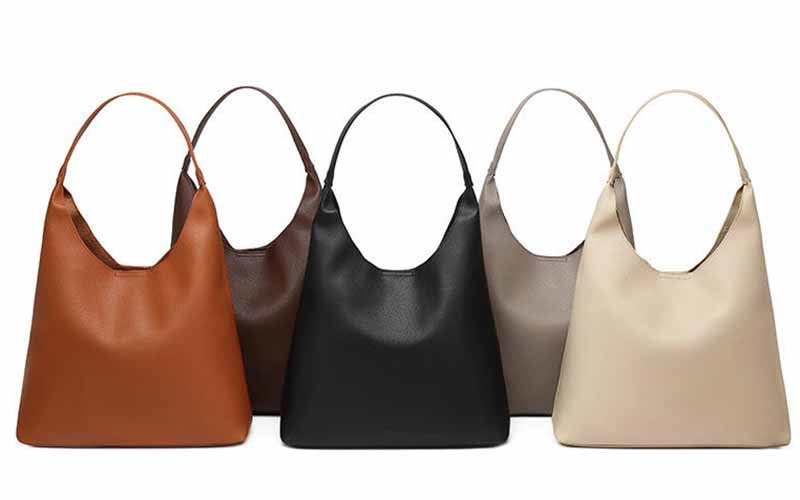
OEM is suitable when a brand already owns detailed specifications or an approved sample. ODM is useful when the concept still needs structural and material development. Private-label products allow meaningful brand customization, while white-label products usually involve limited changes to a standard design. The right model depends on required originality, speed, budget, intellectual property protection, and long-term product control.
OEM Projects
OEM manufacturing is most suitable when the brand already has a clearly developed product. The starting information may include a technical pack, physical sample, paper pattern, bill of materials, measurement sheet, artwork, construction drawing, or an approved product currently manufactured by another supplier.
A complete OEM file should define more than the outside appearance. It needs to explain leather thickness, lining, reinforcement, hardware, thread, edge finishing, stitch requirements, logo placement, measurement tolerances, packaging, and applicable testing requirements. When these details are missing, the factory must make assumptions, and different factories may interpret the same reference image in very different ways.
OEM gives a brand strong control, but it also requires more complete decisions. A visually attractive design can still contain construction problems. A narrow handle may not support the intended load. A heavy buckle may distort thin leather. A hidden magnet may be difficult to install consistently without marking the surface. A pocket may look correct in a rendering but become too tight once seam allowances and reinforcement are included.
A professional OEM manufacturer should identify these risks before sampling. The factory should not change important design elements without approval, but it should explain how particular choices affect leather yield, sewing difficulty, production consistency, unit cost, and long-term durability.
The strongest OEM relationship combines brand ownership with manufacturing feedback. The brand controls the product identity, while the factory contributes practical knowledge about materials, construction, and repeat production. Before development begins, both parties should also clarify ownership of patterns, molds, custom hardware, artwork, and digital files.
ODM Development
ODM manufacturing is useful when the brand understands its customer and visual direction but does not yet have a complete technical specification. The manufacturer may adapt an existing structural platform or help develop a new product from reference photographs, sketches, target materials, intended use, required functions, and a desired price range.
The depth of ODM support varies widely. Some suppliers use the term for catalog products that allow only a logo or color change. Others provide genuine development services, including material recommendations, structural changes, pattern creation, prototype production, sample revisions, component selection, and production engineering.
A brand should ask exactly which features can be changed. Can the product dimensions be adjusted? Can the pocket layout be redesigned? Can the strap system, closure, lining, reinforcement, or hardware be replaced? Will a modified pattern be offered to other customers? Who owns any mold or custom component paid for by the brand?
A genuine ODM project normally moves through product-direction review, material selection, structural planning, pattern development, first sampling, revision, production feasibility review, and final specification confirmation. The result should be a documented production-ready product rather than a verbal agreement to make something “similar” to a reference photograph.
ODM is often valuable for Shopify brands that have strong marketing and customer knowledge but limited internal technical resources. The brand may know the desired retail price, silhouette, use case, and aesthetic without knowing the ideal leather thickness, reinforcement method, or seam construction. A capable development team can convert that commercial brief into a product that is both attractive and consistently manufacturable.
Private Label and White Label
Private label and white label are frequently used as interchangeable marketing terms, but they normally offer different levels of product control. White-label products are generally standardized items that a supplier sells to several brands. Changes may be limited to a logo, label, selected stock color, or outer package.
Private-label projects usually allow more meaningful customization. The brand may select materials, dimensions, internal features, colors, lining, hardware, logo treatment, and packaging. In more developed programs, the basic structure may also be modified. This creates stronger differentiation but often requires additional sampling, setup cost, or higher minimum quantities.
White label can be practical when a brand wants to test a new category quickly without investing heavily in development. A standard leather card holder or pouch may be introduced as a secondary item, gift, or limited campaign product. The limitation is that customers may find a nearly identical product sold elsewhere, making direct price comparison easier and weakening product exclusivity.
Private label is more appropriate when the product carries a significant part of the brand identity. A signature handbag, travel wallet, or premium leather accessory should usually provide more differentiation than a standard item carrying a different logo.
The terminology on the quotation is less important than the actual level of control. The brand should request a written explanation of which materials, dimensions, components, finishes, colors, packaging elements, and product files will be customized or protected.
Product Control
More product control usually requires more development time, documentation, tooling, and decision-making. A custom metal logo may require a mold. A special leather color may need a tannery production lot. An exclusive silhouette may require several prototypes before proportions, balance, structure, and production feasibility are correct.
The required level of control should match the commercial importance of the product. A low-cost gift item may not justify several months of original development, while a hero handbag featured in paid campaigns deserves tighter control over design, materials, hardware, packaging, and intellectual property.
Brands can clarify the correct model by answering four practical questions:
- How different must the product be from existing market options?
- Which features directly support the brand’s selling proposition?
- How much development time and budget can the project support?
- Which patterns, molds, designs, or components must remain exclusive?
A manufacturer should explain the commercial consequences of each choice. Greater originality can strengthen differentiation, but it also increases sampling work and supply-chain complexity. Faster development may reduce launch time, but it may make the product easier to copy or compare.
The correct manufacturing model is not necessarily the most customized one. It is the model that gives the brand enough control to protect its customer promise without adding unnecessary cost, delay, or operational risk.
How Do You Evaluate Materials and Craftsmanship?
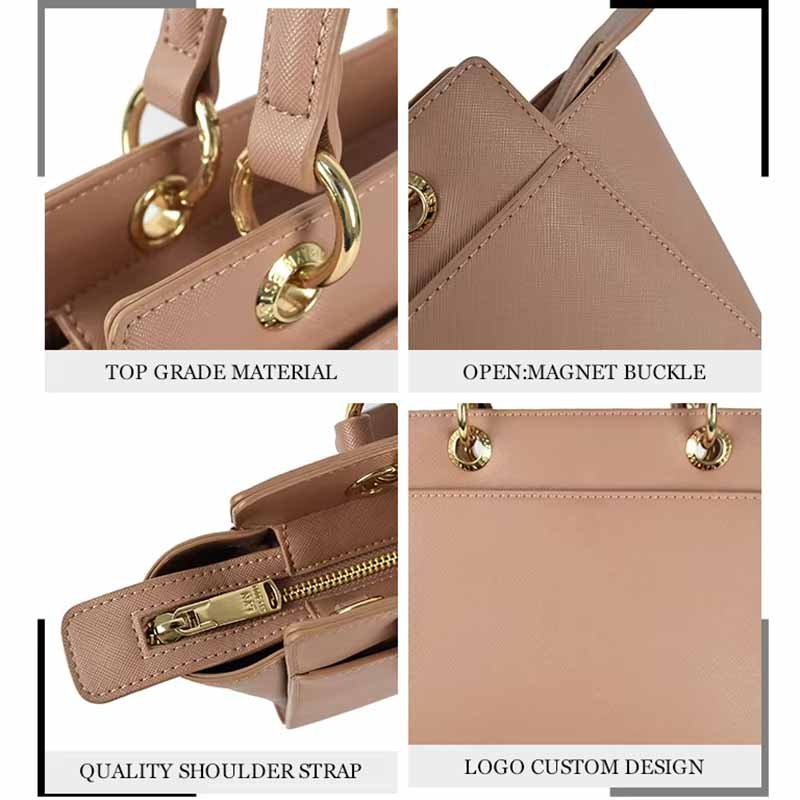
Leather goods should be evaluated as complete construction systems rather than by the outer material alone. Leather type, thickness, temper, lining, reinforcement, thread, adhesive, edge paint, hardware, and stitching all influence appearance, performance, and durability. Physical swatches, component samples, measurable specifications, and a functional prototype provide more reliable evidence than material names, photographs, or general quality claims.
Leather Selection
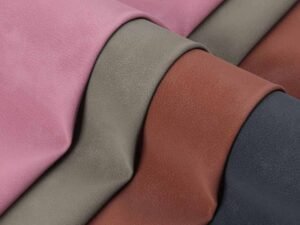
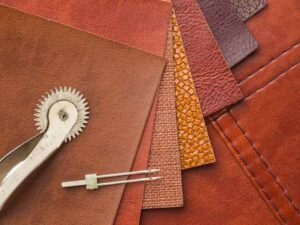
Leather names alone do not provide enough information for approval. Full-grain, top-grain, corrected-grain, split leather, suede, microfiber, and PU can each vary significantly in quality, thickness, finish, backing, softness, consistency, and performance.
Full-grain leather retains the natural outer surface and often develops a recognizable patina. It can also display scars, grain movement, and natural shade variation. Top-grain leather is usually more processed and may provide greater surface consistency. Corrected-grain leather uses finishing treatments to reduce visible differences. Split leather comes from lower sections of the hide and commonly uses a coating or surface finish.
Microfiber and PU materials can offer more predictable color, texture, and cost, which may be useful for fashion-led or price-sensitive collections. However, these materials should be checked for backing strength, peeling resistance, crease recovery, abrasion performance, and heat sensitivity rather than approved only by appearance.
The appropriate material depends on the product. A soft tote requires a different temper from a structured briefcase. Wallet leather must be thin enough to prevent excessive bulk at folded edges. A belt requires sufficient thickness and tensile strength. A laptop bag may rely on internal reinforcement even when the outer leather appears soft.
The following ranges are useful starting references rather than fixed rules. Final specifications should always be confirmed through physical samples and product testing.
| Product Area | Common Starting Thickness | Typical Considerations |
|---|---|---|
| Card holder panels | 0.7–1.1 mm | Folded thickness and card-slot function |
| Wallet exterior | 0.9–1.4 mm | Edge bulk, flexibility, shape retention |
| Soft handbag body | 1.0–1.5 mm | Drape, weight, and stitch performance |
| Structured bag body | 1.2–1.8 mm | Reinforcement and panel stability |
| Handles and straps | 1.4–2.2 mm before layering | Stretch control, comfort, edge finishing |
| Belts | 2.8–4.0 mm total construction | Tensile strength and hole durability |
| PU or microfiber | Often 0.8–1.5 mm | Backing, peeling resistance, abrasion |
Thickness should be measured rather than described only as thin, medium, or thick. Two materials with identical thickness can behave differently because of variations in temper, backing, surface finish, fiber structure, and reinforcement.
Material Inspection
A leather swatch should be handled, bent, rubbed, scratched lightly, and viewed under several lighting conditions. Check whether the surface cracks, turns pale, or develops undesirable lines when folded. Rub the material with a light-colored dry and damp cloth to identify possible color transfer. Examine smell, flexibility, grain consistency, thickness, recovery, and resistance to light abrasion.
For genuine leather, natural variation must be managed rather than denied. The brand and manufacturer should agree on acceptable levels of scars, wrinkles, grain differences, insect marks, and color movement. Visible front panels normally require stricter grading than hidden reinforcements, internal pockets, or small components.
Batch consistency is especially important for Shopify reorders. A product photographed in a warm brown leather should not arrive in a noticeably redder, greyer, or darker shade several months later without prior approval. The production file should retain the supplier, material article number, color reference, thickness, finish, temper, and physical approved swatch.
Ask how hides are checked and marked before cutting. Skilled leather cutting is not simply a matter of maximizing yield. Visible panels should be positioned in consistent areas of the hide, while natural marks can be directed toward less visible sections when they remain within the agreed standard.
Synthetic materials need a different inspection approach. PU and microfiber should be reviewed for backing strength, coating adhesion, crease recovery, abrasion, peeling risk, hydrolysis resistance where relevant, and performance around folded or painted edges. A material can appear highly consistent when new and still perform poorly after repeated bending.
Components and Construction
The outside leather receives most attention, yet many product failures begin with secondary components. Zippers, magnetic snaps, hooks, rivets, buckles, edge paint, thread, reinforcement, lining, adhesives, and internal boards all affect product life, appearance, and customer perception.
Hardware should be examined for plating consistency, scratches, sharp edges, weight, movement, fastening security, and corrosion risk. Zippers should be opened and closed repeatedly. Swivel hooks should rotate smoothly without excessive looseness. Magnetic snaps should be tested through the actual thickness of leather and reinforcement rather than evaluated as loose components.
Handles and strap anchors require particular attention because they carry repeated load. Reinforcement should spread stress through the surrounding structure without creating uncomfortable stiffness or visible bulk. Depending on the design, stress points may need backing patches, additional stitching, rivets, folded construction, or internal reinforcement tape.
Edge finishing should be inspected after flexing rather than only while the sample is lying flat. Painted edges often require controlled preparation, coating, drying, and sanding stages. The number of coats varies according to the leather, edge design, paint system, and desired finish. Uneven skiving or preparation will remain visible even when additional paint is applied.
The inside of the product deserves the same attention as the outside. Adhesive marks, exposed reinforcement, rough pocket corners, lining distortion, unfinished zipper ends, and loose threads may not appear in online photographs, but customers will notice them during use.
Workmanship Review
A well-made leather product appears controlled from every angle. Stitch lines should remain consistent around curves, corners, handles, pockets, and zipper openings. Left and right sides should be symmetrical. Logo placement should match the approved measurement, and hardware should sit straight without pulling the surrounding material.
Stitch density must suit the leather thickness, thread size, seam construction, and visual style. Very short stitches can weaken delicate leather by creating too many closely spaced perforations. Very long stitches may look inexpensive or provide insufficient control. Many leather bag applications use approximately six to ten stitches per inch, but the correct standard depends on the specific construction.
Review the sample while it is loaded with the items it is intended to carry. Place a laptop, wallet, bottle, cosmetics, documents, or other representative contents inside. Check whether the bottom sags, the handles twist, the opening becomes difficult to use, or the shoulder strap causes the bag to tilt.
Inspect edge paint after bending the product several times. Check corners for cracking, overflow, roughness, bubbles, and uneven thickness. Open and close every zipper, snap, buckle, and hook repeatedly. Examine the product under strong side lighting, which often makes irregular stitching and edge finishing easier to identify.
Good craftsmanship is not limited to decorative neatness. It is the controlled combination of appearance, strength, function, comfort, repairability, and repeatability. A beautiful prototype that cannot be reproduced consistently in bulk production is not a successful manufacturing result.
How Should You Compare MOQ, Samples, Cost, and Lead Time?
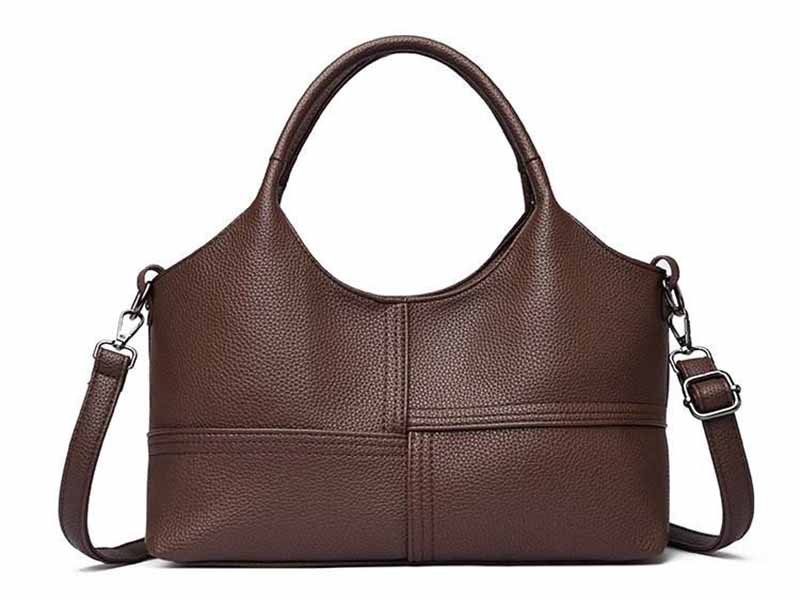
Suppliers should be compared through total project economics rather than a single unit price. Confirm MOQ by design, color, material, hardware, and packaging; define what the sample must prove; separate development, tooling, product, testing, and logistics costs; and build a schedule from specification review to warehouse delivery. A cheaper quote can create higher inventory, delay, rework, and freight costs.
MOQ Structure
A published MOQ is only an initial reference. The true minimum may be controlled by leather availability, custom colors, metal plating, logo molds, lining, packaging, or the number of units ordered in each color.
Ask whether MOQ applies per design, per color, per material, per hardware finish, or across the complete order. A factory may accept 300 units in total but require at least 100 pieces per color. A custom leather color may require enough material for a larger quantity even when the sewing factory is prepared to accept a smaller production run.
Selected custom projects at Szoneier can start from 200 pieces, although the final quantity depends on material availability, product structure, color count, logo method, accessories, packaging, tooling, and testing requirements. Complex leather products using custom materials or hardware may therefore require a different MOQ from a simple pouch made with available materials.
The lowest possible MOQ is not always the best commercial option. Extremely small production runs can create higher setup costs, greater material waste, limited hardware choices, and unstable pricing. The more useful objective is to identify the lowest quantity that still supports controlled materials, repeatable production, reasonable unit cost, and a practical reorder path.
Material minimums can sometimes be managed through collection planning. Excess leather from a handbag program may be allocated to wallets, card holders, pouches, straps, or keychains. However, this approach only works when the brand has a coherent product plan and the manufacturer can coordinate several SKUs accurately.
Sample Control
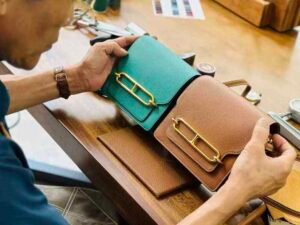
A development sample should prove much more than visual appearance. It needs to confirm dimensions, capacity, leather feel, shape, pocket function, strap comfort, closure performance, hardware, logo, lining, edge finish, packaging, and production feasibility.
The first prototype frequently reveals conflicts between design and function. A handle may appear elegant but feel uncomfortable when the bag is loaded. A zipper opening may be too narrow for practical access. Rigid reinforcement may change the intended silhouette. A metal logo may appear correctly sized in a drawing but dominate the final product.
Feedback should be consolidated into one controlled document using numbered photographs, measurements, arrows, and clear instructions. Factory deviations should be separated from new brand decisions. A deviation means the sample does not match confirmed information, while a design change means the brand has made a new decision after reviewing the sample.
The final approved sample should become a controlled master reference. The factory should retain the approved pattern, measurement chart, leather swatch, hardware sample, thread, edge-paint reference, logo file, packaging file, and revision history.
Sample timing depends on product complexity. Simple leather accessories using available materials may be developed in approximately one to two weeks. Products requiring new patterns, custom leather, molds, special hardware, premium packaging, or several revisions can require several weeks. The manufacturer should provide a project-specific schedule rather than promising the same turnaround for every design.
Cost Comparison
A useful quotation explains what is included and which assumptions have been used. Leather goods pricing may involve outer material, lining, reinforcement, thread, adhesive, edge paint, zippers, hardware, labor, branding, packaging, inspection, tooling, testing, freight, and import duties.
Ask the supplier to identify the material in practical terms. “Genuine leather bag” is not a sufficient specification. The quote should indicate the leather category, approximate thickness, finish, lining, hardware level, logo process, dimensions, internal structure, and packaging.
A low quotation based on split leather, lightweight hardware, simplified reinforcement, or standard packaging cannot be compared directly with a quotation using top-grain leather, substantial components, multi-layer edge finishing, and a custom gift box. The commercial comparison must use the same product assumptions.
Development costs should be separated from repeatable unit costs. Pattern making, sample labor, color development, custom molds, metal logo tooling, packaging prototypes, laboratory testing, third-party inspections, and courier charges may be one-time or project-specific expenses.
The factory should also explain why the unit price changes when the design is modified. Larger panels increase leather use and may reduce cutting yield. Additional pockets increase labor. Painted raw edges may require more finishing stages than turned construction. Custom hardware affects both tooling and supplier minimums.
Brands should calculate landed cost before approving the final product. This includes factory price, packaging, inspection, international freight, duties, customs charges, domestic delivery, warehouse receiving, and fulfillment preparation.
Project Timeline
Production lead time normally begins only after several conditions have been completed. These may include final sample approval, bulk material confirmation, packaging approval, deposit payment, testing decisions, and completion of production documents.
Build the schedule backward from the date the goods must arrive at the warehouse. Include time for specification review, quotation, sample payment, material sourcing, pattern development, first sample, courier transit, internal evaluation, revision, final approval, bulk material ordering, production, inspection, packaging, freight booking, customs clearance, and warehouse receiving.
As a cautious reference, simpler custom sewn products may require approximately 20–30 days for production after approval, while more complex leather goods can require 40–60 days or longer. Custom leather, specialist hardware, multiple edge-finishing stages, premium packaging, testing, large quantities, and peak-season capacity can extend the schedule.
The brand’s approval speed also affects the project. Factories frequently wait for consolidated comments, artwork, deposits, packaging files, or color approval. Each milestone should therefore have a clear owner and response deadline.
A reliable schedule identifies what happens during each stage. A general promise of delivery in 30 days is less useful than a project plan showing material preparation, cutting, first-piece review, in-line inspection, final inspection, packing, booking, and estimated shipment departure.
How Do You Verify Quality and Factory Reliability?
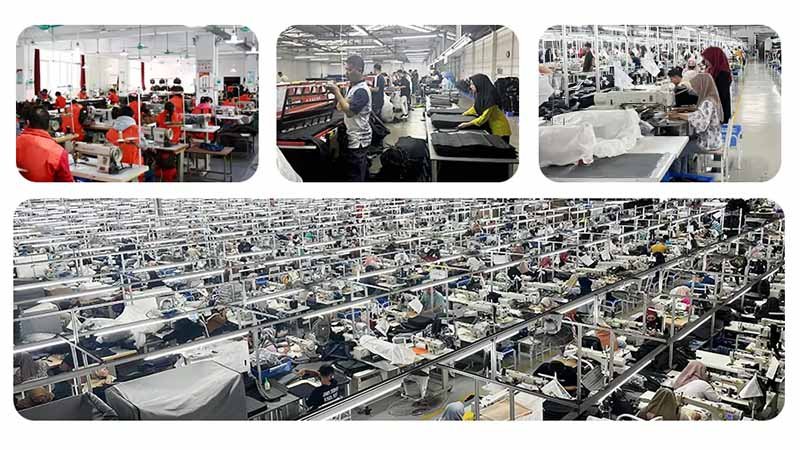
Verify who controls sampling, materials, production, quality inspection, packaging, subcontracting, and corrective action. Request live factory evidence, inspect similar products, review production records, and confirm how the approved sample becomes a repeatable bulk standard. A dependable supplier can explain its controls in practical detail and accepts responsibility instead of relying only on general claims about experience or quality.
Factory Identity
The decision is not simply whether the supplier is a factory or a trading company. A well-managed sourcing organization may coordinate specialist facilities effectively, while a poorly organized factory may still provide weak communication, inconsistent quality, and unclear responsibility.
The more important issue is operational control. Ask who develops the pattern, sews the sample, purchases leather, approves hardware, manages bulk production, performs inspection, coordinates packaging, and communicates when something goes wrong.
Request the legal company name, business registration, factory location, quotation entity, contract entity, invoice details, and payment account. These should be logically consistent. A request to transfer money to an unrelated company or personal account should be explained and verified before payment.
Ask whether production will remain within one facility or be shared with partner workshops. External production is not automatically a weakness. Many established manufacturers use specialized partners for hardware, packaging, printing, edge finishing, or peak-season capacity. The risk comes from uncontrolled outsourcing without common samples, documents, inspections, and accountability.
Szoneier operates through its own factory-based sampling and project-management system while also coordinating a controlled network of long-term satellite factories for specialist products, multiple SKUs, seasonal capacity, and bulk production. Material standards, sampling, communication, quality requirements, packaging, and delivery remain centrally managed.
Factory Evidence
Request evidence directly related to the proposed product rather than relying only on a polished corporate video. A facility may have extensive fabric-bag production while lacking the leather cutting, skiving, edge finishing, pattern development, or hardware installation skills needed for the project.
A live video review can show the sample room, material storage, paper-pattern area, cutting, sewing, edge finishing, hardware installation, inspection, packing, and warehouse. During the call, ask the camera to move to particular areas and show current work rather than only prepared displays.
Similar samples are more valuable than general production-volume claims. A factory producing basic promotional totes may have limited experience with structured leather briefcases. Examine products using comparable leather thickness, panel construction, hardware, reinforcement, and finishing.
For a large or long-term program, a factory visit or third-party audit can provide stronger evidence. The review should cover more than machinery. Observe material identification, work-in-progress tracking, approved samples, worker instructions, inspection records, rework areas, cleanliness, packaging control, and finished-goods storage.
| Verification Area | Strong Evidence | Warning Sign |
|---|---|---|
| Company identity | Matching registration, contract, invoice, and bank details | Unrelated payment entity |
| Product experience | Similar physical samples and production records | Only catalog photographs |
| Sampling | Pattern room, swatches, revision records, sealed sample | No controlled sample system |
| Production | Live workshop access and clear process ownership | Refusal to show production location |
| Quality control | Checklists, defect records, inspection stages | General claims without documentation |
| Outsourcing | Named partners and common quality standards | Unknown subcontractors |
| Packaging | Approved pack-out and barcode control | Packaging decided after production |
| Corrective action | Root-cause and rework procedures | Claims that defects never occur |
Factory evidence should form a connected chain from legal identity and sampling through materials, production, inspection, packaging, and shipment. Isolated certificates or attractive photographs are not enough on their own.
Production Standards
The final approved sample must be converted into instructions that production workers and inspectors can follow. Without this conversion, the sample may remain only a visual reference while the factory uses incomplete or outdated information during bulk production.
A controlled production package normally includes the sealed sample, paper pattern, measurement chart, bill of materials, leather reference, hardware specification, thread, edge paint, logo artwork, packaging instructions, and approved revision history.
A pre-production sample should use the intended bulk materials whenever possible. When substitute leather, hardware, or packaging is used during early development, the difference must be documented and the final bulk version approved before cutting begins.
Natural leather variation requires written rules. The brand and manufacturer should agree on acceptable grain, scars, wrinkles, shade movement, and panel placement. A general statement that natural leather varies is not sufficient for a product presented online with tightly controlled close-up photography.
Inspection should occur at several production stages. Incoming materials should be checked before cutting. Initial production pieces should be compared with the sealed sample. In-line checks should identify repeated stitching, construction, or edge-finishing problems early. Final inspection should review appearance, dimensions, function, packaging, labels, carton marks, and quantity.
Third-party inspection can add independent verification, but it cannot replace clear specifications. An inspector cannot decide whether a leather shade, edge finish, or logo position is acceptable when the brand has never defined the standard.
Defect Management
No credible manufacturer can promise that defects will never occur. Reliability is demonstrated by how problems are prevented, detected, contained, investigated, corrected, and prevented from recurring.
The purchase agreement should define measurement tolerances, inspection method, defect categories, acceptance procedures, communication timelines, and possible remedies. Critical defects may involve safety, sharp components, incorrect compliance information, or serious functional failure. Major defects may include broken closures, severe shade mismatch, incorrect dimensions, or visibly misaligned logos.
When a problem is found, the supplier should identify the affected quantity, stop or contain further production where necessary, separate defective goods, and provide a corrective plan. Remedies may include sorting, repair, rework, replacement, credit, or another negotiated solution.
A useful corrective-action process asks why the defect occurred and why the existing control did not identify it earlier. The cause may be an unclear drawing, wrong material identification, insufficient operator training, missing first-piece approval, worn equipment, or inadequate inspection frequency.
Avoid suppliers that become defensive when defect responsibilities are discussed. A professional manufacturer should be comfortable defining quality standards, tolerance limits, claim handling, and corrective action before accepting the bulk order.
Is the Manufacturer Ready for Shopify Growth?
A Shopify-ready manufacturer must support more than the first production run. It should manage branded packaging, photography samples, barcodes, multiple SKUs, split shipments, warehouse delivery, reorder records, material continuity, and capacity planning. The right partner can scale successful products while preserving the approved color, construction, packaging, quality, and customer experience.
Packaging and Launch
Packaging should protect the product, represent the brand, and remain commercially practical. Leather goods may require tissue paper, dust bags, protective sleeves, hardware covers, care cards, thank-you cards, hangtags, barcode labels, branded boxes, and master carton markings.
Protection should be tested rather than assumed. Metal components can scratch leather. Straps can create pressure marks when folded incorrectly. Dark tissue may transfer color. Humidity during sea freight can contribute to odor or mildew when products and cartons are not properly dried, protected, and stored.
The unboxing experience also affects customer perception. A premium wallet delivered in a loose bag may disappoint even when the product itself is technically acceptable. At the same time, an oversized rigid box can increase dimensional freight cost, warehouse space, fulfillment charges, and packaging waste.
Approve a complete pack-out sample before bulk packing begins. The pack-out should show product orientation, tissue placement, dust bag, hardware protection, insert cards, barcode position, box structure, protective materials, units per carton, and shipping marks.
Shopify brands often require final or near-final samples before bulk production for product photography, advertising, email campaigns, influencer seeding, wholesale presentations, and presales. Any differences between the photography sample and expected production goods should be clearly identified so that the website does not create inaccurate customer expectations.
SKU Management
Multi-SKU orders introduce errors that may not appear in a single-product program. Similar colors can be mixed, the wrong barcode may be applied, packaging inserts may differ by market, and carton totals may be correct while individual SKU quantities are wrong.
Each SKU should have a unique internal code connected to product type, material, color, size, hardware finish, logo, measurements, barcode, packaging, quantity, and destination. Packing records should identify the contents of every carton so that warehouse receiving and fulfillment teams can reconcile inventory efficiently.
Color coordination across a collection requires careful review. The same brown may appear different on full-grain leather, PU trim, lining, thread, edge paint, and printed packaging. These materials should be evaluated together under the same lighting rather than approved independently.
Hardware finishes also vary between suppliers and plating batches. Physical approval samples should be retained for gold, light gold, nickel, gunmetal, antique brass, and other finishes. Descriptions such as luxury gold or vintage brass are too subjective to control repeat production reliably.
A supplier managing multiple SKUs needs coordinated product development, purchasing, sampling, production, quality inspection, packaging, and logistics. A spreadsheet cannot prevent errors when the information is not linked to physical materials, approved samples, barcodes, and controlled production documents.
Shipping and Reorders
Shipping planning should begin during product and packaging development. Leather goods can be dense, while gift boxes can create high dimensional weight. Carton size, units per carton, protective materials, destination, and transport mode all influence landed cost.
Courier and air freight may be suitable for samples, urgent launch quantities, or smaller orders. Sea freight is generally more economical for larger volumes but requires longer planning. DDP delivery can simplify importing for brands without established customs infrastructure, although the responsibilities for freight, duties, taxes, clearance, and final delivery should be clearly defined.
Split shipments can reduce launch risk. A smaller quantity may move by air for the initial release while the remaining goods move by sea. Products may also be divided between the brand’s warehouse, a third-party fulfillment provider, wholesale customers, regional warehouses, and influencer campaigns.
Reorder planning should begin before the first shipment leaves the factory. The manufacturer should retain the sealed sample, pattern, bill of materials, leather source, color reference, hardware specification, logo file, packaging file, carton data, inspection requirements, and revision history.
Ask how long custom molds, reference materials, and packaging files will remain available. Genuine leather color lots can vary, so a new reorder may require another swatch or lab-dip approval. Custom hardware and printed packaging may also have independent lead times and minimum quantities.
Scaling Capacity
A low initial MOQ helps a brand test the market, but long-term value depends on whether the manufacturer can support larger reorders without losing control.
Scaling introduces new risks. More leather lots may be required, additional workers or production lines may become involved, hardware may come from several supplier batches, and quality inspection must cover a larger output. Packaging and carton control also become more complicated.
Ask how the supplier schedules capacity during peak seasons, allocates skilled workers, purchases materials, and coordinates approved production partners. Additional factories are acceptable only when the same master samples, materials, specifications, and inspection standards apply across all production resources.
A realistic growth path may begin with 200–500 units, progress to a larger repeat order, add new colors or sizes, introduce matching accessories, and eventually divide inventory across several markets. The supplier should explain how material purchasing, production scheduling, quality control, packaging, and shipping will change at each stage.
Szoneier’s documented system supports selected projects from a 200-piece starting MOQ, multi-SKU development, branded packaging, split delivery, DDP shipping, repeat-order management, and additional controlled production capacity through long-term partner factories. These capabilities are relevant because Shopify growth is rarely linear. A useful supplier must support testing, refinement, replenishment, and collection expansion rather than treating each reorder as an unrelated project.
Before making the first production payment, ask the manufacturer a simple but revealing question: if the product sells faster than expected, what will the next 90 days look like? A supplier that can explain material availability, production capacity, inspection, packaging, and shipping for the reorder offers more long-term value than one focused only on winning the first order.
Choosing a leather goods manufacturer for a Shopify brand is ultimately a risk-management decision. The supplier must understand how materials, hardware, product construction, photography, packaging, inventory, logistics, and customer expectations connect. A factory that focuses only on sewing may produce a visually acceptable item, but it may not support a dependable launch or a repeatable customer experience.
Szoneier is a Shenzhen-based OEM and ODM custom bags, leather goods, and soft goods manufacturer with more than 18 years of manufacturing experience. The company supports global brands, retailers, importers, e-commerce businesses, and commercial buyers through material sourcing, product development, pattern making, sampling, logo application, bulk production, quality inspection, branded packaging, and international delivery.
For selected projects, MOQ can start from 200 pieces, although final quantities depend on leather availability, design complexity, colors, hardware, logo process, packaging, and testing requirements. Sample and bulk-production schedules are evaluated according to the actual project rather than applied as one fixed promise to every product.
To request an initial project review, prepare your product photographs, sketches, technical pack, dimensions, preferred leather or PU material, logo files, color requirements, expected quantity, packaging plan, destination country, target cost, and required delivery date. A complete brief allows the manufacturing team to assess materials, construction, MOQ, sampling, price factors, quality standards, production feasibility, packaging, and shipping options more accurately.
Please contact Szoneie with your project details. A clear product brief is the best starting point for transforming your Shopify leather goods concept into an approved sample, establishing controlled mass-production standards, and building a reliable, long-term product line.