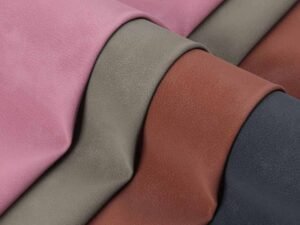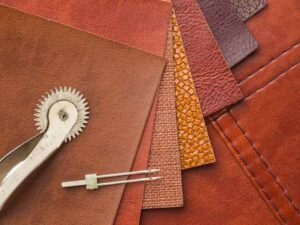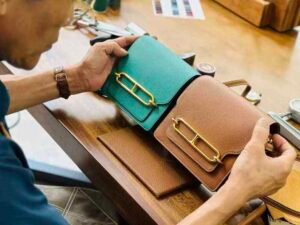

A leather product can appear profitable on a spreadsheet and still become an expensive problem after it reaches Amazon. A slightly weak snap, inconsistent edge paint, unreadable barcode, poorly reinforced handle, or carton containing mixed SKUs may seem like a small factory issue. Once hundreds of units enter fulfillment, however, those details can cause returns, negative reviews, receiving delays, relabeling costs, stranded inventory, and a launch that loses momentum before advertising has a fair chance to work.
To choose a leather goods manufacturer for Amazon, verify that the supplier controls product development, material sourcing, sampling, production, inspection, packaging, labeling, and shipment preparation. The manufacturer should understand your exact leather product category, document the approved materials and components, use the final sample as the bulk-production standard, quote costs transparently, follow current FBA preparation requirements, and demonstrate reliable replenishment capacity.
The best supplier is therefore not automatically the factory offering the lowest unit price. It is the manufacturer that can repeatedly deliver the product, packaging, labels, documentation, and schedule your Amazon business requires. One seller may save a small amount on each wallet and later discover that the leather, color, or hardware changes during the second production run. Another seller may pay slightly more, secure a repeatable specification, and build a listing that stays consistent for years. That difference usually begins with the questions asked before the first purchase order.
What Should an Amazon Leather Manufacturer Offer?

An Amazon leather manufacturer should provide more than basic cutting and sewing. It should control product development, material approval, sample revisions, bulk production, quality inspection, branded packaging, labeling, and export delivery. It should also understand how product consistency affects reviews, returns, inventory planning, and repeat orders. Strong suppliers prove these capabilities with relevant samples, factory access, written procedures, and traceable project records.
Factory Control
The first question is not simply whether the supplier describes itself as a factory. Almost every sourcing company understands that buyers prefer dealing with manufacturers rather than intermediaries. A more useful question is which parts of the project the supplier controls directly, which processes are assigned to specialist partners, and who remains responsible when a material, production, packaging, or delivery problem occurs.
A reliable manufacturing partner should clearly explain who prepares the pattern, approves the leather, purchases the lining and hardware, cuts and skives the material, applies the logo, completes sewing and assembly, inspects finished units, prepares individual packaging, applies FNSKU labels, verifies carton contents, and coordinates export delivery. When responsibilities are divided among several facilities, the main supplier should still maintain one approved standard and one accountable project-management system.
Using specialist subcontractors is normal in leather goods manufacturing. Metal plating, molded zipper pullers, custom logo plates, packaging printing, embroidery, and laboratory testing may be completed by approved external partners. The problem is not the use of specialists. The problem appears when the supplier cannot identify where work is performed, how specifications are transferred, or how quality is checked before the parts enter final assembly.
Ask for a live video factory review rather than relying only on edited photographs. A useful review should follow the actual product flow from material storage to sampling, cutting, skiving, logo application, sewing, edge finishing, final inspection, packing, and finished-goods storage. Request to see products with construction similar to your own design, because a showroom filled with unrelated items does not prove that the supplier can manufacture your project consistently.
| Capability | Practical Evidence | Acceptable Standard | Warning Sign |
|---|---|---|---|
| Product development | Patterns, sample records, and revision sheets | Changes are numbered and traceable | Comments remain scattered across chats |
| Material control | Approved swatches and written specifications | Bulk material is checked against a master | Supplier only says “same as sample” |
| Production control | Live review and process records | Production locations and responsibilities are clear | Factory location changes during the project |
| Quality control | Checklists and defect examples | Incoming, in-line, final, and packing checks | Inspection happens only after production |
| Packaging control | Packed sample and barcode verification | Each SKU has an approved packing standard | Labels are discussed after goods are finished |
| Delivery control | Carton plan and shipping documents | Quantities and destinations are reconciled | Supplier cannot explain shipping responsibilities |
Product Specialization
Leather goods are not one manufacturing category with a single universal process. A workshop producing flat card holders may not be suitable for structured handbags. A factory specializing in belts may understand strap cutting, edge finishing, and buckle assembly but have limited experience with lined compartments, reinforced handles, padded device protection, molded structures, or complex internal organization.
The closest comparable product is more useful than the largest catalog. When evaluating a wallet manufacturer, examine skiving accuracy around card slots, folding thickness, slot spacing, edge alignment, and stitching near narrow margins. When evaluating a handbag manufacturer, focus on handle reinforcement, bottom stability, side-panel symmetry, lining installation, zipper alignment, hardware attachment, and edge-paint consistency around curves.
For laptop sleeves, portfolios, and business accessories, examine padding density, corner protection, device fit, closure clearance, lining softness, and resistance to shape collapse. For travel accessories, review repeated opening points, zipper paths, carrying loads, abrasion areas, and how the product behaves when fully packed. These category-specific details reveal whether the manufacturer understands how the item will actually be used.
Ask the factory to identify the most difficult parts of your design. Experienced product developers normally recognize risks quickly. They may explain that a selected leather is too thick for the wallet fold, that a narrow gusset will be difficult to turn, that a heavy metal plate needs hidden reinforcement, or that a decorative construction creates unnecessary labor without improving the customer experience.
Relevant experience also improves cost control. A manufacturer familiar with the category can identify which design elements increase labor, reduce leather yield, complicate inspection, or delay repeat production. This does not mean removing every premium detail. It means preserving the details customers value while avoiding hidden complexity that adds cost without improving performance, appearance, or perceived quality.
OEM, ODM, and Private Label
OEM, ODM, and private label manufacturing are often grouped together in supplier marketing, although they require different capabilities. OEM production is most appropriate when the buyer already has a complete technical package containing dimensions, construction drawings, material specifications, component references, artwork, packaging files, and an approved physical sample. The manufacturer’s primary responsibility is accurate and repeatable execution.
ODM support becomes important when the product is less developed. The buyer may have a competitor sample, rough sketch, product idea, target selling price, list of customer complaints, or desired use scenario but still need help defining the structure, material, hardware, dimensions, reinforcement, logo process, and production method. This requires product-development judgment rather than simple reproduction.
Many Amazon projects move between OEM and ODM stages. A seller may begin with an existing market reference and then change the internal layout, improve a weak closure, reduce unnecessary weight, modify the leather finish, add a branded puller, create a gift-ready box, or bundle the main product with a smaller accessory. These changes can create meaningful differentiation when they are based on actual customer needs rather than superficial decoration.
Private label capability should extend beyond placing a logo on an existing design. It may include embossed or debossed branding, printed logos, custom metal plates, branded linings, Pantone-controlled colors, zipper pullers, hangtags, care cards, dust bags, retail boxes, mailer boxes, FNSKU labels, master-carton marks, and packaging for sets or bundles.
Before development begins, confirm who owns patterns, molds, packaging files, artwork, and custom hardware. Tooling ownership should be included in the quotation or manufacturing agreement, especially when the buyer pays the entire development cost. The agreement should also explain whether the supplier may display the product in its sample room, website, catalog, exhibition booth, or promotional materials.
Design Protection
Design protection does not result from signing one confidentiality agreement and assuming the project is secure. Effective protection depends on how drawings, samples, molds, photographs, artwork, packaging files, and launch information move through the factory and its supporting supply chain.
Share information according to operational need. A metal-component factory may require a zipper-puller drawing but does not need the full product strategy or selling plan. A packaging printer may need the approved box artwork but does not need the bill of materials or target margin. Limiting access reduces unnecessary exposure while still allowing each supplier to complete its assigned process.
Use project codes and revision numbers for drawings, patterns, molds, and packaging. Outdated files create both production errors and confidentiality risks. The main manufacturer should be able to identify which revision is approved, remove obsolete versions from active production folders, and confirm that the current sample, material sheet, artwork, and packaging instructions match one another.
Custom molds and hardware require written control. Record who paid for the tooling, who owns it, where it will be stored, whether it can be used for other customers, how long it will be retained, and what happens when the project ends. The buyer should also understand whether the tooling can be returned, transferred, archived, or destroyed under agreed conditions.
Factories commonly photograph samples and production for internal checking, approval, inspection, and shipment records. Those photographs should not automatically become marketing content. A practical protection system combines confidentiality terms, controlled access, tooling ownership, restricted display, disciplined photography, and clear project responsibility. A supplier that resists reasonable protection measures may not be suitable for a long-term branded product program.
Which Leather and Materials Should You Choose?
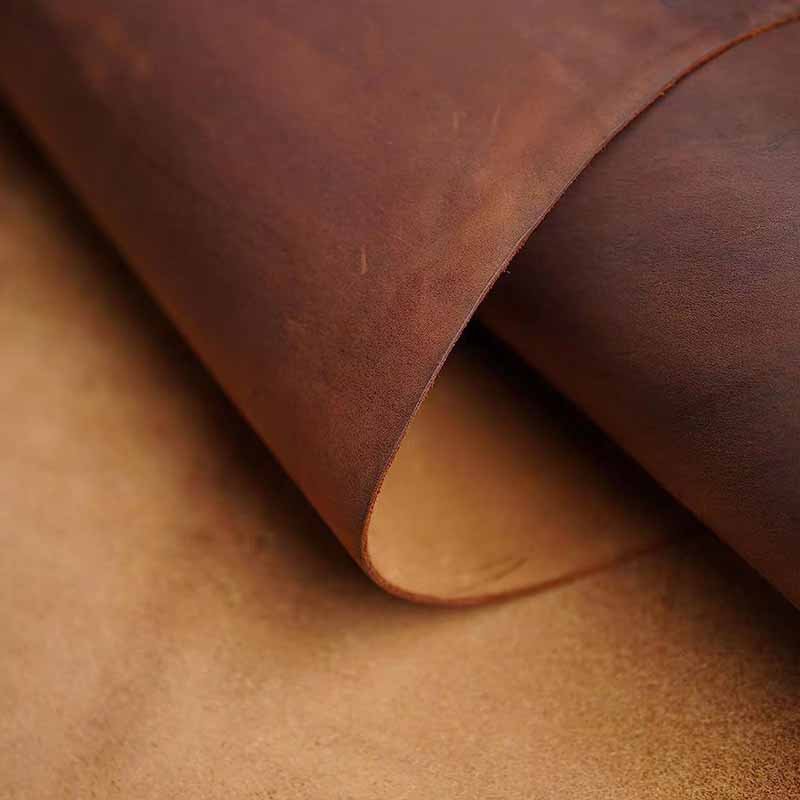
Choose leather and components according to product use, target retail price, expected lifespan, customer experience, and repeat-order stability. Define the leather type, usable thickness, finish, color range, lining, reinforcement, thread, edge paint, zipper, and hardware before approving production. Material names alone are not sufficient; measurable specifications and approved physical standards are needed to keep future orders consistent.
Leather Type
The correct leather depends on what the product must do, how it should feel, and how it is positioned in the marketplace. A premium business briefcase has different material requirements from a slim card holder, lightweight fashion handbag, luggage tag, laptop sleeve, or promotional accessory. Selecting leather by price or appearance alone can create problems during cutting, folding, edge painting, assembly, and daily use.
Full-grain leather retains more of the natural surface and can develop an attractive patina, but it also shows more natural variation. Top-grain leather is generally corrected or finished to create a cleaner and more controlled appearance. Split leather can reduce cost, although its surface coating and internal strength require careful evaluation. Microfiber and PU materials provide greater visual uniformity and broader color options, but their durability varies considerably between grades.
Terms such as “genuine leather” are too broad for professional purchasing. Materials using the same general name may have different thicknesses, coatings, backings, softness, grain patterns, and flexing performance. The purchase specification should therefore identify the construction and performance expectations instead of relying only on a commercial label.
| Product Area | Common Working Thickness | Key Considerations | Typical Material Direction |
|---|---|---|---|
| Card slots and folded wallet parts | 0.6–1.0 mm after skiving | Bulk, fold accuracy, and edge alignment | Thin top-grain, split, or microfiber |
| Wallet outer panels | 1.0–1.5 mm | Hand feel, structure, and folding resistance | Top-grain or controlled full-grain |
| Handbag body panels | 1.2–1.8 mm | Shape, weight, softness, and reinforcement | Full-grain, top-grain, or microfiber |
| Handles and shoulder straps | 1.8–3.0 mm total construction | Stretch, edge finish, and anchor strength | Layered leather with reinforcement |
| Laptop sleeves and folios | 1.0–1.6 mm outer material | Protection, weight, and flexibility | Leather or microfiber with padding |
| Small promotional accessories | 0.8–1.4 mm | Cost, cutting yield, and logo clarity | Split leather, PU, or microfiber |
These ranges are practical development references rather than universal rules. Final thickness must be tested in the completed structure. A 1.5 mm leather may work well for a single-layer panel but become too bulky where several folded, reinforced, or stitched layers meet. A detailed skiving plan should therefore be confirmed during sample development.
Material Specification
A leather specification should contain enough information for another production team to understand the approved material without depending entirely on memory or one physical sample. It should record the leather category, source, thickness, finish, grain, gloss, hand feel, flexibility, color, backside condition, coating, acceptable natural marks, odor requirement, color-rub expectation, and supplier reference number.
Color approval should use a physical master swatch whenever practical. Screen images are unreliable because camera settings, lighting, monitors, compression, and surrounding colors change the appearance. Pantone references can help guide communication, although natural leather may not match a printed color with the same precision as plastic, coated paper, or synthetic material.
Natural variation should be discussed before production. A product marketed as full-grain leather may reasonably show subtle grain differences and natural marks. A minimalist business accessory sold as part of a coordinated set may require stricter shade sorting and surface selection. Neither standard is automatically superior; the acceptable range should match the product photography, listing description, retail price, and customer expectation.
Shade grouping is especially important for larger bags. Body panels, gussets, handles, flaps, and straps should appear coordinated even when they are cut from different hides. When noticeably different panels are combined randomly, the customer may interpret natural variation as a manufacturing defect rather than a material characteristic.
Leather yield also affects pricing. Natural marks, panel size, grain direction, shade selection, and surface requirements reduce the amount of usable material. A very low quotation may assume that more natural marks and shade variation will be accepted. The buyer and factory should resolve this expectation before bulk leather is purchased.
Components and Reinforcement
Customers notice the leather first, but many failures begin with components hidden inside the product. A zipper may jam, a snap may loosen, a plated fitting may change color, a magnet may pull away, or a handle may stretch because the reinforcement ends too close to the stitch line. These problems can create the same negative review as visibly poor leather.
The bill of materials should identify every significant component, including the lining, reinforcement board, foam, zipper, slider, puller, snap, buckle, magnetic closure, thread, edge paint, adhesive, rivets, screws, bottom studs, and protective packaging. Descriptions such as “quality hardware” or “strong lining” are not sufficiently precise for repeat production.
Stress points require careful internal construction. Handle bases, shoulder-strap anchors, snap locations, hinge folds, gusset corners, and metal-logo attachment points often need backing or reinforcement that cannot be seen after assembly. Removing these layers may reduce the unit price, but it can also shorten product life and increase the chance of failure after repeated use.
Ask the manufacturer to explain how force travels through the product. A shoulder strap may use strong leather and still fail when the reinforcement does not extend far enough beyond the anchor. A magnetic closure may tear through the panel if the backing is too small. A heavy metal plate may cause the front body to sag if the panel is not stabilized.
Stitch density, thread size, needle size, leather thickness, and seam position should be tested as a complete system. Very tight stitching can look refined but may weaken soft or thin material by creating a perforation line. Wider spacing may suit thicker constructions. The correct standard should be approved on the actual leather rather than selected only from a general numerical rule.
Repeat-Order Consistency
Amazon listings may remain active for several months or years, making the second, third, and later production runs as important as the first. A supplier must manage material continuity rather than simply produce one attractive sample using whatever material happened to be available at the time.
The approved sample should be supported by a written bill of materials, labeled swatches, color references, hardware samples, packaging specifications, and detailed photographs. The phrase “same as the previous order” is not a dependable specification. Materials may be discontinued, suppliers may change formulas, tanneries may adjust finishes, and hardware plating may vary between batches.
Before placing a repeat order, confirm whether the original leather remains available, whether the tannery or supplier has changed, whether the approved color reference is still being used, whether the hardware plating remains identical, and whether the lining, reinforcement, adhesive, edge paint, or packaging has been replaced.
For important long-term products, approving a backup material in advance can reduce disruption. A substitute leather should be sampled, tested, photographed, and documented before an urgent shortage occurs. Introducing an unapproved alternative during a rushed reorder creates unnecessary quality and listing risk.
Natural leather cannot provide the same batch-to-batch uniformity as a printed synthetic surface. The goal is not absolute visual identity. The goal is a controlled range that remains consistent with the listing, photographs, previous orders, and customer expectations. Rolling sales forecasts can help the manufacturer reserve suitable materials and custom components without holding excessive inventory indefinitely.
How Should Samples and Quality Be Tested?
Use samples to discover product and manufacturing risks before bulk production. The approved sample should confirm dimensions, construction, leather behavior, branding, function, and packaging. Bulk quality should then be controlled through incoming-material checks, a pre-production sample, in-line inspections, final inspection, and packing verification. Testing should reflect how customers will actually carry, open, load, fold, store, and receive the product.
First Sample
The first sample is not expected to be perfect. Its purpose is to reveal problems while corrections remain relatively affordable. A sample that looks attractive in photographs but requires unstable handwork, excessive material sorting, repeated undocumented adjustments, or an unrealistic production time is not ready for bulk manufacturing.
Review the sample in three stages: function, appearance, and manufacturability. Begin by using the product as a customer would. Fill the bag with realistic contents, insert cards into every slot, operate the zippers and closures repeatedly, carry it by the handles and strap, and check whether pockets, openings, and compartments remain comfortable and accessible.
Next, inspect the visual result. Examine the silhouette, symmetry, panel alignment, stitching, logo placement, edge finishing, hardware color, lining tension, surface cleanliness, and overall proportion. View the product from multiple angles and under normal indoor lighting as well as stronger inspection lighting, because some surface or alignment issues become visible only under certain conditions.
The final stage is production feasibility. Ask which parts were difficult to cut, skive, sew, turn, paint, assemble, or clean. A detail completed successfully by one experienced sample maker may still be difficult to reproduce across hundreds or thousands of units. The factory should explain how that operation will be standardized during production.
Measurements must follow an agreed method. A soft handbag may produce different dimensions when laid flat, filled, suspended, or compressed. The specification should state exactly how and where each measurement is taken. All requested changes should be placed in one numbered revision document containing photographs, required action, responsibility, and completion status.
Approval Standard
The final sample should become a controlled production standard rather than a general visual reference. The approval package should include the physical sample, measurement chart, material list, leather and lining swatches, hardware references, logo artwork, stitch details, edge-paint standard, packaging instructions, barcode files, carton labels, and a completed revision record.
Each sample should carry a version number or approval date. Ideally, the buyer retains one approved sample while the factory keeps another sealed reference. This arrangement reduces disputes when bulk production is evaluated several weeks later or when a repeat order is placed after many months.
Dimensional tolerances should reflect the product and the manufacturing process. Small leather goods may use tighter tolerances in functional areas, while larger soft bags may require wider allowances in selected noncritical dimensions. A laptop compartment, card slot, phone pocket, or fitted cover usually needs stricter control than the overall width of a flexible tote.
Cosmetic standards should also be defined. Natural grain variation may be acceptable, while scratches, glue marks, exposed reinforcement, broken edge paint, crooked logos, skipped stitches, or damaged hardware may not be. Photographs of unacceptable defects are often more useful than broad phrases such as “good workmanship.”
Do not approve a product only through photographs when hand feel, weight, color, fit, closure resistance, odor, or hardware operation matters. Photographs are useful during early development, but the final physical sample provides information that cannot be reliably evaluated on a screen. Once production begins, all design changes should follow a controlled change process because even a small revision may affect material use, patterns, labor, packaging, cost, and delivery time.
Bulk Quality Control
Quality control should be distributed across production instead of being concentrated only at the end. Final inspection can identify finished defects, but it cannot efficiently correct hundreds of products cut from the wrong leather, assembled with the wrong lining, or produced from an outdated pattern.
Incoming inspection should confirm leather type, thickness, color, finish, lining, reinforcement, zipper, hardware, thread, edge paint, and packaging components before cutting begins. A pre-production sample should then be completed using intended bulk materials and approved before volume assembly starts.
In-line inspection is most useful during the early and middle stages of production. It can identify incorrect skiving, panel mismatches, uneven stitching, weak reinforcement, poor edge treatment, crooked hardware, and measurement drift while the process can still be corrected without reworking the entire order.
| Control Stage | Main Checks | Practical Timing | Release Requirement |
|---|---|---|---|
| Incoming materials | Leather, color, thickness, lining, hardware, zipper | Before cutting | Match approved standards |
| Pre-production sample | Complete product, logo, components, packaging | Before bulk assembly | Written approval |
| Cutting inspection | Panel quality, grain direction, shade, dimensions | During cutting | Defective panels removed |
| In-line inspection | Stitching, skiving, assembly, edge paint | Early and mid-production | Process corrections completed |
| Final inspection | Appearance, function, dimensions, quantity | After production | Agreed defect limits passed |
| Packing inspection | SKU, FNSKU, protection, accessories, carton quantity | During packing | Labels and carton data reconciled |
Many consumer-goods buyers use AQL-based random inspection as a starting framework. Critical defects may be set at zero, with major and minor categories using agreed acceptance levels. The correct arrangement depends on product risk, order volume, customer expectation, and the consequences of failure. Barcodes, SKU allocation, safety-related details, and critical functions may require complete verification rather than random sampling.
Functional Testing
Testing should reproduce reasonable customer use rather than simply create a certificate. Laboratory testing is important when material chemistry, regulations, safety, or marketing claims require formal evidence. Many construction risks, however, can also be discovered through controlled factory testing when the method, duration, load, cycle count, and pass criteria are clearly recorded.
Useful checks may include handle-load testing, repeated zipper cycling, snap and magnetic-closure operation, card insertion and removal, pocket-seam strength, edge-paint flexing, dry and wet color-rub checks, hardware attachment testing, packed-product drop testing, carton-compression review, odor evaluation after sealed storage, and color-transfer checks against light-colored fabrics.
The testing plan should reflect the listing claims. A product described as water-resistant, heavy-duty, scratch-resistant, or suitable for a specific device should have evidence that supports those statements. Absolute claims such as waterproof, indestructible, or lifetime-lasting should not be used unless the construction and test conditions genuinely justify them.
Packaging testing is part of product testing because customers experience the product only after it has passed through storage, international transport, fulfillment handling, and last-mile delivery. A perfect handbag can arrive with hardware marks, collapsed panels, bent straps, or transferred edge paint when the packaging method is poorly designed.
Keep a fully packed product sealed for several days before opening and inspecting it. This can reveal pressure marks, trapped odor, surface transfer, shape distortion, and packaging materials that react with the leather. The shipping carton should also be reviewed after stacking, compression, movement, and normal handling simulations.
How Do MOQ, Cost, and Lead Time Affect Profit?

MOQ, product cost, and lead time must be evaluated together because they determine inventory exposure, cash flow, and stock availability. A low factory price can become expensive when it requires excessive quantities, custom components, oversized packaging, or slow replenishment. Compare suppliers using MOQ per SKU, one-time fees, packed dimensions, landed cost, production milestones, and realistic reorder timing.
MOQ by SKU
A stated MOQ can mean several different things. It may apply to the total order, one design, one color, one leather finish, one packaging style, or one custom component. Clarifying this structure is essential before comparing quotations.
A supplier may quote 500 pieces but require 500 pieces for each color, turning a four-color launch into a 2,000-unit commitment. Another supplier may allow 500 total pieces divided between two colors because the same leather, lining, hardware, and production setup are used. These arrangements create very different inventory and cash-flow risks.
Custom materials and components often have their own minimum quantities. A factory may be able to sew 300 products but still need to purchase 1,000 custom zipper pullers, 1,000 printed boxes, or a full leather-color batch. The unused components either need to be stored for future orders or included in the current product cost.
For a first Amazon order, reducing unnecessary variation can improve both manufacturing stability and inventory efficiency. One or two colors, standard hardware, and an available leather finish usually create a more manageable launch. Differentiation can still come from better internal organization, stronger reinforcement, improved usability, a distinctive logo treatment, or a carefully designed bundle.
The smallest MOQ is not always the safest choice. Extremely small production runs can create higher unit cost, inefficient cutting, limited material purchasing power, and less stable production scheduling. The most suitable quantity is the one that balances market-testing risk with a production process capable of delivering consistent results.
Real Product Cost
A professional quotation should describe exactly what is included. A line stating only “leather wallet, 500 pieces” does not provide enough information to compare suppliers or protect the buyer against later material and construction changes.
The quotation should identify the leather category, thickness, finish, lining, reinforcement, zipper, hardware, thread, logo method, packaging, color breakdown, quantity, sample fees, tooling fees, testing requirements, inspection arrangement, Incoterm, lead time, payment terms, and quotation validity.
Separate one-time expenses from recurring production costs. Pattern development, metal-logo molds, custom zipper tooling, embossing dies, printing plates, and packaging setup may not repeat on later orders. This distinction helps the seller understand whether the second production run will have better economics than the first.
Low quotations should be reviewed carefully rather than rejected automatically. The difference may result from leather grade, usable yield, hidden reinforcement, hardware base metal, plating quality, edge-finishing labor, inspection depth, or packaging. Ask the supplier to explain the main cost drivers so that cost reductions can be made deliberately rather than through unrecorded material changes.
Cost engineering should protect what the customer can see, feel, and use. Simplifying an internal structure, changing an unseen board, selecting a standard zipper puller, or adjusting the package may reduce cost without harming the product. Removing handle reinforcement, using unstable edge paint, or substituting a weaker surface material may save money initially but increase returns and negative reviews.
Landed Cost
The factory price represents only one part of the cost of placing a product into Amazon inventory. A useful landed-cost calculation includes the product, packaging, tooling allocation, testing allocation, inspection, export handling, freight, duty, customs charges, and destination delivery.
The commercial model must then include fulfillment charges, storage, advertising, promotions, returns, damaged inventory, and possible removal costs. These expenses are not paid to the manufacturer, but they determine whether the product remains profitable after launch.
Packaging dimensions deserve attention during product development because shipping and fulfillment systems often use dimensional weight or size categories. A box that is only slightly larger than necessary may increase the cost of every unit. A rigid gift box may support premium positioning but can also increase freight, storage, and fulfillment costs.
Before final production, request the packed-unit dimensions and weight, master-carton dimensions, units per carton, carton gross and net weight, total carton count, shipment volume, and pallet requirements where applicable. Do not calculate freight from the unpacked product because leather goods may be folded, filled, boxed, sleeved, or supported with inserts.
Compare at least two packaging options. One may prioritize presentation, while another reduces volume and shipping expense. The best choice depends on the retail price, listing strategy, product fragility, and customer experience. Landed cost should be recalculated after the final packed sample is approved because early dimensions are often only estimates.
Reorder Timing
A profitable listing can still fail when inventory cannot be replenished in time. Reorder planning should begin before the first shipment reaches Amazon rather than when available stock has already fallen to a critical level.
Work backward from the required inventory arrival date. Include material purchasing, custom hardware production, pre-production approval, bulk manufacturing, final inspection, export booking, international transit, customs clearance, destination delivery, Amazon receiving, and a reasonable buffer for disruptions.
Sample development for leather goods may take approximately 7–20 business days depending on structure, material availability, custom components, and revision rounds. Bulk production may require approximately 25–45 days after final approval and material readiness. Custom leather colors, molded hardware, laboratory testing, complex packaging, or peak-season capacity may extend the timeline.
A simple reorder formula is:
Reorder point = average daily sales × total replenishment days + safety stock
A product selling 12 units per day with a 75-day replenishment cycle requires 900 units merely to cover expected demand during replenishment. Additional safety stock is needed for sales growth, holidays, shipping delays, customs issues, or slower fulfillment-center receiving.
Rolling forecasts can help the manufacturer plan leather, hardware, packaging, and production capacity. A three- or six-month estimate does not need to become a binding purchase order, but it gives both sides better visibility. Stable Amazon programs are easier to manage when the second order is discussed during the first rather than treated as an unexpected emergency.
Does the Factory Support Amazon FBA?
An FBA-ready factory should prepare each unit according to the seller’s approved shipment plan, including protective packaging, scannable barcodes, required warnings, SKU separation, carton identification, and accurate packing data. Factory-side preparation became especially important in the United States after Amazon stopped offering FBA prep and item-labeling services for new US-store shipments on January 1, 2026.
Unit Preparation
FBA preparation begins with the individual product rather than the master carton. Each unit should arrive protected, identifiable, clean, correctly packaged, and ready for the fulfillment process. The packaging method should also support a positive customer experience without creating unnecessary weight or volume.
Leather products require particular care because their surfaces can be marked by metal hardware, straps, tissue, adhesive, or neighboring units during transport. Depending on the design, preparation may include hardware covers, non-abrasive wrapping, shape-support inserts, dust bags, protective sleeves, polybags, retail boxes, care cards, warning labels, and bundle identification.
A fully packed sample should be approved before bulk packaging is purchased. Leave the product packed for several days and then inspect it for collapsed panels, pressure marks, transferred edge paint, trapped odor, distorted straps, scratched hardware, and discoloration caused by tissue or packaging material.
The seller should verify the current requirements in Seller Central for the product, marketplace, and shipment plan before releasing final files. Requirements may vary by product category and may change over time. The manufacturer should follow the seller’s approved instructions rather than relying only on general experience from previous Amazon projects.
The packaging standard should be treated as part of the finished product specification. A unit is not truly complete when the sewing ends. It is complete when the correct accessory, care information, barcode, warning, protection method, retail presentation, and shipment preparation have all been verified.
FNSKU and Barcode Control
Applying a label is simple. Applying the correct label to the correct SKU across hundreds or thousands of units requires a controlled process. The seller should provide final barcode files with clear SKU names, product descriptions, colors, sizes, and version dates.
The factory should print a small test quantity and confirm the label size, print quality, scan performance, and placement before full application. Existing conflicting barcodes should be covered where required. Labels should not be placed across openings, seams, folds, curves, or areas where the surface prevents reliable scanning.
A dependable labeling workflow should include file receipt from an authorized contact, SKU and quantity registration, test printing, placement approval, application, scan verification, quantity reconciliation, carton-content confirmation, and final label photography.
Multiple-SKU orders require physical separation. Dark brown, black, navy, and charcoal products may appear similar under factory lighting. Different sizes may also look almost identical after packaging. Separate workstations, labeled trays, color-coded instructions, internal SKU cards, and second-person verification can reduce mixing risk.
Amazon stopped offering FBA prep and item-labeling services for new shipments to the US store on January 1, 2026. Sellers therefore need to arrange correct preparation through the manufacturer or another qualified service provider before inventory reaches fulfillment. This change makes factory labeling discipline a central supplier-selection issue rather than an optional convenience.
Packaging and Cartons
Master-carton control connects production to logistics. A leather product can pass every workmanship inspection and still create receiving problems when carton quantities, dimensions, weights, SKU allocations, or labels do not match the shipment plan.
The carton plan should identify the SKU, product color, size, units per carton, carton number, total cartons, net weight, gross weight, dimensions, destination, FBA Box ID label, carrier label, and any special handling instruction.
Case-packed cartons should contain the agreed SKU and quantity. Mixed-SKU cartons require stronger records and clear physical separation. Before sealing, the packing team should verify the product, barcode, accessories, unit quantity, protective materials, and product orientation. After sealing, cartons should be measured and weighed rather than using unconfirmed estimates from development.
Carton weight should remain practical for handling and strong enough for the route. Small leather goods can create unexpectedly heavy cartons when packed densely. Oversized or overloaded cartons are more likely to split, deform, become difficult to handle, or require repacking.
Keep photographs of open cartons, sealed cartons, barcode placement, carton labels, and pallet preparation. These records can help investigate shortages, mixed SKUs, damaged packaging, or label disputes. The shipment should not be released until the packing list, carton count, physical labels, and Amazon shipment instructions agree.
FBA and 3PL Delivery
A manufacturer does not need to operate as a freight forwarder, but it should understand the information required to hand inventory over correctly. Possible arrangements include express delivery, air freight, sea freight, DDP delivery, shipment to an Amazon fulfillment center, delivery to a third-party logistics warehouse, split shipments, and multi-destination distribution.
Shipping terms should identify who handles export customs, international transportation, import clearance, duties, destination appointments, and final delivery. General phrases such as “door to door” are not precise enough unless each responsibility is stated.
A split-shipment strategy can reduce stockout risk. A smaller urgent quantity may move by air while the balance moves by sea. The combined freight expense is higher than using sea freight alone, but it may protect listing availability, sales history, and advertising performance.
A 3PL can provide flexibility when inventory needs to be stored, inspected, relabeled, bundled, or gradually forwarded to Amazon. This arrangement may be useful when demand is uncertain, several marketplaces are being served, or the seller expects packaging and bundle changes.
Before shipping, reconcile the factory packing list, freight booking, Amazon shipment plan, and commercial invoice. SKU names, quantities, carton counts, weights, values, and destinations should agree across the documents. Even when the factory coordinates the shipment, the seller remains responsible for checking current Amazon requirements and approving the final plan.
How Do You Verify the Manufacturer?
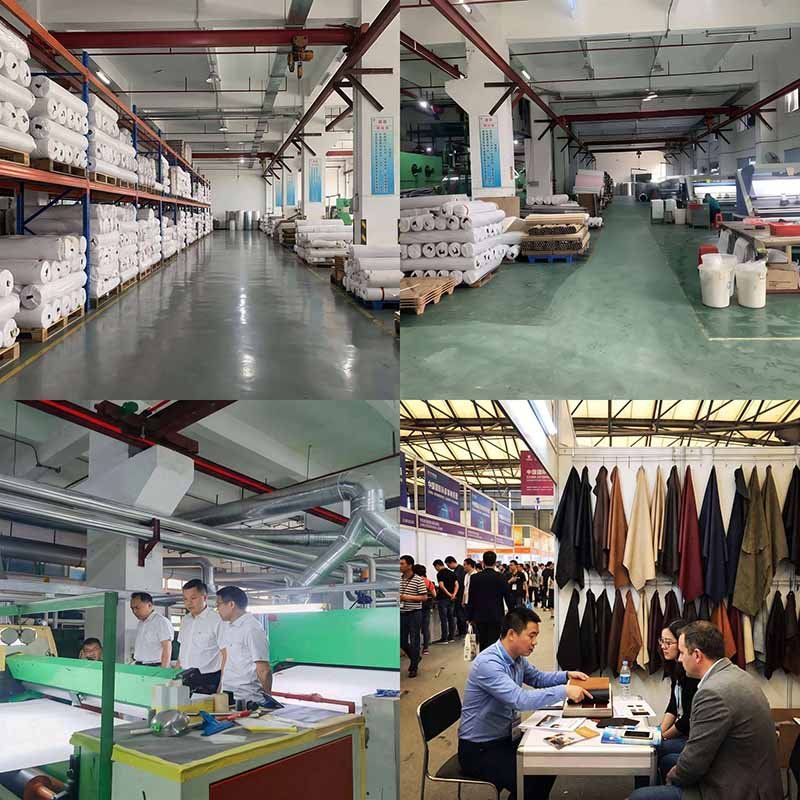
Verify a leather manufacturer through several layers of evidence: company records, relevant product experience, material specifications, sample performance, factory access, quality procedures, packaging trials, and a controlled first order. No certificate, sample, or factory video proves everything. The final decision should reflect how consistently the supplier converts written requirements into repeatable, inspection-ready, and shipment-ready products.
Documents and Audits
Begin by confirming the supplier’s legal and commercial identity. The company name used on the quotation, contract, invoice, bank account, shipping documents, and website should be understandable and consistent. Any differences should be explained before payment.
Useful evidence may include business registration information, operating addresses, formal quotations, product specifications, bills of materials, sample approval records, quality-control procedures, available material documents, relevant test reports, packaging specifications, production schedules, commercial invoice formats, packing-list formats, and shipping terms.
Certificates should be reviewed carefully. Confirm the company name, issuing organization, scope, product category, and validity date. A certificate belonging to an unrelated company, different facility, or product group does not prove compliance for the current order.
A remote audit can be useful when it is interactive. Ask the presenter to move through the facility live, show current project areas, display materials or products related to the inquiry, and answer process questions. Pre-recorded videos are helpful introductions but provide less verification because they show only selected scenes.
For larger, more complex, or higher-risk programs, an on-site audit or independent review may be appropriate. The audit should focus on the actual project risks, including material control, sample management, pattern revision, nonconforming products, in-line inspection, packaging accuracy, and finished-goods storage.
Supplier Questions
The quality of a supplier’s answers often reveals more than its marketing materials. Ask practical questions that require process knowledge rather than simple yes-or-no responses.
Useful questions include which part of the design is hardest to manufacture consistently, which leather thickness is recommended, where skiving is needed, which areas require reinforcement, how MOQ applies to each design or color, how bulk leather will be approved, who makes the final pattern, how revisions are recorded, and at which stages inspections occur.
Also ask how the factory defines critical and major defects, how it controls FNSKU files, whether packed dimensions can be confirmed before packaging production, what realistic repeat-order lead time should be expected, which processes are subcontracted, and who becomes responsible when final inspection fails.
Strong suppliers do not answer every question with “no problem.” They explain trade-offs. A thicker leather may improve structure but increase weight and folding bulk. Custom plating may strengthen brand identity but extend development time. A rigid box may improve presentation while increasing freight and fulfillment expense.
Pay attention to the questions the supplier asks in return. A professional team should request information about use, target market, dimensions, materials, logo, quantity, packaging, quality expectations, timeline, shipment method, and destination. A supplier that quotes immediately without understanding the product may be estimating from appearance rather than evaluating the real project.
Red Flags
One unusual issue may have a reasonable explanation, but several warning signs appearing together should pause the project. Be cautious when the supplier offers a price far below realistic material and labor costs, refuses to identify the leather, avoids live factory access, or repeatedly changes the explanation of where production will occur.
Other warning signs include inconsistent company names without explanation, pressure to skip sampling, production starting before final approval, unwillingness to document revisions, MOQ changes after the deposit, unclear mold ownership, certification promises before requirements are reviewed, no written defect standard, packaging discussed only after production, and barcode files handled without SKU verification.
Be cautious when the development sample is excellent but the supplier cannot explain how the same result will be reproduced in bulk. A skilled sample maker can create one impressive unit even when the production system lacks material control, trained operators, inspection checkpoints, or stable capacity.
Communication quality also matters. A slower but precise answer can be safer than a fast answer that changes later. Look for consistent records, named responsibility, documented decisions, and willingness to acknowledge technical or scheduling limits.
A trustworthy manufacturer may refuse requirements that are technically unrealistic, legally questionable, or incompatible with the available budget. That honesty protects the buyer. A supplier that accepts every request immediately may be avoiding difficult discussions until after the order is secured.
Final Scorecard
The final decision should be based on weighted evidence rather than the lowest quotation, most polished showroom, or most persuasive salesperson. A practical scorecard can assign 15% each to relevant product experience, material control, sample accuracy, quality management, and Amazon preparation capability.
Cost transparency and production capacity may each receive 10%, while communication and accountability receive 5%. These weights can be adjusted. A premium briefcase project may place more emphasis on leather selection, finishing, and craftsmanship. A higher-volume Amazon accessory may place more emphasis on consistency, packaging dimensions, labeling, and replenishment.
Define non-negotiable requirements before scoring. A supplier should not qualify when it fails a critical condition such as product safety, material authenticity, confidentiality, barcode control, or legal compliance, even when the overall score appears acceptable.
Compare suppliers using the same specification. A quotation based on full-grain leather, custom hardware, and a rigid box cannot be compared directly with another based on split leather, standard hardware, and a polybag. Align materials, construction, packaging, testing, Incoterms, and quantities before comparing prices.
A controlled first production order is often the most valuable final test. It reveals how the supplier handles material purchasing, schedule pressure, in-line corrections, inspection, packing, documentation, and shipment communication. The best manufacturer is not the company that promises the most. It is the one that provides enough evidence to make product quality, delivery, and repeat production predictable.
Request a Custom Amazon Leather Product Review
A successful Amazon leather product starts long before the listing goes live. It begins with a manufacturing system that turns product ideas, reference samples, technical packs, material expectations, branding files, packaging requirements, and inventory plans into repeatable products that can pass inspection and remain consistent during future orders.
Szoneier is a Shenzhen-based OEM and ODM manufacturer with more than 18 years of experience in custom bags, leather goods, and sewn soft products. Its project capabilities cover material sourcing, pattern making, sampling, logo application, bulk production, quality inspection, branded packaging, barcode preparation, carton control, export documentation, FBA delivery coordination, and repeat-order planning.
To request an initial project review, send your product photographs, reference sample, technical pack, sketch, or competitor link together with the target dimensions, preferred leather, logo artwork, expected quantity, packaging requirements, Amazon marketplace, target delivery schedule, and destination country.
The project team can review the proposed material, structure, production method, MOQ, sample requirements, cost drivers, quality-control points, packaging plan, and delivery options before the order enters development. Clear information at the inquiry stage makes it easier to provide a realistic quotation and identify potential manufacturing risks early.