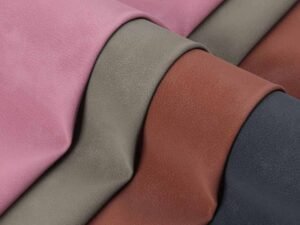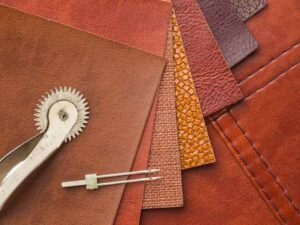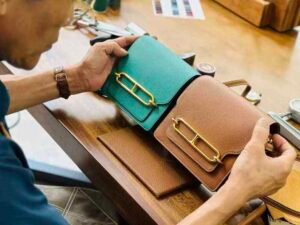
A leather wallet looks simple until a brand tries to manufacture one consistently. The product may be small, but it brings together leather selection, skiving, card-slot sizing, edge preparation, stitching, folding, hardware installation, branding, packaging, and inspection within a very limited space. A difference of only one or two millimeters can make card slots difficult to use, shift a logo visibly off center, or cause the finished wallet to twist when closed.
To choose a leather wallet manufacturer, evaluate its experience with small leather goods, material control, pattern development, card-slot engineering, skiving, stitching, edge finishing, sampling, pricing transparency, quality inspection, capacity, and repeat-order management. The right manufacturer should explain production risks clearly, document the approved sample, control materials and tolerances, and reproduce the same appearance and function throughout bulk production.
The most impressive sample is not always produced by the most dependable factory. Skilled sample technicians can make one nearly perfect piece by hand, while the production floor may struggle to repeat it across hundreds or thousands of units. That gap between sample quality and bulk consistency is where many wallet projects fail.
A stronger sourcing decision looks beyond a polished showroom sample. It examines how the factory selects hides, controls layer thickness, records revisions, checks card fit, manages custom hardware, inspects semi-finished pieces, protects finished surfaces, and handles the next reorder. The following guide explains how to evaluate those areas before committing to production.
What Should You Define Before Sourcing?
Before contacting manufacturers, define the wallet style, intended user, target price, dimensions, card capacity, materials, branding, packaging, quantity, and delivery date. These details allow suppliers to quote the same specification and identify construction risks early. Without a clear brief, competing quotations may represent different leather grades, component thicknesses, workmanship levels, hardware standards, and packaging assumptions.
Product and Customer
Begin with the exact wallet category rather than the general word “wallet.” A bifold, trifold, card holder, zip-around wallet, money-clip wallet, passport organizer, coin wallet, and RFID travel wallet require different patterns, materials, machines, labor time, and inspection procedures. Even two bifold wallets may need different engineering when one contains four card slots and the other contains twelve.
Define how the wallet will be used in daily life. A slim business wallet should fit comfortably in a trouser or jacket pocket without becoming bulky after cards are inserted. A travel wallet may need passport storage, ticket pockets, currency compartments, a zipper, and RFID protection. A corporate gift wallet may prioritize visible branding, consistent color, individual packaging, and delivery by a fixed event date.
The retail environment also influences production decisions. Premium stores often expect refined leather selection, clean edge finishing, careful surface protection, and attractive gift packaging. Online brands may require photography samples, barcode labels, branded inserts, compact shipping cartons, and predictable color across reorders. Promotional programs usually place more emphasis on cost control, logo visibility, production speed, and efficient packing.
A manufacturer can recommend the right material and construction only when it understands the customer, use case, expected selling price, and quality position. A wallet designed without that context may look attractive while failing to match the market it was intended to serve.
Technical Brief
A useful technical brief gives every shortlisted supplier the same information. This makes quotations easier to compare and reduces the chance that each factory interprets the design differently. One supplier may quote top-grain leather and a leather interior, while another quotes split leather with synthetic lining. The lower number appears attractive only because the products are not truly comparable.
Provide front, back, open, closed, side, and interior views whenever possible. Mark the overall size, card-slot exposure, bill-compartment depth, zipper length, hardware location, logo position, and important seam lines. State whether edges are folded, turned, cut, painted, burnished, or covered. A single lifestyle image rarely contains enough information for reliable pricing.
A complete tech pack is helpful, but it is not required for every initial discussion. An experienced development team can also work from a physical sample, a sketch, marked photographs, a reference product, or a clear written description. The important distinction is between fixed requirements and areas where the manufacturer may propose alternatives.
| Brief Item | Information to Provide | Production Impact |
|---|---|---|
| Wallet style | Bifold, card holder, zip wallet, passport wallet | Determines pattern, machinery, labor, and inspection |
| Finished size | Open and closed dimensions | Controls folding, pocket fit, packaging, and comfort |
| Storage | Card, bill, coin, ID, passport, or receipt capacity | Affects layer count and finished thickness |
| Materials | Leather grade, lining, reinforcement, edge finish | Drives appearance, durability, consistency, and cost |
| Branding | Debossing, foil, printing, metal logo, custom hardware | Influences tooling, placement, MOQ, and lead time |
| Quantity | Total units, units per color, expected reorder volume | Affects material purchasing and production planning |
| Packaging | Sleeve, dust bag, box, barcode, insert card | Changes protection, carton size, cost, and presentation |
| Market | Retail, gift, online, travel, premium | Helps define quality, testing, labeling, and appearance |
Order Volume
Do not provide only the first-order quantity. Share the likely test order, expected reorder size, number of colors, number of SKUs, and estimated annual demand when those figures are available. A manufacturer may recommend stock leather for a 300-piece launch but custom-dyed leather for a stable program involving several thousand pieces per year.
Clarify quantities per color and per design. Five hundred wallets in one color are easier to manage than five hundred divided into ten colors. Every additional color may require separate material purchasing, cutting identification, thread matching, edge-paint preparation, hardware tracking, packaging labels, production records, and final inspection.
Small test orders can reduce inventory risk, but they should still use materials and processes that can be repeated later. A trial made with leftover leather, temporary hardware, or substitute packaging may provide misleading market feedback. The product sold in the first launch should closely represent the specification intended for future replenishment.
The delivery date should be calculated backward from the required warehouse, promotion, or retail date. Allow time for sample development, revisions, material procurement, production, inspection, packaging, international transportation, customs clearance, and possible correction. Leather, custom metal components, and rigid gift boxes frequently create longer lead times than the sewing operation itself.
Commercial Priorities
Most wallet projects cannot maximize premium leather, complex construction, custom hardware, extensive packaging, low quantity, rapid delivery, and minimum unit price at the same time. The sourcing team should identify which requirements are fixed and where practical alternatives are acceptable before requesting quotations.
A target price can be used as a useful engineering limit rather than a bargaining tactic. When the target is clear, the manufacturer can propose a more efficient card-slot layout, a microfiber interior, standard hardware, a different edge method, a lighter gift box, or a stock leather color. These changes may preserve the visible product experience while reducing unnecessary cost.
The strongest discussions are based on trade-offs. Increasing the number of card slots raises material use, cutting time, skiving work, stitching, thickness, and inspection requirements. A larger metal logo may require reinforcement and additional packaging protection. A custom leather color may create a higher material minimum and a longer procurement cycle.
A reliable manufacturer should explain these consequences before production begins. A supplier that agrees to every request without discussing cost, timing, material limits, or construction risks may simply be postponing difficult decisions until after the deposit has been paid.
Which Leather and Materials Should You Choose?
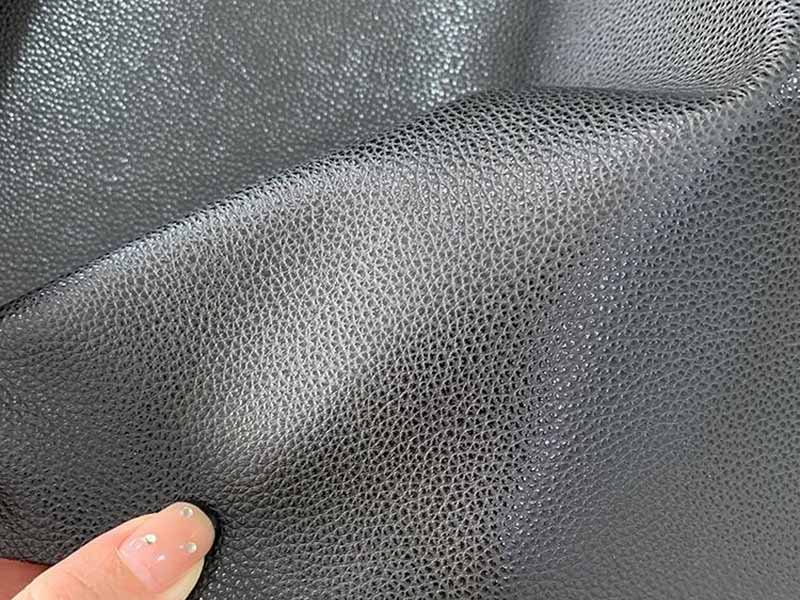
Choose materials according to product position, structure, target cost, expected aging, production quantity, and consistency requirements. Full-grain and top-grain leather provide natural character, while corrected leather, microfiber, and PU can offer more uniform color and thickness. The specification should also define leather temper, thickness, backing, lining, reinforcement, finish, grain direction, and acceptable natural variation.
Leather Grade
The description “genuine leather” is too broad for production. It does not explain whether the material is full-grain, top-grain, corrected-grain, split leather, vegetable-tanned, chrome-tanned, oil-wax, embossed, or coated. These materials can differ significantly in appearance, softness, durability, cutting yield, aging, and price.
Full-grain leather retains the natural grain surface and is often chosen when character, patina, and material storytelling are important. It may also contain visible grain variation, healed marks, wrinkles, and shade differences. These characteristics are not automatically defects, but the acceptable range should be agreed before material cutting begins.
Top-grain leather is commonly sanded or lightly corrected to create a more consistent surface while retaining a refined leather feel. Corrected-grain leather receives more surface treatment and can be useful for programs where predictable color and appearance matter more than natural grain variation.
Vegetable-tanned leather usually feels firmer and develops a distinctive patina. Chrome-tanned leather generally offers more flexibility, softness, and color variety. Neither option is universally superior. The right choice depends on the wallet structure, intended use, customer expectations, and desired aging.
Alternative Materials
Natural leather is not automatically the most suitable option for every collection. High-quality microfiber leather can provide stable thickness, uniform grain, consistent color, efficient cutting yield, and predictable bulk production. It is useful when a brand requires a clean, repeatable appearance across several colors or production batches.
PU materials offer broad color, texture, and surface-finish choices. They can work effectively for promotional products, fashion collections, seasonal designs, and price-sensitive programs. However, quality varies widely. The specification should address backing type, total thickness, surface coating, flexibility, abrasion performance, and resistance to breakdown under humidity or repeated folding.
A material should be evaluated after manufacturing operations, not only as a flat swatch. Attractive material may become unsuitable after skiving, stitching, folding, gluing, or edge painting. It may crack at the center fold, stretch around card slots, absorb edge paint poorly, or become bulky when several layers overlap.
| Material | Typical Advantages | Main Limitations | Common Application |
|---|---|---|---|
| Full-grain leather | Natural grain, patina, premium feel | Greater variation and lower cutting yield | Heritage and premium wallets |
| Top-grain leather | Refined feel with better consistency | Less natural surface character | Business and premium retail |
| Corrected leather | Uniform color and predictable grain | More surface treatment | Larger consistent collections |
| Vegetable-tanned leather | Firm structure and rich aging | Longer break-in and shade sensitivity | Structured bifolds and card holders |
| Chrome-tanned leather | Soft hand and wide color selection | Performance varies by tannery | Fashion and everyday wallets |
| Microfiber leather | Stable thickness and efficient cutting | Limited natural patina | Scalable private-label programs |
| PU leather | Cost control and broad color options | Durability varies significantly | Promotional and seasonal products |
Thickness and Layering
Wallet development is largely a problem of accumulated thickness. A material that feels thin as one sheet may become too bulky when six, eight, or ten components meet around card pockets, folded edges, zipper ends, or the center spine. Leather, lining, reinforcement, adhesive, thread, and edge treatment all contribute to the finished result.
The exterior material may be thicker than internal components, while card-slot edges and fold zones are skived to reduce bulk. As a practical starting range, exterior leather is often evaluated at approximately 1.0–1.6 millimeters before local skiving, while internal layers may be reduced to around 0.5–0.9 millimeters in selected areas. These ranges must be adjusted according to leather firmness and wallet design.
A soft leather behaves differently from a firm leather at the same measured thickness. Folded edges also require different allowances from raw painted edges. A manufacturer should therefore evaluate thickness by location rather than use a single measurement for every component.
Skiving areas should be marked on the pattern and recorded in the specification. When skiving is left entirely to individual operator judgment, wallets can vary in feel, card fit, and closing behavior. Critical zones include the center fold, card-slot openings, bottom corners, zipper ends, logo areas, and points where multiple layers meet.
Linings and Reinforcement
Wallet interiors may use leather, microfiber, polyester, cotton, synthetic backing, or combinations of these materials. A fully leather-lined interior creates a premium impression but increases cost, material variation, skiving work, and finished thickness. Fabric or microfiber lining can reduce weight and provide greater consistency, but adhesive compatibility, fraying, and seam construction still require control.
Reinforcement may be needed behind snaps, magnets, money clips, metal logos, and thin leather panels. The support material must be strong enough to distribute force without creating a visible ridge, hard spot, or surface impression. Heavy reinforcement can also make a wallet difficult to fold, so more material does not automatically produce a better result.
RFID-blocking construction deserves particular care. Adding a metallic layer somewhere inside the wallet does not guarantee effective protection. The material must surround the intended card area appropriately and be tested at the relevant frequency using the finished wallet. Claims should not rely only on a raw-material certificate.
Material approval should cover the complete system rather than the visible leather alone. The exterior, interior, reinforcement, adhesive, thread, edge paint, hardware, and packaging protection work together. A high-grade outer leather cannot compensate for unstable lining, weak reinforcement, poor adhesive compatibility, or rough internal construction.
How Do You Assess Wallet Manufacturing Capability?
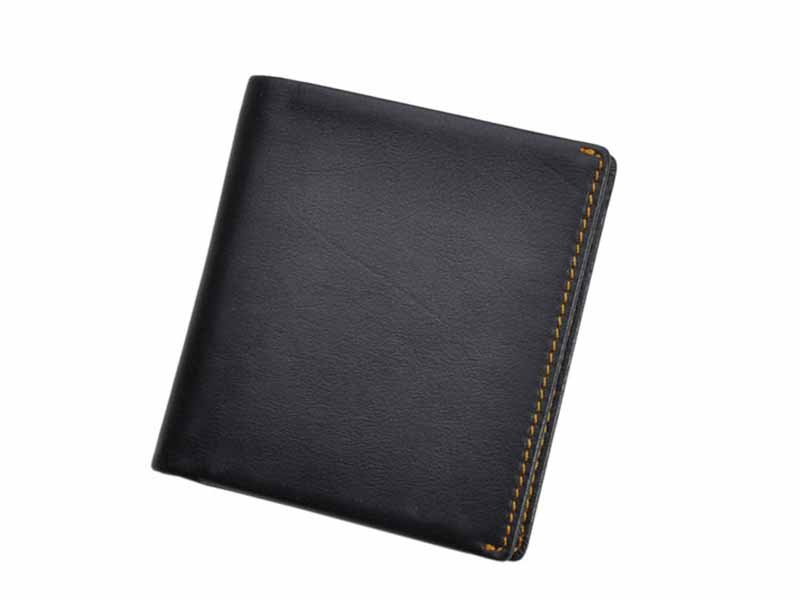
Assess whether the factory understands wallets as precision small leather goods rather than reduced-size handbags. Review pattern making, cutting, skiving, card-slot engineering, stitching, edge preparation, hardware installation, logo placement, and in-process inspection. A capable manufacturer should explain where thickness accumulates, how card fit is tested, which tolerances matter, and how the approved construction will be repeated during production.
Small Leather Goods Experience
A manufacturer that produces leather handbags may not automatically be strong at wallet manufacturing. Larger products provide more room for adjustment and can hide minor dimensional variation. Wallets place many components, folds, stitch lines, and functional openings within a small area that customers examine closely.
Ask to review products with structures similar to the proposed design. A factory experienced in bifold wallets should understand center-fold balance, bill-compartment depth, card exposure, opening resistance, grain direction, and the way leather relaxes after repeated use. A zip-wallet specialist should understand zipper tape, gussets, curved corners, slider movement, and zipper-end protection.
The production area should include appropriate skiving machines, cutting equipment, sewing machines, edge-finishing stations, placement guides, and inspection tools. Equipment alone is not enough. Wallet quality depends heavily on operator skill, component preparation, process discipline, and the ability to detect variation before final assembly.
One useful question is to ask the factory to identify the most likely production risks in the design. An experienced team may mention excessive thickness, tight card slots, edge cracking, hardware impressions, leather variation, or difficult corner stitching. A supplier that describes every feature as easy may not have examined the construction carefully.
Card-Slot Engineering
A standard payment card measures approximately 85.60 by 53.98 millimeters, but a leather card slot cannot simply match those dimensions. The pattern must allow for leather thickness, stitching position, adhesive, lining, insertion angle, expected stretching, and the number of cards the customer may place in each pocket.
Card slots should be tested using the intended card type and quantity. A pocket that works with one thin sample card may become unusable with an embossed bank card. A pocket made too loose to avoid complaints may lose retention quickly after repeated use. The correct fit usually includes light initial resistance without forcing the card.
Pocket exposure should remain visually consistent across each row. Small differences become obvious when several card edges appear side by side. Layering should also be engineered so that every pocket component does not continue into the same side seam. Stepped pocket shapes, concealed cutouts, controlled skiving, and reduced hidden backing can lower thickness while retaining strength.
| Inspection Point | Practical Starting Range | Purpose |
|---|---|---|
| Finished dimensions | Approximately ±1–2 mm | Maintains fit, symmetry, and packaging consistency |
| Card-slot exposure | Approximately ±1 mm | Keeps pocket rows visually aligned |
| Logo location | Approximately ±1–2 mm | Prevents visible off-center branding |
| Stitch length | Commonly 2.5–3.5 mm | Balances seam strength and appearance |
| Stitch edge distance | Commonly 2–3 mm | Protects edges and improves consistency |
| Card fit | Test with agreed card count | Detects pockets that are too tight or too loose |
| Fold alignment | No visible twisting when closed | Protects shape and user comfort |
These figures are useful starting points rather than universal standards. Final tolerances should reflect leather firmness, product dimensions, pocket structure, stitch method, and the approved production sample.
Stitching and Edge Finish
Stitch lines should remain parallel to the product edge with consistent thread tension, clean backstitching, and controlled corner turns. Uneven edge distance is especially visible on a compact wallet. Excessive tension can create puckering or large needle marks, while loose tension can cause looping and weak seams.
Thread selection affects appearance, durability, and construction. A thick decorative thread may look strong but create bulky corners or oversized needle holes. A very fine thread may suit refined leather but provide insufficient visual weight for rugged material. Needle size, thread size, stitch length, machine setting, and leather temper should be developed together.
Painted edges require trimming, sanding, cleaning, base preparation, paint application, drying, and polishing. The number of paint layers does not guarantee quality. Heavy paint applied over a poorly prepared or overly flexible edge may look smooth during sample approval and crack after repeated folding.
Inspect edge samples after bending them several times. Look for pinholes, waves, rough areas, peeling between layers, inconsistent color, poor corner coverage, and cracking near the center fold. Natural leather, microfiber, and PU may require different preparation methods and edge-paint formulations.
Hardware and Branding
Hardware should be evaluated for plating consistency, sharp edges, attachment strength, movement, weight, and compatibility with the leather structure. Snaps and magnets need reinforcement, but that reinforcement should not create visible surface impressions. Zippers must move smoothly around corners without pulling the gusset or changing the wallet shape.
A metal logo can create strong visual identity, yet its size and weight should suit the leather panel. Large plates may cause soft leather to sag or can mark adjacent surfaces during packing and transportation. Attachment prongs, screws, or backing plates must be covered so they cannot scratch cards or create uncomfortable interior bumps.
Logo methods include debossing, embossing, foil stamping, printing, metal plates, and branded hardware. Each process has different tooling requirements, line-width limits, heat sensitivity, surface compatibility, and placement tolerance. Deep debossing may work well on firm leather but look unclear on soft or heavily textured material.
Approve the logo on the final production material rather than on an unrelated scrap. Confirm its size, depth, color, surface finish, position, orientation, and distance from seams or folds. A logo positioned only a few millimeters off center can look noticeably incorrect on a compact card holder.
How Do Sampling and Customization Work?
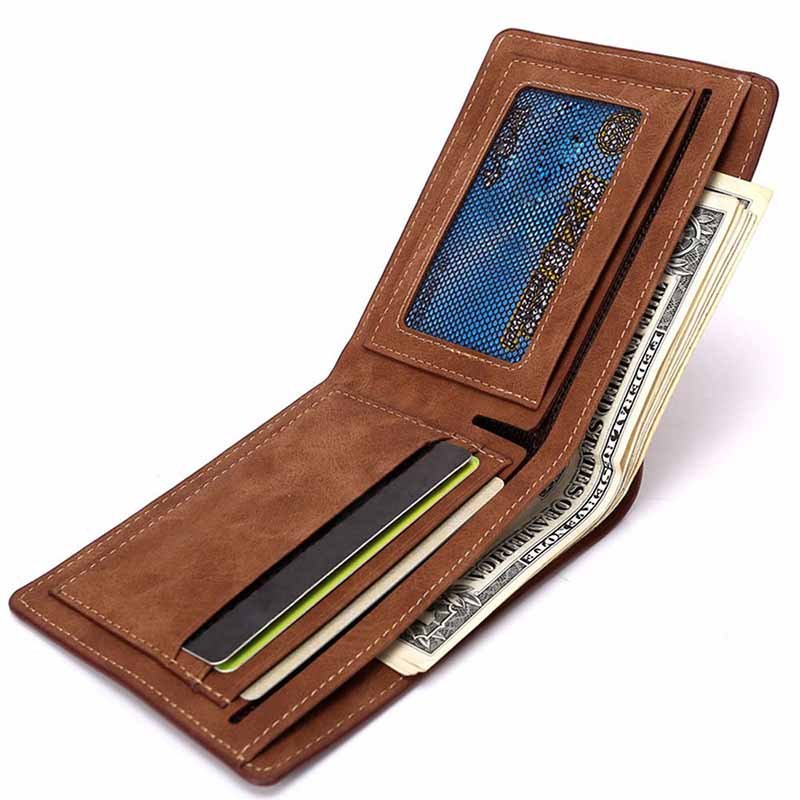
A professional sampling process converts a wallet concept into a documented production standard. It should cover material approval, pattern development, prototype construction, card fit, folding, thickness, hardware, logo, edge finishing, and packaging. The approved sample should be supported by specifications, material references, tolerances, photographs, and revision records that production and inspection teams can follow.
Design Review
Sampling should begin with a complete review rather than immediate pattern cutting. Every feature affects other areas of the wallet. Adding two card slots increases component count, material consumption, skiving, stitching, seam thickness, labor time, and possibly the overall dimensions.
The manufacturer should review the exterior shape, internal arrangement, material temper, grain direction, layer build-up, edge method, hardware, logo, packaging, quantity, target cost, and expected use. The purpose is not to remove creative details but to identify where the design may become unstable, expensive, uncomfortable, or difficult to reproduce.
An extremely slim wallet with twelve card slots may not remain slim after leather, lining, adhesive, reinforcement, stitching, and edge paint are included. A large debossed logo near the fold may distort. A firm leather selected for appearance may make card insertion difficult. These issues should be identified before the sample is approved.
Good design review often produces practical alternatives. The factory may reduce hidden layers, change a folded edge to a painted edge, adjust pocket overlap, move hardware, reinforce a stress point, or replace an internal leather component with microfiber. A strong solution protects the customer-facing design while improving consistency.
Sample Stages
The first prototype usually confirms proportions, internal layout, dimensions, card fit, and general appearance. It should not automatically become the production standard. Additional samples may be required to correct thickness, edge color, card resistance, logo depth, hardware position, lining, fold behavior, or packaging.
A pre-production sample should use confirmed bulk materials and processes whenever possible. A prototype made with substitute leather or temporary hardware cannot fully predict production. The material’s cutting behavior, skiving response, stitch appearance, edge adhesion, and folding performance may change when the final components are introduced.
For a custom leather wallet, a typical sample-development period may range from approximately 7 to 12 working days, depending on leather availability, structure, hardware, logo tooling, and packaging. Bulk manufacturing may commonly require around 25 to 45 days after final approval and material readiness, while more complex projects can require additional time.
Timing should begin only after the essential information is confirmed. A short sample promise has little value when dimensions, leather color, logo artwork, hardware finish, or card capacity remain undecided. Clear inputs usually save more time than rushing an incomplete prototype.
Revision Control
Sample changes should be documented individually. A revision record can identify the issue, requested adjustment, sample version, responsible party, approval date, and effect on cost or lead time. Without that record, a corrected feature can accidentally return to an earlier condition during the next sample or bulk production.
Photographs are useful, but they should not replace dimensions and material references. An image can show that the card exposure looks correct, but it cannot define whether the opening is 14 or 16 millimeters. It can show a brown edge, but it cannot reliably lock the paint formula, gloss level, or final thickness.
The approval package should contain the final sample code, revision number, finished dimensions, material swatches, leather thickness, lining, reinforcement, hardware reference, thread specification, edge-paint color, logo details, packaging standard, card-fit test, tolerance requirements, and approved photographs.
Both parties should retain matching samples whenever possible. Repeat production should refer to the same sample code and document revision. A reorder that begins from memory, old photographs, or fragmented email conversations creates unnecessary variation.
OEM and ODM
OEM manufacturing is suitable when the customer already has a complete tech pack, approved materials, dimensions, construction drawings, artwork, packaging files, and quality standards. The manufacturer’s responsibility is to interpret those requirements accurately, identify manufacturing risks, produce a confirmation sample, and repeat it consistently.
ODM support is appropriate when the project begins with a concept, reference product, target customer, expected price, style direction, or functional requirement. The manufacturer may then help refine dimensions, pocket layout, leather selection, card capacity, edge construction, hardware, branding, packaging, and production engineering.
Many projects use a combination of both approaches. A brand may provide a complete exterior design but need help reducing internal thickness. A retailer may have a proven wallet that needs stronger edge finishing, more consistent leather, improved packaging, or lower shipping volume.
Evaluate how the factory responds to incomplete information. A capable development partner asks about intended use, customer profile, quality level, quantity, and target cost before recommending materials. It should also distinguish product inspiration from unauthorized copying and protect confidential designs throughout development.
What Do MOQ, Pricing, and Lead Times Mean?
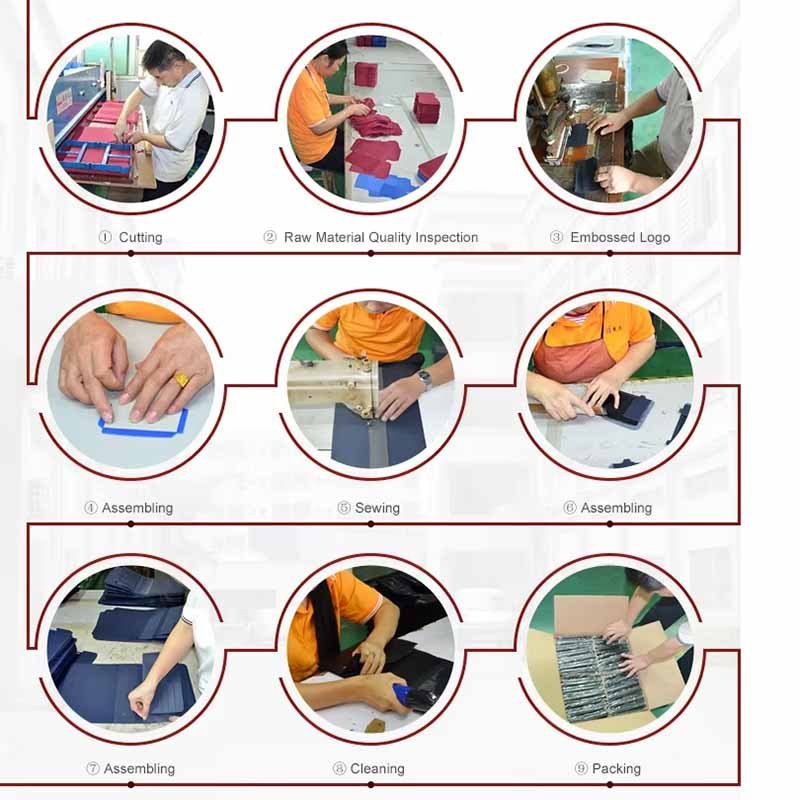
MOQ, pricing, and lead time are results of the product specification rather than isolated commercial numbers. They depend on leather purchasing, color quantities, card-slot count, hardware, logo tooling, packaging, testing, and production scheduling. Quotations should be compared only when suppliers are pricing the same materials, construction, quality controls, and delivery assumptions.
MOQ Structure
The stated factory MOQ may not be the true minimum for every component. A leather wallet program can be limited by the tannery’s color quantity, hardware supplier’s plating batch, zipper supplier’s minimum, gift-box printer’s production run, or the quantity required for efficient cutting.
Clarify the total MOQ, MOQ per color, and MOQ per design. An offer for 500 wallets may mean 500 in one color rather than five colors of 100. Every additional color increases material variation, thread matching, edge-paint preparation, production identification, packing control, and inspection complexity.
Stock leather and standard hardware usually support greater flexibility. Custom-dyed leather, exclusive metal components, specialized RFID material, and rigid packaging can raise the commercial minimum. When the first order must remain limited, simplifying component customization is often more practical than forcing every part below an economic quantity.
A trial order should still represent future production. Using leftover leather, temporary hardware, or packaging that cannot be repeated later may produce misleading sales feedback. The first launch should test the actual quality level, appearance, and customer experience intended for subsequent orders.
Pricing Logic
Leather cost is only one part of the final price. Usable cutting yield can matter just as much. Natural scars, loose grain, irregular hide shape, shade matching, grain direction, and strict appearance standards can create significant material waste even when the leather price per square foot remains unchanged.
Construction determines labor. A four-slot card holder requires fewer cutting, skiving, gluing, stitching, edge-painting, and inspection operations than a twelve-slot zip wallet with a coin pocket, RFID layer, custom puller, metal logo, and rigid gift box.
Branding and packaging also affect the quotation. Debossing may require only a logo die, while a custom metal plate can require a mold, plating sample, reinforcement, installation, and additional packing protection. A rigid box can raise product presentation but also increase storage volume, carton size, freight cost, and damage risk.
A useful quotation should identify materials, thickness, dimensions, card-slot quantity, hardware, logo process, packaging, total quantity, color breakdown, sample fee, tooling, production time, shipping terms, and quotation validity. Without those details, quotations cannot be compared fairly.
Low-Price Risk
The lowest quotation is not automatically poor, and the highest is not automatically dependable. The real issue is whether the price can be traced to the approved specification. A professional supplier should explain the main cost drivers and describe what has been included or excluded.
Some cost reductions improve commercial performance. Better pattern placement may raise leather yield. A microfiber interior may reduce thickness and provide greater consistency. Standard hardware can lower cost and shorten lead time. Compact packaging may protect the wallet while reducing international freight volume.
Other reductions simply weaken the product. These include substituting the approved leather, using thinner hidden components, reducing edge preparation, selecting low-grade hardware, simplifying reinforcement, skipping functional checks, or packing wallets without sufficient surface protection.
Ask suppliers to confirm vague descriptions such as “similar leather,” “standard hardware,” or “normal packaging.” These phrases leave too much room for interpretation. Total commercial cost also includes failed inspections, delays, rework, repacking, returns, complaints, and the expense of replacing an unreliable supplier.
Lead Time and Payment
Lead time should be divided into material preparation, pre-production approval, manufacturing, inspection, packing, and transportation. A statement such as “production takes 30 days” is incomplete unless the starting point is clear.
Confirm whether timing begins after the deposit, final sample approval, leather arrival, packaging confirmation, testing, or completion of all artwork. Custom leather colors, metal hardware, and rigid boxes often extend the critical path. Orders divided into many colors also require additional sorting, line changes, identification, and inspection.
Request milestone dates for material approval, material arrival, first-piece inspection, sewing start, in-line inspection, final inspection, packing completion, and shipment booking. Milestones make delays visible earlier and allow both parties to adjust the schedule before the final delivery date is affected.
Payment terms should identify deposits, balances, sample fees, tooling, testing, and packaging-development charges. Tooling ownership must be clear. When a customer pays for a logo die, hardware mold, or cutting tool, the agreement should state whether it is exclusive, how long it will be stored, and whether maintenance charges may apply.
How Do You Verify Quality and Reliability?
Verify a manufacturer through documented controls and observable evidence. Review incoming material inspection, approved samples, cutting, skiving, first-piece checks, in-line inspection, final inspection, packaging control, testing, capacity planning, and corrective-action procedures. Factory visits, video reviews, sample comparisons, production records, and third-party inspections help confirm whether the approved wallet can be repeated consistently.
Pre-Production Control
Quality control begins before bulk cutting. Leather should be checked for material type, color, grain, thickness, surface finish, marks, shade variation, stretch, and usable cutting area. Hardware, thread, lining, reinforcement, adhesive, edge paint, logo components, and packaging should also be compared with approved references.
A pre-production meeting should review the final sample and current specification. The team needs to identify critical dimensions, grain direction, skiving zones, card-slot exposure, fold construction, logo position, hardware installation, edge finish, packaging, and known production risks.
A first-piece approval is particularly valuable for wallets. It confirms whether bulk materials and actual line conditions reproduce the development sample. Several early pieces should be measured and function-tested before full production continues.
Inspection should occur after operations where defects can still be corrected. Cutting, skiving, pocket preparation, stitching, edge preparation, hardware installation, logo application, and semi-finished assembly are useful control points. Final inspection can detect problems, but it cannot recover leather or time lost through repeated earlier mistakes.
Final Inspection
Final inspection should cover appearance, dimensions, function, packaging, quantity, and labeling. A wallet may look attractive while failing during daily use, so functional checks deserve the same importance as visual inspection.
Appearance checks include leather grain, shade, scratches, marks, glue residue, wrinkles, stitching, thread ends, edge paint, logo position, hardware finish, symmetry, and cleanliness. Dimensional checks include open size, closed size, card-slot exposure, compartment depth, zipper opening, fold alignment, and logo location.
Functional checks should include card insertion and removal, the specified card capacity, bill-compartment access, coin-pocket security, zipper movement, snap or magnet operation, money-clip function, hardware attachment, and repeated opening and closing. RFID performance should be checked when the product carries that claim.
Inspection criteria should distinguish critical, major, and minor defects. A broken zipper, unusable card slot, incorrect material, severe edge cracking, missing component, or unsafe hardware is more serious than a small cosmetic variation that does not affect function.
Testing and Claims
Testing should match the material, market, and product claims. Possible tests include dry and wet rubbing colorfastness, abrasion resistance, coating adhesion, seam strength, zipper performance, snap durability, metal-plating quality, restricted substances, mold risk, and packaging protection.
Natural leather colorfastness can vary according to dye, finish, color depth, and surface treatment. Dark, highly oiled, or richly dyed leather may transfer color more readily than heavily coated corrected leather. Rubbing tests are valuable when wallets will contact light clothing or when the product is positioned as premium.
RFID performance should be evaluated on the finished wallet. Cards must be placed in the intended compartment, and testing should use the relevant reader frequency. A certificate for the raw metallic fabric does not prove that gaps, seams, or incorrect placement will not affect the final product.
Packaging also requires testing. Metal logos can scratch adjacent wallets, pressure can mark soft leather, and edge paint can be damaged when products are packed too tightly. Tissue, protective film, nonwoven bags, dividers, gift boxes, and carton configuration should be assessed as part of overall product quality.
Capacity and Long-Term Reliability
Factory size alone does not prove wallet capacity. A manufacturer may produce a large monthly volume of fabric bags while having only a small number of trained operators for skiving, edge painting, and precision leather assembly. Capacity should always be evaluated in relation to the proposed product.
Ask how many workers and machines are assigned to small leather goods, which processes are completed internally, how peak seasons are managed, and whether any production is placed with controlled partner factories. When external capacity is used, the main manufacturer should retain responsibility for materials, specifications, inspection, communication, and delivery.
Long-term reliability also depends on record keeping. The factory should retain approved samples, material references, specifications, tooling information, inspection results, and revision histories. A new leather batch may still require approval because natural leather cannot be expected to match a previous hide exactly.
A dependable partner reports risks before they become delays, explains changes clearly, protects confidential designs, and responds to defects with evidence and corrective action. The goal is not to find a factory that claims variation never occurs. It is to work with one that prevents predictable problems, detects issues early, and handles necessary corrections professionally.
Choosing a leather wallet manufacturer should therefore be treated as a product-development and supply-chain decision, not a simple price comparison. The strongest factory is the one that understands the intended customer, turns the design into measurable standards, controls materials and workmanship, and protects consistency from sampling through repeated production.
Szoneier supports custom leather wallet projects from design review and material selection through sampling, bulk production, inspection, packaging, and international delivery. With more than 18 years of experience in custom bags, leather goods, and sewn products, the team can review technical drawings, physical samples, reference images, logo files, quantity plans, and packaging requirements before recommending a workable production route.
To evaluate a new wallet project, please send available sizes, photos, a technical data package, preferred leather, card slot layout, logo design, quantity, target market, and required delivery date to szoneier. A clear initial briefing helps the team assess material availability, production risks, sample production time, production quantity, quality requirements, packaging, and shipping before preparing a quote.