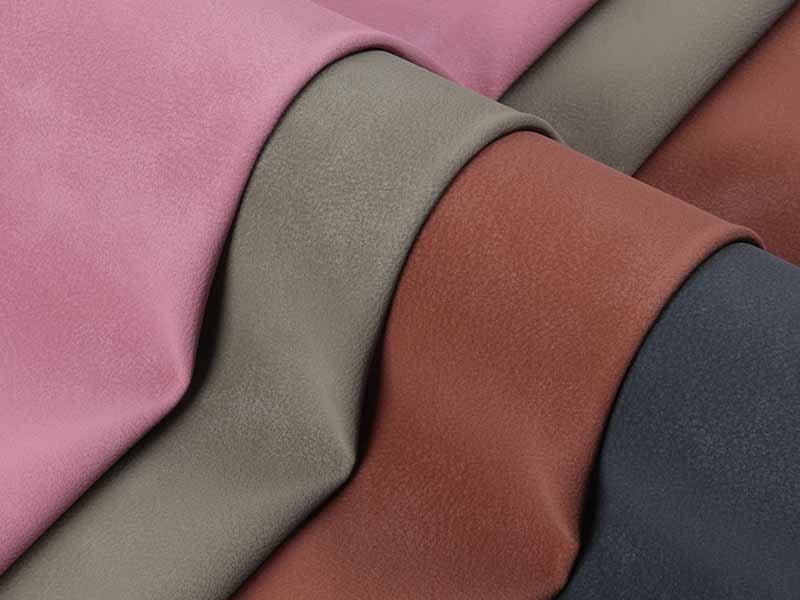
Recycled leather can look impressive in a sample book and still become a costly mistake after it is cut, folded, stitched, edge-painted, packed, and used. Buyers are not selecting a decorative surface alone. They are selecting a layered material system containing recovered leather fibers, binders, backing materials, coatings, pigments, embossing, and protective finishes. Every layer affects whether a wallet cracks, a strap stretches, a bag panel keeps its shape, or a dark surface transfers color onto clothing.
To choose recycled leather for accessories, verify the complete material composition, recycled leather percentage, backing, coating, thickness, surface finish, color consistency, mechanical performance, chemical documentation, and supply traceability. The material should then be tested in the actual wallet, bag, strap, or accessory structure. A suitable option must balance appearance, durability, manufacturability, sustainability claims, target cost, and repeat-order consistency.
A loose swatch can hide problems that only appear in a finished product. A black grain may feel soft in the hand but whiten after repeated folding. A firm sheet may produce an elegant handbag panel but split when wrapped around a D-ring. A coating may pass a basic dry rub check yet leave dark marks on a pale jacket after moisture and friction are introduced. The following sections explain how experienced product developers move beyond material names and select recycled leather through measurable, product-specific evidence.
What Is Recycled Leather?
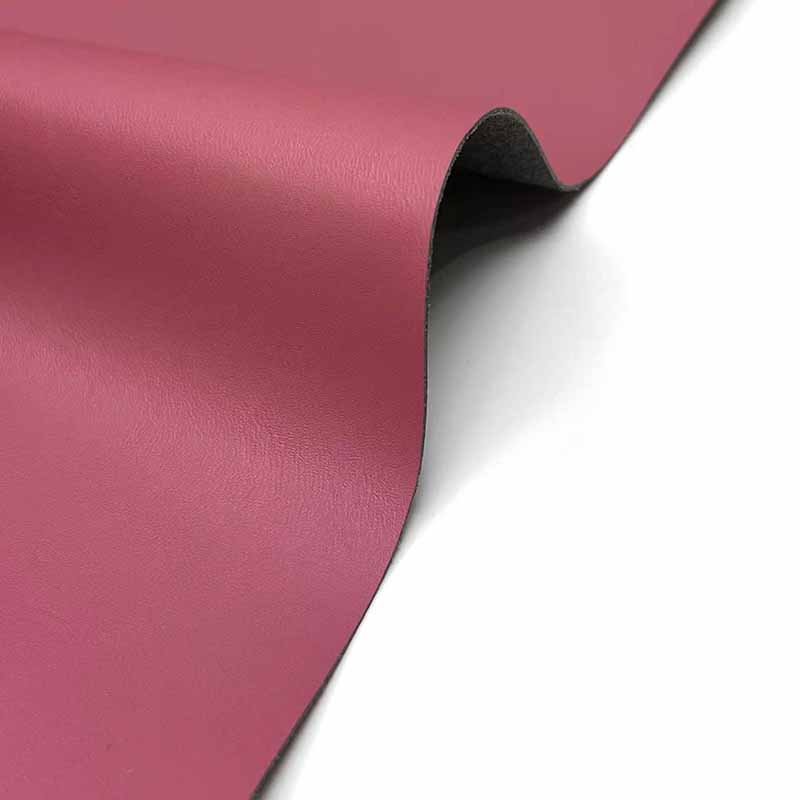
Recycled leather is generally produced by recovering leather waste and converting it into a new sheet, panel, or usable component. It may contain leather fibers, binders, textile backing, coatings, pigments, and protective top finishes. Because market terminology is inconsistent, buyers should not approve a material based only on descriptions such as recycled leather, regenerated leather, leather board, or bonded leather.
How Is Recycled Leather Made?
Most sheet-based recycled leather begins with waste generated during leather cutting, trimming, splitting, grading, or finished-goods production. The collected pieces are sorted and processed into smaller particles or fibers. Those fibers are then combined with a binding system and formed into a continuous sheet or board. Depending on the required strength and handling characteristics, a woven, knitted, microfiber, or nonwoven backing may be laminated onto the reconstructed leather layer.
The visible surface is often created through additional finishing processes. Pigmented coatings provide color, embossing creates smooth, pebbled, Saffiano-style, or natural-looking grain, and protective topcoats improve rubbing resistance, stain resistance, gloss control, or cleanability. The final material is therefore a composite structure rather than a simple compressed block of leather waste.
This layered construction explains why two materials carrying the same recycled leather label can perform very differently. One sheet may contain a dense leather-fiber body with a thin flexible coating, while another may depend heavily on textile backing and a thicker polymer film. Both may show similar recycled-content figures, yet their cutting behavior, fold resistance, edge appearance, stitch holding, and long-term durability can be completely different.
A useful material specification should identify the leather-derived recycled percentage, binder system, backing composition, surface coating, total thickness, weight, grain, gloss, and source of the reclaimed input. It should also state whether the recycled percentage is calculated against the complete finished sheet or only against the internal fiber layer.
Is It Bonded Leather?
Recycled leather and bonded leather can describe overlapping material categories, but the terms are not always used consistently across countries or suppliers. Bonded leather usually refers to a material in which leather particles or fibers are held together with a binding agent. Recycled leather may describe the same construction, although some suppliers also use the term for products made from larger reclaimed leather pieces or mixed recycled-material structures.
The product name alone does not determine quality. A carefully engineered bonded leather can provide stable thickness, clean cutting, repeatable grain, and acceptable durability for selected accessories. A poorly controlled material promoted as premium recycled leather may crack, delaminate, transfer color, or vary substantially from one production lot to another.
Buyers should replace naming debates with factual questions. What percentage of the complete material comes from leather? What other materials are present? Is the leather input pre-consumer production waste or post-consumer material? How is the visible surface formed? Which performance tests support the intended application?
Material disclosure also matters when finished goods are marketed to consumers. A coated composite containing leather fibers, synthetic backing, and polymer binders should not be presented in a way that suggests it is an unmodified natural hide. Accurate wording protects the brand, reduces customer disappointment, and makes sustainability claims easier to support.
Main Material Families
The recycled leather category contains several distinct constructions. Fiber-based sheets are made by breaking leather waste into smaller fibers and reconstructing those fibers with binders. Larger-piece recycled leather uses recovered offcuts without completely destroying the original leather structure. Some products combine leather fibers with recycled textile backing, while others use reclaimed leather only as a minority component within a broader composite.
Fiber-based sheets provide relatively uniform dimensions, grain, thickness, and color. This makes them practical for repeatable wallets, pouches, flat bag panels, and decorative trims. Their weakness is that performance depends strongly on binder quality, layer adhesion, surface coating, and backing stability.
Reused offcuts preserve more of the original leather structure and can create an authentic circular-material story. However, shade, grain, thickness, and usable piece size are less consistent. They are often better suited to keychains, patchwork panels, labels, small accessories, and limited collections than to large programs requiring identical appearance across several production runs.
Some suppliers also market products with recycled leather fibers and recycled polyester backing. These materials may offer high total recycled content, but buyers should separate recycled leather content from recycled textile content. A material containing 30% recycled leather and 50% recycled polyester should not automatically be described as 80% recycled leather.
How Does It Compare?
Recycled leather should not be evaluated through a simple ranking of natural, artificial, or sustainable. Each material offers a different balance of appearance, consistency, durability, processing behavior, price, and repeat-order reliability. The right choice depends on the product promise rather than the attractiveness of one marketing term.
Natural full-grain leather provides distinctive grain, tactile value, and ageing characteristics appreciated in premium products. It also brings shade variation, scars, size limitations, higher cutting loss, and greater price fluctuation. Corrected or split leather offers a more uniform appearance, although the coating still needs to resist cracking, rubbing, and peeling.
PU synthetic leather provides consistent colors, broad design flexibility, and scalable production. Its long-term performance depends on the polyurethane formulation, backing, coating thickness, humidity resistance, and hydrolysis resistance. Recycled leather can combine real leather-derived content with efficient sheet utilization, but it may rely on similar coatings and textile backings.
| Material | Typical Construction | Main Advantages | Main Limitations | Common Accessory Uses |
|---|---|---|---|---|
| Full-grain leather | Natural outer hide layer | Premium feel, natural character, attractive ageing | Higher cost, natural variation, greater cutting loss | Premium handbags, belts, wallets |
| Corrected or split leather | Leather base with corrected or coated surface | More uniform appearance, moderate cost | Surface finish can wear or crack | Handbags, wallets, decorative trims |
| Recycled leather sheet | Leather fibers, binder, backing, and finish | Efficient sheet use, repeatable grain, controlled thickness | Delamination, fold cracking, unclear content claims | Wallets, panels, pouches, small accessories |
| PU synthetic leather | Textile backing with polyurethane coating | Wide color range, stable appearance, scalable supply | Hydrolysis and peeling risks vary by grade | Fashion bags, cosmetic cases, promotional products |
| Reused leather offcuts | Existing leather pieces cut into new components | Preserves original leather, visible reuse story | Limited size, inconsistent shade, difficult repeat production | Keychains, labels, patchwork products |
The correct option is the one that matches the intended retail position, construction, wear pattern, quality standard, and order plan. A premium wallet designed to develop a patina may require natural leather, while a retail program requiring consistent color across thousands of units may benefit from a controlled coated material.
Which Type Fits Your Product?
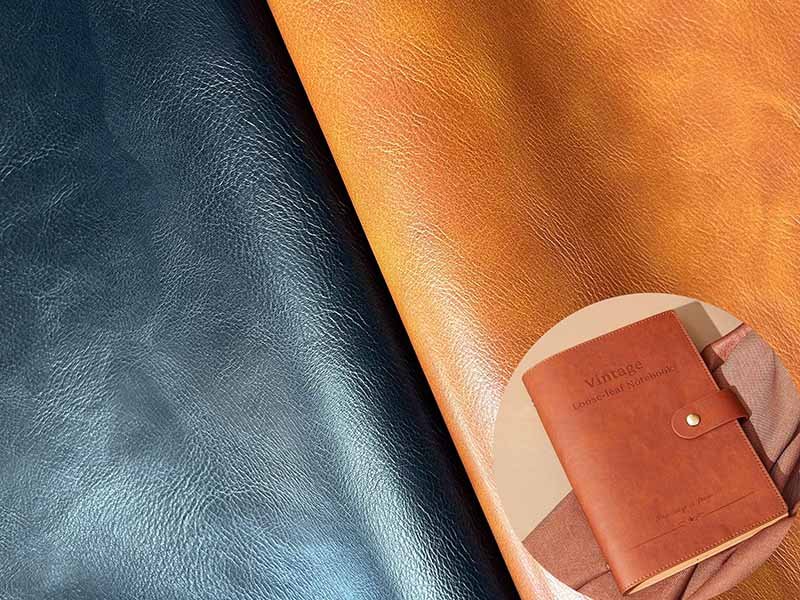
The correct recycled leather depends on the product, component, construction, and expected wear. Wallets require controlled thickness and repeated-fold performance, bag panels need suitable drape or structure, and straps require reinforcement and strong stitch holding. Buyers should specify materials by component instead of assuming one recycled leather grade can perform equally well throughout an entire accessory collection.
Wallets and Cardholders
Wallets and cardholders place demanding requirements on relatively thin materials. A finished bifold wallet may contain an outer shell, lining, reinforcement, several pocket layers, folded seam allowances, adhesive, thread, and edge paint. A small change in material thickness can therefore create bulky corners, uneven folding, distorted card slots, or difficult stitching.
For development purposes, outer wallet panels are often evaluated around 0.8–1.2 mm, while card-pocket components may begin around 0.5–0.8 mm. These figures are practical starting points rather than universal standards. The suitable thickness depends on material density, backing, splitting capability, reinforcement, edge construction, and the number of overlapping layers.
The outer surface should survive repeated opening and closing without visible whitening, grain cracking, or separation between the coating and the fiber layer. Card slots should maintain shape after repeated insertion and removal. If the material stretches too easily, the pockets become loose. If it is too rigid, the slot edge can crack or show enlarged stitch holes.
Edge processing is equally important. Some recycled leather sheets can be skived and folded cleanly, while others expose backing fibers or separate when thinned. Raw-cut designs require a dense edge that accepts paint evenly. Turned-edge designs need enough flexibility to wrap around corners without surface damage.
Bags and Pouches
Bag construction ranges from soft, collapsible pouches to highly structured handbags. A material suitable for a casual pouch may be unsuitable for a box-shaped bag, even when both products use the same color and surface grain. The material must support the intended silhouette rather than forcing the designer to compensate for unsuitable stiffness or stretch.
Soft pouches require controlled drape. A rigid recycled leather can create unwanted wrinkles around zipper curves, side seams, and gussets. A material that is too soft may sag, stretch, or reveal the shape of internal contents. Cosmetic bags also need resistance to oils, alcohol-based products, creams, makeup, and repeated wiping.
Structured handbag panels require greater dimensional stability. The material may be laminated to board, foam, microfiber, woven reinforcement, or another support layer. The selected adhesive must create an even bond without bubbling, hard spots, visible strike-through, or surface distortion. Heat used during lamination can also change gloss, shade, and flexibility.
Large panels make small defects more visible. Grain direction, pressure marks, gloss variation, and shade differences that seem minor on a small swatch can become obvious across a tote or handbag body. Materials should therefore be reviewed at full panel size before approval.
| Component | Practical Starting Thickness | Key Requirements | Common Failure Risks |
|---|---|---|---|
| Card pockets | 0.5–0.8 mm | Clean cutting, low bulk, stitch stability | Stretching, visible holes, bulky corners |
| Wallet outer panels | 0.8–1.2 mm | Repeated flexing, edge compatibility, colorfastness | Fold cracking, whitening, color transfer |
| Soft pouch panels | 0.7–1.1 mm | Drape, zipper compatibility, seam recovery | Wrinkling, seam distortion, weak structure |
| Structured bag panels | 1.0–1.5 mm | Shape retention, lamination stability, uniform grain | Warping, bubbling, pressure marks |
| Handles and straps | 1.2–2.0 mm or reinforced construction | Load resistance, low elongation, strong stitch holding | Stretching, splitting, delamination |
| Decorative trims | 0.6–1.0 mm | Accurate cutting, stable embossing, clean edges | Fraying, lifting, uneven logo results |
These ranges should always be confirmed through actual sample construction. A thin, dense sheet may feel more substantial than a thicker foamed material, while a soft sheet laminated onto reinforcement can become unexpectedly rigid.
Straps and Handles
A shoulder strap or bag handle is a structural component rather than a decorative strip. It concentrates tension around hardware, adjustment holes, stitched ends, rivets, buckles, D-rings, and folded attachment areas. Recycled leather that works well as a flat bag panel may not have enough internal strength to carry load without reinforcement.
Reliable strap constructions often use the recycled leather as the visible outer layer and place woven webbing, microfiber, polyester tape, or another reinforcement inside. The reinforcement controls elongation and carries much of the load, while the recycled leather provides the desired color, grain, touch, and brand appearance.
The complete assembly must be evaluated because different layers can behave differently. If the reinforcement stretches less than the outer leather, the strap may curve or wrinkle. If adhesive coverage is inconsistent, the layers can separate. If the edge paint is too rigid, it may crack when the strap repeatedly bends through hardware.
Attachment zones deserve additional attention. Stitch holes should not enlarge under load, rivets should not pull through the material, and tight folds around D-rings should not cause whitening or splitting. The production sample must use the intended hardware, thread, seam allowance, stitch pattern, reinforcement, adhesive, and edge finish.
Trims and Small Parts
Small leather components can create a surprisingly high number of product complaints. Zipper pullers, logo patches, tabs, corner reinforcements, luggage tags, keychains, and decorative loops are frequently touched, bent, rubbed, pulled, or exposed to hardware edges.
Thin logo patches need clean cutting and stable embossing. A loose fiber body can allow fine logo details to spread, while a heavily coated surface may reject foil, ink, or heat-transfer decoration. The logo trial should use the final artwork size, actual production equipment, intended temperature, pressure, and dwell time.
Zipper pullers need repeated bending and pulling resistance. When the design includes a punched hole, the surrounding area must resist tearing. Raw edges should remain clean, and the backing should not become visible after handling.
Decorative components can be a practical place to use recycled leather when the material offers strong visual appeal but limited structural performance. However, small size does not remove the need for testing. In many products, a zipper pull or handle tab is touched far more often than the main body panel.
Which Specifications Matter?
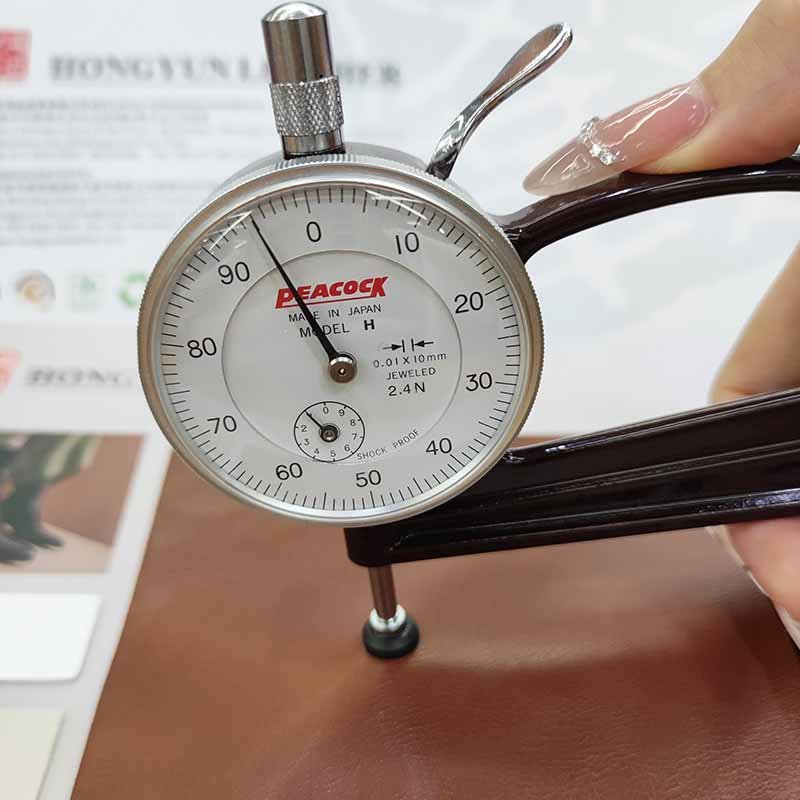
The most important recycled leather specifications include composition, thickness, tolerance, weight, backing, coating, grain, gloss, color, flexibility, finish adhesion, and batch consistency. Every requirement should be connected to a product function. A generic supplier data sheet can identify possible materials, but the final specification must be based on the approved component and finished accessory.
Thickness and Weight
A nominal thickness without an acceptable tolerance provides limited control. A material described as 1.0 mm may include areas that measure noticeably above or below that figure. This variation affects fold radius, seam bulk, edge quality, stitching, product weight, and the fit of components cut from different production lots.
For small leather goods, a difference of 0.1–0.2 mm can become significant when several layers overlap. A cardholder with multiple stacked pocket pieces can become visibly thicker when every layer is near the upper end of the tolerance. On a large flat bag panel, the same variation may appear less obvious but still influence drape, structure, and lamination.
Thickness should be measured at several locations across the roll or sheet. The buyer should record minimum, maximum, and average results rather than accepting one convenient reading. Measurement equipment and pressure should remain consistent because soft or foamed constructions can compress under the gauge.
Weight per square meter provides another useful reference. Two materials with the same thickness can have different density, stiffness, and hand feel. A heavier material may provide stronger structure but increase finished-product weight, while a lighter construction may need additional reinforcement.
Backing and Structure
The backing affects stretch, tear propagation, cutting stability, lamination, edge appearance, and sewing behavior. Woven backings generally provide strong directional control, while knitted backings offer greater flexibility. Nonwoven and microfiber structures can provide more uniform support and cleaner cut edges.
The backing must suit the component. A wallet material needs flexibility across the fold but enough stability around card slots. A structured handbag requires dimensional control, while a shoulder strap needs low elongation in the load direction.
Cut edges should be examined under good lighting. A backing that contrasts strongly with the surface color may become visible on raw-cut products. Loose backing fibers can interfere with edge paint, while a thick backing can make tight folds difficult or produce uneven corners after skiving.
The bond between the leather-fiber layer and backing must remain stable during cutting, sewing, folding, adhesive application, heat exposure, packing, and storage. Delamination often starts at a cut edge or stitch hole before spreading across a wider area.
The backing should also be included in recycled-content claims. A material may combine recycled leather fibers with virgin polyester, or it may use both recycled leather and recycled polyester. Those constructions should be described differently.
Coating and Finish
The coating determines much of what the customer sees and touches. It creates color, grain, gloss, scratch resistance, stain resistance, and cleanability. It can also become the weakest part of the construction when flexibility or adhesion is inadequate.
A thick coating can hide fiber irregularities and produce a uniform appearance, but it may feel less natural and crack sharply at folds. A thinner finish may retain more texture and flexibility, although it can provide less resistance to stains, scratching, or shade variation.
Finish adhesion should be evaluated after bending, abrasion, humidity exposure, and contact with adhesives or edge-finishing chemicals. ISO 11644 is commonly referenced for finish adhesion testing, while ISO 5402-1 is frequently used to evaluate repeated flexing of leather and applied finishes.
Embossed grain requires separate approval. Deep pebbled or Saffiano-style grain can conceal minor scratches and material variation, but it may reduce the clarity of small logos. Smooth surfaces support fine printing and crisp embossing, although they reveal pressure marks, scratches, and coating variation more easily.
Color and Appearance
Color approval should include the complete visual system rather than a Pantone reference alone. Pantone codes are valuable communication tools, but final appearance changes with grain, gloss, coating thickness, texture, light source, and backing color.
A smooth black material and a pebbled black material may use similar pigments but appear different because they reflect light differently. Matte surfaces often look lighter than glossy surfaces, while deep grain creates shadows that alter perceived color.
The approved standard should include a physical swatch from the intended material construction. Samples should be reviewed under daylight, warm retail lighting, and cool office lighting. Two colors can match under one light source and appear different under another.
Dark shades require careful rubbing tests because pigment or finish transfer can mark pale clothing and linings. Light shades need stronger stain-control procedures during cutting, sewing, inspection, and packing.
Batch approval should cover shade, grain depth, gloss, backing color, and hand feel. Visible panels on one finished product should be cut from compatible lots and in a consistent grain direction.
How Do You Verify Sustainability?
Sustainability should be verified through measurable recycled content, a defined waste source, traceability records, certification scope, chemical documentation, and accurate claim language. Recycled leather can reduce waste and virgin-material demand, but the complete impact also depends on binders, coatings, backing, manufacturing efficiency, durability, and the usable life of the finished accessory.
Recycled Content
The first question should not be limited to whether the material is recycled. Buyers need to establish which component is recycled and what percentage of the complete finished material it represents.
A product may contain recycled leather fibers, recycled polyester backing, recycled cotton reinforcement, or several recycled components. The supplier should separate these figures. A material described as containing 70% recycled material is not necessarily made with 70% recycled leather.
The calculation basis must also be clear. The percentage may be measured against the complete finished sheet, the fiber layer alone, or the raw mixture before coating and backing are added. Only a full-sheet calculation allows buyers to compare different constructions fairly.
The source of the recovered material matters. Pre-consumer material commonly comes from production cuttings, trimmings, splitting waste, or rejected pieces generated before a product reaches the customer. Post-consumer material comes from goods that have completed their intended use and can be more difficult to collect, clean, identify, and process consistently.
A useful declaration should identify leather-derived recycled content, other recycled components, virgin materials, binders, coatings, backing, and source category. It should also be connected to a specific material code and production site.
Documents and Traceability
Documents should support the exact claim made about the finished accessory. A certificate displayed on a supplier website may apply to a different company, factory, material category, production process, or validity period.
Buyers should review the legal company name, certified location, certificate number, issue date, expiry date, product scope, standard version, and covered process stages. When chain-of-custody evidence is required, transaction records should connect the certified input to the purchased material.
A practical document package may include:
- Material composition declaration
- Recycled-content statement
- Reclaimed-material source declaration
- Scope certificate
- Transaction certificate where applicable
- Purchase and lot records
- Restricted-substance reports
- Physical-performance test reports
- Finished-product bill of materials
- Production and incoming-inspection records
RCS and GRS are frequently discussed in recycled-material sourcing. RCS is primarily used to verify recycled content and chain of custody, while GRS includes recycled-content verification together with additional processing-related requirements. Certification still needs to be checked carefully because one certificate does not mean every product sold by a supplier is covered.
Chemical Compliance
Recycled content does not automatically establish chemical safety. Leather waste, binders, pigments, coatings, backing fabrics, adhesives, edge paints, printing inks, and finishes can introduce restricted substances.
The required test package depends on the destination market, product category, customer standard, age group, and expected consumer contact. Depending on the product, buyers may need to review substances such as certain azo colorants, formaldehyde, chromium VI, heavy metals, phthalates, organotin compounds, dimethyl fumarate, or other restricted chemicals.
Reports should identify the exact material code and color. Dark, metallic, fluorescent, or heavily coated finishes can use different chemical systems, so a report for one shade should not automatically be applied to an entire color range.
The finished product also includes more than the outer material. Adhesives, lining, edge paint, thread, metal accessories, printing, and packaging can influence compliance. A compliant recycled leather sheet does not guarantee that a completed wallet or bag satisfies every applicable requirement.
Testing should be supported by process control, lot identification, supplier declarations, and documented approval of formulation or component changes.
Claims and Greenwashing
Strong sustainability communication is specific and measurable. Weak communication depends on broad descriptions such as eco leather, green leather, conscious leather, or planet-friendly material without explaining what those terms mean.
A credible claim identifies the recycled component, recycled percentage, waste source, calculation method, verification evidence, and relevant limitations. A statement about recycled leather content should not imply that the complete handbag is fully recyclable unless a realistic end-of-life pathway has been established.
Composite materials can be difficult to recycle again. Leather fibers, binders, textile backing, coatings, adhesives, edge paint, thread, reinforcement, and hardware may not be easy to separate. Recovering production waste is still valuable, but it is different from creating a closed-loop recyclable product.
Durability also belongs in the sustainability discussion. A material using recovered waste but failing quickly may not deliver the expected environmental benefit. At the same time, brands should avoid unsupported claims that a product will last for a specific number of years.
The safest approach is qualified, transparent wording. State what is known, separate material-level claims from finished-product claims, and keep the documents supporting every statement.
How Do You Test Performance?
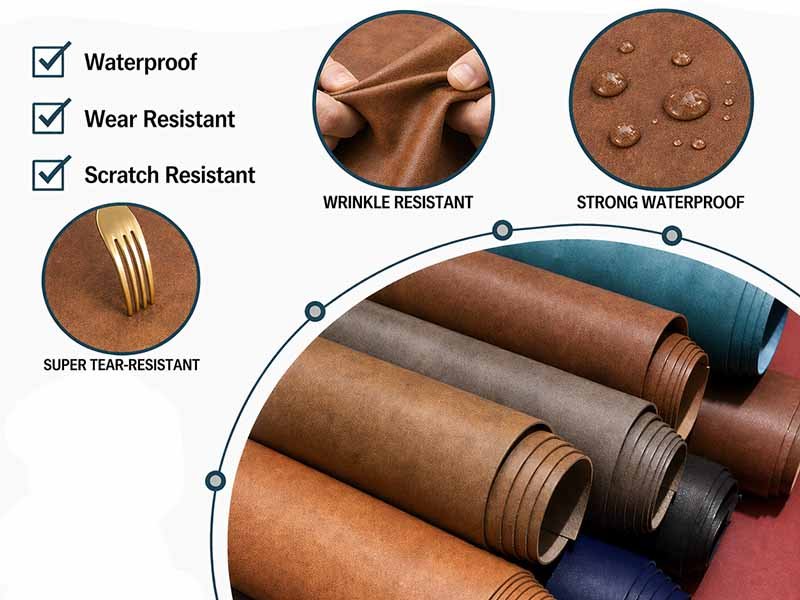
Recycled leather should be tested at three levels: the loose material, the processed component, and the completed accessory. Important evaluations include flex resistance, abrasion, color transfer, finish adhesion, tear strength, stitch tear, perspiration resistance, water response, ageing, load performance, and packaging stability. Test methods and acceptance criteria should reflect actual product use and retail quality expectations.
Material Tests
No single test can prove that recycled leather is suitable for every accessory. Tensile strength measures resistance to pulling but does not confirm that a coated surface will survive repeated folding. Abrasion testing evaluates surface wear but may not reveal separation between the coating, leather-fiber body, and backing.
Flex resistance is particularly important for wallets, straps, gussets, zipper areas, and folded tabs. ISO 5402-1 is commonly used for repeated flexing. After testing, samples should be examined for surface cracking, whitening, grain change, stiffness, and separation between layers.
Abrasion testing, including methods based on ISO 17076-1, helps evaluate how a surface responds to repeated rubbing. The result must be interpreted according to the application. A decorative handbag panel experiences different wear from a handle, corner, wallet fold, or belt loop.
Finish adhesion can be examined using methods such as ISO 11644. Weak adhesion can cause peeling near folds, cut edges, printed areas, glued sections, or hardware contact points.
Tear and stitch-tear performance are important for tabs, handles, pockets, seams, and attachment areas. ISO 3377-2 and ISO 23910 are commonly referenced for these properties.
Color and Contact Tests
Color transfer is a frequent issue with dark bags, straps, wallets, handles, and belts. A black surface may appear stable during ordinary inspection but leave marks on a white shirt after moisture, pressure, and friction are introduced.
Dry and wet crocking methods, including ISO 20433, can evaluate color transfer under controlled rubbing. Both dry and wet conditions matter because moisture can weaken the finish or mobilize pigments that remain stable when dry.
Perspiration testing is relevant for products carried by hand or worn against the body. Wallets, straps, wrist accessories, handles, and belt components are exposed to sweat, skin oils, heat, and repeated friction. Water tests can identify staining, color change, swelling, surface damage, and transfer after moisture exposure.
Cosmetic bags and lifestyle accessories may also require contact trials with alcohol, hand sanitizer, creams, perfume, sunscreen, makeup, or cleaning wipes. A material that performs well against water may still soften, discolor, become sticky, or lose gloss after contact with alcohol-based products.
| Test Area | Common Reference | Main Risk Evaluated | Relevant Components |
|---|---|---|---|
| Repeated flexing | ISO 5402-1 | Cracking, whitening, finish separation | Wallet folds, straps, gussets |
| Abrasion | ISO 17076-1 | Surface wear and finish loss | Corners, panels, handles |
| Finish adhesion | ISO 11644 | Peeling and coating separation | Coated recycled leather |
| Dry and wet crocking | ISO 20433 | Color transfer | Dark panels, linings, straps |
| Perspiration resistance | ISO 11641 | Color change and transfer caused by sweat | Handles, wallets, body-contact straps |
| Water fastness | ISO 11642 | Water-related staining or finish damage | Daily bags, travel accessories |
| Double-edge tear | ISO 3377-2 | Tear propagation | Tabs, seams, hardware areas |
| Stitch tear | ISO 23910 | Failure around needle holes | Handles, pockets, closures |
Standards provide repeatable methods, but brands and manufacturers still need to agree on acceptance limits according to product type, color, target price, expected use, and customer quality requirements.
Product Simulations
Laboratory data becomes more useful when it is supported by finished-product testing. Manufacturing processes change how the material behaves. Skiving reduces thickness, stitching creates holes, adhesives alter flexibility, edge paint adds another layer, and hardware concentrates force in small areas.
Wallet testing can include repeated opening and closing, loading card slots, compressing the filled wallet, carrying it in a pocket, and checking fold lines under magnification. Evaluators should look for cracking, pocket stretching, edge damage, color transfer, and permanent shape change.
Bag testing should include loading the product to the agreed carrying weight, lifting it repeatedly, hanging it under sustained load, operating zippers, bending straps through hardware, and inspecting attachment points. The load should reflect the intended use of the product rather than applying one generic figure to every bag.
Cosmetic and travel accessories benefit from exposure to likely contents and storage conditions. A packed pouch can be stored in a warm environment to reveal odor, blocking, surface sticking, pressure marks, or print transfer.
Sample Approval
A new sample should not be approved immediately after unpacking. It should be inspected after handling, flexing, loading, packing, and exposure to relevant substances and conditions.
The approved reference package should include the finished sample, signed material swatch, color master, thickness record, grain standard, backing description, edge-paint sample, thread code, hardware finish, logo sample, lining, reinforcement, and packaging method.
Critical defects should be defined before production. They may include surface cracking, peeling, delamination, excessive color transfer, strong odor, exposed backing, damaged edge paint, material substitution, broken stitching, or missing recycled-content documentation.
Visual tolerances also require agreement. Small grain differences, minor gloss variation, or limited surface variation may be acceptable within a defined range. Without an approved physical reference, inspectors, suppliers, and buyers may apply different personal judgments.
A coordinated development process connecting material sourcing, pattern making, sample sewing, production management, quality inspection, packaging, and export preparation reduces the risk that the finished bulk product will differ from the approved sample.
How Do You Choose a Supplier?
A reliable recycled leather supplier should provide transparent composition information, relevant test evidence, controlled samples, stable batch production, traceability, and practical corrective-action support. Buyers should evaluate the entire supply process rather than selecting a material only by swatch appearance or price. The right partner helps identify unsuitable applications before bulk production begins.
Technical Questions
The first supplier discussion should reveal whether the material is technically understood and consistently controlled. A capable supplier should explain the layer construction, recycled-content calculation, backing, coating, thickness tolerance, production method, and recommended applications.
Buyers should ask whether the material can be split or skived, which adhesives are compatible, how it responds to hot stamping, and whether edge paint adheres reliably. The supplier should explain whether deep embossing, foil stamping, screen printing, digital printing, or heat-transfer decoration changes the appearance or performance.
Color questions should cover minimum production quantity by shade, standard lot size, repeat-order availability, and shade-control procedures. A common black may be relatively easy to repeat, while a custom pale color, metallic finish, or highly specific gloss level may require larger production runs and stricter controls.
Performance questions must refer to the intended product. General abrasion data does not confirm that the material is suitable for a wallet fold or shoulder strap. The exact material code, color, thickness, backing, and finish should appear on test reports.
The supplier should also explain how changes to binders, backing, coatings, and pigments are controlled.
Sample Comparison
Supplier samples should be compared under equivalent conditions. A thick, firm swatch may feel more impressive than a thinner option even when the thinner material is more appropriate for the finished accessory.
Request comparable colors, target thicknesses, similar grains, and equivalent finishes. Then produce the same test component with every material. A folded wallet section, card pocket, reinforced strap, embossed logo patch, edge-painted trim, or laminated panel will reveal production differences that loose swatches cannot show.
Compare cutting quality, edge cleanliness, skiving behavior, stitch-hole stability, adhesive response, fold appearance, edge-paint coverage, logo definition, and final hand feel. Results should be recorded through photos, measurements, test forms, and approval comments rather than relying on memory.
Commercial comparison should include usable material yield. A low-priced sheet can become expensive when defects, width variation, edge damage, shade inconsistency, or grain problems reduce cutting efficiency. Material price per square meter is only one part of the finished-product cost.
| Evaluation Area | Suggested Weight | Evidence to Review |
|---|---|---|
| Composition transparency | 15% | Layer construction, recycled-content calculation, declarations |
| Product performance | 25% | Flex, abrasion, colorfastness, adhesion, tear, real-use tests |
| Sustainability verification | 15% | Traceability, certificate scope, transaction documents |
| Batch consistency | 15% | Thickness, color, grain, gloss, and backing stability |
| Manufacturing compatibility | 10% | Cutting, skiving, sewing, embossing, and edge finishing |
| Supply reliability | 10% | Lead time, capacity, repeat-order availability, and change control |
| Commercial fit | 10% | Price, minimum quantity, payment terms, and replacement policy |
The weighting can be adjusted according to the program. A premium fashion brand may place more emphasis on touch and visual consistency, while a corporate-gift program may prioritize repeatable supply, delivery control, and cost stability.
Bulk Control
Bulk quality is determined before sewing begins. The purchase specification should reference the approved material code, layer construction, color, grain, gloss, backing, thickness range, test requirements, and sealed physical swatch.
Incoming inspection should confirm supplier details, lot numbers, quantity, dimensions, thickness, color, grain, gloss, hand feel, odor, backing, cut-edge construction, and visible defects. Materials from different lots should be identified and stored separately until compatibility has been confirmed.
Cutting control is important for directional grain and shade variation. Panels appearing on the same product should be cut in a consistent direction and from compatible lots. Inspectors should monitor pressure marks, coating damage, backing separation, surface defects, and cutting-edge quality.
During production, attention should be given to needle size, stitch density, seam allowance, reinforcement, adhesive coverage, edge preparation, embossing, logo application, and hardware installation. Recycled leather can retain permanent needle holes, making sewing mistakes difficult to repair invisibly.
Final inspection should compare finished goods with the approved sample, including appearance, dimensions, folds, zippers, straps, handles, logos, edge paint, lining, cleanliness, odor, packaging, labels, and quantity.
Start Your Custom Project
Before placing a production order, the buyer should be able to confirm that the material composition is documented, recycled-content language matches the evidence, the exact color and construction have been tested, and the finished sample has passed the most likely use conditions. Repeat-order availability, substitution restrictions, inspection standards, packaging requirements, and rejected-material procedures should also be agreed in writing.
For a custom recycled leather accessory project, prepare a clear development package containing product drawings, reference photos, target dimensions, intended use, destination market, estimated quantity, recycled-content requirement, preferred grain, color standard, logo artwork, packaging direction, and required performance tests.
Szoneier is a Shenzhen-based custom bags and soft goods OEM/ODM manufacturer with more than 18 years of experience in material sourcing, sample development, sewing production, quality inspection, packaging, and export coordination. Its capabilities include custom leather goods and soft accessories developed from client samples, technical packs, reference images, and material concepts.
Send Szoneier your drawings, samples, material requirements, branding files, order plan, and quality expectations. The team can help evaluate recycled leather constructions, assign suitable materials to different components, develop working prototypes, identify production risks, and prepare an inspection-ready specification for consistent bulk manufacturing.
Recycled leather becomes a dependable commercial material when composition, performance, processing, claims, and production control are treated as one connected product decision rather than five separate tasks.