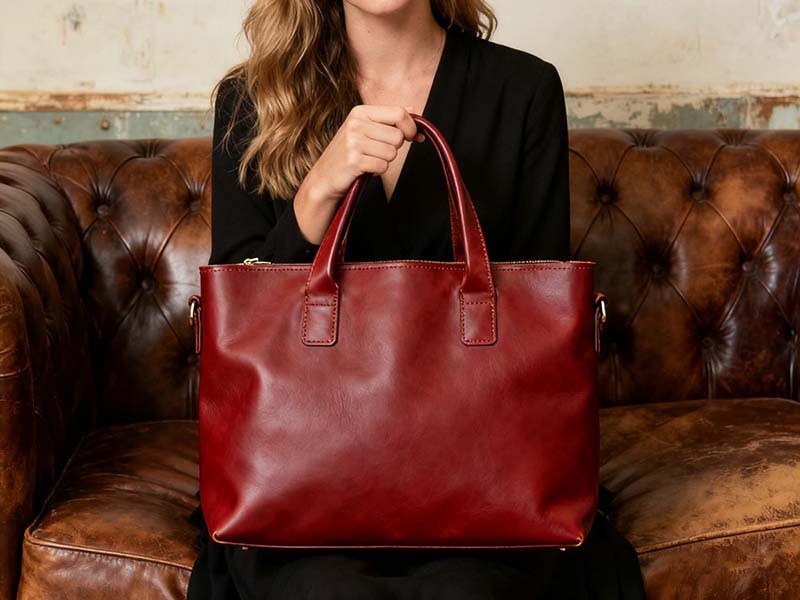
The wrong leather handbag manufacturer rarely looks wrong during the first conversation. The quotation may be attractive, the sample photographs may appear polished, and the sales representative may promise that every design detail is easy to produce. The real differences often become visible later, when the approved leather is replaced, edge paint starts cracking, hardware finishes vary between cartons, handles sit at different angles, or the bulk order no longer looks like the sample displayed in the meeting room.
To choose a leather handbag manufacturer, evaluate relevant product experience, leather and hardware sourcing, sample-development methods, factory evidence, quality-control procedures, capacity, cost transparency, and the ability to reproduce an approved sample in bulk. The right partner should document materials, explain production risks, control critical workmanship, communicate changes clearly, and support both the first order and future repeat production.
A leather handbag is not simply a collection of panels stitched together. Its appearance and durability depend on how leather grain, thickness, reinforcement, lining, thread, edge paint, hardware, pattern accuracy, and sewing methods work as one system. A small change in one component can affect the entire product. Thinner leather may reduce cost but weaken the shape. Heavier hardware may feel premium but pull the flap out of alignment. Softer reinforcement may improve comfort but cause a structured bag to collapse during shipping.
Imagine approving a beautiful sample and scheduling photography, product launches, retailer deliveries, and advertising around it. Three months later, 2,000 handbags arrive with softer bodies, lighter clasps, uneven edges, and visible color differences. The factory says the variations are normal, but the product team knows customers will notice. By that point, the original manufacturing decision has already become a branding, inventory, and delivery problem. Choosing carefully before sampling is far less expensive than solving those problems after production.
What Should You Define Before Sourcing?
Before contacting manufacturers, define the handbag style, intended market, quality level, material direction, order quantity, branding, packaging, target cost, and delivery date. A clear sourcing brief allows factories to assess feasibility, recommend suitable construction, and provide comparable quotations. Vague requests create vague assumptions, making it difficult to compare prices or determine whether the proposed sample truly matches the original product idea.
Product Requirements
Start by describing the handbag as a functional product rather than only a visual design. Two bags can appear almost identical in photographs while requiring completely different leather thicknesses, reinforcement materials, seam constructions, hardware, and production steps. A structured top-handle handbag needs more internal support than a soft hobo bag, while a laptop tote requires stronger handle anchors and base reinforcement than a small evening bag.
A practical brief should state the product category, finished dimensions, intended capacity, opening method, closure, handle or strap dimensions, pocket arrangement, lining, bottom structure, logo process, and expected load. The factory should also know whether the bag must stand independently, remain soft when empty, resist deformation during transport, or maintain a specific silhouette after repeated use.
Reference photographs help communicate proportion and style, but they cannot reveal hidden construction. Mark the exact elements that matter, such as gusset depth, flap length, handle position, corner shape, stitching style, zipper opening, or internal organization. This allows the development team to build an appropriate structure rather than guessing how the visible design was originally made.
Market and Price Position
The target market determines what an appropriate specification looks like. A handbag intended for premium boutiques may require carefully selected leather panels, controlled grain placement, refined edge finishing, substantial hardware, customized dust bags, and tighter cosmetic standards. A national retail program may place greater emphasis on consistency, carton efficiency, barcode accuracy, inspection documentation, replenishment planning, and delivery reliability.
The expected selling price should be considered before materials are finalized. A product planned for a moderate retail price cannot carry unlimited material and labor costs. At the same time, reducing costs without protecting the most visible details can damage customer perception. Leather texture, zipper movement, handle comfort, edge quality, hardware finish, and overall shape usually influence perceived value more than decorative features hidden inside the bag.
The sales channel also affects packaging and compliance. Online orders need packaging that protects the shape during parcel delivery. Retail chains may require specific labels, carton markings, testing, or social-compliance documents. Direct-to-consumer brands may focus more heavily on dust bags, branded tissue, inserts, and a consistent unboxing experience.
OEM or ODM Scope
OEM production is suitable when the product team already has a technical pack, measurement chart, bill of materials, artwork, construction details, and a clear approval standard. In this model, the manufacturer interprets the existing specification, produces a sample, resolves production questions, and recreates the confirmed standard during bulk manufacturing.
ODM development is more suitable when the brand has a concept, reference photographs, target price, material preference, or intended customer but still needs technical support. The factory may help refine dimensions, pocket layout, reinforcement, leather thickness, hardware, branding methods, cost structure, or packaging.
Many projects combine both approaches. A brand may control the external appearance, visual identity, and main dimensions while asking the factory to recommend hidden construction details that improve durability and production consistency. Before development begins, identify which elements are fixed and which may be adjusted. This prevents technical improvements from being mistaken for unauthorized design changes and helps the project move through sampling more efficiently.
RFQ Information
A useful request for quotation gives several factories enough information to calculate the same product. Without a common specification, one supplier may quote genuine leather, another may assume microfiber, and a third may use stock hardware, simplified reinforcement, and basic packaging. The prices may look comparable even though the proposed handbags are not.
| RFQ Item | Information to Provide | Commercial Impact |
|---|---|---|
| Product | Style, dimensions, structure, capacity, reference images | Determines pattern work, labor, and material usage |
| Main material | Leather type, thickness, finish, color, acceptable alternatives | Strongly affects cost, consistency, and minimum quantity |
| Lining | Material, color, weight, pockets, reinforcement | Affects structure, durability, and sewing time |
| Hardware | Size, finish, weight, branding, stock or custom | Influences tooling, lead time, minimum quantity, and price |
| Branding | Debossing, foil stamping, metal plate, embroidery, or print | Determines setup, mold, and application costs |
| Quantity | Quantity per design, color, and size | Affects purchasing efficiency and unit price |
| Packaging | Dust bag, tissue, box, barcode, carton markings | Changes cost, carton dimensions, and delivery planning |
| Delivery | Target date, destination, transport method, trade term | Determines schedule and logistics feasibility |
Technical files should use clear version numbers and dates. Every revision should update the dimensions, materials, artwork, construction notes, and packaging requirements. Files named “final,” “new final,” and “latest final” without version control create avoidable errors because different departments may unknowingly work from different instructions.
Which Leather Capabilities Matter?
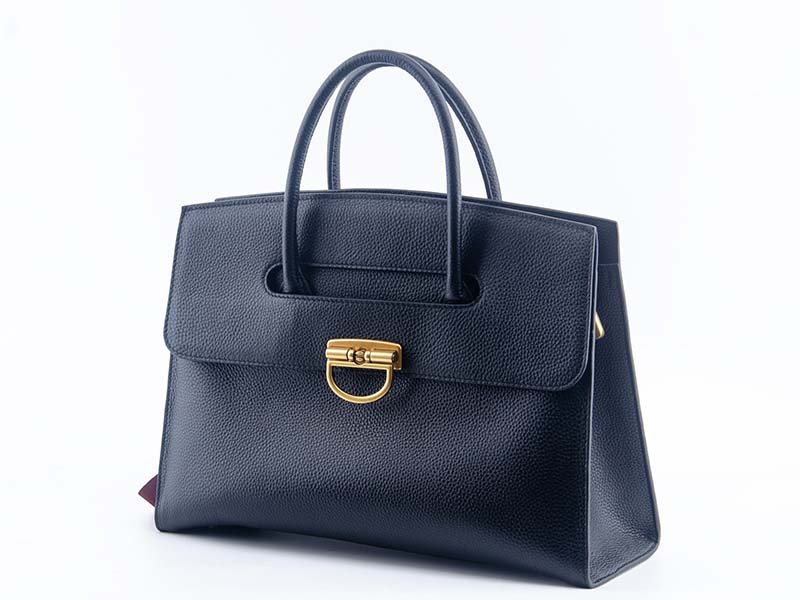
A capable manufacturer must understand how leather type, thickness, temper, grain, finish, cutting yield, skiving, reinforcement, lining, hardware, and edge treatment influence the finished handbag. Access to a leather market is not enough. The factory must be able to choose, inspect, cut, sew, finish, and reproduce the approved material standard across the sample, bulk production, and future repeat orders.
Leather Selection
Leather should be chosen according to the way the handbag must behave. A structured satchel needs material that supports flat panels, defined corners, and stable handles. A relaxed tote requires softer leather with an attractive drape. A compact crossbody bag may use thinner leather to prevent bulky seams, while a large work bag needs enough body and tear resistance to carry weight without stretching.
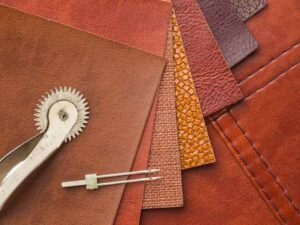
Material names alone are not reliable specifications. Two materials described as top-grain cowhide can differ significantly in thickness, temper, grain correction, surface coating, colorfastness, softness, and cutting yield. Physical swatches should be reviewed before sampling, and the actual surface, thickness, color, and hand feel should be recorded after approval.
Natural leather provides character and distinctive aging, but it also introduces variation. Microfiber and PU materials usually offer more stable color, surface texture, and cutting efficiency. The correct choice depends on brand positioning, customer expectations, intended use, price, quantity, and the need to reproduce the same product during future orders.
| Material | Common Thickness Range | Main Advantage | Main Control Point |
|---|---|---|---|
| Full-grain cowhide | 1.2–2.0 mm | Natural grain and distinctive aging | Scars, shade differences, and cutting yield |
| Top-grain cowhide | 1.0–1.8 mm | Balanced appearance and durability | Finish consistency and lot matching |
| Split leather | 0.9–1.5 mm | Lower genuine-leather cost | Surface coating and long-term wear |
| Microfiber leather | 0.8–1.6 mm | Stable appearance and repeatability | Material grade and backing strength |
| PU leather | 0.7–1.4 mm | Broad color range and cost control | Hydrolysis, abrasion, and peeling resistance |
| Leather-textile combination | Depends on panel | Weight and cost optimization | Seam compatibility and visual coordination |
These figures are practical industry references rather than universal rules. The final thickness must be tested in a complete sample because tanning, coating, softness, reinforcement, seam construction, and edge treatment can change the way a material performs.
Grain and Thickness
Grain direction, texture, and thickness have a direct effect on the appearance of every visible panel. A front panel with fine grain and a flap with heavy grain can make the bag appear mismatched, even when both components come from the same hide. Handles, side panels, gussets, and trim should therefore be grouped according to agreed shade and texture standards.
Thickness control is equally important. Leather that is too thick can produce bulky corners, uneven folded edges, and difficult zipper sections. Material that is too thin may stretch, reveal reinforcement lines, or fail to support the intended shape. Complex handbags often use different finished thicknesses for body panels, handles, piping, folded edges, and decorative trim.
Skiving reduces leather thickness at folds, seam allowances, handle ends, piping, zipper areas, and edge returns. Poor skiving creates either unnecessary bulk or weak edges. The approved bill of materials should identify target thicknesses, and sample records should note where material must be reduced before assembly.
Color Consistency
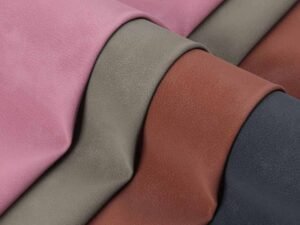
Leather color should be approved through a physical standard whenever possible. Phone screens, photography equipment, office lights, and daylight can make the same material appear noticeably different. Pantone references may help establish direction, but grain, surface gloss, coating, and leather texture can change the final visual result.
Natural leather may show controlled variation between hides. The manufacturing standard should explain how panels are matched within an individual handbag and how completed bags are grouped across the order. A brand may accept slight variation between separate units while rejecting obvious color differences between the front panel, flap, gusset, and handles of the same bag.
The sourcing team should also ask whether the production leather will come from a single lot. Repeat orders placed months later can be more difficult to match if the original batch is no longer available. Edge paint, thread, zipper tape, lining, and hardware plating should be approved with the leather so that the entire color system feels intentional.
Linings and Hardware
Lining influences the interior appearance, touch, structure, cleanliness, and durability of the handbag. Cotton twill can create a natural premium feel but may wrinkle or stain more easily. Polyester offers broad color availability and practical strength. Microfiber suede creates a refined interior but increases cost and product weight. Some structured designs also need bonded lining or separate reinforcement to prevent sagging.
Hardware should be evaluated by material, plating, size, weight, operating force, attachment method, and edge condition. Heavy hardware may feel substantial but can pull soft leather out of shape or make a compact handbag uncomfortable. Lightweight components can reduce cost but may wear quickly or feel inconsistent with the product’s intended position.
Zippers, sliders, buckles, rings, magnetic snaps, feet, chains, rivets, screws, handle connectors, and logo plates should be checked as one coordinated system. Custom hardware may require molds, engraved branding, special plating, higher minimum quantities, and longer development periods. Standard components are more flexible, but they provide less differentiation.
How Do You Verify the Factory?
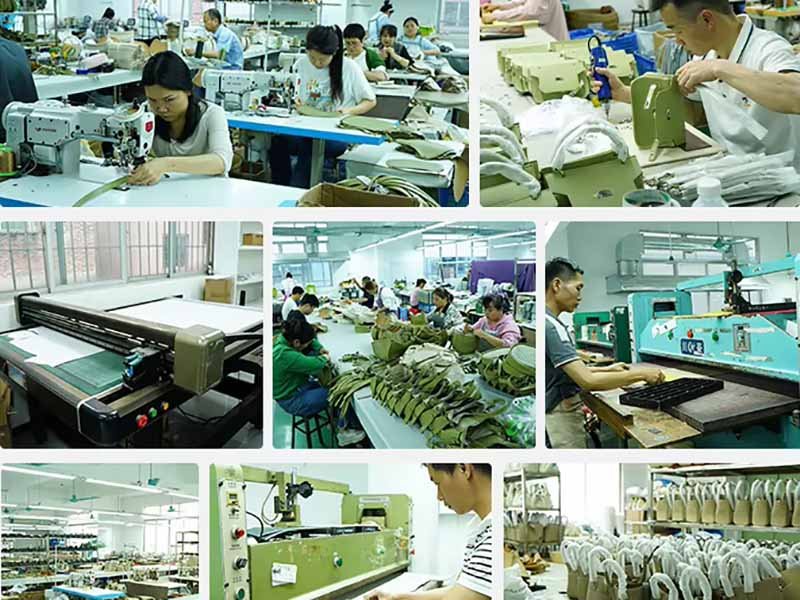
Verify a manufacturer by reviewing its legal identity, live facilities, similar products, development resources, leather handling, equipment, inspection procedures, capacity, export experience, and audit access. A polished website does not prove manufacturing ability. The company must demonstrate that it can develop and produce the specific handbag construction, material, order volume, and quality level required by the project.
Factory or Trader
A trading company is not automatically unreliable, and a factory is not automatically competent. The essential issue is transparency. The sourcing team needs to know where the sample is developed, where bulk production takes place, who purchases the leather, who controls patterns, and who takes responsibility when the agreed standard is missed.
Ask whether sampling and production are managed within the same organization. Some suppliers develop an attractive sample through a specialist technician and then transfer the order to another workshop. That transfer may introduce different patterns, machines, workers, thread tension, edge-finishing methods, and material handling practices.
A live video call is a practical first step. Ask to see the sample room, pattern area, leather storage, cutting section, sewing lines, finishing stations, inspection area, packaging section, and warehouse. Request specific locations instead of relying only on a prerecorded promotional video. Clear answers about production responsibility are usually more informative than a simple statement that the company owns a factory.
Relevant Experience
A manufacturer should demonstrate experience with handbags that share the most important features of the proposed design. A simple leather tote does not prove that the factory can produce a structured satchel with rolled handles, piping, customized hardware, painted edges, multiple reinforcements, and a complex lining assembly.
Relevant experience should be compared by material, structure, hardware complexity, finishing method, target quality level, quantity, and packaging. Confidential customer logos do not need to be revealed. The manufacturer can show anonymized samples, internal prototypes, construction details, or projects that have been approved for display.
Inspect difficult areas rather than looking only at the front silhouette. Handle bases, zipper ends, gusset joins, folded corners, piping, edge paint, lining openings, and hardware reinforcement reveal more about production skill. An experienced team should also be able to explain what was difficult in a similar project and how it controlled leather stretch, edge curing, panel alignment, handle angle, or hardware variation.
Development Resources
A strong development system connects product management, pattern making, material sourcing, sample sewing, costing, production engineering, and quality control. When these functions communicate directly, problems can be tested through physical samples instead of passing through several layers of sales messages.
Ask how patterns are produced, how modifications are recorded, and whether the production pattern is updated after sample approval. A sample may look excellent because an experienced technician made several manual adjustments, but those adjustments must be converted into repeatable instructions before the order moves to a production line.
Factory size alone does not determine suitability. A very large factory may be efficient for standardized volume programs but less flexible during detailed development. A smaller specialist workshop may produce fine craftsmanship but lack documentation, export experience, or capacity. The right operation is the one whose development method, production system, and order scale fit the actual project.
Audit Evidence
Verification works best when documents, direct observation, and trial production support one another. A business license proves that an entity exists, but it does not prove leather-handbag experience. A factory video confirms physical operations, but it does not demonstrate stable quality over several months. A sample confirms development skill, but it may not prove volume capacity.
| Evidence | What to Review | Main Limitation |
|---|---|---|
| Business registration | Legal name, address, operating status | Does not prove manufacturing expertise |
| Live factory video | Current activity, equipment, staff, material areas | Shows only what is visible during the call |
| Similar samples | Construction and finishing experience | Does not confirm capacity for the required quantity |
| Equipment records | Cutting, sewing, skiving, finishing, testing | Equipment does not guarantee skilled operation |
| QC documents | Checklists, inspection records, corrective actions | Documents must match actual practice |
| Audit report | Facility, systems, labor, security, compliance | Represents conditions during a specific period |
| Third-party inspection | Product quality before shipment | Most production costs have already been committed |
| Trial order | Communication, quality, packaging, delivery | Small orders may not reflect peak-season performance |
For important orders, arrange a video review, on-site visit, or independent audit before paying a major production deposit. The review should focus on the actual risks of the project, including leather storage, panel matching, cutting control, skiving, edge finishing, hardware installation, defect handling, final inspection, and packing conditions.
Szoneier operates as a Shenzhen-based, factory-oriented custom bags and soft goods manufacturer with more than 18 years of industry experience. Its documented manufacturing system includes in-house sampling, material coordination, sewing production, inspection, packaging, export support, and a controlled network of satellite production resources.
How Are Samples and Quality Controlled?
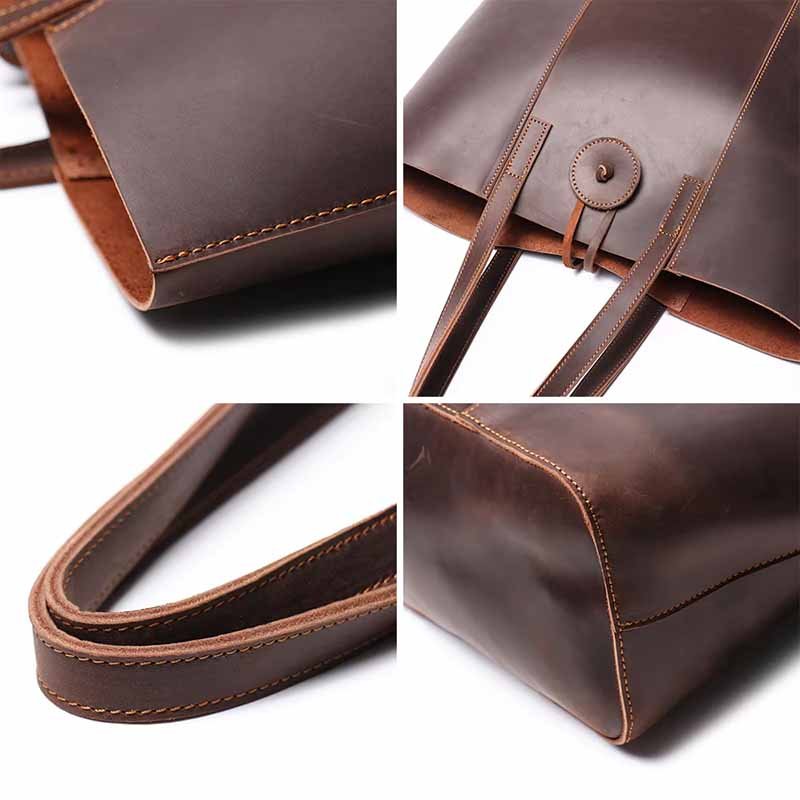
Samples and bulk quality should be managed through material approval, controlled patterns, revision records, a sealed approval sample, pre-production confirmation, in-line checks, final inspection, and packaging verification. The objective is not simply to create one attractive prototype. The objective is to establish a measurable product standard that production teams can reproduce consistently across the entire order.
Sample Development
The first sample should begin with a technical review rather than immediate cutting. The manufacturer needs to confirm dimensions, leather, lining, reinforcement, hardware, branding, quantity, packaging, target cost, and intended quality level. Missing information should be discussed before the pattern maker begins work.
The pattern maker then converts the design into production components and assesses seam allowances, fold widths, skiving areas, zipper curves, reinforcement placement, handle angles, hardware clearances, and lining fit. Temporary materials may be used when the final leather or custom metal parts are not yet available, but every substitution should be disclosed before the sample is approved.
The first prototype is both a design model and a manufacturing test. It helps the team identify bulky seams, weak load points, unstable corners, difficult edge treatments, inefficient assembly steps, or unrealistic material combinations. Before shipping the sample, the factory should conduct an internal review and correct visible workmanship or measurement problems.
Sample Inspection
Inspect the sample in a consistent sequence. Begin with the overall silhouette, proportion, symmetry, color, grain, and structure. Then check dimensions, construction, functionality, finishing, comfort, and packaging. The bag should be reviewed empty, lightly filled, and loaded with the type of contents it is expected to carry.
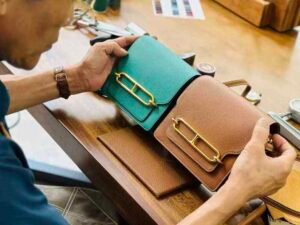
Important checks include finished dimensions, strap drop, gusset depth, corner shape, grain matching, stitch alignment, skiving, folded edges, edge-paint coverage, hardware attachment, zipper movement, lining tension, pocket dimensions, logo position, base stability, and packaging protection.
Open and close the bag repeatedly. Carry it by the handles and shoulder strap. Check whether the flap remains centered, whether the handles pull the leather out of shape, and whether the bag becomes uncomfortable when loaded. Record every requested change with numbered notes, annotated photographs, and specific measurements rather than relying on phrases such as “improve the shape.”
Approval Records
The approved sample should be connected to one controlled set of documents. The technical pack, pattern version, bill of materials, leather reference, hardware specification, artwork, packaging files, and revision list must all describe the same product. When one document changes, the related records should be updated before production begins.
The approval record should identify the sample version, date, measurements, tolerances, leather code, color reference, lining, reinforcement, hardware, thread, edge paint, logo process, packaging, testing requirements, and any approved exceptions. Whenever practical, the factory and customer should each retain a sealed sample.
Repeat orders should use archived patterns, bills of materials, approved swatches, hardware codes, logo files, packaging records, quality standards, and previous corrective actions. Reconstructing an old handbag from emails and photographs increases the likelihood of changes in dimensions, material, construction, or finish.
Bulk QC
Quality control must begin before sewing. Final inspection cannot fully correct the wrong leather shade, unsuitable reinforcement, weak hardware, or incorrect zipper after hundreds of bags have been completed. Incoming materials and accessories should be checked against approved references before cutting and assembly.
A practical control sequence includes material inspection, accessory inspection, pre-production confirmation, first-piece approval, cutting checks, in-line sewing inspection, semi-finished checks, final inspection, and packaging verification. The approved sample and current specification should be available to production supervisors and inspectors throughout the order.
Leather-handbag inspection commonly focuses on shade, grain, surface marks, panel matching, cutting accuracy, skiving, stitching, edge-paint curing, adhesive residue, hardware alignment, handle reinforcement, closure function, lining installation, logo position, symmetry, cleanliness, odor, packaging, and carton markings. Defect classifications and acceptance criteria should be agreed before production rather than negotiated after problems are discovered.
What Do MOQ, Cost, and Lead Time Mean?
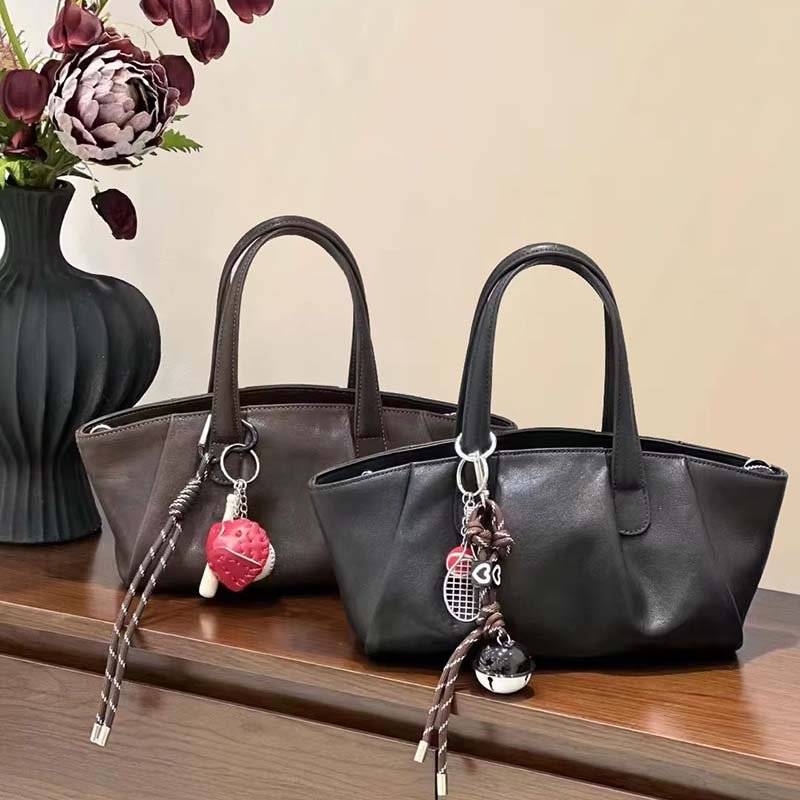
MOQ, price, and lead time are connected outcomes of material purchasing, handbag complexity, hardware, branding, packaging, testing, quantity, and production scheduling. A low price or fast promise has little value if it depends on unapproved material changes or unrealistic capacity. Suppliers should be compared using the same specification, quantity, commercial term, and delivery assumptions.
MOQ Factors
The sewing line may be able to produce a small quantity, but the complete supply chain can have higher purchasing minimums. Leather colors, lining, zipper tape, plating, logo plates, custom molds, dust bags, boxes, printed labels, and packaging inserts may each have their own minimum quantities.
For selected handbag projects using available materials, standard hardware, limited colors, and manageable construction, an MOQ around 200 pieces may be achievable. Custom-dyed leather, exclusive plating, molded components, unusual hardware, premium boxes, or several colorways may require a higher quantity.
Quantity should be reviewed by style and color rather than only as a total. An order of 600 pieces in one color is generally more efficient than 600 pieces divided across six colors. Brands can sometimes reduce practical minimums by using stock leather colors, sharing linings across several designs, limiting colorways, selecting standard hardware, and using one logo mold across a collection.
Cost Structure
A leather handbag quotation is built from leather or body material, lining, reinforcement, hardware, labor, branding, packaging, inspection, overhead, and commercial terms. Leather cost depends not only on its price per square foot or square meter but also on usable yield. Natural marks, hide shape, grain direction, panel size, and color matching all influence how much material is actually consumed.
Labor rises with the number of panels, zipper sections, pockets, painted edges, skived components, rolled handles, piping, hardware pieces, and assembly steps. A visually simple structured handbag may require more work than a larger soft tote because every edge and corner must remain accurate.
Price comparisons should confirm whether quotations include sample development, patterns, molds, materials, custom hardware, logo application, dust bags, boxes, labels, testing, inspection, export cartons, freight, duties, and taxes. A slightly higher unit price can represent better value when it includes stable materials, reliable hardware, realistic quality control, and fewer hidden charges.
Sampling Time
Sampling begins after the manufacturer has sufficient information and the required materials are available. Delays often occur because dimensions, leather, hardware, logo artwork, colors, or packaging have not been confirmed. The active sewing time may be relatively short, while sourcing special leather or customized components may take much longer.
A typical development path includes requirement review, material selection, pattern development, sample sewing, internal inspection, photographs or video, shipment, customer feedback, revision, and final approval. Each revision may add several days, especially when a different leather, hardware size, reinforcement, or structure must be tested.
For many custom leather handbag projects, approximately 10–15 days is a practical reference for an initial sample once the main materials are available. Custom colors, complex structures, molded hardware, repeated edge finishing, or gift packaging may extend the schedule. Consolidated feedback and clear version control usually save more time than pushing the factory toward an unrealistic deadline.
Bulk Lead Time
Bulk production begins after the approved sample, materials, commercial terms, and production instructions are confirmed. The schedule includes material purchasing, incoming inspection, cutting, preparation, sewing, finishing, assembly, in-line inspection, final quality control, packing, and shipment preparation.
A production period of approximately 35–60 days is a practical reference for many custom leather handbag orders, although the actual period depends on quantity, style complexity, color count, leather availability, custom hardware, edge-finishing requirements, packaging, testing, and the factory’s production schedule.
Ask for milestone dates rather than only a final delivery promise. Useful milestones include material approval, material arrival, pre-production sample, cutting start, sewing start, first in-line inspection, production completion, final inspection, packing completion, and shipment release. A realistic schedule with visible checkpoints gives the project team time to correct problems before they threaten the final delivery date.
How Do You Select the Final Manufacturer?
Select the final manufacturer by comparing technical fit, sample quality, material control, communication, production evidence, inspection systems, capacity, total cost, and delivery reliability. The best factory is not necessarily the cheapest or largest. It is the operation that explains risks clearly, records decisions, reproduces the approved standard, and can support repeat orders without constant supervision.
Supplier Questions
The final evaluation should test how the manufacturer thinks, not simply what it claims. Ask questions that require practical explanations. A reliable team should be able to discuss similar products, recommended leather thickness, panel matching, difficult construction details, production bottlenecks, inspection methods, and the risks that may delay delivery.
Useful discussions include where patterns are developed, which processes are completed internally, how subcontracted work is controlled, who approves the first production units, how leather lots are inspected, how edge paint is managed, and what happens when a material does not match the approved sample.
A professional supplier will not answer every request with an immediate “yes.” It may explain that a color is difficult to repeat, a structure needs reinforcement, a delivery date is unrealistic, or custom hardware will increase the minimum quantity. That willingness to discuss limitations often indicates more technical involvement than a supplier that promises everything without reviewing the design.
Quote Comparison
Compare quotations using an identical specification. A lower price may reflect thinner leather, lighter hardware, simplified reinforcement, fewer edge-paint applications, standard packaging, lower inspection requirements, or different shipping terms. Without a detailed comparison, the lowest price may simply represent a different product.
Review leather type, thickness, lining, reinforcement, hardware material, plating, zipper grade, branding, packaging, sample fees, tooling charges, minimum quantity, unit price, lead time, inspection standard, payment terms, shipping terms, and defect resolution.
Ask suppliers to present cost-saving alternatives as separate options rather than silently changing the specification. For example, one quotation may use genuine leather and custom hardware, while another may use premium microfiber and standard fittings. Transparent alternatives allow the product team to reduce cost while protecting the features that matter most to the target customer.
Red Flags
Warning signs often appear before the first sample is made. Be cautious when a supplier quotes without enough information, promises every detail without technical discussion, refuses a live factory review, avoids explaining the production location, or provides only unrelated samples.
Other red flags include changing material descriptions during negotiation, presenting prices far below comparable quotations, promising extremely short lead times for custom leather or hardware, failing to record revisions, sending samples with obvious defects, pressuring the customer to approve production quickly, or refusing third-party inspection.
Leather variation should not be used as a general excuse for mismatched panels, excessive surface defects, uncontrolled shades, or inconsistent thickness. Natural characteristics can be accepted within an agreed standard, but those standards must be defined before cutting. One isolated issue may be correctable; repeated vague explanations and undocumented changes usually indicate a deeper management problem.
Trial Order
A trial order is one of the most useful ways to evaluate a manufacturer because it tests communication, material purchasing, planning, production control, bulk consistency, inspection, packing, and delivery under real conditions. It reveals capabilities that cannot be confirmed through presentations or samples alone.
The quantity should be large enough to require genuine production rather than sample-room manufacturing. For many handbag programs, several hundred pieces provide more meaningful evidence than a very small batch, although the appropriate volume depends on the material and supply chain.
During the trial, evaluate material consistency, revision control, milestone reporting, in-line quality, final inspection results, packaging accuracy, shipment timing, and the supplier’s response when a problem occurs. A successful first production run should also create reliable records for future orders, including patterns, bills of materials, approved swatches, hardware codes, artwork, packaging files, inspection standards, and corrective actions.
Choosing a leather handbag manufacturer is ultimately a risk-management decision. A competitive price matters, but it must be supported by appropriate materials, controlled development, realistic scheduling, documented quality standards, and responsible communication. The strongest manufacturing relationships are built when both parties can identify problems early, record decisions clearly, and improve future production using evidence from previous orders.
Szoneier supports custom leather handbag projects from initial product review through material sourcing, pattern development, sampling, bulk production, inspection, packaging, and international delivery. Selected projects can begin from approximately 200 pieces, with the exact minimum determined by leather availability, color count, hardware, structure, branding, and packaging. Product teams may submit reference photographs, physical samples, technical packs, artwork, quantity plans, and destination details for a practical project evaluation.
For a detailed quotation, send the handbag design, target dimensions, material preference, logo file, estimated quantity, packaging requirements, and required delivery country to info@szoneier.com. The project team can review the construction, recommend suitable leather and hardware options, identify development risks, and prepare a sampling and production plan for your custom collection.