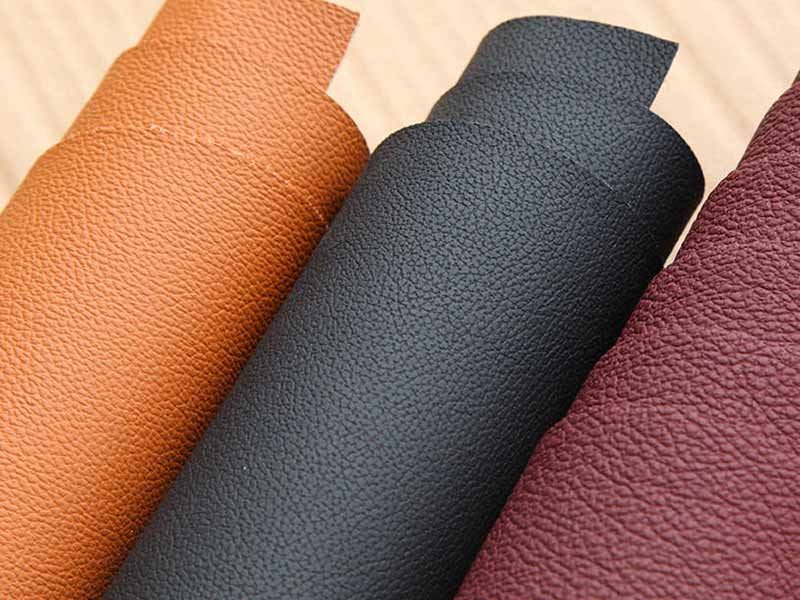
“Vegan leather” sounds like a clearly defined material, but it actually covers a wide range of coated fabrics, microfiber structures, plant-fiber composites, fungal materials, and hybrid sheets with very different performance characteristics. A soft polyurethane cosmetic pouch, a structured microfiber briefcase, and a cactus-based cardholder may all be sold as vegan leather products, yet they cannot be patterned, folded, stitched, finished, tested, or scaled in exactly the same way.
Vegan leather goods are manufactured by selecting a suitable animal-free material, engineering the product around its thickness and backing, developing patterns and samples, cutting and reinforcing components, sewing or bonding the structure, applying edge and logo finishes, installing hardware, and inspecting the finished product. Reliable production also verifies adhesives, linings, coatings, chemical requirements, packaging, and material claims before bulk manufacturing begins.
The real challenge is therefore not finding a sheet that resembles leather. It is matching the material to the product’s structure, expected lifespan, climate, target price, branding process, compliance requirements, production volume, and repeat-order plan. Many quality failures begin before the first production stitch is made, when a visually appealing material is approved without checking coating adhesion, fold behavior, backing strength, hydrolysis resistance, edge-finishing compatibility, or future supply availability. Understanding that connection between material engineering and finished-product manufacturing is what separates a successful launch from a product that begins peeling, cracking, deforming, or generating customer complaints after only a short period of use.
What Is Vegan Leather?
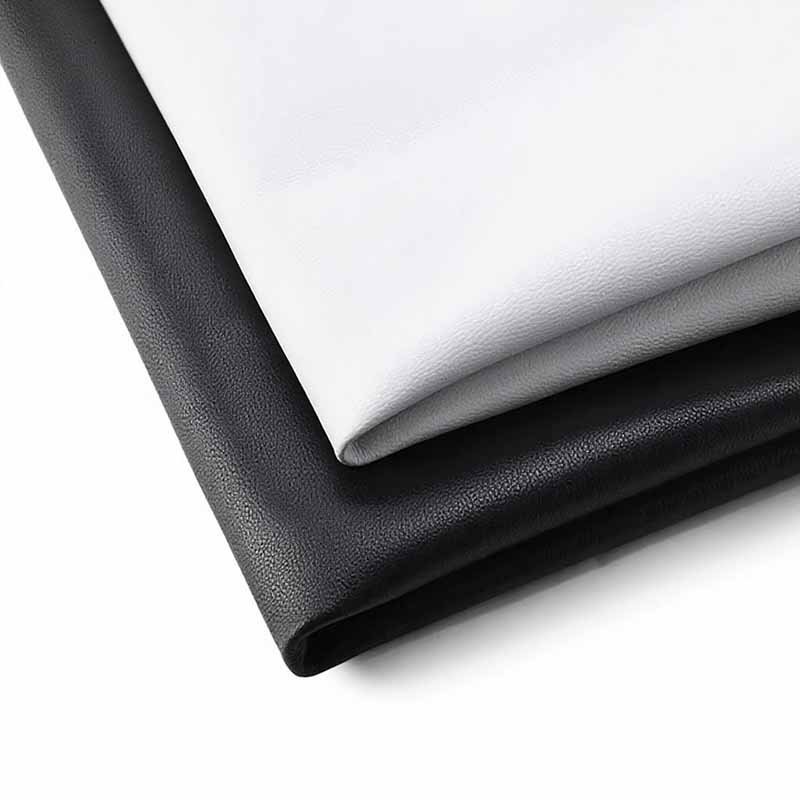
Vegan leather is an animal-free material designed to reproduce selected visual or functional characteristics associated with conventional leather. It may use polyurethane, PVC, microfiber structures, plant fibers, fungal mycelium, recycled inputs, or blended composites. The word “vegan” describes the absence of animal-derived leather within a defined product scope, but it does not automatically prove that the material is plastic-free, biodegradable, durable, recyclable, or environmentally superior.
What Makes It Vegan?
A material is generally described as vegan when it does not use animal hide or skin. However, a complete finished-product claim can involve much more than the visible exterior. A handbag may contain lining fabric, adhesive, edge paint, reinforcement board, foam, printing ink, zipper tape, thread treatments, labels, decorative trims, hardware coatings, lubricants, and packaging components. Each of these elements can become relevant when a brand intends to market the entire product as vegan rather than merely describing the outer material.
This distinction is especially important during product development. “Made with an animal-free outer material,” “fully vegan finished product,” and “third-party-certified vegan product” are not equivalent statements. The first may only require confirmation of the shell material. The second requires a broader review of the bill of materials. The third may require supplier declarations, formulation details, processing information, and records that meet the chosen certification program’s standards.
The intended claim should therefore be established before sampling begins. When that decision is delayed, the factory may approve a technically suitable outer material only to discover later that a glue, edge coating, trim, or printing process cannot support the planned packaging language. Changing these elements after sample approval can affect appearance, cost, performance, lead time, and minimum order requirements.
Is It Real Leather?
Vegan leather is not leather in the traditional material sense because it is not made from animal skin. It is more accurately understood as a group of engineered leather alternatives designed to reproduce selected qualities such as grain, softness, flexibility, structure, color depth, surface protection, or edge appearance.
Natural leather is built around a collagen-fiber network. Conventional vegan alternatives normally rely on textile backings, nonwoven layers, polymer coatings, foam layers, protective topcoats, or combinations of these components. Bio-based alternatives may incorporate cellulose, agricultural waste, natural rubber, fungal structures, or plant fibers, but they can still use synthetic binders and surface finishes to achieve production-ready performance.
These structural differences affect manufacturing. Synthetic sheets often provide more uniform thickness, color, width, and grain than natural hides, which can improve cutting efficiency and repeat consistency. However, some grades are more vulnerable to surface scratching, coating separation, hydrolysis, fold whitening, permanent needle holes, heat marking, or edge-paint incompatibility.
The useful commercial question is not whether vegan leather is “real.” It is whether a specific material construction is suitable for the product’s expected use, climate, cleaning method, price level, service life, warranty expectations, and production volume.
Does It Contain Plastic?
Many vegan leather materials contain plastic-based components. Standard PU leather uses polyurethane, while PVC leather uses polyvinyl chloride. Microfiber leather usually combines very fine synthetic fibers with a polyurethane matrix. These materials are animal-free, but they are not plastic-free.
Plant-based naming also requires careful interpretation. A material described as apple, cactus, grape, corn, or pineapple leather may contain agricultural by-products or renewable fibers while still using a synthetic binder, backing, coating, or protective film. These additions are commonly used to improve tear strength, abrasion resistance, moisture resistance, color stability, flexibility, and manufacturability.
For this reason, professional buyers should evaluate technical documentation rather than relying on a commercial name. Useful questions include:
- What percentage of the finished material is bio-based?
- Is the percentage measured by weight or bio-based carbon?
- What materials are used in the coating and backing?
- Does the construction contain polyurethane or PVC?
- Can the material layers be separated for recycling?
- Has biodegradability been tested under defined conditions?
- Are restricted-substance reports available?
- Can the same article be supplied for repeat orders?
A precise composition statement is more useful than a broad label such as “eco leather,” particularly when the finished product will be sold in markets where environmental claims are closely reviewed.
Which Claims Need Clarification?
Vegan, plant-based, bio-based, recycled, biodegradable, plastic-free, and sustainable are separate descriptions. They should not be used interchangeably because each refers to a different product attribute.
- **Vegan:**Excludes animal-derived materials within the defined claim scope.
- **Plant-based:**Contains inputs derived from plants but may include synthetic components.
- **Bio-based:**Contains carbon originating from renewable biological sources.
- **Recycled:**Includes recovered pre-consumer or post-consumer material.
- **Biodegradable:**Breaks down under specified biological and environmental conditions.
- **Plastic-free:**Contains no conventional plastic-based components.
- **Sustainable:**Requires evidence across sourcing, manufacturing, use, durability, and disposal.
A durable PU sheet may be vegan without being plant-based. A plant-containing composite may be difficult to recycle because several layers are bonded together. A sample shown to biodegrade under industrial conditions may not break down in ordinary landfill or household compost conditions. Clear, narrow claims are generally more credible than broad environmental statements that cannot be supported by the complete material and product construction.
Which Vegan Leather Materials Are Used?
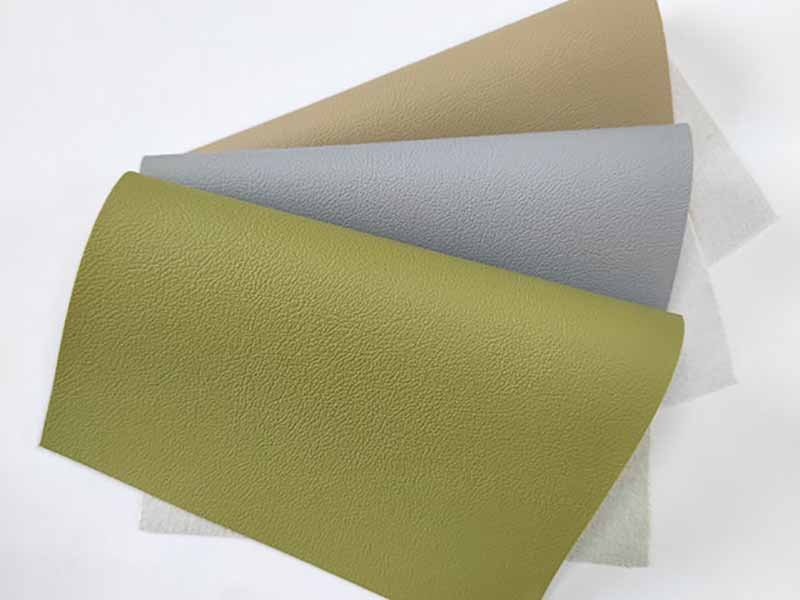
The most common materials used in vegan leather goods are PU-coated fabrics, PVC-coated fabrics, polyurethane microfiber leather, and plant- or bio-based composites. Their surfaces may look similar, but their thickness, backing strength, stretch, coating adhesion, edge behavior, aging resistance, cost, and production consistency can differ substantially. Material selection should therefore begin with the finished product’s needs rather than a photograph or small swatch.
PU and PVC Leather
PU leather is widely used for handbags, wallets, cosmetic bags, travel organizers, pouches, fashion accessories, and decorative trims. It normally combines a woven, knitted, or nonwoven backing with polyurethane layers that create color, grain, body, and surface protection.
PU is available in soft, firm, matte, glossy, smooth, pebbled, metallic, printed, and embossed finishes. This flexibility makes it useful for product lines that require multiple colors and visual directions. However, the term “PU leather” covers a broad quality range. Resin chemistry, coating thickness, backing density, surface treatment, hydrolysis resistance, and production method all influence how the material performs.
PVC leather uses polyvinyl chloride applied to a fabric backing. It is often firmer and heavier than many PU grades and can provide a cleanable, water-resistant surface at a competitive cost. It may be suitable for structured cases, utility products, promotional goods, protective covers, and applications where softness is less important.
Buyers should consider odor, plasticizer selection, low-temperature flexibility, yellowing, chemical restrictions, and finished-product weight when evaluating PVC. A generic material name is not enough. The approved specification should include the supplier, article number, color, total thickness, backing, grain, finish, and required test performance.
Microfiber Leather
Microfiber leather uses very fine synthetic fibers arranged in an engineered nonwoven structure, normally combined with polyurethane. Its internal construction can provide better dimensional stability, tear resistance, shape retention, and edge-finishing behavior than many basic coated fabrics.
It is frequently considered for structured handbags, business bags, wallets, cardholders, luggage accessories, handles, straps, belts, and products that require clean skiving or controlled folding. Consistent thickness can be especially valuable when several layers meet around card slots, zipper ends, reinforced handles, or narrow edges.
Microfiber grades still vary significantly. A dense construction may perform well for straps and business cases but feel too firm for a relaxed shoulder bag. A softer grade may offer better drape but require reinforcement around hardware or at the base of the product.
The material price is often higher than entry-level PU, but total production cost can be more predictable when the material provides cleaner edges, fewer damaged panels, stable stitching, and lower rejection rates. It should still be tested in the actual product because hand feel, seam bulk, edge-paint appearance, and fold recovery cannot be fully judged from a small sample card.
Plant-Based Alternatives
Plant-based and bio-based alternatives may incorporate pineapple leaf fibers, apple waste, grape residues, cactus biomass, cork, corn-derived inputs, bacterial cellulose, natural rubber, or other renewable resources. Mycelium-based materials use fungal structures cultivated and processed into sheet-like forms.
These materials can provide distinctive textures and valuable product stories, but their commercial readiness varies. Some are supplied as stable roll goods in controlled colors and thicknesses. Others are better suited to limited collections, accent panels, cardholders, small accessories, or concept products because production capacity, color matching, usable width, and repeat availability remain restricted.
The sourcing team should evaluate more than the environmental narrative. Usable width, visual defect rate, minimum material order, color consistency, lead time, surface sensitivity, sewing performance, edge-finishing compatibility, abrasion resistance, and future replenishment are all commercially important.
| Material type | Practical strengths | Common risks | Typical applications |
|---|---|---|---|
| Standard PU | Broad colors, soft hand, accessible cost | Peeling, hydrolysis, surface wear | Pouches, cosmetic bags, fashion bags |
| Premium PU | Improved finish and controlled performance | Higher price, specification must remain fixed | Branded handbags, travel goods |
| PVC | Firm, cleanable, water-resistant | Weight, odor, cold-weather cracking | Cases, utility goods, structured products |
| Microfiber | Stable, strong, clean edge treatment | Higher cost and possible excess firmness | Wallets, handles, business bags |
| Plant-fiber composite | Distinct texture and material story | Batch variation and coating disclosure | Capsule products, cardholders, panels |
| Mycelium material | Innovative appearance and positioning | Capacity, durability, repeat supply | Premium concepts and limited editions |
These applications are practical starting points rather than universal rules. A change in backing, coating, thickness, top finish, or internal reinforcement can alter the material’s suitability for a particular product.
Coatings and Backings
The visible grain is only one part of the material. The backing often determines how the sheet stretches, tears, folds, and holds stitches. A woven backing can provide dimensional stability and controlled movement. A knitted backing can create a softer hand and better drape but may require reinforcement in load-bearing areas. A dense nonwoven structure can support clean edges and a more structured silhouette.
The coating controls color, grain, stain resistance, friction, printability, surface protection, and aging behavior. A thin coating may feel soft and flexible but reveal the backing texture or wear more quickly. A heavy coating may improve surface coverage while increasing stiffness and the risk of cracking around tight folds.
Before approving a material, the development team should evaluate:
- Total material thickness
- Coating-to-backing adhesion
- Stretch in both material directions
- Tear behavior around stitch holes
- Grain recovery after folding
- Surface whitening or cracking
- Edge appearance after cutting and skiving
- Compatibility with adhesives and edge paint
- Heat sensitivity during embossing or stamping
- Color transfer under dry and wet rubbing
The best material is normally the construction that supports the finished product’s appearance, manufacturing method, performance, and repeat-order requirements, rather than the sample with the most attractive grain on a material card.
How Are Vegan Leather Goods Manufactured?

Vegan leather goods are produced through specification development, material validation, pattern engineering, sampling, cutting, reinforcement, sewing or bonding, edge finishing, hardware installation, inspection, and packaging. Coated and composite materials react differently to needles, heat, adhesives, pressure, friction, and repeated folding, so each product must be engineered around the selected material rather than manufactured with one universal process.
Specifications and Patterns
Development starts with a product brief that defines more than the shape. A practical specification normally includes finished dimensions, intended use, target capacity, material, lining, closure, hardware, logo process, colors, packaging, order quantity, destination market, and performance expectations.
The pattern maker converts this information into individual production components and adds allowances for seams, folds, edge paint, bindings, piping, gussets, zipper installation, reinforcement, and lining assembly. Material thickness and backing behavior directly affect these calculations.
A thick microfiber sheet may require a wider fold allowance than a thin PU material. A firm PVC sheet may need larger corner radii to avoid wrinkling or cracking. A soft knitted backing may stretch during sewing unless the panel is stabilized. A surface that retains every needle hole requires accurate stitching because corrections remain visible.
Stress zones should be engineered before the sample is cut. These areas commonly include:
- Handle attachment points
- Shoulder strap anchors
- D-rings and buckles
- Magnetic closures
- Zipper ends
- Bottom corners
- Wallet folds
- Metal logo positions
- Load-bearing seams
Reinforcement may use woven tape, board, foam, additional material layers, rivets, box stitching, or increased bonding area. The method should reflect the expected load, material behavior, and appearance rather than being added as a standard component without testing.
Sampling and Cutting
Sampling confirms whether the specification, pattern, material, and construction work together. Before cutting, the material should be checked for color, grain, thickness, scratches, stains, wrinkles, coating bubbles, backing defects, unusual odor, and visible shade variation.
Panels may be cut by knife, die, digital cutter, or automated cutting equipment. The appropriate method depends on product complexity, development stage, quantity, material behavior, and required accuracy. Directional grains, printed effects, surface shading, and panel placement must be considered during nesting.
A development sample should test more than visual appearance. It should show whether the selected material can be skived, folded, glued, stitched, embossed, printed, edge-painted, and assembled without unacceptable damage.
Important sample observations include:
- Whether tight corners wrinkle
- Whether folds whiten or crack
- Whether adhesive marks the surface
- Whether edge paint bonds evenly
- Whether heat affects the logo area
- Whether hardware pulls through the backing
- Whether the lining changes the silhouette
- Whether several layers create excess bulk
- Whether dimensions remain stable
- Whether the product can be repeated efficiently
A sample may look attractive but still be unsuitable for production if it depends on repeated manual correction, unusually slow sewing, excessive material selection, or finishing methods that cannot be controlled consistently across a large order.
Sewing and Finishing
Needle size, thread type, stitch length, presser-foot pressure, and sewing speed should be matched to the specific material. Stitching too densely can create a perforated line that tears under load. Excessive presser-foot pressure can leave permanent marks, while high friction or heat may damage sensitive coatings.
Development teams often begin with moderate stitch density and adjust it after checking seam appearance and pull behavior. The final setting depends on material thickness, thread size, seam type, reinforcement, backing strength, and the visual standard required by the brand.
Edges can be folded, turned, bound, piped, clean-cut, or finished with edge paint. Painted edges normally require controlled cutting, sanding, base coating, drying, intermediate smoothing, and additional color layers. Weak coating adhesion can cause edge separation during sanding or create an uneven finished line.
Logo methods also require product-specific tests. Hot stamping, debossing, screen printing, transfer printing, embroidery, metal plaques, and molded labels apply different levels of pressure, temperature, and mechanical stress. A process that performs well on one PU grade may mark, melt, distort, or weaken another.
Bulk Production Controls
Bulk manufacturing should begin only after the material, approved sample, colors, hardware, labels, packaging, and quality requirements are confirmed. A physical approval sample should be supported by written specifications because it cannot record every tolerance, test method, packing detail, or acceptable variation.
| Production stage | Main control | Risk reduced |
|---|---|---|
| Material receipt | Article, batch, color, thickness, defects | Incorrect or substituted material |
| Pre-production sample | Size, structure, logo, workmanship | Sample-to-bulk inconsistency |
| Cutting | Grain direction, shade, panel accuracy | Distortion and visible color differences |
| First completed units | Stitch, fold, edge, reinforcement | Repeated manufacturing defects |
| In-line inspection | Dimensions, seams, hardware, cleanliness | Large quantities of hidden defects |
| Final inspection | Function, appearance, packing, quantity | Shipment rejection and claims |
| Shipping release | Cartons, labels, documents, destination | Logistics and labeling errors |
Material storage and handling also affect product quality. Coated sheets can react to high heat, humidity, prolonged pressure, tight rolling, surface contact, and incompatible packaging. Finished panels should be protected from scratching, glue contamination, and color transfer throughout assembly.
A reliable production system identifies recurring problems during the first completed units and corrects the method before the full order is produced. Waiting until final inspection to discover an edge-paint, strap, zipper, or surface defect can make rework expensive and delay shipment.
How Do Brands Choose the Right Material?
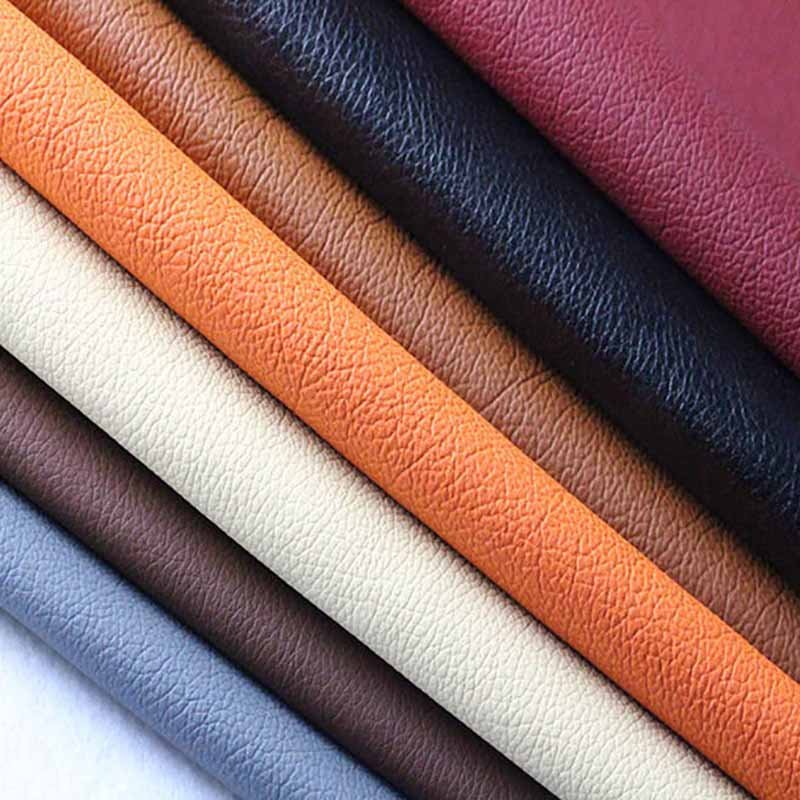
Brands should choose vegan leather by matching its construction to the product’s use, silhouette, climate, retail position, branding method, durability target, order volume, and replenishment plan. A suitable material must do more than look appealing in a swatch. It must cut cleanly, hold stitches, accept finishing, pass the required tests, age appropriately, and remain available for repeat production.
Product Application
Different products create different mechanical and visual demands. A cosmetic pouch may prioritize softness, clean zipper curves, stain resistance, and easy cleaning. A structured work bag requires body, strong handles, stable corners, hardware security, and resistance to daily abrasion. A slim wallet requires controlled thickness because several folded layers can quickly make card slots bulky or cause the product to remain open.
Handles and shoulder straps require low stretch, reliable backing strength, and reinforcement around hardware. Luggage tags need firm edges, clear printing, dimensional stability, and resistance to pulling. A relaxed tote may need a softer backing and less reinforcement to achieve the intended drape.
The following thickness ranges are practical product-development starting points, not universal standards. The final choice should be confirmed through a complete sample.
| Product type | Common starting thickness | Preferred behavior | Main development risk |
|---|---|---|---|
| Cosmetic pouch | 0.6–1.0 mm | Soft and foldable | Cracking near zipper curves |
| Fashion handbag | 0.8–1.3 mm | Balanced drape and body | Shape collapse |
| Structured tote | 1.0–1.5 mm | Stable with reinforcement | Bulky seams |
| Wallet exterior | 0.7–1.1 mm | Skivable and edge-finishable | Excessive folded thickness |
| Strap or handle | 1.0–1.6 mm plus reinforcement | Low stretch and strong tear behavior | Pull-out around hardware |
| Luggage tag | 1.0–1.4 mm | Firm and clean-cut | Layer separation |
A material should always be reviewed in the complete construction. A swatch that feels refined in the hand may become too thick when combined with lining, foam, reinforcement, folded seams, piping, and edge paint.
Thickness and Backing
Thickness affects visual weight, flexibility, seam bulk, edge appearance, and the ability to form tight corners. It does not independently determine structure. A dense 0.9 mm microfiber material may feel firmer than a 1.2 mm PU sheet with a soft knitted backing.
A woven backing can reduce distortion and provide controlled dimensional stability. A knitted backing may improve softness and drape but can stretch around curved seams or hardware. A dense nonwoven structure can support a more leather-like body, cleaner skiving, and stronger edge treatment.
Development teams should evaluate several related characteristics together:
- Thickness at multiple locations
- Backing construction and density
- Stretch in both directions
- Tear propagation around stitching
- Recovery after folding
- Surface cracking at bends
- Compression and presser-foot marks
- Edge quality after skiving
- Adhesive compatibility
- Coating-to-backing adhesion
The outer material, lining, foam, board, woven reinforcement, and edge-finishing system must behave as one structure. Excessive reinforcement can make a soft bag feel rigid and unnatural, while insufficient reinforcement can cause the base to sag, handles to distort, or hardware to pull through the shell.
Cost and Durability
The lowest material price does not always result in the lowest finished-product cost. A cheaper material may contain more visible defects, provide lower cutting yield, require additional reinforcement, sew more slowly, produce uneven edges, create more rejected panels, or lead to higher return rates.
Material cost should be evaluated through the complete production system:
- Price per meter or yard
- Usable roll width
- Surface defect allowance
- Cutting yield
- Reinforcement requirements
- Sewing efficiency
- Finishing labor
- Rejection and rework rate
- Packaging protection
- Customer return risk
Durability requirements should reflect the intended product. A seasonal fashion pouch does not need the same aging performance as a commuter bag used every day. Brands should define the expected load, frequency of use, climate, storage period, cleaning method, and acceptable appearance change.
Descriptions such as “premium quality” are difficult to control unless they are translated into measurable requirements. Defined rubbing, flexing, adhesion, colorfastness, aging, seam, and load criteria create a more useful agreement between the buyer, material supplier, factory, and inspection team.
Repeat Production
A development material must also be commercially scalable. Some innovative materials are available only in a narrow width, limited color range, irregular batches, or small production volumes. These conditions may be acceptable for a limited capsule collection but risky for a core item requiring regular replenishment.
Before approving a material, buyers should confirm:
- Minimum order per color
- Material production lead time
- Available supplier capacity
- Batch-to-batch color tolerance
- Usable width and defect allowance
- Availability of matching grain and backing
- Discontinuation risk
- Material reservation options
- Replacement-grade approval procedures
- Testing responsibility
- Recommended storage period
- Repeat-order traceability
A material that works well for an initial 200-piece production run may become difficult when the program grows to several thousand units or expands into multiple colors and matching accessories. Long-term availability is therefore part of product quality, not merely a purchasing issue.
Szoneier’s documented manufacturing system covers PU, PVC, microfiber, leather, fabrics, TPU, EVA, neoprene, sampling, structure development, production coordination, inspection, packaging, and export delivery, allowing projects to be reviewed from material selection through repeat production rather than as isolated sewing orders.
How Is Vegan Leather Quality Tested?
Vegan leather quality is evaluated through incoming-material inspection, laboratory or comparative physical testing, manufacturing trials, and finished-product checks. Common assessments include thickness, shade, surface defects, abrasion, repeated flexing, rubbing colorfastness, coating adhesion, tear behavior, environmental aging, seam strength, hardware security, and load performance. Test methods and acceptance levels should reflect the product’s actual use instead of relying on a general “high-quality material” description.
Incoming Inspection
Inspection begins before the material reaches the cutting table. Every roll should be compared with the approved material article, color, grain, thickness, backing, and hand feel. Inspectors should identify visible defects such as scratches, pinholes, stains, wrinkles, coating bubbles, hard spots, uneven grain, shade variation, backing contamination, sticky surfaces, odor, and early layer separation.
The importance of a defect depends on where the panel will be used. A small mark hidden inside a seam allowance may be acceptable, while the same mark on the front panel of a handbag would normally be rejected. Cutting standards should therefore distinguish highly visible zones from less visible internal areas.
Thickness should be measured at several locations because variation can affect seam bulk, folding, structure, and edge appearance. Color should be checked under consistent lighting. Some materials that appear identical under warehouse lamps show visible differences in daylight or retail illumination.
A useful material record includes the supplier, article number, batch, roll number, width, thickness readings, shade result, defect locations, accepted quantity, and rejected quantity. This information creates traceability if a later problem appears during production or after delivery.
Abrasion, Flex, and Rubbing
Abrasion testing evaluates how the surface responds to repeated contact. Depending on the selected method, the test can reveal polishing, grain loss, color change, coating wear, or exposure of the lower layers. It is particularly relevant for bag corners, bases, handles, wallet surfaces, and products that regularly contact clothing or tables.
Flex testing repeatedly bends the material to identify cracking, whitening, delamination, or structural failure. The number of cycles alone is not enough to describe performance. Conditioning, bending method, temperature, humidity, equipment, and failure criteria must also be defined.
Dry and wet rubbing tests evaluate whether color transfers onto another surface. This is especially important for dark bags worn against light clothing. Metallic coatings, printed finishes, intense pigments, and soft topcoats may require additional testing because their visible surfaces can behave differently under moisture and friction.
| Test area | What it evaluates | Typical failure |
|---|---|---|
| Abrasion | Surface resistance to repeated contact | Grain loss, polishing, coating exposure |
| Flexing | Behavior under repeated bending | Cracking, whitening, delamination |
| Dry rubbing | Color transfer under normal friction | Staining of clothing or cloth |
| Wet rubbing | Color transfer in the presence of moisture | Pigment or dye migration |
| Adhesion | Bond between coating and backing | Bubbling, peeling, separation |
| Tear resistance | Strength near cuts and stitches | Seam propagation |
| Aging exposure | Reaction to heat and humidity | Softening, cracking, surface breakdown |
| Seam testing | Strength of assembled construction | Stitch tearing or seam opening |
Test expectations should match the product. A wallet fold experiences frequent bending, a luggage base experiences abrasion, and a shoulder strap experiences repeated load and friction. Applying the same single test target to every product can create unnecessary cost in one category while failing to address the main risk in another.
Adhesion and Aging
Coating adhesion is critical because many vegan leather materials are layered composites. Weak adhesion can lead to bubbling, peeling, flaking, or separation, particularly around tight folds, stitched seams, handles, corners, and painted edges.
Adhesion should be considered together with environmental aging. Some polyurethane systems are vulnerable to hydrolysis when exposed to moisture and heat, depending on their formulation. A material can look satisfactory when newly produced but deteriorate after storage or use in a warm, humid environment.
Accelerated aging cannot reproduce every real-life condition, but it can help compare material grades and identify obvious weaknesses. Test temperature, humidity, duration, sample conditioning, and evaluation criteria should be agreed before bulk production.
Buyers should be cautious when a supplier claims a fixed five-year or ten-year lifespan without explaining how that conclusion was reached. Laboratory aging, warehouse storage, shipping conditions, daily use, cleaning chemicals, and local climate are not identical. A more responsible specification describes the test conditions and observed results rather than converting them into an unsupported lifetime guarantee.
Adhesive, edge paint, lining, ink, foam, and reinforcement may age differently from the outer coating. For that reason, finished assemblies and critical folded sections should be evaluated in addition to the raw material sheet.
Finished-Product Testing
A material can pass laboratory tests while the finished product still fails because of weak seams, unsuitable reinforcement, poor hardware installation, excessive edge stress, or incorrect structure. Product-level testing checks how every component works together.
Common finished-product evaluations include:
- Finished dimensions and tolerances
- Zipper opening and closing
- Snap and magnetic closure function
- Handle and shoulder strap pull strength
- Seam opening and stitch damage
- Hardware security
- Bottom deformation
- Product load performance
- Edge-paint cracking
- Logo adhesion
- Lining attachment
- Surface scratching
- Carton pressure
- Packaging marks
- Odor after sealed storage
Load testing should be related to the intended use. A cosmetic pouch, wallet, fashion handbag, commuter tote, and travel bag should not share the same load requirement. The weight, suspension time, lifting method, test position, and pass criteria should be written into the product specification.
Final inspection is most effective when supported by incoming checks, first-piece approval, and in-line inspection. A factory that relies only on end-of-line inspection may discover a repeated structural problem after most of the order has already been completed.
Is Vegan Leather Sustainable and Compliant?
Vegan leather avoids animal hides, but its environmental and compliance profile depends on the complete material system, manufacturing process, chemical composition, durability, transport, packaging, and end-of-life options. Vegan, plant-based, recycled, biodegradable, plastic-free, and sustainable are separate claims. Brands should request composition data, declarations, test reports, and claim-specific evidence before placing environmental or ethical statements on products and packaging.
Vegan Versus Sustainable
A vegan material is not automatically sustainable. The term vegan mainly addresses animal-derived content within a defined claim scope. Sustainability is much broader and can include raw-material sourcing, energy use, water use, chemical management, production waste, durability, transport, repairability, packaging, recyclability, and disposal.
A synthetic material may avoid animal inputs while depending heavily on fossil-based polymers. A plant-containing composite may reduce the use of conventional raw materials but still require a coating that makes recycling difficult. A durable material may have a higher initial environmental burden yet remain in use longer than a lighter material that begins deteriorating quickly.
This is why simplified comparisons are often misleading. Environmental performance should be considered across a defined product boundary and supported by a clear assessment method. One favorable material attribute should not be presented as proof that the entire finished product has a lower overall impact.
Brands can improve their decision process by asking:
- What is the complete material composition?
- Which inputs are renewable or recycled?
- How long is the product expected to remain functional?
- Can components be separated?
- Is cutting waste recovered or reused?
- Are solvents or restricted chemicals involved?
- What happens to the product at the end of use?
- Is the environmental claim independently supported?
A limited and accurately described claim is usually more credible than a sweeping statement such as “completely sustainable” or “good for the planet.”
Product-Level Verification
A complete vegan claim can require review of much more than the exterior material. Relevant components may include adhesives, edge paints, printing inks, thread finishes, lining fabrics, reinforcement materials, foam, zipper components, labels, decorative trims, processing aids, and packaging coatings.
The bill of materials should identify which supplier is responsible for each declaration. Where third-party verification is required, the certifying organization may have specific rules concerning animal-derived ingredients, animal testing, processing aids, supplier changes, and cross-contamination controls.
The verification scope should be written into the product specification and purchase documents. Without this step, a factory or component supplier may replace a minor material during bulk production without realizing that the substitution affects the product’s claim.
Certification also does not prove every environmental characteristic. A vegan verification does not automatically confirm biodegradability, recyclability, reduced emissions, recycled content, or responsible labor practices. Each claim requires its own evidence.
Documentation should be reviewed whenever the material article, color, adhesive, ink, supplier, factory location, or formulation changes. Long-term product programs need version control so that the claims used in the second or third production run remain supported by the actual components being purchased.
Chemical Compliance
Chemical compliance depends on the destination market, product category, customer requirements, material composition, and intended consumer group. A buyer may request testing for restricted substances in coatings, plasticizers, pigments, adhesives, metal finishes, and printed surfaces.
Potential test areas can include phthalates, heavy metals, azo colorants, formaldehyde, organotin compounds, selected solvents, and other substances restricted by relevant regulations or retailer standards. The exact list should be defined for the target market rather than copied from an unrelated product category.
One historical report may not cover every material variation. Dark pigments, metallic effects, printed coatings, soft-touch finishes, adhesives, and PVC formulations may introduce different chemical risks. Reports should clearly identify the tested sample, material article, color, test method, laboratory, date, and result.
A practical compliance package may include:
- Material specification
- Supplier declaration
- Safety data where applicable
- Restricted-substance report
- Batch or color identification
- Test laboratory information
- Report issue date
- Applicable regulation or customer standard
- Tested sample description
- Pass or fail conclusion
Testing should be planned before cutting bulk material. Discovering a compliance failure after materials have been converted into finished components can create significant waste, rework, and shipment delays.
Avoiding Greenwashing
Environmental claims should be specific, measurable, and limited to the evidence available. Broad descriptions such as “eco-friendly,” “green,” “natural,” “planet-safe,” and “zero impact” can be misleading when no definition, test, or supporting data is provided.
More defensible wording identifies a verified attribute, such as:
- Made with an animal-free outer material
- Contains a stated percentage of recycled polyester
- Contains a measured percentage of bio-based carbon
- Manufactured without PVC
- Tested for specified restricted substances
- Uses packaging with defined recycled content
- Designed with replaceable hardware
- Developed to meet stated durability requirements
Claims should reflect the complete product, not only the commercial name of the outer sheet. A bag with a plant-containing shell may still include polyurethane coating, polyester lining, synthetic foam, metal hardware, adhesive, and mixed-material packaging.
Some of the most meaningful environmental improvements are operational rather than promotional. Increasing cutting yield, reducing rejected panels, choosing durable hardware, simplifying unnecessary layers, controlling production defects, reducing oversized packaging, and designing products that remain useful for longer can have a direct effect on waste and product reliability.
Start a Custom Vegan Leather Goods Project
A successful vegan leather product is built through more than an attractive surface. Material composition, backing strength, thickness, pattern geometry, reinforcement, stitching, edge treatment, hardware, chemical compliance, durability, packaging, and repeat supply must work together.
Szoneier supports custom vegan leather bags, wallets, pouches, organizers, travel accessories, cosmetic bags, cases, straps, and related soft goods through OEM and ODM development. Projects can begin with a tech pack, physical sample, reference image, material idea, or product concept. The development team can review material options, structure, sample requirements, logo processes, packaging, quality standards, production planning, and export delivery.
Please send your product drawings, reference images, dimensions/specifications, target quantities, preferred materials, logo files, packaging requirements, and destination country to szoneier to receive an assessment and quote for custom production.