
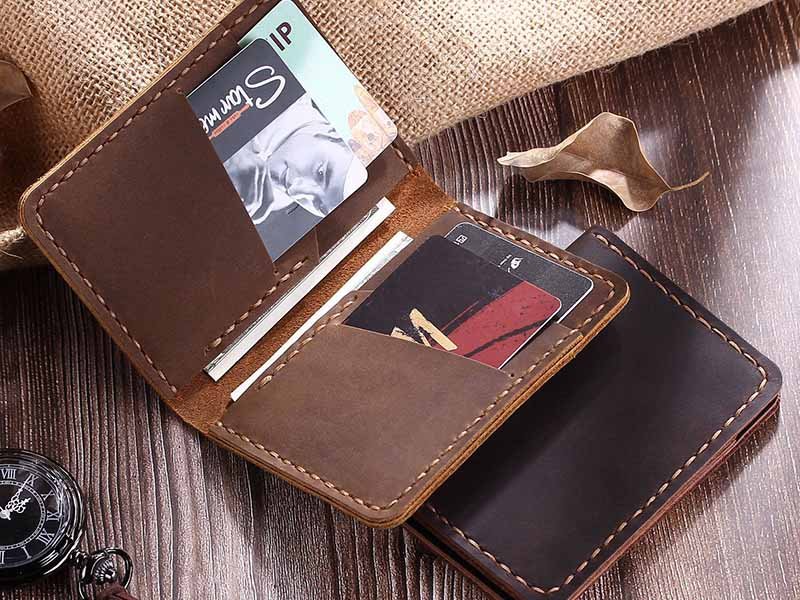
A leather goods supplier can produce an attractive sample and still be the wrong partner for a retail program. The real test begins when one approved design becomes twelve SKUs, three delivery dates, several barcode versions, hundreds of cartons, and a launch schedule that cannot move. At that point, quality is no longer defined only by smooth leather, straight stitching, or polished hardware. It also depends on version control, material consistency, production planning, inspection records, packaging accuracy, and the supplier’s ability to reproduce the same result months later.
To choose a leather goods supplier for a retail program, evaluate six areas together: product-development capability, leather and hardware control, sample-to-bulk consistency, scalable production, retail-ready quality and compliance, and long-term replenishment support. Require evidence such as approved material specifications, sealed samples, process inspection records, packaging trials, realistic timelines, and reorder controls. The best supplier is not simply the one with the lowest quotation; it is the one that keeps the entire program commercially predictable.
Retail sourcing failures rarely begin with a dramatic factory disaster. They usually begin with a small detail that nobody documented: a slightly different edge-paint shade, an unapproved zipper pull, a carton label copied from the wrong SKU, or a leather batch that looked acceptable under factory lighting but inconsistent on a store shelf. One overlooked detail can become thousands of visible problems. The following framework helps retail teams identify those risks before they reach warehouses, stores, or customers.
What Does Your Retail Program Require?
A retail program should be defined by its products, SKU structure, sales channels, quality level, launch dates, packaging formats, and replenishment plan before suppliers are compared. Clear requirements allow a manufacturer to calculate realistic costs, reserve suitable materials, plan production capacity, control product versions, and identify risks that could affect store launches or repeat orders.
Product and SKU Scope
Start by mapping the entire retail program rather than discussing only the main design. A collection may include handbags, wallets, card holders, belts, pouches, laptop sleeves, travel organizers, keychains, or coordinated gift sets. Each product may then be divided by size, leather color, hardware finish, lining, logo treatment, packaging format, and destination market. These variations create separate production, inspection, and labeling requirements even when the base design appears similar.
The number of production combinations can grow much faster than expected. One handbag offered in four colors, two hardware finishes, and two packaging formats creates sixteen separate variants. Every variant must be reflected in leather purchasing, hardware ordering, production instructions, barcode files, quality reports, carton markings, and shipping documents. When these details are not controlled at SKU level, factories may complete the correct product but pack it with the wrong label, hardware finish, or retail insert.
A practical SKU matrix should assign a unique product code to every version and record its dimensions, leather specification, lining, color, hardware, logo process, packaging, order quantity, destination, and delivery date. This document becomes the main reference for purchasing, sampling, production, inspection, and packing. It also reduces dependence on fragmented email discussions that are difficult to track once the program becomes larger.
Retail teams should distinguish between permanent, seasonal, promotional, and market-specific SKUs. Permanent products require dependable reorder continuity. Seasonal products require strict launch schedules. Promotional products may prioritize delivery speed and cost. Market-specific versions may require different languages, testing, warning labels, packaging, or compliance documentation. Treating all SKUs in the same way can lead to unnecessary cost or insufficient control.
| Program Element | Information to Confirm | Main Risk if Undefined |
|---|---|---|
| Product range | Styles, sizes, colors, and categories | Incomplete costing and production planning |
| SKU structure | Unique code for every variation | Mixed colors, hardware, labels, or packaging |
| Order quantity | Quantity by SKU, not only total volume | Incorrect material and capacity planning |
| Launch date | Required warehouse arrival date | Missed retail or promotional window |
| Reorder status | Permanent, seasonal, or one-time | Material unavailable for replenishment |
| Destination | Country, warehouse, store, or fulfillment center | Incorrect labels or shipping documents |
Sales Channel Requirements
A leather product may need different preparation depending on where it will be sold. Department stores often expect polished presentation, protective wrapping, swing tags, barcode labels, and carefully controlled carton assortments. E-commerce products may require compact packaging, shipping protection, scannable labels, and resistance to repeated handling. Corporate gift programs may focus more heavily on individual boxes, logo accuracy, and delivery before a fixed event.
The sales channel can also influence the product specification. A large rigid box may support a premium retail presentation but significantly increase freight volume and warehouse space. A high-gloss leather finish may look attractive under store lighting but show fingerprints or scratches during e-commerce fulfillment. Delicate hardware may work well in a boutique display but require additional protection when products are shipped individually to customers.
When one collection serves several channels, create a packaging and labeling matrix that links every SKU to its destination. Do not assume that one packaging method will satisfy every retailer, warehouse, or fulfillment center. The supplier should know which product belongs to each channel, which barcode must be applied, how cartons should be separated, and whether products require security labels, price labels, care information, or marketplace-specific preparation.
A capable supplier should also identify inefficient requirements before production begins. It may recommend reducing unnecessary packaging volume, changing the position of a barcode that becomes hidden after packing, or adjusting carton assortments to simplify warehouse receiving. These recommendations are not attempts to weaken the buyer’s requirements; they are signs that the supplier understands how manufacturing decisions affect retail operations.
Volume and Demand Planning
Retail demand is rarely certain, especially for a new leather goods collection. However, uncertainty does not remove the need for planning. It makes structured planning more important. Buyers should separate the opening order, expected replenishment, promotional quantities, seasonal peaks, safety stock, and possible discontinuation when sharing forecasts with prospective suppliers.
Instead of saying that future volume may be large, provide realistic scenarios. A program may begin with a 300-piece trial order, increase to a 1,500-piece opening order, and later require monthly or quarterly replenishment. Another program may involve an annual quantity divided into four scheduled production and delivery cycles. These structures create different material commitments, production plans, pricing models, and cash-flow requirements.
For selected standard products, pilot quantities may begin around 200 to 500 pieces per SKU when existing materials, standard hardware, and simple packaging are used. Custom-dyed leather, exclusive metal parts, molded logo plates, special linings, and premium packaging often require higher component or material commitments. The minimum order for finished goods and the minimum order for custom materials are not always the same.
The forecast should also identify likely fast-moving and slow-moving SKUs. Fast sellers may require reserved leather, additional hardware inventory, or shorter production cycles. Slow sellers should not consume excessive stock or packaging inventory. A framework order can divide an annual volume into production batches, but terms for material purchasing, storage, payment, color consistency, and release dates should be agreed before the first order begins.
Cost and Quality Targets
The target factory price must support the entire retail business model, not only the desired product appearance. Retail teams should consider freight, duties, warehousing, distribution, packaging, returns, markdowns, sales commissions, and channel margins before establishing a manufacturing cost target. A product that looks profitable at factory level can become commercially unattractive after its landed and distribution costs are calculated.
Quality should be defined with measurable details. Terms such as premium leather, luxury workmanship, and high-quality hardware are too subjective for reliable production control. A useful specification identifies leather type, thickness range, grain, finish, hand feel, lining, hardware plating, stitch appearance, edge treatment, reinforcement, logo dimensions, product tolerances, and packaging requirements.
When a supplier’s quotation exceeds the target, the conversation should focus on cost engineering rather than automatic price reduction. Possible adjustments may include changing the leather grade, simplifying an internal pocket, selecting standard hardware, reducing the number of edge-painted components, optimizing product dimensions, changing the lining, or using a more space-efficient package. Each adjustment should be evaluated against durability, customer perception, and the intended retail price.
Removing a handle reinforcement may save a small amount but create a much larger return or reputation risk. By contrast, simplifying an internal decorative feature may reduce labor without affecting the customer experience. The commercial objective is not to achieve the lowest quotation. It is to create a product that can be produced consistently, sold profitably, and replenished without repeated technical problems.
Which Supplier Capabilities Matter Most?

The most important supplier capabilities are factory control, OEM and ODM development, multi-SKU management, scalable production, structured communication, and clear responsibility across sampling, sourcing, manufacturing, quality inspection, packaging, and delivery. These capabilities should be verified through factory reviews, controlled documents, samples, inspection records, and realistic project discussions rather than broad marketing claims.
Factory-Based Control
The term supplier can describe a manufacturer, trading company, sourcing office, broker, or production coordinator. Any model can work when responsibilities are transparent, but buyers must understand who actually develops patterns, purchases leather, approves hardware, manages cutting, controls stitching, performs edge painting, inspects products, and organizes packing.
Ask prospective suppliers to explain the complete production chain. When specialist processes are outsourced, the lead supplier should explain how subcontractors receive specifications, how output is inspected, and who takes responsibility when a defect occurs. Professional leather goods manufacturing often involves external specialists for hardware plating, custom metal parts, embossing dies, printing, or surface treatments, but those operations should remain within one controlled project system.
A factory review can be conducted in person or through a detailed video meeting. It should cover the sample room, leather storage, cutting, skiving, logo application, sewing, edge finishing, assembly, inspection, packing, and warehouse areas. Buyers should also ask to see how approved samples, material swatches, patterns, bills of materials, and current product versions are stored and controlled.
The critical question is not whether every operation happens under one roof. The question is whether the supplier maintains unified specifications, inspection standards, communication, and accountability across all operations. A factory that uses specialist partners under documented control may be more reliable than a factory that claims to perform everything internally but lacks clear process management.
OEM and ODM Support
OEM and ODM capabilities address different stages of product development. OEM production is most suitable when the buyer already has a tech pack, approved sample, detailed drawings, or established product specification. The supplier’s responsibility is to reproduce the product accurately, source matching materials, identify manufacturing risks, and maintain consistency across production and future reorders.
ODM support is required when the product is not yet production-ready. The buyer may have a sketch, reference image, existing product, target retail price, collection concept, or desired market position. The supplier must then help translate that direction into dimensions, leather selection, structure, hardware, lining, logo method, packaging, and a practical sample plan.
Many factories describe minor color or logo changes as ODM development. A more useful test is to present a real design problem. Ask how the supplier would reduce product weight, reinforce a weak handle, prevent edge-paint cracking, improve the opening, make a bag stand upright, simplify an expensive construction, or develop matching products for the same collection.
Technical honesty is an important capability. An experienced manufacturer should be willing to explain when a requested leather is unsuitable for the structure, when a construction may be difficult to reproduce consistently, or when the target cost conflicts with the selected materials. A supplier that agrees immediately to every request without technical discussion may be avoiding difficult questions rather than resolving them.
Multi-SKU Management
Multi-SKU management is one of the clearest differences between a retail-program supplier and a factory suited only to isolated products. A factory may handle one wallet successfully but struggle when the order includes several bags, colors, linings, logo sizes, hardware finishes, barcode systems, packaging formats, and destination markets.
Each SKU should have a controlled specification package containing its unique code, latest drawing, bill of materials, color references, approved sample information, packaging instructions, and revision history. Every change should be dated and approved. Outdated files should be removed from active use so production teams cannot accidentally follow an older version.
Material separation is equally important. Similar leather shades, zipper tapes, linings, threads, hardware finishes, or edge paints can easily be mixed. Practical controls include labeled material zones, component kits, physical color cards, barcode systems, production boards, and first-piece approval before the rest of the order continues.
When evaluating a factory, pay attention to information flow as much as equipment. Expensive machines do not prevent version errors. A disciplined team should be able to explain how buyer instructions move from project management to sampling, purchasing, production, quality control, and packing. In retail programs, document control is often as important as sewing craftsmanship.
Capacity and Scalability
A supplier’s stated monthly capacity does not automatically show how much capacity is available for a specific project. Leather goods production includes several potential bottlenecks, including leather purchasing, cutting, skiving, edge painting, drying, specialized sewing, hardware installation, finishing, inspection, and packaging.
Ask how much capacity will be available during the actual production window rather than in an average month. This is especially important before major holidays, seasonal launches, promotional events, or peak shipping periods. A factory may have strong annual output but limited space during the exact weeks required for the program.
Discuss at least three volume scenarios: the confirmed order, a realistic upside forecast, and an urgent replenishment requirement. The supplier should explain how each scenario would affect material purchasing, production scheduling, inspection, packaging, and delivery. This allows the buyer to identify where additional lead time, reserved materials, or staged shipments may be necessary.
Scalability should not depend on uncontrolled outsourcing. When partner factories are used, the main supplier should continue controlling the approved leather, patterns, construction, workmanship limits, packaging, and shipment release. A realistic supplier may identify production constraints or propose staged deliveries. That answer is usually more valuable than a promise that any quantity can be manufactured immediately.
How Do You Verify Leather and Workmanship?
Leather and workmanship should be verified through written specifications, approved physical swatches, sealed samples, process inspections, and defined defect standards. Buyers need to control leather type, thickness, grain, color, finish, cutting selection, stitching, edge treatment, reinforcement, hardware, lining, and acceptable natural variation before bulk materials are released for production.
Leather Selection
The highest-priced leather is not automatically the most suitable material for every retail product. Leather selection should reflect the required structure, hand feel, durability, appearance, maintenance, target retail price, available colors, and reorder expectations. A soft handbag, structured briefcase, wallet interior, belt, and decorative trim may all require different leather properties.
Full-grain leather retains more of the natural surface and can develop a distinctive patina, but visible grain variation, scars, and wrinkles should be expected. Corrected-grain leather may provide greater visual uniformity for large retail displays. Split leather may support certain cost positions but requires careful review of surface coating and durability. PU leather can provide consistent color and grain across large programs, although coating quality, hydrolysis resistance, flexing, and abrasion performance should be assessed.
A leather specification should include more than the general material name. It should identify the leather or synthetic construction, thickness range, temper, grain pattern, color reference, gloss level, surface finish, backing, and acceptable variation. Without these details, suppliers can quote materials that sound similar but perform and look very different.
Thickness should be matched to the component rather than applied uniformly. Leather is often split or skived in selected areas to control bulk and improve folding. A product may use several thicknesses even when every visible panel appears to use the same material. This is normal construction engineering, provided the thicknesses and skiving locations are documented.
| Product or Component | Typical Starting Thickness* | Main Considerations |
|---|---|---|
| Wallet interior parts | 0.6–1.0 mm | Fold bulk, card-slot accuracy, edge finishing |
| Small leather goods exterior | 0.9–1.4 mm | Structure, flexibility, and clean corners |
| Soft handbag body | 1.0–1.5 mm | Drape, weight, and seam performance |
| Structured bag panels | 1.2–1.8 mm | Shape retention, reinforcement, and skiving |
| Handles and straps | 1.4–2.2 mm | Layering, strength, and edge thickness |
| Belts | 2.8–4.0 mm | Stretch, hole strength, and buckle construction |
Material Control
Incoming leather should be checked before cutting for color, grain, thickness, usable area, surface marks, odor, backing quality, finish, and batch consistency. Linings, thread, zippers, hardware, edge paint, adhesives, reinforcement, and packaging materials should also be compared with approved references before entering production.
Physical swatches are more reliable than screen images for color approval. Lighting, cameras, monitors, and image compression can all alter appearance. An approved swatch should record the material supplier, article number, color code, thickness, finish, batch reference, and approval date. This makes it easier to compare future production lots and investigate differences.
For natural leather, buyers should define an acceptable range rather than demand unrealistic uniformity. The specification should explain which scars, wrinkles, pores, grain changes, and shade variations are acceptable. Highly visible paired components, including front panels, handles, or wallet sections, may need to be cut from visually compatible areas.
Replacement materials should never be introduced without written approval. When the original leather becomes unavailable, the alternative should be compared for appearance, thickness, hand feel, performance, cost, and future availability. A small change in stiffness can alter product shape, sewing behavior, edge thickness, and the way customers perceive the finished item.
Construction Details
Workmanship should be judged by function as well as appearance. Straight stitching is important, but it does not reveal whether seam allowance is sufficient, reinforcement is correctly positioned, skiving is controlled, or hardware is securely installed. A product can look attractive in a photograph and still fail after repeated daily use.
Begin with high-stress areas. Handles, shoulder-strap anchors, D-rings, zipper ends, magnetic closures, belt holes, wallet folds, pocket corners, and luggage attachment points commonly experience repeated force. The approved sample should show how these areas are reinforced without creating unnecessary thickness or visible distortion.
Inspect stitching for thread tension, stitch length, alignment, back-tacking, skipped stitches, loose thread, and damage to the leather surface. Curves and corners often reveal more about sewing control than long straight seams. Check whether left and right components are symmetrical and whether the product sits, hangs, or closes evenly.
Edge painting deserves close examination because it strongly affects perceived quality. The edge should have consistent width, smoothness, color, and adhesion. Flex the component carefully to look for cracking, peeling, bubbles, or separation. Thick painted edges may look attractive when new but perform poorly if the paint system is too rigid for the leather.
Approval Standards
Material and workmanship approval should be based on a controlled set of references. This commonly includes a sealed product sample, signed leather swatches, hardware samples, color standards, packaging mockups, and photographs that show acceptable and unacceptable conditions.
The final approval sample should represent a process that can be repeated in normal production. A sample made with hand-selected leather, exceptional manual finishing, or an operation that will not be used in bulk production creates false confidence. Buyers should ask whether the same materials, edge treatment, hardware installation, reinforcement, and finishing sequence will be used for the main order.
Photo standards can reduce subjective inspection decisions. They should illustrate acceptable and unacceptable scratches, wrinkles, edge-paint variation, stitch deviation, adhesive marks, plating defects, lining wrinkles, and shape differences. Written descriptions such as no visible defects are often interpreted differently by different inspectors.
Tolerances should also reflect product function. Card holders require tighter control because a few millimeters can affect card fit. Soft totes can generally accept slightly more dimensional variation. Functional dimensions, logo position, paired components, closure alignment, and hardware position often require tighter tolerances than general exterior measurements.
How Should Sampling and Production Be Evaluated?

Sampling and production should be evaluated as one connected process. The supplier must convert the buyer’s specification into a repeatable sample, document revisions, retain an approval reference, confirm production materials, inspect early production pieces, and control each manufacturing stage so bulk goods remain consistent with the approved standard.
Tech Pack Quality
A useful tech pack should allow a competent factory to understand the product without relying on repeated assumptions. It normally includes product views, dimensions, tolerances, leather, lining, colors, component details, stitching, edge finishing, reinforcement, hardware, logo placement, labels, packaging, and testing requirements.
Every dimension should have a clear measurement point. Terms such as medium size, short strap, or small logo are not production instructions. The document should identify finished dimensions and explain whether measurements are taken flat, filled, closed, or under tension. Functional dimensions such as card slots, laptop compartments, belt holes, and strap drops should receive particular attention.
Add a revision table to record every change. It should show the version number, date, description, and approval status. This becomes essential when several departments or decision-makers review the product. Without a revision history, an approved change may remain in an email while an older tech pack continues circulating inside the factory.
Reference photographs can support technical drawings, but they should not replace specifications. A photo may show the desired shape without revealing leather thickness, reinforcement, seam allowance, internal structure, or exact measurements. The supplier should review the complete tech pack before issuing a final quotation because material yield, skiving, edge painting, hardware, labor, packaging, and testing can materially change the cost.
Sample Development
Sampling should confirm appearance, structure, function, manufacturing feasibility, cost, and packaging. A reliable process generally includes requirement review, material selection, pattern development, sample construction, internal inspection, buyer review, revision, and final approval.
Lead time varies according to product complexity and material readiness. Simple small leather goods made with available materials may be completed in roughly one week. Standard custom bags commonly require around one to two weeks. Complex products, exclusive hardware, custom leather, extensive edge painting, or several development versions can require longer.
Sample speed should not be judged separately from sample quality. A very fast sample may use temporary materials, stock hardware, or simplified construction that does not represent bulk production. Buyers should ask which components are final and which are temporary before using the sample to approve an order or present the product internally.
The supplier should explain what was learned during development. Useful feedback may address leather consumption, component thickness, handle strength, zipper access, product balance, edge-paint risk, packaging volume, and operations that may be difficult to reproduce consistently. This technical feedback is often more valuable than simply receiving a visually attractive sample.
| Development Stage | Typical Planning Range* | Main Output |
|---|---|---|
| Requirement and file review | 1–3 working days | Questions, feasibility review, and quotation basis |
| Material confirmation | 2–10 working days | Approved leather and component options |
| First sample | 5–15 working days | Physical development sample |
| Sample revision | 4–12 working days per round | Updated structure, material, or appearance |
| Final approval | Buyer-dependent | Sealed sample and confirmed specification |
| Pre-production preparation | 3–10 working days | BOM, patterns, instructions, and material release |
| Bulk production | Commonly several weeks | Finished production order |
| Final inspection and packing | 2–7 working days | QC report and shipment-ready cartons |
Approval Sample
The final approval sample is the physical production reference. Both buyer and supplier should retain clearly identified samples with the SKU number, version, date, and approval status. This reference should remain available throughout production, inspection, packing, and future reorders.
Before the sample is sealed, confirm that every approved change has entered the tech pack, bill of materials, patterns, and packaging instructions. Email approval alone is not enough if the production team continues using an older document. A controlled update should replace previous files and notify every department involved.
The approval sample should use materials and methods that can be repeated in bulk. When temporary materials are unavoidable during early development, they should be replaced before final approval. The buyer should know whether the leather, hardware, edge paint, logo, reinforcement, lining, and packaging all represent the intended production standard.
Natural leather variation should be addressed separately. One sample cannot represent every acceptable grain pattern, surface mark, or shade difference. Supporting swatches and photographs should define the permitted range so inspectors do not reject acceptable natural variation or accept differences that are too visible for the retail program.
Production Control
Bulk production should not begin with a general instruction to copy the sample. Each production stage requires a defined control point. Material inspection confirms leather, lining, hardware, thread, edge paint, reinforcement, and packaging before use. Cutting inspection reviews grain direction, color pairing, component dimensions, and surface selection.
The first completed production pieces deserve special attention. They should be compared with the approved sample before the rest of the order continues. A problem discovered after twenty units may be corrected with limited disruption. The same problem found after two thousand units may cause serious rework, material loss, and delivery delay.
In-process inspection should cover skiving, logo placement, stitching, assembly, edge finishing, hardware installation, dimensions, and product shape. Inspection frequency should reflect risk. A simple card holder made with stable materials may require fewer checkpoints than a structured handbag with painted edges, custom hardware, several pockets, and a fixed launch date.
Production reports should show completed quantities, current stage, issues identified, corrective actions, and expected completion. Buyers do not need constant photographs of every operation, but they do need dependable information at agreed milestones. Clear reporting allows retail teams to coordinate packaging, inspection, logistics, marketing, and warehouse appointments with greater confidence.
How Are Quality, Compliance, and Costs Controlled?
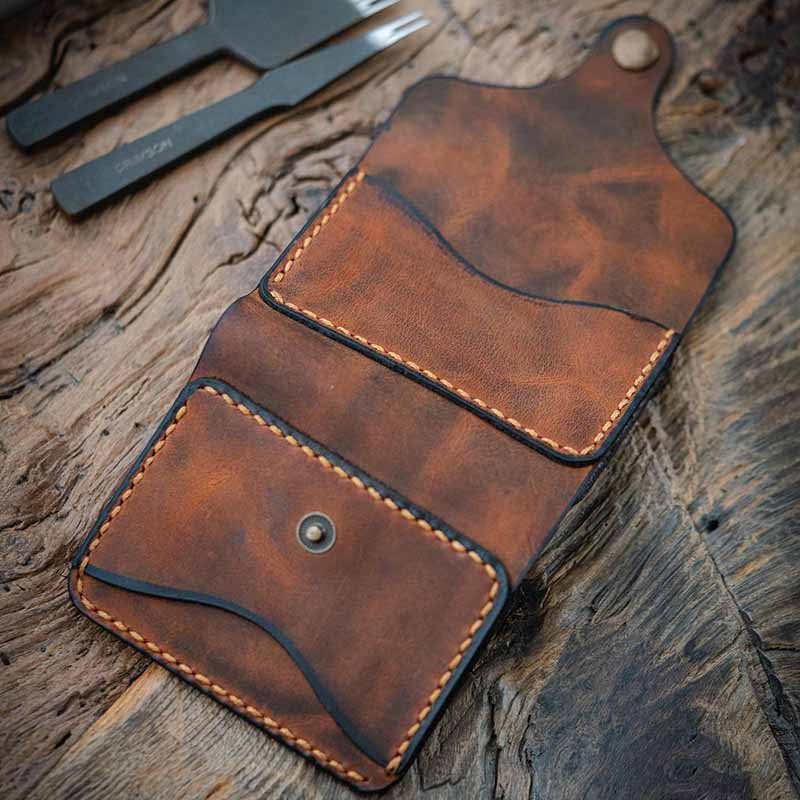
Quality, compliance, and cost should be controlled together through material approval, staged inspection, relevant testing, transparent quotations, and written change management. A low unit price is not commercially useful when defects, failed tests, incorrect packaging, rework, or delayed delivery increase the landed cost and threaten the retail launch.
Quality Control
Final inspection alone cannot prevent every production problem. By the time finished goods are inspected, leather has already been cut, components assembled, edges finished, and labor invested. Some defects can be repaired, but others require complete replacement or delay the shipment.
A structured quality process should include incoming material inspection, accessory checking, pre-production confirmation, cutting inspection, sewing and assembly inspection, semi-finished review, final product inspection, and packaging verification. The checkpoints should be adapted to the product rather than copied from a generic checklist.
The inspection standard should define critical, major, and minor defects. Incorrect branding, unsafe sharp parts, wrong product identity, or missing legally required components may be treated as critical. Broken hardware, open seams, severe scratches, major dimensional errors, or incorrect materials may be major defects. Small cosmetic issues may be minor depending on visibility and retail positioning.
Dimensional tolerances should reflect product size and function. A card holder needs tighter control because a few millimeters may affect card fit. A soft tote can usually accept slightly more variation without affecting use. Functional dimensions, closure alignment, logo position, paired components, and hardware placement often require tighter control than general exterior measurements.
Testing and Compliance
Testing should be based on the target market, retailer requirements, material type, product use, and claims made about the item. A standard adult wallet, children’s accessory, load-bearing bag, belt, or protective case may require different chemical and physical evaluations.
Chemical compliance may involve leather dyes, coatings, adhesives, printed components, metal hardware, and synthetic materials. Physical testing may include dry and wet rubbing, abrasion, seam strength, handle strength, zipper cycling, buckle operation, snap retention, coating adhesion, edge-paint flexing, and packaging performance.
Buyers should avoid requesting every possible test without reviewing the actual product risk. Unnecessary testing increases cost and time without always improving the product. However, relying only on generic material certificates may be insufficient when the final item combines leather, lining, edge paint, metal parts, adhesives, printed labels, and packaging.
Restricted substance requirements, retailer manuals, testing protocols, and destination-market rules should be provided early. Testing only after bulk production is risky because failed goods may require rework, replacement, or delayed shipment. When traceable or certified leather is required, the chain of documentation should be confirmed before materials are purchased.
Quotation Comparison
Supplier quotations can only be compared fairly when the underlying specifications are the same. A lower price may reflect thinner leather, different internal reinforcement, standard hardware, fewer edge-paint layers, simpler packaging, lower inspection requirements, or an unapproved material substitute.
Ask for an itemized quotation that identifies the product specification, order quantity, leather, lining, hardware, logo process, packaging, tooling, sample costs, testing, delivery terms, and quotation validity. Where practical, separate one-time development costs from recurring unit costs.
The quotation should also identify factors that could change the final price. Leather cost varies according to grade, color, usable yield, surface finish, and order quantity. Custom hardware may involve mold, plating, or minimum-order expenses. Packaging cost depends on printing quantity, material, structure, inserts, and shipping volume.
Compare landed cost rather than unit price alone. A slightly higher factory price may be justified by better carton efficiency, fewer defects, more reliable replenishment, or lower rework risk. Conversely, an elaborate package may increase freight volume enough to weaken the entire commercial model.
| Cost Area | Questions to Ask | Possible Hidden Cost |
|---|---|---|
| Leather | Is type, thickness, grade, and finish fixed? | Substitution, low usable yield, or batch change |
| Hardware | Standard or custom? Is tooling included? | Mold, plating, or minimum-order charges |
| Logo | Embossing, foil, metal plate, or printing? | Die, setup, and additional process costs |
| Packaging | Box, sleeve, dust bag, labels, or inserts? | Printing MOQ and increased freight volume |
| Testing | Material or finished-product testing? | Laboratory, sample, and retest fees |
| Inspection | Factory QC or third-party inspection? | Inspection and reinspection costs |
| Freight | EXW, FOB, DDP, air, or sea? | Duty, local charges, handling, and delivery fees |
| Revisions | How many sample rounds are included? | Additional samples and material charges |
Supplier Warning Signs
A reliable supplier does not need to provide an immediate answer to every technical question, but it should offer clear explanations and follow up with evidence. Several warning signs deserve additional investigation before the buyer commits to a retail program.
Be cautious when material descriptions remain vague, quotations do not identify leather or hardware, or the factory refuses to document approved specifications. Extremely low prices may indicate a different material grade, incomplete construction, reduced quality control, or additional charges that appear later.
Unrealistically short lead times are another concern, particularly when the project requires custom leather, hardware, packaging, testing, and several sample revisions. A supplier that promises immediate production without reviewing the tech pack may not have understood the project or may plan to solve problems after the order begins.
Communication inconsistency becomes especially dangerous in multi-SKU programs. Watch for unanswered technical questions, repeated file mistakes, unclear responsibility, inconsistent updates, or frequent changes in the main contact person. A supplier should be willing to discuss processes, arrange a factory review for a serious project, provide relevant sample evidence, explain inspection methods, and confirm major assumptions in writing.
How Do You Assess Long-Term Retail Support?
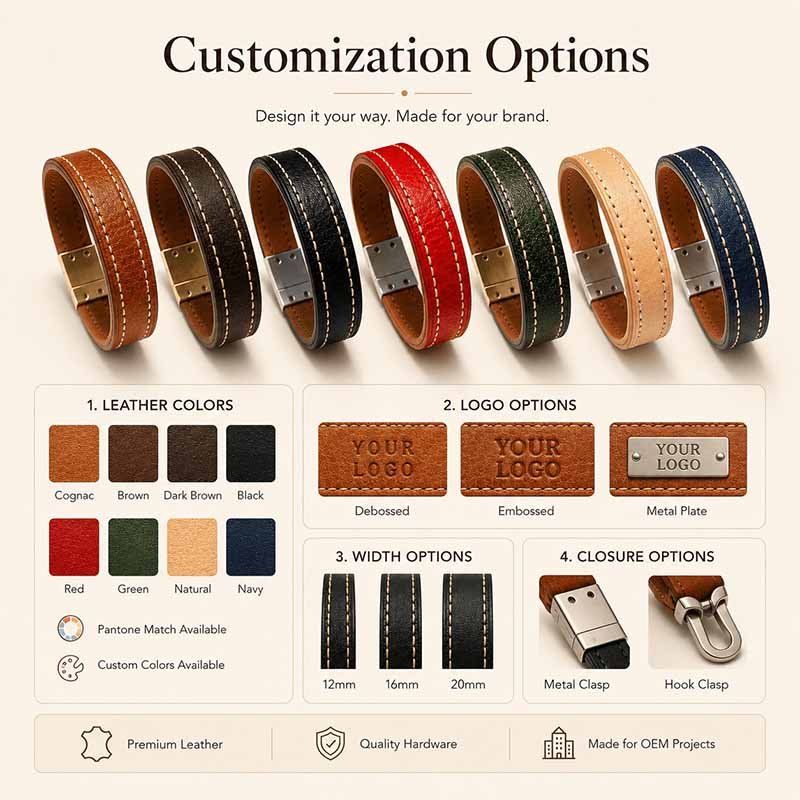
Long-term retail support depends on the supplier’s ability to manage retail packaging, split deliveries, repeat-order consistency, material continuity, framework orders, replenishment, documentation, and problem resolution. The right partner must protect the approved product standard after the first shipment rather than treating each reorder as a completely separate project.
Retail Packaging
Packaging is part of the retail product program, not an activity that should be considered only after production. It protects the leather, supports brand presentation, simplifies warehouse operations, and directly affects shipping volume, receiving efficiency, and customer experience.
Retail packaging may include tissue paper, dust bags, protective film, hardware wrapping, paper sleeves, printed boxes, hangtags, care labels, barcode labels, security labels, inserts, inner cartons, and master cartons. Every item must be linked to the correct SKU, sales channel, and destination.
A packaging trial should be completed before bulk packing. The team should confirm product fit, surface protection, hardware separation, barcode visibility, label adhesion, carton strength, carton weight, assortment, and packing efficiency. Leather products must be protected from hardware scratches, excessive pressure, moisture, color transfer, and deformation during storage and transport.
Packaging volume has a direct effect on freight and warehouse cost. A rigid box may create a premium presentation but use several times more space than a folding carton or protective sleeve. The final decision should balance brand experience, damage prevention, sustainability, handling efficiency, and logistics cost.
Split Shipments
Retail programs may require several shipment structures. Part of an order may move by air to protect a launch date while the remaining quantity moves by sea. Products may also need to be divided among regional warehouses, retail stores, marketplace fulfillment centers, distributors, or promotional locations.
Every split shipment should identify the quantity, SKU, packaging, barcode, receiving address, shipping method, carton marks, invoice, packing list, inspection requirement, and release date. These details should be confirmed before packing begins rather than after cartons have already been sealed.
Split shipments increase warehouse handling, project management, documentation, inspection, and freight complexity. Small airfreight batches may have a much higher cost per unit than the main sea shipment. Retail teams should compare the cost of expedited transport with the commercial impact of missing the launch.
The supplier must also control which units remain in storage and which are released. Cartons should be physically separated and clearly identified. A shipment balance report should show the original order, quantity produced, quantity inspected, quantity shipped, quantity remaining, destination, and expected delivery status.
Reorder Consistency
A successful opening order does not guarantee a consistent reorder. Leather, hardware, edge paint, thread, lining, adhesives, and packaging can change over time. Materials may be discontinued, mills may adjust production, and color may vary between manufacturing batches.
The supplier should retain the approved product sample, leather swatch, hardware reference, color card, bill of materials, patterns, packaging files, and inspection history. When a reorder begins, new materials should be compared with these references before cutting.
For natural leather, exact visual repetition may be impossible. The goal is to remain within the agreed range of color, grain, hand feel, thickness, and surface finish. When a new batch differs noticeably, a production swatch or material panel should be reviewed and approved before the order proceeds.
Custom hardware creates another continuity risk. Tooling ownership, storage, maintenance, and replacement responsibilities should be documented. Plating color should also be controlled because separate plating lots can appear noticeably different when products are displayed side by side.
Framework Orders
Framework orders can support retail programs when annual demand is reasonably known but delivery is required in stages. The buyer may commit to a total quantity while releasing production monthly, quarterly, seasonally, or according to sales performance.
This structure may help reserve materials, stabilize production planning, reduce repeated setup work, and improve replenishment. However, the agreement should clearly address total volume, batch size, release dates, material purchasing, storage, payment, production capacity, color control, and cancellation risk.
Material planning deserves particular attention. Buying all leather at once may improve batch consistency but increase inventory, financing, and storage costs. Purchasing materials separately for each release may reduce stock exposure but increase the risk of color differences or supply interruption. The correct approach depends on product continuity, material stability, forecast confidence, and the visual tolerance of the collection.
Before selecting a long-term supplier, use a weighted evaluation that reflects real retail risk. Leather control, sample accuracy, production reliability, quality management, packaging, compliance, communication, delivery, and reorder capability should usually carry more weight than the quoted unit price alone.
Choosing a Supplier That Can Support the Whole Program
A leather goods supplier should be evaluated on its ability to support the complete commercial cycle, from early product definition to repeat production. A beautiful sample matters, but it is only one part of the evidence. Retail teams also need controlled specifications, realistic material planning, production transparency, inspection discipline, retail-ready packaging, dependable delivery, and a practical method for managing future reorders.
The most useful supplier evaluation process combines document review, sample development, material approval, factory verification, production planning, quality standards, packaging trials, and a controlled pilot order. Buyers should pay close attention to how the supplier responds when information is incomplete, costs exceed the target, materials become unavailable, or production risks are identified. These moments reveal more about long-term reliability than polished sales presentations.
Szoneier is a Shenzhen-based custom bags and soft goods OEM/ODM manufacturer with more than 18 years of manufacturing experience. The company supports custom leather goods projects through material sourcing, product development, sampling, production coordination, multi-stage quality inspection, packaging, and export delivery. Retail teams can submit product photographs, physical references, tech packs, SKU forecasts, packaging requirements, quality standards, target quantities, and destination markets for an initial project review.
For detailed retail-program development, send your RFQ, specification files, artwork, packaging requirements, target quantity, and delivery schedule to info@szoneier.com. The project team can review the product structure, leather options, sample process, production feasibility, cost factors, quality requirements, and shipment plan before preparing a customized proposal.