
How to Choose the Right Private Label Leather Manufacturer: Tips Guide

electing a private label leather goods manufacturer may be one of the most defining decisions your brand will ever make. Whether you’re launching a new leather accessories line or scaling an established business, the factory behind your bags, wallets, belts, and small leather goods becomes the silent engine powering your quality, your margins, and your reputation. And yet most brands—especially fast-growing ones—quickly discover that not all leather factories are built equally. Some excel at raw material control, others at craftsmanship, others at innovation, and very few master all of them at once. To choose a private label leather goods manufacturer, brands must evaluate product capability, material sourcing strength, craftsmanship quality, sampling efficiency, pricing transparency, communication, and long-term scalability. A reliable manufacturer should offer in-house material development, strong engineering and pattern-making, consistent QC standards, flexible MOQs, and proven experience with international brands. The goal is not just finding a supplier—but choosing a strategic production partner who can support long-term growth.
OEM and ODM in Leather Goods Manufacturing: A Comprehensive Guide
In the competitive world of leather fashion and accessories, choosing the right manufacturing model can make or break your brand. Do you pour resources into unique, bespoke designs, or leverage proven factory collections for speed? The answer shapes your time-to-market, product differentiation, and profitability.
OEM vs ODM in Leather Goods: What’s the Best for Your Brand?
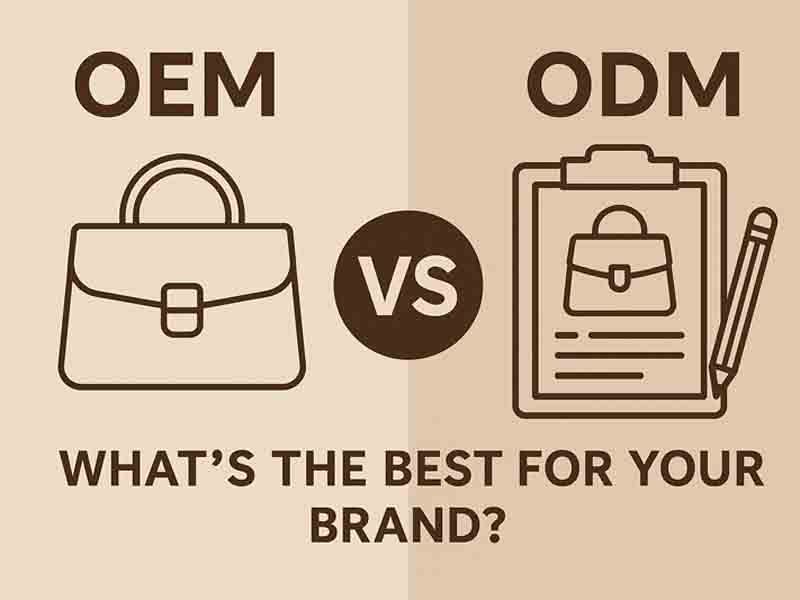
In the competitive world of leather goods—from handcrafted wallets to designer handbags—brands face a critical choice: should they handle product design and specs themselves (OEM), or lean on a factory’s in-house design expertise (ODM)? This decision shapes your intellectual property, investment level, speed to market, and ultimately, how your brand is perceived.