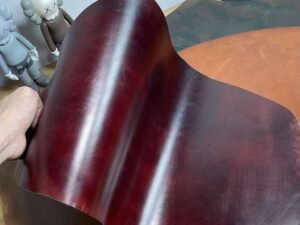
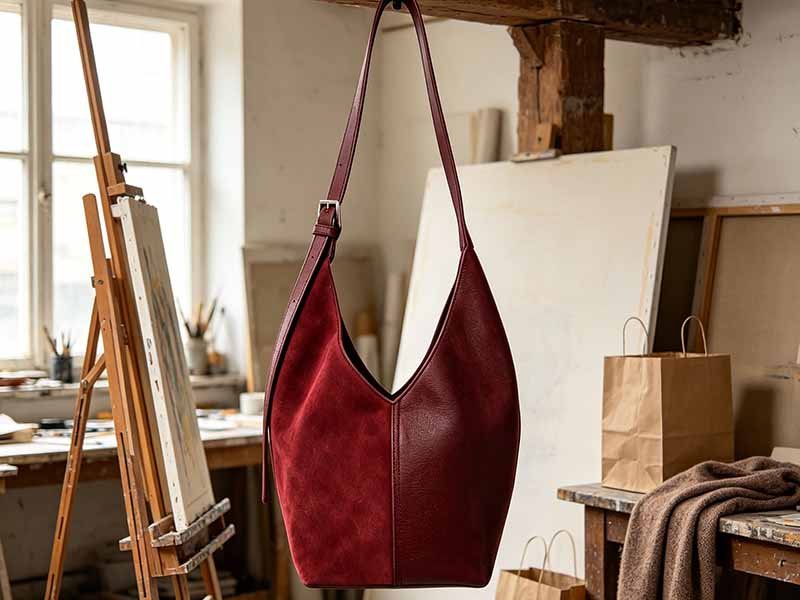
A leather bag can look convincing in a showroom and still become a commercial failure when production begins. The leather may vary from batch to batch, the edge paint may crack after repeated use, handles may loosen under normal loading, or an approved sample may prove difficult to reproduce across hundreds of units. These problems rarely begin with one dramatic mistake. They usually develop from small decisions that were never properly documented, tested, or controlled.
To choose a leather bag factory, fashion brands should evaluate product fit, leather and hardware knowledge, development capability, sample-to-bulk consistency, quality control, MOQ, cost transparency, lead time, capacity, compliance, and factory verification. The best manufacturing partner should support every claim with physical samples, material records, production documents, inspection procedures, audit access, clear responsibilities, and evidence of reliable repeat production.
Choosing a supplier is therefore not about finding a company that can make one attractive prototype. It is about finding a manufacturing system capable of protecting the design, controlling material variation, communicating problems early, and maintaining the approved standard when production pressure increases. One brand may discover too late that its beautiful sample was handmade by a senior technician, while the bulk order was produced by an unprepared line using different leather and hardware. The purpose of this guide is to help prevent that story from becoming yours.
What Does Your Brand Need From a Factory?
A fashion brand should define its product category, target customer, retail position, quality expectations, development needs, order volume, and delivery plan before comparing factories. A suitable leather bag factory is not simply the supplier offering the lowest price. It is the manufacturer whose materials, skills, equipment, project management, and production scale match the collection the brand intends to develop.
Product and Market Fit
Begin with the product rather than a general request for a leather bag manufacturer. A soft unlined tote, a structured top-handle handbag, a multi-pocket crossbody bag, and a business briefcase require different materials, pattern-development skills, reinforcement methods, machinery, labor time, and quality controls. A factory that performs well with simple promotional totes may not be prepared to manufacture a structured premium handbag with molded panels, custom hardware, bonded lining, and several rounds of edge finishing.
Your product brief should explain the intended size, silhouette, structure, opening method, internal layout, handle design, shoulder strap, hardware, lining, logo position, packaging, and expected carrying conditions. Reference photographs, sketches, physical samples, and technical packs can all be useful, but the supplier should still question unclear or risky details. Questions about strap loading, opening width, bottom stability, zipper position, leather stretch, reinforcement, and packaging compression indicate that the factory is thinking about how the product will perform, rather than simply trying to issue a quick quotation.
| Project Factor | Questions to Define | Manufacturing Impact |
| Bag category | Tote, shoulder bag, crossbody, backpack, briefcase or clutch? | Determines patterns, machinery and assembly skills |
| Structure | Soft, semi-structured or rigid? | Changes reinforcement, skiving and production time |
| Retail position | Accessible, contemporary, premium or luxury? | Influences leather selection and defect tolerance |
| Intended use | Daily carry, work, travel or occasion? | Determines strength, comfort and functional testing |
| Sales channel | E-commerce, retail, wholesale or gifting? | Affects packaging, labeling and carton requirements |
| Order plan | Trial production, seasonal run or repeat program? | Influences MOQ, material purchasing and capacity |
The factory should also understand which parts of the design are essential to the brand. A distinctive metal clasp, a particular leather hand feel, or a highly recognizable silhouette may deserve greater protection than a hidden internal pocket. Identifying these priorities helps the supplier allocate cost and quality attention correctly, rather than treating every component as equally important.
Customer Expectations
Your target customer should influence material, construction, packaging, and inspection standards. A small fashion bag used occasionally does not experience the same stress as a work tote carrying a laptop, charger, documents, cosmetics, and a water bottle every day. The factory should understand where the product will be used, what it will carry, how frequently it will be handled, and which details customers are most likely to notice.
Translate the brand’s positioning into measurable requirements. Terms such as premium, soft, luxurious, durable, or lightweight are too subjective to guide consistent production. A factory can reproduce an approved leather swatch, a measured sample, a hardware reference, a defined stitch specification, a dimensional tolerance, and a written defect standard. It cannot reliably reproduce an adjective without supporting evidence.
Genuine leather also requires agreement on natural variation. One brand may accept visible grain differences and small natural marks as part of the material character, while another may require highly uniform front panels. The acceptable range should be defined before cutting begins. Visible areas such as front panels, flaps, and handles may require stricter selection, while internal tabs or hidden reinforcement pieces can sometimes use leather with wider visual variation.
Packaging expectations should be considered at the same stage. Leather bags sold online may need internal filling, dust bags, hardware protection, moisture control, tissue wrapping, and stronger cartons to prevent deformation and scratches. Products for retail programs may also require barcodes, price labels, hangtags, carton markings, packing ratios, and precise shipment documentation.
OEM or ODM Support
OEM manufacturing is appropriate when the brand already has a complete product specification, including technical drawings, measurements, bill of materials, leather reference, hardware details, logo artwork, construction instructions, and packaging requirements. In this model, the factory’s main responsibility is accurate execution, process control, documentation, quality assurance, and repeat-order consistency.
ODM support becomes more important when the brand has a rough concept, mood board, reference product, target customer, or expected retail price but still needs help converting the idea into a manufacturable design. An experienced development team should be able to recommend leather type, thickness, reinforcement, dimensions, pocket layout, handle construction, hardware, lining, edge treatment, logo method, and cost-saving alternatives that do not weaken the product.
Many real projects combine both models. A brand may control the external appearance but need technical advice on internal structure, load-bearing points, material consumption, hardware weight, or production feasibility. The factory should explain which details may create instability, excessive labor, high material waste, or avoidable quality risk.
Responsibilities should be confirmed before sampling begins. The brand should know who creates the pattern, who updates the bill of materials, who records sample revisions, who approves material substitutions, who manages custom tooling, and who releases the final specification to production. When these roles remain unclear, important decisions may stay inside private messages and never reach the production line.
Volume and Growth
A suitable factory should match both the first order and the likely development of the collection. Some workshops are excellent at making one or two samples but struggle when an order expands across multiple colors, several designs, and repeat production. Larger factories may offer greater output but show less flexibility during early-stage development. The brand must understand which production model fits its commercial plan.
Discuss quantities by style and color rather than only the total order. One thousand bags in one color are usually easier to manage than one thousand bags divided among five styles and ten colors. Every combination may require separate leather batches, linings, threads, zippers, hardware, logos, packaging, and inspection references. These details influence the true MOQ, production efficiency, and risk of component mixing.
A coordinated product line can sometimes improve both cost and consistency. Several styles may share one leather article, one lining, one hardware finish, one zipper family, one logo plate, and one packaging system. This approach reduces material fragmentation while creating a stronger visual identity across the collection.
The factory should also preserve approved patterns, measurements, leather references, hardware details, packaging files, and quality standards for future orders. Without controlled records, a repeat order placed several months later may behave like an entirely new project. The most useful manufacturing relationship supports gradual growth from sample development to trial production, market feedback, product refinement, new colors, related products, and stable replenishment.
Which Materials and Skills Matter Most?
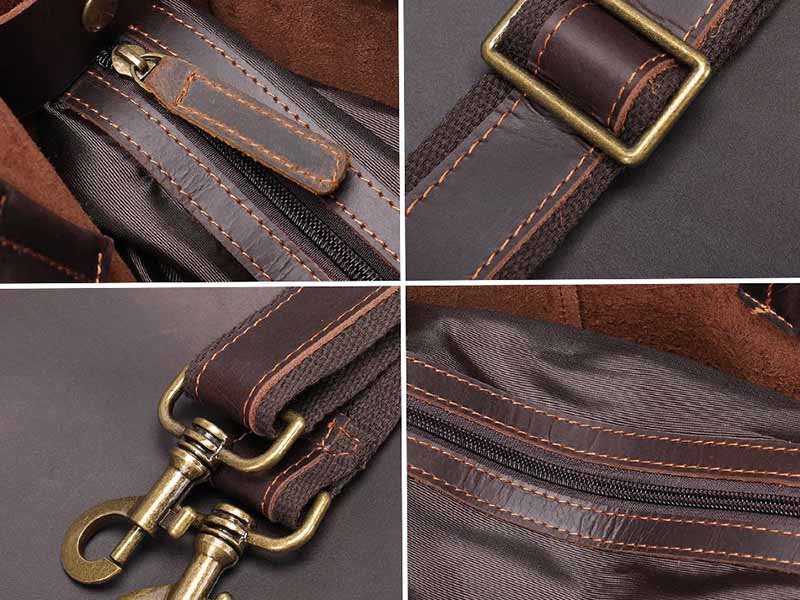
The most important capabilities include leather sourcing, incoming material inspection, cutting, skiving, reinforcement, stitching, edge finishing, hardware installation, lining construction, and shape control. A strong factory understands how these processes interact. Attractive leather cannot compensate for weak structure, and skilled sewing cannot correct unsuitable or inconsistent material.
Leather Selection
Ask the factory to describe the proposed material precisely. The phrase genuine leather is too broad for professional product development because it does not explain the layer, finish, thickness, firmness, grain, surface treatment, color method, or expected variation. A useful specification should identify the leather category, supplier or article reference, thickness range, hand feel, surface appearance, and whether the material is stocked or produced specifically for the order.
Full-grain leather retains more of the natural surface and often displays greater visible variation. Top-grain leather may be lightly corrected or finished to create a more controlled appearance. Split leather uses the lower layer of the hide and may receive coatings or embossing. Suede, nubuck, corrected leather, recycled leather, microfiber, and PU materials each require different cutting, sewing, cleaning, storage, and quality standards.
The most expensive material is not automatically the most appropriate. A very soft leather can create an attractive relaxed tote but may not hold the shape of a structured handbag. A thick leather may feel substantial but make a large shoulder bag uncomfortable. A highly natural surface may suit an artisanal collection while producing too much visual variation for a uniform retail program.
| Product Area | Common Thickness Range | Main Manufacturing Concern |
| Small leather goods | 0.7–1.1 mm | Folding, skiving and edge accuracy |
| Soft handbag panels | 0.9–1.4 mm | Drape, softness and stretch |
| Structured bag panels | 1.1–1.8 mm | Shape retention and clean assembly |
| Handles and straps | 1.4–2.5 mm or laminated layers | Strength and edge durability |
| Decorative overlays | 0.8–1.3 mm | Surface quality and cutting precision |
These ranges are starting references rather than universal rules. Leather density, temper, backing, reinforcement, lining, seam structure, and desired hand feel all affect the correct choice. Two materials with identical measured thickness may behave very differently during cutting and assembly.
Variation Control
Natural leather should not be expected to look like a printed synthetic sheet. The goal is controlled variation rather than artificial perfection. A professional factory should inspect leather by shade, grain, thickness, hand feel, visible marks, stretch direction, and usable area before production begins. Materials should be grouped so that panels placed on the same bag remain visually compatible.
Front panels, flaps, handles, and paired gussets generally require stricter matching than internal tabs, hidden reinforcements, or low-visibility pieces. The brand should define which natural marks are acceptable and where they may appear. A small mark on an internal pocket may be acceptable, while the same mark on a front flap may make the finished bag unsaleable.
The approval system should include a physical reference swatch, an acceptable light-to-dark shade range, a thickness tolerance, grain examples, acceptable natural marks, rejected defects, panel-matching rules, batch identification, and storage requirements. These standards should be clear enough that the material team, cutting team, inspectors, and brand representatives reach similar decisions.
Promises of zero color difference are usually less useful than a practical explanation of how variation is managed. A credible supplier should describe how batches are separated, how paired components are matched, how production leather is compared with the approved standard, and how deviations are reported.
Leather utilization also affects price. A stricter cosmetic standard reduces usable yield and increases the cost per finished bag. When two quotations differ, the reason may not be the leather price itself but the percentage of each hide the factory expects to use.
Hardware and Linings
Hardware influences appearance, weight, durability, and perceived value. Zippers, clasps, rings, buckles, hooks, chains, magnetic closures, feet, rivets, snaps, and logo plates should be reviewed as one coordinated system rather than as unrelated accessories. The base material, plating color, finish, dimensions, weight, and operation should all be approved.
Color descriptions such as light gold, antique brass, or gunmetal are not sufficiently precise when several suppliers are involved. A physical hardware reference is more reliable. The brand should also confirm whether a component uses an existing mold or requires custom tooling. Custom hardware can create stronger brand identity, but it may increase development cost, minimum quantity, and lead time.
Hardware should be tested under realistic conditions. Zippers must move smoothly around curves, hooks should rotate without binding, magnetic closures should align through the intended material thickness, and rivets should not loosen or rotate. Plated surfaces should be checked for scratches, sharp edges, uneven color, and visible corrosion risk.
Lining also affects the user experience. Polyester, cotton, microfiber, suede-like fabrics, leather, and coated materials provide different levels of appearance, abrasion resistance, cleanability, and cost. Light linings improve visibility but show dirt easily, while dark linings hide stains but can make deep bags difficult to search.
Invisible internal materials deserve equal attention. Foam, board, nonwoven reinforcement, tapes, adhesives, zipper supports, and base inserts have a strong influence on shape, weight, and durability, even though customers may never see them directly.
Craftsmanship Details
Leather craftsmanship is easiest to judge at difficult areas such as curves, corners, zipper ends, layer transitions, handle roots, edge joints, and hardware attachments. Straight stitching on a flat panel is relatively simple. Consistent workmanship across complicated sections shows whether the factory has experienced operators, suitable machines, and effective quality control.
Inspect stitch length, edge distance, thread tension, skipped stitches, alignment, and backstitching. Very short stitches can weaken certain leathers by creating excessive perforation, while long stitches may look coarse or provide insufficient control. The correct specification depends on material thickness, construction, and visual positioning.
Skiving reduces material thickness at folds, seams, and overlapping areas. Poorly controlled skiving can create weak edges, visible ridges, uneven corners, or tears. The transition between full thickness and the reduced area should be smooth enough that it does not appear through the finished surface.
Edge painting may involve preparation, sanding, primer, color coating, drying, additional layers, and final inspection. The exact process varies, but the finished edge should show controlled coverage, consistent color, smooth shape, good adhesion, and sufficient flexibility. Cracking, pinholes, overflow, stickiness, or visibly uneven layers are signs that the process was rushed or poorly controlled.
The sample should also be assessed while carrying a realistic load. Some bags look balanced while empty but twist, collapse, or pull unevenly when used. Function and appearance should always be evaluated together.
How Do You Test Development Capability?
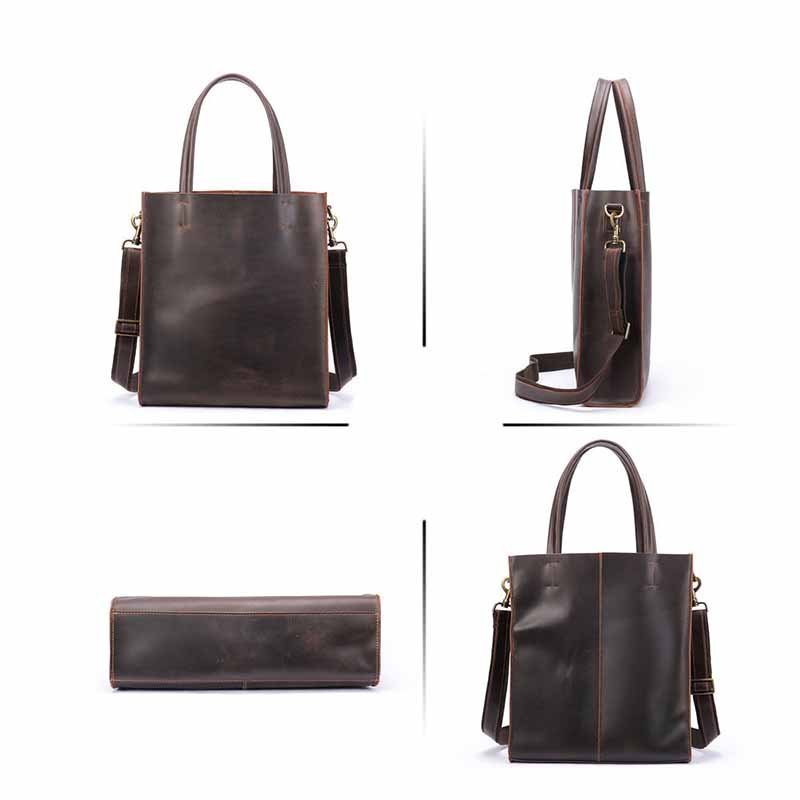
Development capability is tested by observing how the factory interprets information, asks technical questions, develops patterns, manages revisions, and converts an approved sample into controlled production documents. A capable development team identifies risks before bulk production rather than simply producing one visually attractive prototype.
Project Information
Provide enough information for the factory to understand the project without relying on assumptions. A useful request should include product photographs or drawings, dimensions, intended leather, expected quantities by color, logo method, hardware direction, packaging, destination market, quality requirements, and target delivery date. A technical pack, physical reference, bill of materials, Pantone references, artwork, or test requirements will improve accuracy further.
A factory may provide a preliminary quotation from a photograph, but that price will be based on assumptions about leather grade, thickness, consumption, lining, reinforcement, hardware, edge finishing, labor, logo process, and packaging. A final quotation should only be issued after the important variables are sufficiently clear.
The supplier’s questions are often more revealing than its sales presentation. Experienced teams ask how the bag will be carried, whether it must stand upright, what weight it will hold, whether natural leather variation is acceptable, how the lining should be attached, and which details are essential to the brand. They may also identify an opening that is too narrow, a strap anchor that lacks reinforcement, or hardware that is too heavy for the selected leather.
These comments should not be interpreted as unwillingness. They are evidence that the factory is considering durability, manufacturability, cost, and repeatability. The most dangerous supplier may be the one that agrees with every request without explaining the production consequences.
Pattern Development
The pattern converts the design into manufacturable geometry. It defines panel shapes, seam allowances, fold lines, skiving areas, reinforcement positions, zipper lengths, hole locations, hardware placement, and the relationships between components. Small pattern errors can create obvious problems such as uneven gussets, twisted bodies, distorted openings, misaligned pockets, unstable bases, or handles that do not balance the bag.
Ask whether patterns are created and updated internally. The brand should understand how revisions are numbered, stored, and released to production. The final pattern must correspond to the approved sample rather than an earlier development version.
A normal development process may include requirement review, material proposal, first pattern, initial prototype, brand feedback, revised pattern, confirmation sample, and final production documents. A simple pouch may move through fewer stages, while a rigid handbag with custom hardware may require several rounds.
Each revision should close a specific risk. The first sample may confirm dimensions and overall shape. The next may refine leather, hardware, reinforcement, logo, and internal structure. The final confirmation sample should represent the standard expected in bulk production.
When too many unrelated details are changed simultaneously, it becomes difficult to understand which modification caused a new problem. Clear revision records, photographs, measurements, and version numbers help the brand and factory maintain control.
Sample Review
Review the sample using a structured checklist rather than a general visual impression. A bag may look attractive from the front while containing weaknesses in its internal seams, handle attachments, zipper ends, lining, or bottom reinforcement. Cosmetic appearance and technical performance should be evaluated separately and then considered together.
Measure the sample and compare it with the approved specification. Record actual dimensions instead of simply writing approved. Appropriate tolerances depend on product size, material, structure, and function. A small wallet generally requires tighter dimensional control than a large soft tote, but every project should have agreed limits.
Inspect shape, symmetry, leather shade, panel matching, stitching, seam alignment, edge finishing, handles, straps, hardware, zipper operation, internal pockets, lining fit, logo size, logo position, weight, comfort, and packaging. Operate the closure repeatedly, adjust the strap, fill the bag with a realistic load, and place it on a flat surface to observe balance.
Feedback should be specific. Comments such as improve the shape or make it more premium are difficult to execute consistently. A better revision instruction identifies the exact panel, measurement, material, or construction change required.
Written sample records also prevent important decisions from remaining inside chat messages. The physical sample, technical specification, bill of materials, hardware references, and packaging instructions should all communicate the same approved standard.
Bulk Repeatability
An approved sample is evidence of development capability, but it is not yet proof of production consistency. The sample may have been made by the most experienced technician using carefully selected leather and additional hand correction. Bulk production introduces multiple operators, larger material batches, production targets, and stricter scheduling pressure.
The sample must therefore be converted into a measurable production package.
| Control Item | Required Record | Production Check |
| Dimensions | Finished measurements and tolerances | First-piece and in-line measurement |
| Leather | Supplier, article, color, thickness and shade range | Incoming material inspection |
| Stitching | Thread, stitch length and seam position | Work instruction and line inspection |
| Edge finish | Color, gloss, process and approval reference | Inspection after key operations |
| Hardware | Size, finish, function and approved sample | Incoming and final inspection |
| Structure | Reinforcement, foam, board and bonding | Cut-part and semi-finished checks |
| Packaging | Filling, protection, labels and carton ratio | Packing-line verification |
Ask how the project moves from the sample room to the production line. A pre-production meeting should connect the sample technician, material team, production supervisor, quality inspector, and project coordinator. This is especially important when the design includes custom hardware, several materials, complex edge work, or strict color matching.
For higher-risk products, a pilot quantity produced under normal line conditions may reveal issues that do not appear in a one-piece prototype. The goal is to identify variation while correction is still manageable.
How Is Bulk Quality Controlled?
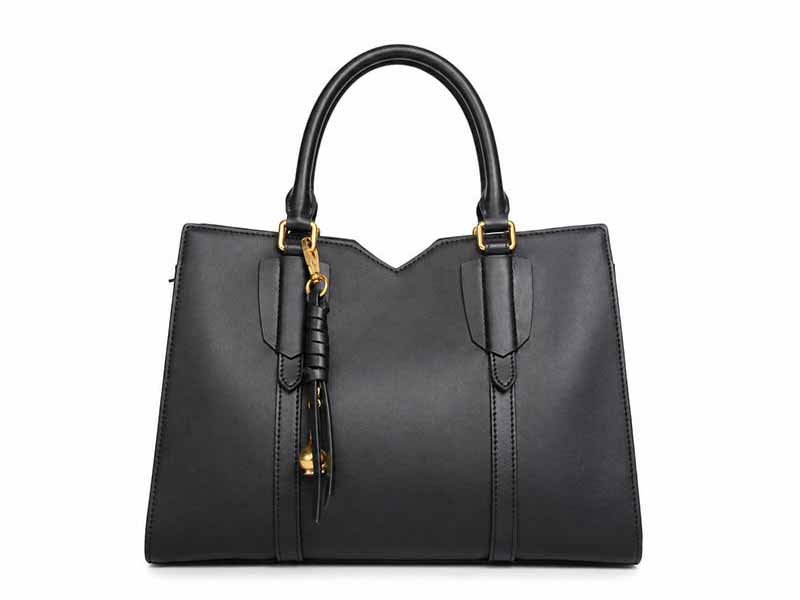
Bulk quality should be managed through linked checkpoints covering incoming materials, cutting, preparation, first-piece approval, stitching, edge finishing, semi-finished construction, final inspection, packaging, and corrective action. A final inspection is important, but it cannot fully repair errors caused by wrong materials, inaccurate cutting, missing reinforcement, or uncontrolled production instructions.
Pre-Production Control
Production should begin only after the key standards are confirmed. The approved sample, measurement chart, leather reference, hardware standard, logo artwork, packaging instructions, color quantities, and quality requirements should all agree. Any contradiction between these references can create confusion when different departments begin working.
A pre-production meeting should identify critical details such as visible leather matching, handle reinforcement, strap-anchor construction, edge-paint quality, zipper installation, gusset symmetry, lining attachment, logo position, finished dimensions, and packing method.
Incoming materials should be inspected before the full order is cut. Leather must be compared with the approved shade, hand feel, thickness, grain, and acceptable-defect range. Hardware should be checked for size, finish, scratches, plating consistency, sharp edges, and operation. Linings, reinforcements, zippers, thread, edge paint, and packaging should also be confirmed.
The first production piece should be completed and compared with the approval sample. This verifies that production patterns, operators, machines, materials, and instructions are aligned before the line continues at full output.
Change control is essential. When approved leather, hardware, lining, or packaging becomes unavailable, the factory should not substitute it without authorization. Alternatives should be presented with an explanation of their effects on appearance, cost, quality, and lead time.
In-Line Inspection
In-line inspection should follow the sequence of production so that defects are detected while the affected operation can still be corrected. Waiting until the bag is finished allows small problems to spread across the order and makes rework more expensive.
During cutting, inspectors should review pattern accuracy, shade grouping, grain direction, visible marks, panel matching, and component identification. After skiving and preparation, they should check thickness transitions, folds, reinforcement, bonding, and component dimensions.
During stitching, attention should focus on seam position, stitch length, thread tension, skipped stitches, alignment, reinforcement, curves, corners, zipper areas, and multilayer sections. Edge-painted components may require inspection after several process stages because defects become more difficult to correct after final assembly.
Semi-finished inspection is particularly useful before the lining or outer layers conceal important construction. Handle anchors, strap supports, internal board, zipper ends, base reinforcement, and magnetic closures can be checked while they remain visible.
Inspection findings should identify the defect type, location, quantity, likely cause, corrective action, and responsible process. A simple pass mark does not provide enough information for improvement. When the same defect appears repeatedly, the factory should investigate the pattern, machine setting, material, operator method, or work instruction rather than treating each case as an isolated mistake.
Final Inspection
Final inspection confirms whether the finished goods match the approved sample, purchase order, measurement chart, packaging standard, and agreed quality criteria. It should cover appearance, dimensions, symmetry, leather matching, stitching, edge finish, hardware, zipper operation, closures, lining, pockets, logo, cleanliness, shape, packaging, labeling, carton quantities, and shipment marks.
Functional checks should reflect real product use. Handles, shoulder straps, anchors, buckles, zippers, hooks, snaps, and magnetic closures should be tested using an agreed method appropriate to the design. The testing method should be defined before production rather than invented during inspection.
Many commercial programs use statistical sampling methods such as General Inspection Level II, but the appropriate plan depends on order size, product risk, customer requirements, and contract terms. Defects are commonly classified as critical, major, or minor. Critical defects create safety or legal risk, major defects affect function or saleability, and minor defects depart from the approved standard without seriously affecting use.
Photographic defect guides can improve consistency among the brand, factory, and third-party inspector. Statements such as edge paint must be smooth remain subjective until acceptable and unacceptable examples are clearly shown.
Final inspection should occur when enough goods are completed and packed to represent the shipment. Inspecting too early may fail to capture later production variation or packaging problems.
Corrective Action
Quality control is incomplete unless the factory has a clear method for handling defects. When a problem appears, the affected goods should be contained, the cause investigated, the process corrected, defective units reworked or replaced, and the effectiveness of the correction verified.
The brand and factory should agree in advance on the response to a failed inspection. Important questions include who pays for reinspection, which defects can be reworked, how corrected goods will be identified, what happens when delivery is delayed, how shortages are handled, and when replacement is required.
A strong supplier reports serious problems early. Hiding defects until final inspection may temporarily protect production statistics, but it creates greater financial and schedule risk. Early reporting gives both parties time to evaluate alternatives and make informed decisions.
Corrective-action records are especially valuable for repeat orders. If a handle reinforcement failed in one batch, the next order should include a documented prevention step. Without this record, the same issue can return when different operators, supervisors, or material lots are used.
Quality should improve over the life of the supplier relationship. The objective is not only to reject defective bags but to reduce the probability that the same problem will be produced again.
What Do MOQ, Cost, and Lead Time Reveal?
MOQ, cost, and lead time reveal how the factory’s material supply chain and production system operate. A credible supplier should explain how leather availability, colors, hardware, labor, packaging, testing, and approval stages affect the commercial offer. Brands should compare total project conditions rather than isolated unit prices or optimistic production promises.
Real MOQ
The finished-bag MOQ is only one part of the calculation. Leather, lining, zipper tape, edge paint, custom hardware, printed packaging, dust bags, and labels may each have separate supplier minimums. A sewing line may accept 200 pieces, while a tannery requires a larger quantity for a custom color or a hardware supplier requires a minimum production run for a branded clasp.
Ask for the MOQ by style, color, and major component. Confirm whether the leather is stocked or made to order, whether several styles can share one material, whether the hardware uses an existing mold, whether custom plating is required, and whether packaging can be standardized across the collection.
A lower MOQ generally produces a higher unit cost because pattern development, setup, material sourcing, inspection, and project administration are distributed across fewer units. Smaller orders may also limit the selection of colors, hardware, linings, and packaging.
The most useful MOQ is not always the smallest number available. A trial quantity should be sufficient to test customer demand, returns, product wear, packaging performance, and color preferences while keeping inventory risk manageable.
Brands can often improve the commercial structure by sharing leather, hardware, lining, logo plates, and packaging across several coordinated products. This approach creates a more coherent collection and reduces fragmentation within the supply chain.
Cost Structure
Leather bag quotations should only be compared after the material, construction, quality, packaging, quantity, delivery terms, and testing requirements are aligned. Two factories can quote the same design using different leather grades, thicknesses, cutting standards, hardware weights, reinforcement, edge processes, packaging, and tolerances.
The total cost may include leather and cutting yield, lining, reinforcement, hardware, zippers, thread, adhesives, edge materials, pattern development, sample labor, sewing, edge finishing, logo application, molds, tooling, testing, inspection, protective packaging, retail packaging, cartons, labels, freight, and delivery services.
Ask the supplier to separate one-time charges from recurring unit costs. Pattern development, embossing dies, custom metal molds, color development, and testing may not repeat with every order. Ownership and future use of custom tooling should also be confirmed.
When cost reduction is necessary, request alternative solutions rather than a general price cut. The factory may recommend existing hardware, simplified internal pockets, shared materials, fewer custom components, adjusted edge construction, or different hidden reinforcement materials.
Cost engineering should protect the features customers notice and the structures that prevent failure. Removing reinforcement from a handle anchor may save little while creating expensive returns. Simplifying a decorative internal feature may produce a better saving with less product risk.
Lead-Time Planning
Lead time should be divided into development, material preparation, production, inspection, packing, and transportation. A single number provided at the quotation stage can be misleading because the longest stage may not be sewing.
A complete project may include requirement clarification, material sourcing, initial quotation, pattern development, first sample, brand review, sample revision, final approval, bulk material purchasing, custom hardware production, pre-production confirmation, cutting, preparation, assembly, finishing, inspection, packing, freight booking, customs procedures, and international transport.
Custom leather colors, metal molds, plated hardware, branded lining, printed packaging, laboratory testing, and slow brand approvals can all become part of the critical path. The factory should provide milestone dates and explain which actions depend on the brand.
Production completion and arrival are different events. Goods may still require inspection, rework, packaging, export booking, customs clearance, and international transportation after assembly is complete.
Brands should also allow reasonable contingency. Holiday shutdowns, material delays, weather, port congestion, and late design changes can affect even a well-managed project. A launch schedule with no buffer turns every minor delay into an emergency.
Capacity and Reorders
Factory capacity should be evaluated by process rather than by the total number of workers or machines. A supplier may have enough general sewing capacity while lacking sufficient sample technicians, skilled leather operators, skiving capacity, edge-paint stations, hardware installation resources, or inspectors.
Ask how the order will be scheduled, which team will produce it, how colors and styles will be separated, and which processes may become bottlenecks. For complex collections, component identification and material segregation are essential to prevent mixing.
Repeat orders require controlled records. The factory should preserve approved patterns, measurements, leather references, hardware details, logo files, packaging instructions, and defect standards. New leather batches should be compared with the retained reference because exact color and hand feel may change over time.
Growing brands should discuss possible future quantities before demand becomes urgent. The supplier should explain whether increased output would use the same production team, additional lines, overtime, satellite facilities, or external partners. It should also explain how the approved standard will remain controlled during expansion.
A believable capacity plan is more valuable than a promise that any volume can be produced. Every manufacturing system has limits, and professional suppliers should be able to explain them clearly.
How Do You Verify the Factory?
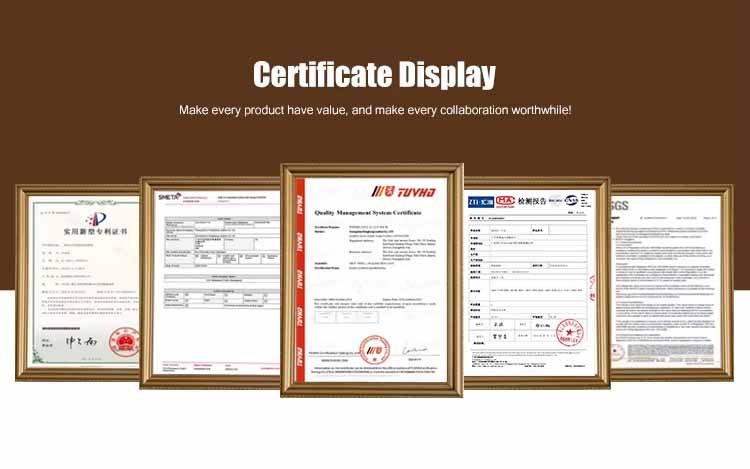
A leather bag factory should be verified through legal documents, technical discussions, physical samples, live production evidence, audit access, quality records, references, and controlled trial orders. The supplier should clearly explain what is performed internally, what is outsourced, how external processes are controlled, and who remains responsible for materials, quality, communication, and delivery.
Factory or Intermediary
A trading company is not automatically unsuitable, and an owned factory is not automatically reliable. The essential issue is transparency. Brands need to understand who develops the patterns, produces samples, purchases leather, manages production, performs inspection, controls subcontractors, maintains records, handles corrective action, and accepts responsibility when problems occur.
Request the registered company name, address, production location, sampling-room details, main equipment, workforce structure, and responsible contacts. Use a live video tour or an on-site visit to review the sample room, leather storage, pattern-development area, cutting, skiving, stitching, edge finishing, semi-finished goods, inspection, packaging, and warehouse.
A prepared showroom is not sufficient evidence. Ask technical questions during the tour. Request an explanation of how visible panels are matched, how edge-painted components are dried, how handle reinforcements are installed, how production samples are approved, and how quality issues are recorded.
Some processes may reasonably be outsourced. Tanning, plating, metal molding, laboratory testing, and certain printing operations often involve specialists. Outsourcing becomes risky when it is hidden or unmanaged. The lead supplier should maintain approved vendors, written specifications, incoming inspection, production follow-up, and final responsibility.
The brand should not be required to coordinate a collection of unknown workshops. A reliable manufacturing partner provides one controlled project system even when selected specialist operations occur elsewhere.
Compliance and Traceability
Compliance requirements depend on the product, material, destination market, sales channel, customer policy, and marketing claims. No single certificate proves that a factory is suitable for every leather bag program.
Relevant evidence may include business documents, export records, social-audit reports, quality procedures, restricted-substance controls, leather test reports, hardware chemical tests, supplier declarations, packaging compliance, material traceability, country-of-origin documents, and customer-specific audit reports.
Review each document carefully. Confirm the company name, factory address, scope, issuing organization, date, expiry, tested item, standard, and applicability to the actual order. A report covering one leather article should not automatically be applied to another material, finish, color, or supplier.
Traceability should allow the factory to identify the leather supplier, article, color, batch, hardware source, and relevant production records. This does not require an unnecessarily complicated system, but it should be strong enough to investigate a defect or verify a claim.
Marketing language requires particular care. Statements such as sustainable, recycled, biodegradable, non-toxic, responsibly sourced, or eco-friendly should be supported by appropriate evidence. Broad claims based on weak documents can create legal and reputational risk.
Compliance also depends on daily production controls. Certificates cannot prevent an unapproved material substitution. Bills of materials, purchase records, incoming inspection, batch identification, and change approval create the practical evidence chain.
Communication and Design Protection
Communication quality affects development, cost, quality, delivery, and problem resolution. The factory contact should understand technical questions, record decisions, coordinate departments, provide realistic schedules, and report significant problems early.
A capable project coordinator should connect the brand with the sample room, material team, production supervisor, quality department, packaging team, and logistics staff. The contact may not know every technical answer immediately, but should be able to obtain accurate information from the responsible person.
Observe how sample feedback is handled. Strong factories organize comments, confirm unclear points, update specifications, explain cost or schedule effects, and maintain version control. Weak factories rely on scattered messages and informal memory.
Design protection should be addressed before sending commercially sensitive files. Depending on the project, a nondisclosure agreement may cover artwork, technical packs, patterns, molds, samples, product photographs, branding, and reproduction restrictions.
Clarify who owns patterns, molds, embossing dies, and other tools paid for by the brand. Determine whether the factory may display the design in its showroom, website, trade fair, or sales materials.
Professional communication does not mean agreeing with every request. A valuable factory should raise concerns when a feature is unsafe, difficult to manufacture, likely to create defects, or inconsistent with the target cost.
Final Comparison
Use a weighted supplier scorecard so that one attractive sample or one low quotation does not dominate the decision. Important categories may include material control, development ability, workmanship, bulk quality, MOQ, total cost, lead time, communication, compliance, capacity, and audit transparency.
Every score should be supported by evidence. A strong score for leather control should be supported by physical swatches, supplier references, shade standards, batch identification, and incoming inspection. A strong score for development should be supported by useful technical feedback, accurate patterns, documented revisions, and complete production files.
Warning signs include vague leather descriptions, quotations issued before the construction is understood, refusal to show production, undocumented sample changes, hidden subcontracting, unrealistic lead times, unexplained price changes, weak artwork control, resistance to third-party inspection, and pressure to begin production before sample approval.
A trial order can provide useful evidence before the brand commits to a major program. Review both the products and the working process. Determine whether the factory met milestones, communicated clearly, reported problems early, matched the approved sample, packed goods correctly, prepared accurate documents, and handled corrective action professionally.
The right leather bag factory is not necessarily the largest, cheapest, or geographically closest. It is the factory whose technical ability, materials, quality system, capacity, and working style fit the brand—and whose claims can be verified.
Build a Reliable Leather Bag Supply Chain
Choosing a leather bag factory is ultimately a risk-management decision. A suitable partner should understand the end customer, translate design ideas into measurable specifications, source appropriate leather and hardware, develop a repeatable sample, control production through several inspection stages, explain commercial conditions honestly, and provide sufficient transparency for the brand to verify important claims.
Szoneier is a Shenzhen-based custom bags and soft goods OEM/ODM manufacturer with more than 18 years of experience in material selection, pattern making, sample development, sewing production, quality inspection, packaging, and international delivery. The manufacturing system supports leather bags and leather accessories alongside a wider range of custom sewn products for global brands, retailers, importers, e-commerce businesses, and project-based purchasing teams.
For selected custom bag projects, MOQ can start from 200 pieces, although the exact requirement depends on leather availability, color quantities, structure, hardware, logo method, packaging, tooling, and testing. Qualified clients may also arrange online technical meetings, video factory reviews, material discussions, sample development, production planning, inspection coordination, custom packaging, and export delivery.
To receive a practical project assessment, prepare product photographs, sketches or a technical pack, required dimensions, material direction, quantities by color, logo artwork, hardware requirements, packaging instructions, destination country, target delivery date, and any applicable quality or testing standards.
Send your leather bag project to info@szoneier.com or contact the project team through WhatsApp at (+86) 13423847456. The Szoneier team can review the product structure, identify development risks, recommend suitable materials and sampling steps, and prepare a custom manufacturing quotation based on the actual requirements of your fashion brand.