Sustainable material selection sounds straightforward until a product team begins asking what the labels actually mean. A leather may be natural but poorly traced. A material marketed as vegan may rely heavily on fossil-based polymers. A plant-based sheet may contain agricultural waste but still need a synthetic backing and protective coating. Even a certified or recycled material can become a poor choice when it cracks early, creates excessive cutting waste, or cannot be supplied consistently for repeat production.
To choose sustainable materials for leather goods, evaluate the complete material system rather than relying on labels. Review raw-material origin, processing chemistry, traceability, recycled or bio-based content, durability, repairability, manufacturing yield, product suitability, certification evidence, and bulk-production stability. The most responsible option is the material that delivers verified improvements while meeting realistic safety, quality, performance, and service-life requirements.
This approach may appear more demanding than choosing the swatch with the strongest environmental story, but it prevents much larger problems later. A sourcing team once approved an attractive coated material after reviewing only its color, texture, and sustainability brochure. The first samples looked excellent. After the finished bags remained in a warm warehouse for several weeks, however, the folded edges began whitening and the coating lost adhesion around the zipper ends. The material had a convincing story, but it had never been evaluated as part of a finished product.
The following guide explains how to compare materials using real manufacturing considerations. It covers genuine leather, recycled composites, lower-impact PU, microfiber, plant-based alternatives, certifications, testing, product applications, documentation, and bulk-production control. The goal is not to identify one perfect material. It is to help brands choose materials that can support credible claims, dependable performance, and stable long-term production.
What Makes a Material Sustainable?
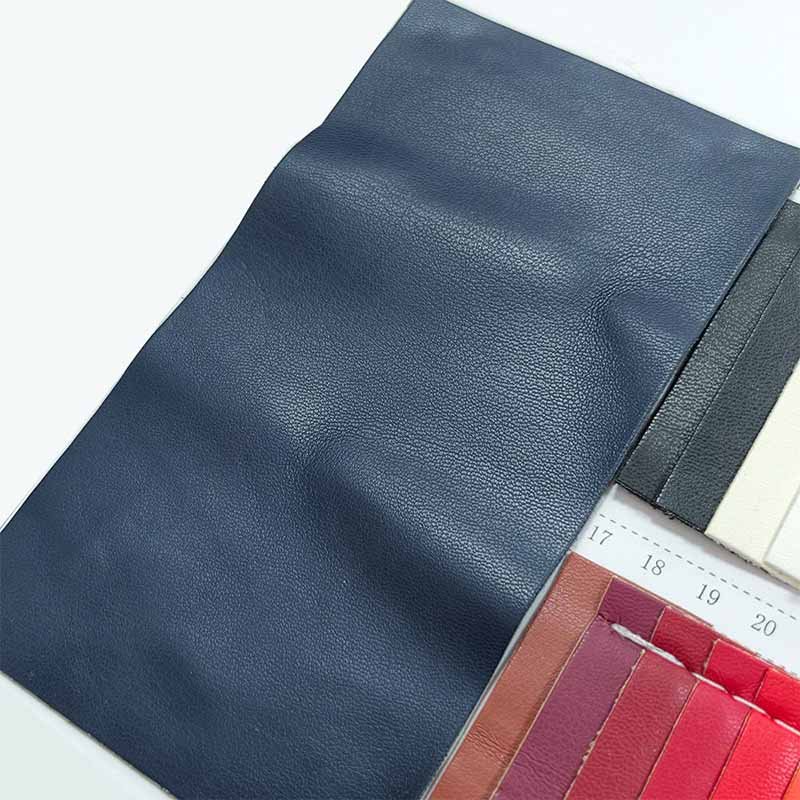
A sustainable material has an origin, manufacturing process, chemical profile, useful life, and disposal reality that can be understood and supported with evidence. Natural, recycled, vegan, organic, or bio-based labels are not enough on their own. A responsible choice reduces relevant impacts while remaining durable, safe, repairable, manufacturable, and suitable for its intended leather product.
Full Lifecycle Impact
A material should be assessed from its original source through processing, manufacturing, use, repair, and disposal. Reviewing only the raw material creates an incomplete picture because a leather sheet, coated textile, or plant-based composite can gain or lose environmental value during later production stages. Poor cutting yield, rejected colors, unstable coatings, additional reinforcement, complicated packaging, and early product failure can all increase the real resources consumed per acceptable finished product.
For example, a lightweight material may reduce shipping weight but require more internal support to maintain the bag’s shape. A recycled composite may reuse production waste but perform poorly at sharply folded edges. A natural material may be biodegradable under certain conditions, yet the completed product may contain adhesives, synthetic linings, coatings, foam, and metal parts that make practical biodegradation unlikely.
A useful lifecycle assessment should examine several connected questions:
- Where did the primary raw material originate?
- Can the supplier identify the processing facility?
- Which tanning, coating, dyeing, or finishing process was used?
- How much usable material remains after cutting?
- What reinforcements and adhesives are required?
- How long should the finished product remain functional?
- Can damaged parts be repaired or replaced?
- Can different components be separated after use?
- Which disposal or recycling route is realistically available?
- Can every public environmental claim be supported?
The manufacturing yield is especially important in leather goods. Natural hides may contain scars, holes, stretch zones, shade differences, and irregular edges. Roll materials may contain coating marks, creases, color bands, distorted backing, or damaged edges. A nominally lower-impact material can create more waste when usable yield is poor or when its quality varies significantly from one batch to another.
Chemistry and Processing
Processing chemistry affects environmental performance, employee exposure, wastewater, emissions, odor, colorfastness, aging, and legal compliance. The word “sustainable” should therefore be supported by information about the actual tanning, coating, lamination, finishing, dyeing, printing, and adhesive systems used in production.
For genuine leather, relevant considerations may include tanning agents, dye chemistry, fatliquoring, protective finishes, solvent management, wastewater treatment, solid-waste handling, and the control of restricted substances. For PU, microfiber, and plant-based composites, the evaluation may include resin type, backing composition, coating method, plasticizers, solvents, fillers, pigments, protective topcoats, lamination adhesives, and the percentage of recycled or renewable content.
Water-based PU is a useful example of why precise language matters. Water-based processing generally means that water replaces part of the solvent system used during coating. It does not automatically mean that the finished material is plastic-free, biodegradable, recyclable, or produced without all solvents. Buyers should request complete composition and process information rather than treating one production feature as proof of overall sustainability.
Chrome-free leather also requires careful interpretation. It is not necessarily vegetable-tanned or completely metal-free. Alternative tanning systems may use synthetic tanning agents, aldehydes, minerals, or other chemicals. The correct choice depends on the finished leather performance, process management, chemical testing, destination-market requirements, and the type of sustainability claim the brand intends to make.
Durability and Useful Life
Durability strongly influences sustainability because a product that remains useful for several years distributes its production impact across more use cycles. A material with an attractive environmental profile may not be the responsible choice when it peels, cracks, fades, stretches, delaminates, or loses structure soon after purchase.
Material durability cannot be separated from construction quality. Leather goods frequently fail at handle attachments, strap anchors, folded corners, zipper ends, edge-painted seams, bottom panels, hardware contact points, adhesive bonds, reinforcement transitions, and lining joins. A strong outer material will not prevent failure when thread, reinforcement, edge paint, adhesive, or seam design is unsuitable.
Product-specific testing may include:
- Dry and wet rubbing resistance
- Repeated-flex performance
- Abrasion resistance
- Tear strength
- Tensile strength
- Coating adhesion
- Peel strength
- Hydrolysis resistance
- Light and colorfastness
- Water spotting
- Edge-paint adhesion
- Seam strength
- Handle pull strength
- Zipper-cycle performance
There is no single test number that is suitable for every leather product. A promotional pouch, fashion clutch, executive briefcase, school backpack, wallet, and travel duffle experience different forces. Test methods, loads, cycles, temperatures, humidity levels, and acceptance criteria should be connected to realistic product use.
A useful sustainability decision asks how long the finished product is expected to perform under normal conditions, what is likely to fail first, and whether the product can be repaired. Replaceable straps, accessible hardware attachments, durable zipper constructions, reinforced stress points, and repairable edge finishes can extend useful life without increasing every material thickness.
Evidence Over Labels
A credible material claim should be specific, measurable, and traceable. Broad words such as green, natural, conscious, responsible, or eco-friendly may sound attractive but provide little value when they are not connected to evidence.
Useful documentation can include full material composition, recycled-content percentages, bio-based-content reports, supplier declarations, manufacturing-site identities, tannery or mill certifications, chemical test reports, physical-performance results, chain-of-custody documents, transaction certificates, batch records, country-of-origin information, and approved master samples.
| Evaluation Area | Weak Evidence | Stronger Evidence | Practical Question |
|---|---|---|---|
| Material origin | “Responsibly sourced” | Named facility, country and traceability record | Can the actual production source be identified? |
| Recycled content | “Contains recycled material” | Verified percentage and chain-of-custody documents | Which layer contains the recycled content? |
| Plant-based claim | “Made from plants” | Plant-content percentage and test method | How much of the finished sheet is plant-derived? |
| Chemistry | General compliance statement | Current report matching the color and finish | Does the report apply to the production material? |
| Durability | Attractive swatch | Prototype and product-specific test results | What happens after folding, sewing and loading? |
| End of life | “Recyclable” | Defined collection and processing route | Can customers actually access that route? |
| Bulk consistency | One approved swatch | Master standard, batch records and inspection plan | Can the same material be reproduced later? |
Evidence should remain connected to the bill of materials and purchase records. A valid certificate in a company folder is not enough when no one can show whether it applies to the leather, lining, backing, or production lot used for the finished order.
Which Sustainable Materials Can You Use?
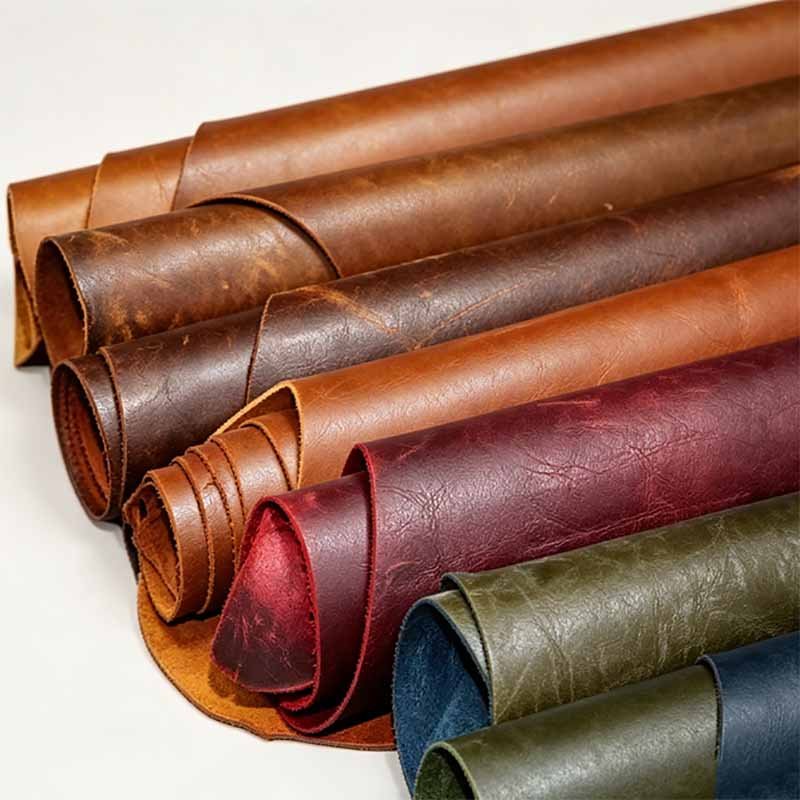
Options may include traceable genuine leather, vegetable-tanned leather, chrome-free leather, recycled leather composites, water-based PU, recycled-content PU, microfiber leather, cork, and plant-based coated materials. Each option has different environmental, technical, visual, financial, and sourcing characteristics. The right choice depends on product use, expected lifespan, documentation, manufacturing behavior, and repeat-order reliability.
Responsible Genuine Leather
Genuine leather can support a responsible product strategy when the source is traceable, the tannery manages environmental and chemical risks, the finished leather meets relevant requirements, and the product is designed for long service.
The term genuine leather is too broad for technical selection. Buyers should identify the animal species, leather layer, tannery, origin, tanning route, thickness, surface finish, backing treatment, and final application. Full-grain, top-grain, corrected-grain, split, suede, nubuck, coated, and embossed leathers differ in appearance, cutting yield, durability, price, repairability, and manufacturing behavior.
Vegetable-tanned leather is often selected for its firm body, patina, tooling ability, traditional character, and compatibility with products such as wallets, belts, straps, cases, and structured bags. It can also show shade variation, surface marks, water sensitivity, greater stiffness, and visible aging. These properties may be desirable in one collection and unacceptable in another.
Chrome-free leather can be suitable when a brand wants to avoid chromium tanning, but the alternative tanning chemistry should still be reviewed. Buyers should not assume that chrome-free means chemical-free, metal-free, biodegradable, or automatically lower impact in every category.
Tannery certification can strengthen the evidence chain, but the actual leather article still needs technical qualification. A well-managed tannery can produce many grades, finishes, and performance levels. The leather must remain appropriate for the product’s skiving, folding, stitching, embossing, edge treatment, reinforcement, hardware, and expected service life.
Recycled Leather
Recycled leather commonly combines recovered leather fibers or leather-processing scraps with binders, backing materials, coatings, and reinforcing layers. It can reuse material that might otherwise become waste and can provide a more uniform surface than natural hides.
Its performance depends heavily on composition. The percentage of leather fiber, type of binder, backing structure, coating thickness, and reinforcement method can affect flexing, tear strength, peel strength, edge finishing, aging, and water behavior. A material that performs well as a flat panel may fail at wallet folds, strap attachments, narrow corners, or zipper ends.
Before selecting recycled leather, request:
- Leather-fiber percentage
- Binder type and percentage
- Backing composition
- Total thickness and weight
- Surface-coating description
- Recycled-content verification
- Flex and abrasion results
- Tear and tensile data
- Peel or delamination resistance
- Hydrolysis or aging information
- Recommended processing methods
- Recommended applications
Recycled leather can be practical for notebook covers, rigid panels, presentation boxes, card-holder exteriors, decorative sections, and selected small accessories. It should be introduced carefully into high-flex or high-load areas unless the exact construction has been tested.
Its sustainability value depends on whether the recovered input replaces virgin material while preserving a reasonable product lifespan. A recycled material that creates frequent returns or early replacement can lose much of its initial environmental advantage.
Lower-Impact PU and Microfiber
PU materials remain widely used because they provide predictable color, grain, thickness, roll width, cutting yield, and price. They can be produced in soft, firm, matte, glossy, metallic, embossed, suede-like, and water-resistant finishes, making them suitable for handbags, wallets, cosmetic bags, backpacks, trims, straps, and travel products.
Lower-impact options may include:
- Water-based coating systems
- Reduced-solvent production
- Recycled polyester backing
- Recycled PU content
- Bio-based feedstock
- Phthalate-free formulations
- Microfiber substrates
- Improved chemical-management systems
These features should be verified separately. Recycled backing does not mean that the face coating is recycled. Bio-based resin may contain only a partial renewable feedstock. Water-based coating does not make the finished material biodegradable or free from synthetic polymers.
Hydrolysis performance is a major consideration, especially for products sold or stored in warm and humid regions. Suppliers may describe hydrolysis resistance in years or accelerated test hours, but those numbers cannot be compared unless the temperature, relative humidity, test method, duration, and pass criteria are known.
Microfiber leather generally uses a fine synthetic-fiber structure that can provide uniform thickness, clean cutting, good tear resistance, and a leather-like hand feel. It may work well for structured bags, wallets, footwear-style constructions, or products requiring stable surface consistency. Its overall environmental profile still depends on resin chemistry, recycled content, production energy, durability, and realistic end-of-life options.
Plant-Based Alternatives
Plant-based alternatives may use apple residue, grape waste, pineapple leaf fiber, cactus biomass, cork, fungal material, or other renewable resources. They can add strong differentiation to a collection and may support the use of agricultural by-products.
The finished material is often a composite rather than a pure plant material. Plant fibers or powders may be combined with PU binders, textile backings, pigments, protective coatings, reinforcement, and adhesives. Buyers should therefore separate the renewable-content story from the complete material composition.
Important questions include:
- What percentage of the finished material is plant-derived?
- Is the percentage measured by weight, carbon content, or another method?
- Which polymer or binder is used?
- What backing fabric supports the material?
- Are protective coatings removable?
- Which abrasion, flex, tear, and aging tests are available?
- Can the material be skived, folded, embossed, glued, stitched, and edge-painted?
- What are the MOQ, color, width, and lead-time limitations?
- Can repeat orders be supplied over several seasons?
- Which end-of-life statement can be independently supported?
Plant-based composites may be most practical for feature panels, small pouches, card holders, presentation packaging, trims, limited collections, and lower-stress components. Handles, heavily folded wallet areas, luggage corners, and narrow load-bearing straps require much stronger validation.
| Material | Common Thickness Range | Main Advantages | Risks to Check | Typical Applications |
|---|---|---|---|---|
| Full-grain leather | 1.0–2.2 mm | Long service life, repairability, natural grain | Shade variation, weight, traceability | Briefcases, handbags, straps |
| Vegetable-tanned leather | 1.2–3.0 mm | Firm body, patina, tooling | Water marks, stiffness, color variation | Wallets, belts, rigid cases |
| Recycled leather composite | 0.6–1.5 mm | Uses leather waste, uniform surface | Binder content, cracking, peel strength | Covers, panels, small goods |
| PU leather | 0.5–1.4 mm | Stable color, broad finishes, efficient cutting | Hydrolysis, peeling, polymer content | Fashion bags, pouches, trims |
| Microfiber leather | 0.6–1.8 mm | Strength, clean cutting, stable thickness | Resin chemistry, end-of-life options | Handbags, wallets, backpacks |
| Plant-based composite | 0.6–1.5 mm | Renewable-content story, visual differentiation | Polymer percentage, supply and flexing | Panels, pouches, small accessories |
| Cork composite | 0.5–1.2 mm | Lightweight, distinctive natural texture | Fold cracking, backing quality | Wallets, trims, decorative panels |
These ranges are common commercial reference points rather than universal specifications. The final thickness must be confirmed against the supplier’s material construction and the intended finished product.
How Do Sustainable Materials Compare?
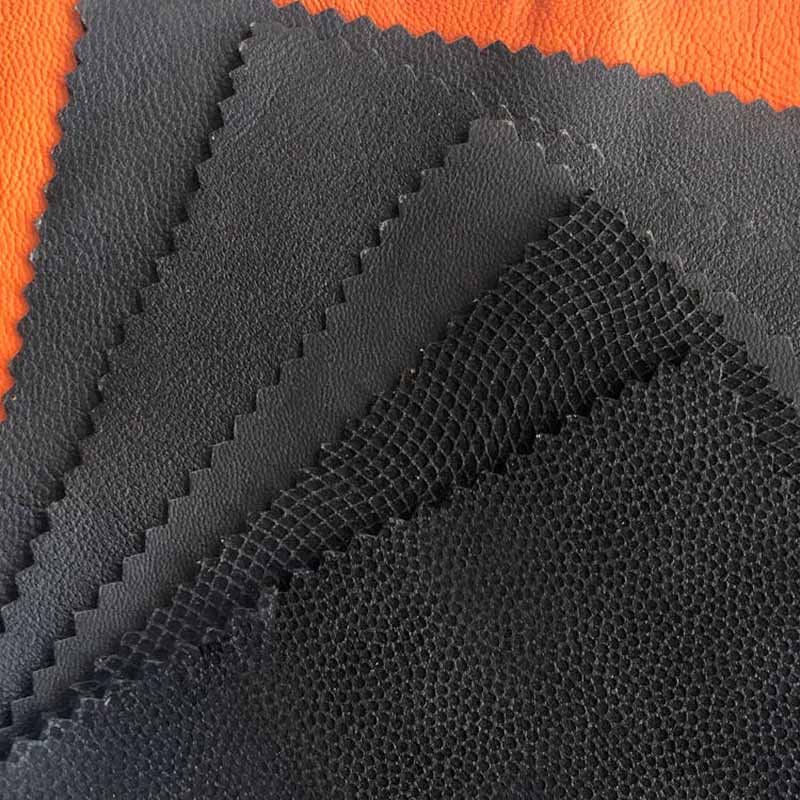
Materials should be compared under the same application and performance conditions. Use consistent criteria for composition, traceability, chemical control, durability, repairability, cutting yield, production compatibility, price, MOQ, lead time, and repeat-order availability. A universal ranking is unreliable because a material suitable for a wallet may perform poorly on a travel bag, handle, structured handbag, or high-abrasion corner.
Leather vs PU
Leather and PU satisfy different product requirements. Genuine leather can provide natural grain, premium aging, repairability, and long service. PU can provide better color repeatability, lower visual variation, efficient roll cutting, lighter construction, broader finishes, and more predictable pricing.
The comparison becomes unreliable when different quality levels are used. Entry-level split leather should not represent every natural leather, just as inexpensive PU should not represent high-performance microfiber or carefully engineered coated materials.
Compare the materials under the same conditions:
- Thickness and weight
- Tear and tensile strength
- Repeated-flex performance
- Abrasion resistance
- Colorfastness
- Water and stain behavior
- Surface repair options
- Edge-finishing requirements
- Cutting yield
- Lot-to-lot consistency
- Expected service life
- Purchase price and processing cost
- Documentation availability
Natural leather requires careful cutting because scars, loose grain, stretch zones, shade differences, holes, and irregular hide edges influence yield. PU comes in rolls and usually supports more predictable nesting, but coating bands, creases, distorted backing, pinholes, and edge damage can still create waste.
The edge construction also matters. Some genuine leathers can be burnished, folded, painted, or left with a controlled raw edge. PU commonly needs folded edges, binding, edge paint, or concealed construction. An unsuitable edge method can become the first failure point even when the main body material remains intact.
Recycled vs Virgin Materials
Recycled content can reduce reliance on virgin inputs, but recycled materials should be tested against the same performance standards as virgin alternatives. Recycled fibers may have shorter lengths, greater color variation, or different strength. Recycled resins may need to be blended with virgin material to achieve stable processing and durability.
The percentage should always be clearly defined. A coated material may include a face coating, adhesive layer, reinforcement, and textile backing. When only the backing is recycled, the recycled percentage of the complete sheet may be significantly lower than the percentage stated for the backing.
Ask the supplier:
- Is the input pre-consumer or post-consumer?
- Which material layer contains it?
- How is the percentage calculated?
- Is the content independently verified?
- Does certification cover the actual supplier?
- Is a transaction certificate available?
- Does performance vary between lots?
- Can the same construction be supplied for repeat orders?
Virgin material may remain appropriate when it provides materially longer service, safer performance, better yield, or lower rejection. The goal is not to eliminate virgin input regardless of consequences. It is to use less unnecessary virgin material while maintaining a finished product that performs reliably.
Plant-Based vs Conventional Materials
Plant-based alternatives are frequently presented as direct replacements for leather, although many commercial versions are structurally closer to coated textiles. They may contain plant-derived powder or fibers combined with PU, polyester, cotton, or other backing materials.
A fair comparison should consider:
- Renewable-content percentage
- Fossil-based polymer percentage
- Backing composition
- Processing chemistry
- Restricted-substance control
- Abrasion and flex performance
- Water resistance
- Repairability
- Cutting yield
- Product lifespan
- Commercial availability
- End-of-life limitations
Plant-based materials can create measurable value when they use waste streams, reduce the proportion of virgin fossil feedstock, or provide a reliable lower-impact solution for a particular component. Their value is less convincing when the plant content is small and the marketing language hides the dominant polymer construction.
Conventional materials often offer established supply chains, broader color choices, more historical test data, and stronger repeat-production capacity. Emerging materials may offer differentiation but require more development, testing, and supply planning. A balanced collection can use different materials in the roles where they perform most effectively.
Performance-Cost Balance
The material with the lowest price per meter is not always the lowest-cost option in a finished product. Total cost is influenced by cutting yield, defect rate, sewing speed, edge finishing, reinforcement, adhesive consumption, testing, production loss, quality rejection, packaging, and customer returns.
Material cost should therefore be considered per acceptable finished unit. A material that costs 15% more per meter may still produce a lower total product cost when it offers better usable width, fewer surface defects, faster sewing, or less reinforcement. A cheaper alternative may become more expensive after extra labor and rejected pieces are included.
A weighted scoring method can prevent decisions from being dominated by one attractive feature.
| Decision Factor | Fashion Handbag | Travel Bag | Wallet |
|---|---|---|---|
| Durability and performance | 25% | 35% | 30% |
| Sustainability evidence | 20% | 15% | 20% |
| Chemical compliance | 15% | 15% | 15% |
| Appearance and hand feel | 20% | 10% | 15% |
| Supply stability | 10% | 15% | 10% |
| Cost and production efficiency | 10% | 10% | 10% |
These percentages are practical examples rather than fixed industry rules. Each brand should adjust them according to warranty expectations, target price, product use, customer profile, sales channel, and environmental commitments.
Which Material Fits Each Product?
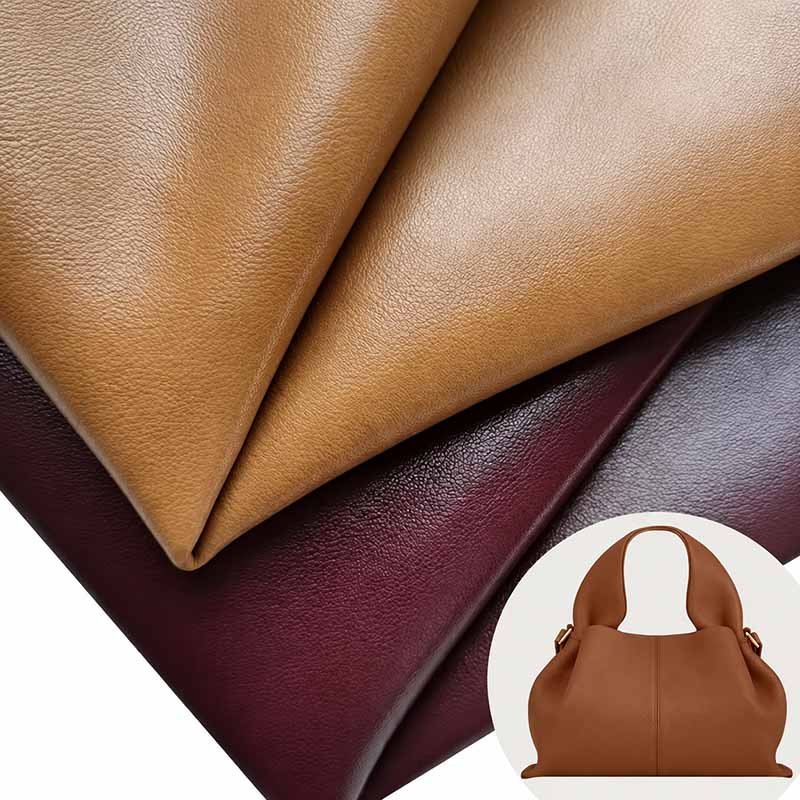
Material selection should begin with product stress, structure, weight, cleaning needs, appearance, and expected service life. Handbags need surface and shape control, wallets need thinness and folding endurance, backpacks need tear and seam strength, cosmetic bags need cleanability, and travel goods need abrasion resistance. Product-specific testing is more reliable than selecting from a general sustainability ranking.
Handbags
Handbags combine visual expectations with mechanical stress. The body material may need softness, drape, or shape retention, while handles and shoulder-strap attachments must withstand repeated loading. Corners experience abrasion, hardware creates pressure marks, edge-painted sections flex during opening, and the surface may contact cosmetics, rain, skin oils, clothing, and retail packaging.
For structured handbags, review bending stiffness, recovery, reinforcement compatibility, edge-paint adhesion, skiving, hardware indentation, scratch visibility, and storage deformation. Full-grain leather, corrected leather, microfiber, firm PU, and selected plant-based composites can all be suitable when the internal structure is designed around their behavior.
For soft handbags, pay greater attention to drape, permanent stretch, wrinkle recovery, dry and wet rubbing, lining compatibility, and handle reinforcement. A material with an attractive soft hand may become unsuitable if the strap anchor permanently stretches the side panel.
A finished prototype should be filled to a realistic load and carried repeatedly. It should also be stored in packaging and inspected after recovery. Flat swatch approval cannot reveal panel collapse, zipper waves, corner wear, edge cracking, hardware marks, or color transfer to light-colored clothing.
Pattern efficiency can also improve sustainability. Cleaner panel geometry, shared material thicknesses, fewer decorative layers, and better placement of natural marks can increase cutting yield without reducing product value.
Wallets and Small Goods
Wallets, card holders, passport covers, and small leather accessories require precise thickness and stable folding performance. Several layers can overlap within a small area, so a thickness difference of only 0.1 or 0.2 millimeters may affect closing, edge quality, stitch appearance, card-pocket tension, and finished bulk.
Important properties include:
- Thickness consistency
- Skiving capability
- Repeated-fold resistance
- Stitch-holding strength
- Edge-paint compatibility
- Embossing definition
- Colorfastness
- Surface scratch resistance
- Pocket recovery
- Delamination resistance
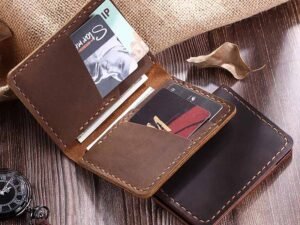
Vegetable-tanned leather works well for firm products where patina and natural change are part of the design. Softer leather suits lined or folded constructions. Microfiber and high-quality PU can provide uniform card slots, consistent thickness, clean cutting, and broad color choices. Recycled composites may suit outer covers or rigid panels but should be tested before use at heavily folded sections.
Small goods also provide opportunities for material reduction. Pocket overlaps can be optimized, unnecessary hidden layers removed, and reinforcement placed only where it is functionally required. Excessive thinning should be avoided because weak edges and distorted pockets can shorten product life.
Backpacks and Travel Goods
Backpacks and travel bags depend on a complete material system rather than one outer sheet. The body works together with lining, foam, reinforcement, webbing, thread, buckles, zippers, mesh, hardware, and bottom panels. An environmentally improved outer material cannot compensate for weak components or poor load engineering.
Large panels often benefit from recycled polyester or nylon because these materials may offer a good strength-to-weight ratio and stable color. Leather, microfiber, and coated materials can be used for premium panels, bases, handles, zipper surrounds, trims, and branding areas.
Key requirements include:
- Tear strength
- Abrasion resistance
- Seam slippage
- Shoulder-strap pull strength
- Handle attachment
- Bottom-panel wear
- Zipper-cycle performance
- Water resistance
- Foam recovery
- Webbing elongation
- Buckle strength
- Finished-product load stability
Travel products experience friction against floors, luggage racks, conveyor equipment, clothing, and other bags. Bottom panels, corners, zipper ends, and handle attachments frequently fail before the central body material. These zones may require different materials or reinforcement rather than simply increasing thickness across the whole product.
A useful approval process includes loaded carrying, repeated opening, zipper cycling, controlled drops, compression storage, and inspection of stress points. The test load should reflect realistic use instead of an arbitrary extreme that adds unnecessary weight, cost, and material.
Linings and Components
A sustainable outer material does not automatically make a sustainable product. Leather goods may also contain lining, foam, reinforcement board, webbing, thread, zipper tape, metal hardware, plastic buckles, labels, magnets, edge paint, adhesive, printing ink, and packaging.
Practical improvement opportunities include:
- Recycled polyester or nylon lining
- Organic or recycled cotton lining
- Recycled-content webbing
- Durable and replaceable hardware
- Reduced-plastic packaging
- Water-based adhesive where technically suitable
- High-strength thread for longer seam life
- Replaceable shoulder straps
- Removable zipper pulls
- Simplified reinforcement systems
- Fewer unnecessary decorative layers
Reducing component variety can make quality control, repair, documentation, and eventual disassembly easier. Mono-material design should not be pursued when it substantially weakens the product. A carefully engineered mixed-material handle may last longer than a single-material version created mainly for a simple marketing statement.
| Product Type | Priority Properties | Typical Material Direction | Common Failure Point |
|---|---|---|---|
| Structured handbag | Shape retention, edge quality, scratch resistance | Leather, microfiber, firm PU | Panel collapse, edge cracking |
| Soft handbag | Drape, recovery, colorfastness | Soft leather, flexible PU, coated textile | Handle stretch, color rub |
| Wallet | Thinness, flexing, skiving, edge stability | Leather, microfiber, high-grade PU | Fold cracking, delamination |
| Cosmetic bag | Stain resistance, cleanability, moisture tolerance | Coated PU, microfiber, coated textile | Lining contamination, odor |
| Backpack | Tear, abrasion, seam and strap strength | Recycled nylon or polyester with reinforced trims | Strap pullout, bottom wear |
| Travel bag | Abrasion, structure, hardware compatibility | Durable textile, leather or PU panels | Corner wear, handle failure |
| Card holder | Precision, embossing, low bulk | Leather, microfiber, thin PU | Pocket stretch, edge failure |
Which Certifications Should You Check?
Certifications should match the material and the claim being made. Relevant examples may include LWG-related evidence for leather-manufacturing facilities and GRS or RCS documentation for recycled materials. Certificates must be valid, current, connected to the actual supplier and process, and supported by production records. They do not replace chemical testing, product testing, or batch-level material control.
Leather Certification
Leather certification is most valuable when it identifies the actual tannery and production site. The finished-goods manufacturer may purchase through a trader or material distributor, but the buyer should still be able to connect the selected leather article to the facility that processed it.
Review the following:
- Certified legal entity
- Production-site address
- Certificate validity
- Audit scope
- Processing stage
- Traceability information
- Supplier relationship
- Leather article number
- Subcontracted operations
- Repeat-order documentation
A statement that the leather comes from an audited tannery is usually more precise than claiming that the complete finished handbag is certified, unless the product claim is specifically permitted and fully supported.
Certification and product testing address different issues. A tannery assessment reviews the manufacturing facility and its management practices. Chemical and physical testing evaluates whether a specific material, color, finish, or finished article meets the required specification.
The certificate, material code, supplier purchase order, approved swatch, bill of materials, and production batch should be connected in one controlled record. Without this chain, valid documents may exist but fail to demonstrate which leather was used in the finished order.
Recycled Content Standards
GRS and RCS are commonly used to verify recycled materials and chain of custody. They may apply to linings, textile backings, webbing, labels, packaging, and eligible coated materials.
Check:
- Certified legal entity
- Facility address
- Product categories
- Process categories
- Material scope
- Validity dates
- Certification body
- Transaction-certificate availability
- Supply-chain continuity
The finished material composition must still be reviewed. A coated sheet may use a recycled backing but a virgin polymer face. Marketing language should identify the recycled component instead of implying that the entire material contains the same percentage.
Transaction documentation may be required to connect certified material with a particular purchase or shipment. Buyers should confirm document availability before sampling or bulk ordering. Requesting formal traceability documents after production can create delays or reveal that the selected supply route was not eligible.
Certification may also affect MOQ, price, available colors, lead time, and supplier selection. These commercial conditions should be included in the original material comparison rather than treated as administrative details after approval.
Chemical Compliance
Chemical requirements depend on the destination market, product category, target age group, material type, color, coating, hardware, and retailer protocol. One old test report should not be treated as permanent evidence for every color, finish, supplier, and production batch.
Potentially relevant substances may include:
- Chromium VI
- Restricted azo colorants
- Formaldehyde
- Lead and other heavy metals
- Phthalates
- Dimethylformamide
- Organotin compounds
- Polycyclic aromatic hydrocarbons
- Nickel release
- Short-chain chlorinated paraffins
- Certain fluorinated substances
- Customer-specific restricted substances
The test plan should identify which components require testing. Outer material, lining, edge paint, adhesive, printing ink, metal hardware, plastic buckles, zipper tape, labels, and packaging may present different risks.
Reports should match the relevant material color and finish whenever pigments, coatings, printing, metallic effects, or hardware plating could influence results. A report for a plain beige material may not adequately represent a black coated version, metallic surface, printed finish, or alternative backing.
Testing should normally be conducted through an appropriate laboratory using current methods. The supplier’s internal chemical-control process should also be reviewed, including raw-material approval, chemical purchasing, batch records, supplier declarations, and segregation of compliant materials.
Claim Documentation
Every sustainability statement should connect to a measurable fact or document. This protects the brand from vague or misleading language and helps customers understand exactly what has improved.
A useful claim file may include:
- Full material composition
- Recycled-content percentage
- Bio-based-content evidence
- Tannery or mill details
- Current certificates
- Transaction certificates
- Chemical test reports
- Physical-performance reports
- Supplier declarations
- Batch identification
- Purchase records
- Bill of materials
- Approved marketing language
- Claim limitations
Specific language is usually more credible than broad language. “The lining contains certified recycled polyester” is clearer than “made from recycled materials” when the outer material is not recycled. “Leather sourced from an audited tannery” is more precise than describing the complete product as certified without a supported product-level claim.
The strongest communication is factual enough to be checked and modest enough to remain accurate when materials, suppliers, or production batches change.
How Do You Approve a Material?
Approve a sustainable material through a controlled sequence: verify composition and claims, review certifications and chemistry, inspect representative swatches, test physical properties, build a production-intent prototype, evaluate foreseeable use, freeze the approved standard, and inspect bulk lots against it. Approval based only on photographs, catalogues, presentations, or small swatches creates avoidable quality and claim risks.
Sample Review
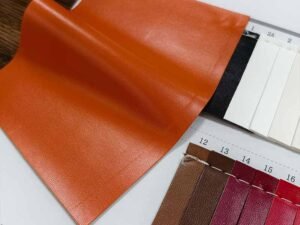
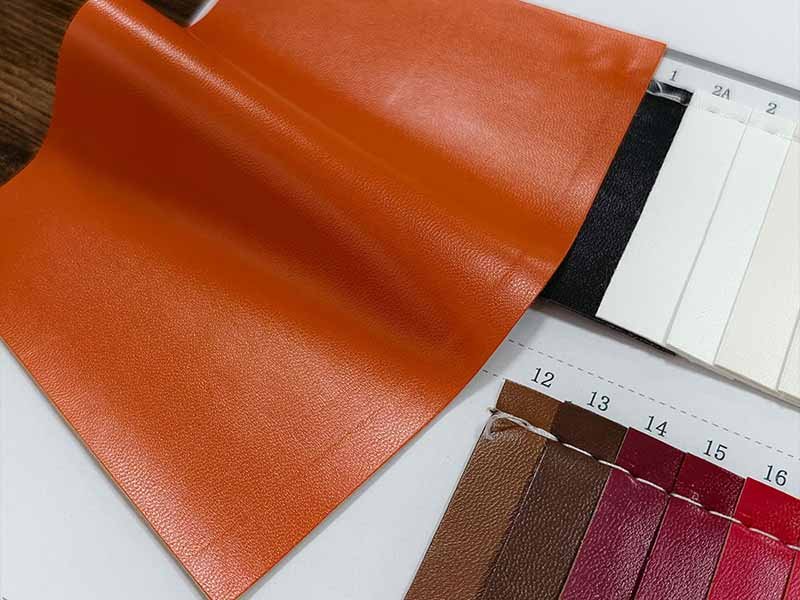
Initial review should begin with material identification. Record the supplier, material code, color, thickness, weight, composition, backing, coating, finish, certification status, MOQ, lead time, and expected repeat-order availability.
Visual inspection should cover:
- Color consistency
- Grain or texture
- Surface gloss
- Backing construction
- Pinholes
- Creases
- Coating marks
- Edge damage
- Odor
- Stretch direction
- Surface recovery
- Visible contamination
Simple workshop checks can reveal unsuitable materials before expensive sampling. Fold the swatch sharply, rub it with dry and damp white fabric, scratch the surface lightly, sew through it, apply the proposed adhesive, turn a narrow seam, and test the intended edge finish.
These checks are not a replacement for laboratory testing, but they help identify whitening, cracking, color transfer, coating separation, weak backing, poor stitch holding, or incompatible adhesives.
Every swatch should be stored with a controlled reference number. Loose samples without supplier, color, date, and batch information are difficult to trace and may be confused with visually similar alternatives.
Prototype Testing
The prototype should use the intended material thickness, lining, reinforcement, thread, adhesive, edge treatment, hardware, and construction method. Replacing difficult materials with easier sample-room alternatives can hide risks that later appear during production.
Review:
- Product dimensions
- Shape and balance
- Finished weight
- Opening and closing
- Pocket access
- Hardware movement
- Seam appearance
- Edge finish
- Strap comfort
- Load behavior
- Surface change
- Packaging recovery
Real-use testing is essential. Fill a handbag or travel bag with a representative load and carry it repeatedly. Insert cards into wallets and fold them through repeated cycles. Expose cosmetic bags to moisture and common product residues. Inspect zipper ends, corners, handles, folded edges, and hardware contact points.
When laboratory testing is required, consider whether the original material, processed material, or completed product should be tested. Skiving, embossing, lamination, gluing, stitching, heat treatment, and edge painting may change performance.
A failed prototype provides useful information when the failure is documented. It may show that the material needs a wider folding radius, different reinforcement, an alternative seam, a changed edge treatment, or use in a lower-stress component.
Bulk Control
After final approval, the material standard should be frozen. The control file should include:
- Physical master swatch
- Controlled color reference
- Supplier and material code
- Thickness tolerance
- Weight tolerance
- Grain or texture standard
- Backing specification
- Composition
- Certification status
- Test requirements
- Approved sample
- Approval date
- Authorized substitutions
Incoming bulk material should be inspected before cutting. Roll materials should be checked for shade bands, coating defects, creases, contamination, usable width, backing distortion, and edge damage. Natural leather should be graded for scars, holes, stretch, grain variation, shade, thickness, and usable cutting area.
Color should be examined under agreed lighting. A swatch that appears acceptable under warm office lighting may differ under daylight, retail lighting, or photography. For sensitive brand colors, controlled light boxes and numerical color measurement can improve consistency.
Substitution control is essential. Changes to the tannery, resin, backing, coating, reinforcement, adhesive, or supplier may affect durability, compliance, and certification even when the visible surface appears similar. No substitution should be made without written review and approval.
Production records should identify which material batch was used for each order. This makes later investigation more efficient when a problem involves peeling, cracking, color transfer, odor, texture, coating adhesion, or unusual aging.
RFQ and Final Approval
A complete request for quotation helps the manufacturer recommend materials that are technically and commercially realistic. A product photograph and target price alone do not provide enough information for responsible sourcing.
Include:
- Product category
- Dimensions
- Intended use
- Target customer
- Sales market
- Preferred material type
- Required composition
- Intended sustainability claim
- Certification requirements
- Chemical requirements
- Performance expectations
- Color quantity
- Logo process
- Packaging
- Order quantity
- Repeat-order forecast
- Target delivery date
Final approval should confirm four separate points:
- The sustainability claim is supported by evidence.
- The material meets market and chemical requirements.
- The material performs in the finished product.
- The supply chain can reproduce it consistently.
| Approval Stage | Required Information | Practical Checks | Approval Result |
|---|---|---|---|
| Supplier screening | Facility, composition, certificates, MOQ, lead time | Document scope and sourcing route | Approved for sampling |
| Swatch review | Material code, color, thickness, backing | Visual, fold, rub, scratch, sewing and adhesive trials | Shortlisted material |
| Prototype | Production-intent construction | Shape, load, seams, edges, hardware and recovery | Material-design compatibility |
| Laboratory testing | Methods and destination-market requirements | Chemistry, abrasion, flex, tear and adhesion | Technical compliance |
| Pre-production | Final sample, BOM and master swatch | Materials and methods frozen | Approved for bulk |
| Incoming inspection | Production batch and documents | Color, thickness, defects, quantity and identity | Released for cutting |
| In-line inspection | Cut panels and assembled products | Sewing, bonding, reinforcement and edge finishing | Process controlled |
| Final inspection | Finished products and packaging | Appearance, dimensions, function and labeling | Approved for shipment |
Sustainable material sourcing is not about selecting the most fashionable environmental claim. It is about connecting evidence, construction, testing, manufacturing control, product lifespan, and honest communication. A strong material strategy may combine audited genuine leather for long-life exterior panels, verified recycled textile for linings, lower-impact PU for color-sensitive trims, replaceable hardware, reduced packaging, and pattern engineering that improves cutting yield.
Szoneier is a Shenzhen-based OEM/ODM custom bags and soft-goods manufacturer with more than 18 years of manufacturing experience. Its documented capabilities cover leather goods, PU materials, textile bags, material sourcing, sample development, pattern making, sewing production coordination, quality inspection, packaging, and export delivery.
Brands can begin a material assessment by sending product drawings, reference photographs, physical samples, tech packs, intended use, destination market, preferred sustainability direction, certification requirements, expected order quantity, logo details, packaging needs, and delivery targets. The project can then be reviewed from material feasibility through sampling, testing, production control, and repeat-order planning.
Contact Szoneier to develop custom leather goods with materials selected for credible environmental positioning, dependable product performance, and stable bulk production.