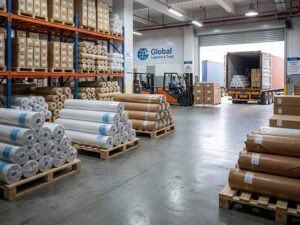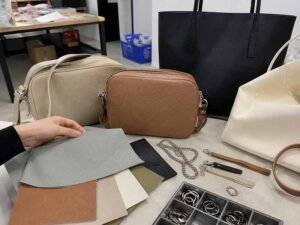
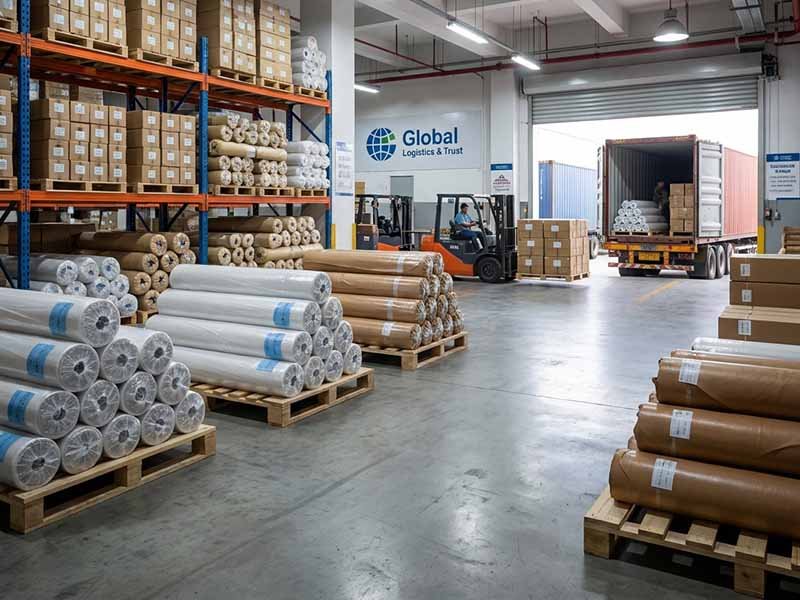
A supplier’s quotation may look professional, the showroom samples may feel impressive, and the salesperson may repeatedly use phrases such as “factory direct.” None of these details proves that the company actually controls the production of your leather goods. The distinction matters because a custom handbag, wallet, belt, briefcase, pouch, or leather accessory is shaped by dozens of connected decisions involving leather thickness, reinforcement, hardware, stitching, edge paint, lining, structure, packaging, inspection, and production timing.
A leather goods factory is generally the better choice when a project requires direct material control, technical sampling, repeated revisions, confidential product development, stable workmanship, and repeat production. A trading company can be useful when the customer needs multi-category sourcing, supplier consolidation, local coordination, language support, inspection, or export management. The correct choice depends on measurable capabilities, transparency, accountability, and total project cost rather than the title printed on a business card.
One growing accessories brand learned this distinction after approving a carefully made showroom sample. The supplier later moved production to another workshop without written approval. The bulk leather had a different grain, the buckles were lighter, and the edge finish began cracking during handling. The failure did not happen simply because a middleman was involved. It happened because nobody had established who controlled the factory, the approved materials, the production changes, and the final quality decision.
What Is the Difference Between a Factory and a Trading Company?
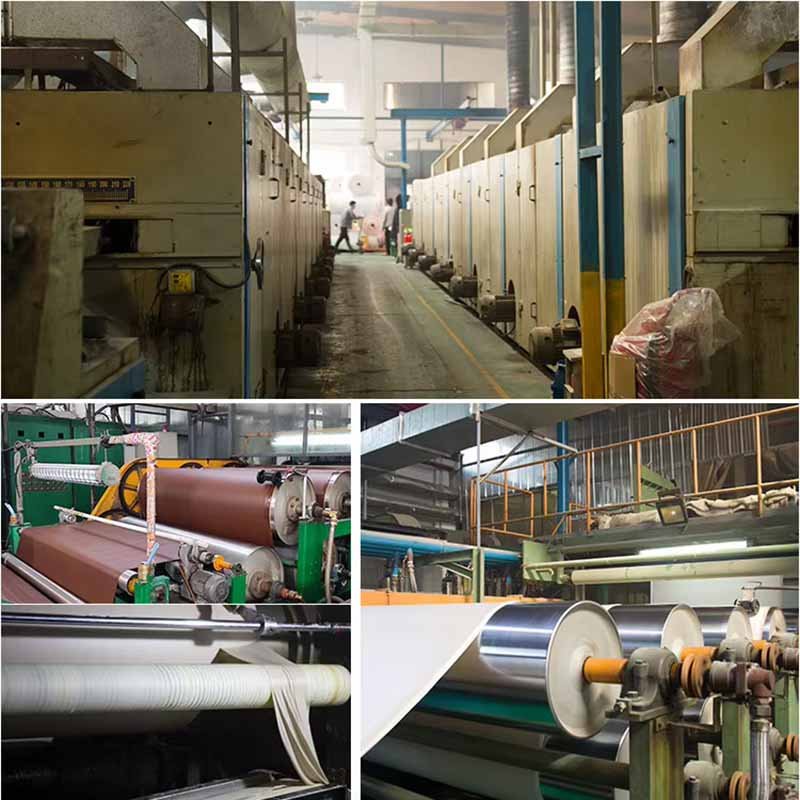
A leather goods factory directly develops or manufactures products, while a trading company generally coordinates orders through external manufacturers. The most important difference is who controls materials, patterns, sampling, production, inspection, and corrective action. A capable trading company may provide valuable services, but customers should know exactly what it performs internally and what remains under the responsibility of another factory.
Business Models
A leather goods factory earns most of its revenue by converting leather, synthetic materials, linings, reinforcements, hardware, threads, adhesives, and packaging components into finished products. Its work may cover material inspection, pattern development, cutting, skiving, logo application, edge preparation, stitching, assembly, hardware installation, finishing, cleaning, inspection, packing, and production scheduling. Some factories complete most processes internally, while others coordinate specialist suppliers for plating, molding, printing, testing, or premium packaging.
A trading company usually earns a commercial margin by connecting customers with one or more manufacturers. Its responsibilities may include collecting specifications, identifying suitable factories, obtaining quotations, arranging samples, coordinating revisions, inspecting production, consolidating products, preparing export documents, and resolving problems. A well-managed trading company can reduce a customer’s sourcing workload, particularly when several unrelated product categories or factories are involved in one purchasing program.
The difficulty is that the service level varies substantially. Some trading companies employ experienced product developers, quality inspectors, and supply-chain managers. Others mainly forward customer messages to whichever workshop currently offers the lowest quotation. The existence of a trading margin is not automatically a problem. The important question is whether that margin pays for meaningful technical coordination, inspection, risk reduction, and delivery management.
| Comparison Area | Leather Goods Factory | Trading Company |
|---|---|---|
| Primary function | Product development and manufacturing | Supplier sourcing and order coordination |
| Production assets | Usually owns or directly manages production resources | Usually depends on external factories |
| Technical communication | Often provides access to sample and production teams | Information may pass through several account managers |
| Product coverage | Commonly specializes in selected products or materials | May cover multiple unrelated categories |
| Pricing structure | Manufacturing cost plus factory margin | Factory price plus sourcing or service margin |
| Quality control | Can intervene during manufacturing | Depends on inspection access and factory relationships |
| Strongest use case | Customized, technical, repeat-order products | Multi-category sourcing and consolidation |
| Primary concern | Manufacturing ability may exceed service ability | Production location and responsibility may be unclear |
Technical Involvement
A capable factory should not simply wait for a finished drawing and follow it without question. It should review whether the proposed product can be manufactured consistently. A sample technician may discover that a handle attachment requires a wider reinforcement area, that a thick leather cannot form a tight folded edge cleanly, or that the specified magnetic closure may be too weak once several material layers are added.
These decisions matter because changing one element usually affects several others. A thicker leather may improve structure but create difficulty around folds and card slots. Heavier hardware may increase perceived value but distort a lightly reinforced bag. A softer leather may improve hand feel while reducing shape retention. A factory that understands materials, patterns, construction, and production can explain these trade-offs before they become bulk-production problems.
A trading company can also provide strong technical support when it employs experienced developers or works with stable specialist factories. Customers should test this capability by asking detailed questions during quotation and sampling. A supplier that can explain leather thickness, reinforcement placement, stitch construction, edge treatment, hardware attachment, and production tolerance provides more meaningful evidence than a supplier that repeatedly says only that its quality is excellent.
Hybrid Suppliers
Many established manufacturers operate a hybrid production model. They may own a sampling room, development team, core production facility, and internal quality department while using approved partner factories for peak-season capacity, specialist product categories, or processes that require dedicated equipment. This is common because one facility is rarely the strongest option for every type of handbag, wallet, belt, molded case, plated fitting, printed component, or retail package.
A hybrid system should not be confused with uncontrolled subcontracting. In a controlled system, one company retains responsibility for the approved sample, material specification, bill of materials, production documentation, inspection criteria, packaging requirements, and shipment schedule. The customer continues to communicate with one accountable project team even when a specialist partner performs part of the manufacturing work.
The warning sign is not that another facility participates. The warning sign is that the primary supplier cannot explain where production will occur, changes factories without approval, or cannot provide consistent records across production locations. Customers should evaluate the strength of the management system rather than assuming that all work completed inside one building is automatically more reliable.
Szoneier’s documented operating model is factory-based rather than trading-only. Its manufacturing system combines product development, material coordination, sampling, sewing-production management, quality inspection, packaging, export support, and controlled partner-factory resources under one project-management structure.
Responsibility
A supplier’s true role becomes clear when something goes wrong. When a leather batch falls outside the approved color range, somebody must decide whether to reject it, rework it, or request customer approval. When edge paint cracks during testing, someone must investigate the preparation, coating thickness, drying conditions, and material compatibility. When a custom fitting arrives late, somebody must adjust production and communicate a realistic delivery date.
A direct factory may be able to respond more quickly because its production manager, sample technician, material team, and quality personnel can review the issue together. A trading company may need to negotiate with an external factory before it can authorize a change. However, a professional trading company with strong purchasing volume may sometimes apply more commercial pressure than an individual customer dealing with a factory alone.
Before placing an order, customers should define the production location, approved materials, sample status, inspection method, subcontracting rules, delivery terms, and corrective-action procedure in writing. The value of clear responsibility is greater than the value of any supplier label. A company that accepts responsibility and provides evidence may be safer than a supplier that calls itself a factory but avoids accountability.
Which Supplier Gives You Better Production Control?
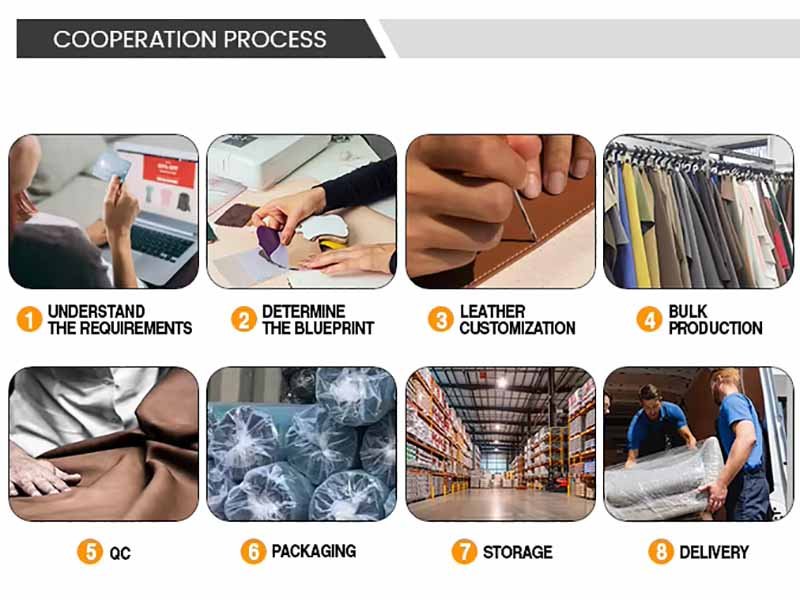
A factory generally provides better production control when customers have direct access to the people responsible for materials, sampling, manufacturing, and quality. Factory ownership alone does not guarantee control, however. Real control depends on documented specifications, approved samples, traceable components, in-line inspections, version management, and the supplier’s ability to stop or correct production before nonconforming goods are completed.
Material Control
Leather selection should be based on measurable requirements rather than broad descriptions such as “genuine leather,” “premium leather,” or “high-quality PU.” A workable material specification may include leather type, grade, thickness range, grain, surface finish, softness, color reference, backing, coating, odor expectations, abrasion performance, and acceptable natural variation. Without these details, two materials with the same general name can perform and appear very differently.
For many small leather goods, finished leather thickness may fall around 0.8–1.2 mm, depending on folding, skiving, and structural requirements. Structured handbags may use material around 1.2–1.8 mm in selected areas, while belts and rigid components can require greater thickness. These figures are practical industry references rather than universal standards. The appropriate thickness depends on the leather type, product size, reinforcement, construction method, and intended use.
Material control also covers linings, thread, foam, reinforcement board, adhesives, edge paint, zipper tape, magnets, buckles, rivets, plating, labels, and packaging. Softer leather may need additional reinforcement to retain shape. Heavy hardware may require wider attachment points. Pale colors may require cleaner handling because glue residue, scratches, and surface contamination are easier to see.
The supplier should retain approved swatches and record material codes, thickness ranges, colors, and suppliers. Bulk materials should be checked against the approved references before cutting begins. Discovering a color, grain, or thickness mismatch after hundreds of pieces have been cut creates far greater cost and delay than identifying the issue during receiving inspection.
Sample Development
Sampling is the point where a design becomes a manufacturable product. A successful sample should do more than resemble a rendering. It should confirm the proportions, dimensions, balance, pocket accessibility, opening function, strap length, hardware position, edge appearance, lining behavior, reinforcement, and repeatability of the construction.
Custom leather goods commonly move through several development stages. An early prototype confirms the basic shape and engineering. A revised sample addresses material, dimensions, workmanship, branding, or hardware. A pre-production sample confirms the final specification before bulk manufacturing. Depending on product complexity and material availability, a sample round may take approximately 7–15 working days, while custom leather, new molds, special plating, or complex hand finishing can extend the schedule.
Every change should be recorded precisely. An instruction such as “make the handle stronger” does not tell the production team whether to increase leather thickness, add a reinforcement strip, widen the attachment area, use denser stitching, or install hidden rivets. A useful revision note states exactly what will change, where it will change, and how the result will be evaluated.
Both customer and supplier should retain matching approved samples. Any modification made after approval should be documented with a revision number, date, and responsible person. Relying only on scattered messages or memory increases the chance that the sample room, purchasing team, and production line work from different instructions.
Process Control
Quality control should begin before sewing. Leather goods can develop irreversible problems during material inspection, pattern preparation, nesting, cutting, skiving, edge preparation, logo application, stitching, assembly, finishing, cleaning, or packing. A final inspection may identify the defect, but it may be too late to correct the underlying process without significant rework.
| Production Checkpoint | Main Control Item | Practical Working Reference |
|---|---|---|
| Leather receiving | Color, grain, thickness, defects | Compare with the approved swatch and specified range |
| Cutting | Direction, surface defects, component accuracy | Inspect critical panels before full cutting |
| Skiving | Edge thickness and consistency | Test folding, bonding, and edge appearance |
| Stitching | Density, alignment, tension, backstitching | Often around 6–9 stitches per inch, depending on style |
| Finished dimensions | Size and component placement | Typical tolerances may range from ±2 mm to ±5 mm |
| Edge finishing | Coverage, smoothness, adhesion | Inspect between required preparation and coating stages |
| Hardware | Finish, function, alignment, attachment | Compare with the approved hardware reference |
| Final inspection | Appearance, function, quantity, packing | Apply an agreed sampling and defect standard |
The values in this table are general industry working references, not mandatory specifications for every product. A compact cardholder can require tighter dimensional control than a large unstructured tote. Decorative topstitching may use a different density from a load-bearing seam. Customers and suppliers should define product-specific tolerances instead of copying generic figures into every specification.
The inspection plan should follow the product’s risk. A briefcase requires special attention at handle mounts, shoulder-strap anchors, base corners, zippers, and hardware. A light-colored handbag requires stricter surface-cleanliness control. A wallet requires accurate folding, card-slot spacing, edge alignment, and bulk reduction around layered areas.
Bulk Consistency
An approved sample is essential, but it cannot communicate every production requirement on its own. Reliable bulk manufacturing also requires a bill of materials, measurement chart, color standards, hardware board, logo artwork, pattern version, stitching requirements, reinforcement details, edge-finishing method, packaging instructions, and agreed inspection criteria.
Natural leather creates a particular consistency challenge because grain, shade, scars, and surface character can vary across hides and cutting positions. The customer and supplier should agree which variations support the desired natural appearance and which are unacceptable. Without that agreement, the factory may consider a characteristic normal while the customer classifies it as a defect.
Consistency can also be affected by production allocation. When more than one sewing line or partner facility is involved, every team should use the same approved samples, patterns, material standards, and inspection criteria. Increasing capacity without controlling information may produce noticeable differences among batches.
For repeat orders, retained samples, material records, hardware standards, packaging references, and production reports become especially valuable. They allow the supplier to compare new production with earlier orders rather than relying on memory. Customers developing long-term product lines should treat these records as supply-chain assets, not administrative paperwork.
Is a Factory Always Cheaper?
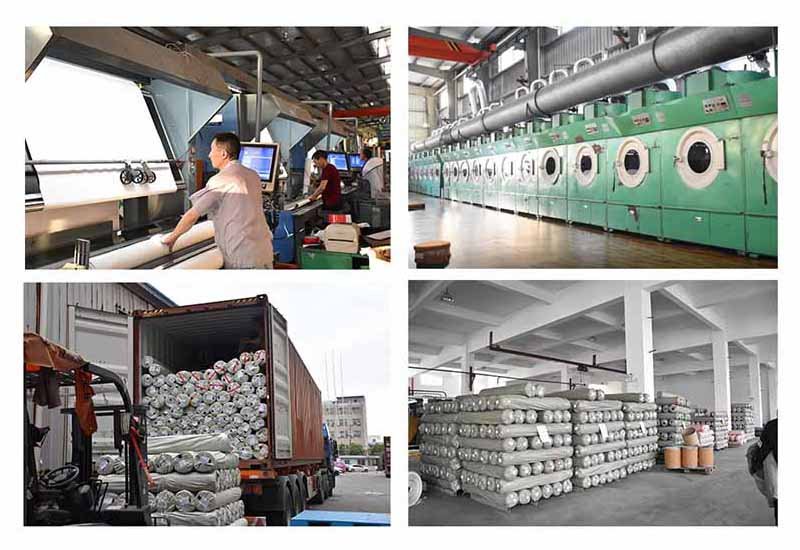
A factory is not always cheaper after development, inspection, project management, logistics, and risk are considered. Direct factory pricing may remove a trading margin, but the customer may need to manage specifications, production updates, quality checks, export documents, and problem resolution internally. The best comparison is total project cost rather than the initial unit quotation alone.
Price Structure
A factory quotation normally includes materials, components, production labor, overhead, expected wastage, standard packaging, and profit. A trading-company quotation may include those costs plus supplier sourcing, communication, inspection, financing, consolidation, documentation, and account management. These additional services can create real value when they reduce the customer’s workload or prevent costly mistakes.
The quoted unit price is difficult to compare when the scope is unclear. One supplier may quote a finished bag in a basic polybag at the factory gate. Another may include custom packaging, barcode labels, quality inspection, export documents, and delivery to a freight terminal. Both quotations may use the same product name, but they do not represent the same commercial package.
A meaningful comparison should confirm the leather type and thickness, lining, reinforcement, hardware material, plating, logo method, sample charges, tooling, packaging, carton requirements, testing, inspection scope, Incoterm, payment terms, and production schedule. The quotation should also state how long it remains valid, particularly when custom leather, metal components, or international freight are involved.
Customers should be cautious when one price is significantly lower than every alternative. The reason may be genuine efficiency, but it can also reflect thinner material, lighter hardware, simplified reinforcement, excluded inspection, different packaging, or an unrealistic production assumption. A professional supplier should be able to explain the main cost drivers clearly.
MOQ and Setup Costs
Minimum order quantity is affected by more than a factory’s willingness to operate a production line. Leather suppliers, lining mills, metal factories, packaging printers, and plating vendors may each impose minimum quantities. A factory might be able to sew 300 pieces, while a tannery may require a larger material order for a custom color or finish.
Setup costs can include pattern development, cutting dies, embossing plates, printing screens, logo molds, metal tooling, plating samples, packaging plates, testing, and trial production. When these costs are divided across a small order, the unit price rises. A large order spreads the setup cost across more pieces but creates greater inventory exposure for the customer.
| Cost Factor | Lower-Cost Condition | Higher-Cost Condition |
|---|---|---|
| Leather | Stock color and standard finish | Custom color, grain, coating, or performance |
| Hardware | Existing shape and standard plating | Exclusive mold, weight, or custom finish |
| Logo | Standard embossing or one-color print | Custom metal logo or multiple processes |
| Color allocation | One color with a larger quantity | Several colors divided into small quantities |
| Construction | Simple panels and straight seams | Curves, piping, complex reinforcement, hand finishing |
| Packaging | Standard protective bag and carton | Rigid box, insert, sleeve, retail display, or gift set |
| Inspection | Routine internal and final inspection | Multiple independent inspections and testing |
| Delivery | Planned sea or road shipment | Urgent air freight or several split shipments |
A smaller trial order may still be commercially responsible because it reduces inventory risk and allows the brand to test market demand. The correct decision is not always to maximize volume for the lowest price. It is to balance unit economics, cash commitment, market-learning value, product risk, and the probability of repeat orders.
Szoneier’s documented MOQ begins from 200 pieces for selected custom projects, while the exact requirement varies according to material availability, structure, color allocation, accessories, logo process, packaging, tooling, and testing. This project-based approach is more realistic than claiming that every leather product can be manufactured at one universal minimum quantity.
Hidden Costs
Some of the most damaging sourcing costs never appear on the initial quotation. They emerge later as additional sample rounds, rejected materials, delayed launches, rework, sorting, replacement, emergency air freight, customer returns, and employee time spent resolving avoidable problems.
A supplier that is 5% or 6% cheaper can quickly become more expensive when it requires two additional sample rounds or delivers several weeks late. The saving may also disappear if finished goods require inspection, repair, repacking, or replacement. One urgent air shipment can consume the entire price advantage created during negotiation.
Internal management time is another cost. When a customer’s team must repeatedly rewrite requirements, chase production updates, arrange separate inspections, check packing lists, correct labels, and resolve shipping-document errors, the apparent factory-direct saving becomes smaller. A trading company may justify its margin when it performs this work reliably. It adds little value when the customer still performs the same work.
A practical total-cost calculation should include product value, tooling, samples, testing, inspection, freight, duties, packaging, internal labor, expected defect exposure, and delay risk. This approach helps purchasing teams distinguish a genuinely efficient supplier from a quotation that looks inexpensive only because important responsibilities have been excluded.
Value Versus Price
Price should be considered together with the supplier’s ability to prevent expensive failures. A factory may charge more because it uses more stable leather, better reinforcement, heavier hardware, improved edge coating, additional process checks, or stronger packaging. These differences can protect the product’s return rate, appearance, durability, and customer reviews.
A high price does not automatically prove high quality. The supplier should explain what creates the cost. Customers should be able to understand how leather grade, thickness, lining, reinforcement, hardware, construction, finishing, packaging, order quantity, and delivery schedule affect the quotation.
Effective cost reduction is usually achieved through product engineering rather than blind discounting. The customer and supplier might use an existing hardware shape, select a stock lining, simplify an internal pocket, reduce unnecessary material layers, modify the edge treatment, consolidate color quantities, or optimize carton dimensions. Each change should be evaluated for its effect on appearance, function, durability, lead time, and brand positioning.
The most useful suppliers do not simply say that a target price is impossible. They identify which elements can change, estimate how each change affects cost, and explain what the customer may gain or lose. That conversation is more valuable than a supplier agreeing to an unrealistic target and quietly reducing specifications later.
How Do Factory and Trading Company Risks Compare?
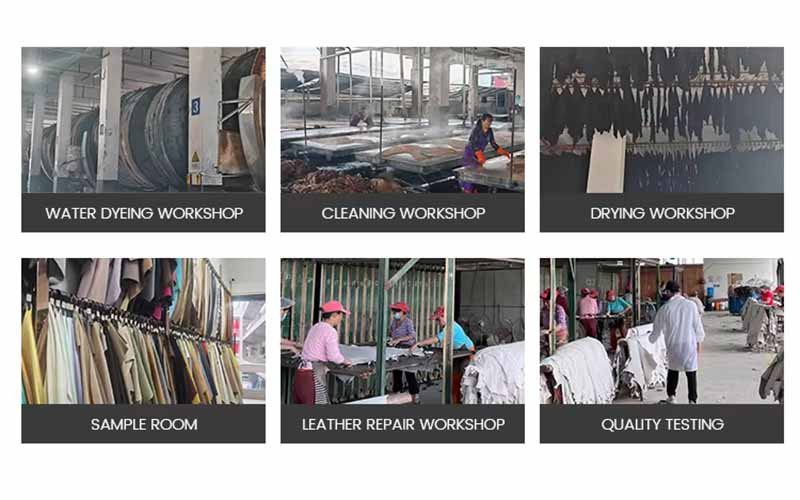
Factories and trading companies carry different risks rather than one model being universally safer. A factory may offer direct production control but lack strong communication, documentation, or export service. A trading company may provide better coordination but depend on external workshops. Customers should evaluate subcontracting, quality responsibility, communication accuracy, confidentiality, financial stability, and delivery continuity.
Subcontracting Risk
Outsourcing is normal in leather goods manufacturing. Tanneries, lining suppliers, metal-plating facilities, zipper companies, mold makers, printers, packaging factories, and testing laboratories may all contribute to one product. The risk arises when the primary supplier cannot control these partners or transfers the complete order to an unknown workshop without informing the customer.
Customers should ask where cutting, skiving, stitching, edge finishing, assembly, inspection, and packing will take place. They should also ask whether the supplier can move the order to another facility without written approval. For confidential, complex, or high-value projects, the approved production location and subcontracting rules should be included in the purchase agreement.
Factories can also outsource. A supplier may show an owned facility during a video call or visit but send the customer’s order elsewhere when capacity becomes tight. Therefore, factory ownership is only one piece of evidence. Material records, production schedules, work-in-progress identification, line photographs, inspection reports, and retained samples provide a clearer picture of who controls the order.
A trading company can reduce subcontracting risk when it maintains long-term relationships with audited factories, uses consistent specifications, and assigns inspectors during production. It increases risk when it selects a different workshop for each order based mainly on price. Customers should determine whether the supplier network is stable and controlled or temporary and opportunistic.
Quality Responsibility
Quality problems are easier to resolve when one organization has the authority to stop production, investigate the cause, change the process, and approve corrective action. A factory often has an advantage because it can review material batches, cutting records, machine settings, operator methods, inspection reports, and retained samples directly.
Factory inspectors, however, may face pressure from production teams to keep an order moving. A trading company with an independent quality department can sometimes provide a more objective inspection. This benefit exists only when the inspectors understand leather goods and have the authority to require repair, sorting, or reproduction rather than simply writing a report.
A practical quality agreement should define critical, major, and minor defects, inspection timing, sampling method, acceptance limits, and remedies. AQL-based sampling is frequently used for consumer goods, and levels such as 2.5 for major defects and 4.0 for minor defects are commonly discussed. These figures should not be applied automatically to every project. Incorrect branding, mold, broken hardware, safety failures, or unusable functions may require zero tolerance.
Customers should agree who pays for sorting, reinspection, repair, replacement, and additional freight when an order fails the approved standard. Resolving these responsibilities before production is much easier than negotiating them when goods are packed, shipped, or already in the destination market.
Communication Risk
Leather goods development includes many connected decisions that can be damaged by vague or extended communication chains. An instruction such as “use softer leather” may affect the product’s structure, reinforcement, folding, edge treatment, and cost. If that message passes through several people before reaching the sample technician, the original intention may be simplified or misunderstood.
Direct factory communication can shorten the chain, but only when the assigned team understands both manufacturing and the customer’s language. A fast response from a salesperson is not the same as a technically accurate answer. The supplier should be able to involve sample technicians, material specialists, production managers, and quality personnel when the project requires their input.
Customers can reduce communication risk by using structured documents. A tech pack, bill of materials, measurement chart, marked photographs, revision log, color reference, hardware board, packaging specification, and sealed sample are more reliable than scattered messages. Every change should identify the previous requirement, the new requirement, the reason, the responsible person, and the approval date.
Production updates should relate to verifiable milestones, including material arrival, cutting completion, first-line output, in-line inspection, packing start, final inspection, and shipment booking. Statements such as “everything is going well” may be reassuring, but they provide little practical control.
Confidentiality and Continuity
A direct factory relationship can reduce the number of parties that receive drawings, patterns, custom hardware files, packaging artwork, and launch information. Confidentiality still depends on procedures rather than company type. A small factory may display customer samples openly or share similar designs with other prospects, while a professional trading company may operate stronger document controls.
For sensitive projects, customers should confirm how digital files are stored, who can access them, how physical samples are identified, whether subcontractors sign confidentiality terms, and who owns the tooling. Custom molds, embossing plates, and logo components should be identified as customer-owned when the customer has paid for their development.
Business continuity is a separate risk. A trading company may change factories because of price, capacity, or relationship changes. A factory may encounter equipment failure, labor shortages, material delays, cash-flow pressure, or seasonal overload. A long-term supply arrangement should include backup capacity, retained production information, transparent scheduling, and realistic lead-time management.
The most dependable supplier is not necessarily the largest organization. It is the company that documents the product, protects the approved standards, communicates changes, controls partner resources, and remains responsible when production conditions become difficult.
How Can You Verify a Real Leather Goods Factory?
Verify a leather goods factory by connecting legal records with physical, technical, and operational evidence. Check the registered company, production address, relevant equipment, sample team, materials, current production, inspection records, packing area, and responsible staff. A live video review, factory visit, third-party audit, or production inspection can confirm whether the supplier genuinely controls the processes required for the product.
Legal Evidence
Begin with the supplier’s registered company name, business license, factory address, business scope, bank details, and contract entity. These details should be reasonably consistent across quotations, invoices, agreements, audit reports, certificates, and payment instructions. When different legal entities appear, the supplier should explain their relationship clearly and provide supporting information.
A business license confirms legal identity but does not prove manufacturing competence. Some companies register broad business scopes, while others operate production through related entities. Customers should avoid treating one document as conclusive evidence. Legal records become more useful when they match the visible facility, employees, products, production records, quality reports, and shipping documents.
Certificates should also be reviewed carefully. Check the company name, factory address, issue date, validity period, product scope, and issuing organization. A social audit for one location may not cover another workshop. A test report for one leather or component does not prove that the same material will be used in the customer’s order.
Changes to bank information deserve special attention. Payment instructions should be confirmed through a known contact and official company communication. Financial fraud is different from production risk, but both can cause serious losses and should be included in supplier-verification procedures.
Factory Review
A live factory review is generally more informative than a polished promotional video because the customer can direct the camera, ask spontaneous questions, and follow the production sequence. The review should move from materials and sampling through cutting, production, inspection, packing, and storage rather than focusing mainly on the showroom.
| Verification Area | What to Examine | Common Warning Sign |
|---|---|---|
| Sample room | Patterns, tools, revision samples, active development | Only finished showroom products are available |
| Material area | Leather, lining, hardware, labels, approval records | Materials have no codes or identification |
| Cutting section | Relevant equipment and current cut components | Machines do not match the quoted product |
| Production area | Active work, trained operators, line management | Empty lines without a reasonable explanation |
| Finishing area | Edge work, cleaning, hardware installation | Every critical process is said to occur elsewhere |
| Quality area | Standards, inspection tables, defect records | Quality is described only as worker experience |
| Packing area | Product checks, labels, cartons, storage | Packaging and quantities are not controlled |
| Project team | Sample, production, quality, and logistics contacts | Only sales staff can answer project questions |
Customers should ask to see products with comparable construction rather than only similar appearance. A factory experienced in simple promotional pouches may not be suitable for structured leather briefcases, handbags with extensive edge finishing, or accessories using custom metal components.
Capacity claims should be evaluated in context. Ten operators can produce far more simple cardholders than structured handbags. A statement such as “100,000 pieces per month” has limited value without information about the product type, process complexity, staffing, working hours, and current line allocation.
Szoneier supports video factory reviews, online meetings, scheduled factory visits, and third-party inspection for qualified custom projects. These options allow customers to connect company claims with visible sampling, material, sewing, quality-control, packing, and delivery processes.
Technical Records
Technical records reveal whether the supplier controls products through a repeatable system. Useful examples include material approval sheets, bills of materials, measurement charts, pattern-version records, sample-revision logs, pre-production checklists, in-line inspection reports, final inspection reports, packing specifications, and corrective-action documents.
The customer does not need to obtain confidential information belonging to other brands. The supplier can remove customer names, logos, prices, and proprietary details while still demonstrating how its system functions. The purpose is to confirm that decisions are documented and traceable rather than dependent on one employee’s memory.
A credible factory should be able to explain how approved and rejected materials are separated, how batches are identified, how pattern versions are controlled, how changes are communicated, and how long retained samples and records are stored. The same system should continue when production is distributed across more than one line or approved partner facility.
Customers should also observe the questions asked during quotation and sampling. A supplier that provides an immediate fixed quotation from one photograph without clarifying dimensions, materials, lining, hardware, logo, packaging, quantity, testing, or destination may not have evaluated the product carefully. Technical questions are often evidence of responsible assessment rather than unnecessary complication.
Independent Verification
Third-party verification is useful when the supplier is new, the project value is high, the design is confidential, the product is complex, or the customer cannot visit the factory. The inspection or audit scope should match the specific risk rather than using one generic report for every purpose.
A basic factory audit may verify legal identity, location, employees, equipment, production processes, capacity, quality systems, and subcontracting. A social-compliance audit concentrates on workplace and labor conditions. A technical audit evaluates whether the facility can produce the proposed product. Production inspections assess whether the approved standards are being followed during the actual order.
Common verification stages include:
- Pre-production verification before materials are released
- Initial production inspection after the first units are completed
- During-production inspection when a meaningful quantity is finished
- Pre-shipment inspection after packing is substantially complete
- Container-loading supervision for high-risk shipments
An inspection report has limited value unless it leads to corrective action. The customer and supplier should agree who will correct each nonconformity, what evidence will be provided, whether reinspection is required, and who bears the related cost.
Independent inspection should strengthen the factory’s internal quality system rather than replace it. A supplier that relies entirely on the customer’s final inspector allows problems to travel too far through production. Prevention during material approval, cutting, stitching, assembly, and finishing is generally less costly than sorting finished goods.
Which Supplier Fits Your Leather Goods Project?
Choose a factory when the project requires technical development, material control, repeated sampling, proprietary construction, stable workmanship, production visibility, and repeat manufacturing. Choose a trading company when multi-category sourcing, consolidation, local coordination, or export management creates greater value. The final decision should be based on evidence, technical fit, accountability, total cost, and long-term performance rather than the supplier’s title.
Factory-Fit Projects
A direct factory relationship is generally the stronger option when the product’s commercial value depends heavily on leather, construction, workmanship, or repeat consistency. Examples include premium handbags, wallets, briefcases, belts, travel accessories, leather-trimmed soft products, protective cases, and coordinated product collections.
Factory involvement becomes particularly useful when several sample revisions are expected, leather hand feel is central to the brand, hardware requires a custom shape or finish, patterns are proprietary, reinforcement affects product safety, edge finishing must remain visually consistent, or repeat orders need to match previous production.
A factory relationship can also improve technical problem solving. If a shoulder-strap attachment fails, the production team can examine the leather, reinforcement, stitching, load direction, and hardware together. When the same information passes through a nontechnical intermediary, investigation may take longer and important context may be lost.
Customers should still evaluate the factory’s communication, documentation, packaging, testing, and export capabilities. An excellent workshop may manufacture a beautiful product but struggle with international labeling, production reporting, carton requirements, or multi-country delivery. The strongest partner combines manufacturing depth with structured project management.
Trading-Company Fit
A trading company may be useful when a customer needs several unrelated products or does not have an experienced local sourcing team. A promotional program, for example, might include leather pouches, textile bags, metal drinkware, printed boxes, display materials, and electronic accessories. Coordinating every specialist factory directly may require more time and local knowledge than the potential price saving justifies.
Trading-company value is strongest when it provides measurable services, including supplier qualification, quotation comparison, technical coordination, sample management, independent inspection, order consolidation, export documents, mixed-container planning, financing support, and local problem resolution.
The customer should still know where each product will be made and how the trading company controls quality. A broad product catalog is not evidence of technical competence. The company should demonstrate relevant leather goods experience, stable manufacturing relationships, documented specifications, inspection capability, and clear corrective-action authority.
Some purchasing teams use both models. They cooperate directly with a core leather goods factory for proprietary products while using a trading company for packaging, promotional accessories, or unrelated categories. This arrangement can protect technical control where it matters most while reducing coordination work across the wider program.
Supplier Scorecard
A structured supplier scorecard reduces the risk that the lowest quotation, largest showroom, or most persuasive salesperson determines the decision. The scoring categories should reflect the product’s actual risk and the customer’s internal capabilities.
A practical 100-point assessment may allocate:
- Product-development ability: 20 points
- Quality-control system: 20 points
- Material and hardware control: 15 points
- Production transparency: 10 points
- Communication and project management: 10 points
- Total project cost: 10 points
- Capacity and scalability: 5 points
- Delivery and export support: 5 points
- Confidentiality and compliance: 5 points
Every score should be supported by evidence. A supplier should not receive full quality points because its website says that quality is important. A strong score should require approved standards, inspection records, responsible employees, relevant samples, corrective-action procedures, and consistent production performance.
The assessment should be updated after sampling and after the first production order. Some suppliers perform well during sales discussions but poorly during execution. Others communicate modestly at first but demonstrate strong control when materials, sampling, and production begin. Supplier evaluation should continue throughout the relationship rather than ending when the purchase order is signed.
Final Evaluation
A staged approval process allows the customer to increase commitment as the supplier proves its capability. Begin by reviewing relevant product experience, legal identity, production resources, and technical understanding. Follow with a live factory review or site visit, material discussion, paid sample development, revision control, and confirmation of the pre-production standard.
The first bulk order should be large enough to test the supplier’s manufacturing system but controlled enough to limit exposure. Production inspections, final inspection, packing review, and shipping-document checks provide additional evidence. After delivery, the customer should evaluate defects, communication, schedule accuracy, packaging, documentation, and market feedback before increasing future order quantities.
A supplier’s real value becomes visible when the project encounters difficulty. Delayed hardware, leather shade variation, sample changes, failed inspections, labor pressure, and urgent delivery requests reveal whether the company communicates honestly and protects the agreed standard.
For custom leather goods, the strongest long-term partner is usually the organization that understands the design, controls the manufacturing information, documents decisions, communicates production reality, and remains responsible from the approved sample through repeat delivery.
Final Decision
The choice between a leather goods factory and a trading company should not be reduced to the belief that factories are always cheaper or that trading companies are always less transparent. A capable factory can offer shorter technical communication, stronger production visibility, and better control over materials, samples, workmanship, and repeat orders. A capable trading company can provide valuable supplier coordination, independent inspection, consolidation, documentation, and local problem solving.
Customers should focus on three practical questions. Who understands the product well enough to challenge incomplete or unrealistic specifications? Who controls the people and processes that determine material quality and workmanship? Who remains accountable when price, timing, capacity, and the approved standard come into conflict?
Projects involving proprietary designs, premium leather, custom hardware, detailed branding, complex reinforcement, strict edge finishing, coordinated collections, or long-term replenishment usually benefit from a factory-based manufacturing partner. The manufacturer should still prove its capability through relevant samples, approved materials, live verification, technical records, inspection evidence, and transparent project communication.
Szoneier is a Shenzhen-based OEM/ODM manufacturer of custom bags, leather goods, and soft products with more than 18 years of manufacturing experience. Its factory-based system covers material sourcing, product development, pattern making, sampling, production coordination, quality inspection, packaging, and export delivery. The company is structured to support serious custom projects rather than one-piece retail purchases or uncontrolled trading-only transactions.
To receive an initial project assessment, send your product photographs, reference samples, tech pack, dimensions, target leather or synthetic material, logo files, expected quantity, hardware requirements, packaging standard, destination country, and preferred delivery date. The project team can review the construction, identify manufacturing risks, recommend a sampling route, and prepare a quotation based on the actual specification.