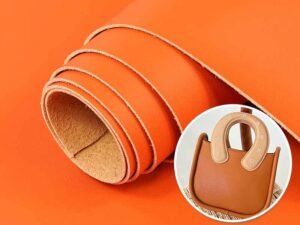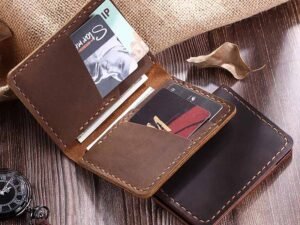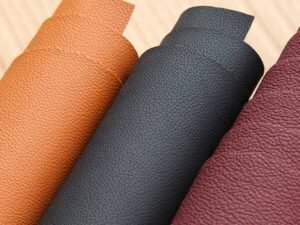
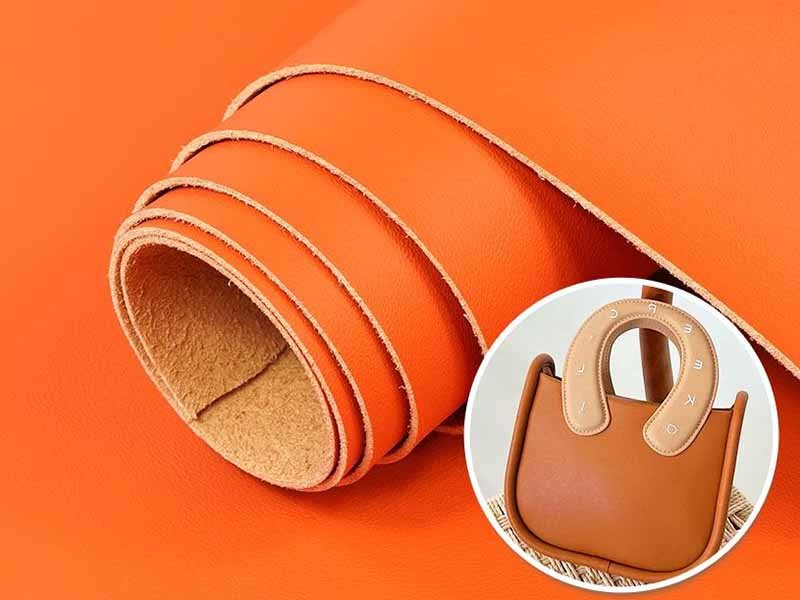
Vegan leather can look smooth, expensive, and convincing on a swatch card, yet behave very differently after it has been cut, stitched, folded, edge-painted, loaded with weight, exposed to humidity, and used every day. That is why choosing vegan leather for a bag is not simply a matter of selecting the most attractive grain or accepting a supplier’s “eco-friendly” label. The material must work with the bag’s structure, expected retail price, target market, production process, and real-life use.
The best vegan leather for bags is the material that matches the product’s structure, appearance, wear conditions, compliance needs, and budget. Compare its coating, backing, thickness, flexibility, abrasion resistance, peel strength, colorfastness, hydrolysis behavior, and production consistency. Then test it on a finished prototype, because a flat swatch cannot reveal how the material will perform at seams, corners, handles, folds, zippers, and edge-painted areas.
Two black materials may appear almost identical under showroom lighting. One may feel softer and cost less, while the other has a denser backing and slightly greater surface stability. After the first sample is loaded, the cheaper option may wrinkle at the corners, stretch around the handles, or separate from the edge paint. The difference is rarely visible at the beginning. It only appears when the material becomes a real bag.
What Is Vegan Leather?
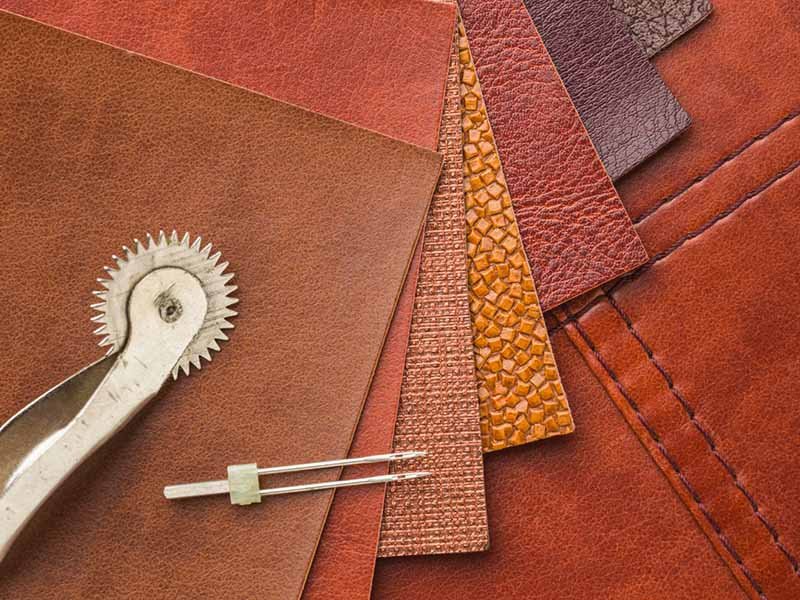
Vegan leather is a broad category of non-animal materials designed to reproduce the appearance, flexibility, texture, or function of natural leather. It may be made from polyurethane, PVC, microfiber structures, recycled polymers, plant-derived fibers, agricultural by-products, or blended systems. The term describes what the material does not contain, but it does not automatically define durability, plastic content, environmental impact, or suitability for bags.
What Is Vegan Leather Made From?
Most vegan leather used in commercial bag production is a layered material rather than a single substance. The visible surface is usually a polymer coating, resin finish, bio-based blend, or protective top layer. Beneath it sits a woven, knitted, or nonwoven backing made from polyester, recycled polyester, nylon, cotton, microfiber, or another textile structure. Each layer affects a different part of the material’s behavior.
The surface controls grain, color, gloss, scratch behavior, water resistance, stain resistance, and much of the hand feel. The backing controls tear strength, stitch holding, dimensional stability, stretch, recovery, and the way the material behaves when folded around corners or pulled by handles. Two materials can share the same color, thickness, and embossed grain while performing very differently because their backing structures are not the same.
A useful specification should therefore describe more than color and nominal thickness. Buyers should request the surface coating type, backing composition, material weight, usable width, stretch direction, grain, finish, color tolerance, available test reports, recommended applications, recycled or bio-based content, order minimums, and expected continuity for repeat production.
Terms such as “premium vegan leather,” “eco leather,” and “new-generation leather” are commercial descriptions rather than technical specifications. They do not explain whether the material will hold stitches, accept edge paint, resist hydrolysis, survive repeated flexing, or stay stable in a humid warehouse. A serious material decision begins when the marketing name is replaced with a clear description of the complete construction.
For bag development, the outer sheet must be considered together with the lining, foam, boards, webbing, adhesive, thread, hardware, and seam design. A smooth surface with a weak backing may tear around handle bases. A thick coating with limited flexibility may crack around a flap hinge. A soft backing may drape beautifully in a shoulder bag but fail to maintain the geometry of a structured tote.
Is PU Leather Vegan?
PU leather is generally regarded as vegan when no animal-derived leather, fibers, binders, or finishing ingredients are intentionally used in its construction. It remains one of the most common materials for handbags, wallets, backpacks, cosmetic bags, travel accessories, pouches, and fashion products because it offers a wide range of colors, grains, thicknesses, gloss levels, and hand feels.
However, PU leather is not one standardized quality grade. Entry-level material may use a thin polyurethane coating over a lightweight knitted base, while a stronger material may use a denser backing, a more stable resin system, better surface adhesion, and improved resistance to humidity, abrasion, flexing, and color transfer. Both materials may be sold under the same general name.
This is why two suppliers can offer “1.2 mm PU leather” at very different prices. Thickness alone does not reveal coating quality, backing density, peel strength, hydrolysis resistance, or production consistency. A buyer should compare the complete material construction and confirm performance through a finished sample rather than relying on one measurement.
PU remains practical because it offers consistent grain, broad color availability, relatively predictable cutting yield, and compatibility with embossing, printing, foil stamping, edge paint, and metal branding. It can support entry-level, mid-market, and premium-looking products when the correct grade is selected for the intended use.
Its limitations appear when the material is under-specified. Lower-quality PU may peel, become sticky, crack at folds, transfer color onto clothing, or separate from the backing after exposure to humidity and heat. Very soft PU may stretch during sewing, while very rigid PU may fracture around tight folds. The practical question is therefore not whether PU is good or bad, but whether the selected construction is appropriate for the bag.
Are Plant-Based Leathers Plastic-Free?
Plant-based leather alternatives may contain apple waste, grape residue, cactus fibers, pineapple leaf fibers, corn-derived inputs, cork, mushroom-based structures, or other renewable materials. These ingredients can reduce dependence on animal leather and may replace part of the fossil-based content normally used in synthetic sheets. They can also provide a distinctive story for a brand or collection.
Plant-derived content, however, does not automatically make the finished material plastic-free, biodegradable, compostable, or recyclable. Many plant-based sheets still require polymer binders, protective topcoats, textile backings, adhesives, or reinforcement layers to achieve the flexibility, water resistance, strength, and surface stability required for bag production.
Without these supporting components, some natural materials may absorb water, stain easily, stretch, tear, or vary too much for controlled cutting and sewing. The presence of synthetic components does not make the innovation meaningless, but it does mean that environmental claims should be specific and proportionate to the evidence.
Brands should ask what percentage of the finished sheet is plant-derived, whether the percentage is calculated by total material weight, which polymer or binder is used, what the backing contains, and whether the material has a protective topcoat. They should also ask whether biodegradability or compostability has been independently tested under clearly defined conditions.
A statement such as “contains 28% plant-derived content by total material weight” is more credible than “made from plants.” The first statement can be reviewed, documented, and compared. The second can create unrealistic expectations about the coating, backing, adhesive, reinforcement, and end-of-life behavior of the finished material.
| Material Type | Typical Construction | Practical Strengths | Common Limitations | Suitable Applications |
|---|---|---|---|---|
| Standard PU | PU coating on woven or knitted backing | Flexible, widely available, economical | Quality varies; lower grades may peel | Fashion bags, pouches, wallets |
| Premium PU | Improved PU system with stronger backing | Better surface stability and hand feel | Higher price than basic PU | Branded handbags, totes, accessories |
| Microfiber Leather | PU system with dense microfiber base | Strong, stable, consistent, leather-like | Higher cost and sometimes heavier | Briefcases, structured bags, premium goods |
| PVC Leather | PVC coating on textile backing | Water-resistant, easy to clean, cost-controlled | Heavier and less flexible | Utility bags, promotional products |
| Plant-Based Blend | Plant-derived input with binder and backing | Distinctive story and renewable content | Price, availability, and consistency vary | Capsule collections, lifestyle bags |
| Cork Material | Cork surface bonded to a support layer | Lightweight and visually distinctive | Limited stretch and smaller design range | Wallets, panels, small accessories |
Which Vegan Leather Is Best?
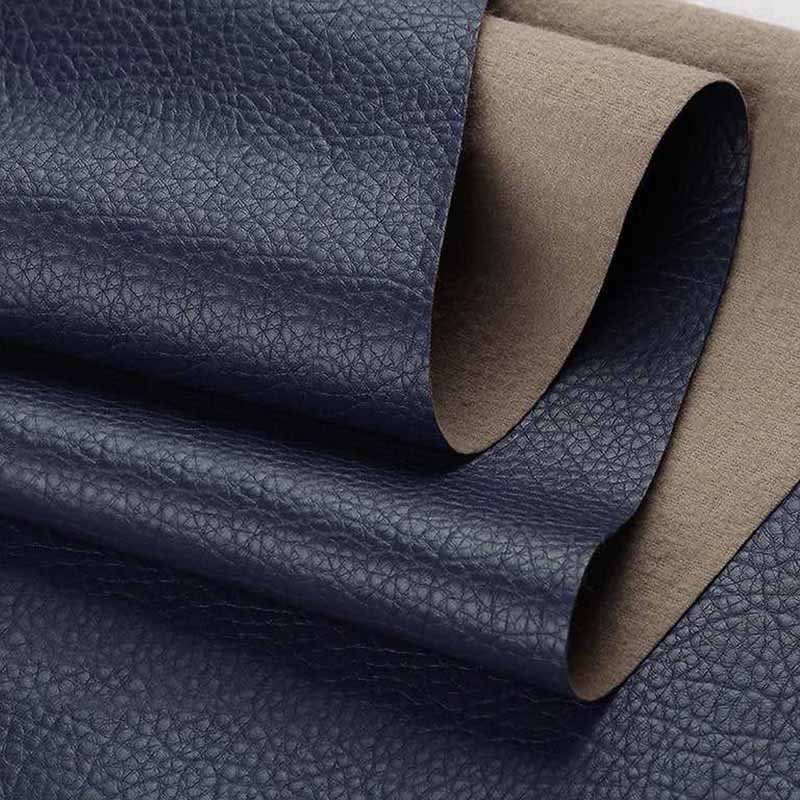
The best vegan leather depends on the bag’s structure, expected use, retail price, brand language, destination climate, compliance requirements, and production volume. Premium PU is versatile, microfiber leather can support demanding structures, PVC remains useful for selected easy-clean applications, and plant-based materials can strengthen product differentiation. No option is universally superior without considering the complete product.
Is PU Leather Good for Bags?
PU leather is a practical choice for many bag categories because manufacturers can adjust its thickness, grain, stiffness, backing, color, gloss, and surface treatment. It can be made soft enough for a hobo bag, light enough for a cosmetic pouch, or firm enough for a structured handbag when it is combined with the correct lining, foam, boards, and internal reinforcement.
The material works especially well when a brand needs predictable colors, repeatable surface texture, and a broad selection of finishes. Compared with many emerging leather alternatives, PU is often easier to source in commercial quantities and easier to replace when a comparable grade is needed for repeat orders.
Common starting ranges include approximately 0.6–0.9 mm for card holders and small trims, 0.7–1.1 mm for cosmetic pouches, 0.9–1.3 mm for soft shoulder bags, 1.1–1.5 mm for fashion totes, and 1.2–1.7 mm for structured handbags. Handles, straps, and reinforced components may use thicker constructions or multiple bonded layers.
These figures are development references rather than universal standards. A 1.2 mm material with a dense backing may hold stitches and maintain shape better than a 1.5 mm material with a loose knitted base. Foam, webbing, boards, lining, adhesive, seam allowance, and edge finishing can change the finished result substantially.
PU is usually suitable when the product needs a clean fashion appearance, multiple color options, controlled cost, embossed branding, consistent grain, moderate water resistance, and scalable production. It becomes unsuitable when a low-grade construction is expected to perform like a premium daily-use material.
A seasonal clutch and a commuter tote should not automatically use the same grade simply because both can be described as PU leather. The material should be matched to the product’s load, use frequency, structure, climate, retail price, and expected service life.
Is Microfiber Leather More Durable?
Microfiber leather commonly uses a dense nonwoven microfiber base combined with a polyurethane system. Its internal structure can provide better dimensional stability, tear resistance, stitch holding, edge finishing, and surface support than many ordinary coated fabrics.
This makes it useful for products that experience concentrated stress around handles, straps, flap hinges, zipper openings, or hardware attachments. It is frequently considered for business totes, briefcases, structured handbags, premium backpacks, wallets, luggage accessories, and frequently handled small leather goods.
Microfiber leather may offer more uniform thickness, cleaner skiving, controlled stretch, stable embossing, stronger stitch-hole resistance, better shape retention, and a more substantial leather-like hand feel. These characteristics can improve production consistency, especially when the bag uses edge paint, folded edges, complex curves, or closely fitted components.
The higher price does not mean it should be used in every project. A simple promotional pouch may not gain enough practical value to justify the cost increase. A commuter bag carrying a laptop, charger, documents, and personal items may benefit much more from the stronger internal structure.
The term “microfiber leather” should still be verified. Density, resin quality, surface coating, flexibility, backing construction, and adhesion vary between suppliers. The name alone does not guarantee a particular abrasion result or service life.
A useful comparison is to make two prototypes with the same pattern and reinforcement system. One can use a premium PU, while the other uses the proposed microfiber material. Weight, seam quality, edge finish, corner shape, handle movement, surface recovery, and loaded performance can then be compared under realistic conditions.
Is PVC Leather Still Suitable?
PVC leather remains suitable for selected bag applications where water resistance, surface stability, easy cleaning, or cost control is more important than softness, low weight, or a highly natural hand feel.
It is still used in utility pouches, cosmetic cases, protective covers, promotional products, wet-use items, and selected fashion applications. The surface can offer strong stain resistance, stable color, easy maintenance, and relatively predictable behavior around moisture.
Its limitations should be assessed carefully. PVC is usually heavier than a comparable PU construction, may feel less natural, can become stiff in cold environments, and may create bulky seams. Odor control may also require attention, especially when products are packed immediately after production.
Restricted-substance and market-specific requirements must be confirmed before production. A material that is accepted for one product or destination may not satisfy the chemical or retailer requirements of another market. Test reports should match the actual material code and intended application.
PVC should not be rejected only because it is less fashionable in sustainability discussions. In an easy-clean utility pouch or protective cover, it may provide a practical balance of performance and cost. In a lightweight premium handbag, it may be less appropriate.
Good material selection separates functional requirements from emotional assumptions. A material should be judged by how well it serves the product, how consistently it can be manufactured, and whether the brand can communicate its composition honestly.
Which Plant Leather Works Best?
There is no single plant-based leather that performs best across all bag categories. Cactus, apple, grape, pineapple, cork, mushroom, corn, and other alternatives differ in surface feel, backing, flexibility, renewable content, available colors, consistency, minimum order quantity, and long-term supply reliability.
Some of these materials work better as visible panels than as high-stress structural components. A distinctive plant-based sheet may be suitable for a front panel, flap, pocket, or decorative trim, while a stronger material is used for handles, straps, bases, corners, or zipper surrounds.
Before selecting one, buyers should review commercial availability, custom-color requirements, usable roll width, cutting yield, thickness tolerance, abrasion behavior, scratch resistance, water sensitivity, folding performance, heat stability, humidity performance, and repeat-order continuity.
Availability is often overlooked. A material may be suitable for a limited capsule collection but difficult to reorder six months later. If the product succeeds, the brand may discover that the original color, backing, or formulation has changed or is no longer commercially available.
Plant-based materials often perform best when the product design respects their limitations. Larger folding radii, reinforced stress points, simplified panel shapes, local use rather than full-body use, or alternative edge construction can improve both appearance and service life.
The strongest option is not always the material with the highest plant percentage. It is the material that supports a credible brand story while also surviving cutting, sewing, folding, packing, transportation, consumer use, and future replenishment.
How Does Bag Design Affect Material Choice?
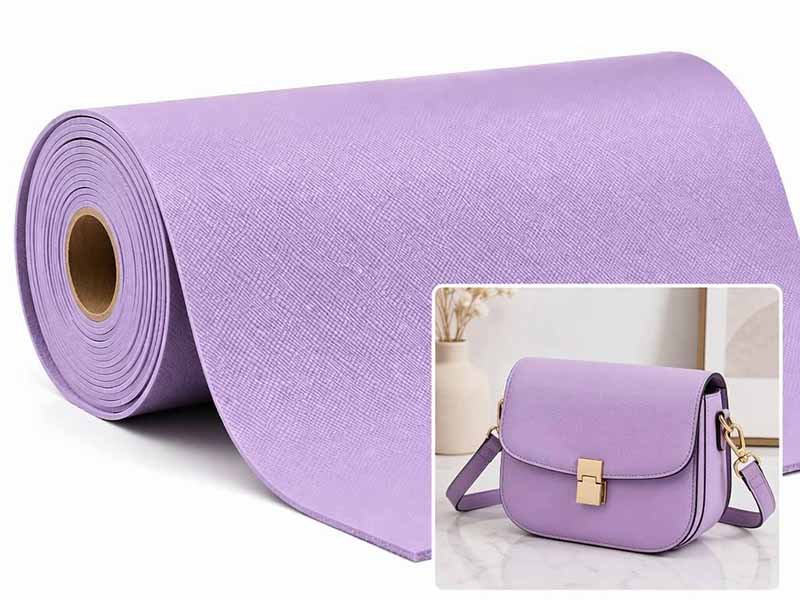
Bag design determines how vegan leather will be bent, stretched, perforated, laminated, loaded, and exposed to wear. Structured bags require dimensional stability, while soft bags need controlled drape and recovery. Handles, corners, gussets, zipper openings, and edge-painted panels create different stresses. Material selection should therefore begin with the construction and intended use rather than surface appearance alone.
Which Material Suits Structured Bags?
Structured bags rely on a complete system that includes the outer material, backing, foam, lining, reinforcement boards, adhesive, seam construction, and edge finishing. The vegan leather must remain stable when bonded or folded and should not bubble, shrink, stretch, or wrinkle around corners.
Typical structured products include business totes, briefcases, box bags, top-handle handbags, laptop bags, vanity cases, and structured backpacks. These products usually need controlled stretch, consistent thickness, clean skiving, reliable adhesion, stable grain, and good stitch holding.
A firmer premium PU or microfiber material is often considered, although the final result depends heavily on the reinforcement package. A relatively soft outer material can still produce a structured bag when it is combined with a suitable board, bonded lining, and carefully placed internal supports.
Material can also be too rigid. A hard coating may crack around flap hinges, side gussets, zipper openings, or tightly turned corners. The goal is controlled body and recovery rather than maximum stiffness.
A practical development test is to fill the sample with a realistic load and leave it standing for 24 to 72 hours. The load should reflect normal use. A business tote may need to carry a laptop, documents, charger, bottle, and personal items, while a small handbag requires a much lower test load.
After testing, the team should review base sagging, side-panel collapse, handle stretching, corner wrinkling, flap deformation, stitch-hole movement, edge-paint separation, and visible stress near hardware. A structured bag that looks attractive when empty may lose its shape once it carries real contents.
Which Material Suits Soft Bags?
Soft bags need flexibility, drape, recovery, and a comfortable hand feel. These requirements are common in hobo bags, foldable totes, drawstring bags, pouches, soft backpacks, casual shoulder bags, and cosmetic bags.
A suitable vegan leather should bend naturally without developing white marks, surface fractures, or permanent creases. At the same time, it should not stretch so much that zipper openings become wavy, seams grow during production, or panels finish at different dimensions.
Very stretchy materials can distort pocket openings, create uneven left and right sides, produce wavy zipper seams, and cause curved sections to expand during stitching. Grain direction, cutting direction, presser-foot pressure, stitch length, needle selection, and temporary reinforcement may all need adjustment.
The lining also affects the finished result. A heavy lining can pull a soft shell downward, while a rigid reinforcement can create visible transition lines beneath the surface. A very thin lining may make the product feel empty or unfinished.
The outer material, lining, and local reinforcement should move together rather than compete with one another. A well-developed soft bag should compress naturally, recover its form, and retain stable seams and openings after repeated use.
Prototype review should include carrying the bag on the shoulder, folding it, compressing it, repeatedly opening the zipper, and checking the surface after recovery. Softness should feel intentional and comfortable rather than weak or uncontrolled.
How Does Thickness Affect Shape?
Thickness influences body, seam bulk, folding radius, edge appearance, finished weight, skiving requirements, and the visual proportions of the bag. Nominal thickness, however, should never be assessed on its own.
A thinner material may feel firm because it has a dense backing or rigid surface coating. A thicker material may feel soft because it contains foam or uses a loose knitted base. Thickness should therefore be considered together with backing density, stretch, surface hardness, reinforcement, and seam construction.
Material that is too thin may create weak stitch holding, visible reinforcement lines, base collapse, excessive stretching, poor edge-paint coverage, and an inexpensive appearance. It may also show impressions from boards, glue, or internal seams.
Material that is too thick may create bulky seams, difficult turning, uneven topstitching, cracking around tight folds, excessive finished weight, and poor zipper installation. It may require additional skiving, which increases labor and can introduce thickness variation if not controlled.
Thickness should be measured at several points across the roll. For a demanding project, the buyer and factory should agree on a tolerance instead of accepting one nominal value. A specification of 1.20 mm is incomplete if production material can vary widely without inspection.
| Bag Type | Common Development Range | Preferred Behavior | Supporting Construction | Main Risk |
|---|---|---|---|---|
| Card Holder | 0.6–1.0 mm | Clean folding and skiving | Thin lining or reinforcement | Excessive edge bulk |
| Cosmetic Pouch | 0.7–1.1 mm | Flexible and lightweight | Light lining | Wrinkling near zipper |
| Soft Shoulder Bag | 0.9–1.3 mm | Good drape and recovery | Soft lining, local reinforcement | Permanent creasing |
| Fashion Tote | 1.1–1.5 mm | Moderate body | Baseboard, handle reinforcement | Sagging and stretching |
| Structured Handbag | 1.2–1.7 mm | Stable and shape-retaining | Foam, board, bonded lining | Corner cracking |
| Business Bag | 1.3–1.8 mm | Strong and controlled | Full reinforcement system | Weight and seam bulk |
| Handle or Strap Layer | 1.2–2.0 mm | Strong stitch holding | Webbing or internal support | Elongation and delamination |
Which Finish Matches the Brand?
Surface finish strongly influences how customers perceive value. Smooth matte materials often look modern and minimal. Pebbled finishes can hide small scratches and reduce visible grain variation. Saffiano-style surfaces communicate structure and formality, while glossy finishes feel more fashion-oriented but may show fingerprints and surface marks more easily.
Common options include smooth matte, fine pebble, large pebble, saffiano, high gloss, semi-gloss, suede effect, metallic finish, reptile embossing, printed grain, and textile-inspired textures. The finish should support the intended design language and expected level of maintenance.
The selected surface must also suit the logo process. A smooth material may accept foil stamping or embossing clearly, while a deep pebble can reduce definition. Metallic finishes can react differently to heat, and very soft surfaces may distort under pressure.
Branding methods may include embossing, debossing, foil stamping, screen printing, heat transfer, metal plates, metal letters, rubber patches, woven labels, and printed lining labels. Each method interacts differently with coating hardness, grain depth, temperature, pressure, and panel reinforcement.
Material and logo technique should always be tested together. A logo that looks sharp on a flat cutting may appear uneven after the panel is folded, bonded, or reinforced. Heat and pressure can also change gloss or leave a visible border around the artwork.
The best finish is not necessarily the most dramatic one. It is the finish that communicates the intended brand position, remains practical during use, supports the chosen logo method, and can be reproduced consistently across future production.
How Do You Test Vegan Leather Quality?
Vegan leather should be evaluated at the material, prototype, and production levels. Important checks include abrasion, flex resistance, surface adhesion, colorfastness, tear strength, hydrolysis resistance, scratch behavior, and dimensional stability. The finished bag should also be loaded, folded, opened, closed, and handled because many failures occur at seams, corners, handles, hardware points, and edge-painted areas.
Will the Material Peel or Crack?
Peeling occurs when the surface layer fractures or separates from the backing. Cracking develops when the coating loses flexibility or is forced beyond its suitable bending radius. These failures often appear around corners, flap hinges, zipper ends, handles, straps, folded edges, and hardware attachments.
Common risk factors include weak coating-to-backing adhesion, low-grade resin systems, repeated flexing, high humidity, heat exposure, skin oils, cleaning chemicals, excessive adhesive, high-temperature logo application, tight folding, incompatible edge paint, and poor storage conditions.
A quick hand inspection cannot guarantee long-term performance. Material should be folded in several directions, rubbed, scratched, stretched, and examined after controlled heat or humidity exposure. The backing should also be checked for tearing or permanent deformation around stitch holes.
Manufacturing can damage an otherwise acceptable material. If a fold is too tight, the coating may crack. If the material is not skived correctly, edge-painted areas may become too thick. If stitching is too close to the edge, the backing may tear under load.
Adhesives, cleaning agents, and edge paints must be compatible with the surface. A chemical that works well with one PU formulation can create discoloration, softening, bubbling, or poor adhesion on another material.
Storage and shipping matter as well. Finished bags may remain in sealed packaging and cartons for several weeks. Hot containers, humid warehouses, and limited ventilation can accelerate odor, stickiness, hydrolysis, or surface transfer. Material performance is influenced by chemistry, construction, manufacturing, packaging, and logistics together.
Which Material Tests Matter?
Test requirements should reflect real product use. A small evening bag does not need the same loaded performance as a work tote. A cosmetic pouch may need stronger stain and cleaning resistance, while a daily backpack requires more demanding abrasion and stress-point evaluation.
Common material tests include abrasion resistance, flex resistance, peel adhesion, tear strength, tensile strength, stitch-hole resistance, dry and wet colorfastness, scratch resistance, humidity aging, heat resistance, cold-flex behavior, cleaning-agent resistance, odor evaluation, and restricted-substance screening.
The method should always be recorded. A statement such as “passed 30,000 cycles” has limited value unless the equipment, test method, load, sample conditioning, and pass criteria are known. Results from different methods should not be compared as though they were identical.
The ranges below are practical screening references rather than universal legal standards. Final requirements should be adjusted to the product type, customer expectations, destination market, retailer standards, and agreed laboratory method.
| Test Area | Practical Screening Reference | Purpose |
|---|---|---|
| Flex Resistance | 20,000–50,000 cycles without visible cracking for frequent-fold areas | Screens hinge and fold durability |
| Abrasion Resistance | 20,000+ cycles for ordinary fashion use; higher for daily-use products | Reviews surface wear |
| Dry Colorfastness | Grade 4 or better | Reduces transfer onto clothing |
| Wet Colorfastness | Grade 3–4 or better | Helps control staining in rain or humidity |
| Thickness Tolerance | Often controlled within about ±0.10 mm on demanding projects | Improves sewing consistency |
| Humidity Screening | 48–168 hours as an internal accelerated review | Identifies early adhesion or hydrolysis risk |
| Peel Adhesion | Project-specific value agreed by material type | Reviews coating-to-backing stability |
| Shade Control | Approved master swatch and agreed visual tolerance | Reduces batch color disputes |
A higher test result is not automatically better if the material becomes too heavy, stiff, expensive, or difficult to process. Testing should help identify a balanced construction rather than encourage the product team to chase the largest possible number.
How Should You Test a Bag Sample?
A finished prototype reveals interactions that a material sheet cannot show. Sewing needles perforate the coating, hardware rubs against the surface, edge paint bends around corners, handles transfer concentrated loads, and zippers pull continuously along the opening.
A practical sample review should load the bag to its expected working weight, carry it by each handle and strap, leave it loaded for 24 to 72 hours, repeatedly operate zippers, fold flaps and gussets, rub the surface with contrasting cloth, bend edge-painted components, and inspect stitch holes for enlargement.
For a laptop tote, a load of approximately 5 to 8 kilograms may be reasonable when it reflects the intended use. A small fashion handbag should be tested with a lower load. The purpose is not to apply random force, but to reproduce realistic conditions and identify weak areas before bulk production.
Handle attachments deserve special attention. The outer surface may remain intact while the backing begins to elongate internally. Strap bases should be examined from both the exterior and interior, and reinforcement should distribute stress over a wider area rather than concentrate it around a few stitches.
Corners, zipper ends, flap hinges, edge-painted turns, and hardware contact points should be checked after repeated handling. Dimensions before and after loading can also reveal stretching, base sagging, or structural movement.
The sample should additionally be reviewed after remaining inside its planned packaging. Some materials develop temporary pressure lines, odor, surface transfer, or gloss changes after being stored in a folded or compressed position.
How Do You Control Bulk Consistency?
Bulk consistency begins with an approved material specification and a sealed reference sample. The material code, color, grain, thickness, backing, surface finish, logo method, lining, reinforcement, and hardware should be recorded before production begins.
Incoming material should be checked for color variation, grain consistency, thickness, usable width, scratches, pinholes, wrinkles, odor, backing condition, roll damage, and consistency with the approved swatch. Rolls should be identified by batch when several production lots are involved.
Production should not wait until final inspection to discover problems. First-piece approval and in-line checking allow the team to correct grain direction, stitch density, edge paint, logo position, seam shape, reinforcement, and folding methods before a large quantity is completed.
A practical control sequence includes incoming material inspection, accessory inspection, pre-production sample approval, cutting-panel review, first-piece confirmation, in-line sewing checks, semi-finished inspection, edge-finishing inspection, function testing, measurement review, final appearance inspection, and packaging verification.
When different material batches are used in one order, they should be separated and identified. Mixing visibly different shades in one bag or one retail carton can create avoidable complaints even when both batches fall within the supplier’s general tolerance.
Traceability is especially important for repeat production. Retained swatches, sealed samples, material codes, production records, inspection photos, and approved measurements help the factory reproduce the original standard instead of relying on memory.
Is Vegan Leather Truly Sustainable?
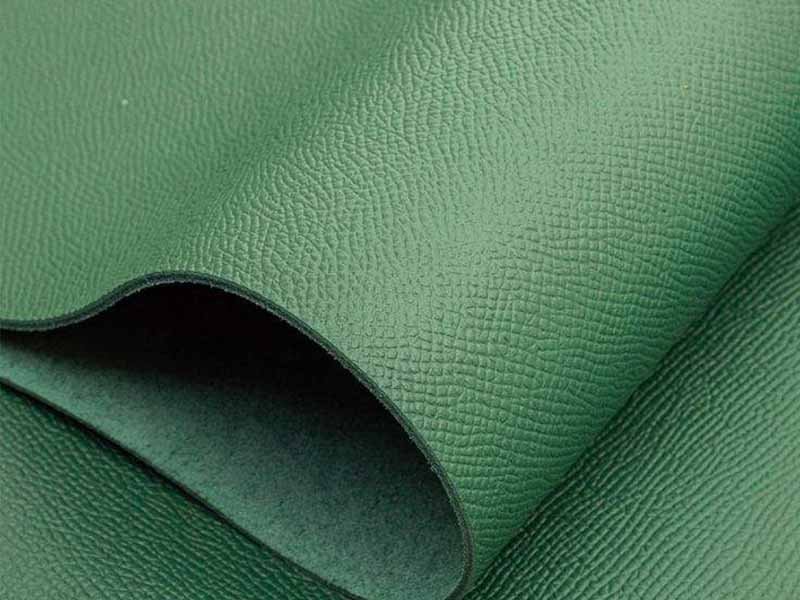
Vegan leather is animal-free, but that alone does not prove that it is environmentally sustainable. Its impact depends on raw materials, polymer content, backing fabric, chemicals, energy use, durability, production waste, transport, repairability, and end-of-life options. A credible assessment considers the complete material and product lifecycle rather than relying on words such as vegan, natural, plant-based, recycled, or biodegradable.
Does Vegan Mean Sustainable?
“Vegan” describes the absence of animal-derived leather. “Sustainable” is a broader claim involving environmental, social, and economic performance. A material can be vegan but fossil-based, contain plant material while still using synthetic binders, or include recycled content while remaining difficult to recycle after use.
This distinction does not remove the value of animal-free materials. It means the benefit should be described accurately. A brand may select vegan leather to avoid animal inputs, use recycled backing, reduce material weight, introduce renewable content, or support a particular ethical position.
A useful evaluation considers renewable-content percentage, recycled-content percentage, polymer type, backing composition, solvent or water-based processing, cutting yield, production waste, energy requirements, expected product lifespan, repairability, transport weight, packaging, and end-of-life options.
Sustainability decisions rarely produce a perfect winner. A durable synthetic material may create less replacement waste than a plant-based material that fails quickly when used in an unsuitable structure. An innovative material may contain renewable content but have limited recycling infrastructure.
Product teams should therefore avoid asking only whether a material is sustainable. A better question is which environmental attributes are supported by evidence and which tradeoffs remain after the material has been converted into a finished bag.
Customers are more likely to trust a precise explanation of improvements and limitations than a broad statement suggesting that the product creates no environmental impact.
Which Claims Should Brands Verify?
Environmental language should be supported by evidence. Words such as eco-friendly, green, natural, biodegradable, plastic-free, recycled, bio-based, and sustainable can mean different things to suppliers, brands, regulators, retailers, and consumers.
A recycled claim should identify the component and percentage. A bio-based claim should identify the renewable source. A plant-based claim should state the plant input and the percentage calculated against the complete sheet rather than one isolated layer.
A water-based claim should explain whether it applies to the surface coating, adhesive, finishing process, or another production stage. Solvent-free should define the process boundary, while biodegradable should state the test method, environment, temperature, duration, and required conditions.
Plastic-free claims require particular care because coating, binder, backing, thread, adhesive, reinforcement, and finishing layers may contain polymers. A material should not be promoted as plastic-free based only on the presence of a plant ingredient.
Recyclable claims should identify a realistic collection and processing route. Theoretical recyclability has limited value when the complete laminated product cannot enter an existing recycling system.
Supplier brochures are useful starting points, but they should not be treated as complete proof. Brands should request supporting declarations, test reports, composition data, certification scope, and batch information before using environmental claims on packaging, product pages, or retailer submissions.
What Should Material Suppliers Disclose?
A reliable material supplier should provide enough information for the buyer to assess performance, compliance, traceability, marketing claims, and repeat-order risk.
Useful information includes the material trade name, internal code, surface composition, backing composition, total thickness, weight per square meter, plant-derived percentage, recycled content, coating process, country of origin, available colors, batch tolerance, care instructions, test reports, storage recommendations, lead time, and repeat-order availability.
The buyer should also ask whether the formulation, backing, or finishing process may change without notice. A material may keep the same commercial name while the internal construction changes, which can affect hand feel, thickness, flexibility, color, surface gloss, adhesion, and testing performance.
For long-term collections, material continuity is critical. The brand and factory should retain an approved swatch and record the supplier, material code, date, batch number, and agreed specification. Repeat orders should be compared against this reference.
Suppliers do not need to reveal confidential formulation details, but they should provide enough information for a professional buyer to evaluate risk and communicate claims responsibly.
Transparency is especially important when the material story is central to the product’s retail value. A premium claim is difficult to defend if the complete composition, renewable percentage, and supply continuity cannot be explained.
Are Durable Materials More Sustainable?
Durability can improve sustainability because a bag that remains useful for several years may reduce replacement frequency, transport, packaging, and disposal. Durability, however, is only one part of the total impact.
A long-lasting material may still involve difficult chemistry or limited recycling options. A lighter sheet may reduce transport weight but wear more quickly. A plant-based material may contain renewable inputs but require frequent replacement if it is used in a high-stress construction for which it was not designed.
Design decisions can extend product life through reinforced handles, replaceable straps, repairable hardware, strong zipper construction, protected corners, easy-clean surfaces, removable organizers, spare hardware, and clear care instructions.
Timeless colors and practical proportions can also affect longevity. A technically durable bag that becomes visually outdated after one season may not remain in use, while a simpler, well-proportioned design may stay relevant for years.
Packaging should prevent storage damage rather than create it. Bags that arrive with permanent creases, pressure marks, humidity damage, or surface transfer may be returned or discarded even when the material itself is strong.
The better question is not which material sounds most sustainable. It is which combination of material, design, manufacturing, repair, care, packaging, and realistic consumer behavior is most likely to keep the bag useful for the longest period.
How Do You Choose a Manufacturer?
Choose a manufacturer that can explain material construction, recommend suitable options for different bag types, develop and revise prototypes, document approved specifications, inspect incoming materials, control sewing and finishing, and maintain sample-to-bulk consistency. A reliable partner should also understand logo processes, packaging, testing, export requirements, and repeat-order planning rather than competing only on unit price.
Does the Factory Understand Materials?
A capable manufacturer should explain why a material suits a particular bag rather than simply calling it high quality. The team should understand how coating, backing, thickness, stretch, grain, finish, adhesive, reinforcement, and seam construction affect cutting, stitching, folding, embossing, edge painting, and finished shape.
Useful questions include what the surface contains, what backing is used, which thickness is recommended, how the material behaves in humid conditions, whether it can accept edge paint, whether it requires skiving, and which logo processes have already been tested.
The team should also be able to discuss repeat-batch consistency, custom-color minimums, storage conditions, available test reports, and alternative materials if the original construction is discontinued.
An experienced factory may recommend different materials for the body, base, handles, trim, and internal components. This is often more reliable than forcing one material to perform every function.
A soft body material may be combined with a stronger handle layer and internal webbing. A plant-based sheet may be used on a visible panel, while a more stable construction supports the base and strap attachments.
Material knowledge reduces risk before cutting begins. It also makes quotation more accurate because the factory can identify the reinforcements, processing steps, edge treatments, and sewing methods required by the selected sheet.
Can the Factory Develop Samples?
Sampling is the stage where a material claim becomes a physical product. A reliable factory should be able to convert a reference image, physical sample, tech pack, sketch, or initial concept into a prototype that can be measured, tested, revised, and prepared for production.
The development process should confirm finished dimensions, material code, color, grain direction, thickness, backing, lining, foam, reinforcement, hardware finish, thread, stitch density, logo method, edge-paint color, zipper construction, handle reinforcement, packaging, target weight, and production feasibility.
A flat swatch should not be treated as final material approval. Large panels, curves, folds, reinforcements, and lighting can change how the surface looks. The material should be reviewed on the actual bag under realistic conditions.
For projects with meaningful cost or performance risk, two versions can be useful. One may use the preferred material, while another uses a stronger or more economical alternative. Comparing finished prototypes often provides a clearer decision than comparing supplier descriptions.
The factory should also explain which sample details may be difficult to reproduce in volume. A handmade prototype can sometimes hide a process that is too slow, unstable, or expensive for repeat production.
Good sampling balances appearance, durability, cost, and manufacturability. It should reduce uncertainty before the buyer commits to material orders, custom colors, hardware tooling, or bulk production.
How Is Sample Approval Managed?
Sample approval should be documented rather than handled through memory, informal calls, or scattered chat messages. Every accepted change should be reflected in an updated specification, measurement chart, sample report, or approval record.
The final approval package may include the approved physical sample, material swatch, color reference, measurement chart, construction notes, hardware specification, logo artwork, edge-paint reference, stitching requirements, lining details, reinforcement placement, packaging method, carton information, and functional test requirements.
Photographs are helpful, but they do not replace a retained physical reference. Lighting, camera settings, compression, and screen calibration can distort color, texture, gloss, and shape.
For important projects, both the buyer and factory should retain a sealed sample or clearly identified approval sample. Repeat orders can then be compared with a physical standard rather than a memory of the previous production.
Changes should be frozen before bulk manufacturing. When a late modification is unavoidable, its effect on price, material use, lead time, tooling, testing, and production stability should be reviewed in writing.
A controlled approval process protects both sides. It gives the factory a clear manufacturing standard and gives the buyer a clear basis for inspection, communication, and dispute prevention.
How Is Bulk Quality Controlled?
Bulk quality begins before sewing. Incoming vegan leather should be inspected for color, grain, thickness, surface defects, odor, usable width, backing condition, roll damage, and consistency with the approved sample.
Production control should include material inspection, accessory inspection, pre-production meetings, cutting checks, grain-direction control, logo-position checks, first-piece approval, in-line sewing inspection, semi-finished review, edge-paint checks, hardware testing, measurement inspection, load checks, final appearance inspection, and packaging verification.
The most useful quality system is traceable. If a problem appears, the team should be able to identify the material batch, production line, workstation, inspection stage, and affected quantity.
| Evaluation Area | Evidence to Request | Warning Sign |
|---|---|---|
| Material Knowledge | Composition, backing, thickness, test data, application advice | Uses only vague terms such as “premium leather” |
| Sampling | Revision records, sample report, sealed sample | Pushes directly from image to bulk order |
| Production Control | First-piece approval and in-line inspection records | Relies only on final inspection |
| Testing | Product-specific test plan and reports | Provides unrelated reports |
| Sustainability Claims | Percentage data and supporting declarations | Uses “eco-friendly” without evidence |
| Repeat Orders | Material codes, retained swatches, batch records | Cannot confirm future availability |
| Communication | Clear project owner and written approvals | Important changes remain informal |
| Export Delivery | Packaging, labels, shipping documents, delivery options | Offers no support after production |
A suitable manufacturing partner should also understand the commercial side of the project. The team should be able to discuss material minimums, custom colors, packaging, destination-market requirements, inspection arrangements, shipment planning, and repeat-order continuity.
Szoneier is a Shenzhen-based OEM and ODM custom bags and soft goods manufacturer with more than 18 years of manufacturing experience. The company supports material selection, pattern development, sampling, sample revision, sewing production, quality inspection, packaging, and international delivery for global brands, retailers, importers, and professional sourcing teams.
Buyers can begin a project by providing reference images, a physical sample, tech pack, dimensions, target material, logo artwork, quantity, packaging requirements, quality expectations, target market, and delivery country. A clear brief allows the development team to recommend realistic materials and identify production risks before the first sample is made.
The best vegan leather is rarely the newest material, the cheapest sheet, or the option with the most dramatic environmental story. It is the material that supports the real purpose of the bag and can be manufactured consistently at the expected quality, cost, and delivery standard.
To develop a custom vegan leather handbag, tote, backpack, wallet, pouch, cosmetic bag, travel accessory, or coordinated product collection, contact Szoneier at info@szoneier.com or send project details through WhatsApp at (+86) 13423847456. The team can review the bag structure, compare practical material options, develop a prototype, refine the construction, and prepare the approved design for controlled bulk production.