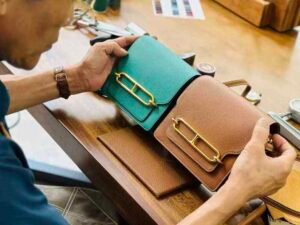
A polished leather sample can be dangerously convincing. The stitching looks clean, the edge paint feels smooth, the hardware has a satisfying weight, and the leather appears suitable for the retail price you have in mind. However, none of these details proves that the factory can repeat the same result across 500, 2,000, or 10,000 units while controlling color variation, dimensions, structure, workmanship, packaging, and shipment timing. Selecting a manufacturer is therefore not a beauty contest between samples. It is a commercial risk decision that can influence product reviews, retail acceptance, cash flow, inventory planning, and the long-term reputation of your brand.
To choose an OEM leather goods factory, verify its experience with your product category, leather and hardware sourcing, pattern and sample development, construction standards, production capacity, quality-control system, pricing transparency, compliance support, and delivery management. Confirm these capabilities through written specifications, physical samples, live factory reviews, inspection records, and a controlled pilot order before committing to repeat bulk production.
A buyer once approved an excellent briefcase sample made by a senior sample technician. During bulk production, the handle placement slowly shifted because several operators interpreted the pattern differently. The bags looked acceptable inside their cartons, but they leaned noticeably once loaded with a laptop. That small structural error created months of sorting and rework. The lesson is straightforward: choose the production system behind the sample, not the sample alone.
What Should You Define Before Contacting a Factory?
Before contacting an OEM leather goods factory, define the product, intended use, dimensions, leather direction, quality level, expected quantity, target market, packaging, and delivery date. These details allow manufacturers to evaluate the same project instead of quoting different assumptions. A clear brief also exposes design and sourcing risks before sampling or material purchasing begins.
Product and Use
The phrase “leather bag” is too broad to support an accurate quotation. A structured executive briefcase, a soft fashion tote, a compact card holder, a travel wallet, and a camera bag require different leather temper, reinforcement, pattern construction, machinery, and operator skills. The first task is therefore to explain what the product must do during normal use rather than describing only its appearance.
State what the product will carry, how frequently it will be used, and where repeated stress is likely to occur. A briefcase intended for a 16-inch laptop needs stronger support around the handles, shoulder-strap anchors, opening, and base than a lightweight fashion tote. A wallet appears simpler, but several layers of card pockets can create excessive bulk when the leather is not skived accurately.
Include the finished dimensions, pocket layout, opening method, strap length, handle drop, and expected carrying load. The sales channel also matters. Products intended for premium retail may require tighter cosmetic standards and presentation packaging, while e-commerce products need packaging that prevents compression, scratches, and hardware marks during parcel delivery.
Reference photographs can explain style, but they rarely reveal leather thickness, internal reinforcement, seam allowances, or hardware construction. Accurate measurements and material notes are still essential.
Quality and Positioning
“Premium quality” has no stable manufacturing definition. One brand may use the term to describe full-grain leather, carefully selected front panels, solid brass hardware, and repeatedly finished edges. Another may simply expect durable top-grain leather, straight stitching, consistent color, and reliable hardware at a competitive mid-market retail price. A factory cannot correctly interpret quality until these expectations become measurable.
Define the acceptable leather character. Decide whether visible grain movement, small healed scars, or natural wrinkles are appropriate for the brand. Genuine leather cannot be controlled like injection-molded plastic, so the objective should be an approved range rather than impossible uniformity. Requiring cleaner surfaces on every panel may reduce usable cutting yield and increase the finished cost.
The desired structure should also be defined. Terms such as soft, semi-structured, and rigid are more useful when supported by a physical reference or competing product. Structure depends on leather temper, backing materials, foam, boards, linings, adhesives, and seam design.
Logo application, hardware finish, thread color, edge treatment, and packaging should be decided early. Dust bags, protective tissue, internal supports, individual boxes, barcode labels, and hardware films affect both product cost and shipping volume.
RFQ Information
A complete request for quotation allows every candidate factory to price the same product. Without consistent information, a low quotation may simply reflect thinner leather, lighter lining, standard hardware, reduced reinforcement, or simplified packaging. The resulting prices may look comparable even though the underlying products are substantially different.
Include drawings, a measurement chart, reference photographs, a preliminary bill of materials, logo artwork, order quantity by color, packaging requirements, target destination, and expected shipment date. State whether the factory should manufacture from a completed tech pack or assist with product development and material selection.
The table below shows the minimum information that should normally be included in a leather goods RFQ.
| RFQ Item | Practical Detail to Include | Risk When Missing |
|---|---|---|
| Product dimensions | Finished width, height, depth, handle drop, strap length, and tolerances | Each factory may calculate different material consumption |
| Leather | Type, thickness range, finish, color, temper, and acceptable variation | Lower-grade or unsuitable leather may be assumed |
| Order quantity | Units by style, color, and delivery phase | Color minimums and surcharges may remain hidden |
| Hardware | Base material, finish, size, color, and required function | Durability and visual appearance may vary |
| Logo | Artwork, size, position, process, and color | Tooling or mold costs may be omitted |
| Packaging | Dust bag, tissue, insert, box, barcode, and carton requirements | Final cost and shipping volume may rise later |
| Delivery | Required shipment date, destination, and transport preference | Production and logistics promises may be unrealistic |
A capable manufacturer will usually ask additional questions before providing a firm quotation. Questions about leather availability, construction, reinforcement, packaging, and testing are generally a positive sign because they show that the factory is evaluating the actual project rather than providing a generic price.
Cost and Timing
Set a commercial target, but do not ask a factory to reach a price without explaining what may be changed. A lower cost can be achieved through a different leather grade, standard hardware, fewer edge-finishing operations, reduced reinforcement, or simplified internal construction. Each adjustment affects appearance, durability, or positioning, so the consequences should be understood before approval.
Leather goods timelines depend on much more than sewing. Leather preparation, custom colors, plating, logo tooling, packaging, material approvals, and sample revisions may each influence the schedule. A straightforward item using available leather and standard hardware can move relatively quickly, while custom-dyed leather, exclusive metal components, or complex structures may require several additional weeks before production starts.
Separate the intended product launch date from the factory shipment date. Leave time for sample revisions, testing, final inspection, international transport, customs handling, and possible corrections. A realistic schedule gives the manufacturer room to manage quality. An impossible schedule encourages rushed approvals, untested substitutions, compressed inspection, and avoidable production mistakes.
Which Factory Capabilities Matter Most?

The most important factory capabilities are relevant product experience, controlled material sourcing, pattern and sample development, dependable production, documented quality inspection, and stable delivery management. Buyers should verify who performs each activity, how specialized subcontractors are controlled, and whether the manufacturer can manage the project from development through repeat production.
Relevant Product Experience
Years in business matter less than experience with the same product structure. A factory that has manufactured belts for twenty years may still be unsuitable for a structured briefcase. A workshop known for soft fashion handbags may struggle with rigid cases, precisely aligned gussets, reinforced laptop compartments, or complicated internal organization.
Ask to review products that use similar dimensions, leather types, hardware, reinforcement, edge treatment, and construction. When examining a comparable sample, ask why a particular leather thickness was selected, where reinforcement was inserted, how load-bearing seams were constructed, and which steps were most difficult to control. Detailed technical explanations reveal more than a showroom filled with unrelated products.
Relevant experience should also match the sales environment. Retail programs may require accurate barcode placement, consistent packaging, inspection documentation, and strict delivery windows. Premium brands may care more about leather surface selection, hand feel, edge finishing, and hardware color. Corporate projects may place greater importance on schedule control and logo accuracy.
Ask the factory to describe a sample that failed during development and how it was corrected. Experienced manufacturers normally understand that revisions are part of custom production. A supplier claiming that every design works perfectly on the first attempt may be avoiding an honest discussion of development risks.
Development Capability
A capable OEM leather goods factory should be able to work from a complete tech pack, a physical sample, technical drawings, or a detailed product reference. It should also identify missing information before pattern development begins. Simply confirming that a product “can be made” does not demonstrate that the supplier understands the structure, materials, or production challenges.
Pattern development is particularly important in leather goods. Small changes in seam allowance, skiving, reinforcement, folding position, or panel curvature can alter the finished shape. A skilled pattern maker considers appearance, leather thickness, sewing access, component assembly, and production repeatability at the same time.
The factory should evaluate whether the construction is practical for bulk production. A senior sample technician may create an attractive one-off product using slow manual adjustments that are difficult to repeat across hundreds of units. Ask whether the prototype uses the same construction method, machinery, and sequence intended for the production line.
Useful development support includes material alternatives, structural corrections, cost comparisons, and written revision records. The factory should not redesign the product without authorization, but it should identify weaknesses that may affect shape, strength, cost, workmanship, or repeatability before those weaknesses reach bulk production.
Production Resources
Production capacity should be evaluated against the actual product rather than a general monthly output number. Leather goods often involve more manual cutting, skiving, gluing, edge finishing, hardware installation, and surface inspection than basic fabric bags. A factory with high total output may still have limited capacity for structured or premium leather products.
Ask how many operators have experience with the required construction and how many production teams could be allocated. Review current workload, peak-season planning, and the availability of skilled workers. Total employee numbers are less useful when only a small group can perform the relevant leather processes.
Multi-SKU programs create additional complexity. Different colors may use separate leather batches, edge paints, threads, linings, and hardware finishes. Packaging, labels, and inserts may also vary by market. Confirm how materials and work-in-progress are separated to prevent mixing.
A realistic production plan should include material arrival, cutting, preparation, assembly, finishing, inspection, and packing. It should identify bottlenecks rather than presenting only a final completion date. Edge painting, for example, may involve repeated sanding, coating, drying, and polishing. These steps cannot always be shortened by simply adding more operators.
Communication and Control
Good communication is not measured only by response speed. It is the ability to convert discussions, photographs, sample comments, and commercial requirements into accurate manufacturing instructions. A fast reply that does not resolve the technical issue can create more risk than a slower but precise response.
During sampling, check whether every change is summarized in writing. Instructions such as “make it stronger” or “improve the shape” are too vague for production. A reliable project team converts them into measurable actions, such as changing the reinforcement material, moving a handle attachment by four millimeters, reducing the gusset width, or increasing the zipper opening.
Ask who will manage the project after the purchase order is issued. The salesperson who prepared the quotation may not be responsible for materials, production, quality, or logistics. Clear ownership reduces the risk of information being lost between departments.
Specialized subcontracting is common for plating, embossing, molded hardware, or certain packaging processes. The main manufacturer should still control specifications, incoming inspection, and final acceptance. A dependable factory reports production milestones, identifies delays early, and explains corrective actions rather than repeatedly stating that everything is proceeding normally.
How Do You Evaluate Materials and Craftsmanship?
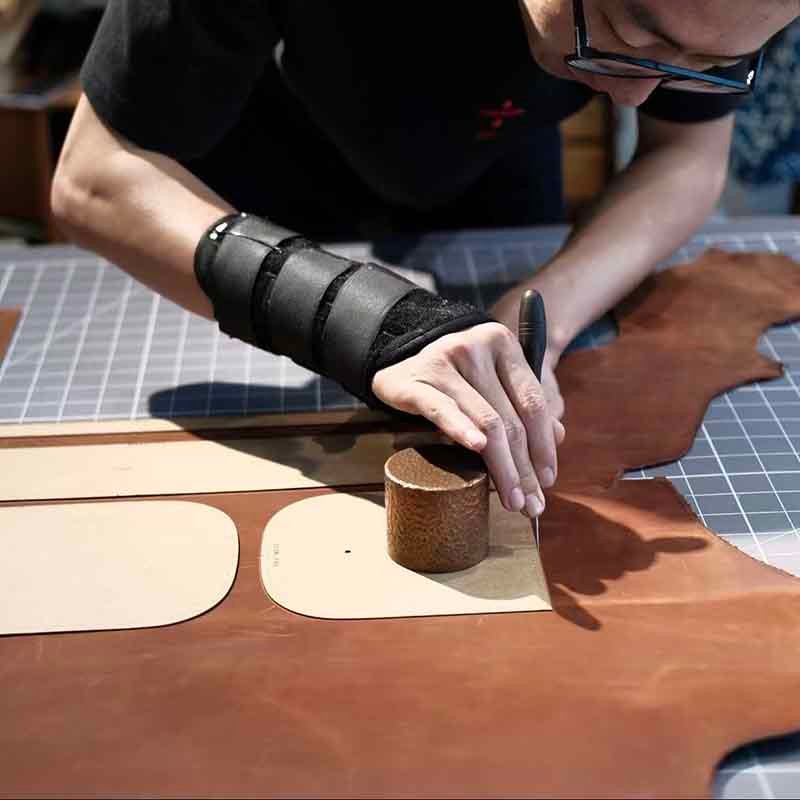
Evaluate materials and craftsmanship by verifying leather identity, thickness, temper, surface grade, lining, reinforcement, hardware, stitching, and edge treatment. Inspect how natural leather variation is controlled and how the approved construction will be repeated in bulk. Many serious quality problems remain hidden inside the product, so appearance alone is never a sufficient evaluation method.
Leather Selection
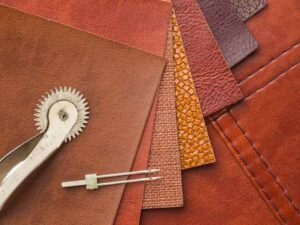
Terms such as genuine leather, full-grain leather, top-grain leather, corrected-grain leather, and split leather are sometimes used inconsistently. Ask the factory to identify the animal origin, leather layer, tanning method, surface finish, thickness, temper, and supplier. Physical swatches from the intended production source are more useful than digital photographs because screens cannot accurately communicate hand feel, flexibility, smell, or surface character.
Leather thickness should normally be expressed as a range because natural material varies across a hide. A specification such as 1.2–1.4 millimeters is more practical than one exact figure. The appropriate range depends on the product and whether the leather will be folded, skived, laminated, reinforced, or combined with several layers.
Temper describes whether the leather feels soft, medium, or firm. Two leathers with the same measured thickness can behave very differently. A soft leather may collapse on a structured briefcase, while a firm leather can make a small wallet bulky and uncomfortable.
Surface grading also influences cost. Large front panels may require cleaner sections, while smaller interior components can use areas with more natural character. Ask how hides will be allocated and which scars, wrinkles, grain movement, or shade variation are acceptable.
Structure and Stitching
An attractive exterior does not guarantee reliable construction. Inspect handle bases, shoulder-strap anchors, D-rings, zipper ends, pocket openings, and other load-bearing areas. These locations often require hidden reinforcement beneath the leather. Without suitable support, the leather may stretch, tear, or gradually lose shape even when the stitching initially appears clean.
Reinforcement should match the intended product. Material that is too thin may not distribute the load, while reinforcement that is too rigid can create visible ridges, excessive weight, or uncomfortable handling. The correct solution depends on the leather, structure, carrying load, and desired flexibility.
Skiving is equally important. Leather is often thinned around folds, corners, seams, and layered pockets. Uneven skiving creates bulky joins, weak edges, or visible marks. Wallets and card holders are especially sensitive because several small thickness differences accumulate across multiple layers.
Stitching should be reviewed for density, thread tension, distance from the edge, corner consistency, and backstitching. Many commercial leather products use approximately three to four stitches per centimeter, although the correct density depends on leather thickness, thread, needle, and design. Extremely dense stitching is not automatically stronger because too many needle holes can weaken the material.
Hardware and Edges
Hardware should be specified by base material, dimensions, finish, color, attachment method, and expected performance. Brass, zinc alloy, steel, and aluminum components can appear similar in photographs while differing substantially in weight, durability, corrosion resistance, and cost.
Zippers should be tested repeatedly, particularly around curves and reinforced openings. Review the zipper gauge, tape, slider, puller attachment, end stops, and installation. A zipper that moves smoothly on an empty sample may become difficult to operate when the product is fully packed or the opening is under tension.
For metal fittings, ask about plating, protective coating, and expected wear. High-contact parts such as swivel hooks, rings, and magnetic closures may show scratches or color loss earlier than decorative components. When corrosion resistance is important, define an appropriate test instead of accepting a general promise.
Painted leather edges may involve trimming, sanding, base coating, color coating, drying, and polishing. The number of operations varies according to the quality target and edge condition. More layers do not automatically mean better quality; adhesion, flexibility, curing, and surface preparation are more important.
| Quality Area | Useful Specification | Practical Inspection | Common Failure |
|---|---|---|---|
| Leather thickness | Approved range in millimeters | Measure several panels and locations | Uneven body structure or folding |
| Leather temper | Soft, medium, or firm reference | Compare against an approved swatch | Product collapses or feels too rigid |
| Stitching | Density, thread size, and edge distance | Compare straight seams and corners | Loose seams, skipped stitches, or perforation |
| Edge paint | Color, flexibility, and adhesion | Bend and rub corners lightly | Cracking, peeling, or rough edges |
| Zipper | Gauge, slider, tape, and cycle expectation | Open repeatedly with the product loaded | Jamming or separation |
| Metal hardware | Base metal, plating, and attachment | Pull, rotate, and inspect contact areas | Loosening, corrosion, or color wear |
| Reinforcement | Material, thickness, and location | Review an unfinished or cut-open sample | Handle or strap failure |
Practical Inspection
Inspect samples under normal daylight and indoor lighting. Surface scratches, glue residue, uneven grain, and inconsistent edge paint can appear less visible under bright showroom lamps. Compare the front, back, sides, base, interior, and concealed areas rather than judging the product from one angle.
Measure critical dimensions, but do not apply the same tolerance to every area. A soft tote body may allow more movement than a fitted zipper opening, a centered logo, a card slot, or a hardware position. Critical measurements should be identified separately in the specification.
Load the product with its intended contents. Carry it by the handles and shoulder strap, open and close every zipper, place it on a flat surface, and inspect whether the body twists or leans. For wallets, insert actual cards and banknotes. For laptop bags, test the intended device size. Practical use often exposes structural problems that remain invisible during cosmetic inspection.
Inspect the lining, pocket corners, seam ends, and hidden areas for loose threads, excessive glue, incomplete stitching, or poorly secured reinforcement. A professional sample review should examine how the product works and ages, not only how it looks when newly unpacked.
How Should Sampling and Pricing Be Reviewed?
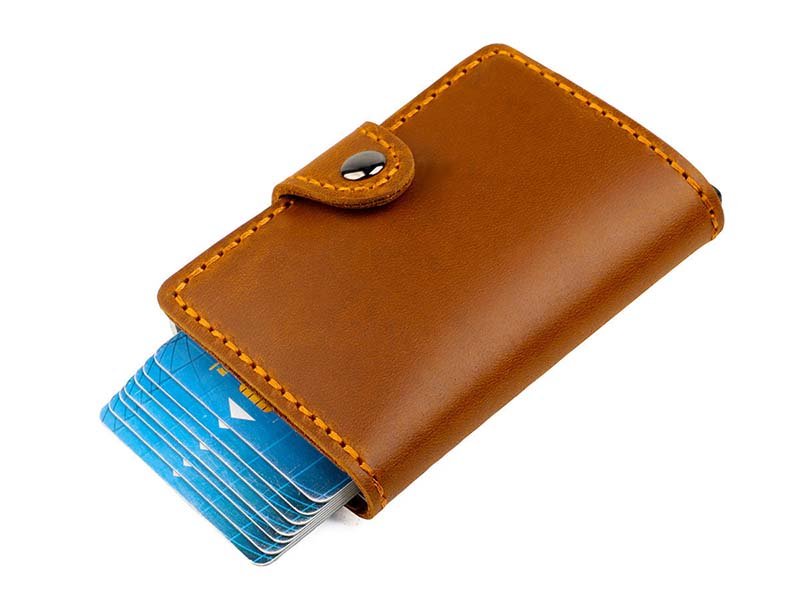
Sampling and pricing should be reviewed as one connected process because every approved material and construction choice affects cost. The sample must confirm appearance, dimensions, function, and production feasibility, while the quotation must clearly identify the leather, hardware, workmanship, packaging, and inspection included. A buyer should never approve one specification and compare prices based on another.
Sample Stages
The first prototype should confirm the basic shape, dimensions, compartment arrangement, construction, and function. It may not always use final production materials, particularly when custom leather or hardware is still being prepared. Any temporary substitution must be clearly identified so the buyer does not assume that the first sample represents the final bulk appearance or performance.
A revised sample should address documented changes. Every adjustment should record the affected part, requested correction, responsible party, and approval date. Marked photographs, measurement notes, and structured revision lists are more reliable than scattered messages.
The final approval sample should use production-intended leather, lining, hardware, thread, edge paint, logo, and packaging whenever possible. When one component remains temporary, that difference should be recorded and approved separately.
For complex or premium products, a pre-production sample is useful after bulk materials arrive. This confirms that the production team is using the final leather batch and components. A simple leather pouch may be sampled within roughly one or two weeks after material confirmation, while a structured bag with custom hardware, special leather, or several revisions may require considerably longer. International courier time should be added separately.
MOQ Factors
The minimum order quantity is often controlled by components rather than sewing capacity. Leather colors, custom plating, molded logo hardware, special lining, edge paint, boxes, and printed packaging may each have separate purchasing minimums.
Available leather colors and standard hardware usually support smaller quantities. Custom-dyed leather or exclusive metal finishes may require larger commitments because the tannery or component supplier must prepare a dedicated batch. Dividing one order into many colors can increase cost and waste when each color requires separate purchasing, cutting, handling, and production control.
Ask whether the stated MOQ applies per style, per color, or across the full order. A factory may quote 500 pieces based on one color, while five colors of 100 pieces each can create very different material economics.
Product size and leather utilization also matter. Large clean panels consume more hide area and require more selective cutting. Small leather goods may use material more efficiently, but complicated pockets, folding, and edge finishing can increase labor.
Buyers can sometimes reduce minimums by using available leather, standard hardware, shared lining, and compact packaging. The objective should be an economically workable first order rather than forcing a quantity that creates hidden compromises.
Price Breakdown
Leather cost depends on the purchase price, usable yield, surface grading, and panel size. A material with a lower price per square foot does not always create a lower finished cost if scars, shade variation, or poor shape reduce the usable cutting area.
Labor depends on the number of panels, sewing operations, skiving, gluing, folding, reinforcement, hardware installation, and edge-finishing steps. A small wallet can require more detailed labor than a larger but simple tote.
Custom components create additional development costs. Hardware molds, debossing dies, foil tools, printing screens, plating samples, testing, and retail packaging may be charged separately or spread across the unit price. These charges should be visible before the purchase order is confirmed.
| Cost Driver | Typical Effect on Cost | Practical Cost-Control Option |
|---|---|---|
| Leather grade | Cleaner surfaces and higher usable grades raise material cost | Use the highest grade on visible panels and agreed secondary grades internally |
| Custom leather color | Adds preparation time and minimum material commitment | Select an available tannery color when suitable |
| Exclusive hardware | May require molds, plating samples, and larger minimums | Use a standard component with an approved finish |
| Complex edge finishing | Additional sanding, coating, drying, and polishing increase labor | Simplify hidden or low-visibility edges |
| Layered construction | More panels, reinforcement, and skiving increase labor | Remove unnecessary internal layers |
| Retail packaging | Boxes and inserts raise unit cost and shipping volume | Develop compact protective packaging |
| Multiple colors | Creates separate material and production handling | Concentrate the first order in fewer colors |
Ask the factory to identify what is included in the unit price and what remains separate. Sample fees, tooling, testing, inspection, labels, cartons, shipping, and import charges should not be assumed.
Golden Sample
The final approved sample must be converted into a controlled production standard. A physical product alone does not explain internal materials, acceptable variation, construction sequence, or previous revisions. Without written records, workers may interpret the sample as a visual reference rather than a binding specification.
The approval package should contain the measurement chart, bill of materials, leather and lining swatches, hardware references, thread color, edge-paint color, logo files, packaging instructions, and revision history. Mark the sample with its approval date and version so that earlier prototypes cannot be mistaken for the final standard.
Define tolerances by feature. A flexible tote body may permit a wider measurement range than a fitted zipper, centered logo, card slot, or hardware position. Natural leather variation should also be documented through approved swatches, photographs, or clear written limits.
Keep one sealed sample with the buyer and another with the factory. The inspection team should have access to the same references. When bulk leather or hardware differs from the final prototype, approve a pre-production sample before full production begins.
How Is Bulk Quality and Delivery Controlled?
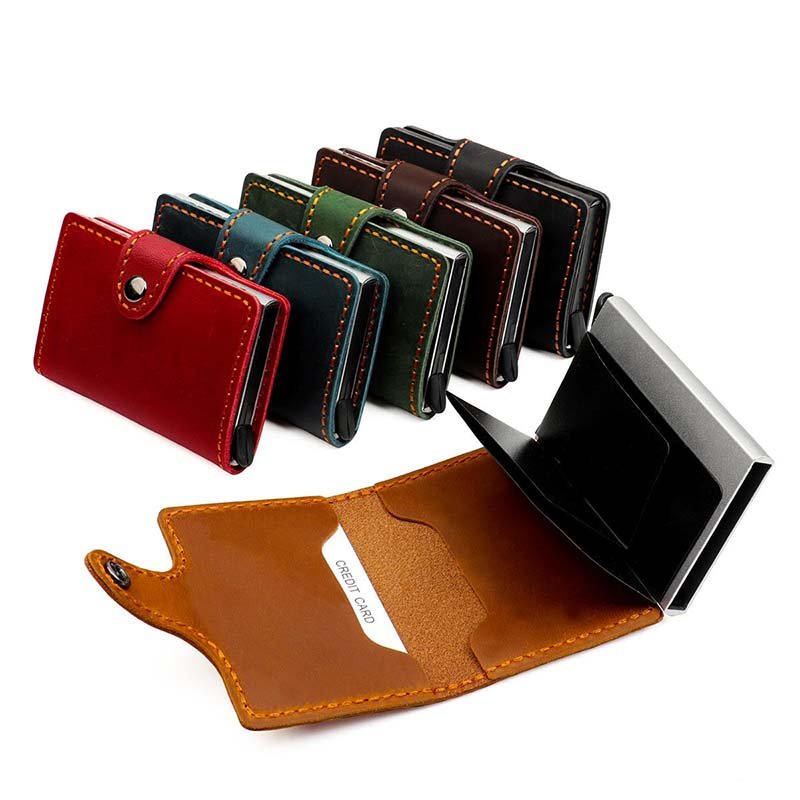
Bulk quality is controlled through material approval, pre-production confirmation, in-line inspection, final inspection, functional testing, and documented corrective action. Delivery is controlled through material planning, realistic scheduling, packaging readiness, and shipment coordination. Final inspection alone is insufficient because many serious leather goods defects are created or concealed long before products reach the packing area.
QC Stages
Incoming inspection should confirm the leather article, color, thickness, finish, temper, surface quality, and batch consistency. Hardware, zippers, lining, thread, edge paint, reinforcement, and packaging should be compared with approved references before they enter production.
Cutting inspection is particularly important for genuine leather. Visible panels should be selected according to the agreed surface standard, and grain direction or shade should be considered when matching corresponding parts. Components should be counted and separated by style, color, and material batch.
During production, inspectors should review operations that will later become hidden. Reinforcement placement, handle attachment, skiving, pocket alignment, zipper installation, and seam construction are difficult or impossible to correct after the lining and exterior panels are fully assembled.
Semi-finished inspection helps reveal repeated problems before finishing. When several operators work on the same model, early measurement and workmanship checks reduce variation.
Final inspection should cover appearance, measurements, function, cleanliness, packaging, and quantity. Many commercial programs use AQL-based sampling, although the inspection level and defect limits should be defined according to the product, retailer requirements, and commercial risk.
Functional Testing
Functional testing should reflect the way the product will actually be used. A decorative evening bag does not require the same evaluation as a daily commuter briefcase carrying a laptop, charger, documents, and personal items.
Handle and shoulder-strap tests should use a realistic load and an agreed safety margin. The method should specify the weight, duration, and whether the product is held statically or repeatedly lifted. An arbitrary extreme load can damage a product unnecessarily, while an overly light test can provide false reassurance.
Zippers should be operated repeatedly and checked when the product is filled. Curved openings, long zipper paths, and tightly packed compartments often reveal resistance that is not present in an empty sample.
Hardware may require pull, rotation, abrasion, or corrosion testing. Edge paint should be bent and rubbed at high-movement areas. Dark leather, lining, or edge color may need colorfastness checks when contact with light clothing is likely.
Terms such as water resistant, scratch resistant, and heavy duty should never remain undefined. Any performance claim should be linked to a realistic test method, condition, and pass criterion.
Production Timing
A useful production schedule shows milestones instead of providing only a final completion date. Important stages normally include leather and component ordering, material arrival, incoming inspection, cutting, preparation, assembly, finishing, quality inspection, packing, and shipment booking.
Leather preparation and custom hardware frequently sit on the critical path. Sewing cannot begin if the correct leather batch, zipper, logo plate, or plated component is unavailable. Packaging can also become a bottleneck when printed boxes, labels, or inserts are approved too late.
Production time must account for drying and curing. Adhesive bonding and painted-edge operations cannot always be accelerated by adding workers. Skipping drying time may create weak adhesion, surface marks, or edge cracking after shipment.
Ask the factory to identify the latest safe approval date for samples, materials, and packaging. When buyer approval is delayed but the shipment date remains unchanged, the actual manufacturing and inspection window becomes compressed.
Inspection and rework should be included in the plan. A schedule that finishes sewing immediately before shipment leaves no realistic time for correction. Freight estimates and booking should also begin before packing is complete, particularly during peak shipping periods.
Packaging and Reorders
Leather goods require protection from pressure, abrasion, moisture, color transfer, and contact with metal components. Depending on the design, packaging may include tissue, foam, hardware films, handle wrapping, shape-retention inserts, dust bags, silica gel, individual boxes, and protective dividers.
Packaging should be tested with the finished product. An oversized insert can stretch the body, while a small box can deform corners or place pressure on handles. Dust bags and tissue should not transfer color, leave fibers, or react with the leather finish.
Carton planning must balance protection and freight efficiency. Confirm the carton size, quantity per carton, gross weight, stacking method, and moisture protection before mass packing begins.
Repeat orders require controlled records. Patterns, measurements, leather references, hardware details, edge colors, logo files, packaging instructions, inspection standards, and approved deviations should be archived.
The phrase “same as the previous order” is not a complete production specification. Leather batches, component suppliers, operators, and packaging materials may change. Each reorder should begin with a review of the archived standard and approval of any difference that could affect appearance, function, cost, or delivery.
How Do You Audit and Compare Factories?
Audit and compare factories using the same evidence requirements and weighted scorecard. Review relevant experience, material control, development, workmanship, inspection, capacity, communication, pricing, and delivery. The best factory is not automatically the cheapest or largest. It is the manufacturer whose technical ability, management system, and order profile create the lowest practical risk for the specific project.
Factory Audit
A meaningful factory audit should follow the production flow. Begin with material receiving and storage, then move through pattern making, cutting, skiving, component preparation, sewing, edge finishing, hardware installation, quality inspection, packing, and finished-goods storage. This sequence makes it easier to determine whether the supplier controls the process or is showing isolated equipment.
In the leather storage area, check whether batches are identified and separated. Ask how thickness, color, surface grade, and quantity are verified. In the sample room, review pattern files, measurement records, revision notes, and approved samples. A professional development team should be able to explain how customer feedback becomes a technical correction.
At cutting and production, look for work instructions, material identification, approved references, and inspection points. Observe whether different orders and colors are clearly separated.
Request recent inspection records and examples of corrective action. A factory claiming to have no recorded defects may simply lack a reliable documentation system.
A live remote audit can be useful when travel is impractical. Request a continuous video walkthrough and ask the camera operator to show specific areas, current work, measurement tools, and production records rather than relying only on an edited promotional video.
Supplier Scorecard
Create a weighted evaluation scorecard before comparing final quotations. This prevents price from dominating simply because it is the easiest factor to measure. The weighting should reflect the commercial and technical risks of the product.
A premium leather accessories brand may give greater weight to leather sourcing, surface selection, edge finishing, and visual consistency. A travel-goods program may place greater weight on construction, functional testing, capacity, and delivery. A retailer launching multiple SKUs may prioritize project management, packaging, labeling, and repeat-order control.
| Evaluation Area | Suggested Weight | Evidence to Review |
|---|---|---|
| Similar product experience | 15% | Comparable samples, project records, and technical explanations |
| Leather and material control | 15% | Swatches, source information, batch handling, and inspection process |
| Sample development | 15% | Pattern capability, prototypes, revision logs, and approval records |
| Workmanship | 15% | Stitching, structure, skiving, edge finishing, and hardware installation |
| Quality management | 15% | Inspection stages, reports, defect records, and corrective action |
| Capacity and timing | 10% | Skilled operators, current workload, line plan, and schedule |
| Communication | 5% | Accuracy, technical clarity, and project ownership |
| Pricing transparency | 5% | Written assumptions, included items, and cost drivers |
| Packaging and delivery | 5% | Packing standards, export documents, and logistics capability |
Scores should be based on evidence rather than marketing statements. A supplier saying that it has strict quality control should receive little credit until inspection records, checklists, defect examples, and corrective-action procedures can be reviewed.
Warning Signs
Be cautious when a factory provides a precise quotation without asking about leather thickness, surface grade, construction, hardware, reinforcement, packaging, or testing. The price may be based on assumptions that do not match the intended product.
An unusually low quotation may indicate a different leather grade, lower usable surface standard, reduced reinforcement, generic hardware, simplified edge finishing, or minimal inspection. Ask the supplier to state the material and workmanship assumptions in writing.
A legitimate manufacturer should be willing to show relevant production areas, current work, samples, and quality records. Repeated excuses, inconsistent videos, or carefully restricted views may indicate that production is taking place elsewhere.
Poor sample revision management is another warning sign. When corrections are scattered across messages and never summarized, the same confusion is likely to continue during bulk production.
Different departments should provide consistent answers regarding MOQ, lead time, capacity, and quality standards. Promises of flawless production or impossible delivery schedules should not be mistaken for confidence. Experienced factories understand constraints and explain how problems are prevented, detected, and corrected.
Pilot Order
A pilot order is the most practical test of the complete manufacturing system. Sampling verifies whether the factory can develop the product, while a real production run verifies purchasing, material control, operator consistency, inspection, packing, communication, and delivery.
Choose a quantity that uses the intended materials and normal production method. An extremely small run completed entirely by sample technicians may not represent future bulk production. The pilot quantity should be commercially reasonable for the leather, hardware, and packaging involved.
Set success criteria before production. Review sample-to-bulk consistency, measurements, leather variation, workmanship, functional performance, defect levels, packaging condition, response time, and schedule performance.
Inspect products from different operators, cartons, or production stages where possible. One attractive unit cannot prove stable production.
Pay close attention to how the factory handles a problem. Custom manufacturing rarely proceeds without any adjustment. A reliable manufacturer identifies the issue early, explains the cause, proposes a practical correction, and verifies the result.
Szoneier is a Shenzhen-based OEM/ODM manufacturer with more than 18 years of experience in custom bags, leather goods, and sewn soft products. Its project support covers material selection, structural development, pattern making, sampling, production coordination, quality inspection, packaging, and international delivery. Buyers can also request a video factory review, discuss inspection requirements, and begin with an appropriately planned trial order before scaling.
To initiate a project assessment, please send the following details to szoneier: product images, tech packs, physical sample information, size specifications, leather requirements, order quantities, logo artwork, packaging requirements, target markets, and estimated delivery dates. A comprehensive project brief enables the team to evaluate material feasibility, sample development, minimum order quantities (MOQs), cost structures, production lead times, and quality risks, as well as to formulate an optimal implementation plan covering everything from prototyping to subsequent mass production.