A beautifully made sample can create a dangerous sense of confidence. It arrives with smooth edge paint, clean stitching, polished hardware, and a logo positioned exactly where your team requested. Everyone approves it, the purchase order is issued, and the project appears to be under control. Several weeks later, the bulk shipment arrives with inconsistent leather grain, uneven color, soft corners, rough edges, and hardware that feels lighter than the approved sample. The original design was not necessarily the problem. The real problem was choosing a supplier based on one attractive sample instead of examining the manufacturing system behind it.
To choose a private label leather goods manufacturer, first define your product, customer, materials, customization level, order plan, and quality standard. Then verify the factory’s leather sourcing, sampling, construction knowledge, process control, inspection system, compliance support, capacity, pricing transparency, and ability to reproduce the approved sample consistently during bulk production and future repeat orders.
A reliable manufacturing partner does more than promise good quality or offer an appealing unit price. The right factory asks detailed questions before quoting, explains where construction risks may appear, documents each sample revision, controls materials and subcontracted processes, and shows how approved standards move from the sample room into production. The difference often becomes visible only after hundreds or thousands of units have been made, which is why supplier evaluation must happen before the deposit is paid.
What Should You Define First?

Before contacting manufacturers, define the product type, target customer, sales channel, retail position, materials, dimensions, functions, customization level, order quantity, packaging, and destination market. A clear brief allows factories to quote the same standard, recommend suitable construction, and identify development risks. Without these details, low and high quotations may represent completely different products.
Product and Market
Begin with the real job the product must perform. “Leather bag” is far too broad for accurate development because a structured laptop briefcase, soft shoulder bag, card holder, travel organizer, belt, cosmetic pouch, and evening handbag place very different demands on leather thickness, reinforcement, hardware, stitching, edge finishing, machinery, and labor. The more precisely the product is defined, the easier it becomes to identify manufacturers with relevant experience instead of general leather-working capability.
The end user and sales channel should influence every construction decision. A commuter carrying a laptop needs reliable handles, reinforced stress points, a stable base, protective internal padding, and hardware that can tolerate repeated loading. An evening bag may prioritize appearance, weight, and shape over high carrying capacity. A corporate gift set may be judged heavily on logo execution and presentation packaging, while an online retail product must also reduce return risks related to confusing dimensions, excessive weight, odor, scratches, or color differences.
Describe the intended market without relying on vague phrases such as “premium quality.” A manufacturer can respond more accurately when it knows the approximate retail range, destination country, customer expectations, competing products, and planned sales channel. Two bags with the same exterior silhouette can use different leather grades, lining systems, hardware materials, edge treatments, internal boards, and reinforcement methods. These differences may not be obvious in product photos, but they strongly influence durability, appearance, production stability, and cost.
Product Specification
A practical product brief should turn an idea into measurable requirements. Include finished dimensions, acceptable tolerances, pocket layout, opening method, strap length, hardware finish, lining, reinforcement, logo location, packaging, and any special functional requirement. Reference photos are helpful for communicating style, but they should not replace written specifications because photos rarely reveal internal construction, material thickness, seam allowance, or the exact relationship between components.
For an existing product, provide a physical sample, detailed drawing, or technical pack whenever possible. For a new concept, mark important dimensions on a sketch and explain what the user will carry, how the item will be opened, and where the greatest loads will occur. An experienced factory should then identify areas that may be too bulky, difficult to stitch, weak under load, uncomfortable in use, or unnecessarily expensive to manufacture.
| Specification Area | Information to Provide | Practical Example |
|---|---|---|
| Product format | Style and intended use | Structured 14-inch laptop briefcase |
| Finished size | Width × height × depth | 390 × 290 × 90 mm |
| Capacity | Main items carried | Laptop, charger, documents, bottle |
| Exterior material | Leather type, grain, finish | Pebbled cowhide, matte surface |
| Interior | Lining and organization | Polyester lining, padded laptop sleeve |
| Hardware | Material and finish | Zinc alloy, brushed gunmetal |
| Branding | Method, size, and position | Debossed logo, 45 mm wide |
| Quantity | Units by color and SKU | 500 black, 300 dark brown |
| Packaging | Retail or transit format | Dust bag, tissue, individual carton |
| Market | Destination and channel | US online and specialty retail |
Dimensions should include realistic tolerances rather than being treated as exact theoretical numbers. A medium-sized sewn bag may commonly use a finished dimensional tolerance around ±5 mm, while a card holder, wallet, fitted insert, or aligned closure may require tighter control in critical areas. The correct tolerance depends on the product size, material behavior, construction method, and visual importance of the measurement, so it should be agreed before production begins.
Customization Level
Determine whether the project is basic private label, modified private label, OEM, or ODM because each model requires a different amount of development work. Basic private label production usually starts with an existing factory pattern and changes elements such as the logo, color, leather, lining, or packaging. This approach can shorten development time, but the underlying construction may also be available to other customers unless exclusivity is specifically negotiated.
Modified private label production begins with an established structure but changes practical features such as dimensions, pockets, straps, hardware, closure, internal organization, or material combinations. It can provide a useful balance between development speed and product differentiation. However, even small changes can affect pattern geometry, reinforcement, cutting yield, labor time, and packaging size, which means the modified version still needs proper sampling and documented approval.
OEM production is usually appropriate when the brand already owns a complete sample, drawing, bill of materials, or technical pack. ODM is more suitable when the brand has a concept, reference image, usage scenario, target price, or customer problem but needs help with structure, materials, pattern development, and production feasibility. The deeper the customization, the more important it becomes to control sample versions and record every approved change in writing.
Volume and Timing
Share the expected first order, likely repeat volume, number of colors, number of SKUs, target launch date, and expected delivery destination. Manufacturers plan materials and production very differently for a 200-piece market test, a 2,000-piece seasonal program, and a 10,000-piece retail rollout. A factory that is suitable for a small premium collection may not have the capacity or systems required for a large multi-SKU program, while a high-volume factory may not prioritize a highly detailed small order.
Lead time should be separated into material sourcing, sample development, sample revision, bulk material approval, production, inspection, packaging, and transportation. A factory may be able to sew the product in several weeks, but custom leather colors, molded hardware, branded lining, printed boxes, laboratory testing, and buyer approvals can add considerable time before bulk sewing starts. Asking only for “production lead time” creates an incomplete schedule.
When the launch date is fixed, work backward and include approval time on the buyer’s side. Many delayed launches are not caused entirely by factory production. Internal sample reviews, management approval, packaging artwork, photography, laboratory testing, shipping, customs clearance, warehouse booking, and distribution-center receiving can all affect the final schedule. A realistic timeline protects quality because it reduces pressure to skip material approval, pre-production sampling, or final inspection.
Which Leather Should You Choose?
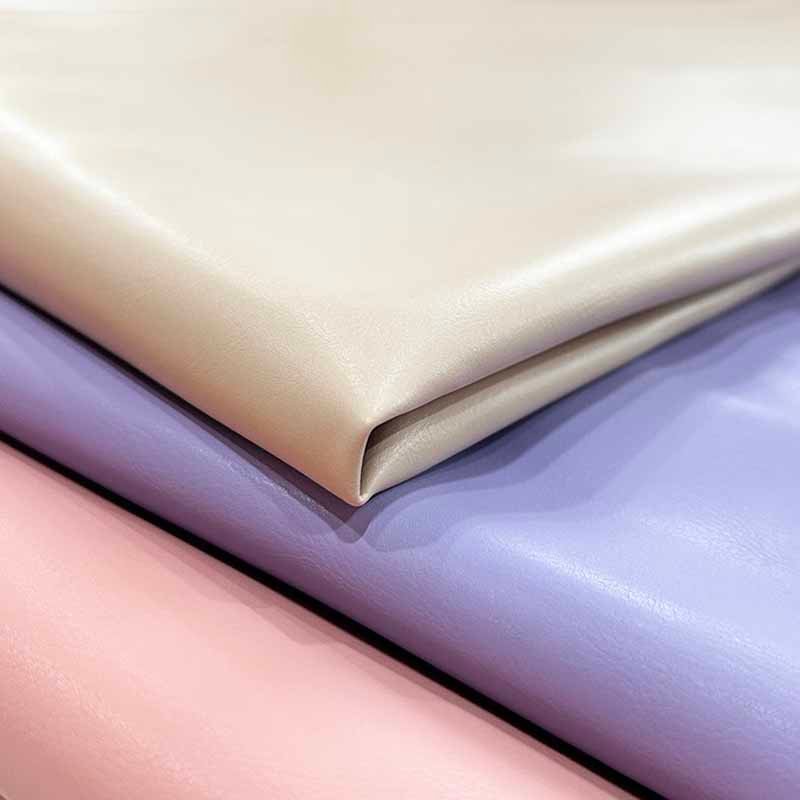
Choose leather according to the product’s structure, use, target price, expected consistency, and brand position. Full-grain leather offers natural character but greater variation, while corrected leather and high-quality PU can provide more uniform production. The best material is not automatically the most expensive option; it is the material that performs reliably in the finished product and can be sourced consistently.
Leather Type
Full-grain leather retains more of the natural surface and can develop an attractive patina over time, but scars, wrinkles, grain differences, veins, and shade variation remain visible. It suits products where natural character is part of the value proposition. It may be less suitable when the brand expects every panel and every unit to look nearly identical, particularly across large repeat orders and multiple production batches.
Top-grain and corrected-grain leathers generally provide greater control over surface appearance. Corrected leather may be buffed, embossed, pigmented, or coated to create more consistent grain and color. It is often practical for commercial collections where visual uniformity, scratch resistance, and repeatability are more important than preserving every natural feature of the hide. Split leather can control cost, but its coating durability, backing strength, flexibility, and edge behavior must be evaluated carefully.
PU leather is frequently chosen for consistent color, predictable cutting yield, surface uniformity, and easier repeat production. Its quality varies significantly. A basic PU coating applied to a weak textile backing is very different from a higher-grade microfiber-based synthetic leather with better tear strength, recovery, and hydrolysis resistance. Buyers should therefore specify thickness, backing, surface finish, flexibility, abrasion expectations, and intended service conditions rather than approving a material only because it is described as “PU leather.”
Thickness and Temper
Leather thickness influences structure, weight, sewing difficulty, edge buildup, folding, skiving, appearance, and cost. A leather that feels suitable as a flat swatch may become excessively bulky when several layers meet at a folded seam, handle base, wallet edge, or reinforced corner. Thin leather may create a clean and refined appearance, but it may require backing, foam, fabric lamination, or internal boards to prevent stretching and collapse.
Temper describes how soft or firm the leather feels. Soft leather is suitable for relaxed bags, pouches, soft totes, and products designed to drape naturally. Firmer leather is generally more appropriate for structured handbags, briefcases, belts, card holders, and products that must retain a defined shape. Two leathers with the same measured thickness can behave very differently because of tanning, fiber structure, coating, finish, backing, and moisture content.
| Product Type | Common Material Range* | Typical Temper | Main Control Point |
|---|---|---|---|
| Card holder | 0.8–1.2 mm | Medium to firm | Slot accuracy and fold bulk |
| Bifold wallet | 0.9–1.4 mm | Medium | Skiving and edge thickness |
| Soft handbag | 1.1–1.6 mm | Soft | Stretch and shape recovery |
| Structured handbag | 1.2–1.8 mm | Medium to firm | Panel stability |
| Business briefcase | 1.3–2.0 mm | Medium to firm | Reinforcement and carrying load |
| Belt | 2.8–4.0 mm | Firm | Elongation and edge strength |
- These figures are common development ranges rather than universal standards. Final material thickness depends on the leather category, product structure, folded construction, backing, reinforcement, and planned skiving.
Skiving is especially important in wallets, folded edges, handles, corners, piping, and multi-layer seams. The product specification should identify which areas are reduced and the intended thickness after skiving. When this information exists only in the sample technician’s memory, bulk products may vary between operators, production lines, and factories even when the incoming leather is technically the same.
Surface and Color
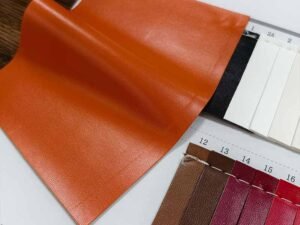
The approved material standard should define more than a general color name. “Dark brown,” “black,” or “tan” can describe many different undertones, gloss levels, grain patterns, coatings, and visual effects. A physical leather swatch should normally be the main approval reference. Pantone codes and digital images help with communication, but screens, camera settings, lighting, and reflective finishes can distort the perceived color.
Review leather under consistent lighting and compare several pieces rather than approving one perfect sample. Daylight, warm retail lighting, and cool factory lighting can make the same color appear different. For commercially important shades, a brand may approve a central standard together with acceptable light and dark boundary samples. This gives the tannery, factory, and inspection team a more practical basis for controlling normal batch variation.
Surface finish must also match the expected product use. A delicate aniline finish may show scratches, moisture marks, fingerprints, and natural differences more easily. A pigmented or coated finish can improve uniformity and stain resistance, although it may feel less natural. Pebbled embossing can hide minor marks and support visual consistency, while smooth leather makes scratches, wrinkles, grain variation, and panel matching much more visible.
Batch Consistency
Natural leather requires grading, matching, and careful panel allocation. Cleaner areas may be reserved for front panels, flaps, and visible handles, while sections with acceptable natural variation can be used for internal tabs, hidden components, or reinforced areas. The factory and buyer should define acceptable scars, wrinkles, veins, grain changes, and shade variation before cutting begins, because expectations based only on a flawless sample are rarely realistic.
Ask how hides are grouped by shade, thickness, softness, and grain. Paired parts such as two handles, left and right side panels, or matching gussets should be cut from compatible areas. Cutting direction also matters because leather can stretch differently across the hide. Incorrect direction may cause handles to lengthen, panels to twist, or paired components to behave differently during assembly and later use.
For repeat orders, the manufacturer should record tannery information, material article number, finish, color code, thickness, and the approved physical swatch. Even when the same tannery and color name are used, later dye lots may differ slightly. The brand should decide whether minor variation is acceptable and whether components from different batches may be mixed within the same finished product.
Synthetic leather also requires incoming control. The factory should inspect roll width, backing strength, embossing depth, coating adhesion, color, gloss, flexibility, and roll-to-roll variation. A synthetic material category does not automatically guarantee consistency. Repeatability comes from precise purchasing records, approved standards, supplier control, and disciplined incoming inspection.
How Do You Verify Factory Capability?
Verify a manufacturer through evidence rather than marketing claims. Review similar products, sample-development facilities, material controls, production processes, inspection records, equipment, packaging capability, and project documentation. A factory visit is useful, but a structured live video review can also reveal how the supplier develops samples, manages work in progress, controls outsourced processes, and prepares finished goods for shipment.
Similar Product Experience
A factory’s total number of years in business is less important than its experience with products similar to yours. A workshop that produces soft leather pouches may not be suitable for structured briefcases, molded cases, complex wallets, belts, or handbags with demanding edge-painted construction. Ask to see products using comparable materials, structures, hardware, dimensions, reinforcements, and finishing methods rather than accepting a broad portfolio of unrelated leather items.
Examine how the factory handles corners, folded edges, edge paint, lining, zipper ends, piping, reinforcement, hardware placement, symmetry, and stress points. Product photographs can support an initial review, but physical samples or a detailed live video inspection provide stronger evidence. Close-up views often reveal whether the manufacturer controls skiving, stitch alignment, edge preparation, thread trimming, and the transition between different materials.
Discuss the most difficult part of your product and ask how the factory would manufacture it. Experienced teams normally identify risks quickly. They may explain that the leather is too thick for a clean folded corner, that the selected handle requires additional reinforcement, or that a logo may become distorted after assembly. A supplier that agrees to every request without technical discussion may not have studied the construction carefully enough.
Factory or Trader
Trading companies are not automatically unsuitable, especially when they manage specialized factories professionally. Buyers must still understand who develops the sample, purchases materials, controls production, performs inspections, and accepts responsibility for corrective action. The main risk appears when a supplier presents itself as a factory while moving orders between unknown workshops without disclosing the production source or maintaining consistent standards.
A factory-based supplier should be able to show material storage, pattern development, sample making, cutting, skiving, sewing, edge finishing, assembly, inspection, and packing. Not every process must be performed under one roof. Tanneries, metal-plating facilities, zipper suppliers, mold makers, embroidery workshops, printing specialists, and packaging factories are commonly external partners. The important issue is whether specifications, approvals, traceability, incoming checks, and final responsibility remain controlled.
| Area to Verify | Evidence to Request | Warning Sign |
|---|---|---|
| Sampling | Sample room, pattern records, revision sheets | Samples made by an unidentified third party |
| Materials | Approved swatches, supplier codes, incoming checks | Vague descriptions such as “good leather” |
| Production | Live floor review, work instructions, line records | No production visibility after deposit |
| Outsourcing | Process list and clear responsibility | Refusal to explain external processes |
| Quality | Inspection forms and defect standards | General claims without documentation |
| Packaging | Packing references and carton plans | Packing decided only after production |
| Capacity | Current schedule and product-specific output | Unverified monthly capacity claims |
| Traceability | SKU, batch, and component identification | Materials stored without clear labels |
The buyer should also verify the business name, production address, payment account, export identity, and principal contact information. Sudden or unexplained changes require additional checking. A professional manufacturer should be comfortable arranging a live video review, discussing the production route, explaining which processes are external, and showing how approved standards are protected throughout the supply chain.
Process Ownership
Leather goods often involve multiple specialized suppliers. The main factory may source hides from a tannery, order hardware from a metal supplier, arrange plating externally, purchase zippers from another manufacturer, and develop custom packaging through a printing company. This is normal industry practice. The question is whether the lead manufacturer controls the specifications, approvals, records, incoming inspection, and corrective action for every important component.
Ask who approves the leather, lining, hardware finish, zipper, thread, edge paint, adhesive, logo, packaging, and laboratory reports. Determine how rejected components are handled and whether replacement materials require written buyer approval. A supplier should never substitute leather, hardware, lining, coating, or packaging simply because the approved version is temporarily unavailable or more expensive than expected.
Edge painting demonstrates why process ownership is more important than simple marketing language. A smooth and durable edge depends on accurate cutting, sanding, preparation, primer, paint compatibility, application thickness, drying conditions, flexibility, and final polishing. Counting the number of coats alone does not guarantee performance. Poorly prepared edges with several coats may crack or separate faster than properly prepared edges using a more suitable system.
Capacity and SKUs
Production capacity should always be discussed in relation to the actual product. A general monthly number can be misleading because wallets, belts, soft pouches, edge-painted handbags, structured briefcases, and multi-material organizers require very different amounts of labor and process time. Ask which production step is likely to limit output and how much capacity is actually available during the period required for your order.
In leather goods production, cutting yield, skiving, edge painting, drying, manual assembly, hardware preparation, cleaning, and final inspection may create greater pressure than sewing-machine availability. Increasing the number of sewing operators will not solve a bottleneck in hand-painted edges or custom hardware. A reliable factory should explain the planned production route, approximate daily output, quality-control points, and realistic buffer for rework.
For projects involving several styles or colors, review how components are separated. Leather, lining, thread, edge paint, hardware, labels, dust bags, boxes, and cartons should be clearly identified by SKU. Approved samples, measurement charts, and packaging instructions should be available to production and inspection personnel. Without effective separation, multi-SKU programs can suffer from mixed hardware colors, incorrect labels, wrong packaging, or components assembled into the wrong style.
A controlled partner-factory system can provide useful flexibility for larger or multi-category programs, but responsibility must remain clear. The lead manufacturer should control materials, specifications, sample approval, inspections, packaging, and shipment. Buyers should not be expected to coordinate several hidden subcontractors or discover only after a problem that the order was produced in a facility they never evaluated.
How Should Quality Be Evaluated?
Evaluate quality against approved materials, measurable dimensions, construction standards, appearance limits, functional tests, packaging requirements, and defect classifications. A good sample is only the starting point. The real test is whether the factory can document the approved standard, train production workers, inspect critical operations, and reproduce the same result throughout the complete order.
Sample Review
Inspect the sample from both a customer and manufacturing perspective. First, assess the overall shape, balance, weight, hand feel, opening, storage capacity, and visual impression. Then examine individual components and construction details. A product can look attractive in a studio photograph while remaining uncomfortable to carry, difficult to open, poorly balanced, or unsuitable for the intended items.
Measure the sample instead of judging only by appearance. Review finished dimensions, symmetry, panel alignment, grain direction, stitch length, seam position, folded edges, edge paint, lining fit, zipper movement, hardware finish, handle attachment, strap adjustment, logo position, pocket size, cleanliness, and packaging. Record the result against the latest specification so that every requested revision can be traced.
Use the product in a realistic way. Load the bag with the intended items, operate the zipper repeatedly, carry it by the handles, adjust the strap through its full range, insert cards into wallet slots, and place the product on a flat surface. Observe whether it twists, leans, collapses, stretches, or becomes uncomfortable. Practical use often reveals issues that remain invisible during a purely visual review.
The first sample may expose design problems rather than factory defects. A pocket may be too narrow, a gusset may restrict opening, a handle may feel uncomfortable under load, or several folded layers may create excessive thickness. Record these findings as design revisions. After each revision, confirm what changed and what remained unchanged so that solving one problem does not unintentionally alter an already approved feature.
Production Sample
A showroom or development sample is not automatically suitable as the production standard. It may have been made by the factory’s most experienced technician using carefully selected leather, extra working time, and hand corrections that cannot be reproduced efficiently across a production line. Bulk manufacturing involves several operators, normal material variation, output targets, and standard work methods.
Before approval, confirm that the sample uses the leather, lining, thread, edge paint, hardware, logo process, reinforcement, adhesive, and packaging planned for the bulk order. Temporary or substitute components should be listed clearly. When the actual bulk materials have not yet arrived, approve a pre-production sample after those materials are purchased so that their behavior can be checked together.
A production-ready approval package should include a signed or sealed reference sample, final measurement chart, bill of materials, approved leather and lining swatches, hardware reference, edge-paint standard, logo artwork and placement dimensions, stitching details, packaging reference, revision history, critical quality points, and testing requirements. These documents prevent the bulk standard from being reconstructed later from scattered emails and informal chat messages.
The essential question is whether trained production workers can reproduce the sample using documented methods. When a critical feature depends on one sample maker remembering an undocumented technique, the project remains too fragile. A reliable production standard translates craftsmanship into repeatable instructions that can be checked during cutting, preparation, assembly, finishing, and final inspection.
In-Process Control
Final inspection cannot repair defects that were created early in production. Incorrect leather, poor shade grouping, wrong cutting direction, excessive skiving, weak reinforcement, misplaced logos, and unsuitable adhesives must be prevented before assembly is complete. Quality control should therefore begin with incoming materials and continue through cutting, preparation, sewing, finishing, packing, and shipment approval.
Incoming inspection should verify leather shade, thickness, grain, surface condition, lining, thread, zipper, hardware, edge paint, adhesive, logo components, and packaging. The first cut panels should be reviewed before a large quantity is processed. During production, inspectors should focus on critical operations such as handle reinforcement, shoulder-strap attachment, zipper installation, corner construction, edge preparation, logo placement, and hardware fixing.
A practical quality system separates defects into critical, major, and minor categories. Critical defects such as unauthorized branding, sharp hardware, missing essential components, unsafe construction, or completely wrong materials generally require zero tolerance. Major and minor defect limits should be agreed according to order size, sales channel, customer expectations, and the inspection method used.
AQL sampling can provide a structured approach to final inspection, but the selected inspection level and acceptance limits should be written into the purchase agreement. AQL does not replace in-process control. It evaluates a sample from the completed shipment and may identify a problem after many units have already been made, which is why prevention during production remains more effective than relying only on final inspection.
Functional Testing
Testing should reflect the way the product will actually be used. Not every leather item needs every available laboratory test, and applying an excessive test program can increase cost without improving the relevant risk controls. The buyer and manufacturer should identify the failures most likely to create safety concerns, customer returns, negative reviews, or reputational damage.
Useful checks may include handle pull strength, strap attachment, seam strength, zipper operation, snap or magnet function, card-slot fit, color transfer, dry and wet rubbing, surface abrasion, coating adhesion, edge-paint flexibility, hardware corrosion resistance, and packaging transit performance. A laptop briefcase, belt, wallet, evening bag, and decorative gift item should not automatically use the same test plan.
Testing conditions must be defined. “Pull tested” is incomplete without stating the applied load, duration, fixture, test location, and acceptance criteria. “Zipper tested” is not meaningful unless the cycle count and failure conditions are recorded. Even internal comparison tests become more useful when the method is consistent enough to compare materials, suppliers, and sample revisions.
Formal compliance programs may require accredited third-party laboratories. Reports should match the actual material, color, supplier, coating, and product configuration. A report issued for an earlier black material does not automatically prove that a newly developed red coating, different edge paint, new metal finish, or replacement lining meets the same requirement.
What Do MOQ and Pricing Reveal?
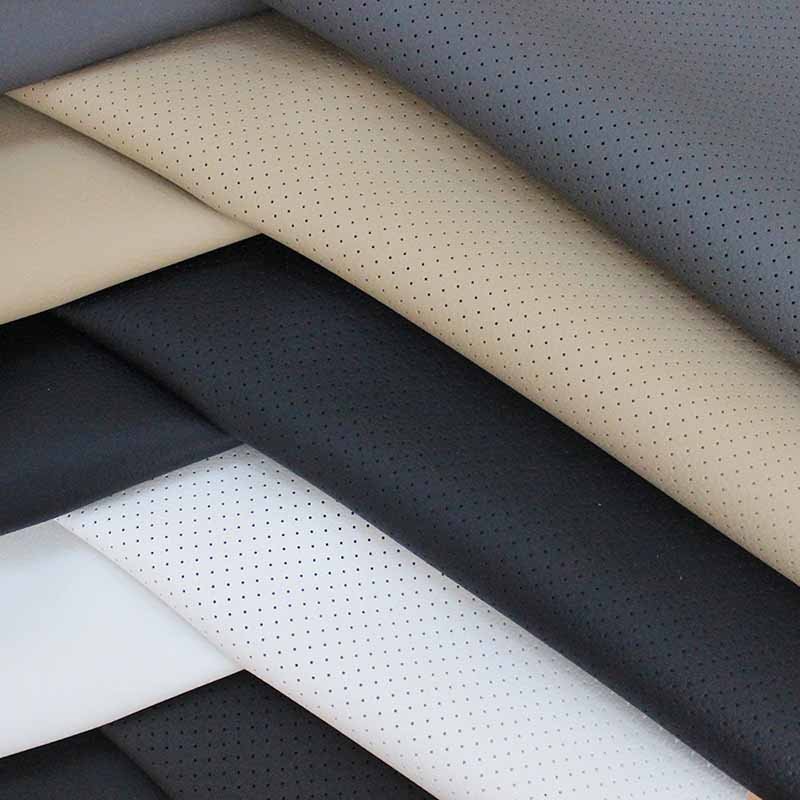
MOQ and pricing reveal the sourcing structure behind the product. Leather, hardware, lining, logo processes, packaging, testing, and production setup all influence minimum quantities and cost. Compare quotations only after confirming the same material, construction, workmanship, packaging, inspection, and trade terms. An unusually low price often reflects missing specifications rather than genuine manufacturing efficiency.
MOQ Drivers
The final assembler is only one part of the leather goods supply chain. Tanneries, hardware manufacturers, zipper suppliers, lining mills, edge-paint suppliers, mold makers, label printers, and packaging factories may each impose separate minimum purchase quantities. The finished product MOQ is therefore often determined by the least flexible customized component rather than by the number of workers available to sew the order.
A simple leather pouch using available material, standard hardware, one color, and basic packaging may support a relatively small first order. A handbag requiring custom-dyed leather, branded lining, molded hardware, special plating, custom zipper pulls, printed tissue, and a rigid gift box will usually require a higher quantity or a higher unit cost to absorb unused materials and setup expenses.
Ask the manufacturer to explain the MOQ for each customized component. This reveals the actual constraint and may identify practical alternatives. The order quantity might be reduced by choosing an available leather color, standardizing hardware across several styles, using one lining for a coordinated collection, sharing packaging dimensions, or postponing custom molds until the product has passed an initial market test.
Selected custom leather projects may sometimes begin around 200 pieces, but complex structures, special colors, custom hardware, testing, and printed packaging often require higher quantities. Buyers should treat a published starting MOQ as an entry point rather than a guaranteed quantity for every design. The final MOQ should be calculated after the material, structure, colors, branding, packaging, and component supply requirements are understood.
Quote Detail
A useful quotation should allow another technical person to understand what is being purchased. A line reading “leather handbag, 500 pieces” does not provide enough information for comparison. The quote should identify the product version, dimensions, leather type, thickness, lining, reinforcement, hardware, zipper, thread, edge treatment, logo, packaging, quantity, colors, tooling, sample fees, lead time, payment terms, trade term, and quotation validity.
Price differences often come from areas that are difficult to see in photographs. One supplier may use top-grain leather, stronger reinforcement, thicker lining, controlled hardware plating, and a detailed edge-finishing process. Another may use coated split leather, lighter hardware, simplified reinforcement, fewer finishing operations, and basic packaging. Both products may look similar during an initial video review, but their durability, feel, and repeatability may differ substantially.
Compare total delivered cost and expected quality risk instead of focusing only on the factory unit price. A slightly higher manufacturing price may be more economical when it reduces inspection failures, customer returns, emergency air freight, repacking, replacement orders, and lost launch time. The lowest quotation becomes expensive when it excludes important requirements or depends on quality assumptions that were never discussed.
Ask how the price changes at different quantities and what creates each price break. Genuine savings can come from improved leather purchasing, better cutting yield, shared hardware, reduced setup time, more efficient production planning, and simplified packaging. Price reductions should never depend on silently changing the approved leather, backing, reinforcement, hardware material, edge finish, inspection scope, or packaging standard.
Sample and Tooling Costs
Sample charges may include pattern development, sample labor, small-quantity material purchasing, leather cutting, logo dies, custom color development, hardware molds, packaging prototypes, testing, and courier costs. A first sample usually costs more per unit than bulk production because the factory must create patterns, test construction, source small quantities, and assign skilled sample technicians without the efficiency of a production line.
Ask which fees are refundable or creditable after a bulk order and which remain separate. A simple logo stamping die may be credited after production, while a custom metal hardware mold may remain chargeable because it belongs to an external component supplier. Confirm who owns the tooling, where it will be stored, how long it will be retained, and whether it can be transferred if the manufacturing relationship ends.
Sample revisions caused by buyer-initiated design changes should be distinguished from corrections required because the factory failed to follow approved instructions. This distinction should be agreed before development begins. Without a clear revision record, both sides may disagree about whether an additional sample is part of the original development scope or a new request that requires more time and cost.
Courier expenses can also become significant for large handbags, multiple color samples, hardware boards, leather swatches, and packaging prototypes. Combining several approvals into one shipment can reduce freight, but critical decisions should not be delayed merely to save a small amount. The cost of a missed launch or incorrectly approved bulk material is usually far greater than the cost of sending a necessary sample.
Scaling Cost
Scaling production changes the cost structure, but not every component becomes cheaper at the same rate. Leather purchasing, hardware tooling, packaging setup, cutting layout, and production efficiency may improve with volume. Hand skiving, edge painting, manual assembly, cleaning, finishing, and inspection remain labor-intensive and may show only limited cost reduction when the order becomes larger.
Ask the factory to explain which savings are realistic at 500, 1,000, 3,000, or 5,000 pieces. Every major price break should have a clear cause. A dramatic reduction without a technical explanation may indicate a change in leather grade, construction, hardware, quality inspection, or packaging rather than true production efficiency.
Repeat orders can become more stable and efficient when patterns, cutting dies, templates, approved materials, hardware specifications, packaging files, and work instructions have already been established. However, later leather batches may cost more, become unavailable, or show slightly different color and grain. The manufacturer should reconfirm material availability, price, and expected variation before every repeat production run.
Brands should also budget for inspection, testing, freight, duties, insurance, warehouse receiving, repacking, and possible rework. An ex-factory price represents only one part of the total product cost. The most commercially successful supplier is often the one that delivers predictable quality and timing, even when its initial unit quotation is not the lowest.
How Do You Choose the Final Supplier?
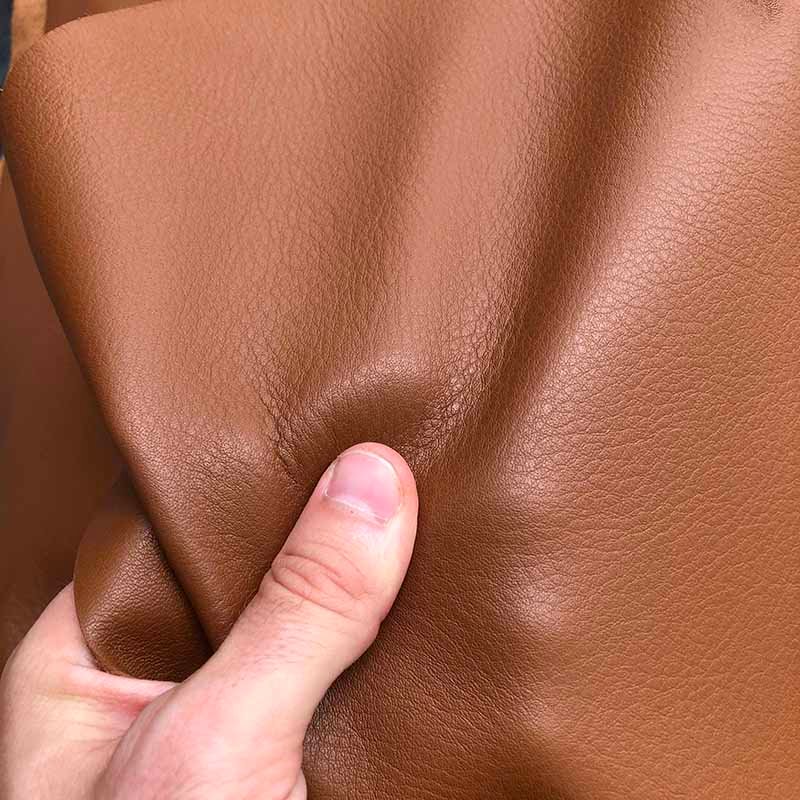
Choose the final supplier with a weighted evaluation covering product experience, leather control, sampling, craftsmanship, quality systems, compliance, capacity, pricing, communication, and long-term support. The right partner provides evidence, explains trade-offs, documents changes, and reproduces approved standards in bulk. The lowest price should be considered only after technical and commercial requirements have been aligned.
Evidence and Audit
Use several forms of evidence rather than relying on a website, presentation, or sales promise. Review business documentation, similar products, material records, sample-development facilities, production areas, inspection reports, packaging controls, and current project documentation. No single certificate, factory photograph, or successful sample proves that the complete manufacturing system is suitable for your specific leather product.
A live video review can be useful when travel is not practical. Ask the supplier to move through the facility in real time rather than showing only edited promotional footage. Request close views of the sample room, leather storage labels, cutting area, skiving equipment, work instructions, semi-finished goods, edge-finishing process, inspection station, approved samples, packaging materials, and carton preparation.
For larger sourcing programs, a third-party factory audit may be appropriate. The audit scope should match the risk. A social-compliance report does not prove technical leather-working capability, and a quality-management certificate does not prove that the factory can reproduce your product. System evidence should therefore be combined with material evaluation, product-specific sampling, process review, testing, and inspection.
Customer references can be helpful, but confidentiality may limit what a manufacturer is able to share. A factory that protects existing clients’ names, designs, patterns, and purchase information may actually demonstrate responsible information control. Focus on process evidence, anonymous comparable samples, inspection records, and technical discussion instead of demanding confidential customer details.
Communication Quality
Strong communication is technical, specific, and documented. Response speed is useful, but a fast reply that ignores important questions creates more risk than a slower and more complete review. Evaluate whether the supplier understands drawings, dimensions, tolerances, material terminology, construction, testing, packaging, and trade terms rather than measuring communication quality only by how quickly a sales representative responds.
Ask the team to summarize the project in its own words. Misunderstandings often become visible when the factory restates the product requirements, material, quantity, customization, quality standard, and timeline. A capable project coordinator should track sample versions, open issues, material approvals, pricing changes, production milestones, inspection results, packaging files, and shipping documents.
For complex products, the sales contact should be able to involve pattern makers, sample technicians, leather sourcing staff, production personnel, quality inspectors, packaging specialists, and logistics colleagues. This reduces the risk of technical information being repeatedly simplified as it passes between unrelated people. The strongest communication structure connects the buyer directly to the people responsible for solving the relevant issue.
Professional manufacturers may challenge unrealistic requirements. They may explain that thick leather cannot create an extremely thin folded edge without skiving, that custom hardware extends the schedule, or that a target price cannot support the selected material and construction. Clear technical disagreement is often safer than effortless agreement because it shows that the supplier is considering production reality rather than simply trying to secure the deposit.
Red Flags
Be cautious when a quotation is issued before the supplier has enough information to understand the product. Other warning signs include vague material descriptions, inconsistent company information, copied product images, refusal to show production, hidden subcontracting, pressure to skip sampling, unrealistic lead times, unsupported compliance claims, and no written quality standard.
A supplier should not promise that every natural leather panel will look identical. It should explain normal variation and propose practical grading, shade grouping, and cutting controls. It should also avoid unsupported claims about sustainability, waterproofing, durability, chemical safety, recycled content, or material origin. Claims should be supported by product-specific documentation and testing where required.
Payment information deserves careful attention. The beneficiary name and account should be consistent with the contracted company or supported by a clear and verifiable explanation. Sudden requests to pay a different account should be confirmed independently through established contact details. Commercial urgency should never be used to discourage normal identity, bank, or contract verification.
Observe how the supplier handles mistakes during sampling. A capable factory identifies the cause, proposes corrective action, records the revision, and prevents recurrence. Repeated excuses, unexplained remakes, missing records, or changing technical answers suggest weak process control. Confidentiality is another important signal, so discuss NDAs, logo authorization, pattern ownership, mold ownership, artwork access, and restrictions on displaying customer designs.
Final Scorecard
A weighted scorecard reduces the influence of personal impressions and isolated strengths. Rate each finalist from 1 to 5 in every category and record the evidence supporting the score. A friendly sales representative, attractive factory showroom, or low quotation should not receive disproportionate influence when the product requires precise leather control, complex construction, compliance, and dependable repeat production.
| Evaluation Area | Suggested Weight | Evidence |
|---|---|---|
| Similar product experience | 10% | Comparable samples and construction knowledge |
| Leather sourcing and control | 15% | Swatches, specifications, supplier and batch records |
| Sample development | 15% | Patterns, revision control, production-ready sample |
| Craftsmanship | 15% | Stitching, skiving, edges, structure, hardware |
| Quality system | 15% | Incoming, in-line, final, and packing inspection |
| Compliance support | 5% | Product-specific testing coordination |
| Pricing transparency | 8% | Complete and comparable quotation |
| Capacity and delivery | 7% | Product-specific schedule and bottleneck plan |
| Communication | 5% | Technical records and response quality |
| Long-term support | 5% | Repeat orders, new SKUs, material continuity |
| Total | 100% |
The highest total score is not automatically the final answer. Review any category that creates an unacceptable risk. A factory with excellent pricing but weak leather control may remain unsuitable. A technically capable workshop with insufficient capacity may also be the wrong choice for a fixed retail launch. Minimum acceptable scores can be established for critical categories such as materials, sample development, quality, and delivery.
Before placing the order, confirm the approved sample, product specification, bill of materials, inspection standard, payment terms, production schedule, packaging, testing responsibility, tooling ownership, confidentiality, and corrective-action process in writing. The strongest manufacturing relationship begins with fewer assumptions and clearer evidence. Trust becomes valuable after the process is defined, not as a substitute for defining it.
Start Your Private Label Leather Goods Project with Szoneier
Choosing a private label leather goods manufacturer is ultimately an exercise in controlling product-development and supply-chain risk. The design must be translated into a measurable specification, the selected leather must behave correctly in the intended structure, and the approved sample must represent a repeatable production method. Materials, hardware, stitching, edges, logos, packaging, and inspection standards must remain controlled when the project moves from one sample to hundreds or thousands of units.
Szoneier is a Shenzhen-based custom bags, leather goods, and soft goods OEM/ODM manufacturer with more than 18 years of manufacturing experience. Its manufacturing system supports material selection, structure development, pattern making, sampling, sample revisions, production coordination, quality inspection, branded packaging, and international delivery for global brands, retailers, importers, e-commerce businesses, and project-based procurement teams.
The company can support private label leather handbags, wallets, card holders, organizers, business bags, travel accessories, leather pouches, gift sets, PU leather products, and coordinated leather collections. Selected custom projects may begin from 200 pieces, while the final MOQ depends on material availability, colors, hardware, logo method, structure, packaging, testing, and production requirements.
A useful request for quotation should include the product photo, drawing, reference sample, or technical pack; finished dimensions; preferred genuine leather or PU material; target color and surface finish; required quantity by SKU; logo artwork; hardware and lining requirements; packaging format; destination country; target delivery schedule; and applicable quality or testing requirements.
For detailed Request for Quotation (RFQ), design drafts, quality standards, packaging requirements, and long-term procurement options, please contact szoneier. To expedite initial project evaluation, a good RFQ should include sufficient information to assess materials, construction, sample making methods, minimum order quantities, pricing factors, quality risks, packaging, and production schedules before development begins.