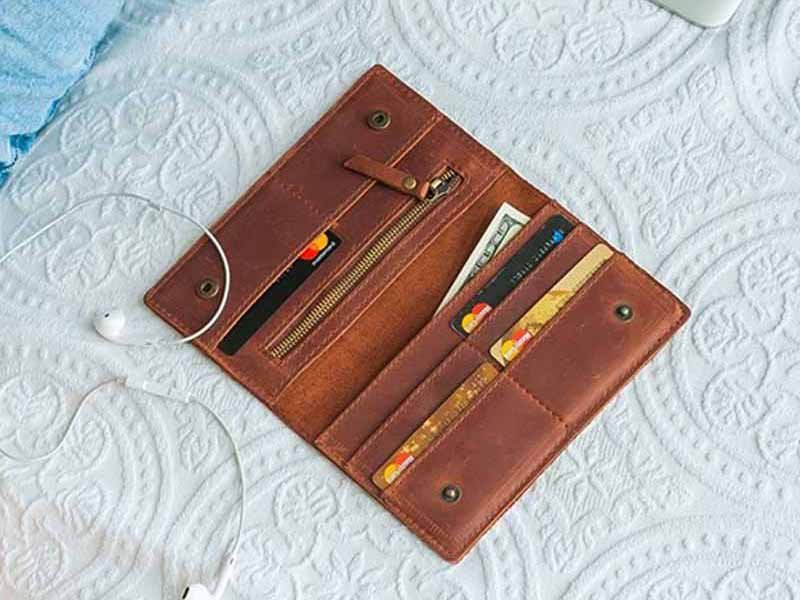
A wallet looks simple until it is opened and examined layer by layer. A standard bifold may contain an exterior shell, an inner bill compartment, four to eight card pockets, hidden backing pieces, folded edges, skived seams, lining, adhesive, thread, reinforcement and edge finishing. Every extra layer changes how the leather bends, stretches and wears.
Full grain leather is often presented as the unquestioned premium option, while top grain leather is sometimes treated as a lower grade. That comparison is too simple. A wallet does not perform well because of a material label alone. Performance comes from the relationship between hide quality, tanning, thickness, temper, surface finish, cutting position and construction.
Full grain leather is usually the stronger choice for wallets designed to develop natural patina, show authentic grain and age with visible character. Top grain leather is often more suitable for wallets requiring a smooth surface, stable color, lighter construction and greater consistency across a production order. A high-quality top grain calfskin can outperform unsuitable full grain leather when the wallet must remain slim, soft and uniform.
Consider two wallets made from the same cowhide. One uses a 1.8 mm full grain exterior with equally thick card pockets. The other uses a 1.2 mm top grain exterior and 0.6 mm skived card pockets. The first sounds more premium on paper, yet it may become bulky, difficult to close and uncomfortable in a pocket. The second may feel cleaner and perform better because the leather has been matched to the structure.
The real comparison begins when the wallet is filled with cards, folded repeatedly, carried through summer heat and rubbed against fabric for several months.
What Are Full Grain and Top Grain Wallets?
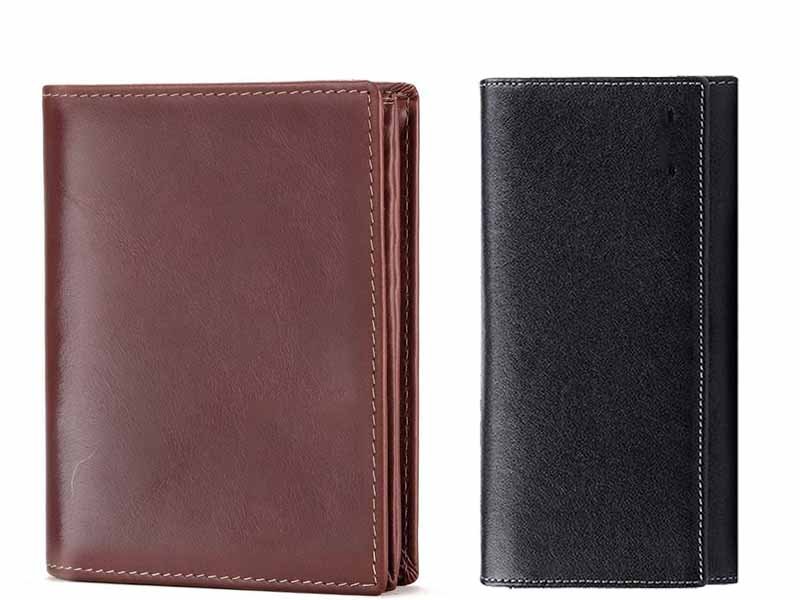
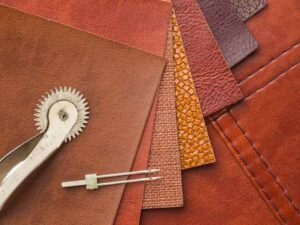
Full grain wallets retain the natural grain surface of the hide, including pores, wrinkles and minor growth marks. Top grain wallets commonly use leather whose surface has been lightly buffed or corrected before finishing. Full grain offers greater natural character and patina potential, while top grain offers smoother appearance, controlled texture and more consistent color.
The term “top grain” often causes confusion. In leather production, the top grain layer is the upper section of the hide where the grain surface and dense fiber structure are located. Full grain leather comes from that upper layer, so it can technically be described as top grain leather.
In commercial wallet descriptions, however, top grain usually refers to leather that has undergone some level of surface correction. The grain side may be lightly sanded to reduce visible marks, followed by dye, pigment, resin, wax or embossing.
For a useful comparison, the article uses the following definitions:
- Full grain leather: the original grain surface remains present and has not been mechanically removed to conceal natural marks.
- Top grain leather: the upper hide layer remains, but the surface has been lightly corrected or refinished for a more uniform result.
- Split leather: the lower fibrous layer separated from the grain layer. Split leather is not equal to full grain or top grain leather.
- Bonded leather: leather fibers or scraps combined with binding materials. It should not be presented as solid hide leather.
| Material Type | Surface Condition | Natural Grain | Production Consistency | Common Wallet Positioning |
|---|---|---|---|---|
| Full grain leather | Natural surface retained | High | Moderate | Heritage and premium collections |
| Lightly corrected top grain | Minor buffing and finishing | Medium to high | High | Refined everyday wallets |
| Heavily corrected top grain | Strong correction and embossing | Low to medium | Very high | Uniform color-led collections |
| Split leather | Lower hide layer with coating | Low | High | Entry-level products |
| Bonded leather | Reconstituted leather fibers | Very low | High | Price-focused products |
The distinction matters because two materials carrying the same “top grain” label can perform very differently. Lightly corrected calfskin with a thin semi-aniline finish may feel natural and remain flexible for years. Heavily coated cowhide may look smooth when new but feel less breathable and show noticeable surface wear around corners.
A leather specification should therefore include more than the grain name. For wallet development, product teams should confirm:
- Animal species and hide origin
- Full grain, corrected grain or embossed surface
- Vegetable, chrome or combination tanning
- Aniline, semi-aniline or pigmented finish
- Leather thickness and tolerance
- Temper and stretch direction
- Colorfastness requirements
- Surface gloss level
- Logo application method
- Edge treatment
- Lining and reinforcement plan
What Are Full Grain Wallets?
Full grain wallets use leather with the original outer grain surface intact. Hair follicles, fine wrinkles, growth lines, healed scratches and small shade differences may remain visible. These features create natural variation, but they must be evaluated carefully during cutting.
Not every natural mark belongs on every wallet panel. A shallow wrinkle can add visual depth to an exterior shell. A deep scar near a card-slot corner may create a weak point. A loose belly area may stretch after cards are inserted. A neck section with strong growth lines may fold differently from a firm butt section.
Professional cutting should separate natural character from structural defects.
Acceptable natural features may include:
- Fine pores
- Mild grain variation
- Small healed marks
- Light growth wrinkles
- Minor shade differences within the approved range
Areas requiring rejection or restricted use may include:
- Open scars
- Cuts penetrating the grain layer
- Loose grain
- Excessive stretch
- Weak belly fiber
- Deep tick damage
- Surface cracking
- Uneven dye penetration
- Oil or water contamination
Full grain leather also varies according to tannage. Vegetable-tanned full grain leather usually feels firmer and develops a more visible patina. Chrome-tanned full grain leather is often softer, more flexible and available in a wider range of colors. Combination-tanned leather can provide firmness without the harder break-in associated with some vegetable-tanned hides.
A full grain label does not guarantee softness, strength or luxury. Poor tanning can leave leather dry or brittle. Weak fiber structure can cause stretching. Excessive finish can hide much of the natural feel even when the grain has not been sanded.
The material should be evaluated as a complete leather system rather than by name alone.
What Are Top Grain Wallets?
Top grain wallets generally use leather from the upper hide layer after shallow marks and uneven grain have been reduced through buffing or correction. The tannery then applies finishing materials to create the desired color, gloss, texture and protection.
Light correction can improve visual consistency without removing the leather character completely. Such leather may still show natural grain and feel pleasant in the hand. Greater correction creates a smoother surface and allows more panels to be cut from each hide.
Top grain leather is often chosen for:
- Slim business wallets
- Smooth calfskin cardholders
- Color-matched accessory collections
- Corporate gift wallets
- Fashion collections with seasonal shades
- Wallets requiring sharp logo embossing
- Products requiring reduced visible variation
The quality of top grain leather depends heavily on the finish. A thin, flexible finish moves with the hide and maintains a natural touch. A heavy coating may reduce breathability and produce a plastic-like surface.
Important finish checks include:
- Adhesion at fold lines
- Resistance to dry rubbing
- Resistance to damp rubbing
- Color transfer onto light fabric
- Surface whitening after bending
- Cracking after repeated flexing
- Scratch visibility
- Recovery after light rubbing
- Compatibility with edge paint and adhesive
Top grain leather can be especially useful when a collection requires 1,000 or more wallets in a controlled color. Natural full grain hides vary from section to section and batch to batch. Corrected surfaces make color and texture control easier, although tannery lot approval is still necessary.
A good top grain wallet should not be judged as a compromise. It may be the more technically appropriate material for a smooth, slim and repeatable design.
How Are Wallet Leathers Made?
Wallet leather passes through many stages before reaching the cutting table. Hide selection, cleaning, tanning, dyeing, fatliquoring, drying, thickness control and surface finishing all influence the final wallet.
Tanning stabilizes the raw hide so it no longer decomposes. Vegetable tanning uses plant-based tannins and commonly produces firmer leather. Chrome tanning uses chromium salts and often produces softer leather with good heat resistance and broad color capability. Combination tanning uses more than one tanning approach to balance structure and flexibility.
After tanning, the leather may be shaved or split to control thickness. The tannery then dries, softens and finishes the surface according to the required appearance.
A simplified development sequence includes:
- Hide grading and section selection
- Tanning and neutralization
- Dyeing and fatliquoring
- Drying and conditioning
- Thickness adjustment
- Surface correction where required
- Color and protective finishing
- Embossing or plating where required
- Physical inspection
- Color and thickness lot approval
Thickness control is especially important for wallets. Leather should be measured across several points because a hide naturally varies. A specification of 1.2 mm without tolerance can create confusion. A more useful instruction may be 1.2 mm with an agreed tolerance, followed by skiving requirements for individual components.
The same leather can perform differently depending on where it is used:
| Wallet Part | Suggested Development Range | Main Requirement |
|---|---|---|
| Exterior shell | 1.1–1.6 mm | Body, surface appearance and fold control |
| Interior base | 0.8–1.2 mm | Support without excessive thickness |
| Card pockets | 0.5–0.9 mm | Strength, clean opening and low bulk |
| Folded pocket edge | 0.4–0.7 mm | Smooth turning without a hard ridge |
| Leather lining | 0.4–0.8 mm | Flexibility and stable bonding |
| Reinforced slot area | Based on structure | Tear resistance and controlled stretch |
These ranges are starting points for sampling, not fixed rules. A firm 0.8 mm vegetable-tanned leather may feel more structured than a soft 1.1 mm chrome-tanned leather. Temper must be reviewed together with thickness.
A completed wallet sample gives more useful information than a loose leather swatch. The sample reveals whether the leather becomes bulky at seam intersections, wrinkles at the fold, stretches around cards or reacts poorly with edge paint.
Which Wallet Leather Lasts Longer?
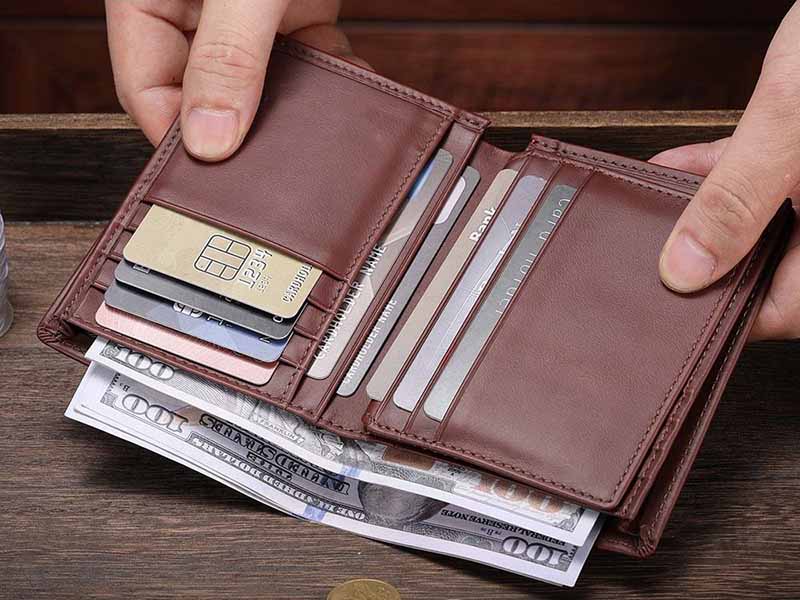
Full grain leather generally provides stronger long-term aging potential because the natural grain layer remains intact. Top grain leather can also deliver long service life, especially when its finish is flexible and well bonded. Wallet durability depends on leather strength, component thickness, card-slot design, skiving, stitching, edge treatment and daily loading.
Many leather wallet comparisons focus only on the exterior panel. Most wallet failures begin elsewhere.
Common failure areas include:
- Card-slot corners
- Central fold lines
- Painted edges
- Folded pocket openings
- Stitch holes placed too close to edges
- Thin skived sections
- Adhesive separation
- Lining wrinkles
- Overloaded card pockets
- Areas exposed to perspiration
A wallet may be opened several times each day. At five openings per day, the center fold experiences more than 1,800 bending cycles in one year. Card slots receive additional stress whenever a card is inserted or removed. A wallet carried in a back pocket also supports body pressure during sitting.
A strong grain layer helps, but good design distributes stress. A card slot with a sharp internal corner concentrates force in one point. A slightly rounded or reinforced corner spreads the load more safely. Stitch spacing and seam allowance also affect tear resistance.
| Durability Factor | Full Grain Leather | Top Grain Leather | Main Manufacturing Risk |
|---|---|---|---|
| Repeated folding | Strong with suitable temper | Strong when finish remains flexible | Cracking at the fold |
| Card-slot stretch | Depends on tannage and fiber firmness | Often easier to control | Loose pockets after use |
| Scratch visibility | Marks appear more naturally | Light marks may be resisted by finish | Deep coating damage |
| Edge wear | Good for burnishing on firm leather | Often suitable for edge paint | Chipping or peeling |
| Water sensitivity | Higher with open finishes | Often lower with protective finish | Staining or discoloration |
| Color consistency | Natural variation is expected | Easier to standardize | Lot-to-lot shade difference |
| Patina | Usually pronounced | More restrained | Uneven aging |
| Repairability | Oiled or waxed surfaces may recover | Coating damage is harder to blend | Visible surface contrast |
Are Full Grain Wallets More Durable?
Full grain leather is often highly durable because the dense grain surface has not been sanded away. The upper fiber structure supports resistance to tearing, abrasion and repeated bending.
Durability still depends on the hide section. Leather from the butt and back commonly provides firmer fiber structure than belly areas. Belly leather is more elastic and can stretch around card openings. Professional cutting places firm areas in exterior panels, card slots and narrow structural pieces.
Animal species also changes performance.
Cowhide offers broad availability, varied grain and strong structural options. Calfskin has finer grain and supports refined wallets. Goatskin combines visible grain with good strength at a lower thickness. Buffalo leather offers a larger texture and rugged appearance but may require careful splitting for compact wallets.
Leather moisture and oil balance should also be controlled. Dry leather may crack at the fold. Leather containing too much oil can stain packaging, darken unevenly or interfere with adhesive and edge paint.
Before bulk production, a wallet sample should be tested through practical handling:
- Open and close the wallet repeatedly
- Load every card slot with the intended number of cards
- Leave the wallet loaded for several days
- Check pocket recovery after card removal
- Rub corners against fabric
- Bend the center fold in both directions
- Inspect stitch holes for elongation
- Examine edges for fiber lifting
- Check for dye transfer
- Compare appearance with the approved sample
Full grain leather performs best when its natural qualities are supported by controlled cutting and construction.
Do Top Grain Wallets Resist Scratches?
Top grain leather often resists light scratches better during early use because the finish creates a protective barrier. Pigmented and semi-aniline finishes can reduce the visibility of fingernail marks, minor rubbing and contact with smooth objects.
Scratch resistance should not be confused with permanent damage resistance. A shallow mark on a waxed full grain wallet may blend in after gentle rubbing. A deep scratch through a pigmented top grain finish can expose a different color underneath and remain clearly visible.
Finish thickness creates a trade-off.
A light finish preserves softness and natural touch but offers less surface protection. A heavier finish improves color uniformity and stain resistance but can reduce the natural feel. If the coating becomes too rigid, repeated folding may cause whitening, cracking or peeling.
Scratch assessment should include several conditions:
- Dry surface scratching
- Scratching after moisture exposure
- Rubbing against denim or cotton
- Contact with keys or metal edges
- Flexing after scratching
- Recovery after light polishing
- Color contrast between the surface and leather base
Dark brown and black can hide minor marks more easily than pale beige or bright colors. Matte surfaces may show rubbing differently from high-gloss finishes. Pebbled embossing can disguise light abrasions, while smooth leather reveals surface marks more quickly.
Top grain leather is a sensible choice when a wallet must arrive with a clean, uniform appearance and remain easy to maintain. The finish still needs enough flexibility to survive years of folding.
How Do Wallet Edges Wear?
Edges often reveal the real construction quality of a wallet. Even when the main leather panel remains attractive, poorly prepared edges can become rough, cracked or chipped.
Firm vegetable-tanned full grain leather can often be burnished. The edge is trimmed, sanded, beveled, moistened or treated with a burnishing compound, then polished until the fibers become compact and smooth. Wax may be added for protection.
Softer chrome-tanned leather usually requires folded construction or edge paint. Painted edges need several thin, controlled layers rather than one heavy coat.
A reliable painted-edge process may include:
- Accurate trimming
- Initial sanding
- Base coat application
- Controlled drying
- Intermediate sanding
- Color coat application
- Additional coating where required
- Final sealing
- Flex inspection
- Visual and hand-feel inspection
Edge paint should remain bonded when the wallet is folded. It should not feel sharp, sticky or excessively raised. At card-pocket openings, the edge must remain smooth because repeated card movement creates abrasion.
Stitch placement also affects edge life. Stitching too close to the edge can cause tearing. Stitching too far inward may create bulky or poorly controlled margins. Skiving must reduce bulk without removing so much leather that stitch holes pull through.
For custom wallet development, edge construction should be selected according to leather temper:
- Firm vegetable-tanned leather: burnished or painted edges
- Soft chrome-tanned leather: folded or painted edges
- Thin calfskin: folded edges for a refined look
- Pebbled leather: painted edges with careful sanding
- Oiled leather: burnishing or wax finishing after compatibility testing
A durable wallet is not defined by grain type alone. It is created when leather, thickness, seam position, thread tension, adhesive, reinforcement and edge finishing are developed as one system.
How Do Full Grain and Top Grain Wallets Age?
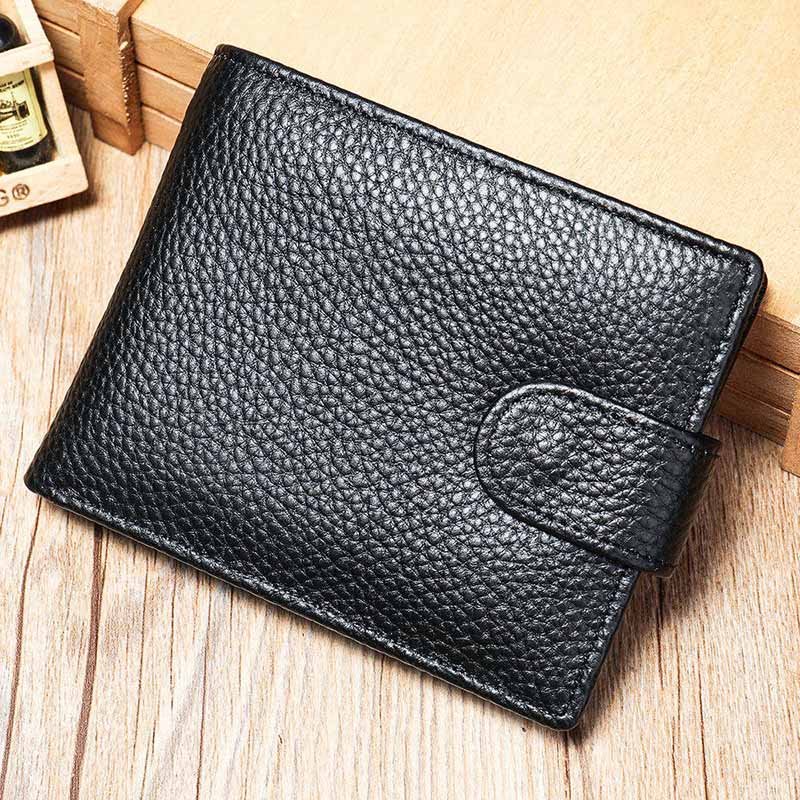
Full grain leather usually develops stronger color depth, surface shine and visible patina because its natural grain remains exposed. Top grain leather tends to age more evenly when protected by a stable finish. Good aging should improve appearance without causing cracking, peeling, loose card slots, severe color transfer or damaged edges.
Leather aging begins from the first day a wallet is handled. Hands transfer small amounts of oil and moisture onto the surface. Pocket fabric creates friction. Sunlight changes color. The center fold bends repeatedly. Corners rub against clothing, bags and desks. Cards press against pocket openings and slowly change the leather tension.
These changes do not affect every leather in the same way. Full grain vegetable-tanned leather may darken noticeably and develop a polished surface. Soft full grain chrome-tanned leather may become more supple with less dramatic color change. Top grain leather with a light semi-aniline finish may develop gentle tonal variation, while a heavily pigmented top grain leather may retain its original color for longer.
The final result depends on several factors:
- Leather species
- Tanning method
- Dye penetration
- Oil and wax content
- Surface finish
- Wallet color
- Daily carrying position
- Climate and humidity
- Contact with sweat or water
- Cleaning and conditioning habits
- Card quantity
- Construction quality
A wallet carried in a front trouser pocket ages differently from one stored inside a handbag. Back-pocket wallets receive more pressure and heat during sitting. Jacket-pocket wallets usually experience less compression but may be exposed to colder and drier conditions.
Leather aging should therefore be evaluated according to the intended use, not only by comparing new material swatches.
How Do Full Grain Wallets Age?
Full grain leather usually shows the clearest record of use. Natural pores, wrinkles and tonal differences become more visible as oils and friction change the surface. Raised areas may become smoother, while recessed grain retains a more matte appearance.
Vegetable-tanned full grain leather often develops the strongest patina. Natural tan may shift toward honey, amber or dark brown. Medium brown may gain richer red or chocolate tones. Black leather usually changes less dramatically in color, but the surface may become smoother and glossier around the corners and fold.
Waxed full grain leather can show pull-up effects. When the leather bends, oils and waxes move within the structure, creating lighter tones along the fold. Gentle rubbing may redistribute these materials and reduce shallow marks.
Aging quality depends on the original leather condition. Well-balanced leather remains flexible and develops depth. Overly dry leather may form cracks. Over-oiled leather may become greasy, stain linings or soften card slots too quickly.
A full grain wallet should be approved with a clear expectation of natural variation. Some users enjoy visible marks and color change. Others expect every wallet to remain uniform. Product descriptions and care instructions should match the real behavior of the leather.
Do Top Grain Wallets Change Color?
Top grain leather can change color and texture, although the effect is usually more controlled. The surface finish determines how much of the natural leather remains visible and how easily oils or moisture enter the material.
Semi-aniline top grain leather may develop a soft sheen and slight darkening around high-contact areas. Pigmented leather usually keeps a more stable color because the finish forms a stronger barrier over the grain.
Color change may also come from abrasion rather than patina. Corners can become lighter if the surface pigment wears away. A poorly bonded finish may reveal a contrasting base color. This effect is not desirable and should be identified during sample testing.
Production teams should inspect:
- Surface color after repeated folding
- Corner color after dry rubbing
- Color transfer onto white cotton
- Damp rubbing performance
- Finish whitening at fold lines
- Gloss change after handling
- Base color exposure after abrasion
- Darkening after water contact
- Recovery after drying
Light colors need special attention. Beige, cream, pale grey and pastel shades can show dirt, denim transfer and hand oils quickly. Dark navy and burgundy may transfer dye onto light fabric if colorfastness is insufficient.
A top grain wallet can maintain a clean appearance for years when the finish is flexible, well bonded and compatible with the leather beneath it.
Which Wallet Leather Ages Better?
Full grain leather ages better when the design is intended to become more personal over time. Top grain leather ages better when the goal is to maintain a neat, stable and controlled appearance.
The choice depends on the visual promise made to the end user.
A heritage wallet with visible stitching, raw or burnished edges and natural grain should develop character. Small scratches and color deepening support the design. A formal dress wallet may need to remain smooth, slim and consistent. Heavy patina could make it look worn rather than refined.
Aging should also be judged by structure, not only by color.
A wallet has aged well when:
- The center fold remains flexible
- Card slots hold cards securely
- Stitch holes remain stable
- Edges stay smooth
- Lining does not wrinkle or separate
- Surface color changes evenly
- Leather does not crack
- Finish does not peel
- Corners remain firm
- Logo details remain readable
A wallet has aged poorly when the leather becomes sticky, excessively soft, dry, cracked, faded or loose around the pockets.
Full grain leather does not always age better than top grain leather. A carefully finished top grain calfskin can remain attractive longer than low-quality full grain leather with weak fibers or unstable dye.
The correct comparison should use finished prototypes made to the same design, thickness and construction standard.
Which Leather Fits Each Wallet Style?
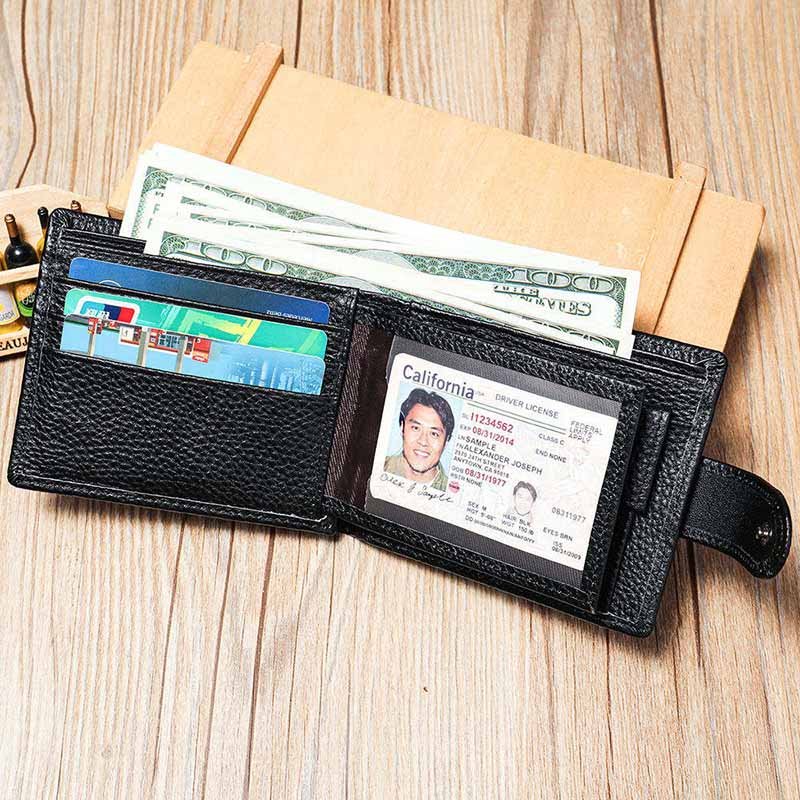
Full grain leather works well for structured bifolds, heritage wallets and products designed around natural patina. Top grain leather suits slim wallets, dress cardholders and collections requiring smooth texture and consistent color. The final selection should consider thickness, temper, pocket count, lining and edge construction.
Wallet design determines how many leather layers meet at one point. A basic cardholder may use only two or three layers. A multi-slot bifold can contain eight or more layers near the card-pocket base.
Even thin leather becomes bulky when several layers overlap.
For example:
- Six layers at 0.8 mm create 4.8 mm before adhesive, thread and edge treatment.
- Six layers at 1.0 mm create 6.0 mm.
- Eight layers at 0.8 mm create 6.4 mm.
- Eight layers at 1.2 mm create 9.6 mm.
These simple calculations explain why a wallet made entirely from thick leather often feels heavy and difficult to close.
The exterior may need body and visual presence. Interior pockets need lower thickness and controlled stretch. Folded edges require skiving. Reinforcement may be added only where stress is concentrated.
A well-developed wallet balances these layers rather than applying one thickness to every component.
Is Full Grain Best for Bifold Wallets?
Full grain leather is a strong choice for bifold wallets because it can support repeated folding, pocket friction and long-term use. It is especially suitable for classic designs with fewer interior layers and visible natural grain.
The center fold is the most important area. The exterior shell travels around a larger curve than the interior panel. If both pieces are cut to the same flat length without fold allowance, the interior may wrinkle or the wallet may remain partly open.
The pattern should allow for:
- Leather thickness
- Lining thickness
- Fold radius
- Stitch position
- Interior panel length
- Number of card-pocket layers
- Expected card load
A firm full grain exterior can provide structure, while thinner interior leather reduces bulk. For example, a 1.3 mm exterior may be combined with 0.7 mm card pockets and a 0.5 mm lining. The exact combination depends on temper and construction.
Full grain leather is particularly effective for:
- Two-pocket bifolds
- Four-pocket bifolds
- Unlined heritage wallets
- Coin-and-note wallets
- Travel wallets
- Long wallets
- Hand-stitched wallets
Very thick leather can become a problem in multi-slot designs. A 1.6 mm exterior combined with 1.0 mm pockets may produce a wallet that looks impressive when empty but becomes uncomfortable after cards are inserted.
A completed loaded sample should remain closed naturally without excessive pressure.
Is Top Grain Best for Slim Wallets?
Top grain leather is often preferred for slim wallets because it can be produced with a smooth surface and controlled thickness. Fine calfskin, goatskin and selected cowhide can provide a refined feel without creating excessive bulk.
Slim wallets place more pressure on precision. There is less material available to absorb cutting, skiving and stitching errors. Card pockets need enough strength to hold their shape even when reduced to 0.5–0.8 mm.
Thin leather should be checked for:
- Tear resistance near stitch holes
- Stretch around card openings
- Edge stability
- Surface cracking after folding
- Adhesive penetration
- Skiving consistency
- Color change under pressure
- Delamination from backing materials
Some thin leathers need reinforcement behind card-slot openings. Reinforcement can be made from thin woven fabric, specialized backing material or another leather layer. It should strengthen the pocket without producing a hard line visible from the front.
A slim wallet should also be tested while loaded. Empty thickness alone is misleading.
Useful evaluation points include:
- Thickness with four cards
- Thickness with six cards
- Ability to close after loading
- Card removal force
- Pocket recovery after several days
- Corner shape after carrying
- Edge pressure marks
- Center fold behavior
Top grain leather is not automatically lighter than full grain leather. The finished wallet weight depends on substance, backing, lining and pocket count. A lightly corrected 0.8 mm leather may create a slimmer result than a heavily coated 0.8 mm leather with thick reinforcement.
Which Leather Suits Card Wallets?
Full grain and top grain leather can both perform well in card wallets. Full grain is suitable for minimal designs where natural texture carries the visual identity. Top grain is useful when the design needs smooth color, fine embossing and repeatable appearance.
Cardholder quality is heavily influenced by pocket tension. The slot should hold the card securely but allow comfortable removal.
Pocket tension depends on:
- Card width
- Pocket opening width
- Leather stretch
- Pocket depth
- Stitch position
- Skiving thickness
- Reinforcement
- Number of cards per slot
- Edge finishing
- Adhesive placement
A standard payment card is approximately 85.60 × 53.98 mm, but the leather pocket should not simply copy these dimensions. Seam allowance, stretch and card insertion angle must be considered.
A slot designed for one card should be tested with one card. Placing three cards into a single-card slot can permanently stretch the leather. Product information should clearly state the intended card capacity.
Full grain vegetable-tanned leather works well for simple cardholders because its firmness maintains shape. Softer top grain calfskin supports refined multi-pocket designs but may require reinforcement.
Card-slot openings can be straight, curved, V-shaped or stepped. Sharp internal corners create stress concentration. Rounded or reinforced ends reduce the risk of tearing.
A prototype should remain loaded for several days, then be emptied and checked for recovery. Pockets that remain widely open may have unsuitable leather, excessive width or insufficient reinforcement.
How Thick Should Wallet Leather Be?
Wallet leather thickness should be chosen by component rather than applying one measurement to the entire product. Exterior panels need body. Card pockets need low bulk. Folded edges need additional skiving. Lining should remain flexible.
The table below provides useful development ranges.
| Wallet Component | Common Thickness Range | Main Function | Main Risk |
|---|---|---|---|
| Exterior shell | 1.1–1.6 mm | Structure and exterior appearance | Excessive bulk |
| Interior base | 0.8–1.2 mm | Support for pockets | Wrinkling at fold |
| Card pocket face | 0.5–0.9 mm | Card retention | Stretch or tearing |
| Folded pocket edge | 0.4–0.7 mm | Clean turned edge | Ridge or cracking |
| Leather lining | 0.4–0.8 mm | Interior finish | Bonding failure |
| Coin pocket panel | 0.7–1.0 mm | Repeated opening | Deformation |
| Zipper gusset | 0.6–0.9 mm | Expansion and folding | Bulky corners |
| Long-wallet exterior | 1.0–1.4 mm | Shape retention | Warping |
| Minimalist wallet | 1.2–2.0 mm | Structure without lining | Difficult folding |
Thickness readings should be taken from several areas. Natural leather is not perfectly even. A hide specified at 1.2 mm may include areas slightly above or below the target.
Tolerance should be agreed before bulk cutting. The acceptable range depends on design complexity and leather type.
Temper also changes the result. A firm 0.9 mm leather may feel more structured than a soft 1.2 mm leather. Thickness should therefore be approved together with:
- Softness
- Bend resistance
- Stretch
- Surface finish
- Fiber density
- Recovery
- Fold behavior
Skiving must be controlled carefully. Excessive skiving near stitch holes can cause tearing. Insufficient skiving creates thick seams and uneven edges.
For folded construction, the skived area should be wide enough to turn smoothly without exposing a hard transition line. For painted edges, the cut surface should remain dense enough to sand cleanly.
Which Leather Fits Zipper Wallets?
Zipper wallets place different demands on leather because the material must work around curved corners, zipper tape, gussets and repeated opening.
Soft top grain leather is often suitable for zipper wallets because it folds around corners cleanly and supports precise edge finishing. Full grain leather can also be used, especially for structured long wallets and travel wallets, but thickness must be controlled.
Important areas include:
- Zipper corner radius
- Gusset flexibility
- Zipper tape attachment
- Edge-paint adhesion
- Interior divider thickness
- Coin-pocket reinforcement
- Puller contact points
- Wrist-strap attachment
A stiff leather may create pointed or uneven zipper corners. A very soft leather may collapse around the zipper and lose shape.
The gusset usually needs thinner and more flexible leather than the exterior shell. A 1.2 mm exterior may be paired with a 0.6–0.8 mm gusset. Curved sections may require gradual skiving.
The zipper should move smoothly without pulling the leather inward. Stitch lines must remain parallel to the zipper tape. Edge paint around curved areas should be checked for cracking after repeated opening.
Which Leather Fits Money Clip Wallets?
Money clip wallets need a balance between slimness and local reinforcement. The leather surrounding the clip must resist pressure and repeated flexing without becoming bulky.
Full grain leather works well for minimalist money clip designs with visible natural grain. Top grain leather suits smooth business styles with concealed clips and refined edges.
The metal clip creates concentrated stress. Reinforcement may be required where the clip is inserted, riveted or stitched.
Development checks should include:
- Clip holding strength
- Leather indentation
- Surface scratching from metal
- Alignment with the wallet center
- Fold balance
- Card-pocket interference
- Magnet compatibility where applicable
- Edge pressure near the clip base
Magnetic clips require careful planning because magnet strength can affect cards and electronic devices. Mechanical spring clips avoid some of these concerns but create stronger local pressure.
The leather around the clip should not be skived excessively. A thin decorative layer may need concealed reinforcement beneath it.
Which Leather Fits Coin Wallets?
Coin wallets experience concentrated pressure from hard objects. Coins can stretch pockets, mark linings and push against seams. Leather needs enough structure to resist deformation while remaining flexible enough to open.
Full grain leather is suitable for rugged snap-closure coin wallets. Top grain leather works well for smooth zipper coin purses and compact combination wallets.
Coin compartments should account for:
- Coin volume
- Gusset depth
- Closure type
- Lining abrasion
- Seam reinforcement
- Edge pressure
- Metal contact
- Pocket expansion
A flat coin pocket without enough gusset space may force coins against the zipper or snap. An overly deep pocket adds bulk.
Lining materials should resist abrasion. Very thin leather lining may show circular coin impressions. Textile lining can reduce weight but must be securely bonded or stitched.
Snap closures require reinforcement around the hardware. Repeated pulling can stretch soft leather or tear a thin panel.
Which Leather Works Best for Logos?
Top grain leather often provides a cleaner surface for fine logo embossing, foil stamping and printing because the grain is more uniform. Full grain leather can create a strong natural impression, although grain variation may affect logo sharpness.
Logo quality depends on more than leather grade.
Embossing results are influenced by:
- Leather firmness
- Grain depth
- Surface finish
- Leather thickness
- Die depth
- Pressure
- Temperature
- Dwell time
- Logo size
- Line thickness
Smooth calfskin supports small lettering and fine details. Deeply pebbled leather may require a larger logo with thicker lines. Soft leather can produce uneven impressions unless supported from below.
Foil stamping needs compatibility between the foil adhesive and leather finish. Excessive heat may darken light leather or damage the coating. Insufficient heat can cause incomplete transfer.
Logo methods commonly used on wallets include:
- Blind embossing
- Debossing
- Raised embossing
- Hot foil stamping
- Screen printing
- UV printing
- Metal logo plates
- Enamel badges
- Woven labels
- Laser engraving
Full grain leather is especially suitable for blind debossing when a natural, understated result is desired. Top grain leather often performs better for bright foil colors and precise repeated placement.
Logo testing should be completed on the actual production leather, not on an unrelated sample hide. Finish, color and tannage can change the result significantly.
How Should Wallet Samples Be Tested?
A wallet sample should be evaluated as a working product, not merely inspected for appearance. Material, pattern and construction problems often appear only after loading and repeated use.
A useful sample review can include:
- Measure overall dimensions
- Check closed and open alignment
- Count leather layers at thick points
- Load every card slot
- Insert notes into the bill compartment
- Test coin and zipper sections
- Open and close repeatedly
- Inspect center-fold wrinkles
- Check card removal force
- Review pocket recovery
- Rub corners against fabric
- Inspect dye transfer
- Bend painted edges
- Check logo clarity
- Pull lightly on stitch lines
- Examine lining adhesion
- Compare color under different light
- Check packaging fit
The first sample may focus on shape and construction. A revised sample can correct card tension, fold allowance, thickness, edge finishing and logo position. A pre-production sample should use approved leather, thread, lining, hardware, logo and packaging.
Clear sample comments are more effective than general instructions such as “make it better” or “make it thinner.”
Useful comments include:
- Reduce card-pocket leather from 0.8 mm to 0.65 mm.
- Increase the center-fold allowance by 2 mm.
- Move the first stitch line 1 mm inward.
- Reduce edge-paint thickness at curved corners.
- Strengthen the card-slot ends with concealed backing.
- Lower logo depth to prevent surface cracking.
- Match thread closer to the approved leather color.
- Reduce adhesive near the fold to improve flexibility.
Accurate comments allow the manufacturer to correct the real cause rather than changing several unrelated details.
Which Wallet Leather Should You Choose?
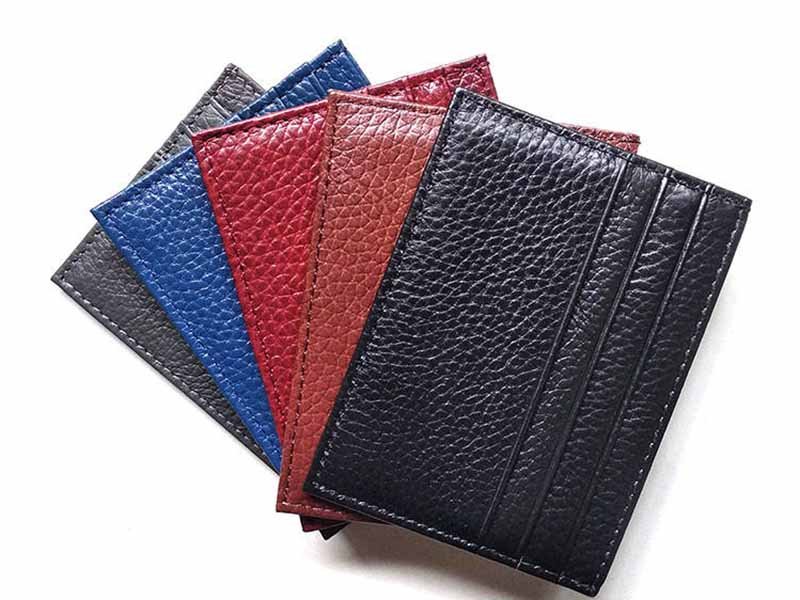
Full grain leather is the stronger choice when natural grain, visible patina, long-term character and a handcrafted appearance are central to the wallet. Top grain leather is often better when the design requires smooth texture, controlled color, precise logos, easier maintenance and consistent appearance across an order.
The right decision should not begin with the assumption that one leather grade is always superior. It should begin with the wallet structure, target appearance, intended use, retail position and expected service life.
A rugged bifold carried every day has different material requirements from a slim formal cardholder. A light beige wallet needs stronger stain and color-transfer control than a dark brown wallet. A multi-pocket design needs thinner interior leather than a minimalist two-piece wallet. A collection with several repeated colors needs tighter lot control than a natural leather range built around grain variation.
The most reliable selection process compares actual leather samples after they have been split to the intended thickness and assembled into working prototypes.
Which Wallet Leather Feels Better?
Leather feel is created by more than the grain classification. Species, fiber density, tanning, fatliquoring, milling, plating, finishing and thickness all affect the hand feel.
Full grain leather often feels more natural because the original grain surface remains visible. Depending on the leather, it may feel firm, waxy, dry, oily, smooth or lightly textured. Natural pores and grain variation can make each panel feel slightly different.
Top grain leather usually offers a more controlled surface. Fine top grain calfskin can feel soft, smooth and refined. Corrected cowhide can provide a clean, even touch. Pebbled top grain leather may feel soft while hiding minor surface marks.
Several descriptive terms should be used during development rather than relying on vague phrases such as “luxury feel.”
Useful hand-feel descriptions include:
- Firm
- Semi-firm
- Soft
- Supple
- Dry
- Waxy
- Oily
- Silky
- Pebbled
- Smooth
- Dense
- Lightweight
- Structured
- Flexible
A formal wallet may need a smooth, compact feel with little surface movement. A heritage wallet may need firmer leather that gradually softens during use. A travel wallet may need more body to support a larger structure.
A leather sample should also be folded, rubbed and warmed by hand. Some materials feel attractive when flat but become stiff along the fold. Others soften too quickly and lose structure.
The best leather feel is the one that matches the wallet concept and remains stable after daily handling.
Which Wallet Leather Costs More?
Full grain leather often carries a higher material cost because the natural surface remains visible. Hides with fewer deep scars, insect marks, open cuts and severe grain defects provide more usable panels for premium wallet production.
Cutting yield has a major effect on real cost.
A hide may appear large, but not every area is suitable for exterior shells, card pockets or narrow straps. Firm back and butt sections often provide more stable material. Belly and leg sections may stretch more or show looser grain.
When natural marks must remain within a narrow visual standard, more leather is rejected or redirected to hidden components. Cost per usable wallet panel therefore rises.
Top grain leather often provides higher visual yield because minor surface defects have been corrected. More areas may be suitable for visible panels, especially when the leather has an embossed grain or pigmented finish.
Material cost is also influenced by:
- Animal species
- Hide size
- Country of origin
- Tannery
- Tanning method
- Dyeing process
- Finish system
- Color
- Thickness
- Testing requirements
- Order quantity
- Lot-matching requirements
- Environmental documentation
- Traceability requirements
A high-grade top grain calfskin can cost more than a standard full grain cowhide. Grain classification alone should never be used as a complete price indicator.
Wallet construction can also contribute more to total cost than the leather difference.
Cost increases may come from:
- Multiple card pockets
- Leather lining
- Folded edges
- Hand-painted edges
- Tight stitch density
- Complex skiving
- Custom metal logos
- Zippers
- Coin pockets
- RFID materials
- Individual gift boxes
- Dust bags
- Care cards
- Special carton packing
A simple full grain cardholder may cost less to manufacture than a top grain long wallet with twelve card slots, zipper sections, folded edges and leather lining.
| Cost Factor | Lower-Cost Direction | Higher-Cost Direction |
|---|---|---|
| Leather surface | Corrected, uniform grain | Natural full grain with strict selection |
| Leather species | Standard cowhide | Calfskin, goatskin or specialty hides |
| Interior | Textile lining | Full leather lining |
| Edges | Basic painted edge | Multi-layer polished edge |
| Stitching | Standard machine stitching | Fine stitching or hand stitching |
| Logo | Blind embossing | Custom metal or multi-color logo |
| Packaging | Polybag and carton | Rigid gift box and printed inserts |
| Structure | Simple cardholder | Multi-pocket zipper wallet |
A useful quotation should clearly state the leather, lining, thickness, edge process, logo method, packaging and order quantity. Comparing prices without matching specifications can lead to inaccurate conclusions.
Which Wallet Leather Is Easier to Maintain?
Top grain leather with a protective finish is generally easier to clean and maintain. The surface can slow the absorption of moisture, hand oils and light dirt.
Full grain leather maintenance depends heavily on its finish. Waxed or oiled full grain leather may tolerate gentle rubbing and occasional conditioning. Aniline full grain leather may absorb water, grease and ink more quickly.
Care requirements should be considered during material selection, especially for light-colored wallets.
Common daily risks include:
- Hand sanitizer
- Sweat
- Rain
- Cosmetics
- Ink
- Denim dye
- Food oil
- Alcohol-based cleaners
- Excessive heat
- Prolonged sunlight
A wallet should not be washed, soaked or dried with direct heat. Strong household cleaners may remove color or damage the finish.
Basic care guidance may include:
- Wipe dust with a clean, soft cloth.
- Blot moisture instead of rubbing it.
- Allow wet leather to dry naturally.
- Keep the wallet away from heaters and direct sunlight.
- Avoid overloading card slots.
- Keep sharp metal objects away from the surface.
- Use conditioner only when suitable for the approved leather.
- Test any care product on a hidden area first.
- Store the wallet in a dry, ventilated place.
- Avoid sealing damp leather inside plastic packaging.
Conditioning frequency should not be fixed without considering leather type and climate. Applying conditioner too often can darken the surface, soften pocket openings or leave residue.
Aniline and lightly finished leather should include clear care instructions because surface marks are more likely to remain visible. Pigmented top grain leather may need less maintenance but should still be protected from chemical cleaners.
For custom wallet programs, care instructions can be added to:
- Printed inserts
- Product cards
- Hangtags
- Gift boxes
- Woven labels
- Website product descriptions
- Digital care guides
Accurate care information reduces avoidable complaints and helps the wallet age as intended.
Are Full Grain Wallets Worth It?
Full grain leather is worth the higher material investment when natural grain, long service life, patina and individual character are part of the wallet’s value.
The leather works especially well for:
- Heritage bifolds
- Minimalist cardholders
- Hand-stitched wallets
- Vegetable-tanned collections
- Waxed leather wallets
- Travel wallets
- Limited collections
- Gift products centered on craftsmanship
A full grain wallet should not rely on the leather name alone. Poor cutting, thick card pockets, uneven stitching and weak edges can make expensive leather feel disappointing.
The material needs to be supported by:
- Stable fiber structure
- Appropriate tannage
- Controlled moisture and oil content
- Correct panel placement
- Suitable thickness
- Accurate skiving
- Strong stitching
- Clean edge treatment
- Approved color tolerance
- Clear natural-mark standards
Natural variation also needs to match the sales strategy. Some people appreciate pores, wrinkles and healed marks. Others may view the same features as defects.
Before production, acceptable surface characteristics should be agreed through physical samples or a defect reference board.
A useful acceptance standard can separate leather characteristics into three groups.
Acceptable features:
- Fine pores
- Small healed marks
- Mild grain variation
- Light growth wrinkles
- Controlled shade variation
Restricted features:
- Strong wrinkles near fold lines
- Noticeable scars on exterior centers
- Color variation beyond the approved range
- Loose grain in visible areas
- Large marks close to logos
Rejected features:
- Open cuts
- Cracks
- Weak fiber
- Severe delamination
- Oil contamination
- Unstable dye
- Deep holes
- Surface peeling
Full grain leather provides strong value when natural variation is treated as a design feature and controlled through professional material selection.
Are Top Grain Wallets a Better Choice?
Top grain leather can be a better choice when the wallet must look clean, smooth and consistent from one piece to the next.
It is particularly suitable for:
- Slim cardholders
- Formal bifolds
- Corporate gift wallets
- Seasonal color collections
- Smooth logo-focused designs
- Light-colored wallets
- Matching leather accessory sets
- Large repeat orders
Top grain leather supports tighter color control and greater cutting yield. A lightly corrected surface can reduce visible marks while retaining a natural leather feel.
The main concern is the quality of the finish. A surface that appears perfect when new may not perform well after repeated bending.
Important checks include:
- Finish flexibility
- Finish adhesion
- Scratch resistance
- Dry rub colorfastness
- Damp rub colorfastness
- Fold whitening
- Surface cracking
- Peel resistance
- Heat response
- Edge-paint compatibility
- Adhesive compatibility
A heavily coated surface can reduce natural feel and may reveal a contrasting base when scratched. A thin, flexible finish often provides a better balance between appearance and long-term performance.
Top grain leather should not be treated as a secondary option. For many wallet structures, it offers better control, cleaner production and easier daily care.
Which Leather Fits Light Colors?
Light-colored wallets require greater attention to stain resistance, color transfer and finishing.
Cream, white, beige, pale pink, light blue and soft grey show marks more quickly than black or dark brown. Oils from hands may darken high-contact areas. Denim can transfer blue dye. Edge paint and adhesive may become visible if poorly matched.
Top grain leather with a suitable protective finish often performs better for light colors because the surface is less absorbent and easier to clean.
Full grain leather can also be used, but natural shade variation and stain sensitivity need to be accepted.
Light-color leather should be checked for:
- Denim transfer
- Hand-oil darkening
- Water spotting
- UV yellowing
- Edge-paint staining
- Adhesive marks
- Packaging contact
- Metal oxidation
- Lining color transfer
- Carton humidity exposure
White packaging tissue should be acid-free and color-stable. Dark dust bags or printed inserts should not transfer color onto the wallet.
Light-colored leather also requires cleaner production handling. Cutting tables, sewing machines, operator gloves and packing surfaces should remain free from oil and dark dust.
Which Leather Fits Dark Colors?
Dark brown, black, navy and burgundy are easier to maintain visually, but they still require colorfastness control.
Dark leather may transfer dye onto:
- White shirts
- Light trousers
- Receipts
- Textile linings
- Gift-box interiors
- Packaging tissue
- Thread
- Hands after moisture exposure
Aniline and deeply dyed leather may show stronger rub transfer than pigmented leather. Dry and damp rubbing checks should be completed before production.
Black leather can hide stains but may show scratches, gloss variation or grey fold lines. Dark brown full grain leather often develops attractive tonal depth. Navy and burgundy require careful lot matching because slight shade differences can be visible across a collection.
Dark edge paint should match the leather under daylight and indoor lighting. Black edge paint on very dark brown leather can appear acceptable from a distance but create an unwanted contrast during close inspection.
Which Leather Fits Corporate Gifts?
Corporate gift wallets often need stable color, clean logo placement, repeatable quality and controlled packaging.
Top grain leather is frequently selected because it supports:
- Consistent color
- Smooth embossing
- Foil stamping
- Sharp printed logos
- Higher cutting yield
- Easier surface cleaning
- Repeat production
Full grain leather can be used when the gift program emphasizes craftsmanship, natural material and long-term use. Natural marks should be approved in advance because corporate programs often expect uniform appearance.
Logo size and placement should be developed around the wallet structure. Large logos placed near the center fold may distort. Fine text may disappear on deep pebbled grain.
Corporate wallet development should confirm:
- Logo artwork
- Logo dimensions
- Embossing depth
- Foil color
- Leather color
- Gift-box design
- Insert card
- Individual labeling
- Carton markings
- Delivery schedule
A physical logo sample should be approved before bulk production. Screen images cannot accurately show embossing depth, foil reflection or grain interaction.
Which Leather Fits Premium Collections?
Premium positioning depends on the entire product rather than a single leather term.
A premium wallet usually combines:
- Carefully selected leather
- Controlled thickness
- Balanced structure
- Accurate stitching
- Clean card-slot alignment
- Smooth fold behavior
- Refined edges
- Stable logo application
- Suitable lining
- High-quality packaging
Full grain leather supports premium collections built around natural texture and patina. Top grain calfskin supports premium collections built around smoothness, precision and refined color.
Premium quality can be damaged by small construction problems:
- Uneven pocket heights
- Wavy stitch lines
- Thick corners
- Poorly matched thread
- Loose lining
- Rough edges
- Misaligned logos
- Uneven color
- Glue marks
- Wrinkled folds
Material cost should therefore be balanced with workmanship. Spending more on leather while reducing edge preparation or inspection rarely produces a convincing result.
Which Leather Fits Sustainable Goals?
Leather selection for sustainability requires more than choosing full grain or top grain.
Important considerations include:
- Hide traceability
- Tannery environmental management
- Water use
- Chemical control
- Wastewater treatment
- Energy use
- Cutting yield
- Product durability
- Repairability
- Packaging materials
- Restricted substance control
Full grain leather can support long product life because the natural grain remains intact. However, strict visual selection may create lower cutting yield if many natural marks are rejected.
Corrected top grain leather can improve yield by making more hide areas suitable for visible panels. Better yield reduces material waste, although additional surface processing may be required.
A responsible choice should consider both durability and production efficiency.
Product teams can improve material use through:
- Smaller accessory components cut from marked areas
- Hidden reinforcements cut from less visual sections
- Coordinated wallet and key-holder production
- Pattern nesting
- Digital cutting layouts
- Clear natural-mark acceptance
- Recycled paper packaging
- Reduced plastic packing
- Repairable edge and hardware design
A longer-lasting wallet used for years may provide better value than a poorly constructed product replaced frequently.
How Should Leather Be Approved?
Leather approval should be completed in stages rather than relying on one small swatch.
A small cutting may show color and grain, but it cannot represent the full hide variation. A larger panel or complete hide provides a more realistic view of shade, scars, wrinkles and usable area.
A practical approval process can include:
- Material selection
- Color lab dip or swatch review
- Thickness confirmation
- Temper confirmation
- Finish confirmation
- Logo trial
- Edge-paint trial
- Prototype production
- Loaded wallet evaluation
- Pre-production sample approval
- Bulk leather lot review
- Production inspection
The approved standard should cover:
- Color range
- Grain size
- Gloss level
- Thickness
- Softness
- Stretch
- Natural marks
- Logo result
- Edge color
- Thread color
- Lining color
- Hardware finish
Bulk leather should be compared with the approved sample before cutting. Different dye lots can vary even when the same color name is used.
For full grain leather, several approved panels may be needed to show acceptable natural variation. For top grain leather, the standard should show the expected texture and finish consistency.
What Should Be Checked Before Production?
A wallet project should not move directly from a reference image to bulk manufacturing. Important construction details need to be converted into measurable specifications.
A complete development file should include:
- Wallet dimensions
- Open and closed measurements
- Card-slot count
- Card-slot capacity
- Bill compartment dimensions
- Coin-pocket structure
- Leather specification
- Component thicknesses
- Skiving areas
- Stitch margin
- Stitch density
- Thread type
- Edge process
- Lining material
- Reinforcement
- Logo method
- Hardware finish
- Packaging
- Inspection points
The pre-production sample should use the final materials whenever possible. Substituting different leather, thread or edge paint can hide problems that appear later.
Important pre-production checks include:
| Check | What to Confirm |
|---|---|
| Leather | Correct grain, color, thickness and temper |
| Pattern | Accurate dimensions and fold allowance |
| Card slots | Secure fit without excessive tension |
| Fold | Wallet closes naturally after loading |
| Stitching | Straight lines and stable tension |
| Edges | Smooth, flexible and color-matched |
| Logo | Correct size, depth and position |
| Lining | Flat, bonded and free from wrinkles |
| Hardware | Correct finish and secure attachment |
| Packaging | Correct fit without surface pressure |
Bulk production should begin only after the sample, materials and workmanship standard are approved.
Custom Wallet Development with SzoneierLeather
Selecting between full grain and top grain leather becomes easier when the material is reviewed together with the wallet structure.
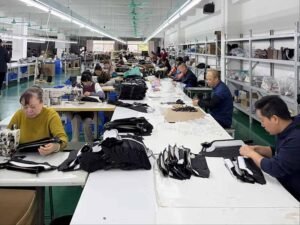
SzoneierLeather has more than 18 years of experience in leather product research, design, sampling and manufacturing. Product capabilities include leather wallets, bags, belts, straps, accessories and leather boxes.
Our team can review whether full grain or top grain leather better suits the required appearance, structure, durability and price direction.
Full grain leather may be recommended when natural grain, patina and long-term character are priorities. Top grain leather may be recommended when smooth texture, consistent color, slim construction and precise branding are more important.
Material samples and wallet prototypes can then be evaluated for:
- Hand feel
- Thickness
- Fold behavior
- Card fit
- Pocket recovery
- Edge durability
- Logo clarity
- Colorfastness
- Stitching
- Packaging fit
A well-made wallet begins with the correct leather, but it succeeds through accurate development and disciplined production.
Contact SzoneierLeather to discuss your custom full grain or top grain leather wallet project. Share your design idea, material preference and quantity plan, and our team will help turn the concept into a production-ready wallet.