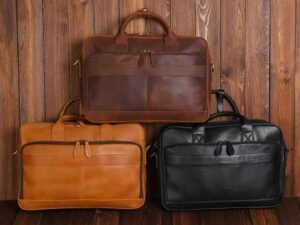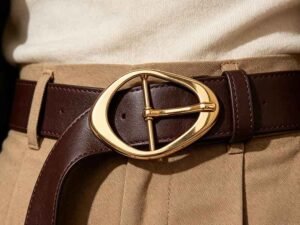
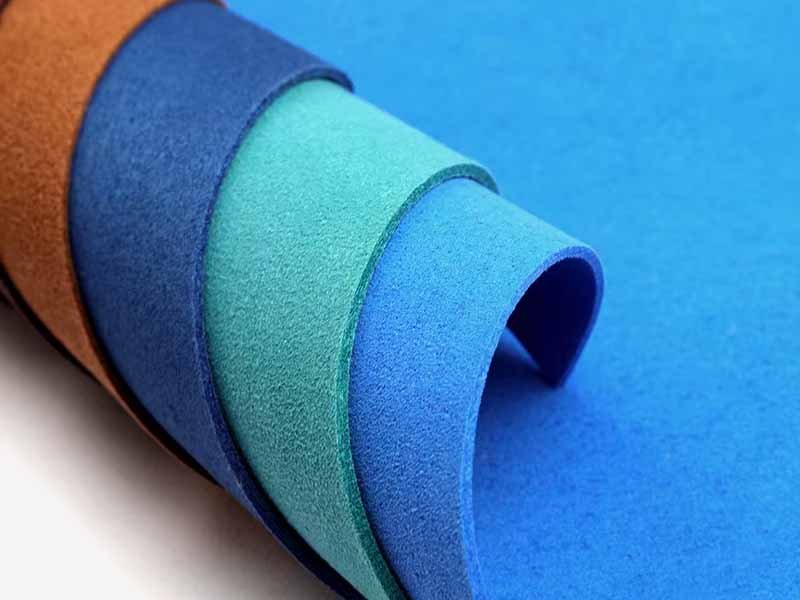
Imagine a high-end luxury bag that looks, feels and behaves like genuine leather, yet offers more uniform texture, greater durability and easier maintenance. For many leather goods brands and sophisticated buyers, that vision is now reality thanks to microfiber leather. Positioned at the intersection of performance, design flexibility and ethical credentials, microfiber leather is rapidly becoming the material of choice for bags, wallets, belts and accessories—and if you’re sourcing for a new collection, you need to know how it works, what it can and cannot do, and how a manufacturing partner like Szoneier Leather can help you leverage it.
Microfiber leather is a high-grade synthetic leather composed of ultra-fine non-woven fibers bound with polyurethane resin, engineered to mimic genuine leather’s look and feel while offering enhanced wear resistance and design consistency. With this material you can deliver premium aesthetics, lower variability and stronger performance for brand-level goods.
But there’s more: downstream from sourcing lies specification, manufacturing, testing, and quality assurance—and that’s where your factory partner really matters. The story of microfiber leather isn’t just about the material—it’s about how you design with it, manufacture with it, test and deliver it. So let’s dive into what microfiber leather truly is, how it differs from other leathers, what its strengths and trade-offs are, how it’s applied in leather goods manufacturing, how sustainable it is, and how you as a brand should evaluate and source it—with actionable insights all the way.
What is microfiber leather?
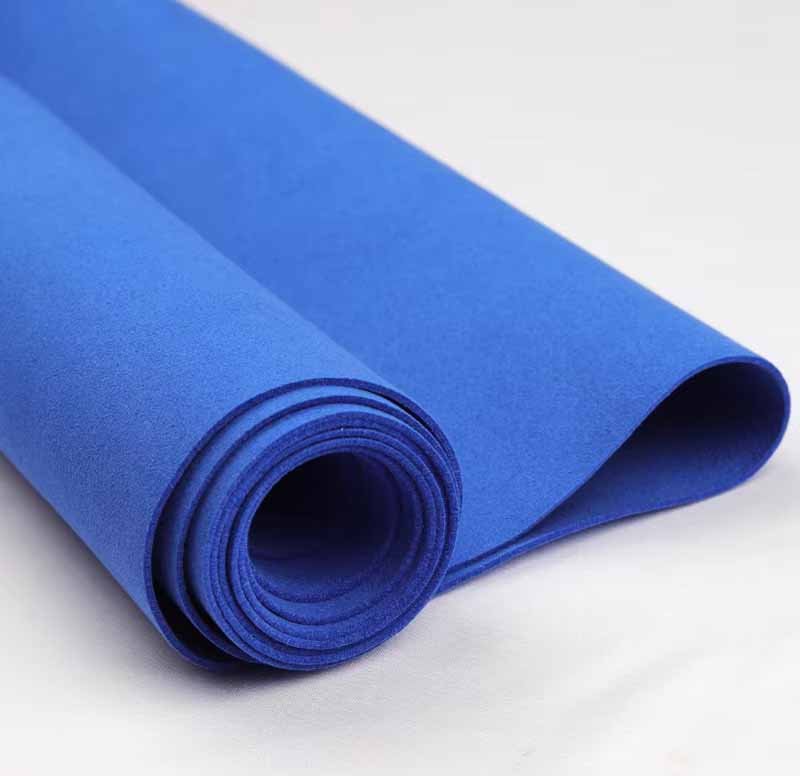
Microfiber leather is a high-performance synthetic material made from ultra-fine microfiber non-woven fabric coated with polyurethane (PU) resin. It reproduces the grain, softness, and durability of natural leather while offering uniform texture, water resistance, and improved wear performance. Often called “vegan leather,” it delivers a balance of luxury aesthetics and technical reliability for modern leather goods manufacturing.
Understanding the Material’s Concept
At its core, microfiber leather represents a new generation of engineered leather—created not from animal hides but from advanced textile technology. The term “microfiber” refers to fibers less than 0.001 denier thick (finer than one-hundredth the diameter of human hair). These microfibers are woven or entangled into a dense non-woven fabric matrix that mimics the collagen-fiber network found in natural hide.
The matrix is then impregnated and coated with polyurethane resin, creating a composite structure that mirrors the layered anatomy of real leather:
- Surface layer (PU coating) — provides grain pattern, color, and protection.
- Middle transition layer — bonds the resin and fiber base.
- Microfiber base — provides strength, tear resistance, and “hand feel.”
This structural synergy gives microfiber leather its premium touch and flexibility while retaining controlled uniformity—something genuine leather, with its biological variability, can’t guarantee.
How Microfiber Leather Is Manufactured
Production typically follows two routes—wet process and dry process—each affecting texture, softness, and strength.
| Stage | Description |
|---|---|
| Fiber preparation | Polyester or polyamide chips are melted and spun into ultra-fine filaments, then randomly entangled to form a non-woven web. |
| Needling & impregnation | The web is needle-punched and impregnated with polyurethane to create a three-dimensional microfiber network. |
| Coating / surface finishing | A PU resin layer is applied and embossed with grain texture using heat and pressure. |
| Dyeing & finishing | Pigments, surface lacquers, and protective topcoats add desired color, gloss, or matte finish. |
| Conditioning & testing | Sheets are dried, stretched, and tested for tear, tensile, hydrolysis, and color fastness before cutting. |
High-grade microfiber leather undergoes multiple impregnation cycles and microporous coating that allow limited breathability—simulating the permeability of real hide. Szoneier Leather, for example, selects microfiber leathers with a base density above 0.35 g/cm³ and PU coatings tested for ≥ 3-year hydrolysis resistance, ensuring long-term stability even in humid climates.
Is Microfiber Leather Real Leather or Synthetic?
Technically, microfiber leather is synthetic, since it’s not derived from animal hide. Yet, it’s often termed “engineered leather” because its microstructure and tactile qualities are so close to genuine leather that even seasoned professionals may need microscopic or chemical testing to differentiate.
From a legal and labeling standpoint:
- The EU and U.S. require “synthetic” or “man-made leather” labeling.
- Asian and luxury markets often use “microfiber leather” or “PU microfiber” to signal a premium vegan alternative rather than low-end “imitation leather.”
This dual identity—synthetic origin, leather-like performance—explains why many global brands specify microfiber leather for sustainable collections or for product lines demanding consistency across thousands of units (bags, belts, upholstery) where natural hides’ irregularity would raise costs.
How to Identify Microfiber Leather
Knowing how to distinguish microfiber leather from PU or genuine leather is essential when sourcing or auditing suppliers. Here are practical identification cues:
| Aspect | Microfiber Leather | PU Leather | Genuine Leather |
|---|---|---|---|
| Surface grain | Uniform and fine; can mimic full-grain or nubuck | Slightly more plastic shine | Natural, irregular pores |
| Back side | Smooth non-woven fiber base | Fabric or knitted backing | Suede-like fibrous structure |
| Touch / elasticity | Soft yet springy, uniform stretch | Thinner and stiffer | Warm, slightly elastic |
| Smell | Neutral or faint chemical | Synthetic plastic smell | Distinct “leather” aroma |
| Water test | Droplets stay on surface; no absorption | Repels water instantly | Absorbs gradually, darkens spot |
| Heat test | Melts slightly at high heat | Melts quickly | Burns slowly, smells organic |
Why the Market Embraces Microfiber Leather
The leather goods sector increasingly turns to microfiber for both performance and sustainability reasons. Compared with traditional PU, microfiber offers:
- 2× to 3× greater tear and abrasion resistance.
- Hydrolysis resistance up to 5 years, meaning it resists humidity and ageing better.
- Uniform sheet dimensions, reducing waste during cutting by 10–15 %.
- Light weight (0.4 – 0.6 g/cm³), improving comfort for handbags or belts.
- Customizability, enabling precise color matching and embossed branding for OEM/ODM programs.
For manufacturers like Szoneier Leather, these properties translate into smoother production workflows, fewer rejects, faster prototyping, and enhanced control over finish consistency—a major selling point for brand clients demanding strict visual uniformity across large orders.
Can Microfiber Leather Get Wet?
Yes, but with conditions. Microfiber leather’s dense fiber base and PU coating make it water-repellent, not waterproof. Light rain or spills won’t damage it; however, prolonged soaking may allow moisture to penetrate seams or backing, potentially weakening adhesive layers.
Which Materials Distinguish It From PU, PVC or Natural Leather?
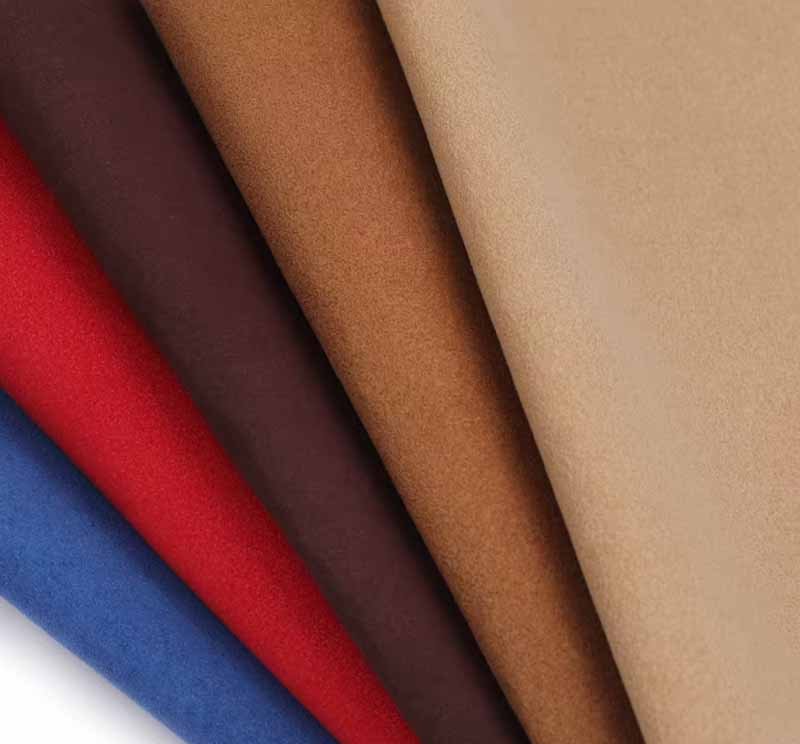
Microfiber leather differs from PU, PVC, and natural leather in both structure and performance. It uses an ultra-fine fiber base impregnated with polyurethane resin, giving higher strength, flexibility, and hydrolysis resistance than PU or PVC, while maintaining a consistent grain and lower cost than natural leather. It feels like genuine leather but is fully synthetic, uniform, and easier to clean and process industrially.
Composition: Structural Differences at a Glance
| Material Type | Base Structure | Surface Coating | Primary Raw Source | Nature |
|---|---|---|---|---|
| Microfiber Leather | Ultra-fine polyester/polyamide non-woven fiber matrix | Polyurethane (PU) resin impregnation + surface layer | Synthetic polymers | Engineered synthetic |
| PU Leather | Woven or knitted fabric (polyester base) | Polyurethane film (single or multi-layer) | Synthetic polymers | Synthetic |
| PVC Leather | Woven fabric + foamed PVC | Polyvinyl chloride with plasticizers | Synthetic polymers | Synthetic |
| Natural Leather | Collagen fiber network (animal hide) | Tanned & finished surface coating | Animal hide | Natural |
Microfiber leather’s non-woven micro-fibre base gives it a 3-D structure similar to animal collagen, which PU and PVC lack.
Microfiber Leather vs PU Leather
Structural Comparison: PU leather is made by coating a textile base with a polyurethane film. Because its base is woven or knitted, the bond between fabric and coating is planar, not interlocking. Under flexing or humidity, the coating may delaminate or crack. Microfiber leather, however, uses an interpenetrating micro-fiber matrix, creating thousands of micro-anchoring points for the PU resin. The result: much higher peel strength and hydrolysis resistance.
| Property | Microfiber Leather | PU Leather |
|---|---|---|
| Tear Strength | 25–35 N (2–3 × higher) | 10–15 N |
| Hydrolysis Resistance | ≥ 3–5 years | 1–2 years typical |
| Abrasion Resistance | > 30 000 cycles (Martindale) | 10 000–15 000 cycles |
| Softness / Hand Feel | Natural, elastic | Slightly plastic, thinner |
| Surface Uniformity | Excellent | Moderate |
| Colour Fastness | Grade 4–5 | Grade 3–4 |
| Cost | Medium (higher than PU) | Low |
Industrial Implications:
- Cutting yield: Microfiber sheets are dimensionally stable, improving utilization by 10–15 %.
- Adhesion: Stronger bonding to linings and reinforcements; fewer rejects.
- Edge painting: Accepts multiple coating layers smoothly.
Microfiber Leather vs PVC Leather
PVC leather (vinyl leather) relies on foamed polyvinyl chloride with plasticizers to achieve flexibility. Over time, these plasticizers migrate, causing stiffening, cracking, and color fading. Microfiber leather avoids this issue entirely because polyurethane resins are inherently more flexible and stable.
| Property | Microfiber Leather | PVC Leather |
|---|---|---|
| Flexibility / Stretch | Excellent, elastic recovery | Limited, stiff over time |
| Temperature Tolerance | -20 °C → +80 °C | 0 °C → +60 °C (plasticizer sensitive) |
| Weight (g/m²) | 300–600 g | 500–800 g |
| Surface Gloss Options | Matte → Semi-gloss → High-gloss | Usually shiny plastic finish |
| VOC / Odour | Low-odor, low VOC | High-VOC (from plasticizers) |
| Environmental Profile | REACH-compliant, solvent-free PU optional | Contains chlorine; difficult to recycle |
| Cost | Medium | Low (but shorter lifespan) |
Key Insight: PVC remains dominant in low-cost luggage or upholstery, but high-end brands are abandoning it due to environmental impact (chlorine content, dioxin risk) and poor durability. Microfiber leather, being chlorine-free and more stable, aligns with eco-branding and REACH/ROHS compliance goals, giving suppliers like Szoneier a competitive sustainability edge.
Microfiber Leather vs Natural Leather
Texture and Aesthetics: Natural leather’s unique appeal comes from its organic grain and “living surface.” Microfiber leather can mimic this with embossed or printed patterns, yet remains visually uniform across panels—a huge plus for large-scale production where natural hide variation can disrupt color and texture matching.
Performance Differences:
| Property | Microfiber Leather | Natural Leather |
|---|---|---|
| Tensile Strength | 25–30 MPa | 15–25 MPa (varies by hide) |
| Water Resistance | Excellent (coated) | Moderate (requires treatment) |
| Breathability | Moderate | High |
| Consistency / Yield | Uniform sheets, no scars | Natural defects, variable thickness |
| Patina Development | None (retains original look) | Ages beautifully, gains patina |
| Maintenance | Easy, wipe clean | Needs conditioning |
| Cost | 30–50 % lower than top-grain | Higher, variable |
| Ethical Aspect | Vegan / animal-free | Animal origin |
Consumer Experience: While genuine leather’s warmth and patina appeal to traditional luxury buyers, microfiber leather wins on practical luxury—sleek look, easy cleaning, light weight, and weather resilience. For travel or everyday fashion products (handbags, briefcases, belts), many global brands now mix both materials: natural leather on trims for authenticity, microfiber on main panels for stability.
The Sensory Difference — Touch, Smell, and Sound
Beyond metrics, tactile and sensory attributes often decide buyer preference.
- Touch: Microfiber’s soft, elastic hand mimics semi-aniline leather, while PU feels thinner and more plastic.
- Smell: High-grade microfiber emits a faint neutral scent; natural leather’s distinctive aroma comes from tanning oils.
- Sound: When folded or flexed, microfiber produces a subtle, muted “leather sound,” whereas PU and PVC sound crisper and more plastic.
What Are The Advantages and Disadvantages of Microfiber Leather?
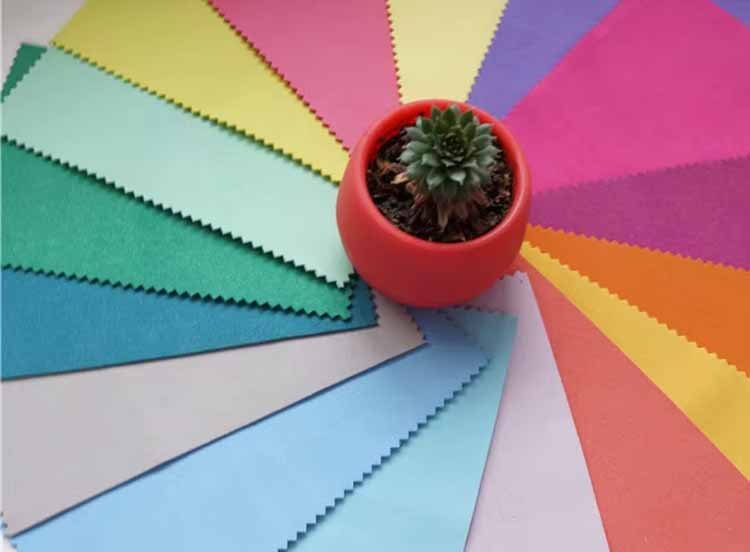
Microfiber leather offers high durability, uniform texture, excellent hydrolysis and abrasion resistance, and easier cleaning than natural leather. It is vegan, lightweight, and cost-efficient, making it ideal for modern bags and accessories. However, it has limits: lower breathability, no natural patina, dependence on petrochemicals, and potential microplastic concerns. The key is balancing performance with sustainability and brand positioning.
Advantages of Microfiber Leather
1. Exceptional Durability and Strength
Because of its three-dimensional microfiber matrix, microfiber leather can withstand years of heavy use. The interlocking fibers provide tensile and tear strength comparable to top-grain cowhide.
| Property | Typical Value (Microfiber) | Genuine Leather (Average) |
|---|---|---|
| Tensile Strength | 25 – 30 MPa | 15 – 25 MPa |
| Tear Strength | 25 – 35 N | 20 – 30 N |
| Abrasion Resistance | ≥ 30 000 cycles (Martindale) | 10 000 – 15 000 cycles |
| Hydrolysis Resistance | 3 – 5 years (tropical climate) | Variable, depends on tanning |
| Dimensional Stability | Excellent | Moderate (stretches/shrinks) |
Why it matters: For bag and belt factories, fewer failures under stress mean reduced warranty claims and higher customer confidence. For buyers, durability translates into longer lifecycle value — crucial for brand reputation in premium markets.
2. Superior Uniformity and Appearance
Unlike genuine hides, microfiber leather sheets are produced in controlled dimensions with no scars, veins, or natural defects. This allows brands to achieve:
- Perfect color matching between production batches.
- Consistent embossing and texture grain.
- Minimal waste during cutting (yield efficiency ↑ 10 – 15 %).
At the factory level, laser or die cutting becomes more efficient, and QC inspection times drop because there’s little natural variance.
3. Light Weight and Flexible Design
Microfiber leather typically weighs 30 – 40 % less than comparable animal leather of the same thickness. Its flexibility and thinness enable complex shapes — ideal for slim wallets, structured handbags, or travel pouches. It also allows micro-precision stitching (2.5–3 mm seam allowance) without fraying — something natural leather can’t always handle consistently.
For export clients, lighter material also means lower freight cost per piece, especially relevant for FBA shipments or large OEM consignments.
4. Ease of Maintenance and Cleaning
One of the most practical benefits is washability. Microfiber leather’s PU surface is water-repellent and resistant to most household stains.
- Daily cleaning: wipe with a damp microfiber cloth.
- Deep cleaning: mild soap and cold water; avoid solvents.
- No oiling or conditioning required.
Some versions are machine-washable (cold cycle), making them ideal for travel or gym accessories. In contrast, genuine leather darkens, cracks, or stiffens when wet.
Thus, for consumer convenience and brand support, microfiber leather greatly simplifies after-sales care.
5. Vegan and Ethical Appeal
With rising awareness of animal welfare and eco-design, microfiber leather offers brands a credible vegan alternative. It avoids animal sourcing, tanning chemicals, and chrome residues, aligning with ethical consumer segments. For companies exporting to the EU, UK, and North America, this supports labeling such as “Cruelty-Free,” “Animal-Free,” or “Vegan Leather.”
However, credibility depends on transparency — the factory should provide clear documentation that the base polymers and coatings contain no animal-derived components.
6. Wide Design Freedom
Because the surface is engineered, microfiber leather can be tailored for nearly any finish:
- Smooth, matte, or high-gloss coatings.
- Pebbled, saffiano, or embossed grains.
- Nubuck-like micro-sanded textures.
- Metallic or laser-printed surfaces.
These allow designers to replicate high-end looks or create new aesthetics impossible with natural hides.
7. Environmental and Production Efficiency Benefits
Compared with animal leather:
- Water consumption: up to 70 % lower (no tanning/soaking stages).
- Chemical use: avoids chromium salts and heavy-metal tanning agents.
- Waste reduction: 100 % sheet utilization, no offcuts from irregular hides.
- CO₂ footprint: lower due to absence of livestock emissions.
While still synthetic, the cleaner manufacturing process aligns with green-factory certifications and reduces wastewater complexity — valuable for compliance-driven markets.
Disadvantages of Microfiber Leather
1. Limited Breathability
Despite advances in micro-porous coating, microfiber leather remains less breathable than genuine hide. The PU surface blocks natural moisture vapor exchange, leading to warmth when used for apparel or prolonged skin contact (e.g., watch straps). For bags or belts this is minimal, but for upholstery or footwear lining, ventilation holes or fabric combinations may be necessary.
2. Absence of Natural Patina and “Aging Charm”
Traditional leather lovers prize the patina — that evolving gloss and color depth formed through years of wear and oil absorption. Microfiber leather, by contrast, maintains its original finish indefinitely. While that’s ideal for brand-new look retention, it lacks the “living material” feel of full-grain leather. For luxury brands that market heritage aesthetics, this can be a drawback unless they intentionally add surface treatments to simulate aging.
3. Petrochemical Dependency
Microfiber leather, though animal-free, is not bio-based. Its polyester and polyurethane components derive from petroleum, making it part of the synthetic polymer chain. This raises two environmental challenges:
- Microplastic shedding: during abrasion or washing, minute fibers can release into wastewater.
- End-of-life recycling: PU-coated materials are difficult to separate and recycle efficiently.
However, ongoing innovations (e.g., water-borne PU, solvent-free coatings, and partially bio-based microfibers) are addressing these issues — something Szoneier actively monitors through its upstream supplier partnerships.
4. Thermal and UV Sensitivity
Long exposure to high heat (> 80 °C) or direct sunlight can soften the PU coating, causing surface wrinkles or color shift. In contrast, vegetable-tanned leather may dry but remains structurally intact. That’s why care guidelines always include “avoid extreme heat or direct sunlight.” For outdoor products, specify UV-stabilized PU coatings (ΔE < 1.0 after 200 hours UV test) to ensure stability.
5. Static Feel and Synthetic Sound
Although premium microfiber leathers closely replicate natural touch, some users still notice subtle sensory differences:
- The surface can feel slightly cooler and smoother.
- Folding produces a quieter, more synthetic “whisper” sound rather than the rich creak of real hide.
For brands emphasizing tactile authenticity, blending microfiber with small panels of genuine leather can help deliver a more natural multi-material experience.
6. Cost Variability and Market Misrepresentation
High-grade microfiber leather costs 25 – 50 % more than standard PU, but its durability and yield offset this. However, the market also contains low-density microfiber or hybrid PU fabrics falsely labeled as microfiber leather. These cheaper variants have weaker fiber matrices and poor hydrolysis resistance.
Sourcing Tip: Ask your factory for:
- Material datasheet (density ≥ 0.35 g/cm³).
- SGS or Intertek hydrolysis report (≥ 3 years).
- Peel strength test results (> 2.5 N/cm).
How is Microfiber Leather Used in Leather Goods Manufacturing?
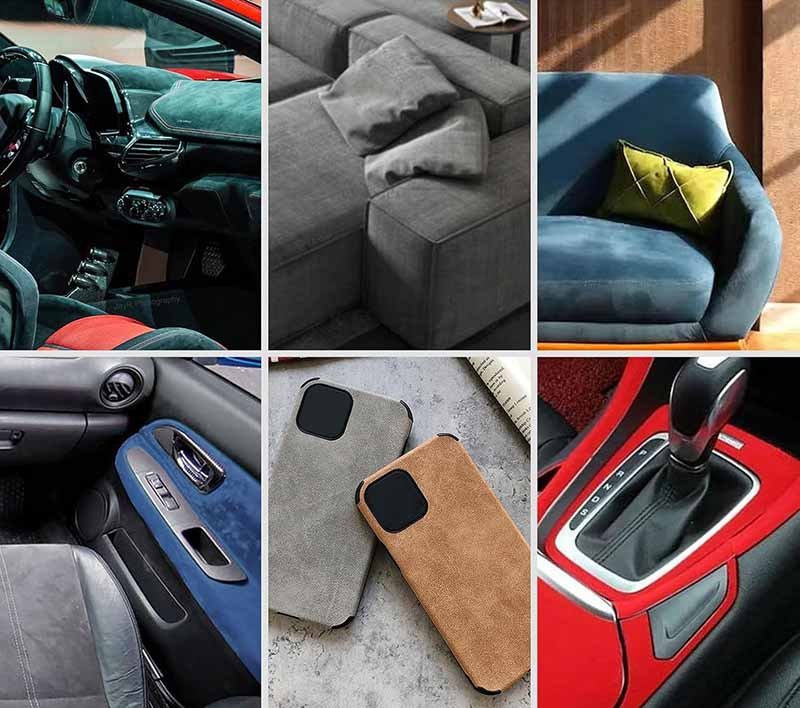
Microfiber leather is used in bags, wallets, belts, and accessories where consistency, strength, and customization are essential. It offers uniform grain, high yield, and easy processing during cutting, sewing, bonding, and finishing, allowing factories to mass-produce premium, vegan, and durable leather goods with precise color and texture control.
Which Products Benefit Most From Microfiber Leather
Microfiber leather’s balance of flexibility, durability, and aesthetic versatility makes it ideal for multiple categories across the fashion, travel, and corporate sectors:
| Product Category | Why Microfiber Leather Works Best |
|---|---|
| Handbags / Tote Bags / Backpacks | Light weight, durable seams, color consistency, and shape retention over time. |
| Wallets / Cardholders / Small Accessories | Precise embossing for logos, fine edge finishing, and soft yet firm structure. |
| Belts / Straps / Watch Bands | High tensile strength and flexibility under repeated bending. |
| Travel / Cosmetic / Organizer Cases | Washable, odor-resistant, and easy to clean after use. |
| Leather Boxes / Gift Packaging | Smooth, uniform texture that supports heat stamping and rigid folding. |
| Footwear / Upholstery (Optional) | Uniform sheets and easy lamination with foam or textile backing. |
Example: A European luggage brand using Szoneier’s microfiber leather reported a 20 % higher yield and 30 % faster assembly time compared with natural hide due to sheet uniformity and zero scar rejection.
How Design and Product Development Adapt to Microfiber Leather
Design Flexibility
Because microfiber leather can be embossed, printed, or finished in any grain, designers can experiment with creative surfaces — from pebbled or saffiano textures to suede-like nubuck finishes. Unlike natural hides (limited by grain size or defects), microfiber sheets allow large continuous panels for oversized bags or upholstery.
Design teams can also control:
- Thickness: from 0.6 mm for lining up to 1.8 mm for belts or structured bags.
- Color precision: Pantone-matched batches across thousands of units.
- Surface effect: glossy, matte, aniline-like, metallic, or laser-engraved.
CAD and Prototyping
At Szoneier Leather, CAD patterns are digitally mapped onto microfiber sheets, ensuring near-zero waste. Because there’s no grain direction to follow, layout optimization improves material efficiency. Samples can be heat-embossed or laser-cut within hours — reducing prototype cycles and improving time-to-market.
Cutting and Preparation Process
Step 1 — Material Conditioning
Before cutting, microfiber sheets are conditioned to room temperature (20 – 25 °C) to relax internal tension. Humidity control prevents static buildup and ensures smooth die-cutting edges.
Step 2 — Cutting
- Manual or Automatic Die Cutting: For high-volume bag panels.
- CNC or Laser Cutting: For precision shapes such as straps or logo cutouts.
Microfiber’s uniform density allows consistent cutting depth across the entire sheet, minimizing blade wear and edge fraying. Because there’s no natural fiber direction (unlike animal hide), parts can be nested efficiently in software — improving yield by 10 – 15 %.
Step 3 — Edge Sealing
The cut edge is treated with edge paint, wax, or PU sealant for smoothness. Microfiber leather accepts edge paint exceptionally well; the surface bonds tightly and doesn’t absorb excessively like natural hide, producing crisp, premium edges.
Sewing, Bonding, and Assembly
Sewing Behavior
Microfiber leather’s balanced thickness and tensile strength make sewing easier than real leather:
- Needle penetration is smooth and consistent.
- Fewer skipped stitches or thread frays.
- Allows tighter seam spacing (up to 2.5 mm).
- Compatible with both nylon 66 and polyester threads.
Because there are no natural grain variations, all panels behave identically under pressure foot — critical for large runs.
Bonding and Layering
Microfiber’s PU surface and microfiber base bond well with water-based adhesives, allowing lamination with foams, fabrics, or stiffeners. This property is valuable for:
- Structured handbags with internal reinforcements.
- Wallets with multiple layers (lining + shell).
- Belt straps laminated to fiberboard cores.
To prevent delamination, factories must use adhesives tested for PU-surface compatibility and perform peel-strength checks (> 2.5 N/cm).
Surface Treatments and Finishing
Embossing and Heat Stamping
Microfiber leather responds well to controlled heat (110 – 130 °C) and pressure, enabling:
- Logo debossing or foil stamping for branding.
- Grain enhancement for consistent texture depth. Because the surface layer is polyurethane, embossing precision is superior to natural leather — fine details remain sharp even on thin sheets.
Edge Painting and Polishing
The PU surface resists paint absorption, allowing smooth edge layers with fewer coats. For luxury wallets and belts, this achieves a clean “Hermès-style” finish.
Stitching and Piping
Microfiber can be sewn with small needles (size #14–16) without cracking. For thicker bags or straps, Szoneier’s engineers adjust feed ratio and stitch density to prevent puckering.
Assembly and Quality Control
During assembly, microfiber leather maintains shape even under thermal pressing or adhesive curing, meaning fewer deformed parts. Factories verify:
- Dimensional accuracy: ±0.5 mm tolerance.
- Surface cleanliness: no glue migration or wrinkles.
- Color match: within ΔE ≤ 0.5 across panels.
- Hydrolysis and tensile tests: random sample checks before packaging.
Because microfiber leather is synthetic, it avoids natural hide inconsistencies — ideal for mass production or multi-batch reorders.
Finishing Options for Different Product Tiers
| Finish Type | Process | Typical Applications |
|---|---|---|
| Smooth Matte | Light PU coating + matte emboss | Minimalist bags, modern wallets |
| Pebbled Grain | Deep emboss for texture | Luxury tote bags, belts |
| Saffiano Crosshatch | Cross-pattern emboss + hard top-coat | Structured handbags |
| Suede / Nubuck Effect | Micro-sanding or brushed surface | Fashion pouches, jackets |
| Metallic / Pearlized | Pigment spray + UV-seal | Evening clutches, luxury packaging |
| Perforated / Printed | Laser-cut or inkjet pattern | Custom branding, sport designs |
Do Sustainability and Environmental Factors Favour Microfiber Leather?
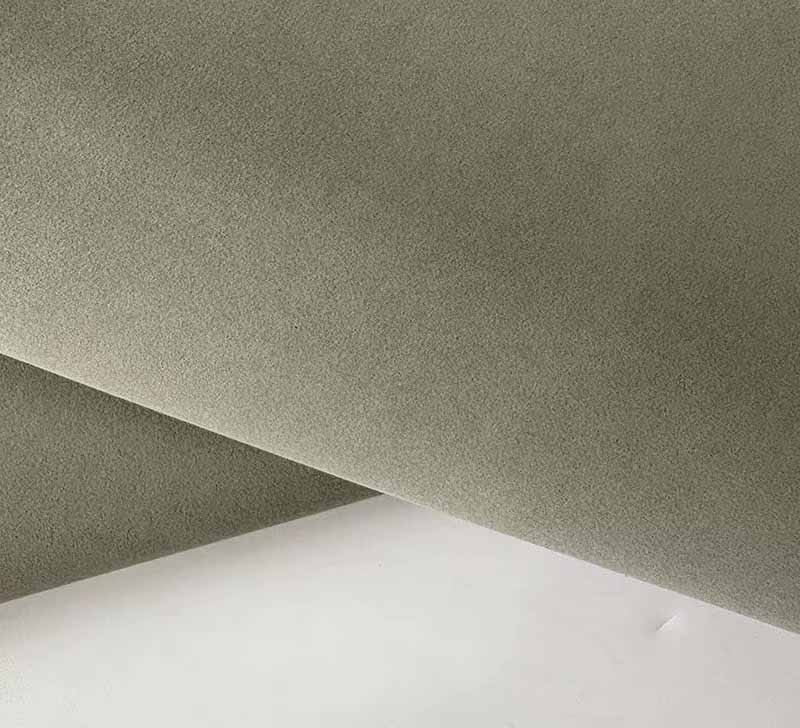
Microfiber leather is often viewed as a more sustainable alternative to natural leather because it eliminates animal sourcing, reduces water and chemical use, and offers consistent yields. However, it still relies on petroleum-based fibers and PU coatings, raising recyclability and microplastic concerns. Its sustainability depends largely on the production method—especially whether solvent-free, water-borne, or bio-based systems are used.
The Sustainability Debate in Leather Manufacturing
Sustainability in the leather sector is complex. Traditional leather, made from animal hides, is a by-product of the meat industry but involves heavy resource use—tanning chemicals, water, and waste. Synthetic alternatives, meanwhile, avoid livestock impacts but raise concerns about plastics and recyclability.
Microfiber leather sits in between these extremes—a hybrid solution combining the mechanical performance of synthetics with lower environmental and ethical burdens than animal leather. Its environmental score depends on how it’s made, what chemistry is used, and how factories manage emissions and end-of-life strategies.
For factories like Szoneier Leather, sustainability means not only choosing compliant materials but also ensuring responsible production—solvent recovery, waste-water control, and supplier audits under REACH, RoHS, and ISO 14001 standards.
How Microfiber Leather Reduces Environmental Impact
No Animal Sourcing
Microfiber leather removes the livestock connection entirely. This eliminates:
- Greenhouse gas emissions from cattle farming (methane).
- Land-use change for grazing or feed crops.
- Animal-by-product logistics and traceability challenges.
According to FAO data, livestock contributes ~14 % of global GHG emissions. Even though hide tanning uses only a fraction of the carcass, it still inherits that carbon footprint. By using synthetic microfibers, microfiber leather bypasses this system while still offering a leather-like aesthetic for “cruelty-free” and “animal-free” branding.
Lower Water Consumption
A major ecological advantage comes from water savings. Conventional leather tanning requires 30–50 m³ of water per ton of hides, used for soaking, liming, pickling, and dyeing. Microfiber leather manufacturing, by contrast, typically consumes 70–80 % less water, since it uses dry or semi-dry impregnation and water-borne coating processes.
Reduced Chemical and Waste Load
Traditional tanning often employs chromium(III) salts, formaldehyde, and heavy metal dyes. Microfiber leather uses polyurethane and color pigments—still chemical, but non-metallic and REACH-compliant when sourced properly. Additionally, no “flesh, hair, or lime sludge” waste exists, which means solid-waste generation per unit area is much lower.
Typical chemical load comparison:
| Indicator (per m²) | Natural Leather | Microfiber Leather |
|---|---|---|
| Water use | 150–250 L | 40–60 L |
| Chemical reagents | 300–500 g | 100–150 g |
| Solid waste | 0.8–1.2 kg | < 0.2 kg |
| Waste-water COD (mg/L) | 5 000–7 000 | < 1 000 |
The Energy and Carbon Perspective
Energy use during production mainly arises from drying, coating, and embossing. Studies show microfiber leather manufacturing consumes about 25–30 % less total energy than tanned leather because it skips long chemical baths and curing stages.
Carbon footprint comparison (CO₂ eq/kg material):
| Material | Approx. Emissions | Key Drivers |
|---|---|---|
| Natural leather | 15–17 kg | Livestock methane, tanning, transport |
| PU leather | 6–8 kg | PU resin, solvents, coating |
| Microfiber leather | 5–7 kg | Fiber spinning, PU impregnation |
| PVC leather | 8–10 kg | Vinyl polymerization, chlorine compounds |
Thus, microfiber leather cuts GHG emissions by roughly 60 % compared to natural leather while providing better mechanical longevity—meaning fewer replacements and longer product life cycles.
The Eco-Trade-Offs: What’s Not Perfect Yet
Petrochemical Origin
Microfiber leather is composed of polyester or polyamide fibers + polyurethane resin, both derived from fossil fuels. This means its raw-material extraction and polymerization still consume non-renewable energy.
However, the next generation of bio-based microfibers is emerging:
- Polyamide 11 (from castor oil).
- Bio-PU made from corn- or sugarcane-based polyols. Factories like Szoneier are evaluating these for 2025-onward sustainable sourcing programs.
Microplastic Shedding
Because microfiber leather is synthetic, surface abrasion or washing can release micro-fibers (0.1–0.5 mm) into wastewater. These particles are less abundant than from woven textiles, but still present. Responsible factories mitigate this through surface sealing, controlled coating thickness, and encouraging customers to wipe clean rather than machine-wash.
Recycling Limitations
Recycling PU-coated materials remains difficult because separating the fiber base and resin layer is energy-intensive. Some advanced facilities employ chemical recycling (glycolysis or depolymerization) to recover polyols, but these technologies are not yet widespread. Hence, most microfiber leather at end-of-life is currently incinerated for energy recovery.
Solvent-Free and Water-Borne Innovations
The greatest sustainability leap comes from solvent-free PU (DMF-free) and water-borne coating technologies.
- Traditional PU coating uses dimethylformamide (DMF), a toxic solvent requiring large energy for recovery.
- Water-borne PU eliminates DMF entirely, lowering VOC emissions by > 90 % and making worker environments safer.
- Solvent recovery systems capture remaining VOCs, ensuring near-zero atmospheric discharge.
End-of-Life and Circular Design Approaches
Sustainability doesn’t stop at production—it extends to what happens after use. Forward-looking brands and manufacturers are developing design-for-disassembly concepts:
- Use single-material laminations (PU + microfiber base only) to aid recyclability.
- Adopt mechanical shredding and hot-press re-molding to create recycled sheet leather for inner linings.
- Offer product-return programs—for example, Szoneier can collect offcuts and recycle them into filler materials or packaging boards.
By closing the loop, microfiber leather products can achieve partial circularity, which natural leather rarely reaches due to chrome residues.
Environmental Certifications and Standards
For professional buyers, sustainability claims must be verifiable. Factories using microfiber leather should comply with international standards:
| Certification | Scope / Purpose | Why It Matters |
|---|---|---|
| ISO 14001 | Environmental management systems | Ensures emission and waste control |
| REACH / RoHS | Chemical safety (EU) | Guarantees restricted substances compliance |
| ZDHC MRSL v3.1 | Hazardous chemical elimination | Aligns with major fashion brand requirements |
| GRS (Global Recycled Standard) | Recycled content traceability | Confirms recycled fiber usage |
| SGS / Intertek Testing | Physical + chemical performance | Independent validation for buyers |
| Vegan Certification | Animal-free claim | For ethical branding and labeling |
How To Care For and Maintain Microfiber‐leather Products?
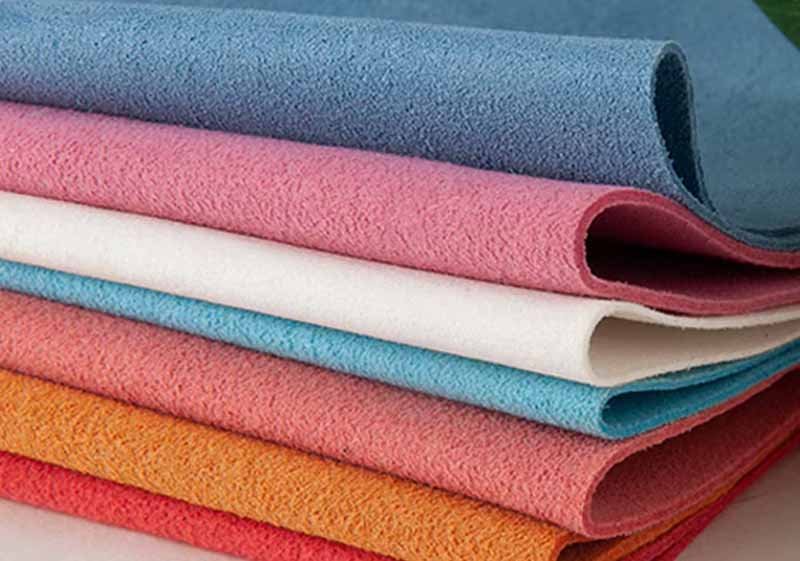
Although microfiber leather is more durable than many genuine leathers, proper care increases lifespan—for brand reputation and customer satisfaction. Recommended guidelines:
- Wipe with damp microfiber cloth; avoid aggressive solvents
- For bags/accessories exposed to moisture, air-dry thoroughly
- Avoid direct intense heat or sun for prolonged durations (to preserve PU resin)
- Provide care card/hangtag: “Clean with water+mild soap, do not machine wash unless specified, store in cool shade”
- Avoid abrasive surfaces; while durable, microfibres still wear under high friction By integrating these care instructions into packaging or product literature, you reinforce value and reduce warranty risk.
Conclusion
The story of microfiber leather isn’t simply about replacing animal hide; it’s about re-engineering the future of leather itself. It combines the artistry of craftsmanship with the precision of modern science—creating a material that looks luxurious, performs reliably, and aligns with a world moving toward sustainability.
For brands, designers, and sourcing professionals, microfiber leather is more than a trend—it’s a bridge between tradition and innovation. It empowers you to offer products that feel natural yet are engineered for durability, consistency, and ethical transparency. The factories of the future won’t just stitch and glue; they’ll design, test, and certify every layer for performance and sustainability—and that future has already begun at Szoneier Leather.
So, whether you’re developing a luxury handbag line, a minimalist wallet range, or an eco-conscious belt collection, let’s create something that carries your brand’s values as elegantly as it carries your customer’s essentials.
Start your next project with Szoneier Leather.