In chain retail, small accessories often do more commercial work than many larger products. A leather keychain is a good example. It is affordable enough to support impulse purchase, practical enough to justify repeat demand, and visible enough to carry a logo, a location theme, or a lifestyle message without taking up much shelf space. That is exactly why retail chains, museum stores, hotel shops, automotive programs, fashion stores, and gift retailers continue to keep this category in their assortment. A good leather keychain is not just a low-cost add-on. It can help raise average transaction value, improve giftability, strengthen store identity, and create a product line that is easy to expand into wallets, card holders, straps, and other leather accessories later.
Leather keychain production for retail chains means developing and manufacturing leather keychains in a way that matches real store business needs. This includes product design, leather selection, hardware matching, logo application, sample testing, bulk production, packaging, inspection, and reorder planning. The goal is not simply to make a keychain that looks nice in a sample room. The goal is to make a product that can be displayed neatly, sold smoothly, replenished quickly, and kept consistent from one store location to another.
Many products look simple until they enter real retail circulation. A leather keychain may pass a first sample review, but once it goes through shipping, shelf display, repeated touching, dry climates, humid climates, and fast store handling, weak points begin to show. Edge paint may crack. Metal plating may dull. The logo may become too light on dark leather. The card may bend on the peg. The ring may feel too thin for the price point. These are the details that separate a product that merely exists from a product that performs. For a retail chain with ten stores, the cost of a weak decision grows quickly. For a chain with one hundred stores, it grows even faster. This is why serious clients do not look for a factory that only says yes. They look for a factory that can translate a concept into a retail-ready product with controlled cost, stable quality, and dependable lead time. That is where SzoneierLeather brings real value, with more than 18 years of leather product development, material sourcing, sampling, manufacturing, packaging, and quality control experience.
Why Leather Keychain Production Matters
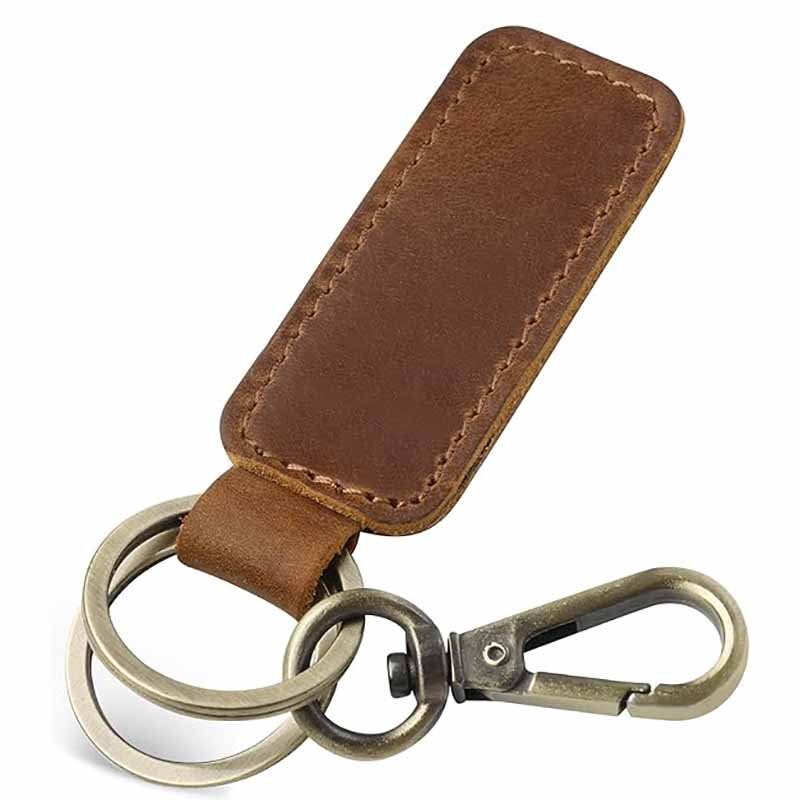
Leather keychain production matters because retail chains need products that are easy to sell, easy to display, easy to reorder, and strong enough to support both margin and customer satisfaction. A leather keychain can meet all of these goals when the product is designed around store performance rather than factory convenience alone.
What Makes Leather Keychain Production Retail-Friendly?
A retail chain does not judge a keychain the same way an individual online shopper does. A chain looks at the full business picture: shelf use, packaging efficiency, price ladder, stock planning, visual consistency, return risk, and long-term reorder potential. That is why leather keychain production needs to be approached as a category strategy, not just a one-time manufacturing task.
The first reason this category works well in retail is price accessibility. In many markets, leather keychains sit in a price band that feels easy for shoppers to accept. They can be purchased as a self-use item, a small gift, a travel souvenir, a corporate add-on, or a checkout-area impulse product. That gives the product strong flexibility. A chain can position it near the register, in a gift wall, in a travel display, in a seasonal section, or beside larger leather goods as a lower-entry alternative.
The second reason is compactness. Leather keychains require very little display space. A small peg or tabletop unit can hold multiple styles, colors, or themes. For a retailer, this means more product density without overcrowding the store. For warehouse teams, it means lower storage pressure. For replenishment planning, it means faster restocking and easier SKU management than larger accessories. This is especially useful for chains that operate many stores with limited backroom space.
The third reason is strong perceived value. Leather has a natural advantage in the customer’s mind. Even before the shopper reads the price tag, the material already communicates more value than many plastic, silicone, or low-cost textile alternatives. When the leather grain looks right, the touch feels firm but comfortable, the edges are clean, and the hardware has enough weight, the product often appears more premium than its actual cost. That gives the retailer room to maintain healthier margins.
The fourth reason is assortment flexibility. A chain can build a complete leather keychain line without overcomplicating operations. One base construction can be adjusted into several commercial versions:
- logo edition for daily store assortment
- city or travel edition for destination retail
- event edition for seasonal launches
- premium hardware edition for gift channels
- color series for fashion-led stores
This kind of range extension is important because retail chains want fresh visual change without rebuilding the whole supply system each time. A capable factory can support this by keeping the pattern logic efficient while allowing visible style variation.
The fifth reason is low testing risk. Compared with handbags, wallets, and structured cases, keychains need less leather, fewer components, and less development time. This allows a retailer to test multiple concepts in one season with smaller financial exposure. A store group may launch three styles, track color sell-through, compare hardware preferences, and use the data to shape the next order. That makes leather keychains a smart category for retailers who want to test private label leather accessories before moving into larger products.
Still, retail suitability is not automatic. Poor execution creates problems fast. Common issues include the following:
- the leather surface is too soft, so the product loses shape after handling
- the edge paint is too thick, so cracks appear after bending
- the hardware finish does not match the target retail level
- the logo is too small to be visible on shelf
- the packaging hides the strongest design feature
- the ring opening is too loose or too stiff for daily use
- color tone shifts between reorder lots, making store displays inconsistent
These are not small details. In retail, these details directly affect conversion, return rate, and reorder confidence.
Which Leather Keychain Production Styles Sell Better?
The best-selling style depends on the store channel, the price point, the customer profile, and the role the keychain plays in the assortment. Still, some styles consistently perform well because they balance cost, visual appeal, and practical use more effectively than others.
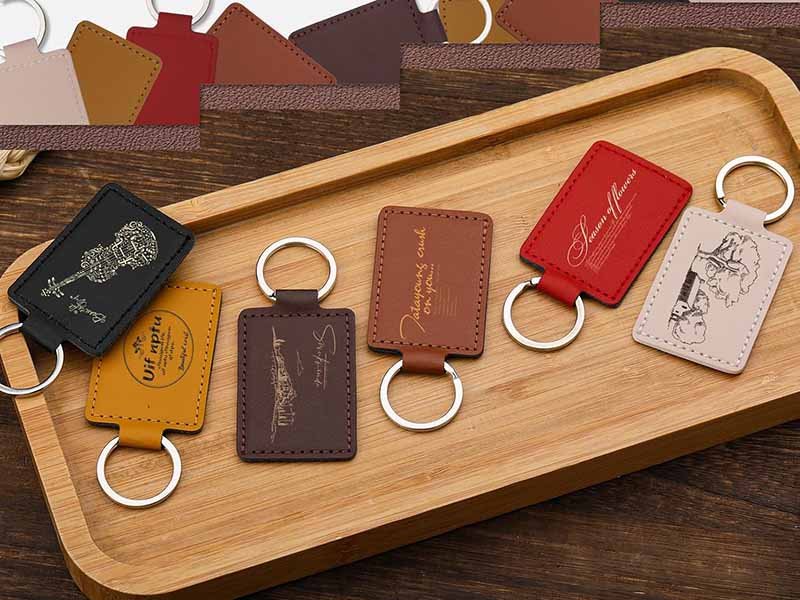
The strap loop style is one of the most commercially reliable options. It uses a folded strip of leather, a rivet or stitch line, and a metal ring or clasp. It looks clean, feels modern, and works well for a wide range of sectors including lifestyle retail, automotive programs, hotel merchandise, corporate gifting, and fashion chains. It also provides enough surface for embossing, foil stamping, screen printing, or debossed branding. Because the structure is simple, the production cost is easier to control and the defect rate is usually lower than more complex novelty styles.
The tab style is another strong performer. It usually offers a wider front face, which makes the logo or themed artwork more visible from a distance. This is helpful for museum stores, souvenir retail, travel chains, and location-based programs where visual recognition is a major part of the purchase reason. A city name, destination icon, or custom pattern can be presented more clearly on this shape.
The car fob style works especially well in automotive, men’s gifting, premium accessory counters, and dealership merchandise programs. It often includes stronger hardware such as swivel clips, polished hooks, screw bars, or metal logo plates. This style can support a higher retail price, but it also demands tighter control over plating quality, mechanical function, and overall hand feel. Once the keychain moves into a more premium price range, customers become more sensitive to the weight of the metal, the smoothness of the edges, and the precision of the assembly.
Shape-cut novelty styles often attract attention quickly, but they need more caution. They may sell well in gift channels, tourism stores, pop culture collections, or theme-based promotions, but they also create more production challenges. Material waste is often higher. Cutting precision becomes more important. Thin parts may deform more easily. Multi-piece assembly may increase labor cost. These styles can be very effective when used carefully, but they should be developed with a clear commercial reason, not simply because they look interesting in a sketch.
A smart retail program usually does not depend on one single style. It works better when the collection is structured in levels. Many experienced clients use a three-layer product plan:
| Product Layer | Main Goal | Common Style | Retail Effect |
|---|---|---|---|
| Entry Line | easy purchase, wider volume | strap loop, simple tab | supports faster turnover |
| Core Line | steady repeat sales | embossed tab, stitched loop | anchors the collection |
| Premium Line | stronger margin, gift appeal | car fob, metal-leather combo | lifts image and unit value |
This structure gives the retailer more control over pricing, visual rhythm, and customer choice. It also makes replenishment more practical. If one premium style moves more slowly, the chain can still maintain healthy total category performance through the stronger rotation of the entry and core lines.
Is Leather Keychain Production Good for Private Label?
Leather keychain production is very well suited to private label because it allows visible customization without demanding the same investment level as larger leather goods. A retailer can shape the product through leather type, grain effect, color, stitching, edge finish, hardware color, logo method, card design, and packaging format, while still keeping development manageable.
This matters because private label works best when a retailer can create its own look without taking excessive risk. Leather keychains make that possible. The retailer does not need to start with a complicated handbag program or a large wallet collection. It can begin with a simpler category that still carries brand image, gift appeal, and daily use value.
There are several practical reasons this category fits private label programs so well:
- the product is small, so sampling cost is easier to manage
- the logo area is clear, so store identity can be shown directly
- the assortment can be expanded with colors, finishes, and hardware changes
- the packaging can be upgraded without major structural change
- the product can sit across multiple sales zones in the store
For example, one retailer may use the same base keychain body in five different ways:
a matte black version for the men’s section, a pastel version for spring gifting, a destination version for travel retail, a foil logo version for the holiday period, and a premium boxed version for corporate gifting. This is exactly why private label leather keychains are commercially attractive. The product can evolve without rebuilding the supply chain from zero each season.
At the same time, not every private label program succeeds. The most common mistake is focusing only on decoration while ignoring the product foundation. A retailer may spend a lot of time choosing foil colors, card graphics, and logo size, but not enough time checking whether the leather is stable, whether the edge paint bends well, whether the hardware plating matches the store positioning, or whether the finished size feels right in the hand. Customers notice these things immediately. A product with a beautiful logo but weak construction will still feel cheap.
This is why experienced factories do not begin only with the artwork file. They begin with the commercial brief. Before final development starts, it is far more useful to define the following points clearly:
- target retail price
- target landed cost
- expected store count
- initial order quantity
- preferred material direction
- packaging style
- logo presentation
- launch date
- reorder forecast
- customer age range and style preference
Once these points are clear, development becomes more efficient and more realistic. SzoneierLeather supports private label clients by connecting material sourcing, logo method selection, product design, sample making, mass production, and packaging development into one coordinated process. That shortens communication distance and helps the product move from idea to approved retail item with fewer costly revisions.
Why Retail Chains Often Start Private Label with Leather Keychains
| Factor | Leather Keychains | Larger Leather Goods |
|---|---|---|
| Development speed | Faster | Slower |
| Sample cost | Lower | Higher |
| Material consumption | Lower | Higher |
| Shelf space needed | Very low | Medium to high |
| Style testing flexibility | High | Medium |
| Packaging complexity | Low to medium | Medium to high |
| Risk for first launch | Lower | Higher |
| Brand visibility | Strong | Strong |
For many retail chains, this category becomes more than a small accessory line. It becomes the starting point for a wider branded leather program.
Which Materials Fit Leather Keychain Production
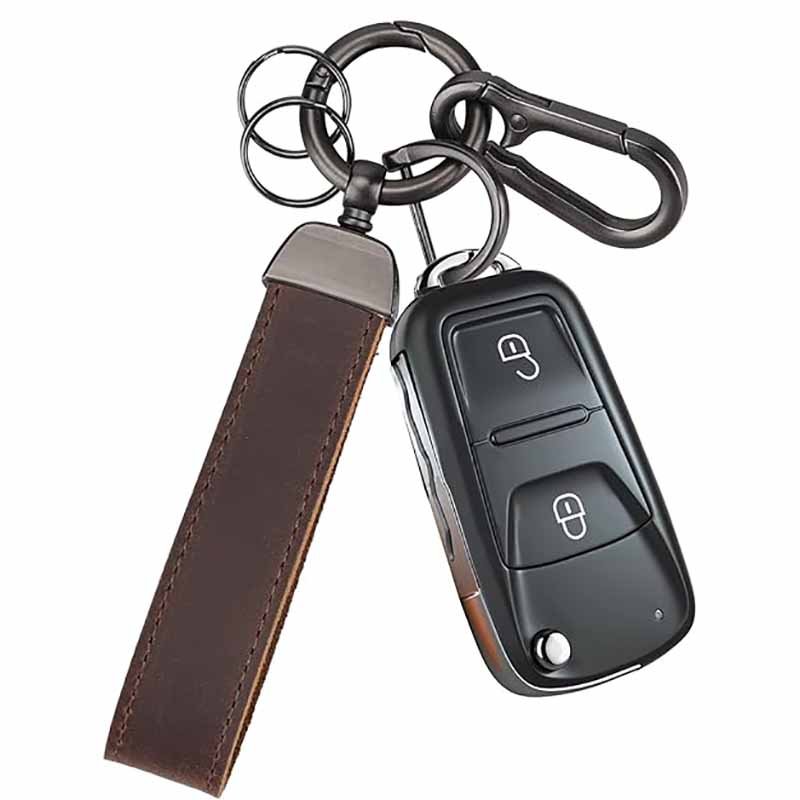
The right material decision shapes almost every commercial result that follows: price, product feel, logo clarity, durability, display quality, reorder stability, and customer satisfaction. In leather keychain production, material choice should never be treated as a surface-level decision based only on color or first visual impression.
What Leather Works Best in Leather Keychain Production?
The most suitable leather depends on where the product will be sold, how it will be priced, how long it is expected to stay in circulation, and what kind of story the retailer wants the product to tell. There is no universal best option, but there are very clear differences in how each material performs.
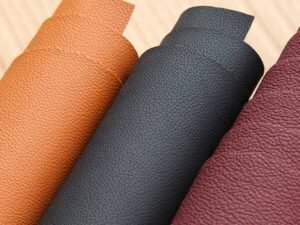
Full grain and top grain leather are often chosen for more premium programs. They offer a more natural touch, richer character, and stronger long-term value perception. When a retail chain wants the product to feel authentic, giftable, and mature, these materials have clear advantages. They are especially suitable for hotel merchandise, boutique lifestyle retail, automotive gifting, and premium private label collections. However, natural leather also comes with more variation. Grain pattern, shade depth, and surface personality are not perfectly identical from piece to piece. Some retailers appreciate that. Others want tighter visual control.
Corrected grain and finished split leather are often more practical for chain-scale distribution. They can deliver a more consistent surface appearance, more controlled cost, and better batch-to-batch stability. That makes them useful for multi-store assortments where the retailer wants the same look across dozens of stores and repeat orders. For many commercial programs, this balance is more important than having the most natural leather story.
PU leather is widely used for fashion-driven and cost-sensitive projects. It supports a wider color range, predictable surface appearance, and lower material cost. For youth retail, seasonal collections, or programs where trend color matters more than material heritage, PU can be very effective. But the quality range is wide. Low-grade PU may peel, harden, or show weak fold recovery. High-grade PU performs much better, especially when paired with good backing and proper thickness control.
Microfiber leather sits in an interesting middle position. It can provide a cleaner, more refined synthetic alternative with stronger structure and better hand feel than basic PU. It is often used when a retailer wants a non-animal material direction but still expects a more premium finish.
The most useful way to compare materials is to think in terms of retail goals, not just material names.
| Material Type | Surface Feel | Cost Level | Appearance Stability | Premium Impression | Best Fit |
|---|---|---|---|---|---|
| Full grain leather | rich, natural | high | medium | very strong | premium retail, gifting |
| Top grain leather | smooth, refined | medium to high | medium | strong | lifestyle, hotel, automotive |
| Corrected grain leather | controlled, even | medium | strong | medium | chain retail programs |
| Split leather with finish | structured, stable | medium | strong | medium | large runs, logo programs |
| PU leather | flexible, color-friendly | low to medium | strong | depends on grade | fashion, volume retail |
| Microfiber leather | cleaner, denser | medium | strong | medium to strong | upgraded synthetic lines |
A good factory should not simply ask, “Do you want genuine or PU?” It should help the client compare touch, cost, logo performance, storage behavior, and reorder reliability side by side. That gives a much clearer basis for approval.
Which Hardware Improves Leather Keychain Production?
Hardware can quietly decide whether the finished product feels cheap, average, or premium. In many cases, customers judge quality through their fingers before they judge it through words. They notice the weight of the ring, the smoothness of the clasp, the sound of the metal, the finish color, and the way the leather and hardware connect.
The split ring is the most common hardware element, but even here there are important differences. A ring that is too thin feels weak. A ring that opens unevenly becomes frustrating. A ring with rough edges can damage fingernails or scratch other items. The right ring thickness should match both the product scale and the target price. For a basic retail line, a clean and reliable ring may be enough. For a premium line, the ring finish and weight need to carry more presence.
Hooks, lobster clasps, swivel clips, D-rings, O-rings, snap hooks, and screw-bar fittings each create a different user experience. Swivel clips feel more convenient and more polished, but they add cost and more moving parts. Snap hooks can improve function for bag attachment or car key use, but mechanical quality becomes more important. Decorative plates and custom logo hardware may raise visual impact, but they also raise tooling and consistency requirements.
Hardware finish changes the mood of the whole product. Matte black can feel modern and masculine. Brushed nickel often looks clean and versatile. Antique brass gives warmth and a more heritage-style feel. Gold-tone hardware can work well in fashion channels, but the plating quality must match the retailer’s image or it may look too flashy or wear unevenly.
The most common hardware complaints in chain retail usually come from a few repeat issues:
- plating fades too quickly after handling
- clasp spring tension weakens too early
- metal color shifts between different production lots
- sharp edges appear near the connection point
- rivet setting is uneven and damages the leather around it
- the metal weight feels too light for the retail price
These issues are avoidable, but only when hardware is chosen and tested early. SzoneierLeather controls this by matching hardware development with product development from the beginning, rather than treating it as the last step after the leather body is approved.
Are PU and Genuine Leather Both Used in Leather Keychain Production?
Yes, both are widely used, and both can perform well when matched to the right retail strategy. The decision should be based on commercial fit rather than assumption.
Genuine leather usually works better when the retailer wants stronger material credibility, a more natural hand feel, and a more premium product story. It tends to support better gift appeal and stronger long-term satisfaction when the leather grade and finish are selected properly. It also works well when the keychain is sold next to other leather accessories, because the collection feels more coherent.
PU leather often works better when the retailer wants sharper price control, more color options, or a faster-moving trend assortment. It is especially useful in programs where freshness, bright color, or visual consistency is more important than natural material character. In some cases, retailers also choose synthetic materials because they want a non-animal positioning or because their core customer is more price-sensitive.
The mistake is to treat one as always superior and the other as always inferior. In real business, that is too simplistic. Poor genuine leather can disappoint. Well-developed synthetic material can perform very well within its intended price and use range. What matters is whether the material suits the store, the customer, and the expected product life.
A practical comparison framework can help clients make better decisions:
| Question | Genuine Leather | PU Leather |
|---|---|---|
| Does it help premium pricing? | yes | limited, depends on finish |
| Does it support large color programs? | moderate | very strong |
| Is the hand feel more natural? | yes | depends on grade |
| Is surface consistency easier? | moderate | strong |
| Is long-term material story stronger? | yes | weaker |
| Is cost easier to control in volume? | moderate | yes |
| Is it suitable for trend collections? | yes, but narrower range | very suitable |
For many retail chains, the smartest answer is not choosing only one. It is building a two-level assortment. A genuine leather line can serve premium and gift-oriented demand, while a high-grade synthetic line can serve entry pricing, fashion color, or promotional programs. This allows the retailer to widen its customer reach without diluting the overall leather accessories category.
SzoneierLeather often helps clients build exactly this kind of structure because it gives more flexibility in both merchandising and margin planning.
To make the material decision more practical, clients usually pay close attention to a few measurable points during sampling and review:
- thickness range, usually around 1.4 mm to 3.2 mm depending on structure
- fold recovery after repeated bending
- logo clarity after embossing or debossing
- edge paint adhesion and smoothness
- smell level after unpacking
- color consistency across batches
- scratch visibility during store handling
- fit with hardware and rivet setting
These are the checks that matter in real retail conditions.
How Leather Keychain Production Works
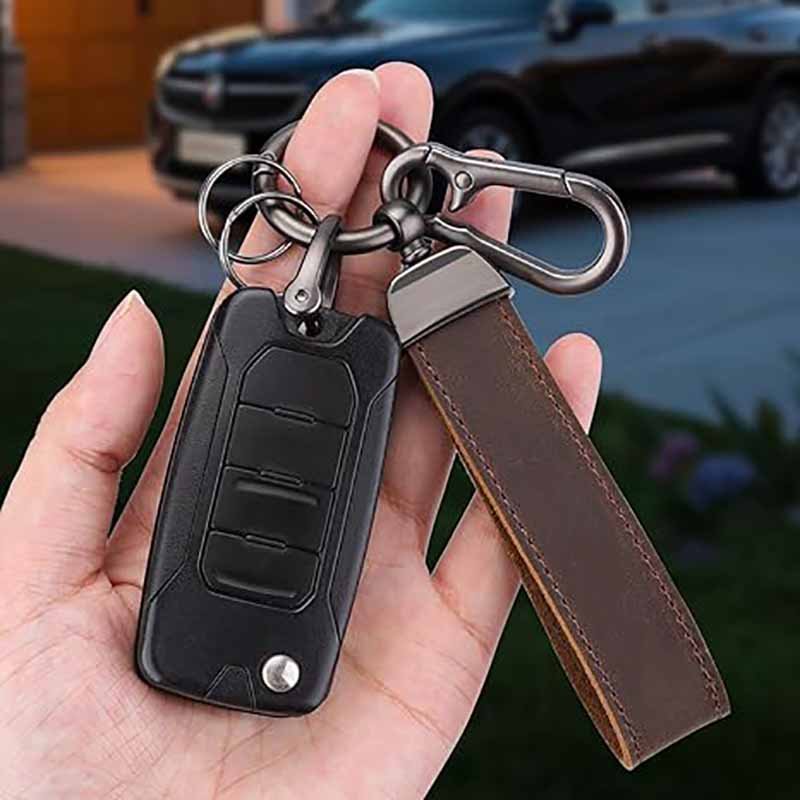
Leather keychain production works as a structured process that connects design, material selection, sampling, testing, bulk manufacturing, and packaging into one controlled workflow. For retail chains, the goal is not just to produce items, but to ensure that every unit across stores looks consistent, performs reliably, and arrives on time.
What Steps Are Included in Leather Keychain Production?
Leather keychain production typically follows a step-by-step process that ensures both visual accuracy and functional reliability before bulk delivery. Each stage reduces risk and improves consistency for retail distribution.
What Steps Are Included in Leather Keychain Production?
A complete leather keychain production process is not complicated, but every step needs to be executed with precision. Skipping or rushing one stage often leads to quality issues later in retail circulation.
The process usually begins with concept alignment. At this stage, the client provides reference images, sketches, or sample ideas. A professional factory will not only replicate the look but also evaluate structure, material feasibility, and cost implications. For example, a very thin leather strap with a large logo area may look good visually but may not hold its shape after repeated use.
The next step is material confirmation. This includes selecting leather type, thickness, color, grain pattern, and backing structure. At the same time, hardware is matched in terms of size, weight, plating color, and mechanical function. Many production issues originate from poor matching between leather thickness and hardware size, so this step is critical.
Sampling follows material selection. A prototype sample is created to confirm size, structure, and visual balance. Then a pre-production sample is made using bulk-level materials and techniques. This stage is where most clients make final adjustments, such as logo depth, stitch spacing, edge paint thickness, or hardware finish.
Once the sample is approved, bulk production begins. This includes:
- leather cutting using die-cut or laser methods
- skiving to adjust thickness for folding areas
- edge painting or edge folding
- logo application (embossing, debossing, printing, or metal plate attachment)
- stitching or riveting
- hardware assembly
- cleaning and surface finishing
After assembly, each batch goes through inspection. This includes checking size accuracy, logo clarity, edge quality, hardware strength, and overall appearance. For retail chains, packaging is also inspected at this stage because poor packaging can damage otherwise good products.
The final step is packing and shipment. Products are packed according to retail requirements, which may include barcode labeling, hang cards, polybags, or gift boxes. Carton packing must also follow store distribution needs, especially when products are shipped to multiple locations.
Standard Production Timeline for Leather Keychains
| Stage | Time Required | Key Focus |
|---|---|---|
| Design confirmation | 1–3 days | feasibility and cost alignment |
| Material selection | 2–5 days | leather, hardware, color |
| Sampling | 5–10 days | structure and visual approval |
| Pre-production sample | 3–7 days | final confirmation |
| Bulk production | 15–30 days | volume manufacturing |
| Inspection & packing | 3–5 days | quality and packaging |
This timeline may vary depending on order quantity, complexity, and material availability, but it gives a realistic reference for planning.
How Is Quality Controlled in Leather Keychain Production?
Quality control in leather keychain production is not limited to final inspection. It is a continuous process that starts from raw material and continues through every production stage. For retail chains, consistency is more important than perfection in one single batch.
The first control point is raw material inspection. Leather is checked for thickness consistency, color uniformity, surface defects, and smell. Hardware is tested for plating adhesion, color accuracy, and mechanical strength. If this step is weak, later corrections become expensive and time-consuming.
The second control point is during cutting and skiving. At this stage, size accuracy and thickness adjustment are critical. Even a 1 mm deviation can affect folding quality and final appearance. For keychains with multiple layers, thickness imbalance may cause uneven edges or weak bonding.
The third control point is logo application. Embossing depth must be consistent. Printing must align correctly. Foil stamping must not fade or shift. For retail products, logo clarity is one of the first things customers notice, so this step requires careful calibration.
The fourth control point is assembly. Stitching must be straight and evenly spaced. Rivets must be securely set without damaging the leather. Hardware must be aligned and functional. A loose rivet or misaligned ring immediately reduces product credibility.
The final control point is finished product inspection. This includes:
- checking overall shape and symmetry
- testing edge paint flexibility
- verifying hardware movement and strength
- confirming logo visibility and accuracy
- ensuring packaging is clean and undamaged
Key Quality Control Standards
| Check Item | Standard Requirement |
|---|---|
| Leather thickness tolerance | ±0.2 mm |
| Logo alignment deviation | ≤1 mm |
| Edge paint cracking | none after bending test |
| Hardware plating | no visible scratches or fading |
| Stitch consistency | even spacing, no loose threads |
For retail chains, consistency across batches is critical. A product that looks slightly different in each reorder creates problems in store display and customer perception. That is why experienced manufacturers build quality control systems that focus on repeatability, not just one-time inspection.
How Do Factories Manage Leather Keychain Production at Scale?
Scaling leather keychain production is not only about increasing output. It is about maintaining the same quality level while producing larger quantities within tight timelines. For retail chains, this is one of the most important capabilities.
The first factor in scaling is production planning. Orders are divided into manageable batches based on style, color, and process complexity. This allows factories to maintain workflow efficiency without mixing too many variables at once. For example, producing five colors of the same style in sequence is more stable than producing five completely different styles at the same time.
The second factor is material preparation. Leather and hardware must be prepared in advance to avoid delays. For large orders, factories often pre-cut or pre-treat materials to ensure smooth assembly later. Material shortage is one of the most common causes of delayed shipments, so strong supply chain coordination is essential.
The third factor is process standardization. Each step in production is documented and controlled. Workers follow consistent methods for cutting, stitching, edge finishing, and assembly. This reduces variation between units and improves efficiency.
The fourth factor is workforce organization. Skilled workers are assigned to specific tasks rather than switching frequently. For example, one team focuses on cutting, another on stitching, and another on hardware assembly. This specialization improves both speed and accuracy.
The fifth factor is in-line inspection. Instead of waiting until the end, quality checks are integrated into the production line. Problems are identified early and corrected before they affect large quantities.
The sixth factor is packaging coordination. For retail chains, packaging is often as important as the product itself. Factories must ensure that hang cards, barcodes, labels, and cartons are prepared correctly and matched to each SKU.
Key Factors for Scalable Production
| Factor | Impact on Production |
|---|---|
| Production planning | reduces delays and confusion |
| Material readiness | ensures smooth workflow |
| Process standardization | improves consistency |
| Skilled labor allocation | increases efficiency |
| In-line quality checks | reduces defect rate |
| Packaging coordination | ensures retail readiness |
A factory with strong scaling capability does not just produce faster. It produces more predictably. For retail chains, predictability is critical because store launches, seasonal promotions, and replenishment cycles depend on reliable delivery.
How Leather Keychain Production Supports Branding
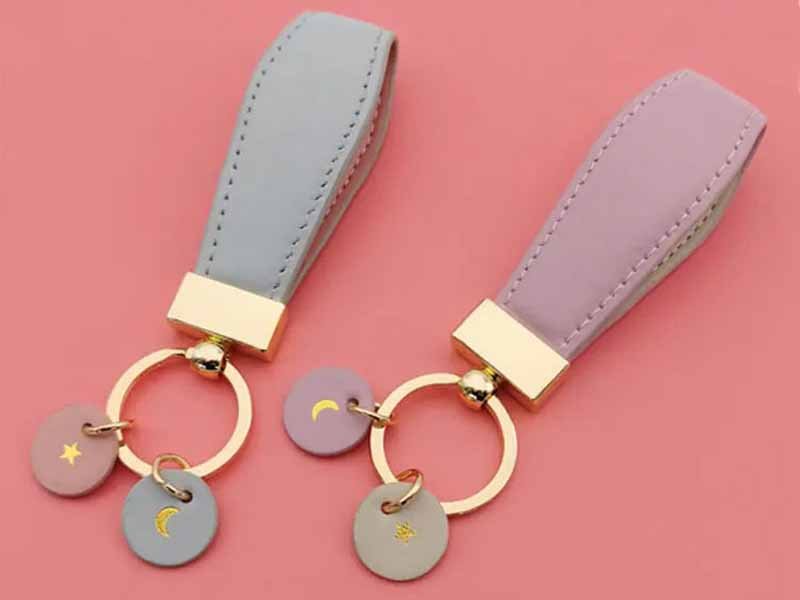
Leather keychain production supports branding by turning a simple product into a consistent visual and tactile representation of a brand. Through logo application, material selection, color coordination, and packaging design, a keychain can communicate identity, quality level, and positioning without requiring large investment.
Which Logo Methods Match Leather Keychain Production?
Logo application is one of the most visible parts of leather keychain production. The method chosen affects not only appearance but also durability and perceived value.
Embossing and debossing are among the most widely used techniques. They create a pressed effect on the leather surface, either raised or recessed. This method works well for genuine leather and gives a subtle, premium look. It is especially suitable for brands that prefer a clean and understated identity.
Foil stamping adds color to the logo, often using gold, silver, or black foil. This method increases visibility and works well for gift-oriented products. However, the durability depends on the quality of the foil and the leather surface.
Screen printing allows for more complex graphics and color combinations. It is useful for fashion or promotional programs, but the print layer may wear over time if not properly applied.
Metal logo plates and badges create a stronger visual impact and are often used in premium lines. They add weight and shine, but also increase cost and assembly complexity.
Choosing the right logo method depends on several factors:
- leather type and surface finish
- target retail price
- desired visibility level
- expected product lifespan
- brand style (minimal, bold, classic, modern)
Logo Method Comparison
| Method | Appearance | Durability | Cost Level | Best Use |
|---|---|---|---|---|
| Emboss/Deboss | subtle, premium | high | low to medium | classic branding |
| Foil Stamping | bright, visible | medium | medium | gift products |
| Screen Printing | colorful | medium | low | fashion items |
| Metal Plate | strong, premium | high | high | premium lines |
How Does Packaging Add Value to Leather Keychain Production?
Packaging plays a major role in how a leather keychain is perceived in retail. It affects first impression, display efficiency, and gifting suitability.
For chain stores, packaging must balance cost and function. Common options include:
- hang cards for peg display
- polybags for protection during transport
- paper boxes for gift presentation
- window boxes for visibility and protection
A well-designed hang card can increase visibility and communicate brand information clearly. A premium box can justify a higher price and improve gift appeal. At the same time, packaging must be practical for store staff to handle and replenish.
Packaging also affects logistics. Oversized packaging increases shipping cost and reduces carton efficiency. Weak packaging may lead to product damage during transport.
What Custom Details Improve Leather Keychain Production?
Small details often make the biggest difference in retail performance. These include:
- edge finishing quality
- stitch color contrast
- leather grain selection
- hardware color matching
- product size and proportion
- packaging texture and print quality
For example, a contrast stitch can make a simple design more visible. A matte edge finish can create a cleaner look than a glossy one. A slightly thicker leather can improve hand feel and perceived value.
Retail chains often succeed when they combine these small details into a consistent product identity rather than relying on one single feature.
How to Choose Leather Keychain Production Partners
Choosing a leather keychain production partner is not simply about finding a factory that can make a sample. For retail chains, the real question is whether the factory can support the full life cycle of the product: development, sampling, material matching, branding, packaging, stable mass production, repeat orders, and problem solving when real market conditions change. A supplier may look capable in the first conversation, but once timing gets tight, colors need adjustment, packaging changes are requested, or reorder quantities increase, the difference between an average supplier and a reliable manufacturing partner becomes very clear.
For this category, the ideal factory should understand both leather craftsmanship and retail logic. It should know how to control cost without making the product feel weak, how to simplify structure without making the design look cheap, and how to preserve brand character across multiple production lots. This is especially important for chain retail programs, because the product is not judged store by store in isolation. It is judged as a repeatable system. Once the keychain is placed across 20, 50, or 100 locations, even a small inconsistency becomes visible.
What Should Clients Check in Leather Keychain Production Factories?
When clients evaluate a leather keychain factory, the first thing to look at is not the sales promise. It is the factory’s real development and production structure. A strong supplier should be able to explain how a project moves from concept to shipment, who handles material sourcing, how samples are reviewed, how quality is checked, and how packaging is coordinated. If the answers are vague, the risk is usually high.
There are several important areas clients should check carefully.
First is material capability. A factory should not only offer leather, but also understand the difference between full grain, top grain, corrected grain, split leather, PU, microfiber, and mixed-material structures. More importantly, it should recommend materials based on retail price, hand feel, durability target, and branding needs. A supplier that only says “we can do all materials” without giving clear guidance is often not helping the client make a better commercial decision.
Second is product development ability. A leather keychain may be small, but development still matters. The supplier should be able to adjust pattern structure, logo placement, stitch balance, hardware fit, and packaging details based on actual production logic. Many factories can copy a photo. Far fewer can improve a concept so it works better in retail.
Third is hardware integration. In this product category, hardware affects both cost and product value very directly. A capable factory should have stable access to rings, clasps, rivets, decorative plates, snaps, hooks, and custom metal parts, with controlled finishes and predictable quality. Weak hardware sourcing is one of the main reasons retail accessories feel disappointing in hand.
Fourth is packaging support. Retail chains rarely want just the keychain itself. They often need hang cards, kraft cards, printed labels, barcode stickers, gift boxes, sleeves, or export cartons configured for store delivery. A supplier that cannot coordinate packaging properly will create extra work, extra cost, and extra delay.
Fifth is production management. This includes lead time control, color matching discipline, workmanship training, in-line inspection, and reorder stability. For a retail client, the best factory is not simply the one that can make the first order. It is the one that can make the fifth order with the same quality standard.
The table below shows what many clients compare when selecting a factory.
| Check Area | What Clients Should Look For | Why It Matters |
|---|---|---|
| Leather sourcing | multiple leather options, stable supply, material guidance | affects cost, feel, and repeat-order consistency |
| Sampling ability | fast sample response, useful revisions, practical suggestions | reduces launch risk and shortens development time |
| Hardware support | stable metal sourcing, finish consistency, custom options | improves durability and perceived value |
| Packaging capability | hang cards, gift boxes, labeling, barcode support | helps the product enter retail smoothly |
| Quality system | raw material checks, in-line checks, finished goods inspection | lowers defect risk |
| Lead time control | realistic planning and order tracking | protects launch schedules |
| Communication | clear updates, technical understanding, quick problem response | reduces costly misunderstandings |
Clients should also pay attention to whether the supplier speaks in concrete terms. Strong factories usually talk about thickness, logo depth, ring size, plating finish, sample timing, packaging layout, and carton planning. Weak suppliers tend to stay at the level of broad claims such as “high quality” or “best service” without explaining how those results are actually achieved.
How Do Samples Help Leather Keychain Production Decisions?
Samples are where good decisions become clear and weak decisions become visible. In leather keychain development, a sample is not only for checking shape. It is where clients test material feel, logo effect, hardware proportion, edge finish, packaging balance, and price logic before the order becomes expensive.
The first useful sample is usually a development sample. This stage is meant to answer the most important structural questions. Does the thickness feel right in the hand? Is the leather too soft or too stiff? Is the keychain too small to feel valuable, or too large to feel practical? Does the ring size match the product visually? Is the logo clear enough to be noticed on shelf? At this point, clients should focus on product fundamentals, not only decoration.
The second important stage is the revised sample. This is where refinements happen. The logo may need to move 3 mm. The stitch line may need a tighter margin. The edge paint may need a matte finish instead of gloss. The rivet color may need to shift from shiny nickel to brushed gunmetal. These are small adjustments, but they often decide whether the final product feels retail-ready or unfinished.
A pre-production sample is even more important. This sample should use the real approved leather, the real approved hardware, the real approved packaging method, and the same process approach that will be used in mass production. This is the closest preview of the final order. Clients should review it carefully from multiple angles:
- visual balance on its own
- visibility when hung on packaging
- feel in the hand
- logo readability in store lighting
- smoothness of edges and corners
- mechanical comfort of the ring or clasp
- packaging neatness and barcode placement
One of the most practical ways to improve approval quality is to review samples against real store goals. A fashion chain should ask whether the keychain fits the style tone of the collection. A travel retailer should ask whether the design feels location-specific enough. An automotive client should ask whether the hardware feels strong enough for the vehicle-related context. A hotel client should ask whether the packaging feels giftable enough for lobby retail.
The table below shows what clients often check during sample review.
| Sample Check Point | What to Review | Common Risk if Ignored |
|---|---|---|
| Leather feel | firmness, softness, grain, surface quality | product feels weak or mismatched to price |
| Logo effect | clarity, size, location, depth | branding looks unclear on shelf |
| Hardware match | size, finish, weight, movement | product feels cheap or unbalanced |
| Edge finish | smoothness, color, bending performance | cracking or rough appearance |
| Packaging | display fit, card strength, print clarity | retail presentation looks incomplete |
| Overall size | hand feel, visibility, practicality | poor value perception |
A strong factory will not treat samples as a formality. It will use sampling as a technical conversation. This is one of the reasons SzoneierLeather places so much attention on development feedback. When sample review is done carefully, the mass order becomes much more predictable.
Why Does Supply Chain Strength Matter in Leather Keychain Production?
Supply chain strength matters because leather keychain production depends on more than one material or one process. Even a simple design may involve leather, lining, reinforcement, rivets, split rings, hooks, logo plates, edge paint, packaging cards, barcode stickers, and export cartons. If one part of that system becomes unstable, the entire project can slow down or lose consistency.
For retail chains, this matters even more because timing and repetition are part of the business model. A product is not only launched once. It may need replenishment in specific colors, short lead-time repeats, holiday variants, or new packaging for a new sales campaign. A weak supply chain can sometimes support the first order, but it struggles when the client needs scale, speed, or variation.
A strong supply chain helps in several ways.
It improves material consistency. Leather tone, grain appearance, thickness, and backing behavior can vary if sourcing is not controlled. For chain retail, even a visible shade difference between lots can create a messy display result. Stable supply partners help reduce that risk.
It improves hardware stability. Metal finish variation is one of the most common accessory problems. A ring that is slightly darker, a clasp that feels lighter, or a rivet that scratches more easily may seem minor in isolation, but in store presentation these changes weaken the product line. Integrated sourcing helps maintain better harmony across production runs.
It improves lead-time planning. When raw materials and components can be secured early, production moves more smoothly. When sourcing is fragmented, factories spend more time waiting, substituting, or adjusting, which creates more room for error.
It improves cost control. A factory with stronger sourcing relationships often has more flexibility in balancing quality and budget. It may suggest a different leather finish, a more efficient hardware structure, or a packaging revision that protects the price target without hurting the retail look.
It improves development speed. When leather, hardware, logo tooling, and packaging are managed through connected channels, the sample process becomes faster and more practical. That gives the client more room to refine the product before launch.
The table below shows how supply chain strength affects real retail outcomes.
| Supply Chain Area | Strong System Result | Weak System Result |
|---|---|---|
| Leather sourcing | stable color and feel across orders | visible variation, harder approvals |
| Hardware sourcing | matching finish and reliable function | inconsistent look and feel |
| Packaging sourcing | smoother store-ready packing | delays, mismatched labels, rework |
| Lead-time control | better delivery planning | shipment risk and launch delays |
| Cost planning | clearer price structure | unstable quoting and hidden overruns |
| Reorders | easier repeat production | harder to match original order |
For clients, this is why supplier selection should not be based only on one attractive sample or one low quote. A leather keychain program becomes much stronger when the manufacturing side has connected control over leather development, hardware sourcing, production, and packaging execution. SzoneierLeather’s advantage comes from exactly this type of integrated structure. With more than 18 years of experience across leather material sourcing, finished product development, sample making, production, packaging design, and inspection, the company helps clients reduce friction between idea and execution.
What Often Goes Wrong When the Wrong Factory Is Chosen?
This question matters because many retail projects do not fail loudly at the start. They fail quietly through small issues that build up. A supplier may produce a nice first sample, offer an attractive price, and respond quickly during the quoting stage. But once the order is placed, deeper weaknesses begin to appear.
Some of the most common problems include the following:
- leather color in bulk does not match the sample well
- embossing depth changes between batches
- metal finish tone is inconsistent
- edge paint becomes too thick or cracks during handling
- packaging arrives late or does not match the approved format
- barcode placement is wrong, creating store receiving problems
- replacement suggestions are made too late, after approval is complete
- lead times are promised aggressively but managed weakly
- communication becomes slower once the deposit is paid
These issues are frustrating not only because they affect product quality. They also create internal pressure for the client. Merchandising teams, purchasing teams, product developers, and store operations teams all depend on the order moving correctly. A weak supplier turns one product into many avoidable headaches.
That is why many experienced retail clients now look for factories that combine several strengths in one place:
- leather and synthetic material knowledge
- solid sample engineering
- packaging coordination
- hardware matching ability
- quality control discipline
- export and shipping experience
- practical communication
A factory does not need to be the biggest to be effective. But it does need to be organized, honest, technically aware, and consistent.
How Can Clients Build a More Successful Leather Keychain Program?
A successful leather keychain program usually starts with better clarity from the client side and better interpretation from the factory side. The strongest results come when both parties treat the product as part of a retail system rather than a simple accessory order.
Clients can improve the outcome by preparing a clearer project brief. The most useful information usually includes:
- target retail price
- target ex-factory cost range
- estimated store count
- intended launch season
- preferred material direction
- visual references
- logo method preference
- packaging expectations
- initial order quantity
- likely reorder plan
With this information, the factory can guide the project more intelligently. It can recommend whether the leather should be softer or firmer, whether the hardware should be simpler or more premium, whether the package should be flat-packed or boxed, and whether one style should be divided into an entry, core, and premium version.
Clients also benefit from thinking in collections instead of only individual units. For example, a retail chain may achieve stronger results by launching:
- one simple entry style for wider turnover
- one signature style with stronger branding
- one premium style with upgraded packaging
- one seasonal or destination-specific variant
This approach makes the assortment feel more deliberate and gives the store team more flexibility in presentation and upselling.
Another key point is review discipline. Before production starts, clients should confirm all visible and functional details clearly: leather color, logo size, edge finish, metal finish, packaging format, labeling position, carton requirements, and tolerance expectations. A careful approval step saves time later.
Why SzoneierLeather Is a Practical Production Partner for Retail Chain Projects
For retail clients, what matters most is not only whether a supplier can make leather keychains. It is whether the supplier can help build a product program that is commercially workable, visually convincing, and reliable across repeat orders.
SzoneierLeather brings this value through a development-to-delivery structure that includes:
- more than 18 years of leather goods development and manufacturing experience
- broad capability across leather bags, wallets, belts, straps, accessories, and leather boxes
- strong raw material supply chain support
- internal capability in material development, product design, sample making, production, packaging design, and packaging inspection
- practical understanding of the needs of brand clients and custom wholesale clients
- experience turning product ideas into store-ready finished goods
This kind of integrated capability matters because retail clients rarely need only manufacturing. They usually need refinement, guidance, consistency, and execution support. One season may require a cleaner embossed style. Another may require gift packaging for holiday stores. Another may require a lower-cost synthetic version to support a larger rollout. A flexible and technically grounded factory is much better positioned to support those changes without losing control.
Ready to Develop Leather Keychains for Your Retail Chain?
If your retail business is planning a leather keychain collection, expanding a private label accessories line, testing a new gift category, or looking for a more reliable manufacturing partner, this is the right time to build the product with stronger structure from the beginning.
A well-made leather keychain may look small, but it can do a lot for your store program. It can support impulse sales, strengthen visual merchandising, improve gift appeal, create room for branded storytelling, and open the door to a wider leather accessories line. The key is choosing the right material, the right structure, the right packaging, and the right factory support before the order goes into production.
SzoneierLeather is ready to help you develop custom leather keychains that match your retail channel, target price, brand image, and packaging needs. Whether you need genuine leather or high-grade synthetic materials, clean embossed branding or premium metal details, simple hang-card presentation or gift-ready boxed packaging, the team can support the full process from concept to sample to production.
Send SzoneierLeather your design idea, reference image, target price range, or packaging requirement, and start building a leather keychain program that is made for real retail performance, not just for sample approval.