
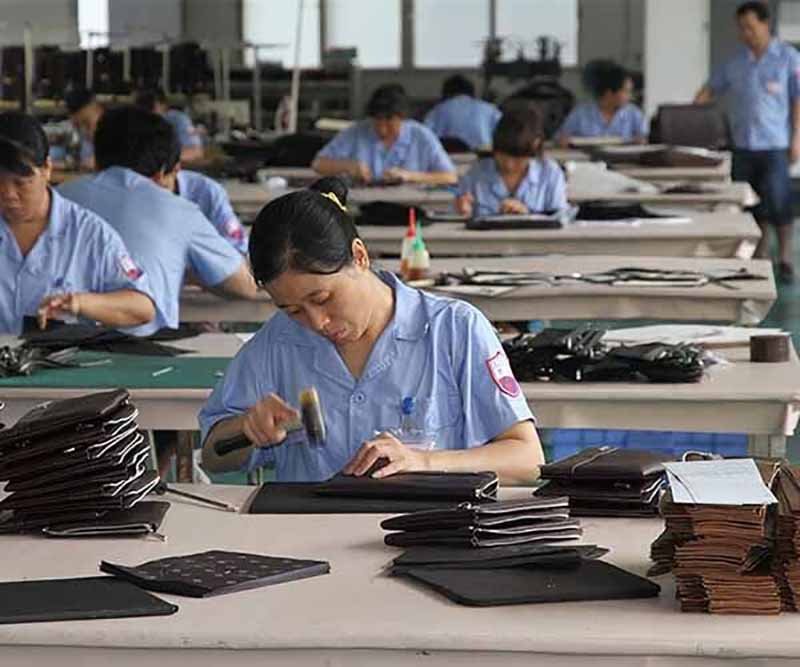
Finding a company that can produce a leather bag is relatively easy. Finding a manufacturer that can repeatedly convert an approved design into commercially consistent products is much harder. A polished website, attractive sample photographs, and a competitive quotation may show that a supplier wants your order, but they do not prove that the company can control leather batches, edge finishing, custom hardware, structural reinforcement, production tolerances, delivery schedules, or repeat orders.
A reliable leather goods manufacturer in China should be verified through factory evidence, relevant product experience, material knowledge, sample-development performance, documented quality controls, transparent pricing, and consistent communication. Buyers should compare suppliers using the same specifications, approve physical samples, establish measurable tolerances, inspect production, and begin with a controlled trial order before expanding the relationship.
Most sourcing failures do not begin with one dramatic mistake. They develop through a series of small, undocumented compromises: a slightly different leather grain, a thinner reinforcement board, a lower-cost zipper, uneven edge paint, or a process change that was never communicated. One brand may receive an impressive prototype and later discover that its 2,000-unit production order appears to have been made under three different standards. The real problem is rarely sewing alone. It is the absence of a controlled manufacturing system behind the sample.
What Makes a Leather Goods Manufacturer Reliable?
A reliable leather goods manufacturer can prove who makes the product, how materials and processes are controlled, how approved samples become repeatable bulk orders, and who takes responsibility when something goes wrong. Reliability comes from transparent operations, relevant craftsmanship, documented inspections, realistic production planning, and clear communication—not from a low price, a large catalog, or an unsupported claim of high quality.
Factory Control
The first question should not simply be whether the supplier describes itself as a factory. The more useful question is which parts of your order the supplier can control directly. Leather goods production normally involves pattern development, incoming leather inspection, cutting, skiving, reinforcement, logo application, stitching, edge painting, hardware installation, cleaning, final inspection, and packaging. Some manufacturers complete most processes internally, while others use specialist partners for metal plating, custom molds, laboratory testing, or selected finishing operations.
Subcontracting is not automatically a warning sign because specialized supply chains are common in professional manufacturing. Custom buckles may come from a metal factory, printed lining from a textile printer, and laboratory testing from an accredited third party. The risk begins when the supplier cannot explain where an important process takes place, who approves the work, how subcontractors are monitored, or who accepts financial responsibility when the result fails to meet the approved standard.
Before issuing a serious purchase order, buyers should request the registered company name, factory address, responsible production personnel, quality contacts, and a clear list of internal and external operations. They should also confirm whether the supplier is permitted to move production to another facility without written approval. A reliable manufacturer should remain fully responsible for material consistency, workmanship, inspection, packaging, and delivery even when selected specialist processes are completed elsewhere.
A manufacturer with genuine project control should also be able to connect the commercial team with pattern makers, sample technicians, purchasing staff, production supervisors, quality inspectors, and logistics coordinators. When every technical question must pass through several unrelated intermediaries, information becomes easier to lose. Factory-based project management reduces that communication gap and makes it easier to trace decisions from the original specification through sampling and bulk production.
Verifiable Evidence
Company brochures, website photographs, and certificates can support a supplier evaluation, but they should not replace evidence of current operations. A reliable manufacturer should be willing to show the people, facilities, documents, samples, and records that would actually support the buyer’s order. The strongest proof is normally specific to the proposed product rather than a general collection of unrelated catalog images.
A live video walkthrough can reveal whether the supplier has an active sample room, material area, cutting section, sewing production, edge-finishing stations, inspection tables, packaging areas, and staff who understand the products on display. Buyers can make the walkthrough more useful by asking the presenter to show a randomly selected leather swatch, current work-in-process, measuring tools, inspection forms, and several similar products instead of reviewing only prepared presentation areas.
| Evidence | What It Helps Confirm | Verification Value |
|---|---|---|
| Company profile | Claimed products, markets, and positioning | Low |
| Edited factory video | General facilities and equipment | Medium |
| Live factory walkthrough | Current location, operations, and staff | High |
| Similar physical sample | Relevant materials and workmanship | High |
| Sample revision record | Development and document control | High |
| Recent inspection report | Active quality-control procedures | High |
| Third-party audit | Legal, operational, and social evidence | High |
| Trial production order | Actual commercial performance | Very high |
Physical samples remain one of the most valuable forms of evidence because they reveal details that photographs often conceal. Buyers should examine leather feel, thickness, grain matching, skiving, edge finishing, stitch consistency, lining installation, reinforcement, hardware movement, logo alignment, and internal cleanliness. A factory that cannot provide a relevant sample may still be capable, but the buyer should expect more development risk and allow additional time for validation.
Szoneier documents a multi-department manufacturing structure that includes product management, design, five pattern makers, an eight-person sampling team with 12 sample sewing positions, more than 120 production personnel across eight production lines, and a 12-person quality team. These figures are useful only when they can be connected to live factory evidence, relevant products, and named responsibilities for the buyer’s project.
Relevant Experience
The number of years a company has operated provides context, but product-specific experience is more important. A factory may have manufactured simple PU promotional pouches for two decades and still lack the techniques required for a structured full-grain leather briefcase, a multi-layer wallet, a shaped jewelry case, or a handbag with polished painted edges and custom-plated hardware.
Buyers should request products that are genuinely comparable to the proposed project. Relevant experience should be judged through leather type, product firmness, construction complexity, number of compartments, visible stitching, edge-finishing method, hardware design, logo treatment, intended retail price, order quantity, and target market. A visually similar bag made from soft PU may offer little evidence that the factory can manufacture the same structure using thick natural leather.
Experienced technicians can usually explain where production difficulty is likely to occur. They may identify excessive bulk at folded corners, warn that a proposed leather is too soft for the intended silhouette, recommend reinforcing a handle tab, or explain that a custom buckle requires a higher minimum than the finished product. These observations are often more valuable than a supplier that agrees with every request without discussing technical consequences.
When reviewing a sample, ask how the pattern was developed, what material thickness was selected, where skiving was applied, which stress points were reinforced, how the edge was prepared, and which defect was most difficult to control. Specific answers indicate that the team understands the product. Generic answers such as “our workers are experienced” do not provide enough evidence for a significant order.
Commercial Responsibility
A reliable manufacturer communicates limits, assumptions, and risks before they become expensive. It should explain when leather availability affects minimum quantities, when a custom color requires a larger material purchase, when hardware tooling adds development time, and when the requested delivery date would place sample approval or quality control under unreasonable pressure.
A professional quotation should define the leather category, approximate thickness, lining, reinforcement, hardware, zipper, logo process, packaging, quantity, sample cost, tooling cost, production lead time, payment terms, and trade term. If these details remain undefined, two quotations may appear to describe the same product while actually representing completely different material and construction standards.
Commercial responsibility also becomes visible when a sample problem occurs. A weak supplier may make a quick cosmetic repair without updating the pattern or specification. A stronger manufacturer identifies the cause, proposes alternatives, records the approved solution, and updates the relevant technical documents. This process prevents the same defect from returning when different workers begin bulk production.
The best supplier is therefore not necessarily the company that promises the fastest delivery or immediately accepts the target price. It is the company that helps the buyer understand what must be controlled, what can be adjusted safely, and which compromises could damage performance, appearance, or long-term consistency.
Where Can You Find Qualified Manufacturers in China?
Qualified leather goods manufacturers in China can be found through Google, sourcing platforms, trade fairs, professional referrals, sourcing agents, and visits to manufacturing regions. These channels only help buyers create a candidate list. They do not prove reliability. Every candidate should still be evaluated through factory verification, comparable samples, technical questions, written specifications, and controlled production testing.
Search Channels
Google is particularly useful for finding export-oriented manufacturers that publish technical information about products, materials, factory operations, sampling, quality control, and international delivery. More specific queries normally produce better candidates than general terms. A buyer seeking a structured business bag should search for phrases such as “custom leather briefcase manufacturer China” or “full-grain leather business bag OEM factory” instead of relying only on “leather goods supplier.”
Trade fairs allow buyers to compare physical samples, material swatches, hardware, and finishing standards within a limited period. A well-presented booth, however, does not prove that the exhibitor owns or controls the production facility shown in its catalog. Exhibitors may be factories, traders, export departments, or companies representing several production partners, so further verification remains necessary.
Online sourcing platforms offer broad supplier coverage and convenient communication. They can be useful during the discovery stage, but platform badges and transaction histories should not replace product-specific evaluation. Similar product images often circulate across multiple profiles, and some suppliers advertise a wider range than their actual manufacturing specialization. Buyers should therefore request original close-up photographs, live factory views, current samples, and technical explanations.
Professional referrals can provide another valuable route. Testing laboratories, inspection companies, packaging providers, designers, logistics companies, component suppliers, and experienced importers often know which manufacturers consistently handle specific types of work. A referral reduces search time, but the recommended company should still pass the buyer’s own qualification process because one brand’s successful supplier may not suit another product, order volume, or quality level.
Manufacturing Regions
Guangdong is one of China’s most developed regions for bags, leather accessories, soft goods, hardware, printing, packaging, product development, export documentation, and international logistics. Shenzhen, Guangzhou, Dongguan, Huadu, and surrounding Pearl River Delta cities provide access to a dense network of leather markets, PU and microfiber suppliers, zipper companies, metal processors, lining suppliers, printing services, carton factories, laboratories, and freight providers.
This concentration is especially useful during sampling. If a buckle finish must change, a lining color does not match, or the proposed reinforcement makes the product too rigid, the manufacturer can often locate and test alternatives within the regional supply chain. Faster access does not guarantee a correct decision, but it can shorten revision cycles when the factory has an experienced sourcing and development team.
Location should never be treated as proof of quality. A Guangdong company may be a highly capable leather specialist, a general fabric-bag factory, a trading company, or a small workshop with limited systems. Buyers should still determine which leather products the company regularly produces, which processes it controls, whether it has relevant pattern and sampling capability, and how it manages quality.
Szoneier is based in Shenzhen and works within the South China bags and soft-goods supply chain. Its documented capabilities include material sourcing, pattern making, sample production, sewing coordination, inspection, packaging, and export delivery. It also manages a controlled network of more than 10 satellite partner factories for selected categories, processes, and capacity requirements while retaining centralized communication and quality responsibility.
Supplier Shortlisting
A practical shortlist may begin with eight to twelve potential manufacturers. Buyers can first send a concise qualification request covering company registration, factory location, main leather product categories, material experience, typical order quantities, sample-development resources, production processes, export markets, quality-control structure, and examples of comparable work.
After reviewing the initial responses, the list can be reduced to four or five suppliers. The buyer should then issue the same request for quotation to each finalist. Using identical product information is essential because suppliers cannot be compared fairly when one has quoted top-grain leather, another has assumed split leather, and a third has calculated a PU version without clearly identifying the difference.
| Screening Factor | Questions to Ask | Warning Sign |
|---|---|---|
| Product fit | Have you made similar materials and structures? | Only unrelated catalog products |
| Material knowledge | Can you define leather type, thickness, and finish? | Only says “genuine leather” |
| Sampling | Who makes patterns and records changes? | Entire process is unclear |
| Quality control | Which production stages are inspected? | Final inspection only |
| Capacity | Which team or line will produce the order? | No practical production plan |
| Communication | Who controls technical revisions? | Conflicting answers from staff |
| Transparency | Can the factory be viewed live? | Repeated refusal without reason |
Buyers should notice not only the information supplied but also the quality of the questions asked by the manufacturer. A capable supplier may request clarification about target firmness, edge treatment, hardware finish, reinforcement, intended loading, packaging protection, or market testing requirements. These questions usually show that the team is thinking about production rather than simply trying to send the fastest quotation.
First Contact
A useful first inquiry should include enough information for the manufacturer to judge product fit without requiring the buyer to complete every technical detail. Include a product image or drawing, approximate dimensions, intended material, quantity range, logo requirement, target market, packaging direction, destination country, and preferred delivery period.
Avoid demanding an exact unit price from a single photograph. Leather grade, thickness, cutting yield, panel selection, reinforcement, lining, edge treatment, stitching, hardware, custom molds, packaging, and inspection requirements can change the final cost substantially. A fast price based on missing information often represents assumptions that will be revised later.
Buyers can request two or three clearly separated material options when the final choice remains open. For example, the supplier may quote a top-grain leather version, a microfiber version, and a high-grade PU version using the same structure. This approach reveals how materials affect price and allows the buyer to evaluate alternatives without reducing quality through undocumented substitutions.
A good manufacturer may challenge an unrealistic target or identify an incomplete specification. This should not automatically be viewed as resistance. Technical questions can prevent later disagreements and demonstrate that the supplier understands how the product will be made.
How Do You Evaluate Leather and Craftsmanship?
Leather and craftsmanship should be evaluated as a connected production system. The same design may perform very differently depending on leather thickness, temper, grain direction, cutting position, reinforcement, skiving, thread tension, edge treatment, hardware quality, and assembly sequence. Buyers should approve measurable material and workmanship standards instead of relying on general descriptions such as premium leather or excellent craftsmanship.
Leather Selection
“Genuine leather” is a broad category rather than a complete specification. Full-grain, top-grain, corrected-grain, split leather, suede, and nubuck differ in surface character, strength, consistency, cutting yield, maintenance, and price. Engineered alternatives such as PU and microfiber leather also vary considerably in backing structure, coating performance, hydrolysis resistance, abrasion behavior, edge finishing, and hand feel.
A usable material specification should identify the leather category, nominal thickness, allowed tolerance, grain type, finish, color reference, temper, backing, reinforcement, acceptable natural marks, colorfastness requirements, and any applicable restricted-substance standard. A physical swatch should normally be approved because terms such as soft, matte, pebbled, or vintage can be interpreted differently by different suppliers.
Natural leather requires controlled acceptance of variation. Hides from the same tannery and production batch may still display changes in grain, shade, firmness, scars, or wrinkles. The manufacturer should explain how hides will be sorted, which areas are suitable for front panels, how symmetrical pieces will be paired, and where minor natural marks may be accepted without affecting the visible product.
Microfiber and PU materials can provide greater surface uniformity and more predictable cutting yield, but they should not be evaluated by appearance alone. Buyers may need to consider backing strength, coating adhesion, abrasion resistance, flexing performance, odor, aging behavior, and resistance to humid environments, especially when the product is intended for frequent use or long storage.
Szoneier documents support for genuine leather, PU leather, microfiber leather, and faux-leather projects. Its leather manufacturing guidance identifies leather grade, texture variation, color, thickness, edge finishing, hardware, logo process, cost, sample timing, and batch consistency as central project controls.
Practical Specifications
The correct material and construction specification depends on the product’s structure, intended use, desired appearance, retail positioning, and target cost. The ranges below are common industry working references rather than universal standards. Final values should be confirmed through physical sampling because tanning method, surface finish, backing, reinforcement, and product geometry influence how the material behaves.
| Component or Feature | Common Working Range | Practical Consideration |
|---|---|---|
| Soft wallet leather | 0.8–1.2 mm | Folding areas may require skiving |
| Structured handbag leather | 1.2–1.8 mm | Reinforcement controls final firmness |
| Handles and straps | 1.4–2.4 mm | Often layered or internally reinforced |
| Visible stitching | 6–9 stitches per inch | Depends on style and leather thickness |
| Painted edges | 2–4 applications | Sanding and drying affect smoothness |
| General bag dimensions | Often ±2–5 mm | Depends on size and construction |
| Small fitted components | Often ±1–2 mm | Wallets and hardware require tighter control |
| Logo placement | Commonly ±1–2 mm | Measure from fixed reference points |
Thicker leather is not automatically superior. Excessive thickness can create bulky corners, uneven folding, heavy products, and visible needle marks. A thinner leather can perform well when paired with appropriate backing and reinforcement. Manufacturers should balance surface material, internal structure, and intended loading rather than increasing thickness as a universal solution.
Stitch density should also match the leather and aesthetic. Very short stitches may perforate delicate material and weaken a narrow edge, while excessively long stitches can look inexpensive or provide insufficient seam stability. The approved sample should therefore establish the visual and functional standard rather than relying solely on a numerical target.
Construction Details
A leather product should be inspected from the outside, inside, and under realistic use. Overall shape is important, but many costly failures begin in areas that are not immediately visible. Buyers should review seam margins, corner transitions, zipper ends, handle attachments, pocket openings, magnetic closures, bottom panels, lining construction, internal reinforcements, and concealed edges.
Skiving is essential where multiple leather layers meet. If thick pieces are folded or sewn without reducing bulk, corners may become distorted, seams may rise unevenly, and excessive stress may be placed on the thread or needle holes. Skiving that is too aggressive can create a weak area that tears later, so the process should be adjusted according to leather type, structure, and stress.
Handle and strap attachments deserve particular attention because they carry repeated loads. Reinforcement should extend beyond the visible stitching or rivet. A metal rivet installed through soft leather without internal support may appear secure during inspection but gradually pull through the material during use. The same principle applies to magnetic closures, snaps, D-rings, and custom logo hardware.
Lining should be installed without excessive tension, uncontrolled folds, visible adhesive, or loose corners. Internal pockets should remain accessible, zipper tapes should sit flat, and hidden raw edges should be finished in a way that suits the product’s expected quality level. A premium exterior cannot compensate for careless internal construction.
Edges, Stitching, and Hardware
Painted edges should be smooth, flexible, dry, clean, and consistent in width. Roughness, bubbles, visible layer lines, cracking, contamination, and excessive buildup may result from irregular cutting, insufficient sanding, unsuitable coating viscosity, inadequate drying time, or poor handling between applications. Corners and curved sections often reveal these weaknesses first.
Folded edges should maintain an even width and smooth shape without adhesive stains or raised internal layers. Raw edges may be appropriate for selected vegetable-tanned products or intentionally casual designs, but their use should be a deliberate design decision rather than an unfinished shortcut.
Stitching should be evaluated for consistent stitch length, balanced tension, parallel spacing, accurate corner turns, controlled backstitching, clean thread trimming, and minimal unnecessary needle holes. Visible seams should follow the approved margin, while hidden structural seams must provide adequate strength even when they do not affect appearance.
Hardware should normally be approved using physical samples rather than finish names alone. Descriptions such as light gold, antique brass, gunmetal, or brushed silver vary among suppliers. Buyers should confirm plating shade, gloss, surface texture, scratch resistance, logo definition, movement, spring force, and attachment method. Custom metal parts may also require confirmation of tooling ownership, mold storage, and replacement procedures.
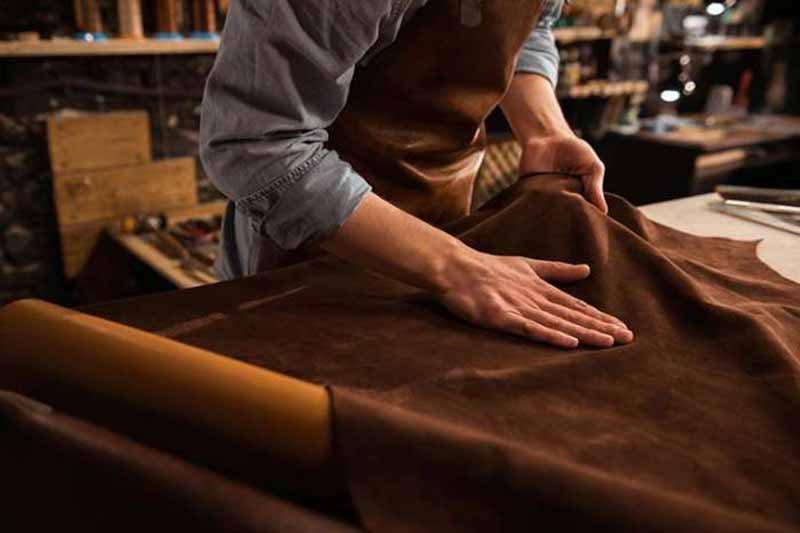
How Should You Test Sampling and Production?
Sampling should test the manufacturer’s technical process rather than merely produce an attractive prototype. A successful sample establishes the pattern, dimensions, leather, reinforcement, hardware, stitching, edge treatment, logo position, construction method, and packaging. The final approved sample should be supported by written records so bulk production can reproduce it without depending on memory or personal interpretation.
Complete RFQ
A detailed request for quotation reduces hidden assumptions and makes supplier comparisons more meaningful. The document does not need to contain every production answer, but it should identify the product clearly enough for the supplier to understand the desired material, structure, performance, branding, quantity, packaging, and delivery conditions.
A practical RFQ should include product drawings or reference photographs, finished dimensions, measurement points, leather category, approximate thickness, grain, finish, color, lining, reinforcement, hardware size and finish, zipper expectations, thread color, logo artwork, packaging, order quantity by color, destination market, required tests, sample deadline, bulk delivery date, shipping destination, and preferred trade term.
When the buyer has not decided between materials, each option should be quoted separately. A top-grain leather version, microfiber version, and PU version may share the same dimensions while requiring different cutting yields, edge methods, minimum quantities, lead times, and costs. Clearly separated options prevent an inexpensive alternative from being mistaken for an equivalent specification.
Critical requirements should be identified before sampling. A business-bag brand may prioritize handle strength, zipper reliability, and structured appearance, while a fashion accessory brand may place greater importance on grain character, edge smoothness, and hardware color. The manufacturer should understand which details are essential and which may be adjusted during cost optimization.
Sample Review
The first prototype frequently reveals conflicts between appearance, function, durability, production efficiency, and target cost. It should be reviewed in a fixed order so that comments remain complete and traceable. Begin with overall shape and proportion, then check dimensions, material, opening function, pocket layout, carrying comfort, hardware, stitching, edge finishing, logo placement, and packaging fit.
Feedback should be numerical wherever possible. “Move the logo higher” can be interpreted differently by the pattern maker, sample technician, and production worker. A clearer instruction identifies the distance from the upper edge, center line, seam, or other fixed point. Photographs with arrows and measurement references can supplement the written revision list.
Every revision should receive a number and date. If a change affects the pattern, material list, hardware, construction, packaging, or inspection requirement, the corresponding document should be updated. This reduces the risk of an old instruction returning during production or being applied to one component but not another.
The first sample does not need to be perfect for the factory to be considered capable. More important is whether the team understands the cause of each issue and corrects it systematically. A strong development team may explain that the silhouette requires a firmer reinforcement, that the leather must be skived further at a corner, or that the proposed hardware should move several millimeters to avoid stress.
Production Approval
When the final sample is approved, the buyer and manufacturer should convert it into a controlled production package. This package normally includes a sealed approval sample, final measurement chart, pattern version, bill of materials, approved leather swatch, lining and reinforcement references, hardware samples, logo file, placement measurements, construction instructions, edge and stitch references, packaging specifications, inspection criteria, and complete revision history.
A pre-production meeting is particularly valuable for structured handbags, briefcases, multi-compartment organizers, complex wallets, custom cases, and products using new materials or hardware. Development, purchasing, production, and quality personnel should review the most likely failure points before material cutting begins.
The first completed production units should be inspected before the line moves into full output. First-piece approval can identify incorrect leather pairing, measurement errors, hardware-position problems, edge-paint differences, lining tension, unapproved shortcuts, and packaging fit issues while the cost of correction remains manageable.
The manufacturer should also confirm the production schedule in practical stages, including material preparation, cutting, logo processing, sewing, edge finishing, assembly, inspection, packing, and shipment preparation. A single promised completion date provides less control than a milestone plan that allows the buyer to understand where delays or quality risks may arise.
Sample-to-Bulk Control
An approved sample cannot control production by itself. Bulk leather may differ from the sample lot, production workers may interpret construction differently, and subcontracted hardware may arrive with a different finish. The sealed sample must therefore be combined with written specifications, approved component references, and inspections at the stages where variation is introduced.
Bulk leather should be approved before cutting. Genuine leather should be checked for shade, grain, thickness, temper, finish, scars, wrinkles, and usable cutting area. PU and microfiber materials should be reviewed for roll-to-roll color, embossing, surface defects, backing strength, coating consistency, and thickness.
No material, component, construction method, or packaging element should be changed without written approval. A leather described as similar may respond differently to skiving, folding, adhesive, stitching, or edge paint. A replacement reinforcement may change product firmness, and a new buckle may affect strap fit or loading.
One sealed sample should remain with the factory and another with the buyer or appointed inspection company. Repeat orders should use archived patterns, bills of materials, leather references, hardware codes, logo files, packaging documents, quality standards, and revision records. This system is essential when production resumes months later or when additional colors and SKUs are added.
Which Quality and Compliance Checks Matter?
Quality control should begin before leather is cut, continue through cutting and assembly, and finish with product and packaging inspection. The most effective system checks defects at the stage where they are created. Compliance should be based on the actual materials, product claims, end-user group, and destination market rather than generic certificates or reports covering unrelated components.
Incoming Inspection
Leather inspection before cutting prevents material defects from spreading through an entire production order. Genuine leather should be examined under controlled lighting for shade, grain, surface finish, thickness, temper, scars, wrinkles, holes, loose grain, coating irregularities, odor, and usable cutting area. Hides may need to be sorted into shade groups when visible color differences would make completed products look inconsistent.
The inspection standard should state where natural marks may be accepted. A minor scar may be suitable for an internal pocket or concealed reinforcement piece but unacceptable on a handbag front panel. Symmetrical components should be paired for grain and shade where the design makes differences obvious.
PU and microfiber leather should be checked for roll-to-roll shade variation, surface embossing, gloss, thickness, scratches, creases, pinholes, backing quality, coating adhesion, odor, width, and usable area. The first meter of a roll should not be treated as representative of the entire delivery because coating or tension can vary through production.
Hardware, zippers, lining, thread, reinforcement, adhesives, packaging, and labels should be inspected at the same incoming stage. A well-selected leather exterior cannot compensate for an unstable zipper, weak buckle, poorly plated logo, staining lining, or incorrect barcode label.
In-Process Inspection
Final inspection alone is too late for many leather-goods defects. Incorrectly cut panels, missing reinforcement, misplaced hardware, weak skiving, or internal seam problems may be impossible to repair once the product is assembled. Quality checks should therefore follow the product through production.
A practical inspection sequence includes material and accessory inspection, cutting inspection, first-piece approval, sewing-line checks, edge-finishing inspection, semi-finished inspection, final-product inspection, packaging inspection, and outgoing shipment review. Each stage should focus on defects that can still be corrected efficiently at that point.
Cut panels should be checked for direction, pairing, size, surface defects, and component identity. Reinforcement and hidden construction should be inspected before lining or final assembly conceals them. Stitching, edge paint, logos, zippers, and hardware should be reviewed during production rather than after hundreds of units have been completed.
Inspection reports should record quantities, defect types, affected batches, photographs, corrective actions, responsible personnel, and reinspection results. A report that contains only the word “passed” gives the buyer little understanding of what was checked or what problems were found.
Szoneier’s documented QC checkpoints include material inspection, accessory inspection, pre-production sample confirmation, cutting inspection, sewing-process inspection, semi-finished inspection, final-product inspection, and packaging inspection. Its quality system also identifies leather goods as requiring product-specific inspection rather than a single generic checklist for all bags.
Functional Testing
Testing should reflect actual product use. A slim card holder, large tote, laptop briefcase, handbag, pet accessory, passport case, and jewelry box do not carry the same loads or face the same wear. The buyer should define which functions are critical and establish a repeatable method, duration, load, and acceptance criterion.
Common checks may include handle pull strength, strap loading, seam strength, zipper cycling, snap operation, buckle movement, rivet attachment, abrasion resistance, dry and wet colorfastness, surface coating adhesion, edge-paint adhesion, flexing resistance, logo durability, and packaging drop tests.
Informal testing can be useful during development, but statements such as “we pulled it very hard” are not adequate for a significant commercial claim. When strength or durability is important, the procedure should identify the load, number of cycles, test position, duration, and acceptable result. Higher-risk products may require an accredited laboratory.
Testing should also be completed early enough to support product decisions. Discovering that a leather coating transfers color after the entire order is finished leaves few good solutions. Material-level testing before bulk cutting can be more efficient than testing only completed products.
Compliance and Independent Inspection
Compliance requirements depend on the destination country, product category, materials, dyes, leather treatment, adhesives, metal plating, packaging, and intended user. Restricted-substance requirements may apply separately to leather, synthetic surfaces, linings, coatings, hardware, and glue.
When reviewing a test report, buyers should confirm the applicant, exact material, color, test method, report date, laboratory, result limits, and relationship to the production material. An old report for one black PU material does not automatically cover a newly sourced red PU, even when both products come from the same factory.
Certificates and audit reports should also be checked for scope. A management-system certificate does not prove product compliance, and a social audit does not confirm leather performance. Each document answers a different question and should be treated accordingly.
Independent inspection is especially useful for new suppliers, high-value orders, strict launch dates, premium workmanship, or products with complex packaging and labeling. Depending on the project, buyers may use pre-production inspection, during-production inspection, pre-shipment inspection, laboratory testing, or container-loading supervision.
How Do You Choose the Right Manufacturing Partner?
Choose the manufacturer that provides the strongest risk-adjusted fit across product experience, leather knowledge, sampling, craftsmanship, quality systems, communication, capacity, compliance, pricing transparency, and long-term support. The decision should be confirmed through physical samples, written specifications, factory evidence, and a controlled production order rather than relying on the lowest quotation or the most persuasive salesperson.
Supplier Scorecard
A weighted scorecard helps prevent price, personality, location, or one impressive prototype from dominating the decision. Buyers should adjust the weighting according to the product. A premium handbag may require greater emphasis on grain matching and edge finishing, while a multi-country retail rollout may place more weight on production planning, labeling, packaging, and delivery control.
| Selection Area | Suggested Weight | Evidence to Review |
|---|---|---|
| Relevant product experience | 15% | Comparable structures and materials |
| Leather knowledge | 12% | Swatches, specifications, technical answers |
| Sample development | 12% | Patterns, revisions, sample accuracy |
| Workmanship | 15% | Stitching, edges, structure, and hardware |
| Quality-control system | 15% | Inspectors, checkpoints, and reports |
| Communication | 10% | Accuracy, response quality, document control |
| Capacity and scheduling | 8% | Material plan, production line, milestones |
| Testing and compliance | 5% | Relevant reports and laboratory support |
| Packaging and logistics | 3% | Export packing and delivery capability |
| Price transparency | 5% | Clear assumptions and cost drivers |
Scores should be based on evidence. A supplier should not receive full marks for strict quality control without showing quality personnel, inspection stages, recent records, and corrective actions. Similarly, a company should not receive a high material score simply because it displays many swatches. The team should be able to explain which material suits the project and why.
The scorecard does not replace professional judgment. Two suppliers may achieve similar totals while presenting different risk profiles. One may have stronger craftsmanship but limited capacity, while another may offer better scheduling but require additional sample development. The buyer should consider which weakness is easier to manage.
Red Flags
Serious warning signs include inconsistent company names, different bank-account beneficiaries, refusal to identify the production address, repeatedly postponed video calls, copied product images, precise prices based on incomplete information, unusually low leather quotations, vague material descriptions, and an inability to explain subcontracting.
Other concerns include promises of unrealistic sample or production dates, unrelated or expired test reports, reluctance to define tolerances, unapproved material changes, pressure for immediate deposits, and an unwillingness to accept responsibility for confirmed defects.
A low price may result from thinner leather, lower usable-grade selection, more visible natural defects, cheaper reinforcement, fewer edge-finishing operations, weaker hardware, reduced inspection, simpler packaging, or unrealistic material-yield assumptions. These choices are not always wrong, but they must be visible and agreed upon.
A high quotation is not automatically evidence of quality. Buyers should ask suppliers to explain the cost drivers and identify optional upgrades. A reliable manufacturer should be able to show how leather grade, thickness, cutting yield, custom hardware, construction time, edge finishing, packaging, testing, and quantity affect the price.
Trial Order
A trial order should be large enough to test real production behavior but controlled enough to limit commercial exposure. The correct quantity depends on leather and hardware minimums, colors, packaging, production efficiency, product value, and the buyer’s market-testing plan.
Before paying the production deposit, confirm the approved sample, material and hardware references, final bill of materials, measurement tolerances, quality standards, inspection milestones, packaging details, production schedule, testing responsibilities, shipping terms, substitution rules, corrective-action process, and ownership of custom molds or artwork.
The buyer should inspect the first production units and request updates at meaningful milestones rather than receiving generic daily messages. New supplier relationships often justify an independent pre-shipment inspection, even when the manufacturer has its own quality department.
After delivery, performance should be evaluated across defect rate, leather consistency, packaging accuracy, document quality, delivery timing, communication, and problem resolution. The way a manufacturer handles an unexpected issue may reveal more about long-term reliability than a simple order in which no visible problem occurs.
Long-Term Fit
A long-term manufacturing partner should make repeat orders easier. Patterns, bills of materials, approved leather swatches, hardware codes, logo files, packaging documents, inspection standards, SKU records, and revision histories should be archived so the product does not need to be reconstructed from memory.
The supplier should explain how it manages discontinued leather, color matching, hardware replacement, seasonal capacity, multi-SKU programs, production forecasts, material lot changes, product upgrades, corrective actions, and confidential designs. Custom tooling ownership and storage should also be defined where branded buckles, molds, embossing plates, or metal logos are involved.
The strongest manufacturing relationships are not relationships in which problems never occur. Leather goods involve natural materials, manual operations, specialized components, and supply-chain variation. A reliable partner identifies risks early, communicates changes clearly, protects the approved standard, and resolves problems without hiding them.
Start Your Leather Goods Project with szoneierleather
Finding a reliable leather goods manufacturer in China is not about discovering a secret supplier list or selecting the company with the most attractive price. It is about applying a disciplined verification process. Define the product clearly, compare manufacturers using the same specifications, verify the facility, assess leather knowledge, test the development team, establish measurable quality standards, and confirm performance through a controlled order.
Szoneier is a Shenzhen-based custom bags and soft-goods OEM/ODM manufacturer with more than 18 years of manufacturing experience. The company supports genuine leather, PU leather, microfiber leather, and faux-leather projects, including bags, pouches, organizers, cases, accessories, and related sewn products.
Its project system integrates product management, design, pattern making, sample development, material sourcing, sewing production, quality inspection, packaging, and international logistics. Buyers with qualified projects can arrange online technical meetings, remote factory reviews, physical sampling, and scheduled factory visits. International delivery support includes sample shipping, express delivery, air freight, sea freight, DDP coordination, labeling, split shipments, and multi-address delivery.
To receive a meaningful project assessment, send product photographs, sketches, physical-sample details, or a tech pack together with finished dimensions, preferred material, target quantity, logo artwork, hardware requirements, packaging, destination country, target sample date, delivery schedule, and applicable testing standards.