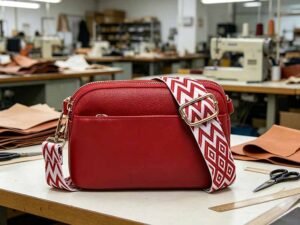
A polished sample does not automatically prove that the supplier behind it can manage real production. One experienced sample maker can spend several days perfecting a handbag, wallet, case, belt, organizer, or leather accessory, even when the wider factory lacks stable material sourcing, production records, qualified operators, or reliable quality controls. The most important supplier decision therefore happens before the first pattern is cut and before the sample fee is transferred.
To verify a leather goods factory before sampling, confirm that its legal identity, payment account, production site, technical team, sample room, material controls, quality records, capacity, compliance documents, and subcontracting arrangements all match. Request live evidence instead of relying only on certificates, website photographs, product galleries, or verbal promises. A trustworthy factory should be able to show how your design will move from pattern development to approved sample and then into controlled bulk production.
Imagine approving a nearly perfect leather bag after two sample revisions, only to discover during a 5,000-piece order that the production leather feels different, the hardware plating varies, the edge paint begins cracking, and the sewing lines cannot reproduce the approved construction. Those failures did not begin during mass production. They began when the supplier was selected without enough evidence.
What Should You Verify First?
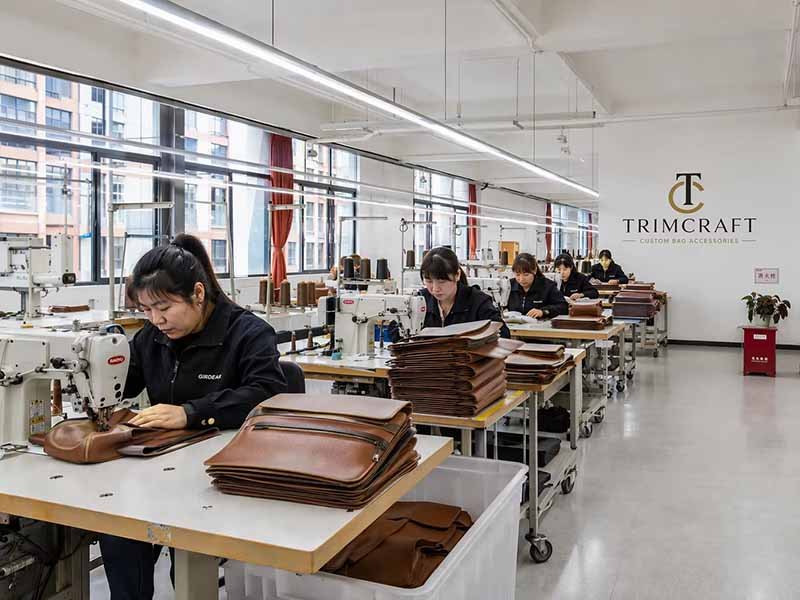
Verify the supplier’s legal identity, payment details, operating address, manufacturing role, and willingness to provide live evidence. These elements should form one consistent chain. A legitimate factory may use approved specialist partners, but it should clearly explain which processes it controls, which processes are outsourced, where production will occur, and who remains responsible for sampling, quality, delivery, and corrective action.
Factory or Intermediary?
Do not rely on the simple question, “Are you a factory?” Almost every supplier understands the commercial value of answering yes. A more useful question is, “Which parts of my product will your own team develop, manufacture, inspect, and approve?” The answer should describe actual departments, people, facilities, equipment, and control points rather than repeat broad statements about factory-direct pricing or high quality.
A genuine leather goods manufacturer should be able to explain how a project moves through product review, material selection, pattern development, cutting, skiving, reinforcement, sewing, edge finishing, logo application, hardware installation, inspection, packing, and shipment. The supplier should also explain who approves each stage and how information is transferred from the sample room to the production floor.
The distinction between a factory and an intermediary is not always black and white. Some factory-based manufacturers use external specialists for metal plating, custom hardware molds, laboratory testing, leather finishing, printing, or temporary capacity support. These arrangements can be practical and professionally managed. Problems begin when the supplier hides the external facility, cannot identify where the order will be produced, or refuses to accept responsibility for quality problems caused by a partner.
Ask the supplier to divide its operations into three clear categories:
- Processes completed inside its own facility
- Processes completed by approved long-term partners
- Materials or components purchased from external suppliers
- Processes that require buyer approval before outsourcing
- Inspection responsibilities at every external facility
- Commercial responsibility when a partner causes delays or defects
A credible supplier usually answers with practical detail. For example, it may complete pattern making, sample sewing, cutting, assembly, inspection, and packing internally while purchasing finished leather, zippers, thread, edge paint, lining, and custom metal components from approved suppliers. This explanation is more believable than a claim that every material and manufacturing process is completed under one roof.
Identity and Payment
The company receiving your sample fee should have a clear relationship with the factory you are evaluating. Compare the legal company name, registered address, website identity, quotation, proforma invoice, email domain, bank beneficiary, audit reports, certifications, and factory signage. The objective is not to demand identical wording everywhere, but to confirm that any differences are reasonable, documented, and commercially transparent.
A mainland Chinese factory may use an affiliated export company or a Hong Kong entity to receive international payments. That arrangement can be legitimate. The supplier should still be able to explain the connection in writing and provide supporting documentation when the transaction value or project risk justifies additional verification.
| Evidence | What Should Match | Practical Check | Serious Warning |
|---|---|---|---|
| Business license | Legal name, address, and business scope | Compare it with the invoice and factory signage | The license belongs to an unrelated company |
| Quotation | Seller identity and contact information | Check the email domain and company footer | Another supplier’s name appears in the document |
| Bank account | Beneficiary connected to the seller | Request written proof for affiliated entities | Payment goes to an unexplained personal account |
| Audit report | Site name, address, audit date, and scope | Confirm the audited site is the production location | The report covers a different factory |
| Certificate | Holder, validity, address, and activity scope | Check the issuing body when practical | The document is edited, expired, or irrelevant |
| Website | Consistent location, team, and capabilities | Compare website images with a live factory tour | Images appear on several unrelated websites |
| Proforma invoice | Seller and payment terms | Compare it with the approved quotation | The beneficiary changes just before payment |
| Email records | Company-controlled communication | Confirm key decisions through formal email | Important instructions exist only in chat messages |
Do not treat one business license, certificate, or factory photograph as conclusive proof. Reliable verification comes from consistency across multiple sources. When the legal entity, payment beneficiary, production address, website, staff, factory signage, documentation, and live factory activity support the same explanation, the supplier’s identity becomes much easier to trust.
Live Factory Review
A prerecorded video can introduce the facility, but it cannot confirm current conditions. A live video review is more useful because the buyer can choose the route, ask spontaneous questions, and connect physical products with current records. For a serious leather goods project, a practical remote review usually takes between 45 and 60 minutes.
Ask to see the entrance and company signage before moving through the office, sample room, material storage, cutting area, skiving stations, sewing lines, edge-finishing section, inspection area, packing department, raw-material warehouse, and finished-goods storage. The exact route should match the product being sourced rather than follow only the supplier’s normal marketing presentation.
During the call, request several simple real-time checks:
- Show the current date on a phone or computer.
- Walk to a production area selected by the buyer.
- Open a current material carton, hide, roll, or component box.
- Ask a technician to explain a product under development.
- Measure a visible feature with a ruler or thickness gauge.
- Show how approved, pending, and rejected materials are labeled.
- Match one work-in-progress item with its production instruction.
- Show a recent inspection sheet without revealing client identities.
- Identify the person responsible for sample approval.
- Explain where the proposed bulk order would be produced.
These actions are more valuable than cinematic footage because they connect current staff, materials, equipment, documents, and production activity. A professional factory should not object to reasonable verification, although it may protect confidential client names, proprietary designs, and sensitive commercial information.
Pay attention to who answers technical questions. A salesperson does not need to know every sewing detail, but the supplier should be able to involve a pattern maker, sample technician, production supervisor, material purchaser, or quality inspector when required. If every technical concern receives the same answer—“no problem”—the supplier may be protecting the sale rather than evaluating the product honestly.
Operating Transparency
Strong manufacturers are usually comfortable discussing limitations. They may explain that a chosen leather is difficult to source consistently, a proposed edge treatment requires another development round, or the requested production schedule is unrealistic during peak season. These comments do not necessarily indicate weak capability. They often show that the supplier understands manufacturing risk and is willing to discuss it before taking payment.
Before authorizing sampling, request a written project summary that identifies the sampling facility, expected bulk-production facility, proposed materials, outsourced operations, technical risks, estimated sample schedule, revision process, required tests, and responsible project owner. This record provides a useful baseline if assumptions change later.
The supplier should also clarify whether the initial prototype will use final materials or temporary substitutes. A temporary zipper, leather, lining, or hardware component can be acceptable when the purpose is only to confirm structure. The risk arises when the buyer assumes the prototype materials are final while the factory considers them provisional.
Transparency should continue after the sample fee is paid. The supplier should explain how it reports material delays, construction problems, cost changes, and revision requirements. Factories that hide problems until the promised sample date often create larger delays than factories that raise concerns during the first few days of development.
How Do You Confirm Leather Goods Expertise?
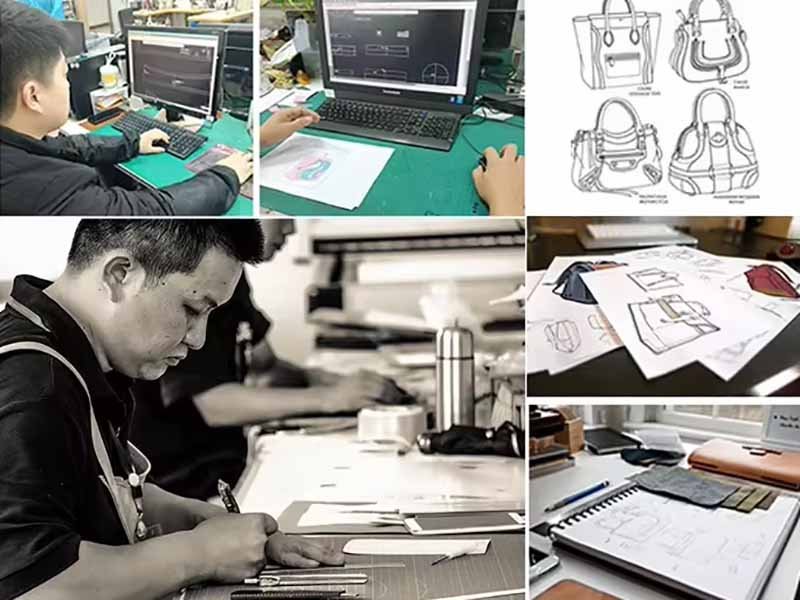
Confirm expertise by reviewing products with similar materials, structures, workmanship, and order requirements. The factory should explain leather thickness, temper, reinforcement, skiving, stitching, edge construction, hardware installation, and production risks. Attractive photographs alone are not enough. Experienced technicians should be able to describe how comparable products were developed, manufactured, inspected, and reproduced across a real production batch.
Comparable Products
A factory that has produced leather goods may still be unsuitable for your specific project. A basic PU card holder, a soft leather tote, a structured briefcase, a multi-pocket travel organizer, and a full-grain leather backpack require different patterns, machines, operators, finishing methods, quality standards, and production schedules.
When evaluating experience, compare the proposed product across several dimensions:
- Product category and finished size
- Genuine leather, split leather, PU, or microfiber construction
- Soft, semi-structured, or rigid shape
- Lining and reinforcement system
- Number of pattern pieces
- Edge paint, turned edge, folded edge, or binding
- Number and type of metal components
- Logo method and positioning
- Stitching difficulty
- Target quality level
- Expected order quantity
- Target market and retail channel
Ask the supplier to select two or three products that are genuinely comparable. During a live meeting, request a practical explanation of how each product was constructed. An experienced technician should be able to identify where leather was skived, which areas required reinforcement, how the handles were anchored, why a certain seam construction was chosen, and which operations created the greatest production difficulty.
Photographs alone are weak evidence because they do not show hidden reinforcement, seam allowances, lining attachment, adhesive application, hardware backing, or edge preparation. They also do not prove that the product was manufactured by the supplier presenting it. Physical examples shown during a live video call become more credible when they can be connected to a pattern, material code, sample card, production instruction, or anonymized inspection record.
A responsible factory may refuse to disclose customer names or proprietary details. That is reasonable. The buyer does not need confidential information. The objective is to confirm that the team understands similar materials, structures, manufacturing problems, and quality expectations.
Material Knowledge
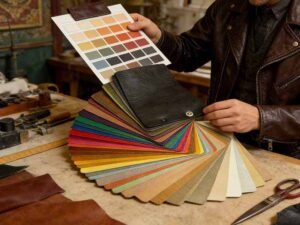
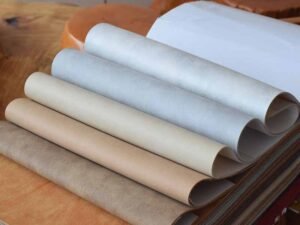
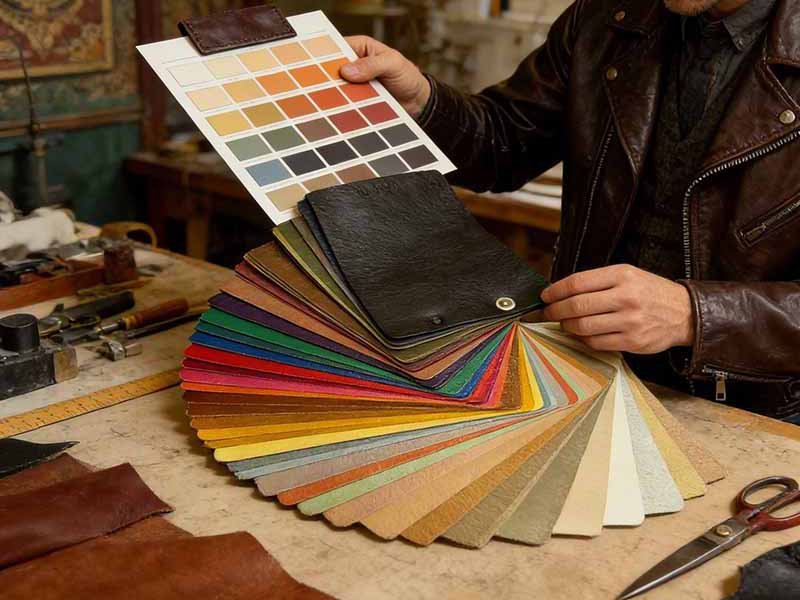
Leather selection involves more than choosing a color, grain, and price. The material must work with the product structure, sewing method, edge construction, expected use, desired hand feel, target cost, and production volume. A supplier that cannot explain these relationships may create an attractive first sample that becomes difficult to reproduce in bulk.
Ask the factory to define the proposed material using measurable or observable characteristics:
- Material category and construction
- Animal source where relevant
- Full-grain, corrected-grain, split, bonded, microfiber, or PU type
- Target thickness and tolerance
- Softness or firmness
- Surface grain and gloss level
- Stretch behavior
- Backing condition
- Color reference
- Acceptable natural markings
- Expected cutting yield
- Batch consistency requirements
- Applicable chemical or retailer tests
A capable supplier should explain trade-offs rather than automatically recommending the most expensive option. Softer leather may feel luxurious but require extra reinforcement. Thicker leather may improve structure while making folded edges bulky. Natural grain may create a premium appearance but produce greater variation in shade and surface markings. A heavily coated finish may improve uniformity while reducing the natural character of the material.
Thickness deserves particular attention because small changes may affect sewing, folding, edge appearance, weight, and finished dimensions. One measurement is rarely enough for natural leather. The factory should explain how many points are checked, where readings are taken, and which tolerance is realistic for the product.
A compact wallet with several folded layers may require tighter thickness control than a relaxed tote. A structured case may require additional splitting or skiving in selected areas rather than one uniform thickness throughout the product. The key is not to apply one universal tolerance, but to confirm that the supplier understands where thickness variation becomes a manufacturing problem.
Process Fit
The factory’s machines should match the product, but equipment ownership alone does not guarantee workmanship. Skilled operators, fixtures, machine settings, maintenance, and process knowledge determine whether the equipment can produce consistent results.
Depending on the product, relevant capabilities may include:
- Pattern development
- Clicking or precision cutting
- Leather splitting
- Skiving
- Flat-bed sewing
- Post-bed sewing
- Cylinder-bed sewing
- Walking-foot sewing
- Computerized pattern sewing
- Edge preparation
- Edge painting
- Drying and sanding
- Embossing or heat pressing
- Hardware setting
- Reinforcement placement
- Final cleaning and shaping
- Dimensional inspection
Ask to see relevant equipment working on a current product. A machine standing unused in a corner does not prove that trained operators are available or that the process is part of normal production. It may have been purchased for one past order or may no longer be maintained.
Focus on difficult construction points. Handle attachments, zipper ends, curved gussets, narrow openings, turned corners, multi-layer seams, edge-painted channels, and metal hardware near stress points often reveal the factory’s actual skill level. These areas require more than basic sewing ability and are frequently where sample-to-bulk inconsistency becomes visible.
Ask which operations are handled by senior operators and how those workers are allocated during mass production. Many leather goods factories rely on a limited number of experienced people for pattern development, skiving, edge finishing, topstitching, or final assembly. If several orders require the same specialists at the same time, the stated production schedule may become unrealistic.
Technical Conversation
A knowledgeable factory asks questions before offering confident answers. It may request information about intended load, product use, target customer, retail price, packaging, leather-care expectations, abrasion, colorfastness, hardware performance, or applicable retailer protocols. These questions help reveal whether the supplier is thinking beyond the appearance of the sample.
Useful questions from an experienced technical team may include:
- What will the product normally carry?
- Which area will receive the greatest stress?
- Should the product stand upright when empty?
- Is natural grain variation acceptable?
- Will light-colored clothing contact the material?
- Is edge cracking a critical customer complaint?
- Does the product need retailer or laboratory testing?
- Will several production batches need to match?
- Are material substitutions permitted?
- Is appearance, durability, weight, or cost the highest priority?
A factory that immediately agrees to every request may not understand the consequences. A buyer may request thick reinforcement, very low finished weight, heavy metal hardware, a slim profile, complex internal storage, a short lead time, and a low target cost at the same time. These priorities may conflict, and an experienced manufacturer should explain where compromises are needed.
The purpose of technical discussion is not to make development unnecessarily complicated. It is to identify important decisions while changes are still inexpensive. Discovering a structural weakness during a digital review or early pattern stage is far less costly than discovering it after final leather has been cut.
What Should a Sample Room Prove?
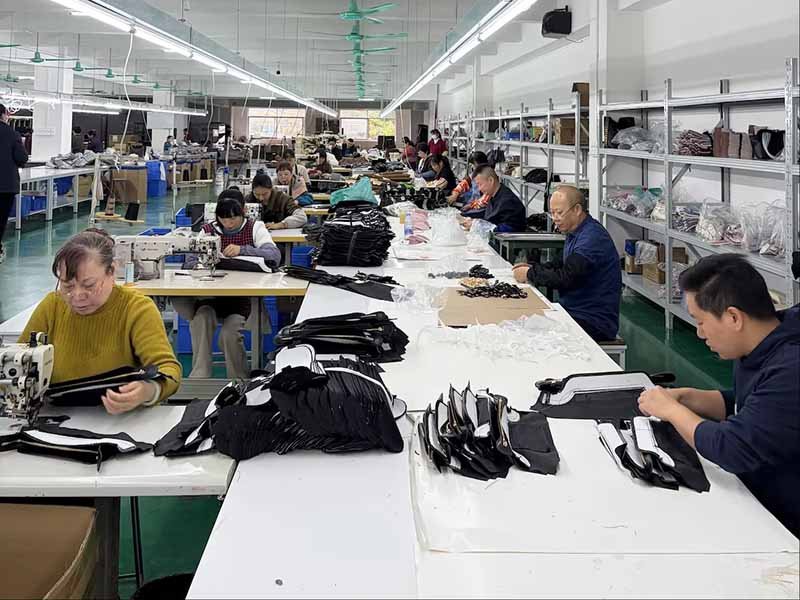
A sample room should prove that the factory can convert your idea into controlled production information. It needs competent pattern makers, identified materials, documented revisions, measurable specifications, and a clear handover to bulk manufacturing. The real test is not whether one attractive sample can be made, but whether the approved version can be understood, measured, sourced, inspected, and repeated by the production team.
Pattern Development
Pattern development is where product appearance, function, cost, and manufacturability begin to meet. A pattern maker must consider far more than the finished dimensions shown in a drawing. The pattern needs to account for seam allowances, leather thickness, folds, skiving, reinforcement, hardware clearance, lining construction, zipper behavior, edge finishing, and the changes that occur during assembly.
Ask who will build the pattern and whether that person can participate in the initial technical review. When the pattern maker is completely separated from the buyer’s requirements, information may be simplified or misunderstood as it passes through several people.
Provide the strongest source information available. This may include:
- A complete tech pack
- A physical reference sample
- Dimensioned technical drawings
- Product photographs
- A rough sketch
- A functional description
- A material direction
- A target cost
- Packaging requirements
- Intended product use
A responsible sample room should identify missing dimensions, conflicting instructions, and construction risks before cutting expensive material. A narrow handle attachment may look attractive in a rendering but fail under expected load. A short zipper opening may create a clean appearance but make the product difficult to use. A thick reinforcement board may create shape while making the seams bulky and hard to turn.
Ask how pattern versions are identified and stored. A revised handle length, gusset width, pocket opening, or zipper position should create a new traceable version. Handwritten corrections may be acceptable during early development, but the final production pattern must be clearly approved so that an older version cannot accidentally return to the cutting table.
Sample Records
A sample becomes valuable when the factory can explain exactly what was used, what changed, and what the buyer approved. Without a controlled sample record, the factory may be unable to reproduce the same leather, lining, reinforcement, thread, edge paint, hardware, or packaging several weeks later.
| Sample Control | Required Information | Reason It Matters |
|---|---|---|
| Sample ID | Style number, version, and date | Prevents confusion between revisions |
| Pattern | Version and approval status | Ensures production uses the correct construction |
| Main material | Supplier, code, color, and thickness | Supports repeat sourcing and lot comparison |
| Lining | Type, color, weight, and supplier | Prevents unapproved substitutions |
| Reinforcement | Material, thickness, and placement | Controls shape and durability |
| Hardware | Size, finish, and supplier reference | Protects function and visual consistency |
| Thread | Type, size, and color | Controls seam appearance and performance |
| Edge finish | Color, preparation, and process stages | Supports consistent appearance and flexibility |
| Logo | Artwork, size, position, and method | Prevents branding and placement errors |
| Measurements | Target dimensions and tolerances | Creates objective inspection criteria |
| Revisions | Comment, owner, and completion date | Preserves development history |
| Packaging | Bags, inserts, labels, and carton details | Connects the sample to final delivery needs |
Photographs should be taken from consistent angles and include close-ups of critical areas. However, photographs should support written records rather than replace them. An image cannot identify the exact leather batch, reinforcement thickness, adhesive, thread specification, hidden seam construction, or edge-paint formula.
The sample record should also identify temporary substitutions. Sometimes the first prototype uses available leather, lining, zippers, or hardware only to confirm shape and dimensions. This can save time and cost when clearly documented. It becomes dangerous when the buyer believes the materials are final and the factory considers them placeholders.
Revision Control
Most custom leather goods require more than one development round. The issue is not whether revisions occur, but whether they are controlled clearly enough for everyone to understand the latest requirement.
Each revision comment should identify:
- The feature to be changed
- The current condition
- The required result
- The measurement or visual reference
- The person responsible
- The expected completion date
- The final approval status
Avoid vague instructions such as “make it more premium,” “improve the shape,” or “make the handle stronger.” These phrases describe a concern but do not provide a measurable manufacturing action.
A clearer comment would be: “Increase the handle drop from 210 mm to 235 mm, maintain the handle width at 20 mm, and add reinforcement beneath both attachment tabs.” The factory can implement, measure, photograph, and confirm this change without relying on personal interpretation.
Annotated photographs are useful when visual areas are difficult to describe. Number every comment and require the supplier to answer using the same numbers. This method reduces confusion when feedback comes from designers, product managers, quality staff, and purchasing teams.
The final approval should identify the exact sample version, pattern version, material set, measurement chart, packaging direction, and approval date. A message that says “the sample looks good” is too weak for a serious production handover because it does not define which records form the approved standard.
Bulk Handover
The approved sample must be converted into a production package that purchasing, cutting, sewing, finishing, inspection, and packing teams can all understand.
A strong production handover includes:
- A retained and protected approved sample
- The final pattern version
- A complete bill of materials
- Approved suppliers and material codes
- Color references
- Measurement chart and tolerances
- Workmanship instructions
- Critical process notes
- Logo artwork and positioning
- Hardware installation requirements
- Packaging specifications
- Defect references
- Approved exceptions
- Pre-production sample requirements
Ask where the approved sample will be stored and who may access it. A sealed reference sample should not be modified, sold, dismantled, or used as an uncontrolled working sample. Production workers may need a separate working reference while quality inspectors retain the official approval sample.
Before bulk cutting begins, production materials should be compared with the approved reference. Leather shade, grain, thickness, softness, and surface finish may vary between sample quantities and bulk lots. Hardware plating and edge-paint colors can also shift when larger orders are purchased.
A pre-production sample made with intended bulk materials creates an important bridge between development and mass production. It allows the buyer and factory to identify changes caused by bulk leather, revised patterns, production hardware, line equipment, or different operators before the entire order enters production.
How Do You Audit Quality Before Sampling?
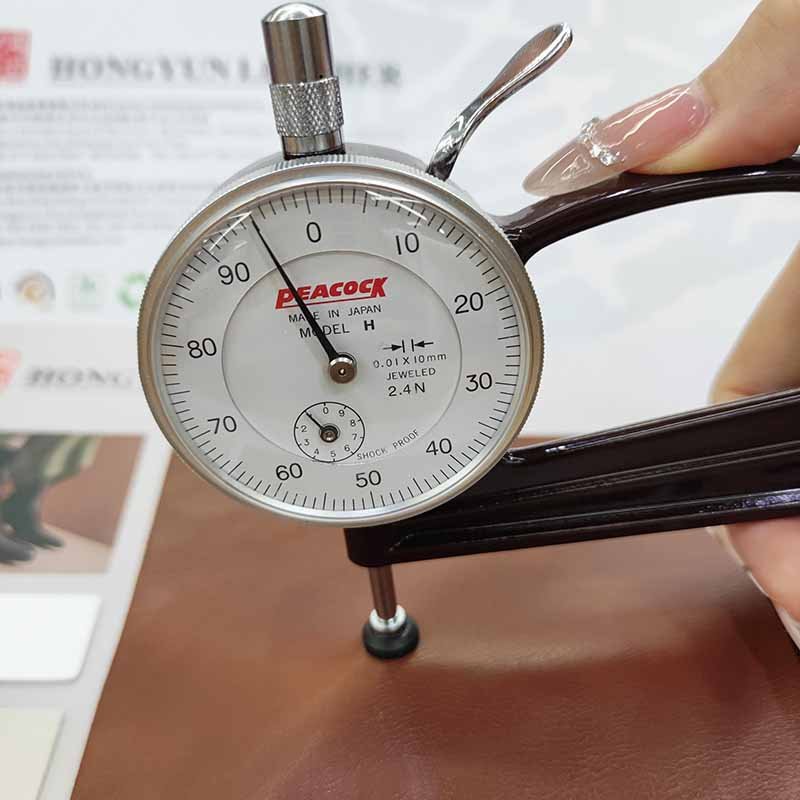
Review how the factory controls incoming materials, cutting, preparation, sewing, finishing, dimensions, defects, and packaging before asking it to make your sample. Quality should be managed through several production gates. A supplier that relies only on final inspection may discover problems after expensive leather has already been cut, assembled, edge-finished, cleaned, and packed.
Incoming Materials
Quality control begins when leather, PU, microfiber, lining, reinforcement, zippers, hardware, thread, adhesive, edge paint, and packaging enter the factory. The incoming inspection process should identify what the material is, whether it matches the approved standard, and whether it can be released for production.
For leather and coated materials, ask how the factory checks:
- Material supplier and material code
- Color against the approved reference
- Thickness at several locations
- Surface grain and gloss
- Softness or firmness
- Stretch and recovery
- Scratches, scars, wrinkles, or coating defects
- Shade variation between pieces
- Backing condition
- Odor
- Quantity
- Batch or lot identity
- Storage conditions
- Usable cutting yield
Natural leather requires an agreed visual standard. Scars, veins, wrinkles, grain differences, and slight shade variation may be natural characteristics rather than manufacturing defects. However, the buyer and factory must define where these characteristics are acceptable.
A natural mark that can be used on the bottom or inside of a product may be unacceptable on a front panel. The cutting plan should separate highly visible areas from less-visible areas so that material grading supports both appearance and yield.
Hardware and zipper inspection should also be documented. A visually correct buckle can still have sharp edges, weak plating, incorrect post length, loose movement, or poor corrosion resistance. A zipper may match the required color but become difficult to operate after being installed into a curved opening.
Approved, pending, and rejected materials should be clearly identified and physically separated. When nonconforming leather or components remain mixed with approved stock, an operator may accidentally use them during cutting or assembly.
Process Controls
The factory should not wait until the product is complete before checking workmanship. Many important operations become hidden after assembly, including reinforcement placement, seam allowance, adhesive coverage, hardware backing, skiving, and internal stitching.
| Production Stage | Main Checks | Practical Evidence |
|---|---|---|
| Material receipt | Color, thickness, finish, quantity, and batch | Incoming inspection record |
| Cutting | Defect placement, grain direction, and dimensions | Cutting checklist and first-piece comparison |
| Preparation | Skiving, reinforcement, logo, and component position | Approved first component |
| Sewing | Stitch length, margin, alignment, and thread tension | In-line inspection record |
| Assembly | Shape, symmetry, zipper fit, and hardware position | First assembled unit approval |
| Edge finishing | Preparation, coverage, smoothness, and drying | Process sample and defect reference |
| Final inspection | Function, appearance, dimensions, and cleanliness | Final inspection report |
| Packing | Protection, labels, accessories, and quantity | Packing checklist |
First-piece approval is one of the most useful controls in custom production. The first completed component or product should be inspected before the line continues. This gives the production team an opportunity to correct machine settings, positioning guides, assembly sequence, stitch appearance, and workmanship expectations while only a small number of pieces are affected.
Complex products may need more than one first-piece checkpoint. A handle assembly, zipper section, edge-painted panel, lined pocket, or hardware attachment may require separate approval before final assembly hides the construction.
Ask whether inspectors have authority to stop production. A factory may have inspection records, but the system remains weak if inspectors can only record problems without requiring operators or supervisors to correct them.
Workmanship Standards
Terms such as “premium quality,” “excellent workmanship,” and “high-end finish” are too subjective for production. Buyers and factories need measurable requirements and visual references that can be understood by sample makers, operators, inspectors, and purchasing teams.
Common leather goods checkpoints include:
- Stitch length and consistency
- Stitch distance from the edge
- Seam alignment
- Thread tension
- Backstitching
- Loose thread control
- Skiving width and depth
- Edge-paint coverage
- Corner smoothness
- Hardware alignment
- Logo position
- Finished dimensions
- Handle symmetry
- Zipper function
- Surface cleanliness
- Product balance
- Reinforcement at stress points
Not every feature needs one universal tolerance. The correct tolerance depends on product size, material, construction, and retail positioning. However, critical dimensions should always have written limits.
A small wallet may need tighter card-slot control than a large tote needs on overall width. A structured briefcase may require close symmetry between the left and right sides, while a soft washed-leather bag may naturally vary more in shape.
Create visual defect references for appearance-sensitive areas. Photographs or physical examples can show acceptable natural grain variation, unacceptable scratches, edge-paint contamination, crooked stitching, glue marks, damaged plating, inaccurate logo placement, and poorly aligned hardware. These references help different inspectors apply the same standard instead of relying on personal judgment.
Testing and Traceability
Testing should reflect how the finished product will be used and where it will be sold. A leather laptop bag, fashion clutch, belt, cosmetic case, and promotional key holder do not have the same functional risks.
Depending on the project, useful tests may include:
- Handle or shoulder-strap pull testing
- Seam-strength testing
- Zipper cycling
- Hardware opening and closing
- Surface abrasion
- Dry and wet colorfastness
- Rub resistance
- Coating adhesion
- Edge-finish flexibility
- Dimensional stability
- Chemical compliance
- Carton drop testing
- Retailer-specific performance protocols
Ask whether the test is performed internally, by the material supplier, or through an independent laboratory. Internal testing is valuable for daily process control, while accredited laboratory testing may be necessary for regulatory, retailer, or contractual requirements.
Traceability should connect every test report to the actual proposed material. A report for black PU from one supplier may not cover a different color, surface finish, backing, formulation, or manufacturing source. Request the material code, supplier, tested color, test method, test date, and sample description.
Acceptance sampling plans, including systems based on recognized AQL methods, may be used for final inspection. Many consumer soft-goods projects use separate limits for critical, major, and minor defects, but the exact plan should reflect product risk, order value, target market, and buyer requirements. Final AQL inspection should confirm the quality system rather than replace incoming, first-piece, and in-process controls.
How Do You Verify Capacity and Compliance?
Verify capacity through product-specific calculations, current workload, qualified labor, equipment, material lead times, and external production plans. Verify compliance by checking the holder, site, scope, date, and relevance of every certificate or report. Large monthly output claims and impressive document folders mean little unless they connect directly to the proposed product, production facility, material source, and order schedule.
Real Capacity
Monthly capacity is meaningful only when connected to a specific product. A factory may produce a large quantity of simple card holders or pouches but far fewer structured leather handbags during the same period. Product complexity, number of operations, edge-finishing time, hardware installation, and skilled labor can change output significantly.
Ask the factory to estimate your order using:
- Number of pattern pieces
- Number of sewing operations
- Edge-finishing requirements
- Hardware quantity
- Estimated direct labor minutes
- Number of qualified operators
- Working hours per shift
- Planned line efficiency
- Material lead time
- Sample approval date
- Inspection time
- Packing requirements
- Existing production commitments
- Expected rework allowance
A basic capacity calculation begins with available qualified labor minutes divided by the estimated labor minutes per unit. The result should then be adjusted for line balancing, breaks, learning time, inspection, rework, maintenance, and production interruptions.
For example, 30 qualified operators working 8 hours per day provide 14,400 gross labor minutes. If a product requires an estimated 120 direct labor minutes, the theoretical output is 120 units per day. Actual sustainable output will be lower after realistic efficiency and production losses are included.
The supplier does not need to provide a perfect figure before the final sample is approved. It should explain the assumptions behind the estimate and update the production calculation after materials, pattern, construction, and workstation sequence have been confirmed.
Bottlenecks
Sewing lines are not always the main production constraint. Leather goods may be limited by material yield, cutting, skiving, edge-paint preparation, drying, custom hardware, embossing, hand finishing, skilled topstitching, inspection, or packaging.
Ask the supplier to identify the most likely bottleneck for your project. A product may be sewn quickly but require several edge-paint applications with drying and sanding between stages. Another product may depend on a custom metal component with a lead time longer than the leather, lining, or sewing process.
Peak-season planning should also be discussed. Ask:
- Which months are normally busiest?
- How much production is already committed?
- Will temporary workers be used?
- Will overtime be required?
- Will any process move to another location?
- Which operations depend on a few senior workers?
- What buffer is included for material delays?
- How will different colors and SKUs be scheduled?
- How will urgent rework affect shipment timing?
- What information is required before reserving capacity?
A supplier that offers the shortest possible lead time without discussing these factors may be presenting a sales target rather than a controlled production schedule. A realistic delivery plan should separate material sourcing, pre-production approval, production, inspection, packing, and shipment preparation.
Subcontracting Control
Specialist partners can improve flexibility, technical capability, and seasonal capacity, but their role must be visible and managed.
The main supplier should explain:
- Which operations are outsourced
- Why those operations require a partner
- Which facility will perform them
- How materials are transferred and tracked
- How instructions and patterns are controlled
- Who approves the first completed pieces
- Who conducts in-line and final inspection
- How nonconforming work is corrected
- Whether the buyer may inspect the partner
- Who remains responsible for cost and delivery
When production is divided between facilities, the supplier must control leather lots, hardware plating, thread colors, edge-paint formulas, pattern versions, workmanship standards, packaging, and inspection methods. Small differences between facilities can become obvious when products from several locations are packed into the same shipment.
Every approved production site should have access to the current pattern, BOM, measurement chart, workmanship instructions, approved material references, and physical sample. Inspection reports from different facilities should be consolidated under one project owner.
Hidden subcontracting creates risk because the buyer evaluates one factory while the product is manufactured somewhere else. Controlled subcontracting is different. The supplier discloses the arrangement, applies common standards, allows reasonable verification, and accepts full responsibility for the partner’s work.
Relevant Compliance
Certificates and test reports are supporting evidence, not automatic proof that a specific product is compliant. Every document should be evaluated by asking who holds it, which address it covers, what activity is included, when it was issued, whether it remains valid, and how it relates to the proposed order.
A quality-management certificate does not prove that a particular handbag meets the buyer’s dimensions and workmanship standards. A social audit does not prove chemical compliance. A tannery certificate does not automatically certify the finished-goods factory. A material test report may not cover every color, coating, supplier, or production lot.
Create a project-specific compliance matrix that separates:
- Factory quality-management requirements
- Social-responsibility requirements
- Environmental requirements
- Leather source documentation
- Restricted-substance testing
- Hardware testing
- Packaging requirements
- Labeling requirements
- Market-entry requirements
- Retailer-specific protocols
Ask the supplier to identify which documents are current, which require renewal, and which must be arranged specifically for the project. The responsible party, cost, lead time, sample quantity, and test method should be clarified before sampling whenever compliance affects material selection or construction.
The strongest compliance evidence connects the legal company, production address, material supplier, tested sample, test method, date, and final order. A certificate folder that cannot be linked to the proposed product may look impressive but provide little practical risk reduction.
Which Checks Decide Whether to Sample?
Decide through a documented risk review rather than price, presentation, or personal impression. Score legal identity, technical fit, sample control, quality systems, capacity, compliance, subcontracting, and communication. Sampling should proceed only when mandatory evidence is complete and unresolved risks have written conditions, responsible owners, completion dates, and a clear decision point before further money or intellectual property is committed.
Live Audit Plan
A remote factory audit should be structured but not overly theatrical. Allow the supplier to prepare relevant records, comparable samples, materials, and technical staff, while keeping several real-time requests outside the prepared presentation.
A practical agenda may include:
- Company identity and ownership
- Project-team introductions
- Comparable leather products
- Sample room
- Pattern control
- Material storage
- Cutting and skiving
- Sewing and assembly
- Edge finishing
- Quality inspection
- Packing
- Finished-goods storage
- External production partners
- Questions related to your design
Use your actual product during the discussion. Ask the technician to identify the most difficult construction point, likely material risk, expected production bottleneck, area most likely to vary in bulk, first feature that should be tested, and design element most likely to increase cost.
The quality of this conversation can be more revealing than the size of the building. A technically capable team should recognize risk and explain how it plans to control it. A weak supplier may repeat marketing language, avoid direct answers, or agree with every requirement without asking for additional information.
After the meeting, issue a written record separating confirmed facts, missing evidence, technical questions, commercial assumptions, and required actions. Ask the supplier to confirm or correct the record. This document becomes part of the supplier-approval file and prevents different people from remembering the meeting differently.
Red Flags
Some weaknesses can be corrected before sampling. Others indicate that the supplier may not be ready or may not be presenting its operation honestly.
Pause the decision when you see:
- Refusal of live verification
- An unexplained payment entity
- Conflicting company names
- Certificates from unrelated locations
- No access to technical staff
- No comparable products
- No pattern version control
- No material identification
- No retained approval sample process
- Hidden subcontracting
- Unrealistic production claims
- Repeated changes in quotation assumptions
- Technical questions answered only with “no problem”
- Pressure to pay before basic evidence is provided
- Sudden changes in the beneficiary account
- No written confirmation of important decisions
A low price is not automatically a warning sign. It becomes a concern when the supplier cannot explain the leather, lining, reinforcement, labor, hardware, packaging, testing, and production assumptions behind it.
A fast sample schedule is not automatically suspicious. It becomes risky when the timeline leaves no room for material sourcing, pattern development, internal inspection, drying, finishing, or revision.
Look for patterns rather than isolated mistakes. One missing document may be an administrative oversight. Several inconsistent records, evasive answers, changing payment instructions, and urgent pressure to transfer money may indicate a structural problem.
Third-Party Verification
Independent audits are most useful when financial, technical, compliance, intellectual-property, or schedule risk is high.
Consider external verification when:
- The first order value is substantial
- The product contains valuable intellectual property
- The factory identity remains unclear
- Several production locations will be involved
- Retailer approval requires formal evidence
- Social compliance is mandatory
- The product uses complex leather construction
- The launch date cannot be moved
- Your team cannot visit the facility
- Earlier information is inconsistent
Define the audit scope carefully. A social audit, technical factory audit, quality-system audit, product inspection, and laboratory test answer different questions. Paying for one service does not automatically cover every supplier risk.
For a pre-sampling technical review, the auditor may need to assess legal identity, production ownership, sample-room capability, relevant equipment, skilled labor, material control, quality records, capacity, subcontracting, and corrective-action systems.
Provide the auditor with your product category, planned quantity, material type, quality level, critical construction points, target market, and known concerns. A generic checklist may confirm that the factory exists while failing to examine the technical processes that determine whether it can produce your specific leather product.
Final Decision
Use a scorecard to compare suppliers consistently. Weight the categories according to the project, but do not allow serious integrity problems to disappear inside an average total score.
| Verification Area | Weight | Minimum Passing Evidence |
|---|---|---|
| Legal and payment identity | 15 | Records match or relationships are documented |
| Relevant product experience | 15 | Comparable products and credible technical explanation |
| Material competence | 15 | Clear specifications, sourcing, and batch-control method |
| Sample-room capability | 15 | Pattern, revision, BOM, and approval controls |
| Quality system | 15 | Incoming, in-process, final, and packing inspection |
| Capacity and scheduling | 10 | Product-specific assumptions and realistic production plan |
| Compliance | 5 | Valid documents relevant to the site, product, and market |
| Subcontracting control | 5 | Disclosed partners, common standards, and clear responsibility |
| Communication | 5 | Named project owner and reliable written follow-up |
| Total | 100 | Documented evidence rather than verbal claims |
A practical interpretation is:
- 80–100: ProceedThe evidence is consistent, and remaining issues can be managed during normal sample development.
- 65–79: Proceed with ConditionsSampling should begin only after listed documents, controls, or approvals are completed.
- Below 65: Reject or ReassessThe evidence chain is too weak for responsible product development.
Some failures should override the score. False certificates, unexplained beneficiary changes, hidden production sites, deliberate misrepresentation, refusal of reasonable verification, or inability to control approved materials may justify rejection regardless of the total.
The final supplier-approval record should identify the decision, open risks, required evidence, responsible person, completion date, approved sample budget, and next review point. Sampling is not a reward for a convincing quotation. It is the next controlled step after the supplier has shown that it can understand, develop, protect, and eventually reproduce the product.
Verify Before You Pay for Sampling
Pre-sampling verification is not intended to create unnecessary barriers for a manufacturer. It gives both parties a stronger starting point by clarifying materials, responsibilities, quality standards, approval methods, production locations, and commercial expectations before the most expensive development work begins.
The strongest evidence chain connects five areas: the business receiving the order, the people developing the sample, the facility producing the goods, the records controlling materials and quality, and the system responsible for reproducing the approved sample in bulk. When these elements support each other, the buyer can move forward with greater confidence.
Szoneier is a Shenzhen-based custom bags, leather goods, and soft-goods OEM/ODM manufacturer with more than 18 years of manufacturing experience. Its factory-based system covers material coordination, pattern making, sample development, sewing production, quality inspection, packaging, and export delivery. Qualified buyers may request online technical meetings, live video factory reviews, scheduled factory visits, and project-specific sampling assessments before placing an order.
To receive a practical evaluation, send your product photographs, reference sample, tech pack, target dimensions, leather or PU requirements, logo artwork, estimated quantity, packaging needs, destination country, and required delivery date. The project team can review the construction, material options, sample process, technical risks, quality checkpoints, and preliminary production approach before development begins.
For a detailed RFQ or custom leather goods sampling request, contact info@szoneier.com or send your project files through WhatsApp at (+86) 13423847456. A complete inquiry allows the factory to provide a more accurate material recommendation, sample plan, cost assessment, and production-risk review.