A sustainable leather goods collection is not created by choosing one material with an environmental label and applying it to several products. The difficult work happens behind the label: defining what sustainability means for the brand, tracing material sources, matching leather performance to each product, reducing cutting and sampling waste, designing items that remain useful, verifying suppliers, and communicating environmental claims without exaggeration. A collection may look responsible in campaign photography while still failing because the leather cannot be traced, the hardware wears prematurely, the products are difficult to repair, or the material cannot be reordered consistently.
To build a sustainable leather goods collection, define measurable sourcing and product goals, compare materials by traceability and performance, develop a focused product range, design for durability and repair, verify leather and manufacturing suppliers, reduce cutting and sampling waste, test relevant chemical and physical properties, and support every environmental claim with documented evidence. Sustainability must be built into the complete product system rather than added as a marketing phrase.
Imagine approving a beautiful vegetable-tanned tote only to discover that the second production lot has a noticeably different shade, the edge finish cracks in cold weather, and the tannery cannot provide the traceability documents requested by a major retail customer. That situation shows the difference between a collection that sounds sustainable and one that can survive sourcing reviews, repeated production, daily use, regulatory checks, and long-term commercial growth.
What Makes a Leather Collection Sustainable?
A sustainable leather collection balances responsible sourcing, environmental management, worker conditions, chemical controls, efficient manufacturing, product durability, repairability, packaging, and commercial viability. No individual leather type, certificate, or environmental label proves that a complete product is sustainable. The strongest collections establish measurable priorities, retain evidence for each claim, reduce unnecessary resource use, and remain practical enough to support consistent production and long-term customer use.
Define Measurable Priorities
Sustainability becomes useful only when it influences specific product and sourcing decisions. A broad statement such as “use better leather” gives designers, buyers, and manufacturers little practical direction. A measurable goal is more effective: identify the tannery supplying the main leather, reduce virgin plastic packaging weight, improve cutting yield, use components that can be replaced, or limit material changes between repeat orders. These targets allow the team to compare results instead of relying on general impressions.
Brands should usually select three to five priorities for an initial collection. Attempting to improve every environmental and social issue at the same time can create conflicting requirements, delayed sampling, unstable sourcing, and costs that the target customer may not accept. A premium business collection may prioritize leather traceability, long-term durability, replaceable hardware, and stable color availability. A limited fashion capsule may focus more heavily on deadstock use, restricted production quantities, and reduced inventory exposure.
Every target needs a clear definition and boundary. “Traceable leather” should state whether traceability reaches the tannery, slaughterhouse, farm group, or only the material distributor. “Recycled packaging” should specify which packaging components contain recycled material and how the percentage was calculated. “Designed to last” should be supported by construction choices, wear trials, repair access, and performance testing rather than treated as an unqualified promise.
| Sustainability Area | Practical Target | Evidence to Retain | Review Stage |
|---|---|---|---|
| Leather sourcing | Main leather linked to an identified tannery and material batch | Purchase records, batch labels, supplier declarations | Before sample approval and bulk cutting |
| Chemical management | Final material set reviewed for the destination market | Test reports, restricted-substance declarations | Before bulk production |
| Durability | Stress points reinforced for intended product use | Approved sample, load tests, wear-trial records | Sampling and pre-production |
| Waste control | Cutting yield and offcut use recorded by material and color | Cutting reports, waste records, reuse records | Pilot production and bulk completion |
| Packaging | Unnecessary layers removed and cartons right-sized | Packaging specifications, material weights | Before shipment approval |
| Repairability | Common failure components can be replaced | Spare-part list, repair access plan, construction drawings | Before collection launch |
Balance Impact and Product Life
A material with a convincing environmental story can still be a poor choice when it fails too early. Leather goods are carried, folded, rubbed, opened, closed, loaded, exposed to moisture, and handled in changing temperatures. Their useful life depends on more than the exterior leather. Handles, straps, linings, zippers, hardware, adhesives, edge paint, thread, foam, and internal reinforcement all influence when the product becomes difficult or uneconomical to use.
This is why product life should be treated as a central part of sustainability. A well-built bag that remains functional for years may make better use of its materials than a lighter product that needs frequent replacement. However, durability should never be assumed from the words “full-grain leather” or from a premium retail price. Weak handle reinforcement, poor lining seams, thin hardware plating, unstable edge paint, or unsuitable adhesive can shorten the life of otherwise excellent leather.
Durability also needs to match the use case. A cardholder requires fold resistance, dimensional stability, and clean edge performance but carries little weight. A work tote requires reinforced handle roots, reliable base structure, strong lining seams, and resistance to repeated loading. A travel bag needs more demanding zipper, strap, abrasion, and seam performance. Sustainable design begins by identifying the most likely failure points of each product before the sample enters bulk production.
Include People and Production
Environmental performance is only one part of responsible leather goods manufacturing. Brands should also evaluate worker safety, legal operating conditions, chemical handling, subcontracting, working hours, production transparency, and the control of processes such as embossing, edge painting, printing, electroplating, adhesive application, and packaging. A collection cannot be considered responsibly produced when its material story is strong but its production system is poorly controlled.
The final assembly factory may not directly own the tannery, zipper plant, hardware-plating facility, lining mill, or packaging supplier. It should nevertheless be able to identify critical upstream partners, communicate buyer requirements, maintain approved specifications, and disclose subcontracted processes. Uncontrolled subcontracting creates significant risk because a product can move outside the approved system without the buyer knowing that materials, chemicals, workmanship, or labor conditions have changed.
Supplier evaluation should therefore examine operating habits in addition to documents. A clean sample room and an attractive showroom do not prove that material lots are separated, adhesives are properly controlled, or subcontractors follow approved requirements. A reliable manufacturer should explain how materials are received, labeled, stored, issued, cut, inspected, assembled, reworked, packaged, and linked to the relevant purchase order.
Keep the Collection Commercially Viable
A collection that cannot be reordered, priced, manufactured consistently, or sold at a workable margin is unlikely to create lasting environmental improvement. Commercial viability is not the opposite of sustainability. It is what allows responsible sourcing and manufacturing practices to continue after the first campaign, press release, or limited-edition launch.
Some lower-impact materials have higher minimum quantities, longer lead times, limited colors, or unstable availability. Deadstock leather may work well for a numbered capsule but poorly for a permanent bestseller that needs exact replenishment. A repairable design may require standardized hardware and more accessible construction. A lightweight packaging option may appear environmentally preferable but cause product deformation, scratched hardware, or higher damage rates during international transport.
The practical solution is usually a controlled balance. Brands should identify which requirements are non-negotiable and where compromise is acceptable. A collection may use traceable leather for visible exterior panels, durable recycled fabric for linings, standardized hardware finishes across several products, and simplified packaging that still provides enough protection for the selected delivery route. Sustainability becomes credible when the collection survives ethical review and daily business conditions.
Which Leather Materials Should You Choose?

Leather materials should be selected by comparing source transparency, physical performance, appearance, cutting efficiency, reorder stability, cost, and intended use. Full-grain, corrected-grain, vegetable-tanned, chrome-tanned, recycled, deadstock, PU, and microfiber materials each involve different advantages and limitations. The responsible choice is the material that meets documented product requirements throughout sampling, manufacturing, customer use, and repeat production.
Match Material to Product Use
Material selection should begin with how the finished product will be carried and used. A soft shoulder bag needs controlled drape, comfortable hand feel, and enough dimensional stability to avoid uncontrolled stretching. A structured briefcase needs shape retention, firm panel support, stable reinforcement, and clean edge construction. A belt requires repeated-bending resistance, tensile strength, and reliable hole performance. A wallet requires accurate skiving, folding, edge finishing, and resistance to continuous pocket friction.
Leather thickness is one of the first development variables. Small leather goods often use skived components around 0.6–1.2 mm in folded or layered areas, while many handbag body panels use leather around 1.0–1.8 mm depending on the leather temper, reinforcement system, seam design, and intended shape. Belts and heavy straps may use thicker single layers or laminated constructions. These figures are common development ranges rather than universal specifications.
Thicker leather does not automatically produce a stronger or more responsible product. Excessive thickness can increase weight, create bulky seams, reduce folding quality, and require aggressive skiving that weakens critical areas. Very soft leather may feel luxurious but stretch around closures or handle roots. Firm vegetable-tanned leather may age beautifully but become unsuitable for a gathered, turned, or highly flexible construction.
The material should always be tested in the actual product structure. A flat swatch cannot reveal whether the leather will split at a tight fold, absorb edge paint unevenly, stretch during stitching, show permanent needle marks, or create excessive bulk where several seams meet.
Compare Common Material Routes
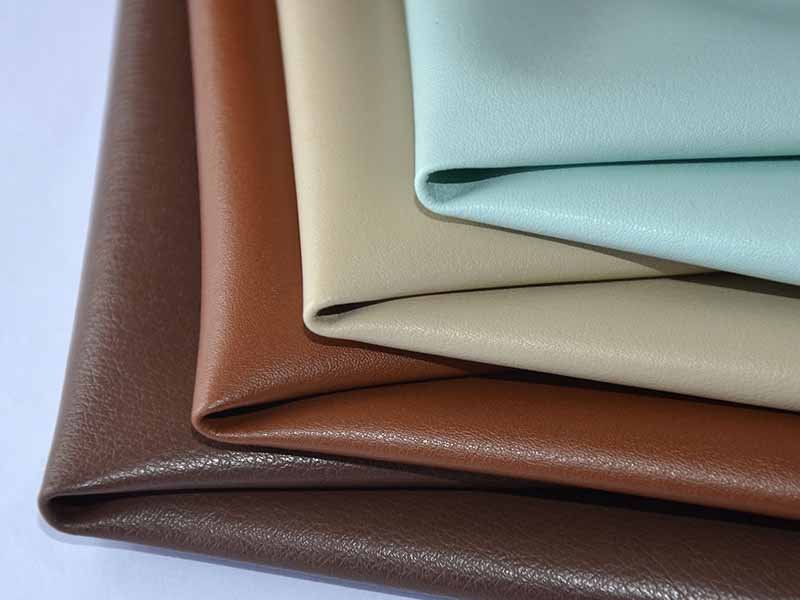
Full-grain leather retains more of the natural surface and often develops visible character with use. It can support premium positioning and a long service life, but scars, grain variation, and color differences may reduce cutting yield. Corrected-grain leather normally provides greater visual consistency and can be easier to manage in larger retail programs, although heavy surface finishing may change the touch, aging pattern, and repair potential.
Vegetable-tanned leather is commonly selected for structured small leather goods, belts, heritage products, and products intended to develop a patina. It can be sensitive to water spots, shade variation, surface marking, and long break-in periods. Chrome-tanned leather can provide softness, color range, heat resistance, and manufacturing efficiency, but responsible chemical management, storage, and wastewater treatment remain essential.
Recycled leather normally combines leather fibers with binders, backings, or surface coatings. It can use production residues and provide consistent sheet dimensions, but buyers should examine composition, coating durability, edge behavior, flexing, and the wording used to market it. Deadstock leather makes use of existing inventory and may reduce demand for newly produced material, but exact replenishment, color continuity, and long-term volume are often limited.
Synthetic options such as PU and microfiber leather can offer stable color, efficient cutting, consistent thickness, and fewer natural defects. Their performance varies significantly. Hydrolysis resistance, peeling, abrasion, flexing, heat, humidity, and coating structure should be assessed before making durability or environmental claims.
| Material Type | Common Thickness Range | Production Benefit | Main Risk to Evaluate | Typical Applications |
|---|---|---|---|---|
| Full-grain leather | 1.0–2.2 mm | Natural character and aging potential | Scars, shade variation, cutting yield | Premium bags, wallets, belts |
| Corrected top-grain | 0.9–1.8 mm | More uniform appearance and repeatability | Finish cracking or excessive correction | Structured handbags, retail collections |
| Vegetable-tanned leather | 1.0–3.5 mm | Firm hand, patina, clean edge potential | Water spots, stiffness, color variation | Belts, cardholders, heritage goods |
| Suede or nubuck | 0.8–1.6 mm | Soft touch and distinctive texture | Rub transfer, staining, cleaning difficulty | Fashion panels, pouches, accents |
| Recycled leather sheet | 0.5–2.0 mm | Consistent format and use of residues | Binder content, flexing, edge durability | Covers, inserts, small accessories |
| PU leather | 0.6–1.5 mm | Stable grain, efficient cutting, wide color range | Hydrolysis, peeling, heat performance | Fashion bags, promotional programs |
| Microfiber leather | 0.7–1.6 mm | Consistent structure and abrasion potential | Coating durability, composition, cost | Bags, trims, accessories |
| Deadstock leather | Varies by lot | Uses existing material inventory | Limited quantity and replenishment | Capsules, limited editions, accents |
Review Tanning and Finishing
The tanning method matters, but finishing can have an equally important effect on environmental performance and product life. Pigments, topcoats, waxes, waterproofing treatments, embossing films, adhesives, cleaners, edge paints, and anti-mould treatments can introduce additional chemical risks or change how the leather reacts to flexing, moisture, heat, and abrasion.
Brands should request more than a general name such as “vegetable leather” or “eco leather.” The technical record should identify the leather category, tannery or material producer, tanning description where available, finishing system, thickness tolerance, color standard, surface treatment, minimum quantity, expected lead time, and acceptable batch variation.
Products intended for skin contact or regulated markets may require testing for chromium VI, restricted azo dyes, formaldehyde, heavy metals, or other substances related to the material and destination. Chromium VI control is not simply a matter of asking whether the material was chrome-tanned. Heat, humidity, finishing chemistry, ageing, and storage conditions may also influence risk.
Color should be evaluated under dry and wet rubbing conditions. Dark or saturated leather may transfer pigment to light clothing. Suede and nubuck require particular attention to rub fastness. Metallic, pearl, patent, embossed, or heavily coated surfaces need flex and finish-adhesion evaluation because decorative layers may fail differently from the underlying leather.
Consider Reorder Stability
A material is only suitable for a continuing collection when the supplier can reproduce it within an agreed tolerance. Buyers should ask how color is controlled, whether the base leather or coating formula changes, how long the article is expected to remain active, and whether minimum-order requirements will make small repeat orders difficult.
Brands should approve a physical master swatch and define acceptable natural variation. Genuine leather cannot be controlled in exactly the same way as printed synthetic sheet material, so the standard should distinguish normal differences in grain and tone from unacceptable changes in color, temper, gloss, or thickness. Large orders may require shade sorting so matched exterior panels come from compatible hides or lots.
The bill of materials should also include an approved-substitution process. A replacement should not be used merely because the original material is delayed. A visually similar alternative may change hand feel, cutting yield, bonding performance, edge color, product weight, testing status, or the accuracy of sustainability claims. Any proposed substitute should be sampled, documented, evaluated, and approved before production.
How Should You Plan the Collection?

A leather collection should be planned around a focused customer, use case, price level, and shared design system. Begin with a manageable number of commercially distinct products and coordinate materials, colors, hardware, linings, logos, and packaging across the range. A clear collection architecture improves brand recognition, reduces duplicated development work, supports efficient purchasing, and makes testing, inventory, production control, and repeat ordering more manageable.
Build a Product Architecture
A collection should not be a group of attractive products that happen to use similar leather. Every item needs a specific commercial role. A hero product creates recognition, an entry product provides a more accessible purchase, supporting products increase basket value, and functional extensions serve additional customer needs without weakening the main concept.
A professional collection might include a work tote, laptop sleeve, document pouch, cardholder, and key holder. A travel collection could combine a weekender, wash bag, passport wallet, luggage tag, and cable organizer. A lifestyle collection may center on a shoulder bag supported by a coordinated pouch, wallet, removable strap, and small gift item.
For many initial launches, three to six well-defined SKUs are more manageable than ten or twelve untested designs. This range allows the brand to concentrate sampling, material purchasing, testing, packaging, photography, marketing, and inventory. It is not a fixed industry rule. A large retailer with confirmed demand may launch a broader assortment, while a direct-to-consumer brand may benefit from fewer products and deeper market validation.
Each SKU should differ clearly in use, size, or price. Two bags with almost identical functions can divide demand and increase stock risk. A clear product architecture should make the collection easier for customers, retailers, and sales teams to understand.
Share Materials and Components
Shared materials create both visual consistency and operational control. The same leather may be used as the main body material on one bag, a trim on another product, and a visible panel on a wallet. Coordinated hardware finishes, lining colors, stitch colors, logo methods, edge-paint tones, and packaging materials can connect different silhouettes into one recognizable collection.
Standardization can also improve purchasing efficiency. Custom hardware, zippers, lining colors, labels, dust bags, and packaging materials often have separate minimum quantities. Creating a different version for every SKU can cause excess stock, long lead times, and inconsistent production. Sharing components reduces fragmented purchasing and makes future replacement or repair easier.
Not every component should be standardized. A zipper suitable for a wallet may not be strong enough for a travel bag. A narrow strap attachment may perform well on a compact crossbody but fail under the load of a large tote. Components can share a visual language while still varying in gauge, strength, construction, or reinforcement.
| Collection Element | Practical Standardization Goal | Elements That May Need to Vary |
|---|---|---|
| Main leather | One or two leather articles across the first range | Thickness, backing, or reinforcement |
| Hardware finish | One plating color and gloss level | Component dimensions and load rating |
| Lining | One coordinated fabric family | Weight, coating, pocket construction |
| Thread | Shared color family | Ticket size and strength |
| Edge paint | One approved color system | Layer count and surface preparation |
| Logo | Shared artwork and proportion | Size and application process |
| Packaging | Common visual language and material family | Dimensions and protection requirements |
| Zippers | Shared tape color and hardware finish | Gauge, length, slider strength |
Design for Long Use
Long product life depends on construction decisions that are often invisible in marketing photography. The design team should identify stress points before the first sample is completed. Common failure areas include handle roots, shoulder-strap anchors, zipper ends, base corners, magnetic closure zones, edge-painted folds, lining seams, and hardware attachment points.
The technical pack should specify reinforcement material, leather thickness, seam allowance, stitch position, folded-edge or raw-edge construction, skiving limits, handle insertion depth, hardware backing, and edge-finish requirements. A note such as “reinforced handle” is not detailed enough. The manufacturer needs to understand the reinforcement type, size, position, and how it connects to the main body structure.
Product weight also matters. Heavy leather, dense lining, solid hardware, and thick reinforcement can produce a sample that looks durable but becomes uncomfortable in real use. A bag should be evaluated while carrying the load it is designed to hold rather than being assessed only when empty.
Wear trials should include repeated opening, closing, loading, strap adjustment, pocket use, surface rubbing, and limited exposure to moisture. Real users often identify problems that laboratory tests and visual inspection miss, including poor balance, uncomfortable handle edges, difficult pockets, noisy hardware, color transfer, and inconvenient closures.
Plan for Repair
Repairability should be decided during design rather than after customers report damage. Components such as shoulder straps, zipper sliders, buckles, screws, metal feet, handle connectors, and selected fasteners can sometimes be made replaceable without changing the overall appearance of the product.
Construction should allow access to likely repair areas. Hardware permanently trapped between bonded layers may require destructive disassembly. Fully closed linings can make internal repairs difficult. Decorative edges may look clean when new but become expensive to restore if the finish cracks and the construction cannot be opened.
A practical repair plan should identify which problems the brand will support, which spare components will be retained, and how long those parts will remain available. Premium programs may store matching leather, edge paint, hardware, thread, replacement straps, and selected panels. Other collections may provide removable components or work with regional repair specialists.
Repair promises should remain realistic. A product should not be described as fully repairable when replacement parts, material records, or access points have not been planned. Even a limited repair system can extend useful product life when it focuses on the components most likely to wear or fail.
How Do You Verify Leather Suppliers?
Leather suppliers should be verified through company and facility identification, material specifications, batch records, traceability documents, valid certifications, chemical reports, physical testing, sample performance, change control, and ongoing production monitoring. Certifications are useful screening tools, but they do not replace product-specific due diligence. Buyers need evidence connecting the approved leather and components to the goods that are actually manufactured and shipped.
Request the Right Records
A complete supplier file should identify both the company selling the material and, where relevant, the facility producing it. Buyers should request the commercial material name, internal material code, composition, thickness tolerance, finish, color, tannery or producer, production country, batch number, minimum quantity, lead time, and available test results.
Traceability can stop at different levels. Some leather can be linked to a specific tannery and incoming-hide records, while other material may only be connected to a region, distributor, or collection system. The brand should communicate the level accurately instead of using a general phrase such as “fully traceable.”
For recycled, bio-based, or composite materials, buyers should request a layer-by-layer composition where possible. A material may include a recycled backing, virgin polymer coating, adhesive layer, and decorative surface finish. A single recycled-content percentage can be misleading when it is unclear whether it applies to the complete material or only one layer.
Certification documents should display the legal company name, facility address, scope, issue date, expiry date, and applicable rating. The certificate should belong to the production facility connected to the order rather than an unrelated upstream factory or a supplier’s general business group.
Check Certificate Scope
Certifications provide useful information, but each one answers a limited set of questions. A tannery environmental audit does not automatically prove farm-level origin, finished-product chemical compliance, leather-goods durability, worker conditions at the assembly factory, or responsible performance by subcontractors.
Buyers should confirm that the approved leather was produced by the certified facility, that the certificate was valid during production, and that the relevant product or process fell within the audit scope. Distributors sometimes present upstream certificates without clearly linking them to the exact material being offered.
A reliable supplier should be able to explain what a certificate demonstrates and what it does not. This is more trustworthy than claiming that one document covers the complete product and supply chain.
Certification should be combined with batch-level purchase records, signed swatches, laboratory testing, an approved physical sample, and a written change-notification requirement. The supplier should not change the tannery, backing, coating, finish, color formulation, or composition without authorization simply because the new material appears visually similar.
Audit Production Controls
The finished-goods manufacturer must preserve the sourcing evidence collected during material approval. During an on-site or video audit, buyers should review how hides and rolls are labeled, separated, stored, and issued to production. Approved and unapproved materials should not be mixed, and different color or production lots should remain identifiable.
Cutting controls are especially important. Operators need clear standards for grain direction, shade matching, natural marks, allowable defects, panel placement, and cutting quantities. A material may be traceable when it enters the warehouse but lose that traceability if multiple batches are mixed during cutting.
The audit should also cover adhesives, edge paints, printing inks, cleaning materials, metal components, and outsourced processes. Buyers should ask which operations are performed internally and which are subcontracted. Embossing, plating, printing, coating, and packaging may occur outside the main facility and still influence compliance, quality, and environmental claims.
Production records should connect the purchase order, approved sample, material lot, work instructions, inspection results, packing list, and shipment. Documentation alone cannot guarantee good manufacturing, but the absence of records makes it difficult to investigate color variation, test failures, workmanship problems, or customer complaints.
Control Changes and Reorders
Supplier verification does not end with the first approved sample. Materials and processes change. A tannery may revise a finish, a hardware supplier may alter plating thickness, a lining mill may change dyes, or a manufacturer may move a process to another subcontractor.
The product specification should state that changes to material source, composition, color formula, coating, backing, finish, production site, or critical subcontractor require written approval. The supplier should provide a new sample and updated documents before the material enters bulk production.
Repeat orders should be compared with the original approved standard. Buyers should review color, thickness, hand feel, grain, surface gloss, hardware finish, lining, edge paint, and finished-product weight. Natural variation is expected in leather, but uncontrolled changes should not be dismissed as inevitable.
A retained golden sample and signed material swatches provide valuable references. These standards should be stored away from direct sunlight, excessive heat, and moisture because the reference itself may fade, dry, soften, or change over time.
How Do You Reduce Production Waste?
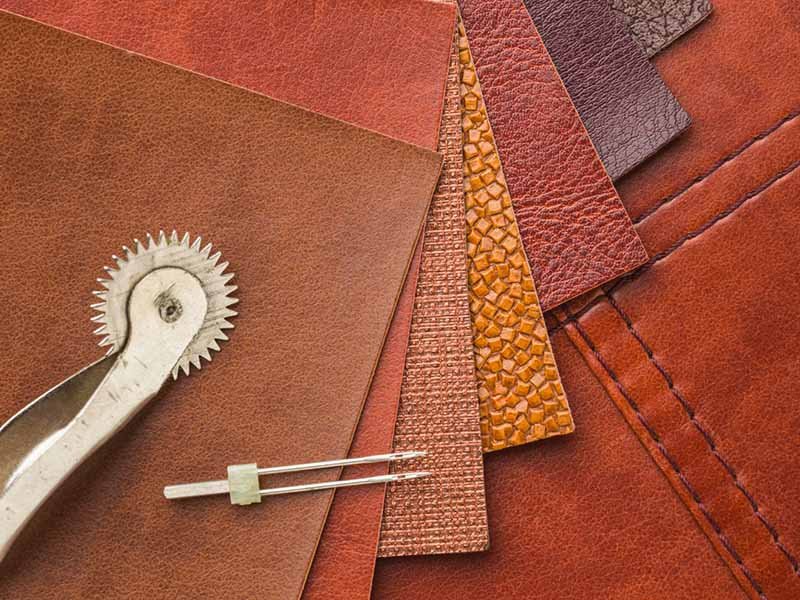
Production waste can be reduced by improving pattern efficiency, setting realistic appearance standards, confirming specifications before repeated sampling, preventing defects early, sharing components, and planning suitable uses for offcuts. Waste should be measured across material yield, rejected panels, sample revisions, rework, defective products, packaging consumption, and unsold inventory. Reusing scraps is helpful, but preventing unnecessary material use usually creates greater environmental and commercial value.
Improve Cutting Yield
Leather cutting differs from cutting uniform fabric rolls because every hide may contain scars, holes, wrinkles, loose grain, thickness variation, shade differences, or identifying marks. Large panels and strict visual-matching requirements reduce usable area because cutters must work around more defects and pair exterior components carefully.
Designers can improve yield by reviewing panel dimensions and shapes with the pattern team before final approval. A large uninterrupted front panel may look clean but create significant waste. A carefully positioned seam, contrast gusset, trim panel, or secondary material can improve utilization without reducing the product’s perceived value.
The brand and factory should agree on acceptable natural characteristics. Some healed scars, grain changes, or shade differences may support an authentic leather appearance, while other marks may be unsuitable for visible areas. Without a defined standard, the factory may reject too much material or use panels that the buyer later refuses.
Cutting yield should be recorded by material, color, hide grade, and product. Light colors may expose more surface differences than dark colors. Embossed or heavily pigmented leather can offer more uniform cutting, but its finish creates different durability and environmental considerations. Digital nesting can support efficiency, although experienced manual judgement remains important where stretch, grain direction, panel matching, and natural marks affect appearance.
Use Offcuts Carefully
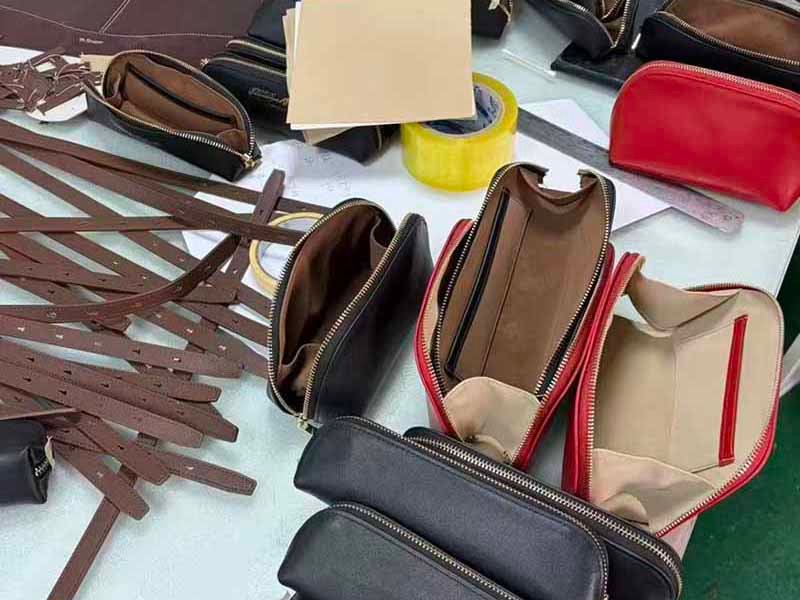
Leather offcuts can be used for cardholders, key holders, zipper pulls, luggage tags, cable organizers, logo patches, internal reinforcement, small pockets, packaging details, repair pieces, and sampling tests. The most useful applications are planned during collection development and connected to genuine demand.
Not every scrap should become a sellable product. Small accessories still require cutting, skiving, edge finishing, assembly, hardware, inspection, packaging, storage, and marketing. When customer demand is weak, a brand may simply convert cutting waste into unsold finished inventory.
Offcuts should be sorted by size, color, thickness, surface condition, and quality. Larger consistent pieces may be used for visible accessories, while irregular material may work better as reinforcement, test material, repair stock, or internal components. Retaining selected remnants can also support future color matching, edge-paint trials, logo testing, and warranty repairs.
Brands should measure actual reuse rather than claiming that all scraps are upcycled. Batch records can show how much leather entered cutting, how much became finished goods, how much was reused, how much was retained for repair, and how the remaining material was managed.
Reduce Sample Revisions
Repeated sampling often results from incomplete decisions rather than complex construction. Before making the first complete sample, the team should confirm product dimensions, leather type, thickness, color, lining, hardware finish, logo method, packaging concept, target cost, intended market, and testing requirements.
Partial mock-ups can resolve uncertain details efficiently. A handle attachment can be tested on a single panel. Edge-paint color and adhesion can be reviewed on small strips. A magnetic closure zone can be evaluated without rebuilding the entire bag. Paper, foam, or lower-cost material models can confirm dimensions and pocket positions before final leather is cut.
Digital renderings are useful for proportion, color, and placement decisions, but they cannot replace physical evaluation of hand feel, structure, weight, folding, stitching, and balance. The objective is not to eliminate physical samples. It is to ensure that every sample answers a defined set of technical and commercial questions.
A revision log should record each requested change and its effect on material, construction, cost, weight, testing, and schedule. This prevents outdated instructions from returning during later revisions and reduces the risk that production follows the wrong sample version.
Prevent Rework and Defects
Defect prevention is more responsible than sorting finished goods after production. Incoming leather should be checked for color, thickness, surface condition, quantity, moisture problems, mould, and consistency with the approved standard. Hardware should be reviewed for finish, size, function, plating condition, and attachment compatibility.
Before full production, the factory should approve the first cut panels and first completed units. Measurements, grain direction, panel matching, logo placement, edge preparation, stitching, hardware installation, lining, and product balance should be checked against the approved sample.
In-line inspection should focus on repeated risks. Once a sewing, bonding, painting, or assembly error continues across several production stations, the defect can multiply quickly. Inspectors should record the issue, identify the root cause, isolate affected products, verify corrective action, and confirm that the solution remains effective.
Packaging can also create waste when developed too late. Oversized cartons increase shipping volume, while insufficient protection may lead to crushed products, scratched hardware, deformed handles, moisture damage, or customer returns. Packaging should be tested with the actual product, carton quantity, and transportation method.
How Do You Prove Sustainability Claims?
Sustainability claims should be supported by precise definitions, traceability records, supplier declarations, certification scope, test reports, production data, and documented calculations. Broad phrases such as “eco-friendly,” “green leather,” or “zero waste” should be avoided unless they are carefully qualified. Credible communication identifies which material or process improved, how it was measured, which products and batches are covered, and what limitations remain.
Define Every Claim
Before publishing an environmental statement, the brand should write down exactly what the claim means. “Responsible leather” may refer to tannery environmental performance, animal-welfare controls, deforestation risk management, traceability, chemical management, or several of these factors. “Recycled leather” may describe a sheet made from leather fibers and binders, while “recycled-content lining” may apply only to the yarn used in the fabric.
The statement should identify the component and production scope. If certification covers the outer leather but not the lining, hardware, adhesives, thread, or packaging, the wording should not imply that the entire product carries the same certification. When traceability reaches only the tannery or sourcing region, the product should not be described as traceable to the farm.
Terms such as biodegradable, compostable, plastic-free, and non-toxic require particular care. A leather alternative may contain plant-derived content while also using synthetic coatings, binders, or backings. A genuine leather product may include polyester thread, foam, reinforcement boards, adhesive, edge paint, zipper tape, coatings, and plated metal.
Specific claims are safer and more informative. A statement that the exterior leather came from an identified audited tannery communicates more value than an unsupported claim that the product uses “eco leather.”
Test the Final Material Set
Testing only the exterior leather may overlook risks elsewhere in the product. A finished bag can include lining, foam, boards, adhesives, edge paint, inks, thread, metal hardware, zipper tape, labels, coatings, and packaging. The testing plan should reflect the complete bill of materials, intended user, product category, destination market, and retailer requirements.
Chemical testing may address restricted azo dyes, chromium VI, formaldehyde, lead, cadmium, phthalates, nickel release, or other substances relevant to the material and market. Physical testing should reflect actual use and may include dry and wet rubbing, perspiration resistance, flexing, abrasion, tear strength, seam strength, strap pull, handle load, zipper operation, hardware attachment, finish adhesion, edge-paint resistance, and product loading.
There is no universal pass level for every leather product. A travel bag should face different load and abrasion requirements from a cardholder. The test request should identify the method, sample quantity, conditioning procedure, acceptance criteria, testing facility, reporting language, and action required if the product fails.
| Claim or Product Risk | Evidence Required | Typical Verification Method |
|---|---|---|
| Traceable leather | Supplier-chain records and batch identification | Document review from material purchase through production |
| Recycled content | Composition declaration and calculation method | Certification, transaction records, supplier evidence |
| Chrome-free leather | Process declaration and relevant chemical evidence | Supplier records and laboratory review |
| Restricted-substance compliance | Final bill of materials and current reports | Risk-based laboratory testing |
| Durable construction | Defined use conditions and performance limits | Flex, abrasion, seam, strap, zipper, and wear tests |
| Water resistance | Defined exposure level and acceptance criteria | Material or finished-product water testing |
| Reduced packaging | Previous and current material-weight data | Weight and volume comparison |
| Offcut reuse | Production input and reuse records | Batch-level cutting and material accounting |
| Repairable design | Replaceable components and access plan | Construction review and practical repair trial |
Keep a Claims File
Every SKU should have a claims file that can be reviewed by product, quality, marketing, legal, customer-service, and retail teams. The file should contain approved wording, material scope, supplier declarations, traceability information, certification details, test reports, calculation sheets, packaging records, production dates, photographs, and the people responsible for approving the statement.
Expiry dates and change history are also important. Certificates and test reports do not remain current indefinitely, and material formulations can change. A report for black leather may not support a bright color produced with different pigments. A report for the exterior leather may not cover newly added hardware, lining, coatings, or adhesives.
Marketing teams should use the same approved wording across product pages, packaging, retailer submissions, catalogs, sales documents, and social channels. Inconsistent claims create confusion and make future verification more difficult.
Customer questions provide a useful test of the evidence system. When a buyer asks what “responsibly sourced” means, the company should be able to provide a clear explanation that identifies the standard, material scope, level of traceability, supporting records, and remaining limitations without making claims that exceed the available proof.
Report Progress Honestly
Sustainability communication does not need to imply perfection. In many cases, reporting a specific improvement and acknowledging remaining work creates more trust than presenting a collection as completely sustainable.
A brand may explain that the exterior leather is linked to an identified tannery, the lining contains a verified percentage of recycled fiber, packaging weight has been reduced from the previous version, or selected straps and hardware have been designed for replacement. These statements give buyers and customers something concrete to understand.
Limitations should also be disclosed. Deadstock leather may not support exact replenishment. Natural leather may display shade and grain variation. A repair program may cover straps and hardware but not severe damage to the main panels. A recycled material may still contain synthetic coatings or binders.
After launch, the brand should review product returns, repair requests, customer complaints, surface wear, hardware failures, packaging damage, unsold inventory, supplier consistency, and repeat-order performance. These results provide stronger guidance for the next collection than assumptions made before the products reach customers.
Build Your Collection With a Manufacturing Partner
Building a sustainable leather goods collection is ultimately a disciplined product-development process. The brand must connect design intentions with material evidence, supplier controls, construction details, testing, packaging, production data, and customer use. When these decisions are recorded from the beginning, sustainability becomes easier to verify, easier to communicate, and easier to improve across future collections.
Szoneier is a Shenzhen-based custom bags and soft goods OEM/ODM manufacturer with more than 18 years of experience supporting global brands, retailers, importers, e-commerce companies, and professional buyers. The manufacturing system covers material selection, product engineering, pattern development, leather goods sampling, sample revision, bulk production, in-line inspection, final quality control, branded packaging, third-party testing coordination, and international shipment support.
Brands can approach the development process with a complete tech pack, an existing physical sample, a reference photograph, a rough sketch, or an early collection concept. A useful project brief should include the intended products, target users, leather preferences, required traceability level, dimensions, quantities, colors, hardware direction, logo artwork, packaging requirements, destination markets, testing expectations, target launch date, and any environmental claims the brand plans to communicate.
For selected custom leather goods projects, order quantities may begin around 200 pieces, while exact minimums depend on leather availability, color requirements, hardware customization, structure, packaging, testing, and the number of SKUs. Leather-goods sampling commonly requires approximately 10–15 days, while bulk production may require around 35–60 days after final approval, depending on material lead time, construction complexity, quantity, and compliance requirements. These ranges should be confirmed for each project rather than treated as guaranteed schedules.
To request a development review, send your product sketches, reference images, tech pack, target materials, dimensions, quantities, logo files, packaging requirements, destination market, testing requirements, and planned launch date. The project team can then assess material options, product construction, sampling needs, likely order requirements, production risks, compliance considerations, and the most practical route from an initial concept to a production-ready leather goods collection.