

A leather bag can look environmentally responsible while hiding an entirely conventional supply chain. The outer material may come from an audited tannery, yet the lining, glue, edge paint, reinforcement, hardware plating, packaging, or assembly factory may remain unverified. A product may contain recycled fabric in one pocket while being marketed as completely recycled. Even vegetable-tanned leather can become wasteful when weak handles, unstable edges, or unsuitable hardware cause the finished product to fail after limited use.
Sustainable leather goods manufacturing is a product-wide approach that reduces avoidable environmental and social impacts from material sourcing through production, use, repair, and end of life. It combines traceable materials, controlled chemicals, efficient cutting, safe workplaces, durable construction, quality assurance, appropriate packaging, and evidence-based claims. No single leather type, factory audit, or certificate proves that an entire leather product is sustainably manufactured.
That distinction is especially important for brands, retailers, importers, and sourcing teams. A consumer may see a finished tote bag, but an experienced product developer sees hides, coatings, linings, adhesives, reinforcements, zippers, hardware, stitching systems, subcontracted processes, test requirements, packaging, and delivery risks. Sustainability begins when those hidden decisions are examined together rather than being replaced by one attractive environmental label.
What Is Sustainable Leather Goods Manufacturing?
Sustainable leather goods manufacturing considers the complete product system rather than evaluating only the outer leather. It includes raw-material origin, tannery performance, component selection, chemical safety, material efficiency, worker conditions, manufacturing quality, product durability, repair options, packaging, and transportation. A product becomes more responsible when its major impacts are measured, reduced where practical, and supported by evidence connected to the actual production order.
Sustainability Is a System
The word “sustainable” is often attached to whichever material is easiest for customers to see. A handbag may be promoted as environmentally responsible because it uses vegetable-tanned leather, even when the lining, foam, adhesive, edge paint, magnetic closure, plating, dust bag, or assembly conditions have not been reviewed. Experienced sourcing teams therefore assess the complete product rather than allowing one positive attribute to represent the entire supply chain.
A practical assessment begins with four connected questions. Where did the materials come from? How were they processed? How was the finished product manufactured? How long is the product likely to remain useful? These questions cover upstream operations such as livestock management, hide collection, tanning, dyeing, finishing, and transportation, as well as downstream operations such as cutting, skiving, bonding, sewing, edge finishing, hardware installation, inspection, packaging, and shipment.
Sustainability also includes production planning. A factory can purchase preferred leather and still waste a large amount of material through inaccurate patterns, unrealistic surface requirements, repeated sample errors, poor cutting organization, excessive rework, or overproduction. Preventing a batch of defective bags may create more practical environmental value than adding a loosely defined sustainability label to a product that has not been engineered for stable mass production.
For this reason, buyers should evaluate measurable controls rather than broad environmental language. Useful indicators include cutting yield, first-pass production yield, rework rate, final defect rate, restricted-substance test results, waste by category, packaging weight, energy intensity, repair frequency, and customer return rates. Sustainable manufacturing does not claim that production has no impact. It shows how impacts are understood, controlled, reduced, and honestly communicated.
| Sustainability Area | Practical Measurement | Useful Evidence | Common Buyer Risk |
|---|---|---|---|
| Material sourcing | Percentage of materials connected to approved suppliers and batches | Purchase records, tannery details, batch codes, certificates | Accepting a generic environmental statement |
| Material efficiency | Approved component area compared with leather issued | Cutting records, nesting data, scrap classification | Ignoring waste caused by unrealistic surface standards |
| Chemical control | Percentage of chemicals covered by current safety and compliance documents | Chemical inventory, SDS files, declarations, test reports | Checking only the finished outer leather |
| Quality performance | First-pass yield, rework rate, and final defect rate | In-line and final inspection records | Treating quality and sustainability as unrelated |
| Product durability | Failure rates for handles, seams, edges, zippers, and hardware | Performance tests, repair records, return data | Selecting materials primarily by appearance |
| Packaging | Packaging weight and shipping volume per unit | Packaging specifications and carton-loading records | Using recyclable materials in excessive quantities |
| Social responsibility | Training, incident, overtime, and corrective-action records | Factory records and social audit reports | Relying on an old audit without reviewing current practice |
Material Claims Need Scope
A responsible material claim must explain exactly what it covers. “Made with recycled materials” may mean that an entire product contains verified recycled input, or it may mean that only the lining uses recycled polyester. Those statements create very different customer expectations. The same issue appears when a company describes a finished handbag as certified simply because its outer leather came from an audited tannery.
Tannery assessments can provide meaningful evidence about leather processing, including water management, energy use, chemicals, waste, effluent, emissions, traceability, and workplace systems. However, a tannery assessment does not automatically verify the zipper, thread, edge coating, foam, hardware, packaging, or final assembly site. Each document has a boundary, and professional sourcing teams should understand that boundary before approving a public environmental claim.
A clear statement identifies the subject, supplier, proportion, production location, and available evidence. “The outer leather was sourced from an audited tannery” is more precise than describing the complete bag as certified. “The lining contains verified recycled polyester” is more useful than calling the whole product recycled when the remaining materials are conventional leather, metal, adhesive, thread, and reinforcement.
The same discipline should be applied to phrases such as chrome-free, metal-free, water-based, bio-based, PVC-free, recyclable, biodegradable, or solvent-reduced. Each phrase answers one technical question rather than every environmental question. PVC-free material, for example, may still contain polyurethane. A bio-based composite may contain only a defined percentage of plant-derived input. Precise language protects the brand and gives professional buyers information they can actually use.
Durability Changes the Equation
A product’s environmental value depends partly on how much useful service it delivers. A leather bag that passes final appearance inspection but develops cracked edges, detached handles, corroded hardware, or lining failure after limited use wastes the leather, labor, electricity, packaging, and transportation already invested in it. Durability cannot erase upstream impacts, but premature failure almost always weakens a product’s sustainability case.
Durability starts with matching the leather to the intended structure. Soft fashion leather can work well for a lightly loaded shoulder bag but may stretch around unsupported handle attachments. Thick vegetable-tanned leather may suit a structured briefcase yet become uncomfortable or difficult to turn around small corners. A heavily finished corrected-grain leather may deliver consistent color but still require flex testing to reduce the risk of coating cracks.
Construction details are equally important. Handle reinforcement, seam allowance, stitch length, thread size, skiving depth, edge preparation, adhesive compatibility, zipper specification, hardware thickness, and plating quality all influence service life. There is no universal specification for every leather product because a cardholder, laptop case, tote, belt, wallet, and travel duffle experience very different loads and movement patterns.
For many leather bag seams, approximately three to five stitches per centimeter can provide a useful starting range, although thick leather, decorative seams, fine small leather goods, and high-load areas may need different settings. Excessively close stitching can weaken leather by creating a perforation line, while very long stitches can reduce seam stability. The final setting should always be confirmed on the selected leather and construction.
Greenwashing Warning Signs
Greenwashing often begins when one technically accurate detail is used to create a much broader impression. A recycled lining becomes a recycled handbag. A tannery audit becomes a sustainable supply chain. A small amount of plant-derived material becomes a bio-based product. A reusable dust bag becomes sustainable packaging, even when the shipping configuration includes unnecessary paper, plastic, foam, and oversized cartons.
Another warning sign is missing scope. A supplier may present an authentic certificate without explaining the company name, production address, product category, material, process, or validity period it covers. The document may belong to an upstream supplier, another factory within the same group, an expired production site, or a material that is not used in the buyer’s order.
Buyers should be cautious when suppliers cannot answer straightforward operational questions. Which tannery processed the leather? How is the batch identified? Which product colors were tested? Where does final assembly occur? Are edge painting, plating, printing, and packaging performed internally or subcontracted? What happens when a restricted-substance test fails? How are rejected panels, defective units, and chemical containers managed?
A credible manufacturer does not need to claim perfection. Transparent limitations are often a stronger trust signal than unlimited promises. A factory may explain that leather is traceable to the tannery but not to the individual farm, or that a recycled certificate covers the lining rather than the whole product. Those answers allow the buyer to make an informed decision and create accurate marketing language.
Which Leather Materials Are More Sustainable?

No leather material is automatically the most sustainable option for every application. Buyers must compare raw-material origin, tannery performance, chemical controls, durability, cutting efficiency, repairability, traceability, and product use. Full-grain, corrected-grain, vegetable-tanned, chrome-free, recycled, deadstock, PU, microfiber, and bio-based materials all involve trade-offs that should be evaluated against the actual design and expected service life.
Animal Leather Trade-Offs
Animal leather can provide excellent durability, repairability, structural performance, and long-term appearance when it is sourced and manufactured responsibly. However, the term “genuine leather” is a composition description rather than an environmental grade. It does not identify hide origin, tannery conditions, surface coating, chemical management, usable life, animal-welfare controls, or traceability depth.
A meaningful evaluation begins with the animal species, country of origin, tannery location, processing stage, surface finish, thickness, and available purchasing records. Buyers sourcing bovine leather may also need to assess deforestation exposure in higher-risk supply chains. The depth of available traceability varies, so the supplier should state whether the material can be connected to a tannery, slaughterhouse, region, or more detailed upstream source.
Leather grade should be considered separately from sustainability. Full-grain leather preserves the natural grain and can age attractively, but strict requirements for flawless panels may reduce usable cutting yield. Corrected-grain leather offers greater surface consistency, although heavier coatings can affect flex behavior, repairability, and ageing. Split leather can improve total hide utilization, but its tear strength and finish durability must suit the intended application.
The material must therefore be judged according to its role. A structured office bag may benefit from firmer leather with stable edges. A soft shoulder bag may need lighter leather with controlled stretch. A belt typically requires much greater thickness and longitudinal strength than a wallet lining, zipper pull, or decorative patch. Sustainability depends on using the right amount and type of material rather than selecting the most expensive grade by default.
| Material or Application | Typical Finished Thickness | Common Use | Main Question to Verify |
|---|---|---|---|
| Soft handbag leather | 0.8–1.2 mm | Shoulder bags, soft totes, pouches | Will it resist stretching around handles and seams? |
| Structured bag leather | 1.1–1.6 mm | Briefcases, satchels, structured totes | Can the structure avoid excessive board and adhesive? |
| Wallet exterior leather | 0.8–1.2 mm | Wallets, organizers, passport covers | Will folds and edges remain stable after repeated use? |
| Wallet interior leather | 0.5–0.9 mm | Card slots and internal layers | Will skiving create weak or uneven areas? |
| Belt leather | 2.8–4.0 mm | Fashion, uniform, and work belts | Is the leather stable without unnecessary lamination? |
| Split leather | Project dependent | Panels, trims, and selected accessories | Is its strength suitable for the intended location? |
| Recycled leather composite | Project dependent | Covers, panels, and small goods | What are the leather-fibre and binder percentages? |
| PU or microfiber leather | 0.6–1.4 mm | Bags, wallets, trims, and linings | What are the coating chemistry and expected service life? |
These figures are useful development ranges rather than universal specifications. Leather thickness must be adjusted for temper, skiving, folded seams, reinforcement, product dimensions, expected load, and the number of laminated layers. Physical sampling remains necessary because two leathers with the same measured thickness can behave very differently during folding, sewing, edge finishing, and long-term use.
Tanning Methods in Context
Vegetable-tanned leather is frequently treated as the default sustainable choice because plant-derived tannins are used in the tanning system. It can create firm, characterful leather that develops a distinctive patina and works particularly well for belts, structured bags, wallets, cases, and traditional leather goods. However, the tanning agent represents only one part of the environmental profile.
Water use, energy, wastewater treatment, dyeing, fatliquoring, finishing chemicals, drying, transport, hide utilization, and waste handling still affect the final result. Vegetable tanning may require longer processing and may not provide the softness, bright colors, stain resistance, water performance, or heat stability required for every commercial product.
Chrome tanning remains widely used because it can produce soft, stable, versatile leather efficiently. Its environmental performance depends on chromium chemistry, dosing, process control, recovery systems, wastewater treatment, and prevention of undesirable chemical conversion. Chrome-tanned leather should not be judged only by the presence of chromium, just as vegetable-tanned leather should not be accepted solely because its tanning agents are associated with plants.
Chrome-free and metal-free are also different technical descriptions. A leather may be chrome-free while using another metal-based system. Metal-free leather may use synthetic or aldehyde-based tanning technologies. Buyers should request the exact technical description rather than allowing several terms to be treated as interchangeable marketing labels.
A practical comparison should include colorfastness, tear resistance, flex performance, water spotting, heat stability, finish adhesion, odor, edge behavior, expected ageing, and the tannery’s environmental controls. The most suitable material is usually the one that meets performance requirements consistently while carrying relevant and verifiable processing evidence.
Recycled and Deadstock Options
Deadstock leather can reduce demand for newly produced material by using inventory that already exists. It is particularly suitable for limited collections, seasonal programs, promotional projects, and small product runs. Its main limitation is repeatability. Once a specific lot is consumed, the same shade, grain, thickness, surface finish, and quantity may not be available for future production.
Before approving deadstock, buyers should inspect the available usable area rather than relying only on gross weight or nominal square footage. Storage history can affect moisture level, mildew risk, surface adhesion, color consistency, odor, flexibility, and backing condition. A small swatch may look acceptable while full hides reveal shade variation, inconsistent finish, or storage damage.
Production offcuts can be used for zipper pulls, cardholders, tabs, key covers, reinforcement pieces, repair patches, logo labels, and small accessories. This works best when offcut products are planned alongside the main collection. Producing unwanted accessories only to advertise “zero waste” may transfer the waste problem into unsold finished inventory.
Recycled leather composites generally combine leather fibres or particles with binders, coatings, or backing materials. They may improve use of production residues and offer consistent thickness, but they should not be described as equivalent to full-grain or top-grain leather. Buyers need clear composition data, binder information, abrasion performance, flex resistance, odor evaluation, edge behavior, and expected service life.
When recycled polyester is used in linings, webbing, labels, or packaging, the certificate and transaction evidence should be connected to the actual supplier and production order. A verified recycled lining remains a valuable improvement, but the environmental claim must remain limited to the covered component and confirmed percentage.
Synthetic and Bio-Based Alternatives
Synthetic alternatives can offer consistent color, predictable thickness, efficient cutting, lower visual variation, and easier production planning. They may also be necessary for brands that avoid animal-derived materials. However, “vegan” identifies the absence of animal-derived components rather than proving low emissions, biodegradability, recyclability, responsible chemistry, or long product life.
PVC, conventional PU, water-based PU, solvent-reduced PU, microfiber leather, silicone-based materials, and emerging bio-based composites have different structures and performance profiles. Buyers should ask about the face coating, backing fabric, polymer type, manufacturing solvent system, plasticizer controls, recycled percentage, bio-based percentage, and expected durability.
Water-based PU may reduce dependence on certain solvent-processing systems, but it does not mean that the complete material is plastic-free or biodegradable. A material described as plant-based may still depend on a polyurethane or other polymer binder for strength, flexibility, and water resistance. The actual plant-derived percentage should be stated rather than hidden behind a broad material name.
Durability testing is particularly important for alternatives used on corners, handles, folds, zipper openings, and high-abrasion areas. Common risks include coating delamination, hydrolysis, cracking, surface stickiness, color transfer, and backing separation. A material that performs well on a flat decorative panel may fail rapidly around a wallet fold or tightly turned bag corner.
Material selection should always remain application-specific. A premium briefcase, lightweight fashion pouch, hotel accessory, promotional cardholder, and waterproof travel case do not require the same material. Buyers should compare expected life, maintenance, appearance, compliance, repairability, cost, and replacement risk rather than searching for one material that can be called sustainable in every situation.
How Are Sustainable Leather Goods Made?
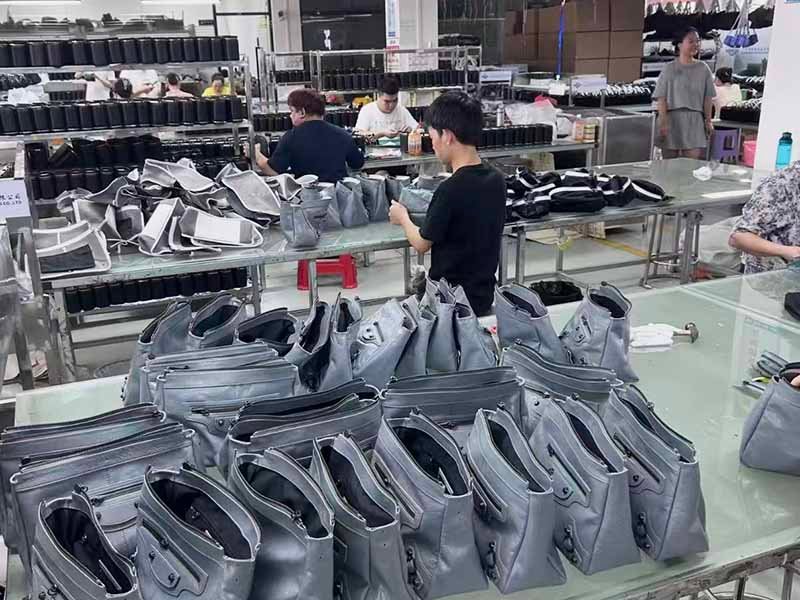
Sustainable leather goods are made through controlled decisions before and during production. The process starts with a clear specification, verified components, efficient patterns, and approved samples. It continues through leather inspection, cutting control, chemical approval, structured assembly, in-line quality checks, final testing, and right-sized packaging. Preventing defects, rework, unnecessary material use, and excessive inventory is as important as selecting a preferred leather.
Specification Before Sourcing
Material purchasing should begin only after the product requirements are defined. Asking a supplier for “eco-friendly brown leather” is too vague for responsible sourcing. The specification should identify leather type, animal species where relevant, tanning description, thickness, temper, surface finish, color standard, backing, performance requirements, restricted substances, testing market, required documentation, and acceptable natural characteristics.
The buyer should define how much grain variation, scarring, veining, wrinkling, and shade difference can be accepted. Natural leather is not visually uniform. When a product requires large, flawless, pale-colored panels, its usable yield will generally be lower than a distressed dark leather product made from smaller components. That difference affects price, waste, delivery risk, and repeat-production consistency.
Component specifications matter as much as the outer leather. A leather handbag may include lining, foam, reinforcement board, thread, zipper tape, zipper teeth, edge paint, adhesive, magnetic closures, metal hardware, logo components, labels, dust bags, protective wrapping, and shipping cartons. Each component can affect durability, chemical compliance, recyclability, repairability, and claim accuracy.
Specifications should distinguish mandatory requirements from visual or commercial preferences. A legal restricted-substance limit for the destination market may be mandatory. A perfectly uniform natural grain may be a preference. When every visual preference becomes a non-negotiable requirement, the factory may reject usable material without improving safety or function.
A controlled bill of materials should connect each component with its supplier, internal material code, approved color, physical reference, required test, documentation status, and substitution rules. Unapproved substitution is a serious risk because a replacement lining, adhesive, coating, or metal finish can change both product performance and compliance.
Pattern and Cutting Control
Leather cutting requires more judgment than cutting uniform textile rolls. Each hide has a different outline, thickness distribution, stretch direction, grain pattern, and arrangement of scars or natural marks. Efficient production depends on assigning each component to the most appropriate part of the hide.
High-visibility front and back panels normally receive cleaner, visually consistent areas. Gussets, internal tabs, zipper pulls, and hidden reinforcement pieces may use areas with acceptable natural variation. Stretch-sensitive parts must be positioned carefully so that handles, straps, closures, and openings do not distort during use.
A basic cutting-yield calculation is:
Cutting yield = approved component area ÷ leather area issued to production × 100
The result should only be compared across similar materials, hide grades, colors, product structures, and acceptance standards. A pale structured handbag with large clean panels should not be expected to produce the same yield as a dark distressed wallet collection with small components.
Digital nesting can improve pattern placement, but it does not replace skilled hide assessment. Software may fit components efficiently within a geometric boundary while overlooking scars, holes, soft belly areas, shade changes, grain direction, or thickness variation. The strongest process combines accurate digital patterns with experienced material inspection and defect mapping.
Cutting records should identify avoidable losses such as incorrect grain direction, inaccurate pattern dimensions, repeated recutting, excessive spacing, poor storage, or customer standards that were not reflected in the original quotation. Offcuts should then be classified by size and condition so that clean material can be reserved for small components, replacement parts, samples, or approved recovery channels.
Sampling as Waste Prevention
Sampling is one of the most effective waste-prevention stages in custom leather goods manufacturing. A carefully managed sample reveals structural, material, visual, and production risks before hundreds or thousands of units are cut. The purpose is not merely to present an attractive prototype. It is to prove that the design can be repeated consistently under production conditions.
The first sample should answer practical questions. Does the bag stand or drape as intended? Does the leather fold cleanly? Are the handles comfortable? Does the reinforcement create excessive stiffness? Does the edge coating remain attached after bending? Is the zipper opening functional? Can sewing operators reach the internal seams? Can the product be manufactured without repeated manual correction?
New custom products often require more than one development round, especially when the leather, structure, hardware, logo process, and packaging are all new. The goal is not to minimize revisions at any cost. Each revision should resolve documented issues related to appearance, function, cost, compliance, durability, or mass-production stability.
The approved sample should be supported by written specifications. A physical sample alone does not communicate hidden reinforcement, glue type, stitch settings, leather batch, hardware plating, tolerances, or inspection methods. When production moves from the sample room to a larger line, undocumented details can be interpreted differently by purchasing, cutting, sewing, edge-finishing, and quality teams.
| Control Item | Common Starting Range or Method | Why It Matters |
|---|---|---|
| Leather thickness tolerance | Often approximately ±0.1–0.2 mm around the approved target | Large variation can change structure and sewing performance |
| Stitch density | Commonly 3–5 stitches per cm for many leather bag seams | Excessive density may perforate leather; low density may weaken seams |
| Small leather goods dimensions | Often controlled within approximately ±1–2 mm | Card slots, folds, and closures require close alignment |
| Medium or large bag dimensions | Often controlled within approximately ±3–5 mm | Soft materials and complex structures create natural variation |
| Logo position | Measured from fixed construction reference points | Small differences are highly visible on branded products |
| Color approval | Physical swatch reviewed under controlled lighting | Grain, gloss, and texture can affect visual color perception |
| Final inspection sampling | AQL-based plans are common; 2.5 major and 4.0 minor are frequent starting points | Final levels should match product risk and buyer requirements |
| Load-point testing | Project-specific pull, hanging, or cycling method | Handles and straps must be tested against intended use |
| Zipper evaluation | Cycle testing or repeated controlled operation | Detects slider, tape, tooth, and installation problems |
| Edge-finish evaluation | Flexing, rubbing, and adhesion review | Identifies cracking and peeling before mass production |
These values are starting points rather than fixed standards. A luxury cardholder, heavy tool bag, fashion tote, laptop briefcase, and travel duffle require different tolerances and performance methods. The final quality plan should reflect the selected material, product dimensions, expected load, target market, and brand risk tolerance.
Production and Final Inspection
Responsible production does not wait until every material and labor hour has been consumed before checking quality. Inspection should be distributed across incoming materials, cutting, preparation, assembly, finishing, and packaging. Detecting an incorrect leather batch before cutting is significantly less wasteful than discovering the error after the bags have been sewn and edge-painted.
Incoming leather inspection should review supplier identity, batch code, color, thickness, area, odor, moisture-related issues, finish stability, and visible defects. Linings, zippers, hardware, adhesives, thread, edge paint, labels, and packaging should also be compared with approved physical references and specifications.
Cut components should be checked before assembly. Incorrect grain direction, inaccurate skiving, missed defects, or wrong dimensions are easier to correct before sewing. During production, inspectors should focus on high-risk operations such as handle reinforcement, zipper installation, edge preparation, logo positioning, hardware setting, and alignment between leather and lining.
First-pass yield is a useful operating measure:
First-pass yield = units accepted without rework ÷ units inspected × 100
A high final pass rate can hide inefficient production when many products required repeated repairs before final inspection. Rework should therefore be tracked independently:
Rework rate = units requiring correction ÷ units produced × 100
Rework consumes labor, thread, adhesives, edge coating, electricity, replacement components, and management time. It can also leave marks or weaken the product. Final inspection should confirm appearance, measurements, function, cleanliness, packaging, quantity, labeling, and carton requirements, while performance testing should focus on the product’s most likely failure points.
How Do Factories Reduce Their Impact?
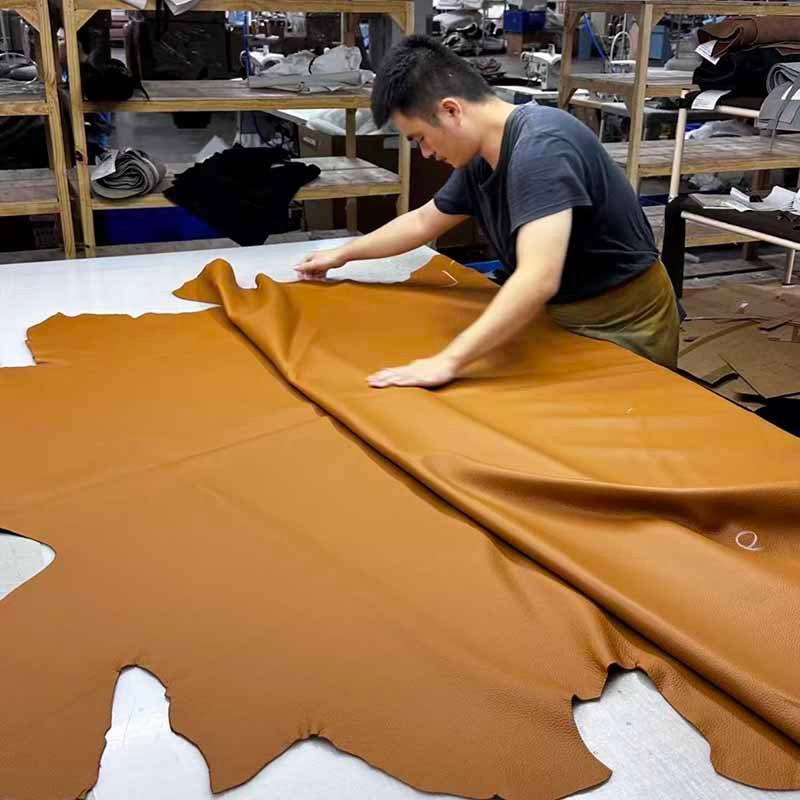
Factories reduce environmental and social impact by measuring material use, defects, chemicals, energy, emissions, waste, packaging, and workplace risks. Credible improvement programs establish baselines, assign responsibilities, record corrective actions, and review results over time. Environmental performance must be visible in purchasing, storage, production, maintenance, quality control, worker training, and waste handling rather than appearing only in marketing photographs.
Water, Energy, and Chemistry
The largest water and wastewater impacts in a conventional leather supply chain are generally associated with tannery operations rather than final bag assembly. Buyers should therefore evaluate the leather-processing site and the finished-goods factory separately, recognizing that their environmental responsibilities and production profiles are different.
A tannery should be able to explain water consumption, effluent treatment, chemical storage, process control, energy use, sludge handling, air emissions, and applicable permits. The leather-goods factory may use less water but still manages adhesives, edge paints, inks, cleaners, coatings, and maintenance chemicals that require proper purchasing, storage, labeling, ventilation, worker training, and disposal.
Every production chemical should appear in a controlled inventory containing the supplier, product name, safety data sheet, approved application, storage location, expiry status, and relevant restricted-substance requirements. Chemicals should not be transferred into unidentified containers, stored near incompatible substances, or used beyond the approved production purpose.
Finished-product restricted-substance requirements and manufacturing chemical restrictions answer different questions. A finished-product requirement focuses on substances present in the material or completed product. A manufacturing restricted substances approach focuses on chemical formulations intentionally used during production. Both are useful because a passing final test does not necessarily demonstrate that every chemical input was responsibly selected or handled.
Energy reporting should use consistent boundaries and units. A leather-goods assembly factory may track electricity per 1,000 units, while a tannery may report energy per square meter of leather processed. Results should be compared over time within similar production conditions. A change from heavy briefcases to small wallets can alter energy intensity even when factory efficiency remains unchanged.
Waste and Yield
Waste reduction begins before the leather enters the cutting room. Product dimensions, panel shapes, grain requirements, color selection, SKU planning, order quantity, and inspection standards all affect the percentage of each hide that can be used.
Factories should distinguish unavoidable process loss from preventable loss. Natural hide shape, scars, holes, and thickness variation create unavoidable limitations. Incorrect patterns, repeated recutting, poor storage, inaccurate color approval, excessive trimming, or avoidable production defects represent preventable loss.
Useful performance indicators include leather issued per 1,000 units, cutting yield, offcut recovery, scrap by category, rework material, rejected units, packaging weight, and carton utilization. There is no universal benchmark for every leather product because a large pale handbag, dark wallet, belt, pouch, and structured briefcase use material very differently.
The most effective improvement program focuses on the largest sources of loss. A factory should not spend considerable time collecting tiny thread ends while ignoring repeated rejection of full leather panels. A simple Pareto review often reveals that a small number of causes account for most material waste.
Waste records should distinguish clean leather offcuts from material contaminated with glue, edge coating, or mixed waste. Clean pieces may be suitable for small products, repair components, color references, testing, or approved recycling. Contaminated waste may require a different handling method.
Packaging should follow the same logic. Removing protective material is not an improvement when transit damage increases. The objective is to use the minimum material needed to protect the product through storage and shipment. Structured bags may need internal support, while flexible pouches can often use more compact packaging.
Worker Safety
Environmental improvement and worker protection must be managed together. A lower-emission adhesive is not a complete improvement when workers are not trained to use it, ventilation is inadequate, or curing conditions are ignored. Sustainable production should reduce environmental impact without shifting risk onto the people who handle the materials and equipment.
Leather goods manufacturing can involve cutting equipment, skiving machines, sewing machines, edge-finishing systems, presses, heat tools, adhesives, cleaning agents, and metal-setting operations. Each process requires practical safeguards such as machine guards, emergency stops, electrical maintenance, ventilation, protective equipment, chemical labels, safe storage, first-aid access, and fire-prevention controls.
Training records are useful, but daily behavior matters more. Workers should understand why chemicals cannot be stored in unmarked bottles, why emergency exits must remain unobstructed, why adhesive containers should remain closed, and why protective equipment must match the actual task.
Working hours and production planning also affect safety and quality. Excessive overtime can increase sewing errors, cutting mistakes, skipped inspections, chemical-handling failures, and workplace incidents. Unrealistic delivery promises can therefore create environmental, social, and commercial risks simultaneously.
Social audits provide useful evidence, but they represent conditions at a particular time and place. Buyers should review the assessed production site, audit date, findings, corrective-action status, peak-season conditions, worker turnover, and any subcontracted operations. Edge painting, printing, plating, specialized sewing, or packaging may take place outside the primary factory and should remain subject to supplier approval and control.
Repair and Product Life
Repairability begins during product development. A leather product may appear simple but become difficult to repair when hardware is permanently concealed, lining access is blocked, edges must be destroyed to reach seams, or replacement parts cannot be sourced.
Designers can improve repairability by standardizing hardware, maintaining access to common failure points, recording thread and edge-paint references, reserving replacement components, and using removable screws or posts where appropriate. These choices can be integrated without making the product look unfinished or industrial.
Brands should identify the components most likely to fail. Zippers, handles, shoulder straps, buckles, magnetic closures, bottom feet, lining seams, edge coatings, and frequently folded sections deserve special attention. Designing these areas for controlled strength and possible replacement can extend product life more effectively than increasing the thickness of every panel.
Repair and return records are valuable product-development data. Repeated handle failure may indicate insufficient reinforcement, unsuitable grain direction, weak stitching, or incorrect rivets. Edge cracking may reveal incompatibility between the leather’s flexibility and the coating system. Hardware corrosion may indicate an unsuitable finish for humid or coastal environments.
Durability should not become an excuse for unnecessary material use. Adding thick boards, foam, or reinforcement everywhere can increase weight, glue consumption, production difficulty, and shipping impact without improving the critical load paths. Experienced engineering reinforces the areas that carry actual stress rather than making every part heavier.
Which Standards and Documents Matter?
Standards are useful only when their scope matches the buyer’s question. Tannery assessments address leather-processing facilities, product chemical certifications address harmful substances, manufacturing chemical programs control inputs, recycled-content standards verify material claims and chain of custody, and management or social audits assess factory systems. No single certificate proves that an entire leather product is sustainable, legally compliant, durable, traceable, and ethically manufactured.
Tannery Evidence
Tannery assessments are relevant when buyers need evidence about the environmental and operational performance of the facility processing the leather. Depending on the framework, assessed areas may include traceability, water consumption, energy use, effluent, emissions, chemical management, waste, permits, workplace systems, and environmental management.
Buyers should verify the tannery’s legal name, production address, assessment status, validity period, rating where applicable, and the processing stages covered. A brand membership, trader membership, material declaration, and tannery audit are not interchangeable documents.
The purchased leather must also be connected to the assessed facility. A leather-goods manufacturer may purchase from several tanneries, and a valid document from one supplier cannot support leather sourced from another. Purchase orders, invoices, batch references, delivery records, and warehouse labels should demonstrate the connection.
Traceability depth should be communicated accurately. Leather may be traceable to the tannery, slaughterhouse, or country of origin without being traceable to an individual farm. A limited but clearly explained chain is more useful than an unsupported claim of complete traceability.
Claim wording should also reflect the evidence. “The outer leather was sourced from an audited tannery” is normally more accurate than implying that the complete finished bag received tannery certification. Tannery evidence becomes stronger when combined with the product bill of materials, assembly-factory review, chemical documents, performance tests, and production batch records.
Product Chemical Standards
Product chemical standards help buyers evaluate harmful substances in leather, coated materials, textiles, threads, buttons, zippers, hardware, and finished articles. Requirements may vary according to the destination market, product type, skin-contact level, customer policy, and age group of the intended user.
The scope of every certificate or test report should be checked carefully. A certified leather material, leather component, and completed leather product are not necessarily equivalent. Buyers should confirm the certificate owner, site, material code, product category, colors, components, issue date, validity, testing method, and applicable limits.
For products entering the European market, chemical compliance can involve leather, PU coatings, PVC parts, dyes, adhesives, edge paints, inks, metal plating, packaging, and other components. Supplier declarations can support a compliance file, but higher-risk materials may require laboratory testing.
Testing plans should identify the actual colors, components, and suppliers used in production. A report for black leather may not automatically cover a red leather made with a different dye formulation. A report for one metal finish may not cover another plating process. Changing suppliers after testing can also invalidate the connection between evidence and the production order.
Finished-product testing and chemical-input management should complement one another. A passing product test confirms the tested sample met the selected requirements at that time. A chemical-management system reduces risk earlier by controlling what enters production, how it is stored, and whether substitutions require approval.
Recycled Content and Chain of Custody
A recycled-content claim requires evidence that the input originated from a qualifying waste stream and remained controlled as it moved through the supply chain. A supplier brochure, informal percentage statement, or photograph of recycled material is not enough to support a certified claim.
For a leather bag using recycled polyester lining, the buyer may need the lining supplier’s certificate, transaction documentation where applicable, purchase records, material composition, production records, and approved claim wording. Each certified entity in the supply chain must perform the role required by the selected chain-of-custody system.
The claim must remain proportional to the component. A recycled lining does not automatically make the leather, hardware, thread, adhesive, edge paint, reinforcement, logo, or packaging recycled. Product descriptions should identify which component contains recycled material and state the percentage according to the applicable evidence.
Supplier changes require renewed verification. A factory may replace a lining supplier because of color, price, capacity, or availability. The replacement material must undergo the same approval and documentation review. Evidence issued for the previous supplier cannot be used to support the new material.
Chain of custody is essentially a controlled record of material movement. It becomes particularly important for programs containing several colors, multiple production dates, more than one assembly factory, or numerous SKUs. Without consistent records, a valid recycled claim can become disconnected from the actual finished goods.
Management and Social Audits
Management-system certifications and social audits assess how a facility operates rather than certifying a particular leather batch or finished product. An environmental management system may show that the factory identifies environmental impacts, tracks legal obligations, assigns responsibilities, establishes targets, manages incidents, and reviews performance.
A quality management system can support document control, supplier approval, inspection, corrective action, and continual improvement. It does not replace product-specific measurements, samples, performance tests, or chemical requirements.
Social audits may cover working hours, wages, worker safety, discrimination, child labor, forced labor, emergency preparedness, management systems, and other workplace conditions. Buyers should review the production address, audit date, audit type, findings, and corrective-action status instead of asking only whether an audit exists.
The strongest evidence package combines complementary documents. A tannery assessment supports leather-processing claims. A chemical test supports the tested material or finished product. Recycled-content documentation supports a defined recycled component. A social audit supports review of working conditions at a specific site. Production inspection records support the quality of a specific order.
Document age must also be monitored. Certificates expire, standards change, suppliers change, and production locations move. Buyers should record expiry dates and review evidence before repeat orders. A credible manufacturer distinguishes documents already available from those requiring order-specific testing, updated supplier evidence, or additional verification.
How Can Brands Verify a Manufacturer?
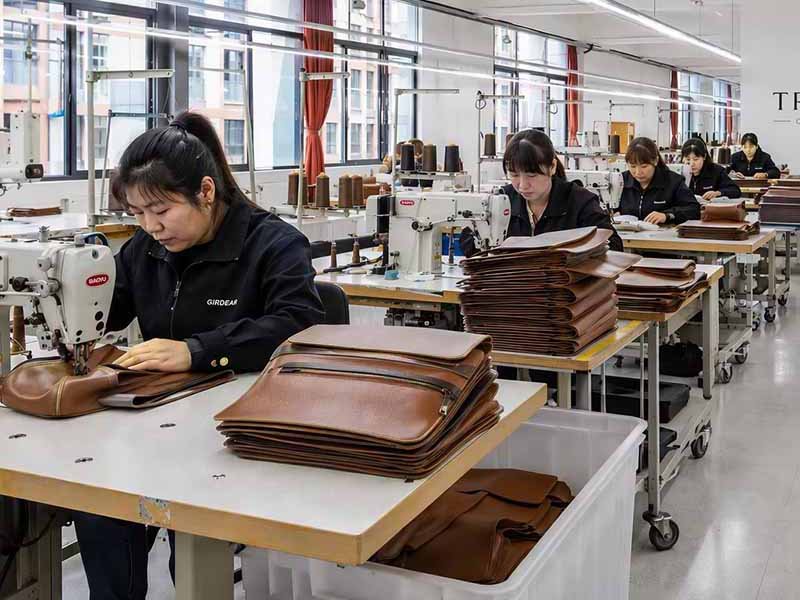
Brands can verify a manufacturer by connecting each important claim to a specific facility, supplier, material batch, production order, and finished product. Effective verification combines document checks, traceability records, sample evaluation, factory review, subcontractor disclosure, quality data, and corrective-action follow-up. Strong manufacturers explain both their capabilities and limitations instead of relying on generic promises, unrelated certificates, or documents that cannot be linked to the buyer’s goods.
Request Order-Specific Evidence
Supplier verification should start with the product bill of materials. Each important component should have an identified supplier, specification, approval reference, compliance requirement, and substitution rule. For a leather handbag, the evidence review may include the outer leather, lining, reinforcement, foam, thread, zipper, hardware, magnets, adhesive, edge paint, logo component, dust bag, protective packaging, and carton.
The required evidence depends on the product risk and intended claim. Tannery and batch records matter for responsible leather sourcing. Laboratory reports matter for restricted substances. Safety data and chemical documentation matter for adhesives, coatings, inks, and cleaners. Hardware reports may be required for nickel release, lead, corrosion, or customer-specific standards.
Every document should pass three basic tests. The first is identity: does the company name and address match the actual supplier or production site? The second is scope: does the document cover the material, product, color, process, and factory being discussed? The third is connection: can purchasing and production records link the evidence to the buyer’s actual order?
A document can be genuine but irrelevant. A tannery certificate may belong to a supplier that was not used. A chemical report may cover another color or material code. A social audit may cover an office rather than the production site. Professional verification collects enough evidence to close these gaps without creating paperwork that has no relationship to the product.
Trace the Batch
Traceability should follow the physical movement of materials through production. A practical record chain may begin with the tannery or material supplier and continue through incoming inspection, warehouse storage, cutting, sewing, finishing, final inspection, carton packing, and shipment.
A typical sequence is:
Supplier purchase order → delivery record → material batch → incoming inspection → warehouse issue → cutting order → production line → finished-goods lot → carton numbers → shipment
Every handover should preserve a useful identifier. When leather from several batches is mixed without records, it becomes difficult to investigate shade variation, finish failure, odor, chemical nonconformity, or customer complaints.
Traceability depth should be defined before quotation. A basic program may require the material supplier, batch number, and production order. A more advanced program may require tannery identity, slaughterhouse information, country of origin, recycled-material transaction records, or other chain-of-custody documents.
Components should also be traceable according to risk. A zipper failure may have nothing to do with the leather, while hardware corrosion may relate to one plating batch. Linings, adhesives, edge paint, metal parts, and packaging should have supplier and batch references when failure, compliance, or claim risk justifies the control.
Digital platforms can make information easier to retrieve, but a complex system is not essential for every project. Well-managed purchase records, labels, inspection forms, material codes, and production orders can provide reliable traceability when they are complete and consistently maintained.
Verify During Sampling
The sample stage is where material evidence, product performance, workmanship, manufacturability, and commercial expectations should be reviewed together. Buyers should confirm material identity, thickness, color, grain, surface finish, odor, flexibility, and expected natural variation before approving the design.
Structural review should focus on predictable failure points. Handles and shoulder straps should be loaded. Zippers should be opened repeatedly. Wallet folds should be flexed. Edge coating should be bent and rubbed. Hardware should be reviewed for looseness, sharp edges, plating consistency, and likely corrosion risk. Linings and reinforcement should be checked for delamination, distortion, and visible adhesive marks.
Sampling should also test whether the design can be produced consistently. A senior sample maker may achieve an excellent prototype through extensive manual adjustment, but mass production requires processes that trained operators can repeat within defined tolerances. Tight corners, hidden seams, layered card slots, hand-applied edge paint, and precise hardware alignment should be reviewed for production stability.
Packaging must be sampled with the product. A structured handbag may collapse inside an undersized carton. Metal fittings may mark leather when protective layers are removed. Excess tissue and foam may increase material use without improving transit protection. Packaging should therefore be evaluated for both protection and efficiency.
The approved sample should be supported by measurements, tolerances, material codes, construction details, stitch references, hardware finishes, logo position, inspection criteria, and packaging instructions. Changes in leather, lining, adhesive, hardware, subcontractor, or production site should trigger a renewed review against the approved standard.
Use a Weighted Scorecard
A scorecard helps sourcing teams compare suppliers consistently, but it should not replace professional judgment. Certain failures must remain non-negotiable. A product that fails a legal chemical requirement should not be accepted because the factory performs well in packaging, delivery, or communication.
| Evaluation Area | Suggested Weight | Evidence to Review | Warning Sign |
|---|---|---|---|
| Material origin and traceability | 20 | Supplier identity, tannery records, batch codes, purchase documents | Certificates cannot be connected to the order |
| Chemical and legal compliance | 15 | Restricted-substance controls, SDS files, declarations, test reports | Reports cover different colors or materials |
| Environmental management | 15 | Permits, objectives, energy data, waste records, corrective actions | Only general environmental statements are available |
| Product durability | 15 | Material tests, structural tests, repair and return data | Supplier avoids discussing expected failure points |
| Quality management | 10 | Inspection plans, first-pass yield, defect and rework records | Quality is checked only after production |
| Social responsibility | 10 | Site audit, safety records, working-hour data, corrective actions | Production is moved to an undisclosed facility |
| Waste and material efficiency | 5 | Cutting yield, scrap classification, packaging review | “Zero waste” claims are unsupported by data |
| Subcontractor control | 5 | Approved subcontractor list and process controls | Edge painting, printing, or plating locations are unknown |
| Transparency and communication | 5 | Accurate scope, limitations, and document sharing | Every answer is a broad claim that all certificates are available |
| Total | 100 |
Buyers may also establish minimum approval gates. Chemical legality, counterfeit documents, unauthorized subcontracting, undisclosed production locations, and serious worker-safety failures should trigger investigation, corrective action, or rejection regardless of the total score.
Supplier performance should be reviewed periodically because conditions change. Production volume may increase, skilled employees may leave, material suppliers may change, new subcontractors may be added, and peak-season pressure may affect quality or working hours. Verification is therefore an ongoing sourcing process rather than a one-time onboarding exercise.
Szoneier is a Shenzhen-based OEM/ODM custom bags and soft goods manufacturer with more than 18 years of experience supporting leather goods, fabric bags, coated materials, sample development, production coordination, quality inspection, customized packaging, and export delivery. Its project model is designed to help brands move from product ideas, reference samples, and technical specifications into controlled sampling and repeatable production.
Brands preparing a sustainable leather goods project can send their product drawings, reference samples, tech packs, target leather type, component requirements, intended environmental claims, destination market, testing standards, packaging policy, expected quantity, and delivery plan. The material, structure, testing scope, documentation, production method, and packaging can then be reviewed as one connected project rather than as separate purchasing decisions.
A responsible quotation should not promise that every available leather, lining, coating, or component automatically carries the same certification or environmental status. Material documents, recycled-content evidence, chemical tests, tannery records, and factory information should be verified against the selected supplier, batch, certificate scope, validity period, and intended claim before production begins.
By combining precise specifications, controlled sampling, realistic material selection, multi-stage quality inspection, traceable production records, and honest claim language, brands can develop leather goods that are easier to defend, more reliable in the market, and better suited to long-term product programs.