A beautiful sample can make almost any leather goods factory look capable. The real test begins later, when the approved leather must be sourced again, the hardware must arrive in the correct finish, hundreds or thousands of pieces must match the agreed dimensions, and the shipment must leave on time. Reliability is therefore not a matter of presentation. It is the manufacturer’s ability to make product quality, cost, communication, and delivery predictable.
A reliable leather goods manufacturer has verifiable factory capability, documented material standards, controlled sample development, repeatable production processes, multi-stage quality inspection, realistic capacity planning, transparent subcontracting, and accountable communication. Buyers should confirm these capabilities through material records, approved samples, production documents, inspection reports, testing arrangements, factory reviews, and evidence from comparable projects rather than relying on certificates or sales claims alone.
This distinction matters because most expensive sourcing failures do not begin with an obviously bad supplier. They begin with a supplier that appears responsive during quotation but cannot control what happens after the deposit is paid. One buyer may discover that the bulk leather has a different grain. Another may receive scratched hardware, uneven edge paint, or cartons that are unsuitable for retail distribution. The uncomfortable truth is simple: the most convincing supplier is not always the most reliable one. The following sections show how to separate manufacturing evidence from marketing language before your next leather goods order reaches production.
What Defines a Reliable Leather Goods Manufacturer?
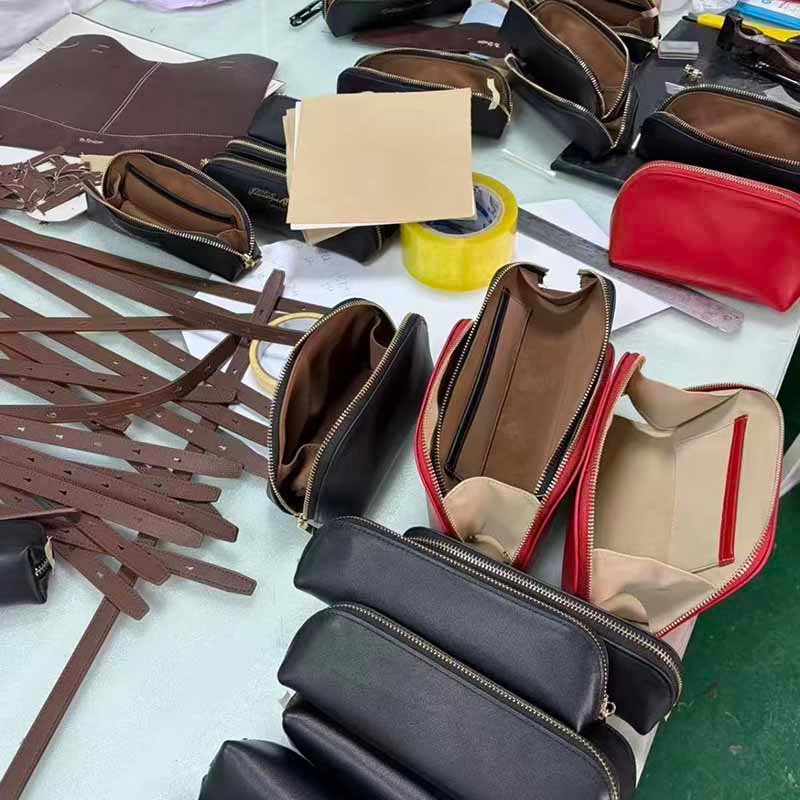
A reliable manufacturer can repeatedly produce leather goods that match approved specifications while maintaining transparent materials, realistic timelines, controlled quality, and accountable delivery. Reliability is not proved by a low quotation, fast replies, or a polished website. It is proved by documented systems that keep the product stable from initial development through repeat bulk orders.
Is the Manufacturer a Factory or a Trading Intermediary?
The factory-versus-trader question is important, but it is often handled too simply. A factory is not automatically reliable, and a sourcing company is not automatically unreliable. What matters is who controls pattern development, material approval, production instructions, inspections, corrective actions, and final delivery responsibility. A supplier may own sewing equipment but still outsource leather cutting, edge painting, hardware assembly, or most bulk production without informing the buyer.
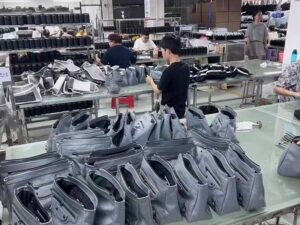
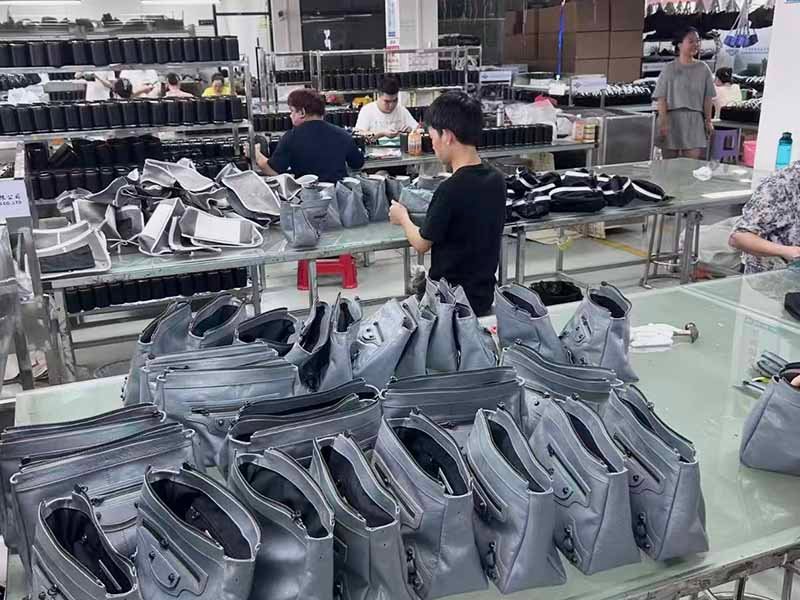
Ask where the sample will be made, where bulk production will occur, and which processes are completed internally. A serious manufacturer should explain whether leather cutting, skiving, stitching, edge painting, embossing, hardware fitting, lining assembly, inspection, and packaging are performed in-house or through controlled partners. It should also identify who approves any subcontracted work.
Video factory reviews, live production calls, process photographs, equipment lists, production addresses, sample-room access, and third-party audits help verify the operating structure. However, a factory tour alone is not enough. Buyers should connect every visible capability to their actual product. Seeing a sewing line does not prove the factory can consistently produce structured leather handbags, fine edge-painted wallets, or multi-SKU retail programs.
Can Experience, Scale, and Services Be Verified?
Years of experience are useful only when the experience matches the product being sourced. A factory may have operated for twenty years while producing mostly promotional fabric bags, which does not automatically qualify it to manufacture premium leather briefcases. Buyers should request examples that use similar leather types, edge construction, hardware, lining, reinforcement, closure systems, packaging, and target quality levels.
Production scale should also be interpreted carefully. A very large factory may be ideal for standardized programs but less flexible during complex development. A small workshop may deliver excellent craftsmanship but struggle with documentation, parallel orders, testing, or international shipping. The right manufacturer has enough capacity and organization for the project without placing it below more profitable customers.
Useful evidence includes:
| Reliability Claim | Evidence Buyers Should Request | Warning Sign |
|---|---|---|
| Extensive experience | Comparable products and project records | Only generic factory photos |
| Strong development | Patterns, prototypes, revision records | No written sample feedback |
| Stable production | Production plan and line allocation | Unclear production location |
| Quality control | Inspection checkpoints and reports | “We check everything” |
| Export capability | Packing lists, labels, shipment workflow | No packaging review |
| Repeat-order support | Archived BOMs and approved standards | Reorders start from memory |
The best evaluation question is not “How long have you been in business?” It is “What systems from those years of experience will protect this specific order?”
Does the Manufacturer Accept Accountability?
Reliable manufacturing requires a clear owner for every decision. When a leather shade is outside tolerance, someone must decide whether to replace the batch. When the edge paint cracks during testing, someone must identify whether the cause is formulation, surface preparation, drying, or application thickness. When packaging damages the hardware, responsibility cannot be passed endlessly between the factory, packaging supplier, and freight forwarder.
Before production, buyers should know who manages the project, who approves materials, who supervises the line, who signs inspection reports, and who handles corrective action. Communication should not stop at forwarding messages from different departments. A competent project coordinator translates brand requirements into manufacturing instructions and returns production information in a form the buyer can act on.
Szoneier operates as a Shenzhen-based, factory-led custom bags and soft goods manufacturing partner with in-house sampling, production coordination, quality inspection, packaging, and export support. Its documented operating model combines its own manufacturing system with controlled partner capacity while keeping approved samples, material standards, inspection requirements, communication, and delivery responsibility under centralized management.
Accountability becomes especially important during repeat orders. A reliable supplier preserves the paper pattern, BOM, leather reference, color standard, hardware specification, logo file, packaging artwork, QC requirements, and approved changes. Without this archive, every reorder becomes a new development project and product consistency gradually disappears.
How Are Leather Materials and Components Controlled?
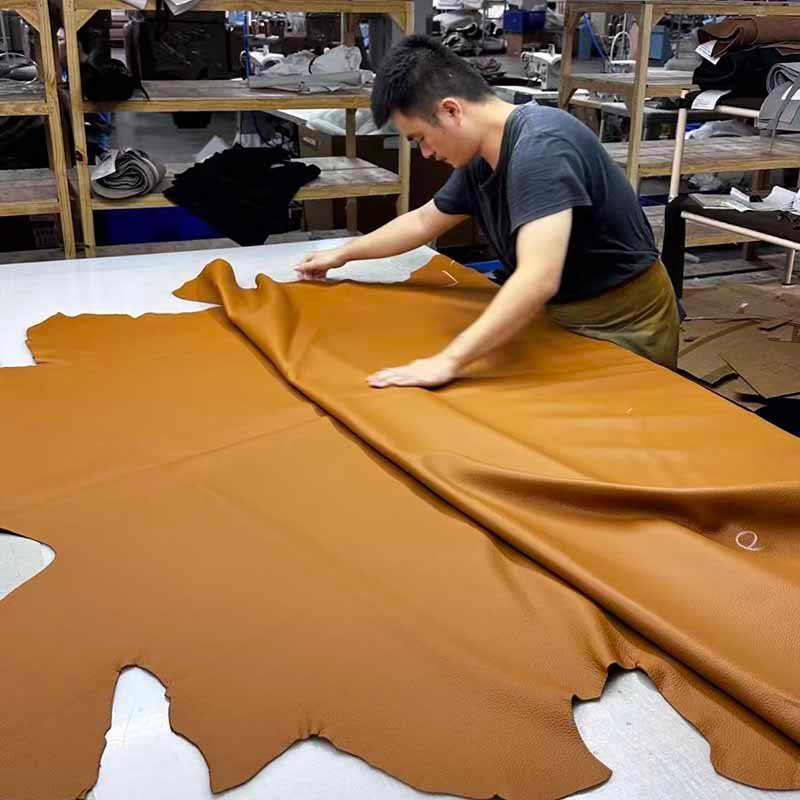
Reliable material control begins with written specifications rather than descriptions such as “premium leather” or “good hardware.” The manufacturer should document leather type, thickness, finish, color, grain, backing, performance requirements, component specifications, and approved reference samples. Every production batch should be checked against these standards before cutting begins.
Which Leather Specifications Should Be Documented?
Leather is naturally variable, so a specification should define acceptable variation rather than pretending every hide will be identical. The material record should identify whether the product uses full-grain, top-grain, corrected-grain, split leather, suede, bonded leather, PU, microfiber, or another engineered material. It should also record thickness range, surface finish, grain direction, temper, color reference, gloss level, backing, coating, and intended testing requirements.
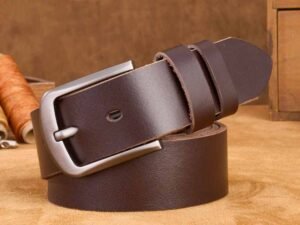
A structured handbag may need firmer leather with controlled stretch, while a soft tote may require a more relaxed hand feel. A wallet may require accurately skived edges to avoid bulk, while a belt needs thickness, tensile strength, and dimensional stability. The same leather name can therefore describe materials that behave very differently in production.
Buyers should approve physical swatches, not only digital photographs. Lighting, camera settings, screen calibration, and leather angle can distort color and gloss. For critical colors, the agreement may include a master swatch, Pantone reference, color tolerance, and rules for shade grouping. The factory should also explain how natural scars, veins, growth marks, grain variation, and panel placement will be handled.
A reliable manufacturer does not promise that natural leather will look perfectly uniform. It explains what variation is normal, what variation is unacceptable, and how visible panels will be matched.
How Are Hardware, Lining, Edge Paint, and Accessories Inspected?
Leather goods often fail because of components rather than the leather itself. A handbag can use attractive leather and still receive poor reviews because the zipper catches, the plating scratches, the magnetic closure is weak, the lining tears, or the edge paint becomes sticky. Component control should therefore be part of the main specification, not treated as a purchasing detail.
| Component | Key Specification | Practical Check |
|---|---|---|
| Zipper | Size, teeth, tape color, slider finish | Repeated opening and closing |
| Metal hardware | Base metal, plating, color, coating | Scratch, corrosion, and pull checks |
| Lining | Fiber, weight, color, coating | Tear, seam, and crocking checks |
| Edge paint | Color, flexibility, layer system | Bend and adhesion checks |
| Thread | Material, ticket size, color | Stitch appearance and strength |
| Reinforcement | Board, foam, webbing, backing | Shape retention and load checks |
| Logo | Size, depth, foil, position | Master sample comparison |
| Packaging | Protection, inserts, carton grade | Compression and abrasion review |
The manufacturer should maintain approved component samples or signed sample boards. Hardware colors described as gold, light gold, antique brass, gunmetal, or nickel can vary significantly between suppliers and plating batches. A physical master is more reliable than a written color name.
Edge paint deserves particular attention because failures may appear after flexing, temperature changes, or prolonged storage. Surface preparation, primer, layer thickness, curing time, and paint compatibility all affect performance. A visually clean sample produced slowly by a technician does not guarantee the same result on a faster bulk line.
Is Material Traceability Available?
Traceability does not always require complex software, but it does require organized records. The factory should be able to connect a finished production lot to the leather batch, component suppliers, purchasing records, inspection status, production date, and relevant test reports. This becomes critical when a color problem, restricted substance issue, hardware defect, or customer complaint affects only part of an order.
For larger programs, material lots should be separated and labeled to prevent accidental mixing. Leather panels from visibly different shade groups should not be combined within one product unless that variation is part of the design. Components from different plating batches may also need separation when the finish is highly visible.
Buyers should ask:
- Can the factory identify the source and batch of the main leather?
- Are approved swatches retained for repeat orders?
- Are incoming materials checked before cutting?
- Can failed materials be quarantined?
- Are replacement materials subject to buyer approval?
- Are test reports linked to the actual production material?
- Can repeat orders use the same or equivalent controlled specifications?
Traceability is particularly important when sustainability or compliance claims are made. A certificate belonging to a material supplier does not automatically prove that the certified material was used in the buyer’s order. The purchase record, batch identification, invoice, specification, and production documents must form one connected evidence chain.
How Do Samples Stay Consistent With Bulk Production?
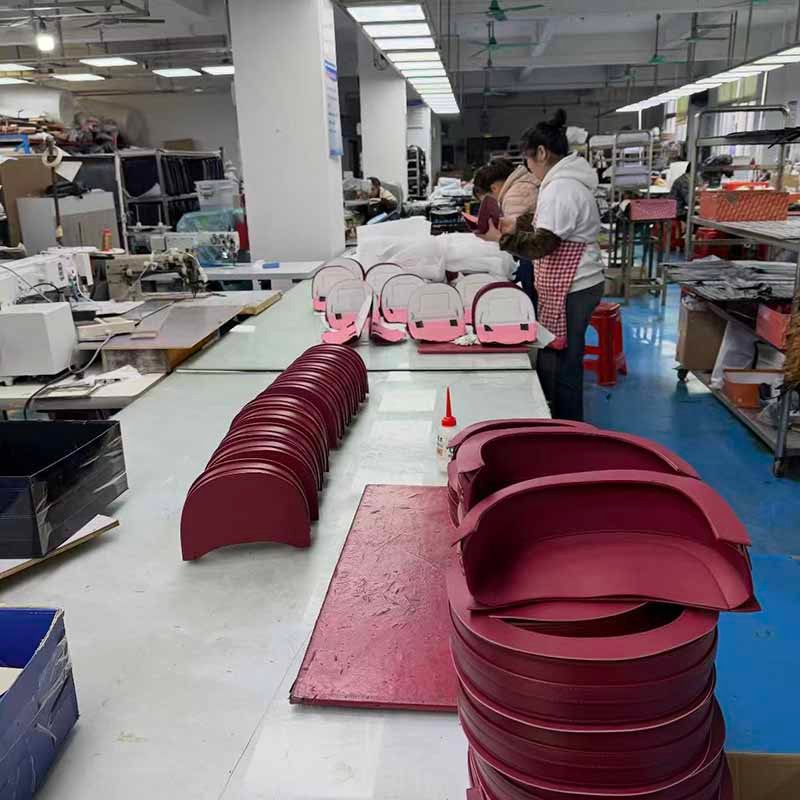
Sample-to-bulk consistency depends on converting the approved sample into a controlled production standard. The manufacturer should freeze the pattern, BOM, measurements, materials, hardware, stitching, edge construction, logo, packaging, and tolerances before bulk production. If workers are asked to copy a sample without complete documentation, variations are almost inevitable.
How Are Tech Packs, BOMs, and Revisions Managed?
A tech pack is most useful when it becomes an active manufacturing document rather than a file stored in an email thread. It should include product dimensions, panel measurements, seam allowances, leather thickness, reinforcement, stitch details, edge treatment, hardware, lining, logo position, packaging, labeling, and testing requirements. Drawings should be supported by measurable specifications wherever possible.
The bill of materials should identify each component precisely enough that purchasing cannot quietly substitute another option. A description such as “gold zipper” is too vague. A usable BOM may specify zipper size, teeth material, tape color, slider design, puller, plating color, supplier reference, and approved sample. The same discipline applies to leather, edge paint, thread, lining, magnets, buckles, rivets, boards, foam, and packaging.
Revision control prevents old instructions from returning during bulk production. Each sample version should have a date, revision number, change record, and approval status. Comments such as “make the handle better” should be translated into measurable changes, such as increasing reinforcement length, changing leather thickness, modifying the folded edge, or adjusting stitch position.
Once approved, the final files should be released as a controlled production package. Earlier versions should be marked obsolete so they cannot accidentally reach the line.
Does the Approved Sample Become the Production Standard?
The approved sample should become the physical master for production, inspection, and packing. It should not disappear into a showroom or remain with the salesperson while the production team works from photographs. Ideally, the factory retains one sealed approval sample, the buyer retains another, and any third-party inspection company receives the same specification package.
A pre-production sample may still be needed after the sales sample is approved. This is especially important when the original sample used temporary materials, hand-finished components, development hardware, or a different production method. The pre-production sample should use the actual bulk leather, lining, hardware, thread, edge paint, logo process, and packaging whenever possible.
Before line release, the team should conduct a production meeting covering:
- Approved pattern and measurements
- Material and shade standards
- Visible-panel selection
- Skiving and folding details
- Stitching and seam requirements
- Edge-paint construction
- Hardware protection
- Logo position and finish
- Critical defects
- Packaging sequence
The approved sample is not merely a visual reference. It represents a set of decisions. If the decisions behind the sample are not documented, workers may reproduce the appearance while changing the structure. That can lead to weaker handles, thicker seams, different pocket dimensions, or altered product balance even when the item looks acceptable at first glance.
Are Tolerances and Construction Details Recorded?
No production process can deliver absolute dimensional perfection, so the buyer and manufacturer should agree on realistic tolerances. The tolerance should reflect product size, construction, material behavior, and functional importance. A small cardholder may require tighter dimensional control than a large unstructured tote. A zipper opening or device pocket may be more critical than a decorative panel.
Measurements should be taken using an agreed method. A soft leather bag measured empty may produce different results from the same bag filled or laid flat. The specification should define reference points, product condition, and measurement tools. Photographs or diagrams reduce interpretation.
Critical construction details often include:
- Stitch distance from the edge
- Stitch density
- Skiving width and thickness
- Fold width
- Edge-paint coverage
- Seam overlap
- Reinforcement size
- Handle insertion depth
- Hardware position
- Pocket opening
- Gusset width
- Strap adjustment range
Tolerance does not mean accepting poor workmanship. It means distinguishing normal manufacturing variation from defects that affect appearance, function, assembly, or brand consistency.
For Szoneier projects, sample development, material confirmation, pattern making, production coordination, inspection, and repeat-order records can be connected through one project workflow. The company’s documented approach includes retaining patterns, BOM information, approved materials, logo files, packaging files, QC standards, SKU records, and reorder modifications so repeat production does not restart from memory.
What Quality Systems Prevent Production Defects?
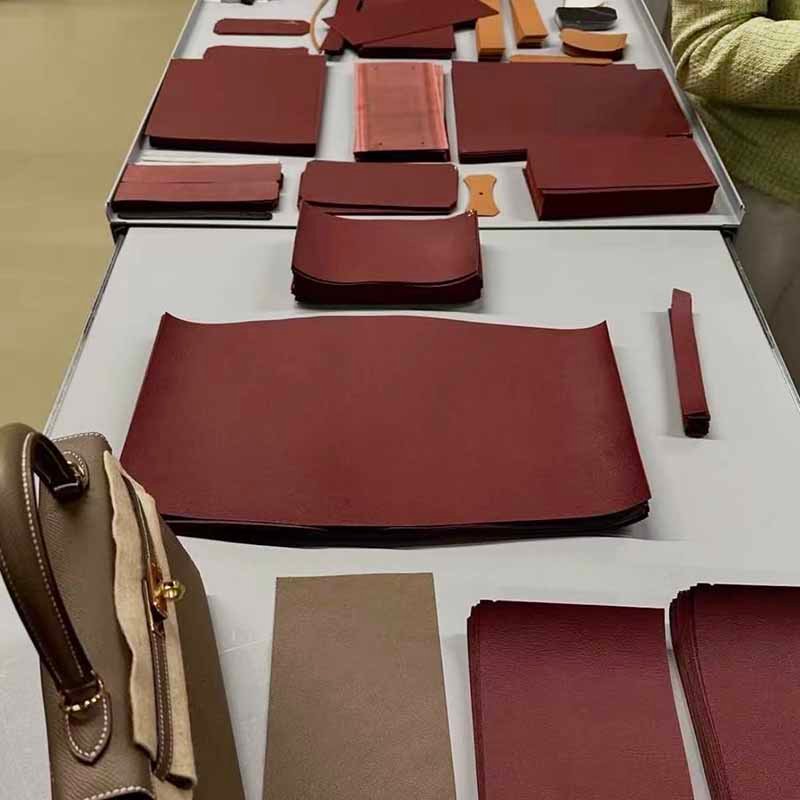
Effective leather goods quality control occurs before, during, and after production. It begins with material approval, continues through cutting and assembly, and ends with functional, cosmetic, dimensional, and packaging inspection. Final inspection alone cannot reliably correct defects that have already been built into every product.
Which Inspections Occur Before, During, and After Production?
Incoming inspection should confirm that the leather, lining, hardware, thread, edge paint, reinforcement, logo components, and packaging match approved standards. Leather should be reviewed before cutting for shade, grain, scratches, scars, coating issues, thickness, hand feel, and usable area. Components should be checked before they are distributed to production.
In-process inspection is essential because many problems are difficult or expensive to repair after assembly. Leather cutting should be checked for panel placement and defect avoidance. Skiving should be reviewed for consistent thickness. Early stitched units should be inspected for seam alignment, stitch appearance, reinforcement, shape, pocket placement, and hardware installation. Edge-painted products may require checks between coating and curing stages.
Final inspection should cover:
| Stage | Main Control | Typical Evidence |
|---|---|---|
| Incoming materials | Leather, hardware, lining, color | Material inspection record |
| Cutting | Panel quality and direction | Cutting approval |
| First production units | Construction and workmanship | First-piece report |
| In-line production | Repeated defects and dimensions | Patrol inspection record |
| Finished goods | Appearance and function | Final inspection report |
| Packaging | Protection, labels, quantity | Packing inspection |
| Shipment release | Order completeness | Release authorization |
An inspection system should define what happens when a defect is found. Products may need segregation, rework, replacement, expanded inspection, root-cause review, or buyer approval. Recording defects without controlling affected units does not protect the shipment.
How Are Leather-Specific Defects Identified?
Leather products require inspectors who understand both natural material characteristics and manufacturing defects. A natural grain variation may be acceptable, while peeling finish, loose grain, deep scratches, inconsistent shade placement, or visible scars on key panels may not be. The inspection standard should define the difference using physical references and photographs.
Common leather-goods defects include uneven grain between paired panels, shade mismatch, rough skiving, exposed fibers, distorted shape, wavy stitching, skipped stitches, loose thread ends, misaligned pockets, poor corner turning, edge-paint overflow, cracking, bubbles, sticky edges, scratched hardware, weak embossing, off-center foil stamping, dirty lining, and deformation caused by packaging.
Inspectors should evaluate the product from the customer’s point of view. Front panels, handles, flap edges, logos, closure areas, and high-touch hardware usually require stricter cosmetic control than hidden internal areas. Paired products or symmetrical components should be compared directly.
The product should also be handled, not merely viewed. Zippers should operate smoothly. Magnets should align. Straps should adjust correctly. Handles should carry the expected load. Wallets should fold without excessive resistance. Card slots should fit their intended contents. A bag can pass a static appearance check and still fail in ordinary use.
Szoneier’s documented leather bag QC points include leather grain, shade variation, surface scratches, edge paint, embossing or foil stamping, metal hardware, stitching, lining, shape, odor, protective packaging, and overall visual consistency. Control measures include leather screening before cutting, appearance inspection, hardware protection, logo-process checks, and anti-scratch packing.
Are Testing and Acceptance Criteria Clearly Defined?
Testing should be based on product risk, target market, material claims, price positioning, and customer requirements. Not every leather accessory needs the same laboratory program, but every product should have defined functional and cosmetic acceptance criteria. Testing may include seam strength, handle or strap load, zipper operation, hardware pull, colorfastness, abrasion, coating adhesion, edge-paint flexibility, corrosion resistance, restricted substances, and packaging performance.
For regulated or retailer-controlled markets, the buyer should provide the applicable standard, restricted substance list, protocol, or compliance manual. The manufacturer can then source materials accordingly and coordinate testing with an approved laboratory. It is risky to ask after production whether a product can pass a requirement that was never included in material selection.
Final random inspection plans are often based on recognized statistical sampling methods, but the buyer should define the inspection level and acceptable quality limits in the purchase agreement. Critical, major, and minor defects should be classified in advance. A sharp exposed component, incorrect warning label, or unusable closure should not be treated the same as a small removable thread.
Reliable suppliers avoid vague claims. They distinguish between a material supplier’s report, a laboratory report for a specific batch, an audit of a facility, and a certification covering a defined scope. They also avoid describing water-resistant leather, recycled content, sustainable sourcing, or chemical compliance without supporting documentation.
How Can Buyers Verify Factory Capacity and Compliance?
Buyers can verify capacity and compliance by matching documented resources to the actual order. Review production lines, skilled labor, equipment, current workload, material lead times, process bottlenecks, approved subcontractors, audits, test reports, and corrective-action records. Capacity claims are meaningful only when they account for product complexity and the requested delivery window.
Does Production Capacity Match the Required Order Volume?
Capacity should be measured in the units and processes relevant to the project. A factory may report a high monthly output based on simple wallets or fabric pouches, but structured leather bags require more cutting selection, skiving, reinforcement, assembly, edge work, hardware installation, inspection, and protective packaging. The number printed in a company profile may therefore be much higher than the practical capacity for one complex SKU.
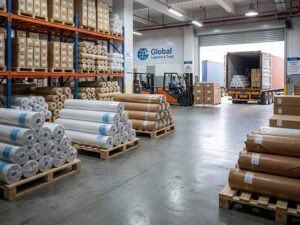
Ask the factory to build a capacity calculation from the production route. It should consider material arrival, cutting yield, skilled operators, machines, edge-paint cycles, drying or curing time, logo processing, hardware assembly, line balancing, rework allowance, inspection, and packing. The plan should also identify the production start date rather than presenting only the number of sewing days.
A useful capacity review covers:
- Number of SKUs and colorways
- Units per SKU
- Product complexity
- Leather availability
- Custom hardware lead time
- Sample approval date
- Line allocation
- Daily planned output
- Inspection capacity
- Packing capacity
- Holiday and peak-season risks
- Shipping cutoff date
Szoneier’s documented manufacturing resources include eight production lines, more than 120 production employees, over 160 pieces of equipment, controlled coordination with more than ten specialist partner factories, and the ability to manage approximately 20–35 custom orders in parallel depending on complexity and material readiness. Reported regular capacity is approximately 120,000–200,000 pieces per month across its broader custom bags and soft goods range, so project-specific leather capacity must still be calculated by construction and process.
Are Audits, Certifications, and Testing Claims Verifiable?
An audit or certificate should be evaluated by scope, issuing body, facility name, address, validity period, product category, and covered process. Buyers should confirm that the document relates to the facility producing their goods rather than a sister company, material supplier, or unrelated location. Expired documents and cropped certificate images should not be accepted as sufficient evidence.
Different documents answer different questions. A social audit may review labor and workplace systems but does not prove product quality. A quality-management certificate may show that documented procedures exist but does not guarantee every shipment. A material certificate may cover leather sourcing or chemical properties but not the finished handbag. A laboratory report applies to the tested sample and specified method, not automatically to every future production batch.
The strongest approach combines several forms of evidence:
- Factory or video review
- Business and facility information
- Production-process verification
- Material documents
- Product-specific testing
- Inspection reports
- Corrective-action records
- Traceable production batches
- Buyer-approved standards
Buyers should also be cautious of broad sustainability language. Terms such as eco-friendly, recycled, responsible, biodegradable, non-toxic, and sustainable require definitions and evidence. The manufacturer should identify the material, percentage, certification, chain of custody, test method, or supplier declaration behind the claim.
A reliable factory is comfortable explaining the limits of its documents. Overstating compliance may win an inquiry, but it exposes both the factory and the brand to legal, retail, and reputational risk.
Are Subcontracting and Production Responsibilities Transparent?
Subcontracting is common in leather goods manufacturing because specialized processes may require dedicated suppliers. Hardware plating, custom zipper production, embossing dies, printing, embroidery, edge-paint materials, laboratory testing, and packaging are often completed outside the main factory. The risk does not come from specialization itself. It comes from uncontrolled or undisclosed responsibility.
The manufacturer should explain which operations are external, how partners are approved, how materials and samples are controlled, and where final inspection occurs. For production subcontracting, buyers should know whether the partner factory can change materials, recruit additional workshops, or communicate directly with the buyer. These boundaries should be documented.
Controlled subcontracting requires:
- Approved production locations
- Frozen materials and components
- Signed production samples
- Written work instructions
- In-line inspections
- Centralized defect handling
- Packaging standards
- Final shipment approval
- Unified buyer communication
Szoneier’s documented partner-factory model limits collaboration to suitable projects, approved samples, confirmed materials, established structures, and controlled production instructions. Materials, dimensions, colors, zippers, hardware, webbing, logo processes, packaging, quantities, and shipping methods cannot be changed independently by partner factories. Szoneier retains project communication, inspection involvement, and delivery responsibility.
Transparency is more valuable than pretending every component is produced under one roof. A reliable manufacturer tells the buyer where the risks are and shows how they are controlled.
What Makes Communication and Delivery Dependable?
Dependable communication converts buyer requirements into documented production decisions and reports risks before they become delays. A reliable manufacturer asks technical questions, confirms changes in writing, provides realistic milestones, records approvals, and connects packaging and shipping to the production plan. Fast replies are helpful, but accurate, accountable replies are more important.
Does the Manufacturer Ask Useful Technical Questions?
A weak supplier often responds to a product photo with a price before clarifying the leather, size, structure, quality level, hardware, lining, logo, packaging, testing, quantity, or destination. The quote may look efficient, but it is usually built on assumptions. Those assumptions later appear as price changes, sample disagreements, or bulk quality problems.
A competent manufacturer asks questions that reveal production risk. For example:
- Which leather type and thickness are required?
- Is natural grain variation acceptable?
- Which panels are visually critical?
- Is the product structured or soft?
- What load must the handle or strap support?
- Which hardware finish is approved?
- Are custom molds required?
- How should edge paint perform during flexing?
- What market and retail channel will receive the product?
- Which testing or restricted substance rules apply?
- How should each unit be protected during shipping?
- What is the required arrival date?
Good questions are not a sign that the factory lacks experience. They show that the factory understands how many variables sit behind a finished product. The answers should be collected in an RFQ summary, tech pack, BOM, sample checklist, or meeting record.
The buyer should also ask technical questions in return. A reliable factory should be able to explain why it recommends a particular leather thickness, reinforcement, seam construction, edge process, hardware base metal, packaging insert, or tolerance. Answers grounded in production logic are more valuable than automatic agreement.
Are Milestones, Risks, Packaging, and Shipping Documented?
A dependable timeline begins with dependencies. Sample completion may depend on leather sourcing, custom hardware, logo tooling, packaging artwork, and buyer feedback. Bulk production may depend on the final sample, deposit, material approval, test completion, and packaging confirmation. A calendar that ignores these dependencies is only a sales estimate.
The project plan should include major approval and production points:
- RFQ and specification review
- Material and component selection
- Quotation and development approval
- Sample production
- Sample feedback and revision
- Final or pre-production sample approval
- Bulk material purchase
- Production scheduling
- First-piece or in-line inspection
- Final inspection
- Packaging and labeling review
- Shipment booking and document release
Packaging should be developed with the product, not after production. Leather surfaces and plated hardware may require tissue, non-woven bags, protective film, inserts, shape support, desiccants, or individual compartments. Carton dimensions affect compression, deformation, freight cost, pallet configuration, and warehouse handling. Retailers may also require barcodes, carton labels, warning marks, country-of-origin labels, SKU separation, or specific packing ratios.
Szoneier’s project workflow includes material sourcing, sample development, bulk production coordination, multi-stage inspection, packaging, commercial documents, and export delivery options such as courier, air freight, sea freight, DDP, and channel-specific shipment preparation. Its company records also support video factory reviews, online technical meetings, and structured project communication for global buyers.
How Can Buyers Compare Factories Using Evidence Instead of Promises?
Supplier comparison becomes more reliable when every factory answers the same questions and provides the same categories of evidence. Comparing only unit prices creates a false sense of precision because quotes may be based on different leather grades, thicknesses, hardware, reinforcement, inspection levels, packaging, freight terms, or defect allowances.
Create a weighted evaluation score based on project risk:
| Evaluation Area | Suggested Weight | Evidence |
|---|---|---|
| Comparable product experience | 15% | Similar samples and production records |
| Material control | 15% | Specifications, swatches, traceability |
| Sample development | 15% | Tech packs, revisions, approval process |
| Quality system | 20% | Inspection plan and defect handling |
| Capacity and scheduling | 10% | Line plan and material timeline |
| Compliance and testing | 10% | Valid, relevant documents |
| Communication | 10% | Technical answers and records |
| Packaging and delivery | 5% | Packing plan and shipping experience |
The weighting can be adjusted. A luxury leather product may place more weight on material selection and cosmetic workmanship. A retail launch may prioritize capacity, delivery, labeling, and compliance. A technical case may emphasize functional testing.
Before committing to a large order, buyers can use a staged verification process: document review, technical meeting, sample development, video or physical audit, pilot production, inspection, and then larger-scale manufacturing. This costs more than choosing the lowest quote immediately, but it is usually far cheaper than replacing defective inventory, missing a retail launch, or rebuilding a supply chain after failure.
Is Szoneier the Right Leather Goods Manufacturing Partner?
The right manufacturer is not simply the company that says yes fastest. It is the company that can show how your design will move through materials, sampling, production, inspection, packaging, and delivery without losing the decisions that made the approved sample successful.
Szoneier is a Shenzhen-based OEM/ODM manufacturer with more than 18 years of experience in custom bags, leather goods, sewn products, material sourcing, sampling, bulk production, inspection, packaging, and international delivery. The company is structured to serve brands, retailers, importers, e-commerce businesses, promotional companies, and established procurement teams that need more than basic contract sewing.
For leather goods projects, Szoneier can support:
- Product and structure review
- Genuine leather and synthetic material selection
- Lining, hardware, zipper, thread, and reinforcement coordination
- Pattern development and sample production
- Sample revisions and production documentation
- Embossing, foil stamping, and other logo processes
- Leather surface and color review
- Stitching, edge-paint, shape, and hardware inspection
- Custom packaging and protective packing
- Bulk production and multi-SKU coordination
- Third-party testing support when specified
- Export shipping and delivery planning
A useful inquiry should include your product photographs, drawings, reference sample, tech pack, target dimensions, preferred leather, order quantity, logo artwork, packaging requirements, quality standards, target market, and expected delivery date. Even when some information is not finalized, sharing the intended use, price position, sales channel, and expected appearance allows the manufacturing team to recommend a more practical development route.
Send your RFQ, tech pack, BOM, artwork, quality requirements, or reference files to info@szoneier.com, or contact the Szoneier project team by WhatsApp at (+86) 13423847456. Your project can then be reviewed for material feasibility, construction, sample development, production planning, inspection, packaging, and international delivery.
A reliable leather goods partnership does not start with a promise of perfection. It starts with clear questions, visible evidence, documented standards, and a manufacturing team willing to remain accountable from the first sample to every repeat order.