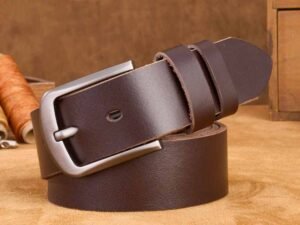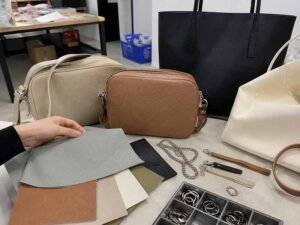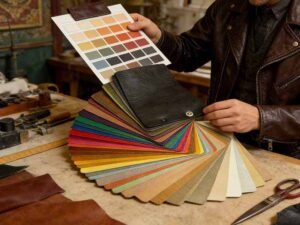
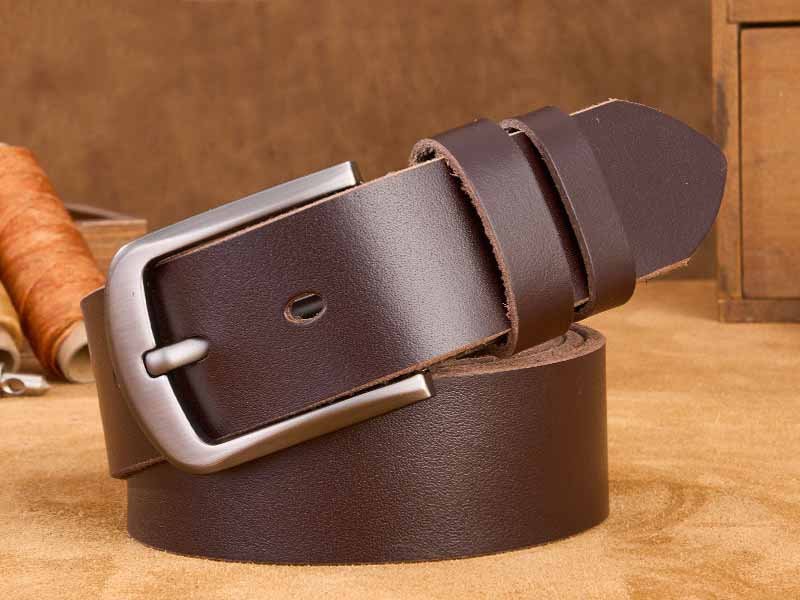
A leather belt appears simple until a small production decision creates a large commercial problem. The product may contain only a strap, several holes, a buckle, and perhaps a line of stitching, yet every visible detail is exposed during use. Leather can stretch, edge coatings can crack, buckle plating can fade, holes can deform, and a sizing error of only a few centimeters can result in returns across an entire collection.
Choosing a leather belt manufacturer requires more than comparing unit prices or selecting the supplier with the most attractive sample. A suitable manufacturer should understand leather grades, belt construction, size systems, hardware engineering, edge finishing, sample development, bulk-production control, testing, packaging, and repeat-order consistency. Before production begins, the brand should approve a written specification, material reference, buckle sample, finished prototype, quality standard, production schedule, and inspection plan.
Many sourcing problems begin with a sample that looks excellent on a meeting table. A soft belt may feel luxurious during approval but stretch after repeated wear. A polished buckle may photograph well but scratch easily in retail packaging. The supplier may not have technically produced the wrong product; the brand may simply have failed to define what the product needed to withstand. A reliable selection process turns expectations into measurable standards before the first purchase order is released.
What Should You Define Before Sourcing?
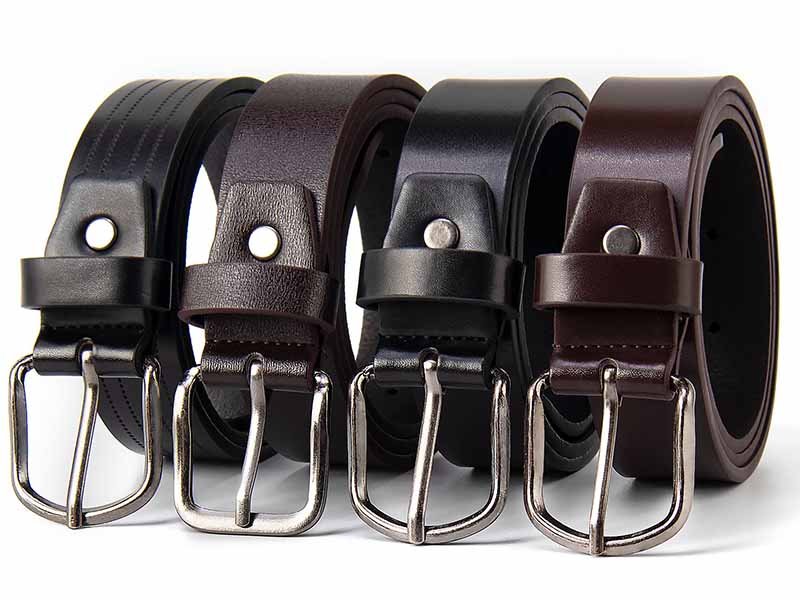
Before contacting manufacturers, define the belt type, target wearer, leather category, size system, construction, buckle, branding, packaging, expected order quantity, and required performance. A detailed product brief allows different suppliers to quote the same design, exposes technical risks early, and reduces the possibility that visually similar samples are produced with very different materials, workmanship, durability, and cost structures.
Define the Product Position
The manufacturer cannot recommend an appropriate leather, buckle, construction, or finishing method until the intended market position is clear. A narrow formal belt for business clothing requires different decisions from a heavy casual belt for workwear or outdoor use. The formal design may prioritize a controlled surface, low-profile stitching, clean painted edges, and a lightweight buckle, while the casual design may need thicker leather, stronger hardware attachment, visible grain, and greater resistance to repeated bending.
Descriptions such as “high-quality belt” or “premium leather belt” are not precise enough for development. They do not explain the intended wearer, selling channel, retail level, expected lifespan, design style, or performance standard. A more useful brief might describe a 35 mm men’s casual belt for specialty retail, made from full-grain cowhide with tonal stitching, a matte nickel buckle, five adjustment holes, a debossed logo, and individual box packaging.
The target price position also needs to be realistic from the beginning. A belt intended for a promotional program cannot usually support the same hide selection, solid-brass hardware, manual edge work, and presentation packaging as a premium retail product. This does not mean that lower-cost products must be poorly made. It means that the construction and materials should be selected intelligently so the product delivers the right value for its intended customer.
Prepare a Clear Specification
Reference photographs are useful for communicating style, but they cannot define thickness, internal layers, reinforcement, leather grade, buckle alloy, exact hole spacing, edge preparation, or acceptable dimensional variation. Two manufacturers can produce belts that look nearly identical in photographs while using completely different structures. Those differences may only become visible after the belt has been bent, worn, stored, or exposed to moisture.
A practical specification should identify the finished width, total length, thickness, size measurement method, hole count, hole spacing, buckle dimensions, tongue length, keeper position, tip shape, edge color, thread specification, logo process, leather type, backing material, packaging, and tolerances. The specification should also include close-up references for the desired grain, surface shine, stitch appearance, edge finish, buckle color, and logo depth.
Measurement terminology must be agreed in writing. Some teams measure a belt from the buckle pin to the center hole, while others begin from the buckle fold or use the total strap length. A factory may follow its internal convention correctly and still deliver the wrong commercial size if the brand uses another method. Drawings should therefore show the exact starting point, ending point, hole location, and allowable deviation.
| Specification Item | Practical Development Range | Points to Confirm |
|---|---|---|
| Dress belt width | 30–35 mm | Trouser-loop fit and buckle proportion |
| Casual belt width | 35–40 mm | Comfort, style, and leather thickness |
| Work belt width | 38–45 mm | Stiffness, load, and loop clearance |
| Finished thickness | About 3.0–4.5 mm | Single-layer or laminated structure |
| Hole spacing | Commonly around 25 mm | Size logic and adjustment range |
| Hole quantity | Usually 5 | Brand preference and market convention |
| Stitch density | Often 6–8 stitches per inch | Thread size, leather thickness, and appearance |
| Width tolerance | Often controlled near ±0.5 mm | Process capability and approved standard |
These figures are useful development references rather than universal requirements. The selected construction, approved sample, intended use, and factory capability should determine the final standard. A thick work belt, a narrow dress belt, and a reversible fashion belt should not be forced into the same dimensional or workmanship assumptions simply because they belong to the same general product category.
Build the Size Plan
Size planning should begin with one measurement method that remains consistent across the specification, product label, packaging, retail listing, and customer size chart. For many traditional belts, the clearest reference is the distance from the buckle pin to the center hole. Total strap length should be listed separately, because it is not always equal to the size customers use when choosing the product.
A complete size matrix should include the labeled size, center-hole measurement, total finished length, number of holes, hole spacing, distance from the final hole to the tip, and quantity by color. The smallest and largest sizes deserve additional attention because proportions that look balanced in a medium sample can become awkward when the belt is shortened or lengthened.
The tip may become excessively long, the keeper may sit too close to the buckle, or the hole group may move too near the end. For larger programs, it is useful to approve at least one pre-production sample from each extreme of the size range. This provides an opportunity to check the branding position, keeper location, buckle fold, tip length, and hole layout before the complete order is produced.
Order ratios should follow sales evidence whenever possible. Equal quantities across all sizes are easy for a spreadsheet but often create poor inventory performance. Previous sales, customer data, regional sizing information, retailer feedback, preorder results, or comparable-product records can support a more practical allocation.
Plan the Order Structure
A stated minimum order quantity rarely tells the complete story. A factory may quote a minimum of 300 pieces, but that quantity may apply to one leather color, one buckle finish, one design, or one complete combination of size and color. When a collection includes several colors, multiple sizes, and two hardware finishes, the commercial commitment can increase quickly.
The sourcing team should confirm how the minimum quantity is divided across styles, leather articles, colors, sizes, buckles, logo methods, packaging versions, and destination markets. Stock leather and standard hardware may allow more flexible ordering, while custom-dyed leather, exclusive plating, special buckles, or printed boxes can create separate supplier minimums.
A controlled first production run is often more valuable than an oversized opening order. It allows the brand to verify sizing, buckle performance, leather variation, packaging, customer response, and repeat-order demand before expanding the collection. When the quantity is limited, complexity can be reduced by using fewer colors, shared hardware, a standard box structure, or one consistent logo method.
The purpose of the opening order is not merely to obtain inventory. It is to test whether the approved design can move through real production, inspection, packing, and delivery without losing the qualities that made the sample acceptable.
Which Leather and Construction Should You Choose?
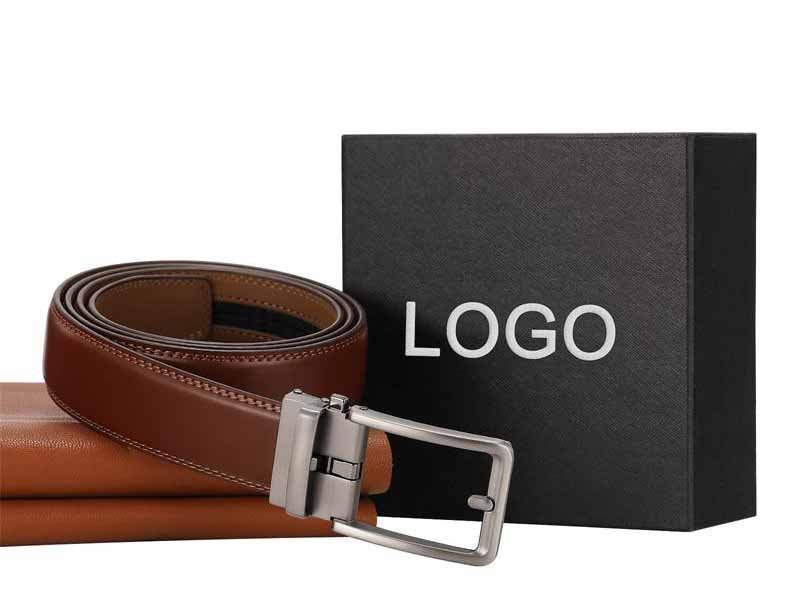
The correct leather and construction depend on the product’s appearance, retail position, flexibility, durability, production quantity, and customer promise. Full-grain leather provides natural character, while corrected and engineered materials can offer greater consistency. Long-term performance also depends on cut direction, thickness, backing, reinforcement, bonding, stitching, and edge treatment rather than the leather name alone.
Compare Leather Grades Carefully
Leather terminology is often used too loosely in sourcing conversations. The phrase “genuine leather” confirms that a product contains leather, but it does not explain the hide layer, tanning method, surface correction, coating thickness, durability, or overall grade. A meaningful material description should include the animal source, leather layer, tanning process, thickness, surface finish, temper, color method, and intended belt construction.
Full-grain leather retains the natural outer surface of the hide. It can display pores, wrinkles, healed marks, and subtle color differences. These features suit premium casual, heritage, and craft-oriented belts because the material develops character with wear. However, the brand must accept that a minimally corrected natural surface cannot look perfectly identical across hundreds of pieces.
Top-grain leather is taken from the upper part of the hide but may be lightly buffed, corrected, embossed, or coated to achieve a more uniform appearance. It is often a practical choice for scalable retail collections because it can offer more predictable color, cleaner surfaces, better stain resistance, and greater consistency between replenishment orders.
Split leather comes from lower layers of the hide and normally receives a coated or embossed finish. Its suitability depends on the density of the split, coating quality, thickness, reinforcement, and intended price level. It can serve cost-controlled collections effectively when described accurately, but it should never be presented as full-grain or top-grain leather.
Consider Engineered Alternatives
PU, microfiber leather, bonded materials, and other engineered options can be suitable when their properties match the product and their descriptions remain accurate. These materials are often used for fashion colors, uniform surfaces, vegan-positioned lines, promotional programs, and collections that require controlled thickness or dependable batch consistency.
Not all synthetic leather performs in the same way. Entry-level PU may be developed primarily around price, while higher-grade microfiber leather can provide strong tear resistance, stable thickness, clean cutting, and a refined hand feel. Performance depends on the backing fabric, coating chemistry, surface layer, adhesive system, and resistance to moisture, heat, storage, and repeated bending.
A small flat swatch is not enough for approval. The material should be punched, stitched, skived, edge-finished, folded around the buckle, and flexed repeatedly. Some materials look convincing when flat but turn white at the fold, crack around holes, or separate at the edge after movement.
Relevant questions include flex resistance, surface adhesion, colorfastness, abrasion behavior, hydrolysis resistance where required, low-temperature performance, odor, and restricted-substance compliance. The material should be judged in the final product structure rather than as an isolated sheet.
Match Thickness to Construction
Finished thickness should always be considered together with the internal structure. A rugged single-layer belt may use one thick strap with burnished or painted edges. A refined dress belt may use a thinner face leather, internal reinforcement, smooth backing, edge paint, and stitching. Both products can reach a similar finished thickness while producing very different flexibility, appearance, and long-term behavior.
A thicker belt is not automatically stronger or more valuable. Excessive thickness around the buckle fold can create bulk, reduce movement, and make the belt uncomfortable. A soft leather may need reinforcement to control stretch, while a dense vegetable-tanned leather may retain its shape without an internal layer.
Laminated belts require materials with compatible stretch characteristics. When the face and backing respond differently during wear, the product can curl, bubble, or separate. Even adhesive application, sufficient drying, controlled pressure, correct skiving, and suitable stitch placement are therefore essential.
The factory should explain how each layer contributes to the finished product. A clear technical file should identify the face material, backing, reinforcement, approximate layer thickness, adhesive system, edge method, and stitch position. Substituting an internal layer without approval can alter stiffness, weight, odor, edge appearance, and product life even when the visible surface remains unchanged.
| Construction | Main Advantage | Common Risk | Suitable Applications |
|---|---|---|---|
| Single-layer leather | Natural feel and simple structure | Stretch or surface variation | Casual and heritage belts |
| Leather with leather backing | Premium hand feel and balanced construction | Higher material and labor cost | Dress and premium belts |
| Leather with microfiber backing | Controlled thickness and clean reverse | Layer compatibility must be tested | Scalable branded collections |
| Reinforced laminated belt | Improved shape retention | Delamination or curling if poorly bonded | Formal and structured belts |
| Reversible construction | Two usable surfaces | Rotating buckle and edge complexity | Travel and business collections |
| Braided construction | Flexible fit and casual appearance | Uneven tension or weak end attachment | Lifestyle and fashion belts |
The construction should support the product promise rather than simply increase the number of components. A simple, well-selected single-layer belt may perform better than a complicated laminated belt with incompatible materials, weak bonding, or poorly prepared edges.
Review the Belt Cross-Section
A polished finished sample hides much of the product’s engineering. A cross-section or unfinished construction sample makes the internal choices visible. It can reveal the face leather thickness, backing quality, reinforcement, adhesive coverage, skiving, stitch location, and number of edge-coating layers.
This review becomes especially important when two quotations appear similar. A lower price may result from thinner face leather, lower-grade backing, reduced reinforcement, cheaper hardware, fewer edge-finishing stages, or a less selective cutting standard. None of these choices may be obvious in a photograph.
The sourcing team should approve the structure, not only the visible surface. Where practical, one sealed construction reference should remain with the factory and another with the brand. The technical specification should also prevent unapproved changes to the backing, reinforcement, adhesive, thread, or buckle material.
A manufacturer that understands belt construction should be able to explain how the layers interact during flexing and wear. Clear explanations are more valuable than vague statements about premium quality because they show whether the supplier understands the physical causes of curling, stretching, cracking, and separation.
How Do You Evaluate Craftsmanship and Hardware?
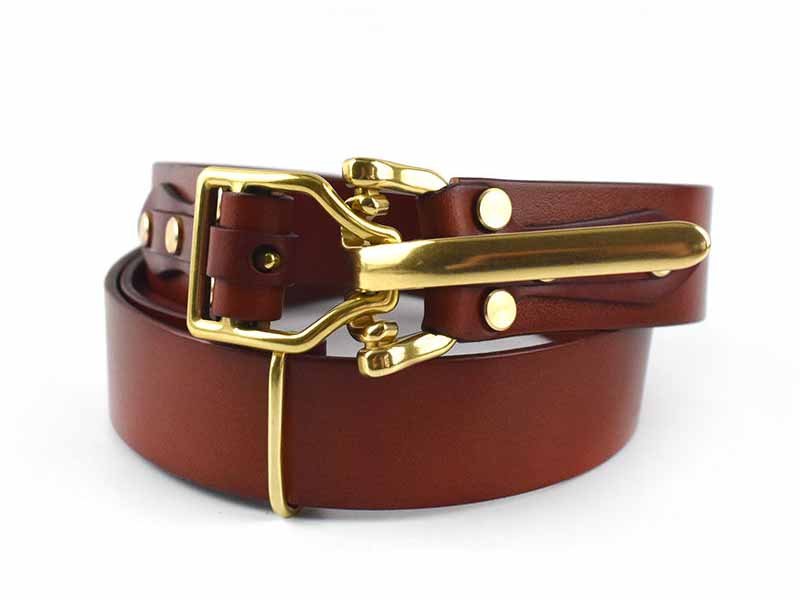
Belt workmanship should be evaluated through cutting accuracy, alignment, stitching, edge preparation, hole positioning, buckle attachment, plating, branding, cleanliness, and repeated flexing. A well-made belt should remain straight, bend without visible failure, hold its hardware securely, and reproduce the approved dimensions across different sizes, leather sections, operators, and production batches.
Inspect Cutting and Alignment
Long, narrow products make small cutting errors highly visible. A strap that gradually changes width, a tip that is slightly off-center, or a stitch line that drifts toward the edge can make the entire product appear poorly made. Cutting precision is therefore one of the clearest indicators of production discipline.
Incoming leather should be reviewed for loose grain, deep scars, excessive wrinkles, thickness variation, color differences, contamination, weak areas, and overly stretchy belly sections. The cutting team also needs written guidance on which natural features are acceptable for the chosen product level.
Fiber direction matters because belts remain under repeated tension. Straps cut from unstable areas can lengthen during use, causing the holes to distort and changing the way the tip sits after fastening. A manufacturer should understand that maximizing short-term cutting yield can increase long-term performance problems.
Several belts should be placed side by side during inspection. Their width, grain direction, color, tip shape, hole group, logo position, and buckle alignment should be compared as a set. One carefully selected sample cannot demonstrate production consistency. Natural leather will vary, but the accepted variation should be intentional, documented, and appropriate for the retail promise.
Examine Stitching and Edges
Stitching should remain straight, evenly tensioned, and consistently positioned from the edge. Both the front and back require inspection because attractive face stitching can hide loose lower tension, loops, skipped stitches, thread ends, or untidy locking on the reverse.
For many belts, approximately six to eight stitches per inch provides a useful development range, although the final density depends on leather thickness, thread size, needle selection, structure, and desired appearance. Very close stitching is not automatically stronger. If needle holes are placed too closely, they can weaken the leather by forming a perforated line.
Special attention should be given to the buckle fold, tip curve, keeper attachment, start and stop points, and backstitching. These areas often expose changes in operator speed, tension, and alignment.
The edge should also be evaluated after movement. Painted edges normally require leveling, sanding, base coating, drying, repeated color coats, and final finishing. One heavy coat can look smooth initially but may crack more easily than several controlled layers. The belt should be bent near the buckle fold and center hole, then checked for whitening, peeling, roughness, exposed layers, or color transfer.
Check Holes and Buckle Attachment
Adjustment holes must be clean, centered, evenly spaced, and correctly sized for the buckle tongue. A poorly punched hole can show torn fibers, rough edges, cracking, or an irregular shape. The hole group should remain on the strap centerline, and the distance from the last hole to the tip should match the approved design.
The buckle tongue should enter the hole smoothly without excessive force. A tongue that is too short may not engage securely, while an excessively long tongue can look awkward and create discomfort. The frame, roller, tongue, and any rotating mechanism should move freely without sharp edges or excessive looseness.
Buckle attachment may use stitching, screws, rivets, snaps, or a combination of methods. The connection should be reviewed for movement, alignment, pull resistance, surface damage, locking security, corrosion, and contact with the leather.
The keeper is a small component with a large effect on usability. A loose keeper can move or fall out, while a tight keeper can damage the edge or make fastening difficult. Its internal opening should allow the tip to pass through smoothly without scraping the finished surface.
Evaluate Buckle Materials
Hardware affects the belt’s weight, appearance, cost, corrosion resistance, and customer perception. Zinc alloy is common because it supports detailed shapes and many surface finishes. Solid brass offers weight, strength, and a premium story, but it costs more and may develop a natural patina. Stainless steel provides good corrosion resistance and a clean appearance, while iron-based hardware can reduce cost but requires dependable plating.
Approval should not rely only on finish names such as antique brass, matte gold, or gunmetal. These descriptions represent broad visual families rather than exact standards. A physical master sample should be retained for color and surface comparison.
The review should include base metal, weight, plating color, texture, edge smoothness, scratch behavior, corrosion resistance, tongue movement, frame clearance, and relevant chemical requirements. For custom hardware, the agreement should state who owns the mold, whether revision costs are included, how long the mold will be stored, and what happens if production later moves to another supplier.
| Inspection Point | Practical Check | Common Failure |
|---|---|---|
| Strap width | Measure at several points | Tapering or inconsistent cutting |
| Hole spacing | Check center-to-center distance | Uneven adjustment range |
| Stitch line | Compare distance from edge | Waving, skipped stitches, poor tension |
| Edge finish | Flex and rub the edge | Cracking, peeling, or color transfer |
| Buckle attachment | Pull, rotate, and inspect | Loose rivets, misalignment, sharp edges |
| Plating | Compare with master sample | Color mismatch, scratches, corrosion |
| Logo | Measure position and clarity | Crooked placement or weak impression |
| Belt alignment | Lay flat and hang vertically | Twisting, curling, or off-center tip |
Inspection should be performed across several units and sizes rather than on one showcase sample. The purpose is to identify whether the process is stable, not whether the factory can produce one excellent piece with extra manual attention.
How Do You Verify the Manufacturer?
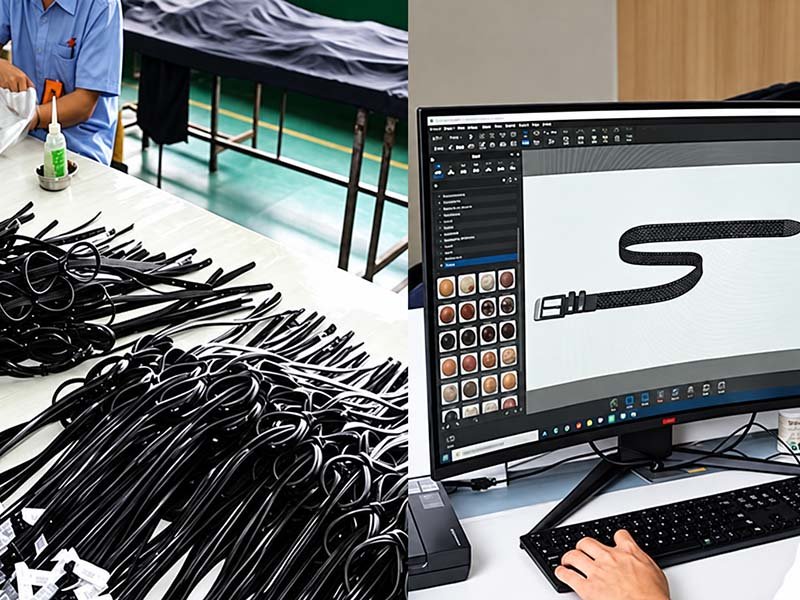
A manufacturer should be verified through physical samples, relevant production experience, material knowledge, development records, inspection methods, capacity evidence, subcontracting controls, audit access, and communication quality. The right partner should explain how the approved sample will be reproduced, how leather variation will be managed, how changes will be documented, and how problems will be corrected before shipment.
Confirm Real Production Control
The question is not simply whether the supplier calls itself a factory. The important issue is who controls development, material purchasing, cutting, assembly, inspection, corrective action, packaging, and delivery. A company can own production equipment while outsourcing critical processes without supervision, and another manufacturer may coordinate specialist partners under a well-managed system.
The sourcing team should ask where leather inspection, strap cutting, skiving, stitching, edge treatment, hole punching, buckle assembly, logo application, final inspection, and packing are completed. Photographs or live video should show similar products in active production, not only finished samples displayed in a showroom.
Production control also depends on information management. The team should confirm whether workers use a controlled specification, whether approved samples are clearly identified, whether material batches are separated, whether rejected products are isolated, and whether substitutions require written approval.
A large building is not proof of reliable production. More useful evidence comes from the connection between the approved product and the controls used on the factory floor. The supplier should be able to explain who checks each stage, what is measured, how results are recorded, and how a defect is prevented from moving forward.
Review Relevant Experience
A factory that produces leather bags or wallets may understand leather but still lack experience with long-strip cutting, hole positioning, edge consistency, buckle engineering, size control, and stretch management. Belt production has its own risks, and those risks become more visible because the product is narrow, repetitive, and frequently placed under tension.
Comparable experience should be reviewed according to leather type, width, construction, edge method, buckle style, stitching, logo process, target price level, order quantity, and destination market. Physical samples are more informative than portfolio photographs because they can be bent, measured, rubbed, and compared.
Repeat-order experience is particularly valuable. A supplier that has reproduced the same style over several seasons has probably dealt with leather-batch variation, hardware replenishment, color matching, tooling maintenance, size ratios, and production scaling.
The manufacturer does not need to have produced an identical belt, but the team should recognize the likely risks and describe practical controls. Strong technical questions from the supplier are often a positive sign because they show that the project is being evaluated as a manufacturing program rather than treated as a simple request for a price.
Assess Sampling Discipline
A sample is not only a presentation piece. It becomes the first controlled version of the production standard. The factory should record the selected leather, buckle, thread, dimensions, edge color, construction, logo position, packaging, and any approved deviations.
A disciplined development process normally includes requirement review, material selection, preliminary costing, first prototype, internal inspection, client review, revision, final approval, and pre-production confirmation. Each revision should be documented so earlier mistakes are not reintroduced.
The final sample also needs to be assessed for manufacturability. A skilled sample maker can sometimes create a beautiful one-off piece using extra manual attention that is difficult to repeat during bulk production. The factory should confirm that the approved edge treatment, stitching, buckle attachment, logo method, and material selection can be reproduced by the production team at the required quantity.
At least one approved sample should remain sealed at the factory, while another remains with the brand. Material references, measurements, photos, and revision records should support those physical samples. This reduces dependence on memory when production begins several weeks or months later.
Use Audits and Video Reviews
A physical factory visit provides the clearest view, but a structured remote review can also reveal useful information. A live video session should cover the sample room, leather storage, cutting area, skiving, stitching, edge-finishing stations, hardware assembly, inspection tables, packaging, and warehouse.
The supplier should be asked to demonstrate how leather batches are labeled, how approved samples are stored, how widths and lengths are measured, how edge coatings are dried, how holes are positioned, and how rejected goods are separated. Current work is more informative than a prepared meeting room.
For larger orders, third-party technical, quality, or social audits may be appropriate. The scope should match the actual risk. A general factory audit does not replace product inspection, and a final product inspection does not verify labor practices, capacity claims, or material traceability.
Verification should be proportional to the order value, product complexity, and commercial consequences of failure. The purpose is not to create unnecessary paperwork. It is to establish whether the supplier’s daily operating system can support the promises made during sales discussions.
What Do Pricing, MOQ, and Quality Reveal?
Pricing, minimum quantities, lead times, and quality terms reveal how thoroughly a manufacturer has understood the project. A reliable quotation identifies the leather, construction, buckle, tooling, branding, packaging, testing, and delivery assumptions. Extremely low pricing, vague minimums, or unrealistic schedules may indicate missing specifications, lower-grade substitutions, uncontrolled outsourcing, or inspection steps that have not been included.
Read the Quotation Properly
A unit price is meaningful only when the scope is clear. Two suppliers may quote different amounts because they are not pricing the same leather grade, thickness, backing, buckle alloy, edge process, packaging, inspection level, or delivery term.
A complete quotation should identify the leather description, finished thickness, belt construction, buckle material and plating, thread, stitching, edge method, logo process, labeling, packaging, size assumptions, color allocation, MOQ, sample fee, tooling cost, testing cost, lead time, trade term, payment conditions, and quotation validity.
Exclusions should also be written clearly. A low unit price may not include a custom buckle mold, gift box, barcode label, third-party testing, final inspection, or export carton. These additions can materially change the landed cost.
Leather yield also affects pricing. Hide shape, natural defects, strap length, width, grain requirements, and accepted surface variation determine how many usable straps can be cut. A wide belt with strict visual standards may have a lower cutting yield than a narrower design that accepts more natural marks. A knowledgeable manufacturer should be able to explain the main cost drivers rather than offering only a total number.
Understand the MOQ Structure
Minimum quantity is often determined by material and process suppliers rather than by the assembly factory alone. A tannery may require a production quantity for a custom color, a buckle supplier may require a minimum casting or plating lot, and a packaging printer may have a separate minimum for custom boxes.
The brand should confirm whether the MOQ applies to each design, leather article, color, size, buckle finish, logo, packaging version, or total order. A supplier may accept a moderate total quantity when stock leather and standard buckles are used but require more pieces for exclusive colors or hardware.
Small orders frequently have a higher unit cost because material loss, setup, color preparation, sampling, inspection, and packaging development are spread across fewer units. This does not automatically make the quotation unreasonable. The increase should be explained transparently and linked to real production factors.
Complexity can often be reduced without damaging the product concept. Fewer opening colors, shared buckles, standard cartons, one logo process, and a concentrated size range may create a commercially manageable first order while preserving room for later expansion.
Separate Sample and Production Time
A statement such as “30-day lead time” can be misleading when it refers only to assembly after all materials are ready. The complete project may also include technical review, leather sourcing, custom color development, buckle tooling, sample revisions, testing, packaging printing, final inspection, and shipping preparation.
The production schedule should identify what event starts the clock. Depending on the project, this may be deposit receipt, final sample approval, material confirmation, packaging artwork approval, or completion of tooling. Delays often occur when the brand and factory assume different starting points.
Stock leather and standard hardware can shorten development, while custom hides, exclusive plating, molded buckles, special boxes, and extensive testing add time. Peak production seasons and public holidays can also affect suppliers further upstream.
A sensible schedule includes time for inspection findings and corrective work. Production is not complete when the final belt leaves the sewing or assembly station. It is complete when acceptable goods have passed inspection, been packed correctly, and are ready for the agreed shipping method.
Define the Quality Standard
The phrase “good quality” cannot be measured during inspection. A useful agreement defines the required materials, dimensions, workmanship, visual limits, inspection method, defect classifications, and action required when results fall outside the approved standard.
Quality control should cover leather grade, color, thickness, strap width, finished length, hole position, stitching, edge finish, buckle function, plating, logo placement, cleanliness, packaging, and quantity. The inspection process should compare production against the approved sample and specification rather than against a general impression.
Natural leather marks should be handled according to product position. A small healed mark may be acceptable on a casual full-grain belt but unsuitable for a polished formal collection. Loose hardware, incorrect sizing, cracked edges, wrong materials, and severe plating defects require stricter treatment because they affect function or the product claim.
For medium and larger orders, recognized acceptance-sampling methods may be used, with critical, major, and minor defects treated differently according to risk. The selected levels should reflect the company’s quality policy and the consequences of failure rather than being copied from another product category.
How Do You Make the Final Choice?
The final choice should favor the manufacturer with the strongest combined evidence across materials, workmanship, sampling, transparency, quality control, capacity, compliance, communication, and delivery. Approval should be supported by a signed specification, physical sample, confirmed material references, production schedule, inspection plan, packaging instructions, and a clear process for handling defects, changes, and repeat orders.
Compare Evidence, Not Sales Claims
A supplier scorecard helps prevent a persuasive salesperson, attractive showroom, or low price from outweighing technical weaknesses. The evaluation should include leather knowledge, belt-specific experience, construction support, sample accuracy, hardware capability, pricing transparency, quality controls, capacity evidence, compliance support, packaging experience, communication, and delivery planning.
The weighting should reflect the product. A premium collection may place greater importance on hide selection, edge finishing, hardware, and visual consistency. A retail replenishment program may prioritize capacity, repeatability, inspection records, and material continuity. An online launch may value accurate sizing, packaging, manageable opening quantities, and responsive sample development.
General claims should not receive the same weight as verifiable evidence. Statements such as “excellent quality,” “best price,” or “fast delivery” are promises. Approved samples, material specifications, inspection reports, production records, factory reviews, and documented corrective actions are evidence.
| Evaluation Category | Suggested Weight | Evidence to Review |
|---|---|---|
| Material knowledge | 15% | Leather descriptions, swatches, batch controls |
| Belt craftsmanship | 20% | Finished samples, edge work, stitching, sizing |
| Sampling accuracy | 15% | Revision records and approved prototype |
| Quality control | 15% | Inspection plan, reports, defect handling |
| Pricing transparency | 10% | Detailed quotation and stated exclusions |
| Capacity and delivery | 10% | Schedules, production records, factory evidence |
| Communication | 10% | Response quality and technical clarity |
| Compliance support | 5% | Material documents and applicable test reports |
The weights should be adjusted according to project risk. A highly customized buckle program may allocate more weight to tooling and hardware control, while a natural full-grain collection may focus more strongly on leather selection and visual grading.
Place a Controlled Pilot Order
A pilot order tests the complete production system under real conditions. It shows whether the approved sample can be reproduced across multiple hides, sizes, workers, hardware lots, edge-finishing cycles, inspection stages, and packaging operations.
The first order should be large enough to expose production variation but controlled enough to limit inventory risk. The appropriate quantity depends on material minimums, product complexity, commercial plan, and sales channel. The same specification, inspection criteria, and approval process intended for future production should be used from the beginning.
The pilot should be evaluated for size accuracy, leather variation, stretching, edge consistency, stitching, hole alignment, buckle movement, plating, logo clarity, packaging, defect rate, communication, and delivery performance. Problems should be recorded together with corrective actions so they do not return in the next order.
After the product reaches the market, customer feedback can reveal information that laboratory review cannot. Comments about comfort, sizing, buckle weight, surface wear, edge durability, packaging, and color should be collected and used to improve future production.
Watch for Warning Signs
Warning signs may appear before the first sample. The supplier may be unable to identify the leather clearly, use only a vague “genuine leather” description, quote a price far below comparable offers without explanation, or refuse to provide material and construction details.
Other concerns include repeatedly changing minimum quantities, unrealistic lead times, unclear tooling ownership, undocumented sample revisions, unverifiable certificates, avoidance of live production reviews, and pressure for payment before technical details are confirmed.
One concern does not always require immediate rejection. A smaller factory may have limited presentation skills while maintaining strong craftsmanship, and a polished company may have excellent marketing but weak production control. Inconsistencies should be investigated using samples, records, video reviews, and technical questions.
The most serious warning sign is resistance to transparency. A responsible manufacturer may protect confidential customer information, but it should still explain its own material sources, manufacturing processes, inspection methods, subcontracting responsibilities, and corrective-action system.
Secure Repeat-Order Consistency
A successful first order does not guarantee that the next order will match. Leather batches change, plating suppliers adjust formulas, workers rotate, packaging files are updated, and original materials can become unavailable. Repeat production requires controlled references and change management.
The manufacturer should retain the approved sample, leather reference, color standard, buckle master, edge-paint color, thread specification, logo artwork, size chart, packaging files, inspection criteria, and previous corrective-action records.
No important material should be substituted without written approval. Changes to the face leather, backing, reinforcement, adhesive, buckle alloy, plating, thread, packaging, or logo method can affect weight, flexibility, odor, appearance, durability, and customer perception.
For long-term programs, a version-controlled specification should record every approved change and identify which production orders use the new version. This becomes increasingly important when the collection includes several colors, sizes, markets, packaging languages, or seasonal updates.
Complete the Supplier Approval
Final approval should turn the product from a general design idea into a controlled manufacturing agreement. Before bulk production, both sides should confirm the specification, approved sample, leather and hardware references, size matrix, quantity allocation, color plan, packaging, testing, production timeline, inspection method, payment milestones, shipping terms, and defect-resolution process.
A capable manufacturer should help translate product images, reference samples, technical drawings, and market requirements into a belt that can be sampled, produced, inspected, packed, delivered, and reordered with fewer surprises.
Szoneier is a Shenzhen-based OEM/ODM manufacturer with more than 18 years of experience in custom bags, leather goods, sewn products, material coordination, sampling, production management, quality inspection, packaging, and export delivery. Brands can submit belt drawings, reference samples, leather preferences, buckle designs, size plans, target quantities, logo files, packaging requirements, and destination markets for a detailed project review.
A productive inquiry should include enough information for the manufacturing team to assess construction, material availability, tooling, cost, MOQ, sample timing, bulk lead time, testing, and delivery. Clear information at the beginning creates a faster quotation, a more accurate sample, and a stronger foundation for repeat production.