Two leather bags can look nearly identical in an online photograph while representing completely different product strategies. One may come from a manufacturer’s standard catalog, receive a logo and branded box, and reach the market within a relatively short period. The other may require original pattern development, leather testing, structural revisions, custom hardware, several sample rounds, packaging design, and detailed production controls before the first commercial order can begin.
Private label leather goods are generally better for brands that require control over materials, dimensions, structure, hardware, functionality, packaging, and product differentiation. White label leather goods are usually more suitable when faster launch speed, lower development commitment, and market testing matter more than exclusive construction. The right option depends on the brand’s budget, timeline, sales channel, expected order volume, and long-term product strategy.
The difficulty is that manufacturers do not always use these terms in the same way. One supplier may describe an existing wallet with a new logo as private label, while another reserves that term for products developed from original specifications. A brand can therefore believe it is buying an exclusive design, only to discover that several competitors are selling the same shape with different packaging. Understanding the commercial and manufacturing differences before requesting quotations can prevent expensive misunderstandings later.
What Are Private Label Leather Goods?
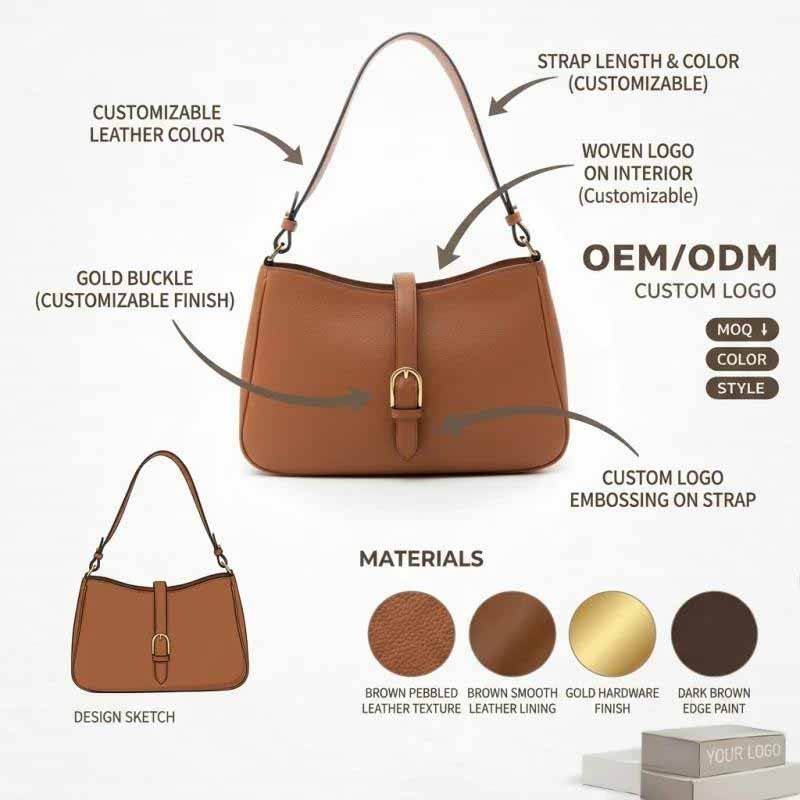
Private label leather goods are products manufactured for one brand according to approved requirements for materials, dimensions, construction, hardware, branding, packaging, and quality. They may be developed from original drawings, reference samples, technical files, or modified factory patterns. Compared with white label products, private label projects normally offer greater control and differentiation but require more development work and clearer production documentation.
Customization Scope
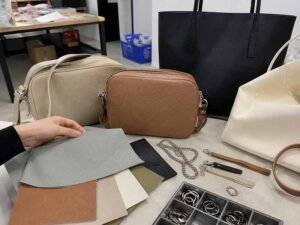
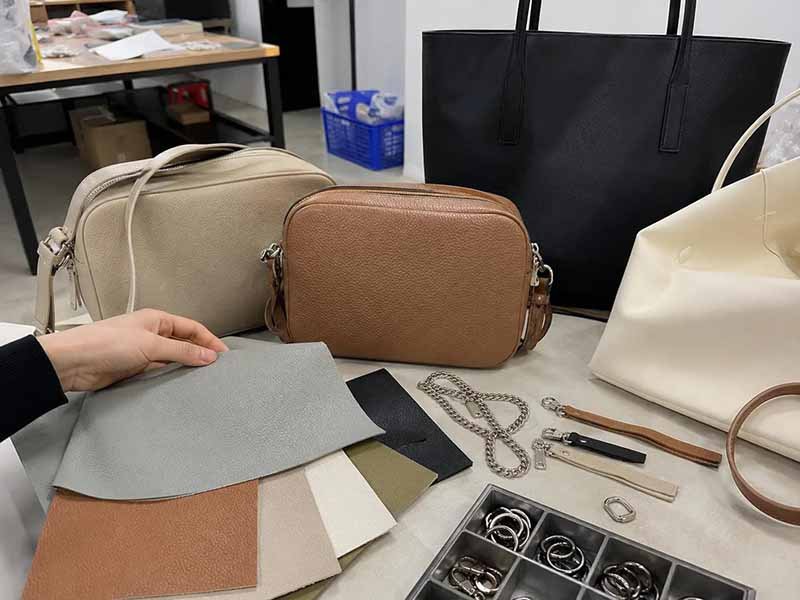
Private label manufacturing involves much more than placing a logo on a ready-made wallet or handbag. A brand may control the product’s overall dimensions, silhouette, opening method, gusset depth, pocket arrangement, handle drop, strap construction, lining, reinforcement, stitching, edge finishing, hardware, color combinations, labels, and retail packaging. These decisions allow the product to reflect a specific customer group, price position, and brand identity.
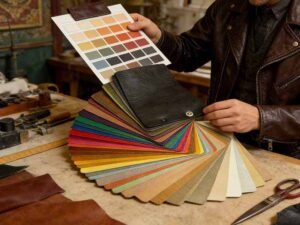
Material selection is often the first major technical decision. A project may use full-grain leather, top-grain leather, corrected-grain leather, split leather, suede, microfiber leather, or PU leather. Each material behaves differently during cutting, skiving, folding, stitching, bonding, edge painting, and long-term use. A material that looks attractive as a flat swatch may behave very differently once it is folded around a structured panel or combined with reinforcement.
Thickness must also be considered together with softness and construction. A slim card holder may use leather around 0.8–1.2 mm in folded areas, while handles, belts, bases, and reinforced straps may require thicker layers or laminated construction. These are not universal specifications because leather temper, surface finish, backing, and internal support all affect the finished result. Experienced development teams evaluate the complete structure rather than selecting materials from thickness alone.
Brand identity can be applied through blind debossing, embossing, foil stamping, metal logo plates, woven labels, printed linings, custom zipper pullers, branded rivets, hangtags, care cards, dust bags, and retail boxes. The most convincing private label collections coordinate these elements so that materials, hardware, logo treatment, and packaging feel like parts of one system rather than separate decorative additions.
| Customization Area | Common Private Label Options | Recommended Approval Evidence |
|---|---|---|
| Main Material | Leather type, PU grade, grain, color, finish, thickness | Physical swatch and supplier code |
| Product Structure | Dimensions, panels, gussets, pockets, closures | Tech pack, pattern and approved sample |
| Hardware | Zippers, hooks, buckles, feet, plates, pullers | Physical sample and plating reference |
| Branding | Debossing, metal logo, lining print, labels | Artwork and placement drawing |
| Packaging | Dust bag, box, card, barcode and carton | Packaging sample and packing instruction |
| Exclusivity | Pattern use, tooling, photography and territory | Written development agreement |
Product Development
A private label project may begin with a complete tech pack, a physical sample, a hand-drawn sketch, several reference photographs, or simply an explanation of the product’s intended use. The manufacturer must then translate that information into a production-ready combination of dimensions, paper patterns, material specifications, hardware, reinforcement, sewing methods, logo treatments, and packaging requirements.
The first prototype is usually a learning tool rather than a final product. It helps the development team evaluate the product’s proportions, carrying comfort, opening access, pocket depth, leather behavior, hardware position, manufacturing difficulty, and expected cost. A bag that looks balanced in a drawing can appear too narrow once lining and reinforcement are installed. A soft leather may lose its intended shape, while a heavy logo plate may distort a lightly reinforced front panel.
Straightforward leather accessories may be confirmed after one or two sample rounds, while structured handbags, briefcases, backpacks, travel bags, and products with original hardware often require additional revisions. The number of rounds depends on the quality of the original information, the complexity of the structure, material availability, and how quickly the buyer provides clear feedback. Revisions should be recorded through marked drawings, measurement tables, sample photographs, and version numbers.
Before bulk production begins, the final sample should be supported by measurable records. These normally include product dimensions, tolerance ranges, leather references, lining details, hardware finishes, thread colors, logo dimensions, edge-paint colors, reinforcement positions, packaging instructions, and carton requirements. A physical sample remains important, but production consistency becomes much stronger when the sample is connected to written specifications that can be used by purchasing, cutting, sewing, quality, and packing teams.
Design Exclusivity
Private label does not automatically mean that every part of a product is exclusive. A brand may own its logo, artwork, custom packaging, and original drawings while the base pattern remains part of the manufacturer’s standard product library. Exclusivity depends on how the design was created, what the customer funded, which files or tools were developed, and what both parties agreed to before production.
A fully original design developed from customer-owned drawings, reference samples, patented features, or proprietary technical specifications provides a stronger foundation for exclusivity. However, many leather goods use familiar constructions. A basic bifold wallet, tote bag, passport cover, or belt cannot usually become completely exclusive merely because its color or dimensions have changed. The distinctive value may instead come from a specific panel arrangement, custom hardware, unique artwork, special material combination, or protected functional feature.
Buyers should clarify who owns the paper patterns, cutting dies, custom molds, metal logo tooling, printed lining artwork, technical drawings, and final specification files. They should also discuss whether the manufacturer may photograph the product, display it in a showroom, publish it online, exhibit it at a trade fair, or offer a similar version to another customer. These questions become especially important before a confidential launch or licensed project.
An NDA can protect confidential information, but it does not replace a detailed manufacturing agreement. A practical agreement should distinguish between customer-owned intellectual property, factory-owned standard resources, shared production knowledge, and project-specific restrictions. Clear documentation protects the buyer without treating ordinary sewing methods or common product constructions as exclusive property.
Private Label and OEM
Private label and OEM often overlap, but they describe different parts of the business relationship. Private label refers to products made for sale under the customer’s brand, while OEM refers to manufacturing according to customer-provided or customer-approved specifications. A private label project can therefore be an OEM project when the buyer supplies a complete product design and expects the factory to reproduce it accurately.
A project may also include ODM support. This occurs when the buyer begins with a general idea, reference product, market opportunity, target customer, desired material, or cost range and asks the manufacturer to help develop the structure. The manufacturer may propose dimensions, material combinations, pocket layouts, closures, reinforcement methods, logo positions, and packaging solutions before creating the first prototype.
The terminology is less important than the actual work included in the quotation. Buyers should state whether the manufacturer is expected to reproduce an approved sample, improve an existing product, create a new paper pattern, recommend materials, develop custom hardware, solve functional problems, or prepare retail-ready packaging. Two quotations cannot be compared fairly when one covers simple reproduction and the other includes extensive product development.
A reliable custom manufacturer should be comfortable with both pathways. Mature brands may provide detailed tech packs and bills of materials, while newer product teams may need help converting reference images and usage requirements into a production-ready product. In both cases, the goal is to create a clear technical standard that can move from prototype to repeat bulk production without losing essential design details.
What Are White Label Leather Goods?
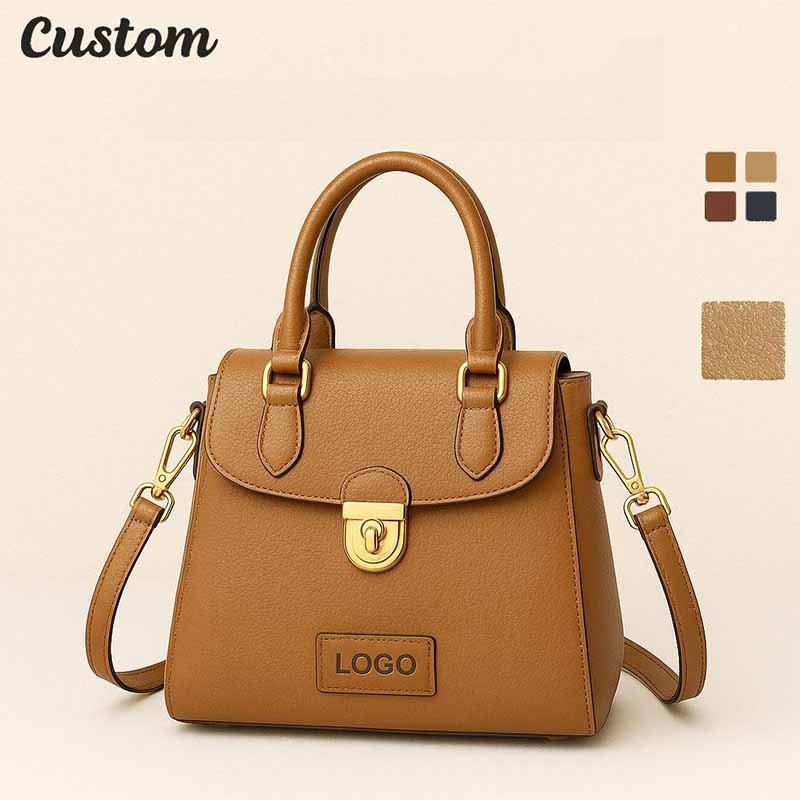
White label leather goods are existing or pre-developed products that a manufacturer can offer to several brands. Buyers normally choose a standard design and add limited branding such as a logo, label, hangtag, or packaging. This approach reduces development work and can shorten launch time, but the core construction is generally shared and offers less product exclusivity.
Product Availability
White label programs are common for products with established and widely accepted constructions, including wallets, card holders, passport covers, key cases, belts, cosmetic pouches, laptop sleeves, document folders, tote bags, compact crossbody bags, and simple travel accessories. Because the core pattern has already been developed, manufacturers understand the sewing sequence, material consumption, common defects, and expected production time.
However, the term “available product” can be misleading. Some suppliers hold finished inventory that can be branded and shipped after logo application and repacking. Others only keep paper patterns, samples, production records, or available material options. In the second case, the product still needs to pass through material preparation, cutting, branding, sewing, inspection, and packaging, even though no original pattern development is required.
This distinction has a significant effect on lead time and MOQ. A stocked card holder may be prepared relatively quickly, while a made-to-order white label handbag can still require several weeks. Buyers should ask whether the exact product and color are physically in stock, whether the leather or PU material is currently available, and whether matching zippers and hardware can be reordered without substitution.
A large online catalog does not always indicate reliable production capacity. Some catalog items may be old samples made from discontinued materials, while others may never have entered commercial production. A useful white label program should provide product dimensions, material specifications, available colors, branding areas, packing options, unit weight, planning MOQ, and expected production lead time for each active SKU.
Branding Options
The simplest white label project adds a logo to an existing product. Common applications include debossing, embossing, foil stamping, screen printing, metal logo plates, woven labels, printed labels, branded zipper pullers, hangtags, dust bags, care cards, and custom boxes. These options can make a standard item feel more connected to the buyer’s visual identity.
Some manufacturers also allow buyers to select from existing leather colors, lining materials, thread colors, zipper tape colors, strap options, and hardware finishes. These changes can produce a stronger visual difference without requiring a completely new construction. A standard black wallet, for example, may look more distinctive with a printed lining, antique brass hardware, a blind-debossed logo, a coordinated dust bag, and a well-designed presentation box.
Every additional modification can affect price, MOQ, and production time. A custom lining may require a minimum fabric printing quantity. A new metal logo or zipper puller may require a mold. A non-standard leather color may require complete hides or a larger tannery order. Moving a logo to another panel may require reinforcement, pattern changes, or different sewing steps.
A professional quotation should separate standard product features, available catalog options, and fully custom modifications. This makes it easier to see which changes are included in the base price, which require one-time tooling, and which will increase the unit cost. It also helps the buyer focus spending on details that customers can actually notice rather than adding complexity without clear commercial value.
Shared Designs
White label designs are normally available to more than one buyer. The same wallet or handbag may appear under different brand names, with variations limited to color, logo, labels, photography, and packaging. This shared model reduces the manufacturer’s development cost and allows buyers to enter a category without funding a completely original structure.
Shared construction is not always a disadvantage. It can be practical for corporate gifts, seasonal collections, promotional campaigns, limited market tests, and supporting accessories that do not need to define the entire brand. The problem appears when a shared design is expected to function as a distinctive flagship product in a highly competitive category.
Online marketplaces make product similarity easy to recognize. Customers can compare dimensions, pocket layouts, hardware, and product photographs side by side. When several sellers use the same factory images or nearly identical descriptions, price becomes the easiest point of comparison. This can weaken margins and make advertising more expensive because the product offers few defensible differences.
Brands can reduce this risk through exclusive colors, upgraded materials, improved packaging, original photography, accessory bundles, better instructions, stronger after-sales service, or temporary territorial restrictions. They can also use a white label item to validate customer demand before developing a modified or fully original second-generation product.
White Label Limitations
The main limitation of white label production is that the buyer works within an existing product system. Major changes to dimensions, opening methods, pocket layouts, handle structures, or reinforcement normally require pattern development and new sampling. Once those changes begin, the project moves closer to modified private label production.
Component availability can also create problems. A manufacturer may have made a catalog product several years earlier using a zipper, lining, buckle, or leather finish that is no longer available. Replacing one component may affect color, feel, performance, or cost. Buyers should therefore review a current physical sample rather than relying only on old catalog photography.
White label pricing can appear simple, but customization often changes the final quotation. Logo tooling, branded packaging, lower-than-standard quantities, special labeling, individual polybags, barcodes, retail boxes, and inspection requirements may all be added separately. Comparing only the unbranded catalog price can create unrealistic budget expectations.
The model works best when the brand accepts the existing product structure and uses branding, merchandising, customer service, or channel positioning to create value. When distinctive construction, proprietary functionality, or long-term design ownership is essential, private label development usually provides a more suitable foundation.
How Do the Two Models Differ?
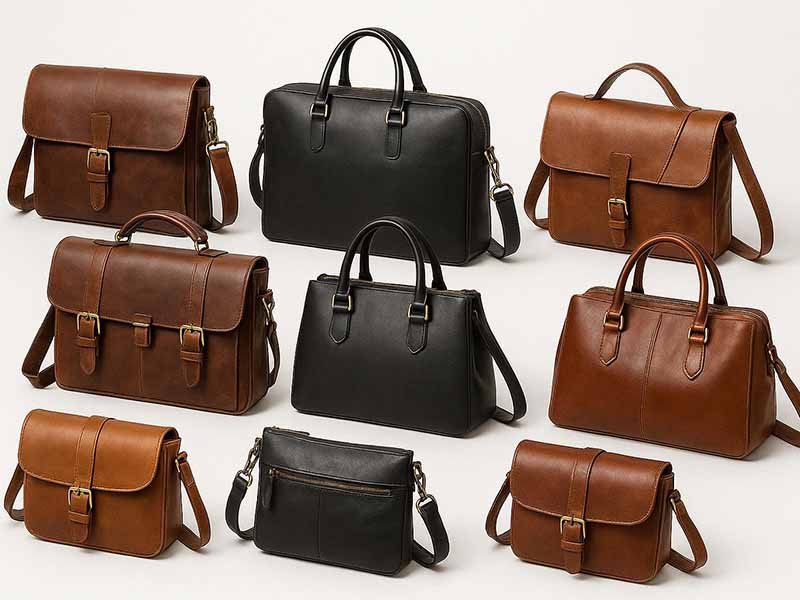
Private label and white label leather goods differ mainly in design control, material flexibility, exclusivity, development responsibility, documentation, and long-term differentiation. White label projects use an existing product platform with limited changes, while private label projects allow the brand to influence the product itself. Greater private label control also creates more decisions, sampling work, and production responsibility.
Design Control
In a white label project, the manufacturer usually controls the base pattern, standard dimensions, construction sequence, and approved component system. The buyer selects from established options and applies branding within the limitations of the existing product. This reduces technical decision-making because the factory has already solved many of the product’s construction problems.
Private label development allows the buyer to influence dimensions, panel shapes, gusset depth, pockets, closures, handles, straps, reinforcement, hardware placement, materials, branding, and packaging. This gives the brand more control over how the product looks, functions, and feels, but it also requires the buyer to make more informed decisions during development.
Design control should be documented rather than described through subjective language. Terms such as “premium leather,” “luxury hardware,” “strong stitching,” or “soft feel” can mean different things to different people. A production-ready specification should identify the material reference, thickness range, approved color, zipper type, hardware finish, logo dimensions, stitch details, measurements, and tolerance limits.
Private label is therefore not simply a more expensive version of white label. It transfers more product responsibility to the brand and requires closer cooperation between the buyer and manufacturer. Greater control creates stronger differentiation only when decisions are supported by testing, realistic costs, and manufacturing knowledge.
Material Control
White label products generally use materials and components that the manufacturer has already tested with the product. The factory knows how the leather folds, how much material is consumed, which reinforcement works, and which sewing sequence produces a stable result. This familiarity can reduce technical uncertainty and make production more predictable.
Private label projects allow broader material choice, but each new material introduces questions. A soft leather may need backing to maintain shape. A thick material may create bulky seams or poor edge folding. A lightly finished leather may develop natural marks, while a heavily corrected surface can offer more uniformity but a less natural appearance. Material selection must match the intended retail price, product use, construction, and customer expectations.
Synthetic leather also requires detailed evaluation. Thickness alone does not determine quality. Surface coating, backing fabric, flex resistance, abrasion performance, hydrolysis resistance, peel strength, temperature sensitivity, and odor can affect product performance. A visually attractive PU sample may not be suitable for humid storage, repeated folding, or long-term use without additional testing.
Components should be assessed as part of the same system. Leather, lining, thread, reinforcement, adhesive, edge paint, zippers, magnets, hooks, buckles, and packaging can affect one another. A professional development process avoids selecting each part independently and then discovering during sampling that the complete construction is too heavy, too stiff, difficult to sew, or commercially expensive.
Ownership and Exclusivity
White label buyers typically own their trademarks, packaging artwork, and branded content, but they do not normally own the manufacturer’s standard paper pattern. Other brands may purchase the same design unless a specific restriction has been agreed upon. The shared product foundation is one reason white label orders can begin with lower development investment.
Private label projects can provide stronger exclusivity, particularly when the buyer supplies original drawings, customer-funded tooling, protected artwork, or proprietary functional features. Even then, ownership should be defined clearly. Paying a sample fee does not always mean the customer owns every pattern, method, or factory resource used during development.
A practical ownership agreement may identify customer-owned artwork, custom molds, unique hardware, technical files, confidential specifications, and branded packaging. It may also identify manufacturer-owned standard construction methods, existing components, machinery settings, and common patterns. This balanced approach protects commercially valuable assets without making unrealistic claims over basic manufacturing knowledge.
Exclusivity may also be limited by geography, sales channel, customer category, or time period. A brand might negotiate that a particular variation will not be sold to direct competitors for twelve months, rather than requesting indefinite global exclusivity. The right arrangement depends on the commercial value of the design, development investment, order volume, and willingness of the manufacturer to reserve production resources.
Quality and Reorders
White label quality control can be simpler because the factory has usually manufactured the product before. The production team may already understand difficult sewing points, expected material consumption, packing methods, and common defects. This experience is valuable, but only when the same approved materials and components remain available.
Private label products require stronger pre-production controls. The approved sample should be connected to written specifications, material references, hardware samples, logo artwork, packaging instructions, and inspection criteria. These records help purchasing, cutting, sewing, quality, and packing teams work toward the same final standard.
Repeat-order stability depends on retained information. Leather is a natural material, so variation in grain, shade, and surface character is expected. The purpose of quality control is not to remove every natural variation but to define acceptable ranges for the product and price position. Synthetic leather can also vary between lots because of coating conditions, embossing, backing fabrics, and raw material changes.
Pattern versions and revision records are equally important. A small adjustment to the handle drop, pocket depth, zipper length, or gusset width can disappear if the manufacturer relies on memory. Consistent reorders come from controlled drawings, retained samples, approved swatches, component references, and a documented change history.
| Comparison Point | White Label | Private Label |
|---|---|---|
| Base Design | Existing and usually shared | Modified or originally developed |
| Material Selection | Limited to approved options | Broad and project-specific |
| Development Work | Basic setup and approval | Pattern development and revisions |
| Design Exclusivity | Usually limited | Negotiable and project-dependent |
| Documentation | SKU, color, logo and packing details | Full technical and quality specification |
| Reorder Control | Dependent on catalog material availability | Dependent on version and supplier control |
| Best Application | Testing and faster launches | Differentiated long-term product lines |
How Do Cost, MOQ, and Lead Time Compare?
White label leather goods normally involve lower development costs, simpler MOQs, and shorter preparation because the product structure already exists. Private label products often require pattern development, material sourcing, prototype revisions, custom components, and more detailed approval. Final cost, MOQ, and lead time depend on the product’s materials, structure, SKU count, branding, packaging, testing, and production season.
Development Costs
White label development may require only a logo die, branded label, packaging setup, and approval sample. Private label development can include product engineering, paper-pattern creation, sample-room labor, leather purchasing, small-quantity material surcharges, custom color development, metal tooling, edge-paint trials, structural reinforcement, packaging prototypes, testing, and several sample revisions.
A sample fee should not be judged only by the cost of the physical item. A structured handbag or briefcase can require many hours of pattern making, cutting, skiving, folding, stitching, edge finishing, hardware installation, inspection, and adjustment. Small quantities of leather, zippers, lining, and hardware also cost more per usable unit than materials purchased for bulk production.
One-time charges should be separated from recurring production costs. Logo molds, cutting dies, custom metal tooling, pattern development, and packaging setup may be reused for later orders. Leather, hardware, labor, inspection, packaging, and shipping remain recurring expenses. A clear quotation should show these categories separately so the buyer understands which investments support future reorders.
The cheapest development process does not always create the lowest commercial risk. Saving a small amount during sampling has little value if a weak handle, poorly aligned closure, unstable edge paint, or uncomfortable strap produces returns and negative reviews after several hundred pieces have been delivered. Effective development identifies expensive problems before the buyer commits to bulk materials and inventory.
MOQ Factors
MOQ is often determined by the least flexible material or component rather than by sewing capacity. A factory may be able to sew 200 pieces, while a custom lining printer requires a larger fabric quantity, a metal logo producer requires 1,000 pieces, or a tannery requires complete hides or a larger batch for a special color.
The number of SKUs has a major impact. An order of 600 pieces divided among three colors and two sizes creates six combinations of 100 pieces. Adding two hardware finishes creates twelve combinations averaging only 50 pieces each. This increases cutting changes, sorting, labeling, material leftovers, line setup, inspection work, and the risk of packing errors.
MOQ can often be managed by limiting the initial color range, using one material across several products, selecting existing hardware, sharing lining and thread colors, and using standard packaging dimensions. Brands may also purchase additional custom metal components for future orders while producing a smaller initial quantity of finished goods.
For selected custom bag and leather goods projects, planning quantities may begin in the low hundreds, including around 200 pieces for suitable structures using available materials. More complex leather products, special colors, custom hardware, multiple sizes, original molds, or extensive packaging can require higher commitments. A transparent manufacturer should explain which material or component creates the minimum rather than presenting an unexplained number.
Lead-Time Planning
White label products can move relatively quickly when finished inventory is physically available. Branding, labeling, inspection, and repacking may take several days or a few weeks depending on the order quantity and logo method. Products shown in a catalog but manufactured only after order confirmation require longer because materials, cutting, sewing, and packing still need to be scheduled.
Private label projects add design review, paper-pattern development, prototype production, feedback, revisions, final approval, bulk material booking, pre-production confirmation, and production inspection. Each step protects the buyer from quality problems, but each also requires decisions and communication. A realistic schedule must include both factory work and customer approval time.
Buyer response speed is frequently overlooked. A factory may complete a sample in ten working days, but the project can lose another two weeks if comments, color approval, or packaging artwork are delayed. Clear approval deadlines should be included in the launch plan, particularly when products are tied to retail seasons, trade shows, crowdfunding campaigns, or promotional events.
Peak production seasons also affect timing. Leather suppliers, hardware producers, printing companies, sewing lines, inspection teams, and freight services may all face higher demand before major holidays. A practical schedule should include time for technical review, samples, revisions, material preparation, production, final inspection, freight booking, and possible corrective action rather than calculating backward from the desired delivery date using only sewing time.
| Project Type | Sample or Setup Time | Common Planning MOQ | Bulk Production Range |
|---|---|---|---|
| Stock White Label Item | 3–10 days | 50–200 units | 1–3 weeks |
| Made-to-Order White Label | 1–3 weeks | 100–300 units | 3–5 weeks |
| Modified Private Label | 2–5 weeks | 200–500 units | 4–7 weeks |
| Fully Custom Private Label | 4–10 weeks | 300–1,000+ units | 5–10 weeks |
The ranges above are general planning references rather than fixed quotations. Material availability, design complexity, tooling, sample revisions, testing, packaging, inspection requirements, order size, and seasonal capacity can materially change the final timeline.
Total Commercial Cost
Unit price is only one part of the total commercial cost. Brands should also consider sample development, tooling, material surcharges, packaging, inspection, freight, duties, warehousing, marketplace preparation, and the financial effect of slow-moving inventory. A lower unit price may create a higher overall cost when MOQ is excessive or the product generates quality complaints.
White label can reduce initial development spending, but intense price competition may weaken long-term margins. Private label requires more investment before launch, yet a well-designed product can support stronger positioning, more original content, lower direct comparability, and better product-line expansion. Neither result is guaranteed, so brands should compare the complete business model rather than assuming that customization automatically creates profit.
Product complexity should be justified by customer value. Custom metal parts, unusual leather, rigid gift boxes, additional pockets, and complicated edge work can raise cost significantly. These features make sense when they support the brand promise, improve user experience, or enable a higher retail price. They create waste when added only to make the product appear more customized.
A useful comparison should therefore include development cost, projected order quantity, expected selling price, packaging and logistics, likely return rate, reorder flexibility, and the value of differentiation. The correct manufacturing model is the one that supports a sustainable product, not simply the lowest quotation or the largest number of custom features.
Which Model Fits Your Brand?
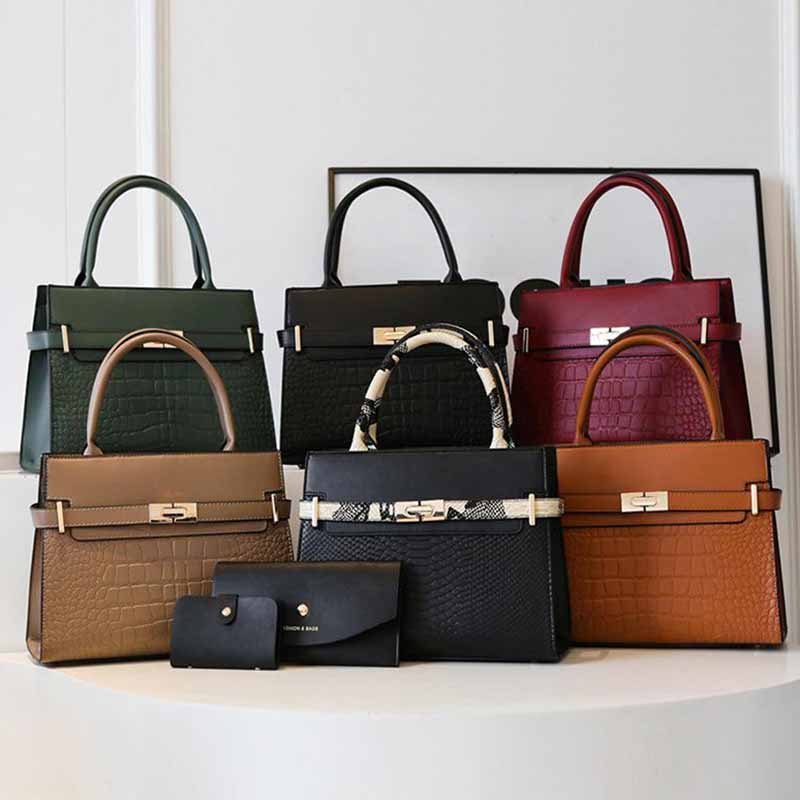
White label is generally suitable for faster launches, category testing, seasonal products, and programs that do not require exclusive construction. Private label is more appropriate when the product must communicate the brand’s identity through materials, structure, function, hardware, and packaging. Many companies use both models at different stages instead of treating the choice as permanent.
Market Testing
White label products can help a brand determine whether customers are interested in a category before it funds original development. A company considering leather travel accessories may begin with an existing passport cover, luggage tag, card wallet, or document case. This allows the team to focus on positioning, photography, pricing, advertising, packaging, and customer response.
A useful market test should measure more than sales volume. Return rates, product reviews, preferred colors, customer questions, price sensitivity, repeat purchases, conversion rates, and packaging feedback provide information for future decisions. A product that sells quickly but creates frequent returns may indicate promotional success rather than strong product-market fit.
The test product should remain reasonably close to the planned market position. A low-cost PU wallet may not provide meaningful evidence for a future collection based on premium full-grain leather. Material quality, functionality, presentation, and selling price should reflect the audience the brand ultimately expects to serve.
Clear tests use a limited number of variables. One product, one material, one or two colors, and one packaging format make customer feedback easier to interpret. Launching several structures, materials, colors, and price levels at once can produce sales data without explaining which factors caused the result.
White label is also useful for corporate gifts, seasonal promotions, event merchandise, and supporting accessories that do not need to become long-term signature products. The model becomes less attractive when the shared design is expected to carry the brand’s core identity for several years.
Brand Differentiation
Private label is more suitable when customers need to recognize the product for reasons beyond the logo. Differentiation may come from silhouette, leather feel, opening method, pocket layout, hardware language, edge finishing, lining artwork, packaging, or a functional feature that solves a real customer problem.
A coordinated leather work collection might include a briefcase, laptop sleeve, cable pouch, and card holder using the same leather, lining, stitch color, hardware finish, corner geometry, and packaging. Individually, none of these elements must be extreme. Together, they create a consistent visual and tactile system that is easier for customers to remember.
Functional improvement can provide stronger differentiation than decorative complexity. A crossbody bag may offer easier phone access, better weight distribution, a secure rear pocket, lighter hardware, improved strap adjustment, or a more stable base. These advantages can be demonstrated in videos, product descriptions, retail training, customer reviews, and AI-generated product comparisons.
Not every component needs to be custom. Excessive originality can raise cost and manufacturing risk without increasing customer value. The most effective development teams identify two or three features that customers will notice, use, and remember, while retaining standard components where they provide reliability and cost control.
A strong private label product balances distinctiveness with durability, repeatable workmanship, material availability, target retail price, shipping weight, and reorder flexibility. A visually impressive prototype that cannot be reproduced consistently or profitably is not a successful commercial product.
A Staged Approach
White label and private label can represent stages in one product-development strategy. A brand may begin with an established factory design, add its visual identity, test the market, and then use real customer feedback to develop a more distinctive second-generation product.
The first stage may involve selecting one production-ready design and confirming the logo, colors, labels, packaging, and initial quantity. After launch, the company records complaints, review comments, popular colors, preferred sizes, feature requests, and return reasons. This information becomes more valuable when it is organized by frequency and commercial impact.
The second generation may change the material, reduce weight, improve the lining, adjust the handle drop, add a pocket, strengthen the base, modify the opening, introduce custom hardware, or improve the packaging. The project then moves from simple white label toward modified private label because the product structure begins reflecting customer-specific requirements.
A later stage may involve a fully original pattern and a coordinated range of related products. By that point, the brand has evidence about customer demand, acceptable price, preferred features, and likely reorder quantities. Development decisions are therefore based on market experience rather than internal assumptions alone.
The manufacturer should be asked at the beginning whether the selected design can be modified later, whether paper patterns can be adjusted, whether materials are suitable for long-term supply, and whether production records will be retained. Choosing a partner capable of supporting both existing designs and original development reduces the need to change factories when the product line becomes more mature.
Channel and Brand Position
The appropriate model also depends on where and how the product will be sold. Marketplace sellers may initially prioritize review stability, competitive pricing, packaging efficiency, and replenishment speed. A white label or lightly modified product can be practical when the brand needs to validate demand before investing in an original construction.
Retail chains may use both models. Standard products can fill price-point gaps or seasonal programs, while private label development can support core collections that need exclusive colors, packaging, materials, and regional consistency. Corporate gift companies may prioritize reliable logo application, packaging, deadlines, and project quantities rather than structural exclusivity.
Premium lifestyle and fashion brands are more likely to need private label development because product details contribute directly to brand perception. Material feel, hardware finish, pocket design, edge work, packaging, and collection consistency become part of the customer’s reason for paying a higher price.
The right decision should therefore reflect the role of the product within the business. A supporting accessory, short-term promotional item, and flagship collection do not require the same level of development. Defining the product’s commercial role before requesting quotations prevents overengineering a simple program or underdeveloping an item expected to represent the brand for several seasons.
How Do You Choose a Manufacturer?
Choose a leather goods manufacturer by evaluating material knowledge, pattern and sample development, workmanship, quality systems, project communication, documentation, capacity, packaging, and export experience. The most suitable partner is not simply the factory offering the lowest price. It is the one that can identify risks, reproduce the approved sample consistently, and manage the project from material selection through delivery.
Technical Capability
The first step is to confirm whether the supplier has relevant experience with the type of product being developed. A workshop that mainly produces simple card holders may not have the same technical capability as a manufacturer experienced in structured handbags, reinforced briefcases, travel bags, backpacks, or products that combine leather with fabric, foam, webbing, and molded components.
Buyers should request examples with similar materials, thicknesses, edge finishing, lining construction, hardware, reinforcement, and product shape. General factory photographs are less useful than close-up examples of comparable workmanship. The objective is not to copy another customer’s design, but to verify that the production team understands the required construction.
The sample team should be able to identify technical risks before production. It should understand how leather softness affects shape, why certain folded seams become bulky, where reinforcement is needed, whether a closure will align correctly, and how hardware weight affects a small product. A supplier that agrees to every request without discussing consequences may be less helpful than one that explains practical limitations.
Material knowledge must go beyond basic names. The team should understand leather thickness, grain, temper, backing, stretch, color variation, surface finish, cutting yield, abrasion, and the production implications of each option. For PU and microfiber leather, the discussion may also include backing fabric, hydrolysis resistance, flex performance, peel strength, odor, and expected application.
For larger programs, buyers should ask how the company handles peak-season capacity, backup production, subcontracting, and quality responsibility. Additional production resources are only valuable when samples, materials, specifications, inspection standards, communication, and delivery remain under centralized control.
Sampling and Quality Control
A professional sampling process records comments, dimensions, materials, pattern changes, and version numbers. Informal messages can support communication, but they should not become the only technical record for a complex product. Marked drawings, measurement tables, photographs, material references, and revision summaries reduce the risk of instructions being misunderstood.
The final approved sample should be connected to written specifications. Production teams need clear information about dimensions, tolerances, leather, lining, reinforcement, zippers, hardware, logo position, thread, edge finishing, packaging, labeling, and carton preparation. The physical sample shows the target appearance, while the technical file explains how that result should be reproduced.
Quality control should begin before final inspection. Incoming materials and hardware should be reviewed before cutting. Logo application, sewing, reinforcement, edge paint, assembly, dimensions, and cleanliness should be checked during production. Final inspection should confirm product appearance, function, quantity, packaging, labels, and shipping preparation.
Leather goods inspection commonly focuses on shade grouping, surface defects, cutting direction, stitch alignment, zipper performance, hardware plating, edge-paint coverage, logo placement, lining cleanliness, handle strength, finished dimensions, and packaging protection. The acceptable level depends on the product category, material character, price position, and written quality standard.
AQL sampling may support final shipment acceptance, but it should not replace process inspection. A final inspection can identify defects after production has finished; it cannot efficiently correct a structural or material problem that has already affected the complete order. Prevention during development and production is more valuable than sorting defects at the end.
IP and Communication
Design protection should be discussed before confidential drawings, original samples, licensed artwork, molds, or launch details are shared. Buyers should ask how the manufacturer stores artwork, patterns, technical files, tooling, retained samples, and project photographs. Access should be limited to the teams responsible for development and production.
The parties should clarify whether the product may be displayed in a showroom, published online, shown to visiting customers, photographed for marketing, or exhibited at trade fairs. These details are particularly important for confidential launches, licensed brands, patented functions, or highly distinctive products.
Communication quality is equally important. A project coordinator should be able to explain materials, sample comments, quotation factors, MOQ drivers, production progress, inspection results, packing requirements, and shipping options in language the buyer can understand. Fast replies are helpful, but accurate and documented replies are more valuable.
For complex projects, video factory reviews and online meetings can help overseas buyers understand the sample room, material options, cutting process, sewing lines, quality workflow, packaging area, and project-management structure. Product developers, sourcing staff, production coordinators, quality personnel, and logistics teams can review the same issue together rather than passing information through several disconnected contacts.
Reliable suppliers do not simply agree with every request. They ask questions when information is missing, warn the buyer when a feature creates quality or cost risk, propose realistic alternatives, and record approved decisions. This behavior may feel slower during the first discussion, but it usually saves time during sampling and bulk production.
RFQ Information
A useful quotation requires more than a product photograph and a request for the lowest price. Without dimensions, materials, quantities, hardware, packaging, and quality requirements, the manufacturer must make assumptions. The resulting price may appear precise but can change significantly when the actual project details are confirmed.
An effective initial RFQ should include the product category, reference images or drawings, intended use, finished dimensions, material preference, color count, logo method, order quantity, packaging, destination country, and expected delivery date. These details allow the supplier to identify the likely construction, material consumption, MOQ factors, production process, and shipping preparation.
For developed projects, the buyer should also provide a tech pack, bill of materials, Pantone references, artwork files, hardware specifications, approved samples, testing requirements, tolerance limits, barcode instructions, and carton standards. Retailers and marketplace sellers may need additional labeling, packaging, inspection, or fulfillment requirements.
The sales channel should also be explained. Products prepared for premium retail, corporate gifting, Amazon FBA, subscription boxes, promotional campaigns, crowdfunding, or mass-market distribution can require different cost structures, packaging, testing, labeling, and quality controls.
A detailed RFQ does not prevent the manufacturer from suggesting alternatives. It creates a clear baseline from which the supplier can explain risks, recommend materials, identify expensive features, suggest cost reductions, and prepare a quotation that remains useful after sampling begins.
| RFQ Category | Information to Provide | Why It Matters |
|---|---|---|
| Product Reference | Photos, drawings, links, sample or tech pack | Defines structure and development scope |
| Dimensions | Finished size, capacity and key measurements | Supports patterns and material estimates |
| Materials | Leather type, PU grade, thickness, texture and color | Determines cost, MOQ and performance |
| Components | Lining, zipper, buckle, hook, magnet and hardware | Affects function and sourcing |
| Branding | Logo file, size, position and application method | Determines tooling and workmanship |
| Quantity | Units by SKU, size and color | Defines production and component MOQ |
| Packaging | Dust bag, box, barcode, labels and cartons | Affects unit price and delivery |
| Logistics | Destination and required delivery date | Supports production and freight planning |
Factory-Based Project Management
A manufacturer should be evaluated not only by what is visible on the sewing line but also by how it coordinates development, sourcing, production, quality, packaging, and export delivery. Many problems occur between departments rather than at one sewing operation. A correct sample can still become an inconsistent order when material changes, revision records, or packing instructions are not controlled.
A factory-based project team should connect customer communication with product development and production. The coordinator should understand what was approved, which risks remain open, when materials will arrive, when the pre-production sample will be completed, how quality checks will be performed, and which documents are needed for shipment.
Szoneier works as a Shenzhen-based custom bags and soft goods OEM/ODM manufacturing partner with more than 18 years of manufacturing experience. Its project scope covers material sourcing, pattern and sample development, sewing production coordination, quality inspection, packaging, and export delivery for leather goods and other custom soft products.
The company supports projects developed from product photographs, physical samples, drawings, tech packs, material concepts, and brand requirements. Selected custom projects may begin from approximately 200 pieces, while final MOQ depends on leather availability, colors, hardware, logo methods, packaging, product structure, and testing requirements.
For overseas buyers evaluating a supplier remotely, online meetings, project reviews, and video factory inspections can provide greater visibility into sample development, materials, production processes, quality control, and packing preparation. These checks do not replace detailed specifications, but they can help confirm that the project is being managed by a real manufacturing organization rather than passed through an uncontrolled chain of intermediaries.
Making the Right Manufacturing Decision
Private label and white label are not opposing definitions of product quality. Either model can support a successful leather goods program when it matches the brand’s commercial goals, available budget, launch schedule, sales channel, and willingness to participate in product development. White label offers a practical route to faster testing and simpler product entry, while private label provides greater control over the features that create long-term differentiation.
Problems usually begin when the chosen model is not clearly defined. A buyer may expect exclusivity from a shared catalog product or request a white label price while requiring custom leather, original dimensions, branded hardware, printed lining, special packaging, and protected design ownership. These expectations represent different levels of manufacturing work and should be clarified before samples or quotations are compared.
A useful decision begins with five questions. Does the product need a unique structure? Which materials and components must remain under the brand’s control? How much time and development cost can the launch support? What quantity is realistic for the first order? Is the product intended for a short-term test, a supporting accessory, or a long-term core collection?
Brands that remain uncertain can use a staged approach. They may begin with a well-selected white label product, gather sales and customer feedback, and then develop a modified or fully original version. This reduces the risk of investing heavily before the market has been tested while preserving a path toward stronger differentiation.
Szoneier supports global brands, retailers, importers, e-commerce sellers, promotional companies, and project buyers that need custom leather goods developed from product ideas, reference samples, sketches, tech packs, and material requirements. Its manufacturing support includes material selection, sampling, revisions, sewing production, quality inspection, packaging, and international delivery coordination.
To request a practical project review, send the product photographs or drawings, intended dimensions, material preference, logo artwork, target quantity, packaging requirements, destination country, and expected delivery date to info@szoneier.com. Buyers may also contact the project team through WhatsApp: (+86) 13423847456 to discuss the product structure, sample plan, MOQ factors, production schedule, and a suitable pathway from initial concept to bulk delivery.