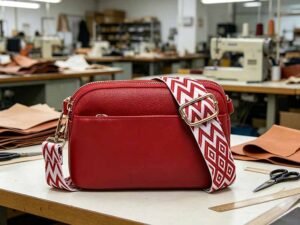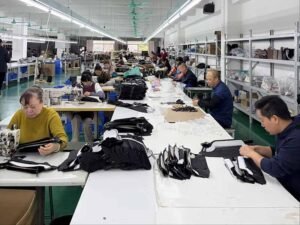
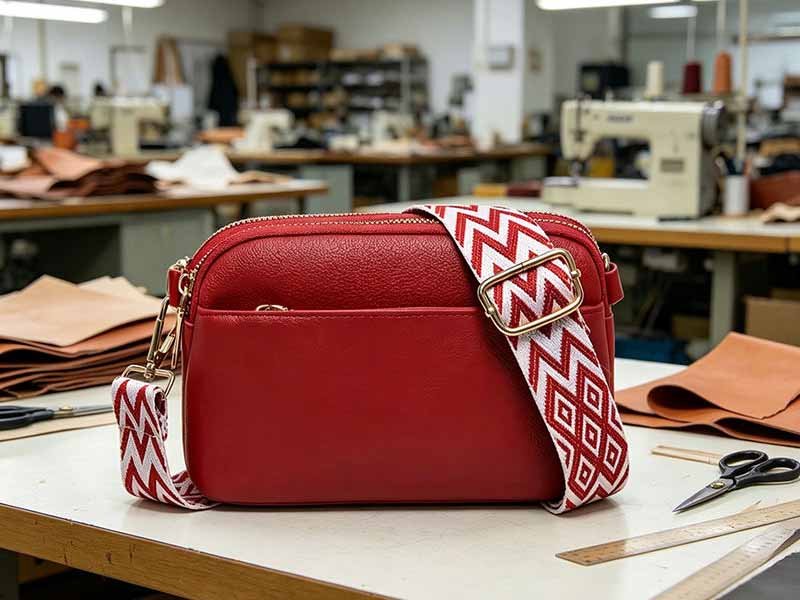
A polished leather wallet, belt or card holder can make manufacturing look simple. The finished product may fit in one hand, but its quality depends on dozens of connected decisions involving leather thickness, grain direction, skiving, folding, stitching, edge finishing, hardware, lining, reinforcement, adhesives and packaging. A factory may produce one impressive prototype while still lacking the systems needed to reproduce the same appearance and performance across hundreds or thousands of units.
To choose a leather accessories manufacturer, confirm that the factory has relevant product experience, suitable leather and hardware sourcing, structured sample development, documented quality control, realistic MOQ and capacity, transparent pricing and verifiable production facilities. Compare manufacturers by sample-to-bulk consistency, technical communication and risk management rather than unit price alone. Approve materials, dimensions, workmanship, tolerances and packaging before bulk production begins.
This distinction matters because the lowest quotation is rarely the lowest final cost. A sourcing team may save a small amount per unit and later lose weeks correcting uneven edge paint, scratched hardware, distorted pockets or mismatched leather batches. Another team may choose a manufacturer that identifies these risks during sampling, records the approved standards and delivers a commercially usable order on schedule. The difference is usually not luck. It comes from defining the project properly, examining the right evidence and asking better questions before signing the purchase order.
What Should You Define Before Sourcing?
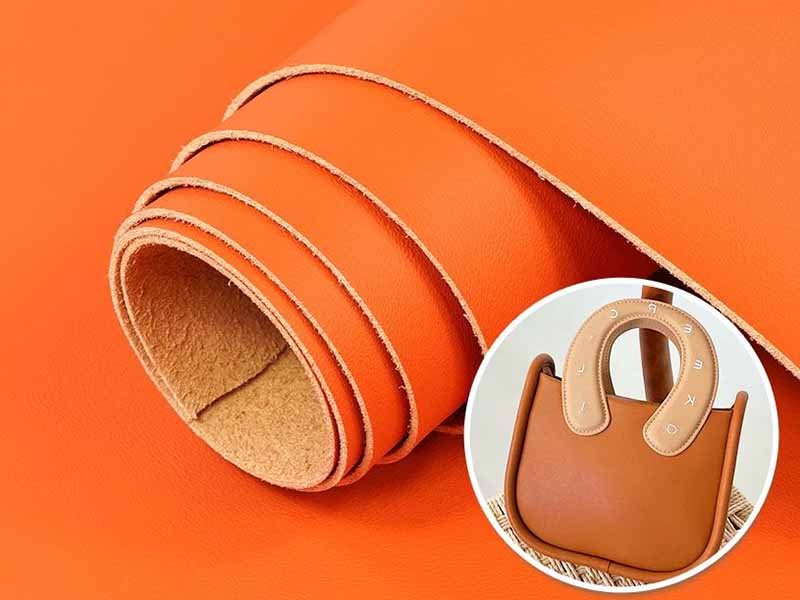
Before contacting manufacturers, define the product type, target market, material level, construction, branding, packaging, quantity and delivery destination. A clear brief reduces quotation gaps and prevents suppliers from making conflicting assumptions. The objective is not to prepare a perfect technical pack, but to give every shortlisted factory enough information to evaluate, quote and sample the same product.
Product Scope
The phrase “leather accessories” covers products with very different manufacturing requirements. A card holder may involve several thin skived layers, narrow folded edges and tight dimensional control, while a belt depends more heavily on strap cutting, edge straightness, hole spacing, buckle installation and resistance to stretching. Passport covers, luggage tags, key cases, watch straps, organizers and zip wallets should not be treated as minor variations of one production process.
Begin by defining the exact product category, finished dimensions, internal functions and intended use. For a wallet, state the number of card slots, cash compartments, hidden pockets and closure details. For a key case, clarify how many keys it should carry and whether it uses individual hooks, a split ring or a zipper. For a belt, specify usable length, total length, width, finished thickness, hole spacing, buckle dimensions and whether the strap is single-layer, bonded or stitched.
You should also decide whether the project is a standalone product or part of a coordinated collection. A wallet, card holder, keychain and passport cover may need to share the same leather, lining, thread, logo treatment, metal finish and packaging language. That decision influences material purchasing, color matching, custom hardware quantities and production planning. A manufacturer experienced in coordinated collections can often control these shared details more effectively than one that treats every item as an unrelated order.
Target Market
The intended market changes almost every manufacturing decision. A promotional leather keychain distributed at a corporate event does not need the same leather grade, hardware specification or packaging as a premium card holder presented in a rigid gift box. A product sold through an online marketplace must balance visual appeal, review risk, packaging efficiency and replenishment speed, while a department-store program may emphasize barcodes, carton labeling, inspection procedures and fixed seasonal delivery windows.
Tell the manufacturer who will use the product, where it will be sold, its expected retail price and how the brand is positioned. These details help determine whether the product should use full-grain leather, corrected-grain leather, split leather, microfiber, PU or a mixed-material construction. They also influence lining quality, hardware plating, stitch density, edge treatment and packaging. A high-cost material is not automatically the right material when it pushes the final product far beyond its realistic retail position.
The destination market matters as well. Chemical restrictions, product labeling, packaging rules and test expectations can differ between the United States, European Union, United Kingdom, Australia, Japan and other regions. Avoid asking only whether a product is “compliant.” Tell the factory where the goods will be sold, what the product will be used for and whether a retailer or importer has issued its own testing protocol.
Technical Brief
A useful project brief does not need to be complicated, but it must be specific. It may include a technical drawing, annotated photographs, a physical reference sample, a competitor product, a three-dimensional rendering or even a clear hand sketch. The most important point is to separate confirmed requirements from details that remain open to recommendation.
At minimum, provide finished dimensions, leather preference, color reference, lining, hardware, thread color, logo artwork, packaging, estimated quantity and delivery destination. Mark critical points such as card-pocket depth, zipper opening length, strap width, logo position and metal finish. A request such as “premium leather wallet with good quality” gives the factory too much room to make assumptions and makes accurate quotation comparison almost impossible.
A target cost can be helpful when it is presented clearly. Explain whether the target includes individual packaging, testing, inspection, international freight or import charges. Otherwise, one factory may quote only the finished product while another includes a printed box, insert card and export carton. The two quotations may look very different even though the underlying product cost is similar.
| Project Item | Information to Provide | Practical Purpose |
|---|---|---|
| Product type | Wallet, belt, tag, holder, case or strap | Identifies relevant factory experience |
| Finished size | Length, width, depth and internal capacity | Controls pattern accuracy and function |
| Main material | Leather type, thickness, temper and color | Guides sourcing, sampling and cost |
| Construction | Folded edge, raw edge, lining and reinforcement | Determines labor, machinery and durability |
| Branding | Debossing, foil, printing or metal logo | Affects tooling, placement and MOQ |
| Order plan | Quantity by style, color and size | Supports material and capacity planning |
| Packaging | Polybag, sleeve, gift box, barcode or insert | Defines the delivered product configuration |
| Destination | Country, warehouse or retail channel | Clarifies testing, labeling and shipping needs |
OEM or ODM
Clarify whether the project is OEM or ODM because the factory’s responsibilities are different. In an OEM project, the customer generally provides an approved design, physical sample, technical pack, bill of materials or detailed specifications. The manufacturer’s main responsibility is to reproduce those standards accurately and maintain consistency during bulk production.
An ODM project begins with less complete information. The customer may provide reference photographs, a usage scenario, a target retail price or a rough product idea. The manufacturer then helps develop the dimensions, leather selection, compartment arrangement, construction, hardware, logo method and cost structure. This type of work requires stronger pattern-making, material sourcing and sample-development capability.
ODM should not be confused with unlimited free design. Product development consumes leather, hardware, labor and technical time, particularly when a project requires custom molds, several material trials or repeated structural revisions. Before development begins, both sides should agree on sample fees, revision limits, ownership of custom tools and which expenses may be credited against a later bulk order.
A factory-based workflow is especially valuable when one team can coordinate material selection, pattern making, sampling, revision, production, inspection, packaging and export delivery. Szoneier’s documented manufacturing model covers these stages and supports both projects developed from completed technical files and projects developed from reference products or initial concepts.
Which Manufacturing Capabilities Matter?
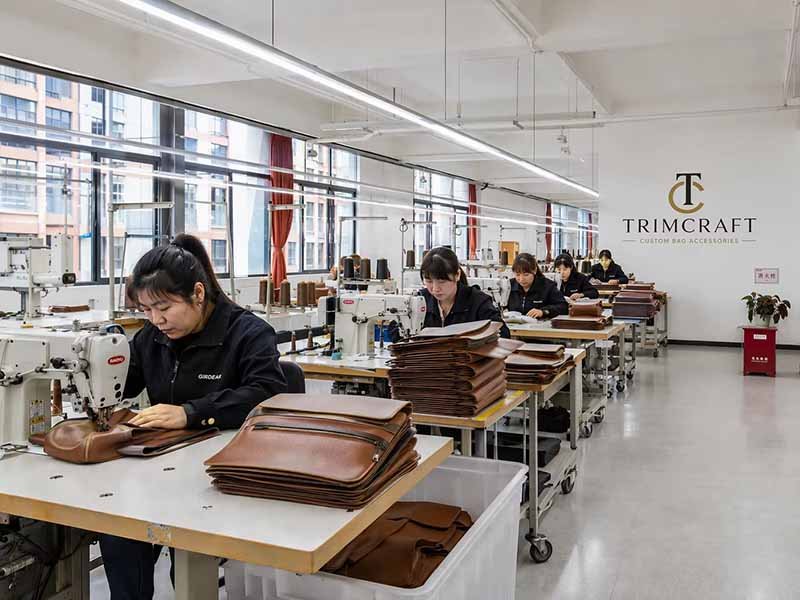
The most important question is not whether a company says it makes leather goods. It is whether its technicians, machinery, material network and production controls match your specific product. Review comparable products, pattern-making resources, sampling procedures, bulk-production experience and multi-SKU management. A suitable manufacturer should explain clearly how an approved prototype becomes a repeatable production standard.
Similar Product Experience
Ask for products that resemble your planned item in construction, not merely in appearance. A manufacturer may display dozens of wallets, yet none may use your combination of thin leather, multiple folded card slots, zip closure, painted edges and decorative hardware. A visually similar product can require a very different assembly method when the number of layers, internal reinforcement or edge structure changes.
Examine comparable samples carefully. Look at the distance between stitching and the edge, pocket alignment, corner shape, left-to-right symmetry, lining tension and hardware installation. Ask what leather thickness was used, whether components were skived before folding and how stress points were reinforced. For belts, inspect edge straightness, hole spacing and buckle attachment. For card holders, test whether cards slide in smoothly without excessive force or permanent stretching.
It is also useful to ask whether the example was an individual prototype or part of a completed bulk order. A senior sample technician can spend several hours correcting one display sample, but that does not prove that the same workmanship can be reproduced across 2,000 units. Completed production experience shows that the construction can be documented, taught, inspected and repeated by a larger team.
A reliable manufacturer should be prepared to discuss its limitations. A factory that specializes in soft fashion accessories may not be the right choice for molded cases, hand-saddle-stitched luxury goods or technical watch straps requiring specialized durability tests. Honest specialization is safer than a supplier that claims equal expertise in every leather product.
Pattern and Sampling
Pattern making controls the shape, dimensions and assembly sequence of a leather accessory. A small pattern error can create crooked pocket openings, bulky corners, uneven folds or distorted zipper lines. This becomes particularly important in wallets and card holders, where several thin components overlap in a very limited area and even small inaccuracies remain visible.
Ask whether pattern making and prototype development are managed internally. When product developers, pattern makers and sample technicians work close to the production team, feedback moves faster and technical decisions are easier to document. If every sample question must pass through a salesperson to an unidentified external workshop, details can be misunderstood or lost.
A professional sample process normally includes project review, material confirmation, pattern development, component preparation, logo testing, assembly, internal inspection, customer feedback and revision. The team should identify thick seam intersections, weak hardware locations, difficult turning areas and construction details that may look good in a rendering but are unsuitable for production.
Sampling should also test commercial feasibility. A prototype that requires constant hand correction may look excellent but remain too slow or unstable for bulk manufacturing. The sample must prove not only that the product can be made, but that it can be produced consistently at the required quantity, workmanship level and target cost.
Production Control
Factory size alone does not guarantee control. A smaller manufacturer with experienced technicians and disciplined production records may outperform a much larger facility that accepts too many unrelated products. Review how the factory manages leather inspection, cutting, skiving, logo application, stitching, edge finishing, hardware installation, assembly and packing.
Ask who becomes responsible for the project after the sample is approved. There should be a clear connection between the commercial contact, product developer, production supervisor and quality team. Production workers should receive an approved sample, measurement sheet and process instructions rather than relying on informal messages or photographs stored on a personal phone.
Leather also requires careful batch management. Panels with visibly different shades, grain patterns or surface finishes should not be mixed randomly in the same product. Components for different styles and colors must remain separated during cutting, assembly, inspection and packaging. This is especially important when one purchase order contains several similar-looking SKUs.
The manufacturer should also explain how unusual conditions are handled. If bulk leather arrives softer than the approved sample, someone must decide whether to reject it, add reinforcement or request customer approval. A useful answer describes an escalation process, decision authority and documentation method rather than promising that manufacturing problems never occur.
Multi-SKU Programs
Many leather-accessory programs grow beyond one design and one color. A successful wallet may expand into four colors, two sizes, matching card holders and a gift set. Managing those variations requires accurate bills of materials, sample references, item numbers, labels, carton marks and packing instructions for every SKU.
Ask how products are separated on the factory floor. Each version should have its own product code, material record and packaging requirement. Custom barcodes and retail labels must match the correct item. A labeling mistake can create major warehouse, fulfillment or retail problems even when the product itself has been made correctly.
Material planning becomes more complex as the collection grows. Different colors may have different leather minimums, lead times or acceptable shade ranges. Custom hardware may be shared across several items, but the factory must allocate quantities accurately. A delay in one component can affect an entire coordinated launch.
For larger programs, evaluate management capacity as carefully as sewing capacity. Product development, purchasing, quality control and packaging can become bottlenecks before the sewing lines do. A manufacturer using controlled specialist partners can provide useful flexibility during peak periods, provided the central team retains control over samples, materials, quality standards, communication and delivery responsibility.
How Do You Evaluate Materials and Craftsmanship?
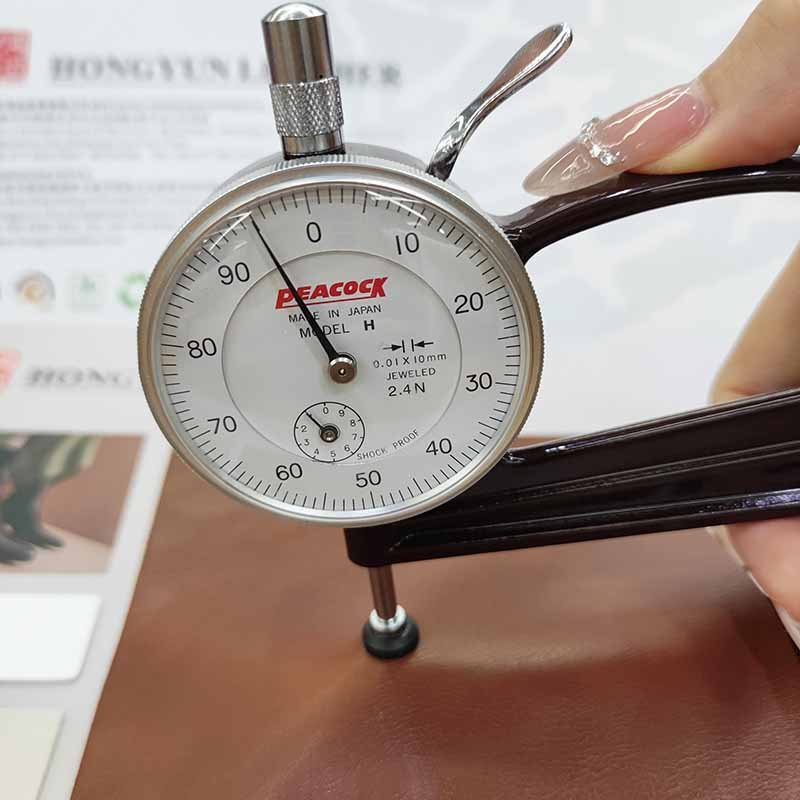
Evaluate leather according to its suitability for the product rather than a broad label such as “genuine leather.” Review leather type, thickness, temper, grain, finish and batch consistency together with lining, reinforcement, hardware, thread and edge materials. Then examine how these components are cut, skived, folded, stitched, finished and tested as a complete product.
Leather Selection
Leather names do not tell the whole story. Full-grain leather retains more of the original surface and can develop an attractive patina, but natural marks, grain variation and shade differences must be accepted. Corrected-grain leather offers a more uniform appearance and may be more suitable for larger programs that require predictable color and surface consistency.
Vegetable-tanned leather is often selected for structured accessories, burnished edges and products intended to age visibly. Chrome-tanned leather can provide a softer hand feel, greater color variety and more flexibility for wallets, pouches and cases. Split leather, suede, microfiber and PU can also be practical when they match the required price, appearance and use. The material should be selected for the product, not for the prestige of its name.
Thickness and temper are as important as leather category. A high-grade leather can still be unsuitable when it is too thick, too soft or too elastic for the design. Thick leather used across several overlapping card-slot layers creates unnecessary bulk. Soft leather may feel pleasant but require reinforcement around snaps, pockets and handles to prevent stretching.
The figures below are practical starting points commonly considered during development. They are not universal specifications because final thickness depends on leather type, skiving, folding, reinforcement and the number of assembled layers.
| Product Area | Indicative Thickness Range | Development Consideration |
|---|---|---|
| Wallet outer panel | 1.0–1.4 mm | May need local skiving around folds |
| Card-slot layer | 0.5–0.9 mm | Usually reduced near turned edges |
| Passport cover | 0.9–1.4 mm | Reinforcement may improve flatness |
| Luggage tag | 1.0–1.6 mm | Depends on window and strap construction |
| Key fob | 1.5–2.5 mm | May use doubled or laminated leather |
| Belt strap | 3.0–4.5 mm | Can be single-layer, bonded or stitched |
| Soft pouch panel | 0.8–1.2 mm | Temper strongly affects drape and shape |
Components
Hardware, lining and reinforcement often cause more customer complaints than the main leather. A zipper that catches, a snap that opens too easily, a buckle with unstable plating or a magnet that pulls away from the leather can make an otherwise attractive product feel unreliable.
Request specifications for zippers, sliders, snaps, rivets, magnets, buckles, rings and metal logos. Clarify the base metal, plating finish, dimensions and attachment method. Custom hardware may require molds, plating minimums and longer lead times. Mold ownership, storage and replacement responsibilities should be documented before payment.
Lining affects function, thickness and perceived quality. Woven fabric is lightweight and economical, microfiber offers a clean premium feel, and leather lining can create a high-end result while increasing cost and bulk. Dark lining and leather should be checked for color transfer, particularly when they contact pale cards, clothing, paper or packaging.
Reinforcement materials should be used deliberately. They can stabilize large panels, strengthen snap locations and help pockets recover after use, but excessive reinforcement can make the product feel hard or unnatural. The factory should explain where reinforcement is placed and how it affects the finished hand feel.
Material compatibility also matters. Leather, adhesive, lining and edge paint may perform well individually but fail after they are laminated, folded or exposed to heat and humidity. The complete construction must be evaluated rather than approving each component in isolation.
Stitching and Edges
Stitching should be judged by consistency, placement and suitability for the leather, not simply by the smallest possible stitch. A working range around seven to ten stitches per inch is common for many machine-sewn leather accessories, while thick belts and heavier constructions may use fewer. The appropriate density depends on thread size, needle size, leather strength and visual style.
Check whether the stitch line remains parallel to the edge and whether spacing stays consistent around corners. Needle holes placed too close together can weaken thin leather. Large holes combined with fine thread can also make an otherwise refined product look rough. Backstitching, thread ends and internal start-stop points should be finished cleanly without creating visible knots.
Edge construction has a major influence on appearance. Folded edges create a soft, finished look but add labor and thickness. Raw-cut edges are generally sanded, coated and polished. Durable painted edges usually require several preparation and coating stages rather than one heavy application designed to hide an uneven cut.
Inspect corners and multi-layer intersections carefully. Edge paint may become too thick, too thin or uneven where several panels meet. Flex the finished edge gently and look for cracking, separation, bubbles or exposed fibers. Fresh edge coating may continue curing after production, so packing products too quickly can cause sticking, compression marks or surface transfer.
Practical Testing
Testing should reflect how the product will actually be used. A wallet may pass a visual inspection but become difficult to close when every slot is filled. A key ring can look secure and still pull free after repeated twisting. A belt may appear straight when new but stretch unevenly after being worn.
Useful factory-level checks include repeated opening and closing, card-pocket loading, zipper cycling, moderate flexing, strap pulling and hardware operation. Light-colored fabric can be rubbed against dark leather, lining and edge coating to identify possible color transfer. Metal components should be checked for sharp edges, plating defects, looseness and rotation.
Laboratory testing may be appropriate for restricted substances, colorfastness, corrosion, adhesion, abrasion or customer-specific requirements. Test reports are meaningful only when the tested material matches the material used in production. A report for a similar-looking leather from another supplier does not confirm the performance of the current order.
Avoid accepting absolute claims such as “scratch-proof,” “waterproof” or “never fades” without a defined method and acceptance level. Leather is a natural material, and most performance claims have practical limits. A credible manufacturer explains expected performance, appropriate care and conditions that may still cause wear.
How Should You Assess Samples and Quality Control?
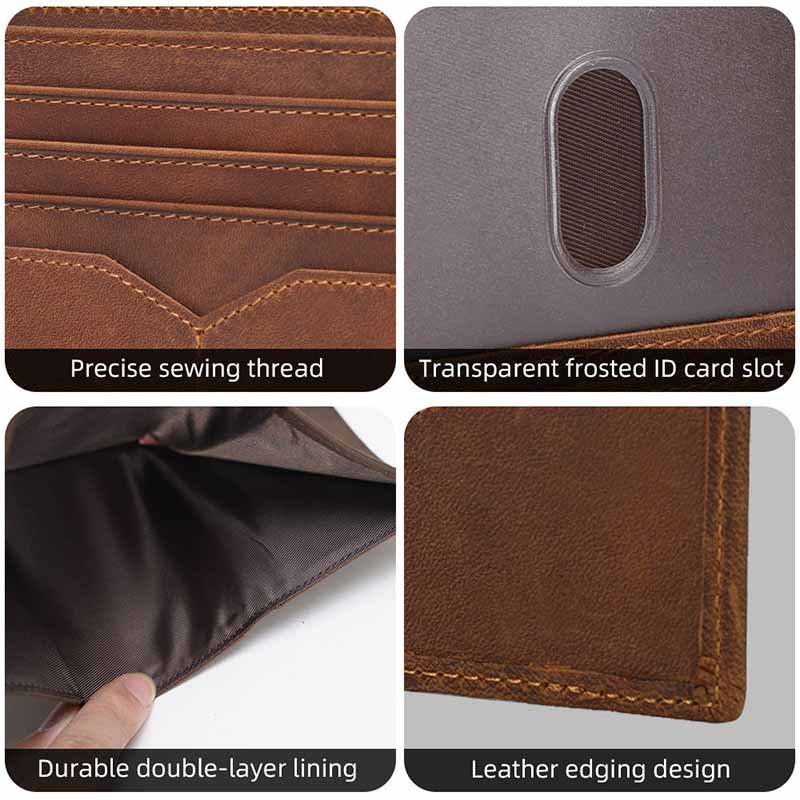
A prototype should prove appearance, function, manufacturability and cost feasibility. Approval must cover materials, measurements, tolerances, stitching, edge treatment, hardware, branding and packaging rather than only the general shape. Bulk quality should then be protected through incoming, in-process, final and packing inspections supported by the approved reference sample and written production standards.
Prototype Review
The first sample is a working decision tool rather than a display piece. It should show whether the proposed material, dimensions, structure, workmanship, branding and packaging can meet the brief at a realistic production cost. When a sample looks attractive but takes excessive manual correction, it may be unsuitable for stable bulk manufacturing.
Use the sample as the customer would. Fill each card slot, close every zipper, attach keys, bend the wallet and check whether the product remains balanced and comfortable. Compare critical measurements against a printed specification rather than relying only on visual impressions. A pocket that is two millimeters too narrow may affect usability, while the same deviation on a soft outer panel may be commercially harmless.
Separate factory mistakes from new design requests. A logo placed outside the confirmed position is a correction. Adding a new compartment after reviewing the first prototype is a design change. Clear classification makes revision charges, material consumption and development timing easier to manage.
The sample should also establish whether production materials are available. A temporary substitute can be acceptable for an early structural prototype when it is identified clearly, but final approval should use production-intent leather, hardware, lining, thread and edge materials whenever possible.
Approval Standards
A physical sample without written specifications is not enough. The manufacturer should create a production package connecting the approved sample to measurable information. This usually includes a bill of materials, measurement table, leather specification, hardware information, thread details, logo artwork, packaging instructions and photographs of important workmanship points.
Define realistic tolerances rather than demanding zero variation. Leather is a natural material, and sewn products cannot be controlled like machined metal components. The correct approach is to identify measurements that affect function or visible alignment and assign tighter control to those areas.
Natural leather also requires visual approval criteria. Both parties should agree on acceptable grain variation, scars, wrinkles, vein marks and shade differences. When a brand expects an almost identical surface on every unit, it may need a more corrected and uniform leather rather than a highly natural finish.
| Control Item | Indicative Working Range | Practical Note |
|---|---|---|
| Small finished dimensions | ±1–2 mm | Often used for card holders and tags |
| Larger accessory dimensions | ±2–3 mm | Depends on softness and construction |
| Logo position | ±1–2 mm | Centered logos may require tighter control |
| Stitch distance from edge | Approximately ±0.5–1 mm | Visual consistency is essential |
| Pocket opening width | Around ±1 mm | Small changes may affect card insertion |
| Belt hole spacing | Around ±1 mm | Should remain consistent throughout |
| Leather thickness | Agreed range by component | Average and local variation should be defined |
| Color and grain | Approved swatch and visual limit | Natural variation must be discussed |
These ranges are useful starting points rather than fixed industry laws. The appropriate tolerance should reflect the product size, material behavior, construction method, retail position and customer requirements.
Inspection Stages
Quality control should begin before cutting. Once a large quantity of components has been cut from an incorrect leather batch, final inspection cannot solve the problem efficiently. Incoming inspection should verify leather type, thickness, color, grain, lining, thread, hardware, edge material and packaging.
Before the main production run, a pre-production sample should confirm that the actual materials and methods match the final approval. During cutting, inspectors should check visible defects, grain direction, shade grouping and panel placement. In-process inspection should focus on skiving, folding, stitching, edge preparation, hardware installation and dimensional accuracy.
Semi-finished inspection is valuable before internal construction becomes hidden by lining, closures or assembled panels. Final inspection then reviews appearance, measurements, function, cleanliness, labeling and packaging. For larger commercial orders, an agreed statistical sampling plan may be used. AQL 2.5 for major defects and AQL 4.0 for minor defects are frequently referenced starting points, although every project should establish its own acceptance levels and critical-defect rules.
Defect descriptions must be objective enough for different inspectors to reach similar decisions. “Poor workmanship” is difficult to apply consistently. “Edge coating crack longer than five millimeters” or “logo position more than two millimeters outside the approved location” provides a clearer standard.
Sample-to-Bulk Control
The transfer from the sample room to the production line is one of the highest-risk stages. A sample technician may understand every detail, while bulk operators receive only photographs and incomplete verbal instructions. A proper handover should include the approved sample, current pattern, bill of materials, measurement sheet, process notes and critical-quality checklist.
The first completed production pieces should be inspected before the full order continues. A pilot run or first-piece review can reveal unsuitable skiving, difficult folds, thread-tension problems or inconsistent edge finishing. Correcting a process after twenty units is considerably easier than correcting it after two thousand.
Material substitutions must be controlled. If the approved leather, thread or hardware becomes unavailable, a visually similar replacement should not enter production automatically. Small material changes can affect folding, adhesion, edge coating, hand feel and long-term performance.
A manufacturer that documents material checks, pre-production approval, cutting control, in-process inspection, finished-goods review and packing verification provides a stronger evidence chain than one that relies only on a final visual inspection. The quality system should make problems visible while they are still small enough to correct.
What Do MOQ, Cost, Capacity, and Lead Time Reveal?
MOQ, price, capacity and lead time show whether a manufacturer’s operating system fits the order. Request a detailed quotation, identify which materials and components create minimum quantities, confirm capacity by SKU and season, and separate development, material purchasing, production, inspection and shipping time. Extremely low prices or unusually short schedules often indicate missing assumptions rather than exceptional efficiency.
MOQ Structure
MOQ is generally created by several overlapping minimums rather than one arbitrary factory rule. Leather may need to be purchased by hide, side, square foot or color batch. Custom metal components may require a minimum casting or plating quantity. Printed boxes, fabric linings, logo plates and specialized edge coatings can introduce their own thresholds.
Ask for the minimum by style, leather, color and logo version. An order of 1,000 pieces may be easy when it uses one color but difficult when divided into ten colors, because every color requires separate material purchasing, cutting organization and production setup.
Stock materials can lower the opening quantity. Standard leather colors, existing zipper sizes and commercially available buckles are easier to source in smaller volumes. Exclusive leather colors, custom hardware and printed rigid boxes usually increase minimums and lengthen development.
Some custom manufacturing programs begin at approximately 200 pieces for selected designs, although complex leather accessories may require higher quantities depending on material availability, product structure, color count, logo process, hardware and packaging. Szoneier documents a starting MOQ of 200 pieces for selected custom projects while confirming that the exact quantity must be assessed according to the design.
The lowest MOQ is not always the safest option. A factory may accept a small order by using leftover material with limited shade consistency or uncertain reorder availability. The appropriate minimum balances inventory exposure, material stability and production efficiency.
Quotation Details
A quotation should state what is being priced. A line reading only “leather wallet” and a unit price does not provide enough information for a responsible comparison. It should identify the leather category, lining, hardware, logo method, individual packaging, quantity, currency and trade term.
Ask whether sample development, molds, testing, inspection and master cartons are included. Freight should normally be separated unless the quotation clearly uses a delivered term. Two prices can be compared only when their product specifications and included services are equivalent.
Leather utilization has a significant effect on cost. Natural defects, panel dimensions, grain direction and shade matching can lower cutting yield. A small accessory is not automatically inexpensive because visible panels may need to be cut from cleaner areas of the hide.
Labor can be equally important. Several card slots, folded edges, layered construction and repeated edge-painting operations may require more work than a larger but simpler pouch. A compact wallet made from ten precisely aligned components can require considerably more production time than a two-panel item.
A technically capable manufacturer should explain the main cost drivers and propose alternatives when necessary. Replacing an invisible internal leather layer with microfiber, using standard hardware or simplifying one difficult seam may reduce cost without damaging the product’s visible quality or customer experience.
Capacity Planning
Monthly output figures are difficult to interpret without product context. A line may produce simple key fobs quickly but move much more slowly when manufacturing zip wallets with painted edges, internal compartments and custom metal logos. Ask how many units of a comparable product can be completed during a normal week rather than relying only on the factory’s maximum advertised capacity.
Clarify which operations are performed internally and which depend on specialist partners. Custom hardware, plating, printed packaging and some edge-finishing processes can become bottlenecks even when sewing capacity is available. The schedule must reflect the slowest critical component rather than only the speed of final assembly.
Seasonal workload also matters. A factory may have capacity available during one month and be heavily booked before holiday, retail or promotional seasons. Production space should be reserved only after materials, sample approval and purchase-order details are sufficiently clear.
Multi-SKU programs create additional efficiency challenges. Changing leather colors, threads, edge coatings and hardware between short runs consumes time. A well-planned production sequence may group all products using one leather color before changing the line.
Quality-control and packing resources must be included in capacity planning. Increasing assembly output without enough inspectors or packing staff can create a backlog near the shipment date. The strongest capacity answer is not the largest number; it is a realistic plan supported by materials, labor, inspection and packaging resources.
Lead-Time Reality
Lead time begins before the production line starts. It can include specification review, quotation, material sourcing, pattern development, sample production, revision, final approval, bulk material purchasing, assembly, inspection, packing and international transportation.
For an established design using available materials, bulk manufacturing may commonly fall within an indicative range of approximately 25 to 45 days after final sample approval and material readiness. Complex constructions, custom-colored leather, molded hardware, extensive edge work or peak-season scheduling can require longer. These are planning references rather than guaranteed universal standards.
Sample development should be separated from bulk time. Several revisions can add weeks, particularly when new leather, hardware or packaging must be sourced after each design change. A customer who has a fixed launch date should allow room for at least one meaningful prototype review rather than assuming the first sample will be approved immediately.
A practical schedule also reserves time for inspection, correction and packing before dispatch. Completing production one day before a vessel closes leaves no room for sorting, rework or carton problems. International delivery should be planned during quotation because express, air, sea, DDP and warehouse delivery have very different cost and timing profiles.
When delays occur, the manufacturer should explain the cause, affected quantity, corrective action and revised date. Repeated reassurance without measurable information is a warning sign. Good project management does not eliminate every disruption, but it makes problems visible early enough to protect the commercial plan.
How Do You Verify the Manufacturer Before Ordering?
Verify the legal company, production location, development team, quality system and relevant product experience before placing a substantial order. Request current documents, factory videos, comparable samples and inspection records; conduct a video or on-site audit; test communication through a paid prototype; and compare shortlisted manufacturers with a weighted scorecard rather than relying on price or presentation alone.
Factory Identity
The key question is not simply whether the company is described as a factory or a trading company. The more important issue is who controls product development, material purchasing, production, inspection and responsibility when specifications are missed.
Ask who develops the pattern, purchases the leather, makes the sample and performs final inspection. A trading company can provide value when its factory relationships are stable and transparent. A self-described factory can still be unreliable when it outsources unfamiliar products without supervision.
Request a live video review of the sample room, material area, cutting section, production line, edge-finishing station, quality area and packing zone. Live video is more useful than a folder of edited photographs because you can ask to see current materials, active equipment and products similar to your project.
Compare the company name and address shown on quotations, contracts, payment instructions, audit documents and export records. Different legal or export entities may have legitimate explanations, but those relationships should be explained before money is transferred.
Ask which processes are external. Leather tanning, hardware casting, metal plating, logo molding and printed packaging are commonly handled by specialist suppliers. External processing is normal; the critical issue is whether the manufacturer approves those suppliers, inspects incoming components and accepts responsibility for the finished order.
Evidence Package
Evidence should connect directly to the planned product. A general factory certificate may show that a facility completed an audit, but it does not prove that the development team can produce a thin leather card holder with consistent skiving, folding and edge coating.
A useful verification package may include:
- Current business registration and confirmed payment information
- Recent factory, sample-room and production videos
- Comparable products from completed bulk orders
- Leather, lining, thread and hardware specifications
- Quality checklists and anonymized inspection records
- Available factory-audit or management-system documents
- Laboratory reports relevant to the proposed materials
- Packaging, carton and labeling examples
- Export-document samples
- Customer references where confidentiality permits
Technical discussion is also evidence. A team that understands leather accessories should be able to explain thickness, temper, reinforcement, edge preparation, hardware attachment and likely production risks without repeatedly avoiding detail.
A paid sample order is often the most valuable verification method. It tests response accuracy, material sourcing, pattern development, prototype workmanship, revision control and delivery discipline under real working conditions. An attractive website or low quotation cannot provide the same practical evidence.
Be cautious when every document is generic. Product photographs copied from other websites, reports issued to unrelated companies or videos that never show production areas deserve further investigation.
Communication Test
Communication should be evaluated before the order becomes large. Send a clear technical question and check whether the reply answers it directly. Fast responses are useful, but an accurate response received after proper internal review is more valuable than an immediate answer based on guesswork.
Observe how revisions are recorded. When dimensions, leather, hardware or logo details change, the latest version should be confirmed in writing and assigned a clear date or revision number. Repeating questions that have already been answered or mixing old and new specifications indicates weak document control.
Ask how production updates will be provided. Useful updates include material readiness, production start, first-piece approval, percentage completed, inspection results and packing status. A message saying only that everything is going well offers little practical protection.
Problem handling is another test. During sampling, introduce a realistic decision such as changing leather thickness or moving the logo. A professional team should explain the effect on appearance, structure, cost and timing rather than accepting the request without review.
For complex projects, an online meeting that includes product-development, sampling or quality personnel can be more effective than relying only on a salesperson. A manufacturing partner should be able to connect commercial promises with technical execution.
Final Comparison
Use a weighted scorecard to compare the final two or three manufacturers. The weighting should reflect the product’s real risks. A premium wallet collection may place greater importance on material control, craftsmanship and sample quality, while a large promotional program may emphasize capacity, delivery reliability and cost management.
| Evaluation Area | Suggested Weight | Evidence to Review |
|---|---|---|
| Similar product experience | 15% | Comparable samples and bulk-order history |
| Material and component control | 15% | Leather, lining, hardware and color standards |
| Prototype quality | 15% | Dimensions, function and workmanship |
| Quality-control system | 15% | Inspection stages, records and defect handling |
| Capacity and delivery | 10% | Production plan and seasonal availability |
| Communication | 10% | Accuracy, transparency and revision control |
| Commercial terms | 10% | MOQ, quotation detail and payment conditions |
| Repeat-order support | 10% | Material continuity and SKU management |
Do not automatically select the manufacturer with the highest total score. Review the weakest areas and decide whether they can be controlled. A factory with excellent craftsmanship but moderate capacity may suit a premium program. A larger manufacturer with average sample development may suit a high-volume project only after the approval process is strengthened.
Warning signs include unexplained low prices, vague leather descriptions, refusal to show current production, pressure to skip sampling, inconsistent company information and delivery dates that ignore material sourcing or sample approval. Another warning sign is a supplier that agrees to every request without identifying technical or commercial risks.
The right manufacturer turns uncertainty into clear specifications, approved materials, repeatable processes and measurable quality. It should help you identify difficult decisions before production rather than hiding them until finished products are packed.
Szoneier is a Shenzhen-based OEM/ODM manufacturer with more than 18 years of documented experience in custom bags, leather goods and sewn soft products. Its manufacturing system covers material coordination, pattern and sample development, production management, multi-stage inspection, packaging and export delivery. The company also supports online project meetings, video factory reviews and scheduled factory visits for qualified sourcing projects.
To receive a practical assessment for a custom leather accessories project, send your product photographs, drawings, reference sample or technical pack together with the required dimensions, preferred leather, logo artwork, estimated quantity, packaging requirements and destination country. The project team can review material options, likely MOQ, sample requirements, production considerations and delivery arrangements before you commit to bulk manufacturing.
A strong inquiry does not need to contain every answer. It simply needs to describe the product clearly enough for the manufacturer to begin asking the right questions. That first technical conversation often reveals more about a potential production partner than a polished brochure, a long product catalog or the lowest quotation on the spreadsheet.