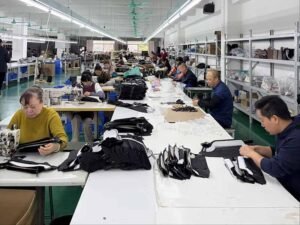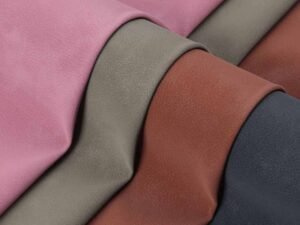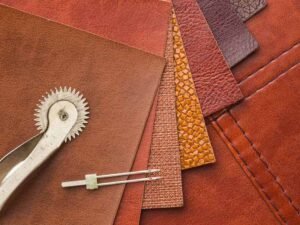
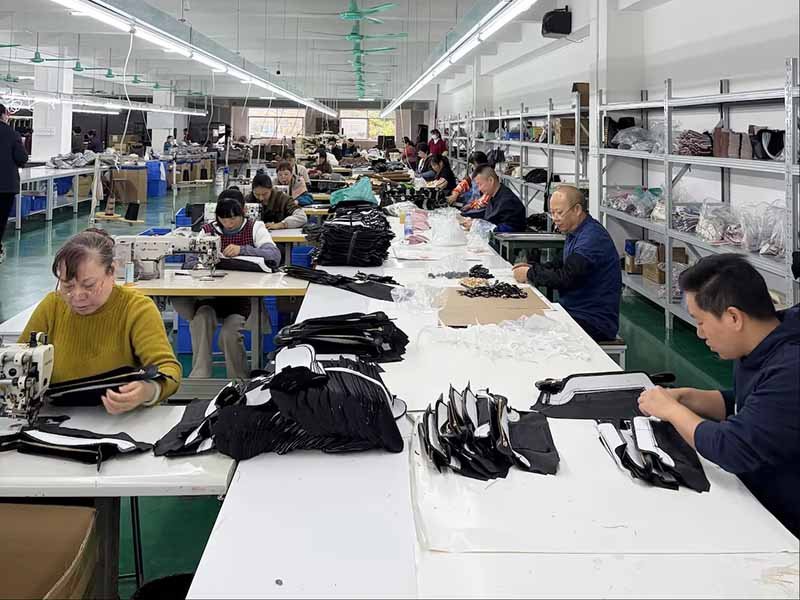
A beautifully made leather sample can create a false sense of security. It may have been produced slowly by the factory’s most experienced sample technician, using carefully selected leather and receiving far more manual correction than a normal production unit. The real test begins when hundreds or thousands of products must leave the production line with the same dimensions, stitching, edge finish, hardware position, color direction, packaging standard, and overall customer experience.
A leather goods factory is suitable for brand buyers when it can translate brand expectations into repeatable manufacturing standards. This requires material expertise, controlled sampling, documented specifications, skilled craftsmanship, in-process inspection, realistic capacity planning, transparent subcontracting, market-specific compliance support, and reliable delivery. The right factory does more than make an impressive prototype; it protects product consistency, launch timing, customer satisfaction, and the brand’s long-term reputation.
Brand buyers are not simply purchasing wallets, handbags, belts, cases, organizers, or small leather accessories. They are placing part of their reputation inside another company’s production system. One uncontrolled leather batch can change the appearance of an entire collection. One weak handle attachment can create hundreds of returns. One delayed hardware order can cause a seasonal launch to miss its most valuable sales window. The following sections explain how experienced buyers look beyond showroom samples and identify factories that can support real product development, repeatable production, and long-term brand growth.
What Do Brand Buyers Need From a Leather Factory?
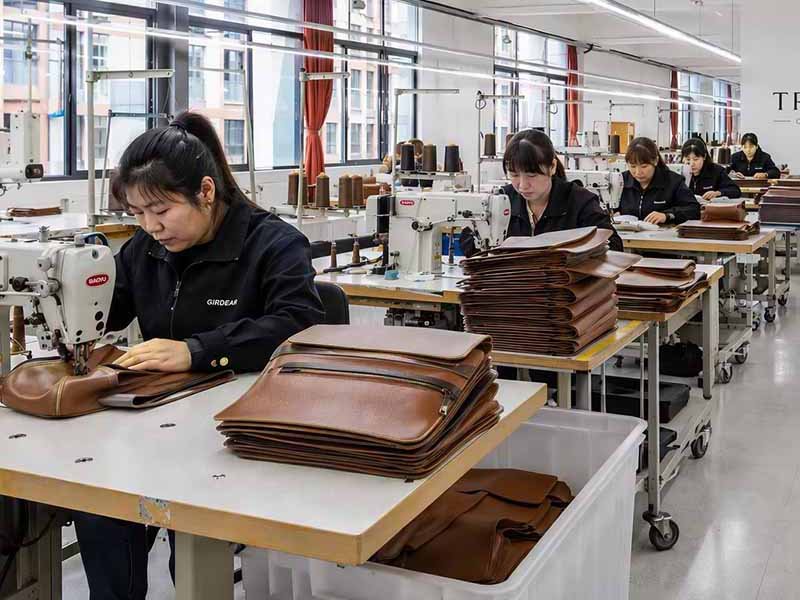
Brand buyers need a factory that can convert commercial goals, design details, material expectations, quality standards, packaging requirements, and delivery schedules into a controlled production plan. The manufacturer must understand not only how to make the product, but also how the product will be positioned, sold, inspected, replenished, and experienced by the final customer.
Brand-Level Product Understanding
A suitable leather factory should understand why the product is being developed, who will use it, where it will be sold, and what the brand wants customers to feel when they handle it. These commercial details influence almost every manufacturing decision, including leather grade, structure, lining, reinforcement, stitching, edge finishing, hardware, logo application, packaging, inspection intensity, and production cost.
A premium leather tote sold through department stores may require tightly matched panels, refined edge paint, protected metal hardware, individual dust bags, structured internal support, retail labels, and stricter cosmetic inspection. A promotional PU cardholder produced for a corporate event may place greater importance on logo clarity, color consistency, unit cost, delivery speed, and compact packaging. Both products can be well made, but the evaluation criteria are completely different.
Before providing a final quotation, an experienced factory should ask practical questions about the target retail price, sales channel, destination market, expected order quantity, acceptable natural variation, critical visual details, packaging format, and future replenishment plan. A factory that asks these questions is not making the project unnecessarily complicated. It is trying to prevent expensive misunderstandings before materials are purchased and production begins.
When the manufacturer understands the product’s commercial role, it can provide more useful recommendations. It may explain that a softer leather improves hand feel but reduces shape retention, that a deeply embossed logo requires a different thickness, or that a custom buckle introduces additional tooling, plating, and minimum-quantity requirements. This ability to connect brand goals with manufacturing realities is one of the clearest signs that the factory can support professional buyers.
Risk Control Before Production
Every leather goods project contains some uncertainty, but a qualified factory should identify the largest risks before the buyer approves bulk production. Common risks include leather shade variation, inconsistent grain direction, unsuitable thickness, weak reinforcement, uneven edge paint, hardware scratches, inaccurate dimensions, delayed custom components, packaging deformation, and sample changes that were never added to the final production specification.
A responsible factory does not simply promise that all goods will be “high quality.” It explains how each important requirement will be measured and controlled. Leather color may be managed through an approved physical swatch and an agreed shade range. Handle strength may be controlled through reinforcement drawings, stitch patterns, and load testing. Logo position may be measured from fixed reference points rather than judged visually by different operators.
Price transparency is also part of risk control. A useful quotation should identify the assumptions behind the leather, lining, reinforcement, hardware, logo, packaging, tooling, testing, sampling, color breakdown, and delivery terms. A low initial quotation can become expensive when the leather description is vague or essential costs appear only after development has started.
The best factories turn hidden risks into visible decisions. They may not be able to eliminate every problem, especially when natural materials and custom components are involved, but they can usually identify the risk earlier, define acceptable limits, and assign responsibility before the issue affects the production schedule or the final customer.
OEM and ODM Capability
Brand buyers enter manufacturing projects at different levels of readiness. Some provide a complete tech pack, physical reference sample, bill of materials, artwork, measurement chart, packaging files, testing requirements, and inspection criteria. These buyers mainly need strong OEM execution, which means reproducing the approved specifications accurately and maintaining consistency through bulk and repeat orders.
Other buyers may begin with a rough sketch, competitor reference, customer profile, intended retail price, preferred material, or basic product idea. These projects require more ODM support. The factory may need to help determine product dimensions, leather thickness, reinforcement, pocket layout, hardware, lining, logo method, packaging, construction sequence, and production feasibility before a useful sample can be produced.
A capable factory should support both approaches while keeping responsibilities clear. Buyer-requested details, factory recommendations, cost-saving alternatives, durability concerns, and final approvals should be documented. This protects the brand’s design intent and reduces confusion when several team members participate in the development process.
Szoneier has more than 18 years of experience across custom bags, leather goods, PU products, sampling, pattern development, sewing production, quality inspection, packaging, and export delivery. Its factory-based OEM/ODM system can support buyers who provide complete technical files as well as brands that need help converting early concepts, reference products, or material ideas into production-ready specifications.
Factory Accountability
A factory is suitable for brand buyers when responsibility remains clear from the first inquiry to the final shipment. The buyer should know who manages the project, who approves materials, who controls sample revisions, where production takes place, who inspects the goods, and who is responsible when actual production does not match the approved standard.
This becomes particularly important when specialist suppliers are involved. Leather goods manufacturing may depend on tanneries, hardware factories, plating suppliers, mold makers, lining mills, packaging companies, testing laboratories, or specialist finishing workshops. Using outside partners is normal and does not automatically indicate weak manufacturing capability. The problem appears when the main supplier cannot explain where important processes are completed or how those partners are controlled.
A brand-ready manufacturer should retain responsibility for approved samples, material standards, production instructions, revision records, inspection criteria, corrective action, packaging accuracy, and delivery commitments. The buyer should not be expected to coordinate several unnamed factories or resolve disagreements between subcontractors.
One accountable project owner should control the communication chain. This does not mean one individual performs every task. It means the sales, sampling, purchasing, production, quality, packaging, and logistics teams work from the same approved information and report through a defined project-management process.
| Evaluation Area | Basic Supplier Response | Brand-Ready Factory Evidence |
|---|---|---|
| Product understanding | Requests only a photo and quantity | Reviews market, use, materials, packaging, price position, and launch timing |
| Development | Copies visible features | Evaluates structure, durability, feasibility, and cost |
| Material control | Uses a general leather name | Records type, thickness, finish, color, supplier, and approved swatch |
| Quality control | Promises inspection before shipment | Uses incoming, first-piece, in-line, final, and packing checks |
| Communication | Relies on scattered messages | Maintains consolidated comments, versions, milestones, and written approval |
| Accountability | Blames an outside workshop | Retains responsibility for quality, rework, packing, and delivery |
| Long-term support | Focuses only on one order | Plans replenishment, new colors, additional SKUs, and repeat production |
Which Leather and Craft Skills Matter?
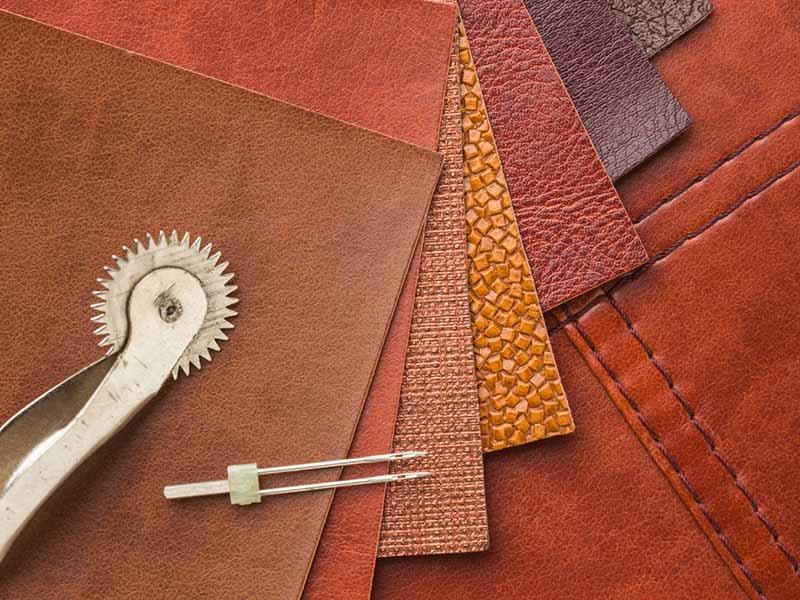
The most important leather goods capabilities extend far beyond sewing. A qualified factory must understand material grading, thickness, temper, grain direction, cutting, skiving, reinforcement, folding, stitching, edge finishing, hardware installation, lining construction, shaping, cleaning, and final presentation. These processes must work together because premium leather cannot compensate for weak engineering or inconsistent workmanship.
Leather Selection and Behavior
A factory’s material catalog does not prove that its team understands leather. The stronger test is whether the technicians can explain how each material will behave during cutting, skiving, folding, stitching, bonding, edge painting, packing, and long-term use.
Full-grain leather retains the natural surface and can develop a rich patina, but it often contains more visible scars, wrinkles, grain variation, and shade differences. Top-grain leather may provide a more controlled appearance while preserving much of the natural character. Corrected-grain leather usually offers greater surface uniformity, while split leather is used for different cost and performance positions.
Suede and nubuck require careful handling because nap direction changes appearance, surface contamination is visible, and pressure during cutting or sewing may leave marks. Pull-up leather, oily leather, metallic finishes, patent surfaces, and heavily embossed materials introduce their own production considerations.
PU leather must also be evaluated carefully. The term “PU leather” describes a very broad category rather than a fixed quality level. Two materials may look nearly identical in photographs but behave differently after repeated folding, edge finishing, exposure to humidity, or long-term storage. Buyers should confirm thickness, backing fabric, coating construction, embossing, flexibility, abrasion performance, hydrolysis resistance, colorfastness, peel strength, odor, and adhesive compatibility.
An experienced factory selects materials according to product architecture and intended use. A structured briefcase may need a firmer material and internal board reinforcement. A soft shoulder bag may require better drape. A wallet needs stable folding performance, while an item sold in warm and humid markets may require closer attention to coating durability and adhesive performance.
Thickness and Panel Control
Leather thickness has a direct effect on construction. A difference of only 0.2 or 0.3 millimeters can noticeably alter folded edges, seam bulk, handle feel, shape retention, stitch appearance, and edge-paint coverage.
There is no universal thickness specification for all leather products. Small leather goods generally use thinner components than structured bags, but each panel should be evaluated according to its function. A wallet exterior may use leather around 1.0 to 1.4 millimeters before local skiving, while internal card slots may require substantially thinner material. A structured tote may combine thicker leather with board reinforcement, whereas a soft bag may depend more heavily on the natural temper of the hide.
A production specification should therefore define thickness by component rather than assign one number to the entire product. The main panels, gussets, handles, folded edges, card slots, internal trims, zipper tabs, and attachment areas may all require different thicknesses or skiving instructions.
Panel matching is equally important. Natural hides vary from the shoulder to the belly. Grain, stretch, firmness, and color can differ within a single hide. Cutting operators need clear rules identifying which areas may be used for front panels, handles, gussets, internal parts, or less visible components.
Brands should also decide how much natural variation they are willing to accept. A heritage collection may welcome visible grain character, while a minimalist luxury product may require tightly matched panels. Neither approach is automatically better. What matters is whether the factory and buyer agree on the standard before cutting begins.
Construction and Reinforcement
A leather product may look refined while still containing structural weaknesses. Many failures appear only after repeated use, particularly around handles, shoulder straps, zipper ends, magnetic closures, snaps, buckles, hinges, and heavily loaded seams.
Reinforcement should be selected according to the expected load, flexibility, leather thickness, construction method, and desired product shape. Common reinforcement materials include woven fabric, nonwoven backing, tapes, fiberboard, synthetic boards, foam, plastic sheets, and additional leather layers. Each option changes the product’s weight, flexibility, thickness, hand feel, and long-term durability.
A suitable factory should understand how force moves through the product. A shoulder strap, for example, should not depend only on two visible rows of stitching. Its internal attachment, reinforcement size, seam direction, leather strength, hardware connection, and surrounding construction all contribute to performance.
Stitching specifications should address more than thread color. They may include stitch density, thread composition, thread thickness, needle size, seam allowance, backtacking, corner treatment, and reinforcement patterns. Stitching that is too sparse may fail under load, while stitching that is too dense may perforate the leather and create a tear line.
Sampling should include practical checks of areas that carry weight or experience repeated movement. Static pull tests may identify obvious weaknesses, while repeated opening, closing, bending, and carrying can reveal problems that a visual inspection will not detect.
Edge, Hardware, and Lining
Edge painting is one of the most visible processes in contemporary leather goods manufacturing. Good results depend on accurate trimming, preparation, primer selection, coating thickness, drying, sanding, adhesion, flexibility, and operator consistency.
A typical process may include edge cleaning, primer application, drying, sanding, one or more color coats, final leveling, and inspection. The exact number of coats should not be treated as a universal quality rule. Some leather and edge compounds perform well with fewer applications, while other constructions require several carefully controlled layers to achieve the approved result.
Buyers should inspect edge waves, pinholes, exposed fibers, inconsistent thickness, rough corners, color mismatch, poor adhesion, and cracking after bending. An exceptionally smooth sample edge may have received more manual correction than is practical for the quoted bulk-production price. The factory should demonstrate a repeatable production method rather than only an impressive sample-room finish.
Hardware should be evaluated for dimensions, finish, plating color, surface protection, operating force, logo accuracy, corrosion resistance, and sharp edges. Visible hardware needs protective handling during sewing and packing to prevent scratches.
Linings also affect the customer’s perception of quality. Composition, weight, color, shrinkage, abrasion resistance, seam strength, and color transfer should be considered. An attractive exterior will quickly lose value when the interior wrinkles, stains the customer’s belongings, or tears around pockets.
| Component | Practical Specification | Common Control Method | Main Risk |
|---|---|---|---|
| Main leather | Type, finish, temper, and thickness | Physical swatch and agreed tolerance, often around ±0.1 mm where practical | Inconsistent shape and seam bulk |
| Skived areas | Final thickness and skive width | Component drawing and sample comparison | Weak or bulky folds |
| Stitching | Thread, density, seam allowance, reinforcement | Stitches per inch or centimeter and visual sample | Weak seams or leather perforation |
| Edge paint | Color, adhesion, flexibility, and surface finish | Bend check and comparison with approved sample | Cracking, waves, or exposed fibers |
| Hardware | Size, finish, logo, function, and protection | Physical approval plus pull, cycle, or corrosion testing when required | Scratches, failure, or plating variation |
| Lining | Composition, weight, shrinkage, and colorfastness | Material specification and relevant performance tests | Wrinkling, tearing, or dye transfer |
| Reinforcement | Type, thickness, position, and coverage | Component drawing or sealed reference sample | Handle, closure, or strap failure |
| Logo | Position, size, depth, color, and clarity | Measurements from fixed reference points | Inconsistent branding |
How Should Sampling and Development Work?
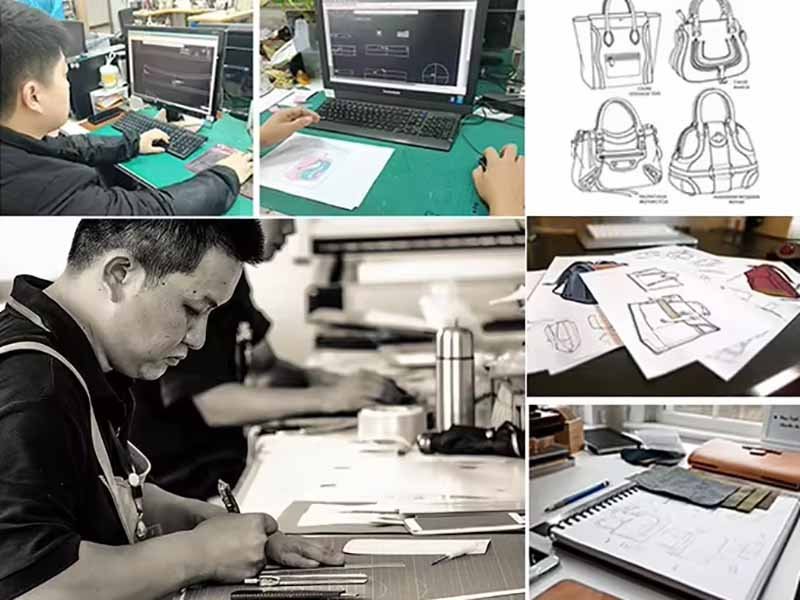
Sampling should transform a product idea into a measurable manufacturing standard rather than create a one-off presentation piece. A reliable process includes requirement review, material approval, pattern development, prototype construction, internal inspection, buyer feedback, controlled revisions, final approval, and pre-production verification. The physical sample becomes repeatable only when its hidden construction details are properly documented.
Project Information
The quality and accuracy of a sample depend heavily on the information provided at the beginning of the project. A complete tech pack is highly useful, but it is not the only acceptable starting point. Development can also begin with a physical sample, sketch, reference photograph, competitor product, material swatch, target customer description, or written product brief.
The initial project information should explain the product’s intended use, dimensions, material preference, color, logo method, hardware, internal layout, packaging, expected quantity, destination market, target cost, and required delivery date. Buyers should also explain which features are fixed and which decisions remain open.
Priorities are particularly important because custom product requirements frequently conflict. A brand may request thick leather, low weight, a highly structured body, several internal compartments, premium hardware, and a tight target cost. All of these goals may not be achievable within the same construction. An experienced developer will identify the conflict and propose practical alternatives rather than create a sample that is visually attractive but commercially unrealistic.
The factory should also ask how the item will be sold and transported. A product intended for close-up e-commerce photography may need stricter cosmetic consistency. A bag delivered flat may require materials that recover their shape easily. A gift product may need a completely different packaging experience from an item shipped directly to a fulfillment warehouse.
Clear project information reduces unnecessary sample rounds, prevents inaccurate quotations, and helps the factory focus development resources on decisions that genuinely affect the finished product.
Prototype Development
Prototype development should begin with a technical review rather than immediate cutting. The development team needs to examine proportions, opening method, seam positions, pocket access, stress points, edge treatment, hardware clearance, lining structure, reinforcement, packing method, and assembly sequence.
Pattern development then converts the concept into individual components. Patterns must account for seam allowance, folding allowance, skiving, leather stretch, reinforcement placement, hardware installation, grain direction, panel matching, and final dimensions.
The first sample is not merely a visual model. It is an engineering tool used to identify practical issues. The team should examine whether the opening is wide enough, whether pockets are accessible, whether seams become excessively thick, whether the product holds its shape, whether the hardware sits flat, whether edge paint can be applied consistently, and whether operators can reproduce the construction during bulk production.
Before shipping the sample, the factory should conduct an internal inspection. Dimensions, materials, structure, logo, hardware, stitching, edge finishing, function, cleanliness, and packaging should be checked against the agreed requirements.
Photographs and videos are useful for identifying obvious concerns before international courier costs are incurred. However, digital approval should not replace physical evaluation when color, weight, hand feel, flexibility, fit, surface character, or hardware operation is important.
The most useful first sample is not always the one that looks perfect. It is the one that exposes important design and manufacturing decisions early enough to correct them without wasting bulk materials.
Revision Control
Sample revision is one of the most common points where custom projects lose control. Feedback may arrive through email, messaging applications, spreadsheets, annotated photographs, voice messages, and online meetings. If the factory does not consolidate these comments, one requested change may be completed while another previously approved detail is accidentally reversed.
Every sample version should have a clear version number, date, measurement chart, material specification, hardware details, logo information, packaging notes, buyer comments, factory response, cost impact, lead-time impact, and approval status.
Feedback should be measurable whenever possible. A comment such as “make the bag look more premium” is difficult to execute consistently. A direction such as “reduce the visible edge thickness, change the hardware to a brushed finish, improve the shape of the top opening, and move the logo 8 millimeters upward” gives the development team practical instructions.
When a revision affects durability, MOQ, tooling, production speed, or cost, the factory should explain the consequence before producing the next sample. Replacing standard hardware with a custom branded buckle may strengthen brand identity, but it may also introduce mold charges, plating samples, higher component minimums, and additional development time.
The final revision record should become part of the bulk-production package. Important decisions should not remain only inside informal messages that production supervisors or inspectors may never see.
Production Readiness
A sample is not production-ready simply because the buyer approves its appearance. The factory must confirm that materials are available, patterns are stable, construction can be repeated, tooling is accurate, operators can follow the process, inspection standards are measurable, and the quotation still reflects the approved workmanship.
A production-readiness review should confirm the final bill of materials, sealed sample, measurement tolerances, leather standard, lining, hardware, reinforcement, edge process, logo placement, packaging, inspection criteria, and material lead times.
The final approved sample should be signed, sealed, labeled, or otherwise protected from later confusion. Ideally, the buyer and factory each retain a corresponding reference.
For technically complex products, a pre-production sample made from actual bulk materials provides an additional checkpoint. This is particularly useful when the development sample used temporary hardware, sample-yardage lining, available leather, or substitute packaging.
Szoneier’s documented sampling process includes product review, material confirmation, pattern development, sample sewing, internal inspection, buyer feedback, revision, final approval, and production preparation. This staged approach gives the buyer and factory several opportunities to identify misunderstandings before full material purchasing and line production begin.
| Development Stage | Required Output | Main Decision | Risk Controlled |
|---|---|---|---|
| Requirement review | Product brief and open-question list | Confirm scope, priorities, and responsibilities | Incorrect assumptions |
| Material approval | Physical leather, lining, and hardware samples | Approve color, hand feel, finish, and quality | Material mismatch |
| Pattern development | Component patterns and key measurements | Confirm structure and dimensions | Poor fit or construction |
| First sample | Functional prototype | Identify design and production issues | Unworkable design |
| Revision sample | Updated product and consolidated change record | Confirm corrections | Lost or conflicting feedback |
| Final sample | Approved physical reference and specification | Release final standard | Unauthorized changes |
| Pre-production sample | Product made with bulk materials | Release mass production | Sample-to-bulk variation |
| Packing approval | Approved unit and carton presentation | Confirm protection, labels, and quantities | Transit and fulfillment errors |
How Is Sample-to-Bulk Quality Controlled?
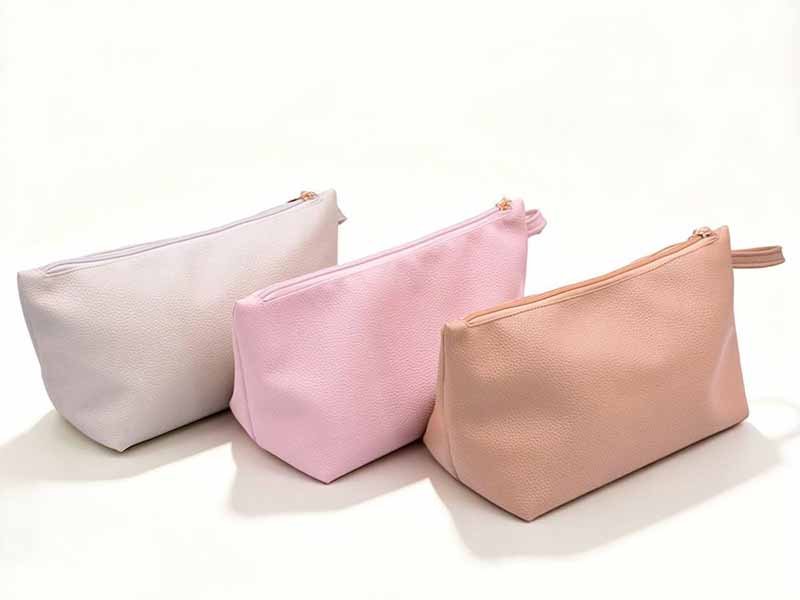
Sample-to-bulk consistency is achieved by converting every approved feature into controlled materials, work instructions, measurements, visual references, inspection stages, and traceable approvals. Quality must be checked before and during production rather than only after completion. Early inspection prevents the same material, construction, or workmanship problem from being repeated across an entire order.
Production Standards
The approved sample is the most visible production reference, but operators and inspectors need more information than the finished product can show. They cannot see internal reinforcement, adhesive type, skiving thickness, seam allowance, thread code, cutting direction, or exact packing sequence by looking only at the exterior.
The production package should include the approved sample, bill of materials, measurement chart, leather swatch, acceptable shade range, hardware board, thread reference, lining specification, construction notes, reinforcement instructions, stitching requirements, logo artwork, edge-paint standard, packaging method, barcode information, carton marks, and final revision history.
The latest version must be clearly identified. Outdated specifications should be removed from the production area to prevent operators from following earlier measurements or materials.
Tolerances should reflect product size, material behavior, construction, and function. Small leather goods often need tighter dimensional control than large soft bags. A centered metal logo may require a clearly defined positional tolerance, while natural grain appearance may be controlled through an approved visual range rather than one numerical measurement.
The buyer and factory should also identify critical features. Strap attachments, device compartments, closure positions, safety components, mandatory labels, and functional dimensions may require stricter control than small variations in hidden lining seams.
A well-organized production standard allows different departments to work from one source of truth instead of relying on memory or verbal instructions.
In-Process Inspection
Incoming inspection should take place before materials enter production. Leather should be checked for type, thickness, color, grain, surface finish, usable area, temper, visible defects, and batch consistency. Hardware should be checked for dimensions, operation, finish, logo accuracy, sharp edges, and surface damage.
During cutting, inspectors should review grain direction, defect placement, panel matching, pattern accuracy, component count, and bundle identification. Cut parts need to remain linked to the correct style, color, size, and production batch.
First-piece approval is one of the most important control stages. The first completed unit, or the first small group of units, confirms whether operators, machinery, materials, patterns, work instructions, and assembly sequences can reproduce the approved sample.
In-line inspection should take place while products can still be corrected without complete disassembly. Inspectors may check seam allowance, reinforcement position, pocket placement, zipper installation, stitching, hardware protection, edge preparation, dimensions, cleanliness, and product shape.
Inspection frequency should reflect the project risk. New products, unfamiliar leather, technically difficult structures, newly trained operators, and products with a previous defect history usually require more frequent checks than mature repeat orders.
A factory that relies entirely on final inspection may discover problems only after materials, labor, finishing, and packaging costs have already been incurred. In-process control is more economical because it stops defects close to the operation where they were created.
Final Inspection and AQL
Final inspection evaluates completed products before shipment release. The inspection should cover material, color, appearance, dimensions, function, stitching, edge finishing, hardware, logo, symmetry, shape, cleanliness, packaging, labels, carton information, and quantity.
Many consumer-goods programs use sampling principles based on ISO 2859-1 or ANSI/ASQ Z1.4. AQL levels such as 2.5 for major defects and 4.0 for minor defects are commonly used as reference points, but they are not universal requirements. The buyer and supplier should agree on the inspection level, defect categories, lot definition, sampling plan, and acceptance criteria before production.
Critical defects are usually managed separately. Depending on the product and destination market, a critical issue may include sharp hardware, unsafe components, serious functional failure, restricted-substance noncompliance, or incorrect mandatory labeling. Many buyers require zero critical defects within the inspected sample.
A major defect is generally one that may cause a customer return, complaint, loss of function, or obvious failure to meet the approved standard. A minor defect does not prevent normal use but falls below the expected cosmetic level.
Cosmetic criteria should be supported by photographs, physical defect samples, or measurable limits. Terms such as “small scratch,” “slightly uneven,” or “minor color difference” can be interpreted differently unless visibility, size, position, and frequency are defined.
Rework and Corrective Action
Finding a defect is not the end of quality control. The factory must identify where the problem occurred, determine whether other units are affected, approve a repair method, reinspect corrected products, and prevent the defect from returning.
A controlled corrective-action process normally begins by separating affected goods from accepted inventory. The team then classifies the defect, identifies the responsible process, checks whether it is systematic or isolated, and determines the appropriate rework method.
Rework itself can introduce new problems. Replacing hardware may scratch surrounding leather or enlarge installation holes. Opening a lining can affect shape, cleanliness, and seam strength. Repainting an edge can create excessive thickness, uneven color, or poor adhesion. Reworked products therefore require targeted reinspection before they are returned to accepted stock.
Repeated defects should trigger deeper analysis. Edge-paint cracking may be caused by poor surface preparation, incompatible coating, insufficient drying, excessive product bending, or an unsuitable construction. Consistently misaligned logos may require a positioning template rather than repeated verbal reminders.
Szoneier’s documented quality process covers material inspection, accessory verification, pre-production confirmation, cutting control, sewing-process checks, semi-finished inspection, final inspection, packaging control, and shipment coordination. This layered approach is designed to identify problems before they become repeated bulk defects.
| Quality Stage | Main Checks | Useful Evidence | Main Risk Controlled |
|---|---|---|---|
| Incoming leather | Type, shade, thickness, grain, finish, and defects | Incoming report and approved swatch | Batch inconsistency |
| Incoming hardware | Finish, dimensions, logo, operation, and scratches | Hardware approval board | Incorrect or damaged components |
| Cutting | Direction, matching, defect placement, and pattern accuracy | Cutting checklist | Visible mismatch and shape variation |
| First piece | Construction, dimensions, reinforcement, and workmanship | Signed first-piece approval | Repeated line defects |
| In-line inspection | Stitching, pockets, zippers, hardware, edge preparation, and cleanliness | Process defect report | Hidden structural problems |
| Final inspection | Appearance, function, size, logo, edge finish, and symmetry | Final inspection report | Customer-facing defects |
| Packing inspection | Protection, labels, quantities, barcodes, and carton marks | Packing checklist and photographs | Transit and fulfillment errors |
| Rework inspection | Repair quality and secondary damage | Reinspection record | Defective repaired products |
Is the Factory Ready for Brand Growth?
A factory is ready for brand growth when it can support repeat orders, additional colors, multiple SKUs, seasonal collections, higher volumes, and changing packaging requirements without weakening material or workmanship control. Readiness depends on skilled capacity, reliable suppliers, project management, documentation, inspection resources, and transparent production-partner control rather than factory size alone.
Capacity by Product Type
Brand buyers should avoid evaluating a factory through one impressive annual or monthly production number. Total output across simple fabric bags does not automatically represent production capacity for edge-painted leather handbags, structured briefcases, multi-pocket wallets, belts, cases, or products using custom metal components.
Capacity should be assessed according to the exact SKU. Buyers should ask how many operators are qualified for the required construction, how many units one production line can complete per day, which process is likely to become the bottleneck, how much drying time is required, where edge painting is performed, whether custom materials are already available, and how much production space remains open during the required window.
Leather goods often include more manual processes than basic fabric bags. Panel matching, skiving, folding, gluing, drying, edge painting, hardware installation, cleaning, shaping, and cosmetic inspection may limit daily output.
A factory may be able to produce several thousand simple pouches quickly while requiring much more time for a detailed leather product. Buyers should request a calculation based on product complexity, standard production minutes, operator availability, process flow, finishing time, and expected efficiency.
Quality-control capacity must also be considered. Increasing sewing output without adding finishing, inspection, packing, and rework resources may create a large quantity of semi-finished or unapproved goods.
Szoneier’s broader manufacturing system includes factory-based sampling, multiple sewing lines, production and supporting equipment, quality-control personnel, and coordinated satellite production resources. However, buyers should always confirm the dedicated capacity, workmanship standard, production site, and available schedule for their specific leather project rather than relying only on total company output.
MOQ and Lead Time
Minimum order quantity is normally influenced by several suppliers and processes rather than one decision made by the sewing factory. The factory may be willing to produce a smaller quantity, while the tannery, hardware supplier, lining mill, mold maker, packaging company, or plating vendor requires a higher minimum.
Common MOQ drivers include custom leather colors, special finishes, branded hardware, metal molds, exclusive lining, custom zippers, woven labels, printed boxes, dust bags, testing, and several colors divided across one order.
Using available leather, standard hardware, existing molds, and common packaging can reduce minimum quantities. However, buyers should consider whether these compromises support the brand’s positioning and future replenishment needs. A low MOQ provides little value when the material cannot be reordered consistently or the standard hardware weakens product identity.
Lead time should be divided into clear stages, including project review, quotation, material sourcing, sampling, buyer feedback, revision, approval, bulk-material production, manufacturing, inspection, packing, and transportation. Buyer response time should also be included because delayed approval can affect the reserved production window.
Custom hardware is often one of the longest-lead components. Mold development, casting samples, plating approval, logo confirmation, and bulk production may require several weeks. Custom leather colors may also need laboratory samples, physical approvals, and production trials.
Szoneier’s documented MOQ starts from 200 pieces for selected custom projects, but this is not a universal minimum for every leather product. Material availability, structure, color count, hardware, logo method, packaging, tooling, and testing may increase the practical quantity required for a stable production run.
Multi-SKU Management
Growing brands rarely remain dependent on one product. A successful leather pouch may lead to a wallet, tote, travel case, key holder, cardholder, belt, or gift set that uses the same visual language. This expansion creates commercial opportunities, but it also increases the risk of inconsistency.
Multi-SKU management should begin with shared standards. Products in the same collection may use the same leather, lining, thread, edge-paint color, hardware finish, logo method, packaging style, and color system. These common elements should be approved and controlled centrally.
Every SKU still needs its own bill of materials, measurement chart, construction details, approved sample, packaging specification, barcode, carton quantity, order quantity, and inspection status.
The factory must prevent components from being mixed between similar styles, sizes, or colors. Production bundles, project cards, barcode systems, separated storage, or color-coded labels can reduce this risk.
A collection may also require coordinated production. Styles using the same leather may be cut together to improve shade consistency, while technically different products may need separate production lines. Packaging and inspection schedules must be planned so that complete sets or collections reach the customer’s warehouse together.
For retail programs, shipment accuracy may be as important as product quality. Goods may need to be separated by country, store, distribution center, SKU, or promotional campaign. These requirements should be confirmed before packing begins rather than handled after cartons are already closed.
Controlled Production Partners
External production partners can help a manufacturer support specialist processes, seasonal demand, large orders, and several product categories. The important issue is not whether partners are used, but whether the primary manufacturer controls them.
A managed partner system should use the same approved samples, materials, production instructions, inspection requirements, packaging standards, and corrective-action process. The main project team should remain responsible for communication, material release, first-piece approval, in-line inspection, final inspection, packing, and delivery.
The buyer should know where major production processes are completed. A supplier should not quietly move an order to another workshop after sample approval simply because the alternative offers a lower price or a faster schedule.
Szoneier combines its own factory-based sampling and production-management system with more than ten long-term satellite partners used for specialist categories, seasonal demand, additional capacity, and parallel production. According to its operating model, customer communication, approved samples, material requirements, quality standards, packaging, and delivery responsibility remain under centralized management.
This model should still be verified for each project. Buyers should confirm the actual production location, inspection responsibility, capacity allocation, and approval process in the purchase agreement or production plan. Transparency is more valuable than the number of facilities a supplier claims to control.
How Can Buyers Verify the Factory?
Buyers can verify a leather goods factory by reviewing its legal identity, sample room, material-control process, production areas, quality procedures, comparable products, records, and actual order performance. A live factory audit and a controlled pilot order provide stronger evidence than certificates or showroom samples because they reveal how the manufacturing system performs under normal production conditions.
Factory Audit
A factory audit should follow the product’s physical path from development to shipment. The buyer does not need to understand every machine in detail, but the review should reveal whether the factory has the people, processes, records, equipment, and facilities needed for the project.
The audit should begin in the sample room and pattern area. Buyers can ask how each project is identified, how patterns are stored, how revisions are recorded, and how approved information reaches the production team.
In material storage, leather, lining, reinforcement, hardware, and packaging should be identified by project, color, supplier lot, and inspection status. Unmarked materials stored together increase the risk of accidental substitution or batch mixing.
In the cutting area, buyers should observe how operators identify leather defects, control grain direction, match panels, manage yield, and keep components separated. In sewing and assembly areas, useful evidence includes work instructions, approved first-piece samples, surface protection, reinforcement control, production tracking, and in-line inspection.
Edge-painting and finishing areas should be clean and organized because dust, poor drying, contamination, and careless handling can quickly damage visible product surfaces.
The final inspection area should contain measuring tools, approved samples, defect references, inspection forms, rejected-goods segregation, and reinspection records. Packaging and warehouse areas should demonstrate control of quantities, labels, barcodes, carton marks, moisture protection, hardware protection, and shipment separation.
Remote buyers can begin with a live video audit, but the session should be interactive rather than limited to a prerecorded promotional video.
Documents and Evidence
A suitable factory should provide enough documentation to demonstrate that its systems are real without disclosing confidential information belonging to other customers. Brand names, logos, and commercial terms can be removed from example records.
Useful qualification documents may include business registration, factory address, organizational responsibilities, product-category experience, relevant equipment, quality procedures, audit records, inspection examples, corrective-action examples, and export documentation experience.
Project-specific documents are even more important. These may include the quotation, bill of materials, measurement chart, leather approval, hardware board, revision record, artwork approval, pre-production sample, production schedule, inspection criteria, packing instructions, barcode information, and shipment documents.
Test reports must be evaluated carefully. A report for one material or previous order does not automatically prove that the current leather, PU, hardware, adhesive, lining, or packaging meets the buyer’s requirements. The report should be connected to the correct material, color, supplier, test method, date, and destination market.
Certificates should also be matched to the project. A management-system certificate may demonstrate organizational maturity, but it does not replace product-specific chemical, physical, performance, or labeling verification.
The strongest evidence connects the document directly to the product being purchased. A factory that maintains clear records usually communicates more effectively during changes, repeat orders, quality investigations, and corrective action.
Comparable Experience
A factory does not need to have produced the exact same item before, but it should demonstrate experience with similar materials, construction, finishing methods, quality levels, order quantities, and project complexity.
A brand developing an edge-painted leather briefcase should look for experience with structured panels, multiple compartments, handle reinforcement, zipper installation, lining assembly, metal hardware, edge finishing, and cosmetic inspection. Experience producing a simple fabric tote would not provide enough technical evidence for that project.
Comparable samples should be examined closely. Useful inspection points include edge consistency, stitch alignment, symmetry, hardware installation, lining fit, pocket construction, reinforcement, surface cleanliness, shape retention, and packaging.
The buyer should ask whether the sample came from normal bulk production or was created specifically for the showroom. A display sample may prove that the factory has technical ability, but it does not prove that the workmanship can be repeated economically across hundreds or thousands of units.
Case information becomes more useful when it includes material type, approximate quantity, number of SKUs, development challenges, quality-control method, packaging requirements, and repeat-order status. Vague claims about working with famous brands provide little meaningful verification.
The best evidence is not an identical product. It is proof that the factory has successfully managed similar manufacturing risks.
Pilot Order
A pilot order tests the complete manufacturing system under real conditions. It reveals how the factory manages material purchasing, sample transfer, production scheduling, workmanship, inspection, packaging, communication, documentation, and corrective action.
The pilot should be large enough to pass through normal production rather than being handled entirely by sample technicians. Before the order begins, the buyer should define success in measurable terms, including material consistency, dimensional compliance, sample-to-bulk appearance, defect rate, functional performance, packaging accuracy, production visibility, communication speed, and on-time completion.
After production, several randomly selected units should be compared with the approved sample. The buyer can examine whether edge thickness, stitching, hardware position, strap reinforcement, logo placement, interior structure, and overall appearance remain consistent across different cartons.
Warning signs include unexplained material substitutions, repeated schedule changes, missing inspection records, refusal to share production progress, differences between the approved sample and bulk output, inconsistent packaging, or pressure to accept deviations without a clear corrective plan.
A successful pilot does not guarantee that every future order will be perfect. It provides a reliable operating baseline. The buyer and factory can use the results to improve specifications, inspection criteria, production timing, packaging methods, and replenishment planning before larger orders or additional SKUs are introduced.
Szoneier supports qualified buyers through online meetings, video factory reviews, scheduled factory visits, product-development discussions, sample approval, production follow-up, inspection coordination, packaging review, and international delivery planning. These options allow buyers to verify both the physical factory environment and the project-management system before committing to a larger program.
Is Szoneier Suitable for Your Leather Goods Project?
The right leather goods factory should make a product easier to understand before it makes the product easier to manufacture. It should help the buyer define material standards, construction, acceptable variation, sample approvals, quality checkpoints, production capacity, packaging, and delivery responsibilities. It should also communicate honestly when a material, structure, MOQ, budget, or requested timeline creates a significant manufacturing risk.
Szoneier is a Shenzhen-based OEM/ODM custom bags and soft goods manufacturer with more than 18 years of experience in product development, leather and PU materials, pattern making, sampling, sewing production, quality inspection, packaging, and export delivery. The company works with global brands, retailers, importers, e-commerce businesses, promotional companies, and other professional buyers that need products developed from reference samples, sketches, tech packs, material concepts, or complete specifications.
A useful project review begins with clear product information. Buyers can send a photograph, sketch, physical reference, tech pack, target dimensions, preferred leather, expected quantity, logo artwork, packaging requirements, destination market, target price position, and required delivery date. The project team can then evaluate the design, identify missing decisions, recommend a sampling route, and explain the factors affecting cost, MOQ, quality, testing, and production time.
For detailed RFQs, technical files, artwork, quality standards, or long-term sourcing programs, contact Szoneier at info@szoneier.com. For faster initial communication, contact Nancy through WhatsApp or phone at (+86) 13423847456. The most effective first step is not asking for the lowest price. It is giving the factory enough information to determine how your leather product can be sampled, measured, manufactured, inspected, and repeated with fewer avoidable risks.