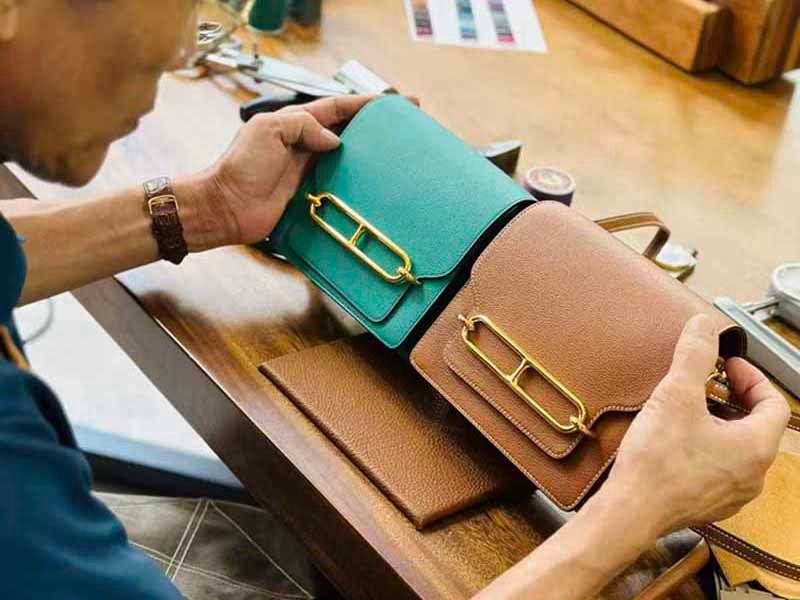
Choosing between OEM and ODM can appear to be a simple sourcing decision, but it affects almost every part of a leather goods project. The selected model determines who controls the design, how much development work is required, how quickly the product can reach the market, how easily it can be reordered, and whether competing brands can purchase something similar. It also changes what information the buyer must provide and how much responsibility the manufacturer takes during product development.
OEM leather goods manufacturing is usually the better choice when a brand owns a defined design, reference sample, tech pack, or proprietary product concept and needs a factory to develop and produce it accurately. ODM is generally more suitable when a brand wants to begin with a manufacturer-developed structure and customize materials, colors, hardware, branding, packaging, or selected functions to reduce development time and technical risk.
Neither model is automatically cheaper, faster, or better. A heavily modified ODM handbag with custom-dyed leather, branded hardware, structural changes, and premium packaging can require more time than a clearly documented OEM wallet. Conversely, an OEM project supported by a complete tech pack and readily available materials may move faster than an ODM project in which the buyer repeatedly changes direction. Many expensive manufacturing problems begin with the same sentence: “We assumed the factory understood what we wanted.” Understanding the real differences between OEM and ODM is the first step toward making sure that sentence never becomes part of your project story.
What Is OEM Leather Goods Manufacturing?
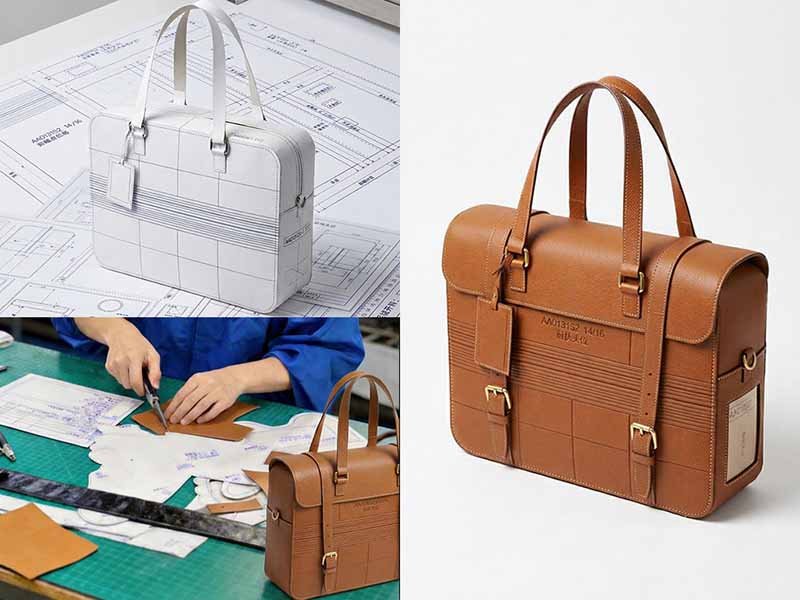
OEM leather goods manufacturing means a factory develops and produces a product according to a design, physical sample, drawing, tech pack, or performance requirement controlled by the buyer. The manufacturer may assist with material sourcing, pattern engineering, sampling, cost optimization, production planning, inspection, and packaging, but the original product direction comes from the brand.
Brand Inputs
An OEM project does not always need to begin with a perfectly prepared technical package. Established product teams may provide complete dimensions, construction drawings, leather specifications, bills of materials, Pantone references, hardware drawings, stitch requirements, quality tolerances, packaging files, and approved reference samples. Other buyers may begin with a sketch, an existing product, a set of annotated photographs, or a written explanation of the problem the new product should solve.
The quality of the starting information matters because every missing detail becomes an assumption. A front-view photograph may show the appearance of a handbag but reveal nothing about gusset depth, internal reinforcement, lining construction, pocket dimensions, edge treatment, zipper opening, handle load, or acceptable leather variation. A detailed tech pack may contain measurements while failing to communicate the desired softness, structure, weight, or tactile quality.
Before requesting a quotation, the buyer should define the intended product category, approximate dimensions, target material, order quantity, branding method, packaging level, destination market, expected retail position, and launch schedule. Functional requirements should also be made clear. A leather laptop bag may need a defined device size, impact protection, handle-load requirement, luggage sleeve, cable organization, and shoulder-strap width. A wallet may require precise card-slot dimensions, folded thickness, edge quality, closure performance, and pocket capacity.
| OEM Project Input | Minimum Useful Information | Stronger Production Information |
|---|---|---|
| Product concept | Sketches, photographs, or a reference sample | Tech pack with dimensions and construction notes |
| Leather | Genuine leather or PU direction | Type, thickness, temper, grain, finish, and color reference |
| Hardware | General appearance or reference image | Size, base metal, finish, logo, function, and test requirement |
| Branding | Vector logo file | Position, dimensions, method, color, and approval standard |
| Construction | Basic pocket and closure details | Stitching, reinforcement, lining, edge, and tolerance standards |
| Packaging | Individual packing requirement | Retail box, inserts, labels, barcodes, and shipping marks |
| Order plan | Estimated total quantity | Quantity by SKU, color, delivery date, and destination |
| Quality | General quality level | Inspection standard, critical defects, tests, and sealed sample |
A professional manufacturer should review these inputs before committing to a price. When essential information is missing, the factory should identify the assumptions used in its preliminary quotation. A slightly slower quotation based on confirmed specifications is far more useful than an attractive price that later excludes reinforcement, lining, custom hardware, premium leather selection, edge finishing, retail packaging, or required testing.
Customization Depth
OEM provides the broadest degree of customization because the product can be developed around a specific target user, function, sales channel, and brand position. The buyer can control the silhouette, dimensions, panel proportions, gusset depth, opening method, internal organization, handle drop, strap structure, reinforcement, lining, edge profile, hardware, color system, logo placement, packaging, and many details that may not be immediately visible in a product photograph.
However, full customization does not mean that every idea should be produced exactly as drawn. Leather thickness affects folding, skiving, seam bulk, stitch stress, weight, edge painting, shape retention, and material yield. A large custom metal plate may increase brand visibility but also create panel distortion, plating minimums, surface scratches, weight imbalance, or packaging problems. A closure that works on a thin wallet may not hold securely when placed behind a padded leather flap.
Experienced manufacturers should question details that look appealing in a rendering but may be unstable in bulk production. They may recommend moving a seam, changing reinforcement, narrowing an edge, adjusting a pocket opening, replacing a hardware component, or reducing unnecessary layers. These recommendations should not be viewed as resistance to the design. They are part of translating a visual concept into a repeatable manufactured product.
The strongest OEM projects protect the elements that define the brand while allowing practical engineering changes where they improve durability, comfort, appearance, material efficiency, or production consistency. The objective is not merely to create one impressive sample. The real objective is to ensure that the approved product can be reproduced with controlled quality across the full order and future repeat production.
Design Ownership
OEM projects often involve confidential drawings, patterns, branded hardware, cutting dies, embossing dies, logo plates, molds, packaging structures, and production specifications. Ownership of these assets should be defined in written agreements instead of being left to assumption. An NDA can protect confidential information, but it does not automatically establish ownership of every pattern, tool, mold, or technical improvement created during development.
Buyers should clarify who pays for custom tooling, how long it will be stored, whether it can be used for another customer, and whether it can be transferred if the manufacturing relationship ends. They should also establish whether the manufacturer may display the product in its showroom, online portfolio, sample room, exhibition booth, or sales materials. Some brands allow display after the official launch, while others require permanent confidentiality.
Exclusivity requires equally careful wording. Preventing the factory from using a client’s logo is different from preventing it from producing a broadly similar product structure. If regional, channel, material, or time-limited exclusivity matters, the agreement should define exactly what is protected. The protected element might be a proprietary opening system, a specific hardware component, an internal organization method, a unique panel shape, or the complete combination of materials and construction.
A trustworthy manufacturer should be willing to discuss file access, logo authorization, tooling records, confidential sample control, and intellectual-property boundaries. Clear agreements protect both sides and reduce future disputes. They also make repeat production more reliable because approved patterns, specifications, hardware references, and revision records remain traceable.
Best-Fit Projects
OEM is generally best for brands that already own a distinctive product concept, have an approved reference sample, require exact technical control, or plan to build a long-term product platform. It is also appropriate when a company needs to transfer production from one supplier to another without changing the identity or performance of an established product.
Typical OEM projects include signature handbags, premium wallets, organized business cases, specialized travel systems, leather technology organizers, branded hospitality accessories, tool holders, and products with proprietary internal configurations. In these products, the design itself forms part of the commercial value, making standard catalog structures unsuitable.
OEM can also support future product-line development. Once the core pattern, construction, materials, and quality standards are established, the brand can introduce new colors, sizes, seasonal editions, channel-specific packaging, lower-cost variations, premium versions, or matching accessories without beginning from zero. The original development investment therefore creates value beyond the first production order.
The main limitation is the number of decisions the buyer must make. Development becomes slow when dimensions, leather, hardware, structure, and branding change after every sample. OEM works most efficiently when one project owner consolidates internal comments, separates essential requirements from preferences, approves materials promptly, and maintains one current specification as the project’s source of truth.
What Is ODM Leather Goods Manufacturing?
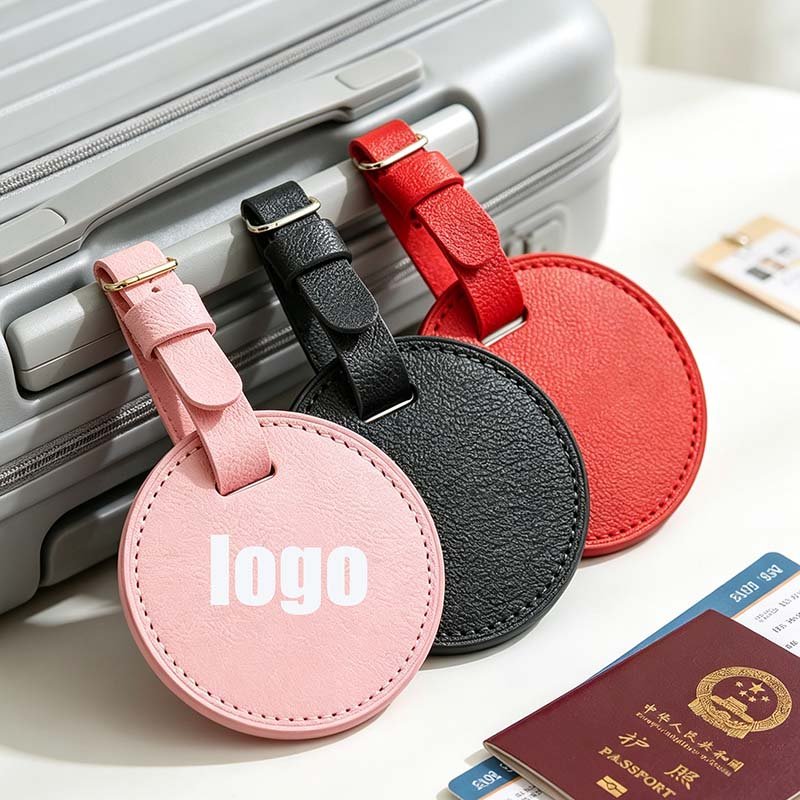
ODM leather goods manufacturing begins with a design, pattern, structure, or product platform already developed by the manufacturer. The buyer selects a suitable base model and customizes agreed elements such as leather, color, lining, hardware, branding, packaging, dimensions, or selected functions. This approach can reduce early engineering work and shorten the path from product selection to sample approval.
Factory Starting Point
An ODM manufacturer normally contributes an existing product concept, paper pattern, prototype, material combination, construction method, or production-ready style. Because some engineering has already been completed, the factory should have better knowledge of material consumption, assembly sequence, operation difficulty, expected cost, and common production risks.
Buyers should still determine how mature the selected product actually is. A showroom sample may be a one-time prototype created for marketing rather than a style that has been produced successfully in volume. It is reasonable to ask whether the product has entered bulk production, which materials were previously used, what defects or usability issues were discovered, and whether the pattern was revised after earlier orders.
A proven design reduces uncertainty around proportions, capacity, strap balance, closure location, pocket access, and construction feasibility. This knowledge is useful when a buyer understands the market opportunity but does not need to engineer every panel from the beginning. It can also support faster cost evaluation because the factory already understands the approximate material yield and labor sequence.
The manufacturer should clearly explain which elements are standard and which changes create new engineering work. Replacing a logo, color, lining, or standard hardware finish may be straightforward. Changing the width, gusset, opening, strap attachment, internal structure, closure system, and major panel layout may require new patterns and prototypes. Once those changes become extensive, the project is better described as a hybrid or OEM development.
Customizable Details
ODM leather products can often be customized far beyond a basic logo application. Common options include genuine leather or PU selection, grain, surface finish, color, lining, thread, zipper tape, zipper pulls, buckles, magnetic closures, detachable straps, handles, internal pockets, labels, embossed branding, metal logos, dust bags, boxes, product inserts, and shipping-carton markings.
The practical customization limit depends on the structure and component supply chain. A change that looks small on paper may affect several manufacturing operations. Replacing PU with full-grain leather can require different skiving, reinforcement, adhesives, folding, edge treatment, stitching settings, cutting rules, and surface-protection methods. Changing a standard zipper pull to a molded logo pull may introduce tooling, plating, sample approval, corrosion testing, and component minimums.
Color customization also requires realistic planning. Stock leather colors usually support lower quantities and shorter lead times. Custom-dyed leather may require a tannery minimum, color-lab approval, shade confirmation, and a longer material-production schedule. The same issue can arise with plated hardware, woven labels, custom lining, printed zipper tape, rigid boxes, and molded packaging inserts.
ODM works most efficiently when the selected base design already satisfies most of the functional requirement. Customization should focus on details that improve brand recognition, usability, perceived value, and customer experience. When nearly every structural feature needs to change, the original speed and cost benefits of ODM are largely lost.
Private Label Differences
ODM, private label, and white label are closely related terms, but they do not always describe the same development depth. A white-label product is typically a standard item offered to several buyers with minimal changes. Private-label production often adds brand-specific colors, labels, logos, packaging, or selected materials. ODM normally involves a manufacturer-developed product that can be adapted more meaningfully for a particular client.
Factories use these terms inconsistently, so buyers should evaluate the actual process instead of relying on the label. One supplier may describe a stock wallet with a stamped logo as ODM, while another may reserve the term for projects involving leather, hardware, pocket, dimension, lining, and packaging changes.
Important questions include whether the base pattern is available to other brands, what elements can be modified, who owns the revised pattern, and whether any form of exclusivity can be negotiated. Buyers should also ask whether their approved version will receive a unique product code and whether future orders will be produced according to controlled specifications rather than the factory’s latest standard version.
A private-label product can still perform well when its materials, branding, packaging, pricing, distribution, and customer experience are strong. The risk occurs when the buyer assumes a product is exclusive while the manufacturer treats it as a standard design that can be offered to multiple customers.
Best-Fit Projects
ODM is often appropriate for brands that need to launch more quickly, test a new product category, reduce technical workload, or build a coordinated range around proven constructions. Retailers, online brands, promotional programs, subscription businesses, and lifestyle companies frequently use ODM to introduce leather goods without funding a complete development process for every style.
A brand entering the leather-accessories category might begin with established cardholder, wallet, pouch, tote, and crossbody structures. It can then create differentiation through leather texture, signature colors, hardware finishes, lining artwork, packaging, logo methods, and coordinated product sets. This allows the team to focus more attention on customer-facing value while reducing unnecessary structural risk.
ODM can also be useful for seasonal launches with fixed delivery dates. Starting from existing patterns reduces the number of technical decisions required before sampling. However, the product must still be assessed for capacity, comfort, dimensions, leather quality, hardware performance, edge finishing, and production history.
The main compromise is limited exclusivity. A manufacturer-controlled base design may remain available to other buyers. Brands that depend on a unique silhouette, proprietary function, or recognizable internal system should consider deeper modification, a hybrid program, or a complete OEM project.
How Do OEM and ODM Compare?
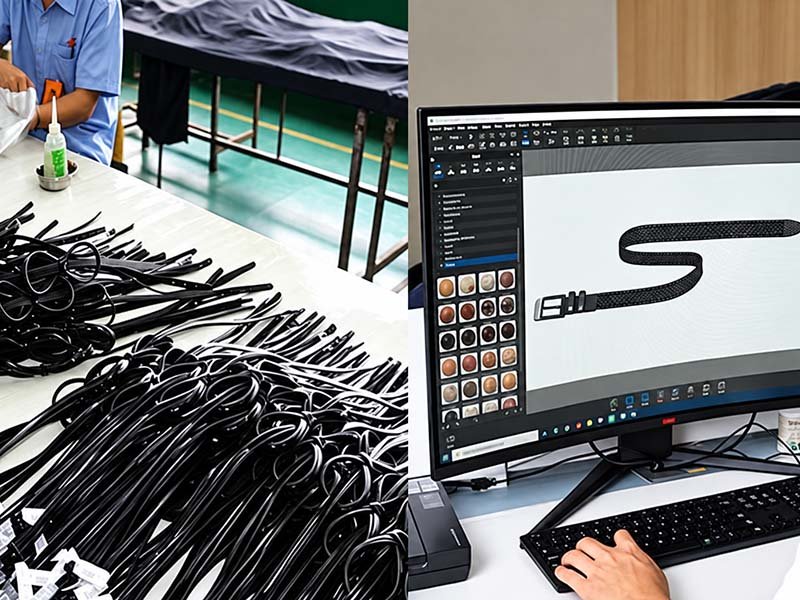
OEM generally provides greater design control, stronger differentiation, and clearer ownership of buyer-created elements. ODM generally reduces initial development work and may shorten time to market. Actual cost, MOQ, lead time, and quality depend on materials, components, packaging, revision scope, and production discipline rather than the OEM or ODM label alone.
Cost and MOQ
OEM projects often involve higher initial development costs because the manufacturer may need to create new patterns, test construction methods, source special leather, develop hardware, produce several prototypes, and document an unfamiliar production process. These costs occur before bulk production, but they can create a distinctive product platform that supports stronger brand differentiation and future extensions.
ODM may reduce pattern and engineering costs because the base structure already exists. Nevertheless, customization can quickly change the economics. Custom-dyed leather, molded metal logos, plated hardware, printed lining, branded zipper pulls, rigid boxes, custom inserts, and multilingual labels can each create separate supplier minimums and development fees.
The finished-product MOQ is not always the number that controls the order. The least-flexible material or component in the bill of materials often determines the practical minimum. A leather goods factory may be able to sew 200 units, while the tannery, zipper producer, plating supplier, or packaging printer requires a higher quantity. Buyers should ask whether leftover components can be stored, shared among colors, or applied to future orders.
For selected custom bag and soft-goods projects, Szoneier’s documented MOQ starts from 200 pieces, while the exact minimum depends on material availability, color quantity, structure, logo process, accessories, packaging, molds, testing, and special hardware. Complex leather products may require different minimums because their material and component requirements are more demanding.
Lead Time
ODM is usually faster when the buyer selects a mature product and requests only limited changes. The factory already understands the pattern, construction process, material usage, operation sequence, and common risks. Sampling can therefore focus on materials, branding, color, packaging, and selected functional details instead of basic product engineering.
OEM timing depends greatly on the quality of the initial information. A clear tech pack using available leather and standard hardware can move efficiently. A project based on inspiration images, changing dimensions, custom colors, and newly molded hardware may require several development rounds before the product is ready for bulk production.
A practical schedule separates the main stages rather than combining everything into one promised number. Common planning ranges for custom leather goods include the following:
- Requirement review and preliminary quotation: approximately 2–7 working days.
- Material sourcing and pattern preparation: approximately 3–10 working days.
- First prototype: commonly 7–20 working days, depending on complexity.
- Sample revision: commonly 5–15 working days per round.
- Bulk material preparation: commonly 10–30 days.
- Bulk production: often 20–45 days after final approvals and material readiness.
These figures are general planning ranges rather than guaranteed standards. Custom leather production, hardware molding, plating, laboratory testing, peak-season capacity, and premium packaging can extend the critical path. Buyer response time matters as well. A sample that waits two weeks for consolidated feedback delays the project just as effectively as a factory-side production issue.
Control and Exclusivity
OEM usually gives the buyer greater control over dimensions, construction, materials, hardware, workmanship, and future modifications. This makes it more suitable for products in which differentiation is built into the design. ODM gives the manufacturer more control over the base structure, although the buyer may still create meaningful differentiation through materials, organization, hardware, colors, branding, and packaging.
Exclusivity should never be assumed simply because a project is described as OEM. A manufacturer may produce a buyer-controlled design while retaining ownership of generic manufacturing techniques or factory-developed engineering solutions. In contrast, an ODM supplier may agree to regional, channel, material, or time-limited exclusivity for a specific customized version.
Buyers should identify which features genuinely need protection. These might include custom artwork, a proprietary opening system, a unique internal layout, a distinctive panel profile, branded hardware, or a specific material-and-color combination. The broader the requested restriction, the more carefully it must be defined and negotiated.
Protecting the features that create real commercial differentiation is usually more practical than attempting to control every common seam, pocket, or zipper position. Clear ownership and exclusivity rules are easier to implement when the protected elements can be identified in drawings, specifications, tooling records, or sealed samples.
Quality and Risk
Quality is not automatically higher in OEM or lower in ODM. A mature ODM product with controlled materials and a proven production method may be more reliable than an original OEM design that has not been tested. Quality comes from clear specifications, suitable materials, skilled workmanship, approved samples, process controls, measurable tolerances, inspection, and corrective action.
OEM carries greater development risk because the construction may be new. Problems can appear in weight balance, pocket access, leather folding, edge cracking, closure strength, handle comfort, hardware placement, or production efficiency. These issues should be discovered during pattern development and sampling rather than after bulk production begins.
ODM reduces some technical uncertainty because the base product has already been developed, but it introduces commercial risks. The finished product may resemble other market offerings, exclusivity may be limited, and the buyer may depend on a factory-controlled design. Heavy customization can also interfere with a previously stable structure.
| Decision Factor | OEM | ODM |
|---|---|---|
| Starting point | Buyer-controlled design or specification | Manufacturer-developed base design |
| Development effort | Usually higher | Usually lower |
| Customization depth | Extensive | Moderate to extensive |
| Common sample rounds | Often 2–4 for new structures | Often 1–3 for limited changes |
| Typical first-sample range | Approximately 7–20 working days | Approximately 5–15 working days |
| MOQ influence | Custom materials and components | Base availability plus customized components |
| Design ownership | Stronger for buyer-created elements | Base design normally remains manufacturer-controlled |
| Launch speed | Moderate to long | Often shorter |
| Main technical risk | New-design performance and repeatability | Changes disrupting a proven structure |
| Main commercial risk | Higher development investment | Similarity and limited exclusivity |
| Best use | Signature or specification-driven products | Faster launches and product-category testing |
The correct comparison is therefore not that OEM equals premium quality while ODM equals lower quality. The useful question is which model gives a specific product the right balance of design control, development speed, investment, differentiation, and supply-chain risk.
Which Model Fits Your Project?
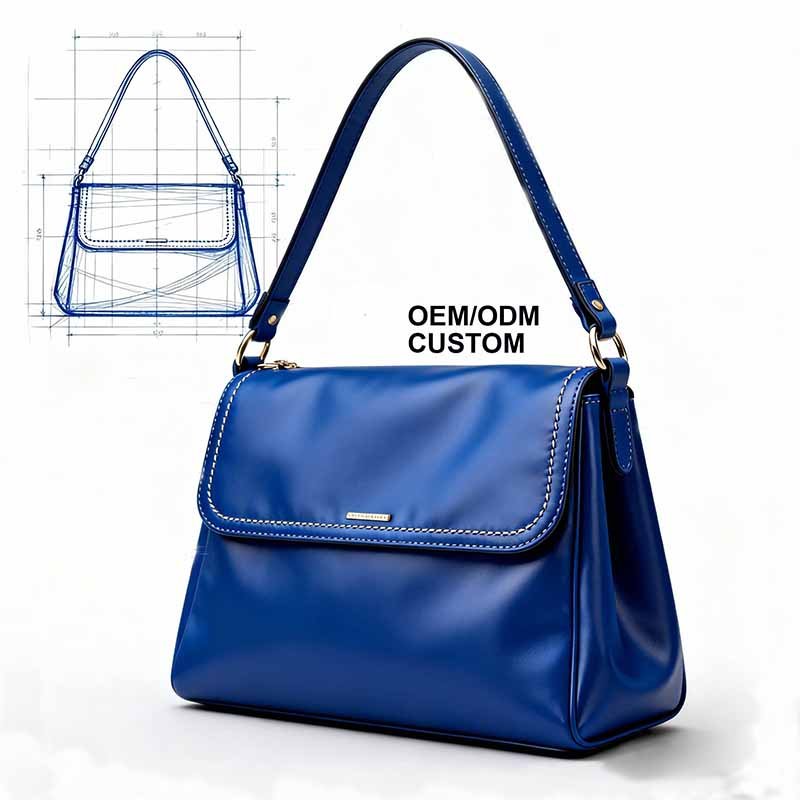
OEM fits projects that rely on original design, strict specifications, proprietary functions, or long-term ownership. ODM fits projects that prioritize faster development, proven structures, and lower technical workload. A hybrid model is often the most practical choice when a brand wants to customize a reliable starting product without engineering every component from the beginning.
Original Products
OEM is generally the appropriate choice when the structure of the product is central to its market value. This applies to signature handbags, specialized wallets, organized business cases, travel systems, leather technology organizers, and products created around a specific user problem.
A distinctive internal arrangement can be as commercially important as the external appearance. A leather work bag may need a protected laptop section, document organization, cable storage, quick-access phone pocket, luggage sleeve, removable strap, reinforced handles, and balanced weight distribution. These features define the user experience and should not be treated as optional modifications to a standard bag.
OEM is also useful when production must be transferred from an existing supplier. The buyer can provide an approved sample, measurement chart, BOM, material references, inspection history, packaging files, and known defect points. The new manufacturer then develops a controlled reproduction process and identifies where the original design may require adjustment for its equipment or supply chain.
This model demands disciplined decisions. When a brand changes the size, closure, leather, pockets, and hardware after every sample, development costs and timing increase quickly. Before beginning an OEM project, the team should separate non-negotiable product requirements from details that can be adjusted to improve manufacturing stability.
Faster Launches
ODM is often the stronger choice when timing matters more than complete structural ownership. A retailer preparing a seasonal collection may gain little by developing every wallet, cardholder, pouch, tote, and crossbody bag from zero. Proven constructions can reduce technical decisions and allow more attention to be placed on brand-visible features.
This approach is also useful for market testing. A company entering a new category or price segment can launch a controlled quantity, review conversion, study customer feedback, analyze returns, and identify which features genuinely influence purchasing decisions. The second version can then receive deeper customization or move into OEM development.
Faster development should not mean weaker evaluation. Buyers should still inspect capacity, dimensions, leather quality, handle comfort, zipper access, edge finish, hardware operation, pocket usability, structure, and packaging protection. A catalog product may contain weaknesses that have simply become familiar to the supplier.
ODM creates the most value when the base model already satisfies most of the functional requirement and the remaining changes are focused. When a buyer intends to alter almost every panel, measurement, component, and process, the apparent time advantage disappears.
Hybrid Development
A hybrid development begins with an existing ODM structure but introduces more substantial changes than ordinary private labeling. The brand may modify the dimensions, gusset, handle drop, strap position, internal organization, reinforcement, opening, closure, leather, hardware, lining, branding, or packaging.
This model is particularly effective in familiar product categories where the basic form does not need to be reinvented. A proven leather tote body can be transformed through a custom laptop sleeve, removable organizer, strengthened base, brand-specific closure, redesigned handles, premium lining, and a matching accessory pouch.
The advantage is that the buyer benefits from existing factory knowledge while avoiding a generic finished product. Development resources can be concentrated on the features customers are most likely to notice and value rather than on basic construction issues that have already been solved.
The project should be reclassified when the modifications become extensive. If most panels need new patterns, custom hardware is created, and several prototypes are required, the work is functionally OEM even if it began with an ODM sample. Clear classification helps both sides establish realistic sample fees, ownership rules, development schedules, and production expectations.
Decision Framework
The correct manufacturing model depends on the role the product will play within the brand. A signature item deserves more development investment than a supporting accessory. A product intended to test an unfamiliar market may not need the same level of exclusivity as a long-term core design.
| Project Situation | Recommended Starting Model | Main Reason |
|---|---|---|
| Complete tech pack and original structure | OEM | Maximum control and repeatability |
| Approved sample requiring supplier transfer | OEM | Accurate reproduction of an existing product |
| Proprietary internal organization | OEM | Product value depends on unique construction |
| Seasonal collection with a fixed launch date | ODM | Existing structures reduce early development |
| New market or category test | ODM | Lower initial technical and inventory exposure |
| Familiar silhouette with important upgrades | Hybrid | Proven construction plus meaningful differentiation |
| Premium signature handbag or wallet | OEM | Stronger ownership and brand identity |
| Coordinated accessory collection | ODM or hybrid | Efficient development across several SKUs |
| Retail program with custom packaging | ODM or hybrid | Faster launch with channel-specific presentation |
| Long-term product platform | OEM or hybrid | Better control over future versions |
A practical decision starts by asking which parts of the product must be unique for the brand to succeed. Those elements deserve OEM-level control. Components that are common, invisible, or already well engineered can often use proven ODM solutions without weakening the product’s commercial value.
How Does Leather Product Development Work?
Leather product development moves through requirement definition, material selection, pattern engineering, prototype production, revision, approval, material preparation, bulk manufacturing, inspection, packaging, and delivery. Each stage should convert visual expectations into measurable standards so the approved product can be reproduced consistently instead of being interpreted again during every production order.
Project Requirements
Development should begin with both technical and commercial information. Technical details describe the product, while commercial details explain the conditions under which it must succeed. The manufacturer needs to understand the target customer, sales channel, target retail position, expected order quantity, destination market, launch date, packaging level, and desired quality standard.
A product designed for premium retail may require carefully selected full-grain leather, controlled color matching, multiple edge-paint layers, refined stitching, protective packaging, and strict limits on visible natural marks. A promotional leather item may prioritize cost, logo visibility, color availability, delivery speed, and packing efficiency. Neither approach is universally better because they serve different commercial objectives.
Useful starting files include sketches, photographs, physical samples, tech packs, measurement charts, BOMs, Pantone references, vector logo artwork, packaging files, and testing requirements. When a formal technical package is unavailable, a structured written brief can still provide an effective starting point.
The project review should identify unresolved questions before pattern development begins. Typical issues include device dimensions, pocket capacity, strap length, closure strength, expected load, leather thickness, hardware finish, logo size, packaging restrictions, labeling, and target cost. A quotation based on confirmed requirements may take longer to prepare, but it is more reliable than a fast price built on assumptions.
Material Selection
Leather selection affects appearance, hand feel, structure, durability, cutting yield, manufacturing difficulty, weight, and price. Terms such as full-grain, top-grain, corrected-grain, split leather, suede, nubuck, bonded leather, and PU describe substantially different materials and should not be treated as interchangeable.
Thickness is only one aspect of material behavior. Two leathers with the same measured thickness may have very different temper, stretch, grain, surface finish, folding performance, and edge quality. A structured briefcase may require firmer leather and additional reinforcement, while a relaxed tote may need softer leather with natural drape.
General planning ranges commonly seen in leather goods include:
- Cardholder and wallet internal components: approximately 0.6–1.2 mm after splitting or skiving.
- Wallet exteriors: approximately 1.0–1.6 mm, depending on the construction.
- Soft handbags: approximately 1.1–1.8 mm.
- Structured handbags and briefcases: approximately 1.4–2.2 mm, often combined with reinforcement.
- Belts: commonly produced from thicker single leather or laminated layers, depending on the design.
These figures are reference ranges rather than fixed specifications. Thickness changes at folds, edges, seams, card slots, and multilayer areas. Material approval should therefore cover color, grain, finish, temper, thickness, odor, backing, flexibility, and acceptable natural variation.
PU leather also requires detailed evaluation. Relevant specifications may include backing fabric, coating type, overall thickness, abrasion expectation, hydrolysis resistance, surface texture, hand feel, color consistency, and required compliance documentation. The correct material should be chosen according to product use rather than solely by appearance or price.
Sampling and Revision
Sampling is a risk-control process, not merely the creation of an attractive presentation item. The first prototype tests whether the design, material, construction, cost, and manufacturing method can work together. It may reveal that a handle is uncomfortable, a pocket is too narrow, an edge is too thick, a closure is weak, or the selected leather cannot fold cleanly.
A professional sequence includes requirement review, material confirmation, pattern making, cutting, sample assembly, internal inspection, photo or video review, physical sample shipment, buyer feedback, revision, and final approval. Complex designs may require an early structural prototype before final leather, hardware, and branding are used.
Feedback should be consolidated into one revision document. Comments such as “make it feel more premium” or “the shape looks wrong” are difficult to execute consistently. More useful instructions specify the measurable change, such as increasing the gusset by 8 mm, shortening the handle drop by 15 mm, moving the logo 10 mm upward, changing the reinforcement, or widening the zipper opening.
One to three sample rounds are common for straightforward products, while original structures may require additional rounds. The number depends on the clarity of the starting concept, material availability, complexity, and speed of buyer approval rather than whether the project carries an OEM or ODM label.
Szoneier’s documented sampling process can begin from a tech pack, reference image, physical sample, sketch, or early idea and includes material confirmation, pattern making, sample sewing, internal checking, photo or video review, shipment, revision, and final sample approval. Its factory-based system also includes dedicated pattern and sampling resources for new development, replication, material comparisons, logo tests, and approved-sample sealing.
Bulk Consistency
Bulk consistency starts before the first production unit is sewn. The approved sample, material swatches, hardware references, measurement chart, artwork, packaging files, and workmanship instructions should be sealed as the production standard. Relying only on one physical sample is not enough because some details cannot be measured visually.
Natural leather requires specific control because grain, wrinkles, scars, shade, and stretch vary across a hide. Buyers and manufacturers should agree which characteristics are acceptable and where they may appear. Visible front panels often require stricter selection than hidden reinforcement pieces or internal pockets.
| Production Stage | Key Control | Practical Reference |
|---|---|---|
| Incoming leather | Type, thickness, color, grain, and defects | Compare with approved swatch and agreed variation |
| Cutting | Panel placement, grain direction, and yield | Use defined zones for visible and hidden components |
| Skiving | Fold, seam, and edge thickness | Compare with approved construction sample |
| Stitching | Density, alignment, tension, and backtacking | Commonly about 6–9 stitches per inch, product dependent |
| Edge finishing | Coverage, smoothness, adhesion, and cracking | Follow approved finish and coat sequence |
| Hardware | Color, operation, scratches, and attachment | Functional check against approved reference |
| Dimensions | Width, height, depth, straps, and pockets | Apply product-specific tolerances |
| In-line inspection | Repeated process defects | Correct issues before final assembly |
| Final inspection | Appearance, function, quantity, and packaging | Use agreed sampling and defect classification |
| Shipment approval | Cartons, labels, documents, and loading | Match purchase order and destination requirements |
Consumer-goods inspection plans frequently use AQL 2.5 for major defects and AQL 4.0 for minor defects, although the correct standard depends on the client, market, product risk, and contractual requirements. Safety, regulatory, and critical functional defects should be handled separately from ordinary cosmetic defects.
Szoneier’s documented quality workflow covers incoming materials, accessories, pre-production sample confirmation, cutting, sewing, semi-finished products, final products, and packaging before shipment. This stage-based approach is designed to detect recurring material, workmanship, function, appearance, and packing problems before they affect the complete order.
How Do You Choose a Manufacturer?
Choose a leather goods manufacturer by verifying development capability, material knowledge, pattern making, sampling, workmanship, quality control, capacity, confidentiality, communication, and export delivery. A dependable factory should explain how it controls the project from specification to shipment, provide evidence of relevant experience, and identify risks before bulk production rather than after defects appear.
Technical Capability
A leather goods manufacturer should understand more than sewing. Product development requires knowledge of leather behavior, pattern engineering, skiving, reinforcement, adhesives, edge finishing, lining, hardware installation, surface protection, and packaging. The supplier should be able to explain how these elements interact when a product moves from one prototype to repeated bulk production.
Buyers should ask who develops patterns, who produces samples, and whether those teams are directly managed by the supplier. A company that outsources every technical step may still deliver an acceptable product, but the communication chain becomes longer and accountability becomes less clear.
Review products with materials and constructions similar to the planned project. A factory experienced mainly in simple promotional PU wallets may not be suitable for structured full-grain briefcases with painted edges and custom hardware. Product category, leather type, construction method, finishing standard, and target quality level should all be relevant.
Technical conversations often reveal the real depth of a manufacturer. A capable team asks about thickness, temper, device dimensions, reinforcement, load points, opening width, edge treatment, hardware finish, packaging pressure, and intended use. A weak supplier may focus mainly on quantity and target price.
The strongest manufacturers do not agree with every request immediately. They identify conflicts, explain alternatives, and show how a proposed change affects appearance, durability, MOQ, cost, lead time, and production repeatability.
Quality System
A factory’s quality system should control materials and processes rather than relying only on final inspection. Finished-product inspection cannot fully correct unsuitable leather, incorrect skiving, weak reinforcement, inconsistent edge preparation, misplaced holes, or repeated stitching problems that have already passed through production.
Ask how the factory checks incoming leather, lining, zippers, thread, hardware, adhesives, labels, and packaging. The supplier should also explain how the approved sample is translated into production instructions and how repeated defects are recorded, isolated, corrected, and rechecked.
Important control points include leather shade, thickness, panel selection, dimensions, stitch alignment, edge finish, zipper movement, magnetic closure force, strap attachment, hardware scratches, logo position, cleanliness, shape retention, and packaging protection.
A useful inspection report contains measurable information. It records the order quantity, inspected quantity, defect types, measurements, function checks, photographs, carton condition, packing details, and final status. A statement such as “quality checked and passed” provides little evidence.
Buyers should also ask what happens when a defect is discovered. A professional factory isolates the affected goods, identifies the cause, corrects the process, inspects related production, and documents the action. The ability to respond systematically to a problem is often more important than claiming that problems never occur.
Commercial Reliability
A useful quotation should provide enough information to support a real purchasing decision. It should identify the material, size, construction, logo method, hardware, lining, packaging, order quantity, tooling, sample cost, payment terms, lead time, shipping basis, and relevant exclusions.
Extremely low quotations often rely on hidden assumptions. The leather may be a lower grade, the lining may be lighter, the hardware may use a cheaper base metal, edge finishing may use fewer coats, reinforcement may be reduced, packaging may be excluded, or quality inspection may be limited. Buyers should compare specifications rather than comparing unit prices alone.
MOQ should also be explained at component level. A factory that presents one universal minimum for every leather product may not be accounting for custom tannery colors, hardware plating, zipper production, lining printing, boxes, labels, or molds. A reliable supplier distinguishes the sewing quantity from material and accessory minimums.
Capacity claims should be supported by production-planning logic. Ask which teams or production lines will handle the product, how peak seasons are managed, and whether satellite or subcontracted capacity is used. External production support is not automatically a problem, but the buyer should understand who controls materials, specifications, inspection, communication, and delivery.
Commercial reliability also includes transparent project updates. Useful updates identify what has been completed, what remains open, which risks require attention, and which decision is needed from the buyer. Vague messages such as “everything is going well” provide little project control.
Factory Verification
A physical factory visit offers the clearest form of verification, but live video audits, online development meetings, sample-room reviews, production videos, inspection records, equipment lists, and material documentation can also provide useful evidence. The objective is to confirm that the supplier’s claimed capabilities exist and are connected to the team managing the project.
During a visit or live video review, examine the sample room, pattern area, cutting, skiving, sewing, edge finishing, hardware installation, in-line inspection, final inspection, packing, and storage. Ask how confidential samples, branded components, tools, and customer files are controlled.
Case studies are more valuable when they explain the customer type, product challenge, material, quantity, development process, quality requirement, packaging, delivery method, and result. A page filled only with brand logos or generic finished-product images provides limited evidence, especially when confidentiality prevents verification.
For OEM and ODM cooperation, buyers should also consider long-term support. A capable partner should preserve approved specifications, manage revisions, store tooling, support repeat orders, develop related SKUs, maintain packaging consistency, and coordinate international delivery.
Szoneier is a Shenzhen-based factory-oriented OEM/ODM manufacturer with more than 18 years of custom bag and soft-goods manufacturing experience. Its documented capabilities include leather goods, in-house sampling, pattern development, material coordination, production management, quality inspection, packaging, and export delivery. The company can begin projects from tech packs, reference samples, drawings, product images, material concepts, or early ideas.
Szoneier also documents support for factory visits, video reviews, online product-development meetings, material evaluation, sampling, production inspection, packaging, and shipping coordination. These verification options allow serious buyers to examine the people, processes, materials, and controls behind a quotation before committing to a production order.
Start Your Project
The most useful RFQ does not need to contain every answer, but it should give the manufacturing team enough information to identify the correct development path. Include the product type, target dimensions, sketches or reference images, preferred leather or PU material, logo file, estimated quantity by color, packaging requirement, destination country, quality expectations, and target delivery date.
After reviewing these details, the development team can determine whether the project is better suited to OEM, ODM, or a hybrid approach. It can also identify material minimums, custom hardware requirements, likely sample stages, quality risks, packaging considerations, and the information still needed for an accurate quotation.
For a detailed project review, send your tech pack, sketch, product photographs, reference sample information, quantity plan, branding files, packaging requirements, and destination market to **info@szoneier.com** to discuss material options, sample development, production planning, quality standards, packaging, and international delivery for your custom leather goods program.