A leather pet collection can look impressive in photographs and still create serious problems after launch. A collar may curl after repeated use, a leash snap may feel too heavy for small dogs, edge paint may crack around adjustment holes, or a harness may look balanced when laid flat but rotate when the dog begins walking. These problems are rarely caused by one obvious mistake. They usually come from weak decisions made during material selection, sizing, hardware matching, sampling, and production preparation.
Leather pet product manufacturing involves developing collars, leashes, harnesses, tag holders, pouches, and coordinated accessories around the needs of the animal, the expectations of the store, and the commercial goals of the collection. The process includes selecting leather, confirming product dimensions, engineering load-bearing areas, testing hardware, reviewing comfort, making samples, approving packaging, and controlling bulk production.
For a pet boutique, the strongest collection is not necessarily the one with the largest number of styles. It is the collection in which every size, color, buckle, stitch line, logo, and packaging component feels intentional. A well-developed collar can lead to a leash, a pouch, a matching owner accessory, and a complete gift set. The commercial value lies in building a product system rather than placing a logo on an existing item.
What Leather Pet Products Can Boutiques Customize?
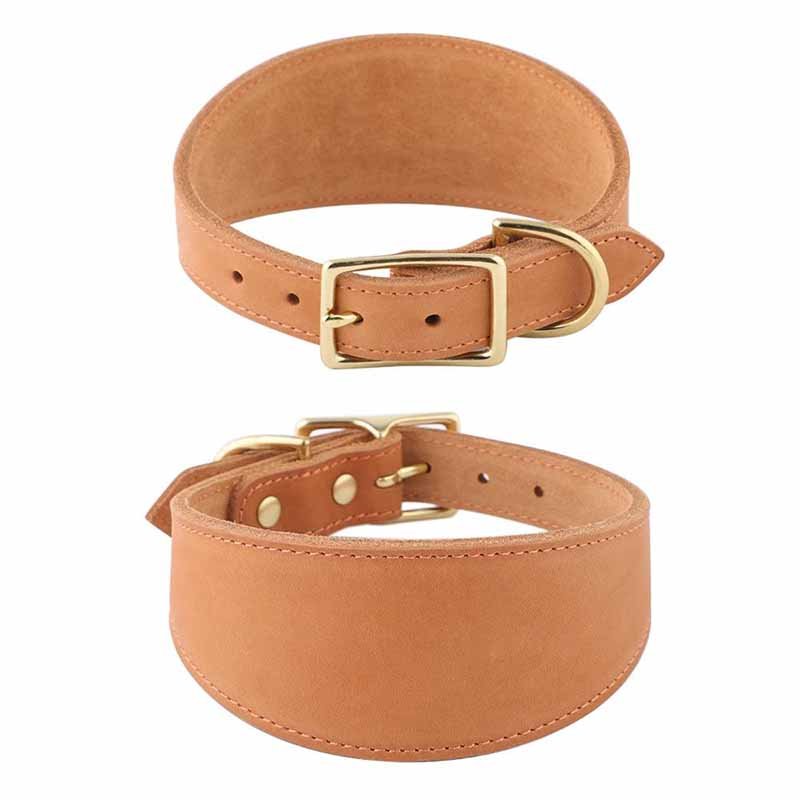
Pet boutiques can customize dog collars, cat collars, leashes, harnesses, tag holders, waste bag pouches, treat pouches, charms, and coordinated walking sets. Customization may cover leather type, width, thickness, size range, lining, reinforcement, stitching, hardware, logo placement, packaging, and retail display. Each product should be developed according to its function rather than applying one construction across the entire collection.
Leather Dog Collars
Leather dog collars are often the central product in a boutique pet collection because they are easy to understand, easy to display, and suitable for repeat purchases. Customers may buy more than one collar for different seasons, occasions, or walking needs, especially when the collection offers coordinated colors and hardware.
A professional collar development program should define the following details before sampling:
- Finished collar width
- Total finished thickness
- Usable neck-size range
- Number of adjustment holes
- Distance between adjustment holes
- Buckle length and tongue position
- D-ring position
- Keeper quantity and location
- Logo size and placement
- Edge treatment
- Lining material
- Reinforcement around hardware
- Stitch density
- Permitted dimensional tolerance
The width of the collar affects comfort, appearance, strength, and the scale of the hardware. A narrow collar may suit smaller animals, while a wider collar can distribute pressure over a larger surface area. Width should not be chosen only for visual impact. A wide collar made from stiff leather may restrict movement, while a narrow collar made from soft leather may stretch at the adjustment holes.
| Dog Size Group | Suggested Collar Width | Finished Thickness Range | Common Neck Range | Development Focus |
|---|---|---|---|---|
| Toy and miniature dogs | 10–15 mm | 1.8–2.8 mm | 18–28 cm | Low hardware weight and soft edges |
| Small dogs | 15–20 mm | 2.0–3.2 mm | 24–38 cm | Flexibility and buckle proportion |
| Medium dogs | 20–25 mm | 2.5–3.8 mm | 32–50 cm | D-ring strength and hole stability |
| Large dogs | 25–35 mm | 3.0–4.5 mm | 42–65 cm | Reinforcement and load distribution |
| Extra-large dogs | 35–50 mm | 3.5–5.0 mm | 55–80 cm | Strong hardware and controlled stretch |
These ranges are starting points for development. Final dimensions should be adjusted according to leather firmness, lining, reinforcement, buckle construction, and intended use.
Adjustment-hole spacing also deserves careful planning. A spacing of approximately 20–25 mm may provide enough adjustment for many medium and large collars, while smaller collars may need closer spacing. If the holes are too far apart, customers may struggle to achieve a secure fit. If they are too close together, the leather between the holes may weaken.
The first and last usable holes should also be positioned far enough from the buckle fold and strap tip. A collar can have the correct total length but still fit poorly when these allowances are ignored.
Boutiques should ask the manufacturer to provide:
- Total length
- Usable neck range
- Distance from buckle bar to each hole
- Strap-tip length after fastening
- Buckle dimensions
- Collar weight
- Hardware weight
- Finished thickness at the buckle fold
These values make size approval far more reliable than simply labeling products as small, medium, or large.
Leather Cat Collars
Cat collars require lighter construction and a more careful safety discussion. A dog collar may be designed to connect to a leash and resist pulling. A cat collar is often worn mainly for identification, decoration, or bell attachment. These uses should not be treated as identical.
A cat collar should be evaluated for:
- Total product weight
- Width against the cat’s neck
- Buckle-release behavior
- Elastic safety section
- Bell size and sound level
- Charm weight
- Edge softness
- Adjustment range
- Contact points around the throat
- Risk of snagging
For many cat collar designs, a width of approximately 8–12 mm provides a balanced appearance without creating unnecessary bulk. Finished thickness is often lower than that of dog collars. Heavy metal buckles, large D-rings, thick double-layer leather, or multiple decorative rivets can make the product uncomfortable.
The product description must clearly state its intended function. A decorative breakaway collar should not be sold as a secure restraint product. A collar used for leash attachment requires a completely different construction, stronger hardware, and separate fit testing.
Breakaway buckles also require controlled evaluation. The release force should not be so low that the collar opens during normal movement, but it should not be so high that the safety function becomes ineffective. The correct target depends on the size and construction of the collar. Development should use physical samples rather than relying only on a buckle supplier’s general specification.
A boutique should decide whether the cat collar includes:
- A breakaway buckle
- An elastic safety insert
- A bell
- A removable bell
- An identification plate
- A lightweight D-ring
- A decorative charm
- Reflective detailing
- A matching owner bracelet or key ring
Every added part changes the weight and balance of the product. For small pet accessories, even a few grams can noticeably affect comfort.
Leashes and Harnesses
Leather leashes and harnesses usually carry a higher retail value than collars, but they also create more demanding construction requirements. The complete force path must be considered from one end of the product to the other.
For a leash, the force path may include:
- Handle fold
- Handle stitching
- Handle rivets
- Main leather strap
- Internal reinforcement
- Snap-hook attachment
- Snap-hook swivel
- Snap-hook gate
- Connection ring
A leash should not be approved based only on the strength of the leather strip. Failure can occur at any connection point. The strength of the complete assembly is more important than the performance of one material.
Boutiques can develop several leash formats:
- Standard fixed-length leash
- Short traffic leash
- Adjustable multi-position leash
- Double-ended leash
- Hands-free waist leash
- Braided leather leash
- Leather-and-webbing leash
- Padded-handle leash
- Training lead
- Matching show lead
Common finished lengths may include 90 cm, 120 cm, 150 cm, and 180 cm, but the right length depends on the target customer and use. Urban customers may prefer shorter control, while open-space walking may require more length. A traffic handle placed near the snap hook can offer additional control without replacing the main handle.
Harness development is more complex because fit is influenced by several connected measurements. The following areas should be reviewed together:
- Neck opening
- Chest panel
- Girth strap
- Back length
- Leg openings
- Adjustment range
- D-ring position
- Buckle position
- Pressure distribution
- Strap rotation during movement
A harness should be tested while the animal is standing, sitting, walking, turning, and pulling gently. A flat sample placed on a table cannot show whether the product twists, rubs behind the legs, presses against the throat, or shifts to one side.
| Product Type | Key Measurements | Main Risk | Recommended Development Check |
|---|---|---|---|
| Fixed leash | Length, width, handle opening | Connection failure | Pull test from handle to hook |
| Adjustable leash | Total length, segment lengths, ring positions | Uneven loading | Test every connection position |
| Step-in harness | Chest width, girth, leg openings | Rotation and escape risk | Walking and turning fit test |
| H-harness | Neck, girth, back strap | Strap movement | Multi-position adjustment test |
| Y-harness | Neck angle, chest length, girth | Throat pressure | Movement and pull-direction test |
| Leather vest harness | Chest panel and body contour | Heat and restricted movement | Extended wear and bend test |
Harness sizes should not be created by enlarging one pattern by the same percentage. Small and large animals have different body proportions. The angle between the neck, chest, and girth often needs separate adjustment for each size.
Tag Holders and Waste Bag Pouches
Small accessories can generate strong commercial value because they allow boutiques to create lower-priced entry products, gift items, bundles, and add-on purchases. They also help the store use leftover leather from larger products, provided color and batch consistency can be maintained.
Useful accessory options include:
- Identification tag holders
- AirTag holders
- Waste bag pouches
- Treat pouches
- Leash wraps
- Key rings
- Pet-owner wristlets
- Charm holders
- Collar nameplates
- Small travel bowls with leather trims
- Leather storage cases
A waste bag pouch should be developed around the actual roll size. Important measurements include:
- Internal roll diameter
- Internal roll width
- Dispensing opening size
- Closure position
- Attachment-loop length
- Total pouch weight
- Distance from pouch to leash handle
- Ease of refilling
If the dispensing opening is too narrow, bags may tear during removal. If it is too large, the roll may unwind. If the attachment loop is too long, the pouch may swing excessively while walking.
Tag holders also require attention to opening size and retention. A tag should be easy to insert but difficult to lose. For AirTag-style products, the device should fit securely without being compressed or exposed to direct impact.
Small products involve narrow leather sections, short stitch lines, compact hardware, and limited space for logos. The logo should be adapted to the available surface rather than reduced until it becomes unreadable.
Matching Pet Accessory Sets
Coordinated sets help a boutique build a recognizable product family and encourage customers to purchase more than one item. A collection may include a collar, leash, harness, waste bag pouch, tag holder, and matching owner accessory.
Visual consistency can be created through:
- Shared leather color
- Shared edge color
- Shared thread color
- Shared hardware finish
- Shared logo method
- Repeated design lines
- Matching packaging
- Coordinated product names
Internal construction does not need to be identical. A collar may use two layers of leather, while a leash may require an internal webbing core. A pouch may use thinner leather to reduce bulk. The collection can still look consistent when the visible materials and design language remain aligned.
Before building a set, the boutique should define the role of each product.
| Product Role | Commercial Purpose | Example Products |
|---|---|---|
| Entry product | Introduces customers to the collection | Tag holder, charm, key ring |
| Core product | Drives regular sales | Collar, standard leash |
| Premium product | Raises order value | Leather harness, gift set |
| Add-on product | Encourages additional purchase | Waste bag pouch, treat pouch |
| Display product | Attracts attention in-store | Coordinated walking set |
| Gift product | Supports seasonal and holiday sales | Boxed collar and leash set |
A collection becomes easier to purchase when customers immediately understand how the products fit together. Matching sets should therefore be planned at the beginning of development rather than assembled from unrelated products at the end.
Which Leather and Hardware Should You Choose?
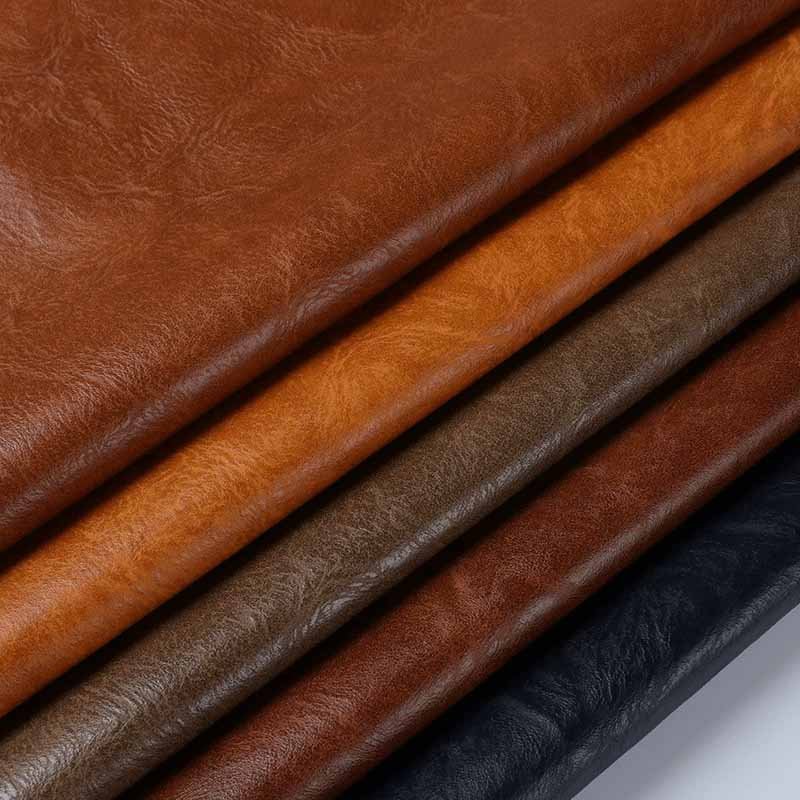
Leather and hardware should be selected according to product function, animal size, expected use, climate, required strength, desired appearance, maintenance needs, and target retail price. The most expensive leather or heaviest buckle is not automatically the best choice. Every material must work with the complete product structure, including folds, stitching, edges, lining, adjustment holes, and hardware connections.
Full-Grain vs Top-Grain Leather
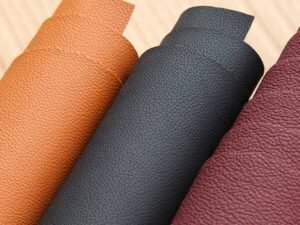
Full-grain leather keeps the natural outer grain surface and often shows visible marks, grain variation, and differences between hides. It can develop a rich appearance over time, making it suitable for boutiques that want a natural, craft-focused product.
Top-grain leather is often corrected, lightly sanded, pigmented, or finished to achieve a more uniform surface. It may provide better color consistency across sizes and production batches, which can be valuable when the collection includes several matching products.
The decision should be made according to the store’s product promise.
Full-grain leather may be suitable when the collection values:
- Natural grain
- Visible character
- Patina development
- Premium hand feel
- Craft-focused storytelling
- Acceptance of controlled variation
Top-grain leather may be more suitable when the collection requires:
- Consistent color
- Cleaner surface appearance
- Easier matching across products
- Reduced visible natural marks
- Stable repeat production
- More uniform retail display
A boutique should not describe natural variation as a defect if it has chosen minimally corrected leather. At the same time, a manufacturer should not use the term “natural variation” to excuse deep scars, weak areas, loose grain, severe shade differences, or poor cutting selection.
Material approval should include physical swatches from more than one area of the hide. The boutique should review:
- Grain size
- Surface gloss
- Color depth
- Hand feel
- Thickness
- Flexibility
- Reverse-side finish
- Odor
- Scratch behavior
- Water spotting
- Edge-cut appearance
- Shade variation
A small swatch may not show the full variation of the material. For larger orders, the manufacturer should confirm how hides will be sorted and whether visible parts will be cut from comparable grain areas.
Genuine Leather vs PU Leather
“Genuine leather” does not provide enough information for professional product development. The material specification should identify:
- Animal source
- Leather layer
- Tanning process
- Surface finish
- Thickness
- Temper
- Backside treatment
- Coating type
- Color method
- Test requirements
Two materials described as genuine leather may perform very differently. One may be soft and stretchable, while another may be firm and resistant to deformation.
PU leather can support collections that need:
- Strong color consistency
- Printed patterns
- Metallic surfaces
- Easy cleaning
- Lower product weight
- Seasonal colors
- Controlled surface texture
- Reduced natural variation
However, PU materials should be evaluated for:
- Surface peeling
- Hydrolysis resistance
- Flex cracking
- Backing strength
- Stitch-hole tearing
- Abrasion
- Odor
- Heat aging
- Cold resistance
- Edge-paint compatibility
A lower-cost material can become expensive when it cracks, peels, or weakens during storage. The boutique should therefore ask for aging and flex information when the products are intended for repeated bending or humid environments.
| Material | Main Strength | Main Limitation | Suitable Use |
|---|---|---|---|
| Full-grain leather | Natural appearance and long-term character | Shade and grain variation | Premium collars, leashes, gift sets |
| Top-grain leather | Cleaner and more consistent surface | Less natural character | Coordinated boutique collections |
| Split leather | Lower material cost | Lower strength and surface stability | Decorative or low-load applications |
| Microfiber leather | Consistency and controlled performance | Less natural aging | Fashion collars and easy-care products |
| PU leather | Wide color and surface options | Aging quality varies greatly | Seasonal accessories and decorative items |
| Leather with webbing core | Leather appearance with added reinforcement | More complex construction | Leashes, harness straps, large-dog collars |
Material names should never replace performance requirements. The product should be developed around measurable needs such as flexibility, thickness, tear resistance, colorfastness, and finished-product strength.
Buckles, D-Rings, and Rivets
Hardware affects strength, product weight, comfort, appearance, corrosion resistance, and production cost. It should be selected as a complete system rather than one component at a time.
Common hardware materials include:
- Solid brass
- Stainless steel
- Zinc alloy
- Aluminum alloy
- Iron
- Acetal plastic
- Mixed metal constructions
Solid brass can provide a premium feel and strong visual identity, but it may be too heavy for small collars. Stainless steel offers strong corrosion resistance and structural reliability, though its appearance may not suit every collection. Zinc alloy supports detailed shapes and decorative finishes, but performance depends on alloy quality and component design.
Hardware size should match the leather width and expected load. A wide buckle on a narrow strap may create pressure points. A small D-ring on a thick collar may look unbalanced and limit attachment movement.
A hardware specification should include:
- Material
- Overall dimensions
- Wire diameter
- Internal opening
- Weight
- Plating color
- Surface gloss
- Connection method
- Opening mechanism
- Required load
- Corrosion expectation
- Logo or engraving requirement
Rivets must also be matched to the total material thickness. A rivet post that is too short may not close securely. A post that is too long may bend, rotate, or crush the leather during installation.
Load-bearing areas should not rely on decorative rivets alone. Stitching, reinforcement, folds, and hardware placement must work together.
Linings and Padding Materials
A lining can improve comfort, hide reinforcement, support color contrast, and increase perceived value. It can also increase thickness, production difficulty, moisture retention, and cost.
Common lining options include:
- Soft leather
- Microfiber
- Suede-like fabric
- Neoprene
- Woven fabric
- Spacer mesh
- Synthetic leather
- Thin foam combined with fabric
Soft leather linings can create a refined product, but the manufacturer may need to skive both the outer leather and lining around folds. Without controlled skiving, the buckle area can become too thick.
Neoprene provides cushioning and can suit active pet products, but it changes the visual character of the product. It may also absorb moisture around cut edges when not properly enclosed.
Padding should be placed only where it improves comfort. It should not interfere with:
- Buckle operation
- Adjustment holes
- Rivet installation
- Stitching
- Edge finishing
- Strap flexibility
- Drying after rain
The boutique should check both the softest and thickest areas of the finished sample. A collar may feel comfortable in the center but become rigid around the folded ends.
Edge Paint and Surface Finishes
Leather edges can be finished through burnishing, waxing, folding, binding, or edge painting. The correct method depends on the leather type, product style, bending frequency, and target price.
Burnished edges suit firm vegetable-tanned leather and can create a natural craft appearance. Edge paint creates a smoother, more polished finish and supports color matching or contrast effects. Folded edges can provide a clean appearance but increase material use and construction complexity.
Edge-painted products should be evaluated around:
- Adjustment holes
- Buckle folds
- Strap tips
- Leash handles
- Rivet areas
- Narrow curves
- D-ring connections
These areas receive repeated bending and abrasion. A thick edge coating may look attractive before use but crack when the leather flexes.
A controlled edge-paint process may include:
- Accurate cutting
- Edge sanding
- Base coating
- Drying
- Intermediate sanding
- Additional coating
- Final surface inspection
- Flex evaluation
The number of coating layers depends on the desired finish and leather condition. More layers do not automatically produce better performance. Excessively thick paint can reduce flexibility and increase cracking.
Surface finishes should also be checked for:
- Dry color transfer
- Wet color transfer
- Scratching
- Water spotting
- Oil marks
- Heat exposure
- Contact with light-colored fur
- Contact with pale fabrics
- Long-term storage against packaging
| Material Check | What the Boutique Should Review | Commercial Risk |
|---|---|---|
| Thickness variation | Compare several areas and hides | Inconsistent product feel |
| Surface color | Review under natural and indoor light | Mismatched retail display |
| Flex behavior | Bend around expected fold radius | Cracking and delamination |
| Edge compatibility | Apply proposed edge finish | Peeling and uneven edges |
| Hole stability | Punch and load adjustment holes | Stretching and tearing |
| Stitch performance | Sew with intended needle and thread | Cracking around stitch holes |
| Water response | Apply controlled moisture | Staining and spotting |
| Hardware contact | Assemble with chosen plating | Surface damage and discoloration |
The strongest material decision is the one that balances appearance, function, production consistency, maintenance, and retail price. A visually beautiful material that cannot support the intended construction will create more problems than value.
How Are Custom Pet Products Developed?
Custom leather pet products are developed through a structured process that connects design, materials, sizing, construction, testing, cost, and bulk production. The main stages include project review, technical specification, material selection, pattern development, sampling, fit testing, revisions, and pre-production approval. Each stage should be documented so that the final order matches the approved sample.
Design Brief and Tech Pack
A clear design brief helps the factory understand both the appearance and function of the product. Reference images are useful, but they cannot explain leather thickness, hardware strength, size range, reinforcement, or testing requirements.
The design brief should include:
- Product category and intended use
- Target animal size
- Sales market
- Estimated order quantity
- Number of sizes and colors
- Preferred leather and hardware
- Logo method
- Packaging format
- Required testing
- Expected delivery date
A collar intended only for identification should not use the same construction requirements as a collar designed for daily leash attachment. Intended use must therefore be confirmed before sampling.
The tech pack converts the concept into production instructions. It should include measurements, materials, construction notes, logo artwork, packaging, testing requirements, and revision records.
| Tech Pack Section | Required Information |
|---|---|
| Product overview | Product name, code, intended use |
| Measurements | Finished dimensions and tolerances |
| Leather | Type, thickness, color, finish |
| Hardware | Material, dimensions, finish, weight |
| Construction | Stitching, reinforcement, folds, edges |
| Branding | Logo size, position, and method |
| Testing | Pull, flex, rub, and corrosion checks |
| Packaging | Labels, barcodes, cards, boxes |
| Revisions | Version number and approval status |
Measurements must be clearly defined. “Collar length” may mean total strap length or usable neck size, which are different values. A professional specification should record total length, width, thickness, hole positions, D-ring position, buckle size, and product weight.
Example tolerances may include:
| Measurement | Example Tolerance |
|---|---|
| Collar width | ±1–1.5 mm |
| Total collar length | ±3 mm |
| Hole spacing | ±1 mm |
| Logo position | ±2 mm |
| Leash length | ±5 mm |
| Small pouch dimensions | ±2 mm |
The final tolerance should reflect the material and construction. Soft leather, thick padding, and hand-braided parts may require wider limits.
SzoneierLeather can help convert drawings, samples, and reference images into a workable specification, especially when the customer has a clear product idea but has not defined materials, dimensions, or structural details.
Pet Sizing and Fit Development
Sizing directly affects customer satisfaction, returns, and repeat purchases. Pet weight alone is not enough because animals with similar weight may have very different neck, chest, and shoulder proportions.
For collars, the most important measurement is the usable neck range. The size chart should include:
- Minimum and maximum neck size
- Collar width
- Number of holes
- Hole spacing
- Total length
- Product weight
| Size | Usable Neck Range | Collar Width | Main Use |
|---|---|---|---|
| XS | 18–26 cm | 10–12 mm | Toy dogs and small cats |
| S | 24–34 cm | 15 mm | Small dogs |
| M | 32–44 cm | 20 mm | Medium dogs |
| L | 42–56 cm | 25 mm | Large dogs |
| XL | 52–70 cm | 30–40 mm | Extra-large dogs |
These ranges should be adjusted according to the buckle, leather thickness, fold allowance, and strap-tip length.
Harness sizing requires more measurements, including:
- Neck circumference
- Chest circumference
- Chest-panel length
- Back-strap length
- Girth position
- Leg openings
- Adjustment range
A harness should be tested while the animal is standing, sitting, walking, and turning. The review should confirm that:
- The chest panel remains centered.
- The straps do not rub behind the front legs.
- The harness does not press against the throat.
- The animal cannot easily back out.
- The D-ring remains stable while walking.
- Loose adjustment straps do not hang excessively.
Harness sizes should not be created by enlarging one pattern by the same percentage. Small and large animals have different body proportions, so each size may require separate adjustments.
Product weight should also be checked. Thick leather, heavy buckles, and large metal logos may be suitable for large dogs but uncomfortable for smaller animals.
Colors, Logos, and Patterns
Leather color should be approved using physical samples rather than digital images. Lighting, grain, oil content, coating, and gloss can all affect appearance.
The approved swatch should record:
- Leather code
- Color name
- Thickness
- Finish
- Approval date
- Allowed variation
Natural leather may show minor shade and grain differences. These variations should be agreed before cutting begins. Customers may accept natural grain variation but still reject deep scars, loose grain, or severe color differences.
Color should also be checked across:
- Leather
- Edge paint
- Thread
- Lining
- Hardware
- Packaging
Common logo methods include:
- Blind debossing
- Foil stamping
- Laser engraving
- Screen printing
- Metal logo plates
- Custom charms
- Woven labels
- Rubber labels
The logo method should suit the leather surface and product size. Fine logos may not appear clearly on heavily textured leather, while large metal plates may add too much weight to small collars.
Logo approval should confirm:
- Dimensions
- Position
- Orientation
- Color
- Application method
- Adhesion
- Resistance to rubbing and bending
Custom molds for hardware or logo plates may increase development time and cost. Mold ownership, storage, and replacement conditions should be confirmed before production.
Prototype Sampling and Revisions
The first prototype should confirm shape, size, materials, fit, and construction. It should not be treated as the final product unless all details have already been approved.
Different sample stages may serve different purposes:
| Sample Stage | Main Purpose |
|---|---|
| Appearance sample | Confirm design and proportions |
| Construction sample | Confirm assembly method |
| Fit sample | Check size and movement |
| Material sample | Confirm leather and hardware |
| Branding sample | Confirm logo and colors |
| Pre-production sample | Confirm bulk specification |
Sample comments should be measurable. Instead of saying “make it stronger,” provide clear instructions such as:
- Add internal webbing reinforcement.
- Increase leather thickness from 2.5 mm to 3.0 mm.
- Move the D-ring 8 mm closer to the buckle.
- Reduce buckle weight by 10 grams.
- Increase the chest panel by 15 mm.
- Change the edge finish from gloss to matte.
Each sample should have a version number. A useful sample report should include:
- Sample code
- Materials used
- Measurements
- Product weight
- Test results
- Photographs
- Customer comments
- Required changes
- Approval status
Photographs should show the front, back, inside, hardware, logo, stitching, edges, packaging, and fit on the animal.
Customers should avoid approving structural details from photographs alone. Leather firmness, hardware weight, edge feel, and comfort are difficult to judge without a physical sample.
Pre-Production Sample Approval
The pre-production sample is the final reference for bulk manufacturing. It should use the approved:
- Leather and color
- Hardware and plating
- Thread
- Reinforcement
- Lining
- Edge finish
- Logo
- Labels
- Packaging
Approval should cover five areas:
- Appearance
- Dimensions
- Function
- Strength
- Packaging and labeling
The customer should check buckle operation, adjustment, fit, hardware position, stitching, color, logo, packaging, barcode, and product weight.
A formal approval record should include:
| Approval Item | Required Record |
|---|---|
| Sample identification | Product code, size, color, revision |
| Materials | Leather, lining, thread, reinforcement |
| Hardware | Buckle, D-ring, rivets, snap hook |
| Measurements | Approved values and tolerances |
| Testing | Results and acceptance criteria |
| Packaging | Labels, barcode, card, box |
| Final decision | Approved or revision required |
After approval, the bill of materials should be locked. A collar bill of materials may include leather, lining, reinforcement, buckle, D-ring, rivets, thread, edge paint, logo, labels, packaging, and carton details.
Material or hardware substitutions should not be made without customer approval. A replacement component may look similar but differ in strength, weight, coating, or durability.
How Do Manufacturers Control Quality and Safety?
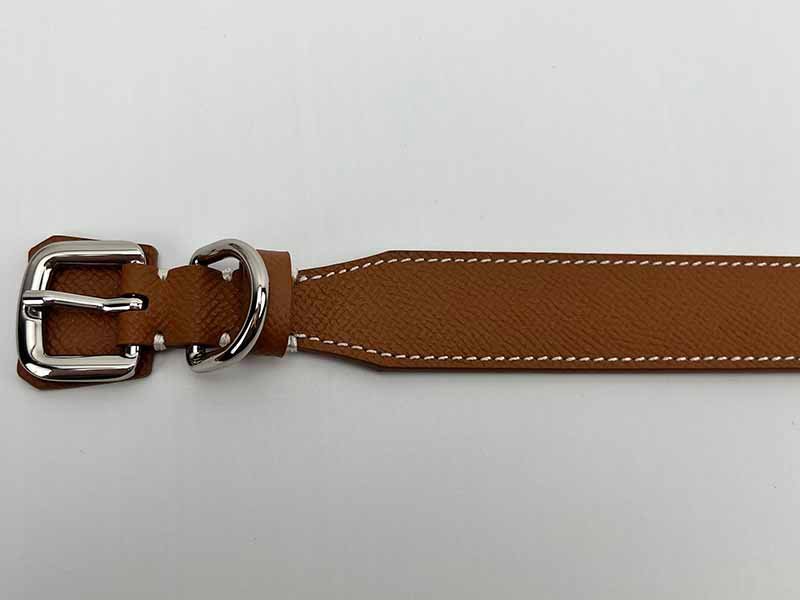
Quality control begins with incoming materials and continues through cutting, stitching, hardware installation, testing, final inspection, and packaging. The finished product should match the approved sample in appearance, size, function, strength, and retail presentation.
Incoming Material Inspection
Leather inspection should cover:
- Color
- Thickness
- Grain
- Surface defects
- Firmness
- Stretch
- Odor
- Batch identification
Leather should be measured in several areas because thickness can vary across the hide. Defects such as deep scars, holes, loose grain, uneven coating, and weak areas should be marked before cutting.
Hardware inspection should check:
- Dimensions
- Weight
- Material
- Plating color
- Burrs and sharp edges
- Buckle operation
- Snap-hook return
- Rivet fit
- Corrosion marks
Leather and hardware batches should be clearly identified to avoid mixing inconsistent materials within one order.
In-Process Quality Control
Leather pet product production may include cutting, splitting, skiving, reinforcement, gluing, stitching, hardware installation, edge painting, logo application, and packaging.
Important control points include:
- Accurate pattern cutting
- Correct grain direction
- Consistent leather thickness
- Proper skiving around folds
- Correct reinforcement position
- Clean glue application
- Straight and secure stitching
- Correct hardware orientation
- Consistent edge paint
- Accurate logo placement
Over-skiving can weaken leather, while insufficient skiving can make buckle folds too thick. Stitching placed too close to edges or adjustment holes may also increase tearing risk.
Stitch density often ranges from approximately 3–5 stitches per centimeter, depending on leather thickness, thread size, and product style. Excessively dense stitching may weaken the leather by creating a perforation line.
Pull and Load Testing
Pull testing should evaluate the complete product rather than only the leather strip. Failure may occur at the buckle, D-ring, rivet, stitching, adjustment hole, or snap hook.
The test plan should define:
- Test direction
- Target load
- Hold time
- Number of samples
- Failure criteria
- Acceptance standard
Useful evaluations include:
- Gradual pull testing
- Static load holding
- Repeated load cycling
- Component pull testing
- Complete product testing
| Product | Test Direction | Main Risk Areas |
|---|---|---|
| Collar | Buckle to D-ring | Hole tearing, buckle opening |
| Leash | Handle to snap hook | Seam failure, hook failure |
| Adjustable leash | Between ring positions | Ring deformation |
| Harness | D-ring to straps | Seam or buckle failure |
| Waste bag pouch | Clip to pouch | Attachment tearing |
The product should also be inspected after testing for stretching, loose rivets, damaged stitching, cracked edge paint, and hardware deformation.
Stitching and Rivet Inspection
Stitching should be checked for:
- Consistent stitch length
- Correct tension
- No skipped stitches
- Secure backstitching
- Correct distance from edges
- Clean thread ends
Rivets should be checked for:
- Correct size
- Secure closing
- No movement
- No sharp edges
- No crushed leather
- No exposed posts
- No plating damage
Critical connections may use both stitching and rivets. However, too many holes in one small area may weaken the leather, so rivet quantity and spacing must be controlled.
Hardware Strength and Corrosion
Hardware should be tested for reliable operation and suitable resistance to moisture and repeated use.
Checks may include:
- Repeated buckle opening
- Snap-hook gate return
- Swivel movement
- Ring deformation
- Screw tightness
- Plating adhesion
- Corrosion resistance
Corrosion testing is especially important for products exposed to rain, humidity, sweat, salty air, or long storage periods.
The inspection should look for rust, discoloration, plating loss, rough surfaces, and reduced function.
Hardware weight should also be reviewed. A heavy buckle may be acceptable on a large-dog collar but unsuitable for a cat collar or small harness.
Colorfastness and Surface Testing
Leather surfaces should be checked for:
- Dry color transfer
- Wet color transfer
- Water spotting
- Scratching
- Flex cracking
- Coating adhesion
- Edge-paint peeling
Dark, bright, oily, and waxed leather may show greater color transfer. This is particularly important when the product may contact light fur, clothing, or furniture.
Edge paint should be flexed around adjustment holes, buckle folds, leash handles, and harness curves. A smooth sample may still crack after repeated bending.
Care instructions should accurately explain whether the leather may darken, stain, or change after exposure to water.
Comfort and Skin-Contact Checks
Comfort should be reviewed on the assembled product.
The factory and customer should check:
- Total product weight
- Leather stiffness
- Edge softness
- Lining texture
- Hardware position
- Rivet contact
- Logo-plate backing
- Pressure points
- Heat and moisture retention
The inside surface should have no sharp edges, exposed metal, hard glue, or rough transitions.
Harnesses should be checked for rubbing behind the front legs and pressure around the throat. Small-animal products should use lightweight hardware and flexible leather wherever possible.
Testing requirements may vary by destination market. Sales regions should therefore be confirmed before production so that leather, metal finishes, coatings, adhesives, and packaging can be reviewed accordingly.
How Do Pet Boutiques Plan Wholesale Orders?
Pet boutiques should plan wholesale leather pet product orders around customer demand, product size, color depth, material minimums, packaging, retail price, and replenishment needs. A successful order is not simply divided equally across every style. It gives more units to the sizes and colors most likely to sell while keeping enough variety to create an attractive collection.
MOQ and SKU Planning
Minimum order quantity should be evaluated at both the total-order level and the individual-SKU level.
A factory may accept a reasonable total quantity, but the order can still become difficult to produce when it is divided across too many products, colors, sizes, and hardware finishes.
For example, one collection may include:
- 3 collar styles
- 5 collar sizes
- 4 leather colors
- 2 hardware finishes
- 2 packaging options
This creates 240 possible combinations before leashes, harnesses, and pouches are added.
Each combination requires separate material allocation, production identification, size labels, barcode labels, packaging, counting, and inspection. Very small quantities per combination can increase unit cost and create a higher risk of picking or packing errors.
A more controlled first collection may include:
- 1 main collar design
- 4 practical sizes
- 2 core colors
- 1 seasonal color
- 1 hardware finish
- 1 matching leash
- 1 waste bag pouch
- 1 packaging system
This structure still gives the store a complete product story without creating excessive inventory complexity.
| Collection Structure | Number of Combinations | Production Difficulty | Inventory Risk |
|---|---|---|---|
| 1 style × 3 sizes × 2 colors | 6 | Low | Low |
| 2 styles × 4 sizes × 3 colors | 24 | Moderate | Moderate |
| 3 styles × 5 sizes × 4 colors | 60 | High | High |
| 4 styles × 6 sizes × 5 colors × 2 hardware finishes | 240 | Very high | Very high |
The boutique should identify which variations customers genuinely value.
Questions worth asking include:
- Do customers need five leather colors, or will three colors cover most demand?
- Does every collar width require every hardware finish?
- Can the same buckle be shared across several products?
- Can one leather color be used for collars, leashes, and pouches?
- Do all harness sizes sell equally?
- Which products should remain available for regular replenishment?
- Which products are limited seasonal items?
Sharing materials and hardware across products can reduce purchasing pressure and improve visual consistency. A tan leather used across collars, leashes, tag holders, and pouches creates a coordinated collection while allowing the factory to use the material more efficiently.
The factory may also have minimum purchasing quantities for custom leather colors, custom hardware plating, packaging boxes, metal logo plates, or printed labels. These material minimums can be higher than the finished-product minimum.
Before confirming the order, the customer should ask for:
- Total product MOQ
- MOQ per style
- MOQ per color
- MOQ per size
- Leather color minimum
- Hardware finish minimum
- Custom packaging minimum
- Custom logo mold minimum
- Reorder minimum
- Material storage conditions
The MOQ should not be judged only by the number of finished pieces. A higher product quantity may still be commercially safer when it is concentrated in proven sizes and colors.
Size and Color Assortments
Size assortment has a direct effect on sell-through and stock availability. Equal quantities across all sizes may be simple to calculate, but they may not reflect actual demand.
A boutique with sales history should review:
- Units sold by size
- Return rate by size
- Exchange requests
- Customer measurement questions
- Out-of-stock frequency
- Breed mix
- Seasonal demand
- Online search behavior
A store without historical data can begin with a balanced ratio and adjust after the first sales period.
An example collar size ratio for a general urban pet boutique may look like this:
| Size | Example Order Ratio | Quantity in a 1,000-Piece Order |
|---|---|---|
| XS | 12% | 120 |
| S | 24% | 240 |
| M | 30% | 300 |
| L | 22% | 220 |
| XL | 12% | 120 |
This is only a planning example. A boutique focused on small companion dogs may need much more stock in XS and S. A store serving large working breeds may need more L and XL units.
Harness orders often require even more careful planning because fit is more complex. A slow-selling harness size can remain in inventory longer than a collar because the retail price is usually higher.
Color assortment should usually include three groups:
- Core colors
- Signature colors
- Seasonal colors
Core colors may include black, tan, brown, navy, or neutral shades that can be replenished throughout the year.
Signature colors represent the store’s identity. These may appear repeatedly in collections and packaging.
Seasonal colors create freshness and visual interest but should normally be ordered in more controlled quantities.
A practical color ratio may be:
| Color Type | Example Share | Commercial Role |
|---|---|---|
| Core neutral 1 | 30–35% | Stable repeat sales |
| Core neutral 2 | 25–30% | Broad customer appeal |
| Signature color | 20–25% | Brand recognition |
| Seasonal color | 10–20% | Display impact and limited launch |
The boutique should also consider how colors perform across different leather finishes. A pale color may show dirt more quickly. A dark oily leather may transfer color. Metallic PU leather may be suitable for decorative products but less suitable for repeated bending.
The color plan should be approved together with edge paint, thread, lining, hardware, labels, and packaging. A product can lose its premium appearance when these components are selected separately.
Cost and Production Lead Time
The cost of leather pet products is influenced by material, construction, labor, hardware, packaging, testing, and assortment complexity.
The leather itself is only one part of the final price.
Main cost factors include:
- Leather grade
- Leather thickness
- Usable cutting yield
- Number of leather layers
- Lining
- Internal reinforcement
- Skiving
- Edge painting
- Stitching length
- Stitching complexity
- Hardware material
- Hardware weight
- Custom plating
- Logo process
- Custom molds
- Manual assembly
- Testing
- Packaging
- Order quantity
- Number of SKUs
Natural leather is purchased by hide area, but not every section can be used for visible product parts. Scars, weak sections, shade differences, and irregular hide shapes reduce cutting yield.
A narrow collar may use relatively little leather, but the final cost may still be affected by:
- Several edge-painting operations
- Multiple hardware components
- Hand skiving
- Logo application
- Size sorting
- Individual packaging
- Final inspection
A higher unit price may reflect better leather selection, stronger hardware, more controlled edge finishing, or more complete inspection. Quotations should therefore be compared against the same specification.
| Cost Element | Lower-Cost Approach | Higher-Specification Approach |
|---|---|---|
| Leather | Split or coated material | Top-grain or full-grain leather |
| Construction | Single layer | Lined or reinforced construction |
| Edge | Raw or basic finish | Multi-stage painted or burnished edge |
| Hardware | Standard zinc alloy | Brass, stainless steel, or custom hardware |
| Logo | Standard debossing | Custom metal plate or molded charm |
| Packaging | Polybag and label | Branded card, pouch, or gift box |
| Inspection | Basic final check | Incoming, in-process, testing, and final inspection |
Customers should ask the manufacturer to state clearly:
- Material specification
- Hardware specification
- Packaging included
- Testing included
- Sampling cost
- Mold cost
- Freight excluded or included
- Quotation validity
- Payment terms
- Price changes caused by revisions
Production lead time should be separated into clear stages.
A realistic schedule may include:
| Stage | Planning Range |
|---|---|
| Project and specification review | 2–5 working days |
| Material sourcing | 5–15 working days |
| Prototype sampling | 7–20 working days |
| Sample revision | 5–15 working days per round |
| Custom hardware development | 15–35 working days |
| Packaging development | 10–25 working days |
| Bulk material preparation | 10–30 working days |
| Bulk production | 25–50 working days |
| Final inspection and packing | 5–10 working days |
Actual timing depends on order size, product complexity, material availability, custom colors, hardware molds, packaging, and testing.
The critical path is often controlled by the slowest component. The leather body may be ready, but the order cannot be completed if custom buckles, printed boxes, or barcode files are delayed.
To protect the launch date, customers should approve the following early:
- Leather color
- Hardware finish
- Logo artwork
- Size chart
- Packaging layout
- Barcode list
- Care-label content
- Shipping marks
Late changes to one item can affect cutting, packaging, inspection, and shipment.
Custom Packaging and Displays
Packaging should protect the leather while supporting the way the product will be presented and sold.
Common packaging options include:
- Branded hang cards
- Paper sleeves
- Cotton drawstring bags
- Recycled paper bags
- Kraft boxes
- Rigid gift boxes
- Window boxes
- Belly bands
- Product cards
- Care cards
- Barcode labels
- Retail display trays
A collar sold on an open display card allows customers to touch the leather, but it may be more exposed to dust, scratching, and handling.
A closed gift box offers stronger protection and higher gift value, but it increases packaging cost, carton volume, and shipping weight.
The packaging decision should consider:
- Retail price
- Store display method
- Online shipping
- Gift positioning
- Leather color
- Hardware protection
- Barcode placement
- Sustainability goals
- Carton efficiency
Leather products should not be tightly folded simply to reduce package size. Repeated pressure can create permanent bends, surface marks, or edge cracking.
Hardware should be positioned so that it does not press into the leather. Protective materials may include:
- Tissue paper
- Soft sleeves
- Protective film
- Paper separators
- Foam pads
- Cotton bags
- Individual compartments
Light-colored leather needs particular care. Dark ink, uncoated metal, colored tissue, or recycled paper can sometimes transfer marks to the product.
Packaging should also include accurate product information.
Useful information may include:
- Product name
- Size
- Usable measurement range
- Material description
- Care instructions
- Country of origin
- Barcode
- SKU code
- Safety statement
- Manufacturer or distributor information
Care instructions should match the actual material. They may explain:
- Avoid prolonged soaking.
- Wipe with a soft, damp cloth.
- Dry naturally away from direct heat.
- Do not use aggressive cleaning chemicals.
- Natural grain and shade variation may occur.
- Inspect hardware and stitching regularly.
- Replace the product if damaged.
A boutique may also use packaging to explain the collection story, leather source, craftsmanship, or matching products. The text should remain accurate and specific rather than making claims that cannot be verified.
How Do You Choose a Manufacturer?
A leather pet product manufacturer should be evaluated on development capability, material control, technical communication, sampling accuracy, production management, testing, inspection, and packaging.
A large catalog does not necessarily prove strong custom-development ability. A factory may produce many standard collars but still lack the experience to manage custom sizing, reinforced construction, premium leather, or coordinated packaging.
Customers should ask the manufacturer how it handles:
- Leather sourcing
- Leather batch control
- Material inspection
- Pattern development
- Size grading
- Fit testing
- Custom hardware
- Logo development
- Sample revisions
- Approved sample control
- In-process inspection
- Pull testing
- Final inspection
- Packaging
- Nonconforming goods
A capable manufacturer should be able to explain the construction rather than simply quote a price.
Useful questions include:
- Which leather thickness is suitable for this collar width?
- Does the leash require internal reinforcement?
- Is the selected buckle too heavy for the smallest size?
- How will the adjustment holes be reinforced?
- How will shade variation be controlled?
- Which areas will be pull tested?
- How are bulk units compared with the approved sample?
- How are custom molds managed?
- Can materials be traced by batch?
- How will replacement components be approved?
The customer should also review the factory’s ability to develop related products. A boutique may begin with collars and later expand into leashes, harnesses, pouches, storage boxes, belts, bags, or matching owner accessories.
A manufacturer with broader leather-goods capabilities can often manage these extensions more effectively because it already understands:
- Structured leather construction
- Small leather goods
- Strap reinforcement
- Hardware installation
- Pouch development
- Edge finishing
- Packaging design
- Gift-box production
Communication quality is another important factor. The factory should identify missing information, point out structural risks, record changes, and confirm approvals in writing.
A professional supplier does not simply agree with every request. It should explain when:
- A buckle is too heavy
- A leather is too soft
- A strap is too narrow
- A logo is too large
- A size range has excessive overlap
- A material may transfer color
- A construction may not meet the intended use
- The SKU plan creates unnecessary cost
Customers should be cautious when a quotation is offered before the factory has reviewed dimensions, materials, hardware, logo, packaging, and order structure. A very fast price may be based on assumptions that later change.
The strongest manufacturer relationship is built around clear specifications, documented samples, measurable quality requirements, and realistic production planning.
Start Your Leather Pet Product Project
A strong leather pet collection begins with clear product decisions. The leather must suit the construction. The hardware must match the animal size. The size range must reflect real customers. The sample must be tested before bulk production. The packaging must protect the product and support retail presentation.
When these decisions are handled carefully, a pet boutique can create products that look distinctive, fit correctly, perform reliably, and support repeat sales.
SzoneierLeather works with brand customers, boutique stores, wholesalers, and custom product teams to develop leather pet products from initial concept through sampling and bulk production.
Send your drawings, product references, quantity, size plan, material preference, and packaging requirements to begin your project. The SzoneierLeather team can review the concept, recommend suitable leather and construction options, prepare samples, and provide a detailed quotation for custom manufacturing.