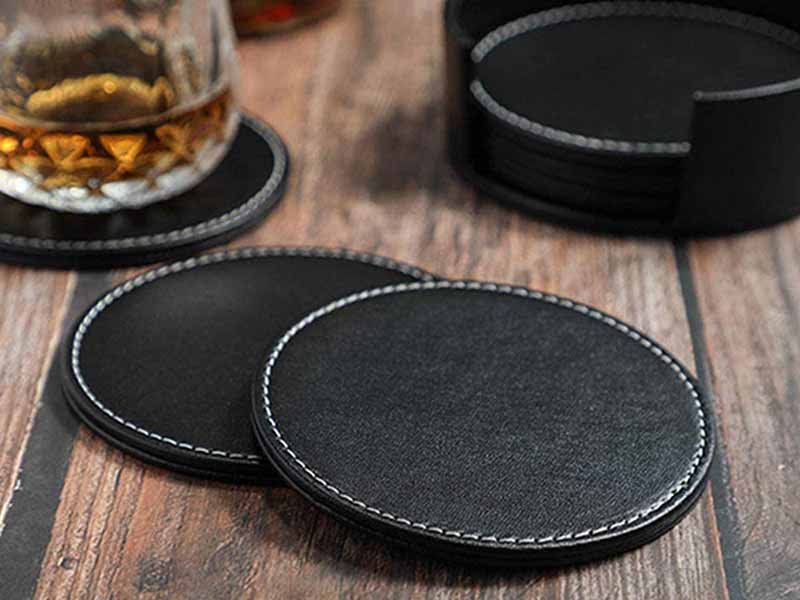
In home decor, small products often do a surprisingly big job. A coaster is a good example. It looks simple, takes up very little space, and is usually low in unit cost. But when it is made well, it helps a brand communicate taste, material quality, and attention to detail in a very direct way. For many home decor brands, leather coasters are not just table accessories. They are entry-level premium products, giftable items, add-on products for boxed sets, and brand carriers that customers use in daily life. That is why so many brands search for a professional leather coaster manufacturer instead of treating the product as a generic sourcing item.
Leather coaster manufacturing is the process of turning leather or leather-like materials into finished coasters through material selection, pattern development, cutting, logo application, edge treatment, surface finishing, inspection, and packaging. Good manufacturing is not only about making the product look neat. It is about keeping the thickness consistent, the edges clean, the logo clear, the backing stable, and the final coaster durable enough for repeated home use.
Leather coaster manufacturing is the full production process used to create leather coasters for retail, gifting, hospitality, and home decor use. It includes choosing the right material, cutting accurate shapes, finishing the surface and edges, and applying brand details such as debossed logos, foil marks, or custom packaging. Better manufacturing leads to better texture, appearance, durability, and brand value.
Now think about the moment a customer opens a boxed candle set, a barware bundle, or a premium tabletop collection and finds a set of leather coasters inside. The product may be small, but the first touch tells them everything: whether the material feels rich or cheap, whether the edges are smooth or rushed, whether the branding feels tasteful or generic. That moment is where manufacturing stops being invisible and starts shaping the way a brand is remembered.
What Is Leather Coaster Manufacturing?
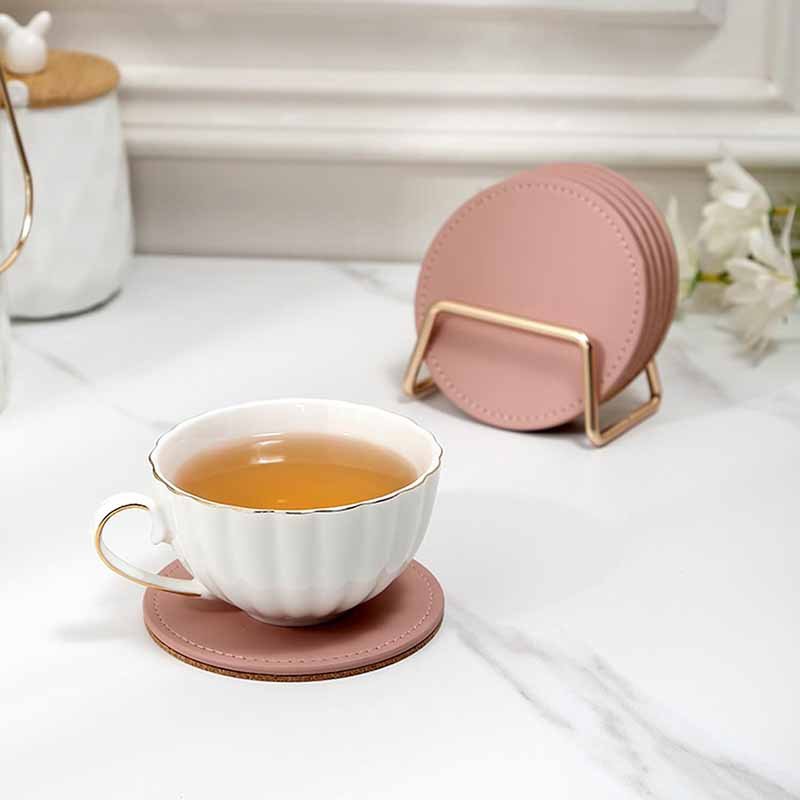
Leather coaster manufacturing is the organized process of developing, producing, and finishing leather coasters for commercial sale. It combines material knowledge, product design, production control, and quality inspection. For home decor brands, it is not just about making a coaster shape. It is about making a product that protects surfaces, matches the brand aesthetic, feels premium in the hand, and stays consistent from sample to bulk production.
What is leather coaster manufacturing?
Leather coaster manufacturing begins long before a factory starts cutting shapes. The real starting point is product definition. A brand has to decide what kind of coaster it wants to bring to market: premium genuine leather, affordable PU leather, minimalist modern, rustic natural, hospitality-grade, gift-ready, or part of a wider home decor collection. Once that direction is clear, the manufacturer turns the idea into a workable production plan.
A complete manufacturing process usually includes the following stages:
| Production Stage | Main Work | Why It Matters |
|---|---|---|
| Product planning | Define size, shape, thickness, use scenario | Prevents design mismatch |
| Material sourcing | Select leather, PU, microfiber, backing, glue | Affects cost and performance |
| Pattern development | Create cutting die or digital pattern | Controls size accuracy |
| Cutting | Produce clean, consistent coaster pieces | Impacts appearance and fit |
| Surface treatment | Add finish, texture, coating, or protection | Improves look and durability |
| Edge treatment | Paint, fold, stitch, or burnish edges | Affects lifespan and feel |
| Logo application | Deboss, emboss, foil stamp, print | Builds brand identity |
| Assembly | Add backing, padding, or layered structure | Improves function and stability |
| Inspection | Check size, surface, logo, color, edge quality | Reduces defects |
| Packaging | Inner pack, gift box, barcode, shipping carton | Supports retail and delivery |
To many customers, a coaster looks like a very low-complexity product. In reality, it is a detail-sensitive product. A small difference in cutting tolerance, leather thickness, or edge finish becomes easy to see because the item itself is compact and minimal. There is nowhere to hide production mistakes. On a large bag, a tiny deviation may go unnoticed. On a square coaster set placed side by side, even a 1–2 mm size variation can look sloppy.
This is why brands with a certain level of product knowledge usually prefer working with experienced leather goods factories rather than general trading suppliers. A real manufacturer understands how leather behaves when cut, pressed, glued, painted, and packed. SzoneierLeather, for example, works from a manufacturing perspective, not only a sourcing perspective. With more than 18 years of experience in leather product development and production, the company can support material development, product design, sampling, manufacturing, packaging design, and quality control in one system. That kind of integration matters when a brand wants stable quality instead of a one-time acceptable sample.
Why do brands choose leather coaster manufacturing?
Brands choose leather coaster manufacturing because leather coasters sit in a very practical sweet spot: they are visually premium, relatively compact, easy to customize, and broad in use scenario. For a home decor brand, this means the product can fit many different commercial goals at once.
Here are some of the strongest reasons:
- They help build a premium brand image Leather has texture, depth, and tactile appeal that paper, silicone, and most low-cost plastics cannot match. Even an affordable PU leather coaster often looks more upscale than common alternatives when the surface and edge treatment are done well.
- They are easier to launch than larger leather products Coasters use less material, simpler patterns, and shorter production cycles than leather trays, boxes, or organizers. That lowers development risk for brands testing a new product line.
- They are highly suitable for customization Shapes, textures, stitching, edge colors, embossed logos, foil branding, and packaging can all be adjusted. This allows brands to create distinct products without reinventing the category.
- They work well as standalone products and bundle products Leather coasters can be sold in sets of 2, 4, 6, or 8. They also pair naturally with candles, drinkware, tabletop accessories, barware, coffee tools, and corporate gift sets.
- They fit multiple sales channels The same product can work in retail, e-commerce, promotional gifting, hospitality supply, and private label home collections.
Below is a useful comparison for brands considering where leather coasters sit in the product mix:
| Product Type | Development Cost | MOQ Pressure | Customization Depth | Premium Perception | Ease of Bundling |
|---|---|---|---|---|---|
| Leather coasters | Low to medium | Low to medium | High | High | Very high |
| Leather trays | Medium | Medium | High | High | Medium |
| Leather storage boxes | Medium to high | Medium to high | High | High | Medium |
| Leather placemats | Medium | Medium | Medium | High | Medium |
| Leather desk accessories | Medium | Medium | High | Medium to high | High |
From a market point of view, leather coasters are also appealing because they solve a real use problem. Customers want to protect wood, marble, quartz, glass, and lacquered surfaces from water rings, heat marks, and scratches. That practical value gives the product staying power. It is not only decorative. It has everyday relevance.
For brand owners, this matters commercially. Products with clear daily use are easier to explain, easier to photograph in context, and easier to convert online. A coaster shown under a coffee mug, wine glass, candle, or whisky tumbler instantly tells the customer what it does. When that coaster also carries strong material quality and tasteful branding, it becomes more than an accessory. It becomes a piece of the brand experience.
Is leather coaster manufacturing good for home decor?
Yes, leather coaster manufacturing is a strong fit for home decor, and the reason goes beyond appearance. Home decor products usually succeed when they combine three things: practical function, design harmony, and emotional value. Leather coasters check all three.
First, they solve a clear problem. They help protect surfaces from moisture, cup marks, friction, and light heat exposure. Second, they support interior styling. Leather works well with wood, stone, ceramic, glass, metal, and woven natural materials. Third, they create a more finished living experience. A table with coordinated coasters, placemats, trays, and storage pieces feels more intentional than a table without those details.
Leather coasters fit naturally into several home decor directions:
- Modern minimalist collections
- Rustic farmhouse styles
- Vintage and heritage-inspired interiors
- Luxury tabletop accessories
- Hotel and hospitality room sets
- Bar and coffee corner styling
- Gift box and seasonal collections
The appeal is especially strong when brands create a matching story across products. For example, a coaster line can connect visually with leather tissue boxes, valet trays, candle holders, menu covers, desk mats, or small organizers. That creates upsell opportunities and helps the brand build a stronger category presence.
Here is a practical view of how leather coasters function across common home decor channels:
| Use Channel | Why Leather Coasters Fit Well | Common Pack Style |
|---|---|---|
| E-commerce home decor | Easy to style, ship, and explain | 4-piece or 6-piece set |
| Gift market | Premium feel at manageable cost | Boxed set with insert |
| Hotel and hospitality | Durable, elegant tabletop accessory | Uniform logo set |
| Boutique retail | Strong shelf appeal with tactile value | Belly band or gift box |
| Corporate gifting | Easy to brand and bundle | Set with tray or cup |
There is also a pricing advantage. A well-made leather coaster set often lands in a price zone customers are willing to accept as an affordable luxury. That is important for brands trying to raise average order value without asking customers to jump immediately to much more expensive categories.
At the same time, home decor brands should not treat all “leather-look” coaster products as equal. The category has a wide quality range. Some low-grade products use overly thin material, weak lamination, rough edge paint, and unstable backing, which leads to curling, peeling, or obvious wear after limited use. That can hurt customer trust fast. The better path is to build the product from real use conditions: water drops, repeated lifting, daily wiping, stacked storage, and long shelf display. That is where a manufacturing-oriented supplier like SzoneierLeather becomes valuable, because the product is developed with real material and production logic, not just appearance logic.
How Does Leather Coaster Manufacturing Work?
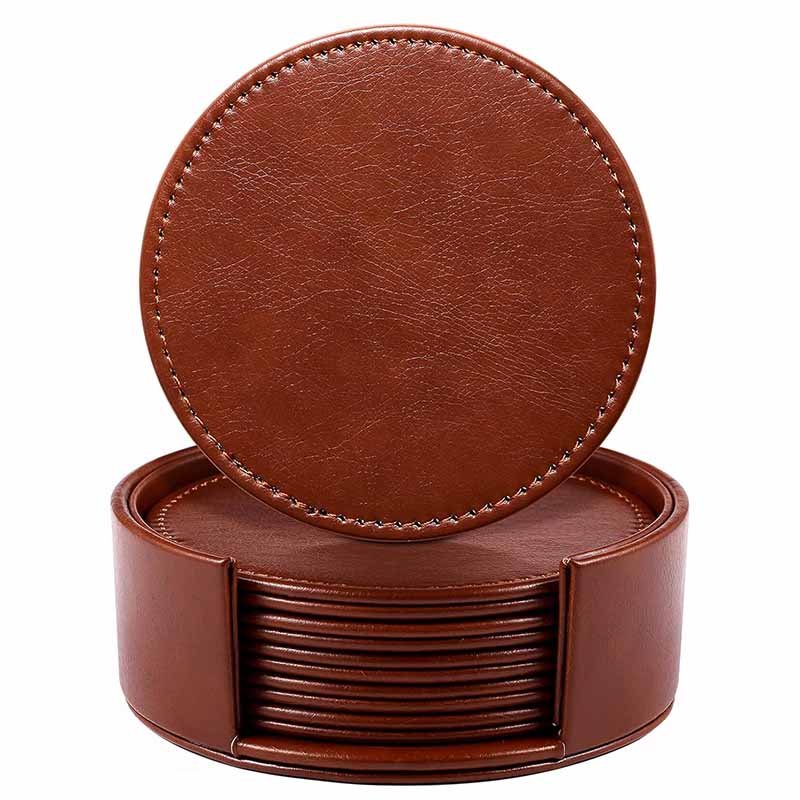
Leather coaster manufacturing works through a series of linked production steps, each of which affects the final result. For a home decor brand, understanding this process helps with better sourcing decisions, more realistic sampling expectations, and fewer surprises during bulk production. The basic steps are material selection, cutting, structure setup, edge finishing, logo application, inspection, and packaging. The difference between an average coaster and a premium coaster usually comes from how carefully those steps are controlled.
How does leather coaster manufacturing start?
The production process starts with defining the product clearly. A good factory will not rush straight into making a sample without confirming the key specifications first. That early planning stage has a big influence on cost, lead time, and bulk consistency.
Most development projects begin with questions like these:
- What material does the brand want: genuine leather, PU leather, microfiber leather, bonded leather, or a layered structure?
- What size and shape are required: round, square, rectangle, hexagon, custom outline?
- What thickness target is expected?
- Does the coaster need a soft backing or non-slip base?
- What logo method is preferred?
- Will the coaster be sold as a single item or a set?
- What price level is the brand targeting?
Those decisions affect nearly every production step. For example, a 2-layer coaster with top leather and bottom suede-like backing is different from a single-layer thick leather coaster with painted edges. A round debossed set for a coffee brand is different from a square foil-stamped set for a hospitality client.
Below is a useful planning checklist:
| Item to Confirm | Common Options | Why It Should Be Fixed Early |
|---|---|---|
| Material type | Genuine, PU, microfiber, bonded | Controls price and feel |
| Shape | Round, square, custom | Affects die cost and layout |
| Thickness | 2 mm, 3 mm, 4 mm, layered | Influences hand feel and durability |
| Logo | Deboss, emboss, foil, print | Needs different tooling |
| Edge finish | Paint, fold, stitch, burnish | Changes production method |
| Backing | Plain, anti-slip, suede, cork | Affects use experience |
| Packaging | Polybag, paper band, gift box | Affects presentation and cost |
Experienced factories treat this stage seriously because many later production problems come from vague starting instructions. If a brand only says “we want premium leather coasters,” the result can vary widely. Premium can mean full grain leather to one customer and neatly finished PU leather to another. A professional development approach reduces ambiguity and makes the sampling stage faster and more productive.
SzoneierLeather’s strength in this stage comes from its broader product development capability. Because the company already works across bags, wallets, belts, straps, accessories, and leather boxes, it has internal familiarity with different leather structures, reinforcements, coatings, linings, and packaging standards. That experience often helps smaller brands make sharper decisions earlier, especially when they know what they want commercially but need help translating that into a workable factory specification.
How does leather coaster manufacturing cut leather?
Cutting is one of the most visible quality steps in coaster production because shape accuracy is immediately noticeable. When multiple coasters are stacked together in a retail box, poor cutting shows up fast. Uneven edges, off-size corners, misaligned layers, and inconsistent circles all weaken the product presentation.
The most common cutting methods are:
- Die-cutting Best for regular production and standard shapes. A metal die is made according to the final pattern, then pressed into the material for fast and repeatable results.
- Laser cutting Useful for small runs, very intricate shapes, or precise decorative cutouts. It offers flexibility but can be slower and more expensive.
- Manual cutting Used occasionally for prototypes or artisan-style work, but not ideal for bulk consistency.
In commercial coaster production, die-cutting is usually the preferred choice because it balances speed, precision, and cost. Once the die is confirmed, thousands of pieces can be cut with very stable dimensions.
Here is a practical comparison:
| Cutting Method | Best For | Speed | Unit Cost | Consistency |
|---|---|---|---|---|
| Die-cutting | Bulk production | High | Low | High |
| Laser cutting | Complex shapes, low volume | Medium | Medium to high | High |
| Manual cutting | Prototype, artisan work | Low | High | Medium |
Material behavior also matters during cutting. Soft PU, thick genuine leather, bonded layers, and microfiber bases do not all react the same way under pressure or heat. A skilled factory adjusts blade pressure, layout efficiency, and cutting sequence depending on the material. This affects not only the final shape but also material waste and production cost.
For brands, one important issue is nesting efficiency. Because coasters are small, layout planning on the material sheet can have a real effect on cost control. A factory with better layout logic can often reduce waste and make the quote more competitive without downgrading the material. That is one reason experienced manufacturing suppliers often outperform inexperienced assemblers even when the product looks simple on paper.
How does leather coaster manufacturing finish edges?
Edge finishing has a major effect on how a leather coaster feels, how it ages, and how “premium” it appears in the customer’s hand. Since a coaster is handled directly and seen at close range, the edge cannot be treated as a minor detail.
The most common edge finishing methods are:
- Edge painting A colored coating is applied to the cut edge, often in one or more layers, then dried and smoothed. This creates a clean and modern look.
- Burnished edge The edge is compacted and polished, usually seen more in genuine leather styles with a natural or craft-oriented appearance.
- Turned edge / folded edge The material is wrapped inward around the edge. This gives a softer and more finished appearance but may increase production complexity.
- Stitched edge Decorative or reinforcing stitching is added near the border. This can create a stronger crafted look, though it is not necessary for every design.
Each method signals a different product style:
| Edge Method | Visual Style | Durability Level | Common Use |
|---|---|---|---|
| Painted edge | Modern, neat, clean | Medium to high | PU and layered coasters |
| Burnished edge | Natural, authentic | Medium | Genuine leather styles |
| Folded edge | Soft, refined, premium | High | Gift and luxury styles |
| Stitched edge | Crafted, decorative | High | Premium or heritage-inspired styles |
For home decor brands, the edge should match the overall design language. A clean Scandinavian-style collection may work best with smooth painted edges in neutral tones. A rustic tabletop line may look better with a natural burnished finish. A luxury gifting set may justify folded edges and matched gift packaging.
Customers also care about long-term wear. Poor edge paint may crack. Weak folds may lift. Rough burnishing may fray visually over time. That is why material pairing and process control matter so much. SzoneierLeather’s production capability becomes valuable here because edge finishing is not a decorative afterthought; it is part of the product engineering that supports the final look, daily use, and customer satisfaction.
Which Materials Suit Leather Coaster Manufacturing?
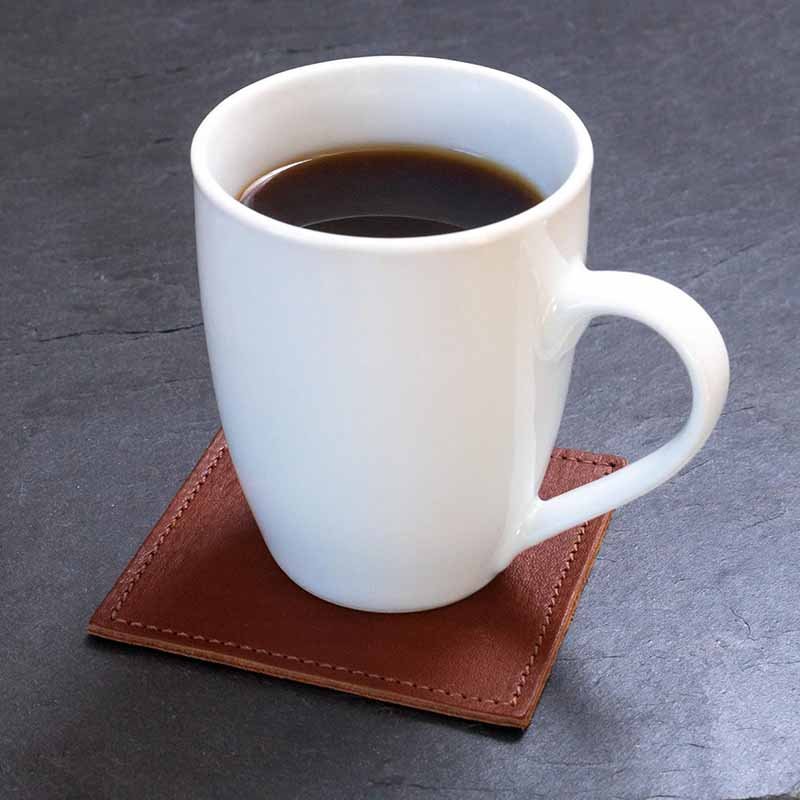
Leather coaster manufacturing depends heavily on material choice. The material determines how the coaster looks, feels, performs, and how long it lasts in real use. For home decor brands, selecting the right material is not just a technical decision. It directly affects product positioning, pricing strategy, customer expectations, and repeat purchase potential.
Which leather fits leather coaster manufacturing best?
Different types of leather are used depending on the target market and product positioning. There is no single “best” leather for all projects. The right choice depends on whether the brand is aiming for premium feel, cost efficiency, durability, or design flexibility.
The most common material options include:
| Material Type | Description | Advantages | Limitations | Best Use |
|---|---|---|---|---|
| Full grain leather | Top layer of hide with natural grain | Premium look, strong durability | Higher cost, natural variation | High-end decor, luxury sets |
| Top grain leather | Sanded and refined surface | Smooth finish, consistent appearance | Slightly less natural character | Mid to high-end products |
| Genuine leather (split) | Lower layers of hide | Lower cost than top layers | Less durable, coated surface | Entry-level genuine leather |
| PU leather | Synthetic leather alternative | Consistent, cost-effective, many colors | Less natural feel | Mass market, promotional |
| Microfiber leather | Advanced synthetic material | Durable, uniform, eco-friendly options | Mid-level cost | Modern brands, e-commerce |
| Bonded leather | Recycled leather fibers | Low cost, stable look | Lower durability | Budget products |
For many home decor brands, the decision is often between genuine leather and PU or microfiber leather. Genuine leather offers natural texture and aging character, while PU and microfiber provide more color control, consistency, and lower production cost.
From a commercial perspective:
- Premium brands often choose full grain or top grain leather
- Mid-range brands prefer microfiber or high-quality PU
- Promotional or large-volume projects may use PU or bonded leather
SzoneierLeather supports all these material types through its supply chain, allowing brands to match material choice with their target pricing and market segment instead of forcing a one-size-fits-all solution.
Is full grain leather used in leather coaster manufacturing?
Yes, full grain leather is used in leather coaster manufacturing, especially for premium and boutique products. It is considered one of the highest-quality leather types because it retains the natural surface of the hide, including grain patterns, pores, and subtle imperfections.
These natural characteristics give each coaster a unique look. For some brands, this uniqueness is a selling point because it communicates authenticity and craftsmanship. However, it also requires careful expectation management. Customers must understand that slight variations are part of the product, not defects.
Full grain leather coasters typically offer:
- Strong durability for long-term use
- Rich texture that improves with time
- Natural resistance to wear and bending
- A more organic, handcrafted appearance
However, there are also trade-offs:
| Factor | Full Grain Leather |
|---|---|
| Cost | High |
| Consistency | Medium (natural variation) |
| Maintenance | Requires care to avoid stains |
| Branding clarity | Slightly less sharp on uneven surfaces |
For home decor brands targeting a high-end market, full grain leather can support a premium story. But for brands that require strict color matching and uniform appearance across thousands of units, top grain or microfiber leather may be a more practical choice.
Do PU materials work in leather coaster manufacturing?
Yes, PU leather is widely used in leather coaster manufacturing and plays a major role in commercial production. It offers a balance between cost, appearance, and flexibility, which makes it suitable for large-scale retail and promotional products.
PU leather is a synthetic material designed to mimic the look and feel of real leather. While it does not develop the same aging characteristics, it offers advantages that are important for many brands:
- Consistent color across batches
- Wide range of textures and finishes
- Easier cleaning and maintenance
- Lower material cost
- Stable performance in mass production
Here is a comparison between PU and genuine leather:
| Feature | PU Leather | Genuine Leather |
|---|---|---|
| Appearance | Consistent | Natural variation |
| Cost | Lower | Higher |
| Durability | Medium | High |
| Maintenance | Easy | Moderate |
| Branding surface | Smooth, ideal for logos | Textured, may vary |
For e-commerce brands and fast-moving consumer goods, PU leather often makes more sense because it reduces variability and supports scalable production. For brands that emphasize natural materials and craftsmanship, genuine leather remains the preferred option.
A growing segment is microfiber leather, which combines some of the advantages of both categories. It offers better durability than standard PU while maintaining consistency and design flexibility.
How to Customize Leather Coaster Manufacturing?
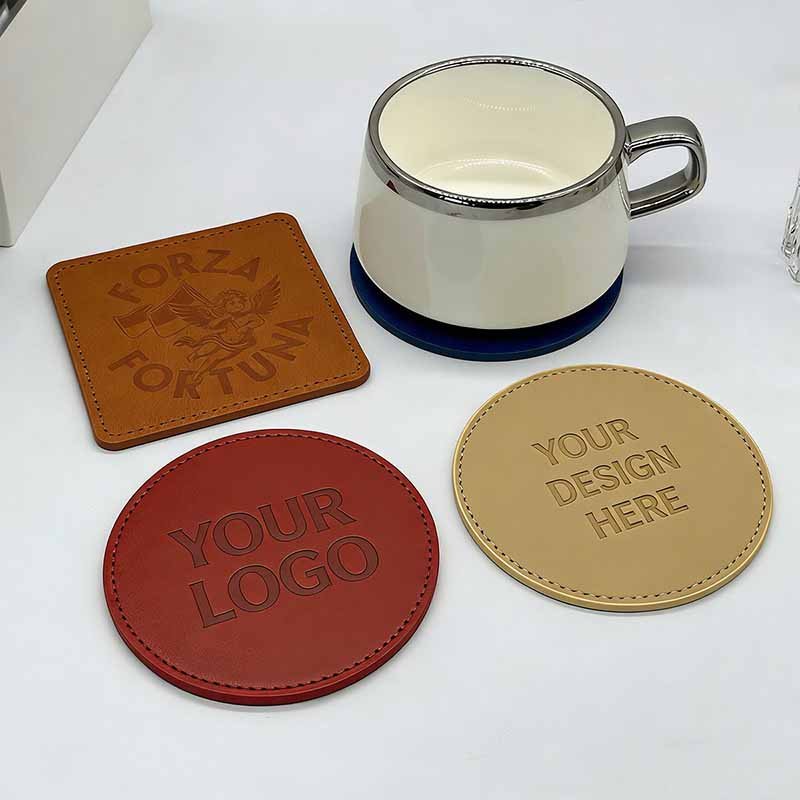
Leather coaster manufacturing offers a wide range of customization options. For home decor brands, customization is where the product becomes unique. It allows a simple item to reflect brand identity, design language, and market positioning.
How to brand leather coaster manufacturing with logos?
Logo application is one of the most important customization steps. It transforms a generic coaster into a branded product.
The most common logo methods include:
| Method | Effect | Best For |
|---|---|---|
| Debossing | Pressed into surface | Subtle, elegant branding |
| Embossing | Raised design | Strong visual presence |
| Foil stamping | Metallic shine | Luxury positioning |
| Screen printing | Colored logos | Creative designs |
| UV printing | High-detail graphics | Complex visuals |
Debossing is widely used because it offers a clean and premium look without adding too much visual weight. Foil stamping is often chosen for gift sets and higher-end packaging because it catches light and stands out on shelves.
When selecting a logo method, brands should consider:
- Visibility at a distance
- Consistency across batches
- Compatibility with the chosen material
- Cost impact per unit
For example, foil stamping adds extra cost but may increase perceived value significantly in retail environments.
How to design shapes in leather coaster manufacturing?
Shape design is another key factor in product differentiation. While round and square coasters are the most common, many brands explore custom shapes to stand out.
Popular options include:
- Round (classic and widely accepted)
- Square (modern and structured)
- Hexagon (design-focused collections)
- Irregular shapes (brand-specific identity)
- Die-cut logo shapes
Shape selection affects both aesthetics and production cost. Standard shapes are more efficient because cutting dies are simpler and material waste is lower. Custom shapes may require additional tooling and careful layout planning.
Here is a comparison:
| Shape Type | Cost Level | Visual Impact | Production Efficiency |
|---|---|---|---|
| Round | Low | Medium | High |
| Square | Low | Medium | High |
| Hexagon | Medium | High | Medium |
| Custom shape | Higher | Very high | Lower |
For brands, the decision often depends on whether the goal is cost efficiency or visual differentiation.
How to choose colors in leather coaster manufacturing?
Color selection is closely tied to brand identity. Leather coasters are often used in visible areas, so they must match the overall product line or interior theme.
Key considerations include:
- Neutral tones (black, brown, beige, grey) for broad appeal
- Bold colors for brand recognition
- Matching with other products in the collection
- Resistance to fading and staining
Different materials handle color differently. PU and microfiber leather offer more consistent color control, while genuine leather may show natural variation.
Brands should also consider how colors appear under different lighting conditions, especially for retail display and product photography.
How to upgrade packaging in leather coaster manufacturing?
Packaging plays a major role in perceived value, especially for home decor and gift markets. A well-designed package can increase product appeal without changing the product itself.
Common packaging options include:
| Packaging Type | Use Case | Value Impact |
|---|---|---|
| Polybag | Basic protection | Low |
| Paper band | Retail display | Medium |
| Gift box | Premium sets | High |
| Magnetic box | Luxury positioning | Very high |
| Custom printed box | Brand storytelling | High |
For many brands, packaging is not just protection. It is part of the product experience. A customer opening a well-designed box is more likely to perceive the product as premium and worth the price.
SzoneierLeather supports full packaging customization, allowing brands to align the outer presentation with the inner product quality.
How to Choose Leather Coaster Manufacturing Factory?
Choosing the right leather coaster manufacturing factory has a direct impact on product quality, delivery reliability, and long-term brand growth. A good factory does more than produce samples. It helps brands avoid costly mistakes, maintain consistency across orders, and scale production smoothly.
What to check in leather coaster manufacturing factory?
When evaluating a factory, brands should look beyond pricing and focus on overall capability. A low quotation does not always mean better value, especially if quality problems appear later.
Key checkpoints include:
- Material sourcing ability The factory should have stable access to different leather types, including genuine leather, PU, and microfiber. This ensures consistent supply and quality across production batches.
- Product development capability Can the factory turn a concept into a workable sample? This includes pattern making, structure design, and material recommendations.
- Production experience Experience with leather goods such as bags, wallets, belts, and accessories often indicates a deeper understanding of leather behavior.
- Customization flexibility The factory should support different shapes, logos, edge finishes, and packaging options.
- Communication clarity Clear communication reduces misunderstandings during sampling and bulk production.
Here is a practical evaluation table:
| Factor | Basic Supplier | Professional Manufacturer |
|---|---|---|
| Material control | Limited | Strong supply chain |
| Sampling ability | Basic | Design + engineering support |
| Production stability | Inconsistent | Stable and scalable |
| Customization | Limited | Flexible |
| Quality control | Reactive | Structured system |
Factories like SzoneierLeather stand out because they integrate material sourcing, product development, and manufacturing under one system, which reduces coordination risks for brands.
How does quality affect leather coaster manufacturing?
Quality control is one of the most important factors in leather coaster manufacturing because small defects are easy to notice in compact products. Customers often place multiple coasters side by side, making inconsistencies more visible.
Common quality issues include:
- Uneven thickness
- Misaligned shapes
- Rough or cracked edges
- Inconsistent color
- Weak logo impressions
- Glue marks or surface defects
A professional factory implements quality checks at multiple stages:
| Stage | Quality Check Focus |
|---|---|
| Incoming materials | Thickness, color consistency, defects |
| Cutting | Shape accuracy, edge cleanliness |
| Logo application | Position, depth, clarity |
| Edge finishing | Smoothness, durability |
| Final inspection | Overall appearance, set consistency |
Consistent quality leads to fewer returns, better customer reviews, and stronger brand reputation. For home decor brands, where visual detail matters, this is especially critical.
Is low MOQ important in leather coaster manufacturing?
Low MOQ (Minimum Order Quantity) is important, especially for brands testing new products or entering new markets. It allows companies to validate product demand without committing to large inventory.
Benefits of low MOQ include:
- Reduced financial risk
- Faster product testing
- Flexibility in design adjustments
- Ability to launch multiple variations
Typical MOQ ranges:
| Product Type | MOQ Range |
|---|---|
| Standard coaster set | 200–500 sets |
| Custom shape or logo | 300–1000 sets |
| Premium leather coaster | 100–300 sets |
However, very low MOQ may increase unit cost because setup costs (such as cutting dies and logo molds) are spread across fewer units.
SzoneierLeather offers flexible MOQ options, allowing brands to balance cost and testing needs. This is particularly useful for e-commerce brands, startups, and seasonal product launches.
How does OEM help leather coaster manufacturing brands?
OEM (Original Equipment Manufacturing) and ODM (Original Design Manufacturing) services allow brands to develop products tailored to their identity and market needs.
OEM focuses on producing based on the brand’s design, while ODM includes design support from the factory.
Advantages of OEM/ODM:
- Faster product development
- Access to factory expertise
- Customized material and structure
- Consistent production quality
- Scalable supply chain
For example, a brand may start with a simple coaster design and gradually expand into a full product line including trays, boxes, and accessories. Working with a factory that supports OEM/ODM makes this transition smoother.
SzoneierLeather provides full OEM and ODM services, helping brands move from concept to finished product with fewer barriers.
Start Your Leather Coaster Manufacturing Project with SzoneierLeather
If you are planning to develop leather coasters for your home decor brand, choosing the right manufacturing partner is one of the most important decisions you will make. A reliable factory does more than produce goods. It helps you turn ideas into products that customers actually want to use and repurchase.
Whether you are launching a new product line or improving an existing one, leather coasters can be a practical and effective addition to your collection. With the right materials, design, and manufacturing process, they can deliver both functional value and strong brand presence.
If you want to create leather coasters that reflect your brand’s quality and stand out in the market, now is the right time to start.
Contact SzoneierLeather today to request a quote, develop your custom design, and bring your leather coaster manufacturing project to life.