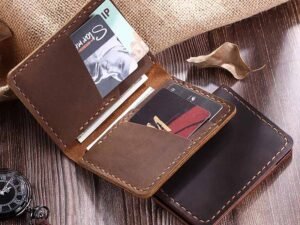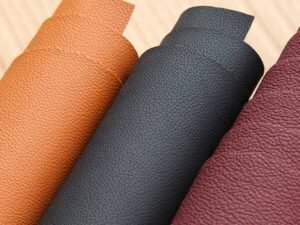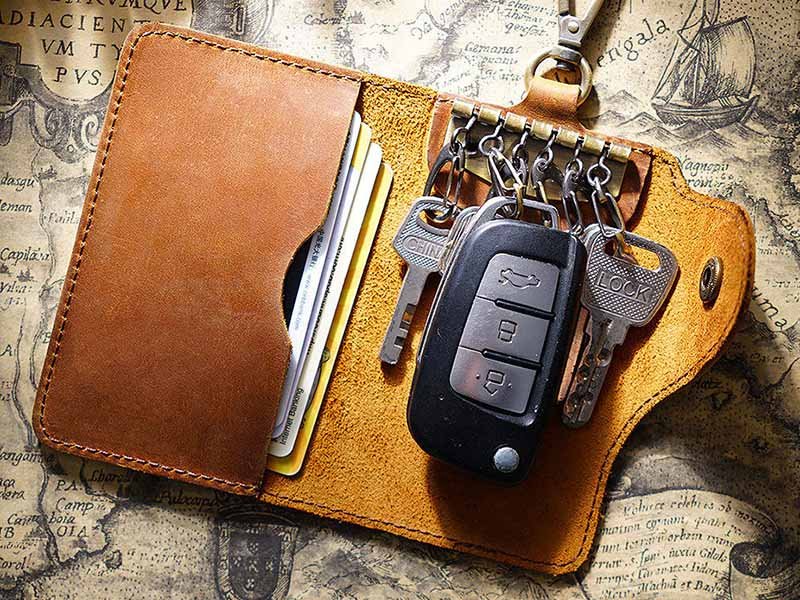
Most people think the quality of a leather key holder is decided by the leather itself. In real production, that is only part of the story. Many products use decent leather, but still feel cheap in hand because the edges are rough, dry, cracked, or uneven. On small leather goods like key holders, the edge is always close to the eye and constantly touched by the hand. That means edge finishing is not a minor detail. It is one of the clearest signals of craftsmanship, durability, and factory control.
Leather key holder edge finishing refers to the process of treating the cut edge of leather so it becomes smoother, stronger, cleaner, and more resistant to wear. Common methods include burnishing, edge painting, waxing, and glazing. The right method depends on leather type, product positioning, target price, and performance expectations. A well-finished edge improves appearance, extends product life, reduces customer complaints, and helps a leather product hold its value over time.
In factory reality, edge finishing often decides whether a product looks premium or ordinary. A key holder may be small, but the edge quality can change the entire customer impression in the first few seconds. That is why experienced brands do not treat edge finishing as decoration. They treat it as a quality system. And once you understand how these methods work, it becomes much easier to judge which factory really knows leather production and which one is only making products that look acceptable in photos.
What Is Leather Key Holder Edge Finishing?
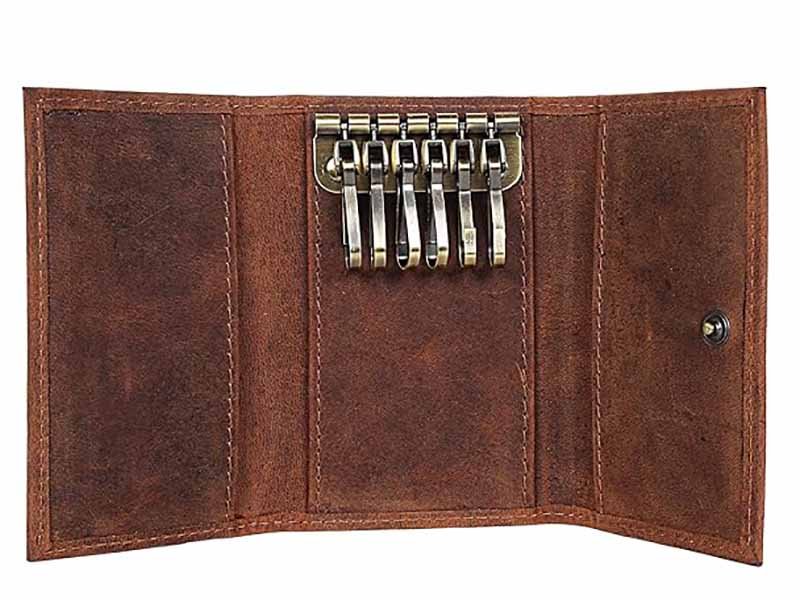
Leather key holder edge finishing is the process of sealing, smoothing, and strengthening the exposed cut edges of leather after cutting and assembly. It helps reduce fraying, improves touch, protects the edge from moisture and abrasion, and gives the product a more refined appearance. For leather key holders, where the product is small and edge visibility is high, good edge finishing has a direct effect on both perceived quality and service life.
Why Leather Key Holder Edge Finishing Matters
A leather key holder is handled many times every day. It is pulled from pockets, dropped onto tables, rubbed against keys, and exposed to sweat, humidity, dust, and friction. In that kind of daily use, the edge becomes one of the first areas to show wear. If the edge is untreated or poorly treated, the product quickly starts to look old even when the leather surface is still in good condition.
This matters for three practical reasons.
First, edge finishing affects visual quality. On a small leather item, the eye notices fine details more easily. Uneven paint lines, fuzzy fibers, or exposed glued layers make the whole product look less valuable. Even a well-designed item can lose its premium impression if the edges are weak.
Second, edge finishing affects durability. A finished edge creates a more stable barrier against moisture, friction, and splitting. In production testing, properly finished edges can significantly reduce early wear issues compared with unfinished edges.
Third, edge finishing affects brand trust. For custom leather goods, especially those sold under private label or premium positioning, customers often judge craftsmanship by what they can touch. Smooth, even edges communicate care, process discipline, and factory experience.
The table below shows how edge finishing changes product performance in daily use.
| Performance Area | Poor Edge Finish | Good Edge Finish |
|---|---|---|
| Touch feeling | Rough, dry, inconsistent | Smooth, sealed, refined |
| Edge wear speed | Fast | Slower and more controlled |
| Resistance to friction | Low | Medium to high |
| Moisture protection | Weak | Better barrier effect |
| Product appearance after use | Ages unevenly | Ages more cleanly |
| Customer perception | Lower quality feel | Higher quality feel |
For factories like SzoneierLeather, edge finishing is not added at the end just to make the product look better. It is built into the quality planning from the beginning, because edge performance has a direct impact on returns, reorder confidence, and brand presentation.
What Happens Without Edge Finishing
When leather edges are left untreated, the problems usually appear faster than many customers expect. At first, the product may still look acceptable in photos. But once it enters real use, the cut fibers begin to loosen, absorb dirt, and react to friction. The result is a product that loses its clean shape and premium feel much earlier than it should.
The most common problems include the following:
- Fiber fuzzing along the cut edge
- Darkening from dirt and hand contact
- Moisture absorption that softens the edge
- Layer separation in bonded or laminated constructions
- Minor cracking from repeated bending
- Uneven color development during use
- Faster visible aging compared with the leather face
On leather key holders, these problems are more obvious because the item is compact. There are fewer large design elements to distract from workmanship. If the edge looks poor, the entire product looks poor.
Poor edge treatment also creates problems during shipping and storage. In carton-packed orders, friction between products can damage exposed edges before the goods even reach the customer. This is especially important for export orders, retail packaging, and e-commerce distribution, where a product may go through multiple handling stages.
The comparison below shows common changes seen over time.
| Usage Period | Unfinished Edge | Professionally Finished Edge |
|---|---|---|
| 1–4 weeks | Minor fuzzing begins | Edge remains stable |
| 1–3 months | Darkening, rough feel, visible wear | Slight polish change only |
| 3–6 months | Fraying, deformation, edge weakness | Controlled aging, cleaner look |
| 6–12 months | High chance of obvious damage | Better shape retention |
For custom brands, these issues are not only about aesthetics. They affect review scores, repeat business, and overall trust in product quality. That is why edge finishing should be seen as a product performance issue, not a decorative extra.
How Leather Key Holder Edge Finishing Improves Quality
Good edge finishing improves a leather key holder in ways customers can both see and feel. It gives the product a cleaner profile, a smoother touch, and a more complete structure. It also helps the edge resist wear caused by repeated movement, contact with metal keys, and pressure from pockets or bags.
From a product development perspective, the benefits are broad.
- It creates a neater appearance with clearer edge lines
- It helps hide cut layers and construction marks
- It improves hand feel and comfort during daily use
- It lowers the chance of rapid edge wear
- It supports more consistent color and finish across bulk production
- It helps the product match the expected standard of mid-range and premium markets
In manufacturing, quality improvement often depends on small details repeated consistently. Edge finishing is one of those details. A stronger paint build, better sanding control, or a more suitable method for the leather type can improve the final result far more than many customers realize.
The table below compares the effect of edge finishing on overall product perception.
| Quality Factor | Without Strong Edge Work | With Strong Edge Work |
|---|---|---|
| Premium appearance | Limited | Stronger |
| Touch experience | Average or rough | More refined |
| Durability impression | Lower | Higher |
| Consistency in bulk orders | Less stable | More stable |
| Retail display value | Moderate | Stronger |
| Reorder confidence | Lower | Higher |
For brands launching leather accessories, edge finishing can influence whether the product feels entry-level, commercial-grade, or premium. That is why experienced factories do not choose a method based only on cost. They choose it based on material behavior, target market, and long-term user experience.
Which Leather Key Holder Edge Finishing Methods Are Used?
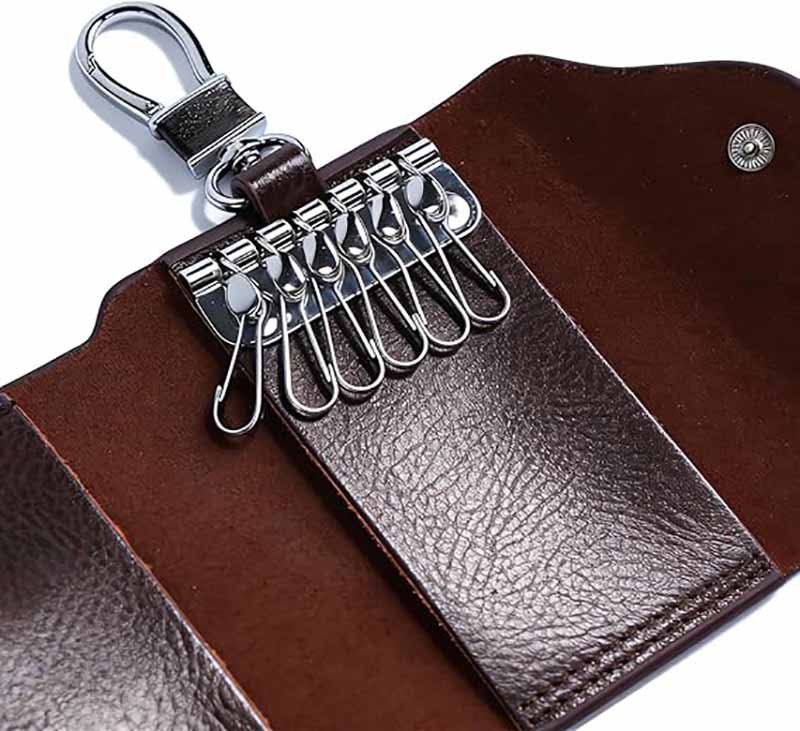
The main leather key holder edge finishing methods are burnishing, edge painting, waxing, glazing, and in some cases raw edge treatment. Each method has different strengths in appearance, durability, cost, speed, and leather compatibility. Burnishing works well on vegetable-tanned leather and gives a natural look. Edge painting creates a cleaner, more modern edge and is widely used in premium and branded leather goods.
Burnishing in Leather Key Holder Edge Finishing
Burnishing is one of the oldest and most traditional edge finishing methods in leather craft. It works by compressing the exposed leather fibers through friction, usually with the help of water, gum, wax, or other edge compounds. The process creates a denser, smoother edge with a natural look rather than a coated look.
Burnishing is most effective on vegetable-tanned leather because that type of leather has a fiber structure that responds well to compression and polishing. On this material, a well-burnished edge can look elegant, handmade, and authentic. For brands that want a natural leather style, heritage feel, or artisanal appearance, burnishing is often the preferred choice.
Its main strengths include:
- Natural and understated appearance
- Lower material cost than painted edges
- Good fit for handmade or small-batch production
- More traditional leather craftsmanship image
- No thick synthetic coating on the edge
Its limitations are also important.
- It is less suitable for many chrome-tanned leathers
- It may not hide multi-layer edge structures as effectively
- Heavy daily friction can wear the polished effect over time
- Visual consistency depends strongly on operator skill
Here is a practical comparison.
| Burnishing Factor | Performance |
|---|---|
| Best leather type | Vegetable-tanned leather |
| Appearance style | Natural, classic, handmade |
| Cost level | Low to medium |
| Production speed | Medium |
| Bulk consistency | Moderate, depends on skill |
| Long-term edge smoothness | Good, but not always as stable as paint |
For custom leather key holders, burnishing works well when the product concept is based on natural leather character rather than sharp coated edges. It is especially suitable for brands that value warmth, texture, and craftsmanship over a more polished commercial look.
Edge Painting for Leather Key Holder Edge Finishing
Edge painting is one of the most widely used finishing methods in modern leather goods manufacturing. It involves applying one or more layers of dedicated edge paint to the cut edge, then drying, sanding, and reapplying until the edge becomes smooth, sealed, and visually consistent. High-quality painted edges often require several process rounds rather than a single quick coat.
This method is popular because it gives the product a clean, controlled, premium look. It also works across a wider range of leather types than burnishing, especially when the product uses chrome-tanned leather, composite construction, or multiple bonded layers.
Its major strengths include:
- Smooth and modern appearance
- Better color control and customization
- Stronger ability to hide layered edge structures
- Higher consistency across bulk production
- Better compatibility with premium branded products
Its challenges include:
- Higher labor and material cost
- More process steps
- Greater risk of cracking if the paint system is poor
- Strong dependence on drying, sanding, and layer control
The number of coats matters a lot in real production. A single fast coat may save cost, but it often leads to weak coverage and poor wear resistance. Better factories usually build the edge in layers.
| Edge Painting Level | Process Standard | Result |
|---|---|---|
| Low-level | 1 quick coat | Uneven, weaker durability |
| Mid-level | 2–3 coats with sanding | Better appearance, fair durability |
| High-level | 3–5 coats with shaping and sealing | Smoother, stronger, more premium |
For branded leather key holders, painted edges are often the best option when the product needs a refined retail look, stable color matching, and repeatable bulk quality. At SzoneierLeather, edge painting is commonly chosen for projects where clients need tighter appearance standards, cleaner logo presentation, and better production consistency.
Waxing in Leather Key Holder Edge Finishing
Waxing is often used as a support method rather than a complete edge system by itself. In many cases, wax is applied after burnishing or during the polishing stage to improve smoothness, add a slight protective layer, and deepen the finished look of the edge. Beeswax and synthetic waxes are both used, depending on product style and process preference.
Waxing brings several advantages.
- It improves edge smoothness
- It adds a mild moisture barrier
- It helps create a richer natural finish
- It supports hand-crafted visual appeal
- It can improve the final touch feeling
Still, waxing has limits. On its own, it usually does not provide the same sealing effect or structural masking ability as a strong edge painting system. It is better understood as a finishing enhancer rather than the main solution for every leather type and every market segment.
It is often used in products that emphasize:
- Natural leather grain and color
- Traditional craftsmanship
- Warmer and less coated visual style
- Smaller handcrafted production runs
The practical value of waxing depends on the leather, the intended finish, and the customer’s target position. For a rustic or classic leather key holder, waxing can be a strong supporting step. For a cleaner modern edge with strict appearance control, it is usually not enough on its own.
Glazing in Leather Key Holder Edge Finishing
Glazing is a finishing method that uses heat, pressure, or friction to create a more polished and compact edge surface. It is often associated with higher-end leather goods because it gives the edge a smoother, tighter, and sometimes slightly glossy visual effect. In some factories, glazing is used as a finishing enhancement after other edge treatments rather than as a standalone process.
The main value of glazing lies in refinement. It can improve the surface compactness of the edge and make the finished line look more deliberate and premium. On luxury-style products, that visual precision matters.
Its advantages include:
- Cleaner and more polished edge presentation
- Better premium visual signal
- Improved surface compactness
- More controlled and elegant finish on suitable leathers
Its limitations include:
- Higher process sensitivity
- Extra equipment or operator control
- Not equally suitable for all leather types
- Added cost compared with simpler methods
Because leather key holders are small items, glazing can be very effective when the goal is to make the product feel more elevated in hand. However, it must be applied correctly. Too much heat or pressure can affect the edge shape or create inconsistency. That is why this method is more suitable for factories with strong process control rather than low-cost volume operations.
Raw Edge Leather Key Holder Edge Finishing
Raw edge treatment is different from the other methods because the product intentionally keeps a more natural exposed edge instead of fully sealing it with paint or heavy polishing. This approach is usually chosen for design reasons. It can communicate simplicity, ruggedness, or handmade character, depending on the leather and product style.
A raw edge approach can work well when:
- The leather is thick and visually attractive on the cut edge
- The brand style is minimalist or rustic
- The product is designed for a more natural aging effect
- The target customer accepts visible material honesty over polished finishing
But the trade-offs are real.
- Lower protection against moisture and dirt
- Faster visible wear on the edge
- Less suitable for products needing a premium polished look
- Reduced edge uniformity in high-volume bulk production
The table below shows where each method fits best.
| Method | Best For | Look | Durability | Cost Level |
|---|---|---|---|---|
| Burnishing | Vegetable-tanned leather | Natural | Medium | Low to medium |
| Edge painting | Branded and premium products | Clean, refined | High | Medium to high |
| Waxing | Support for natural finish | Soft natural sheen | Medium | Low |
| Glazing | Higher-end refinement | Tight, polished | Medium to high | Medium to high |
| Raw edge | Minimalist or rustic design | Natural exposed edge | Low to medium | Low |
For custom development, the best method is not always the most expensive one. The right choice depends on leather type, daily use, market expectation, and visual direction. That is exactly where a capable factory adds value. A strong leather goods manufacturer should not simply offer one finishing method for everything. It should evaluate the product structure, usage pattern, and brand target before recommending the edge finishing system.
How to Choose Leather Key Holder Edge Finishing Methods?
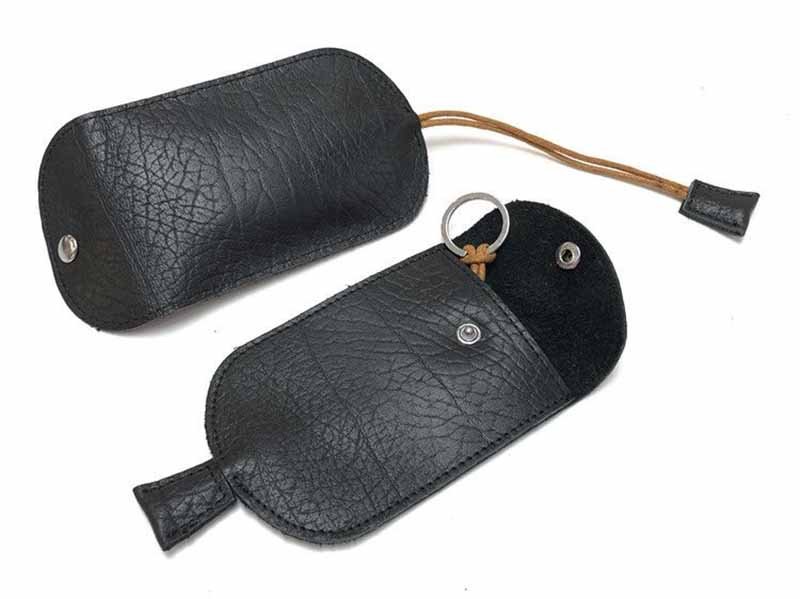
Choosing the right leather key holder edge finishing method depends on leather type, product positioning, usage scenario, and cost structure. There is no single “best” method. The correct choice is the one that balances durability, appearance, and production efficiency based on the target market and product design.
Best Leather Types for Edge Finishing Methods
Different leather types behave very differently at the edge. This is one of the most common mistakes in product development—choosing a finishing method first, instead of matching it to the material.
Vegetable-tanned leather has a tighter fiber structure that responds well to compression. This makes it ideal for burnishing and waxing. When properly treated, the edge becomes smooth and natural without needing heavy coatings.
Chrome-tanned leather, on the other hand, has a softer and more flexible fiber structure. It does not compress as well, which means burnishing alone often results in weak edges. For this type of leather, edge painting is usually the more reliable solution.
Split leather or bonded constructions require even more attention. Because these materials expose layered structures, edge painting becomes almost necessary to hide the layers and create a clean visual line.
| Leather Type | Recommended Method | Reason |
|---|---|---|
| Vegetable-tanned leather | Burnishing / Waxing | Fibers compress well |
| Chrome-tanned leather | Edge painting | Needs sealing and structure |
| Split / bonded leather | Edge painting | Hides layers, improves strength |
| Thick full-grain leather | Burnishing / Glazing | Strong natural edge possible |
Choosing the wrong method can lead to early edge failure, even if the leather itself is high quality. That is why experienced factories always evaluate the material first before confirming the finishing process.
Leather Key Holder Edge Finishing for Different Markets
Different markets have very different expectations when it comes to edge finishing. What is acceptable in one market may not meet the standard in another.
For example, European and North American markets often expect cleaner, more refined edges, especially for branded products. Edge painting is commonly used because it provides a smooth, uniform finish that aligns with retail expectations.
In contrast, some niche or handmade-focused markets prefer natural finishes. In these cases, burnished edges are not seen as “lower quality,” but as a sign of craftsmanship and authenticity.
For promotional products or large-volume wholesale orders, cost becomes a stronger factor. In these cases, simplified edge painting or basic burnishing may be used to control pricing while still maintaining acceptable quality.
| Market Type | Preferred Edge Style | Key Requirement |
|---|---|---|
| Premium retail brands | Edge painting (multi-layer) | Clean, consistent finish |
| Handmade / craft brands | Burnished edges | Natural appearance |
| E-commerce mid-range | Painted edges (2–3 layers) | Balance of cost and quality |
| Promotional / bulk orders | Simplified finishing | Cost efficiency |
Understanding the target market helps avoid over-engineering or under-delivering. A product designed for premium retail should not use entry-level finishing, and a promotional item should not carry unnecessary process cost.
Does Thickness Affect Edge Finishing Methods
Thickness plays a major role in edge finishing decisions, especially for leather key holders that use multiple layers or reinforced structures.
Thin leather edges (1.2–1.8 mm) are easier to finish but require precise control to avoid uneven paint buildup or over-sanding. In these cases, edge painting works well because it creates a clean, controlled line.
Thicker constructions (2.5–4.0 mm), especially those made from stacked layers, present a different challenge. The edge may expose multiple glue lines or uneven layers. Without proper treatment, the edge will look rough and inconsistent.
In these situations:
- Edge painting helps hide structural layers
- Multiple sanding steps are required to level the surface
- Additional paint layers improve edge uniformity
Burnishing can work on thick vegetable-tanned leather, but only if the layers are well aligned and properly glued. Otherwise, the edge will not compress evenly.
| Thickness Range | Recommended Approach |
|---|---|
| Thin (≤1.8 mm) | Light edge painting or burnishing |
| Medium (1.8–2.5 mm) | Standard painting (2–3 layers) |
| Thick (≥2.5 mm) | Multi-layer painting + shaping |
For key holders, where edges are often visible from multiple angles, thickness control and edge finishing must be planned together from the design stage.
Cost vs Quality in Edge Finishing Methods
Edge finishing has a direct impact on production cost, but the relationship is not always obvious. Many customers focus only on material cost, but in reality, labor and process steps are the main cost drivers for edge finishing.
Here is a simplified breakdown:
| Method | Process Steps | Cost Level | Quality Level |
|---|---|---|---|
| Basic burnishing | Low | Low | Medium |
| Burnishing + waxing | Medium | Low–medium | Medium |
| Simple edge painting (1–2 coats) | Medium | Medium | Medium |
| Multi-layer edge painting (3–5 coats) | High | Medium–high | High |
The key point is not just the method, but how well it is executed. A poorly applied multi-layer paint edge can perform worse than a well-executed burnished edge.
From a business perspective:
- Higher-quality edge finishing reduces return rates
- Better durability improves customer satisfaction
- Consistent finishing supports repeat orders
In many cases, slightly increasing edge finishing cost can significantly improve the perceived value of the product, making it easier to sell at a higher price point.
How Is Leather Key Holder Edge Finishing Done?
Leather key holder edge finishing is a multi-step process that includes preparation, shaping, sealing, and refinement. The quality of the final edge depends not only on the chosen method, but also on how consistently each step is executed during production.
Surface Prep for Leather Key Holder Edge Finishing
Edge finishing starts long before paint or wax is applied. The preparation stage determines how well the edge will perform later.
The first step is cutting. Clean, precise cutting reduces irregularities and makes the finishing process more stable. Poor cutting leads to uneven edges that are difficult to correct later.
After cutting, the edge must be checked for:
- Alignment of layers
- Glue consistency
- Surface smoothness
Any uneven areas need to be corrected before moving forward. If the base is not stable, no finishing method can fully fix the result.
In factory production, preparation often includes:
- Edge trimming
- Initial sanding
- Cleaning of dust and debris
Skipping or rushing this stage is one of the main causes of poor edge quality in mass production.
Sanding and Shaping in Edge Finishing
Sanding is one of the most critical steps in edge finishing. It creates a flat, even surface that allows paint or wax to adhere properly.
For painted edges, sanding is not done just once. It is repeated between layers to gradually refine the edge.
Typical sanding process:
- First sanding: level the edge after cutting and gluing
- Intermediate sanding: smooth each paint layer
- Final sanding: refine the surface before sealing
The quality difference between low-end and high-end products is often visible here. Products with insufficient sanding usually show:
- Uneven edges
- Visible bumps
- Inconsistent paint thickness
Well-sanded edges feel smooth even before the final finish is applied.
Layering in Leather Key Holder Edge Finishing
Layering is what builds durability in edge painting. Each layer adds structure, protection, and smoothness.
In high-quality production, edge painting is not a single-step process. It is a controlled build-up.
A typical high-quality process may include:
- Base coat to seal fibers
- Drying and sanding
- Second coat to build structure
- Additional coats for thickness and smoothness
- Final sealing layer
Each layer must be properly dried before the next step. Rushing this process leads to weak adhesion and higher risk of cracking.
| Layer Count | Result |
|---|---|
| 1 layer | Thin, weak coverage |
| 2–3 layers | Acceptable for mid-range products |
| 3–5 layers | Strong, smooth, premium edge |
For custom projects, the number of layers should be aligned with the product’s target positioning and expected lifespan.
Consistency in Leather Key Holder Edge Finishing Production
Consistency is one of the biggest challenges in edge finishing, especially for bulk orders. A sample may look perfect, but maintaining that quality across thousands of units requires strict process control.
Key factors that affect consistency:
- Operator skill level
- Drying time control
- Environmental conditions (temperature, humidity)
- Equipment precision
- Standardized process steps
Factories with strong experience use:
- Defined process guidelines
- Layer count control
- Sample approval standards
- In-line quality checks
For example, in large production runs, even small variations in drying time can lead to differences in edge hardness or flexibility. Over time, these differences can affect product performance in the market.
That is why reliable manufacturers treat edge finishing as a controlled system, not just a manual task.
What Problems Occur in Leather Key Holder Edge Finishing?
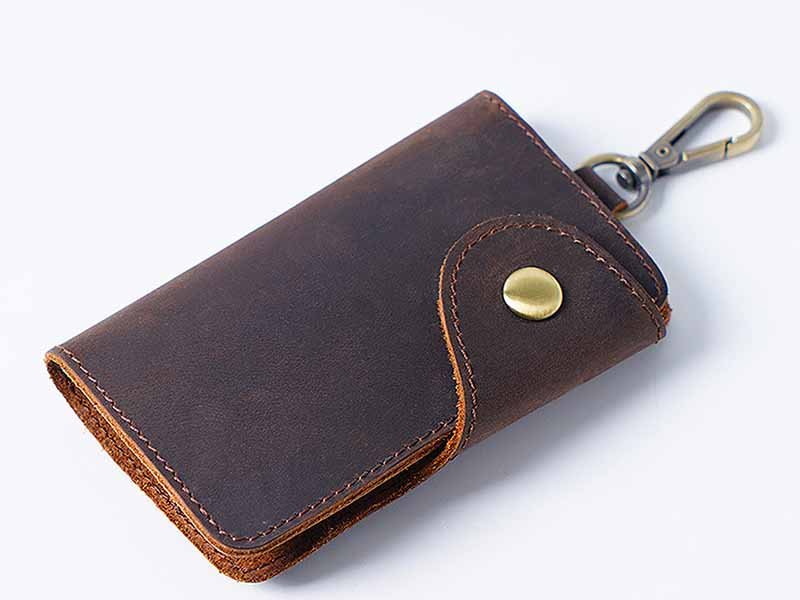
Leather key holder edge finishing problems usually come from mismatched materials, incorrect processes, or inconsistent production control. The most common issues include cracking, peeling, uneven edges, and color instability. These problems not only affect appearance but also reduce durability and increase return rates, especially in export and retail markets.
Cracking in Leather Key Holder Edge Finishing
Edge cracking is one of the most common and serious quality issues. It usually appears after repeated bending, especially near folds, corners, or high-stress points.
The root causes are often:
- Paint layer applied too thick in a single pass
- Insufficient drying time between layers
- Low-quality edge paint with poor flexibility
- Mismatch between leather softness and paint hardness
- Lack of proper base sealing
In real production, cracking tends to appear after 2–8 weeks of use, especially in colder environments where materials become less flexible.
How to reduce cracking risk:
- Use flexible, high-quality edge paint
- Apply multiple thin layers instead of one thick layer
- Ensure proper drying time (not rushed by heat alone)
- Match paint system to leather type (soft vs firm leather)
- Reinforce edges in high-bend areas
| Factor | High Risk Practice | Better Practice |
|---|---|---|
| Paint thickness | One thick coat | Multiple thin layers |
| Drying | Rushed drying | Controlled drying time |
| Material match | Generic paint | Leather-specific paint |
| Flexibility | Rigid finish | Flexible finish system |
Factories with experience understand that edge finishing is not just about appearance—it must also handle mechanical stress over time.
Uneven Leather Key Holder Edge Finishing
Uneven edges are easy to notice, even for non-professional customers. This includes wavy lines, inconsistent thickness, visible bumps, or irregular color coverage.
The main reasons include:
- Poor cutting precision
- Misaligned layers during gluing
- Insufficient sanding before finishing
- Inconsistent paint application
- Lack of process standardization
In bulk production, uneven edges often appear when multiple operators work without unified standards.
How to improve edge consistency:
- Ensure precise cutting and alignment from the start
- Use multi-stage sanding to level the surface
- Standardize paint viscosity and application method
- Train operators with clear visual references
- Implement in-line inspection during production
| Problem Source | Result | Improvement |
|---|---|---|
| Rough base edge | Uneven paint line | Better pre-sanding |
| Layer misalignment | Visible structure | Improved gluing accuracy |
| Inconsistent paint | Color variation | Controlled application process |
Consistency is not achieved by chance. It comes from repeatable processes and strict quality control.
Peeling in Leather Key Holder Edge Finishing
Peeling happens when the edge coating separates from the leather surface. This is a critical failure because once peeling starts, it spreads quickly and cannot be repaired easily.
Common causes include:
- Poor adhesion between paint and leather
- Contaminated surface (dust, oil, residue)
- Incorrect base coat or missing primer
- Excessive bending stress
- Low-quality finishing materials
Peeling is often seen in lower-cost production where steps are skipped to reduce time.
How to prevent peeling:
- Clean edges thoroughly before finishing
- Use proper base coat or primer
- Ensure compatibility between paint and leather
- Avoid over-thick coating layers
- Test adhesion before mass production
| Cause | Effect | Prevention |
|---|---|---|
| Dirty surface | Weak adhesion | Proper cleaning |
| No base coat | Paint separation | Use primer layer |
| Cheap materials | Early failure | Use tested systems |
For export products, peeling is one of the main reasons for customer complaints and negative reviews.
How to Improve Leather Key Holder Edge Finishing Quality
Improving edge finishing quality is not about a single upgrade. It requires a combination of material selection, process control, and quality inspection.
Key improvement strategies include:
- Selecting the right method for the leather type
- Using tested and stable finishing materials
- Standardizing each production step
- Training workers on consistency and detail
- Conducting durability testing before shipment
In professional factories, edge finishing quality is often checked through:
- Visual inspection under consistent lighting
- Touch testing for smoothness
- Bending tests for flexibility
- Adhesion testing for paint stability
| Quality Control Step | Purpose |
|---|---|
| Visual inspection | Check uniformity |
| Touch test | Evaluate smoothness |
| Flex test | Detect cracking risk |
| Adhesion test | Prevent peeling |
Factories like SzoneierLeather integrate these checks into production to ensure that every batch meets the expected standard.
How Do Premium Brands Handle Leather Key Holder Edge Finishing?
Premium brands treat edge finishing as a defining detail of product quality. They use multi-layer processes, strict material standards, and detailed inspection systems to ensure that edges remain smooth, durable, and visually consistent over time.
High-End Leather Key Holder Edge Finishing Standards
Premium products follow stricter standards than mass-market items. The difference is not always visible in photos, but it becomes clear in hand feel and long-term use.
Typical high-end standards include:
- Smooth edge with no visible layering
- Consistent thickness across all edges
- Clean transitions at corners and curves
- No bubbles, cracks, or rough areas
- Stable color that does not fade quickly
High-end edge painting usually involves 3–5 layers, with sanding between each layer to achieve a perfectly even surface.
| Standard Level | Edge Requirement |
|---|---|
| Entry-level | Basic coverage |
| Mid-range | Smooth and consistent |
| Premium | Perfectly even, durable, refined |
Handmade vs Machine Edge Finishing Methods
Both handmade and machine-assisted processes are used in edge finishing, and each has its place.
Handmade finishing allows:
- Greater flexibility for complex designs
- More control over small-batch production
- Unique handcrafted character
Machine-assisted finishing provides:
- Higher consistency in bulk orders
- Faster production speed
- More uniform results across batches
| Method | Strength | Limitation |
|---|---|---|
| Handmade | Flexible, detailed | Slower, less consistent |
| Machine-assisted | Consistent, efficient | Less artisanal detail |
Strong factories combine both approaches—using machines for consistency and skilled workers for refinement.
Details That Define Premium Edge Finishing
Premium edge finishing is not about one single step. It is about how multiple details come together.
Key details include:
- Edge symmetry across both sides
- Smooth curvature at corners
- No visible sanding marks
- Even color coverage without streaks
- Proper edge thickness (not too thin or bulky)
These details are often invisible in product listings but become obvious when customers hold the product.
In competitive markets, these small differences influence:
- Product reviews
- Brand perception
- Repeat purchase rate
That is why premium brands invest heavily in edge finishing systems rather than treating them as a secondary step.
Final Section: Start Your Custom Leather Key Holder Project with SzoneierLeather
If you are developing leather key holders for your brand, edge finishing is one of the most important factors that will influence how your product is perceived, used, and reviewed.
Whether your project requires a natural handmade look or a clean premium retail finish, the right edge finishing method can be developed based on your product goals.
If you want to improve your product quality, reduce return rates, and create leather key holders that truly match your brand positioning, the best next step is to work with a factory that understands both craftsmanship and production control.
Send your design, material preference, or target price range to SzoneierLeather today, and get a tailored solution for your custom leather key holder project.