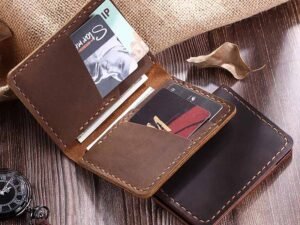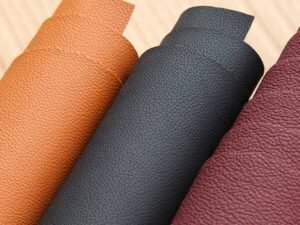
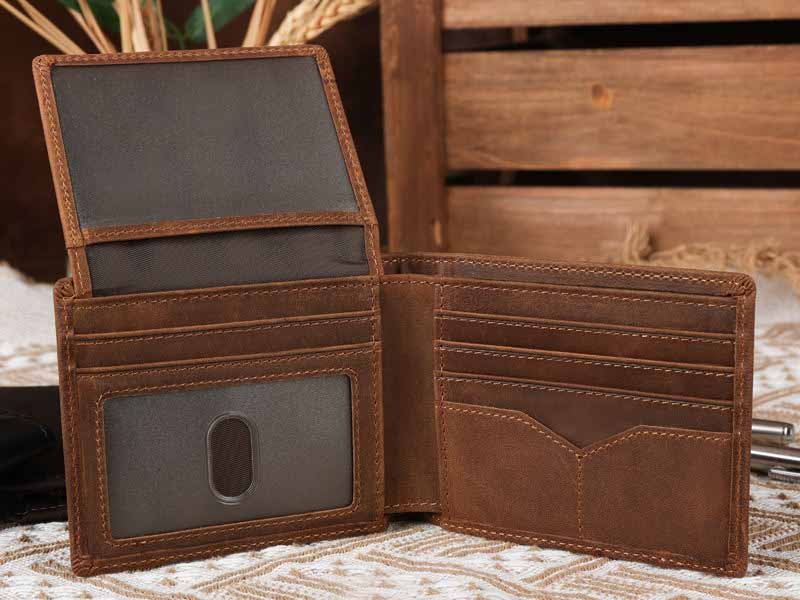
When people look at a leather wallet, they usually notice the leather texture, the logo, the shape, or the color first. What they do not immediately see is the part that often decides whether the wallet feels practical and durable after months of use: the coin pocket construction. A wallet can look elegant on day one and still perform badly in daily life if the coin compartment is too stiff, too shallow, too bulky, or too weak at the seams. That is why coin pocket construction matters much more than many product developers first expect.
Leather wallet coin pocket construction is the way the coin compartment is designed, cut, layered, assembled, stitched, and reinforced so it can hold coins securely, open smoothly, resist wear, and stay in shape over time. A good construction method balances capacity, ease of access, profile thickness, and long-term durability without making the wallet feel bulky or unstable.
In real manufacturing, the coin pocket is one of the most sensitive parts of the whole wallet. It deals with concentrated weight, friction from metal coins, repeated opening and closing, and constant pressure during folding. A card slot may stay almost flat for years, but a coin pocket is tested every day. One small decision—such as using leather that is 0.3 mm too thick, skipping skiving near the fold, or placing the stitch line too close to the edge—can turn a promising design into a product that causes complaints, returns, and reorder hesitation. For brands and custom wholesale clients, understanding coin pocket construction is not a design luxury. It is a product survival issue.
What Is Leather Wallet Coin Pocket Construction?
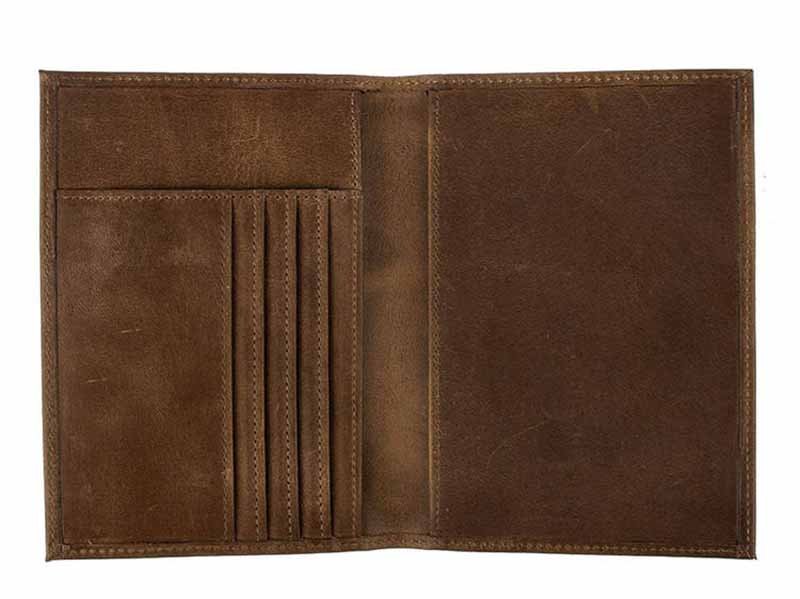
Leather wallet coin pocket construction refers to the internal structure and build method used to create a functional, durable, and user-friendly coin compartment inside a wallet. It is not just about adding a small pocket—it is about how that pocket is engineered to handle weight, friction, repeated use, and long-term shape retention without affecting the overall feel of the wallet.
In real product development, the coin pocket is one of the most technically sensitive parts of a wallet. It deals with concentrated pressure from metal coins, constant opening and closing, and irregular load distribution. If the construction is not carefully designed, problems appear quickly—sometimes within weeks of use.
From a manufacturing perspective, coin pocket construction is a combination of multiple controlled steps:
- defining pocket structure (flat, gusseted, flap, zipper)
- selecting suitable leather type and temper
- controlling thickness through skiving
- layering materials in the correct order
- stitching with proper spacing and tension
- reinforcing stress points to prevent failure
- finishing edges to improve comfort and durability
Each step directly affects performance. A wallet may look similar externally, but internal construction differences can lead to completely different user experiences.
What Does Leather Wallet Coin Pocket Construction Include?
A well-built coin pocket is made up of several structural elements working together. It is not a single layer of leather stitched into place. In most quality wallets, the coin compartment includes multiple layers and functional components that must be carefully balanced.
A typical coin pocket structure includes:
- outer leather panel (visible surface)
- inner pocket layer (main load-bearing part)
- lining or backing material (optional but recommended)
- closure system (zipper, snap, or flap)
- reinforcement layers at stress points
- stitching lines and seam allowance
- edge finishing and fold treatment
In higher-end products, the number of material layers in certain areas can reach 4–6 layers, especially near folds and closures. Without proper thickness control, this creates bulk and stiffness.
Below is a simplified breakdown of internal structure:
| Component | Function | Key Requirement |
|---|---|---|
| Outer leather | Appearance + durability | Scratch resistance, stable grain |
| Inner layer | Holds coins | Strong but flexible |
| Lining | Reduces friction | Wear resistance |
| Closure | Secures coins | Reliable function over time |
| Reinforcement | Protects stress zones | Prevent tearing |
| Stitching | Connects structure | Even tension, correct spacing |
From a client perspective, this means that coin pocket quality is not decided by leather grade alone. It depends on how these elements are combined and controlled during production.
Why Is Leather Wallet Coin Pocket Construction Important?
The coin pocket is one of the highest-risk areas for product failure in a wallet. It experiences more stress than card slots or bill compartments because coins create uneven pressure, sharp contact points, and constant movement.
In real use, most customer complaints about wallets are related to internal structure—not surface appearance. Coin pocket construction is often at the center of these issues.
Common performance problems caused by poor construction include:
- seams cracking after 2–4 months
- pocket becoming too tight or difficult to open
- coins falling out due to poor closure design
- lining tearing from repeated friction
- wallet becoming bulky and uncomfortable
- deformation after carrying coins daily
These problems directly affect customer satisfaction and reorder rates.
Here is a practical comparison:
| Performance Factor | Poor Construction | Well-Engineered Construction |
|---|---|---|
| Durability | 3–6 months visible wear | 2–5 years stable use |
| Usability | Difficult access | Smooth daily operation |
| Shape retention | Warping and bulging | Maintains clean profile |
| Customer feedback | Complaints and returns | Positive repeat orders |
For brands and wholesale clients, this is not just a technical detail—it is a business decision. A poorly constructed coin pocket can increase return rates, reduce product reviews, and damage brand reputation.
In contrast, a well-engineered coin pocket:
- improves perceived product value
- reduces after-sales issues
- supports higher pricing
- increases customer trust
This is why experienced manufacturers treat coin pocket construction as a core development step, not a secondary feature. It requires testing, adjustment, and real-use validation—not just visual approval.
In practical terms, if a wallet is expected to carry coins regularly, the coin pocket must be designed first, not added later. It defines how the entire wallet will behave in real life.
Which Types of Leather Wallet Coin Pocket Construction Are Used?
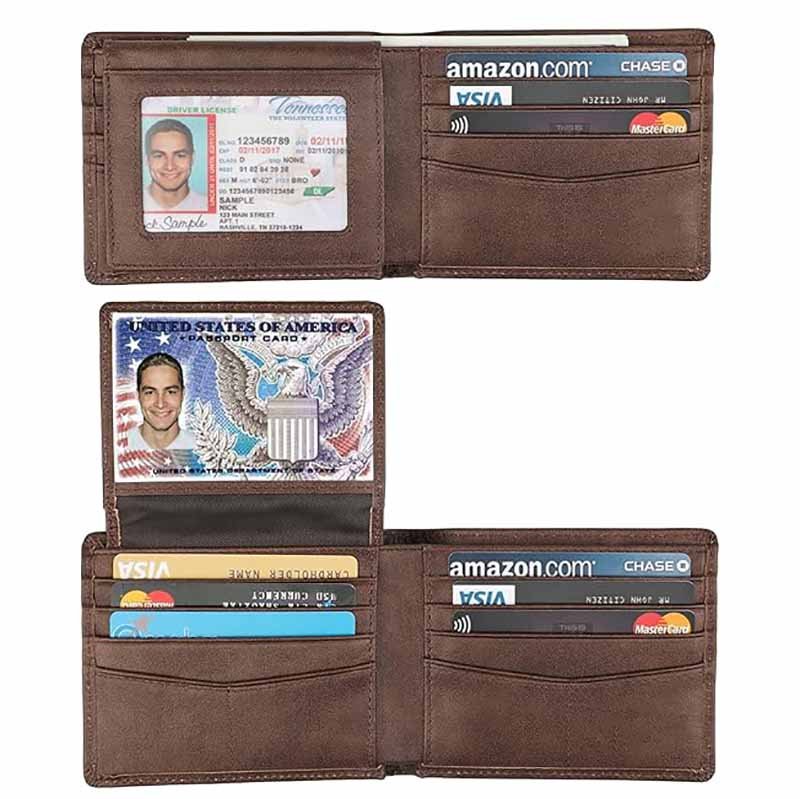
Leather wallet coin pocket construction mainly includes four practical structures: flat pockets, gusseted pockets, zipper pockets, and flap pockets. Each type solves a different problem in daily use—some focus on slimness, some on capacity, and others on security. The right choice depends on how the wallet will be used, how many coins it needs to hold, and how much thickness the design can accept.
From real production experience, there is no “best” type. The key is matching the structure to the product positioning. A slim fashion wallet, a daily-use wallet, and a travel wallet should not use the same coin pocket construction logic.
Flat Leather Wallet Coin Pocket Construction
Flat coin pockets are the most basic structure. They are made by stitching a pocket panel directly onto a base layer without any expandable side panels. The internal space is limited and does not expand much when coins are added.
This type is commonly used in slim wallets because it keeps the overall thickness low. It also has lower production cost and simpler manufacturing steps.
However, flat construction has clear limitations in real use. When more than a small number of coins are inserted, pressure builds up quickly inside the pocket. This pressure is transferred directly to the stitching lines and outer leather, which can lead to deformation or seam stress over time.
In practical use, flat coin pockets are suitable for:
- carrying a small number of coins (3–8 coins)
- minimalist wallets where thickness is a priority
- markets where coins are used occasionally rather than daily
Typical issues seen in production include:
- pocket becoming tight after short use
- edges bulging outward
- seam stress when overloaded
Below is a realistic performance range:
| Feature | Flat Coin Pocket |
|---|---|
| Capacity | Low |
| Thickness impact | Very low |
| Durability under load | Medium |
| Ease of use | Medium |
| Production cost | Low |
Flat construction works best when expectations are controlled. It should not be used for heavy coin storage.
Gusseted Leather Wallet Coin Pocket Construction
Gusseted coin pockets include side panels or folded extensions that allow the pocket to expand. This structure increases usable space without significantly changing the external dimensions of the wallet.
In real use, this is one of the most practical and user-friendly constructions. It allows users to store more coins while still being able to access them easily. The pocket opens wider, making it easier to see and pick coins.
A well-designed gusset can increase capacity by approximately 40% to 80% compared to flat construction, depending on the depth and angle of the side panels.
From a durability perspective, gusseted construction also distributes pressure more evenly. Instead of forcing all stress onto the front seam, the load is shared across multiple structural points.
Typical applications include:
- daily-use wallets
- mid to high-end products
- wallets designed for markets with frequent coin usage
However, gusseted construction requires higher manufacturing precision. Common challenges include:
- alignment of side panels
- thickness buildup at fold points
- maintaining symmetry during stitching
If not handled correctly, the pocket may feel uneven or bulky.
Performance overview:
| Feature | Gusseted Coin Pocket |
|---|---|
| Capacity | High |
| Thickness impact | Medium |
| Durability under load | High |
| Ease of use | High |
| Production cost | Medium to high |
For most custom wallet projects, this structure provides the best balance between function and user experience.
Zipper Leather Wallet Coin Pocket Construction
Zipper coin pockets are designed for secure storage. They use a zipper closure to fully enclose the coin compartment, preventing coins from falling out even during movement or travel.
This type is commonly used in larger wallets, travel wallets, or multi-functional designs where security is a priority.
The zipper adds a new layer of complexity to construction. It requires:
- precise alignment of zipper tape
- reinforcement at both ends of the zipper
- controlled leather thickness around the zipper edge
- smooth integration with the wallet structure
In real production, zipper-related issues are one of the most common sources of complaints if not handled properly. These include:
- zipper edge deformation
- stiff opening
- splitting at zipper ends
- uneven stitching along zipper line
To avoid these problems, reinforcement and proper material matching are critical.
Zipper coin pockets are suitable for:
- travel wallets
- zip-around wallets
- wallets carrying coins plus small valuables
Performance overview:
| Feature | Zipper Coin Pocket |
|---|---|
| Capacity | Medium |
| Thickness impact | High |
| Durability under load | High (if reinforced) |
| Ease of use | Medium |
| Security | Very high |
| Production cost | High |
This structure is ideal when security is more important than slimness.
Flap Leather Wallet Coin Pocket Construction
Flap coin pockets use a fold-over leather cover, usually combined with a snap button or hidden closure. This is one of the most traditional and widely recognized wallet structures.
It provides a good balance between accessibility and security. Users can open the pocket quickly, and the flap helps keep coins inside without requiring a zipper.
From a design perspective, flap pockets offer strong visual identity. They are often used in classic, vintage, or heritage-style wallets.
However, flap construction depends heavily on correct proportions and material selection. If the flap is too short, it may not cover the pocket properly. If it is too long, it may look loose or bulky.
The snap button area is also a critical stress point. Without proper reinforcement, the leather around the snap can stretch or crack over time.
Typical use cases include:
- classic bifold wallets
- mid-range and premium products
- designs focusing on traditional aesthetics
Performance overview:
| Feature | Flap Coin Pocket |
|---|---|
| Capacity | Medium |
| Thickness impact | Medium |
| Durability under load | Medium to high |
| Ease of use | High |
| Security | Medium |
| Production cost | Medium |
Flap construction is a strong option when the goal is to combine usability with a familiar, classic look.
Comparison of All Coin Pocket Construction Types
To help with product decision-making, here is a direct comparison based on real production and usage factors:
| Type | Capacity | Thickness | Ease of Access | Security | Durability | Recommended Use |
|---|---|---|---|---|---|---|
| Flat | Low | Low | Medium | Medium | Medium | Slim wallets |
| Gusseted | High | Medium | High | Medium | High | Daily-use wallets |
| Zipper | Medium | High | Medium | High | High | Travel wallets |
| Flap | Medium | Medium | High | Medium | Medium to high | Classic wallets |
From a client’s perspective, choosing the right coin pocket construction should always start with one question:
How will the wallet actually be used in daily life?
If the answer is clear, the structure becomes easier to decide. If not, even a well-made wallet can feel inconvenient to users.
A professional factory will not only show different styles—they will help match the structure to your product goals, price level, and target market.
How Does Leather Wallet Coin Pocket Construction Work?
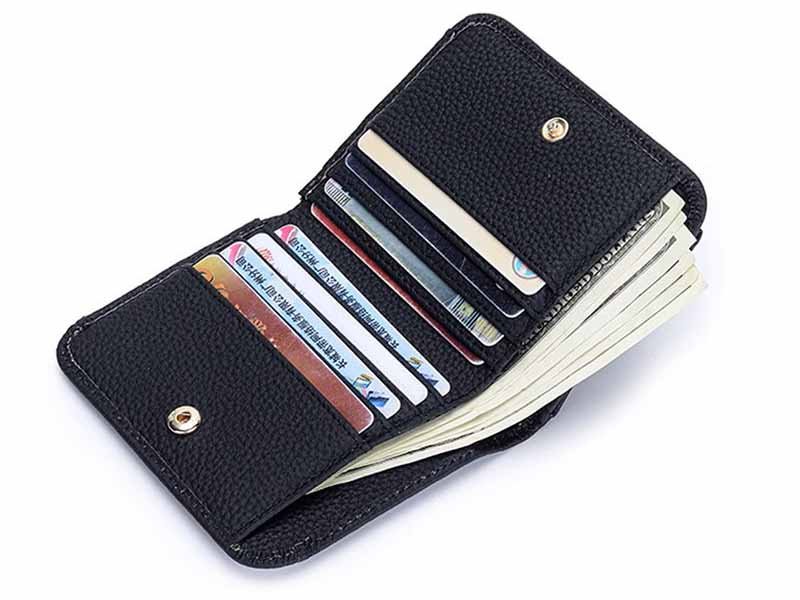
Leather wallet coin pocket construction works through a sequence of controlled steps: material selection, leather thinning, structural assembly, and reinforcement. Each stage directly affects how the pocket opens, holds coins, and withstands repeated use. A well-executed process ensures smooth usability, balanced thickness, and long-term durability without deformation.
How Is Leather Prepared for Coin Pocket Construction?
Before any stitching begins, the most important step is material preparation. This stage determines whether the final pocket will feel smooth, flexible, and durable—or stiff, bulky, and prone to failure.
The first decision is leather type and temper. For coin pockets, leather must balance strength and flexibility. If it is too soft, the pocket will collapse and lose shape. If it is too firm, the pocket becomes difficult to open and uncomfortable to use.
The second step is thickness control through skiving. This is where many problems begin if handled incorrectly. A coin pocket often includes multiple overlapping layers. Without thinning certain areas, the total thickness can quickly exceed 3–4 mm, which is too bulky for a comfortable wallet.
In professional production, thickness is carefully distributed:
| Area | Recommended Thickness Range |
|---|---|
| Outer visible panel | 1.2 – 1.6 mm |
| Inner pocket layer | 0.8 – 1.2 mm |
| Fold edges (after skiving) | 0.5 – 0.8 mm |
| Gusset or side panels | 0.6 – 1.0 mm |
Skiving is not applied evenly. It is targeted. Edges, folds, and overlapping zones are thinned more aggressively, while stress-bearing zones retain strength.
Another critical step is edge preparation. Before assembly, edges are often beveled or pre-treated to ensure smoother folding and cleaner finishing. If edges are left too thick or rough, they will create visible bulk lines and reduce comfort.
Moisture conditioning is also used in some factories. Slightly adjusting leather moisture content allows better shaping during assembly, especially for gusseted or flap constructions.
In short, preparation is not just about cutting leather. It is about controlling how the material will behave under pressure, movement, and time.
How Is Leather Wallet Coin Pocket Construction Assembled?
Once materials are prepared, the assembly stage begins. This is where individual components are turned into a functional structure.
The process usually follows a fixed sequence:
- inner pocket layer is attached to base panel
- gusset or side panels are added (if required)
- closure system is installed (zipper, snap, or flap)
- outer panel is aligned and layered
- stitching lines are marked and executed
- edges are finished and sealed
Precision during assembly is critical. Even a 1 mm misalignment can affect how the pocket opens or how the wallet folds.
One key detail is stitch placement. Stitch lines must be positioned far enough from the edge to avoid tearing, but not so far that the pocket loses shape. A common safe range is:
- 2.5 – 3.5 mm from edge for standard leather wallets
- slightly wider for thicker constructions
Another important factor is tension control during stitching. If stitching is too tight, the leather may pucker or deform. If too loose, the seam will lack strength.
For gusseted pockets, symmetry is especially important. If one side opens wider than the other, the pocket feels uneven and unbalanced in use.
For zipper constructions, alignment must ensure that the zipper sits flat and does not distort the surrounding leather. This often requires pre-bending or shaping the leather before stitching.
Factories with strong development capability often create multiple prototypes before finalizing assembly methods. Small adjustments—such as changing stitch angle or adjusting seam allowance—can significantly improve usability.
How Is Leather Wallet Coin Pocket Construction Reinforced?
Reinforcement is what separates a short-life product from a long-lasting one. Coin pockets face repeated stress at specific points, and these areas must be strengthened during construction.
The most critical reinforcement zones include:
- pocket corners
- gusset joints
- zipper ends
- flap fold lines
- snap button attachment points
Without reinforcement, these areas are the first to fail.
Common reinforcement techniques include:
- back stitching at seam start and end
- hidden reinforcement patches inside stress zones
- double-layer leather in high-pressure areas
- bar-tack stitching for concentrated stress points
- adhesive bonding combined with stitching
For example, zipper ends often require internal reinforcement pieces to prevent tearing when users pull the zipper repeatedly. Without this, even high-quality leather can split at the edge.
Another important technique is load distribution. Instead of allowing all pressure to focus on a single stitch line, the structure is designed to spread force across a wider area. Gusseted designs naturally help with this, but even flat pockets can benefit from better seam positioning.
Below is a comparison of reinforced vs non-reinforced construction:
| Area | Without Reinforcement | With Reinforcement |
|---|---|---|
| Corners | Cracking within months | Stable for years |
| Zipper ends | Splitting or tearing | Maintains structure |
| Flap fold | Permanent crease damage | Smooth folding retention |
| Seam edges | Stitch breakage | Strong load resistance |
In higher-end production, reinforcement is not visible, but it is always present. It is one of the main reasons why two wallets with similar appearance can perform very differently over time.
Which Materials Are Used in Leather Wallet Coin Pocket Construction?
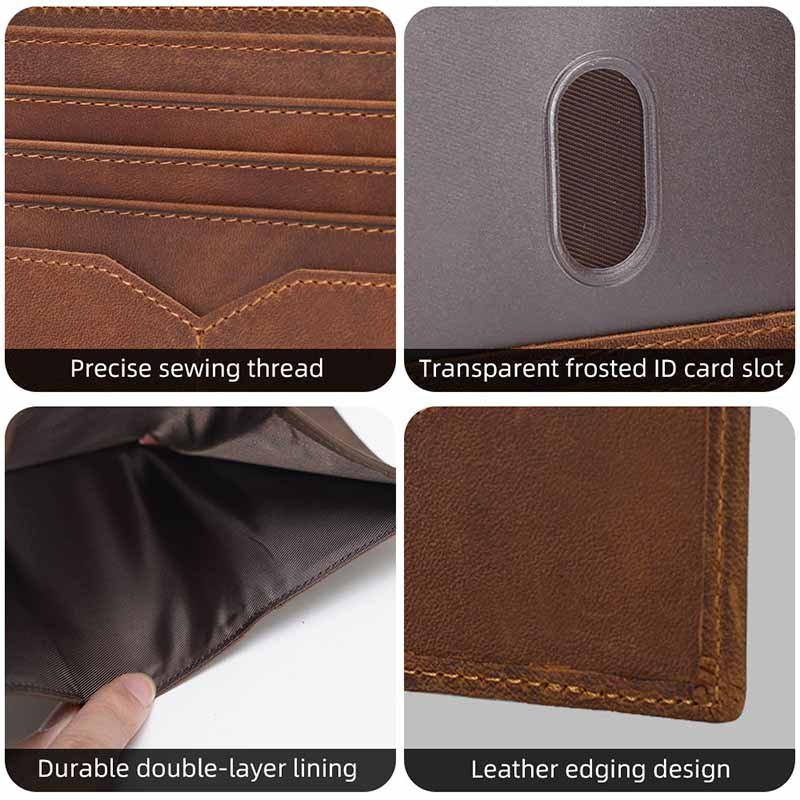
Leather wallet coin pocket construction uses a combination of outer leather, internal leather or fabric layers, reinforcement materials, and hardware components. The right material combination ensures durability, flexibility, and long-term shape retention without unnecessary bulk.
Which Leather Is Best for Coin Pocket Construction?
Not all leather types are suitable for coin pockets. The material must handle repeated movement, friction from coins, and pressure from storage without cracking or deforming.
The most commonly used leathers include:
- full grain leather
- top grain leather
- corrected grain leather
- split leather (for lower-cost projects)
Full grain leather offers the best durability and aging performance. It maintains strength even after years of bending and use. However, it is usually thicker and requires more careful skiving.
Top grain leather provides a smoother surface and more controlled consistency, making it easier for mass production while still maintaining good durability.
For coin pockets, leather temper (softness vs firmness) is just as important as leather type. A medium temper is often preferred because it allows flexibility without losing structure.
Here is a comparison:
| Leather Type | Durability | Flexibility | Cost Level | Suitability for Coin Pocket |
|---|---|---|---|---|
| Full grain | Very high | Medium | High | Excellent |
| Top grain | High | Medium-high | Medium-high | Very good |
| Corrected grain | Medium | Medium | Medium | Acceptable |
| Split leather | Low | High | Low | Limited use |
Choosing the wrong leather is one of the fastest ways to reduce product quality. Even perfect construction cannot fully compensate for unsuitable material.
Are Linings Needed in Coin Pocket Construction?
Lining is often overlooked, but it plays a major role in performance. A coin pocket without lining may look clean, but it can suffer from faster wear, stretching, and friction damage.
Common lining materials include:
- polyester fabric
- microfiber
- thin pigskin leather
- synthetic blends
Each has its own function. Fabric linings reduce friction and improve smoothness. Leather linings improve durability and maintain a premium feel. Microfiber offers a balance between cost and performance.
The choice depends on positioning:
- premium wallets often use leather or microfiber lining
- mid-range products use durable fabric lining
- entry-level products may skip lining or use thin synthetic layers
A well-chosen lining improves:
- coin movement inside pocket
- resistance to wear
- shape stability
- overall user experience
Without lining, the inner surface may become rough, stretched, or damaged over time, especially when coins rub against the same area repeatedly.
How Does Thickness Affect Coin Pocket Construction?
Thickness is one of the most misunderstood aspects of wallet development. Many clients assume thicker leather means better quality. In coin pocket construction, this is not always true.
Too much thickness creates several problems:
- reduced flexibility
- difficult opening
- bulky wallet profile
- uneven folding
- pressure marks on outer panels
Too little thickness creates different issues:
- weak structure
- faster deformation
- reduced durability
- poor shape retention
The key is balance. Instead of using thick leather everywhere, professional construction uses controlled thickness distribution.
Example:
- outer panels remain stronger for durability
- inner layers are thinner for flexibility
- edges are skived for smooth folding
- reinforcement zones keep added strength
A well-balanced wallet often feels thinner, smoother, and more refined—even if it uses high-quality leather.
Below is a simplified guideline:
| Construction Goal | Thickness Strategy |
|---|---|
| Slim wallet | aggressive skiving + thin inner layers |
| High durability | medium thickness + reinforcement |
| Premium feel | balanced thickness + soft temper |
| Heavy coin use | structured layers + gusset support |
Thickness is not just a material choice. It is a design decision that affects every part of the user experience.
How to Improve Leather Wallet Coin Pocket Construction Design?
Improving leather wallet coin pocket construction design means optimizing how the pocket feels, performs, and lasts in real daily use. This involves balancing capacity, thickness, accessibility, and durability while avoiding structural weaknesses that lead to early failure or poor user experience.
How to Balance Capacity and Slim Design?
One of the most common challenges in wallet development is balancing coin storage capacity with a slim and comfortable profile. Many clients want both—but without proper structure, trying to achieve both often leads to compromise on usability or durability.
A coin pocket that is too small becomes frustrating to use. A pocket that is too large makes the wallet bulky and uneven when folded. The key is controlled expansion, not simply increasing size.
There are three practical ways to achieve this balance:
- use gusseted structures instead of flat panels
- apply selective thickness reduction through skiving
- design internal volume without increasing outer dimensions excessively
For example, a well-designed gusset can increase usable capacity by 40%–70% without significantly affecting the external appearance of the wallet. This is far more efficient than simply enlarging the pocket footprint.
Another important factor is how the pocket interacts with the wallet fold. If the coin pocket is placed too close to the center fold, even a small number of coins can create pressure that distorts the wallet shape.
Below is a comparison of different design approaches:
| Design Approach | Result on Capacity | Impact on Thickness | User Experience |
|---|---|---|---|
| Enlarged flat pocket | Slight increase | High bulk | Poor balance |
| Gusseted pocket | Strong increase | Moderate | Best balance |
| Thin leather only | No real increase | Slim | Limited usability |
| Smart layering | Moderate increase | Controlled | Good balance |
A well-developed coin pocket should not aim to carry “as many coins as possible.” It should aim to carry a realistic amount of coins comfortably, without changing how the wallet feels in everyday use.
Which Opening Style Works Best?
The opening system is one of the most important user interaction points in a wallet. It determines how quickly and easily users can access coins, and how secure those coins remain during movement.
Each opening type has its own strengths:
- zipper opening offers maximum security, suitable for travel or active use, but slightly slower to access
- flap with snap closure offers quick access and familiar feel, but depends heavily on correct positioning and material strength
- open top (no closure) provides fastest access, but lowest security, suitable only for light use
Choosing the right opening depends on how the wallet will be used, not just how it looks.
From a product development perspective, consider the following:
- for daily urban use, flap designs offer a good balance between speed and control
- for travel or multi-purpose wallets, zipper designs are safer
- for minimalist wallets, open-top pockets may be acceptable if coin usage is limited
However, execution matters more than choice. A zipper that does not glide smoothly or a snap that loosens after repeated use can damage the entire product perception.
A well-engineered opening should:
- open naturally with one hand
- require minimal force
- maintain consistent alignment over time
- not distort surrounding leather
Even small improvements—like adjusting flap length by 3–5 mm or repositioning a snap button slightly—can significantly improve usability.
What Problems Happen in Poor Coin Pocket Construction?
Poor coin pocket construction often leads to visible and immediate problems in real use. These issues are not theoretical—they are the main reasons why customers complain, request refunds, or stop reordering a product.
The most common problems include:
- seam splitting at pocket corners
- lining tearing after repeated friction
- pocket becoming too tight or too loose over time
- wallet losing shape due to uneven pressure distribution
- closure failure (zipper damage or snap loosening)
- bulky feel when coins are inserted
These problems usually originate from one of the following root causes:
| Root Cause | Resulting Problem |
|---|---|
| Incorrect leather thickness | stiffness or deformation |
| Lack of skiving | bulky edges and poor folding |
| Weak reinforcement | early tearing |
| Poor pattern design | imbalance and poor usability |
| Low-quality hardware | functional failure |
| Inconsistent stitching | structural weakness |
Another critical issue is mismatch between design intention and actual use. For example, a slim wallet designed visually may be expected by users to carry coins regularly. Without proper structural support, this mismatch quickly leads to dissatisfaction.
From a development standpoint, preventing these problems requires:
- testing prototypes with real coin load
- simulating repeated opening and closing
- checking fold behavior under pressure
- evaluating long-term shape retention
Factories with strong R&D capability do not rely on visual approval alone. They test how the product behaves after weeks or months of simulated use.
Work With SzoneierLeather to Build High-Performance Wallets
If you are developing leather wallets for your brand, retail business, or wholesale distribution, coin pocket construction is not something to overlook or simplify. It directly affects how your product performs in the hands of your customers—and how your brand is perceived after the sale.
At SzoneierLeather, we bring over 18 years of experience in leather product development and manufacturing. We do not treat coin pockets as small details. We treat them as critical structural components that require precise engineering, material control, and production expertise.
What we provide:
- custom coin pocket structure development based on your product positioning
- material matching and thickness optimization for balance and durability
- prototype sampling with real-use testing to identify potential issues early
- reinforcement and stitching solutions designed for long-term performance
- full OEM/ODM service, from design to packaging
Whether you are launching a new wallet line or improving an existing product, we help you avoid common structural mistakes and build products that perform consistently across every production batch.
If you are planning your next leather wallet project, now is the right time to refine your construction approach.
Send us your design concept, target market, and performance expectations. Our team will help you develop a coin pocket structure that is not only functional—but reliable, scalable, and ready for long-term market success.