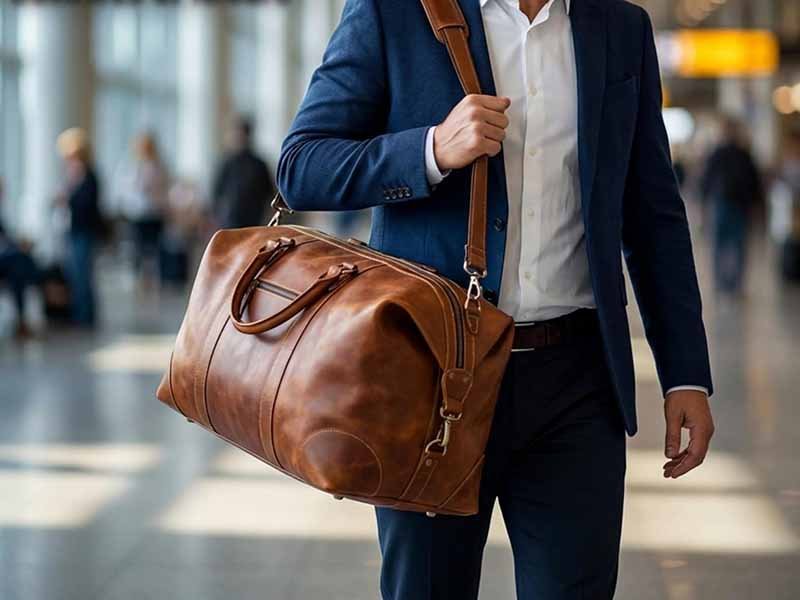
A leather duffle bag can look premium on the shelf, feel smooth in the hand, and photograph beautifully in a campaign. But once it is filled with clothes, shoes, a laptop, toiletries, chargers, and travel accessories, the real test begins. At that moment, the strap is no longer a decorative part of the product. It becomes the most stressed part of the entire bag system.
Many product problems in leather travel bags do not begin with the zipper, the lining, or the body panels. They begin at the strap area: the leather stretches too much, the hook deforms, the stitching pulls open, the D-ring base tears, or the shoulder pad slides out of place. In low-load daily use, these issues may stay hidden for weeks. Under airport handling, car-to-hotel transport, gym use, or repeated weekend travel, they show up fast.
A well-designed leather duffle bag strap should not only “hold weight.” It should carry weight comfortably, distribute force evenly, resist repeated pulling, and stay stable after months of use. For most leather duffle bags, safe strap design depends on five things working together: leather grade, thickness, strap width, reinforcement method, and hardware strength. When one part is weak, the full strap system becomes unreliable.
This is why serious brands do not judge strap performance by appearance alone. A strap that looks thick may still fail early if the leather fiber structure is weak, the hardware is light-duty, or the anchor point is poorly reinforced. On the other hand, a strap that looks simple can perform very well when the material selection and construction logic are correct.
For brands and custom wholesale clients, strap design is not just a technical detail. It affects product lifespan, return rate, customer reviews, and overall brand trust. One failed strap can turn a well-designed duffle bag into a costly complaint. One well-engineered strap can become part of the product’s reputation.
That is why leather duffle bag strap load capacity design should be treated as a core development topic from the beginning, not as a last-step accessory decision.
What Is Leather Duffle Bag Strap Load Capacity?
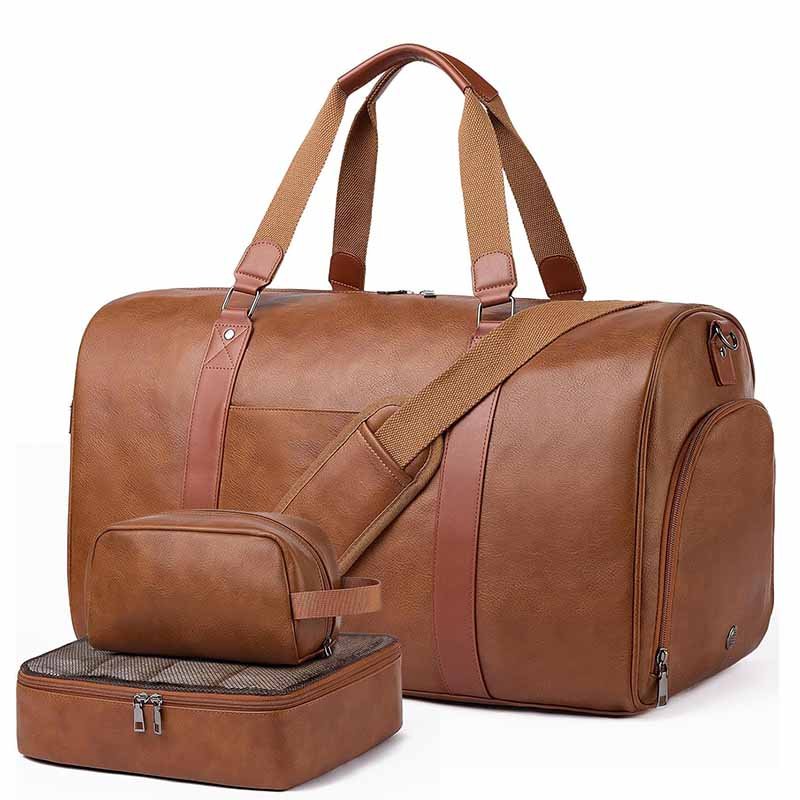
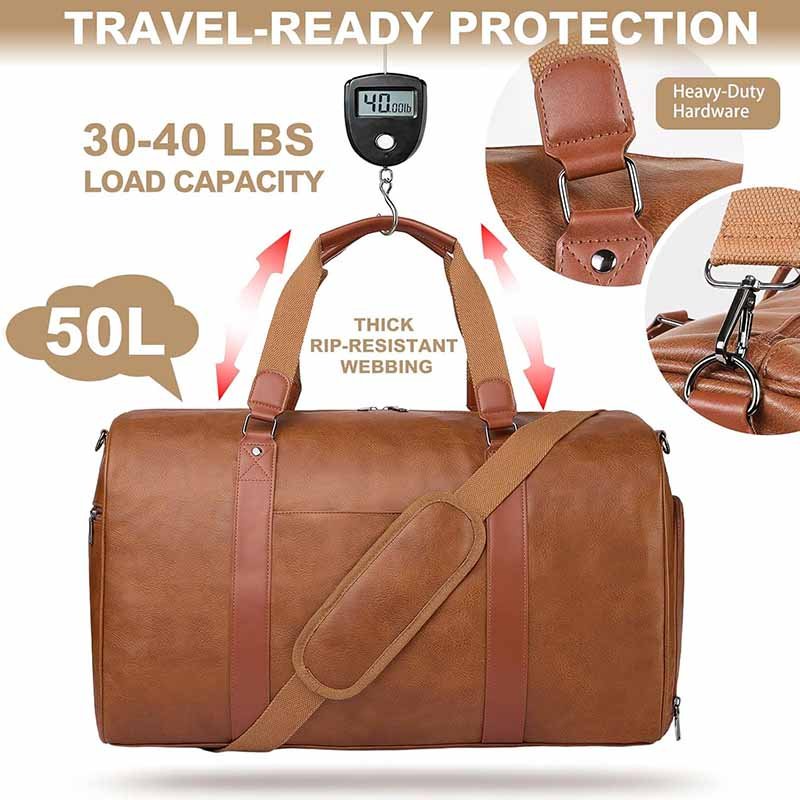
Leather duffle bag strap load capacity is the amount of weight a strap system can carry safely during actual use without tearing, stretching too much, cracking, deforming, or causing hardware failure. It is not decided by leather thickness alone. Real performance depends on the full structure, including leather quality, strap size, reinforcement, hardware, stitching, and how the bag is used in motion.
What does strap load capacity mean in leather duffle bags?
In product development, “load capacity” should never be understood as the maximum weight at the moment of breakage. That number has limited value in real business use. What matters more is the safe working load: the amount of weight the strap can carry repeatedly in daily use while keeping its shape, comfort, and structural reliability.
For example, a strap may survive a one-time static pull test at 30 kg. That does not mean it is a good strap for a 30 kg bag. In real life, users do not lift bags in a perfectly controlled straight line. They swing them, drop them onto car seats, drag them through terminals, pick them up with one hand, and place them on the shoulder at an angle. These actions create sudden force spikes that are much higher than the bag’s actual packed weight.
This is why professional factories separate three different concepts:
| Item | Meaning | Why It Matters |
|---|---|---|
| Breaking Load | The point where one part of the strap system fails | Useful for lab reference only |
| Working Load | The weight the strap can carry in repeated daily use | Most important for product design |
| Safety Margin | Extra strength above expected use load | Helps reduce failure risk |
A bag expected to carry 12 kg in real use should not be designed with a 12 kg strap target. A safer approach is to build the strap system for 16–20 kg working resistance, depending on bag category and market positioning. Premium brands often aim higher because customers expect longer service life and fewer defects.
From a customer’s point of view, strap load capacity is tied to several simple questions:
- Can the strap hold the bag without stretching badly?
- Will the hook or buckle deform after repeated use?
- Does the bag still feel balanced when fully packed?
- Will the shoulder area remain comfortable during 10–20 minutes of carrying?
- Will the strap anchor points stay intact after months of travel?
These are not abstract engineering questions. They directly shape product satisfaction.
What affects leather duffle bag strap strength?
Strap strength comes from a full system, not a single material choice. In real manufacturing, strap failure usually happens because several small weaknesses stack together. The leather may be acceptable, but the stitch density is low. The hook may look solid, but the spring gate is weak. The D-ring patch may be well positioned, but the reinforcement panel is too small. The result is a product that passes visual inspection but struggles in long-term use.
The main performance factors are below:
| Factor | Influence on Load Capacity | What Clients Should Watch |
|---|---|---|
| Leather grade | Very high | Full-grain and high-quality top-grain hold structure better |
| Leather thickness | Very high | Too thin causes stretch and tear risk |
| Strap width | High | Wider straps spread force over a larger area |
| Strap construction | Very high | Single-layer vs double-layer changes both strength and feel |
| Stitching quality | Very high | Weak thread or poor stitch pattern causes early failure |
| Hardware material | Critical | Hooks and rings often fail before leather does |
| Anchor point design | Critical | D-ring base and connection patch are common weak points |
| Edge finishing | Medium | Poor edges crack and shorten strap life |
| Shoulder pad structure | Medium | Affects comfort and local pressure |
| Bag usage scenario | Critical | Travel, sports, and overnight use create different stress patterns |
A practical way to understand this is to treat the strap like a chain. The chain is only as strong as its weakest link. A thick leather strap connected to a thin zinc hook is not a strong strap system. A solid metal hook attached to poorly reinforced stitching is not a strong strap system either.
In actual production claims, the most common failure points are usually these:
- Hook deformation under heavy use
- Stitch line opening at the D-ring patch
- Leather splitting around punched holes
- Excess stretching in low-density leather
- Cracking on folded or edge-painted strap areas
- Shoulder pad slipping and creating uneven force
For brands developing a new leather duffle bag, this means one thing: strap development must be discussed early, while the bag dimensions, target weight, and material plan are still being finalized. Waiting until sampling is nearly complete often leads to rushed decisions and cosmetic fixes.
How much weight should a leather duffle bag strap hold?
The right answer depends on the bag’s real function. A leather gym duffle, a weekend travel bag, and a luxury carry-on style duffle do not face the same packing habits. Many brands make the mistake of designing based on bag size only. In reality, users often overload bags that “look spacious,” especially in travel categories.
Below is a practical reference range for design planning:
| Bag Category | Common Packed Weight | Suggested Safe Strap Working Load | Better Premium Target |
|---|---|---|---|
| Small gym duffle | 6–9 kg | 10–12 kg | 12–14 kg |
| Medium weekend bag | 8–14 kg | 14–18 kg | 18–20 kg |
| Large travel duffle | 12–18 kg | 18–22 kg | 22–26 kg |
| Heavy-duty travel duffle | 15–22 kg | 22–26 kg | 26–30 kg |
These numbers are not random. They reflect the fact that the force on the strap during actual use is often higher than the packed bag weight. A 14 kg bag lifted quickly with one hand can place a much sharper stress load on the strap connection than a slow, controlled lift in a test room.
For this reason, many reliable factories work with a safety margin of around 30% to 50% above expected regular use weight, depending on product positioning.
A useful planning model looks like this:
| Expected Real Use Weight | Minimum Good Design Target | More Reliable Target |
|---|---|---|
| 8 kg | 11 kg | 12–14 kg |
| 12 kg | 16 kg | 18 kg |
| 15 kg | 20 kg | 22–24 kg |
| 18 kg | 24 kg | 26–28 kg |
Clients usually care about three things here:
- avoiding returns
- avoiding negative reviews
- protecting the premium feel of the product
A strap that technically survives but feels uncomfortable, twists during use, or leaves pressure marks on the shoulder still damages customer perception. So load capacity must be balanced with comfort and stability, not treated as a raw strength number only.
For leather duffle bag development, a good strap target is not “as strong as possible.” It is “strong enough for real use, stable in motion, comfortable in carrying, and durable over time.”
Which Leather Is Best for Strap Load Capacity?
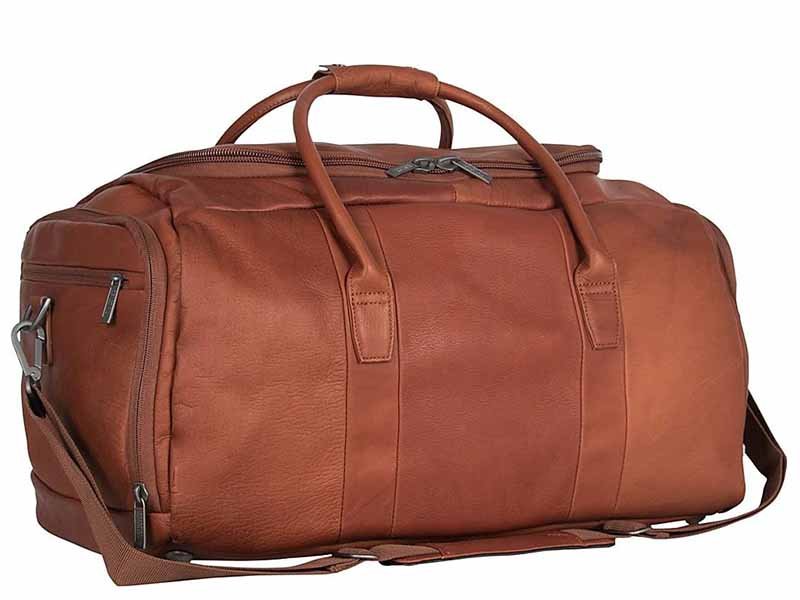
The best leather for leather duffle bag strap load capacity is usually full-grain leather or strong top-grain leather in a suitable thickness range, often around 5–8 oz depending on strap construction. These materials offer better fiber strength, lower stretch risk, and longer service life. Low-grade split or bonded materials may reduce cost, but they usually reduce durability, stability, and long-term product value.
Which leather types improve strap load capacity?
Leather type has a direct impact on how a strap behaves under repeated weight. Two straps may look similar after finishing, coloring, and edge painting, but perform very differently because the internal fiber structure is different.
For load-bearing applications, the most common material options can be compared like this:
| Leather Type | Fiber Strength | Stretch Resistance | Long-Term Durability | Strap Use Suitability |
|---|---|---|---|---|
| Full-grain leather | Excellent | Excellent | Excellent | Best choice for premium heavy-use straps |
| Top-grain leather | Very good | Very good | Very good | Strong choice for most mid-high projects |
| Corrected grain leather | Moderate | Moderate | Moderate | Acceptable for lighter load designs |
| Split leather | Low to moderate | Lower | Lower | Risky for heavy travel straps |
| Bonded leather | Low | Low | Low | Not suitable for structural strap use |
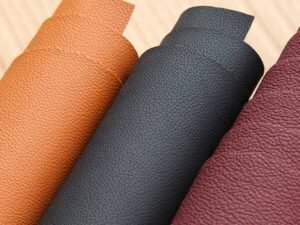
Full-grain leather keeps the densest and strongest natural fiber layer. That gives it better resistance to pull, bending, and long-term stress. It also ages in a more attractive way, which is important in travel and luxury bag categories where customers expect the product to improve in character over time.
Top-grain leather can also perform well when sourced correctly. In many commercial projects, it offers a good balance of strength, appearance consistency, and cost control. The real issue is not the label alone, but the actual tanning quality, fiber density, finishing process, and hide selection.
Split leather creates more risk in duffle straps because its structure is weaker and more prone to stretching, tearing, and shape loss under repeated heavy use. It may work in decorative strap pieces, low-load fashion styles, or short-life promotional projects, but it is rarely the best choice for serious travel products.
Clients developing leather duffle bags for brand programs, custom retail, or premium wholesale lines should be careful not to judge leather only by surface look. A smooth finish and rich color do not guarantee a strong strap material. What matters is how the leather performs under pull, flexing, humidity changes, and repeated load cycles.
What thickness is ideal for leather duffle bag straps?
Thickness matters, but more thickness does not always mean better strap design. A strap that is too thin can stretch, cut into the shoulder, or tear around connection points. A strap that is too thick can feel stiff, reduce comfort, create edge cracking at folds, and make the product feel bulky.
For leather duffle bag straps, thickness should be selected based on four things:
- target bag weight
- strap width
- single-layer or double-layer structure
- expected comfort level
A practical thickness reference is below:
| Leather Thickness | Approx. mm | Performance in Strap Use | Best Use Direction |
|---|---|---|---|
| 3–4 oz | 1.2–1.6 mm | Too light for most duffle straps | Light accessories only |
| 5–6 oz | 2.0–2.4 mm | Good balance of strength and flexibility | Most medium duffle projects |
| 6–7 oz | 2.4–2.8 mm | Stronger support, firmer feel | Travel and heavier-use bags |
| 7–8 oz | 2.8–3.2 mm | High strength, reduced softness | Heavy-duty strap builds |
| 9 oz and above | 3.6 mm+ | Very stiff, less comfortable in shoulder use | Better for handles than long straps |
In many cases, the better solution is not one extra-thick layer, but a double-layer strap structure. For example, two layers of 5 oz leather often produce better balance than one single heavy slab. The strap becomes more stable, less likely to overstretch, and more refined in appearance. It can also hold edge finishing better and provide a more premium hand feel.
Clients also need to consider the relationship between thickness and strap width. A narrow strap made from thick leather can still feel uncomfortable because the contact area on the shoulder is too small. A well-designed medium-thickness strap with proper width and shoulder padding may deliver a much better user experience.
So the real target is not maximum thickness. It is the right thickness for the bag’s use level, comfort target, and construction method.
Does full-grain leather increase strap strength?
Yes, in most serious leather strap applications, full-grain leather does increase strap strength in a meaningful way. The reason is simple: it keeps the strongest fiber layer of the hide intact. That gives the strap better pull resistance, better shape retention, and lower long-term wear risk.
In real use, full-grain leather often performs better in these areas:
- repeated lifting
- shoulder carry under higher load
- lower risk of surface cracking
- better resistance to permanent stretch
- more stable anchor point behavior
A general performance comparison looks like this:
| Property | Full-Grain Leather | Split Leather |
|---|---|---|
| Tensile behavior | Strong and stable | Weaker and less stable |
| Tear resistance | Higher | Lower |
| Stretch control | Better | More likely to deform |
| Lifespan under travel use | Longer | Shorter |
| Aging appearance | Richer and more natural | Less refined over time |
Still, full-grain leather is not a magic fix by itself. A poorly built full-grain strap can still fail if the pattern, edge finishing, stitch plan, or hardware choice is wrong. Strong raw material only creates a good result when the development logic is also correct.
This matters for clients because many leather bags in the market are sold with attractive material claims, but the finished product still underperforms. The issue is often not the leather name on paper. The issue is how the leather was selected, cut, layered, reinforced, and assembled into a usable strap system.
At SzoneierLeather, a stronger result usually comes from combining the right material with the right structure:
- carefully matched leather grade for the target load level
- controlled thickness instead of random overbuilding
- stronger D-ring patch construction
- thread and stitch density selected for stress areas
- hardware that matches the strap’s actual performance level
- repeated sample revision based on real use testing
For brands developing custom leather duffle bags, this approach creates a better product story and a better customer experience. The strap feels solid from day one, carries weight with confidence, and keeps performing after months of use. That is what customers remember.
How Strap Design Affects Load Capacity
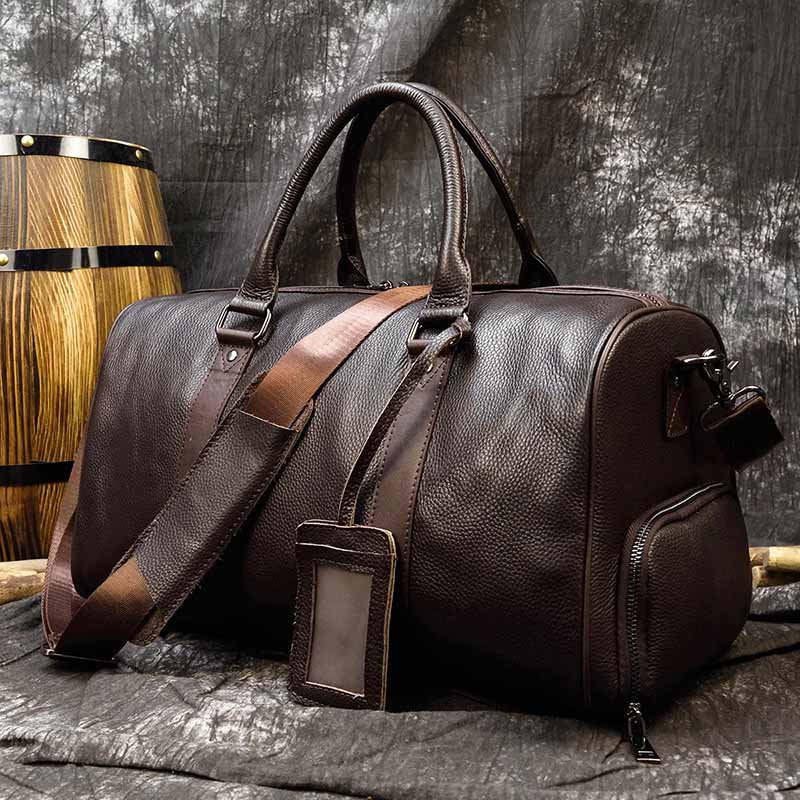
Strap design has a direct and often underestimated impact on load capacity. Even when using high-quality leather, a poorly designed strap can still fail early or feel uncomfortable under real use. A strong strap is not just about material—it is about how the strap distributes force, adapts to movement, and maintains stability over time.
How does strap width affect load capacity?
Strap width plays a major role in how weight is distributed across the shoulder and along the strap structure. A wider strap does not necessarily increase the absolute strength of the leather, but it significantly improves load distribution and comfort, which directly affects perceived durability and real usage performance.
When a strap is too narrow:
- Pressure concentrates on a smaller area
- Shoulder discomfort increases quickly
- Leather edges experience higher stress concentration
- Long-term deformation risk increases
When the width is properly designed:
- Weight spreads evenly across the shoulder
- Stress is distributed along the strap length
- Strap maintains shape better over time
- User fatigue is reduced during longer carrying periods
Here is a practical width reference:
| Strap Width | Performance | Recommended Use |
|---|---|---|
| 2.0–2.5 cm | Too narrow | Fashion/light-use bags |
| 3.0–3.5 cm | Moderate | Small duffle / short carry |
| 3.8–4.5 cm | Ideal range | Most travel duffle bags |
| 5.0 cm+ | High comfort | Heavy-duty / long carry |
For most leather duffle bags, a width between 3.8 cm and 4.5 cm provides the best balance between strength, comfort, and visual proportion.
Clients often focus on aesthetics first, but width is one of the easiest ways to improve user experience without significantly increasing cost. A slightly wider strap can dramatically reduce customer complaints related to shoulder discomfort.
Another important point is that width must match the bag size. A large duffle bag paired with a narrow strap creates a mismatch that affects both function and perception.
Do padded leather duffle bag straps carry more weight?
Padding does not increase the actual tensile strength of the strap, but it plays a critical role in practical load capacity, meaning how much weight a user can comfortably carry.
Without padding:
- Shoulder pressure increases quickly
- Users tend to switch to hand carry
- Perceived weight feels heavier
- Strap edges may dig into clothing or skin
With proper padding:
- Pressure is absorbed and distributed
- Carry time increases without discomfort
- User experience improves significantly
- Product feels more premium
The real benefit of padding is not strength—it is comfort under load, which indirectly increases how much weight the strap can handle in real-life situations.
Common padding structures include:
| Padding Type | Performance | Application |
|---|---|---|
| Foam padding | Soft and lightweight | Most standard duffle bags |
| EVA padding | Better structure retention | Mid to high-end products |
| Memory foam | High comfort | Premium travel bags |
| Leather-only (no padding) | Minimal comfort | Fashion-oriented designs |
A well-designed shoulder pad should:
- Stay fixed in position
- Match strap width
- Have enough thickness (5–10 mm common range)
- Be breathable if targeting travel use
A common problem in low-quality products is that the shoulder pad slides along the strap, creating uneven pressure points. This reduces comfort and makes the strap feel unstable.
From a client perspective, padding is one of the easiest ways to improve product value perception without significantly increasing material cost.
Is double-layer strap design stronger?
Yes, double-layer strap construction is one of the most effective ways to improve both strength and durability.
Instead of relying on a single thick piece of leather, double-layer straps combine two layers, usually stitched together. This creates a more stable structure with better resistance to stretching and deformation.
Here’s how they compare:
| Structure | Strength | Flexibility | Durability | Comfort |
|---|---|---|---|---|
| Single-layer thick strap | Moderate | Low | Medium | Lower |
| Double-layer strap | High | Medium | High | Better balance |
Advantages of double-layer straps:
- Reduced stretching over time
- Improved resistance to tearing
- Better edge finishing quality
- More consistent shape retention
- Higher perceived product quality
In real production, a common setup is:
- Outer layer: full-grain leather
- Inner layer: supportive leather or reinforced lining
This combination allows the strap to:
- Maintain strength
- Improve comfort
- Control cost
Another benefit is that double-layer straps allow better integration of reinforcement elements such as:
- Hidden nylon webbing (for heavy-duty designs)
- Internal reinforcement strips
- Cleaner edge painting
Clients developing premium or long-use leather duffle bags should strongly consider double-layer construction, especially when targeting travel scenarios.
How Hardware Impacts Strap Load Capacity
Hardware is often the weakest point in a leather duffle bag strap system. Even when the leather is strong, failure can occur if hooks, rings, or adjusters are not designed for the same load level.
In many real-world cases, strap failure starts with metal deformation or breakage, not leather tearing.
Which hardware supports higher strap load capacity?
The strength of hardware depends mainly on material, thickness, and construction quality.
Common materials include:
| Hardware Material | Strength Level | Characteristics | Recommendation |
|---|---|---|---|
| Solid brass | Very high | Heavy, durable, corrosion-resistant | Premium products |
| Stainless steel | Very high | Strong, rust-resistant | High-load applications |
| Zinc alloy | Medium | Cost-effective, common | Mid-range products |
| Iron (plated) | Medium to low | Prone to rust if coating fails | Budget products |
For leather duffle bags designed for travel use, solid brass or stainless steel hardware is usually preferred because:
- They maintain shape under stress
- They resist long-term wear
- They match premium positioning
Thickness is equally important. Thin metal components may look strong but can deform under repeated load.
A common issue seen in lower-cost products:
- Hook gate bending open
- Ring deformation under stress
- Plating cracking after repeated use
Clients should not evaluate hardware based only on appearance. Internal structure and thickness are more important than surface finish.
How do buckles and hooks affect strap strength?
Hooks and buckles are dynamic components—they experience movement, rotation, and repeated stress cycles. This makes them more vulnerable than fixed parts.
Key design considerations include:
- Hook opening size vs strap width
- Spring gate strength
- Contact surface area
- Rotation mechanism (swivel vs fixed)
Here is a comparison:
| Component Type | Risk Level | Common Issues |
|---|---|---|
| Standard snap hook | Medium | Gate deformation over time |
| Heavy-duty hook | Low | Higher cost, better durability |
| Swivel hook | Medium | Rotation wear if low quality |
| Fixed hook | Lower | Less movement, more stable |
A weak hook can fail even if the leather strap is still in perfect condition.
For travel bags, recommended features include:
- Thick metal construction
- Strong spring mechanism
- Smooth rotation without looseness
- Secure closure with no gap under load
Another overlooked detail is the connection point between hook and strap. If this area is not reinforced properly, failure can occur even when the hook itself is strong.
What are common weak points in strap systems?
Understanding failure points helps prevent design mistakes early.
The most common weak areas include:
| Weak Point | Cause | Solution |
|---|---|---|
| D-ring attachment patch | Insufficient reinforcement | Add multi-layer support panel |
| Stitch line failure | Low stitch density or weak thread | Use high-strength thread + reinforced pattern |
| Hook deformation | Low-quality metal | Upgrade to thicker, stronger hardware |
| Strap hole tearing | Poor hole finishing | Reinforce hole area or use rivets |
| Edge cracking | Weak edge paint or over-bending | Improve edge finishing process |
Among these, D-ring attachment areas are one of the most critical. This is where all the load transfers from strap to bag body.
A strong D-ring setup usually includes:
- Reinforced leather patch
- Multiple stitch lines
- Proper stitch direction
- Sometimes rivet reinforcement
Another critical factor is thread quality. Even strong leather can fail if stitched with low-strength thread.
At SzoneierLeather, we typically adjust:
- Stitch density (SPI) based on load level
- Thread thickness according to strap structure
- Reinforcement layout based on stress direction
These small details make a large difference in long-term performance.
How to Design Leather Duffle Bag Straps for Heavy Loads
Designing a leather duffle bag strap for heavy loads is not about overbuilding everything. It is about making the right decisions at each stage—material, structure, hardware, reinforcement, and testing—so that the final product performs reliably in real-world use without becoming bulky, uncomfortable, or unnecessarily expensive.
A well-engineered strap system should achieve four goals at the same time:
- Carry weight safely
- Stay comfortable during use
- Maintain shape over time
- Match the product’s price level and positioning
How to match strap load capacity with bag size?
One of the most common mistakes in leather duffle bag development is designing the strap without fully considering how the bag will actually be used. A larger bag naturally invites heavier packing, even if that was not the original intention.
To avoid mismatch, strap capacity should always be aligned with three key inputs:
- Internal volume of the bag
- Expected user behavior (light gym use vs travel)
- Target market positioning (budget vs premium)
A structured way to approach this is:
| Bag Size (Length) | Typical Use | Estimated Load | Recommended Strap Design |
|---|---|---|---|
| 40–45 cm | Gym / daily use | 6–10 kg | Single or light double-layer strap |
| 45–55 cm | Weekend travel | 10–15 kg | Double-layer strap + padding |
| 55–65 cm | Travel duffle | 12–20 kg | Reinforced double-layer + heavy hardware |
| 65 cm+ | Large travel / gear | 15–25 kg | Heavy-duty strap + internal reinforcement |
Another important point is that user behavior often exceeds design expectations. A bag designed for 12 kg may be used at 16 kg or more. This is especially common in travel products where users try to maximize luggage capacity.
Because of this, experienced manufacturers usually build in an additional buffer:
- Standard products: +30% safety margin
- Premium products: +40–50% safety margin
This approach helps reduce:
- After-sales issues
- Product returns
- Negative feedback related to durability
For clients, this is not just a technical decision. It directly impacts brand reputation and long-term product success.
How do factories test strap load capacity?
Testing is where design assumptions are verified. Without proper testing, even a well-designed strap can fail once it reaches the market.
In professional manufacturing environments, strap testing is not limited to a single pull test. It includes multiple types of stress simulation.
Common testing methods include:
| Test Type | Purpose | What It Reveals |
|---|---|---|
| Static load test | Measures maximum weight before failure | Basic strength level |
| Dynamic swing test | Simulates walking and movement | Stress under motion |
| Drop test | Simulates sudden force (e.g. lifting or dropping) | Weak points under shock |
| Fatigue test (cycle test) | Repeated loading/unloading | Long-term durability |
| Hardware stress test | Tests hooks, rings, buckles | Metal deformation risk |
A typical real-use simulation may look like this:
- Load the bag with 15 kg
- Lift and lower repeatedly for 500–1000 cycles
- Swing the bag to simulate walking motion
- Check stitching, hardware, and leather condition
What often surprises clients is that many failures do not occur at maximum load, but after repeated medium-load cycles. This is why fatigue testing is critical.
Another important aspect is environmental influence:
- Humidity can soften leather
- Temperature changes can affect metal and adhesives
- Long-term storage can impact edge finishing
At SzoneierLeather, strap systems are evaluated not only for immediate strength but also for consistency over time, which is more relevant for real customers.
How does SzoneierLeather improve strap durability?
For brands and custom clients, the difference between a standard supplier and a reliable manufacturing partner often comes down to how deeply the factory understands product performance.
At SzoneierLeather, strap durability is improved through a combination of material control, structural design, and production detail management.
Here is how this is achieved in practice:
1. Material Selection Based on Use Scenario
Instead of using one standard leather for all products, materials are selected based on:
- Target load level
- Product category
- Price positioning
For example:
- Travel duffle straps → higher-density full-grain leather
- Mid-range bags → strong top-grain leather with controlled thickness
2. Strap Structure Optimization
Straps are designed with:
- Double-layer construction where needed
- Reinforced internal layers for heavy-duty use
- Balanced thickness to maintain both strength and comfort
3. Reinforced Stress Points
Critical areas such as D-ring attachments are strengthened with:
- Multi-layer leather patches
- Increased stitch density
- Optional rivet reinforcement
4. Hardware Matching
Hardware is not selected by appearance alone. It is matched to strap load requirements:
- Thick solid brass or stainless steel for heavy loads
- Controlled zinc alloy for mid-range products
Each component is evaluated as part of the full system.
5. Stitching Engineering
Stitching is adjusted based on stress direction:
- Higher stitch density in load areas
- Stronger thread selection
- Reinforced patterns (box stitch, cross stitch)
6. Sampling and Iteration
Before mass production, samples are tested and refined:
- Load testing
- Structural adjustments
- Client feedback integration
This process ensures that the final product is not only visually correct, but also reliable in use.
Final Thoughts: Build Straps That Customers Trust
In leather duffle bags, the strap is not just a functional component. It is one of the most important parts that determines whether a product feels reliable or disappointing.
Customers may not always understand leather grades or stitch patterns, but they immediately notice when:
- A strap feels uncomfortable
- A hook looks weak
- A bag becomes difficult to carry
- The product shows early signs of wear
On the other hand, when a strap feels solid, balanced, and comfortable, it creates confidence. That confidence translates into better reviews, repeat purchases, and stronger brand recognition.
For brands and wholesale clients, this means one thing:
A well-designed strap is not an extra feature. It is a core part of the product’s value.
WiWork th SzoneierLeather to Develop Reliable Leather Duffle Bags
If you are developing a leather duffle bag line—whether for retail, brand customization, or wholesale distribution—strap design should be part of the discussion from the very beginning.
At SzoneierLeather, we support clients through the full process:
- Material selection based on product positioning
- Strap structure design aligned with load requirements
- Hardware sourcing matched to durability targets
- Sample development with real-use testing
- Stable mass production with strict quality control
With over 18 years of experience in leather product development and manufacturing, we understand what works in real markets—not just in design sketches.
If you want to:
- Reduce product failure risk
- Improve long-term durability
- Build a more reliable product line
- Create custom leather duffle bags that match your brand positioning
You can reach out to SzoneierLeather to discuss your project.
Send us your design idea, target price, and usage scenario — we’ll help you build a strap system that actually works in real life.