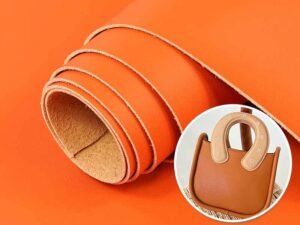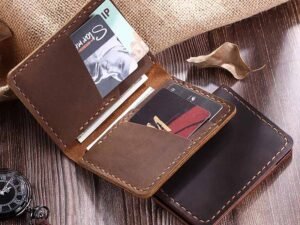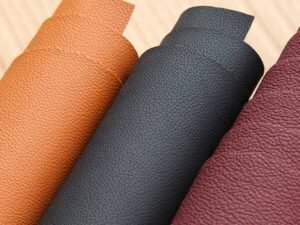

A leather patch is a small detail, but on many products it becomes one of the first things a customer notices. On a cap, it acts like the face of the brand. On a backpack or wallet, it adds texture, value, and a more finished look. But once the product goes into the market, appearance alone is not enough. The patch also needs to survive heat pressing, bending, rubbing, sunlight, storage, shipping, and repeated daily use. That is why more brands are moving away from unstable low-grade synthetic patches and looking for materials that are easier to control in production and more reliable after sale.
Microfiber leather patches are logo or decorative patches made from high-density synthetic leather built with ultra-fine fibers and polyurethane. They are widely used on hats, bags, wallets, belts, apparel, and accessories because they offer a leather-like look, more stable thickness, cleaner logo definition, and better wear performance than many ordinary PU patches. For products that need heat press application, embossed branding, laser engraving, and consistent bulk production, microfiber leather is often one of the most practical choices.
For many product teams, the real value of microfiber leather is not just that it looks good on day one. It is that it gives them a more predictable result from sampling to bulk production. A patch that presses cleanly, holds its edges well, and still looks sharp after the product has been worn, packed, shipped, and handled by the end customer is a much stronger business decision than a patch that is cheap at the beginning but creates complaints later. That is why this material has become increasingly important for modern hats, bags, leather goods, and branded accessories.
What Are Microfiber Leather Patches?
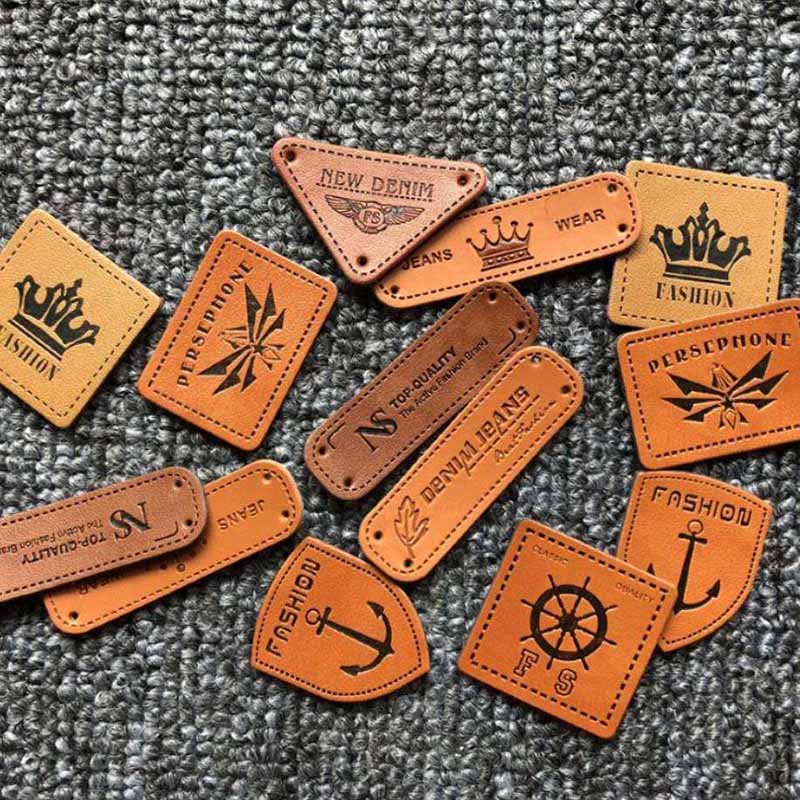
Microfiber leather patches are patches made from synthetic leather built with very fine fiber layers and a polyurethane structure that gives the material a leather-like surface, stable thickness, and better strength than many standard PU materials. They are commonly used for logos, brand labels, decorative patches, and product identification on hats, bags, belts, wallets, and accessories because they combine appearance, process stability, and practical wear performance.
How Are Microfiber Leather Patches Made?
To understand why microfiber leather patches perform differently from ordinary synthetic patches, it helps to start with the material structure itself. Many customers hear the words “microfiber leather” and assume it is just another version of PU leather. In real production, that is too simple. The internal structure is one of the main reasons this material behaves better during pressing, embossing, cutting, and long-term use.
Microfiber leather is usually built in layers. At the base is a dense nonwoven or fiber network made from ultra-fine synthetic fibers, often polyester or nylon-based. These fibers are much finer than common synthetic fibers used in lower-grade imitation leather. That dense fiber network is then combined with polyurethane to create flexibility, surface smoothness, and leather-like touch. The top layer may then be finished with grain texture, color coating, anti-scratch treatment, matte effect, or other custom surface treatments depending on the product target.
A simple way to view the structure is this:
| Material Layer | Main Role |
|---|---|
| Surface finish | Color, grain, touch, logo effect |
| Polyurethane layer | Flexibility, softness, shape retention |
| Microfiber base | Strength, tear support, wear resistance |
| Backing layer | Stability for cutting, pressing, and bonding |
This layered structure matters because patches are not passive decorations. They go through real production steps:
- die cutting or laser cutting
- embossing or debossing
- logo engraving or printing
- adhesive lamination
- heat pressing or stitching
- packing, shipping, and handling
If the material is unstable, problems begin early. Customers may see fuzzy cut edges, weak embossing depth, inconsistent color from batch to batch, adhesive failure, curling at the corners, or surface cracking after pressing.
Microfiber leather is often chosen because it reduces those risks. Compared with many lower-cost PU patch materials, it usually offers:
- better thickness consistency
- cleaner edge cutting
- stronger internal support
- better resistance to deformation
- more stable results during logo processing
Thickness control is especially important for brands making hats and small leather goods. If one patch is 0.8 mm and another is 1.2 mm when both were supposed to be the same, the final appearance can look uneven in bulk production. Microfiber leather is usually easier to control within a narrower thickness range, which helps brands maintain a cleaner and more professional product look.
For customers developing custom patches, the most practical point is this: microfiber leather is not just chosen because it imitates leather. It is chosen because it gives factories and brands a more controlled manufacturing material for logos, shapes, and bulk orders.
Why Do Brands Use Microfiber Leather Patches?
Brands usually do not choose patch material based on one factor alone. They are balancing appearance, cost, production efficiency, durability, and how the patch supports the overall product positioning. A patch on a premium cap, travel bag, or leather wallet has to look attractive, but it also has to survive real use. That is exactly where microfiber leather has become a strong option.
One major reason brands use microfiber leather patches is visual control. The surface can be designed to look smooth, matte, vintage, nubuck-like, or full-grain inspired. That gives designers more freedom when building a product line. A brand may want a rugged outdoor patch for a waxed canvas bag, a clean modern patch for a minimalist cap, or a rich texture for a wallet collection. Microfiber leather can support these style directions more consistently than many low-grade synthetic alternatives.
Another reason is logo performance. Microfiber leather works well with several branding methods:
| Logo Method | Performance on Microfiber Leather |
|---|---|
| Embossing | Clear depth and good edge definition |
| Debossing | Clean recessed logo effect |
| Laser engraving | Sharp detail and neat contrast |
| Screen printing | Good for color accents |
| Hot stamping | Suitable on selected finishes |
This is especially useful for brands that need logo consistency across different SKUs. If a company is producing 5,000 hat patches or 10,000 wallet patches, they want the logo to look the same from one production batch to the next. That level of consistency is easier to achieve when the base material itself is stable.
Microfiber leather also helps brands control complaint risk. Customers often focus on the visible signs of quality first. If a patch starts peeling, cracking, fading unevenly, or looking fuzzy at the edge, the entire product may be judged as lower quality, even if the rest of the item is well made.
From a commercial point of view, the patch affects more than decoration. It affects:
- perceived product value
- packaging presentation
- customer review quality
- repeat purchase confidence
- return and complaint rates
Below is a practical comparison from a product development point of view:
| Concern From Brand Side | Why Microfiber Leather Helps |
|---|---|
| Need stable bulk quality | More uniform thickness and surface |
| Need logo clarity | Better support for embossing and engraving |
| Need controlled cost | More affordable than many genuine leather options |
| Need good appearance after use | Better wear resistance than many standard PU options |
| Need scalable production | Easier to standardize in bulk orders |
Another important point is application range. Brands use microfiber leather patches across many categories because the material can adapt to different product styles. Common uses include:
- trucker hats
- baseball caps
- canvas backpacks
- leather backpacks
- wallets
- belts
- travel bags
- duffel bags
- gift boxes
- small accessories
For customers working with experienced factories like SzoneierLeather, microfiber leather patches are often one of the safest choices when they want a balance between premium look, controlled production, and broader application flexibility.
Are Microfiber Leather Patches Better Than PU or Real Leather?
This is one of the most common and most important questions, because customers are usually comparing three main options: ordinary PU leather patches, microfiber leather patches, and genuine leather patches. The right answer depends on product target, price level, branding style, and how the patch will be applied. There is no single material that wins in every category, but microfiber leather often performs very well where brands need a balance of appearance, process control, and durability.
Let’s break the comparison down more clearly.
| Property | Ordinary PU Patch | Microfiber Leather Patch | Genuine Leather Patch |
|---|---|---|---|
| Surface consistency | Good | Very good | Variable |
| Thickness consistency | Good | Very good | Variable |
| Logo detail control | Fair to good | Good to very good | Good, depends on hide |
| Heat press compatibility | Fair | Good | Usually less stable |
| Abrasion resistance | Fair to medium | Medium to high | High |
| Cost level | Low | Medium | High |
| Natural leather feel | Low | Medium to good | Excellent |
| Bulk production stability | Medium | High | Medium |
Ordinary PU patches are attractive when budget is the main concern. They can work well for promotional items or products with lower durability expectations. But in many cases they are more likely to show problems such as:
- surface cracking after bending
- weaker wear resistance
- less premium touch
- lower edge stability after cutting
- shorter useful life under frequent handling
Genuine leather patches have a strong natural appeal. They often give the richest texture, a more authentic smell and feel, and a premium market image. For luxury and heritage positioning, they are still an excellent option. But they also bring more production complexity. Natural hides vary by area, thickness, grain, and stretch. That can affect pressing consistency, color control, and waste ratio in production.
Microfiber leather sits in the middle, and that is exactly why it is so useful. It does not try to replace genuine leather in every luxury situation, and it is not the cheapest synthetic option on the market. Its value is that it solves several common production and market problems at the same time:
- more consistent than genuine leather
- stronger and more stable than many basic PU materials
- easier to press and process in bulk
- suitable for custom logos and custom shapes
- easier to scale for repeat orders
For brands making mid-range to premium products, this balance is often ideal. A hat brand may not want the high cost and inconsistency of real leather for a 20,000-piece run. At the same time, it may not trust a low-cost PU patch that could peel after a season of use. Microfiber leather becomes the practical middle path.
A useful way to choose is by end use:
| End Use | Best Material Direction |
|---|---|
| Low-budget promo patches | Ordinary PU |
| Mid-range caps and bags | Microfiber leather |
| Premium heritage leather goods | Genuine leather |
| Heat press patch programs | Microfiber leather |
| Large repeat OEM runs | Microfiber leather |
For many SzoneierLeather customers, microfiber leather patches are selected not because they are the cheapest or the most luxurious, but because they are the most dependable for real production, clean branding, and steady product quality across medium and large orders.
How Do Heat Press Microfiber Leather Patches Work?
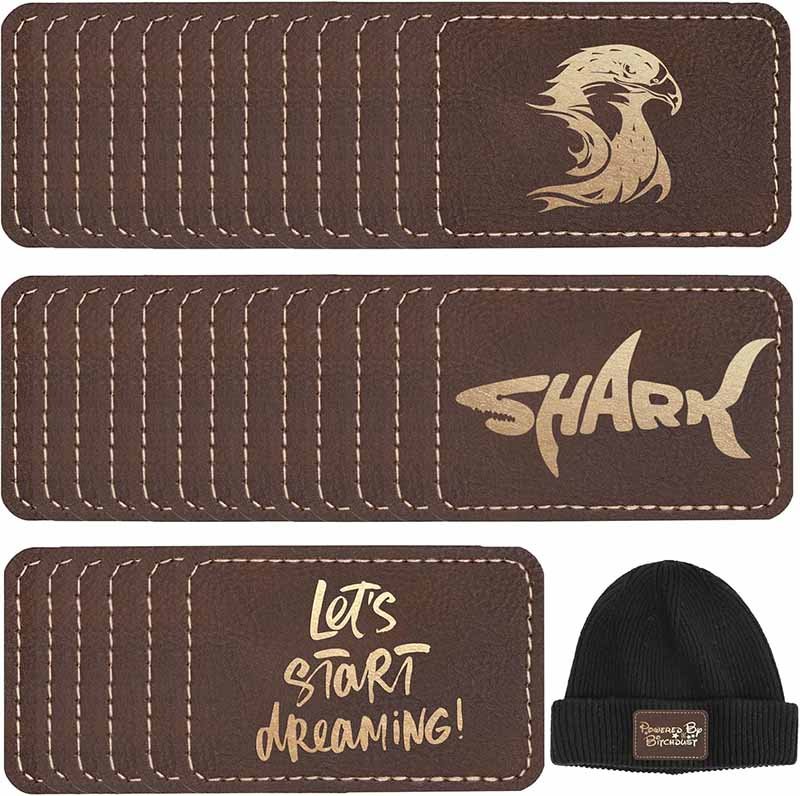
Microfiber leather patches are widely used because they can be applied through heat pressing with reliable and repeatable results. Heat press application allows brands to attach patches quickly to hats, garments, bags, and accessories without needing complex stitching processes. When the correct temperature, pressure, and pressing time are used, the adhesive layer on the back of the patch melts and bonds firmly to the product surface.
In production environments such as hat factories or apparel workshops, heat pressing significantly improves efficiency. Instead of manually sewing every patch, operators can press dozens or even hundreds of patches per hour using controlled machines. This makes microfiber leather patches especially suitable for large orders where speed, consistency, and appearance all matter.
Another advantage is clean presentation. Heat pressing avoids visible stitch lines, allowing the logo patch to sit flat and integrated with the product surface.
What Temperature Is Used for Microfiber Leather Patches?
Temperature is one of the most important variables in heat pressing microfiber leather patches. If the temperature is too low, the adhesive layer may not activate properly. If it is too high, the surface texture of the patch or the underlying product material may become damaged.
In most production environments, the recommended heat press temperature range for microfiber leather patches falls between 130°C and 160°C (266°F – 320°F). However, the exact temperature depends on several factors, including patch thickness, adhesive type, and the base material of the product.
A general guideline used by many factories is shown below:
| Patch Thickness | Temperature Range | Press Time |
|---|---|---|
| 0.6 – 0.8 mm | 130 – 140°C | 10 – 12 seconds |
| 0.8 – 1.2 mm | 140 – 150°C | 12 – 15 seconds |
| 1.2 – 1.6 mm | 150 – 160°C | 15 – 18 seconds |
Pressure is also important. Medium to firm pressure ensures that the adhesive layer spreads evenly across the bonding surface. If pressure is too light, small air pockets may remain between the patch and the fabric, which can weaken the bond over time.
For certain products such as structured caps, factories often use specialized cap heat press machines. These machines have curved pressing surfaces that match the shape of the cap front panel, allowing patches to attach more evenly.
When developing custom patches, it is common for manufacturers to test several heat press conditions during sampling to determine the optimal settings for each product.
Do Microfiber Leather Patches Need Adhesive Backing?
Most microfiber leather patches designed for heat press application include a heat-activated adhesive backing. This adhesive layer melts during the pressing process and bonds the patch to the base material.
There are several types of adhesive backings used for leather patches:
| Adhesive Type | Characteristics | Common Use |
|---|---|---|
| Hot melt adhesive | Activated by heat, flexible bond | Hats, apparel |
| Thermoplastic film | Stronger bonding layer | Bags, jackets |
| Pressure-sensitive glue | Requires heat and pressure | Multi-surface products |
| Sewable backing | No adhesive layer | Products needing stitching |
Hot melt adhesive is the most commonly used backing for microfiber leather patches. It activates quickly under heat and forms a flexible bond that can move with the fabric during bending or stretching.
For thicker products such as backpacks or leather goods, manufacturers sometimes combine adhesive backing with additional stitching reinforcement. This provides both aesthetic cleanliness and extra structural security.
Customers should also consider the base material when selecting adhesive backing. Some fabrics bond more easily than others. Cotton, polyester, canvas, and denim generally work well with heat press patches. Very smooth synthetic surfaces may require stronger adhesive formulations.
How Long Should Microfiber Leather Patches Be Pressed?
Pressing time is closely connected to both temperature and adhesive performance. If the pressing time is too short, the adhesive may not fully melt and spread across the bonding surface. If the pressing time is too long, excessive heat exposure can affect the patch texture or discolor certain fabrics.
For most microfiber leather patches, pressing time usually falls between 10 and 18 seconds, depending on patch thickness and adhesive layer strength.
A simplified production reference looks like this:
| Application Surface | Press Time | Pressure |
|---|---|---|
| Cotton apparel | 10 – 12 sec | Medium |
| Polyester fabrics | 12 – 15 sec | Medium |
| Canvas bags | 14 – 16 sec | Medium to firm |
| Structured hats | 12 – 15 sec | Firm |
Another important step is cooling time. After pressing, the adhesive needs a short period to solidify and stabilize. During this cooling stage, the patch should not be pulled or bent.
Factories often recommend waiting 20–30 seconds before handling the patch to ensure the bond has set properly.
Testing during product development is essential. Different patch shapes, thicknesses, and surface finishes may respond slightly differently to heat press conditions. Running small production trials helps identify the most reliable process before large-scale production begins.
Which Methods Attach Microfiber Leather Patches Best?
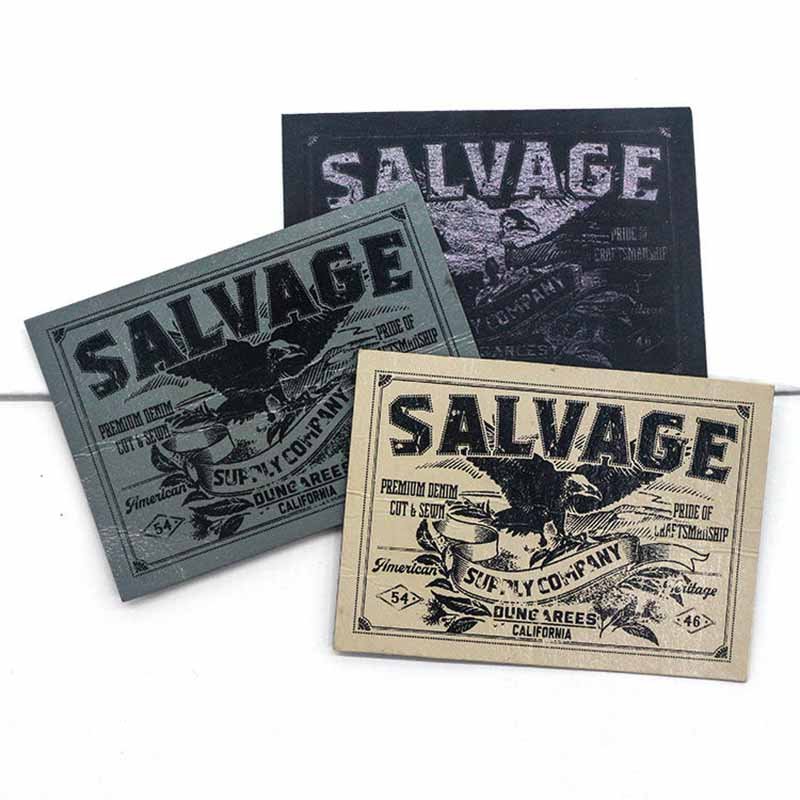
While heat pressing is one of the most common ways to apply microfiber leather patches, it is not the only method. Depending on the product design and durability requirements, manufacturers may choose between several attachment techniques.
Each method offers different advantages in terms of appearance, strength, and production speed.
Are Glue Backing Microfiber Leather Patches Reliable?
Glue backing, also known as heat-activated adhesive backing, is the most widely used method for attaching microfiber leather patches. When applied correctly, this technique produces a clean and durable bond that can last through normal wear and washing cycles.
The main advantages of glue backing include:
- fast application speed
- minimal visible stitching
- clean and modern product appearance
- efficient large-scale production
However, glue backing works best on textile surfaces such as cotton, denim, and canvas. On very smooth or coated materials, the adhesive may require stronger bonding formulas or additional reinforcement.
For products that experience heavy abrasion—such as backpacks or tool bags—manufacturers sometimes combine adhesive backing with a small number of hidden stitches along the patch edges.
Do Hat Microfiber Leather Patches Use Different Pressing?
Hat patches require special attention because the surface is not flat. Caps have curved front panels and internal support structures that can affect how evenly heat and pressure are distributed.
To solve this problem, many factories use cap heat press machines. These machines feature curved heating plates designed to match the shape of the cap crown.
When applying microfiber leather patches to hats, several adjustments are usually made:
| Adjustment | Reason |
|---|---|
| Lower temperature range | Protect hat fabric |
| Shorter press time | Prevent panel distortion |
| Curved press plate | Match cap shape |
| Protective cover sheet | Prevent surface marks |
These adjustments help ensure that the patch attaches smoothly without flattening the hat’s front panel or damaging the fabric.
For high-end caps, some brands also combine heat pressing with edge stitching to create a more rugged appearance.
What Machines Press Microfiber Leather Patches?
Several types of machines are commonly used to apply microfiber leather patches in production environments.
The most common equipment includes:
| Machine Type | Application |
|---|---|
| Flat heat press machine | Apparel, fabric products |
| Cap heat press machine | Hats and caps |
| Pneumatic heat press | High-volume production |
| Manual heat press | Small batch production |
Flat heat press machines are the most versatile option and are widely used in apparel manufacturing. They provide stable pressure and temperature control across flat surfaces.
Cap heat press machines are specialized for headwear products. Their curved pressing surface allows patches to attach smoothly without wrinkling the fabric.
For large-scale production, pneumatic heat presses are often used because they maintain consistent pressure automatically. This improves efficiency and reduces operator fatigue.
When working with experienced manufacturers such as SzoneierLeather, customers often receive guidance on selecting the best patch structure and application method based on the product type. By adjusting patch thickness, adhesive formulation, and pressing conditions, factories can help brands achieve clean logo appearance and reliable attachment performance across thousands of products.
How Durable Are Microfiber Leather Patches?
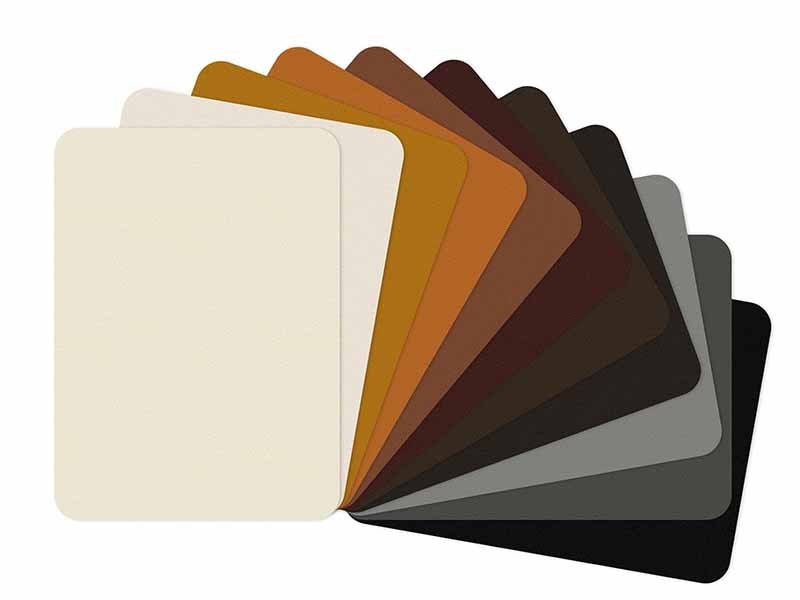
Microfiber leather patches are known for their strong resistance to abrasion, bending, and daily wear. Because the material is built from high-density microfiber fibers bonded with polyurethane, it forms a flexible yet durable structure that performs well in products exposed to repeated handling. For items such as hats, backpacks, wallets, and belts, this durability is especially important because patches are constantly touched, rubbed, and exposed to outdoor environments.
For brands launching products into competitive markets, patch durability directly affects customer perception. If a patch fades, cracks, or peels within a short period, customers often assume the entire product is low quality. Durable patches help maintain product appearance and brand identity over time.
Do Microfiber Leather Patches Resist Wear?
One of the main reasons many brands choose microfiber leather patches is their resistance to surface wear. The dense fiber network inside microfiber leather provides structural strength, while the polyurethane layer protects the surface from abrasion.
Compared with common synthetic patch materials, microfiber leather generally performs better under repeated friction. This is especially noticeable on products that experience constant handling, such as caps and bags.
A simplified durability comparison is shown below:
| Material Type | Abrasion Resistance | Flexibility | Surface Stability |
|---|---|---|---|
| Standard PU leather | Medium | Medium | Moderate |
| Microfiber leather | High | High | Stable |
| Genuine leather | High | Medium | Natural variation |
In real usage conditions, microfiber leather patches can withstand repeated rubbing from clothing, hands, and daily movement without losing their shape or logo definition. This makes them suitable for outdoor products and active lifestyle items.
Another factor that contributes to wear resistance is the uniform internal fiber structure. Because microfiber leather is engineered rather than naturally sourced, it maintains consistent performance across production batches.
Are Microfiber Leather Patches Washable?
Wash resistance is another key concern for brands producing apparel and accessories. Many customers want patches that remain intact even after multiple washing cycles.
Microfiber leather patches generally perform well in washing conditions when properly applied. Heat press adhesive bonds strongly to fabrics such as cotton, denim, and polyester, allowing the patch to remain attached during normal machine washing.
Typical wash performance expectations for microfiber leather patches include:
| Condition | Expected Result |
|---|---|
| Cold machine wash | Patch remains secure |
| Warm wash (30–40°C) | No significant damage |
| Air drying | Maintains shape and texture |
| Repeated washing cycles | Minimal fading |
However, excessive heat exposure during washing or drying can affect both the patch surface and the adhesive layer. For this reason, many brands recommend avoiding high-temperature drying.
For products such as hats that are not frequently machine washed, microfiber leather patches usually maintain their appearance for long periods.
Where Are Microfiber Leather Patches Used Most?
Microfiber leather patches are used across a wide range of products because they combine durability with strong visual branding. Many product categories benefit from patches that can withstand daily wear while maintaining logo clarity.
Common applications include:
| Product Category | Reason for Using Microfiber Leather Patches |
|---|---|
| Trucker hats | Clear logo detail and easy heat pressing |
| Backpacks | Strong wear resistance |
| Wallets | Premium texture and branding |
| Belts | Flexible and durable patch material |
| Denim apparel | Washable and visually appealing |
| Travel bags | Long-term durability |
In outdoor or workwear products, patches must resist friction from movement and handling. Microfiber leather performs well in these environments because it balances flexibility and strength.
For brands producing high-volume accessories, microfiber leather patches also help maintain consistent appearance across different product lines.
How Are Custom Microfiber Leather Patches Made?
Producing custom microfiber leather patches requires several stages of design, material preparation, and finishing. Each stage influences how the final patch will look and perform when applied to a product.
Experienced leather goods factories carefully control these stages to ensure that patches meet both visual and durability expectations.
How Are Logos Added to Microfiber Leather Patches?
Logos can be applied to microfiber leather patches using several techniques. Each method creates a different visual effect and suits different types of branding styles.
Common logo methods include:
| Logo Method | Visual Result | Best Use |
|---|---|---|
| Embossing | Raised logo effect | Premium patches |
| Debossing | Recessed logo effect | Clean minimalist designs |
| Laser engraving | Dark contrast detail | Complex logos |
| Screen printing | Colored graphics | Multi-color logos |
| Hot stamping | Metallic finish | Luxury products |
Embossing and debossing are among the most popular methods because they create a clean and durable logo without additional ink or paint layers.
Laser engraving is also widely used for detailed designs because it produces sharp edges and consistent depth across production batches.
During patch development, factories typically produce sample patches using different logo techniques so brands can evaluate appearance before finalizing the production method.
How Are Microfiber Leather Patches Tested?
Before patches are approved for large production orders, manufacturers often conduct several tests to evaluate performance and durability.
These tests help ensure that the patches will perform well under normal product use.
Common quality checks include:
| Test Type | Purpose |
|---|---|
| Adhesion test | Evaluates bonding strength |
| Abrasion test | Measures wear resistance |
| Heat resistance test | Confirms stability during pressing |
| Flexibility test | Checks bending durability |
| Color fastness test | Ensures surface color stability |
Adhesion testing is particularly important for heat press patches. The patch must remain securely attached to the base material without peeling during use.
Flexibility testing ensures that the patch can bend naturally with the product without cracking or separating from the surface.
Through these tests, manufacturers can adjust patch thickness, adhesive type, or pressing conditions to improve performance before full production begins.
How Does SzoneierLeather Make Microfiber Leather Patches?
At SzoneierLeather, microfiber leather patches are developed through a structured manufacturing process designed to support both brand customization and large-scale production.
With more than 18 years of experience in leather product development, the factory integrates several capabilities within a single production system, including:
- material sourcing and development
- product design and logo engineering
- sampling and prototype testing
- precision cutting and logo processing
- adhesive lamination and finishing
- packaging design and quality inspection
This integrated approach allows the factory to support brands at different stages of product development. Some customers already have detailed patch designs, while others may only have a logo and general product concept.
Typical customization options for microfiber leather patches include:
| Custom Option | Description |
|---|---|
| Shape | Round, square, custom shapes |
| Surface texture | Smooth, matte, vintage grain |
| Logo method | Embossed, engraved, printed |
| Patch thickness | Customized for application |
| Attachment method | Heat press or stitching |
By combining material engineering with precise production processes, SzoneierLeather helps brands create patches that match both their visual identity and product durability requirements.
Start Your Custom Microfiber Leather Patch Project
For many brands, leather patches are not just decorative elements—they are an important part of product identity. The right patch material and manufacturing process can significantly influence how customers perceive the quality of a hat, bag, or accessory.
Microfiber leather patches offer a strong balance between appearance, durability, and production efficiency. They support heat press attachment, maintain logo clarity, and perform well under daily wear conditions.
At SzoneierLeather, we specialize in developing custom leather goods and accessories for brands and wholesale clients around the world. Our factory has more than 18 years of experience in leather product manufacturing, with capabilities covering raw material sourcing, product design, sampling, mass production, and packaging development.
Whether you are launching a new hat brand, developing custom leather accessories, or adding logo patches to bags and wallets, our team can help you design and manufacture patches tailored to your product requirements.
If you are planning to create custom microfiber leather patches, we welcome you to contact SzoneierLeather to discuss your project. Our engineers and design specialists are ready to help you turn your ideas into durable, high-quality patches that strengthen your brand identity.