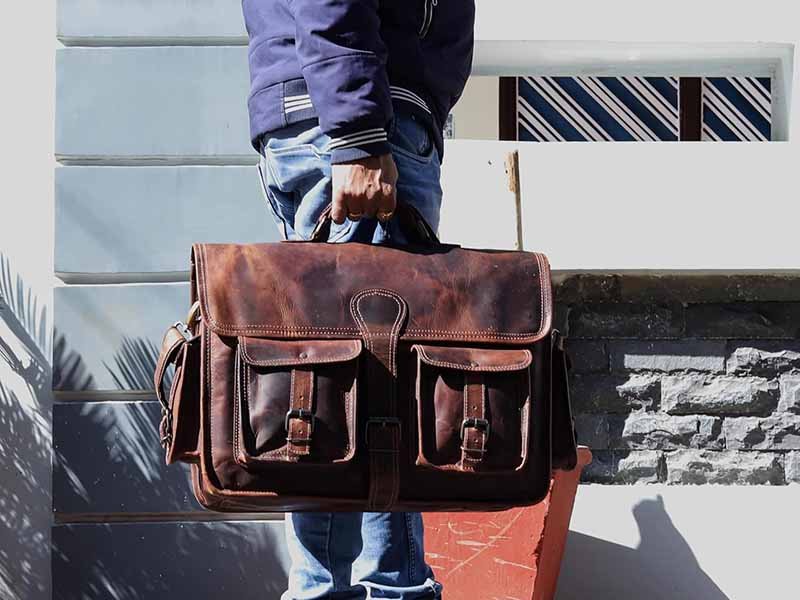
A leather briefcase can look elegant on a desk, in a showroom, or on a website banner. But once a customer starts using it every day, the real test begins. Can the laptop slide in smoothly without scraping the zipper? Is there enough room left for a charger, notebook, documents, and a mouse? Does the bag still look slim and professional after being filled? These are the details that decide whether a leather briefcase feels refined or frustrating.
This is why briefcase sizing is not a small technical detail. It is one of the core decisions in product development. A bag that is too tight may technically “fit” a laptop, but it often feels inconvenient in real use. A bag that is too large may solve the space problem, but then it becomes bulky, heavy, and less attractive for office commuting. Good leather briefcase dimensions sit in the middle: large enough to protect and organize daily essentials, but controlled enough to keep a clean business silhouette.
A leather briefcase designed for 13″, 14″, or 15.6″ laptop fit should be based on the real device dimensions, not just the screen size label. In most cases, a 13″ leather briefcase works best around 38 × 28 × 7 cm, a 14″ briefcase around 40 × 30 × 8 cm, and a 15.6″ briefcase around 42 × 31 × 9 cm. These sizes usually leave enough room for laptop padding, lining, daily accessories, and comfortable use.
For brands and wholesalers, getting this right matters more than many people expect. Customers are no longer buying a leather briefcase only for appearance. They want a bag that fits modern business routines, protects electronics, and still feels premium in hand. That balance is where real product value is created. And once you begin looking at leather briefcases through that lens, dimensions stop being just numbers. They become part of the product’s performance, comfort, and long-term appeal.
What Are Standard Leather Briefcase Dimensions?
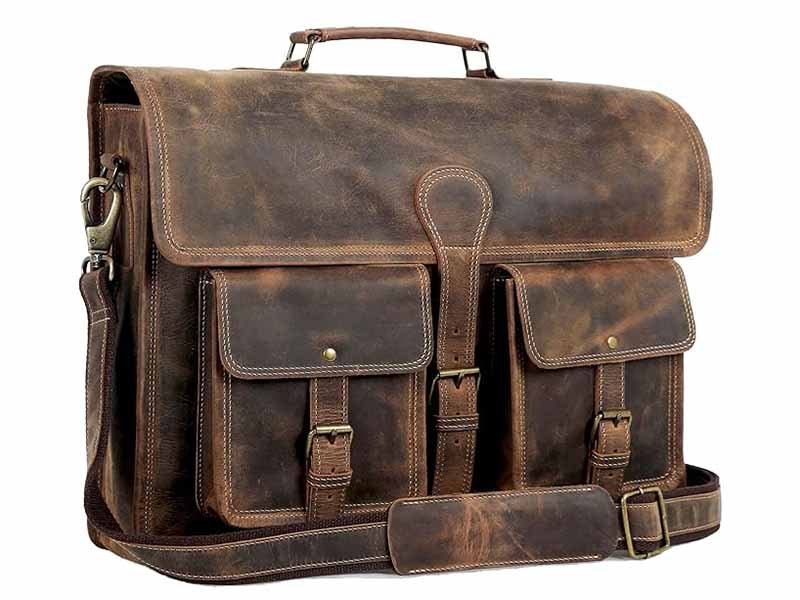
Standard leather briefcase dimensions are usually built around laptop size, daily office carry needs, and the expected shape of the finished bag. In most cases, the market standard falls between 37–43 cm in width, 27–32 cm in height, and 6–10 cm in depth. The final size depends on whether the bag is designed for a 13″, 14″, or 15.6″ laptop and how much extra space is needed for padding, documents, and accessories.
What Do 13″, 14″, and 15.6″ Laptop Fit Mean in Leather Briefcases?
This is one of the most misunderstood points in leather briefcase development.
When customers read “fits 13-inch laptop” or “fits 15.6-inch laptop,” many assume that the laptop itself is 13 inches or 15.6 inches wide. That is not correct. The number refers to the screen’s diagonal size, not the full outer size of the device. The actual laptop body is always wider and deeper than the screen measurement suggests.
That difference matters a lot when designing a briefcase. A laptop may be sold as 15.6″, but the real device body may measure around 35.5 to 36.5 cm wide and 24 to 25.5 cm deep, depending on bezel thickness, casing design, and brand model. Once padding, lining, and sleeve ease are added, the internal compartment needs to be even larger.
Below is a practical reference table used during product development:
| Laptop Label | Approx. Device Width | Approx. Device Height | Recommended Internal Sleeve Size |
|---|---|---|---|
| 13″ laptop | 30–31.5 cm | 21–22.5 cm | 32.5 × 24 cm |
| 14″ laptop | 31.5–33 cm | 22–23.5 cm | 34 × 25 cm |
| 15.6″ laptop | 35.5–36.5 cm | 24–25.5 cm | 38 × 27 cm |
This is why experienced leather manufacturers never build a briefcase only around the laptop label. They work from real device dimensions plus protection allowance.
For customers, this directly affects day-to-day use. If the laptop fit is too tight, several problems show up quickly:
- the zipper becomes hard to close
- the laptop corners rub against the lining
- the sleeve feels stiff and difficult to use
- the customer avoids using the laptop compartment altogether
A well-sized briefcase should let the laptop go in and out smoothly, while still feeling protected and stable.
How Are Leather Briefcase Dimensions Measured?
Leather briefcase dimensions are normally measured using three numbers:
Width × Height × Depth
These numbers usually refer to the outer dimensions of the finished briefcase.
- Width is measured from left to right across the front face
- Height is measured from bottom to top
- Depth is measured from front panel to back panel when the bag is closed
This sounds simple, but in leather briefcases, the outer size and the usable inside size can differ more than many customers expect. Unlike thin nylon bags, leather briefcases include multiple material layers:
- outer leather
- foam or protective padding
- lining
- reinforcement board
- stitched seams and folded edges
All of these reduce the internal space.
For example, a briefcase with an external width of 40 cm may only offer 37 to 38 cm of useful inner sleeve width after structure is built. If edge piping or turned-edge construction is used, the available space may shrink further.
Here is a simplified comparison:
| External Size | Construction Type | Estimated Internal Width |
|---|---|---|
| 40 cm | soft leather, minimal padding | 38–38.5 cm |
| 40 cm | padded sleeve + lining | 37–37.5 cm |
| 40 cm | structured leather briefcase | 36.5–37 cm |
This is why professional development does not stop at “bag size.” It must include internal engineering size.
From a customer perspective, this also explains why two leather briefcases with the same outside measurements can feel very different in use. One may accept the laptop comfortably, while the other feels tight and overbuilt.
Are Leather Briefcase Dimensions Based on Laptop Size?
Yes, but laptop size is only the starting point.
A leather briefcase is not just a laptop sleeve with handles. It is usually expected to carry a small business ecosystem around the laptop. In real daily use, most professionals are not carrying only one device. They often also carry:
- charger and cable
- notebook or planner
- contract papers or A4 files
- pens
- wallet
- power bank
- mouse
- phone accessories
- tablet or e-reader in some cases
That means a briefcase sized only around the laptop body often feels under-designed in real life.
A more realistic space planning model looks like this:
| Daily Carry Item | Space Need | Design Impact |
|---|---|---|
| Laptop | fixed | determines sleeve size |
| Charger | medium | needs depth allowance |
| Documents | medium | needs height and width support |
| Notebook | medium | requires flat stacking area |
| Mouse / cables | small | organizer pocket needed |
| Tablet | optional | may require second sleeve |
This is why leather briefcase developers usually add functional allowance beyond the laptop compartment. In practical terms, that often means:
- 2–3 cm extra width beyond the laptop sleeve
- 1.5–3 cm extra depth for accessories
- full-height wall support for document fit
- dedicated organizer area to prevent clutter
For slim briefcases, the design target is usually controlled storage. For larger business briefcases, the design target is multi-item organization.
Customers notice this immediately. A briefcase that holds the laptop but not the charger feels incomplete. A briefcase that fits both, while still looking neat, feels much more valuable.
Why Do Laptop Fit Dimensions Matter in Leather Briefcases?
Laptop fit dimensions matter because they directly affect protection, ease of use, bag silhouette, and long-term customer satisfaction.
From the outside, a leather briefcase may look excellent. But if the internal proportions are wrong, the product starts failing in very ordinary situations. The user tries to insert the laptop and finds the sleeve too narrow. They add a charger and now the bag feels swollen. They carry documents and the flap or zipper line looks strained. These are not luxury-level concerns. These are daily-use failures.
Good laptop fit dimensions solve several practical problems at once.
First, they improve device protection. A laptop should not sit so tightly that it presses against the bag walls, but it should not float loosely either. Controlled fit reduces impact movement.
Second, they improve access speed. Professionals often remove and replace laptops several times a day. If the sleeve opening is awkward or too snug, the briefcase becomes annoying to use.
Third, they improve the visual proportion of the bag. Many customers want a briefcase that feels slim, modern, and professional. If the bag dimensions are oversized just to “be safe,” the product may start looking heavy and old-fashioned.
A useful sizing balance is shown below:
| Fit Condition | Result in Real Use |
|---|---|
| too tight | hard insertion, zipper stress, poor experience |
| too loose | weak protection, unstable laptop position |
| balanced fit | smooth access, safe hold, better bag shape |
For brands selling to business users, this balance is extremely important. Customers in this segment usually notice details. They compare construction, hand feel, zipper path, pocket logic, and laptop fit very quickly. If the size engineering feels thoughtful, the briefcase feels premium. If it does not, the leather alone will not save the product.
Which Leather Briefcase Dimensions Fit 13″, 14″, and 15.6″ Laptops?
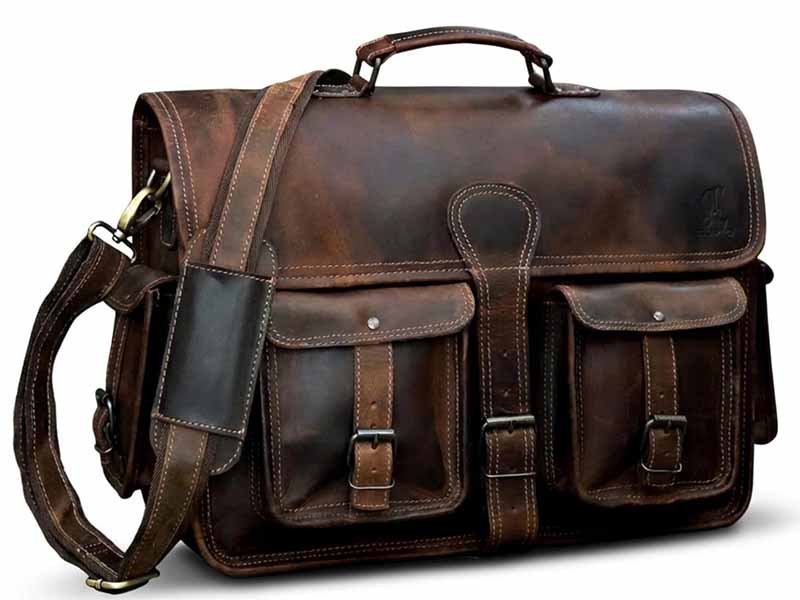
Leather briefcase dimensions for 13″, 14″, and 15.6″ laptop fit should be based on the real laptop body size, the thickness of the protective sleeve, and the amount of extra room needed for daily office items. In general, 13″ briefcases work best around 37–39 cm wide, 14″ briefcases around 39–41 cm wide, and 15.6″ briefcases around 41–43 cm wide, with depth adjusted by product style and storage needs.
Which Leather Briefcase Dimensions Fit 13″ Laptop Fit?
A 13″ leather briefcase is usually aimed at users carrying ultrabooks, MacBook Air-class products, or compact business laptops. This is the cleanest and most portable briefcase category, and it has become especially popular among professionals who value a light carry profile.
In this size range, the briefcase should feel slim and easy to move with, but it still needs enough structure to hold more than the laptop alone. If the bag becomes too compact, customers quickly discover that there is no comfortable room for a charger, notebook, or A4 papers.
A well-balanced 13″ leather briefcase generally falls in this range:
| Dimension | Recommended Range |
|---|---|
| Width | 37–39 cm |
| Height | 27–29 cm |
| Depth | 6–8 cm |
This size usually supports:
- one 13″ laptop
- one charger
- one notebook or document set
- pens and small accessories
For very slim designs, depth may stay near 6 cm. For more structured business styles, 7–8 cm is safer.
This category works very well for:
- executives using lightweight laptops
- daily office commuting
- premium minimalist collections
- brands targeting modern urban professionals
From a design perspective, 13″ briefcases require discipline. Too much hardware, thick gussets, or oversized compartments can ruin the slim profile that customers want in this category.
Which Leather Briefcase Dimensions Fit 14″ Laptop Fit?
The 14″ leather briefcase has become one of the most practical and commercially attractive sizes in today’s market. Many modern business laptops now fall into this class because 14″ devices balance screen usability and portability better than older, bulkier laptop formats.
This briefcase size is often the “safe middle” for brands. It is large enough for comfortable office use, but still compact enough to avoid looking oversized.
A strong working range is:
| Dimension | Recommended Range |
|---|---|
| Width | 39–41 cm |
| Height | 29–31 cm |
| Depth | 7–9 cm |
Compared with 13″ models, the 14″ briefcase usually gives more freedom for internal organization. It can more easily support:
- padded laptop sleeve
- document divider
- zip pocket
- charger storage
- tablet sleeve in selected designs
This size range is especially useful for customers who need an everyday office briefcase rather than a pure fashion item. It is one of the easiest sizes to sell because it fits mainstream device trends and still looks elegant.
From a factory point of view, 14″ briefcases are also good for development because they allow better tolerance control. There is enough space to build comfort into the laptop sleeve without making the whole bag look oversized.
For many brands, this is the most balanced category between design flexibility, user comfort, and sales potential.
Which Leather Briefcase Dimensions Fit 15.6″ Laptop Fit?
The 15.6″ leather briefcase is still the most familiar format in traditional business bag development. Many office users, engineers, sales teams, consultants, and corporate clients continue to use 15.6″ laptops because they prefer larger screens for work.
This means the briefcase must do more. It needs to handle a larger and heavier laptop, stronger padding demands, and often a fuller daily carry load.
Most 15.6″ leather briefcases perform best in this range:
| Dimension | Recommended Range |
|---|---|
| Width | 41–43 cm |
| Height | 30–32 cm |
| Depth | 8–10 cm |
At this size, the briefcase usually includes:
- large padded laptop compartment
- reinforced base
- stronger handles
- more structured side walls
- room for files, charger, and accessories
Because the laptop itself may already weigh 1.7–2.2 kg, the bag structure becomes more important than in smaller formats. A beautiful leather exterior is not enough. The handles, shoulder strap anchors, base board, and zipper line all need to be engineered for heavier use.
This size is popular for:
- classic business briefcases
- lawyer and consultant styles
- premium office bags
- corporate gift programs
- structured top-handle laptop bags
However, it is also the easiest category to overbuild. If too much leather thickness, too many compartments, or excessive metal hardware are added, the product can quickly become too heavy for daily commuting. Good 15.6″ briefcase design is about carrying capacity without making the user feel burdened.
How Much Space Should a Leather Briefcase Laptop Fit Leave?
This is one of the most important questions in briefcase development, and also one of the most common mistakes in sampling.
A laptop compartment should not be built to the exact laptop size. It needs clearance space. That clearance allows for:
- lining thickness
- foam or padded protection
- smooth insertion and removal
- slight variation between laptop brands
- easier use over time
If the fit is too exact, the sleeve may feel acceptable during the sample stage but become frustrating after production when leather, foam, and stitching tighten the finished shape.
A practical allowance guide looks like this:
| Laptop Category | Width Allowance | Height Allowance | Comment |
|---|---|---|---|
| 13″ | +1.5 to 2.5 cm | +1.5 to 2 cm | good for slim devices |
| 14″ | +2 to 3 cm | +1.5 to 2.5 cm | better for mixed laptop models |
| 15.6″ | +2.5 to 3.5 cm | +2 to 3 cm | needed for padding and ease |
The correct allowance depends on bag style.
- For a soft, slim sleeve-style briefcase, clearance can be tighter
- For a structured leather briefcase, more allowance is safer
- For multi-brand compatibility, more tolerance is recommended
This is also why some factories ask clients for the exact laptop model during development. That is the best way to build a precise product. But when the product is intended for broader market sales, the briefcase should be sized around a laptop category, not just one exact machine.
At SzoneierLeather, this is a key part of custom development. A good briefcase is not only sized to fit a laptop. It is sized to work naturally in the customer’s real daily routine.
How Do You Design Leather Briefcase Dimensions for Laptop Fit?
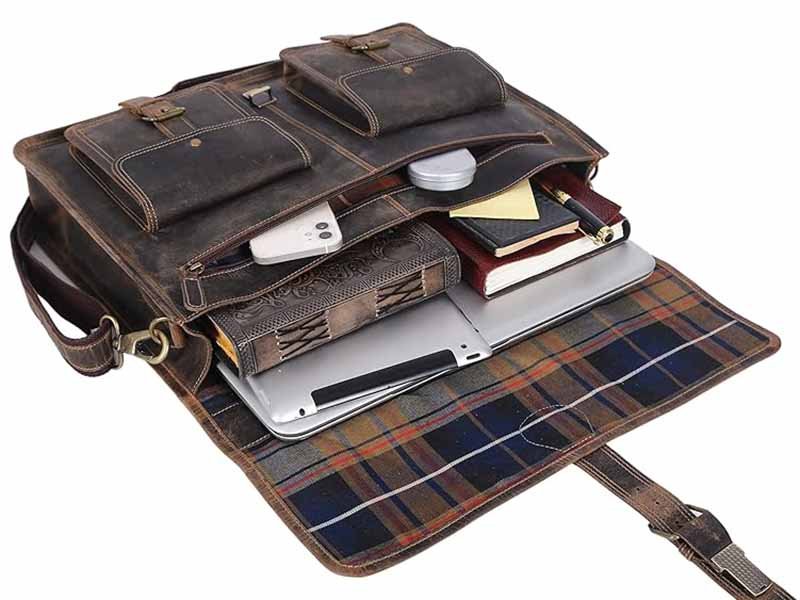
Designing leather briefcase dimensions for laptop fit requires balancing protection, usability, and the visual proportion of the bag. The laptop sleeve must be large enough to allow easy insertion, padded enough to protect the device, and positioned in a way that keeps the weight balanced during daily use. When these elements are carefully engineered, the briefcase feels natural and comfortable rather than bulky or awkward.
How Wide Should a Leather Briefcase Laptop Fit Be?
The width of the laptop compartment is one of the first dimensions designers calculate when developing a leather briefcase. This measurement is determined by the real laptop body size rather than the screen label.
As mentioned earlier, a laptop labeled as “15.6 inches” usually has a body width of about 35.5–36.5 cm. To allow safe use and padding space, manufacturers typically add clearance around the device.
Recommended laptop sleeve width allowances:
| Laptop Category | Device Width | Sleeve Width |
|---|---|---|
| 13″ laptop | 30–31.5 cm | 32–33.5 cm |
| 14″ laptop | 31.5–33 cm | 34–35.5 cm |
| 15.6″ laptop | 35.5–36.5 cm | 38–39.5 cm |
This allowance serves several important purposes:
- protects the laptop edges from pressure
- allows the device to slide in smoothly
- accommodates small variations between laptop brands
If the compartment is designed too tightly, the laptop may press against the padding or lining. Over time this can distort the shape of the briefcase or damage the zipper path. On the other hand, a sleeve that is too wide allows the laptop to move excessively, reducing protection.
Experienced leather bag manufacturers therefore aim for controlled clearance rather than exact matching dimensions.
How Thick Should a Leather Briefcase Laptop Compartment Be?
Depth is another important design factor that directly affects how the briefcase feels in daily use.
Many people assume the laptop compartment only needs to match the thickness of the device. In reality, additional space must be included for protective materials and structural layers.
Typical laptop thickness:
| Laptop Size | Average Thickness |
|---|---|
| 13″ laptop | 1.4–1.7 cm |
| 14″ laptop | 1.5–1.8 cm |
| 15.6″ laptop | 1.7–2.2 cm |
However, the laptop sleeve usually includes:
- foam padding
- inner lining
- leather panel structure
Because of these layers, the laptop section of a leather briefcase normally requires 3–4 cm internal depth.
The overall briefcase depth must then accommodate additional items such as documents and chargers.
Recommended briefcase depth ranges:
| Laptop Size | Suggested Briefcase Depth |
|---|---|
| 13″ briefcase | 6–8 cm |
| 14″ briefcase | 7–9 cm |
| 15.6″ briefcase | 8–10 cm |
Designers must also consider how the depth affects the appearance of the bag. Business briefcases are expected to remain relatively slim. If the depth becomes excessive, the bag may start to resemble a travel bag rather than a professional office accessory.
What Padding Helps Leather Briefcase Laptop Fit Protection?
Padding plays a critical role in protecting electronic devices inside leather briefcases. Without sufficient cushioning, laptops may be exposed to impact when the bag is placed on a desk or carried through crowded environments.
Most leather briefcase manufacturers use layered protective materials rather than relying solely on thick leather.
Common laptop protection materials:
| Material | Purpose |
|---|---|
| EVA foam | shock absorption |
| PE foam | lightweight cushioning |
| microfiber lining | scratch protection |
| reinforced base board | prevents bottom impact |
Padding thickness often ranges from 3–8 mm depending on bag style.
For example:
| Briefcase Type | Padding Thickness |
|---|---|
| slim leather sleeve | 3–4 mm |
| standard office briefcase | 5–6 mm |
| heavy-duty laptop briefcase | 6–8 mm |
Another important detail is the floating bottom design. In this structure, the laptop sleeve sits slightly above the base of the bag rather than touching it directly. This prevents the laptop from hitting the bottom when the briefcase is placed down quickly.
These engineering details may not be visible from the outside, but they significantly improve the durability and perceived quality of the product.
How Do Dividers Improve Leather Briefcase Laptop Fit?
Dividers help organize the internal space of a briefcase so that items do not press against the laptop or damage each other during transport.
In many leather briefcases, the interior is divided into three main zones:
- laptop compartment
- document section
- accessory organizer
A simple divider panel between the laptop sleeve and document compartment can prevent pressure from thick paper stacks or notebooks.
Typical internal layout example:
| Compartment | Function |
|---|---|
| laptop sleeve | protects device |
| document divider | stores papers |
| accessory pocket | charger and cables |
| zipper pocket | valuables |
Dividers are often made from lightweight materials such as nylon fabric or microfiber to avoid adding unnecessary weight.
From a user perspective, this structure allows quick access to different items without disturbing the laptop compartment.
Which Leather Briefcase Dimensions Are Most Popular?
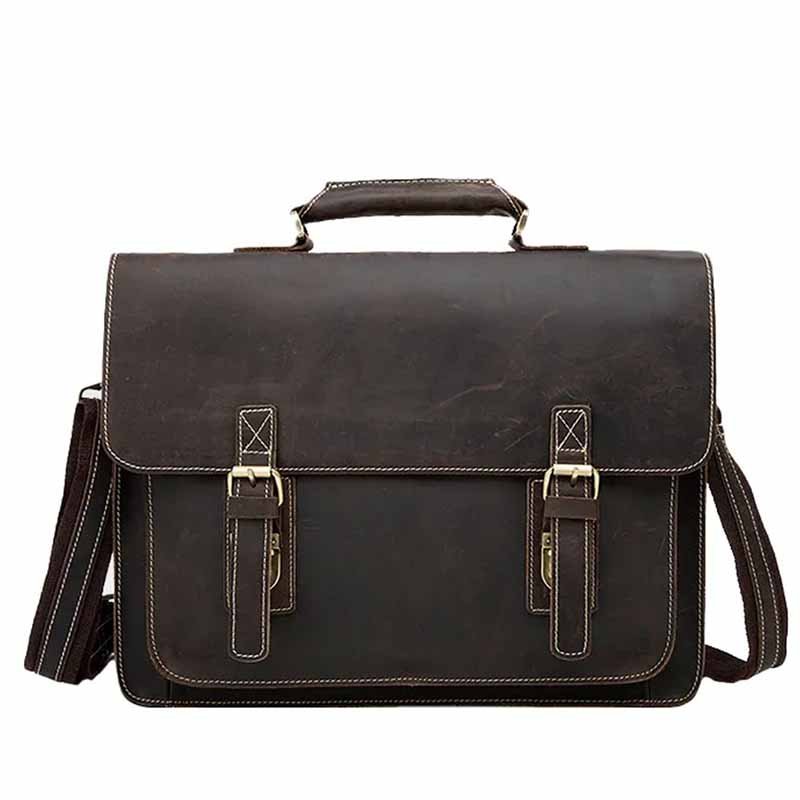
Although leather briefcases can be customized in many sizes, several dimension ranges dominate the market because they match the laptops most professionals use. Among them, briefcases designed for 14-inch and 15.6-inch laptops account for a large portion of global business bag sales.
Why Are 15.6″ Laptop Fit Leather Briefcases Most Common?
The 15.6-inch laptop has been the mainstream business laptop size for many years. Even though compact ultrabooks are becoming more common, many professionals still prefer larger screens for productivity tasks such as spreadsheets, design work, and presentations.
Because of this, the 15.6″ briefcase category remains one of the best-selling formats.
Common external dimensions:
| Dimension | Range |
|---|---|
| width | 41–43 cm |
| height | 30–32 cm |
| depth | 8–10 cm |
These bags usually include multiple internal compartments because users carrying larger laptops also tend to carry more accessories.
Typical storage capacity:
| Item | Capacity |
|---|---|
| laptop | 15.6 inch |
| documents | A4 folders |
| tablet | optional sleeve |
| charger | internal pocket |
| accessories | organizer section |
This configuration suits traditional business environments such as corporate offices and consulting professions.
Do Professionals Prefer Slim Leather Briefcase Dimensions?
In recent years, slim leather briefcases have gained popularity among younger professionals and technology workers.
Slim designs focus on portability and aesthetics rather than maximum storage capacity.
Typical slim briefcase size:
| Dimension | Range |
|---|---|
| width | 38–40 cm |
| height | 27–29 cm |
| depth | 5–7 cm |
These bags are ideal for users who carry:
- laptop
- tablet
- a few documents
- basic accessories
However, slim briefcases are not suitable for people who carry large files or multiple devices.
Brands often position slim briefcases as premium lifestyle products rather than heavy-duty business bags.
Which Leather Briefcase Dimensions Fit Business Travel?
For professionals who travel frequently, briefcases are often slightly larger than standard office models.
Travel-friendly briefcases may include extra storage for:
- travel documents
- tablets
- portable chargers
- small clothing items
These bags typically measure:
| Dimension | Range |
|---|---|
| width | 42–44 cm |
| height | 31–33 cm |
| depth | 9–11 cm |
Some designs also include luggage sleeves that allow the briefcase to attach to a suitcase handle.
This feature is particularly popular among business travelers who move through airports frequently.
How Do Leather Briefcase Dimensions Affect Capacity?
Even small changes in bag dimensions can significantly increase the internal volume.
For example, increasing depth from 7 cm to 9 cm may add nearly 30% more storage space.
Example capacity comparison:
| Bag Size | Estimated Volume |
|---|---|
| 40 × 29 × 7 cm | ~8.1 L |
| 40 × 29 × 9 cm | ~10.4 L |
This additional space may allow the bag to hold:
- a thicker document stack
- larger chargers
- extra accessories
However, increasing size must be balanced with aesthetics and comfort. If a briefcase becomes too thick, it may lose its professional appearance.
Successful designs therefore combine carefully calculated dimensions with smart internal organization rather than simply increasing size.
How Do Manufacturers Customize Leather Briefcase Dimensions?
Customizing leather briefcase dimensions is not simply a matter of enlarging or shrinking the bag. Professional manufacturers evaluate several factors before adjusting the size: laptop compatibility, daily carry items, structural strength, leather thickness, and overall design proportion. By balancing these elements, factories can develop leather briefcases that meet the practical needs of modern professionals while maintaining an elegant and professional appearance.
How Do Factories Adjust Leather Briefcase Laptop Fit Sizes?
When a client requests a custom leather briefcase, one of the first questions a factory will ask is: Which laptop model will the bag carry?
Different laptops with the same screen size can have noticeably different body dimensions. For example, two 15.6-inch laptops may differ by several centimeters in width depending on the bezel design.
Because of this, manufacturers often work with actual laptop measurements rather than generic labels.
A typical development process includes the following steps:
- Confirm laptop model or exact device size
- Determine padding thickness and lining material
- Calculate internal sleeve allowance
- Adjust overall bag width and height accordingly
For example, if a client wants to develop a briefcase for a laptop measuring 36 × 25 cm, the sleeve may be designed around 38.5 × 27 cm to allow for padding and smooth insertion.
Example development reference:
| Device Size | Sleeve Size | Recommended Bag Width |
|---|---|---|
| 31 × 22 cm | 33.5 × 24 cm | 38–39 cm |
| 33 × 23 cm | 35.5 × 25 cm | 39–41 cm |
| 36 × 25 cm | 38.5 × 27 cm | 41–43 cm |
This approach ensures the final briefcase fits comfortably without being oversized.
Another adjustment often made during development involves gusset width. If a client expects the bag to hold additional items such as files, tablets, or chargers, the gusset depth may be increased slightly.
Factories therefore treat laptop fit as the foundation of the design, not the final dimension.
Which Leather Materials Work Best for Briefcase Dimensions?
Material selection plays a major role in how a leather briefcase holds its shape. Leather thickness, flexibility, and structure all influence how the bag behaves once it is filled with a laptop and documents.
Different leather types provide different structural characteristics.
Common leather options used in briefcases include:
| Leather Type | Thickness Range | Characteristics |
|---|---|---|
| Full-grain leather | 1.6–2.0 mm | strong structure, premium appearance |
| Top-grain leather | 1.4–1.8 mm | smooth surface, moderate structure |
| Vegetable-tanned leather | 1.8–2.2 mm | firm body, classic style |
| Soft cowhide leather | 1.2–1.5 mm | flexible and lightweight |
For structured business briefcases, leather around 1.6–1.8 mm thickness is often preferred. This thickness provides enough rigidity to maintain the bag’s silhouette without becoming too heavy.
Manufacturers also reinforce the bag internally using structural materials such as:
- fiberboard or HDPE base plates
- foam padding around laptop sleeves
- reinforced handle attachments
- internal lining support
These hidden structural elements allow the briefcase to maintain its shape even when carrying heavier laptops.
How Do Manufacturers Test Leather Briefcase Laptop Fit?
Before mass production begins, responsible manufacturers perform several functional tests to confirm that the briefcase dimensions work correctly.
One of the most common tests is the real-device fit test. During this process, actual laptops are inserted into the sample bag to evaluate clearance, comfort, and protection.
Key factors evaluated during testing include:
| Test Item | Purpose |
|---|---|
| Laptop insertion test | confirms sleeve clearance |
| Zipper closing test | ensures smooth operation |
| Impact test | evaluates padding protection |
| Weight test | checks handle durability |
| Storage test | confirms space for accessories |
Factories may also perform repeated insertion and removal cycles to ensure that the laptop sleeve maintains its shape over time.
Another useful evaluation method is real-life packing simulation. Sample bags are loaded with common items such as laptops, notebooks, chargers, and folders to assess how the internal layout performs in daily use.
This stage often reveals small adjustments that improve usability, such as repositioning pockets or increasing gusset width slightly.
How Does SzoneierLeather Develop Custom Leather Briefcases?
At SzoneierLeather, custom leather briefcase development follows a structured process designed to support both brand clients and wholesale partners.
With more than 18 years of experience in leather product manufacturing, the company provides a full development chain that includes:
- raw material sourcing
- leather selection and testing
- product design and prototyping
- pattern making and sampling
- manufacturing and quality inspection
- packaging design and production
The development process usually includes several stages.
Step 1 — Product discussion
Clients share information about:
- target market
- laptop size requirements
- preferred leather materials
- style references
- expected price range
Step 2 — Design proposal
The development team suggests:
- briefcase dimensions
- internal layout
- leather options
- hardware finishes
Step 3 — Prototype sample
Professional pattern makers produce the first sample so clients can evaluate the design.
Step 4 — Structural adjustments
Based on feedback, dimensions or compartments may be refined before final production.
Because SzoneierLeather manages both material sourcing and manufacturing, the company can help clients experiment with different leather types, construction methods, and sizes without long delays.
Typical project advantages include:
| Service Feature | Benefit |
|---|---|
| integrated material supply chain | stable leather quality |
| experienced pattern makers | accurate dimension control |
| low MOQ customization | suitable for new brands |
| rapid sampling | faster product development |
| strict quality inspection | consistent production |
These capabilities make it easier for brands to transform product ideas into market-ready leather briefcases.
Conclusion: Designing the Right Leather Briefcase Dimensions
Choosing the correct leather briefcase dimensions is not only about fitting a laptop. It is about designing a bag that supports daily work routines, protects valuable devices, and maintains a professional appearance.
Across the market, several dimension ranges have proven effective for modern professionals:
| Laptop Size | Recommended Briefcase Size |
|---|---|
| 13 inch | ~38 × 28 × 7 cm |
| 14 inch | ~40 × 30 × 8 cm |
| 15.6 inch | ~42 × 31 × 9 cm |
These sizes provide enough space for padding, accessories, and documents while still maintaining a clean business profile.
For brands developing new leather briefcases, careful planning of laptop compartments, internal organization, and leather materials is essential. Even small improvements in these areas can significantly improve the user experience.
If you are planning to develop a leather briefcase collection or customize laptop bags for your brand, working with an experienced manufacturer can help avoid costly mistakes and speed up product development.
SzoneierLeather specializes in custom leather bags, wallets, belts, straps, and business accessories for international brands and wholesale clients. With strong raw material sourcing, professional design teams, and flexible manufacturing capabilities, the company can support projects from concept to production.
If you would like to develop a custom leather briefcase for 13″, 14″, or 15.6″ laptop fit, the SzoneierLeather team is ready to assist with design consultation, sampling, and manufacturing. Reach out today to discuss your project and start creating leather briefcases that combine functionality, durability, and timeless style.