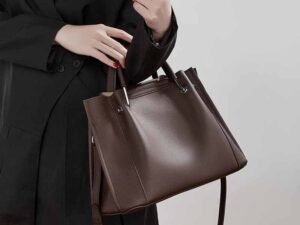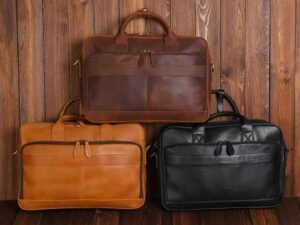
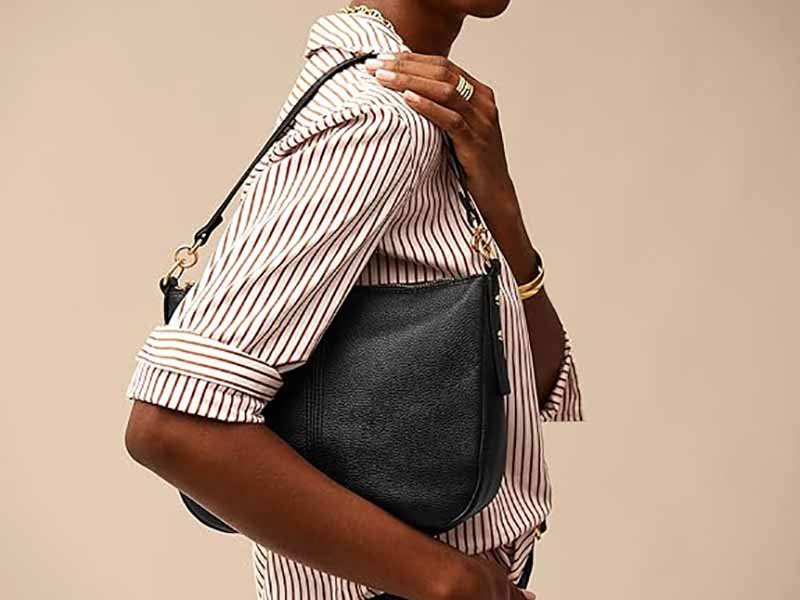
Most brands don’t lose money because their leather bag design is “wrong.” They lose money because the factory behind it is inconsistent. One production run looks premium; the next run feels cheaper. Stitching tension changes, edge paint cracks early, hardware plating fades, or the leather grain doesn’t match the sample. Customers notice—fast. A few bad reviews can cost more than the entire sampling budget.
Here’s the hard truth: two leather bags manufacturers can quote the same price and deliver completely different outcomes. One might control leather sourcing, pattern making, and production in-house. The other might depend on subcontractors, buy leather from unstable channels, and treat samples like a sales demo instead of an engineering baseline.
If you’re a brand, “reliable” doesn’t mean “big factory” or “lowest MOQ.” It means the manufacturer can protect your product standard—month after month, season after season—even when leather prices change, workers rotate, or orders scale up. To choose a reliable leather bags manufacturer, brands should verify five things: proven category experience, stable leather sourcing, a repeatable sampling-to-bulk process, measurable quality control standards, and honest capacity planning. Ask for production proofs (materials, construction, inspection methods), review samples with a durability checklist, and confirm how the factory prevents sample-to-bulk drift before placing a large order.
You don’t need 50 questions—you need the right 15 questions and the discipline to verify the answers.
What defines a reliable Leather Bags Manufacturer?
A reliable leather bags manufacturer is one that can deliver the same leather, same workmanship, and same finishing quality as the approved sample—across different batches, seasons, and order sizes. For brands, reliability is proven through controlled material sourcing, repeatable sampling systems, stable production capacity, measurable quality standards, and clear responsibility when issues occur.
What “reliable” really means for brands
Most brands already know how to compare prices. What they struggle with is identifying which factory will still perform well after the first order.
In real production, reliability shows up in four very practical areas:
- Can the factory repeat what they showed in the sample?
- Can they control materials, not just buy them?
- Can they plan production honestly instead of overpromising?
- Can they take responsibility when problems happen?
If any one of these fails, the brand pays for it—through returns, delays, or reputation damage.
Below is how brands should evaluate reliability in a concrete, measurable way.
What production consistency should brands expect?
Consistency is the most important and most misunderstood part of reliability.
For brands, consistency means:
- Leather feel does not change between batches
- Stitching density and tension remain stable
- Edge paint does not suddenly crack or thin
- Hardware color and strength remain uniform
What brands should verify
| Item | What to ask | What “reliable” looks like |
|---|---|---|
| Sample reference | “Do you keep an approved sample for bulk?” | Physical golden sample stored |
| Stitch standard | “What SPI do you use for this bag?” | Fixed SPI range (e.g. 5–6 SPI) |
| Leather batch control | “Do you mix leather lots?” | Same batch or approved substitution |
| Edge finishing | “How many layers of edge paint?” | Defined method, not operator choice |
| Measurement tolerance | “What size deviation is allowed?” | ±3–5 mm depending on style |
Brand reality: Factories that rely on “experienced workers” instead of written standards often deliver inconsistent results when operators change or orders scale up.
How stable is the Leather Bags Manufacturer’s material supply?
Leather is not a standardized material. Two hides from different suppliers—even with the same name—can behave very differently.
A reliable leather bags manufacturer usually has:
- Long-term leather suppliers (not spot buying)
- Defined thickness ranges per bag category
- Experience adjusting leather for different seasons
- Backup material plans approved by the brand
Why this matters to brands
Leather price fluctuations of 8–15% per year are common. Unreliable factories often respond by:
- Switching leather quietly
- Thinning material to control cost
- Using different surface finishes
Reliable factories respond by:
- Explaining cost impact clearly
- Offering material alternatives with pros/cons
- Letting the brand decide
What brands should ask directly
- “How many leather suppliers do you use for bags like this?”
- “What happens if this leather is unavailable?”
- “Will you notify us before any material change?”
If the answers are vague, reliability is weak.
What production capacity signals real reliability?
Reliability is closely tied to capacity honesty.
Many problems don’t come from lack of skill—but from factories accepting more orders than they can handle.
Signs of realistic capacity planning
- Clear daily/weekly output numbers
- Defined production lines for leather bags (not mixed products)
- Lead times that increase during peak seasons
- Willingness to say “no” or delay start dates
Typical red flags brands overlook
- Same lead time offered for 300 pcs and 5,000 pcs
- No difference between off-season and peak season schedules
- Promises like “we will speed up if needed” without explanation
Reference: realistic leather bag capacity ranges
| Factory type | Monthly output (leather bags) |
|---|---|
| Small workshop | 800–1,500 pcs |
| Mid-size factory | 3,000–8,000 pcs |
| Large specialized factory | 10,000+ pcs |
Reliable leather bags manufacturers align orders with real capacity, even if it means slower growth.
How does a Leather Bags Manufacturer handle quality issues?
No factory produces zero defects. Reliability is defined by how problems are handled, not whether they happen.
Brands should expect:
- Clear defect classification (minor vs major)
- Visual inspection standards
- Defined rework or replacement policy
- Root-cause explanation, not excuses
Common quality cost impact for brands
Industry experience shows:
- 1–2% defect rate = manageable
- 3–5% defect rate = rising customer complaints
- 5%+ defect rate = serious brand damage
A reliable leather bags manufacturer actively works to keep defect rates under 2–3% for brand orders and informs clients early if risks appear.
How important is communication in reliability?
Fast replies are nice. Clear, specific replies are critical.
Reliable leather bags manufacturers:
- Answer with photos, measurements, or videos
- Explain why something works or doesn’t
- Push back politely when a design has risks
- Document changes instead of relying on chat history
Unreliable ones:
- Say “ok” to everything
- Avoid technical explanations
- Go silent when issues appear
For brands, communication quality directly affects:
- Development speed
- Sampling cost
- Risk exposure in bulk orders
“Reliable Manufacturer” Scorecard
You can use this scorecard in supplier comparison. Score each item 1–5.
| Category | What you check | Score (1–5) |
|---|---|---|
| Category experience | Similar bag projects + explanation of stress points | |
| Leather knowledge | Can recommend leather by use-case, not buzzwords | |
| Sampling discipline | Clear iteration process + change log | |
| Sample-to-bulk control | BOM + reference sample + measurement tolerance | |
| QC system | In-line + final inspection checklist | |
| Hardware control | Incoming QC + plating standard | |
| Communication | Fast, specific answers with photos/data | |
| Capacity honesty | Clear lead time plan + peak season strategy |
Tip for brands: A factory with a “pretty catalog” but low scores in sampling/QC will cost more in the long run than a factory that is strict, organized, and transparent.
How to evaluate materials from a Leather Bags Manufacturer?
To evaluate materials from a leather bags manufacturer, brands must go beyond leather names and verify leather grade, thickness range, surface treatment, color stability, odor control, and compatibility with stitching and edge finishing. The right manufacturer should explain why a leather fits a specific bag design, usage scenario, and price tier—and prove it with samples and test logic, not marketing terms.
Why leather evaluation is where most brands get misled
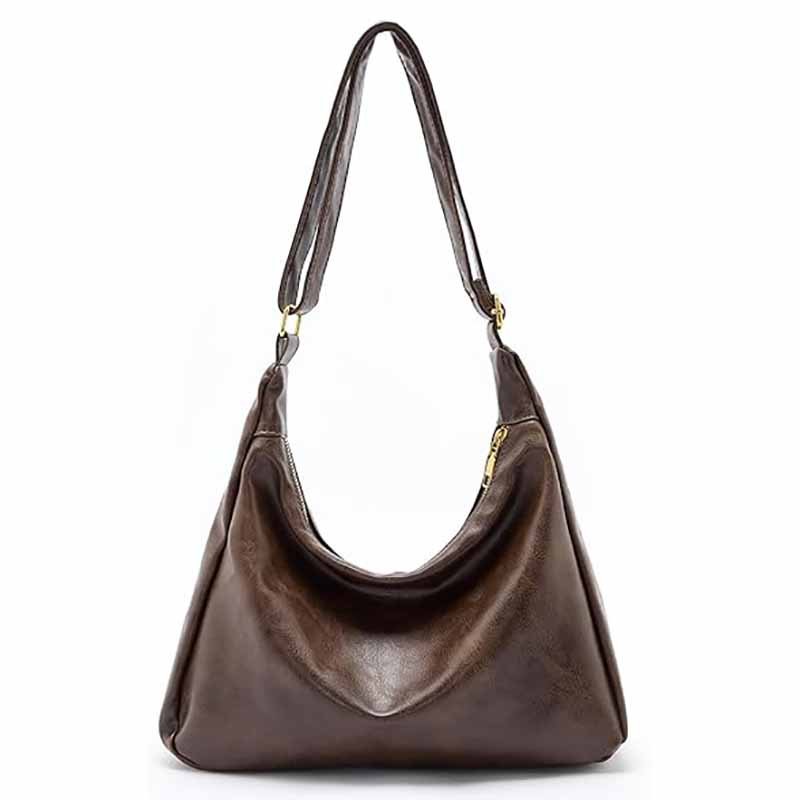
Many brands believe the risk starts at production. In reality, most quality problems begin at material selection—long before sewing starts.
Two leathers can both be called “full grain,” yet:
- One stretches after 3 months of use
- One cracks at the edge after winter
- One smells neutral
- One retains chemical odor in sealed packaging
A reliable leather bags manufacturer does not just sell leather. They filter leather for bag use.
Below is how brands should evaluate materials step by step.
What leather types should a Leather Bags Manufacturer offer?
A reliable leather bags manufacturer should not push one “best leather.” They should offer options mapped to usage, structure, and cost.
Common leather types used in bag manufacturing
| Leather Type | Typical Thickness | Strength & Feel | Best Use Cases | Risk if misused |
|---|---|---|---|---|
| Full grain leather | 1.6–2.2 mm | Strong, natural grain, ages well | Premium totes, backpacks | Too stiff for soft silhouettes |
| Top grain leather | 1.4–1.8 mm | Clean surface, stable | Structured handbags | Lower breathability |
| Corrected grain leather | 1.2–1.6 mm | Uniform look | Fashion bags | Can crack if coating is poor |
| Split leather + coating | 1.2–1.8 mm | Lower cost, lighter | Entry-level bags | Weak tear strength |
| Vegetable-tanned leather | 1.8–2.5 mm | Firm, moldable | Vintage, structured styles | Sensitive to moisture |
| Chrome-tanned leather | 1.4–2.0 mm | Soft, flexible | Daily-use bags | Odor if poorly processed |
What brands should listen for: A professional leather bags manufacturer explains why a leather fits your bag, not just its name.
Good answers sound like:
- “For this backpack, we suggest 1.8 mm top grain because full grain at 2.0 mm will make the bag too heavy.”
- “For a soft tote, this corrected grain will hold shape better than split leather.”
Bad answers sound like:
- “Full grain is the best, everyone uses it.”
How does a Leather Bags Manufacturer control leather thickness and consistency?
Thickness variation is one of the most common hidden quality problems in leather bags.
Why thickness matters for brands
- Too thin → bag loses structure, stretches at handles
- Too thick → hard to sew, stiff edges, uneven folds
- Inconsistent thickness → sample looks fine, bulk feels cheap
What brands should ask
- “What thickness tolerance do you allow?”
- “Do you measure leather before cutting?”
- “How do you prevent mixed thickness in one order?”
Practical thickness control standards
| Bag Area | Recommended Thickness | Notes |
|---|---|---|
| Main body panels | 1.6–2.0 mm | Depends on bag size |
| Handles & straps | 2.0–2.5 mm | Load-bearing |
| Gussets | 1.4–1.8 mm | Flexibility needed |
| Interior leather trims | 1.0–1.4 mm | Reduce bulk |
| Reinforcement layers | +0.4–0.8 mm | Stress zones |
A reliable leather bags manufacturer usually:
- Splits leather in-house or works with fixed split tolerances
- Separates leather by batch and thickness
- Avoids mixing hides across lots without approval
What workmanship details reveal real material quality?
Leather quality is not just the hide—it’s how it behaves after cutting, sewing, and finishing.
Stitching compatibility (often overlooked)
Ask:
- “What thread size do you use for this leather?”
- “What SPI (stitches per inch) do you recommend?”
Typical pairing:
- 1.6–1.8 mm leather → bonded nylon/polyester thread #20–#30
- SPI too high = perforation risk
- SPI too low = weak seams
Edge finishing compatibility
Some leathers do not hold edge paint well.
A professional leather bags manufacturer will:
- Test edge paint adhesion on the chosen leather
- Adjust edge layers (single fold vs double fold)
- Recommend burnished edges for certain veg-tan leathers
Lining interaction
Leather behavior changes with lining:
- Thick cotton lining increases stiffness
- Microfiber lining reduces abrasion
- Poor lining glue causes delamination
Brands should ask:
- “Which lining works best with this leather long term?”
What material tests should a Leather Bags Manufacturer provide?
Brands do not need lab reports for every project—but basic functional testing should be standard.
Practical material tests brands should request
| Test | What it reveals | Typical benchmark |
|---|---|---|
| Color rub fastness (dry/wet) | Dye stability | Grade 3.5–4 |
| Odor test (sealed bag) | Chemical residue | No strong odor after 24–48h |
| Tear strength | Structural reliability | >20–25 N (varies by leather) |
| Edge paint flex test | Finish durability | No cracking after 200+ bends |
| Hardware corrosion test (optional) | Plating quality | No rust after 24–48h |
A reliable leather bags manufacturer:
- Explains which tests matter for your bag
- Doesn’t over-test to inflate cost
- Can show photos/videos of test results
Brand tip: If a factory avoids discussing testing or says “we never test,” expect issues later.
How can brands prevent leather odor and color issues?
Odor and color transfer are two of the most common customer complaints—especially for light clothing and enclosed shipping.
Odor control
Ask:
- How long is leather aired before production?
- Is leather stored in ventilated conditions?
- Do they avoid sealing bags immediately after production?
Good practice:
- 7–14 days airing for chrome-tanned leather
- Desiccant use in packaging
- No early plastic sealing
Color transfer control
High-risk scenarios:
- Dark leather + light clothing
- Vegetable-tanned or poorly fixed dyes
Prevention methods:
- Dye fixation treatment
- Rub testing on lining and fabric
- Clear warning if leather is “character leather” with natural transfer risk
A trustworthy leather bags manufacturer tells you the risk upfront, instead of letting your customers discover it.
Material Evaluation Checklist
You can use this before approving samples:
| Item | Yes / No |
|---|---|
| Leather type fits bag structure & price | |
| Thickness measured and controlled | |
| Edge finish tested on actual leather | |
| Stitching & thread matched to leather | |
| Odor checked after sealing | |
| Color rub tested | |
| Hardware compatible with leather |
How does a Leather Bags Manufacturer support OEM & ODM?
A strong leather bags manufacturer supports OEM and ODM by turning ideas into repeatable products. That means structured design input, disciplined sampling, documented materials and construction, controlled production planning, and clear responsibility from prototype to bulk delivery. For brands, real OEM/ODM support reduces rework, protects margins, and prevents quality drift as volumes grow.
How does a Leather Bags Manufacturer handle design development?
Good OEM/ODM starts before sampling.
A reliable leather bags manufacturer does not simply ask for a tech pack and start cutting. They review the design for structure, stress, cost, and manufacturability.
What professional design support looks like
- Strap attachment points are reviewed for load stress
- Bag opening width is checked against leather stiffness
- Pocket placement is tested for bulk and distortion
- Hardware weight is balanced against leather thickness
Questions brands should ask
- “What design risks do you see in this bag?”
- “Where do bags like this usually fail after use?”
- “What would you change to improve durability or cost?”
Good sign: The factory challenges your design politely and explains trade-offs.
Bad sign: “Yes, no problem” to everything — until bulk production fails.
What sampling process shows a professional Leather Bags Manufacturer?
Sampling is where many brand–factory relationships quietly break down.
A weak sampling process looks like:
- One rushed sample
- No written change record
- Sample made with “close enough” materials
- Bulk produced without locking standards
A professional sampling workflow includes:
| Step | What brands should receive |
|---|---|
| Development sample | Initial structure & proportion check |
| Revised sample | Adjustments based on feedback |
| Pre-production sample | Exact materials, hardware, stitching |
| Material confirmation | Leather, lining, hardware locked |
| Construction notes | Stitch type, SPI, edge method |
| Sample approval record | Reference for bulk production |
Brand tip: If a factory pushes to skip revised or pre-production samples, they are transferring risk to you.
How does a Leather Bags Manufacturer prevent sample-to-bulk inconsistency?
This is one of the most critical questions brands should ask.
Consistency is not a promise — it is a system.
Tools that actually prevent inconsistency:
- BOM (Bill of Materials) Lists exact leather, thickness, lining, hardware, thread, edge paint
- Golden sample Physically stored and used as the bulk reference
- Measurement tolerances Defined limits for size and alignment
- In-line QC checkpoints Inspections during cutting, sewing, finishing
- Final QC checklist Visual + functional checks before packing
Example: basic QC checkpoints for leather bags
| Stage | What is checked |
|---|---|
| Cutting | Leather thickness, grain direction |
| Sewing | Stitch density, seam alignment |
| Edge finishing | Smoothness, adhesion |
| Hardware | Attachment strength, plating |
| Final assembly | Shape symmetry, cleanliness |
| Packing | Protection, labeling accuracy |
A reliable leather bags manufacturer can explain these steps clearly, not just say “we do QC.”
How should brands evaluate MOQ and lead time?
MOQ and lead time are not numbers — they reflect capacity planning and honesty.
Typical realistic ranges
| Order size | Sampling time | Production lead time |
|---|---|---|
| 100–300 pcs | 7–14 days | 30–45 days |
| 500–1,000 pcs | 10–20 days | 40–60 days |
| 2,000+ pcs | 15–25 days | 50–75 days |
If a leather bags manufacturer offers:
- Very low MOQ
- Very short lead time
- Very complex design
…be cautious. One of those three is usually compromised.
Good factories plan capacity first, then accept orders.
How should brands understand pricing from a Leather Bags Manufacturer?
Brands should never accept a single total price without understanding what drives it.
A transparent quote separates costs:
| Cost component | Why it matters |
|---|---|
| Leather | Biggest cost driver |
| Hardware | Quality varies widely |
| Labor | Reflects complexity |
| Edge finishing | Affects durability |
| Packaging | Brand perception |
| Testing (if needed) | Risk prevention |
Brand insight: If leather prices change, a professional manufacturer explains the impact instead of quietly changing quality.
Best 15 Leather Bags Manufacturers in the World
Below is a practical and real-world guide of top leather bag manufacturers globally — including production focus, capabilities, key strengths, and what types of brands or products they’re best suited for. This can help you shortlist partners based on your product goals and market position.
1) Mherder – Guangzhou, China
Established in 2006, Mherder is recognized as one of China’s reputable leather bag manufacturers with solid OEM/ODM experience. Capabilities:
- Full-grain and top-grain leather bags
- Tote bags, handbags, backpacks, travel bags
- Mid-range to premium quality with structured QC Strengths for brands:
- Competitive production costs (China OEM ecosystem)
- Strong production lines capable of orders in the thousands per month
- Good balance of quality and flexibility for brands scaling from mid to high range
2) SzoneierLeather – Shenzhen, China
A factory with over 18 years’ experience in leather and diverse bag types, offering full OEM/ODM support from design to delivery. Capabilities:
- Leather bags, wallets, belts, straps, accessories and leather boxes
- In-house R&D, design, prototyping, printing/embroidery, quality checks
- Low MOQ from ~100 pcs (custom) with free design support
- Fast sampling (3–7 days) and flexible lead times (20–35 days for bulk) Strengths for brands:
- End-to-end service: Design → Sampling → Production → QC → Packaging
- One-stop materials supply: Own fabric factory and accessories partners
- Global logistics support: Air, sea, express DDP options
- Transparent production updates: Photos and videos during the entire process Best for: Startup brands, direct-to-consumer labels, Amazon sellers, and retailers needing custom bags with short turnaround and reliable quality control.
3) Sitoy Group – Guangzhou, China
A large OEM/ODM leather bag manufacturer with experience supplying major international brands and fashion labels. Capabilities:
- Premium handbag production
- Integrated design and production workflows
- International quality standards, including AQL QC systems Best for: Brands targeting mid-to-high-end markets with leather handbags and structured styles.
4) B.S. Bag Factory – Guangzhou, China
A specialized OEM handbag and leather goods manufacturer focused on versatile leather and canvas combinations for brands. Capabilities:
- Custom handbag production for boutiques and fashion houses
- Leather, canvas, and mixed material options Best for: Lifestyle brands needing fashion-forward designs with flexible materials.
5) TNLX – Thailand
A leather bag manufacturer in Thailand offering private label and full OEM/ODM services. Capabilities:
- Genuine leather and “vegan” leather bags
- End-to-end services from design to mass production Strengths:
- Southeast Asia location with cost/value balance
- Vegan and sustainable leather options for eco-conscious brands Best for: Brands looking for alternative leather materials and regional production diversity.
6) GNN INTERNATIONAL – Europe
A European leather craft company known for premium, handcrafted leather bags and accessories Capabilities:
- Traditional leather techniques with bespoke customization
- Natural tanning and personalized detailing Best for: High-end or boutique brands focusing on craftsmanship and heritage feel.
7) Luxury & Leather (Italy)
Italian leather bag and good manufacturer producing handbags, accessories, and small leather goods with artisan skills. Capabilities:
- Handmade craftsmanship with design support
- Leather selection and finishing in classic Italian styles Best for: Luxury and designer brands emphasizing European craftsmanship.
8) LECAS Leather Goods – Vietnam
A Vietnamese leather goods manufacturer with nearly a decade of experience focusing on artisan production and efficient process workflow. Capabilities:
- Custom leather goods including bags, accessories
- Kaizen-driven production with artisan workforce Best for: Brands seeking small batch, hand-crafted leather goods with efficient turnaround.
9) Cut and Stitch – USA / New York
Boutique leather bag producer emphasizing modern design and quality leather products. Capabilities:
- Small batch and bespoke leather bags Best for: Premium lifestyle brands with niche markets (US/Canada).
10) Mansur Gavriel – USA / New York
Well-known fashion brand and producer of high-quality leather handbags with strong design identity. Strengths for brands:
- Recognized design language
- Strong control of material and craftsmanship Best for: Brands aiming at elevated contemporary markets.
11) Tusting – UK
A British family-run leather goods maker established in 1875, known for classic luggage and bag designs. Capabilities:
- Full manufacture in UK facilities
- Classic and timeless leather bags, briefcases, luggage Best for: Heritage brands and premium European markets.
12) Delvaux – Belgium
One of the oldest fine leather goods manufacturers continuously operating since 1829. Capabilities:
- Luxury handbags with artisanal finishing Best for: Ultra-luxury fashion brands with top-tier positioning.
13) Floto – USA
American leather bag maker producing Italian leather-inspired travel and everyday bags. Best for: Brands targeting classic leather travel gear markets.
14) Kerisse Handbag Company Ltd – Global OEM/ODM
Manufacturer with 25+ years in sustainable handbag production, offering OEM/ODM solutions. Capabilities:
- Vegan and alternative leather options
- Global production support Best for: Brands with sustainability commitments.
15) Baliya – China / ODM
ODM leather bag manufacturer providing tailored production solutions. Capabilities:
- Custom leather bag design and production Best for: Brands needing flexible ODM support with design to delivery.
Example comparison by capability
| Manufacturer | Strength | Best for | Typical MOQ |
|---|---|---|---|
| SzoneierLeather | Full OEM/ODM + low MOQ + fast sampling | Startup to global brands | ~50 pcs |
| Mherder | Mid-to-premium bulk OEM | Scalable production | 500–1,000+ |
| Sitoy Group | Premium handset OEM | Mid-high fashion brands | 1,000+ |
| Luxury & Leather | Italian artisanal production | Luxury designer | 50–300 |
| Tusting | Heritage British quality | Classic luxury | 50–300 |
| Baliya | Flexible ODM | Brand design partners | 300+ |
Build your leather collection with confidence
Choosing a leather bags manufacturer is not about finding the cheapest option — it’s about finding a partner who protects your product standard when your brand grows.
SzoneierLeather has over 18 years of experience in leather bags, wallets, belts, straps, accessories, and leather boxes, supported by a strong raw-material supply chain and in-house development, sampling, production, and quality inspection teams.
If you are planning a new leather bag line, upgrading an existing product, or replacing an unstable supplier, you can share your idea, drawings, or reference samples with SzoneierLeather. Our team will help you evaluate materials, structure, cost, and production feasibility — before you commit to bulk orders.
Start with a clear plan. Build with confidence. Scale without surprises.