Modern wallets no longer just hold cash and cards—they quietly sit at the intersection of convenience, privacy, and personal data security. As contactless payments and tap-to-pay cards become part of everyday life, many people begin to notice a new term stamped inside leather wallets or printed on packaging: RFID. Some see it as essential protection. Others see it as marketing noise. The truth, as usual, lies somewhere in between.
RFID concerns didn’t emerge overnight. They grew alongside the adoption of contactless credit cards, transit passes, hotel key cards, and biometric passports. These technologies rely on short-range radio signals to exchange data quickly—no physical contact required. That convenience is powerful. But it also raises a simple question: if your card can be read wirelessly on purpose, could it be read unintentionally as well?
RFID in a wallet refers to built-in shielding materials designed to block radio-frequency signals emitted by contactless cards. These materials prevent unauthorized scans by interfering with RFID communication between a card and a reader. RFID wallets do not store data or track users; instead, they passively protect sensitive card information by reducing the risk of wireless skimming in public environments such as airports, transit systems, or crowded spaces.
Despite years of discussion, RFID wallets remain misunderstood. Some users overestimate the risk. Others dismiss it entirely. To make a smart decision—especially when choosing a leather RFID wallet—it helps to understand what RFID actually does, how blocking works, and when it truly matters. That’s where this guide begins.
What Is RFID in a Wallet
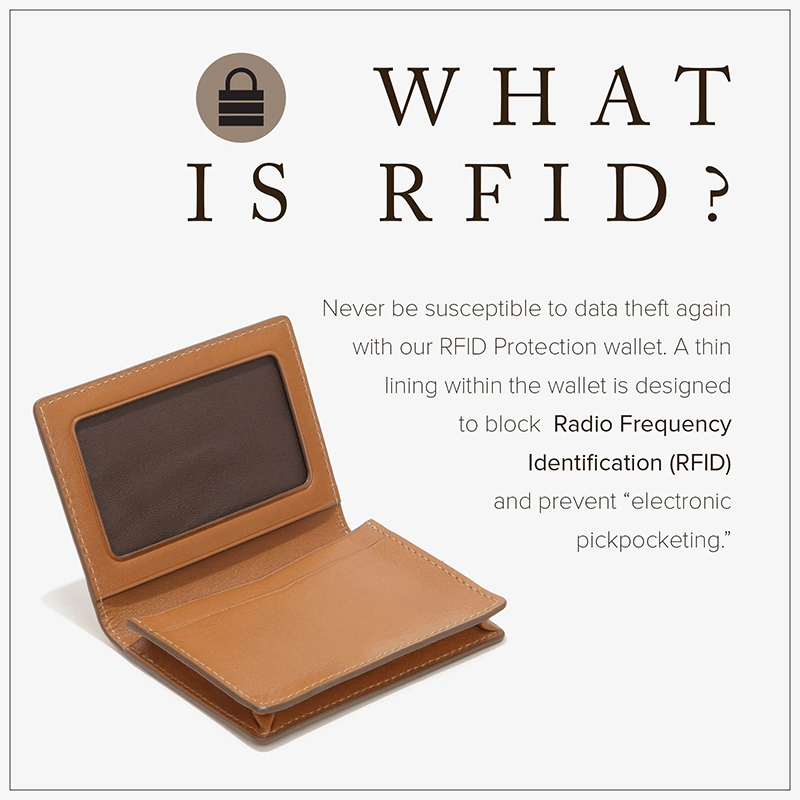
RFID in a wallet refers to built-in shielding materials that block radio-frequency signals used by contactless cards such as credit cards, ID cards, and transit cards. An RFID wallet does not contain electronics or tracking chips. Instead, it prevents nearby RFID readers from wirelessly accessing card data when the wallet is closed, helping reduce the risk of unauthorized scans in public environments.
Many people misunderstand RFID in wallets because the term sounds technical—and sometimes even alarming. In reality, RFID wallets are passive protective products, not digital devices.
To understand what RFID in a wallet truly means, it helps to separate three commonly confused concepts:
- RFID technology itself
- RFID-enabled cards
- RFID-blocking wallet construction
Only the cards use RFID. The wallet does not.
What does RFID stand for and where does it come into wallet use?
RFID stands for Radio-Frequency Identification. It is a technology that allows small chips to transmit information wirelessly using radio waves.
In everyday life, RFID appears in:
- Contactless credit and debit cards
- Public transportation cards
- Hotel key cards
- Access badges
- E-passports
These cards contain passive RFID or NFC chips. They have no batteries. They remain inactive until they are close to a reader that emits an electromagnetic field. Once energized, the chip responds with limited data to complete a transaction or verification.
A wallet becomes “RFID-related” only because it holds these cards.
What is the use of RFID in wallets?
Strictly speaking, RFID is not “used” by the wallet. Instead, wallets use RFID blocking to control how cards inside them behave.
The practical purpose of RFID blocking in a wallet is to:
- Prevent cards from being scanned unintentionally
- Reduce exposure to close-range, unauthorized readers
- Give users control over when their cards can transmit data
An RFID wallet works as a signal barrier, not as a scanner or detector. When the wallet is closed, cards inside are harder—or impossible—to activate wirelessly.
This is especially relevant in environments where people stand close together, such as airports, trains, elevators, events, or crowded streets.
What does it mean if my wallet is RFID?
If a wallet is labeled “RFID” or “RFID protected,” it almost always means RFID blocking, not RFID-enabled.
In practical terms, this means:
- The wallet contains one or more conductive shielding layers
- These layers disrupt radio-frequency signals
- The wallet itself has no electronics, no chips, and no power source
Most RFID leather wallets integrate the shielding layer:
- Between the leather exterior and inner lining
- Or between card slot layers
From a user perspective, nothing feels different during normal use—except added peace of mind.
How does an RFID wallet actually block signals?
RFID blocking relies on basic electromagnetic principles.
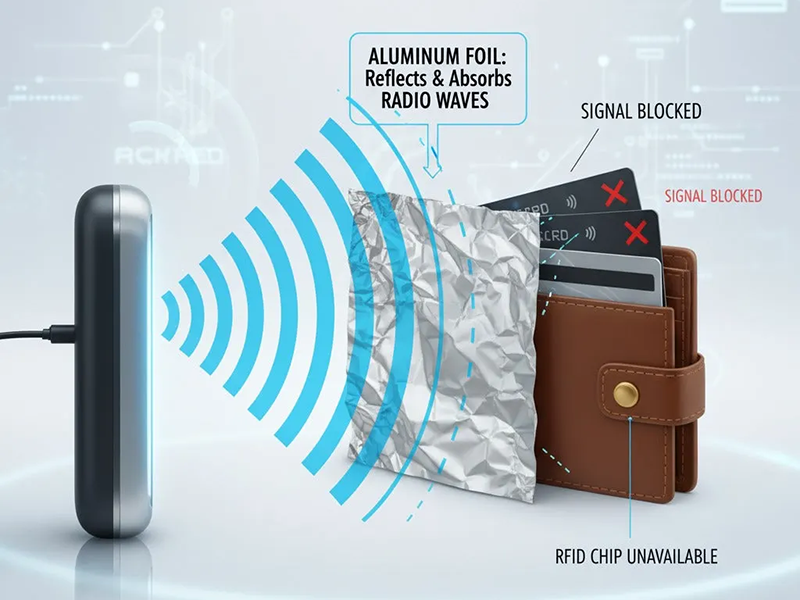
RFID readers must create a stable electromagnetic field to activate a card. RFID-blocking materials interfere with that field by:
- Reflecting radio waves
- Disrupting signal continuity
- Reducing energy transfer to the chip
This concept is similar to a Faraday cage, though simplified for consumer products.
Importantly:
- RFID wallets do not absorb data
- They do not erase information
- They do not affect cards permanently
Once a card is removed from the wallet, it functions exactly as designed.
What types of cards are affected by RFID wallets?
RFID wallets primarily affect contactless cards, including:
| Card Type | Affected by RFID Blocking |
|---|---|
| Contactless credit cards | Yes |
| Contactless debit cards | Yes |
| Transit cards | Yes |
| Hotel key cards | Sometimes |
| Magnetic stripe cards | No |
| Chip-only (insert) cards | No |
This distinction matters for users evaluating whether RFID protection is relevant to their daily carry.
What RFID in a wallet does NOT mean
To remove common confusion, an RFID wallet does not:
- Track your location
- Store personal data
- Communicate with scanners
- Interfere with airport security systems
- Increase fraud risk
RFID wallets are passive, defensive products, not smart devices.
How Does RFID Work Inside a Wallet

RFID works inside a wallet by blocking the radio-frequency energy required for contactless cards to communicate with RFID readers. RFID-blocking wallets use conductive shielding layers that disrupt the electromagnetic field emitted by scanners, preventing cards from being powered and read when the wallet is closed. The wallet itself does not transmit signals or store data—it passively controls signal access.
To understand how RFID works inside a wallet, it helps to look at the interaction between three elements:
- The RFID-enabled card
- The RFID reader (scanner)
- The wallet’s internal structure
The wallet’s role is not active—it acts as a controlled barrier between the other two.
How do RFID-enabled cards normally work outside a wallet?
Most contactless cards use passive RFID or NFC chips operating at 13.56 MHz. These chips have no battery and remain completely inactive on their own.
Here’s how a normal RFID transaction works:
- An RFID reader emits an electromagnetic field
- The card enters this field (usually within 2–5 cm)
- The chip harvests energy from the field
- The chip sends a short data response back to the reader
This entire process happens in a fraction of a second and only works if the card receives sufficient electromagnetic energy.
If the energy transfer is interrupted, the card stays silent.
What role does a wallet play in this process?
A standard wallet does nothing to affect RFID signals. Leather, fabric, and paper do not block radio waves at the frequencies used by contactless cards.
An RFID wallet, however, is intentionally designed to interfere with step 2 and step 3 above:
- It prevents the electromagnetic field from reaching the card
- Or weakens the field so much that the chip cannot activate
This is why RFID wallets are effective only when the card is inside and the wallet is closed.
How does RFID blocking inside a wallet actually work?
RFID blocking relies on electromagnetic interference, not absorption or encryption.
Inside an RFID wallet, manufacturers integrate conductive materials such as:
- Metal-infused fabrics
- Thin aluminum-based layers
- Conductive composite sheets
These materials work by:
- Reflecting radio-frequency waves
- Disrupting electromagnetic field continuity
- Preventing stable energy transfer to the chip
This principle is often compared to a Faraday cage, although consumer wallets use a simplified version adapted for flexibility and comfort.
Where is the RFID blocking layer placed inside a wallet?
Placement is critical—and often misunderstood.
In a well-constructed RFID leather wallet, shielding layers are typically placed:
- Between the leather exterior and inner lining
- Between stacked card-slot panels
- Or as a full-envelope layer covering all card compartments
Poor designs only shield one side of the wallet, leaving cards readable from certain angles. High-quality wallets ensure multi-directional protection, especially for wallets carrying multiple cards.
From a manufacturing standpoint, incorrect placement can:
- Break shielding continuity during stitching
- Cause signal leakage at fold lines
- Reduce long-term effectiveness as the wallet flexes
Does RFID blocking work all the time?
RFID blocking works under specific conditions, not universally.
It is most effective when:
- The wallet is fully closed
- Cards are fully inside shielded compartments
- The shielding layer is intact and continuous
It is less effective when:
- The wallet is open
- Cards are partially exposed
- Extremely powerful readers are used at very close range
This is why RFID wallets are designed for storage and transit, not for blocking scans during active card use.
What happens when you remove a card from an RFID wallet?
Nothing unusual.
Once a card is removed:
- RFID blocking no longer applies
- The card functions exactly as designed
- Tap-to-pay works normally
RFID wallets do not damage cards, alter chips, or shorten card lifespan. The shielding only affects the card while it remains inside the wallet.
Can RFID blocking wear out over time?
The blocking principle itself does not degrade—but construction quality matters.
Long-term performance depends on:
- Shielding material flexibility
- Stitch placement and stress points
- Adhesive compatibility
- Repeated bending and folding
Poorly integrated shielding layers may crack, shift, or separate, reducing effectiveness. This is why experienced leather factories design RFID wallets at the engineering stage, not as an add-on after sampling.
Why Do People Use RFID Wallets
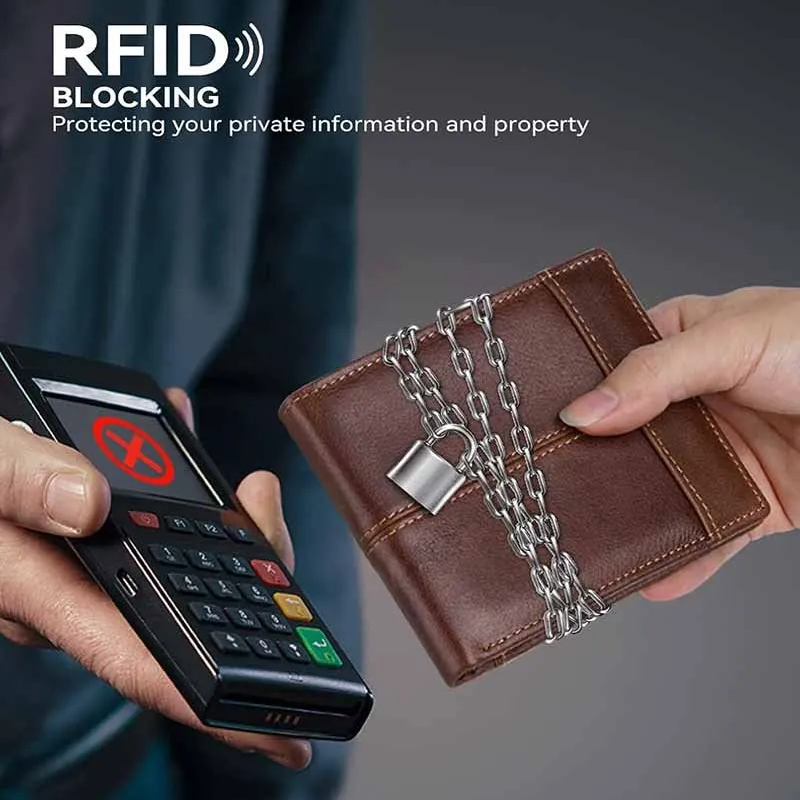
People use RFID wallets to reduce the risk of unauthorized contactless card scans, especially in crowded or high-mobility environments. RFID wallets provide a passive layer of protection against close-range skimming, help users control when their cards transmit data, and offer peace of mind as contactless payments become more common in daily life.
The popularity of RFID wallets is not driven by a single factor like fear or fraud statistics. Instead, it reflects changes in how people pay, travel, and carry personal data. For most users, RFID wallets are less about stopping crime and more about regaining control.
Below are the core reasons people choose RFID wallets today—explained realistically, not sensationally.
Why has contactless payment changed how people think about wallets?
Contactless cards have transformed everyday transactions. Tapping a card is faster, easier, and widely accepted—but it also introduces a new behavior: cards transmit data without physical contact.
This shift changes user psychology. Even when risks are low, people become more aware that:
- Their card can communicate wirelessly
- Data exchange happens invisibly
- Physical barriers no longer control access
RFID wallets respond to this shift by restoring a familiar rule:
Cards only work when I decide they should.
For many users, that sense of control matters as much as technical security.
Why are travelers more likely to use RFID wallets?
Travel is one of the strongest drivers of RFID wallet adoption.
When traveling, people:
- Carry multiple cards and documents
- Spend time in crowded, unfamiliar spaces
- Pass through airports, train stations, and hotels
- Interact with unknown terminals and readers
RFID wallets appeal to travelers because they offer passive protection during movement—when attention is divided and personal space is limited. Even if the actual risk of RFID skimming is low, the perceived exposure is higher, and RFID wallets reduce that anxiety without changing daily habits.
What privacy concerns do RFID wallets address?
RFID wallets are often chosen by users who care about data privacy, not just fraud.
Key concerns include:
- Unintentional card activation
- Unknown readers in public environments
- Loss of awareness over when data is transmitted
RFID wallets do not promise anonymity or absolute protection. Instead, they provide a physical privacy boundary—similar to closing a door or turning off a device.
For privacy-conscious users, this boundary is reassuring, even if the statistical risk remains small.
Are RFID wallets used because of real fraud cases or peace of mind?
In most cases, peace of mind is the primary motivator.
While RFID skimming incidents exist, they are not the dominant source of card fraud. Online breaches and compromised databases account for far more losses. Still, RFID wallets remain popular because they address a specific, visible concern—wireless access.
This makes RFID wallets similar to:
- Screen protectors
- Laptop privacy filters
- Anti-theft backpacks
They reduce one category of risk without claiming to solve everything.
Why do some people choose RFID wallets even if risk is low?
RFID wallets are often selected for future-proofing.
As payment systems evolve, more cards, IDs, and credentials adopt contactless technology. Buyers who invest in a high-quality leather wallet often expect it to last many years. Choosing RFID protection ensures the wallet remains compatible with future cards—without needing replacement.
From this perspective, RFID is not a reaction to fear, but a long-term design choice.
How lifestyle and daily habits influence RFID wallet use
RFID wallets are more appealing to people who:
- Commute daily using public transport
- Work in offices, campuses, or shared buildings
- Attend conferences, exhibitions, or trade fairs
- Carry multiple contactless cards in one wallet
When multiple RFID cards are stacked together, unintended interference or accidental activation becomes more likely. RFID wallets help stabilize card behavior, not just block threats.
What RFID wallets do NOT promise—and why that matters
Understanding why people use RFID wallets also means understanding what they do not expect.
Most informed users do not believe RFID wallets:
- Eliminate all fraud
- Replace bank security systems
- Protect against online theft
Instead, they see RFID wallets as a passive, low-effort safeguard—one that works quietly in the background without changing how they pay or carry essentials.
This realistic expectation is why RFID wallets continue to grow in popularity without being a short-lived trend.
Are RFID Wallets Effective and Necessary
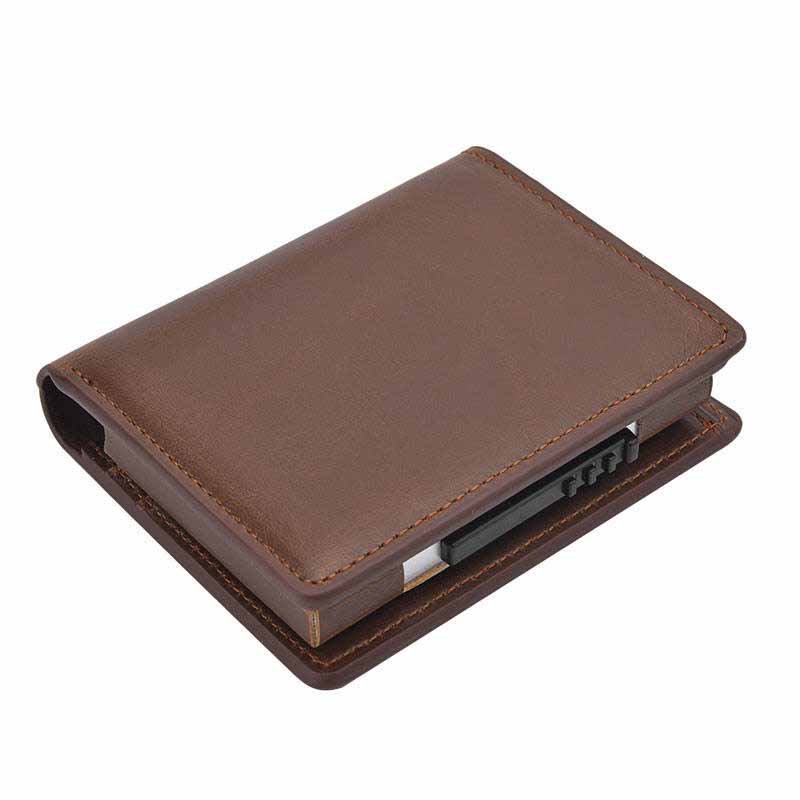
RFID wallets are effective at blocking standard contactless card signals when properly designed, but they are not necessary for every user. Their usefulness depends on lifestyle, travel frequency, and how often contactless cards are carried in public spaces. RFID wallets reduce exposure to close-range skimming rather than eliminating all forms of payment fraud.
When evaluating RFID wallets, many users combine two separate questions into one:
- Do RFID wallets work?
- Do I personally need one?
Answering these separately leads to clearer, more confident decisions.
Are RFID wallets actually effective at blocking scans?
Yes—when correctly constructed, RFID wallets are effective against standard contactless scanning.
Most RFID wallets are designed to block HF/NFC frequencies around 13.56 MHz, which are used by:
- Contactless credit cards
- Debit cards
- Transit and access cards
When a wallet includes continuous, well-placed conductive shielding, it prevents the electromagnetic field from reaching the card. Without sufficient energy, the chip remains inactive.
However, effectiveness depends on design execution, not claims on packaging. Common factors that reduce effectiveness include:
- Partial shielding (only one side protected)
- Gaps at fold lines or seams
- Degraded shielding due to poor materials
In short: RFID wallets work—but only when engineered properly.
What types of RFID threats do wallets actually protect against?
RFID wallets protect against close-range, opportunistic scanning, not sophisticated hacking.
They are effective against:
- Accidental card activation in crowded spaces
- Unauthorized proximity scans from nearby devices
- Interference between stacked contactless cards
They do not protect against:
- Online card data breaches
- Card theft and physical misuse
- Malware, phishing, or database leaks
Understanding this scope prevents unrealistic expectations and helps users see RFID wallets as risk reduction tools, not complete security systems.
Do I really need a RFID blocking wallet?
For many users, the answer is “not strictly—but it can be beneficial.”
You are more likely to need an RFID wallet if you:
- Travel frequently, especially internationally
- Commute daily using public transportation
- Spend time in dense public environments
- Carry multiple contactless cards in one wallet
You may not need one if you:
- Rarely use contactless cards
- Mostly pay via mobile wallets
- Keep your wallet in controlled environments
RFID wallets are best understood as situationally valuable, not universally required.
Is the risk of RFID skimming high in real life?
In real-world data, RFID skimming is possible but not widespread.
Most financial fraud originates from:
- Online transactions
- Compromised merchant systems
- Data breaches and leaks
This does not make RFID wallets pointless—it simply reframes their purpose. RFID wallets address a specific, visible vulnerability that users can control physically, even if it represents a smaller portion of overall fraud risk.
For many users, the psychological benefit outweighs the statistical risk.
Are RFID wallets worth it if risk is low?
This depends on cost, comfort, and longevity.
If RFID protection:
- Adds bulk
- Reduces flexibility
- Compromises leather quality
Then it may not be worth the trade-off.
However, when RFID blocking is quietly integrated into a well-made leather wallet, the downsides disappear. In that case, users gain protection with no noticeable penalty—making the feature worthwhile even if risk remains low.
This is why premium RFID wallets focus on invisible engineering, not aggressive marketing.
How to decide if RFID protection makes sense for you
A simple decision framework:
| User Scenario | RFID Wallet Recommended |
|---|---|
| Frequent traveler | Yes |
| Daily public transit user | Yes |
| Multiple contactless cards | Yes |
| Mostly home/office use | Optional |
| Mobile wallet primary | Low priority |
This practical approach helps users move beyond fear-based decisions and choose based on lifestyle fit.
Which Materials Are Used for RFID Blocking
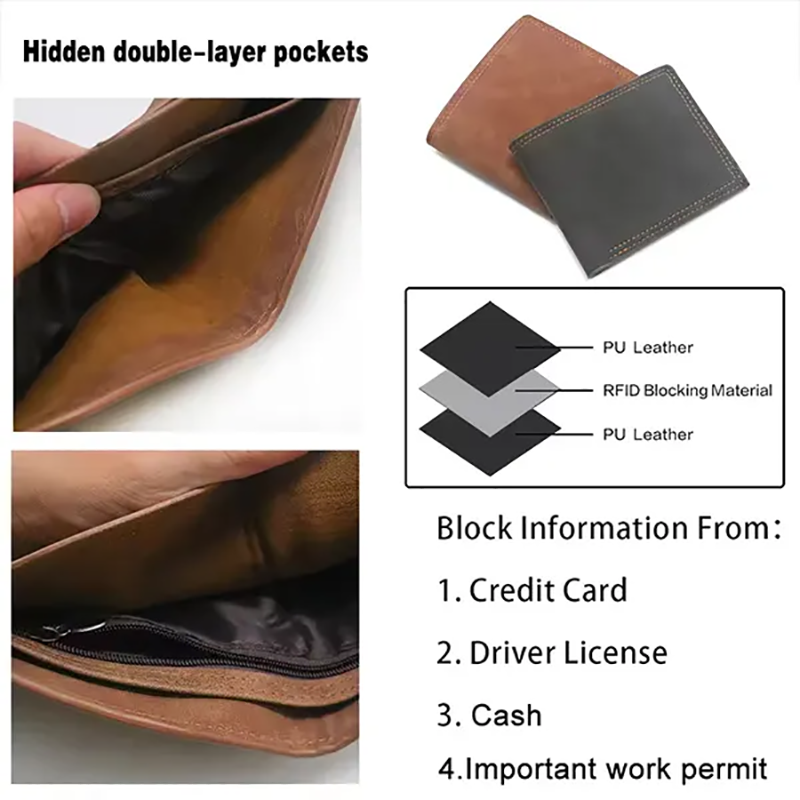
RFID blocking wallets use conductive materials—such as aluminum-based layers, metal-infused fabrics, carbon fiber sheets, or fine metal meshes—to disrupt radio-frequency signals. These materials prevent RFID readers from transferring enough energy to contactless cards. In leather wallets, flexible conductive fabrics are most commonly used because they balance signal blocking, durability, and comfort.
RFID blocking does not come from leather thickness, stitching density, or wallet shape. It comes from electrical conductivity.
To block RFID signals, a material must be able to interfere with electromagnetic fields—either by reflecting, dispersing, or weakening radio-frequency energy. Below are the main materials used in RFID wallets today, explained in practical terms.
Aluminum-based shielding layers
How it works Aluminum is highly conductive and reflects radio waves efficiently. Thin aluminum foil or aluminum-laminated sheets are often used as RFID blocking layers.
Pros
- Very effective at blocking HF/NFC signals
- Low material cost
- Thin and lightweight
Cons
- Limited flexibility
- Can fatigue, crease, or crack with repeated bending
- Not ideal for long-life leather wallets
Typical use
- Entry-level RFID wallets
- Promotional or low-cost products
Aluminum works well technically, but in leather goods it requires careful reinforcement to avoid long-term durability issues.
Metal-infused conductive fabrics (most common in leather wallets)
How it works These fabrics are woven or coated with microscopic metal fibers (such as copper, nickel, or silver blends). The metal network disrupts RFID signals while remaining flexible.
Pros
- Excellent balance of blocking performance and flexibility
- Quiet in use (no crinkling sounds)
- Withstands repeated folding
- Easy to integrate into leather structures
Cons
- Higher cost than foil
- Requires precise placement during manufacturing
Typical use
- Mid-range to premium leather RFID wallets
- OEM / private-label products
- Long-term daily carry wallets
This is the preferred solution for professional leather manufacturers, because it protects signals without compromising the wallet’s feel or aging behavior.
Carbon fiber sheets and composites
How it works Carbon fiber conducts electricity along its structure, disrupting electromagnetic fields. It is rigid compared to fabrics but very strong.
Pros
- High blocking efficiency
- Extremely durable
- Thin profile
Cons
- Low flexibility
- Can make wallets stiff
- Poor compatibility with soft leather designs
Typical use
- Minimalist or rigid wallets
- Slim card holders
- Hybrid metal–leather designs
Carbon fiber is effective but better suited to structured wallets, not traditional foldable leather wallets.
Stainless steel or metal mesh layers
How it works Fine metal meshes form a physical grid that blocks or weakens radio-frequency fields.
Pros
- Very strong blocking performance
- Long-lasting
Cons
- Heavy
- Reduces comfort
- Can trigger metal detectors
- Difficult to integrate invisibly
Typical use
- Metal wallets
- Security-focused designs
- Not common in leather wallets
For leather goods, metal mesh is usually avoided unless the design intentionally embraces rigidity.
Do leather thickness or tanning methods block RFID?
No. This is a common misconception.
Natural leather—regardless of thickness, grain type, or tanning method—does not block RFID signals at the frequencies used by contactless cards.
Even very thick leather allows RFID waves to pass through. Effective RFID protection always requires conductive materials, not leather alone.
Which RFID blocking material works best for leather wallets?
For leather wallets, metal-infused conductive fabrics are the best overall choice.
They offer:
- Reliable RFID blocking
- Flexibility compatible with folding wallets
- Quiet, comfortable daily use
- Long-term durability
- Clean integration between leather layers
From a manufacturing perspective, these fabrics allow:
- Full-slot or full-wallet shielding
- Consistent performance across production batches
- Minimal impact on leather aging and hand-feel
This is why most premium RFID leather wallets use fabric-based shielding, not rigid metal layers.
Material Comparison Table
| Material | Blocking Strength | Flexibility | Durability | Best For |
|---|---|---|---|---|
| Aluminum foil | High | Medium | Low–Medium | Budget wallets |
| Metal-infused fabric | High | High | High | Premium leather wallets |
| Carbon fiber | Very High | Low | Very High | Slim rigid wallets |
| Metal mesh | Very High | Very Low | High | Metal/security wallets |
| Leather only | None | High | High | Non-RFID wallets |
How to Choose the Right RFID Wallet
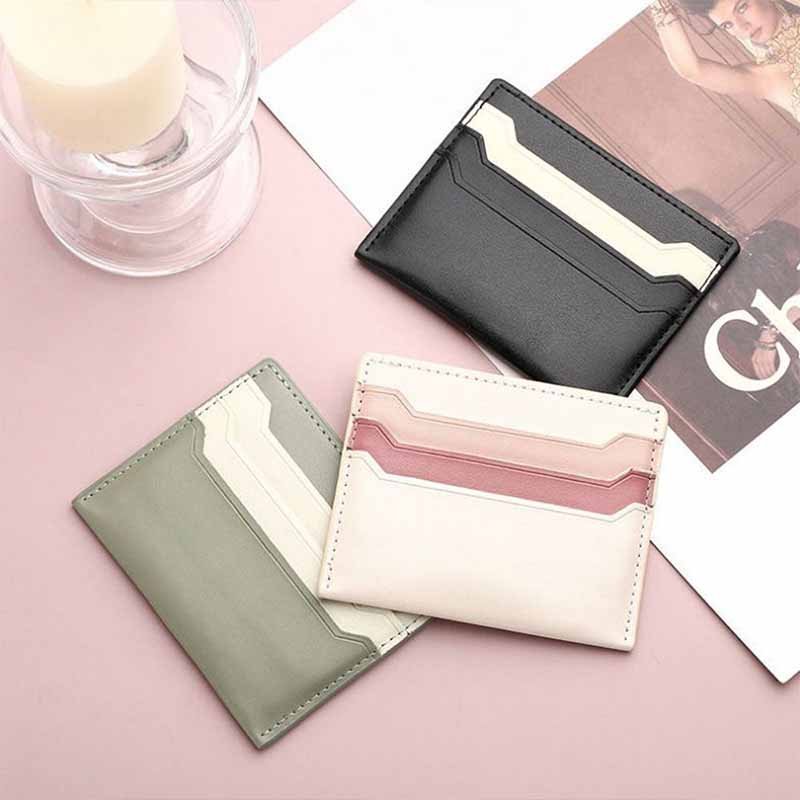
To choose the right RFID wallet, focus on shielding coverage, material quality, wallet structure, and daily use habits. A good RFID wallet should block standard contactless signals when closed, remain flexible and slim, fit your card-carry needs, and integrate RFID protection without sacrificing leather quality or comfort.
Choosing an RFID wallet is not about finding the most protection—it’s about finding the right balance between security, comfort, and long-term usability. Below is a step-by-step way to evaluate options like a professional buyer, not a marketing headline.
Start with your real usage scenario
Before comparing materials or features, clarify how you actually use a wallet.
Ask yourself:
- Do you travel frequently or commute daily?
- How many contactless cards do you carry?
- Is your wallet used daily or occasionally?
- Do you prioritize slim carry or maximum storage?
Why this matters: RFID protection is most valuable during movement—crowds, transit, travel—not static office or home use. Understanding your scenario prevents overbuying or choosing the wrong structure.
Check RFID shielding coverage (full vs partial)
Not all RFID wallets protect the same way.
Full shielding
- All card slots are protected
- Best for users carrying multiple contactless cards
- More consistent blocking from all angles
Partial shielding
- Only certain slots are protected
- Common in budget designs
- Can allow signal leakage from unshielded areas
Recommendation: If you want reliable protection without thinking about slot placement, choose full-coverage RFID wallets.
Evaluate the RFID blocking material—not just the label
The word “RFID” alone tells you nothing about quality.
Look for wallets that use:
- Metal-infused conductive fabrics (best for leather)
- Thin, flexible shielding layers
- Quiet materials that don’t crinkle or stiffen
Avoid designs where RFID protection:
- Relies on thick metal plates
- Makes the wallet rigid or bulky
- Is added as an afterthought
Key insight: Good RFID wallets feel normal in daily use. If the protection is noticeable, it’s usually poorly integrated.
Consider leather quality and construction together
RFID protection should never compensate for poor leather.
When choosing a leather RFID wallet, pay attention to:
- Full-grain or top-grain leather
- Clean edge finishing
- Even stitching without broken lines
- Natural flexibility at fold points
RFID layers increase construction complexity. Only well-designed wallets maintain leather aging, softness, and durability over time.
Balance slim profile vs capacity
Many buyers assume RFID wallets are thicker. This is not always true.
Modern RFID wallets can remain slim if:
- Shielding layers are thin and well-placed
- Card slots are efficiently designed
- The wallet is engineered, not stacked
Choose based on:
- Number of cards you realistically carry
- Whether you need cash compartments or coin pockets
- Front-pocket vs back-pocket carry preference
A slimmer wallet often improves comfort more than any security feature.
Make sure RFID protection doesn’t interfere with daily use
A properly designed RFID wallet:
- Blocks signals only when closed
- Allows tap-to-pay once cards are removed
- Does not affect chip or magnetic stripe functions
If a wallet requires you to fight stiffness or awkward card access, the design has failed—regardless of RFID claims.
Think long-term, not just immediate protection
Most quality leather wallets last years, not months.
Choosing RFID protection can be a form of future-proofing:
- More cards are becoming contactless
- Wallet replacement cycles are long
- Upgrading later often costs more
If RFID protection adds no downside in comfort or thickness, it’s often worth including—even if you don’t strictly “need” it today.
Quick Buyer Checklist
| Question | What to Look For |
|---|---|
| Does it block RFID? | Full-coverage shielding |
| Is it comfortable? | Flexible, slim profile |
| Will it last? | Quality leather + durable shielding |
| Fits my lifestyle? | Matches travel & carry habits |
| Feels normal to use? | No stiffness or bulk |
Common Questions and Misconceptions About RFID Wallets
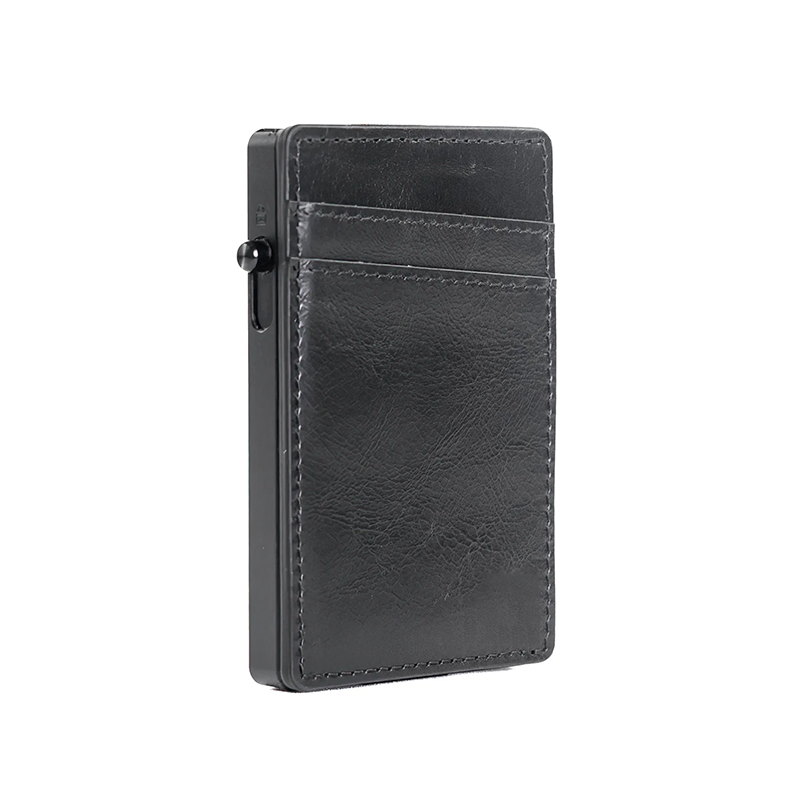
Most misconceptions about RFID wallets come from confusing RFID blocking with tracking or active electronics. RFID wallets do not transmit signals, store personal data, or interfere with normal card use. They simply block radio-frequency energy when the wallet is closed, reducing the chance of unintended contactless scans.
As RFID wallets became more common, so did misunderstandings. Many buyers hesitate not because the product is unclear, but because online information is fragmented or exaggerated. Below are the most common questions and misconceptions—answered clearly and realistically.
Do RFID wallets track you or collect personal data?
No. This is one of the most common and persistent misconceptions.
RFID wallets:
- Do not contain chips
- Do not have batteries
- Do not transmit or receive data
- Do not track location or behavior
They are purely passive products. The only items capable of communication are the cards inside the wallet—not the wallet itself.
If a wallet claims to “monitor,” “detect,” or “scan,” it is either mislabeled or not an RFID wallet in the traditional sense.
Is an RFID wallet the same as a “smart wallet”?
No. RFID wallets and smart wallets are fundamentally different.
| Feature | RFID Wallet | Smart Wallet |
|---|---|---|
| Electronics | None | Yes |
| Battery | No | Yes |
| Connectivity | None | Bluetooth / GPS |
| Purpose | Signal blocking | Tracking, alerts |
| Maintenance | None | Charging, apps |
RFID wallets are chosen for simplicity and reliability, not digital features.
Can RFID wallets interfere with contactless payments?
Not when used correctly.
RFID wallets are designed to block signals only when cards are inside the wallet. Once a card is removed:
- Tap-to-pay works normally
- Chip insertion works normally
- Magnetic stripe works normally
If a wallet prevents contactless payments even after card removal, the issue lies in poor material placement or design, not RFID technology itself.
Can RFID wallets damage cards or shorten card lifespan?
No.
RFID blocking:
- Does not erase data
- Does not affect chip memory
- Does not weaken antennas
- Does not reduce card lifespan
The shielding layer only affects radio-frequency energy transfer, not the card’s internal structure. Cards remain unchanged whether stored in RFID wallets or standard wallets.
Do RFID wallets work with all types of cards?
RFID wallets only affect contactless cards.
| Card Type | Affected by RFID Blocking |
|---|---|
| Contactless credit/debit cards | Yes |
| Transit cards | Yes |
| Access badges | Yes |
| Hotel key cards | Sometimes |
| Chip-only cards | No |
| Magnetic stripe cards | No |
This distinction helps users decide whether RFID protection is relevant based on the cards they actually carry.
Can RFID wallets go through airport security?
Yes. RFID wallets pass through airport security without issues.
Airport systems use:
- X-ray imaging
- Metal detectors
- Millimeter-wave scanners
These technologies are unrelated to RFID. Thin RFID shielding layers in leather wallets do not block boarding passes, passports, or security scans.
Only wallets with thick metal plates may trigger detectors—this is why most leather RFID wallets use fabric-based shielding instead.
Is RFID skimming really common in real life?
RFID skimming is technically possible but not widespread.
Most financial fraud today comes from:
- Online breaches
- Compromised merchant systems
- Phishing and malware
RFID wallets are not a response to mass fraud—but to perceived exposure in wireless environments. They reduce a specific, visible risk that users can physically control.
Are RFID wallets just a marketing gimmick?
Not entirely—but they can be poorly marketed.
RFID blocking is real and measurable. However, exaggerated claims often create skepticism. High-quality RFID wallets succeed because:
- The protection is invisible
- The wallet feels normal
- There are no trade-offs in comfort
When RFID protection adds bulk, stiffness, or inconvenience, it feels gimmicky. When integrated properly, it becomes a quiet design upgrade.
Do all wallets need RFID protection today?
No.
RFID protection is:
- Helpful for travelers and commuters
- Optional for casual users
- Unnecessary for those who rarely carry contactless cards
The best RFID wallets are chosen because they fit the user’s lifestyle, not because of fear-driven decisions.
Quick Misconception Summary
| Myth | Reality |
|---|---|
| RFID wallets track you | They are passive and offline |
| RFID wallets stop all fraud | They only reduce close-range scans |
| RFID blocks payments forever | Cards work normally when removed |
| Thick leather blocks RFID | Only conductive materials block RFID |
| RFID wallets are bulky | Well-designed ones are slim |
RFID Wallets From a Manufacturing Perspective
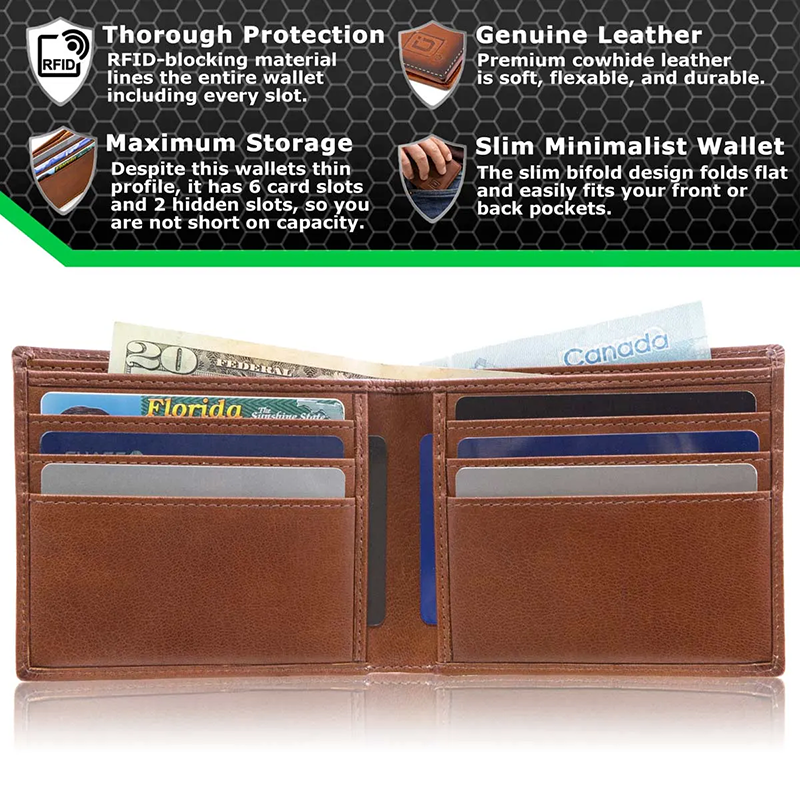
From a manufacturing perspective, RFID wallets require precise integration of conductive shielding materials into leather structures without compromising flexibility, durability, or appearance. Effective RFID wallets depend on material selection, layer placement, stitching design, and quality control consistency rather than the RFID label itself.
In factory reality, RFID wallets are structurally different products from standard leather wallets. The challenge is not simply blocking signals—it is doing so reliably, invisibly, and at scale, while maintaining the natural feel of leather goods.
This is where manufacturing experience becomes critical.
Why RFID wallets require additional engineering at the design stage
RFID blocking cannot be treated as an afterthought.
At the design stage, manufacturers must decide:
- Whether shielding covers the full wallet or specific compartments
- How shielding interacts with folds, edges, and stress points
- How card slot layout affects signal leakage
- Whether the wallet must remain slim or can tolerate structure
These decisions directly affect:
- Blocking reliability
- User comfort
- Long-term durability
Factories without product engineering capability often add RFID layers late in development, leading to bulky wallets, cracked shielding, or inconsistent performance.
How RFID shielding materials are integrated into leather wallets
In professional manufacturing, RFID shielding is usually placed:
- Between outer leather and lining
- Between stacked card-slot panels
- Or as a full-envelope internal layer
Each method has trade-offs.
For example:
- Full-envelope shielding offers stronger protection but requires precise folding control
- Slot-level shielding improves slimness but demands accurate cutting and alignment
Improper integration can result in:
- Broken conductive continuity
- Signal leakage at seams
- Premature material fatigue
This is why experienced factories test RFID placement during sampling, not after mass production.
How stitching and edge finishing affect RFID performance
Stitching is often overlooked—but it matters.
Every needle hole:
- Penetrates leather layers
- Passes through shielding material
- Can disrupt conductive paths if poorly planned
Manufacturers must:
- Avoid stitching directly through critical shielding zones
- Adjust stitch length and spacing
- Reinforce fold areas without cutting shielding continuity
Edge finishing also matters. Poor edge paint or folding can expose shielding layers, affecting both appearance and performance.
Balancing RFID protection with leather flexibility and aging
Leather wallets bend thousands of times over their lifespan. RFID shielding must survive this movement.
Key manufacturing considerations include:
- Shielding material flexibility
- Adhesive compatibility with leather
- Resistance to cracking or delamination
- Noise control (no crinkling sounds)
High-quality RFID wallets feel identical to non-RFID wallets in daily use. If a wallet feels stiff, noisy, or bulky, it usually indicates poor material matching, not necessary trade-offs.
Quality control challenges unique to RFID wallets
RFID wallets introduce new QC variables that standard wallets do not have.
Factories must verify:
- Signal blocking consistency across all card slots
- No performance loss after folding tests
- Stable performance across production batches
Spot-checking only finished goods is not enough. Reliable manufacturers implement:
- Incoming material inspection
- In-process structure checks
- Sample-based RFID functionality testing
This ensures that every batch meets the same functional standard—not just the first sample.
Why manufacturing experience matters for OEM and private-label buyers
For brands and professional buyers, RFID wallets highlight a critical truth:
RFID performance is only as good as the factory’s engineering discipline.
An experienced leather manufacturer brings:
- In-house material sourcing and testing
- Product structure design capability
- Sampling that matches mass production
- Stable workmanship across volumes
This reduces risks such as:
- Customer complaints about stiffness
- Inconsistent RFID performance
- Returns due to poor usability
For OEM / ODM projects, RFID wallets should be developed as complete systems, not feature add-ons.
Manufacturing Perspective Summary
| Aspect | Why It Matters |
|---|---|
| Material selection | Determines blocking + flexibility |
| Layer placement | Affects signal leakage |
| Stitch planning | Prevents shielding disruption |
| Folding design | Ensures long-term durability |
| QC testing | Guarantees batch consistency |
How RFID Wallet Design Impacts Long-Term User Experience
RFID wallet design impacts long-term user experience through material flexibility, layer integration, stitching strategy, and overall structure. Well-designed RFID wallets maintain softness, slimness, and consistent blocking performance over years of use, while poorly designed ones become stiff, bulky, noisy, or lose effectiveness as internal layers fatigue.
Many RFID wallets feel fine on day one. The real difference appears after six months, one year, or three years of daily use.
Long-term user experience is not determined by whether RFID blocking works initially—but by how the wallet ages while continuing to work.
This is where design decisions made at the factory level become visible to the end user.
How flexibility and fold design affect daily comfort over time
Wallets bend thousands of times during their lifespan. Every open, close, sit, and pocket movement applies stress to:
- Leather fibers
- Stitch lines
- RFID shielding layers
Poorly designed RFID wallets often:
- Become stiff at the fold
- Develop cracking sounds
- Feel uncomfortable in pockets
Well-designed RFID wallets distribute stress evenly and use flex-compatible shielding materials, allowing the wallet to remain soft and natural even after years of use.
Flexibility is not optional—it is the foundation of comfort.
Why internal layer integration determines whether a wallet stays slim
RFID protection adds layers. The question is how those layers are integrated.
Bad integration leads to:
- Bulky profiles
- Uneven thickness
- Wallets that never “break in”
Good integration:
- Keeps shielding layers thin and continuous
- Aligns layers with natural leather grain direction
- Avoids stacking rigid materials at fold points
As a result, the wallet gradually becomes thinner and more comfortable, not thicker, as the leather molds to the user.
How stitching and seam planning influence durability and feel
Stitching is both structural and tactile.
In RFID wallets, poor stitch planning can:
- Cut through conductive shielding
- Create hard pressure lines
- Cause early seam failure
High-quality designs:
- Route stitch lines away from critical shielding zones
- Use stitch density matched to leather thickness
- Reinforce folds without over-stiffening
Over time, this results in:
- Smooth card access
- Stable edges
- No sharp pressure points
Users may not notice good stitching—but they always feel bad stitching.
Why material compatibility affects sound, texture, and aging
One overlooked aspect of RFID wallet experience is sound.
Cheap shielding materials often:
- Crinkle
- Rustle
- Create friction noise
These sounds become more noticeable as the wallet ages.
Premium RFID wallets use quiet, fabric-based conductive layers that move with the leather. The result is a wallet that feels organic, silent, and natural—no different from a traditional leather wallet.
Material compatibility also affects:
- Leather patina development
- Resistance to delamination
- Long-term structural stability
How RFID performance consistency shapes user trust
Users rarely test RFID blocking daily. But when it fails—even once—trust drops permanently.
Long-term experience includes:
- Consistent RFID blocking after years of use
- No degradation due to folding or wear
- Reliable performance across all card slots
This consistency comes from:
- Shielding materials chosen for fatigue resistance
- Structural designs that protect conductive continuity
- Manufacturing QC that anticipates real-world wear
When RFID performance quietly continues to work, users stop thinking about it—which is exactly the goal.
Why good RFID wallet design feels “invisible” to the user
The best compliment an RFID wallet can receive is:
“It feels like a normal leather wallet.”
Invisible design means:
- No added bulk
- No stiffness
- No learning curve
- No behavioral change required
Users should not need to:
- Adjust how they store cards
- Remember which slot is protected
- Change how they open or carry the wallet
When design succeeds, RFID protection becomes a background feature, supporting daily life without drawing attention.
Long-Term User Experience Checklist
| Design Factor | Long-Term Impact |
|---|---|
| Flexible shielding | Comfort after years of folding |
| Proper layer placement | Slim profile over time |
| Smart stitch planning | Structural stability |
| Quiet materials | Premium feel |
| Durable RFID performance | User trust |
Conclusion
Choosing an RFID wallet is not just about blocking signals—it’s about trusting the product that carries your identity, finances, and daily essentials.
With over 18 years of experience in leather product R&D and manufacturing, Szoneier Leather specializes in producing custom RFID leather wallets, bags, belts, straps, accessories, and leather boxes for brands and professional buyers worldwide.
If you are developing:
- A private-label RFID wallet line
- A premium leather wallet upgrade
- A travel-focused or business-oriented wallet collection
- A brand that values real construction over marketing claims
Szoneier Leather can support your project from concept to production.
Share your design requirements, target market, and quantity goals. Our team will provide material suggestions, structure recommendations, and a clear development path—without unnecessary complexity.
Contact Szoneier Leather today to start your RFID leather wallet project with confidence.