 Skip to content
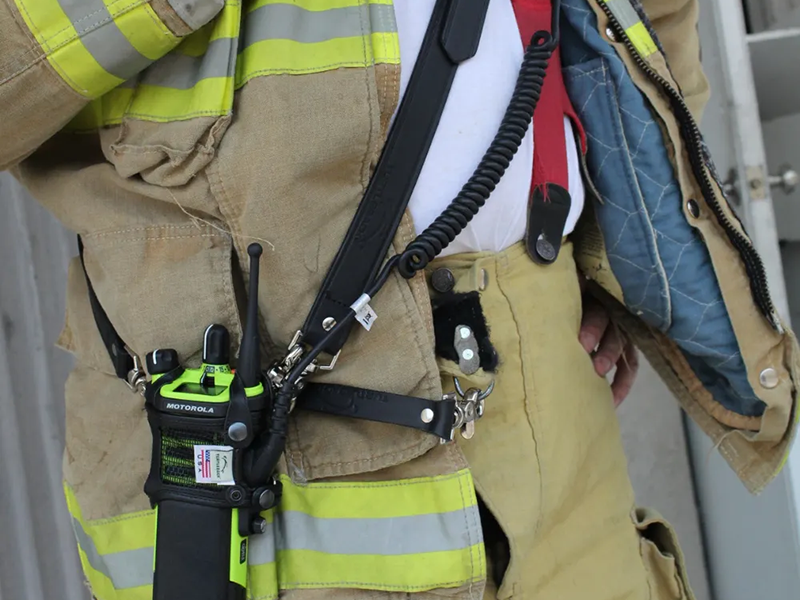
In high-risk professions like firefighting, emergency response, and law enforcement, equipment failure is not just inconvenient—it can be dangerous. Radios are mission-critical tools, and how they are carried matters far more than most people realize. This is where the leather radio strap comes in.
At first glance, a leather radio strap may look like a simple shoulder strap. In practice, it is a load-bearing, body-worn system designed to carry radios and accessories securely, comfortably, and consistently during long, physically demanding shifts. Unlike generic straps or consumer camera slings, leather radio straps are engineered for durability, stability, and professional use.
Over the years, leather radio straps have become especially popular among firefighters. Not because leather is fashionable, but because it performs reliably under stress: it doesn’t stretch unpredictably, it distributes weight evenly, and it holds up over years of daily use. Many firefighters consider their radio strap as essential as their helmet or gloves.
A leather radio strap is a heavy-duty shoulder strap designed to carry two-way radios and accessories securely during professional use. Commonly worn by firefighters and emergency responders, it provides stable weight distribution, durability, and comfort compared to generic or synthetic straps. Leather radio straps are often customized for length, width, hardware, and accessories to match operational needs.
Behind this simple definition lies a deeper discussion about materials, ergonomics, safety, and long-term value—topics that matter to professionals choosing gear they rely on every day.
What Is a Leather Radio Strap
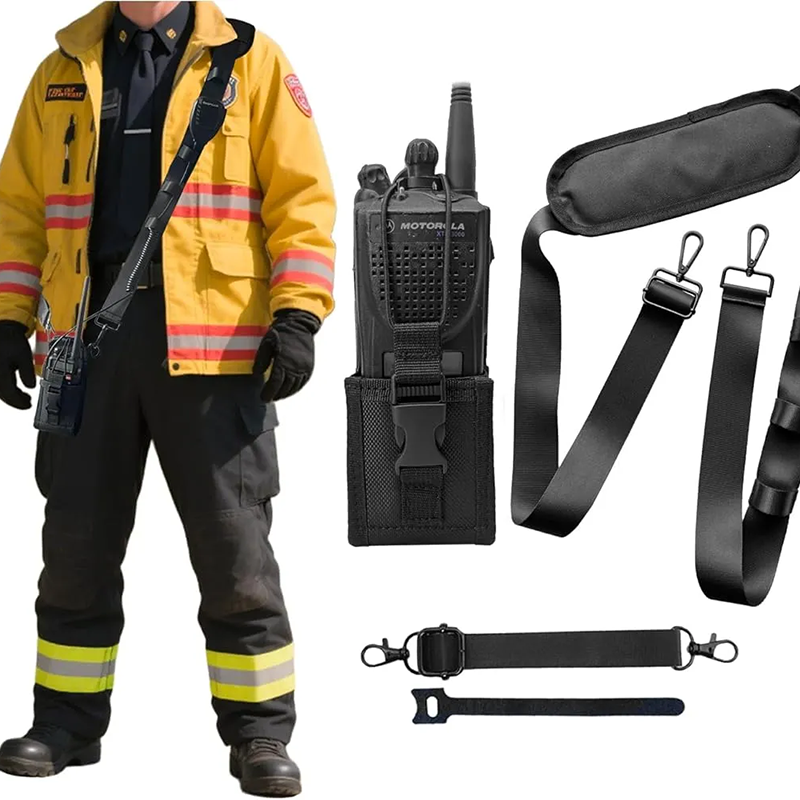
A leather radio strap is a heavy-duty shoulder strap made from leather, designed to securely carry two-way radios and related accessories during professional use. Commonly worn by firefighters and emergency responders, it provides stable weight distribution, durability, and consistent radio positioning, making communication easier and safer in high-stress environments.
What is the primary purpose of a leather radio strap?
The primary purpose of a leather radio strap is to carry a radio securely, consistently, and comfortably on the body during demanding work. In professions like firefighting, radios are mission-critical tools—losing access to them, even briefly, can create serious safety risks.
A leather radio strap allows the radio to:
- Stay in a fixed, predictable position
- Remain accessible with one hand
- Avoid swinging, bouncing, or shifting during movement
This stability is the key reason professionals choose radio straps instead of belt clips or handheld carry.
What equipment is typically used with a leather radio strap?
A leather radio strap is not just a strap—it is part of a carry system. It is commonly used together with:
- Two-way radios
- Leather or molded radio holsters
- Remote speaker microphones
- Anti-sway or stabilizer straps
- Optional accessory loops (flashlight, gloves)
The strap runs diagonally across the torso, keeping the radio positioned near the chest or waist where it can be reached instinctively, even while wearing turnout gear or protective clothing.
How is a leather radio strap different from generic or nylon straps?
Although nylon or webbing straps may look similar, the functional difference is significant.
Leather radio straps:
- Do not stretch unpredictably under load
- Maintain shape and length over time
- Distribute weight more evenly due to thickness and rigidity
- Age gradually rather than fraying suddenly
Generic or nylon straps often flex, twist, or creep under the constant weight of a radio, causing discomfort and inconsistent positioning—problems leather is specifically chosen to avoid.
Why is leather used instead of synthetic materials?
Leather is chosen not for appearance, but for mechanical behavior.
High-quality leather:
- Has controlled flexibility without elastic stretch
- Softens over time while retaining structure
- Handles repeated stress without sudden failure
For professionals wearing a radio strap every shift, this predictable behavior is more important than light weight or low cost. Leather performs consistently across years of daily use.
Why are leather radio straps especially common among firefighters?
Firefighters operate in environments where:
- Hands are frequently occupied
- Visibility may be limited
- Equipment weight is high
- Movements are fast and unpredictable
A leather radio strap keeps the radio:
- Secure while crawling, climbing, or running
- Accessible through muscle memory
- Out of the way of tools and hoses
This is why leather radio straps have become a standard personal equipment choice in fire services worldwide.
Is a leather radio strap considered safety equipment?
While not classified as PPE, a leather radio strap is widely regarded as functional safety equipment.
Reliable communication is central to:
- Team coordination
- Hazard awareness
- Emergency evacuation
A strap failure or poorly positioned radio can delay communication at critical moments. For this reason, many professionals treat their radio strap with the same seriousness as other duty gear.
How has the leather radio strap evolved over time?
Originally, radio straps were improvised solutions made from belts or webbing. As radios became heavier and more complex, purpose-built designs emerged.
Modern leather radio straps now feature:
- Reinforced load-bearing stitching
- Precision-cut leather layers
- Heavy-duty metal hardware
- Custom sizing and accessory integration
These refinements reflect the strap’s evolution from a simple carry aid into a specialized professional tool.
Why does manufacturing quality matter for leather radio straps?
Because leather radio straps are load-bearing items worn daily, manufacturing quality directly impacts safety and comfort.
Key quality factors include:
- Leather thickness consistency
- Stitch density at stress points
- Hardware attachment strength
- Edge finishing to prevent premature wear
Why Use a Leather Radio Strap
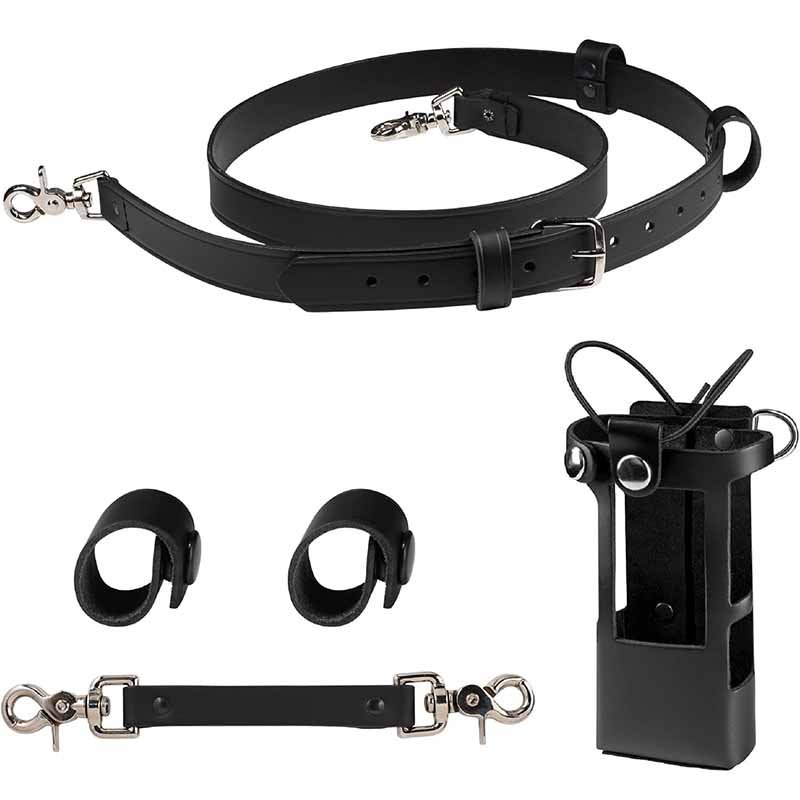
Leather radio straps are used because they provide stable radio positioning, superior durability, and consistent comfort during long, demanding shifts. Professionals—especially firefighters—choose leather for its minimal stretch, reliable load distribution, and long service life, ensuring radios remain accessible and secure in high-stress environments.
Why do firefighters and emergency responders rely on radio straps?
In emergency operations, radios are lifelines. Firefighters and responders need hands free for tools, ladders, hoses, and patient care—yet must access radios instantly. A shoulder-worn strap keeps the radio in a fixed, muscle-memory position, reducing fumbling and dropped devices during rapid movement, low visibility, or confined spaces. This consistency directly supports faster communication and safer coordination.
How does leather improve stability compared to nylon or webbing?
Leather’s controlled flexibility means no elastic creep. Under continuous load, nylon can stretch and twist, causing the radio to swing or shift. Leather maintains its length and shape, keeping the radio close to the torso. The result is predictable positioning—crucial when crawling, climbing, or running.
Why is weight distribution and comfort better with leather straps?
Quality leather straps are typically wider and stiffer, spreading weight across the shoulder rather than concentrating pressure at a single point. Over long shifts, this reduces hot spots and fatigue. As leather breaks in, it molds to the wearer’s body without losing structure, delivering long-term comfort that synthetics struggle to match.
How does durability translate to safety and reliability?
A failed strap can mean a dropped radio, broken antenna, or lost communication. Leather excels at gradual wear rather than sudden failure—edges don’t fray unpredictably, and stress points hold when properly stitched and reinforced. This reliability lowers the risk of mid-shift equipment failure.
Why does leather perform better in harsh environments?
Fireground and emergency scenes expose gear to heat, abrasion, moisture, and grime. Thick leather resists abrasion and maintains integrity when scraped against concrete, metal, or gear. With basic care, it remains serviceable despite daily abuse, making it a workhorse material for demanding conditions.
How does leather support professional standards and appearance?
Beyond function, leather straps present a clean, professional look that aligns with departmental standards and public-facing roles. More importantly, they support identification—name stamping, unit marks, and consistent sizing—reducing gear mix-ups in busy stations or multi-agency responses.
Is leather cost-effective over time?
While leather straps cost more upfront, they often last 5–10+ years, compared to frequent replacement cycles for synthetics. Fewer replacements mean lower total cost of ownership, less downtime, and consistent performance—key considerations for professionals who depend on their gear daily.
Why does manufacturing quality matter for leather radio straps?
The benefits above depend on how the strap is made: leather grade, thickness consistency, stitch density at stress points, and hardware strength. Manufacturers with full leather R&D and production capabilities—such as Szoneier Leather—engineer straps as load-bearing professional equipment, not fashion accessories, ensuring durability and comfort in real-world use.
Which Materials Are Used in Leather Radio Straps
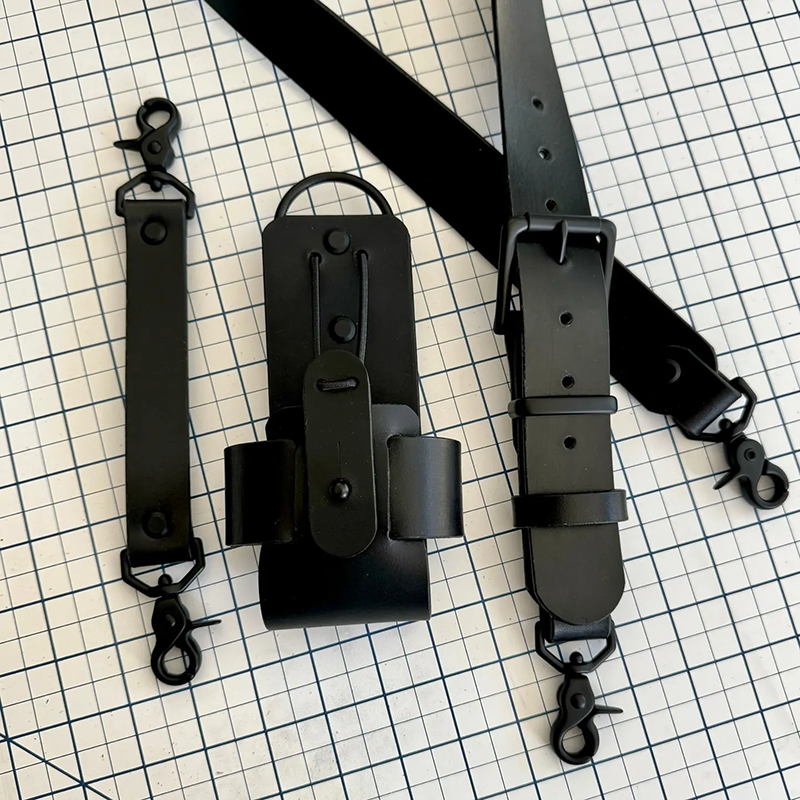
Leather radio straps are primarily made from full-grain or top-grain leather, reinforced with heavy-duty stitching and metal hardware. Some designs include padding layers, edge coatings, and reinforced attachment points. Material quality directly affects strength, comfort, durability, and long-term performance, making leather selection and construction critical for professional use.
What types of leather are commonly used?
Not all leather is suitable for load-bearing equipment. Professional leather radio straps typically use structural leather, not decorative leather.
The most common types include:
- Full-grain leather The strongest and most durable option. It retains the natural fiber structure of the hide, offering excellent tensile strength and resistance to tearing. This is the preferred choice for professional firefighter radio straps.
- Top-grain leather Slightly processed for uniformity. It offers good durability with a smoother appearance, often used when balancing performance and cost.
- Split leather (lower layers) Generally avoided for professional radio straps due to reduced strength. It may be used only in non-load-bearing decorative components.
For daily-use radio straps, full-grain or reinforced top-grain leather is strongly recommended.
How does leather thickness affect performance?
Leather thickness directly impacts load capacity and comfort.
Typical thickness ranges:
- 2.8–3.2 mm: common for standard radio straps
- 3.5–4.0 mm: used for heavy radios or dual-layer designs
Thicker leather provides better load stability but must be balanced with flexibility. Overly stiff leather can reduce comfort, while leather that is too thin may stretch or deform over time.
Professional manufacturers carefully grade leather thickness to ensure predictable performance under continuous load.
Are leather radio straps single-layer or multi-layer?
Leather radio straps may be constructed as:
- Single-layer straps (simpler, lighter)
- Double-layer or laminated straps (stronger, more stable)
Multi-layer construction improves:
- Load distribution
- Resistance to curling and edge deformation
- Long-term shape retention
Some designs also integrate padding layers between leather sheets for enhanced shoulder comfort, especially for long shifts.
What stitching materials are used in leather radio straps?
Stitching is a critical structural component, not a cosmetic detail.
High-quality radio straps use:
- Bonded nylon or polyester thread
- High stitch density at stress points
- Reinforced stitching patterns (box stitch, bar tack)
Weak or sparse stitching is one of the most common failure points. Even the best leather will fail prematurely if stitching quality is poor.
What hardware materials are used, and why do they matter?
Hardware connects the strap to the radio and accessories, making it a high-risk failure point.
Common hardware materials include:
- Solid steel or stainless steel clips
- Zinc alloy or brass hardware with protective coatings
- Heavy-duty D-rings and swivels
Plastic hardware is generally avoided in professional radio straps due to breakage risk. Metal hardware ensures reliability under load, heat, and impact.
Are edge finishing and coatings important?
Yes—edge treatment significantly affects durability.
Quality leather radio straps often include:
- Burnished or sealed edges
- Edge paint or wax coating
- Rounded edges to reduce wear
Poor edge finishing leads to fraying, cracking, and moisture absorption, which shortens service life.
Do leather radio straps include padding or liners?
Some designs include:
- Foam or felt padding under the shoulder area
- Suede or microfiber lining for grip and comfort
Padding improves comfort for heavy radios but must be securely bonded to prevent shifting or delamination over time.
How do materials affect lifespan and maintenance?
Material choice determines:
- Expected service life (often 5–10+ years for quality leather)
- Required maintenance (occasional cleaning and conditioning)
- Resistance to sweat, moisture, and abrasion
High-quality leather ages gradually, showing wear without sudden structural failure—an important safety advantage.
Why does material sourcing and manufacturing expertise matter?
Leather radio straps require:
- Consistent leather grading
- Precise cutting and layering
- Skilled stitching and assembly
- Strict quality control
How to Choose the Right Leather Radio Strap
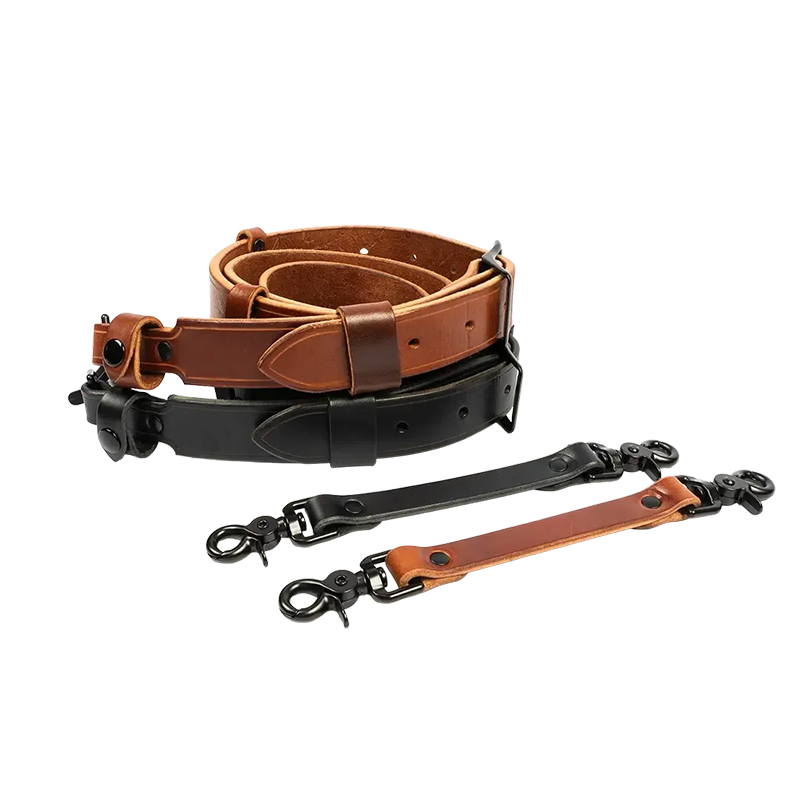
To choose the right leather radio strap, focus on proper length and width, leather quality, load capacity, hardware strength, and comfort over long shifts. The best leather radio strap fits your body correctly, keeps the radio stable during movement, distributes weight evenly, and is built with reinforced stitching and durable metal hardware for daily professional use.
What length should a leather radio strap be?
Length is the first decision—and the most commonly misunderstood.
A properly sized leather radio strap should:
- Sit diagonally across the torso
- Keep the radio near the chest or waist
- Remain accessible without lifting the arm unnaturally
If the strap is too short, the radio rides high and restricts movement. If it’s too long, the radio swings, bumps into equipment, and slows access.
Professional users often prefer adjustable-length straps to accommodate turnout gear, jackets, or seasonal clothing.
How wide should the strap be for comfort and safety?
Width directly affects pressure distribution.
General guidance:
- Narrow straps (≤30 mm): light-duty or casual use
- Medium width (38–40 mm): balanced comfort
- Wide straps (45–50 mm): best for heavy radios and long shifts
Wider leather straps spread weight across more shoulder area, reducing fatigue and pressure points—especially important for firefighters wearing radios for 10–24 hour shifts.
How do you match the strap to radio weight and accessories?
Radio weight varies significantly depending on:
- Battery size
- Protective cases
- Attached microphones or accessories
Heavier setups require:
- Thicker or double-layer leather
- Reinforced attachment points
- High-strength stitching patterns
A strap that feels “fine” when new may stretch or fail over time if it’s not designed for the actual load.
What leather quality should you look for?
Leather quality determines long-term performance.
Choose straps made from:
- Full-grain or reinforced top-grain leather
- Consistent thickness across the entire length
- Proper edge finishing to prevent cracking
Avoid overly soft or decorative leather—it may feel comfortable initially but lacks the structural integrity required for load-bearing use.
Why is hardware selection critical?
Hardware is a common failure point.
A professional leather radio strap should use:
- Solid metal clips or swivels
- Reinforced D-rings
- Secure attachment methods (rivets + stitching)
Plastic or lightweight hardware may save cost but increases the risk of breakage—especially under impact or heat.
Should you choose padding or a plain strap?
Padding is optional but valuable for heavy radios.
Padded straps:
- Reduce shoulder fatigue
- Improve comfort during long wear
- Are helpful for users with heavier equipment
However, padding must be securely integrated. Poorly bonded padding can shift or compress unevenly, reducing stability.
How important is stability during movement?
Stability matters more than softness.
A good leather radio strap should:
- Stay flat against the body
- Resist twisting and rolling
- Keep the radio from bouncing
Some designs include anti-sway straps or stabilizers, which are especially useful for firefighters climbing ladders or moving quickly in confined spaces.
What customization options should you consider?
Customization is not just aesthetic—it’s functional.
Useful options include:
- Custom length and width
- Name stamping or unit identification
- Specific hardware compatible with your radio holster
- Color choices for department standards
For teams or brands, customization improves consistency and reduces gear mix-ups.
What are the disadvantages you should realistically consider?
A professional guide must be honest.
Leather radio straps:
- Cost more upfront
- Are heavier than nylon
- Require basic care (cleaning and conditioning)
However, these trade-offs are often justified by longer service life, better stability, and fewer replacements.
Why does the manufacturer matter when choosing a leather radio strap?
Even with good design, execution matters.
A reliable manufacturer ensures:
- Proper leather grading
- Consistent thickness
- Reinforced stitching at stress points
- Quality control under load testing
Are Leather Radio Straps Worth It
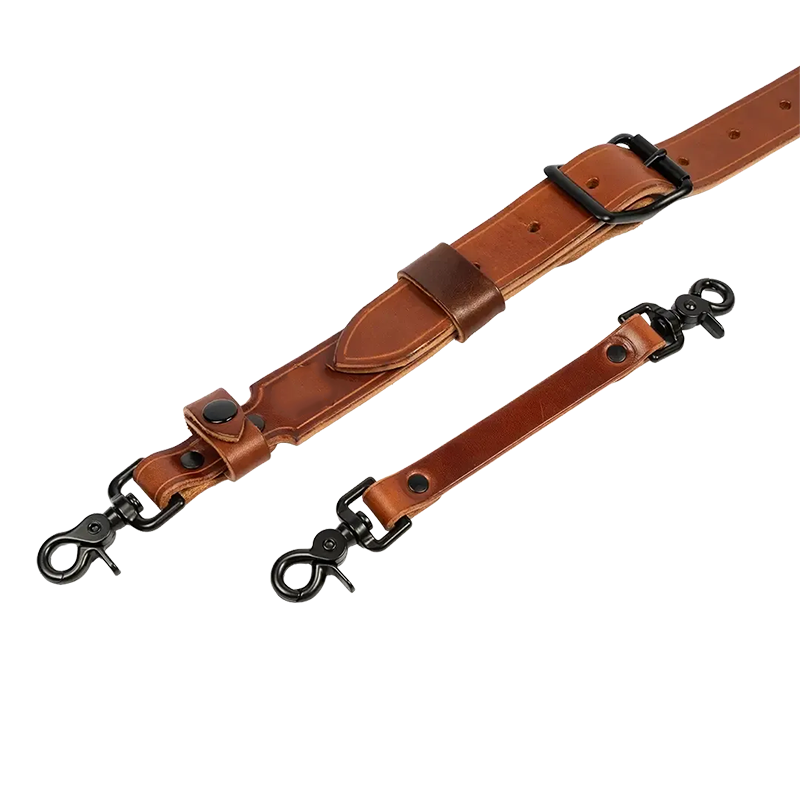
Yes, leather radio straps are often worth the investment—especially for professionals—because they provide superior durability, predictable performance under load, better comfort during extended use, and longer service life compared to standard nylon or synthetic straps. Over time, leather’s minimal stretch and structural integrity reduce replacement costs and improve reliability.
How does upfront cost compare with other materials?
Leather radio straps usually cost more upfront than nylon, webbing, or H6-style straps. Initial price differences are often significant:
| Material Type | Typical Price Range | Positioning |
|---|---|---|
| Nylon/Webbing | $10–$30 | Budget / lightweight use |
| H6 or Composite | $15–$40 | Mid-tier duty use |
| Leather | $40–$120+ | Professional duty use |
Leather’s higher initial cost comes from:
- Material sourcing and grading
- Cutting and edge finishing
- Heavy-duty stitching and reinforcement
- Quality hardware integration
While the upfront investment is higher, the real value emerges over the strap’s lifetime.
Do leather radio straps last longer than synthetics?
Yes—and this longevity is one of the strongest arguments in their favor.
Leather radio straps often deliver:
- 5–10+ years of service life in daily professional use
- Minimal stretching or distortion
- Predictable performance under heavy loads
By contrast:
- Nylon straps may lose shape and stretch after months of frequent use
- Synthetic or webbing straps can fray or fail suddenly at stress points
Leather’s controlled wear pattern (developing a patina rather than fraying) gives users a reliable timeline for maintenance and replacement planning.
How does predictability under load affect professional use?
In professional scenarios—fireground operations, search and rescue, emergency response—predictability matters more than raw strength. A strap that suddenly stretches or twists affects:
- Radio accessibility
- Weight distribution
- Muscle memory under stress
Leather’s minimal stretch and consistent surface behavior help keep radios stable and reachable even during intense movement, climbing, or crawling.
Is the comfort difference significant for long shifts?
Comfort in this context means weight transfer and fatigue reduction, not softness alone.
Leather radio straps:
- Distribute weight over a broader contact area
- Soften and mold to user anatomy over time
- Maintain position without rolling or twisting
These factors reduce:
- Shoulder fatigue
- Pressure hot spots
- Discomfort from shifting or bouncing
For professionals on duty for 12–24+ hour shifts, these ergonomic gains translate into real performance benefits.
Does long-term durability reduce total cost of ownership?
Yes. Leather’s durability often means fewer replacements and lower lifetime expense.
Example:
- A nylon strap replaced every 12–18 months
- A leather strap used reliably for 5–8 years
Even if leather costs 2–3× more upfront, the total cost spread across years often favors leather—especially in organizations managing multiple units or personnel.
What about maintenance and care?
Leather does require basic care:
- Occasional cleaning
- Conditioning to prevent drying
- Storage away from extreme humidity
However, this maintenance is simple and cost-effective compared to replacing failed synthetic straps or dealing with radio stability issues mid-shift.
Are leather radio straps a better choice for professionals than casual users?
Yes—but the decision depends on expected usage patterns.
| User Type | Recommended Strap |
|---|---|
| Occasional or light use | Nylon / composite |
| Daily professional use | Leather |
| Heavy equipment with accessories | Reinforced leather |
| Operational gear in extreme environments | High-end leather |
For professionals, the benefits of leather—stability, durability, comfort under load, and predictable performance—are highly valued despite higher upfront cost.
Why do organizations standardize on leather radio straps?
Many fire departments, EMS teams, and law enforcement agencies standardize leather straps because:
- They deliver consistent performance across personnel
- Leather’s longevity reduces administrative replacement cycles
- Customizable options support brand identity and unit cohesion
A standardized leather strap simplifies procurement, reduces variability, and ensures gear behaves predictably across every user.
How Are Leather Radio Straps Made
Leather radio straps are made through a multi-step process that includes leather selection, thickness grading, precision cutting, layering or padding, reinforced stitching, edge finishing, hardware installation, and quality inspection. Each step affects strength, comfort, and lifespan, making professional manufacturing essential for load-bearing radio straps used in demanding environments.
How is the leather selected and graded?
The process starts with leather sourcing, which is the single most important factor in performance.
Professional manufacturers select:
- Full-grain or reinforced top-grain hides
- Consistent fiber density (avoiding loose belly areas)
- Even thickness across usable panels
Hides are manually graded to separate structural zones (shoulder/back) from decorative zones. Only high-density areas are used for load-bearing straps. This step alone determines whether a strap will last months or years.
Why is leather thickness control critical?
After grading, leather is split or leveled to a precise thickness—typically 2.8–4.0 mm, depending on load requirements.
Thickness control ensures:
- Predictable load performance
- Minimal stretch over time
- Balanced rigidity and comfort
Uneven thickness leads to stress concentration, edge curling, and premature failure. Professional factories use calibrated splitting machines, not manual trimming.
How are patterns designed and straps cut?
Patterns are engineered, not guessed.
Designers consider:
- Strap width vs radio weight
- Human shoulder curvature
- Carry angle across the torso
- Hardware placement and stress zones
Cutting is done using steel dies or CNC cutting to maintain dimensional accuracy and repeatability—critical for OEM consistency across large orders.
Are leather radio straps single-layer or multi-layer?
Depending on use case, straps may be:
- Single-layer (lighter, simpler)
- Double-layer laminated (stronger, more stable)
For heavy-duty or firefighter use, double-layer construction is common. Layers may be bonded with industrial adhesive and stitched together to prevent delamination under load.
How is padding added (if required)?
Some straps include shoulder padding for long shifts or heavier radios.
Padding layers may include:
- EVA foam
- Felt or compressed fiber
- Suede or microfiber lining
Padding must be mechanically locked between leather layers or stitched in place. Poorly attached padding shifts over time, reducing stability.
What stitching methods are used for strength?
Stitching is a structural component, not decoration.
High-quality leather radio straps use:
- Bonded nylon or polyester thread
- High stitch density at stress points
- Box stitches, bar tacks, or reinforced seams
Critical load zones (hardware attachment points) are often double-stitched or stitched + riveted for redundancy.
How are edges finished and sealed?
Edge finishing affects durability and comfort.
Professional edge treatment includes:
- Beveling edges to reduce sharpness
- Burnishing with wax or compound
- Edge paint or sealing for moisture resistance
Unfinished edges absorb sweat and moisture, leading to cracking and early failure.
How is hardware installed and tested?
Hardware installation is a high-risk stage.
Common hardware includes:
- Solid steel or stainless steel clips
- Heavy-duty D-rings or swivels
- Reinforced rivets or Chicago screws
Hardware is installed with mechanical reinforcement (stitching + rivets). Professional factories perform pull tests to ensure attachment points exceed expected working loads.
What quality control checks are performed?
Quality control is applied at multiple stages:
- Leather thickness and defect inspection
- Stitch tension and alignment checks
- Hardware load testing
- Visual and tactile inspection
- Fit and comfort evaluation
In professional production, straps are rejected not just for visible defects, but for structural inconsistency.
How does OEM/ODM production differ from small workshops?
OEM/ODM manufacturing requires:
- Stable leather supply chains
- Pattern archiving and version control
- Batch-to-batch consistency
- Scalable quality standards
Which Radio Strap Accessories and Enhancements Are Available
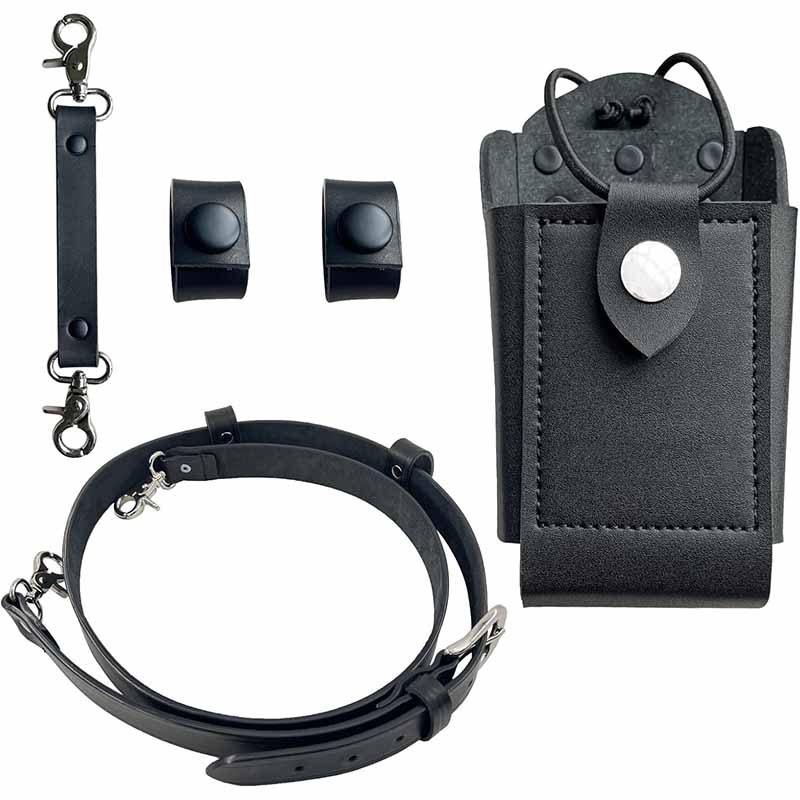
Radio strap accessories and enhancements include radio holsters, anti-sway straps, shoulder pads, reinforced clips, swivels, and utility loops. These components improve stability, comfort, durability, and usability, especially for professionals carrying heavy radios during long shifts. The right accessories help prevent bouncing, reduce fatigue, and ensure fast, reliable radio access.
What is a radio holster and why is it essential?
A radio holster is the most important companion accessory to a radio strap. It securely holds the radio body while keeping controls, screen, and microphone accessible.
Common holster types include:
- Full leather holsters (maximum protection)
- Open-face holsters (faster access)
- Molded or reinforced leather holsters for specific radio models
A well-fitted holster prevents radio drop, antenna stress, and button damage—especially during running, climbing, or crawling.
What is an anti-sway strap and when is it needed?
An anti-sway strap (also called a stabilizer strap) connects the radio strap to the belt or waist area, preventing side-to-side movement.
It is especially useful when:
- Radios are heavy
- Users climb ladders or stairs
- Movement is rapid or vertical
Anti-sway straps dramatically improve stability and reduce impact stress on the main strap and holster.
Do shoulder pads actually improve comfort?
Yes—when properly designed.
Shoulder pads:
- Spread load over a wider area
- Reduce pressure points
- Improve comfort during long shifts
High-quality pads are integrated or stitched securely into the strap. Poorly attached padding can slide or bunch, which reduces stability and comfort.
Why are reinforced clips and swivels important?
Hardware is a common failure point.
Professional-grade radio strap hardware includes:
- Solid steel or stainless-steel clips
- Swivel clips to reduce twisting
- Reinforced D-rings or snap hooks
Swivels reduce strap torsion during movement, while reinforced clips prevent accidental detachment under load or impact.
What utility loops and attachment points are available?
Many radio straps include additional loops or rings for:
- Flashlights
- Gloves
- ID tags or keys
- Small tools
These additions improve efficiency by keeping essential items within reach without overloading pockets or belts.
Are quick-release or adjustable components useful?
Adjustable components allow:
- Length changes for different gear layers
- Better fit across different body types
Quick-release features are less common in professional firefighting contexts due to reliability concerns, but may be useful in controlled environments when properly engineered.
How do accessories affect overall durability and safety?
Accessories should enhance—not compromise—structural integrity.
Key considerations:
- Attachment points must be reinforced
- Added weight must be accounted for in strap design
- Hardware should be load-tested
Poorly designed accessories increase failure risk rather than improve usability.
Which enhancements are most valuable for professional users?
For daily professional use, the most valuable enhancements are:
- Properly fitted radio holster
- Anti-sway strap
- Reinforced metal hardware
- Wide strap or padded shoulder section
Decorative accessories matter far less than functional upgrades.
Can radio strap accessories be customized or OEM-produced?
Yes. Many brands and departments require:
- Holsters matched to specific radio models
- Custom strap lengths and widths
- Logo stamping or identification panels
- Hardware choices based on usage standards
Conclusion
Leather radio straps are not fashion accessories—they are professional load-bearing equipment. The right strap improves comfort, reliability, and safety every day it’s worn.
Szoneier Leather is a leather products manufacturer with over 18 years of experience in R&D and production. With strong raw material sourcing, in-house design, sampling, manufacturing, and quality contro.
Whether you serve professional users, build a brand, or need a reliable manufacturing partner, Szoneier Leather helps turn functional requirements into durable, high-quality leather radio straps.
Contact Szoneier Leather today to discuss specifications, customization options, and production timelines.


