 Skip to content
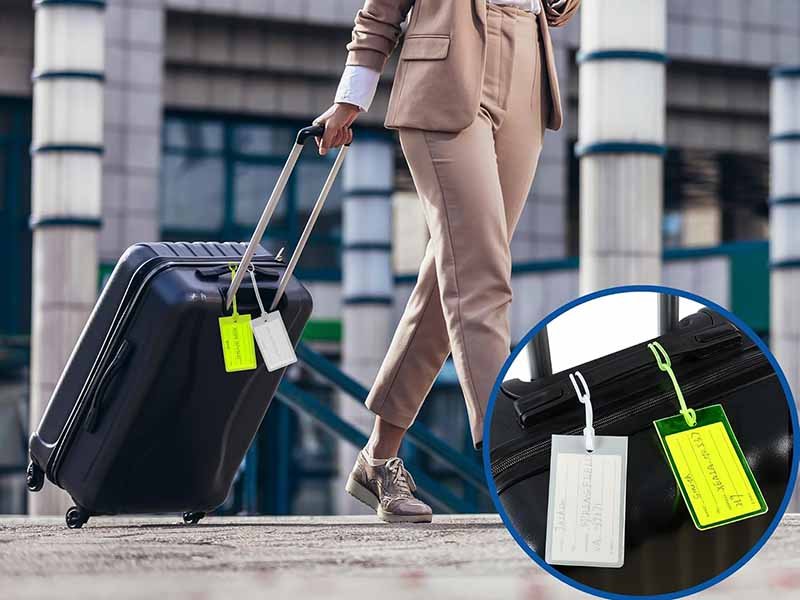
Every year, millions of travelers experience delayed or lost luggage. While airlines continue to improve tracking systems, one simple accessory remains a first line of identification when baggage goes missing: the luggage tag. Despite its small size, a luggage tag often determines whether a suitcase is quickly reunited with its owner—or disappears into storage indefinitely.
Today, luggage tags are no longer just paper cards slipped into plastic sleeves. They range from premium leather travel accessories to smart tracking solutions integrated with digital technology. At the same time, travelers are more aware of privacy, durability, and brand value—especially business travelers, luxury travelers, and brands seeking high-quality custom travel accessories.
Yet many people still underestimate luggage tags. Some assume airlines handle everything digitally. Others choose the cheapest option without considering durability or privacy. Brands often overlook luggage tags as a low-value giveaway, rather than a long-lasting brand touchpoint that travels globally with every trip. Luggage tags are identification labels attached to suitcases or bags to help identify the owner if luggage is lost or misrouted. They typically display contact details such as name, phone number, or email. Modern luggage tags include traditional printed tags, durable leather tags, and smart tags using Bluetooth trackers like AirTag. Choosing the right luggage tag depends on durability, privacy protection, and travel frequency.
As travel becomes more frequent and more complex, understanding what luggage tags are, how they work, and how to choose the right type is no longer trivial. Let’s start with the basics—before moving into materials, smart tags, TSA rules, and custom manufacturing considerations.
What Are Luggage Tags

Luggage tags are identification labels attached to suitcases or travel bags to display owner contact information, helping lost or misrouted luggage be returned. They usually include a name and contact details and can be made from materials such as paper, plastic, metal, or leather. Modern luggage tags may also integrate privacy covers or work alongside smart tracking devices.
At a basic level, a luggage tag is an external identification tool. But in real travel scenarios, it plays a much more important role than most travelers realize. Despite advances in airline tracking systems, luggage tags remain one of the most reliable and universally understood ways to link a bag to its owner.
What is the primary purpose of a luggage tag?
The core purpose of a luggage tag is human-readable identification.
Airlines rely heavily on automated barcode systems, but those systems are designed for machines—not people. When a barcode tag is torn, unreadable, or separated from a bag, airport staff must rely on visible information to identify ownership.
A luggage tag allows:
- Airline or airport staff to contact the owner directly
- Faster manual sorting of unidentified baggage
- Immediate confirmation of ownership without database access
In these situations, a clear luggage tag often determines whether a bag is returned in hours or sits unclaimed for days.
Are luggage tags only for checked baggage?
No. While luggage tags are most critical for checked luggage, they are also useful for carry-on bags, backpacks, and even personal items.
Many travelers use luggage tags to:
- Distinguish similar-looking bags on carousels
- Prevent accidental pickup by other passengers
- Identify personal items in shared spaces (airplanes, trains, hotels)
For business travelers or group travel, luggage tags also help organize and identify bags quickly.
What information is typically included on a luggage tag?
A standard luggage tag usually includes:
- Full name or initials
- Phone number (often with country code)
- Email address
Some travelers add a home address, while others avoid it for privacy reasons. Modern luggage tags—especially leather ones—often feature privacy flaps or hidden windows, allowing information to be accessed when needed without being visible to everyone.
The goal is to provide enough information for recovery, without exposing unnecessary personal data.
Are luggage tags required by airlines or airports?
Luggage tags are not legally required, but they are strongly recommended by airlines and travel authorities.
Airline-issued barcode tags are mandatory for checked baggage, but they are temporary and designed to be removed at the destination. Personal luggage tags serve as a secondary, long-term identifier in case airline tags fail.
Frequent flyers, international travelers, and travel professionals consider luggage tags a standard travel essential rather than an optional accessory.
How are luggage tags different from airline baggage tags?
This distinction is important and often misunderstood.
- Airline baggage tags are temporary, machine-readable labels used for routing within airline systems.
- Personal luggage tags are permanent, traveler-controlled identifiers designed for human use.
When airline systems work perfectly, personal luggage tags may never be used. When they don’t, luggage tags become the only reliable link between a bag and its owner.
Why do luggage tags still matter in modern travel?
With digital tracking, some travelers assume luggage tags are outdated. In reality, they are more relevant than ever.
Reasons include:
- Airline tags can still detach or fail
- Not all staff have access to tracking systems
- Luggage may be handled by third parties
- Smart trackers do not display owner contact info
A luggage tag solves a simple but critical problem: “Who does this bag belong to, and how can we reach them?”
Which Types of Luggage Tags Exist
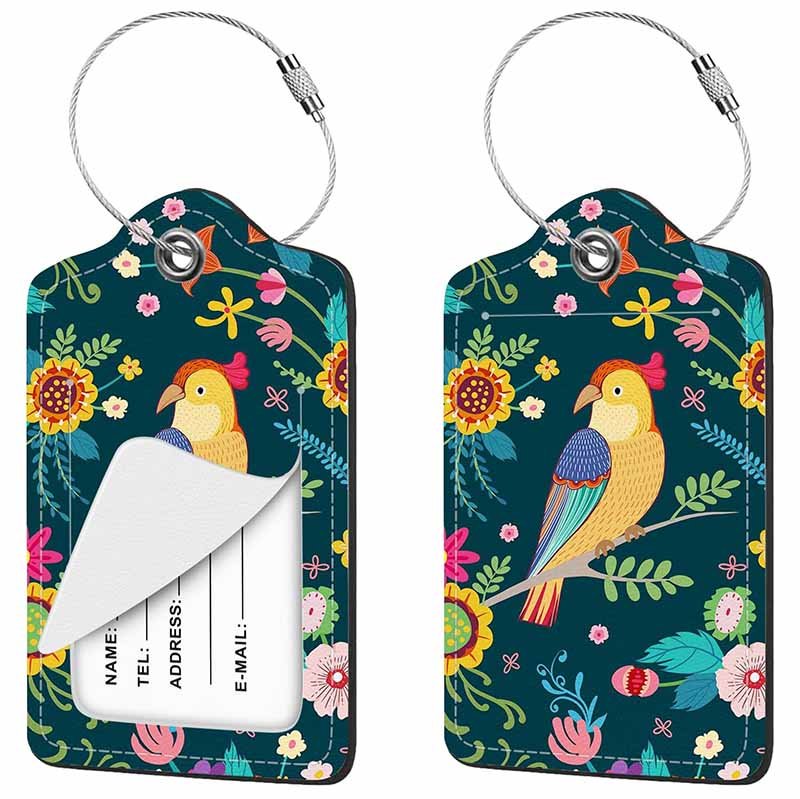
Luggage tags exist in several main types, including paper tags, plastic or PVC tags, metal tags, leather luggage tags, and smart or digital luggage tags. Each type differs in durability, privacy protection, appearance, and suitability for different travel frequencies. Choosing the right type depends on how often you travel, how your luggage is handled, and whether you value longevity, privacy, or tracking features.
Although all luggage tags serve the same basic purpose—identifying baggage—the way they perform that role varies greatly. The differences are not cosmetic; they affect durability, privacy, brand value, and real-world usability.
What are paper or disposable luggage tags?
Paper or cardboard luggage tags are the most basic form of luggage identification. They are often included with airline paperwork, tour groups, or temporary travel kits.
Key characteristics:
- Very low cost
- Lightweight
- Easy to write on
Limitations:
- Tear easily
- Not water-resistant
- Short lifespan
Paper tags are suitable only for one-time or short trips. They are not designed for repeated handling or long-term use.
What are plastic or PVC luggage tags?
Plastic or PVC luggage tags are widely available and commonly used by casual travelers. They are usually transparent or semi-transparent and often include a paper insert for contact details.
Advantages:
- Affordable and lightweight
- Water-resistant
- Mass-market availability
Drawbacks:
- Prone to cracking over time
- Weak strap attachment points
- Discoloration or yellowing
Plastic tags work for occasional travel, but frequent flyers often find they fail after repeated trips.
What are metal luggage tags?
Metal luggage tags are typically made from aluminum or stainless steel and appeal to travelers who prefer a minimalist or industrial look.
Advantages:
- High resistance to tearing
- Long lifespan
- Clean, modern appearance
Concerns:
- Limited privacy protection
- May scratch luggage surfaces
- Rigid structure can be noisy or heavy
Metal tags are durable but may not suit travelers concerned about privacy or luxury aesthetics.
What are leather luggage tags?
Leather luggage tags are considered the premium standard in traditional luggage identification. They are favored by frequent travelers, business travelers, and luxury brands.
Key benefits:
- Excellent durability and flexibility
- Natural resistance to tearing
- Privacy flaps or covered windows
- Premium look and feel
Leather tags age well and can last for years. They are also ideal for custom branding, such as debossed or embossed logos, making them popular for corporate gifts and private label travel accessories.
What are smart or digital luggage tags?
Smart luggage tags integrate tracking technology, often using Bluetooth devices like AirTags or similar trackers. These tags allow travelers to monitor luggage location through smartphone apps.
What they offer:
- Real-time or near-real-time location updates
- Peace of mind during transfers
- Useful for international travel
Important limitation: Smart tags do not display contact information. If luggage is found by airport staff, a visible physical tag is still required.
Most experienced travelers use smart tags in addition to, not instead of, traditional luggage tags.
Are hybrid luggage tags available?
Yes. Hybrid luggage tags combine multiple functions, such as:
- Leather tags with hidden AirTag pockets
- Plastic tags with reinforced leather straps
- Covered ID tags with QR codes
These designs aim to balance durability, privacy, and technology. They are increasingly popular in custom and OEM projects, especially for brands targeting frequent travelers.
Luggage Tag Types at a Glance
| Type | Durability | Privacy | Best For |
|---|---|---|---|
| Paper/Cardboard | Low | Low | One-time trips |
| Plastic/PVC | Medium | Low–Medium | Casual travel |
| Metal | High | Low | Minimalist users |
| Leather | Very High | High | Frequent & premium travel |
| Smart/Digital | Depends on case | None | Tracking support |
| Hybrid | Very High | High | Professional travelers |
How Do Luggage Tags Work
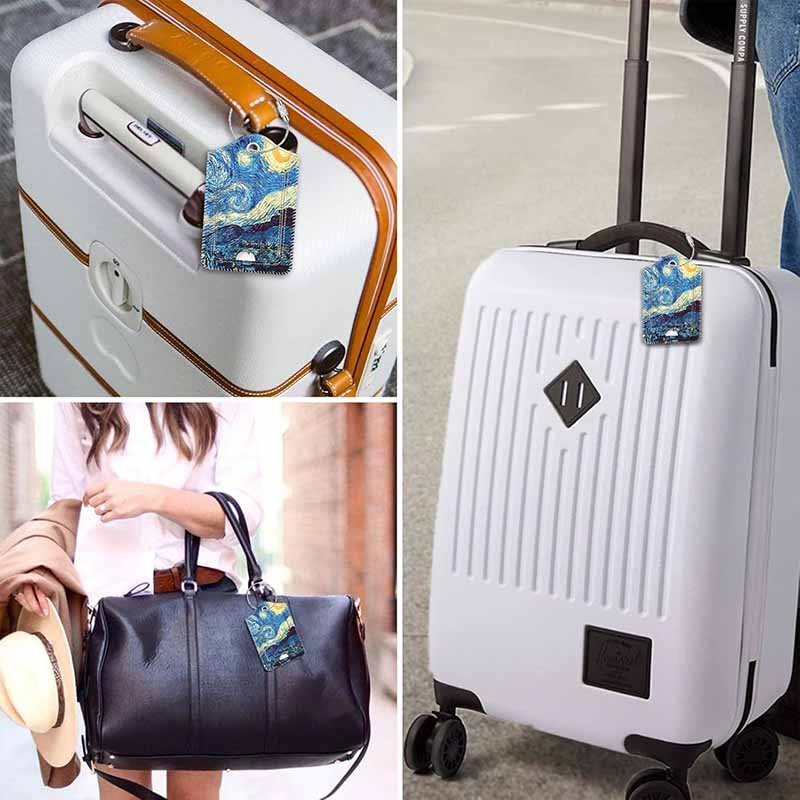
Luggage tags work by providing visible owner identification on baggage so airline staff or third parties can contact the traveler if luggage is lost or misrouted. Traditional tags rely on human-readable contact details, while smart luggage tags add digital tracking through Bluetooth networks. When airline barcode systems fail, luggage tags become the primary link between a bag and its owner.
To understand how luggage tags work, it helps to know where airline systems stop and human judgment begins. Modern baggage handling is highly automated—but it is not failure-proof. Luggage tags exist precisely for those failure points.
How do traditional luggage tags identify baggage in real situations?
Traditional luggage tags are designed for human use, not machines.
When a bag loses its airline barcode tag—or the barcode becomes unreadable due to tearing, moisture, or mechanical damage—airport staff cannot rely on automated routing systems. At this point, they switch to manual identification.
A visible luggage tag allows staff to:
- Identify the bag’s owner immediately
- Contact the traveler via phone or email
- Match the bag to passenger records manually
In many airports, this manual process is the fastest path to recovery once automation fails.
What happens step by step when a tagged bag is lost?
When luggage is separated from its owner, the typical recovery flow is:
- Airline barcode tag fails or detaches
- Bag is moved to a holding or tracing area
- Staff inspect the exterior for owner information
- Luggage tag details are recorded
- Traveler is contacted directly
Without a luggage tag, staff must rely on internal databases and process-of-elimination searches, which often take significantly longer.
How do luggage tags help even when airline systems are working?
Even when airline systems function correctly, luggage tags still provide value.
They help:
- Travelers identify bags quickly at carousels
- Prevent accidental pickup of similar suitcases
- Reduce disputes over ownership
In crowded baggage claim areas, visual identification via luggage tags often prevents confusion before it starts.
How do smart luggage tags and trackers work?
Smart luggage tags typically use Bluetooth Low Energy (BLE) technology rather than GPS. Devices such as AirTags broadcast a signal that nearby smartphones can detect and relay anonymously to a cloud network.
This allows travelers to:
- See last-known luggage locations
- Confirm if a bag made it onto a flight
- Track movement during transfers
Smart tags improve visibility, but they do not communicate with airlines or airport staff directly.
Does TSA allow AirTags in luggage?
Yes. TSA allows AirTags and similar Bluetooth tracking devices in both carry-on and checked luggage.
AirTags use low-energy Bluetooth signals and small coin-cell batteries, which are permitted under current aviation safety regulations. Airlines and security agencies do not restrict their use.
However, AirTags are personal tracking tools only. TSA and airlines do not access AirTag data, nor do they use it to route or return luggage.
Do smart luggage tags replace traditional luggage tags?
No—and this is a critical misunderstanding.
Smart tags:
- Show where your luggage is
- Do not display owner contact information
- Do not instruct staff on what to do with the bag
Traditional luggage tags:
- Tell staff who owns the bag
- Provide immediate recovery instructions
The most effective setup is both: a visible physical luggage tag for identification and a smart tracker for personal awareness.
What are the limitations of luggage tags?
Luggage tags are highly effective, but not perfect.
Common limitations include:
- Illegible handwriting
- Exposed personal information
- Weak attachment straps that break
This is why professional designs focus on:
- Clear typography or printed inserts
- Privacy flaps or covered windows
- Reinforced attachment points
Well-designed luggage tags minimize these risks and maximize recovery speed.
Why do luggage tags still matter in a digital travel system?
Despite automation, travel still depends on human decisions at critical moments.
Airline systems route bags. People recover them.
Luggage tags bridge the gap between:
- Automated tracking systems
- Real-world handling by staff and third parties
They answer a simple but decisive question instantly: “Who does this bag belong to, and how can we reach them?”
Why Use Custom Luggage Tags
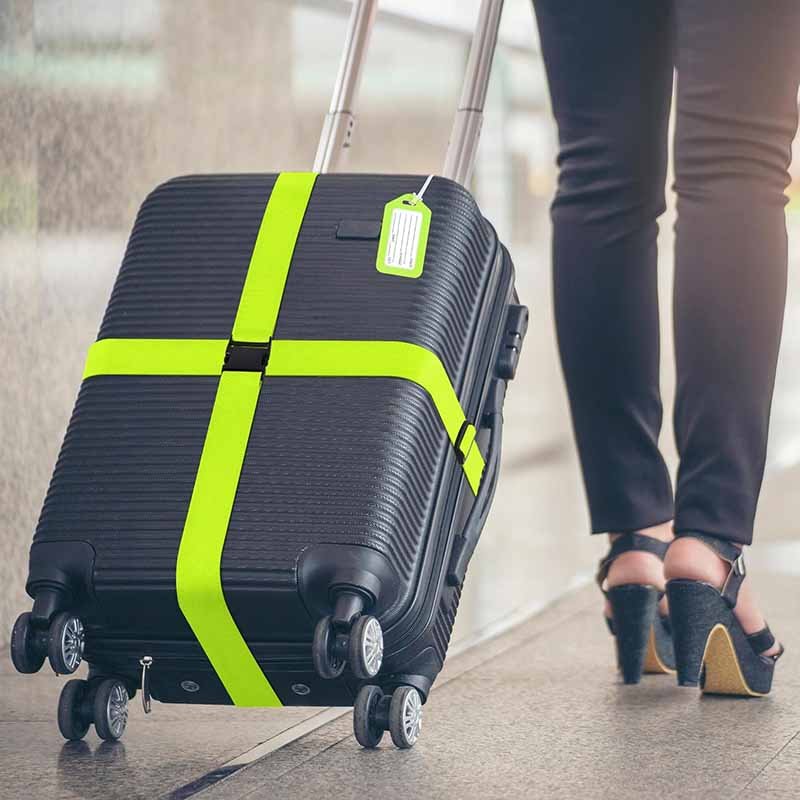
Custom luggage tags are used to improve luggage identification, durability, privacy protection, and brand recognition. Unlike generic tags, custom designs allow control over materials, attachment strength, information layout, and branding. For frequent travelers, custom tags last longer and reduce loss risk; for businesses and brands, they serve as functional, long-term brand assets that travel globally.
At first glance, a luggage tag may seem too small to customize. In practice, it’s one of the most-used and most-visible travel accessories. Customization turns a simple identifier into a reliable tool—and, for brands, a subtle but powerful marketing asset.
How do custom luggage tags improve identification and recovery?
Custom luggage tags allow full control over information clarity and layout.
Compared with generic tags, custom designs can:
- Use larger, more readable fonts
- Prioritize essential contact info
- Reduce clutter and confusion
- Include consistent placement of details
When a bag is found by airport staff or third parties, speed matters. Clear, intentional layouts help staff identify the owner quickly without guessing or searching databases—often cutting recovery time significantly.
Why does durability matter so much for luggage tags?
Most luggage tags fail at the attachment point, not the ID window.
Custom luggage tags can be engineered with:
- Reinforced stitching or riveted straps
- Thicker materials that resist tearing
- Secure buckles or metal loops
Generic tags often prioritize cost, leading to broken straps or cracked bodies after only a few trips. Custom tags are designed for repeated handling, conveyor friction, and long-term use, making them far more reliable for frequent travelers.
How do custom luggage tags address privacy concerns?
Privacy is one of the most overlooked reasons to customize.
Custom tags can include:
- Flip covers or hidden ID windows
- Partial visibility (name visible, contact hidden)
- Internal card designs that reduce data exposure
This protects travelers from displaying full personal details publicly, while still allowing airport staff to access information when needed. Generic tags rarely offer this balance.
Why are custom luggage tags valuable for brands and businesses?
For businesses, custom luggage tags are not giveaways—they are traveling brand touchpoints.
Benefits include:
- Long-term brand exposure across airports and cities
- Association with quality, travel, and reliability
- Practical use that ensures repeated visibility
Unlike brochures or packaging, luggage tags are kept and reused. A well-made leather tag can stay with a traveler for years, silently reinforcing brand presence on every trip.
How do custom luggage tags enhance perceived quality?
Material and finish communicate value instantly.
Custom leather luggage tags, for example:
- Signal professionalism and premium positioning
- Age well rather than degrade
- Feel intentional, not disposable
For brands serving business travelers, hospitality clients, or luxury markets, this perceived quality aligns closely with brand image and customer expectations.
Do custom luggage tags reduce long-term costs?
Yes—especially for frequent travelers and businesses.
While custom tags may cost more upfront, they:
- Last significantly longer
- Reduce replacement frequency
- Lower complaint and return rates
- Improve customer satisfaction
In many cases, total cost of ownership is lower than repeatedly replacing cheap, generic tags.
What scenarios benefit most from custom luggage tags?
Custom luggage tags are especially effective for:
- Frequent or international travelers
- Corporate travel programs
- Brand merchandise and loyalty gifts
- Hospitality and airline partnerships
- Private label travel accessory lines
In these scenarios, customization improves both functionality and perception.
Generic vs Custom Luggage Tags
| Aspect | Generic Tags | Custom Luggage Tags |
|---|---|---|
| Durability | Low–Medium | High |
| Privacy Control | Limited | Customizable |
| Identification Speed | Inconsistent | Optimized |
| Brand Value | None | Strong |
| Long-Term Cost | Often higher | Often lower |
How to Choose the Best Luggage Tag

The best luggage tag is chosen by evaluating durability, material quality, attachment strength, privacy protection, and visibility based on how often and where you travel. Frequent travelers benefit from leather tags with reinforced straps and covered ID windows, while occasional travelers may choose lightweight options. The ideal luggage tag balances long-term reliability, easy identification, and data privacy.
Choosing a luggage tag is not about decoration—it’s about risk management. Bags are dragged, stacked, dropped, soaked, and compressed. A good luggage tag survives this environment and still performs its job when systems fail.
Below is a practical framework used by frequent travelers, travel brands, and professional manufacturers.
How should I choose a luggage tag by material?
Material determines how long a luggage tag lasts and how it behaves under stress.
- Paper / cardboard: suitable only for one-time use; tears easily.
- Plastic / PVC: lightweight and affordable but prone to cracking at attachment points.
- Metal: strong but rigid; may scratch luggage and expose information.
- Leather: flexible, tear-resistant, and ages well with repeated use.
For frequent or international travel, leather consistently offers the best balance of durability, comfort, and appearance.
How important is attachment strength when choosing a luggage tag?
Attachment failure is the number one reason luggage tags are lost.
Look for:
- Reinforced stitching or rivets at strap ends
- Secure buckles or metal loops
- Short, tight attachment lengths to avoid snagging
Avoid thin plastic loops or weak cords. Even the best tag body is useless if the strap fails during conveyor handling.
What privacy features should the best luggage tag have?
Privacy is often underestimated.
The best luggage tags include:
- Flip covers or hidden ID windows
- Partial visibility (name visible, contact details protected)
- Easy access for staff without public exposure
Avoid displaying full home addresses. A phone number and email are usually sufficient and safer.
How does visibility affect luggage tag performance?
Visibility helps in two ways:
- Bag recognition at crowded carousels
- Manual recovery when bags are misplaced
Effective visibility comes from:
- High-contrast colors or textures
- Clear typography
- Distinctive shapes or finishes
Overly decorative designs may look good but reduce readability. Function should come first.
How should frequent travelers choose differently from occasional travelers?
Occasional travelers may prioritize price and simplicity. Frequent travelers should prioritize:
- Long-term durability
- Secure attachment
- Privacy protection
- Professional appearance
Frequent flyers often combine:
- A durable leather luggage tag for identification
- A smart tracker for location awareness
This dual approach covers both recovery and visibility.
Does size and weight of a luggage tag matter?
Yes—especially for air travel.
Best practices:
- Keep tags compact and lightweight
- Avoid oversized or heavy metal designs
- Ensure tags do not interfere with handles or wheels
Large or heavy tags increase snagging risk and may cause unnecessary wear.
How do I choose a luggage tag for branding or gifting?
For branding and corporate use, selection criteria expand beyond function.
Look for:
- Materials that reflect brand positioning (leather for premium)
- Clean surfaces suitable for embossing or debossing
- Designs that feel intentional, not disposable
A luggage tag used for years delivers far more brand value than short-lived promotional items.
Choosing the Best Luggage Tag
| Factor | Poor Choice | Best Choice |
|---|---|---|
| Material | Thin plastic | Full-grain or top-grain leather |
| Attachment | Plastic loop | Reinforced leather strap |
| Privacy | Fully exposed info | Covered ID window |
| Longevity | Short-term | Multi-year use |
| Branding | Disposable feel | Premium, lasting impression |
Are There Rules or Tips for Using Luggage Tags
There are no strict airline rules requiring specific personal luggage tags, but best practices include limiting personal information, attaching tags securely, and placing them where they won’t snag or tear off. Travelers should avoid displaying full home addresses, use privacy covers, and ensure tags are durable. Proper use of luggage tags significantly improves recovery chances and reduces privacy risks.
Luggage tags are simple tools, but how you use them matters as much as what you buy. Most luggage tag failures—lost tags, privacy leaks, unreadable information—come from improper use rather than poor design alone.
Below are proven rules and tips used by frequent travelers, airlines, and travel professionals.
Are there official airline or airport rules for luggage tags?
Airlines and airports do not regulate personal luggage tags in the same way they regulate airline-issued baggage tags.
Key points:
- Airlines require their own barcode tags for checked baggage
- Personal luggage tags are optional but recommended
- There are no restrictions on material (leather, plastic, metal)
However, personal tags are treated as backup identification when airline systems fail. This makes clarity and durability more important than compliance with formal rules.
What personal information should (and shouldn’t) be shown?
The most important rule: do not overshare.
Recommended information:
- Name or initials
- Phone number (with country code)
- Email address
Information to avoid:
- Full home address
- Passport number
- Date of birth
Modern best practice favors privacy-protected designs, such as flip covers or hidden ID windows, which allow staff to access information when needed without exposing it publicly.
Where is the best place to attach a luggage tag?
Placement directly affects whether a tag survives baggage handling.
Best placement:
- On the handle base or reinforced loop
- Close to the bag body
- Away from wheels and corners
Avoid:
- Long, dangling attachments
- Thin zipper pulls
- Loose side straps
Tags that swing freely are far more likely to snag on conveyor belts and be torn off.
How tight and secure should the attachment be?
A luggage tag should be firmly attached but not rigidly stressed.
Best practices include:
- Short attachment straps
- Buckles or loops that fully close
- Reinforced stitching or rivets
Avoid plastic loops that fatigue over time. Even strong tags are useless if the attachment fails—this is the most common failure point observed by manufacturers and frequent travelers.
Should luggage tags be used on carry-on bags?
Yes. While most attention is on checked luggage, tags on carry-on bags offer benefits:
- Quick identification in overhead bins
- Reduced risk of accidental pickup
- Easier recovery if gate-checked unexpectedly
For business travelers, tagging carry-ons also helps in shared or crowded environments.
How should luggage tags be combined with smart trackers?
Smart trackers and luggage tags serve different but complementary roles.
Best practice:
- Use a visible luggage tag for identification
- Use a hidden AirTag or tracker for location awareness
Trackers show where the bag is. Luggage tags tell people who to contact once the bag is found. One without the other limits recovery speed.
Do luggage tags need to be updated regularly?
Yes—especially for frequent travelers.
Update tags when:
- Phone numbers change
- Email addresses change
- International travel requires updated country codes
Outdated information is one of the most common reasons recovered luggage cannot be returned promptly.
Are there risks to using poor-quality luggage tags?
Yes. Low-quality tags often cause:
- Broken straps during handling
- Faded or unreadable text
- Exposed personal information
These risks negate the entire purpose of a luggage tag. Investing in a durable, well-designed tag reduces both loss risk and privacy exposure.
Conclusion
Luggage tags may be small—but they travel the world, represent personal identity, and reflect brand quality.
Szoneier Leather is a leather goods manufacturing factory with over 18 years of experience, specializing in custom leather luggage tags, bags, wallets, straps, accessories, and leather boxes. With in-house leather sourcing, R&D, design, sampling, manufacturing, and packaging quality control, we support both brand clients and professional custom buyers.
Looking to develop custom leather luggage tags for your brand or project? Contact Szoneier Leather to discuss materials, design concepts, and production timelines. We help turn functional travel accessories into long-lasting, brand-ready products.


