 Skip to content
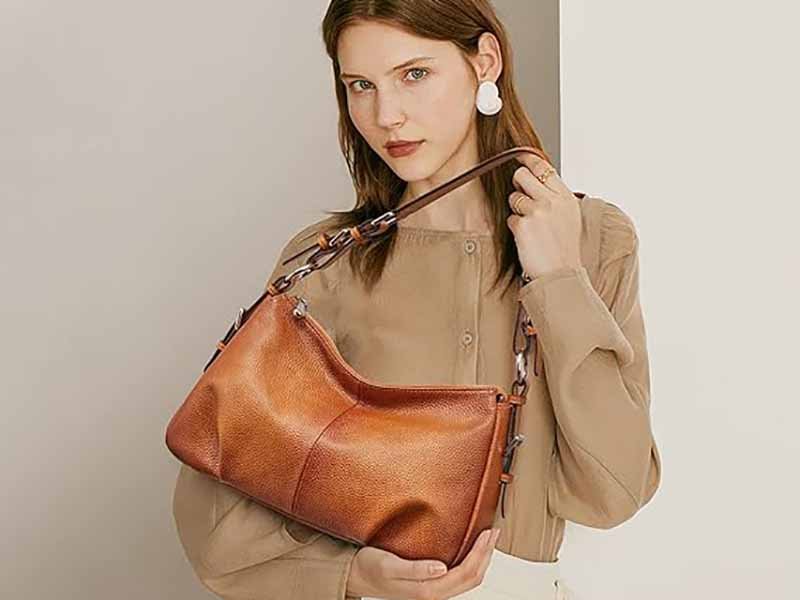
Split leather is one of the most misunderstood materials in leather handbags—mostly because it sits right in the middle of the market. It’s real leather, but it isn’t the same as full grain. It can look beautiful in photos, especially when it’s coated or embossed, yet it can also disappoint fast if it’s used in the wrong place. That’s why two handbags can both claim “genuine leather,” but one ages nicely and the other starts cracking, stretching, or peeling at the corners.
Split leather in leather handbags is acceptable when it’s used in low-stress panels, supported by good structure, and paired with the right finish and price expectations. It’s not a smart choice for high-stress areas (handles, strap anchors, bottom corners, flap bends) or for brands that sell a “natural grain + patina” story. In short: split leather can be a cost-performance tool—but only when the engineering and positioning match.
We build leather handbags for brands that already know leather. They don’t want vague claims—they want predictable performance: how it cuts, how it folds, how it holds edges, and what will happen after thousands of opens, closes, and daily carries. This guide starts with the real basics: what split leather is, how it’s made, and why it behaves differently inside a handbag.
What Is Split Leather in Leather Handbags?
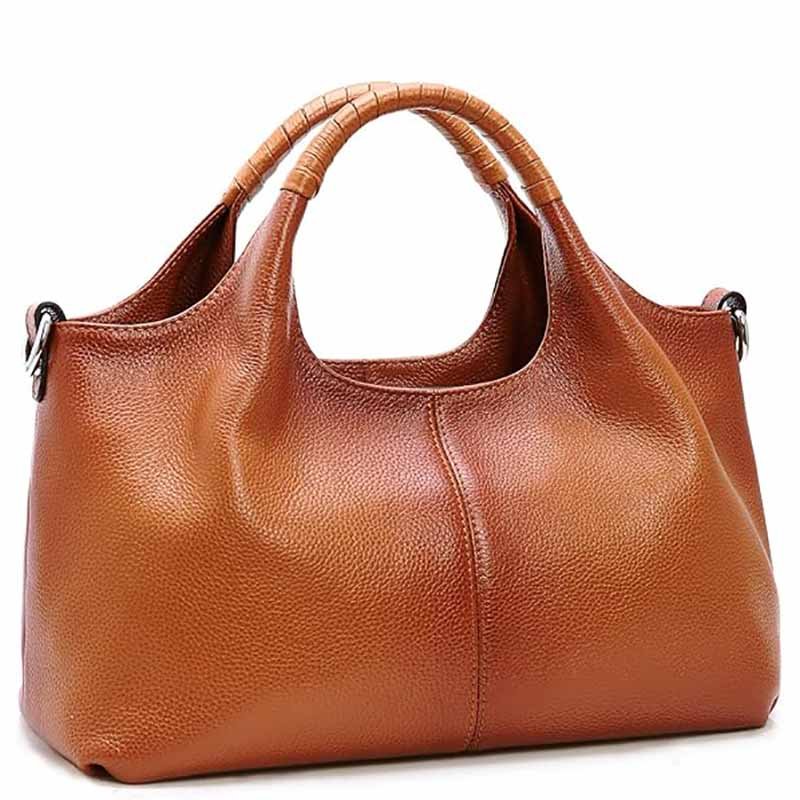
Split leather in leather handbags is the lower layer of a hide after the grain layer has been separated by a splitting machine. It is genuine leather, but it has a looser fiber structure than full grain or top grain. That difference impacts strength, stretch, edge durability, and long-term appearance—especially in handbags that bend and carry weight every day.
Quick definition (plain language)
- Full grain / top grain = the “tight” outer side of the hide (stronger, better aging)
- Split leather = the “lower” side (more open fibers, often finished/coated for wear)
What Does Split Leather Mean in Leather Handbags?
When a cowhide is processed, it’s often too thick for handbag use. So it’s split into layers. The top layer keeps the grain; the lower layer becomes split leather.
In handbags, split leather shows up in three main ways:
- Suede split (the fibrous surface is visible)
- Finished split (pigmented/finished for uniform color)
- Coated split (PU/film coating + embossing to mimic grain)
What matters for your handbag project is not just “split leather or not,” but where the leather sits in the bag and how it’s stressed.
Split leather tends to struggle in zones that need:
- repeated bending (flaps, gussets, strap loops)
- sharp edge finishing (thin edge paint lines)
- high pull strength (handle base, strap anchors)
It can perform well in zones that are:
- supported by lining + reinforcement
- mostly flat (front/back panels)
- protected (interior panels, covered sections)
How Is Split Leather Made for Leather Handbags?
A simplified production route looks like this:
- Splitting The hide is split horizontally into:
- grain layer (full/top grain)
- split layer (lower)
- Shaving Both layers are shaved to a target thickness for handbag making.
- Re-tanning / Dyeing Split leather is usually more “finish-dependent,” so dye uniformity and surface preparation matter more.
- Finishing (where most performance differences come from) Common finishing choices:
- pigment finish
- waxed finish
- PU coated finish
- embossed finish (grain pattern stamped)
Thickness ranges you actually see in handbag production
(These ranges are practical—not theory—because too thick creates stiffness and too thin increases failure risk.)
| Panel area | Common thickness (mm) | Why it matters |
|---|---|---|
| Body panels (mid-market) | 1.0–1.4 | balance of shape + sewability |
| Flaps / bend zones | 1.2–1.6 (prefer grain/top) | crease resistance |
| Handles / strap anchors | 1.6–2.2 (prefer grain/top) | pull strength |
| Interior leather trims | 0.8–1.2 | reduces bulk |
| Edge-wrapped piping | 1.0–1.4 | edge paint stability |
Split leather can be cut to these thicknesses too—but thin split leather in bend zones is where problems start.
How Does Split Leather Compare to Full Grain Leather?
Here’s a buyer-friendly comparison that helps you decide quickly.
Performance differences that show up in handbags
| Property | Full/Top Grain | Split Leather | What you’ll notice in real use |
|---|---|---|---|
| Fiber structure | tight | more open | split stretches easier |
| Tear resistance | higher | lower | corners fail sooner if unreinforced |
| Crease behavior | cleaner | rougher | flap bends show earlier fatigue |
| Edge finishing | more stable | more fragile | edge paint cracks/peels sooner |
| Surface durability | natural wear | depends on finish | coating quality decides lifespan |
| Patina | develops nicely | limited | split doesn’t “age pretty” the same way |
What many brands get wrong
They compare only appearance. But handbags are mostly about:
- bend cycles (opening/closing)
- pull cycles (handle load)
- abrasion (corners, bottom)
- edge integrity (paint, folding, glazing)
Split leather can look great on day one. The question is how it looks on day 100.
Split Leather in Handbags: A Practical “OK vs Risky” Map
This quick map is how many experienced factories and brands make decisions.
Areas where split leather is often acceptable (if finished well)
- large front/back panels with lining support
- interior panels (pockets, trims)
- decorative overlays (non-load-bearing)
- covered sections where abrasion is low
Areas where split leather is usually risky
- handle bases and strap anchors
- bottom corners and high-abrasion edges
- flap fold lines and repeated bend zones
- thin edge-painted parts (small straps, tabs)
If you want split leather in high-stress zones, it typically needs:
- reinforcement layers
- thicker spec
- better finish system
- rounded edges (avoid sharp folds)
- stronger stitch density and backing tape
What Brands Usually Expect (So You Don’t Get Misaligned)
Split leather is best when you position the product correctly.
| Retail positioning | Material expectation | Split leather fit |
|---|---|---|
| Entry / promo | cost-first | acceptable if coated well |
| Mid-market fashion | look + acceptable durability | acceptable in controlled panels |
| Premium “heritage leather” | natural grain + patina | usually not suitable for main story |
| Heavy-use work/travel | load + abrasion resistance | risky unless reinforced heavily |
If your brand story is “natural leather with patina,” split leather on the body panels will create a mismatch. Customers who know leather will notice.
Which Types of Split Leather Are Used in Leather Handbags?
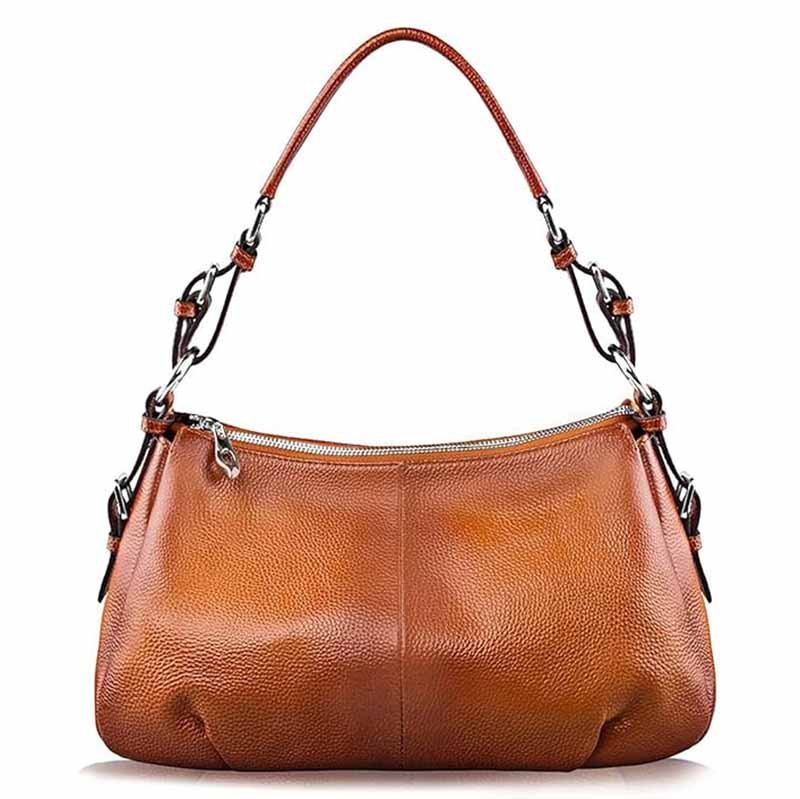
Split leather in leather handbags appears in several forms, and the performance difference between them can be significant. The base material is the same — the lower layer of the hide — but the finishing process determines durability, appearance, and lifespan.
In handbag production, split leather is generally used as:
- Suede split leather
- Finished split leather
- Coated (PU film) split leather
- Embossed split leather
The finish is what turns raw split into a usable material — or into a future quality problem.
What Is Suede Split Leather in Leather Handbags?
Suede is the most natural form of split leather. It uses the fibrous underside surface without heavy coating.
Characteristics of Suede Split Leather
- Soft touch
- Matte appearance
- Absorbs dye well
- More breathable than coated splits
- Less surface durability
Suede split leather performs well in:
- Soft body handbags
- Casual fashion designs
- Interior panels
- Decorative overlays
However, suede split leather has limitations:
- High water absorption
- Lower abrasion resistance
- Easier staining
- Less edge paint stability
Abrasion Comparison Example
| Leather Type | Martindale Abrasion Cycles (Approx.) |
|---|---|
| Full Grain | 20,000–30,000 cycles |
| Finished Split | 15,000–25,000 cycles |
| Suede Split | 8,000–15,000 cycles |
Suede can look premium in the right design, but it is rarely suitable for:
- Bottom panels
- Handle bases
- High-friction areas
For brands targeting lifestyle or fashion segments, suede split leather can be acceptable — but for structured or work-use handbags, it’s risky without reinforcement.
What Is Finished Split Leather in Leather Handbags?
Finished split leather receives pigment and protective topcoat treatments to improve durability and uniformity.
This type is very common in mid-market leather handbags.
Advantages
- Consistent color
- Better stain resistance than suede
- Improved abrasion performance
- Lower cost than full grain
Limitations
- Surface relies on coating integrity
- Does not develop natural patina
- Cracking risk at fold lines
- Edge paint adhesion weaker than grain leather
The most common issue we see in production is finish cracking at flap folds after repeated bending.
Flex Resistance Consideration
Flex test (5,000–10,000 bend cycles):
| Leather Type | Surface Integrity |
|---|---|
| Full Grain | Minimal cracking |
| High-Quality Finished Split | Minor micro-creases |
| Low-Grade Finished Split | Visible cracking |
Not all finished split leather is equal. The coating thickness, curing quality, and fiber density make a big difference.
What Is Coated Split Leather in Leather Handbags?
Coated split leather has a polyurethane (PU) or synthetic film laminated onto the surface. It is often embossed to mimic natural grain.
This is where many misunderstandings happen.
Why Brands Use Coated Split
- Uniform appearance
- Scratch resistance (initially)
- Easier color matching
- Lower raw material cost
But coated split leather behaves differently from natural leather.
Risks of Coated Split Leather
- Film delamination over time
- Peeling at edges
- Reduced breathability
- Heat sensitivity
- Lower aging performance
The weakest point is usually the edge fold zone.
If coating thickness exceeds fiber strength, the film may separate from the leather under stress.
Adhesion Test Standard
Before approving coated split leather, factories should test:
- Adhesion strength ≥ 2.0–2.5 N/mm (peel test)
- No visible delamination after flex test
- No bubbling after heat exposure (50–60°C)
Without proper testing, coated split leather may pass sample inspection but fail after several months of use.
When Is Split Leather Acceptable in Leather Handbags?
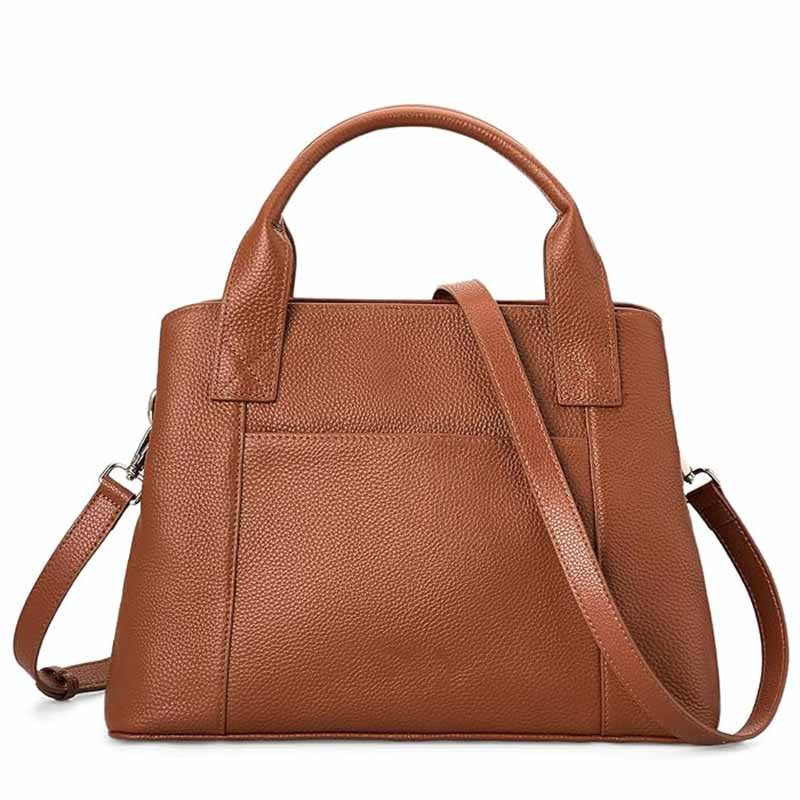
Split leather is acceptable when used intelligently within structural limits. It works best in areas that are:
- Supported by lining
- Not under direct load
- Not repeatedly bent
- Not subject to heavy abrasion
The key is not whether split leather is used — it’s where it is used.
Which Leather Handbags Can Use Split Leather Safely?
Split leather performs best in:
1) Structured Handbags with Reinforcement
If the handbag includes:
- Internal stiffener board
- Reinforced base
- Lining support
Split leather on the body panels can perform well.
2) Decorative or Fashion-Focused Designs
When:
- The bag is lightweight
- It carries light items
- It is seasonal fashion
Split leather can control cost without compromising short-term appearance.
3) Interior Panels and Secondary Components
Common acceptable uses:
- Interior pocket trims
- Hidden reinforcement layers
- Decorative overlays
- Small cosmetic elements
How Does Design Affect Split Leather Performance?
Design choices can either protect or expose split leather weaknesses.
Risky Design Features
- Sharp edge folding
- Ultra-thin strap construction
- Unsupported corners
- High-load shoulder bags
- Long narrow handles
Protective Design Features
- Rounded corners
- Double-layer handles
- Reinforced strap anchors
- Thicker leather in stress zones
- Reduced fold angle on flaps
A well-designed split leather handbag can outperform a poorly designed full grain bag.
Is Split Leather Suitable for Structured Leather Handbags?
Yes — but only with structural planning.
For example:
If a tote bag body panel uses 1.3mm finished split leather but includes:
- 1.0mm reinforcement backing
- Proper edge sealing
- Base support plate
The bag can hold daily use.
Without reinforcement, fiber stretch can distort shape after 3–6 months.
Stretch Comparison Under Load (5kg weight, 48h hang test)
| Leather Type | Elongation Rate |
|---|---|
| Full Grain | 3–5% |
| Finished Split | 5–8% |
| Low-Density Split | 8–12% |
Stretch affects shape retention.
Structured handbags must control that variable.
Quality Control Tests Brands Should Request
Before approving split leather for handbag production, request:
- Thickness tolerance test
- Tear strength test
- Flex resistance test
- Adhesion test (for coated split)
- Rub fastness test
- Edge paint compatibility test
A professional leather factory should be able to provide data or conduct these tests during sampling.
What SzoneierLeather Does Differently
At SzoneierLeather, we control:
- Raw hide sourcing
- Split thickness calibration
- Finish system selection
- Edge compatibility testing
- Reinforcement integration
We do not simply recommend split leather because it lowers cost. We evaluate:
- Stress map of the bag
- Load distribution
- Target retail tier
- Customer expectation
Then we recommend:
- Full grain
- Top grain
- Split
- Or hybrid structure
This prevents misalignment between material choice and brand positioning.
When Is Split Leather Not Suitable in Leather Handbags?
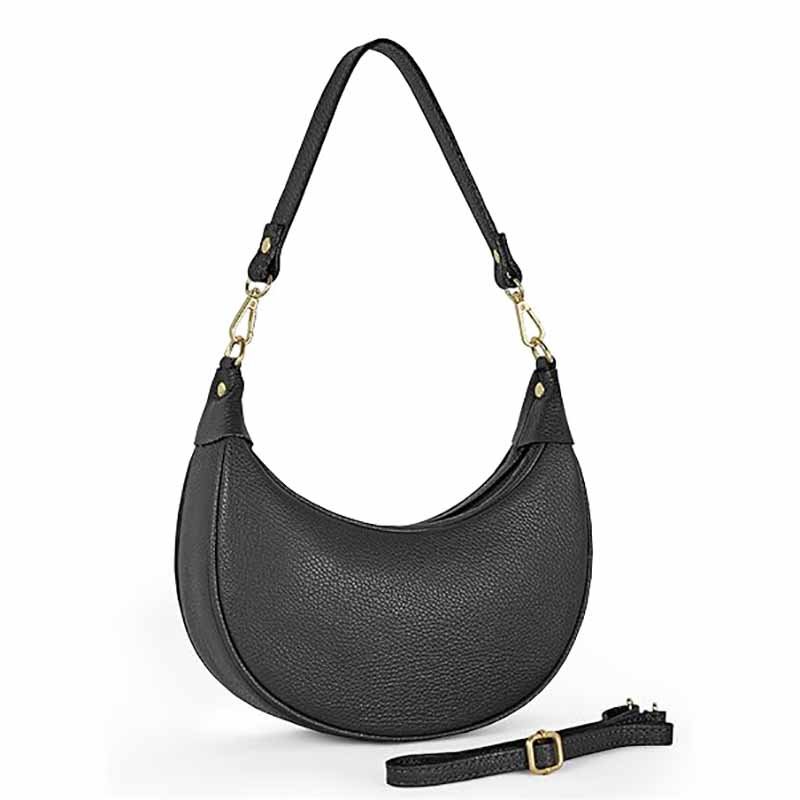
Split leather in leather handbags becomes problematic when the design requires high structural strength, long-term aging performance, or luxury positioning tied to natural grain authenticity.
The problem is rarely visible at the sample stage. It appears after months of use — when stress, bending, moisture, and friction expose the material limits.
Below are the most common situations where split leather should be avoided or heavily reinforced.
Which Leather Handbags Should Avoid Split Leather?
1) High-End Luxury Leather Handbags
If your brand story includes:
- “Full grain craftsmanship”
- “Aging beautifully over time”
- “Natural leather character”
- “Heritage leather”
Split leather conflicts with that message.
Luxury buyers expect:
- Visible natural grain
- Patina development
- Long-term surface integrity
Split leather, especially coated split, does not age like full grain. The finish layer may mask the surface initially, but it will not develop character in the same way.
Using split leather in a luxury product risks brand credibility.
2) Heavy Load Tote Bags
Large tote bags often carry:
- Laptops
- Documents
- Water bottles
- Daily essentials
These bags place constant downward stress on:
- Handle bases
- Upper body panels
- Bottom corners
Split leather under constant tension may:
- Stretch faster
- Deform shape
- Show edge cracking sooner
For heavy tote designs, grain leather in load-bearing zones is strongly recommended.
3) Long, Thin Strap Designs
Thin strap construction increases stress concentration.
If split leather is used in:
- Narrow crossbody straps
- Slim shoulder straps
- Belt-like handles
The risk of elongation and tearing increases.
Full grain or top grain leather is more stable in these applications.
How Does Heavy Use Affect Split Leather in Leather Handbags?
Let’s look at real stress behavior.
Leather fibers in full grain are tightly interwoven near the surface.
Split leather fibers are looser and less dense.
Long-Term Stress Comparison (Simulated Use)
| Test Condition | Full Grain | Finished Split |
|---|---|---|
| 10kg load hang (72h) | 3–5% stretch | 6–10% stretch |
| 10,000 flex cycles | minor crease | visible cracking at folds |
| Edge paint adhesion | strong | moderate |
| Corner abrasion | slow wear | faster wear |
In real life, this translates to:
- Corners wearing down earlier
- Edge paint separating
- Surface cracking at repeated bend lines
- Slight shape distortion
Does this mean split leather fails immediately? No.
But for handbags marketed as long-term investment pieces, it may shorten product lifespan.
Why Do Premium Brands Avoid Split Leather in Key Areas?
Premium brands avoid split leather in structural zones for three main reasons:
1) Aging Behavior
Full grain develops:
- Patina
- Color depth
- Natural surface evolution
Split leather with pigment or coating does not age naturally. Instead, coating fatigue appears.
2) Edge Quality
Luxury handbags often feature:
- Thin painted edges
- Precision folded edges
- Clean strap finishing
Split leather’s fiber structure can weaken edge adhesion.
Over time, this may lead to:
- Edge paint cracking
- Layer separation
- Visible fiber exposure
3) Perceived Authenticity
Experienced customers can recognize:
- Real grain depth
- Surface texture differences
- Coated finishes
If your product price tier is high, using split leather in visible areas creates a mismatch between expectation and material reality.
How Do You Evaluate Split Leather in Leather Handbags?
Material choice should never rely on appearance alone. Professional evaluation includes structural and finish testing.
What Quality Tests Should Split Leather Pass?
Before approving split leather for handbag production, request measurable data.
Essential Tests
- Thickness tolerance Acceptable variation: ±0.1mm
- Tear strength test Compare against minimum required load for handle zones
- Flex resistance test 5,000–10,000 bending cycles
- Rub fastness test Dry and wet rub performance
- Adhesion test (for coated split) Peel strength ≥ 2.0 N/mm recommended
- Stretch test under load Evaluate elongation rate
Without testing, performance is guesswork.
How Do Thickness and Finish Affect Split Leather?
Split leather performance depends heavily on:
- Fiber density
- Finish thickness
- Backing reinforcement
- Edge system
Thicker is not always better.
If fiber density is low, increasing thickness adds bulk without strength.
Balanced specification example:
| Application | Recommended Strategy |
|---|---|
| Body panel | 1.2–1.4mm + lining reinforcement |
| Flap bend zone | Prefer top grain or reinforce split |
| Strap anchor | Avoid split or double-layer structure |
| Decorative panel | Split acceptable |
Finish system matters too.
Heavy PU coating:
- Improves scratch resistance initially
- Increases delamination risk
Light pigment finish:
- Maintains flexibility
- Requires stronger base fiber quality
How Do You Balance Cost and Risk in Leather Handbags?
Split leather is often chosen for cost efficiency. But cost savings must be compared against:
- Return rate risk
- Brand positioning damage
- Durability complaints
- Warranty claims
Cost vs Risk Example
If split leather reduces material cost by 10–15%, but:
- Increases return rate by 3–5%
- Reduces product lifespan by 20%
- Impacts repeat purchase rate
The long-term brand cost may exceed the savings.
The smarter approach is selective use.
Hybrid Material Strategy (Common in Professional Factories)
Many successful leather handbags use a hybrid approach:
- Full grain in high-stress zones
- Split leather in secondary panels
- Reinforcement materials internally
- Structured support layers
This allows:
- Controlled cost
- Maintained performance
- Consistent brand positioning
SzoneierLeather frequently develops hybrid builds for:
- Mid-premium brands
- Growing labels balancing cost
- Private label collections
How SzoneierLeather Supports Professional Leather Development
SzoneierLeather has over 18 years of experience in leather research and development and production.
We do not push one leather type.
We evaluate based on:
- Bag stress mapping
- Target retail price
- Intended lifespan
- Brand narrative
- Expected usage intensity
Our goal is alignment between material choice and brand positioning.
Final Thoughts: Split Leather Is a Tool — Not a Shortcut
Split leather in leather handbags is neither inherently bad nor automatically acceptable. It is a tool.
It works when:
- Used in the right zones
- Reinforced properly
- Finished professionally
- Positioned correctly in the market
It fails when:
- Used in high-stress structural areas
- Paired with unrealistic luxury claims
- Selected without testing
- Chosen only to reduce cost
The brands that succeed are those that understand this balance.
Ready to Develop Your Leather Handbag with the Right Material Strategy?
If you are:
- Developing a new leather handbag line
- Adjusting material strategy for cost control
- Scaling production with consistent quality
- Building a hybrid leather structure
- Seeking OEM/ODM leather manufacturing
SzoneierLeather can support you with:
- Material consultation
- Split vs full grain analysis
- Thickness and finish selection
- Structural testing guidance
- Low MOQ sampling
- Private label production
Contact SzoneierLeather today to discuss your leather handbag project.
Let’s build products that match your brand promise — not just your budget.


