 Skip to content
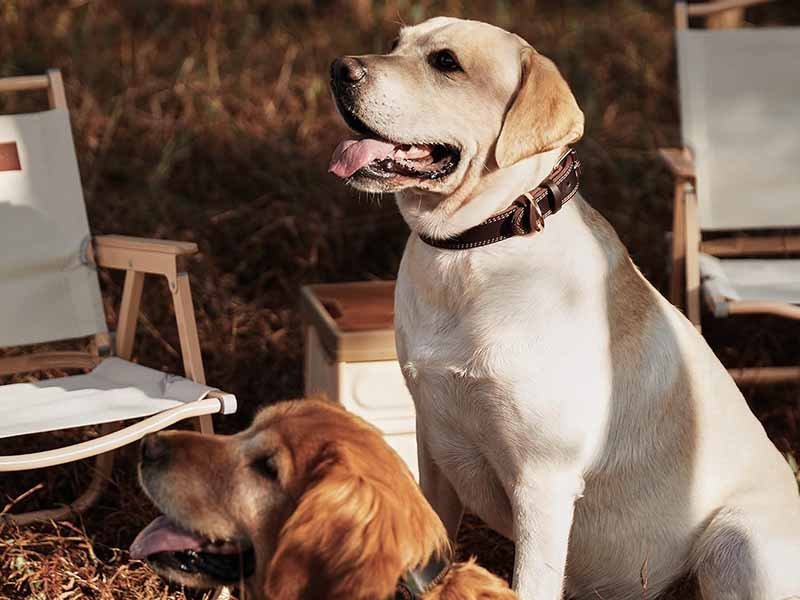
A leather dog collar looks simple until it fits badly. Then every small design decision becomes obvious. A collar that is 1.5 cm too short may never reach a safe hole. A collar that is too wide may look premium on the product page but feel stiff on a small dog’s neck. A collar with poor hole spacing may technically “fit,” yet still leave the dog between sizes. This is why sizing is not a minor detail in leather dog collar development. It is one of the main factors that decides comfort, safety, return rate, and long-term customer trust.
The correct size for leather dog collars is based mainly on the dog’s neck circumference, not the full collar length. In most cases, the best method is to measure around the base of the dog’s neck where the collar naturally sits, then allow enough room for two fingers between the neck and collar. For manufacturing, the most reliable size reference is usually the center hole measurement, because it gives the collar room to adjust tighter or looser while staying balanced on the dog.
For brands, wholesalers, and private label clients, this matters more than it first appears. A beautiful leather collar with strong stitching and quality hardware can still fail commercially if the size grading is wrong. Many complaints in pet accessories do not come from leather quality alone. They come from collars that run short, holes that are spaced poorly, or width choices that do not match the breed. Once you understand how size is really engineered, you start seeing why two collars that look almost identical can perform very differently in the market.
What Are Leather Dog Collars Sizing Standards?
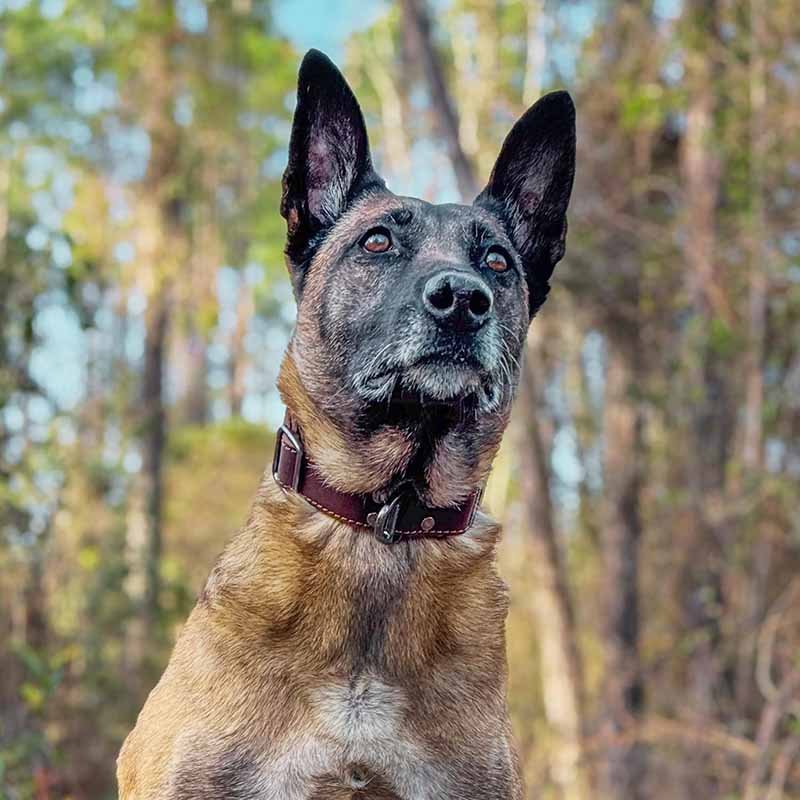
Leather dog collar sizing standards are built around the dog’s neck circumference, the usable adjustment range of the collar, and the collar width matched to the dog’s size and strength. In well-developed products, the stated size refers to the working fit range, not just the total strap length.
The biggest sizing mistake in this category is confusing overall collar length with wearable collar size. These are not the same thing. A collar may measure 50 cm from end to end, but the actual usable range may only be 34–42 cm depending on buckle placement, leather fold, and hole location. Customers often look only at total length, but factories and professional brands know that the real fit comes from the distance between the buckle and the adjustment holes.
In practice, leather dog collar sizing usually depends on five core dimensions:
- neck circumference range
- center hole measurement
- total strap length
- hole spacing
- collar width
Among these, the center hole measurement is often the most important reference for production. It represents the “balanced fit” position. When the dog wears the collar at the center hole, there is still room to tighten or loosen as needed. This improves comfort and reduces the risk that one size only works at the extreme first or last hole.
Below is a practical example of how leather dog collar sizes are often structured:
| Size | Neck Fit Range | Center Hole | Total Strap Length | Common Width |
|---|---|---|---|---|
| XS | 20–26 cm | 23 cm | 31–33 cm | 1.0–1.5 cm |
| S | 26–34 cm | 30 cm | 38–40 cm | 1.5–2.0 cm |
| M | 34–44 cm | 39 cm | 48–50 cm | 2.0–2.5 cm |
| L | 44–54 cm | 49 cm | 58–60 cm | 2.5–3.0 cm |
| XL | 54–64 cm | 59 cm | 68–70 cm | 3.0–4.0 cm |
These figures vary by product style, but the logic stays similar.
Sizing standards also need to reflect the actual dog, not just a generic size label. For example, two medium dogs may have very different needs. A lean Border Collie and a muscular Bulldog may share similar neck circumference, but their best collar width and leather thickness may differ a lot. That is why better collar development always combines size range with width and structure, not size range alone.
For custom development, SzoneierLeather and similar experienced factories usually work from clear fit logic:
- measure the dog’s neck correctly
- define the best working range
- place the center hole at the target fit point
- add enough holes for adjustment
- match width and thickness to breed category
That process helps reduce fit issues, especially for brands selling online where customers cannot test the collar before ordering.
What Sizes Do Leather Dog Collars Come In?
Leather dog collars usually come in XS, S, M, L, and XL size ranges, but the real difference is the neck fit range behind each label. The label itself is not enough. A “Medium” collar from one supplier may fit 35–43 cm, while another may define Medium as 38–46 cm. That difference is large enough to create returns, especially in eCommerce.
This is why good size presentation should always show numbers, not only letters.
A practical size structure often looks like this:
| Size Label | Neck Size in Inches | Neck Size in CM | Common Dog Category |
|---|---|---|---|
| XS | 8–10 in | 20–26 cm | Toy and very small breeds |
| S | 10–13 in | 26–34 cm | Small breeds |
| M | 13–17 in | 34–44 cm | Medium breeds |
| L | 17–21 in | 44–54 cm | Large breeds |
| XL | 21–25 in | 54–64 cm | Extra large breeds |
But even this table is only the starting point. Real collar sizing should also account for:
- buckle length
- leather fold-back around buckle
- hole count
- hole distance
- strap tip length beyond the last hole
These details affect how the collar feels and where the buckle sits when worn.
For brands, the key commercial point is simple: selling a collar with only “S/M/L” labels is not enough. Customers want to know the actual neck range, because that is what determines whether the collar can be worn safely. Many return problems begin with vague size charts rather than poor leather quality.
How Are Leather Dog Collars Sized by Neck?
Leather dog collars are sized by measuring the dog’s neck circumference at the position where the collar will sit. This is usually the lower part of the neck, not the very top near the head. Once that measurement is known, the collar should be chosen so the dog’s actual neck falls close to the middle hole, not at the first or last hole.
That point matters because collars worn at the extreme end of the hole range often sit less evenly and leave less adjustment room. A dog’s coat thickness, seasonal grooming, age, and weight changes can all affect final fit.
A practical measuring method looks like this:
- ask the dog to stand naturally
- place a soft tape around the base of the neck
- keep the tape snug, not tight
- allow enough room for two fingers
- record the final working measurement
For example:
| Dog Neck Measurement | Recommended Collar Working Range | Best Center Hole Target |
|---|---|---|
| 28 cm | 26–34 cm | around 30 cm |
| 39 cm | 34–44 cm | around 39 cm |
| 50 cm | 44–54 cm | around 49 cm |
This method is more reliable than guessing by breed name alone. Breed guides help, but actual neck measurement is still the safest basis for sizing.
From a product development view, neck-based sizing also improves factory grading. Once the working neck range is confirmed, the manufacturer can build consistent collar lengths, hole layouts, and width options around real use rather than vague size assumptions.
Why Do Leather Dog Collars Use Neck Measurement?
Leather dog collars use neck measurement because it is the most direct and most functional fit standard. Weight alone is unreliable. Breed name alone is unreliable. Even age can be misleading. Neck circumference tells the factory where the collar will actually sit and how large the working range needs to be.
Here is why alternative methods often fail:
- Dog weight is inconsistent for sizing Two dogs at 20 kg can have very different neck builds. One may be slim and long-necked, another thick and muscular.
- Breed guides are useful but not exact A Labrador puppy, adult female, and strong adult male do not all need the same collar length or width.
- Visual guessing causes returns Especially online, customers often underestimate or overestimate neck size if they do not measure.
A simple comparison shows why neck size matters more:
| Dog Type | Approx Weight | Possible Neck Size |
|---|---|---|
| French Bulldog | 11–14 kg | 30–40 cm |
| Whippet | 11–14 kg | 26–34 cm |
| Labrador | 25–36 kg | 40–56 cm |
| Husky | 20–27 kg | 38–50 cm |
The dogs above can overlap in weight but not in neck size or collar structure.
For private label collar brands, neck-based sizing also supports better data on size charts, product pages, and replacement orders. It reduces ambiguity. That means fewer support messages, fewer fit complaints, and better repeat order confidence.
Are Leather Dog Collars Sizes Universal?
No, leather dog collar sizes are not fully universal. The market uses similar conventions, but factories and brands often define size ranges differently. The biggest differences usually come from center hole position, hole spacing, buckle type, and leather fold construction.
This is why one brand’s Medium may fit like another brand’s Small-Large overlap. The collar may still be good quality, but the grading system is different.
The most common sources of size inconsistency are:
- different center hole standards
- different numbers of adjustment holes
- different spacing between holes
- different buckle lengths
- different thickness of folded leather near the buckle end
A good example:
| Brand Style | Labeled Size | Working Range |
|---|---|---|
| Brand A | Medium | 34–42 cm |
| Brand B | Medium | 36–46 cm |
| Brand C | Medium | 38–44 cm |
All three say “Medium,” but the actual fit is different.
For this reason, better manufacturers present sizing in at least two ways:
- labeled size
- actual neck fit range
Some also add:
- center hole length
- total length
- recommended breed examples
For SzoneierLeather and other professional OEM producers, this is especially important when developing custom size charts for clients. A brand that sells to large-breed working dogs will often need a different grading logic from a boutique pet brand focused on small companion breeds. The size label can stay simple, but the actual engineering behind it must be precise.
How Do You Measure Leather Dog Collars Correctly?
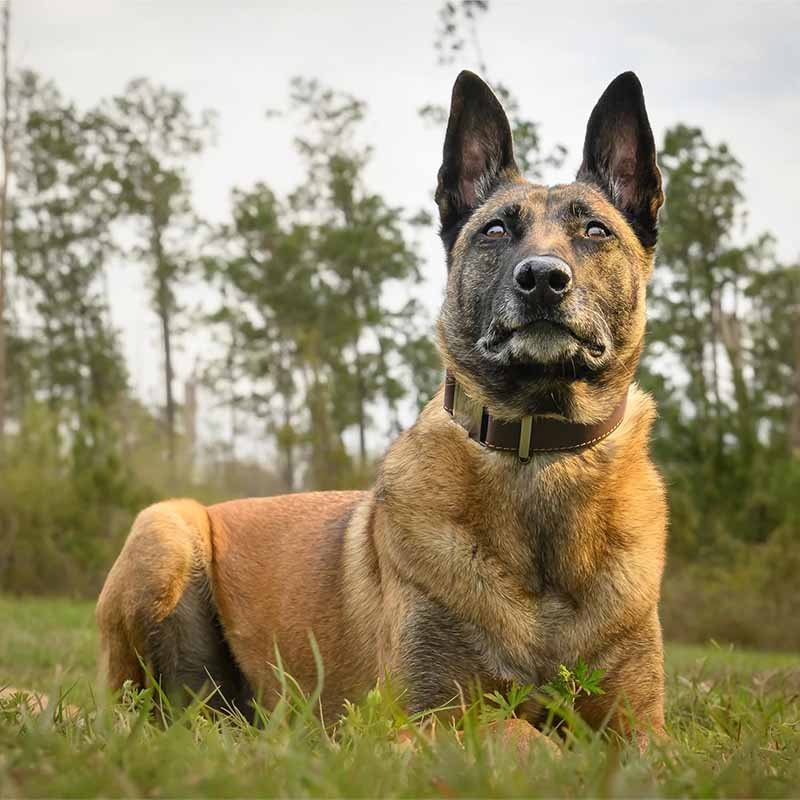
The correct way to measure leather dog collars is to measure the dog’s neck where the collar naturally sits, allow a comfortable two-finger gap, and then match that measurement to the collar’s working hole range. If using an existing collar, measure from the buckle end to the current hole in use, not to the collar tip.
Correct measurement is one of the easiest places to avoid problems, yet it is also where many mistakes begin. Some customers measure too tightly. Some measure the full old collar length instead of the fastening point. Some choose by breed name only. In leather collars, these small errors matter because leather is structured and does not stretch like some textile collars.
A correct measurement process should answer four questions:
- where exactly does the collar sit
- what is the real neck circumference
- how much comfort allowance is needed
- which hole should become the center fit point
The most reliable approach is direct neck measurement. This is best for new collar design and first-time orders. Existing collar measurement is also useful, especially when replacing a well-fitting collar. But even then, the measurement must be taken correctly.
A practical measuring guide looks like this:
| Method | Best For | Main Risk if Done Wrong |
|---|---|---|
| Direct neck tape measurement | New collar orders | Tape too tight or too loose |
| Existing collar measurement | Reorders or replacements | Measuring full strap instead of used hole |
| Breed-based estimate | Quick browsing only | High fit error risk |
The “two-finger rule” is still widely used because it balances security and comfort. Too tight creates rubbing and pressure. Too loose increases the risk of slipping off or rotating badly around the neck.
For brands, this measuring logic should be built into packaging, size charts, and product descriptions. Many fit complaints are not manufacturing defects. They are communication defects. If the brand teaches customers how to measure correctly, the product performs better in the market.
What Tools Measure Leather Dog Collars?
The best tool for measuring leather dog collars is a soft flexible measuring tape. It follows the shape of the dog’s neck accurately and gives direct readings in centimeters or inches. If a tape is not available, a string plus ruler can work, but it is slightly less precise.
The most practical options are:
| Tool | Accuracy | Best Use |
|---|---|---|
| Soft tailor tape | High | Direct neck measurement |
| String + ruler | Medium | Backup method |
| Existing collar + ruler | High if collar fits well | Reorders and replacement sizing |
| Metal tape measure | Low comfort | Not recommended for live measuring |
Soft tailor tape is best because it allows the measurer to:
- follow the neck curve
- keep steady tension
- add comfort allowance accurately
- record measurements quickly
For B2B brands, it is worth standardizing measurements in both cm and inches. Many global customers still use inches, while factories usually develop patterns in cm. Providing both reduces confusion.
How Do You Measure a Dog for Leather Dog Collars?
To measure a dog for leather dog collars, place the tape around the base of the neck where the collar normally rests, keep it snug, then allow room for two fingers. The dog should stand naturally, not sit curled up or stretch its neck unnaturally.
A clean process looks like this:
- let the dog stand comfortably
- place the tape at the collar position
- remove slack in the tape
- insert two fingers between tape and neck
- read and record the measurement
This final number is the working fit size.
A helpful example:
| Raw Neck Tape | With Comfort Allowance | Recommended Size Range |
|---|---|---|
| 24 cm | 26 cm | XS 20–26 cm or S 26–34 cm depending on product |
| 31 cm | 33 cm | S 26–34 cm |
| 41 cm | 43 cm | M 34–44 cm |
For long-haired breeds, coat thickness can influence the result. For puppies, growth allowance may also need to be considered. For working collars worn daily, a stable center fit is usually better than sizing too large “for safety.”
How Tight Should Leather Dog Collars Fit?
Leather dog collars should fit close enough to stay secure but loose enough to avoid pressure, rubbing, and restricted movement. In most cases, the two-finger fit remains the safest general standard. This means two fingers should slide comfortably between collar and neck.
A collar that is too tight can cause:
- skin friction
- flattened fur
- discomfort during walking
- poor pressure distribution
- faster leather wear at the bending point
A collar that is too loose can cause:
- slipping over the head
- twisting of the D-ring position
- unstable tag and leash placement
- poor visual fit
- customer perception that sizing is wrong
A practical fit reference:
| Fit Level | What It Feels Like | Result |
|---|---|---|
| Too tight | Hard to insert even one finger | Unsafe and uncomfortable |
| Correct | Two fingers fit comfortably | Balanced fit |
| Too loose | More than two fingers with slack | Risk of slipping |
Fit also depends on collar width. A 1.0 cm collar and a 3.5 cm collar do not feel the same on the neck even with similar circumference. Wider collars spread pressure better on large breeds but may feel stiff or bulky on small dogs.
How Do Existing Leather Dog Collars Help Measure Size?
An existing leather collar that fits well is one of the best references for a replacement or custom order. But it must be measured from the buckle end to the hole currently used, not from end to end. Total strap length tells very little about actual fit.
The correct method is:
- lay the collar flat
- measure from the inside edge of the buckle where the tongue starts fastening
- measure to the current used hole
- record that distance
This becomes the reference fit size.
Example:
| Existing Collar Measurement | Interpretation |
|---|---|
| 30 cm to used hole | Dog’s practical fit is about 30 cm |
| 39 cm to used hole | Medium-range collar likely suitable |
| 50 cm to used hole | Large-range collar likely suitable |
This method is especially useful for:
- repeat orders
- OEM redevelopment of existing products
- upgrading leather quality while keeping fit the same
- custom logo replacement programs
For factories, this measurement is highly valuable because it can be translated directly into center hole development. That makes it easier to preserve fit consistency while changing leather type, hardware style, width, or branding details.
Which Leather Dog Collars Sizes Fit Different Dogs?
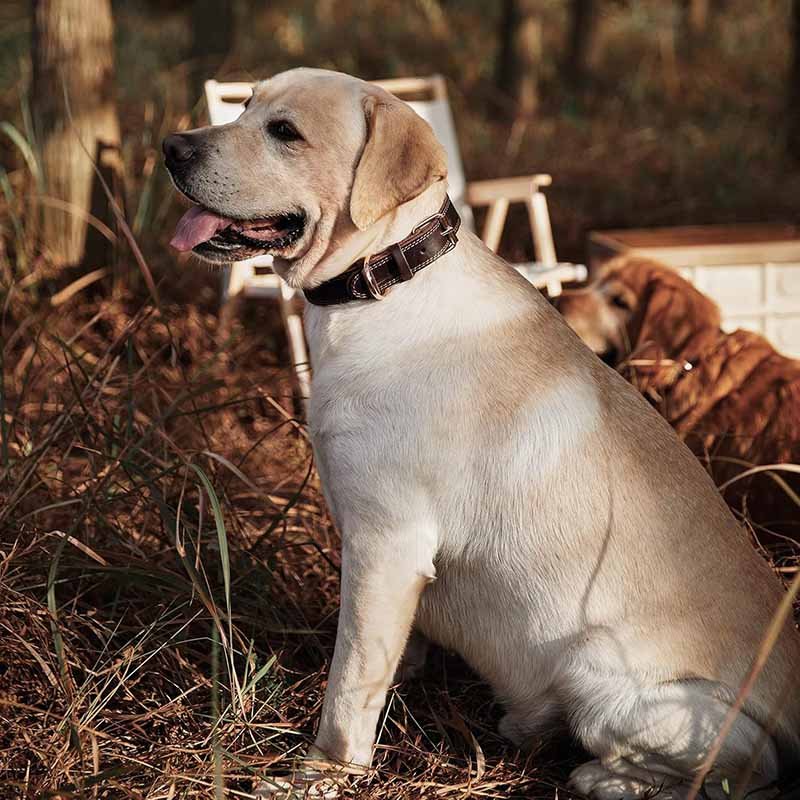
Leather dog collars must match both the neck circumference and physical build of the dog. Dogs with similar neck measurements may still require different collar widths and leather thickness depending on their breed, activity level, and strength.
When designing collar size ranges, manufacturers usually consider three main factors:
- neck circumference
- dog body structure
- collar width and strength requirements
This is why leather dog collars are usually divided into small, medium, and large dog categories, even though the exact neck measurement still determines the final size.
A collar that fits well should allow comfortable movement, maintain stable positioning on the neck, and provide enough strength to handle leash tension during walking or training.
The following sections explain how collar sizes correspond to different dog categories.
Which Leather Dog Collars Fit Small Dogs?
Small dog breeds typically have neck circumferences between 20 cm and 35 cm (8–14 inches). Collars designed for these dogs must prioritize comfort and lightweight construction.
Most collars for small dogs use narrower widths and softer leather to prevent excessive pressure on the neck.
Typical design parameters for small dog collars include:
| Feature | Common Range |
|---|---|
| Neck size | 20–35 cm |
| Collar width | 1.0–1.8 cm |
| Leather thickness | 2.5–3.5 mm |
| Adjustment holes | 4–5 holes |
Small dog breeds that usually fall into this category include:
- Chihuahua
- Yorkshire Terrier
- Pomeranian
- Maltese
- Toy Poodle
For these breeds, collar weight matters almost as much as size. Thick leather collars designed for large dogs may feel uncomfortable on smaller dogs.
Manufacturers often choose softer vegetable-tanned leather or lined leather constructions for this category to maintain comfort while preserving durability.
Which Leather Dog Collars Fit Medium Dogs?
Medium-sized dogs typically require collars designed for neck circumferences between 35 cm and 45 cm (14–18 inches).
These collars must balance comfort with strength because medium dogs often have higher activity levels.
Typical design specifications for medium dog collars include:
| Feature | Common Range |
|---|---|
| Neck size | 35–45 cm |
| Collar width | 2.0–2.8 cm |
| Leather thickness | 3.5–4.0 mm |
| Adjustment holes | 5 holes |
Common medium dog breeds include:
- Beagle
- Cocker Spaniel
- Border Collie
- Australian Shepherd
- Shiba Inu
At this size category, collar width begins to play a more important role. A slightly wider collar distributes leash pressure more evenly across the dog’s neck, improving comfort during walking or training.
For brands developing premium collars, many medium-size collars include additional reinforcement such as:
- double-layer leather straps
- stitched edges
- reinforced D-rings
These features increase durability without making the collar excessively heavy.
Which Leather Dog Collars Fit Large Dogs?
Large dog breeds often have neck circumferences ranging from 45 cm to 65 cm (18–26 inches).
Collars designed for large dogs must provide both structural strength and stability because these dogs generate stronger pulling force during walking.
Typical design parameters include:
| Feature | Common Range |
|---|---|
| Neck size | 45–65 cm |
| Collar width | 3.0–4.5 cm |
| Leather thickness | 4.0–5.0 mm |
| Adjustment holes | 5–6 holes |
Large dog breeds include:
- Labrador Retriever
- German Shepherd
- Golden Retriever
- Rottweiler
- Doberman
For these dogs, collar strength is critical. Hardware components such as buckles and D-rings must also be stronger.
Manufacturers often choose solid brass or stainless steel hardware because it offers higher tensile strength and corrosion resistance.
Another important design factor is collar width. Wider collars distribute pulling force over a larger area, which reduces pressure on the dog’s neck.
How Does Width Affect Leather Dog Collars?
Collar width is often overlooked during sizing discussions, but it plays a significant role in comfort and durability.
A wider collar spreads pressure more evenly across the neck, making it better suited for larger or stronger dogs.
However, excessively wide collars may feel bulky on smaller breeds.
The table below illustrates typical width recommendations.
| Dog Size | Recommended Collar Width |
|---|---|
| Small dogs | 1.0–1.8 cm |
| Medium dogs | 2.0–3.0 cm |
| Large dogs | 3.0–4.5 cm |
Collar width also affects visual aesthetics. Narrow collars often appear more elegant on small dogs, while wider collars create a stronger, more rugged look for larger breeds.
For custom collar development, manufacturers often adjust width and thickness together to maintain balanced proportions.
How Are Leather Dog Collars Sized in Manufacturing?
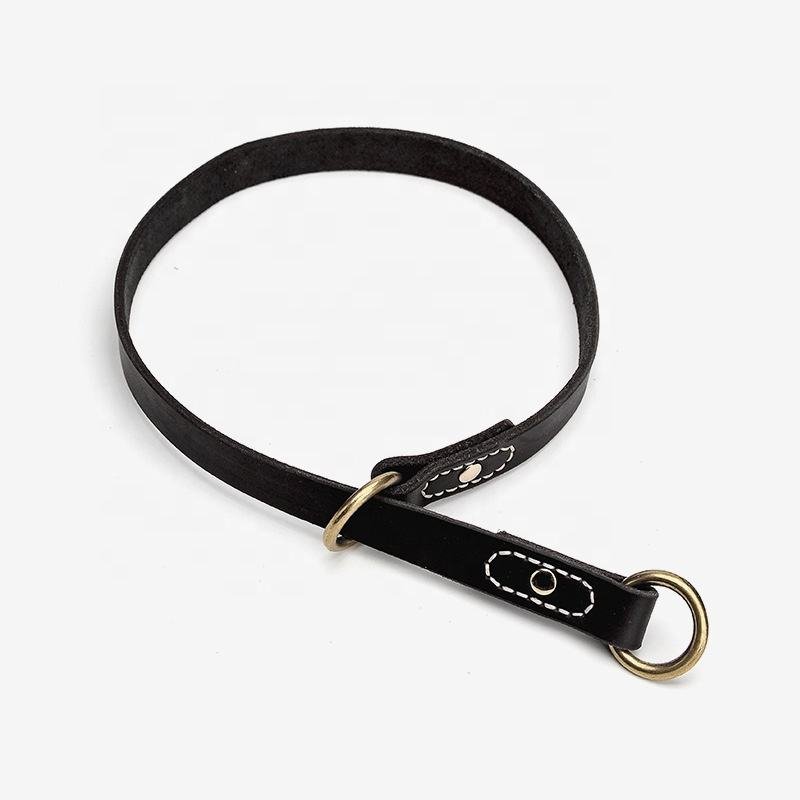
When factories produce leather dog collars, sizing must be standardized so that every product fits consistently across different production batches.
Manufacturers therefore rely on precise technical specifications rather than approximate measurements.
Several key elements determine the final collar size:
- total collar length
- center hole position
- hole spacing
- number of adjustment holes
- buckle placement
Together, these dimensions define the collar’s functional size range.
How Long Are Leather Dog Collars Made?
The total length of a leather dog collar must include several components:
- buckle fold area
- usable adjustment range
- extra strap beyond the last hole
For example, a collar designed for a 40 cm neck size might require a total strap length of approximately 50–55 cm.
A typical collar length structure looks like this:
| Component | Length Contribution |
|---|---|
| Buckle fold | 4–6 cm |
| Adjustment hole range | 8–12 cm |
| Strap tip extension | 4–6 cm |
Adding these components ensures the collar remains adjustable while still appearing visually balanced.
Factories usually design collars so the center hole corresponds to the intended neck size.
How Many Holes Do Leather Dog Collars Have?
Most leather dog collars include 4–6 adjustment holes.
The purpose of these holes is to allow small adjustments in fit without requiring different collar sizes for every neck measurement.
Typical hole configuration:
| Collar Size | Number of Holes |
|---|---|
| XS / S | 4–5 holes |
| M / L | 5 holes |
| XL | 5–6 holes |
More holes increase adjustment flexibility but also require careful spacing to avoid weakening the leather strap.
High-quality collars often reinforce hole areas through:
- edge finishing
- thicker leather layers
- reinforced stitching
These features help maintain durability over time.
How Are Leather Dog Collars Hole Spacing Designed?
Hole spacing determines how easily a collar can be adjusted.
In most leather dog collars, holes are spaced 2–2.5 cm apart. This spacing provides enough adjustment range while maintaining structural strength.
Example spacing structure:
| Hole Number | Distance from Buckle |
|---|---|
| Hole 1 | 34 cm |
| Hole 2 | 36 cm |
| Hole 3 | 38 cm |
| Hole 4 | 40 cm |
| Hole 5 | 42 cm |
In this example, the center hole is 38 cm, meaning the collar is optimized for a 38 cm neck measurement.
This design ensures the collar remains comfortable while still allowing minor adjustments.
Why Does Width Matter in Leather Dog Collars?
Collar width affects three important aspects of performance:
- pressure distribution
- structural durability
- visual balance
A narrow collar concentrates pressure in a smaller area, which may cause discomfort for strong dogs. A wider collar spreads force more evenly and helps reduce strain during pulling.
However, width must be proportional to the dog’s size.
For example:
| Dog Weight | Recommended Collar Width |
|---|---|
| <10 kg | 1–1.5 cm |
| 10–25 kg | 2–3 cm |
| >25 kg | 3–4.5 cm |
Manufacturers must balance width with leather thickness and hardware size to ensure both comfort and durability.
How Can Brands Develop Custom Leather Dog Collars?
Developing custom leather dog collars involves more than choosing a color and adding a logo. For brands that want to launch durable, well-fitting collars, the development process usually includes several technical stages. These stages ensure that the collar fits correctly, performs reliably, and maintains consistent quality across production batches.
Professional leather goods manufacturers typically structure development into four steps:
- product design and sizing definition
- leather and hardware material selection
- sample prototyping and fit testing
- final production standardization
Each stage helps reduce the risk of design flaws and ensures the collar performs well in real-world use.
From a commercial perspective, brands usually care about three practical outcomes:
- whether the collar fits the target dog sizes accurately
- whether the leather and hardware meet durability expectations
- whether the factory can maintain stable quality for repeat orders
Factories that specialize in leather goods production often provide engineering guidance during development to help brands optimize sizing standards and structural design.
The table below illustrates how the development stages influence the final product.
| Development Stage | Key Focus | Impact on Product |
|---|---|---|
| Design planning | Size ranges and collar width | Determines fit accuracy |
| Material selection | Leather quality and hardware | Determines durability |
| Sample prototyping | Collar structure and comfort | Determines usability |
| Production standardization | Stitching and QC processes | Determines consistency |
When these stages are executed carefully, brands can launch collars that maintain both functional reliability and premium appearance.
How Do Factories Prototype Leather Dog Collars?
Prototyping is an essential step in leather dog collar development. A prototype allows brands to evaluate the collar’s size, comfort, and structural balance before committing to full-scale production.
Factories usually create several prototype samples during development.
The first prototype focuses on confirming basic parameters such as:
- collar length and hole spacing
- leather thickness
- buckle and D-ring size
- collar width proportions
Once the initial prototype is completed, brands often perform simple fit tests with dogs that represent their target size categories.
The next prototype stage may adjust details such as:
- hole spacing distance
- edge finishing method
- leather softness or stiffness
- hardware style and weight
This iterative process ensures the final collar achieves the right balance between comfort, strength, and aesthetics.
For example, many premium collars require multiple prototypes before final approval, especially when working with thicker leather or complex decorative elements.
Which Leather Works Best for Leather Dog Collars?
Leather choice is one of the most important factors affecting the durability and feel of a dog collar.
Several types of leather are commonly used for dog collars.
| Leather Type | Characteristics | Typical Use |
|---|---|---|
| Full-grain leather | Strongest and most durable | Premium collars |
| Top-grain leather | Smooth surface with good strength | Mid-premium collars |
| Genuine leather | More affordable but less durable | Entry-level collars |
| Vegetable-tanned leather | Natural finish and durability | Classic handcrafted collars |
Full-grain leather is often considered the best option for high-quality collars because it maintains the natural fiber structure of the hide. This structure provides excellent resistance to stretching and tearing.
Vegetable-tanned leather is also popular for collars because it ages well and develops a unique patina over time. Many premium pet brands prefer this material for its natural appearance and durability.
In contrast, lower-grade leather may require additional reinforcement or lining to maintain structural stability.
Selecting the right leather type depends on factors such as:
- target price range
- durability expectations
- design style
- brand positioning
Manufacturers typically guide clients through these choices during the sampling stage.
How Are Logos Added to Leather Dog Collars?
Branding plays an important role in differentiating leather dog collars in the market. Fortunately, leather offers several durable customization options.
Common logo application methods include:
| Branding Method | Appearance | Durability |
|---|---|---|
| Debossed logo | Pressed into leather surface | Very durable |
| Embossed logo | Raised surface effect | Durable |
| Metal logo plate | Decorative hardware piece | Very durable |
| Laser engraving | Precise logo detail | Durable |
| Printed logo | Colorful graphics | Moderate durability |
Debossing is one of the most widely used methods because it creates a clean and subtle logo that integrates naturally with the leather surface.
Metal logo plates are often used for premium collars because they add a decorative element while also reinforcing brand identity.
When designing logos for leather collars, brands should consider the size and placement carefully so the logo does not interfere with collar flexibility or comfort.
How Can SzoneierLeather Manufacture Leather Dog Collars?
SzoneierLeather is a leather goods manufacturer with more than 18 years of experience in designing and producing leather products. The company works with global brands, wholesalers, and custom product developers to manufacture leather accessories including dog collars.
One of SzoneierLeather’s key advantages is its integrated production capability. The company maintains a strong raw material supply chain and offers multiple services within one development workflow.
These services include:
- leather material sourcing
- product design and technical development
- prototype sampling
- leather cutting and stitching
- hardware installation
- quality inspection and packaging
Because the company manages multiple stages of production internally, it can maintain tighter quality control and faster development timelines.
For custom leather dog collars, SzoneierLeather supports a variety of OEM and private label services.
Examples include:
- custom collar sizes and hole spacing
- customized collar width and leather thickness
- logo debossing or metal branding plates
- custom hardware finishes
- packaging design and labeling
Sampling usually takes 5–7 days, allowing clients to evaluate prototypes before mass production.
This development model allows brands to transform product ideas into finished collars that meet both design and durability expectations.
Final Thoughts
Leather dog collars combine craftsmanship, engineering, and practical sizing standards. While they may appear simple, each collar must balance several technical elements—including neck measurement, collar width, leather thickness, and hardware strength—to ensure both comfort and durability.
Correct sizing begins with accurate neck measurement and appropriate adjustment range. Manufacturers then refine these measurements through hole spacing, buckle placement, and collar width selection. When these details are engineered correctly, the result is a collar that fits securely while remaining comfortable for the dog during everyday activities.
For brands entering the pet accessories market, understanding these sizing principles is essential. Well-designed sizing standards help reduce product returns, improve customer satisfaction, and build long-term trust in the brand.
If you are planning to develop custom leather dog collars, working with an experienced manufacturer can simplify the process. SzoneierLeather provides design support, prototype development, and reliable manufacturing services to help brands bring high-quality leather collars to market.
You are welcome to contact SzoneierLeather to discuss your product ideas, request sample development, and explore customized leather dog collar solutions for your brand.


