 Skip to content
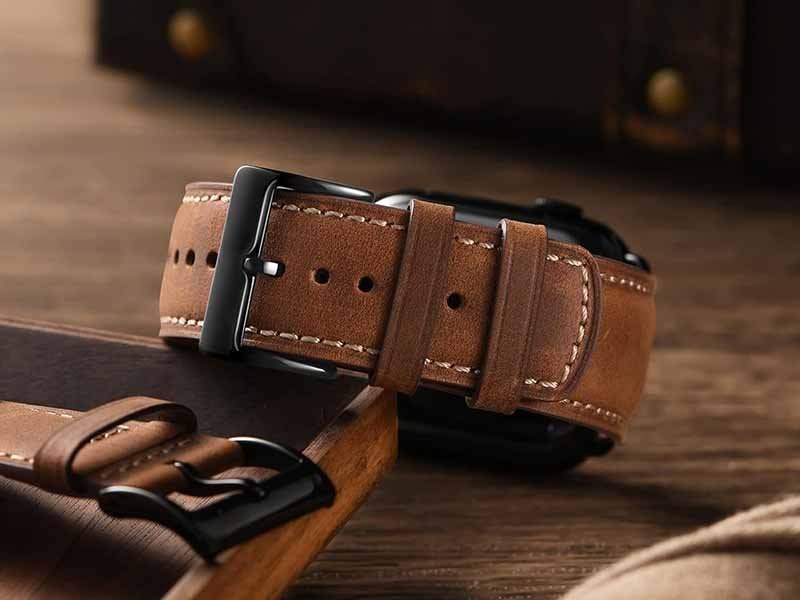
A leather watch strap may look simple from the outside, but the real product value is often decided long before the leather is cut. The pattern is what turns a design idea into a wearable product. It defines how the strap fits the watch case, how it wraps around the wrist, how thick it feels, how clean the edges look, how evenly the holes line up, and how stable the final shape remains after months of use. Many straps look attractive in photos, yet feel stiff, unbalanced, too short, too long, or structurally weak once they are worn daily. In most cases, the issue is not the leather itself. The issue starts in the pattern.
A leather watch strap pattern is the technical foundation used to define strap shape, dimensions, layer structure, fold positions, stitch paths, hole layout, and production tolerances. Good pattern engineering helps the strap fit correctly, wear comfortably, hold its shape, and stay consistent from sample stage to bulk production.
For brands and custom wholesale clients, this matters more than many expect. A strap that looks elegant but fails at the buckle fold, stretches too much near the spring bar, or feels awkward on the wrist can quickly weaken customer confidence. At SzoneierLeather, many custom projects begin not with leather selection, but with pattern correction. A few millimeters in the wrong place can change comfort, durability, appearance, and production cost all at once. That is why understanding pattern engineering is not just a technical issue. It is a product issue, a quality issue, and often a brand reputation issue.
What Is a Leather Watch Strap Pattern?
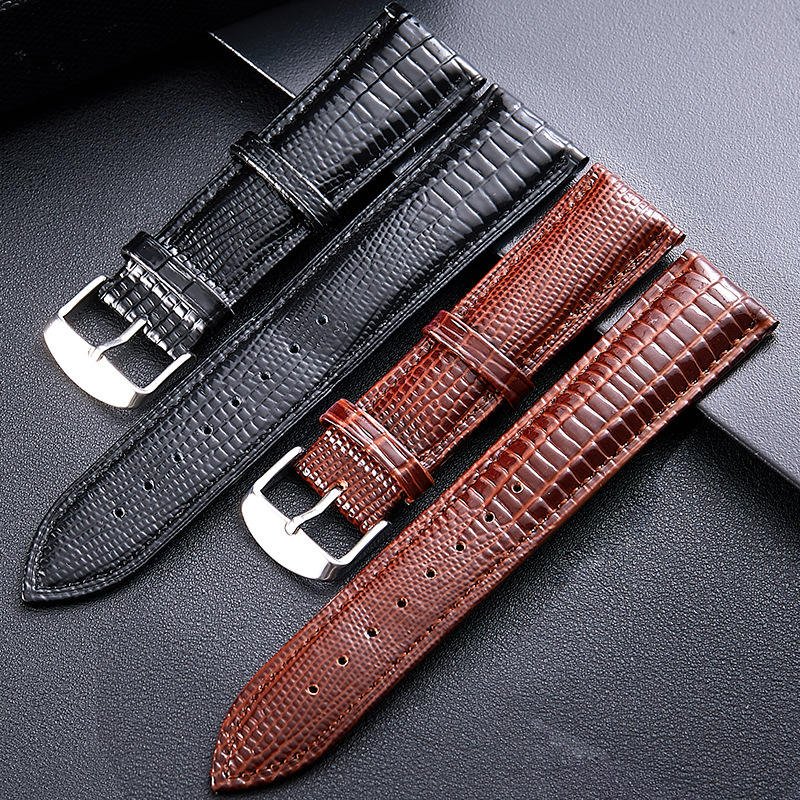
A leather watch strap pattern is the manufacturing blueprint of the strap. It defines the exact shape and size of every part, how those parts connect, where the strap bends, where it is stitched, where holes are punched, and how the strap performs after assembly. Without a proper pattern, even expensive leather cannot guarantee a stable and professional final product.
What defines a Leather Watch Strap Pattern?
A leather watch strap pattern is much more than an outline of the strap shape. In real manufacturing, it is a complete technical structure that guides cutting, folding, stitching, edge finishing, and assembly. A workable pattern must translate design intent into measurable production instructions.
A complete strap pattern usually includes the following elements:
- outer leather shape
- lining leather shape
- padding or filler shape
- buckle fold section
- spring bar connection section
- keeper dimensions
- stitch line position
- hole position and spacing
- tip shape
- edge allowance and skiving area
Each part must match the others precisely. If the outer layer is too long compared with the lining, the strap may bubble or wrinkle. If the padding area is too wide, the strap can feel bulky and resist bending. If the fold area is too short, the leather near the buckle can crack early after repeated use.
For premium watch straps, pattern control is usually measured in fractions of a millimeter. In many custom projects, tolerances should be controlled within about ±0.2 mm to ±0.5 mm, depending on material type and strap construction. This is especially important for narrow widths such as 18 mm and 20 mm, where even a small deviation becomes visible.
Below is a simplified view of what a strap pattern normally controls:
| Pattern Area | What It Controls | Why It Matters |
|---|---|---|
| Lug end | Connection to watch case | Affects fit and stability |
| Strap body | Width, length, taper | Affects comfort and proportions |
| Buckle fold | Bending and reinforcement | Affects durability |
| Hole area | Adjustment range | Affects wearability |
| Tip shape | Appearance and finishing | Affects visual quality |
| Stitch path | Strength and balance | Affects both function and look |
For custom clients, the pattern is also where product positioning begins. A clean flat strap, a heavily padded dress strap, and a rugged vintage strap may all use genuine leather, but their patterns are fundamentally different because their structure, feel, and use are different.
Why is Leather Watch Strap Pattern important?
Pattern quality directly affects four things customers notice very quickly:
- fit on the watch
- comfort on the wrist
- visual balance
- long-term durability
This is why pattern engineering is not hidden factory work. It has a direct impact on the end user experience and on whether the strap feels like a serious product or just a decorative accessory.
For example, if the lug end is not engineered properly, the strap may fit too tightly between the lugs or move too loosely after installation. If the length allocation between the buckle side and hole side is wrong, the buckle may sit off-center under the wrist, which makes the watch uncomfortable to wear. If the taper ratio is poorly chosen, the strap may look elegant in flat photos but feel too weak near the buckle.
Many common strap complaints are actually pattern problems in disguise:
| Market Complaint | Possible Pattern Cause |
|---|---|
| Strap feels stiff | Fold area too thick or skiving insufficient |
| Strap twists during wear | Layer proportions unbalanced |
| Holes wear out too fast | Hole area too thin or poorly reinforced |
| Strap looks uneven | Stitch line or edge allowance inconsistent |
| Buckle sits in wrong position | Length ratio poorly planned |
| Strap cracks at fold | Fold section too short or too thick |
From a commercial point of view, this affects much more than product quality. It affects reorder confidence, return rates, and customer reviews. A beautiful leather strap that fails after 60 to 90 days can do more damage to a brand than a simple product that performs reliably for a year or more.
At SzoneierLeather, pattern review is often one of the most important steps in development because many clients already have a concept sketch, but not a production-ready strap structure. Fixing the pattern early is far cheaper than correcting defects after sampling or bulk shipment.
Are all Leather Watch Strap Patterns the same?
No. Leather watch strap patterns vary significantly depending on style, thickness, use, leather behavior, and target price level. Two straps can look similar at first glance, but require very different engineering once construction details are considered.
A few examples make this clear:
| Strap Type | Pattern Features | Main Concern |
|---|---|---|
| Flat strap | Simple profile, thin body | Clean finish and flexibility |
| Padded strap | Multi-layer body, thickness transition | Shape control and comfort |
| Quick-release strap | Adjusted lug section clearance | Hardware fit |
| Vintage thick strap | Heavier body and stronger fold design | Bending stress |
| Dress strap | Refined taper and slim profile | Proportion and elegance |
| Sport strap | Stronger reinforcement and stable hole area | Durability |
Material also changes the pattern. Full grain leather, corrected grain leather, suede, nubuck, vegetable-tanned leather, and embossed leather all behave differently during cutting and folding. Softer leather may need more structural support. Firmer leather may require more careful skiving in fold zones. Thicker leather may need adjusted edge allowances to avoid a bulky appearance.
Even the same visual style may need different pattern versions for different markets. For example:
- a small wrist market may need shorter overall length
- a fashion-led market may prefer a stronger taper
- a tool watch audience may prefer wider, thicker, more stable strap proportions
This is why copying a strap outline from an existing sample is rarely enough. Real pattern engineering considers structure, performance, user comfort, hardware compatibility, and production repeatability at the same time.
For custom manufacturing, pattern originality also matters. Clients who want private label products often need more than a standard strap shape. They may want a distinct tip profile, a signature taper, a special padding contour, or a proportion that makes the product look more premium. These details are all pattern decisions.
What Sizes Are Used in Leather Watch Strap Pattern?
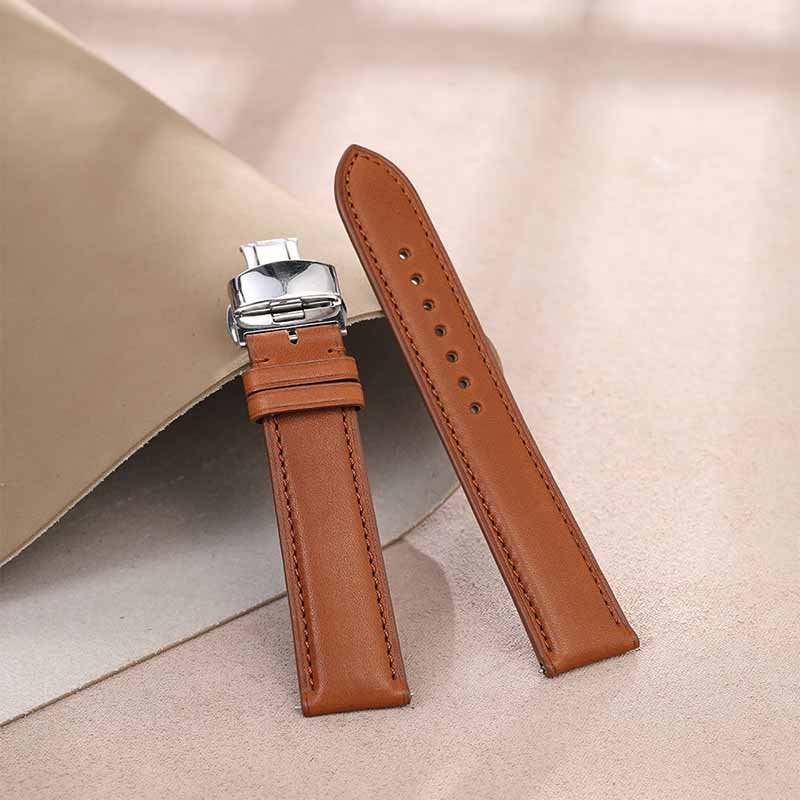
Leather watch strap sizing is usually built around four core measurements: lug width, strap length, hole spacing, and taper. These numbers define whether the strap fits the watch, fits the wrist, and feels balanced in real use. Good sizing is not just about following standard dimensions. It is about matching the watch style, target customer, and wearing experience.
What is lug width in Leather Watch Strap Pattern?
Lug width is the width of the strap at the point where it connects to the watch case. It is one of the most important dimensions in the entire pattern because it determines compatibility with the watch head. If this measurement is wrong, the strap cannot function correctly no matter how good the leather or finishing may be.
Common lug widths include:
| Lug Width | Common Use |
|---|---|
| 16 mm | Smaller dress watches |
| 18 mm | Slim dress and vintage watches |
| 20 mm | One of the most common sizes |
| 22 mm | Sports and larger everyday watches |
| 24 mm | Oversized or rugged watches |
This area needs tight dimensional control because the strap has to sit correctly between the lugs while still allowing spring bar installation. If the strap is slightly oversized, assembly becomes difficult and the leather edge can compress or deform. If it is undersized, the strap may shift during wear, which affects both appearance and stability.
For refined products, many factories control this area within approximately ±0.1 mm to ±0.2 mm when materials and tools allow. This matters especially on narrow straps, where visual imbalance is more obvious.
Clients should also pay attention to lug-end shape. A straight-cut lug end, curved lug end, and quick-release compatible lug end are not the same pattern. Each one affects fit and product positioning.
How is length set in Leather Watch Strap Pattern?
Strap length is normally divided into two sections:
- the long strap with adjustment holes
- the short strap with buckle attachment
Length planning must consider wrist size, watch case size, buckle size, and how the watch sits when worn. A strap that is too short limits wearability. A strap that is too long leaves an unattractive tail and makes the product feel awkward.
Below are common reference lengths:
| Strap Size | Long Side / Short Side |
|---|---|
| Small | 105 / 65 mm |
| Medium | 115 / 75 mm |
| Large | 125 / 80 mm |
These numbers are only starting points. In custom development, actual decisions should be based on the target market and the watch category. A slim dress watch aimed at a narrow-wrist audience may need shorter, more refined proportions. A casual or sport watch may require extra usable length.
In many projects, clients focus only on total strap length, but the ratio between the two sides is equally important. Poor ratio planning can place the buckle too far to one side of the wrist. That makes the watch feel unbalanced even if the overall strap length seems correct.
A more practical way to think about length is to plan it around:
- target wrist circumference range
- watch case diameter and lug-to-lug size
- buckle thickness and fold consumption
- number of usable adjustment positions
This is one reason why strap development should not rely only on sample imitation. Length that works on one watch model may not work well on another.
How is hole spacing planned in Leather Watch Strap Pattern?
The hole section is one of the highest-wear zones in the strap. It affects day-to-day comfort, adjustment precision, and long-term durability. If hole spacing is poorly engineered, users struggle to find a comfortable fit, and the area may deform too quickly under repeated buckle pressure.
A common hole layout may include:
- 6 to 8 adjustment holes
- 6 mm, 7 mm, or 8 mm spacing
- a defined margin from tip to first hole
- reinforced material thickness around the punched area
Below is a simple comparison:
| Hole Spacing | Wearing Feel | Best Use |
|---|---|---|
| 6 mm | More precise adjustment | Dress and premium straps |
| 7 mm | Balanced usability | General-purpose straps |
| 8 mm | Wider adjustment interval | Casual or thicker straps |
Hole spacing should also match the strap width and visual style. On a narrow 18 mm dress strap, oversized hole spacing can look clumsy. On a thicker 24 mm vintage strap, very tight spacing may look crowded and weak.
The area around the holes must be engineered carefully. If the strap body is skived too thin in that zone, the leather may stretch or tear faster. If the hole placement is too close to the edge, edge deformation becomes more likely after repeated use. If the last usable hole is placed too far from the tip, part of the strap becomes wasted length.
For many brands, this section is also a visual detail. A clean, evenly spaced hole layout immediately makes the strap look more professional.
How does taper affect Leather Watch Strap Pattern?
Taper is the reduction in strap width from the lug end to the buckle end. It is one of the most important design decisions because it affects appearance, comfort, perceived refinement, and structural behavior.
Common taper examples include:
| Lug Width | Buckle Width | Taper Style |
|---|---|---|
| 20 mm | 18 mm | Moderate taper |
| 20 mm | 16 mm | Strong taper |
| 22 mm | 20 mm | Balanced taper |
| 22 mm | 18 mm | More elegant taper |
A stronger taper usually creates a dressier and more elegant look. It visually lightens the strap and can make the watch feel less bulky on the wrist. However, excessive taper can reduce material support near the buckle area, especially on thicker or softer leathers.
A lighter taper often feels stronger and more stable. It is common in sport straps, heavier casual straps, and thicker vintage constructions. The trade-off is that the product may look more robust and less refined.
Taper should never be decided by appearance alone. It should also be reviewed together with:
- strap thickness
- leather firmness
- intended buckle size
- target watch style
- end user comfort expectations
For example, a heavily padded strap with strong taper may look attractive on a sketch, but if the thickness transition is not engineered properly, the strap may feel hard near the buckle and uncomfortable during wrist movement.
For private label clients, taper is also one of the easiest ways to shape a product’s visual identity. A subtle change from 20/18 to 20/16 may completely change how premium, classic, or fashion-led the strap appears.
Why do standard sizes not always work in real projects?
Standard size charts are useful starting points, but they do not solve every product development problem. Real watch strap projects involve different wrist sizes, watch cases, leather behaviors, hardware choices, and brand styles. That is why many standard dimensions work acceptably in theory but feel wrong in actual production or actual wear.
Why can standard dimensions create fitting problems?
Standard dimensions are often built around general averages. Real customers are not averages. Wrist shape, wearing preference, buckle position, and watch size all influence whether a strap feels right.
Below are some common reasons standard sizing may fail:
- watch case is thicker or longer than average
- target customers prefer a tighter or looser fit
- buckle takes up more folding length than expected
- padding makes the strap feel shorter when worn
- short-side to long-side balance is not ideal
This is why two straps with the same published size can feel very different once installed and worn.
How should custom clients evaluate sizing more accurately?
A more reliable method is to review sizing from a use perspective instead of only from a chart perspective. Clients should evaluate:
- wrist range the strap must cover
- watch case size and weight
- leather thickness after full assembly
- buckle dimensions
- desired wearing style
Below is a more practical sizing checklist:
| Check Item | Why It Matters |
|---|---|
| Wrist range | Ensures usable adjustment span |
| Watch case size | Changes how strap wraps |
| Finished thickness | Affects fold and wearable length |
| Buckle size | Consumes space in short strap section |
| Strap style | Changes comfort expectations |
At SzoneierLeather, custom development often works better when clients provide both visual references and real target dimensions. That combination leads to more reliable samples and faster corrections.
How to Build a Leather Watch Strap Pattern?
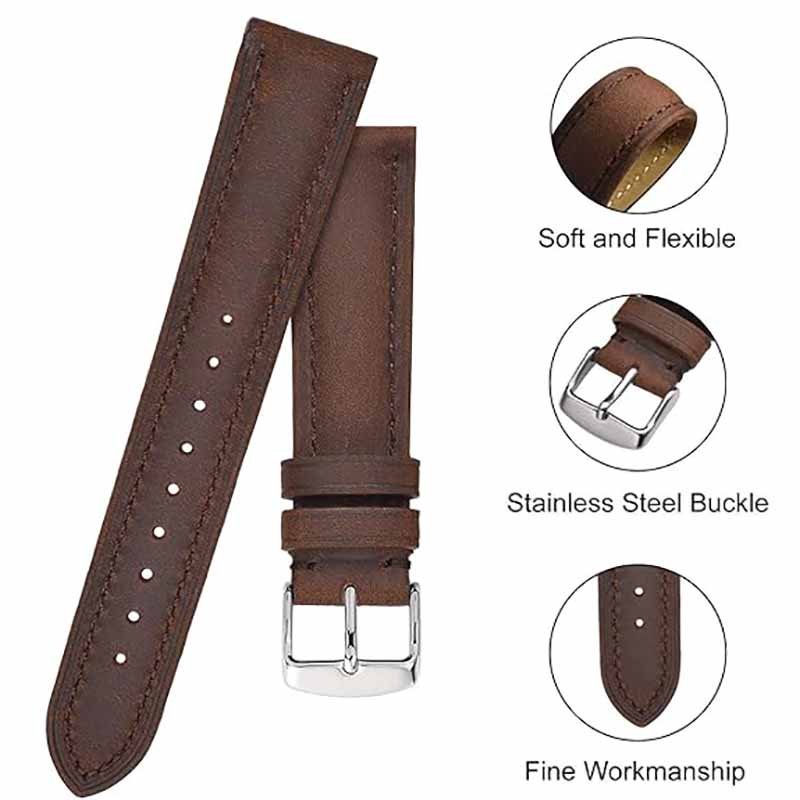
Building a leather watch strap pattern is the process of turning a visual design into a production-ready structure. It defines how each layer is cut, how thickness is distributed, where the strap bends, and how all components align during assembly. A good pattern is not just accurate—it must also be practical for manufacturing and stable across repeated production.
How many layers in Leather Watch Strap Pattern?
A leather watch strap is almost never a single-layer product. Even the simplest strap involves multiple layers to balance comfort, strength, and appearance.
A typical strap structure includes:
- Top leather (outer layer) — visual surface, branding, texture
- Padding layer (optional) — controls thickness and shape
- Lining leather (inner layer) — touches the wrist, affects comfort
- Reinforcement inserts — used in fold areas or hole sections
Below is a common structure comparison:
| Strap Type | Layer Structure | Thickness Range |
|---|---|---|
| Flat strap | Top + lining | 2.0 – 3.0 mm |
| Light padded strap | Top + thin padding + lining | 3.0 – 4.0 mm |
| Heavy padded strap | Top + shaped padding + lining | 4.0 – 6.0 mm |
| Vintage thick strap | Thick top + lining (minimal padding) | 4.0 – 5.5 mm |
Layer count directly affects:
- flexibility
- durability
- weight
- cost
- production complexity
More layers allow better control of shape and comfort, but also require higher precision in pattern alignment. If layers are not perfectly matched, problems such as edge misalignment, uneven thickness, or bubbling can occur.
For custom clients, choosing the right structure is not only about aesthetics. It should match the target product positioning. For example, a fashion strap may prioritize a slim profile, while a tool watch strap needs stronger internal support.
How to design padding in Leather Watch Strap Pattern?
Padding is one of the most important elements in strap pattern engineering because it defines the three-dimensional shape of the strap.
Padding is not simply a uniform layer. In a well-engineered pattern, padding is graduated, meaning it changes thickness along the strap length.
Typical padding zones include:
- thickest point near the lug end
- gradual reduction toward the middle
- thinner structure near the buckle fold
A simplified padding distribution:
| Strap Area | Padding Thickness |
|---|---|
| Lug section | 3.5 – 5.0 mm |
| Middle section | 2.5 – 3.5 mm |
| Buckle section | 1.5 – 2.5 mm |
If padding is not shaped correctly:
- the strap may feel stiff near the lugs
- the strap may not curve naturally around the wrist
- the buckle area may feel bulky and uncomfortable
Another key point is padding material. Different materials behave differently:
| Padding Material | Behavior |
|---|---|
| Foam | Soft, lightweight, flexible |
| Leather fiber | More stable, slightly firmer |
| Natural leather inserts | Premium feel, higher cost |
At SzoneierLeather, padding patterns are usually tested through multiple sampling rounds because small changes in thickness (even 0.5 mm) can significantly affect comfort.
How to shape folds in Leather Watch Strap Pattern?
The fold area is one of the most critical stress zones in the entire strap. This is where the leather bends repeatedly during daily use.
There are two main fold zones:
- buckle fold (short side)
- keeper fold or tip reinforcement area (long side)
Key pattern considerations for fold areas:
- sufficient fold length (usually 20–30 mm depending on thickness)
- controlled skiving (thinning the leather at fold zones)
- alignment of layers to avoid bulk
- reinforcement where necessary
Below is a typical fold structure:
| Element | Function |
|---|---|
| Fold allowance | Provides bending space |
| Skived area | Reduces thickness for flexibility |
| Reinforcement layer | Prevents cracking |
| Stitch line near fold | Locks structure |
If the fold is too thick, the strap feels rigid and uncomfortable. If it is too thin, it may lose strength and crack early.
One common issue seen in low-cost straps is insufficient skiving, which results in a bulky fold that does not sit properly under the buckle. This affects both comfort and visual quality.
For premium straps, fold engineering is often one of the most time-consuming steps during development because it directly affects product lifespan.
How to split parts in Leather Watch Strap Pattern?
A strap pattern is not a single piece—it is divided into multiple parts for efficient cutting and assembly.
Typical pattern pieces include:
- long strap body
- short strap body
- keeper loops (fixed and floating)
- reinforcement patches
- padding inserts
Each piece must be designed to:
- minimize material waste
- align correctly during assembly
- maintain structural balance
Efficient pattern splitting also affects production cost. Poor layout increases leather waste, especially when working with natural hides where usable area is limited.
Below is a simplified comparison:
| Pattern Layout | Material Usage | Production Efficiency |
|---|---|---|
| Optimized layout | High utilization | Lower cost |
| Poor layout | High waste | Higher cost |
In large-scale production, even a 3–5% improvement in material utilization can significantly reduce overall cost.
At SzoneierLeather, pattern layouts are often adjusted based on leather type (full hide vs split leather) to ensure better yield and consistent cutting quality.
Which Details Matter in Leather Watch Strap Pattern?
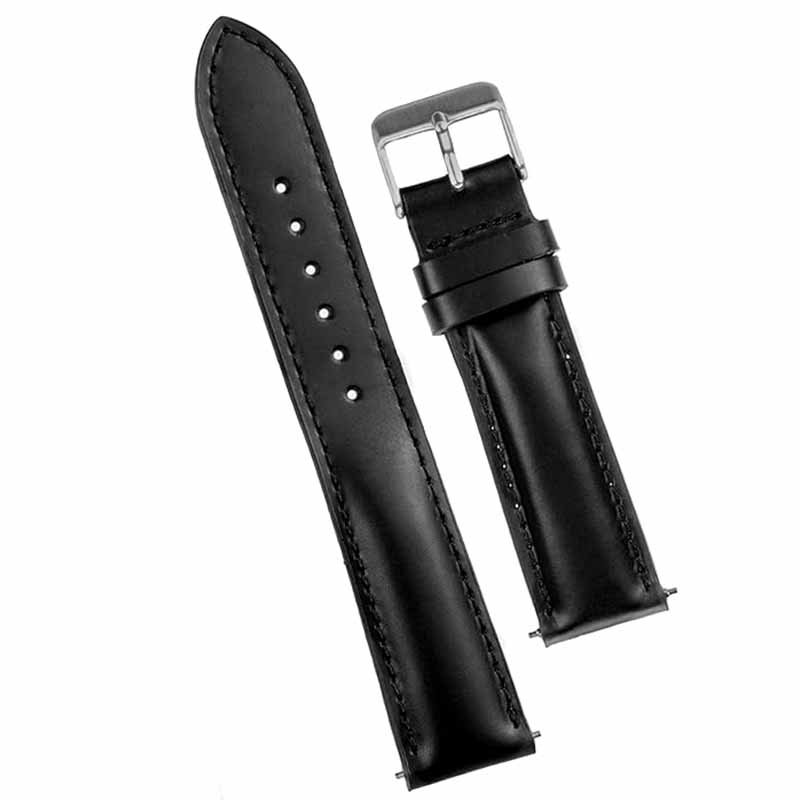
Small pattern details often determine whether a strap feels premium or average. These details are not always visible in product photos, but they become obvious in hand and during daily use. Precision in edges, stitching, tolerance, and structural balance separates a well-engineered strap from a basic one.
Which edge shapes fit Leather Watch Strap Pattern?
Edge design is both a visual and structural element. It affects how the strap looks, how it feels in hand, and how well it resists wear over time.
Common edge shapes include:
| Edge Type | Characteristics | Use Case |
|---|---|---|
| Straight edge | Clean and simple | Minimalist straps |
| Rounded edge | Softer feel, refined look | Dress straps |
| Tapered edge | Gradual thinning toward edge | Premium straps |
| Raw edge | Natural look | Vintage or rugged styles |
Edge thickness must be controlled carefully. If the edge is too thick:
- it feels bulky
- finishing becomes difficult
If too thin:
- it may wear out faster
- edge paint may crack
Edge finishing methods also influence pattern design. For example:
- folded edges require extra material allowance
- painted edges require clean, precise cutting
For custom clients, edge design is a strong branding element. A consistent edge style across product lines can improve brand recognition.
How does stitching affect Leather Watch Strap Pattern?
Stitching is not only decorative—it is a structural component that holds the strap layers together.
Key pattern considerations for stitching:
- stitch line distance from edge (usually 2.0–3.5 mm)
- stitch spacing (measured in SPI or mm)
- reinforcement stitching near stress zones
- alignment symmetry
Below is a typical stitching comparison:
| Stitch Density | Appearance | Strength |
|---|---|---|
| Low density | More casual | Lower |
| Medium density | Balanced | Standard |
| High density | Refined, premium | Higher |
Incorrect stitch placement can cause:
- edge deformation
- uneven tension across layers
- premature wear at stitch holes
Another important factor is thread selection. Thick thread combined with small stitch spacing may weaken leather by creating too many perforations.
At SzoneierLeather, stitch patterns are often adjusted depending on leather thickness and strap style to ensure both strength and visual balance.
What tolerance is needed for Leather Watch Strap Pattern?
Tolerance refers to how much variation is allowed during production. In strap manufacturing, tolerance control is critical for consistency.
Typical tolerance ranges:
| Component | Tolerance |
|---|---|
| Width (lug/buckle) | ±0.1 – 0.3 mm |
| Length | ±0.5 – 1.0 mm |
| Hole spacing | ±0.2 mm |
| Stitch alignment | visually consistent |
Loose tolerance leads to:
- inconsistent strap sizes
- poor fit with watch cases
- visible quality differences between units
Tighter tolerance improves product consistency but requires better tools and more experienced workers.
For bulk orders, maintaining tolerance is not just a technical issue—it directly affects brand perception. Customers expect every strap in a batch to feel identical.
Do styles change Leather Watch Strap Pattern?
Yes, style has a direct impact on pattern engineering. Different styles require different structural decisions.
Examples:
- Dress strap → slim profile, strong taper, fine stitching
- Sport strap → thicker body, stronger reinforcement, wider structure
- Vintage strap → heavier leather, less taper, visible texture
- Minimal strap → fewer layers, clean edges, simple construction
Each style changes:
- layer structure
- thickness distribution
- stitching approach
- edge finishing
- overall proportions
For custom clients, this means that selecting a style is not only a visual decision. It defines how the entire pattern should be built.
How to Optimize Leather Watch Strap Pattern for Production?
A well-designed pattern is not only about structure and aesthetics—it must also work efficiently in real production. Many patterns look correct on paper but create problems during cutting, stitching, or assembly. Production-oriented pattern optimization ensures that straps can be manufactured consistently, at controlled cost, and with stable quality across large orders.
How to make dies from Leather Watch Strap Pattern?
Once a pattern is finalized, it is converted into cutting tools for production. The most common method in leather goods manufacturing is die cutting.
A cutting die is a metal mold shaped according to the strap pattern. It is used to stamp out leather pieces quickly and consistently.
There are two main approaches:
| Method | Description | Best For |
|---|---|---|
| Steel rule die cutting | Physical metal die used with press machine | Large volume production |
| CNC cutting | Digital cutting using machines | Sampling and small batch |
Key factors when creating dies:
- edge sharpness and accuracy
- compensation for leather thickness
- alignment with grain direction
- durability of the die for repeated use
If the die is not made correctly:
- edges may appear rough
- dimensions may drift over time
- parts may not align during assembly
For bulk production, die accuracy directly affects yield and consistency. A high-quality die can be used for tens of thousands of cuts with minimal variation.
At SzoneierLeather, die development is closely linked to pattern validation. Patterns are often adjusted slightly before final die production to ensure smooth cutting and assembly.
How to reduce waste in Leather Watch Strap Pattern?
Leather is a natural material with irregular shapes and defects. Efficient pattern layout is critical to reduce waste and control cost.
Unlike synthetic materials, leather cannot be used uniformly across the entire hide. Areas with scars, wrinkles, or inconsistent texture must be avoided.
Key strategies to improve material utilization:
- optimize pattern nesting (arranging pieces closely)
- adjust orientation based on leather grain
- separate high-visibility parts from secondary parts
- use smaller pattern pieces in irregular areas
Below is a simplified comparison:
| Layout Strategy | Material Usage | Cost Impact |
|---|---|---|
| Optimized nesting | 80–88% utilization | Lower cost |
| Standard layout | 70–78% utilization | Moderate cost |
| Poor layout | 60–68% utilization | High cost |
Even a 5% improvement in utilization can significantly reduce material cost in large orders.
Another important factor is leather selection. Softer leather may allow more flexible cutting, while firmer leather may require stricter orientation to avoid deformation.
For custom clients, pattern design and leather selection should always be considered together. A pattern that works well on one leather type may not perform efficiently on another.
How to adjust Leather Watch Strap Pattern for bulk production?
A pattern that works for sampling is not always ready for bulk production. During scale-up, several adjustments are often required to improve efficiency and reduce defects.
Common adjustments include:
- simplifying complex shapes for faster cutting
- adjusting stitch lines for machine consistency
- refining tolerances to match production capability
- modifying fold areas to reduce rejection rate
- standardizing components across multiple models
Below are typical differences:
| Stage | Focus | Pattern Requirement |
|---|---|---|
| Sampling | Visual accuracy | Flexible adjustments |
| Small batch | Function + appearance | Minor optimization |
| Bulk production | Efficiency + consistency | Stable, repeatable pattern |
One common issue is over-complicated design. While complex shapes may look unique, they can:
- slow down production
- increase error rate
- raise labor cost
A well-optimized pattern keeps the design intention while improving manufacturability.
At SzoneierLeather, pattern refinement between sample approval and bulk production is a critical step. This ensures that the final product matches expectations without increasing production risk.
How to keep consistency in Leather Watch Strap Pattern?
Consistency is one of the biggest challenges in leather goods production. Customers expect every strap in a batch to look and feel the same.
Pattern control is the foundation of consistency, but it must be supported by process control.
Key factors for consistency:
- stable cutting method (die or CNC)
- standardized stitching parameters
- consistent skiving thickness
- controlled edge finishing process
- clear quality inspection standards
Below is a typical quality control checklist:
| Check Point | Control Method |
|---|---|
| Width accuracy | Measurement tools |
| Length consistency | Batch sampling |
| Hole alignment | Visual + template check |
| Stitch symmetry | Manual inspection |
| Edge quality | Surface and durability check |
Inconsistent patterns or loose process control can lead to:
- size variation across units
- visual inconsistency
- uneven wear performance
For brands, this directly affects customer trust. Even small differences between products can be noticed, especially in premium segments.
At SzoneierLeather, production consistency is achieved by combining:
- precise pattern engineering
- standardized production workflow
- multi-stage quality inspection
This allows custom clients to scale from small orders to large volumes without losing product quality.
What Should You Consider Before Starting a Custom Leather Watch Strap Project?
Before developing a custom leather watch strap, it is important to align design ideas with pattern feasibility and production reality. Many delays and cost issues happen because key factors are not clarified early.
What information should clients prepare?
To develop an accurate pattern, the following information is highly recommended:
- target watch model or lug width
- preferred strap style (flat, padded, vintage, etc.)
- target price range
- expected order quantity
- reference images or samples
- preferred leather type and color
Providing clear input helps reduce sampling time and improves first-sample accuracy.
What mistakes should be avoided?
Common mistakes in custom strap development include:
- focusing only on appearance, ignoring structure
- copying existing straps without understanding pattern logic
- underestimating the impact of thickness and padding
- ignoring production feasibility
- not testing samples in real wearing conditions
Avoiding these issues can significantly shorten development cycles and reduce cost.
How does a factory support pattern development?
An experienced factory does more than just produce straps. It helps refine the product.
At SzoneierLeather, support typically includes:
- pattern development and correction
- material recommendations based on use case
- structure optimization for durability
- sampling and revision cycles
- production planning and quality control
This collaborative process ensures that the final product is not only visually aligned with the brand, but also practical for long-term use and scalable production.
Final Thoughts — Why Pattern Engineering Defines Product Success
Leather watch strap pattern engineering is often overlooked, yet it is one of the most important parts of product development. It connects design, material, comfort, durability, and production efficiency into a single system.
A well-engineered pattern delivers:
- better fit and comfort
- longer product lifespan
- consistent quality across orders
- improved brand perception
- lower production risk
A poorly engineered pattern, on the other hand, leads to:
- customer complaints
- higher return rates
- unstable production quality
- increased cost over time
For brands and wholesale clients, investing in proper pattern development is not an extra step. It is a necessary step for building reliable and competitive products.
Start Your Custom Project with SzoneierLeather
If you are planning to develop custom leather watch straps, the best time to focus on pattern engineering is at the very beginning.
SzoneierLeather brings over 18 years of experience in leather product development, offering:
- full pattern engineering support
- custom structure design based on your market
- fast sampling and revisions
- stable bulk production with strict quality control
- flexible customization for brands and wholesale clients
Whether you have a clear design or just an initial idea, our team can help turn it into a production-ready product.
Send us your concept, drawings, or reference images today, and let’s build a leather watch strap that not only looks good—but performs reliably in real use and scales confidently in your business.


