 Skip to content
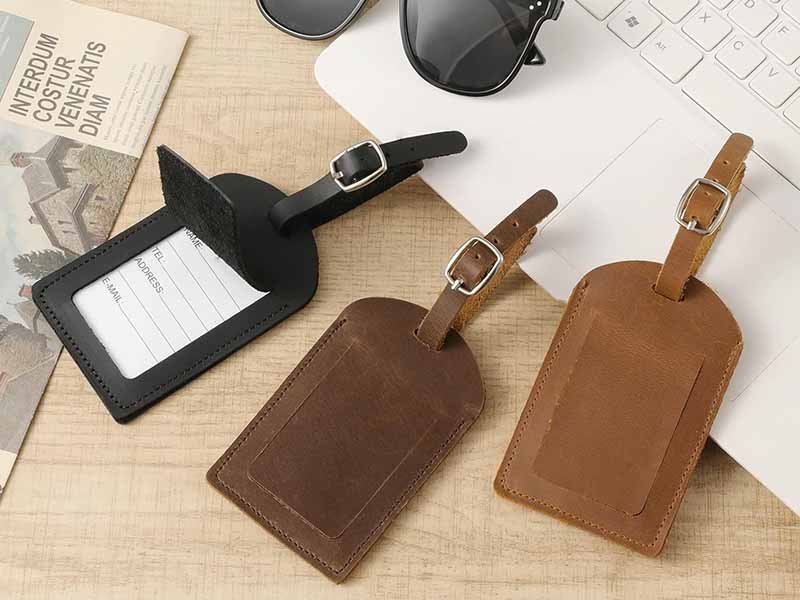
A luggage tag looks small, but it gets treated rough. It’s dragged across conveyor belts, slammed into hard plastic suitcases, soaked in rain at the curb, and squeezed under seat rails. That’s why luggage tags are one of those “tiny accessories” that quickly reveal whether a brand understands real-world use—or only cares about looks. When a tag fails, it usually fails in predictable ways: straps tear, corners crack, edges peel, or the whole tag disappears somewhere between check-in and baggage claim.
Leather luggage tags last when size, thickness, strap design, and reinforcement are engineered for travel abuse. The safest sizes are large enough to read quickly but compact enough not to snag; most durable builds use 1.6–2.2 mm leather, reinforced strap roots, and clean edge finishing. Brands should match tag size and strap length to luggage handle thickness, then verify durability with bend, pull, abrasion, and moisture tests before mass production.
One brand once told us, “Our luggage tag is free with purchase—so it doesn’t matter.” Then a customer posted a photo: the tag broke on the first trip, and the complaint became a review about the whole brand. That’s the real risk. A luggage tag is small, but it rides on your customer’s suitcase in public. It’s a moving billboard—either for quality or for disappointment.
What Are Leather Luggage Tags Used For?
Leather luggage tags are used to identify luggage fast, recover lost bags, and add a premium personal touch to travel gear. A good tag balances readable information with privacy, and it stays attached even when luggage is dragged, dropped, or stacked.
What information should a luggage tag hold?
Most travelers want the tag to help with recovery, but they don’t want to expose personal data. A well-designed leather luggage tag typically includes:
- Full name (or first name + last initial)
- Phone number (often the most useful recovery detail)
- Email (optional, useful internationally)
- City / Country (often enough instead of full address)
- QR code (increasingly common for modern brands)
What brands often overlook: the “writing area” size. If the window is too small, customers can’t write clearly, and the tag becomes decorative only.
Here’s a practical minimum for readability:
| Item | Comfortable Print Size | Minimum Clear Space Needed |
|---|---|---|
| Name | 10–12 pt equivalent | 60–75 mm width |
| Phone | 10–12 pt equivalent | 60–75 mm width |
| 8–10 pt equivalent | 60–75 mm width | |
| QR code | 12–15 mm square | 15–18 mm square space |
Privacy design options customers like:
- A privacy flap that covers details (opens when needed)
- A card window hidden inside a folded tag
- A QR-only outer face with info stored on the phone/app
How do leather luggage tags differ from plastic tags?
Plastic tags often fail by cracking or tearing at the strap hole. Leather tags fail more slowly, but only if the build is correct.
| Feature | Leather Luggage Tags | Plastic Luggage Tags |
|---|---|---|
| First impression | Premium, giftable | Basic, disposable |
| Common failure | Strap root tear, edge peeling | Crack, snap, complete break |
| Abrasion behavior | Scuffs gradually, can look “aged” | Scratches look cheap fast |
| Repairability | Replace strap / refinish edges | Usually not repairable |
| Branding | Deboss/emboss looks high-end | Printing can rub off |
For brand customers, leather tags are popular because they support logo debossing, embossing, foil stamping, woven labels, and premium packaging. They’re also used in corporate gifting because they “feel expensive” even at small size.
Which Size Standards Do Leather Luggage Tags Follow?
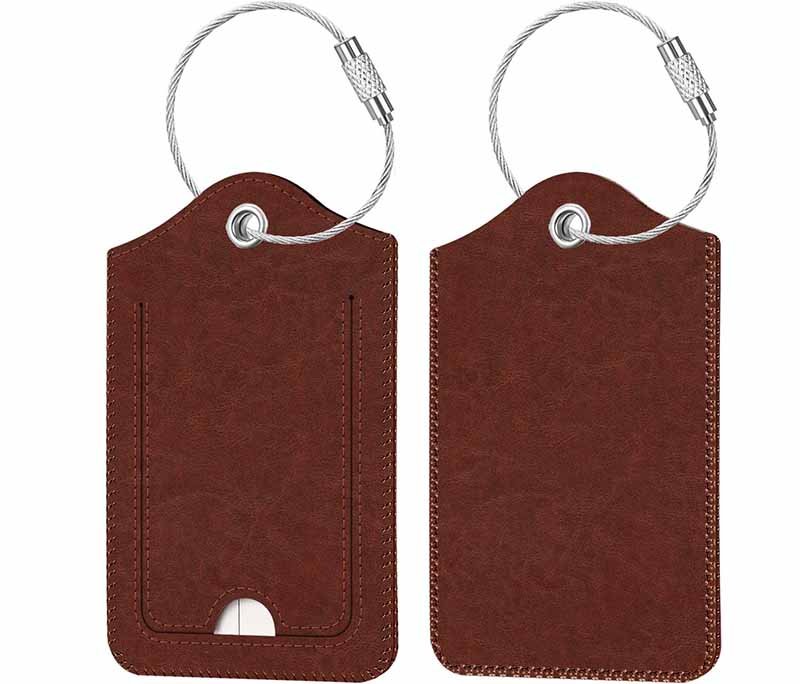
Leather luggage tags follow “market standards” rather than strict airline rules. The best sizes are those that (1) stay readable, (2) don’t snag, and (3) fit common suitcase handle thicknesses. Most commercial tags fall into a narrow range because travelers have already “trained” the market through use.
What are the most common tag sizes for travel use?
Across retail and private label projects, the most common finished sizes cluster around a few formats. These sizes work because they fit typical luggage handles and still leave room for an information card.
| Tag Style | Common Finished Size (W×H) | Best For |
|---|---|---|
| Slim rectangle | 60×110 mm | Minimal tags, clean branding |
| Standard rectangle | 70×110 mm | Most checked bags, best balance |
| Large rectangle | 75×125 mm | Easier reading, premium sets |
| Fold-over tag | 70×115 mm (closed) | Privacy flap + internal card |
| Round/oval tag | 65–75 mm diameter | Fashion look, less info space |
Practical note: If the tag is too wide (over ~80 mm), it tends to slap against the case and corners get worn faster. If it’s too short (under ~95–100 mm), the strap root sits too close to the body, and the tag can flip and fold unpredictably.
Which sizes fit airline luggage handles best?
What really matters is not the airline, but handle thickness and how tags move during handling. Many suitcase handles are 20–35 mm thick, and tags must loop around without putting extreme stress on the strap hole.
Recommended fit rules (easy to apply):
- Tag body width: 60–75 mm
- Tag body height: 105–125 mm (for readable info)
- Strap width: 10–15 mm
- Strap usable loop length: 95–130 mm (depends on buckle style)
Handle fit guide:
| Handle Thickness | Strap Usable Loop Length | Why |
|---|---|---|
| 20–25 mm | 95–110 mm | Prevents excessive swinging |
| 25–35 mm | 110–125 mm | Most common suitcase handles |
| 35–45 mm | 125–140 mm | Large travel bags / duffles |
Snag risk increases when strap length is too long. A long tag swings more and gets caught in conveyor gaps or trolley joints.
How Does Size Affect Durability and Comfort?
Size doesn’t just change appearance. It changes leverage and stress. A larger tag creates more swinging force at the strap root; a smaller tag can concentrate stress into a tight bending zone. Good sizing reduces failure risk and makes the tag easier to handle.
How does tag thickness change bending and cracking risk?
For luggage tags, leather thickness is a durability lever—but the “best thickness” depends on whether the tag is single-layer or folded.
Practical thickness ranges used in production:
- Single-layer tag: 1.6–2.2 mm (often with backing)
- Fold-over tag: 1.2–1.6 mm per layer (total thickness increases when folded)
If a tag is too thin, it bends sharply and develops crease fatigue. If it’s too thick, it becomes stiff, corners catch more, and edge paint may crack under repeated bending.
| Leather Thickness | Feel in Hand | Common Outcome in Travel Use |
|---|---|---|
| 1.2–1.4 mm | Soft, flexible | Can crease and curl faster |
| 1.6–1.8 mm | Balanced | Best for most premium tags |
| 2.0–2.2 mm | Firm, rigid | Strong, but heavier and stiffer |
| 2.4 mm+ | Very stiff | Higher snag risk, tougher edge finishing |
Customer-facing advice brands like to use: For everyday travel, 1.6–2.0 mm is a sweet spot for “premium feel” without making the tag bulky.
How does strap length affect tearing and loss?
Strap failure is the #1 reason luggage tags disappear. The problem is rarely the strap leather itself—it’s the stress concentration at the hole, buckle, or rivet.
What increases tear risk:
- Strap too long → more swinging force
- Strap too narrow → higher stress per mm
- Hole too close to edge → leather splits
- No reinforcement at strap root → tear-out
Recommended strap engineering:
| Strap Feature | Recommended Range | Why It Works |
|---|---|---|
| Strap width | 10–15 mm | Strength without bulk |
| Hole edge distance | ≥6–8 mm | Prevents tear-out |
| Strap thickness | 1.6–2.2 mm | Matches tag strength |
| Reinforcement patch | 0.6–1.0 mm liner | Spreads load at root |
Hardware choice affects durability too:
- Buckle straps: secure, adjustable, slightly higher cost
- Snap straps: fast, but snaps can pop under force
- Riveted straps: strong, but not adjustable (fit must be right)
What Materials and Builds Make Leather Luggage Tags Last Longer?
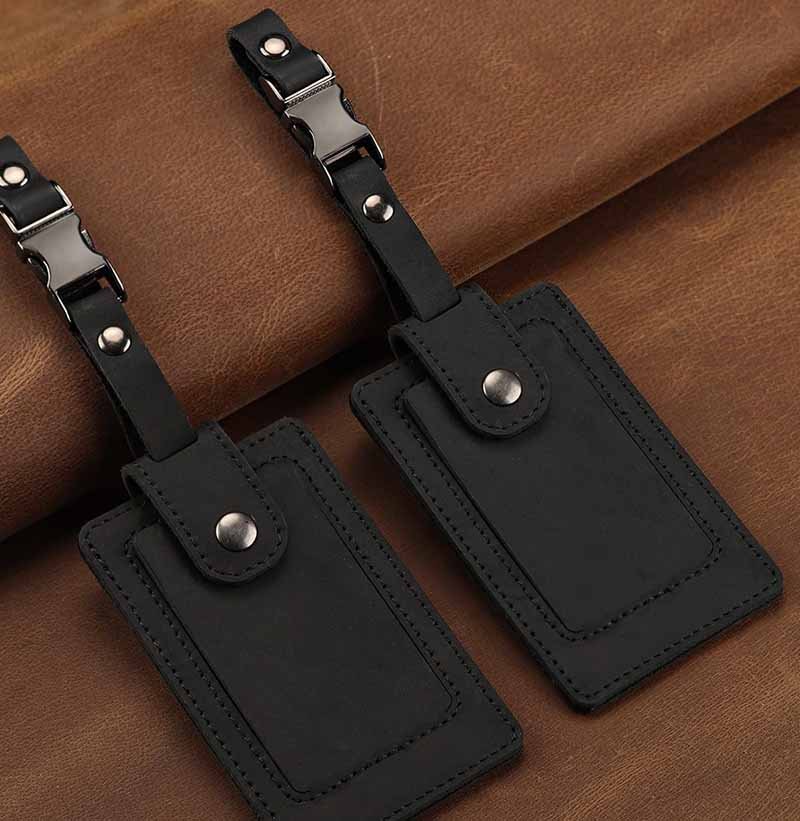
When it comes to leather luggage tags, the type of leather and the construction quality are just as important as the size and thickness. In high-end products, durability is defined by leather selection, edge finishing, stitching methods, and internal reinforcements. Poor choices in these areas can result in tags that degrade quickly, look cheap, or fail under pressure.
Which leather types resist scratches and water best?
Not all leather is created equal, and when it comes to durability, the type of leather used plays a crucial role. For luggage tags, high-quality leather is a must for both functionality and aesthetic value. The most commonly used leather types for luggage tags are:
1. Full-Grain Leather
- Durability: Full-grain leather is the highest quality leather. It’s incredibly durable and will develop a beautiful patina over time. This leather is not only resistant to abrasions and scratches but also ages beautifully, giving it a unique character. It is water-resistant but not waterproof.
- Use Case: Best used for luxury luggage tags because of its premium appearance and long-lasting durability.
2. Top-Grain Leather
- Durability: Top-grain leather is a step below full-grain but still offers high durability. It’s typically softer than full-grain, making it easier to mold, and it resists wear and tear. It also tends to be more affordable than full-grain leather, while still being abrasion-resistant.
- Use Case: Often used for mid-range luxury brands and custom luggage tags.
3. Vegetable-Tanned Leather
- Durability: Known for its environmentally friendly tanning process, vegetable-tanned leather is slightly less durable than full-grain but still provides a decent amount of scratch resistance. It’s more susceptible to moisture damage if untreated but can be treated for waterproofing.
- Use Case: Often used in handcrafted or eco-friendly luggage tags where sustainability is a concern.
4. PU Leather (Polyurethane Leather)
- Durability: A synthetic alternative to traditional leather, PU leather is waterproof and much lighter than genuine leather. However, it tends to scratch more easily and may not have the same aesthetic aging quality as genuine leather.
- Use Case: Often used in budget-friendly custom luggage tags, where cost and waterproofing are key.
What stitching, edge, and rivet choices prevent failure?
Stitching, edge finishing, and rivet selection can significantly influence the durability of a leather luggage tag. Here are the most critical factors:
1. Stitching Choices
- Thread Type: Use high-quality, nylon or polyester threads that resist breaking under stress. Cotton threads, while eco-friendly, aren’t ideal for luggage tags since they wear out faster and fray with moisture.
- Stitch Density: A denser stitch (e.g., 8-10 stitches per inch) prevents the leather from pulling apart under pressure. Luggage tags exposed to friction should never have loose stitching.
2. Edge Finishing
- Edge Paint vs Turned Edge:
- Edge paint is the most common option for smooth finishes and is durable if applied correctly (2–3 coats).
- Turned edge (where the leather edge is folded inwards) offers a more premium finish and resists abrasion better, but it’s labor-intensive and adds to cost.
- What customers should know: Turned-edge tags are highly resistant to chipping and abrasion compared to edge-painted tags, which can begin to peel after extended use.
3. Rivets and Hardware
- Reinforcement Rivets: Rivets at key stress points (strap root, joint areas) prevent tear-out and wear. Opt for brass or stainless steel rivets over plastic or low-quality materials.
- Buckle/Rivet Placement: Rivets should not be placed too close to the edge, as this increases the risk of leather splitting over time.
| Feature | Material Choice | Reason for Durability |
|---|---|---|
| Stitch Type | Nylon/Polyester | Stronger against friction, moisture-resistant |
| Edge Finish | Turned Edge or Painted Edge | Turned edge resists wear longer, painted is cost-effective |
| Rivets | Brass/Stainless Steel | Long-lasting, resistant to corrosion, wear |
| Thread Density | 8–10 stitches per inch | Reduces risk of stitch breakage |
What materials can enhance water and abrasion resistance?
To make leather luggage tags last longer under the harsh conditions of travel, manufacturers often treat the leather with water-resistant coatings and use abrasion-resistant liners.
- Waterproof Coatings: High-quality wax or silicone-based coatings can be applied to the leather to enhance its water resistance without compromising the texture.
- Polyurethane (PU) lining: A thin PU lining can be added to the leather to provide a barrier against water and stains while maintaining flexibility and comfort.
Do Travel Conditions Change Durability Requirements?
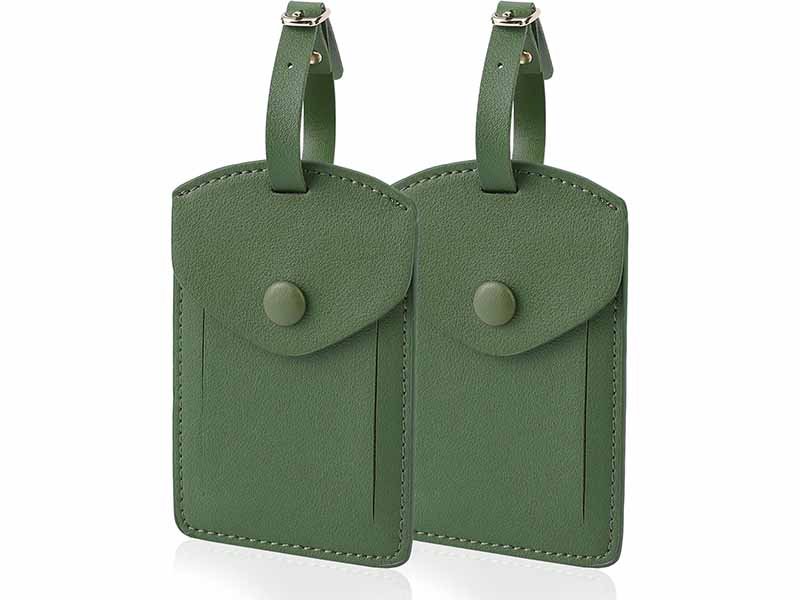
Leather luggage tags are subject to varying conditions, from humid airports to dry, hot airplanes, and wet weather on arrival. Understanding how these travel conditions affect the durability of luggage tags will help you choose the right materials and finishes to ensure your tags perform consistently.
How do rain, heat, and friction wear down leather tags?
Over time, environmental factors such as humidity, rain, and friction can damage both the leather and its stitching. Here’s how:
1. Rain Exposure
Leather, unless treated, will absorb water and swell. Prolonged exposure to moisture can cause the leather to warp, weaken, and lose shape. Tags that are stored in humid environments (e.g., inside suitcases) can lose their flexibility and develop mold or mildew.
2. Heat Exposure
Excessive heat (such as being exposed to direct sunlight or hot storage compartments) can cause the leather to dry out, leading to cracking and the breakdown of the fibers. The color of the leather may also fade, leaving it looking worn prematurely.
3. Friction Wear
Leather tags are frequently in contact with surfaces, luggage belts, or other bags. Continuous rubbing can cause abrasions and scratches. Poor quality stitching or edge finishing can accelerate this process, making the tag look worn or damaged.
What tests should brands use to verify durability?
To ensure leather luggage tags can withstand these conditions, testing for wear resistance, moisture resistance, and flexibility is essential. Here are some practical tests:
- Abrasion Test: Use a rub test to simulate the friction that the tag will face during handling. Leather testers rub the tag’s surface against a standardized abrasive material to measure wear resistance.
- Water Immersion Test: Immerse the leather tag in water for 5–10 minutes to check for absorption and moisture resistance. Tags should dry without warping or cracking.
- Flexing Test: Repeatedly bend the tag 10–15 times to simulate frequent handling and usage. The leather should not crack or lose shape after multiple flexes.
- Heat Exposure Test: Expose the tag to a controlled temperature (approximately 40–50°C for 4–6 hours) and check for color fading, leather cracking, or shape deformation.
How Should Brands Specify Leather Luggage Tags for OEM Production?
Creating durable, functional, and aesthetically appealing leather luggage tags requires clear specifications at every stage of production. From the initial design to the final product, brands must communicate their requirements to manufacturers to ensure the tags meet both design expectations and functional durability. Here’s a breakdown of what needs to be specified when creating custom leather luggage tags.
What specs should be confirmed before sampling?
Before jumping into production, detailed specifications should be agreed upon. Here’s a checklist for brands looking to create custom luggage tags:
- Leather Type
- Full-grain leather (premium, durable, ages beautifully)
- Top-grain leather (more affordable, still high quality, slightly softer)
- PU leather (budget-friendly, water-resistant, but less durable)
- Vegetable-tanned leather (eco-friendly, water-resistant when treated)
- Tag Size and Shape
- Confirm height and width of the tag based on luggage size.
- Select tag shape: rectangular, oval, or custom.
- Strap Length and Material
- Strap length should be adjusted based on luggage handle size.
- Leather straps are generally preferred, but polyester or nylon can be used for added flexibility.
- Strap width should typically be 10–15 mm to ensure durability.
- Edge Finish
- Turned edge for premium finishes or painted edge for a more economical solution.
- Ensure smoothness to prevent fraying and wear.
- Stitching Type and Density
- Use strong nylon or polyester thread (8-10 stitches per inch for durability).
- Stitching color should contrast or match the leather to enhance the visual appeal.
- Reinforcements and Rivets
- Specify whether reinforced stitching or rivets are required, particularly at the strap root and joints.
- Brass or stainless steel rivets ensure long-lasting strength.
- Custom Logo
- Debossing or embossing for logo application, providing a high-quality, durable brand representation.
- Foil stamping is another option for more premium finishes.
How can SzoneierLeather customize sizes, logos, and packaging?
SzoneierLeather has extensive experience in customizing leather luggage tags for brands. Whether you’re a luxury brand or a high-volume retailer, we can work with you to create luggage tags that reflect your unique needs.
- Customized Sizes: We can design leather tags in various sizes to meet your brand’s specific requirements. Whether you need small tags for accessories or larger tags for large luggage, we’ll adjust the design to match.
- Tailored Logos and Branding: SzoneierLeather specializes in debossing, embossing, and foil stamping to create high-quality branding. Our team ensures that your logo is displayed prominently and clearly, with attention to detail, ensuring long-term legibility and style.
- Exclusive Packaging: We provide custom packaging options to enhance your product presentation. From luxury gift boxes to protective pouches, we’ll ensure your leather luggage tags arrive in style.
Customizing Luggage Tags with SzoneierLeather
When it comes to creating durable and attractive leather luggage tags, SzoneierLeather stands out for its commitment to quality, precision, and customization. With over 18 years of experience in leather goods manufacturing, we work with brands to provide tailored solutions that meet both aesthetic and durability requirements.
How does Szoneier test rigidity during sampling?
Before mass production begins, we perform rigidity and durability tests on all samples to ensure that our leather luggage tags perform as expected under real-world conditions. We test for:
- Edge stability: We test edge paint and turned edges to ensure they hold up during handling.
- Pull tests: We simulate strap and rivet pulls to check for failure points.
- Water resistance: Tags undergo water immersion tests to ensure they hold up to moisture.
- Wear resistance: Tags are rubbed against abrasive surfaces to simulate luggage belt conditions.
These tests allow us to identify potential issues before they arise in the production stage, ensuring that our clients’ luggage tags meet their functional and aesthetic goals.
How does material sourcing affect final box quality?
Material quality directly affects the final product. We use only premium leather sourced from top tanneries, ensuring durability, texture, and color consistency. By carefully selecting the right material for each tag, we can achieve the best balance of weight, feel, and long-term performance.
Key material considerations:
- Full-grain leather is ideal for premium luggage tags due to its strength and ability to age beautifully.
- Vegetable-tanned leather offers an eco-friendly, sustainable option with resilience against water and wear.
- PU leather provides a budget-friendly alternative without compromising water resistance or easy maintenance.
Why Choose SzoneierLeather for Your Luggage Tag Manufacturing?
At SzoneierLeather, we bring over 18 years of expertise in leather goods manufacturing to provide your brand with high-quality, durable luggage tags. We specialize in:
- Custom sizes and shapes for your specific design needs
- Logo debossing/embossing and premium stitching for a high-end finish
- Waterproofing and abrasion-resistant treatments for travel durability
- Rapid prototyping and small-batch production to match your demand
With our flexible lead times, low MOQ options, and 100% quality assurance, we are a trusted partner for brands looking to create premium leather luggage tags that stand out in a competitive market.
Start Your Custom Leather Luggage Tag Project Today
If you’re looking for custom leather luggage tags that are durable, stylish, and functional, look no further than SzoneierLeather. Our team is here to guide you through every step of the process—from material selection and size specifications to testing and packaging.
Contact us today for samples, a quote, or any questions about how we can create the perfect luggage tags for your brand’s needs!


