 Skip to content
Leather Corporate Gifts Manufacturer — OEM/ODM Corporate Gift Solutions
Helping brands, agencies and corporate teams develop leather gifts that actually represent their brand — not just fill a box
Corporate leather gifts are rarely purchased casually. In most cases, they are tied to a specific business moment—a client relationship milestone, a brand campaign, an executive meeting, or an employee recognition program. The problem many buyers face is not finding leather products, but finding a manufacturer who understands how branding, consistency, packaging, and deadlines interact as one system.
In real projects, we often see that corporate gifts fail not because the product itself is wrong, but because the details were underestimated—logo depth looks inconsistent, leather tone varies across batches, gift boxes arrive damaged, or production timelines slip just enough to miss an event date.
As a leather corporate gifts manufacturer based in Guangdong since 2007, Szoneier works with global B2B buyers to engineer leather gift items and gift sets that are brand-accurate, repeatable, and realistic to produce at scale. With 2 specialized factories, 25+ product engineers, and 10+ in-house designers, we support everything from low-MOQ pilot programs (20–100 pcs) to stable bulk production with clear QC checkpoints and delivery planning.
What buyers usually value most when working with us:
- Practical advice on material & logo selection, not just quotations
- Clear sampling logic before committing to bulk
- Predictable 15–25 day production timelines after approval
- Support for gift sets, packaging, and kitting, not just single items
- A manufacturing partner who communicates like a project owner, not a sales agent
Who This Leather Corporate Gifts Page Is Designed For
Understanding buyer roles helps avoid mismatched expectations and sourcing mistakes
Corporate leather gifts involve multiple decision-makers, and each role evaluates suppliers differently. Below are the most common buyer types we work with—and what actually drives their decisions in real projects.
Corporate Gift & Promotional Agencies
Agencies are often managing multiple client projects at the same time, each with different brand guidelines and delivery schedules. Their biggest risks are delays, inconsistent logo execution, and suppliers who cannot handle small-batch complexity.
From our experience, agencies value suppliers who can:
- Handle multiple SKUs under one project
- Quickly test logo effects (embossed vs foil vs laser) before final decisions
- Provide clear timelines that can be communicated back to their clients
- Support low MOQs for client approvals before scaling
This is where our 20–100 pcs pilot capability and structured sampling process becomes critical.
Brand Marketing & PR Teams
Marketing teams use corporate gifts as brand touchpoints, not giveaways. For them, visual consistency and perceived quality matter more than shaving a few cents off unit cost.
Their typical concerns include:
- Whether the leather looks premium under close inspection
- If the logo placement and size feel “on-brand”
- How the unboxing experience reflects the brand’s positioning
- Whether future reorders will look the same as the first batch
For these buyers, we often spend more time upfront on material swatches, logo control samples, and packaging mock-ups to reduce long-term brand risk.
HR & People Operations Teams
HR teams usually manage employee onboarding kits, anniversary gifts, or internal recognition programs. Their focus is less about marketing impact and more about predictability and smooth internal approval.
Common needs include:
- Stable quality with low complaint rates
- Safe, odor-controlled materials
- Simple but presentable packaging
- On-time delivery aligned with onboarding schedules
They often appreciate a clear pilot-to-bulk plan, which reduces internal risk before committing to large quantities.
Procurement & Sourcing Managers
Procurement professionals look beyond appearance. They evaluate suppliers based on process maturity and repeatability.
They typically ask:
- How QC is structured (incoming, in-process, final)
- Whether cost drivers are transparent
- How changes are documented for reorders
- Whether the factory can support long-term programs, not just one-off orders
This is where Szoneier’s engineering-led workflow and archived specification system helps reduce future sourcing friction.
Event & Conference Organizers
For event teams, timing is non-negotiable. A perfect product that arrives late is a failed project.
Their priorities are:
- Reliable production schedules
- Packaging that survives transit
- Easy distribution on-site
- Clear shipping coordination
We often help these buyers simplify SKUs and packaging structures to protect deadlines first, then optimize details within that constraint.
Why Leather Corporate Gifts Require Careful Planning
Most failures are predictable — and preventable
In theory, leather corporate gifts sound simple: choose an item, add a logo, pack it in a box. In practice, many projects fail because corporate gifting compresses branding, manufacturing, and logistics into a very short timeline.
Logo Execution That Looks Cheap in Hand
A logo that looks fine on screen can appear shallow, uneven, or misaligned on leather if:
- The leather grain is too aggressive
- The embossing depth is not calibrated
- Foil stamping pressure or temperature is inconsistent
Once bulk production starts, correcting this is expensive—or impossible.
Batch Inconsistency Across Leather Items
Corporate gifts are often inspected side-by-side. Even small variations in:
- Leather tone
- Gloss level
- Grain tightness
become obvious when multiple items are placed in one gift box.
Without material approval standards and incoming inspection, this becomes a frequent source of dissatisfaction.
Packaging Damage That Ruins the Experience
We see many cases where:
- Rigid boxes collapse during shipping
- Inner trays don’t properly secure the items
- Products rub against each other inside the box
In corporate gifting, packaging failure equals brand failure, even if the product itself is fine.
Missed Deadlines with No Recovery Window
Unlike retail, corporate gifts are tied to:
- Events
- Campaign launches
- Internal schedules
A delay of even a few days can make the entire project unusable.
That’s why realistic 15–25 day production planning, plus buffer-aware scheduling, is essential.
No Structure for Reorders or Future Programs
Many buyers regret not documenting:
- Material choices
- Logo specs
- Packaging structures
This causes problems when the same gift is reordered six months later and doesn’t match the original batch.
Our approach emphasizes spec archiving and master sample control to support repeat programs.
Key Factors to Consider Before Developing Leather Corporate Gifts
What experienced buyers define first — long before discussing price
In leather corporate gift projects, price is rarely the real problem. From our experience working with global B2B buyers since 2007, most project issues come from unclear decisions made too late—especially around materials, logo execution, construction details, and delivery constraints.
Below are the key factors we always clarify with clients before moving into sampling or quotation. These points are not theoretical; they are based on recurring issues we see in real corporate gifting projects.
One of the most common mistakes buyers make is choosing leather based on appearance alone.
In practice, leather selection for corporate gifts should consider three dimensions:
- Visual consistency Corporate gifts are often inspected side by side. Leather that looks fine individually may show obvious tone or grain differences in a gift set.
- Usage expectations Some corporate gifts are symbolic and short-term, while others are used daily in offices or during travel. The leather choice must match the expected lifecycle.
- Brand positioning and policy Some brands require genuine leather only, while others accept PU or vegan leather for cost or sustainability reasons.
At Szoneier, we work with genuine leather, split leather, PU leather, and alternative leather materials, but we rarely recommend a single “fixed” leather model at the beginning. Instead, we usually define a material level range, then narrow it down through sampling. This approach reduces risk when moving from sample to bulk production.
In corporate leather gifts, logo execution has a greater impact on perceived value than the product shape itself.
What we often see in failed projects is not a bad logo design, but a logo method that does not match the leather or the product size.
Common considerations include:
- Embossed / debossed logos These are subtle and professional, but they require sufficient leather thickness and controlled pressure. On thin or soft leather, the logo can disappear after use.
- Foil stamping (gold or silver) Visually strong and popular for anniversary or event gifts, but sensitive to temperature, pressure, and surface finish. Inconsistent control leads to uneven edges.
- Laser engraving Very precise and stable, especially for small items, but contrast depends heavily on leather color and coating.
- Metal logo plates Highly recognizable, but they introduce additional variables such as mold cost, tolerance, attachment structure, and long-term stability.
For most projects, we recommend starting with a logo test sample, separate from the full product sample. This allows buyers to evaluate logo depth, clarity, and feel before committing to full development.
Corporate leather gifts are rarely used gently.
They are placed on office desks, carried in bags, exposed to friction, humidity changes, and contact with keys, metal parts, or electronics. If a product fails, it reflects directly on the brand.
Key construction elements we pay close attention to include:
- Edge finishing system Edge paint quality depends on layer count, drying time, and curing conditions. Poor edge systems crack quickly, even if they look fine initially.
- Stitching density and reinforcement Stitch spacing affects both appearance and strength. Stress points such as key rings or folds require additional reinforcement.
- Hardware selection Plating quality and base material determine whether hardware tarnishes or loosens over time.
- Lining materials Low-quality lining can scratch cards or devices, even when the outer leather looks premium.
These details are rarely visible in product photos, but they are decisive for long-term satisfaction and complaint rates.
A frequent issue we see is buyers selecting products individually, then trying to combine them into a gift set later.
Corporate gifting works the other way around.
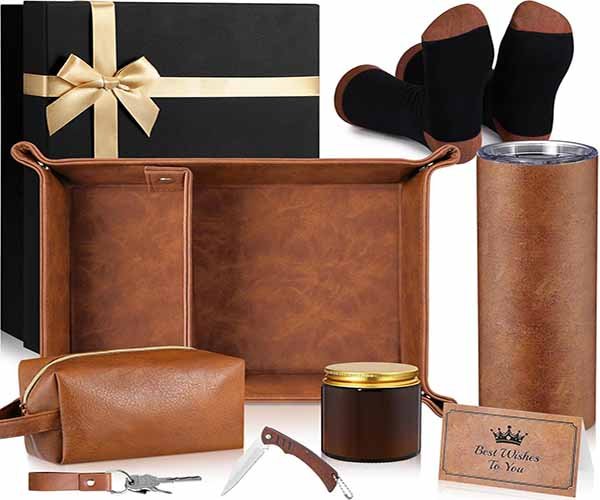
When designing a leather gift set, we always evaluate:
- Whether the items look balanced together in one box
- Whether logo appearance is consistent across different items
- Whether color or texture differences create unwanted contrast
- Whether the inner tray actually secures each item during transport
In many cases, we recommend defining the gift set structure first, then adjusting individual product specifications to fit that structure. This approach leads to cleaner presentation and fewer packaging issues.
Corporate gift projects are almost always constrained by reality:
- Internal approvals often require small initial quantities
- Event dates are fixed and non-negotiable
- Buyers want the option to reorder later without changes
At Szoneier, a common and practical structure is:
- Pilot run: 20–100 pcs for internal validation
- Clear cost logic showing how unit price changes at higher volumes
- Production planning based on a realistic 15–25 day lead time after approval
This structure allows buyers to manage internal risk while keeping the project scalable.
Our Engineering-Based OEM/ODM Solution for Leather Corporate Gifts
A structured workflow designed to reduce risk, not just produce goods
In corporate leather gift projects, we do not position ourselves as a factory that simply “takes orders.” Our role is closer to a development and manufacturing partner that helps buyers move from idea to delivery with fewer surprises.
Step 1
Requirement Mapping & Risk Identification
Before quoting, we focus on understanding:
- The gifting scenario (client gifts, employee programs, events)
- Target quantity and budget range
- Fixed deadlines or campaign dates
- Potential future reorders
The goal at this stage is not speed, but clarity. We identify risks early—such as overly small logos, unsuitable leather thickness, or complex packaging—and address them before they become costly problems.
Step 2
Structured Sampling, Not Just “One Sample”
Instead of producing a single, fully finished sample, we usually break sampling into stages:
- Logo test sample
- Material and structure sample
- Full gift set mock-up including packaging
This staged approach allows buyers to make decisions faster and reduces the chance of restarting the entire sample due to one unresolved detail.
Step 3
Material, Cost & Specification Lock-In
Once samples are approved, we formalize:
- Material specifications
- Logo reference standards
- Packaging structure details
- Acceptable tolerances
This documentation becomes the foundation for production consistency and future reorders. Without it, even a good first batch can be difficult to reproduce.
Step 4
Pilot Run for Validation
For corporate gifts, we strongly recommend a pilot run.
A small batch of 20–100 pcs allows buyers to evaluate real-world appearance, packaging performance, and internal feedback before committing to a larger order. Many long-term partnerships start at this stage.
Step 5
Mass Production, QC & Delivery Control
During mass production, we apply:
- Incoming material inspection
- In-process quality checks at critical steps
- Final inspection using AQL standards
- Packaging and kitting verification
Before shipment, we ensure each gift box is complete, protected, and clearly labeled to support smooth logistics and on-time delivery.
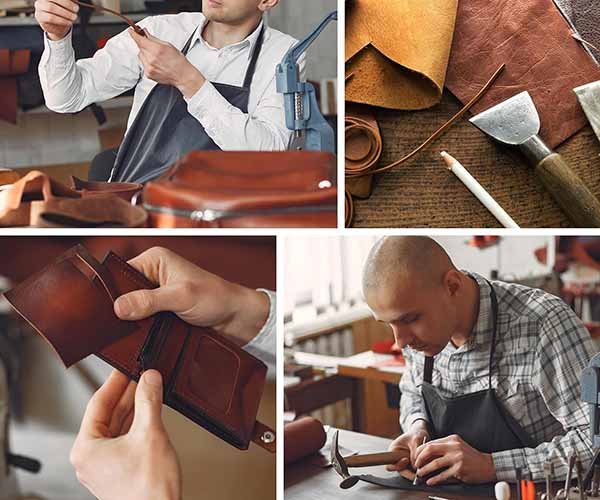
Product & Gift Set Options for Leather Corporate Gifts
How experienced buyers select items — and how successful gift programs are actually built
In corporate gifting, the question is rarely “What leather products can you make?” The real question is “Which combination of products will feel appropriate, balanced, and reliable for this specific business scenario?”
From our experience at Szoneier Leather, corporate gift programs that work well usually follow a clear product logic, rather than selecting items based on appearance alone. Below is how we typically guide buyers through product and gift set selection.
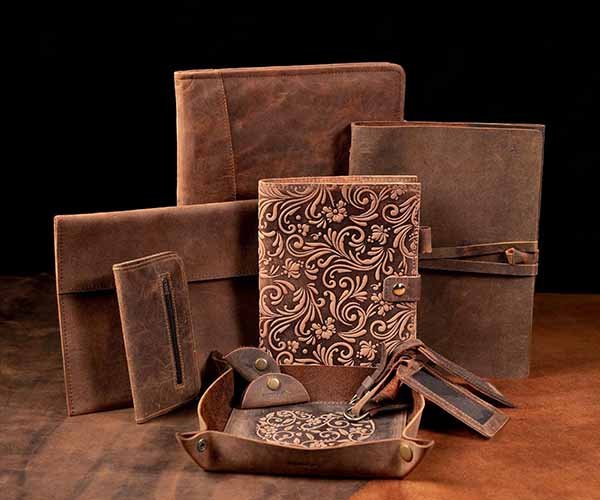
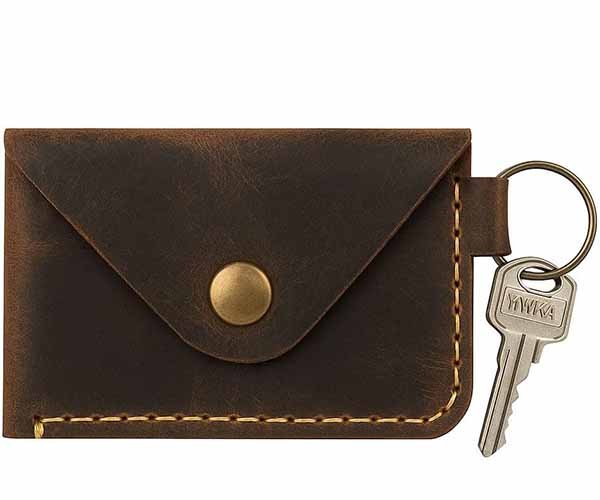
1. Small Leather Goods — The Most Common Starting Point
Small leather goods form the foundation of many corporate gift projects because they are practical, easy to distribute, and suitable for a wide audience.
Common options include:
- Card holders and slim wallets
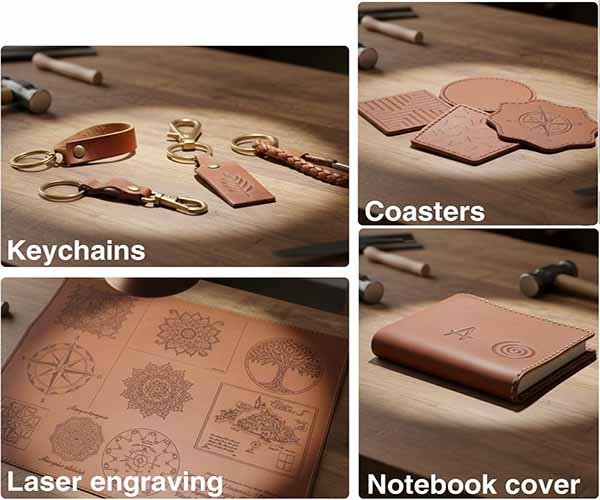
- Key holders and keychains
- Passport holders and luggage tags
What buyers often underestimate is scale and context. A slim card holder may look premium on its own, but if it is placed in an oversized gift box, it can feel underwhelming. Conversely, pairing two or three small items without visual balance can make a set feel cluttered.
In real projects, we usually evaluate:
- Item size relative to box dimensions
- Whether the product feels “complete” as a standalone gift
- How the logo appears at close distance on a small surface
For this reason, small leather goods are often best used either as single-item gifts with compact packaging, or as part of a carefully planned set rather than random combinations.


2. Office & Desk Accessories — Long-Term, High-Visibility Gifts
Office-related leather items are popular for employee programs, executive gifts, and long-term client relationships because they remain visible during daily use.
Typical products include:
- Leather desk mats
- Mouse pads
- Document sleeves
- Notebook covers
These items place different demands on materials and construction. Since they are used repeatedly, surface durability, edge finishing, and stitching quality matter more than initial appearance.
From a branding perspective, desk accessories usually benefit from:
- Subtle logo methods (debossed or blind embossed)
- Neutral, professional colors
- Consistent surface texture to avoid visual fatigue
At Szoneier, we often recommend desk accessories when buyers want gifts that quietly reinforce brand presence over time, rather than creating a strong first impression only once.
3. Travel-Oriented Leather Gifts — High Perceived Value, Higher Wear
Travel accessories are frequently chosen for:
- VIP client gifts
- Annual appreciation programs
- International teams or partners
Common items include:
- Passport holders
- Luggage tags
- Travel document organizers
These products experience more friction, bending, and handling than desk items. As a result, we pay closer attention to:
- Leather flexibility and recovery
- Edge reinforcement
- Hardware attachment strength
Buyers sometimes focus heavily on appearance while overlooking durability. In our experience, a travel gift that shows wear too quickly can undermine its perceived value, even if it looked impressive at the start.

4. Single-Item Gifts vs Multi-Item Gift Sets
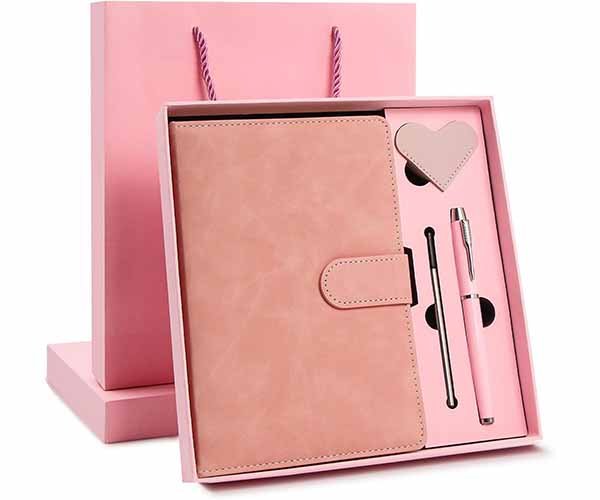
One of the most important early decisions is whether the project should be built around one strong item or a coordinated gift set.
Single-item gifts
Work well when:
- The product itself feels substantial
- Packaging is simple and proportionate
- Distribution needs to be fast and efficient
Examples include a premium desk mat or a leather notebook cover with a compact box.
Multi-item gift sets
Are more suitable when:
- The gifting moment is significant (anniversary, executive meeting)
- A layered unboxing experience is desired
- Items serve complementary functions
Typical combinations we see include:
- Card holder + keychain
- Passport holder + luggage tag
- Notebook cover + pen sleeve
The key is that each item should add value, not just increase quantity.
5. Gift Set Structure — Where Many Projects Go Wrong
In practice, many corporate gift projects fail not because of the products, but because of poor set structure.
Common issues include:
- Items shifting inside the box during transport
- Inconsistent logo appearance across items
- Mismatched leather textures or colors
- Overcrowded layouts that feel unrefined
To avoid these problems, we usually start by defining:
- The number of items per set
- Their relative visual weight
- The inner tray structure and item placement
Only after the set structure is clear do we finalize individual product specifications. This approach leads to cleaner presentation and fewer packaging-related issues.

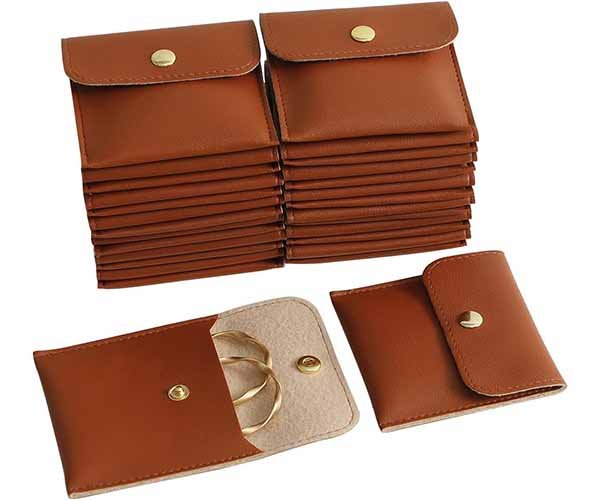
6. Packaging Considerations Are Part of Product Selection
Product choice and packaging design cannot be separated.
For example:
- Small leather goods may require custom inserts to avoid movement
- Flat items like desk mats need rigid support to prevent bending
- Multi-item sets require spacing that allows each product to be seen clearly
At Szoneier, product and packaging discussions happen together. This helps ensure that the final gift feels intentional rather than assembled at the last minute.
7. Planning for Reorders and Program Continuity
Many corporate gift programs start as one-time projects and later expand.
When selecting products, we encourage buyers to consider:
- Whether the same item can be reordered months later
- Whether materials and colors can be reproduced consistently
- Whether the gift set structure allows variations in future editions
Products chosen with long-term repeatability in mind tend to reduce future sourcing effort and internal approval cycles.
Materials & Construction Engineering for Corporate Leather Gifts
Why long-term appearance matters more than first impressions
Material and construction choices determine whether a corporate gift still looks acceptable after weeks or months of use. For many buyers, complaints do not appear immediately—but surface later, when it’s too late to fix.
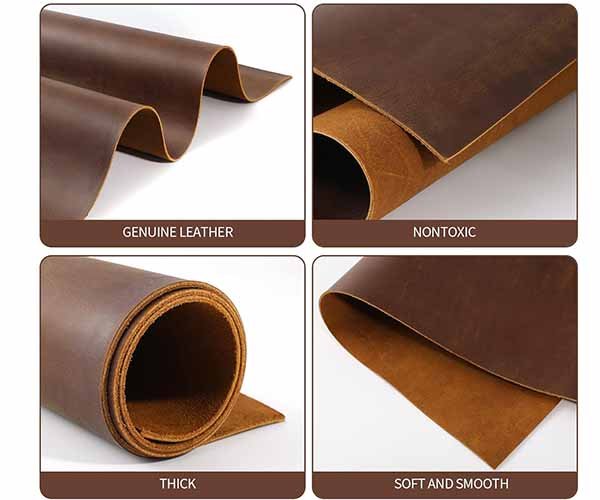
1. Material Selection Is a Control Problem, Not a Catalog Choice
Most buyer frustrations come from one of these situations:
- The sample looked great, but bulk goods look slightly different
- The leather feels “off” compared to expectations
- The logo does not reproduce consistently
- Edges wear too fast or surfaces scratch too easily
That’s why we approach material selection as a control problem—how to keep appearance stable across production—rather than simply choosing “genuine leather vs PU”.
We usually evaluate materials along these dimensions:
- Batch consistency (tone, grain, gloss) Corporate gifts are compared side-by-side. A minor tone shift becomes obvious inside one gift set.
- Logo compatibility Some leather surfaces carry embossing cleanly; others blur fine details or show inconsistent depth.
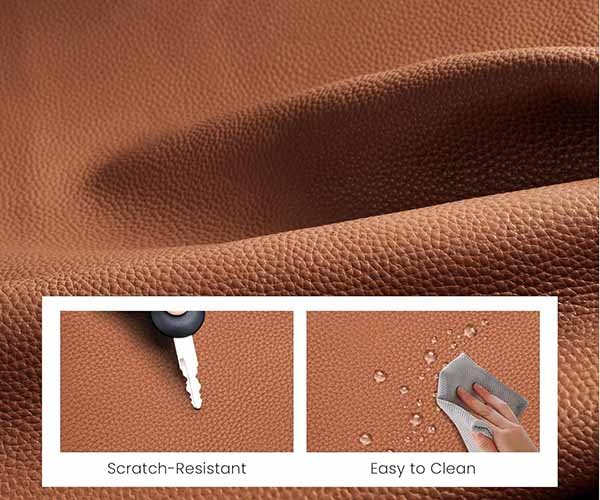
- Surface durability and scratch visibility Desk items and wallets show corner wear quickly. Travel items face friction and bending.
- Odor and coating behavior Corporate gifts are unboxed in offices and meeting rooms—odor complaints can kill perceived quality even if the product is structurally fine.
Instead of “one leather name,” we typically lock a material level + finish range, then confirm through sampling so the result is reproducible in bulk.
2. Understanding Leather “Feel” vs Leather “Behavior”
Two materials can feel similar in hand but behave very differently after use.
When we test material suitability for corporate gifts, we look at:
- Flex & recovery: does it crease permanently or recover after bending?
- Edge performance: does the edge compress and hold paint well?
- Logo stability: does embossing remain readable after handling?
- Surface stability: does coating become sticky under heat/humidity?
For corporate gifts, a common mistake is selecting a surface that looks premium under studio lighting but performs poorly when handled daily. That’s why we encourage buyers to judge samples not only visually, but also by handling tests (folding, rubbing, pocket carry simulation).
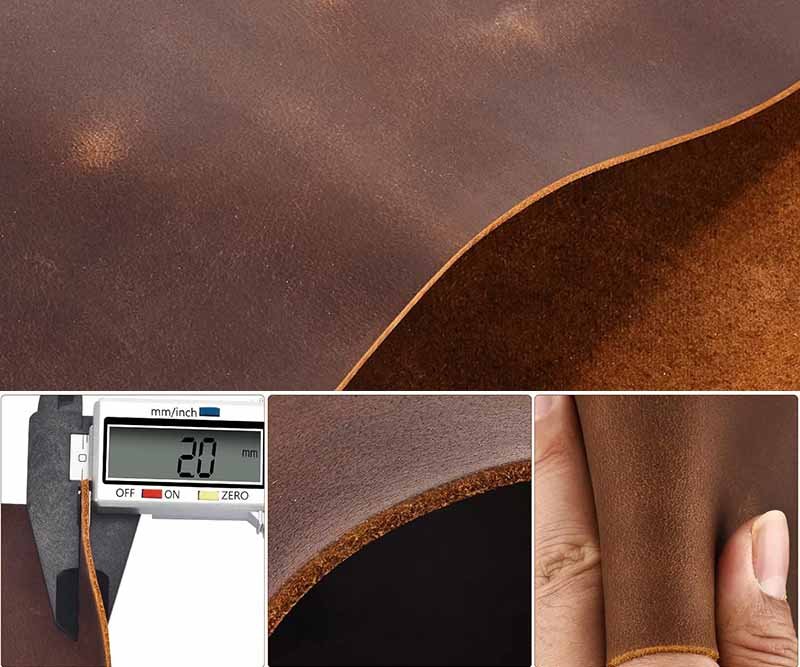
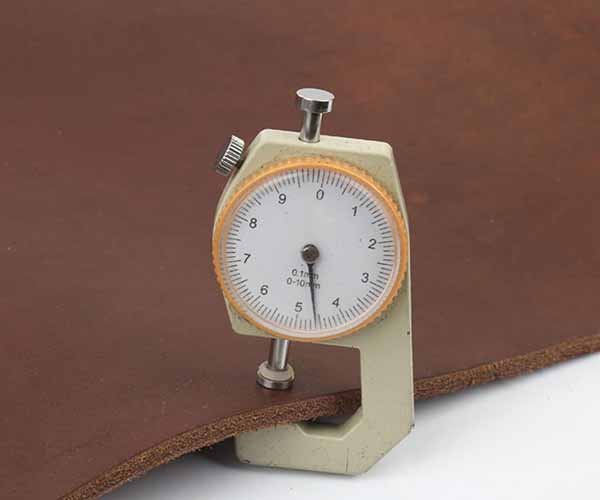
3. Thickness and Structure: Why “More Thick” Is Not Always Better
Thickness is often misunderstood. Too thin → the product collapses, logo loses definition, and corners wear fast. Too thick → the product becomes stiff, feels unnatural, and can look bulky in a gift set.
Our approach is to design structure first, then choose thickness accordingly:
- Card holders / slim wallets Need controlled thickness so they stay slim but don’t lose shape.
- Notebook covers and desk mats Need flatness and edge stability; internal reinforcement can matter more than leather thickness alone.
- Travel items Need flex durability; overly stiff leather can crack at folds over time.
In many projects, we achieve premium feel through internal reinforcement layers (hidden boards, micro-layers, structured linings) rather than simply increasing leather thickness.
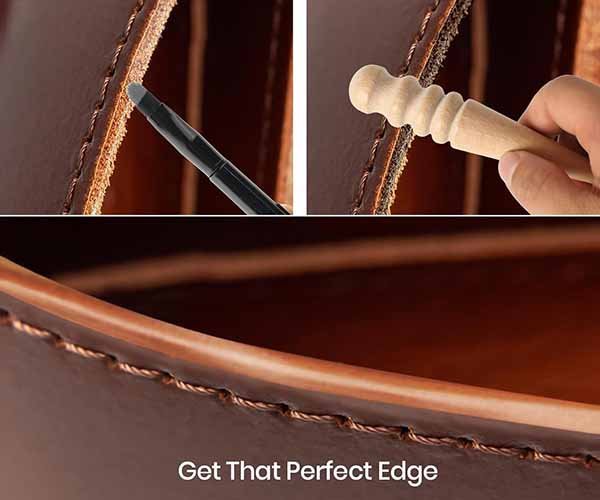
4. Edge Finishing Engineering: The Most Common “Premium Failure” Point
Edge finishing is one of the most frequent sources of quality complaints, especially for daily-use corporate gifts.
Common failure patterns:
- Edge paint cracking after a short period
- Paint separating at corners
- Uneven gloss or rough edges visible during unboxing
A durable edge is not a single step—it is a system:
- Edge preparation (clean cut, sanding)
- Sealing (base layer for adhesion)
- Paint layering (multiple thin layers, not one heavy coat)
- Proper curing time (rushing this is a major cause of cracking)
For corporate gifts, we often recommend edge systems based on use scenario:
- High-friction items (wallet edges, key holders): prioritize durability over extreme gloss
- Executive desk items: visual refinement matters, but still require controlled curing
If buyers want a “perfect showroom edge,” we usually explain the trade-off: the higher the gloss and the thicker the paint, the more careful the curing must be to prevent future cracking.
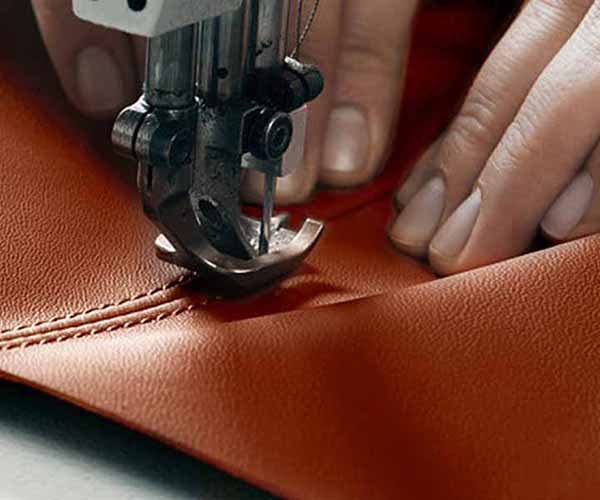
5. Stitching and Reinforcement: Quiet Indicators of Quality
Buyers rarely praise stitching when it’s correct—but stitching defects are immediately visible in corporate gifts.
We usually define:
- Stitch density and spacing
- Thread thickness aligned to leather type
- Reinforcement at stress points (key rings, corners, folds)
For corporate gifting, reinforcement is especially important because:
- Gifts are often carried with other items (keys, metal objects)
- Some gifts are used daily and exposed to repeated stress
- Corporate recipients notice visible defects more quickly than retail consumers
In real projects, we add reinforcement proactively when we know a part will fail under normal use, even if it doesn’t look “heavy-duty” in photos.
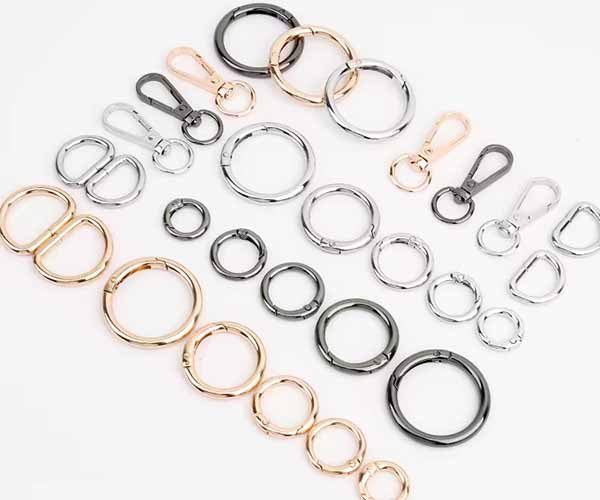
6. Hardware Engineering: Plating, Attachment, and Long-Term Stability
Hardware is often treated as an accessory, but in corporate gifts it becomes part of brand perception. A tarnished ring or loose plate looks cheap immediately.
Key hardware considerations include:
- Plating quality: resistance to fading and tarnish
- Attachment structure: how the hardware is fixed to the leather (not just the hardware spec itself)
- Edge interaction: hardware should not cut or rub the leather surface during use
For metal logo plates, we evaluate:
- Plate size and weight
- Attachment method (screws, rivets, stitching reinforcement)
- Tolerance alignment so the plate sits straight every time
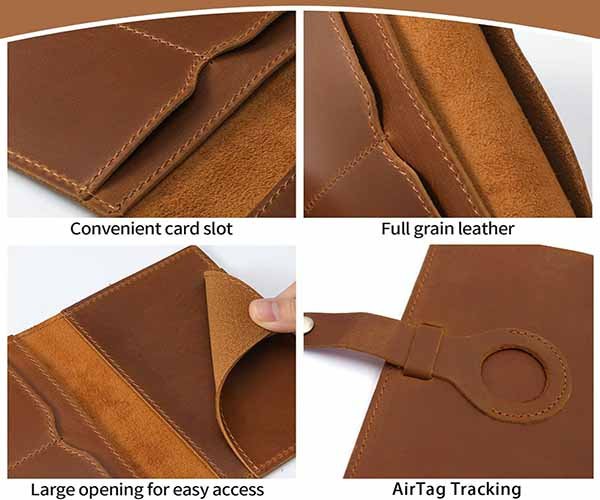
7. Lining and Inner Touch Points: Corporate Gifts Are Hand-Inspected
Linings are often overlooked because they are not the first thing buyers see in product photos. But corporate recipients handle gifts slowly and inspect details.
We select linings based on:
- Scratch protection for cards/devices
- Clean feel and low lint
- Long-term adhesion behavior (no peeling, no bubbling)
A good lining makes the gift feel more refined; a poor lining creates an immediate “cheap” impression even if the exterior is good.
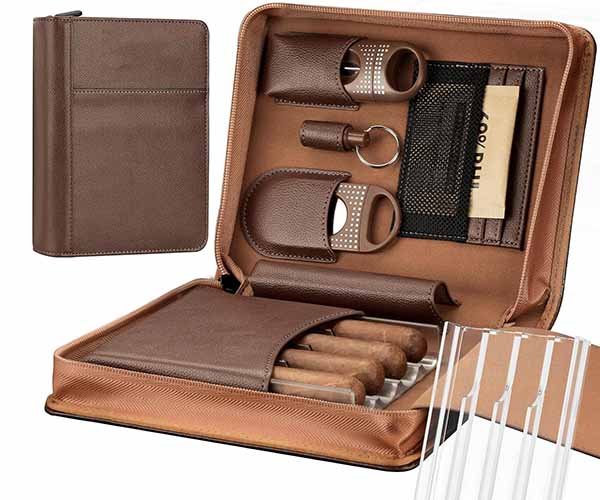
8. Engineering for Consistency Across Gift Sets
A gift set is not a collection of items—it is a single branded experience.
From a materials and construction perspective, we aim for:
- Consistent leather tone and finish across all items
- Consistent logo depth/visibility across different surfaces
- Matching edge finish appearance in one box
This is where our internal team structure helps. With designers and engineers working together, we treat the gift set as one system so that individual items do not “fight” each other visually.
Customization & Branding Control for Corporate Leather Gifts
How consistency is maintained from first sample to repeat orders
In corporate gifting, branding quality is judged at close range. One inconsistent logo can undermine the entire program.
- Choosing the Right Logo Method for the Product
Not every logo method works equally across all products.
- Embossed / debossed logos work best on medium-to-thick leather with controlled grain
- Foil stamping is effective for presentation-focused gifts but needs strict process control
- Laser engraving offers precision but depends heavily on color contrast
- Metal logo plates add visibility but require structural planning and tooling
We rarely recommend choosing a logo method purely for visual impact. Instead, we look at how the logo will age with use.
- Logo Control Samples & Reference Standards
One practice that significantly reduces disputes is creating a logo control reference.
This includes:
- Approved logo depth or finish
- Position tolerance
- Visual reference samples kept on file
During production, these references guide both workers and inspectors. This is especially important for projects that involve future reorders or multiple SKUs.
- Brand Consistency Across Gift Sets
In gift sets, inconsistency becomes more obvious:
- One item embossed deeply, another lightly
- Slight color differences between products
- Mixed logo styles within the same box
To avoid this, we treat the entire gift set as one branded system, not separate items. This approach simplifies QC and improves final presentation.
- Preparing for Reorders and Long-Term Programs
Many corporate gift projects start as one-time orders and later turn into recurring programs.
To support this, we archive:
- Material specifications
- Logo references
- Packaging structures
- QC criteria
This allows future orders to match earlier batches more closely, even months later.
Quality Control & Testing for Leather Corporate Gifts
How quality is verified, not just promised
In corporate leather gift projects, quality issues rarely appear immediately. Most complaints surface after distribution, when gifts are already in clients’ or employees’ hands. At that point, there is no opportunity to fix mistakes.
For this reason, quality control for corporate gifts must be process-based, not result-based. Below is how we typically structure QC for leather corporate gift programs.
01
Incoming Material Inspection (IQC)
Before production starts, we inspect key materials rather than assuming supplier consistency.
What we typically check:
- Leather thickness range and hand feel
- Color tone consistency across hides or rolls
- Surface defects that may become visible after logo application
- Hardware plating quality and base material strength
This step is critical for corporate gifts because even small variations become obvious when multiple items are compared side by side.
02
In-Process Quality Control (IPQC)
Most corporate gift defects happen during production, not at the end.
During key production stages, we focus on:
- Logo execution depth and clarity
- Stitch alignment and density
- Edge paint coverage and curing condition
- Hardware attachment strength
By identifying issues early, we avoid repeating the same defect across an entire batch.
03
Final Inspection & AQL Sampling (FQC)
Before packing, finished products are inspected using AQL-based sampling, combined with project-specific visual standards.
Final checks usually include:
- Overall appearance consistency
- Functional checks (open/close, attachment points)
- Logo comparison against approved control samples
- Cleanliness and finishing details
For gift sets, we also verify that all items match visually, not just individually.
04
Packaging & Kitting Verification
Corporate gifts are often damaged after production, during packing or transport.
We verify:
- Correct item count per box
- Proper placement in inner trays
- Adequate protection at corners and edges
- Outer carton labeling and stacking strength
This step is especially important for rigid gift boxes and multi-item sets.
05
Documentation & Traceability
For buyers managing internal approvals or future reorders, documentation matters.
We typically retain:
- Approved samples and reference photos
- Material and logo specifications
- QC records and inspection notes
This allows future batches to follow the same standards, even months later.
Questions to Ask Before Choosing a Leather Corporate Gifts Manufacturer
A practical decision tool for procurement and brand teams
Choosing a supplier for corporate leather gifts is not about who offers the lowest price. It is about who reduces risk.
Project Understanding
- Can the supplier explain potential risks in your project before quoting?
- Do they ask about usage scenarios, deadlines, and future reorders?
- Are they willing to challenge unrealistic requests instead of saying yes to everything?
Sampling Capability
- Can they support low-MOQ pilot runs (20–100 pcs) for internal approval?
- Do they offer logo test samples separately from full product samples?
- Can they adjust samples efficiently without restarting the process?
Material & Logo Control
- How does the supplier control leather tone and surface consistency?
- Do they create logo reference samples for production comparison?
- Can they explain which logo method works best for your product and why?
Quality Control Process
- Is QC limited to final inspection, or are there in-process checks?
- Do they apply AQL standards for bulk orders?
- Can they explain how defects are prevented, not just detected?
Packaging & Delivery
- Can the supplier design packaging that protects the product during shipping?
- Do they verify gift sets and kitting accuracy before shipment?
- Are production timelines realistic and clearly defined (e.g., 15–25 days)?
Communication & Project Ownership
- Is there a clear point of contact who understands the full project?
- Can the supplier communicate effectively via email, calls, or video meetings?
- Are updates proactive, or only reactive when problems occur?
This checklist helps buyers move discussions away from price-only comparisons and toward long-term reliability.
Case Studies — Corporate Leather Gift Projects We Have Delivered
Real project patterns, not brand names
Below are typical corporate gift scenarios we have supported. Client names are omitted, but the challenges and solutions reflect real projects.
Case 1 — European Marketing Agency | Client Appreciation Gift Sets
Project Background
A European corporate gift agency needed a premium leather gift set for a multinational client’s year-end appreciation program. The gifts were to be distributed to senior clients across multiple countries.
Products
- Leather card holder
- Leather key holder
- Rigid magnetic gift box with custom inner tray
Key Challenges
- Logo needed to appear consistent across two different small leather items
- Leather grain and tone had to match within each gift set
- The agency required a small pilot batch for client approval before scaling
Szoneier Solution
- Conducted logo test samples on both items before full sampling
- Narrowed leather selection to a controlled material level to reduce batch variation
- Designed an inner tray that fixed both items securely and evenly
- Started with a 50-piece pilot run, then scaled after approval
Outcome
- Clean, professional presentation across all gift sets
- Reduced revision cycles for the agency
- Smooth transition from pilot to bulk production within a 15–25 day lead time


Case 2 — US HR Team | Employee Onboarding & Anniversary Gifts
Project Background
A US-based company wanted a leather gift for new hires and long-term employees, distributed throughout the year rather than at a single event.
Products
- Leather notebook cover
- Leather desk accessory
- Simple rigid box with brand card
Key Challenges
- Gifts needed to feel premium but not overly promotional
- Production had to support recurring small orders
- Internal HR approvals required consistent appearance over time
Szoneier Solution
- Recommended debossed logo for subtle, professional branding
- Engineered materials and construction for daily desk use
- Archived full specifications and reference samples internally
- Supported low-MOQ repeat orders (20–100 pcs)
Outcome
- Stable quality across multiple batches
- Reduced internal approval friction for the HR team
- Long-term cooperation expanded into a recurring program
Case 3 — Asia-Pacific Conference Organizer | International Event Gifts
Project Background
An APAC event organizer required leather travel accessories for an international conference, with gifts shipped to multiple locations.
Products
- Leather passport holder
- Leather luggage tag
Key Challenges
- Risk of damage during international shipping
- Tight, non-negotiable event deadline
- High handling frequency during distribution
Szoneier Solution
- Reinforced edge finishing and stress points
- Optimized packaging structure to prevent bending and surface scratches
- Coordinated production milestones carefully to meet the fixed event date
Outcome
- Minimal transit damage
- On-time delivery despite tight scheduling
- Positive feedback on durability during event distribution


Case 4 — Global Brand | Executive-Level Corporate Gifts
Project Background
A global brand required executive gifts for senior partners. Visual quality and leather feel were more important than cost.
Products
- Premium leather wallet
- Matching leather accessory
- High-end rigid gift box
Key Challenges
- Very high expectations on leather texture and finish
- Logo needed to be refined, not attention-grabbing
- Any batch inconsistency would be unacceptable
Szoneier Solution
- Limited material choice to a narrow leather range with controlled grain
- Used blind embossing to maintain understated branding
- Implemented incoming leather inspection before production
- Assigned senior QC staff for final inspection
Outcome
- Consistent appearance across the full batch
- Executive-level presentation aligned with brand positioning
- Successful delivery reinforced buyer confidence for future projects
Case 5 — Promotional Product Supplier | Large-Scale Corporate Campaign
Project Background
A promotional product supplier needed leather-look items for a large campaign with strict cost targets.
Products
- PU leather mouse pad
- Leather-look key holder
Key Challenges
- Tight unit cost limits
- Large quantity required visual consistency
- Branding still needed to feel “corporate-grade”
Szoneier Solution
- Recommended PU leather with controlled surface finish
- Selected laser engraving for efficient and consistent logo application
- Optimized construction to balance durability and cost
Outcome
- Controlled cost without sacrificing appearance
- Stable quality across a large production run
- Supplier was able to meet client budget expectations


Case 6 — Corporate Procurement Team | Long-Term Gift Program
Project Background
A corporate procurement team planned a rotating leather gift program, with different items released at different times of the year.
Products
- Multiple leather gift sets (rotating SKUs)
- Consistent packaging format
Key Challenges
- Maintaining brand consistency across different products
- Simplifying reordering and internal approvals
- Avoiding redevelopment for each new SKU
Szoneier Solution
- Established a standardized material and branding framework
- Archived specifications, logo references, and QC criteria
- Supported multiple SKUs under a unified system from our two Guangdong factories
Outcome
- Faster reorders and smoother internal workflows
- Reduced sampling effort for new variations
- Strengthened long-term cooperation with the procurement team
Make A Sample First
If you have your own tech packs, logo design artwork, or just an idea,please provide details about your project requirements, including preferred fabric, color, and customization options,we’re excited to assist you in bringing your leather goods designs to life through our sample production process.
FAQ — Leather Corporate Gifts Manufacturing
Clear answers to common questions corporate buyers ask before moving forward
Below are questions we regularly receive from procurement teams, brand managers, and corporate gift agencies. Clear answers at this stage usually shorten decision cycles and reduce misunderstandings later in the project.
1. What is your minimum order quantity (MOQ) for leather corporate gifts?
Our typical MOQ for custom leather corporate gift projects starts at 20–100 pieces, depending on the product type and logo method. This low-MOQ structure is designed for pilot programs, internal approvals, and first-time collaborations. Once a pilot is approved, scaling to larger volumes becomes much more efficient and predictable.
2. How long does sampling usually take?
Sampling timelines depend on complexity, but most projects follow a structured path:
- Logo test sample: a few days
- Product sample: about 7–10 days
- Gift set and packaging mock-up (if required): additional time
Breaking sampling into stages often saves time overall, because issues are identified earlier rather than restarting the entire sample.
3. Can you help optimize our design or concept if it’s not fully defined?
Yes. Many corporate gift projects start with references rather than finalized designs. Our in-house design and engineering team helps evaluate feasibility, adjust proportions, recommend materials, and align logo methods with the intended look and budget. This support is part of our normal OEM/ODM workflow.
4. Which logo method is best for a premium corporate gift?
There is no single “best” method—it depends on the leather, product size, and brand positioning. Embossed or debossed logos are often chosen for executive gifts due to their subtle appearance. Foil stamping works well for presentation-focused gifts, while laser engraving offers precision for smaller items. We usually recommend testing the logo method before finalizing the product.
5. How do you ensure consistency between samples and bulk production?
Consistency is managed through:
- Approved material swatches
- Logo control reference samples
- Defined tolerances
- Staged quality control (incoming, in-process, final)
These references are archived and reused for future orders, which helps maintain continuity even months later.
6. What is your typical bulk production lead time?
After sample approval, bulk production usually takes 15–25 days, depending on material availability, logo process, packaging complexity, and order quantity. We prefer to communicate realistic timelines upfront rather than optimistic estimates that create risk later.
7. Can you handle gift sets and kitting with multiple items?
Yes. Gift sets are a common part of our corporate gift projects. We support:
- Inner tray design
- Item placement and protection
- Kitting verification during packing
Each gift box is checked to ensure all items are included and presented consistently.
8. How do you handle quality inspection for corporate gifts?
We apply staged quality control rather than relying only on final inspection. This includes incoming material checks, in-process inspections at critical steps, and final AQL-based sampling. For corporate gifts, we also pay special attention to visual consistency and packaging integrity.
9. Can you support repeat orders or long-term corporate gift programs?
Yes. Many clients start with a one-time project and later move into recurring programs. We archive specifications, samples, and QC criteria so that future orders can closely match earlier batches. This reduces redevelopment time and internal approval effort.
10. How do you communicate during development and production?
We assign a clear project contact who follows the order from development to delivery. Communication can be handled via email, calls, or video meetings. For time-sensitive projects, regular updates help buyers align internal teams and avoid surprises.
Discuss Your Leather Corporate Gift Project
If you are planning a leather corporate gift project—whether it is for client appreciation, employee programs, events, or brand campaigns—the next step does not need to be complicated.
You can share:
- The type of items you are considering
- Estimated quantity and target budget range
- Logo file or brand reference
- Target delivery date
- Whether this is a one-time project or part of a longer program
We will review your requirements, highlight potential risks, and suggest a practical development and production approach based on our experience.
If you have any questions or need a quote, please leave us a message. Our experts will respond within 12 hours to assist you in selecting the ideal fashion products tailored to your needs.
Exclusive Offer for You
As a first-time buyer, you’ll receive a Free bags Color Card to help you select the right material and shade. Once confirmed, we’ll also provide a Free Sample made by our factory—no extra cost.
For our regular partners, we send New Color Charts multiple times a year—completely free—to support your latest collections.