 Skip to content
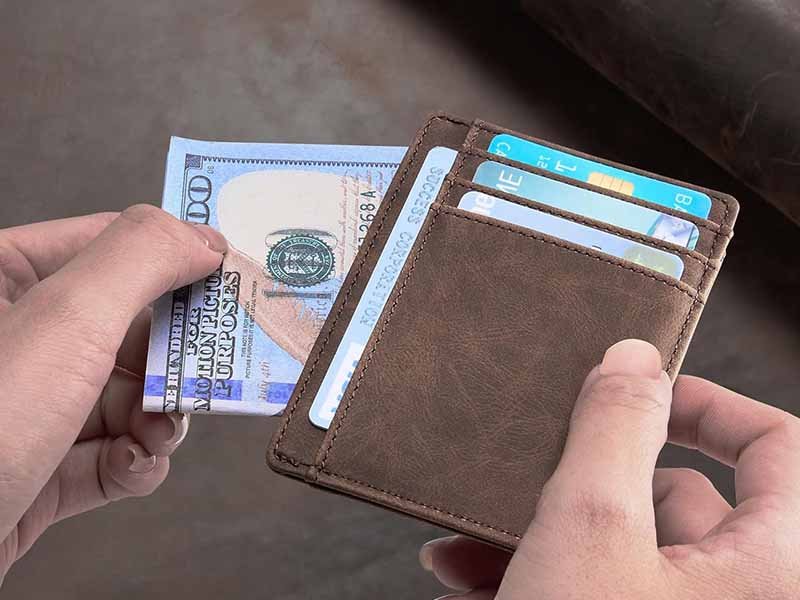
A leather card holder may look simple, but the pocket layout decides whether it feels smooth, slim, secure, and worth carrying every day. Many products fail not because the leather is poor, but because the internal structure was never designed carefully enough. A card holder can use full grain leather, clean stitching, and refined edge paint, yet still disappoint the user if the slots are too deep, too tight, too loose, or stacked with the wrong spacing. In real use, people notice these details immediately. They notice whether cards slide out naturally, whether the body stays flat after months of use, and whether the holder still feels elegant once it is filled.
The best leather card holder pocket layout design is the one that balances three things at the same time: easy card access, practical card capacity, and a slim shape that does not become bulky during use. A strong layout uses the right slot depth, spacing, angle, and layer structure so the product remains comfortable in the hand and stable over time.
At SzoneierLeather, pocket layout design is treated as a product development task, not a decorative detail. It starts with user habits, card dimensions, leather thickness, and assembly logic. A difference of 1 to 2 mm in spacing can change the feel of the entire product. That is why well-made card holders often win repeat orders more easily than more complex leather goods. The structure looks quiet, but it speaks loudly through daily experience.
What Is Leather Card Holder Pocket Layout?
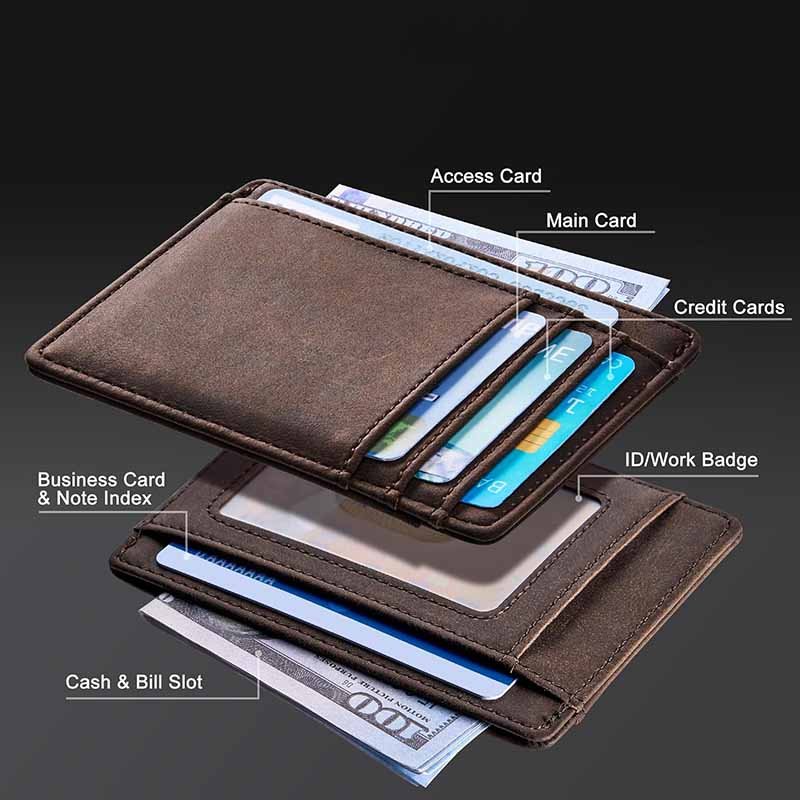
Leather card holder pocket layout is the planned arrangement of card slots, pocket depth, opening direction, spacing, and layer structure inside a card holder. It controls how cards fit, how quickly they can be taken out, how thick the product becomes, and how well the leather piece keeps its shape over time.
Leather Card Holder Pocket Layout Basics
A leather card holder pocket layout begins with one simple question: how will the user actually carry and remove cards in daily life? This sounds obvious, but many products are designed from appearance first and use second. That is where problems begin.
A practical card holder usually carries between 4 and 8 cards. Some users want a very slim front-pocket style. Others want extra storage for business cards, folded cash, or an ID card. The layout has to match that purpose. When the slot count, slot angle, and pocket depth are matched correctly, the card holder feels effortless. When they are not, even premium leather cannot save the experience.
The most important design basics include the following:
- Card size tolerance Standard bank cards are about 85.6 mm × 54 mm. Pocket size must consider leather thickness, lining thickness, stitch allowance, and long-term stretch.
- Pocket depth If the slot is too deep, the card is hard to grip. If too shallow, the card feels insecure. In many successful designs, visible card exposure is kept around 20% to 35% of card height.
- Pocket opening width The opening must allow smooth insertion without forcing the leather outward too quickly.
- Friction and release Vegetable-tanned leather, microfiber lining, and soft chrome-tanned leather behave differently. A good layout is adjusted for the material, not copied blindly from another sample.
The table below shows a practical design reference used in many commercial developments:
| Design Element | Common Working Range | Why It Matters |
|---|---|---|
| Card width allowance | 1.5–2.5 mm | Prevents overly tight insertion |
| Visible card exposure | 12–18 mm | Improves grip and recognition |
| Slot overlap step | 8–14 mm | Balances visibility and thickness |
| Leather thickness per layer | 0.8–1.4 mm | Controls bulk and structure |
| Recommended card load per slot | 1–2 cards | Protects shape and usability |
For customers developing custom leather card holders, these are the details that influence return rate, user satisfaction, and reorder confidence. A cleaner layout is not only more attractive on the product page. It also performs better after 3 months, 6 months, and 12 months of use.
Leather Card Holder Pocket Layout Structure
Structure is where a leather card holder becomes either elegant or frustrating. On paper, adding another pocket may seem easy. In production, every extra layer changes thickness, stitching difficulty, edge finishing, and pressure distribution.
Most leather card holder pocket layouts are built from one of these structural ideas:
- Flat stacked slots Simple to make, common in entry-level products, but thickness rises quickly.
- Staggered slots Each slot sits slightly above the next one. This improves access and makes the card edges easier to see.
- Wrapped or folded body The main body folds around the center, reducing panel count and often giving a cleaner appearance.
- Center-pocket structure A middle compartment holds folded notes or extra cards, while outer slots handle daily-use cards.
The wrong structure usually creates three problems:
- The card holder becomes thick before it is even filled.
- The pocket edges receive too much stress in one area.
- Card access becomes uneven from top slot to bottom slot.
A well-developed structure solves these issues in advance. For example, when six slots are stacked without planning, the bottom section may become 35% to 50% thicker than the upper section after use. That affects not just appearance, but also stitching stability and edge finishing quality.
Below is a useful comparison for layout planning:
| Structure Type | Capacity | Slimness | Access Speed | Production Complexity |
|---|---|---|---|---|
| Flat stacked | Medium | Fair | Fair | Low |
| Staggered | Medium | Good | Good | Medium |
| Folded body | Low to medium | Excellent | Good | Medium |
| Center-pocket with outer slots | Medium to high | Good | Good | Medium to high |
At SzoneierLeather, structure development often starts with mock samples in different leather thicknesses because the same layout behaves very differently in cowhide, PU-backed leather, saffiano leather, or soft nappa. Customers who understand structure early usually make better decisions on pricing, functionality, and target market positioning.
Leather Card Holder Pocket Layout vs Wallet
A card holder and a wallet may both store cards, but their design logic is not the same. A wallet is built around storage range. A card holder is built around efficiency. That distinction changes the entire pocket layout.
A wallet can hide more cards because the product accepts more folds, more panels, and greater overall volume. A leather card holder has less space to hide design mistakes. Every slot matters more. Every millimeter matters more. The product must feel compact while still working smoothly in real life.
The main differences are clear:
- A wallet can prioritize quantity. A card holder must prioritize balance.
- A wallet can absorb thickness through a larger format. A card holder has to control thickness tightly from the beginning.
- A wallet often includes bill compartments, coin areas, and multi-layer interiors. A card holder depends heavily on slot geometry and pocket hierarchy.
This distinction matters for clients creating products for different markets. A minimalist EDC product for urban users may succeed with 4 to 6 slots and one center pocket. A gift-market product may need a slightly richer layout to feel more substantial. A business-oriented card holder may need easier business card storage, which changes pocket width and opening shape.
Here is a simple product comparison:
| Feature | Leather Card Holder | Leather Wallet |
|---|---|---|
| Main use | Fast daily access | Broader storage |
| Ideal card count | 4–8 cards | 8–16+ cards |
| Thickness control | Very strict | More flexible |
| Pocket depth strategy | Precision-focused | More forgiving |
| User expectation | Slim and quick | Versatile and roomy |
For customers planning private-label development, it is important not to design a card holder like a small wallet. That is one of the most common reasons products feel bulky, awkward, or hard to use. A successful card holder respects the limits of its format and turns those limits into an advantage.
Why Does Leather Card Holder Pocket Layout Matter?
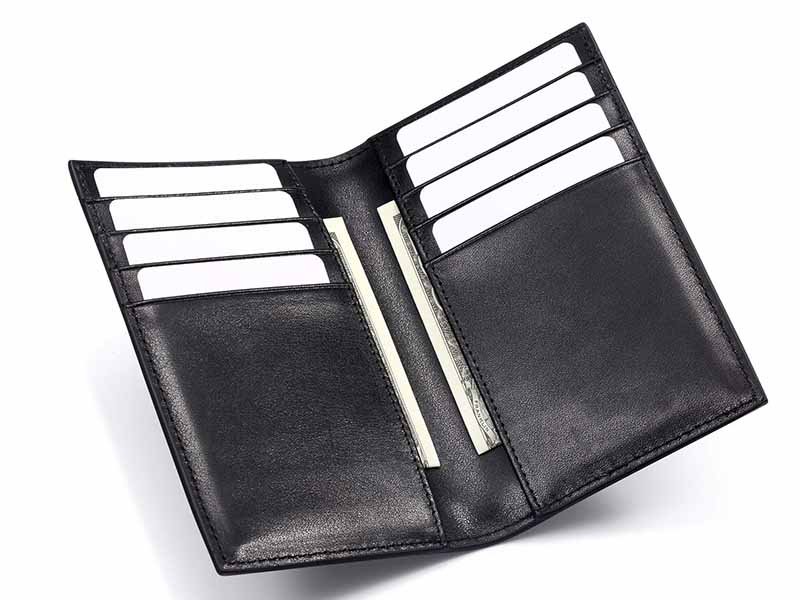
Leather card holder pocket layout matters because it directly decides how the product feels in daily use, how many cards it can carry without losing shape, and how long it can stay attractive under repeated stress. A strong layout improves usability, protects durability, and makes a slim design feel truly premium instead of merely looking premium.
Leather Card Holder Pocket Layout and Usability
Usability is the first real test of any leather card holder. Before a customer comments on leather grain, edge paint, or logo placement, they judge whether the cards go in smoothly and come out easily. If daily handling feels inconvenient, the product loses value very quickly.
A good pocket layout improves usability in several practical ways:
- Cards can be removed with one hand
- Frequently used cards are easy to identify
- Filled slots do not block neighboring slots
- The holder feels stable when opened and handled
- The card edges remain visible enough for quick selection
Usability is affected by several linked details:
- Slot angle Slightly angled pockets often feel faster and more natural than straight pockets.
- Exposure height If too little of the card is visible, users must pinch harder and slower.
- Pocket resistance The right resistance feels secure, not stiff.
- Slot sequence Outer quick-use slots and inner secure slots should have different priorities.
From a customer’s point of view, usability affects product reviews more than many brands expect. In practical retail feedback, issues like “hard to pull cards out,” “too tight after a week,” or “slots stretch unevenly” can damage a product faster than surface scratches.
The table below shows common usability targets:
| Usability Point | Poor Result | Strong Result |
|---|---|---|
| Card insertion | Requires force | Smooth, controlled entry |
| Card removal | Fingernail struggle | Easy thumb grip |
| Slot visibility | Cards hidden too deeply | Cards easy to identify |
| Loaded performance | Neighboring slots jam | Each slot remains usable |
| Daily carry feel | Bulky in pocket | Flat and comfortable |
For clients developing custom products, usability should be tested with real cards, not only visual prototypes. Different embossing, lining materials, and finishing treatments can noticeably change grip and release. At SzoneierLeather, this is why layout refinement often includes several rounds of sampling before bulk production begins. A product that feels easy in the hand usually converts better, gets fewer complaints, and performs better in repeat sales.
Leather Card Holder Pocket Layout and Capacity
Capacity sounds like a selling point, but in leather card holder design, it is often misunderstood. More slots do not automatically create more value. If the pocket layout is overloaded, the product becomes thick, stiff, and unstable. A card holder should carry enough, not simply carry more.
The real question is not “How many slots can fit?” but “How many cards can the structure carry well?”
A useful capacity strategy usually considers:
- Number of daily-use cards
- Whether each slot is designed for single or double card loading
- Whether the center compartment is meant for backup storage
- How much thickness the target customer will accept
In many market-ready designs, the most comfortable range is:
| Slot Count | Practical Card Range | Carry Feel |
|---|---|---|
| 4 slots | 4–6 cards | Very slim |
| 6 slots | 6–8 cards | Balanced |
| 8 slots | 8–10 cards | Fuller but manageable |
| 10+ slots | 10–14 cards | Often bulky |
This is where many projects go wrong. A client may ask for more capacity because it sounds commercially attractive, but the final product may no longer feel refined. Once filled, extra layers create pressure at the fold, uneven expansion at the edges, and visible shape distortion on the front face.
A better approach is to build capacity in a more intelligent way:
- Use a center pocket for less frequently used cards
- Keep outer slots reserved for daily cards
- Reduce unnecessary overlap between pockets
- Match leather thickness to intended card count
For example, a 6-slot layout with one center pocket often performs better than an 8-slot layout with excessive stacking. It looks cleaner, feels slimmer, and still serves most users well. That is a stronger long-term commercial choice than forcing more slots into a product that cannot support them gracefully.
Leather Card Holder Pocket Layout and Durability
Durability is where layout design shows its real value. A leather card holder does not fail only because leather wears out. It often fails because the internal pocket layout concentrates pressure in the wrong places. Repeated insertion and removal create stress at the pocket mouth, slot corners, stitch ends, and folded edges. If those points are not designed correctly, the product ages too fast.
The most common durability risks include:
- Slot mouths stretching too early
- Stitch lines cracking under thick load
- Bottom pocket corners deforming over time
- Edge paint splitting where layers are too dense
- Front face becoming uneven from hidden bulk
A stronger pocket layout improves durability by controlling pressure flow. That means:
- Better spacing between stacked slots
- More even layer distribution
- Reinforcement in high-friction areas
- Correct leather temper for the product purpose
- Stitch placement that avoids tearing stress
Below is a useful durability reference:
| Stress Area | Common Problem | Better Design Response |
|---|---|---|
| Pocket opening | Stretch and looseness | Reinforced top line |
| Slot corner | Deformation | Rounded or supported corner build |
| Layer stack area | Excess bulk pressure | Reduce overlap and thickness |
| Fold line | Shape collapse | Match leather softness to structure |
| Edge finish | Cracking or chipping | Control layer count before painting |
From a commercial perspective, durability affects far more than product lifespan. It affects return rate, product reputation, reorder confidence, and margin stability. A poorly designed layout may look acceptable in sample photos but cause problems after a few weeks of real use. A properly engineered layout keeps the product clean, flat, and functional for much longer.
This is one reason why experienced manufacturers pay close attention to internal build logic during development. At SzoneierLeather, leather card holders are not only judged by appearance at the sampling stage, but also by how the slots behave when loaded, pressed, flexed, and used repeatedly. Clients who invest in better layout design at the start usually save far more later in quality control and customer satisfaction.
Which Leather Card Holder Pocket Layout Works Best?
The best leather card holder pocket layout depends on how the product is used in real life. There is no single layout that fits all users. A strong design matches pocket structure with user habits, card quantity, and expected thickness. In most successful products, layouts that balance visibility, accessibility, and structure tend to perform better in both user experience and long-term durability.
Leather Card Holder Pocket Layout Single vs Multi
One of the first decisions in layout design is whether to use a simple single-row structure or a more complex multi-layer structure. This choice directly affects thickness, usability, and manufacturing cost.
A single-row layout is clean and easy to control. Each slot sits independently, which makes card access straightforward. This design is commonly used for minimalist card holders where slimness is the main selling point.
A multi-layer layout, on the other hand, increases storage capacity by stacking or overlapping pockets. While it allows more cards, it also introduces challenges in thickness control and structural balance.
Key differences:
| Layout Type | Advantages | Limitations |
|---|---|---|
| Single-row | Very slim, easy access, stable shape | Limited capacity |
| Multi-layer | Higher capacity, more functional | Increased thickness, more stress points |
From a product development perspective:
- Single-row layouts are ideal for front-pocket carry products
- Multi-layer layouts are better for multi-purpose or gift-oriented products
However, the real issue is not the number of layers, but how those layers interact. Poorly planned multi-layer designs often result in uneven thickness, especially near the bottom edge. This creates a wedge-shaped product that feels uncomfortable in the pocket and visually unbalanced.
At SzoneierLeather, multi-layer layouts are often adjusted by:
- Reducing unnecessary overlap between slots
- Using thinner leather for internal layers
- Adjusting slot height to distribute thickness evenly
This allows the product to maintain a cleaner shape even when fully loaded.
Leather Card Holder Pocket Layout Side vs Top
Another key decision is the direction of card insertion: side-entry or top-entry pockets. This may seem like a small detail, but it changes how the user interacts with the product every day.
Side-entry pockets are widely used in modern card holders. They allow cards to slide horizontally, which feels natural when the holder is taken out of a pocket. They also reduce the risk of cards falling out when the product is turned upside down.
Top-entry pockets are more traditional. They are often used in vertical card holders or designs with a center compartment. They provide a more secure hold but can be slightly slower when accessing cards.
Here is a comparison:
| Entry Type | User Experience | Security | Best Use Case |
|---|---|---|---|
| Side-entry | Fast and intuitive | Medium | Daily use, minimalist carry |
| Top-entry | Secure and stable | High | Travel, formal use |
In real user feedback:
- Side-entry designs are preferred for quick transactions
- Top-entry designs are preferred when users carry fewer but more important cards
One common mistake is mixing both entry types without a clear hierarchy. For example, placing a top-entry slot behind a tight side-entry slot can block access and create unnecessary friction.
A better approach is:
- Use side-entry for outer quick-access slots
- Use top-entry for inner or central storage
This creates a natural flow when the user interacts with the product.
Leather Card Holder Pocket Layout ID Window
An ID window is a special type of pocket that allows users to display a card without removing it. It is commonly used for driver’s licenses, work IDs, or transit cards.
While it seems simple, integrating an ID window into a leather card holder requires careful layout planning. It affects not only usability but also structure and durability.
Important considerations:
- Material choice Transparent windows are usually made from PVC or TPU. Thickness must be controlled to avoid stiffness.
- Placement The ID window should be easy to access but not exposed to excessive wear.
- Edge construction Poor edge finishing around the window can lead to peeling or cracking.
Typical placement options:
| Position | Advantage | Risk |
|---|---|---|
| Outer front | Quick access | Higher wear exposure |
| Inner panel | Better protection | Slightly slower access |
| Back panel | Balanced | Moderate wear |
From a development perspective, adding an ID window increases:
- Production complexity
- Material cost
- Quality control requirements
However, it also increases perceived functionality, especially in markets where ID usage is frequent.
At SzoneierLeather, ID window designs are often reinforced with:
- Additional stitching around the frame
- Flexible window materials to prevent cracking
- Controlled opening size to maintain card stability
This ensures the window remains clear, functional, and durable over time.
How to Design Leather Card Holder Pocket Layout?
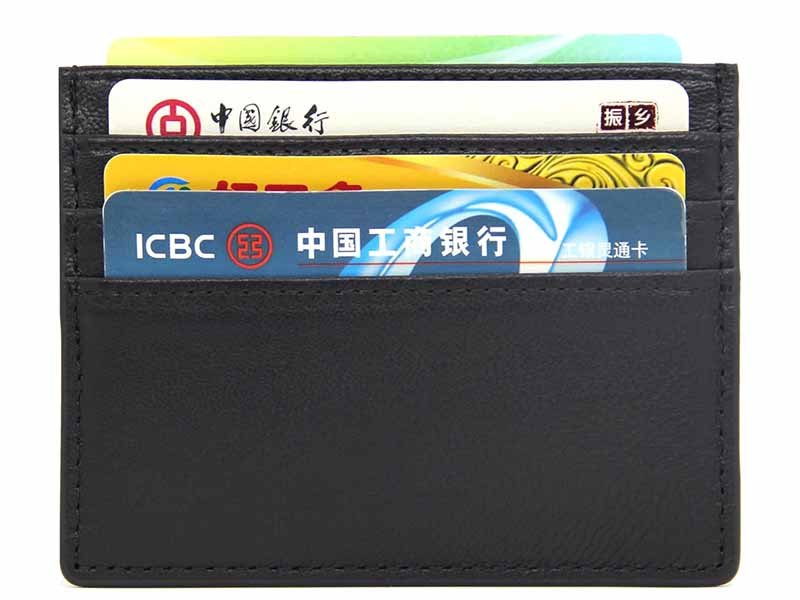
Designing a leather card holder pocket layout is not just about drawing slots on paper. It requires understanding how materials behave, how users interact with the product, and how production processes affect the final result. A strong design comes from balancing real usage needs with manufacturing feasibility.
Leather Card Holder Pocket Layout for Daily Use
A practical layout always starts with real usage scenarios. Without this, even a visually attractive design may fail in daily use.
Most users fall into three categories:
- Minimal users (3–5 cards)
- Standard users (5–8 cards)
- Heavy users (8–12 cards)
Each group has different expectations:
| User Type | Priority | Layout Strategy |
|---|---|---|
| Minimal | Slimness | Fewer slots, wider spacing |
| Standard | Balance | Moderate slots, structured layering |
| Heavy | Capacity | More slots, reinforced structure |
Design decisions should reflect:
- How often cards are used
- Whether cards are swapped frequently
- Whether cash or receipts need to be stored
A mistake often seen is designing for maximum capacity while ignoring daily convenience. In reality, users prefer a product that feels easy and reliable, even if it holds fewer cards.
Leather Card Holder Pocket Layout Slim Balance
Slimness is one of the biggest selling points of a card holder. However, achieving a slim profile is not just about reducing material thickness. It is about controlling how layers are built and how space is used.
Key techniques for maintaining slimness:
- Reduce overlapping areas between slots
- Use thinner internal leather layers
- Optimize slot height instead of adding more slots
- Avoid unnecessary lining layers
Thickness control example:
| Design Choice | Thickness Impact |
|---|---|
| 6 slots, full overlap | High thickness |
| 6 slots, staggered | Medium thickness |
| 4 slots + center pocket | Low thickness |
Another important factor is how the product behaves after use. Some layouts look slim when empty but expand unevenly when filled. This creates a distorted shape that reduces perceived quality.
A well-balanced layout maintains:
- Flat profile when filled
- Even expansion across layers
- Clean edge alignment
This is where experienced manufacturers add value. At SzoneierLeather, slimness is tested under real loading conditions, not just empty samples. This ensures the final product matches expectations in real use.
Leather Card Holder Pocket Layout Material Impact
Material choice directly affects how a pocket layout performs. The same layout can behave completely differently depending on leather type, thickness, and finish.
Common leather types and their behavior:
| Leather Type | Flexibility | Structure | Best Use |
|---|---|---|---|
| Full grain | Medium | Strong | Premium structured layouts |
| Top grain | Medium-soft | Balanced | General use |
| Nappa | Soft | Flexible | Slim, soft designs |
| Saffiano | Stiff | Stable | Structured, durable designs |
Material affects:
- How easily cards slide in and out
- How much the pocket stretches over time
- How well the product holds its shape
For example:
- Soft leather improves comfort but may stretch faster
- Stiff leather maintains shape but may feel tight initially
A strong layout design adjusts for these differences:
- Softer leather may require tighter slot dimensions
- Stiffer leather may need slightly wider openings
- Thicker leather may require fewer layers
In production, ignoring material behavior often leads to problems such as:
- Slots becoming too loose after short use
- Cards being difficult to insert initially
- Uneven wear across different pockets
At SzoneierLeather, material selection is always linked with layout design. This ensures that the final product performs consistently, not just visually but functionally.
What Mistakes in Leather Card Holder Pocket Layout?
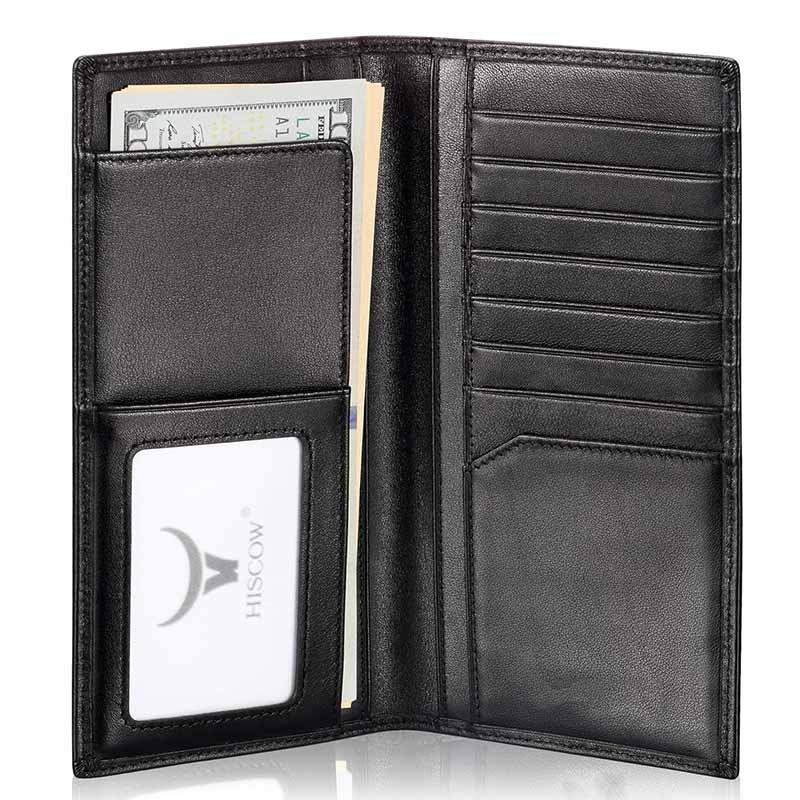
Most leather card holder problems are not caused by materials, but by poor pocket layout decisions made early in development. These mistakes often only appear after real use, when cards are inserted repeatedly and the structure starts to change. Avoiding these issues at the design stage can significantly reduce return rates and improve long-term product performance.
Leather Card Holder Pocket Layout Too Tight
One of the most common mistakes is making the card slots too tight. While a tight fit may feel secure at the beginning, it often creates frustration during daily use.
Common causes:
- No allowance for leather thickness and stitching
- Ignoring material stretch over time
- Designing based on visual proportions instead of real card testing
Real-world impact:
- Users struggle to insert and remove cards
- Edges of cards get damaged
- Leather stretches unevenly, causing deformation
A practical design approach is to allow controlled tolerance:
| Factor | Poor Design | Improved Design |
|---|---|---|
| Slot width | Exact card size | +1.5–2.5 mm allowance |
| Material consideration | Ignored | Adjusted per leather type |
| Testing | Visual only | Real card insertion testing |
At SzoneierLeather, slot tightness is tested with repeated insertion cycles to simulate real usage. This ensures the pocket remains functional not just on day one, but after months of use.
Leather Card Holder Pocket Layout Poor Spacing
Spacing between pockets is another critical factor that is often overlooked. When slots are placed too close together, they interfere with each other.
Problems caused by poor spacing:
- Cards in one slot block access to another
- Uneven thickness across the product
- Difficulty in identifying and selecting cards
This issue is especially common in multi-layer layouts where designers try to maximize capacity without adjusting spacing.
Spacing guidelines:
| Slot Count | Recommended Vertical Offset |
|---|---|
| 4 slots | 10–12 mm |
| 6 slots | 8–10 mm |
| 8 slots | 6–8 mm |
Better spacing leads to:
- Clear card visibility
- Easier access to each slot
- More balanced product thickness
In production, even a 1–2 mm spacing adjustment can significantly improve usability. This is why experienced factories refine spacing during sampling instead of relying on initial drawings.
Leather Card Holder Pocket Layout Weak Structure
A weak structure may not be obvious at first glance, but it becomes clear after repeated use. The product may lose shape, stretch unevenly, or show stress marks.
Common structural issues:
- Too many overlapping layers in one area
- Lack of reinforcement at stress points
- Poor distribution of pressure across the layout
High-risk zones:
- Bottom corners of slots
- Stitch lines near pocket openings
- Fold areas in bi-fold designs
Structural improvement strategies:
| Problem Area | Solution |
|---|---|
| Slot corners | Reinforced stitching or rounded design |
| Layer thickness | Reduce overlap, use thinner leather |
| Stress points | Add hidden reinforcement layers |
A strong structure ensures:
- Even wear over time
- Consistent shape retention
- Better long-term appearance
At SzoneierLeather, structural testing includes pressure simulation and repeated flex testing to identify weak areas before production.
How to Improve Leather Card Holder Pocket Layout?
Improving a leather card holder pocket layout is not about adding more features. It is about refining details through testing, adjustment, and understanding how the product behaves in real use. The goal is to create a layout that feels natural, performs reliably, and maintains its structure over time.
Leather Card Holder Pocket Layout Prototyping
Prototyping is where design ideas become physical products. This stage is critical because many layout issues cannot be identified on screen.
Effective prototyping includes:
- Creating multiple versions with slight variations in spacing and depth
- Testing different leather thicknesses
- Evaluating both empty and fully loaded conditions
Prototype comparison example:
| Version | Slot Width | Spacing | Result |
|---|---|---|---|
| A | Tight | Narrow | Hard to use |
| B | Medium | Balanced | Smooth performance |
| C | Loose | Wide | Poor card retention |
A good prototype should answer:
- Is card insertion smooth?
- Are cards easy to remove?
- Does the product remain flat when filled?
At SzoneierLeather, clients often receive multiple sample options to compare before finalizing production.
Leather Card Holder Pocket Layout Testing
Testing ensures the design works under real conditions. Without proper testing, problems often appear only after the product reaches the market.
Key testing methods:
- Repeated insertion test Simulates daily use by inserting and removing cards multiple times
- Load test Checks how the product behaves when all slots are filled
- Pressure test Evaluates how the structure responds to compression in pockets or bags
Testing benchmarks:
| Test Type | Target Result |
|---|---|
| 500+ insertions | No significant loosening |
| Full load condition | No major deformation |
| Pressure simulation | Structure remains stable |
Testing helps identify:
- Weak stitching areas
- Overly tight or loose slots
- Uneven stress distribution
Factories with strong testing processes can significantly reduce defect rates and improve consistency.
Leather Card Holder Pocket Layout Production Tips
Moving from sampling to mass production introduces new challenges. A layout that works in a prototype must be consistently replicated at scale.
Key production considerations:
- Cutting precision Small deviations in cutting can affect slot size and alignment
- Stitch consistency Uneven stitching can change pocket tension
- Material consistency Variations in leather thickness affect final performance
Production control checklist:
| Stage | Key Control Point |
|---|---|
| Cutting | Maintain tolerance within ±0.5 mm |
| Stitching | Uniform stitch length and tension |
| Assembly | Consistent layer alignment |
| Finishing | Clean edges and reinforced stress points |
At SzoneierLeather, production processes are standardized to ensure:
- Consistent pocket performance across batches
- Stable product quality for repeat orders
- Reduced defect and return rates
Start Your Custom Leather Card Holder Project with SzoneierLeather
Designing a successful leather card holder is not just about appearance. It requires a deep understanding of pocket layout, material behavior, and production control. Every detail—from slot spacing to leather thickness—affects how the product performs in real life.
SzoneierLeather brings over 18 years of experience in leather product development and manufacturing. With a complete supply chain and in-house capabilities, we support clients from concept to final production:
- Material development and selection
- Product structure design and optimization
- Sampling and prototype refinement
- Mass production with strict quality control
- Packaging design and inspection
What makes the difference is not just production capacity, but the ability to refine details that improve usability, durability, and overall product value.
If you are planning to develop or upgrade your leather card holder line, now is the right time to focus on what truly matters: structure, performance, and user experience.
Contact SzoneierLeather today to start your custom leather card holder project. Get professional support, fast sampling, and reliable production tailored to your brand.


