 Skip to content
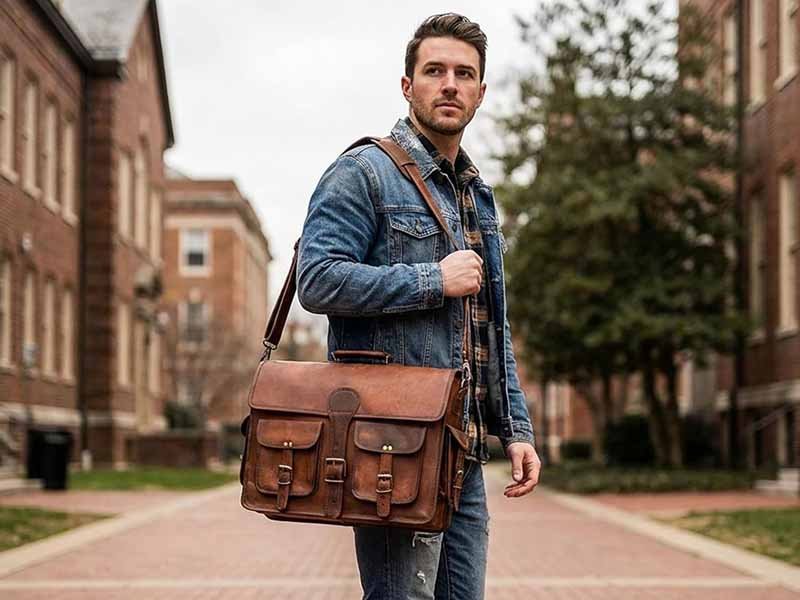
A leather briefcase can look expensive from the outside and still disappoint the user the moment it is opened. That is where many products quietly lose value. The real daily experience of a briefcase is not decided by the shine of the leather, the logo on the front, or the shape of the handle alone. It is decided by what happens inside: whether the laptop stays protected, whether documents remain flat, whether the charger and pen can be found in seconds, and whether the whole interior feels calm instead of chaotic. For business users, that difference matters more than people think. A briefcase is not only a fashion item. It is a work tool, a storage system, and often a reflection of how organized the person using it wants to appear.
A strong leather briefcase interior organization design improves function by giving every essential item a logical place, protecting valuable devices and documents, and making access faster during daily commuting, meetings, and travel. The best interiors balance structure, flexibility, and comfort, so the briefcase feels efficient without becoming bulky, complicated, or heavy.
That is why more brands are paying close attention to interior planning, not just exterior styling. A well-designed interior can improve user satisfaction, reduce complaints, raise product value, and support higher price positioning. In many cases, two briefcases may look similar on a product page, but the one with the better interior wins the repeat order. Open the bag once, and the difference is obvious. That small moment of finding everything exactly where it should be is what turns a leather briefcase from a nice-looking product into a trusted daily companion.
What Is Leather Briefcase Interior Organization Design?
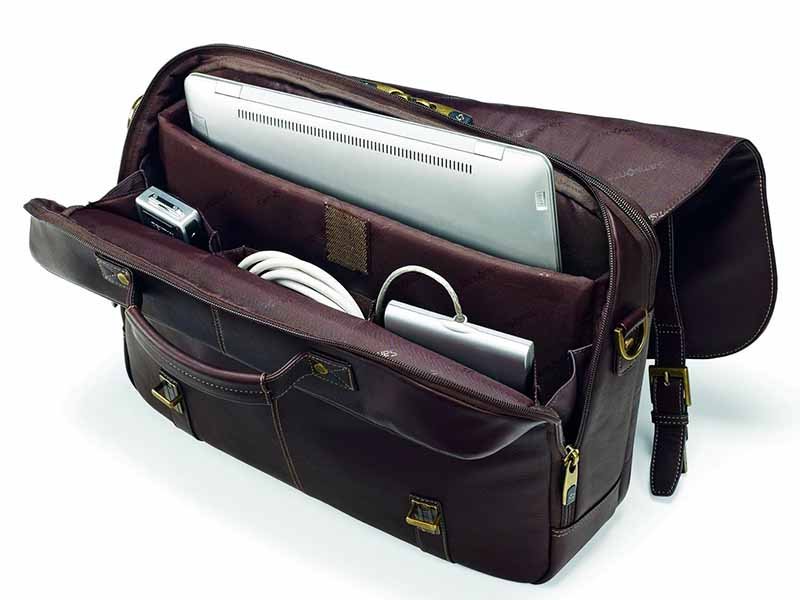
Leather briefcase interior organization design is the planning of internal space so that laptops, documents, accessories, and daily essentials are stored in a logical, protected, and easy-to-reach way. Good design improves workflow, reduces clutter, protects contents, and helps the product feel more premium in real use.
What is interior organization design
Interior organization design is the system behind how the inside of a briefcase works. It covers compartment structure, pocket placement, divider logic, opening access, internal materials, and the way different items relate to one another inside the bag. In simple words, it decides whether the briefcase feels practical or frustrating after the customer starts using it.
A poorly planned interior often looks acceptable when empty. Once the user adds a laptop, charger, notebook, pens, business cards, keys, and personal items, the problems appear quickly. Small items slide to the bottom. Paper corners bend. The bag becomes harder to open and harder to search. The user starts wasting time every day. This is why interior design should never be treated as a secondary detail.
For leather briefcases, interior organization matters even more because the product usually sits in a mid-to-high-end market position. Customers expect a leather briefcase to do more than carry things. They expect order, polish, and smooth daily use. If the outside looks premium but the inside feels messy, the product loses credibility immediately.
A strong interior design usually solves five jobs at once:
| Interior Function | What It Does for the User | Why It Matters in Product Development |
|---|---|---|
| Item separation | Keeps categories of items apart | Prevents clutter and friction |
| Device protection | Cushions laptop and tablet | Reduces damage risk |
| Fast access | Makes essentials easy to find | Improves daily workflow |
| Space efficiency | Uses interior volume well | Increases practical capacity |
| Visual order | Makes the inside look clean | Raises perceived value |
In manufacturing, good interior design is a balance problem. Too little structure makes the bag feel empty and uncontrolled. Too much structure makes it heavy, stiff, and inconvenient. The best designs do not simply add more pockets. They decide which pockets deserve to exist, where they should sit, how deep they should be, and how the user will actually interact with them. That is real product thinking.
Why leather briefcase organization matters
Organization is one of the fastest ways users judge whether a briefcase is well made. A customer may not know leather grades, edge paint formulas, or reinforcement methods, but they immediately know whether the inside works. If they need to move items around every morning, if their charger tangles with their earphones, or if their documents keep curling at the corners, the product starts feeling inconvenient no matter how beautiful the exterior is.
For working professionals, the inside of a briefcase directly affects speed and confidence. The user may need to remove a laptop during airport security, pull out a notebook during a client meeting, or find a pen while standing in a hallway. Good organization reduces stress in these small moments. That is why interior layout is strongly linked to product satisfaction.
From a brand and factory perspective, interior organization also affects commercial performance. Better structure often leads to fewer complaints about usability, fewer returns caused by “not practical” feedback, and stronger word-of-mouth. Customers are also more likely to describe the product as thoughtful, premium, or worth the money when the inside feels easy to use.
Below is a simple breakdown of what organization improves:
| User Concern | Poor Interior Result | Good Interior Result |
|---|---|---|
| Laptop safety | Device shifts or gets scratched | Device stays secure and stable |
| Document storage | Papers bend or mix with other items | Files stay flat and separated |
| Daily access | User searches repeatedly | Essentials are found quickly |
| Carry comfort | Weight feels uneven | Load feels more balanced |
| Premium feel | Bag feels ordinary inside | Bag feels carefully designed |
This is especially important in leather goods because many customers buy leather briefcases for long-term use. They do not expect to replace the bag quickly. They want a product that supports daily work for years. In that context, internal organization is not decoration. It is part of the product’s core value. A leather briefcase with weak organization may sell once. A leather briefcase with strong organization is more likely to win repeat business, private label growth, and positive customer trust.
How it improves daily work
A good interior does not only improve storage. It improves how people work. That may sound simple, but it has real value. Most professionals follow routines: commute, meeting, laptop setup, note-taking, charging, document review, and moving between locations. If the briefcase supports that routine, the user feels more efficient. If the briefcase interrupts that routine, even slightly, the inconvenience repeats every single day.
The biggest improvement comes from reducing small delays. A business user may open the bag five to fifteen times a day. Every time they need to search for a charger, untangle a cable, pull out wrinkled paperwork, or move other items to reach one object, they lose time and patience. Individually these moments are small. Over weeks and months, they shape how the user feels about the product.
Here is a practical view of how interior design changes daily efficiency:
| Daily Task | Weak Interior Experience | Strong Interior Experience |
|---|---|---|
| Remove laptop | Laptop catches on other items | Laptop slides out cleanly |
| Access charger | Cable buried at the bottom | Charger stored in fixed pocket |
| Take out documents | Papers mixed or bent | File section keeps shape |
| Grab pen quickly | Pen lost among accessories | Pen slot keeps it visible |
| Pack after meeting | Items thrown in loosely | Sections guide fast repacking |
Well-planned interiors also help users carry less unnecessary weight. When storage is organized, people know what belongs in the bag and where it belongs. That reduces the habit of overpacking. The bag becomes a cleaner work tool instead of a moving drawer full of random items. That matters a lot for commuters and traveling professionals who carry the briefcase for long hours.
There is also an image factor. Organized access looks professional. In meetings, conferences, offices, and airports, the way a person interacts with their briefcase affects perception. Pulling out a flat document, a protected laptop, or a neatly stored notebook gives a different impression from digging through a crowded interior. This is why strong interior design adds business value beyond storage. It supports workflow, personal presentation, and confidence in real-world situations.
What users really need inside
Many products fail because they are designed from a feature list, not from real user behavior. Brands sometimes assume that more pockets automatically mean better organization. In reality, users do not want more compartments. They want the right ones, in the right positions, with the right dimensions. A leather briefcase interior should feel intuitive. The customer should understand it without instructions.
For most business users, the core needs are very stable. They want a protected laptop area, a clean section for documents, small storage for daily accessories, and one or two fast-access areas for items used repeatedly. After that, everything else becomes secondary. If the bag handles these core needs well, the user already sees strong value.
The table below shows what matters most to most office, commuting, and business travel users:
| Interior Need | Importance | Why Users Care |
|---|---|---|
| Laptop compartment | Very high | Device is expensive and used daily |
| Document section | Very high | Files must stay clean and flat |
| Charger and cable storage | High | Tech accessories are carried often |
| Phone or quick-access pocket | High | Frequent daily retrieval |
| Pen holders | Medium | Useful but should not waste space |
| Hidden zipper pocket | Medium | Good for valuables |
| Too many mini pockets | Low | Often creates confusion |
A useful way to think about interior design is to divide the briefcase into three zones:
- Work zone: laptop, tablet, documents, notebook
- Support zone: charger, mouse, cables, pens, business cards
- Personal zone: keys, wallet, passport, small essentials
This approach makes the layout easier to understand and easier to use. It also helps brands define the product more clearly. A legal briefcase, executive briefcase, consultant briefcase, or daily commuter briefcase may all use different proportions of these three zones.
For SzoneierLeather-style development, this is where factory experience becomes valuable. A professional leather goods manufacturer does not just ask where the customer wants pockets. It helps the customer think through how the end user opens the bag, reaches inside, carries weight, and moves through a real workday. That is how an interior becomes practical, not just decorative.
Which Compartments Matter in Leather Briefcase Interior Organization Design?
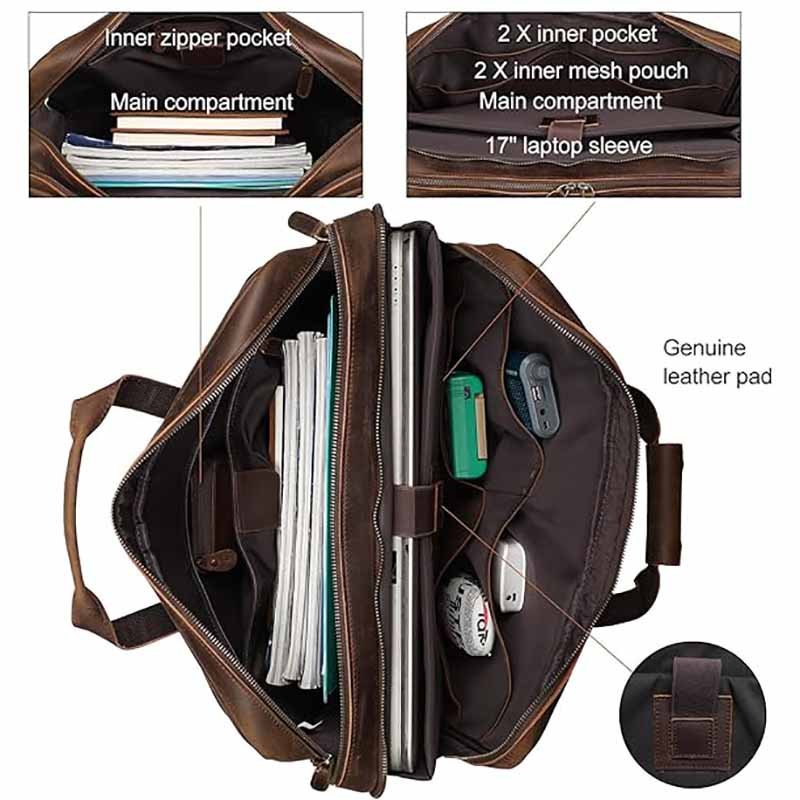
The most important compartments in leather briefcase interior organization design are laptop sleeves, document sections, accessory pockets, and quick-access storage. These compartments should protect essential items, improve efficiency, and keep the interior clean without making the bag heavy or overly complicated.
Which pockets are essential
The best briefcases do not try to organize everything. They organize the essentials well. This sounds obvious, but it is where many products get lost. A designer may keep adding card slots, mesh pockets, zipper pockets, pen loops, cable holders, and hidden compartments until the inside looks busy rather than useful. The result is often a briefcase that feels impressive at first glance but becomes annoying in daily use.
Essential pockets should be chosen based on item frequency and item value. In other words, what does the user carry every day, and which of those items need protection or fast access? Once that is clear, the interior becomes easier to plan.
For most leather briefcases, the most important pockets are:
- A padded laptop sleeve
- A main document section
- One or two medium accessory pockets
- A secure zipper pocket for valuables
- A quick-access pocket for daily grab items
These five categories handle most practical use cases without making the bag too complex. Their quality matters more than their quantity. A well-sized accessory pocket is better than three shallow pockets that cannot hold anything properly. A good zipper pocket is better than multiple narrow compartments that create visual clutter.
Below is a useful ranking for interior pocket planning:
| Pocket Type | Practical Value | Common Mistake |
|---|---|---|
| Laptop sleeve | Extremely high | Too loose or too thinly padded |
| Document pocket | Extremely high | Too soft to hold papers flat |
| Accessory pocket | High | Too many small compartments |
| Zipper valuables pocket | High | Hard to access or poorly placed |
| Quick-access pocket | High | Too deep or insecure |
| Decorative extra pockets | Low | Adds bulk without helping function |
From a business angle, essential pockets also influence how customers describe the product online. When users say a bag feels well organized, they usually mean the essentials are handled clearly. They rarely praise the presence of ten tiny compartments. Strong leather briefcase design is often about editing, not adding.
How laptop sleeves should work
The laptop sleeve is often the most important part of the entire interior because it protects the highest-value item inside the briefcase. If the sleeve fails, the whole product can fail in the customer’s mind. A scratched laptop corner, a loose fit that allows sliding, or weak bottom support can instantly create dissatisfaction, even if the rest of the briefcase looks good.
A good laptop sleeve does three things well. First, it holds the device securely so movement is minimized while walking or commuting. Second, it provides enough padding to protect against light impact and friction from other carried items. Third, it places the laptop in a position that keeps the briefcase balanced when carried.
For most briefcases, the best placement is close to the back panel. This keeps the heaviest item near the body, which improves comfort and stability. The sleeve should also match the intended laptop size accurately. A “one size fits all” sleeve often creates problems because it fits nothing especially well.
Recommended laptop sleeve design details:
- Padding thickness around 5 to 10 mm depending on target market
- Raised base or reinforced bottom panel for extra protection
- Soft lining to reduce surface scratching
- Top strap, flap, or snug opening to reduce device movement
- Placement close to the back wall for carrying balance
A comparison of sleeve quality levels can be helpful:
| Laptop Sleeve Element | Basic Level | Better Level | Premium Level |
|---|---|---|---|
| Padding | Thin foam | Medium foam | Multi-layer cushioning |
| Bottom support | Single panel | Reinforced panel | Floating or extra-lift base |
| Lining | Standard polyester | Softer lining | Scratch-conscious premium lining |
| Device hold | Loose opening | Better fit | Retention strap or shaped fit |
Customers today often carry more than one device, such as a laptop plus tablet. That means the sleeve area may need to support layered tech storage without becoming bulky. This is where careful product development matters. The goal is not simply to add thicker padding everywhere. Too much thickness eats into usable space and makes the bag heavier. A professional manufacturer should help find the point where protection, slimness, and daily practicality meet.
What file sections are needed
Even in a digital-first work environment, document storage still matters. Contracts, proposals, notebooks, printed presentations, legal papers, catalogs, and business folders remain part of everyday work in many industries. That means a leather briefcase still needs a clear strategy for paper organization. When this area is ignored, users often end up stuffing files around the laptop, which leads to bent corners, crushed paper, and a less professional experience.
The right file section depends heavily on who the product is for. A sales representative may only need room for a slim notebook and a few presentation sheets. A lawyer or consultant may need cleaner separation for multiple folders. An executive commuter may want a simpler interior with one large document area and minimal bulk. That is why file organization should be planned around user type, not copied from generic products.
Three common approaches are used:
| File Section Style | Best For | Main Strength | Main Limitation |
|---|---|---|---|
| Open flat section | Minimalist users | Light and simple | Less separation |
| Divider section | Office professionals | Good balance of order and volume | Slightly more structure |
| Accordion section | Heavy document users | High separation | Can add bulk and weight |
For most premium leather briefcases, divider sections are often the most practical. They provide structure without making the product look like a portable filing cabinet. A well-made divider should be strong enough to guide the user but flexible enough to allow different load types. It should also support standard paper sizes without awkward folding. For international products, that usually means planning for A4 and, in some markets, letter-size compatibility.
A good file area also needs help from materials. If the divider fabric is too soft, papers slump and corners curl. If it is too stiff, the bag becomes rigid and difficult to pack. Thoughtful reinforcement, lining selection, and gusset design all affect how useful the file section feels. This is one of those details that customers may not mention in technical terms, but they feel it immediately when using the bag.
Which quick-access areas help most
Quick-access storage has an outsized effect on user satisfaction because it deals with high-frequency behavior. A business user may only remove documents a few times a day, but they may reach for a phone, keys, ID, transport card, passport, or charger multiple times. If those items are buried inside the main compartment, the briefcase becomes slower and more irritating to use.
The best quick-access areas are easy to reach, easy to understand, and secure enough for the item they hold. They should reduce searching, not create new uncertainty. Placement matters a great deal here. A front exterior pocket may be convenient for a phone or boarding pass, but it may not be ideal for high-value items in crowded public spaces. A top interior slip pocket near the opening may work better for keys or cards. The correct answer depends on the product use case.
Common quick-access zones include:
- Front exterior zip pocket for travel documents or phone
- Interior top pocket for wallet or business cards
- Small slip pocket near handle area for frequent-use items
- Rear exterior pocket for magazines, tickets, or tablet access
These pockets should follow a few rules:
| Quick-Access Rule | Why It Matters |
|---|---|
| Easy opening | Reduces friction in fast moments |
| Moderate depth | Stops items from disappearing inside |
| Clear purpose | Helps users build a habit |
| Secure closure | Protects valuable contents |
| Smart placement | Balances convenience and safety |
A common design mistake is making quick-access pockets too large and too generic. That turns them into overflow storage, which defeats their purpose. Another mistake is placing them where the user must unzip the entire bag awkwardly. In leather briefcases, quick-access design should feel smooth and intentional, especially because the product is often used in professional settings where speed and neatness matter.
When brands get this area right, customers notice. They may not always say, “the quick-access architecture is excellent,” but they will say the bag is easy to use, practical, and well thought out. In product terms, that is exactly the result good interior design should aim for.
How to Plan Leather Briefcase Interior Organization Design?
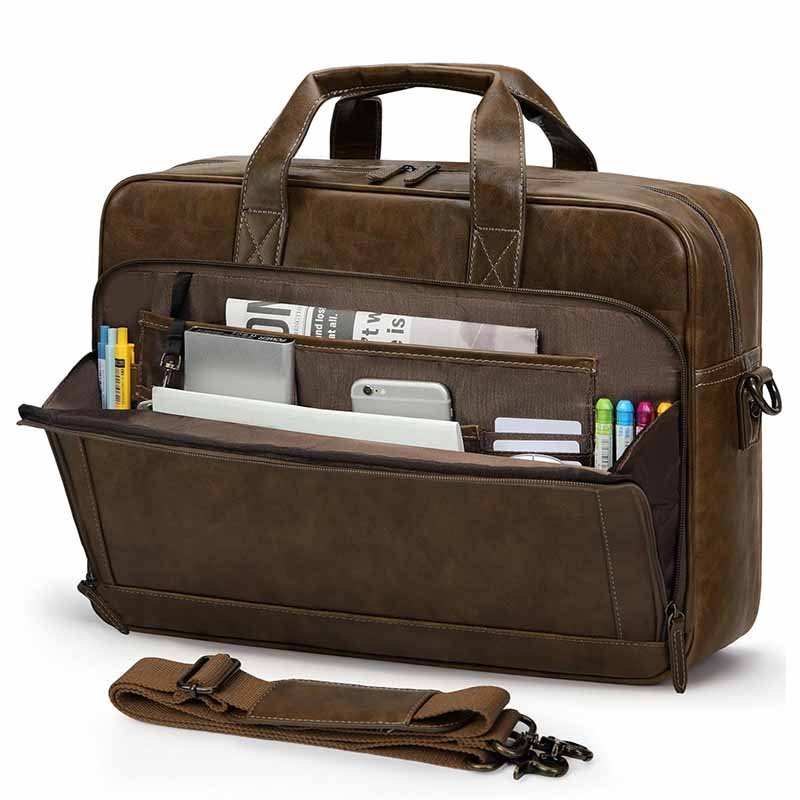
Leather briefcase interior organization design should be planned based on user behavior, item size, and daily workflow. A good layout balances structure, flexibility, and accessibility, ensuring the briefcase is easy to use without feeling bulky or over-complicated.
How to balance space and structure
One of the most common mistakes in briefcase design is choosing between two extremes:
- Too soft → no structure, items collapse together
- Too rigid → difficult to use, heavy, and inflexible
The right balance lies in controlled structure.
A well-designed interior uses:
- Structured panels where protection is needed (laptop, documents)
- Flexible zones where adaptability is required (accessories, personal items)
Structure balance model
| Area | Structure Level | Reason |
|---|---|---|
| Laptop compartment | High | Needs protection and stability |
| Document section | Medium | Needs shape but some flexibility |
| Accessory area | Low to medium | Needs adaptability |
| Quick-access pockets | Low | Needs easy reach |
This layered approach allows the bag to feel organized without becoming stiff.
Another important factor is load distribution. If all heavy items are placed on one side, the briefcase becomes uncomfortable to carry. Proper layout keeps weight closer to the center and back panel.
Practical design rules
- Place heavy items (laptop) near the back
- Keep frequently used items near the opening
- Avoid stacking too many layers in one section
- Use dividers to guide, not restrict
From a product development perspective, this balance directly affects:
- User comfort
- Product weight
- Long-term durability
Factories with real experience will often suggest removing unnecessary internal layers, which reduces weight while maintaining usability.
Which layouts suit business use
Different users require different layouts. There is no “one perfect design” for all.
Instead, layouts should be built around user scenarios.
Common user types and preferred layouts
| User Type | Layout Preference |
|---|---|
| Office professionals | Laptop + document divider |
| Sales & consultants | Lightweight + quick-access |
| Executives | Clean layout + premium feel |
| Frequent travelers | Multi-functional compartments |
For example:
- Office users need clear separation between laptop and documents
- Sales professionals prefer quick access and lighter bags
- Executives often prefer minimal but refined interiors
- Travel users need hybrid layouts with extra storage
Layout structures in practice
- Single-layer layout → simple, lightweight, minimal users
- Dual-layer layout → balanced, most common
- Multi-layer layout → complex, for heavy users
Most successful products fall into the dual-layer category, because it balances usability and organization.
Overly complex layouts often fail because:
- Users forget where items are stored
- Packing becomes slower
- The bag feels crowded
A strong design always answers one question:
Can the user understand the layout in 5 seconds?
How to keep design simple
Simplicity is often harder to achieve than complexity.
Many designs fail because they try to include:
- Too many pockets
- Too many layers
- Too many functions
This leads to:
- Increased weight
- Higher production cost
- Reduced usability
Signs of over-designed interiors
- More than 10 internal compartments
- Multiple overlapping pockets
- Difficult visual layout
- Confusing storage logic
Simplicity guidelines
| Rule | Benefit |
|---|---|
| Limit pocket types | Easier understanding |
| Keep clear zones | Faster access |
| Reduce layers | Lower weight |
| Use consistent materials | Better visual clarity |
A simple interior does not mean low value. It means:
- Clear function
- Efficient space use
- Better user experience
Premium brands often choose clean layouts rather than complex ones.
What sizes fit different users
Size planning is critical because it affects both:
- Usability
- Market positioning
A briefcase that is too small feels restrictive.
A briefcase that is too large feels bulky and inconvenient.
Common size categories
| Size Type | Width | Best Use |
|---|---|---|
| Compact | 35–38 cm | Light daily use |
| Standard | 38–42 cm | Most business users |
| Large | 42–45 cm | Travel or heavy carry |
Capacity vs usability
| Size | Advantage | Limitation |
|---|---|---|
| Compact | Lightweight, easy carry | Limited storage |
| Standard | Balanced | Most popular |
| Large | High capacity | Heavier, less portable |
For most markets, standard size briefcases dominate sales because they fit:
- 13–15 inch laptops
- Documents
- Basic accessories
Another important factor is internal depth.
Too shallow → cannot fit accessories
Too deep → items stack and become hard to access
Recommended internal depth
- 8–12 cm for most business briefcases
This range provides enough space without losing organization.
What Materials Improve Leather Briefcase Interior Organization Design?
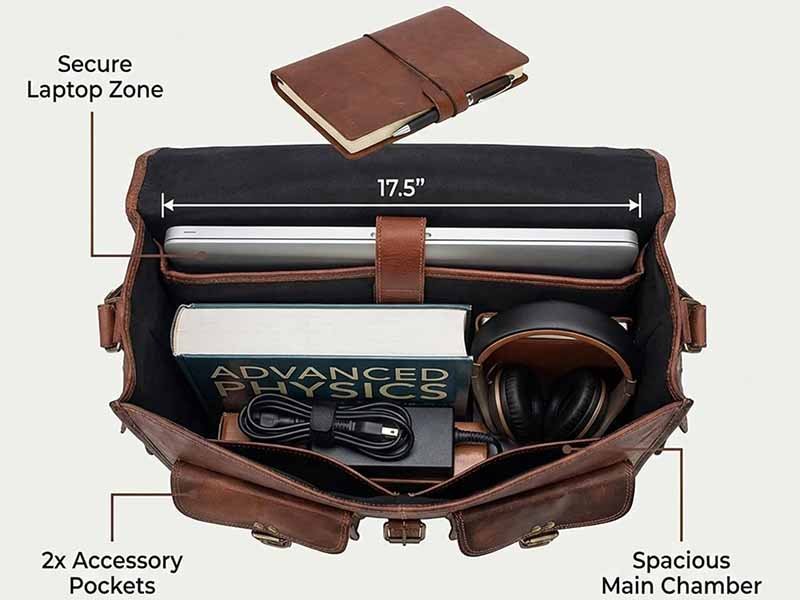
Materials used in leather briefcase interior organization design affect durability, protection, weight, and overall user experience. The right combination of lining, padding, and hardware improves both function and perceived value.
Which lining materials work best
Lining material is often overlooked, but it directly affects:
- Touch experience
- Durability
- Product quality perception
Common lining materials
| Material | Advantages | Limitations |
|---|---|---|
| Polyester | Durable, cost-effective | Less premium feel |
| Nylon | Smooth, strong | Higher cost |
| Cotton | Natural feel | Less durable |
| Microfiber | Soft, premium | More expensive |
Lining selection logic
- Entry-level products → polyester
- Mid-range → nylon blend
- Premium → microfiber or upgraded lining
A good lining should:
- Be smooth to reduce friction
- Resist tearing
- Maintain shape over time
Poor lining leads to:
- Fast wear
- Loose pockets
- Lower perceived value
How padding protects devices
Padding is essential for protecting laptops and tablets.
Key padding zones
- Laptop sleeve
- Bottom panel
- Side walls
Padding material options
| Material | Protection Level | Weight |
|---|---|---|
| Foam | Medium | Light |
| EVA | High | Medium |
| Multi-layer | Very high | Heavier |
Recommended approach
- Use targeted padding, not full coverage
- Reinforce high-impact zones only
- Avoid excessive thickness
Too much padding:
- Increases weight
- Reduces usable space
Too little padding:
- Increases damage risk
Balance is critical.
What hardware improves usability
Hardware includes:
- Zippers
- Buckles
- Hooks
- Magnetic closures
These components affect how the product feels in daily use.
Hardware quality comparison
| Component | Standard | Premium |
|---|---|---|
| Zipper | Basic coil | YKK or equivalent |
| Buckle | Plastic | Metal |
| Closure | Velcro | Magnetic / metal |
Key usability factors
- Smooth zipper movement
- Durable attachment points
- Comfortable opening experience
Poor hardware is one of the top causes of:
- Customer complaints
- Product returns
Which materials feel more premium
Premium interior design is not only about function, but also perception.
Premium material signals
- Smooth lining
- Clean stitching
- Reinforced edges
- Consistent color matching
Material upgrade impact
| Upgrade | Customer Perception |
|---|---|
| Better lining | Higher quality feel |
| Stronger padding | More reliable |
| Premium hardware | More durable |
| Clean structure | More professional |
Customers often judge quality within seconds of opening the bag.
This is why interior materials are critical for:
- Brand positioning
- Pricing strategy
- Customer satisfaction
Factories like SzoneierLeather help clients balance:
- Cost
- Function
- Premium feel
How to Customize Leather Briefcase Interior Organization Design?
Leather briefcase interior organization design customization involves adjusting layout, materials, compartments, and branding based on target users, product positioning, and market needs. A strong OEM/ODM process turns ideas into practical, manufacturable products with clear commercial value.
How OEM design works
OEM development is not just about adding a logo. It is a structured process that transforms an idea into a functional product.
A typical OEM workflow includes:
- Requirement discussion
- Concept sketch or reference analysis
- Structure planning (interior layout + dimensions)
- Material selection
- Sample development
- Testing and revisions
- Mass production
OEM development timeline
| Stage | Time |
|---|---|
| Requirement confirmation | 1–3 days |
| Design proposal | 2–5 days |
| Sample production | 7–10 days |
| Sample revision | 3–7 days |
| Bulk production | 25–35 days |
The most critical stage is structure planning, especially for interior organization.
This is where experienced manufacturers like SzoneierLeather provide value by:
- Identifying design risks early
- Suggesting layout improvements
- Optimizing material usage
- Reducing unnecessary complexity
Without proper planning, many designs fail at the sampling stage due to:
- Space conflicts
- Poor usability
- Over-complicated interiors
Which branding options are available
Branding is a key reason companies choose custom leather briefcases.
Common branding methods
- Embossed logo (deboss / emboss)
- Metal logo plate
- Printed logo (screen or heat transfer)
- Woven label inside
- Custom zipper pull branding
Branding impact on product perception
| Branding Type | Visual Impact | Cost Level |
|---|---|---|
| Embossed logo | Subtle, premium | Medium |
| Metal plate | Strong, visible | Higher |
| Printed logo | Flexible | Lower |
| Custom hardware | High-end | Higher |
For leather products, embossed logos are often preferred because they:
- Match the material
- Look more natural
- Maintain long-term durability
Branding should also align with product positioning.
For example:
- Minimalist brands → subtle embossing
- Fashion brands → visible metal logo
- Corporate gifts → clean and professional
How factories develop new layouts
Interior organization design is rarely perfect on the first attempt.
Factories develop layouts through:
- Sample testing
- User feedback simulation
- Structural adjustments
Key development steps
| Step | Purpose |
|---|---|
| Prototype sample | Test structure |
| Load testing | Check real usage |
| Adjustment | Improve usability |
| Final confirmation | Prepare for production |
Experienced factories focus on real-life usage simulation, not just visual design.
For example:
- Can the user open the bag with one hand?
- Does the laptop slide easily?
- Are pockets too deep or too shallow?
These details are often ignored in early designs but have a huge impact on user satisfaction.
SzoneierLeather uses practical testing methods to refine designs before production, reducing risk for clients.
What MOQ and sampling look like
MOQ (Minimum Order Quantity) and sampling speed directly affect business flexibility.
Typical MOQ levels
| Supplier Type | MOQ |
|---|---|
| Large factories | 300–1000 pcs |
| Flexible factories | 50–200 pcs |
SzoneierLeather supports low MOQ starting from 50 pcs, which is ideal for:
- New brands
- Product testing
- Small batch customization
Sampling advantages
- Fast turnaround (7–10 days)
- Early issue detection
- Design validation
Sampling helps clients:
- Reduce risk
- Improve product quality
- Speed up time-to-market
What Trends Shape Leather Briefcase Interior Organization Design?
Leather briefcase interior organization design is evolving with changes in work habits, technology use, and user expectations. Trends are moving toward simplicity, flexibility, and multi-functionality.
How modular interiors are growing
Modular design allows users to adjust interior layout based on needs.
Examples of modular features
- Removable dividers
- Detachable pouches
- Adjustable compartments
Benefits of modular design
| Benefit | Impact |
|---|---|
| Flexibility | Adapts to different users |
| Customization | Improves user experience |
| Product differentiation | Stronger market position |
This trend is especially popular in:
- Premium brands
- Tech-focused products
However, modular systems must remain simple. Over-complication reduces usability.
Which tech-friendly features matter
Modern users carry more devices than before.
Common tech items
- Laptop
- Tablet
- Charger
- Power bank
- Earphones
Interior design must support:
- Cable organization
- Device protection
- Easy access
Tech-friendly design features
| Feature | Purpose |
|---|---|
| Cable pockets | Prevent tangling |
| Padded sleeves | Protect devices |
| Organized slots | Improve efficiency |
The goal is to support technology without making the bag look like a tech case.
How minimalist design is changing
Minimalism is becoming more popular in leather briefcases.
Characteristics of minimalist interiors
- Fewer compartments
- Cleaner layout
- Lightweight structure
Why users prefer it
- Easier to use
- Faster access
- Less visual clutter
Minimal vs complex design
| Design Type | Advantage | Limitation |
|---|---|---|
| Minimalist | Simple, clean | Less storage |
| Complex | More features | Harder to use |
Premium brands increasingly choose clean, structured interiors over feature-heavy designs.
What premium users expect now
Premium customers expect more than just storage.
Key expectations
- Smooth interior materials
- Clean stitching
- Logical layout
- Durable construction
Premium expectation breakdown
| Feature | Importance |
|---|---|
| Build quality | Very high |
| Interior layout | Very high |
| Material feel | High |
| Branding | Medium |
Opening the briefcase should feel:
- Smooth
- Organized
- Reliable
This emotional experience plays a big role in perceived value.
Conclusion: Build Your Custom Leather Briefcase with SzoneierLeather
A well-designed leather briefcase interior is not just about compartments. It is about creating a product that works seamlessly in real life.
From layout planning to material selection, from structure design to customization, every detail contributes to how users experience the product daily.
Whether you are building a new brand, expanding your product line, or upgrading existing designs, working with the right manufacturer makes a significant difference.
If you are looking to develop high-quality, well-organized leather briefcases that stand out in the market, SzoneierLeather is ready to support you.
Contact SzoneierLeather today to request samples, get a quote, and start your custom briefcase project.


