 Skip to content
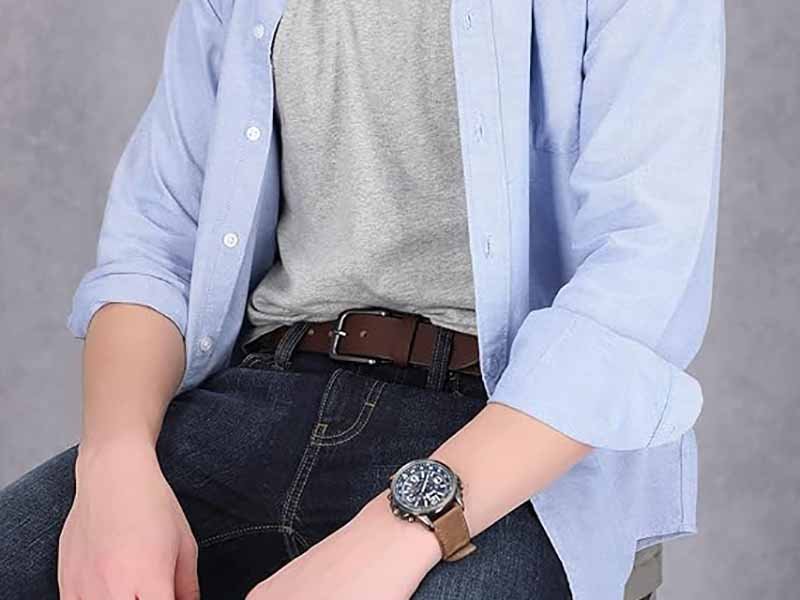
A belt can be made from premium leather, use a beautiful buckle, and still feel “wrong” the moment someone threads it through their trousers. That “wrong” feeling usually comes from one detail brands often underestimate: leather belt width. Width controls whether the belt fits real belt loops, whether it looks proportionate with a suit or jeans, and whether it feels stable when worn all day. For customers, a belt that’s too wide becomes annoying; a belt that’s too narrow feels cheap or looks out of place. For brands, the wrong width leads to returns, poor reviews, and inconsistent sizing across collections.
Leather belt width standards commonly fall between 25mm and 40mm. 25mm is slim and fashion-focused, often used for women’s belts and dress styling. 30mm is widely used for formal dress belts. 35mm is the most versatile everyday width. 38mm and 40mm are best for jeans, casual wear, and workwear where stronger visual balance and durability matter.
At SzoneierLeather, we’ve manufactured leather belts for brands and custom wholesale clients for over 18 years. One pattern is clear: belts that sell well aren’t random—they match real clothing loop sizes, buckle proportions, and wearer expectations. To make belt design easier, let’s first lock down what “standard width” actually means in the market.
What Are Standard Leather Belts Widths?
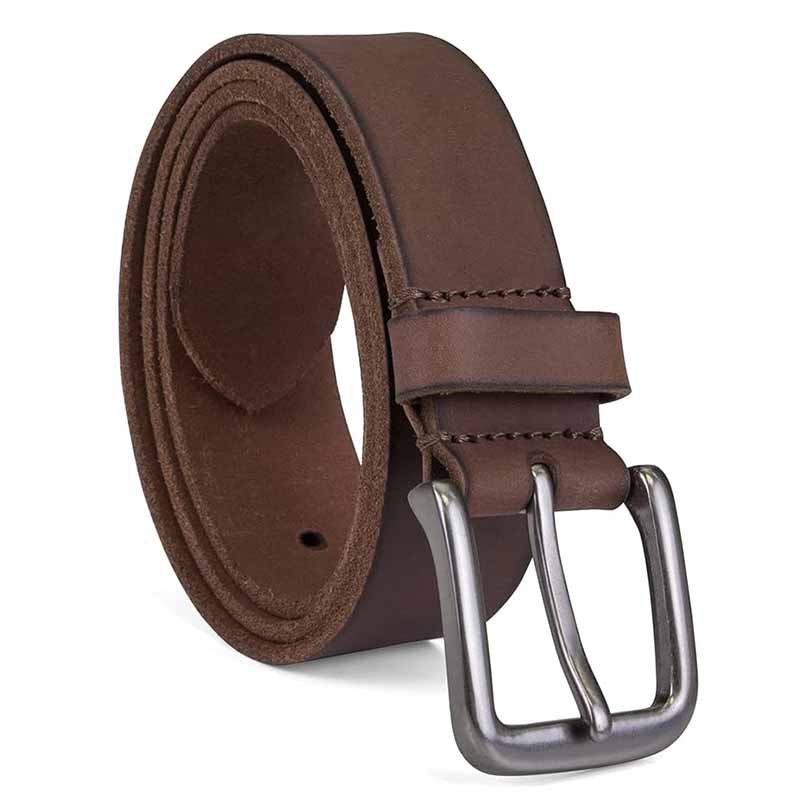
Standard leather belt widths are usually 25mm, 30mm, 35mm, 38mm, and 40mm. These sizes exist because they fit the most common belt loop widths in dress pants, chinos, and jeans. In general, narrower widths (25–30mm) suit formal or fashion looks, while wider widths (35–40mm) suit casual wear and heavier daily use.
In belt development, width is a “foundation spec.” Once you decide the width, it affects almost everything else: buckle size, belt tip shape, hole spacing, stitching layout, lining choice, reinforcement, and even packaging (because wider belts often ship in larger rolls or boxes).
Most brands work inside the 25–40mm range because it fits the majority of global clothing. Outside this range, belts become niche (extra-slim fashion belts below 20mm, or very wide utility belts above 45mm). If your goal is to build a belt line that fits mainstream customers, these five widths cover most use cases.
Here is a quick conversion and positioning guide:
| Leather belt width | Inches | Visual feel | Main use case |
|---|---|---|---|
| 25mm | 1.0″ | slim, clean | fashion belts, women’s styling |
| 30mm | 1.18″ | refined | suits, formal trousers |
| 35mm | 1.38″ | balanced | everyday casual, chinos |
| 38mm | 1.5″ | stronger | jeans, casual wear |
| 40mm | 1.57″ | bold, rugged | workwear, heavy denim |
A common mistake is choosing a width based on photos instead of clothing compatibility. Many online listings show belts on models, but customers buy based on what fits their actual pants. If your width doesn’t match common loops, the belt becomes a “return problem,” even if the leather quality is high.
Another mistake is ignoring buckle proportion. A belt’s width should match buckle width and buckle frame thickness. For example, a slim 25mm belt with a big chunky buckle looks unbalanced; a 40mm belt with a small buckle looks underpowered.
From a factory view, we treat belt width as a system decision with three checks:
- Does this width fit the target clothing loops?
- Does the buckle look right at this width?
- Does the structure (thickness + reinforcement) support the width?
When all three align, the belt feels “right” to the customer—and that is what drives repeat orders.
What leather belts width sizes are most common?
If you ask a factory what widths repeat most often across long-term orders, the answer is usually 30mm, 35mm, and 38mm. These widths sit in the middle of the market where most consumers shop.
- 30mm is a strong choice for formalwear. It fits most dress-pant loops and looks clean with suit buckles.
- 35mm is the most “safe” width for mixed wardrobes. It works with chinos, casual trousers, and many jeans.
- 38mm is the jeans favorite. It looks right with thick denim and larger loops, and it communicates casual strength.
25mm and 40mm also sell well, but they are more “style-direction” widths: 25mm for slimmer fashion lines and 40mm for workwear or rugged casual.
How do 25mm, 30mm, 35mm, 38mm, and 40mm leather belts width differ?
The difference between these widths is not only appearance—it changes belt performance. Wider belts generally distribute pressure better on the waist and feel more stable, but they also demand stronger buckles and more support so the belt doesn’t curl.
A practical way to compare them is to look at what a customer expects:
| Width | What customers expect | What goes wrong if spec is wrong |
|---|---|---|
| 25mm | sleek, light, clean | looks weak if leather is too thin |
| 30mm | formal, polished | looks bulky if thickness is too high |
| 35mm | everyday comfort | feels cheap if buckle is too light |
| 38mm | jeans-ready, sturdy | curls if reinforcement is missing |
| 40mm | heavy-duty strength | too stiff if leather is overbuilt |
This is why width selection must be paired with correct leather thickness and reinforcement—especially for 38mm and 40mm belts.
Why do trousers require specific leather belts width?
Belt loops are the “hard limit.” If the belt doesn’t fit the loops, it doesn’t matter how good the product is. In most pants, loops are only a few millimeters wider than the belt they’re designed for.
Here’s a sizing reality check brands should follow:
| Clothing type | Common loop width | Best leather belt width |
|---|---|---|
| suit / dress pants | 30–33mm | 28–30mm |
| business casual chinos | 34–37mm | 32–35mm |
| standard jeans | 38–42mm | 35–40mm |
| workwear denim / cargo | 40–45mm | 38–40mm |
If you design a 40mm belt for dress pants, customers will complain it doesn’t fit. If you design a 25mm belt for jeans, customers may say it looks too thin and slides inside loops.
For brands, the easiest way to reduce returns is to state clearly: which pants this belt width is meant for.
Fast width decision guide (for product planning)
| If your belt is for… | Start with this width | Why it works |
|---|---|---|
| formal suits | 30mm | fits loops + looks refined |
| business casual | 35mm | versatile across pants types |
| jeans lifestyle | 38mm | matches denim proportions |
| rugged workwear | 40mm | stronger visual + stability |
| women’s fashion line | 25mm | slim styling + easy pairing |
Which Leather Belts Width Fits Different Clothing?
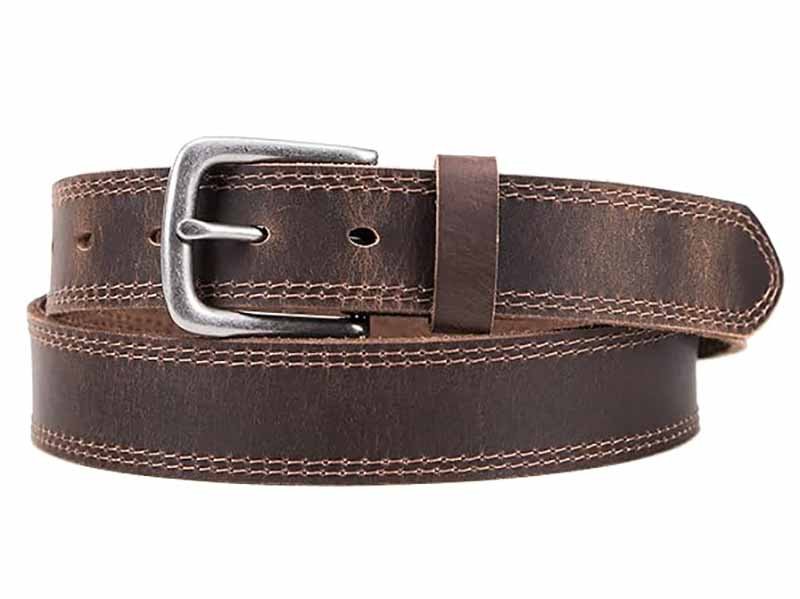
Different clothing styles require different leather belt widths. 30mm belts usually fit dress pants and suits, 35mm belts work well with chinos and business casual clothing, while 38–40mm belts are best for jeans and casual wear. The correct belt width should always match the belt loop size and overall style of the outfit.
Understanding belt width and clothing compatibility
When people choose belts, they rarely think about millimeters. Instead, they think about how the belt looks with their clothing. A belt that is too wide can make a suit look bulky, while a belt that is too narrow may look weak when paired with jeans.
Clothing designers generally build belt loops around certain standards, which means belt manufacturers must follow those standards if they want their products to work across global markets.
Below is a simple reference table used by many belt designers.
| Clothing Category | Typical Belt Loop Width | Recommended Leather Belt Width |
|---|---|---|
| Formal suits | 30–32mm | 28–30mm belts |
| Dress trousers | 32–34mm | 30–32mm belts |
| Chinos | 34–36mm | 32–35mm belts |
| Casual trousers | 36–38mm | 35–38mm belts |
| Jeans | 38–42mm | 38–40mm belts |
The closer the belt width is to the loop width, the better the belt will sit on the waist.
A belt that fills the loop correctly feels stable, looks proportional, and stays aligned with the buckle.
Which leather belts width fits dress pants best?
Dress pants are designed with narrow belt loops, which means they require slimmer belts. In most formal clothing, the best belt widths fall between 28mm and 32mm, with 30mm belts being the most common choice.
The reason is simple: formal clothing emphasizes clean lines and minimal visual distraction. A wide belt would break that visual balance and make the waist area appear heavier.
Characteristics of dress belt widths:
| Feature | Dress Belt Standard |
|---|---|
| Belt width | 28–30mm |
| Buckle size | small or medium frame |
| Leather thickness | 3–3.5mm |
| Edge finishing | polished edge paint or folded edge |
Slim belts also allow for smaller, elegant buckles, which complement formal outfits better.
For brands developing formal belt collections, it is usually safer to stay around 30mm width, because this fits most dress pants across European, American, and Asian markets.
Which leather belts width works for jeans?
Jeans typically require wider belts because denim fabrics are thicker and belt loops are larger. Most jeans are designed to fit belts between 38mm and 40mm.
This width creates better visual balance with denim, which tends to be heavy and textured.
Typical design specifications for jeans belts include:
| Specification | Common Range |
|---|---|
| Belt width | 38–40mm |
| Leather thickness | 3.8–4.5mm |
| Buckle style | large frame buckle |
| Stitch style | heavy thread stitching |
Wider belts also distribute pressure better across the waist, which improves comfort when wearing heavier clothing.
Because jeans are often worn in casual or outdoor environments, these belts are usually made with thicker leather such as full grain cowhide or vegetable-tanned leather.
How should leather belts width match belt loops?
The easiest rule for choosing belt width is simple:
The belt should fill most of the loop space without being difficult to insert.
If a belt is significantly narrower than the loop, two problems occur:
- The belt slides around inside the loops.
- The outfit looks visually unbalanced.
If the belt is too wide, it becomes difficult to thread through loops and may damage clothing.
Most clothing manufacturers leave about 2–4mm clearance between the belt width and loop width.
Example:
| Loop Width | Ideal Belt Width |
|---|---|
| 32mm loop | 28–30mm belt |
| 36mm loop | 32–34mm belt |
| 40mm loop | 36–38mm belt |
| 42mm loop | 38–40mm belt |
This small gap allows the belt to move smoothly while still appearing proportionate.
How Are 25mm–40mm Leather Belts Width Used?
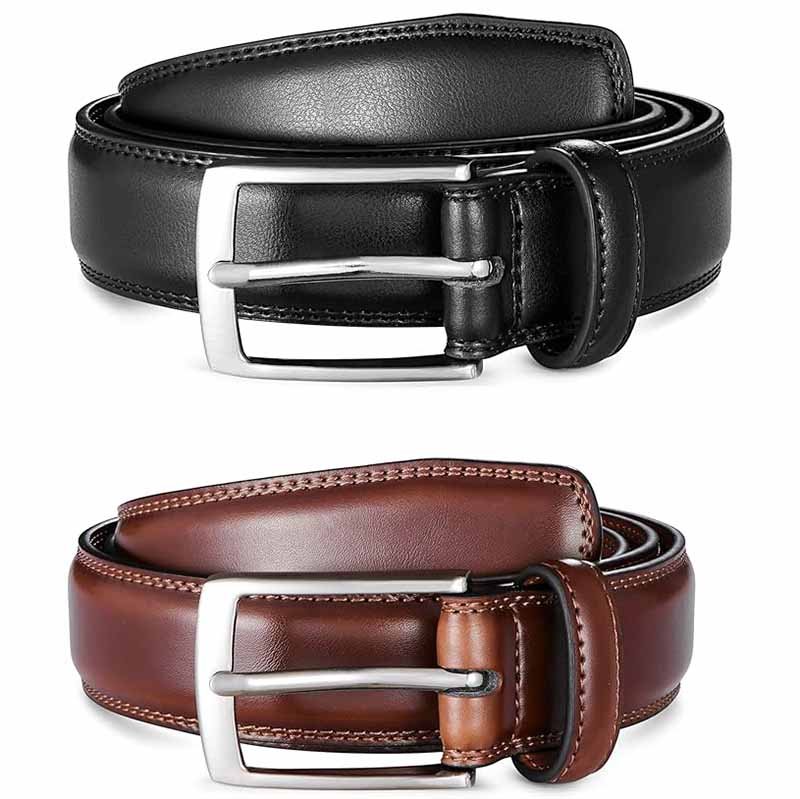
Each leather belt width serves a different design purpose. 25mm belts are used for slim fashion styles, 30mm belts are common for formal dress belts, 35mm belts are versatile everyday options, and 38–40mm belts are widely used for jeans, casual wear, and work belts where durability and stronger appearance are preferred.
Understanding how belt width influences product design
When brands develop leather belts, they usually define a target customer group first. Belt width often reflects the lifestyle and clothing habits of that group.
For example:
- Luxury dress brands often use 30mm belts
- Casual lifestyle brands prefer 35mm belts
- Denim or outdoor brands often choose 38–40mm belts
Below is a practical breakdown of how each width is commonly used.
How is 25mm leather belts width used?
The 25mm belt width is considered a slim belt. It is most commonly used in fashion accessories, especially for women’s belts or minimalist styling.
Key characteristics of 25mm belts include:
| Feature | Details |
|---|---|
| Visual style | slim and elegant |
| Common users | women and fashion brands |
| Buckle style | small decorative buckles |
| Leather thickness | 2.5–3.2mm |
Because these belts are narrow, they usually use softer leather such as calfskin or top-grain leather.
These belts are often designed more as fashion accessories than heavy-duty functional belts.
How is 30mm leather belts width used?
The 30mm belt width is one of the most widely used widths in formal belts. It fits most dress trousers and is popular in office and business attire.
Typical features of 30mm belts include:
| Feature | Details |
|---|---|
| Main use | suits and business clothing |
| Buckle style | classic frame buckle |
| Leather type | full-grain or corrected leather |
| Edge finish | polished edge paint |
Many luxury fashion brands prefer this width because it looks refined and elegant without being too thin.
How is 35mm leather belts width used?
The 35mm belt width is widely considered the most versatile belt width in the market.
It sits between dress belts and casual belts, making it suitable for many situations.
Common characteristics include:
| Feature | Details |
|---|---|
| Style | casual or business casual |
| Clothing compatibility | chinos, trousers, some jeans |
| Leather thickness | 3.5–4mm |
| Buckle size | medium frame buckle |
For brands launching their first belt collection, 35mm is often the safest width to start with, because it works across many clothing styles.
How are 38mm and 40mm leather belts width used?
The 38mm and 40mm belt widths are commonly used for casual belts, jeans belts, and work belts.
These belts are designed to appear stronger and more rugged.
Typical product specifications include:
| Feature | 38mm Belt | 40mm Belt |
|---|---|---|
| Clothing type | jeans, casual pants | heavy denim, workwear |
| Leather thickness | 3.8–4.2mm | 4–4.5mm |
| Buckle style | larger buckle | heavy buckle |
| Stitching | optional | often reinforced stitching |
Because wider belts carry more tension, manufacturers often use thicker leather or reinforced layers.
These belts are especially popular in American and European casual fashion markets.
How Does Leather Belts Width Affect Belt Design?
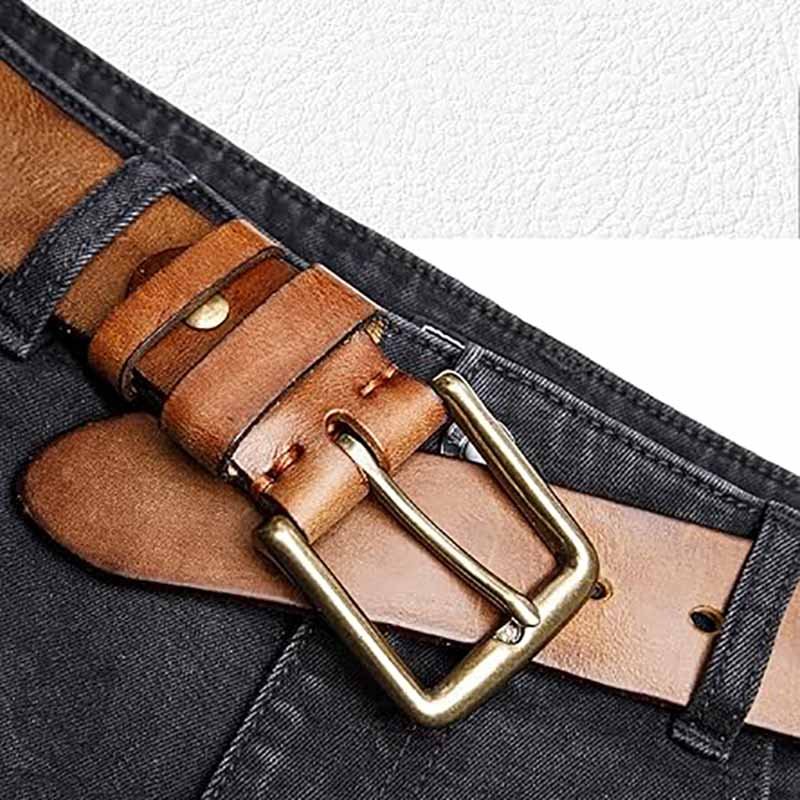
Leather belt width directly influences the belt’s structure, including leather thickness, buckle size, stitching layout, and reinforcement methods. Narrow belts require lighter buckles and thinner leather to remain flexible, while wider belts must use thicker leather or reinforced construction to prevent bending or stretching. Proper balance between width, thickness, and buckle size ensures durability and visual harmony.
Why width is the starting point of belt engineering
In leather belt manufacturing, designers rarely start with leather type or buckle style. Instead, they usually start with belt width, because width determines the structural requirements of the entire product.
For example, a 40mm belt must support more tension across a larger surface area. If the leather is too thin, the belt may stretch or curl. Conversely, a 25mm belt that uses thick leather may feel stiff and uncomfortable.
This means belt width influences:
- Leather thickness
- Buckle frame dimensions
- Stitch placement
- Reinforcement layers
- Edge finishing techniques
Manufacturers therefore use different construction methods depending on belt width.
Below is a quick overview of common belt engineering standards.
| Belt Width | Recommended Leather Thickness | Typical Construction |
|---|---|---|
| 25mm | 2.5–3.2mm | single leather layer |
| 30mm | 3–3.5mm | single layer or lined belt |
| 35mm | 3.5–4mm | reinforced or double layer |
| 38mm | 3.8–4.2mm | double layer construction |
| 40mm | 4–4.5mm | heavy-duty leather belt |
These ranges are commonly used in global leather belt manufacturing.
How does leather belts width affect buckle size?
The buckle must always match the belt width. If the buckle frame is too small, the belt will not fit. If the buckle is too large, the belt may look disproportionate.
Most buckle frames are designed with a small clearance above the belt width.
Typical buckle frame sizes include:
| Belt Width | Buckle Inner Width |
|---|---|
| 25mm belt | 26–27mm buckle |
| 30mm belt | 31–32mm buckle |
| 35mm belt | 36–37mm buckle |
| 38mm belt | 39–40mm buckle |
| 40mm belt | 41–42mm buckle |
Buckle weight also increases with belt width. Wider belts require stronger buckle frames to withstand higher pulling forces.
For example, casual belts designed for jeans often use solid zinc alloy buckles, while formal belts may use lighter buckles with slimmer frames.
When designing belts, manufacturers ensure the buckle size visually balances the belt width so the overall product looks proportionate.
Which leather thickness suits each leather belts width?
Leather thickness must be carefully matched with belt width. If the leather is too thin, the belt will stretch or curl. If it is too thick, the belt may feel stiff and uncomfortable.
Below is a common guideline used in belt manufacturing.
| Belt Width | Leather Thickness | Typical Leather Type |
|---|---|---|
| 25mm | 2.5–3mm | calfskin, fashion leather |
| 30mm | 3–3.5mm | full grain leather |
| 35mm | 3.5–4mm | vegetable-tanned leather |
| 38mm | 3.8–4.2mm | heavy cowhide |
| 40mm | 4–4.5mm | thick full-grain leather |
Some premium belts also use double-layer construction, where two pieces of leather are bonded together. This method increases durability and prevents stretching.
Double-layer belts are especially common in 38mm and 40mm casual belts.
How does leather belts width influence belt durability?
Belt width affects how tension is distributed across the leather when the belt is worn.
A wider belt spreads pressure across a larger surface area, which generally improves durability. However, wider belts also require stronger reinforcement to prevent bending.
Factors influencing durability include:
- Leather quality
- Belt thickness
- Stitch reinforcement
- Edge finishing
- Buckle strength
Manufacturers often strengthen wider belts by adding:
- Reinforced stitching along edges
- Lined leather construction
- Internal reinforcement layers
For belts designed for heavy use, such as work belts or denim belts, reinforced construction can significantly increase lifespan.
How Should Brands Choose Leather Belts Width?
Brands should choose leather belt width based on target customers, clothing styles, and product positioning. Slim widths are better suited for fashion and formal wear, while wider belts are preferred for casual and rugged styles. Understanding the lifestyle and clothing habits of customers helps brands develop belt collections that fit real usage scenarios.
Choosing belt width from a product development perspective
When brands create a leather belt collection, they typically consider three factors:
- Target market
- Clothing compatibility
- Product positioning
Each factor influences belt width selection.
Below is a simplified planning framework used by many belt brands.
| Target Market | Recommended Belt Width |
|---|---|
| Formal business wear | 30mm |
| Business casual | 32–35mm |
| Lifestyle fashion | 25–35mm |
| Denim brands | 38mm |
| Outdoor / workwear | 40mm |
For many brands, offering two or three widths is enough to cover most customers.
Example product line:
| Product Type | Belt Width |
|---|---|
| Dress belt | 30mm |
| Casual belt | 35mm |
| Jeans belt | 38mm |
This approach keeps the collection simple while meeting the needs of different clothing styles.
Why working with an experienced leather belt manufacturer matters
Developing leather belts involves many technical decisions beyond width alone. Experienced manufacturers can help brands choose the right specifications for durability, comfort, and appearance.
SzoneierLeather has over 18 years of experience producing leather belts, bags, wallets, straps, and leather accessories for global brands and custom wholesale customers.
Our capabilities include:
- Leather material sourcing and development
- Product design and engineering
- Prototype sampling and testing
- Custom logo and branding
- Packaging design and quality inspection
- Stable large-scale production
Because we control multiple stages of the supply chain—from raw materials to finished products—we can help brands develop high-quality leather belts tailored to their market needs.
Conclusion
Leather belt width may seem like a small detail, but it plays a major role in the design and functionality of a belt. Width determines how the belt fits clothing, how strong the structure must be, and how the overall product looks.
Understanding common widths such as 25mm, 30mm, 35mm, 38mm, and 40mm allows brands to design belts that match real customer needs and clothing styles.
By combining the correct width with appropriate leather thickness, buckle design, and construction techniques, manufacturers can create belts that are both durable and visually balanced.
If you are planning to develop custom leather belts for your brand, working with an experienced manufacturer can help you avoid design mistakes and speed up product development.
SzoneierLeather specializes in custom leather belt manufacturing, private label production, and OEM/ODM services. Our team can assist with product design, material selection, prototyping, and full-scale production.
If you would like to create high-quality leather belts tailored to your brand, feel free to contact SzoneierLeather to discuss your project and request a quotation.


