 Skip to content
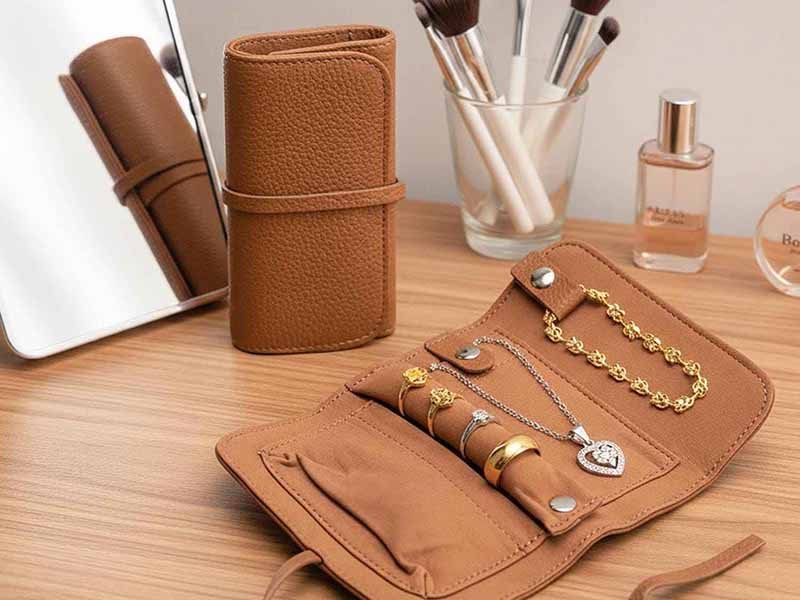
When a retail chain develops a leather accessories line, the real challenge is not coming up with a nice-looking product. The real challenge is making sure that product can be repeated at scale, delivered on time, priced correctly, and kept consistent from the first store to the five-hundredth store. A leather wallet that looks great in the sample room can easily turn into a problem in mass production if the leather grain changes, edge paint cracks, hardware color shifts, or packaging feels cheaper than the product itself. This is why leather accessories production is never just about manufacturing. It is about supply chain control, product development discipline, and a factory’s ability to turn a concept into a stable retail program.
Leather accessories production for retail chains is a complete system that covers raw material sourcing, product design, sample development, cutting, stitching, finishing, branding, packaging, and quality control. The goal is not only to make leather goods, but to make them consistently, efficiently, and in a way that supports store-level sales, margin targets, and long-term brand image.
Many companies only realize this after a launch goes wrong. A belt collection may look sharp in the showroom, but if hole spacing is inconsistent, buckle plating scratches too easily, or carton labeling is wrong, returns rise, store staff complain, and reorder plans slow down. On the other hand, when the factory gets the details right early, the result is completely different: smoother launches, fewer complaints, and stronger repeat business. That is why this topic deserves a closer look.
What Is Leather Accessories Production?
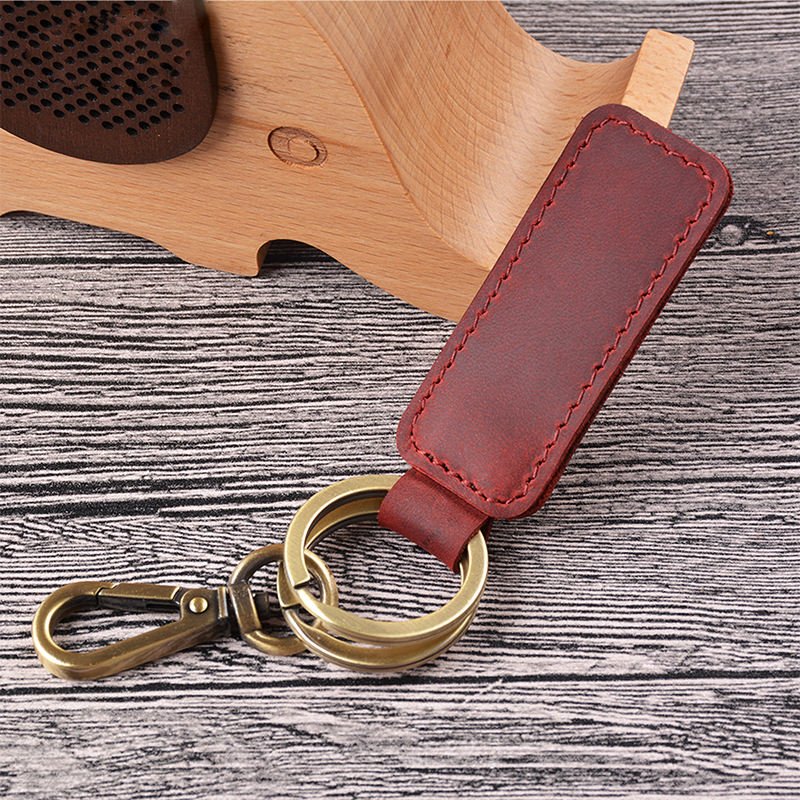
Leather accessories production is the full process of developing and manufacturing leather products such as bags, wallets, belts, straps, small accessories, and leather presentation boxes. For retail chains, it means more than making finished goods. It means creating products with stable quality, consistent appearance, controlled cost, and repeatable production standards across every order.
What is leather accessories production?
Leather accessories production is a chain of connected work, not a single factory action. It starts long before stitching begins. In a professional setup, the process usually moves through these stages:
- material selection
- design review
- pattern development
- sample making
- material cutting
- stitching and assembly
- edge finishing or painting
- logo application
- hardware installation
- inspection
- packaging
- shipment preparation
Every stage affects the next one. If the leather is selected poorly at the start, no amount of finishing can fully fix the result. If the pattern is inaccurate, production efficiency drops. If the packaging is treated as an afterthought, the product may arrive with scratches or a weak shelf impression.
This matters even more for retail chains because they are rarely buying just one item. They are often developing a collection or a program. That may include matching wallets, belts, card holders, travel accessories, straps, or small gift items that all need to follow the same visual language. The factory must therefore understand not only construction, but also merchandising logic.
A strong leather production partner is expected to do more than “make what is drawn.” The factory should be able to point out whether a design is too slow to produce, whether a certain leather finish may age badly in stores, whether a hardware choice is likely to scratch during transport, and whether a packaging method is adding cost without adding value. That level of practical thinking is what retail programs need.
To understand why this work is complex, it helps to compare leather accessories with other consumer products. Leather is not a perfectly uniform industrial sheet. It is a natural material. That means grain, softness, stretch, thickness, and color uptake can vary from hide to hide. This is one reason why experienced factories build material standards into the development stage rather than trying to solve everything during final inspection.
Here is a simple breakdown of what retail chains usually expect from leather accessories production:
| Production Area | What Retail Chains Usually Need | Why It Matters |
|---|---|---|
| Material Control | Stable leather color, thickness, and handfeel | Ensures product consistency on shelves |
| Product Development | Clear patterns, construction plans, and samples | Reduces risk before bulk production |
| Manufacturing Stability | Repeatable workmanship across large quantities | Supports multi-store programs |
| Quality Control | Low defect rate and clear standards | Protects brand reputation |
| Packaging Execution | Consistent labeling and retail-ready presentation | Improves store efficiency and customer experience |
| Delivery Planning | Reliable lead times and shipment management | Helps seasonal or promotional launches |
For many retail programs, product quality is only half the story. Operational reliability is the other half. A beautiful wallet that arrives three weeks late can still damage a launch. A well-made belt in the wrong carton can still create warehouse confusion. This is why leather accessories production should be viewed as a full system rather than a workshop task.
What products in leather accessories production?
Many people hear “leather accessories” and think only of wallets or belts. In practice, the category is much broader. Retail chains often build leather programs around multiple product types because collections sell better when items work together visually and commercially.
Common product categories include:
- leather bags
- wallets and card holders
- belts
- watch straps
- bag straps
- passport holders
- key holders
- pouches
- notebook covers
- cosmetic cases
- luggage tags
- phone sleeves
- gift sets
- small desk accessories
- leather storage boxes
- premium packaging boxes
For retail chains, product range planning usually follows one of three models:
| Product Model | What It Includes | Common Retail Use |
|---|---|---|
| Entry Range | Small leather goods, card holders, simple belts | Fast-moving everyday items |
| Core Range | Wallets, belts, medium bags, straps | Main volume business |
| Premium Range | Gift boxes, specialty accessories, upgraded packaging | Seasonal campaigns, high-margin presentation |
This product mix matters because not all categories are equally difficult to make. For example:
- a simple bifold wallet may require fewer components, but demands precise edge finishing because the customer holds it very closely
- a leather belt may look simple, yet buckle durability, edge paint flexibility, and hole accuracy can decide whether it performs well in daily use
- a structured leather box may need strict dimensional control so the lid alignment looks clean in store presentation
- a bag strap may seem small, but if the reinforcement is weak or the hardware plating wears too fast, complaints rise quickly
Retail chains often want cross-category consistency. That means the leather shade on a wallet should match the belt collection, and the logo finish on a card holder should feel aligned with the packaging box. This is where a factory with integrated development becomes more useful than a workshop that only handles one item type.
A practical way to look at category differences is this:
| Product Type | Main Customer Focus | Main Production Focus |
|---|---|---|
| Wallets | Slim shape, smooth touch, clean logo | Edge paint, fold accuracy, stitch neatness |
| Belts | Durability, fit, buckle finish | Strap cutting accuracy, hole spacing, plating quality |
| Bags | Appearance, function, weight, comfort | Structure, lining, reinforcement, hardware assembly |
| Straps | Strength, flexibility, easy use | Material thickness, stitching strength, hardware fixing |
| Boxes | Premium look, rigid shape, presentation | Construction stability, surface finish, alignment |
From a commercial point of view, leather accessories are attractive because they usually offer strong perceived value. Customers often feel leather products are more premium, more giftable, and more durable than many low-cost alternatives. That said, the production side must support that promise. If a product feels good in the hand but starts peeling, cracking, or deforming after short use, the gap between expectation and reality becomes expensive very quickly.
For this reason, retail chains often prefer factories that can support multiple categories under one development system. It makes communication easier, styling more unified, and quality management more consistent.
Are leather accessories production standards strict?
Yes, and in retail chain business, they need to be.
A small custom order may survive with minor variation. A retail chain order usually cannot. Once products are distributed across many stores, even a small inconsistency becomes visible. If one batch of brown wallets looks warmer in tone than another batch, store display harmony is broken. If one shipment of belts has looser stitching than another, customer trust drops. If logos sit slightly off-center on boxed accessories, the brand image weakens immediately.
That is why production standards for retail programs tend to be much tighter than standards for casual wholesale business.
Below are some of the most common areas that require control:
- leather color consistency
- material thickness tolerance
- stitch count consistency
- clean and smooth edge finish
- hardware plating quality
- logo position accuracy
- packaging and barcode accuracy
- carton drop resistance
- odor control
- scratch resistance during transport
In real production, these standards are often measured in small tolerances. Even a difference of 0.2 mm to 0.4 mm in leather thickness can change how a wallet folds or how a belt feels in the hand. A slight mismatch in edge paint thickness can make one side of a strap look more premium than the other. In retail, these details are not small.
Here is a practical comparison:
| Quality Point | Loose Standard | Retail Chain Standard |
|---|---|---|
| Color Match | Visually similar | Closely controlled by approved sample |
| Stitching | Acceptable if secure | Even, straight, and visually clean |
| Edge Finish | Functional | Smooth, consistent, no visible bubbles or cracks |
| Logo Placement | Close enough | Controlled by fixed positioning standard |
| Packaging | Protect product | Protect product and support shelf presentation |
| Defect Rate | More tolerance | Much lower tolerance |
Another important point is that quality control should not happen only at the end. Final inspection is important, but it is too late to solve system problems there. Strong factories build checkpoints into the process:
- leather incoming inspection
- color and thickness confirmation
- first-piece production approval
- in-line workmanship checks
- hardware and logo checks
- pre-pack inspection
- carton verification
This approach reduces waste and protects schedules. If a problem is found only after the goods are packed, the cost of rework can be significant. Labor cost rises, shipment timing becomes risky, and some materials may no longer be replaceable within the planned delivery window.
Retail chains also care about how standards are documented. A factory that relies only on verbal instructions is risky. A factory that works from approved samples, measurement sheets, logo specs, material cards, and packing standards is much more reliable. This is especially important when the same item will be reordered months later.
SzoneierLeather’s role in this kind of program is not simply to produce goods. It is to help convert product requirements into stable factory standards. That includes material development, construction review, sample confirmation, controlled production, and packaging inspection. For retail chain business, that discipline is what turns a product idea into something repeatable and profitable.
How Leather Accessories Production Works
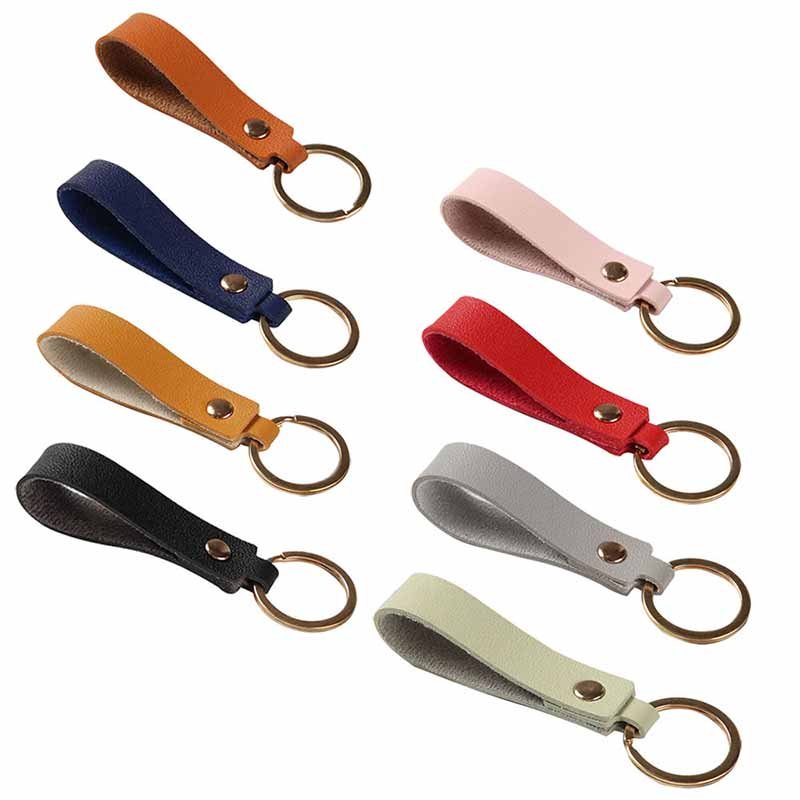
Leather accessories production works through a connected process that starts with product planning and material selection, then moves into sampling, manufacturing, finishing, inspection, packaging, and shipment. For retail chains, the goal is to make sure every stage supports stable quality, efficient production, and reliable delivery.
How does leather accessories production start?
A strong production program starts with clear development work. This is where many future problems are either prevented or quietly created.
The first stage usually includes:
- target product review
- intended price range discussion
- material recommendation
- logo method selection
- hardware selection
- structure review
- packaging plan
- sample development
At this stage, a factory should not only ask what the product should look like. It should also ask how the product is expected to perform, where it will be sold, what retail level it belongs to, and what kind of consumer will use it.
For example:
- a fashion belt for seasonal display may prioritize appearance and trend response
- an everyday wallet for chain retail may prioritize stable structure, abrasion resistance, and smooth repeated opening
- a leather gift box may require stronger board support and more refined wrapping quality because presentation is part of the value
This first stage also affects cost more than many companies realize. A design that looks simple on paper can become expensive if it includes too many edge-painted pieces, complex interior assembly, or difficult stitching paths. On the other hand, some products can be engineered for better production efficiency without changing their visual appeal much.
Below is a practical view of what should be confirmed before sample making begins:
| Development Point | What Should Be Confirmed Early | Why It Saves Time |
|---|---|---|
| Product Size | Exact dimensions and tolerances | Avoids repeated pattern changes |
| Leather Type | Genuine leather, split leather, PU-backed leather, etc. | Prevents cost and feel mismatch |
| Construction | Folded edge, turned edge, raw edge, padded body | Clarifies process difficulty |
| Logo Method | Deboss, emboss, foil, metal plate, print | Affects tooling and appearance |
| Hardware Finish | Gold, silver, gunmetal, matte, antique | Prevents late mismatch |
| Packaging | Polybag, box, tissue, barcode, insert card | Supports shipping and retail needs |
Sample making is not only about appearance. It is also where construction truth comes out. A handle drop that looked balanced on a sketch may feel wrong in use. A wallet thickness that seemed acceptable may become too bulky once cards are inserted. A belt edge paint may look fine in the first 24 hours but crack after bending tests. That is why a serious factory treats samples as a test phase, not a display phase.
Good development work also shortens later lead time. When materials, measurements, logo details, and packaging specs are locked early, bulk production moves faster and with less confusion.
How does leather accessories production manage supply?
Supply control is one of the biggest hidden factors in leather production success. Many projects look fine at the sample stage because the factory is working with a carefully selected sample hide. Mass production is different. It requires enough matching material to support the whole order and often the reorder after that.
Leather supply management usually involves these questions:
- can the same finish be sourced again in a stable way
- how much color variation is acceptable
- is the required thickness available at volume
- how long is the material lead time
- does the factory grade the material before cutting
- can the hardware finish be repeated consistently
Retail chains care about these issues because they affect both appearance and planning. If the material is not stable, then color matching between stores becomes harder. If the lead time on a specific leather is unpredictable, launch schedules become risky. If the hardware supplier changes plating quality between batches, complaints may rise months later.
Below is a simplified look at how supply problems usually affect commercial results:
| Supply Problem | Production Result | Business Result |
|---|---|---|
| Leather color drift | Batch mismatch | Inconsistent store display |
| Thickness variation | Shape inconsistency | Different product feel across stores |
| Late material arrival | Production delay | Missed launch window |
| Unstable hardware quality | Faster wear or scratches | Increased complaints and returns |
| Weak packaging supply | Transit damage or poor presentation | Lower shelf impact |
Factories that work well with retail chains usually do several things differently:
- they maintain a stronger supplier network
- they reserve or prepare key materials earlier
- they compare incoming batches against approved standards
- they sort leather before cutting
- they align leather use with product zones, placing cleaner sections where visual impact matters most
For example, the front panel of a wallet may need a cleaner leather selection than a hidden internal divider. A premium belt collection may need tighter surface control than a simple accessory strap. This kind of grading is not glamorous, but it directly affects shelf quality.
SzoneierLeather’s supply chain strength matters here because development and sourcing are connected. When a customer wants a new texture, finish, or construction direction, the raw material side can support the product side more quickly. That helps reduce sampling time, improve cost control, and increase the chance that approved samples can be repeated accurately in production.
How is leather accessories production quality checked?
Quality control in leather accessories production should be built into the process, not saved for the last table at the end of the line. Once a large batch is fully assembled, fixing problems becomes slower, more expensive, and sometimes impossible without visible compromise.
A practical quality system usually checks four levels:
- incoming materials
- first production pieces
- in-line workmanship
- final packed goods
At the incoming stage, the factory checks:
- color consistency
- leather thickness
- softness or firmness
- visible scars or marks
- backing stability
- hardware plating and function
- lining quality
- packaging materials
During production, the focus shifts to workmanship:
- cutting accuracy
- stitch straightness
- seam strength
- adhesive cleanliness
- edge paint smoothness
- logo position
- hardware installation security
At the finished goods stage, the factory should also inspect use-related issues:
- zipper operation
- snap performance
- buckle movement
- fold comfort
- edge flexibility
- packaging completeness
- barcode or label correctness
This layered approach matters because different defects appear at different stages. A leather thickness issue is easiest to catch before cutting. A stitch alignment issue appears during assembly. A carton labeling issue appears during packing. Trying to catch all of this only at the final stage is inefficient.
Here is a simple control structure:
| QC Stage | Main Focus | Common Problems Found |
|---|---|---|
| Incoming Materials | Leather, hardware, lining, packaging | Color mismatch, thickness issues, surface defects |
| First Piece Approval | Construction and appearance | Wrong logo position, incorrect measurements |
| In-Line Inspection | Workmanship and consistency | Crooked stitching, poor edge paint, assembly mistakes |
| Final Inspection | Finished goods and packing | Functional defects, missing accessories, labeling errors |
A deeper point that customers often care about is defect prevention, not only defect detection. In other words, the best factory is not the one that only finds mistakes at the end. It is the one that creates fewer mistakes in the first place. That usually comes from trained operators, clear technical sheets, approved samples, measured process control, and communication between development and production teams.
For retail chain business, this is especially important because the cost of inconsistency spreads quickly. One weak store review, one visible packaging issue, or one hardware complaint can influence reorder confidence. That is why quality control should be treated as a production strategy, not a separate department.
Which Leather Accessories Production Fits Retail?
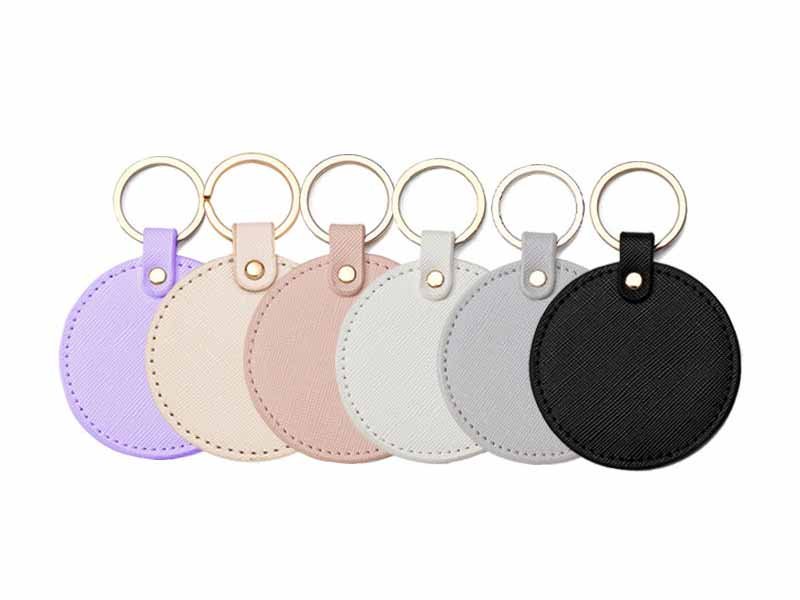
The best leather accessories production model for retail chains is one that balances volume capacity, product consistency, cost control, and customization flexibility. There is no single “best” model for all cases. The right choice depends on order size, product complexity, branding needs, and how often the collection will be updated or reordered.
Which leather accessories production suits big orders?
For large retail chains, production must handle volume without losing consistency. This usually means working with factories that have:
- stable production lines
- trained workers for leather goods
- standardized workflows
- capacity planning systems
- experience with repeat orders
In large orders, efficiency matters as much as quality. A factory may produce excellent samples but struggle when scaling from 500 units to 50,000 units. This is where production structure becomes critical.
Large-order production typically works best under these conditions:
| Requirement | What to Look For in Factory | Why It Matters |
|---|---|---|
| Production Capacity | Multiple lines, scalable workforce | Avoid delays during peak seasons |
| Standardization | Clear SOPs for each product | Ensures consistency across batches |
| Material Planning | Bulk material reservation | Prevents color or texture variation |
| Lead Time Control | Fixed production schedules | Supports retail launch planning |
One important detail is line balancing. In leather production, some steps take longer than others. If cutting is faster than stitching, or stitching is faster than edge finishing, bottlenecks appear. Experienced factories adjust labor allocation to keep production flowing evenly.
Another key factor is repeatability. Retail chains rarely place just one order. They expect to reorder the same product months later with the same look and quality. This requires:
- archived material references
- approved sample retention
- production data tracking
Factories that treat every order as a new project often fail here. Factories that treat production as a system perform better.
Which leather accessories production fits private label?
Private label production focuses on branding, differentiation, and consistency across product lines. For retail chains building their own brand identity, this model is often more important than pure manufacturing capacity.
A strong private label production setup should support:
- custom logo techniques
- consistent brand color matching
- unified packaging design
- coordinated product collections
- flexible design adjustments
Logo application alone can vary widely:
| Logo Method | Visual Effect | Suitable For |
|---|---|---|
| Debossed | Subtle, premium feel | Classic leather goods |
| Embossed | Raised texture | Strong brand visibility |
| Foil Stamping | Metallic highlight | Gift and premium items |
| Metal Plate | High-end branding | Bags and accessories |
| Printed Logo | Colorful and flexible | Fashion or seasonal items |
Retail chains often underestimate how much branding consistency affects customer perception. If a wallet uses a debossed logo, but a matching belt uses a shiny metal logo, the collection may feel disconnected.
Private label production also involves packaging alignment:
- box color and texture
- tissue paper style
- hang tags and inserts
- barcode placement
All these details must work together. A factory with integrated services (product + packaging) can reduce coordination errors.
SzoneierLeather supports private label projects by combining product development, logo execution, and packaging design, allowing clients to build consistent product lines instead of isolated items.
Which leather accessories production controls cost?
Cost control is not only about finding the lowest price. It is about balancing material cost, labor cost, production efficiency, and defect rate.
In leather accessories production, cost is influenced by several factors:
| Cost Factor | Impact Level | Explanation |
|---|---|---|
| Leather Type | Very High | Full grain vs split leather changes cost significantly |
| Construction Complexity | High | More layers, folds, and edges increase labor time |
| Logo Method | Medium | Metal logos cost more than debossing |
| Hardware Quality | Medium | Better plating increases durability and cost |
| Order Quantity | High | Larger orders reduce unit cost |
| Defect Rate | Hidden but Critical | Rework and waste increase real cost |
One of the most common mistakes is focusing only on material cost. In reality, labor often represents a large portion of leather product cost. A design that reduces stitching time by 10% can sometimes save more than switching to a cheaper leather.
Here is a simplified comparison:
| Strategy | Short-Term Result | Long-Term Impact |
|---|---|---|
| Cheapest Material | Lower initial cost | Higher return rate |
| Balanced Material | Moderate cost | Stable product performance |
| Premium Material | Higher cost | Strong brand positioning |
Another important concept is cost predictability. Retail chains prefer stable pricing because it helps with margin planning. A factory that frequently changes prices due to unstable sourcing creates risk.
SzoneierLeather helps clients optimize cost by:
- recommending suitable leather grades
- simplifying construction where possible
- improving material utilization
- controlling defect rates
The goal is not just to reduce cost, but to improve cost efficiency per sellable unit.
What Issues in Leather Accessories Production?
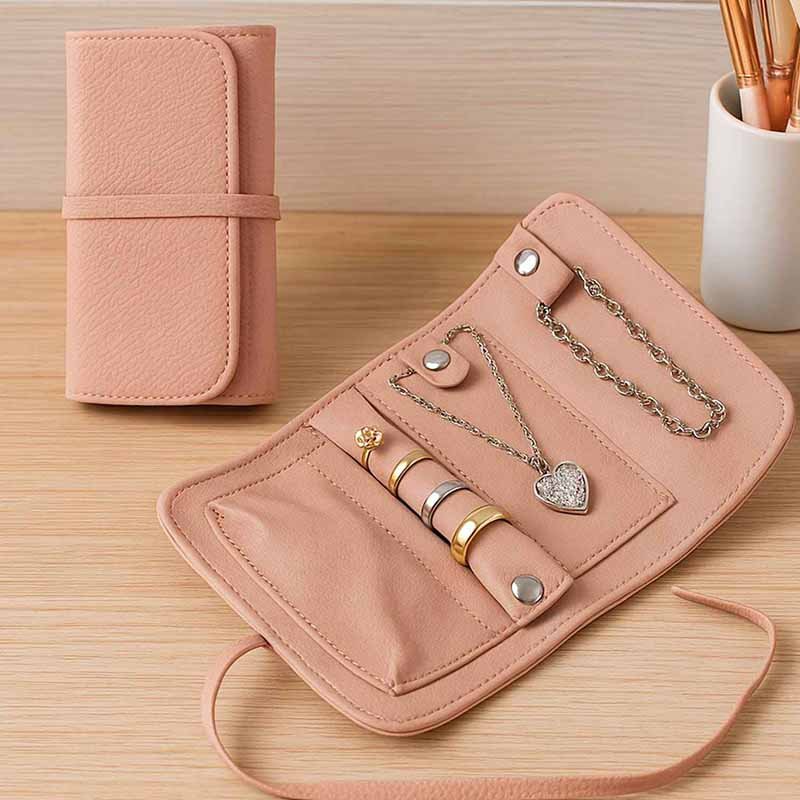
Leather accessories production involves several common challenges that can affect quality, cost, and delivery. The most critical issues include material inconsistency, production errors, cost fluctuation, compliance requirements, and sustainability expectations.
What affects leather accessories production quality?
Quality problems in leather production usually come from a combination of material variation and process inconsistency.
Common issues include:
- uneven leather thickness
- color mismatch between batches
- rough or cracking edge paint
- loose or uneven stitching
- hardware scratches or fading
- glue marks or poor finishing
These problems often originate earlier than expected. For example:
- poor leather grading leads to inconsistent appearance
- rushed edge painting causes cracking after bending
- incorrect thread tension causes stitching irregularities
Here is a breakdown of common defects and causes:
| Defect | Likely Cause | Prevention Method |
|---|---|---|
| Color Variation | Mixed leather batches | Batch control and color matching |
| Edge Cracking | Poor paint quality or process | Multi-layer edge finishing |
| Stitch Issues | Operator inconsistency | Training and standardization |
| Hardware Damage | Weak plating | Better supplier selection |
| Surface Scratches | Poor handling | Protective packaging |
Retail chains often require pre-production approval samples and golden samples to reduce these risks.
Do leather accessories production costs change?
Yes, and cost fluctuation is a real concern.
Several factors influence cost changes:
- raw leather price fluctuation
- labor cost changes
- exchange rate shifts
- hardware price variation
- order volume changes
For example:
| Factor | Typical Impact Range |
|---|---|
| Leather price | ±10% to ±25% |
| Labor cost | ±5% to ±15% |
| Hardware | ±5% to ±10% |
Retail chains usually prefer suppliers who can lock prices for a period or at least provide predictable cost structures.
Factories with strong supply chains can reduce cost volatility by:
- securing long-term material contracts
- maintaining supplier relationships
- optimizing production efficiency
Are leather accessories production rules important?
Yes, especially for large retail markets.
Retail chains often require compliance with:
- environmental regulations
- chemical safety standards
- labor standards
- packaging regulations
For example:
| Requirement | Why It Matters |
|---|---|
| REACH compliance | Chemical safety in EU markets |
| CPSIA | Safety standards in the US |
| Eco-friendly materials | Brand image and sustainability |
| Packaging rules | Retail and logistics requirements |
Sustainability is becoming more important. Many retail chains now ask about:
- eco-friendly leather options
- recycled materials
- reduced packaging waste
Factories that can support these requirements are more competitive in long-term partnerships.
How to Choose Leather Accessories Production Partner
Choosing the right leather accessories production partner is one of the most important decisions for any retail chain. The factory you select will directly affect your product quality, delivery reliability, cost stability, and brand image. A strong partner does more than produce goods—they help you reduce risk, improve efficiency, and scale your product line with confidence.
How to choose leather accessories production factory?
When evaluating a leather accessories factory, many buyers focus only on price and sample appearance. In reality, those are only surface-level indicators. A more reliable evaluation looks at the factory’s full capability system.
Here are the key areas you should check:
| Evaluation Area | What to Look For | Why It Matters |
|---|---|---|
| Experience | Years in leather production, product range | Reduces learning curve and mistakes |
| Development Ability | Sampling speed, design support | Speeds up product launch |
| Material Supply | Stable leather sourcing | Ensures consistency across orders |
| Production System | Standard workflows, trained workers | Improves efficiency and repeatability |
| Quality Control | Multi-stage inspection system | Reduces defect risk |
| Communication | Clear and responsive team | Prevents misunderstandings |
| Packaging Capability | Integrated packaging solutions | Saves coordination cost |
A practical tip:
Always ask the factory how they handled a past production problem. Their answer will tell you more than their product catalog. A strong factory will explain how they identified the issue, corrected it, and prevented it from happening again.
Another important point is sample-to-production consistency. Many factories can produce a good sample, but fail to match it in bulk production. You should confirm:
- whether the sample uses the same materials as bulk
- whether the same production method will be used
- whether the factory keeps a reference sample
Factories like SzoneierLeather emphasize sample standardization, meaning what you approve is what you receive in production.
How to check leather accessories production capacity?
Production capacity is not just about how many units a factory can make per day. It is about whether the factory can handle your order without affecting quality or delivery time.
Capacity should be evaluated from multiple angles:
| Capacity Factor | What to Check | Risk if Ignored |
|---|---|---|
| Daily Output | Units per production line | Delays during peak season |
| Workforce Stability | Skilled worker retention | Inconsistent workmanship |
| Equipment | Cutting machines, stitching machines | Production bottlenecks |
| Order Scheduling | Production planning system | Overlapping orders causing delays |
| Expansion Ability | Ability to add lines quickly | Limited scalability |
A common mistake is choosing a factory that is either too small or too large:
- Too small → cannot handle volume, delays likely
- Too large → your order may not be prioritized
The ideal partner is a factory that fits your order scale and growth plan.
You should also ask about:
- lead time for repeat orders
- peak season capacity
- minimum and maximum order flexibility
For example:
| Order Type | Typical Lead Time |
|---|---|
| Sample | 5–10 days |
| Small Batch | 20–30 days |
| Bulk Order | 30–50 days |
Factories with strong planning systems can maintain stable lead times even when order volume increases.
SzoneierLeather supports both small customization and large retail programs, allowing clients to scale gradually without changing suppliers.
Do leather accessories production services matter?
Yes—and this is often underestimated.
A factory that only provides manufacturing may require you to coordinate:
- material sourcing
- packaging suppliers
- design adjustments
- quality standards
- logistics
This increases workload, communication risk, and cost.
A full-service factory, on the other hand, can provide:
- material development
- product design optimization
- sampling and prototyping
- manufacturing
- packaging design and production
- quality inspection
- logistics coordination
Here is a comparison:
| Factory Type | Advantage | Limitation |
|---|---|---|
| Basic Manufacturer | Lower initial cost | More coordination needed |
| Full-Service Factory | Integrated solution, less risk | Slightly higher unit price |
For retail chains, the second option is often more efficient because it reduces hidden costs such as:
- delays due to miscommunication
- inconsistent packaging
- repeated sampling cycles
- quality misunderstandings
SzoneierLeather operates as a full-service production partner, combining:
- raw material development
- product design
- sampling
- manufacturing
- packaging solutions
This integrated approach helps clients move faster and with fewer errors.
Start Your Leather Accessories Production with Confidence
Leather accessories production for retail chains is not just about making products—it is about building a reliable system that supports your brand, your margins, and your long-term growth.
To make the right decision, focus on these key points:
- choose a factory with strong material and production control
- confirm sample-to-bulk consistency
- evaluate real production capacity, not just promises
- prioritize communication and service capability
- balance cost with long-term product performance
Here is a simple decision framework:
| Priority | Key Question |
|---|---|
| Quality | Can this factory deliver consistent products across batches? |
| Cost | Is the pricing stable and aligned with product value? |
| Delivery | Can they meet deadlines reliably? |
| Flexibility | Can they support both small and large orders? |
| Service | Do they reduce your workload or increase it? |
Retail success often comes down to execution. The right factory partner helps you avoid common mistakes, launch products smoothly, and scale your business with confidence.
Work with SzoneierLeather
If you are developing leather bags, wallets, belts, straps, accessories, or premium leather packaging for your retail chain, SzoneierLeather is ready to support your project.
Whether you are launching a new collection or improving an existing product line, we can help you turn your ideas into reliable, retail-ready products.
Send us your design, concept, or requirements today.
Let’s build your next successful leather accessories collection together.


