 Skip to content
Italian Leather vs Genuine Leather: What’s the Real Difference
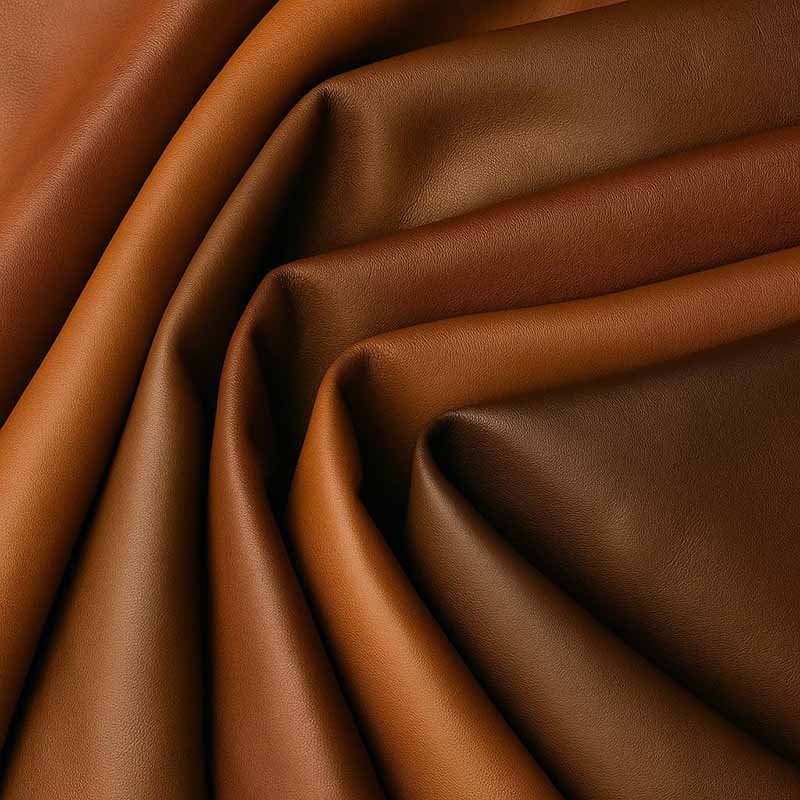
In the leather goods market, few terms cause more confusion—and more marketing misuse—than “Italian leather” and “genuine leather.” To many buyers, Italian leather automatically sounds premium, while genuine leather feels vague, even cheap. But the reality is far more nuanced. These two terms do not sit on the same classification level, and comparing them directly without understanding what each actually means often leads to poor purchasing decisions, inflated costs, or disappointing product quality.
For brand owners, designers, and professional buyers, this confusion is more than academic. Choosing the wrong leather based on a label rather than material facts can result in cracking, peeling, short product lifespan, or customer complaints within months of launch. On the other hand, understanding how Italian leather and genuine leather are defined—and how they are used in real manufacturing—can help brands build better products, control costs, and communicate honestly with their customers.
Italian leather and genuine leather are not the same type of classification. “Genuine leather” means real leather made from animal hide, but does not indicate quality. “Italian leather” usually refers to leather tanned or finished in Italy, often using traditional methods. Italian leather is not fake leather, but it is not automatically higher quality than all genuine leather. Quality depends on leather grade, tanning, and finishing—not labels alone.
Let’s break down what these terms really mean—and why understanding the difference matters far more than choosing a fashionable label.
What Do “Italian Leather” and “Genuine Leather” Mean
The terms “Italian leather” and “genuine leather” are often used together in marketing, but they describe two completely different dimensions of leather classification. One refers primarily to origin and processing tradition, while the other refers to material authenticity. Confusing these terms is one of the main reasons buyers misunderstand leather quality and overpay—or underbuy—based on labels alone.
Understanding what each term truly means is the foundation for choosing the right leather for bags, wallets, belts, and OEM/private-label leather goods.
“Genuine leather” means the material is real animal hide, not synthetic leather, but it does not indicate quality or grade. “Italian leather” usually refers to leather tanned or finished in Italy, often associated with traditional tanning methods. Italian leather is not a quality grade, and genuine leather is not fake leather—the two terms describe different aspects of leather classification.
What Does “Genuine Leather” Actually Mean?
“Genuine leather” is a legal and commercial term that simply confirms one thing: the product is made from real animal hide, not PU, PVC, or synthetic leather.
What “genuine leather” does not tell you:
- It does not specify leather grade
- It does not guarantee durability
- It does not indicate tanning method
- It does not reflect origin or craftsmanship
This is why “genuine leather” can describe both high-quality and low-quality leather.
In practice, the term is often used on:
- Entry-level wallets and belts
- Mass-market leather accessories
- Products made from split or corrected leather
Because lower-grade leather products commonly use this label, consumers often assume “genuine leather” means poor quality. Technically, this assumption is incorrect—but commercially understandable.
For professional buyers, the key takeaway is simple:
“Genuine leather” confirms authenticity, not performance.
Is “Genuine Leather” Fake Leather?
No. Genuine leather is not fake leather.
Fake leather includes materials such as:
- PU leather
- PVC leather
- Vegan or synthetic leather
Genuine leather always comes from animal hide. The confusion exists because the term is often associated with lower-priced products, leading consumers to mistake it for an inferior or artificial material.
From a manufacturing perspective, “genuine leather” is best treated as a starting point, not a decision factor.
What Does “Italian Leather” Usually Refer To?
“Italian leather” generally refers to leather that is:
- Tanned in Italy
- Finished in Italy
- Or produced under Italian tanning standards
Italy is globally known for its long leather-making history, especially in regions such as Tuscany, where traditional vegetable tanning methods are still widely used.
Italian leather is often associated with:
- Vegetable tanning
- Rich color depth
- Natural aging and patina
- Soft yet structured hand feel
However, it is crucial to understand that Italian leather is not a guaranteed quality grade. Italy produces:
- Premium full-grain leather
- Mid-grade corrected leather
- Industrial leather for mass production
Just like any other country.
Is Italian Leather Fake Leather?
No. Italian leather is real leather, not fake leather.
This question appears frequently in search results because of marketing misuse. Some products use phrases like:
- “Italian leather style”
- “Italian leather design”
- “Inspired by Italian leather”
These phrases do not legally guarantee that the leather itself is tanned in Italy. They often refer to design inspiration, not material origin.
For buyers and brands, verifying Italian leather requires:
- Tannery information
- Origin documentation
- Clear supplier disclosure
Is Italian Leather a Grade, a Material, or an Origin Claim?
Italian leather is best understood as an origin and processing claim, not a grade.
To clarify:
| Term | What It Describes |
|---|---|
| Genuine leather | Material authenticity (real hide) |
| Full-grain / Top-grain | Leather grade |
| Italian leather | Origin / tanning tradition |
This distinction is critical. A full-grain leather tanned outside Italy may outperform a corrected Italian leather in durability, strength, and aging.
Why These Two Terms Are Often Miscompared
People often ask:
“Italian leather vs genuine leather — which is better?”
But this comparison mixes two different classification systems:
- One describes what the material is (genuine leather)
- The other describes where and how it was processed (Italian leather)
A more accurate comparison would be:
- Italian full-grain leather vs non-Italian full-grain leather
- Genuine split leather vs genuine top-grain leather
This reframing immediately leads to better sourcing decisions.
What This Means for Brands and OEM Buyers
For professional buyers and brands, relying on labels alone is risky. What truly matters is:
- Leather grade (full, top, split)
- Tanning method (vegetable, chrome, hybrid)
- Thickness and fiber density
- Surface finishing
- Intended product use
Which One Is Better for Quality and Durability
The short answer is: neither Italian leather nor genuine leather is automatically better. Quality and durability are determined by leather grade, fiber structure, tanning method, thickness, and finishing, not by the label alone. Italian leather can be exceptionally durable when it is full-grain and properly tanned, but high-quality genuine leather from other origins can perform just as well—or even better—than low-grade Italian leather.
Understanding what truly affects durability helps buyers avoid marketing traps and choose leather that lasts.
Italian leather is not always better than genuine leather. Durability depends on leather grade, tanning process, fiber density, thickness, and finishing quality. High-grade genuine leather can outperform low-grade Italian leather, while full-grain Italian leather is often very durable. The label alone does not determine quality—material specifications do.
Is Italian Leather Better Than Genuine Leather?
Italian leather is often perceived as superior because Italy has a long tradition of leather tanning and craftsmanship. When Italian leather is full-grain or high-quality top-grain, it usually offers excellent durability, flexibility, and aging characteristics.
However, Italian leather is not a guarantee of high quality. Italy also produces:
- Corrected leather with heavy surface treatments
- Split leather used for cost-sensitive products
- Industrial leather for mass production
In these cases, the leather may look good initially but can crack, peel, or lose strength over time. Meanwhile, a well-selected genuine leather from another country—if it is full-grain and properly tanned—can last longer and perform better in daily use.
Which Leather Lasts Longer in Real Use?
In real-world products such as bags, wallets, and belts, durability depends on how the leather behaves under stress, bending, abrasion, and aging.
Key durability factors include:
- Fiber integrity: Full-grain leather has intact fibers and resists tearing.
- Thickness consistency: Uneven thickness weakens stress points.
- Tanning stability: Proper tanning prevents brittleness and cracking.
Full-grain leather—Italian or not—typically lasts the longest because the natural fiber structure remains intact. Split leather or heavily corrected leather tends to degrade faster, regardless of origin.
Is Italian Leather Always Better Than Genuine Leather?
No. This is one of the most common misconceptions in the leather market.
Italian leather is better only when:
- The hide quality is high
- Minimal surface correction is applied
- The tanning process preserves fiber strength
If these conditions are not met, Italian leather may offer no durability advantage over genuine leather from other sources. In contrast, many OEM manufacturers use non-Italian genuine full-grain leather that outperforms lower-grade Italian leather in long-term testing.
For professional buyers, the question should never be “Is it Italian?” but rather “What grade and construction does it have?”
Which Finishes Crack, Peel, or Age Poorly?
Durability problems are often caused by finishing methods, not leather origin.
Leather that is more likely to fail over time includes:
- Heavily pigmented leather with thick coatings
- PU-coated split leather
- Leather with artificial embossed grain
These finishes can hide surface defects but reduce breathability and flexibility. Over time, they may:
- Crack at fold points
- Peel under abrasion
- Lose color unevenly
By contrast, minimally finished leather—especially vegetable-tanned full-grain—ages naturally, developing patina rather than surface damage.
How Tanning Method Affects Quality and Durability
Tanning plays a major role in long-term performance.
- Vegetable tanning
- Produces firmer leather
- Develops patina over time
- Often lasts decades with proper care
- Chrome tanning
- Produces softer, more flexible leather
- Resists water better
- Ideal for modern bags and wallets
Both methods can produce durable leather when done correctly. Italian tanneries are known for vegetable tanning, but excellent chrome-tanned leather is produced globally.
Durability in Different Leather Products
Durability requirements vary by product type:
- Bags → Require tear resistance, structure, and abrasion durability
- Wallets → Require fold resistance and surface stability
- Belts & straps → Require tensile strength and low stretch
In all cases, leather grade and thickness matter more than whether the leather is Italian or simply labeled genuine.
What Professional Buyers Should Focus On Instead of Labels
To judge quality and durability accurately, buyers should evaluate:
- Leather grade (full-grain, top-grain, split)
- Tanning method
- Thickness tolerance
- Surface finishing
- Aging and abrasion test results
How Can You Tell Italian Leather from “Genuine Leather”
You cannot reliably tell Italian leather from genuine leather by looking at the label alone. The two terms describe different things: Italian leather refers mainly to origin and tanning tradition, while genuine leather only confirms that the material is real animal hide. To distinguish between them in a meaningful way, you must examine material structure, finishing quality, sensory characteristics, and documentation.
For professional buyers, designers, and OEM clients, learning how to identify leather correctly helps avoid marketing traps, mislabeling risks, and costly quality issues.
You cannot identify Italian leather or genuine leather by labels alone. The most reliable methods include examining grain structure, edge fibers, smell, touch, and finishing quality, and verifying tannery origin documents. Italian leather refers to origin and tanning tradition, while genuine leather only confirms the material is real leather. Quality depends on grade and processing, not wording.
1. Check the Grain Pattern and Pore Structure
The surface grain is one of the most revealing indicators of leather quality and processing.
- High-quality Italian leather (especially vegetable-tanned) usually shows natural, irregular grain and pores
- Lower-grade genuine leather often has uniform, overly perfect grain, indicating embossing or heavy correction
What to look for:
- Natural variation in pores (not repeating patterns)
- Subtle imperfections (a sign of real, minimally corrected hide)
- Grain that changes slightly across the surface
Italian leather is often minimally corrected, but not always. Genuine leather can be either natural or heavily processed—this test helps separate the two.
2. Examine the Cut Edge and Fiber Density
The cut edge reveals what the surface may hide.
- Dense, compact fibers indicate high-quality leather
- Loose, fuzzy, layered edges often signal split leather or lower-grade material
Italian full-grain or top-grain leather typically shows:
- Tight, vertical fiber structure
- Clean edges that burnish smoothly
Many products labeled “genuine leather” use split leather, which may feel soft but lacks long-term strength.
3. Feel the Leather: Hand Feel and Elastic Response
Touch is one of the fastest ways professionals assess leather.
High-quality leather (often Italian):
- Feels warm and natural
- Compresses slightly under pressure and rebounds
- Softens with use rather than cracking
Lower-grade genuine leather:
- Feels stiff or plasticky
- Has limited elasticity
- May feel coated rather than fibrous
If the leather feels like plastic on top of fabric, it is likely heavily finished split leather—even if labeled genuine.
4. Smell the Leather (Yes, It Matters)
Smell remains one of the most reliable traditional identification tools.
- Vegetable-tanned Italian leather often has a rich, earthy, organic smell
- Heavily finished genuine leather may smell neutral, chemical, or synthetic
While smell alone cannot confirm origin, it strongly indicates tanning method and finishing quality, which correlate closely with performance.
5. Observe Surface Finish and Aging Behavior
Surface finish often determines long-term durability.
Italian leather commonly features:
- Aniline or semi-aniline finishes
- Visible grain beneath color
- Natural aging and patina development
Lower-grade genuine leather often uses:
- Thick pigment layers
- PU coatings to hide defects
- Artificial embossing
These finishes may look good initially but tend to crack, peel, or discolor with use.
6. Look for Tannery and Origin Documentation
This is the only reliable way to confirm Italian leather.
Ask for:
- Tannery name
- Country of tanning
- Material specification sheet
- Compliance documents (e.g., REACH)
Phrases like:
- “Italian leather style”
- “Italian design leather”
- “Inspired by Italian leather”
do not legally confirm Italian origin.
Professional manufacturers like Szoneier Leather help clients verify origin claims to ensure accurate labeling and brand protection.
7. Understand the Labeling Gap: Why Confusion Exists
The reason people struggle to tell Italian leather from genuine leather is that:
- “Genuine leather” is a material authenticity term
- “Italian leather” is an origin/process term
They are not opposites, and they are not mutually exclusive. Italian leather can also be genuine leather—and often is.
A more accurate comparison is:
- Italian full-grain leather vs non-Italian full-grain leather
- Genuine split leather vs genuine top-grain leather
This reframing immediately improves sourcing decisions.
8. Practical Checklist for Buyers and Brands
Before approving leather, ask:
- What grade is this leather (full, top, split)?
- How thick is it, and how consistent?
- What tanning method is used?
- Is the surface corrected or natural?
- Can the supplier verify origin claims?
These questions reveal far more than labels ever will.
Which Leather Type Is Best for Bags, Wallets, and Belts
There is no single “best leather” for all leather goods. Bags, wallets, and belts place very different mechanical, aesthetic, and durability demands on leather, which means the optimal leather type varies by product category. Choosing leather based only on labels like “Italian leather” or “genuine leather” often leads to overengineering (unnecessary cost) or underperformance (early wear and complaints).
Professional brands and manufacturers select leather by use case, stress points, thickness requirements, and aging behavior, not by origin claims alone.
The best leather depends on the product. Bags perform best with full-grain or strong top-grain leather for structure and durability. Wallets require thinner, flexible top-grain or soft full-grain leather to resist cracking at folds. Belts and straps need dense, full-grain leather with high tensile strength and low stretch. Leather grade and thickness matter more than origin labels.
Best Leather for Bags and Travel Goods
Bags are subject to:
- Constant abrasion
- Weight loading
- Shape retention requirements
- Long-term aesthetic aging
This makes fiber strength and surface durability the top priorities.
Recommended Leather Types for Bags
1. Full-Grain Leather (Top Choice)
- Uses the strongest part of the hide
- Natural grain remains intact
- Excellent tear resistance and longevity
- Develops patina instead of surface damage
Full-grain leather is ideal for:
- Totes
- Backpacks
- Duffel bags
- Briefcases
- Luxury handbags
Italian vegetable-tanned full-grain leather is popular for premium bags, but non-Italian full-grain leather can perform equally well when thickness and tanning are properly controlled.
- High-Quality Top-Grain Leather
- Slightly sanded surface
- More uniform appearance
- Better yield efficiency
Top-grain leather is widely used for:
- Fashion bags
- Mid-range handbags
- Structured designs requiring consistency
It balances durability, aesthetics, and cost effectively.
Not Recommended for Bags
- Split leather with heavy PU coating (prone to peeling)
- Very thin corrected leather (poor structure retention)
Best Leather for Wallets and Small Leather Goods
Wallets and small goods face a different set of challenges:
- Constant folding
- Pressure at card slots
- Thin profile requirements
- High-frequency hand contact
Here, flexibility and fold resistance matter more than raw thickness.
Recommended Leather Types for Wallets
- Refined Top-Grain Leather (Most Common Choice)
- Smooth surface
- Controlled thickness (usually 0.8–1.2 mm)
- Resists cracking at folds
Top-grain leather is ideal for:
- Bifold and trifold wallets
- Card holders
- Coin pouches
- Passport holders
- Soft Full-Grain Leather (Premium Choice)
- Natural texture
- Excellent hand feel
- Ages beautifully with use
This leather is often used in:
- High-end wallets
- Heritage or minimalist designs
However, thickness must be carefully controlled to avoid bulk.
Not Recommended for Wallets
- Thick, rigid vegetable-tanned leather (cracks at folds)
- Split leather with surface coating (peels over time)
Best Leather for Belts and Straps
Belts and straps are load-bearing components, making them the most demanding product category in terms of mechanical performance.
Key requirements:
- High tensile strength
- Low stretch rate
- Fiber density and alignment
- Long-term shape retention
Recommended Leather Types for Belts
- Full-Grain Leather (Absolute Best Choice)
- Dense fiber structure
- Minimal stretch
- Excellent durability under tension
Vegetable-tanned full-grain leather is especially suitable for:
- Belts
- Watch straps
- Bag straps
- Harness components
This leather holds holes well and resists deformation.
- Double-Layer or Reinforced Leather (For Heavy Use)
- Two layers bonded together
- Or leather reinforced with internal core
Used for:
- Heavy-duty belts
- Tool belts
- Travel and utility straps
Not Recommended for Belts
- Split leather (stretches and deforms)
- Thin corrected leather
- Soft chrome-tanned leather without reinforcement
Leather Type vs Product Use (Quick Comparison Table)
| Product | Best Leather Type | Key Reason |
|---|---|---|
| Bags | Full-grain / strong top-grain | Strength, abrasion resistance |
| Wallets | Top-grain / soft full-grain | Flexibility, fold durability |
| Belts | Full-grain (veg-tanned) | Tensile strength, low stretch |
| Straps | Full-grain or reinforced | Load-bearing performance |
Does Italian Leather Make These Products Better?
Italian leather can be excellent when it matches the right grade and tanning method for the product. However:
- Italian split leather performs poorly for belts
- Italian corrected leather may underperform in bags
- Non-Italian full-grain leather can outperform Italian mid-grade leather
For brands, the smarter approach is:
Match leather grade and construction to product function first, then consider origin.
Are Price and Value Always Linked to Leather Labels
No—price and value are not always linked to leather labels such as “Italian leather” or “genuine leather.” While certain labels can influence price due to origin, reputation, or marketing perception, true value is determined by material performance, consistency, and suitability for the product, not by the wording on a hangtag.
Many buyers overpay for leather based on labels, while others underinvest in critical material qualities that affect durability and customer satisfaction. Understanding the difference between perceived value and real value is essential for making smart sourcing decisions.
Leather price is not always linked to real value. Labels like “Italian leather” can increase cost due to origin, labor, and branding, but durability and performance depend on leather grade, tanning method, thickness, and finishing. High-quality genuine leather can offer better value than low-grade Italian leather. Smart buyers evaluate material specifications, not labels alone.
Why Certain Leather Labels Command Higher Prices
Some leather labels carry a price premium, often for reasons beyond the material itself.
Italian Leather Price Factors
Italian leather is often more expensive because of:
- Higher labor costs in Italy
- Strict environmental and chemical regulations
- Long-established tannery reputations
- Strong global branding of “Made in Italy”
These factors can justify higher pricing when the leather quality matches the reputation—for example, full-grain, vegetable-tanned leather from a reputable Italian tannery.
However, the label alone does not guarantee:
- Higher fiber density
- Better durability
- Longer product lifespan
Why “Genuine Leather” Often Appears Cheaper
“Genuine leather” products are often priced lower because the term is widely used for:
- Split leather
- Corrected leather
- Heavily finished leather
These materials are cheaper to produce and offer higher yield from hides, but they typically provide:
- Shorter lifespan
- Lower abrasion resistance
- Poor aging characteristics
This creates the perception that “genuine leather = low value,” even though high-grade genuine leather can exist when properly specified.
Price vs Value: What Actually Determines Leather Value
True leather value is based on how the material performs over time, not what it is called.
Key value drivers include:
- Leather grade (full-grain > top-grain > split)
- Fiber density and structure
- Tanning method (vegetable, chrome, hybrid)
- Thickness consistency
- Surface finishing
- Defect rate and yield efficiency
A moderately priced full-grain leather can outperform a more expensive, heavily corrected Italian leather in:
- Durability
- Aging and patina
- Customer satisfaction
When Paying More Is Worth It
Paying a premium for leather makes sense when:
- The product targets a premium market
- Long-term durability is critical
- Natural aging and patina are selling points
- Brand storytelling includes origin authenticity
In these cases, verified Italian full-grain or vegetable-tanned leather can deliver real value that customers appreciate and are willing to pay for.
When Paying More Is Not Worth It
Paying more is not justified when:
- The leather grade is low despite premium labeling
- Heavy surface coatings hide defects
- Product use does not require premium aging characteristics
- The brand margin cannot absorb higher material costs
In these scenarios, well-selected non-Italian genuine full-grain or top-grain leather often provides better ROI.
How Smart Brands Avoid Overpaying for Leather Labels
Professional brands and OEM buyers avoid label-driven decisions by:
- Requesting full leather spec sheets
- Comparing multiple leather sources
- Evaluating leather by application, not prestige
- Testing samples for aging, abrasion, and flexibility
They focus on performance metrics, not origin slogans.
Price–Value Comparison Example
| Leather Type | Typical Price Level | Real-World Value |
|---|---|---|
| Italian full-grain | High | High (if verified) |
| Italian corrected leather | Medium–High | Medium |
| Non-Italian full-grain | Medium | High |
| Genuine split leather | Low | Low |
| Top-grain, well-finished | Medium | Medium–High |
This table shows why label-driven pricing can be misleading.
Why This Matters for OEM and Private-Label Buyers
For OEM/ODM projects, overpaying for leather reduces:
- Price competitiveness
- Margin flexibility
- Ability to scale
Underpaying for critical materials leads to:
- Product failures
- Returns and complaints
- Brand reputation damage
The goal is optimal value, not maximum prestige.
FAQ — Common Italian Leather vs Genuine Leather Questions
This FAQ section addresses the most common and most misunderstood questions buyers ask when comparing Italian leather and genuine leather. Each answer focuses on clarity, practicality, and sourcing logic, helping readers make informed decisions rather than relying on marketing claims.
Is “genuine leather” real leather or fake leather?
Genuine leather is real leather, not fake leather. It means the material comes from animal hide, not synthetic materials like PU or PVC.
However, “genuine leather” is a broad classification, not a quality grade. It can include:
- Full-grain leather
- Top-grain leather
- Split leather
Because many low-cost products use split or heavily corrected leather and label it “genuine leather,” consumers often associate the term with lower quality—even though high-quality leather can also legally be called genuine leather.
Is Italian leather fake leather?
No. Italian leather is not fake leather. Italian leather refers to real leather that is tanned, finished, or processed in Italy.
Confusion arises from marketing phrases such as:
- “Italian leather style”
- “Italian leather design”
- “Inspired by Italian leather”
These phrases do not guarantee Italian origin. They describe design influence, not material sourcing. Real Italian leather should be verifiable through tannery documentation or supplier disclosure.
Is Italian leather better than genuine leather?
Not automatically. This question compares two different concepts:
- “Genuine leather” → confirms the material is real leather
- “Italian leather” → refers to origin or tanning tradition
Italian leather can be excellent if it is full-grain or high-quality top-grain, but low-grade Italian leather can perform worse than well-selected genuine leather from other regions.
Quality depends on grade, tanning method, thickness, and finishing—not the label alone.
Which lasts longer: Italian leather or genuine leather?
Durability depends on leather grade and construction, not origin.
In real use:
- Full-grain leather lasts the longest
- Top-grain leather offers good durability with better consistency
- Split leather wears out fastest
A non-Italian full-grain leather can last longer than an Italian corrected or split leather. Long-term durability is driven by fiber integrity and tanning quality, not country name.
Why is Italian leather usually more expensive?
Italian leather often costs more because of:
- Higher labor costs in Italy
- Strict environmental regulations
- Traditional tanning processes (especially vegetable tanning)
- Strong global branding of “Made in Italy”
However, higher price does not always equal higher performance. Some of the cost reflects brand value and origin perception, not material superiority.
Does “Made in Italy” always mean better leather quality?
No. “Made in Italy” indicates where the leather was processed or finished, not how good the raw hide is.
Italy produces:
- Premium full-grain leather
- Mid-grade corrected leather
- Industrial leather for mass markets
Just like any other country. Buyers should still evaluate grade, thickness, tanning, and finish regardless of origin.
Which is better: full-grain, top-grain, or genuine leather?
These terms are not equal categories.
- Full-grain leather → highest quality, strongest fibers, best aging
- Top-grain leather → slightly corrected, consistent, durable
- Genuine leather → broad term that can include both high and low grades
In practice:
Full-grain > Top-grain > Split leather And “genuine leather” can fall anywhere in this hierarchy.
Can genuine leather be high quality?
Yes. High-quality full-grain or top-grain leather can legally be labeled as genuine leather.
The problem is not the term itself, but how it is commonly used in low-cost products. Professional buyers should ignore the label and ask for:
- Leather grade
- Tanning method
- Thickness range
- Finish type
How can I verify if leather is truly Italian?
The only reliable way is through documentation, not marketing language.
Ask for:
- Tannery name
- Country of tanning
- Leather specification sheet
- Compliance documents (REACH, etc.)
Phrases like “Italian leather style” do not prove origin.
Which leather should brands choose for bags, wallets, and belts?
Brands should choose leather based on product function, not prestige labels.
- Bags → full-grain or strong top-grain leather
- Wallets → thin, flexible top-grain or soft full-grain
- Belts & straps → dense full-grain leather with low stretch
Italian leather can work well in all categories, but non-Italian leather with the right specs can perform equally well or better.
Is Italian leather always worth the higher price?
Only when:
- The leather grade is verified
- The tanning method suits the product
- The target market values origin storytelling
- The brand margin supports the cost
For many OEM and private-label projects, high-quality non-Italian leather offers better value-to-performance ratio.
What mistakes do buyers make when comparing Italian leather vs genuine leather?
Common mistakes include:
- Treating the two terms as opposite quality levels
- Assuming Italian leather is always premium
- Believing genuine leather is low quality by definition
- Ignoring grade, tanning, and finish
These mistakes often lead to overpaying or choosing the wrong material for the product.
How should OEM and private-label buyers make the right choice?
Professional buyers should:
- Define product use and stress points
- Select leather grade first
- Choose tanning method based on performance needs
- Consider origin as a secondary factor
Conclusion
Choosing between Italian leather and genuine leather should never be about marketing language alone. The real difference lies in material grade, tanning process, finishing technology, and manufacturing expertise.
Szoneier Leather has over 18 years of experience.
We work with brand clients and professional buyers who value transparency, technical knowledge, and long-term product performance.
Contact Szoneier Leather today to discuss your project, request samples, or get a tailored quotation for your custom leather goods.
What Can I Do For You?
Here, developing your OEM/ODM private label leather goods collection is no longer a challenge,it’s an excellent opportunity to bring your creative vision to life.
Make A Sample First?
If you have your own tech packs, logo design artwork, or just an idea,please provide details about your project requirements, including preferred fabric, color, and customization options,we’re excited to assist you in bringing your leather goods designs to life through our sample production process.