 Skip to content
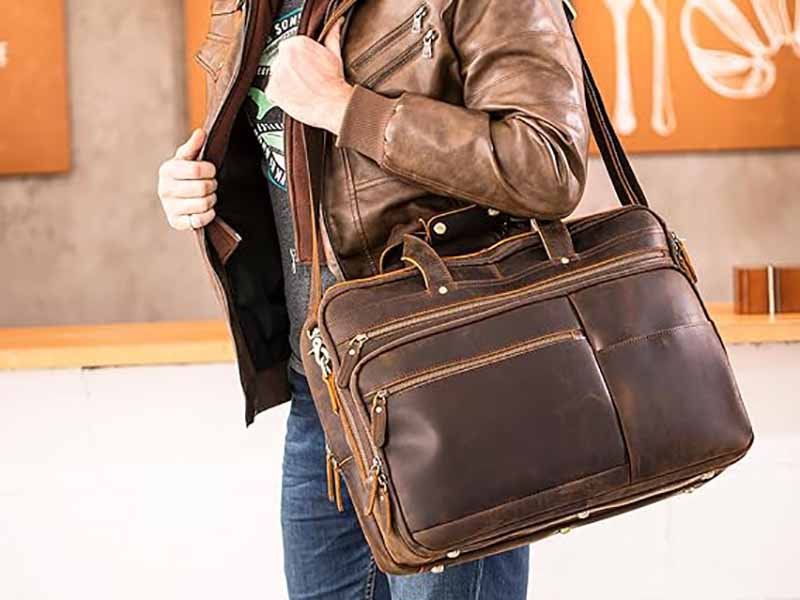
A leather bag can look excellent on the day it is packed, yet disappoint six months later when the corners soften too quickly, the surface scratches unevenly, or the body loses shape after regular use. In many of these cases, the problem is not the pattern, not the stitching, and not even the hardware. The real issue starts much earlier, with the leather choice itself. That is why the discussion around full grain leather and top grain leather matters so much in bag manufacturing. The difference is not only about status or wording on a product page. It affects structure, cutting yield, surface consistency, repair rate, pricing, customer expectation, and long-term product reputation.
Full grain leather keeps the original outer grain of the hide, so it usually delivers stronger fiber integrity, better wear performance, and a more natural aging effect. Top grain leather is lightly corrected on the surface to reduce visible marks, giving manufacturers a cleaner and more uniform look for larger production runs. For bag manufacturing, full grain leather is often chosen for durability and character, while top grain leather is often chosen for consistency, controlled appearance, and more flexible costing.
For product developers, sourcing teams, and leather goods brands, this is not a small technical detail. It is a commercial decision. A premium work bag, a heritage duffle, a fashion tote, and a smooth structured handbag may all require different leather strategies even if they are sold under the same label. At SzoneierLeather, after more than 18 years in leather product development and manufacturing, we have seen many projects succeed because the leather was matched correctly to the market, and we have also seen expensive revisions caused by choosing leather mainly by sample feel or initial price. Once you understand how these two leather types behave in real manufacturing, the decision becomes much clearer.
What Is Full Grain Leather for Bag Manufacturing?
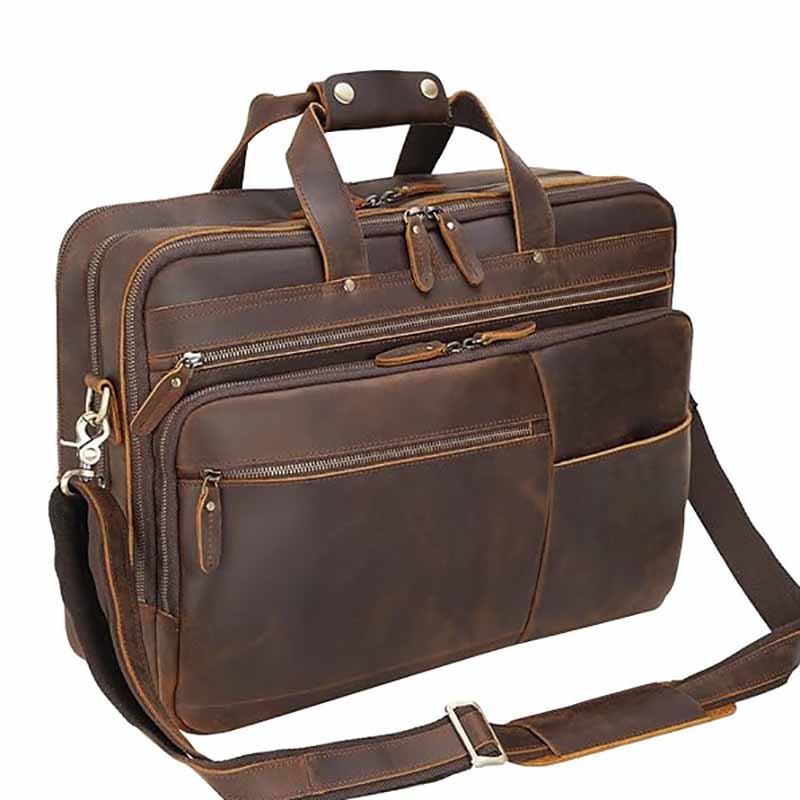
Full grain leather used in bag manufacturing refers to leather that keeps the original outer surface of the animal hide intact. Unlike corrected leather or heavily processed leather, the top grain layer of the hide is not sanded away. This means the leather retains the densest fiber structure, which is the part of the hide responsible for durability, strength, and long-term wear performance.
In practical bag production, this structural difference matters more than marketing language. The grain layer of the hide contains tightly packed collagen fibers. These fibers are naturally aligned to resist stretching and tearing because they were originally designed to protect the animal’s skin. When the grain layer remains intact, the leather maintains most of this natural strength.
For bag manufacturers, this translates into several tangible advantages. The material can handle heavier loads, maintain structural integrity over time, and tolerate repeated bending without breaking down quickly. Bags made from full grain leather are often expected to remain functional and visually appealing for many years of daily use.
Fiber Structure and Strength
The internal structure of leather determines how well it performs once it is turned into a bag. Full grain leather preserves the tightest and strongest section of the hide. When hides are split during leather processing, the outer grain layer contains the most compact fibers, while lower layers become progressively looser and less durable.
This difference becomes important in bag applications where the leather must support weight or maintain shape. Handles, strap attachments, bottom panels, and corner areas all experience mechanical stress. A leather with strong fiber density helps prevent stretching or deformation over time.
Manufacturers typically evaluate leather strength using several technical indicators:
| Performance Indicator | Typical Full Grain Leather Behavior |
|---|---|
| Tear strength | Very high resistance to tearing |
| Tensile strength | Handles heavy load without stretching |
| Flex resistance | Performs well under repeated bending |
| Edge durability | Holds structure when cut and painted |
| Shape retention | Maintains bag structure longer |
For example, a full grain leather tote bag designed to carry daily items such as laptops, books, and personal belongings may experience repeated loading of 5–10 kilograms. In these situations, leather with stronger fiber density helps the bag maintain its shape instead of sagging over time.
Natural Surface Characteristics
One defining characteristic of full grain leather is that the natural surface of the hide remains visible. Unlike corrected leather, the surface is not sanded to remove natural marks. Because of this, slight variations can appear on the leather surface.
Common natural characteristics include:
- small healed scars
- subtle wrinkles or growth lines
- slight grain variation
- natural pore patterns
These marks are not defects in the structural sense. They are part of the natural material and are often accepted by brands that want their products to communicate authenticity.
However, using full grain leather requires more careful selection during manufacturing. Not every part of a hide will meet the visual standards required for large bag panels. Factories must inspect hides carefully and allocate different sections for different parts of the bag.
A simplified hide grading process may include:
| Hide Section | Typical Use in Bag Manufacturing |
|---|---|
| Clean central area | Front and back panels |
| Moderate marks | Side panels or gussets |
| Edge sections | Straps or smaller components |
| Irregular sections | Accessories or small leather goods |
This careful allocation helps manufacturers maintain a consistent appearance while still preserving the natural grain surface.
Thickness and Structural Performance
Another important factor when using full grain leather for bag manufacturing is thickness. Leather thickness directly influences how rigid or flexible the final bag will feel.
Manufacturers usually select leather thickness based on the product category. If the leather is too thin, the bag may feel weak or collapse easily. If it is too thick, the bag may become overly heavy or difficult to sew.
Typical thickness ranges used in leather bags include:
| Bag Category | Recommended Full Grain Leather Thickness |
|---|---|
| Fashion handbags | 1.2 – 1.5 mm |
| Structured handbags | 1.4 – 1.8 mm |
| Tote bags | 1.6 – 2.0 mm |
| Travel duffle bags | 1.8 – 2.2 mm |
| Small leather accessories | 1.0 – 1.3 mm |
In some bag designs, manufacturers combine full grain leather with reinforcement materials such as lining fabrics, foam structures, or internal stiffeners. This allows the bag to maintain shape while still keeping a comfortable weight.
Factories with experience in leather bag engineering usually evaluate leather thickness together with the bag pattern. For example, the same leather thickness that works well for a tote bag may be too stiff for a soft shoulder bag.
Cutting Yield and Material Efficiency
Full grain leather often requires stricter hide selection, which can affect cutting efficiency during production. Because the natural surface is preserved, manufacturers must avoid areas of the hide that contain visible marks if those marks do not fit the design.
This reduces the usable cutting area compared with corrected leather.
Typical cutting yield comparison:
| Leather Type | Average Usable Area From One Hide |
|---|---|
| Full grain leather | 60–75% |
| Top grain leather | 70–85% |
The difference may appear small at first glance, but it has a noticeable effect when producing large quantities of bags. If a factory is producing 1,000 leather tote bags, even a 10% difference in usable material can significantly change the total leather cost.
For this reason, manufacturers must carefully plan cutting layouts and panel placement when working with full grain leather.
Aging Behavior and Patina Development
One of the reasons many brands choose full grain leather is its aging behavior. Over time, the leather develops a natural patina. Patina refers to the gradual change in color depth and surface character caused by exposure to light, air, and daily handling.
Instead of looking worn out, well-maintained full grain leather often develops a richer appearance after months or years of use.
This aging behavior is particularly appreciated in products such as:
- premium work bags
- leather briefcases
- travel duffle bags
- heritage-style tote bags
For customers who value craftsmanship and long-term durability, the aging process becomes part of the product experience.
However, brands should also understand that patina development means the bag will not look identical to the day it was purchased. Some customers enjoy this evolution, while others prefer a more stable appearance. Material choice should therefore reflect the expectations of the target market.
When Brands Choose Full Grain Leather
In real leather product development, brands often choose full grain leather when the following goals are important:
| Product Goal | Why Full Grain Leather Is Chosen |
|---|---|
| Premium material positioning | Natural grain communicates authenticity |
| Long product lifespan | Strong fiber structure improves durability |
| Heritage style design | Natural leather appearance supports brand story |
| High-end retail pricing | Material quality justifies price level |
| Unique product character | Each bag develops individual aging pattern |
Factories like SzoneierLeather, which have long experience in leather product manufacturing, often guide clients through this decision during early development. By evaluating bag design, leather thickness, structure requirements, and expected retail positioning, manufacturers can recommend whether full grain leather is the most suitable material for the project.
Selecting the right leather early in development helps avoid costly revisions during sampling and ensures the final product performs well once it reaches customers.
What Is Top Grain Leather in Bag Manufacturing?
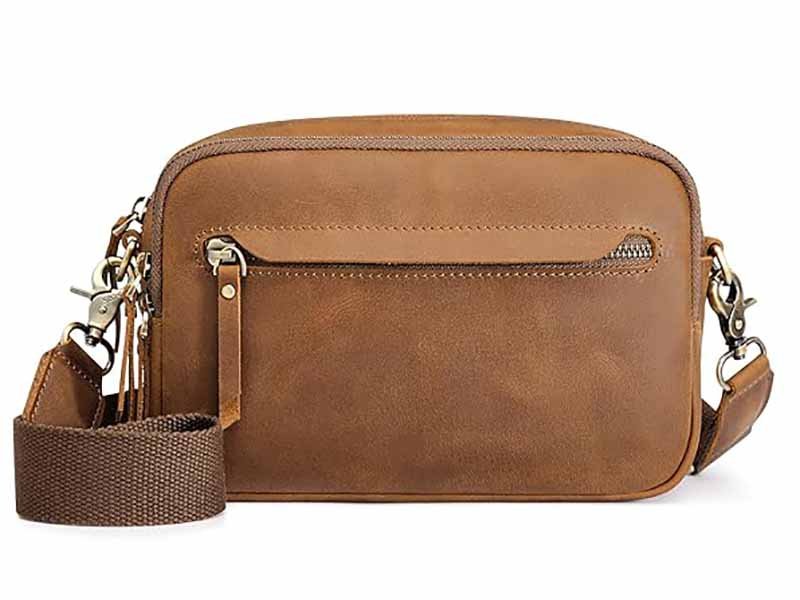
Top grain leather used in bag manufacturing refers to leather made from the upper layer of the hide where the surface has been lightly sanded or corrected to remove natural imperfections. This process keeps most of the strong fiber structure of the hide while allowing manufacturers to create a smoother, more uniform surface.
In real production environments, top grain leather is one of the most widely used materials for leather bags. It offers a balance between durability, appearance control, and production efficiency. While full grain leather keeps the entire natural surface intact, top grain leather undergoes controlled surface treatment so that the final material becomes easier to standardize across large production runs.
For brands developing handbags, backpacks, tote bags, or accessories, this balance is often very practical. The leather still comes from the strongest part of the hide, but the corrected surface makes it easier to achieve consistent color, grain pattern, and finish across hundreds or thousands of units.
How Top Grain Leather Is Produced
The production of top grain leather begins with the same upper portion of the animal hide used for full grain leather. After the hide is split to separate the strongest top layer from the lower layers, the leather surface is lightly buffed or sanded.
The purpose of this step is to remove small natural marks that may affect visual consistency, such as:
- healed scars
- insect bites
- uneven grain areas
- wrinkles caused by natural skin movement
Once the surface is corrected, manufacturers apply finishing layers that enhance appearance and durability. These finishing treatments can include pigmentation, protective coatings, and surface embossing.
A simplified production process looks like this:
| Processing Step | Purpose |
|---|---|
| Hide splitting | Separates the strong top layer from lower layers |
| Surface sanding | Removes natural marks and uneven grain |
| Dyeing | Provides base color |
| Pigment coating | Improves color consistency |
| Protective finish | Adds scratch and stain resistance |
| Embossing (optional) | Creates uniform grain pattern |
This process allows manufacturers to transform raw hides into leather that looks cleaner and more consistent when assembled into bags.
Surface Consistency and Appearance Control
One of the main reasons top grain leather is widely used in bag manufacturing is its ability to maintain consistent appearance across production batches. For brands selling leather bags in retail stores or online platforms, visual uniformity is important because customers expect products to look similar to the images they see in catalogs or product listings.
With full grain leather, natural variations may appear between different bags. Top grain leather reduces these variations by correcting the surface before finishing.
This creates several practical advantages during production:
| Appearance Factor | Top Grain Leather Performance |
|---|---|
| Surface smoothness | High |
| Color consistency | High |
| Grain pattern uniformity | High |
| Visibility of natural marks | Very low |
| Finish stability | Strong |
For example, if a brand launches a handbag collection in several colors such as black, tan, burgundy, and navy, top grain leather allows the manufacturer to maintain consistent surface appearance across all color variations. This helps ensure that the final products meet the brand’s visual standards.
Leather Thickness and Flexibility
Top grain leather is available in a wide range of thickness levels depending on the intended bag type. Because the surface has been corrected and finished, the leather can be engineered to achieve specific flexibility and softness levels.
For bag manufacturing, choosing the correct thickness is important for balancing durability and comfort.
Typical thickness ranges include:
| Bag Category | Typical Top Grain Leather Thickness |
|---|---|
| Fashion handbags | 1.1 – 1.4 mm |
| Crossbody bags | 1.2 – 1.5 mm |
| Tote bags | 1.4 – 1.7 mm |
| Leather backpacks | 1.5 – 1.8 mm |
| Laptop bags | 1.6 – 1.9 mm |
Compared with some full grain leathers, top grain leather can sometimes feel slightly softer because the finishing process allows manufacturers to control flexibility more precisely.
This flexibility makes it suitable for many modern bag designs where comfort and lightweight construction are important.
Durability and Everyday Performance
Although the surface has been corrected, top grain leather still retains most of the structural strength of the hide. For everyday bags, this level of durability is usually more than sufficient.
The finishing layers applied during production also provide practical benefits. Protective coatings help the leather resist scratches, stains, and moisture exposure better than many untreated leathers.
This makes top grain leather particularly suitable for customers who want a leather bag that remains neat and easy to maintain during daily use.
Typical performance characteristics include:
| Performance Feature | Top Grain Leather Behavior |
|---|---|
| Scratch resistance | Moderate to high |
| Surface stain resistance | Good |
| Color stability | Strong |
| Flex durability | Good |
| Maintenance difficulty | Low to moderate |
For example, many commuter bags, laptop bags, and daily-use handbags are made from top grain leather because the surface finish protects the leather from everyday wear.
Production Efficiency and Cutting Yield
Another important advantage of top grain leather in bag manufacturing is higher cutting efficiency. Because the surface has been corrected, manufacturers can use more of each hide during cutting.
When producing bags, factories must place pattern pieces onto leather hides in a way that avoids defects. With full grain leather, some hide areas cannot be used for visible panels if natural marks are too noticeable.
Top grain leather reduces this limitation.
Typical material utilization comparisons look like this:
| Leather Type | Average Cutting Yield |
|---|---|
| Full grain leather | 60 – 75% usable area |
| Top grain leather | 70 – 85% usable area |
This higher usable area can significantly improve production efficiency, especially for larger orders.
For example, if a factory is producing 2,000 leather tote bags and each bag requires approximately 0.7 square meters of leather, even a small difference in cutting yield can reduce material waste and lower the total cost.
Because leather is often the most expensive component in bag manufacturing, improving material utilization is an important factor for brands trying to maintain competitive pricing.
When Brands Choose Top Grain Leather
Many leather brands choose top grain leather when they want to balance appearance control, durability, and cost efficiency.
Top grain leather is particularly suitable for the following types of products:
| Product Category | Why Top Grain Leather Works Well |
|---|---|
| Fashion handbags | Smooth surface supports modern designs |
| Crossbody bags | Lightweight and flexible |
| Structured handbags | Uniform finish across panels |
| Retail collections | Consistent appearance in large batches |
| Private label bags | Reliable production efficiency |
For fashion brands that release seasonal collections, the ability to reproduce the same color and texture across multiple production runs is especially valuable.
Factories with experience in leather product development, such as SzoneierLeather, often recommend top grain leather for projects where visual consistency and stable production costs are important.
During early product development, manufacturers usually provide several leather samples with different finishes so brands can compare texture, softness, and durability before confirming the final material choice.
Choosing the appropriate leather type during the sampling stage helps ensure the final bag meets both design expectations and long-term performance requirements.
Full Grain vs Top Grain Leather: What Are the Differences?
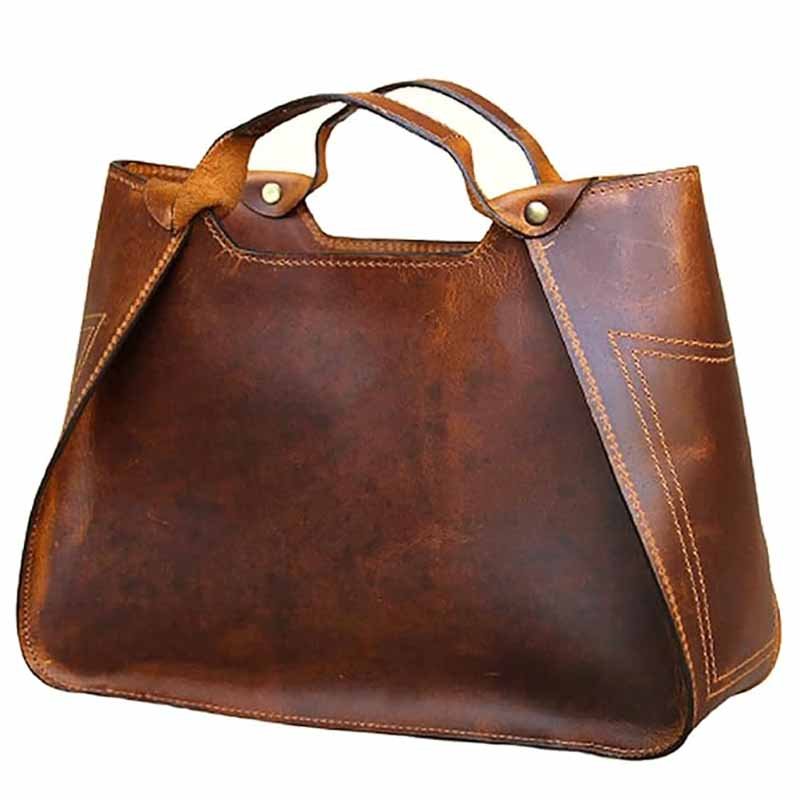
Full grain leather and top grain leather both belong to the upper portion of the hide, which means they are both considered high-quality materials in leather goods manufacturing. However, the difference between them lies in how much of the natural grain surface is preserved and how the leather is processed afterward.
For bag manufacturers, these differences affect not only the appearance of the product, but also cutting yield, durability, aging behavior, cost structure, and production consistency. Understanding these differences helps brands avoid choosing materials based only on sample feel or price per square foot.
Which Leather Is Stronger for Bag Manufacturing?
When evaluating strength in leather bags, manufacturers normally look at several performance factors rather than a single metric. These include tear resistance, tensile strength, flex endurance, and the ability of the leather to maintain structural stability under repeated load.
Full grain leather generally performs better in these areas because the grain layer remains untouched. This outer layer contains the most compact fiber network in the hide. When this layer stays intact, the leather retains its natural strength and resistance to stretching.
Top grain leather, by contrast, has its surface lightly sanded or buffed. While this process removes imperfections and improves appearance consistency, it also slightly reduces the density of the outermost fibers. The leather remains strong, but it may not perform exactly the same as fully preserved grain leather.
A practical comparison used in bag manufacturing looks like this:
| Performance Factor | Full Grain Leather | Top Grain Leather |
|---|---|---|
| Tear resistance | Very high | High |
| Fiber density | Maximum | Slightly reduced |
| Resistance to stretching | Strong | Moderate to strong |
| Long-term structure retention | Excellent | Good |
| Flex durability | Excellent | Good |
For bags designed to carry weight—such as travel duffle bags, work briefcases, or large leather totes—manufacturers often recommend full grain leather because its fiber structure tolerates repeated stress better.
However, strength alone does not always determine the final choice. A leather bag must also meet visual expectations, price targets, and production scale. That is why many brands still choose top grain leather for certain product categories.
Which Leather Looks Better on Bags?
The appearance difference between full grain leather and top grain leather is usually the first thing a designer or brand owner notices.
Full grain leather has a natural grain pattern that reflects the original skin structure of the animal. Because the surface is not sanded, small variations remain visible. These can include subtle wrinkles, healed marks, or irregular grain patterns.
Many premium leather enthusiasts appreciate these characteristics because they show the authenticity of the material. Each bag becomes slightly different, which adds individuality to the product.
Top grain leather, on the other hand, offers a more uniform surface. After sanding and finishing, the leather appears smoother and more controlled. This makes it easier to produce multiple bags that look almost identical.
From a retail perspective, visual consistency often matters more than natural variation. A fashion brand selling the same handbag style in several stores usually prefers every unit to look nearly the same.
The difference in appearance can be summarized like this:
| Visual Feature | Full Grain Leather | Top Grain Leather |
|---|---|---|
| Natural grain texture | Strong | Moderate |
| Surface uniformity | Moderate | High |
| Visible natural marks | Possible | Rare |
| Color consistency | Moderate | High |
| Luxury heritage look | Strong | Moderate |
| Modern smooth look | Moderate | Strong |
For many contemporary handbag collections, designers choose top grain leather because it provides a cleaner aesthetic that matches modern minimal design.
Which Leather Ages Better Over Time?
One of the most noticeable long-term differences between full grain and top grain leather appears after months or years of use.
Full grain leather develops what is often called a patina, a gradual change in color depth and surface character caused by exposure to sunlight, oils from the skin, and daily handling. Instead of looking worn out, the leather develops a richer tone and a slightly glossy surface.
Many heritage leather brands intentionally highlight this aging behavior as part of their product story. Customers buying premium leather bags often expect the bag to look better with age.
Top grain leather behaves differently because the surface has been finished and sealed. Protective coatings reduce the natural aging effect. The bag usually keeps a more consistent color and texture over time.
This does not necessarily mean worse performance. Some customers actually prefer a bag that looks the same after long use rather than one that changes appearance.
A simplified aging comparison:
| Aging Behavior | Full Grain Leather | Top Grain Leather |
|---|---|---|
| Patina development | Strong | Limited |
| Color evolution | Gradual darkening | Stable |
| Surface character | Becomes richer | Remains uniform |
| Scratch blending | Often improves appearance | Scratches may remain visible |
When brands want their products to communicate craftsmanship and material authenticity, full grain leather often fits better. When brands want consistent appearance throughout the product’s life, top grain leather may be a better option.
Which Leather Costs More in Bag Manufacturing?
Cost differences between full grain leather and top grain leather depend on several manufacturing variables. The most important ones include hide quality, tanning method, finishing complexity, and cutting yield.
Full grain leather often costs more in bag manufacturing for two main reasons. First, higher-quality hides are required because natural marks cannot easily be hidden. Second, the cutting yield tends to be lower since manufacturers must avoid sections of the hide with obvious defects.
Top grain leather usually provides higher usable area because surface imperfections are corrected during processing. This allows factories to use more of each hide during production.
The cost impact can look like this:
| Cost Factor | Full Grain Leather | Top Grain Leather |
|---|---|---|
| Hide selection requirement | High | Moderate |
| Usable cutting yield | Lower | Higher |
| Surface finishing cost | Lower | Higher |
| Material price per square foot | Higher | Moderate |
| Production waste risk | Higher | Lower |
For example, if a hide costs the same at the raw material level but only 65% of the area is usable for full grain cutting, while 75–80% may be usable for top grain leather, the final material cost per bag will differ significantly.
This is one reason why many mid-range leather bag collections choose top grain leather. It helps maintain a competitive retail price while still offering strong material quality.
Which Leather Is Better for Different Bags?
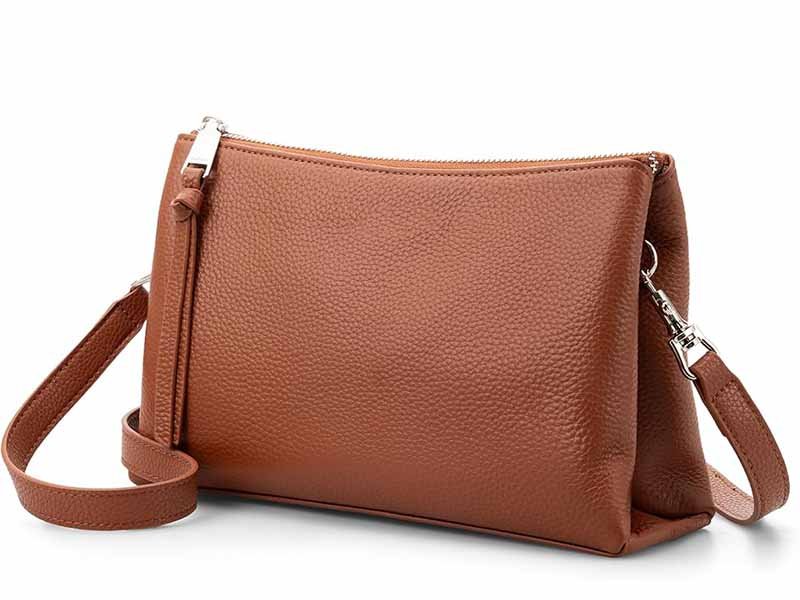
Choosing between full grain leather and top grain leather should never be based only on general reputation. The more useful question is: which leather performs best for the specific bag design and target market.
Different bag categories have different requirements in terms of structure, durability, aesthetics, and price positioning. Understanding these requirements helps brands choose materials more strategically.
Which Leather Is Best for Luxury Leather Bags?
Luxury leather bags often prioritize material authenticity and long-term durability. Customers purchasing premium products expect a strong tactile experience when they touch the leather and an aging effect that reflects real leather craftsmanship.
For these reasons, full grain leather is commonly used in luxury bags such as:
- executive briefcases
- premium travel bags
- heritage-style tote bags
- classic leather backpacks
These products often use thicker leather, sometimes in the range of 1.4 mm to 2.0 mm, depending on the design structure.
The benefits of using full grain leather in luxury products include:
| Luxury Product Requirement | Why Full Grain Leather Works |
|---|---|
| Authentic material story | Natural grain appearance |
| Durability expectation | Strong fiber structure |
| Aging effect | Patina development |
| Premium pricing justification | Visible material quality |
However, luxury fashion houses sometimes choose top grain leather for highly structured handbags where visual precision matters more than natural grain expression.
Which Leather Works for Fashion Bags?
Fashion handbags often emphasize color consistency, shape precision, and seasonal design updates. For these products, top grain leather usually offers the best balance between appearance and manufacturing control.
Because the surface can be corrected and finished, top grain leather allows manufacturers to achieve:
- smooth surface textures
- consistent colors across production batches
- embossed patterns or grain effects
- easier integration with modern bag designs
Fashion brands launching large seasonal collections benefit from this consistency.
Typical fashion bag categories using top grain leather include:
- structured handbags
- crossbody bags
- shoulder bags
- contemporary tote bags
In these products, surface finish often plays a bigger role in the visual appeal than natural grain authenticity.
Which Leather Is Better for Durable Everyday Bags?
Everyday bags—such as work totes, commuter backpacks, and travel accessories—require a balance between durability and usability. Customers expect these bags to handle daily wear without becoming fragile or uncomfortable.
Both full grain and top grain leather can work well in this category depending on the design.
Full grain leather works well when the bag needs stronger structure and long-term durability. For example, a heavy-duty leather tote used for commuting or business travel may benefit from full grain leather because it handles weight well.
Top grain leather may be preferred when the bag needs a softer feel, lighter weight, or more controlled appearance. Many urban commuter bags use top grain leather because it combines durability with a smoother surface.
Do Brands Choose Full Grain or Top Grain Leather?
In real product development, most brands do not rely exclusively on one leather type. Instead, they build collections that combine different materials depending on product positioning.
A typical strategy used by leather brands might look like this:
| Product Line | Leather Choice |
|---|---|
| Heritage collection | Full grain leather |
| Fashion seasonal collection | Top grain leather |
| Travel products | Full grain leather |
| Lightweight handbags | Top grain leather |
| Corporate gifts | Top grain leather |
| Premium limited editions | Full grain leather |
This strategy allows brands to balance durability, appearance, and price across their product range.
Factories with strong development capability, such as SzoneierLeather, often assist brands during the early design stage to determine which leather type fits each product concept. By evaluating leather thickness, surface finish, structural reinforcement, and expected retail positioning, manufacturers can help brands select materials that support both design vision and production efficiency.
How Do Manufacturers Choose Leather for Bags?
Choosing leather for bag manufacturing is not simply a matter of selecting a material sample that feels good in the hand. Professional factories evaluate leather from several technical and commercial perspectives before recommending it for a product line. These include structural performance, production efficiency, surface behavior, long-term durability, and cost stability.
Experienced manufacturers normally consider the following factors during leather selection:
- bag structure and weight capacity
- target retail price
- leather thickness and temper
- production scale and consistency
- cutting yield and material efficiency
- long-term wear expectations
For brands developing leather products, understanding how factories evaluate leather can significantly reduce sampling cycles and prevent costly material revisions later in production.
How Do Factories Test Full Grain Leather for Bags?
When full grain leather is used for bag manufacturing, factories normally conduct several evaluations before approving it for bulk production. These tests help confirm whether the leather will perform reliably during cutting, stitching, and long-term use.
One of the first steps is fiber strength evaluation. Leather technicians examine how tightly the fibers are packed and whether the grain layer remains stable under bending. This can be checked through manual flex testing or mechanical stress testing. If the leather shows early cracking or loose grain after repeated bending, it may not be suitable for bags that require durability.
Another important step is thickness consistency inspection. Leather hides rarely maintain perfectly uniform thickness across their entire surface. A bag manufacturer must check whether the leather thickness falls within the acceptable range for the product design.
Typical thickness ranges used in bag manufacturing include:
| Bag Type | Recommended Leather Thickness |
|---|---|
| Fashion handbags | 1.2 – 1.5 mm |
| Structured handbags | 1.4 – 1.8 mm |
| Tote bags | 1.6 – 2.0 mm |
| Travel duffle bags | 1.8 – 2.2 mm |
| Small leather goods | 0.9 – 1.3 mm |
Factories also evaluate surface stretch behavior. Because full grain leather retains its natural fiber structure, it may stretch slightly differently across different areas of the hide. Manufacturers test how the leather reacts when used in curved panels, straps, and gussets to ensure the bag maintains shape during use.
Finally, factories conduct color and finishing stability tests. Even if the leather is natural full grain, finishing layers may still be applied. The leather must maintain color stability during exposure to friction, moisture, and light.
These evaluations ensure that the final bag performs reliably for customers over time.
How Do Manufacturers Evaluate Top Grain Leather?
When evaluating top grain leather, manufacturers focus more heavily on surface consistency and finishing stability. Because top grain leather is processed to create a smoother appearance, the finishing layer becomes an important factor in product quality.
One of the first inspections involves checking surface uniformity across multiple hides. If the leather will be used in large production runs, the grain pattern, color shade, and texture must remain consistent between batches.
Factories often compare multiple hides side by side to ensure that the leather will produce bags that look uniform after assembly.
Another important test involves finish durability. Top grain leather usually includes protective coatings that help resist scratches and stains. These coatings must be tested through abrasion testing and rubbing tests to ensure the surface finish does not wear off too quickly.
A common performance test used by leather manufacturers is the dry and wet rub test, which measures how well the finish resists color transfer.
A simplified evaluation framework may include:
| Test Category | Purpose |
|---|---|
| Color consistency | Ensure uniform appearance across production |
| Surface scratch resistance | Evaluate finish durability |
| Abrasion resistance | Confirm surface coating strength |
| Adhesion testing | Ensure finish layers do not peel |
| Flex resistance | Prevent cracking during bending |
Factories also evaluate grain embossing stability if the leather has a textured pattern. If the embossing fades during normal bending, the bag may lose its intended appearance over time.
These evaluations help ensure that top grain leather bags maintain their polished appearance during everyday use.
What Should Brands Know Before Choosing Leather?
Brands developing leather bags often focus on design aesthetics first. While appearance is important, selecting the right leather requires a broader understanding of how the material interacts with the bag’s structure, usage conditions, and price positioning.
One key factor is product positioning. A luxury leather briefcase targeting professionals may justify the higher material cost of full grain leather because durability and aging character contribute to perceived value. A fashion handbag designed for seasonal retail may benefit more from the visual consistency of top grain leather.
Another factor is production volume. Smaller production runs can accommodate greater natural variation in leather surfaces. Larger production programs often require tighter consistency across hundreds or thousands of units.
Brands should also consider customer expectations for aging behavior. Some customers enjoy seeing their leather bags develop patina and character over time. Others prefer a bag that maintains its original appearance.
The following table summarizes how brands often evaluate leather choices:
| Brand Consideration | Full Grain Leather Advantage | Top Grain Leather Advantage |
|---|---|---|
| Authentic material feel | Strong | Moderate |
| Surface uniformity | Moderate | Strong |
| Aging character | Strong | Moderate |
| Production consistency | Moderate | Strong |
| Cost efficiency | Moderate | Strong |
| Long-term durability | Strong | Good |
Understanding these factors allows brands to select leather that aligns with their design philosophy and market strategy.
How Does SzoneierLeather Develop Leather Bags?
Developing a leather bag involves much more than choosing between full grain and top grain leather. A professional manufacturing partner must integrate material selection with pattern engineering, structural reinforcement, hardware compatibility, and quality control.
At SzoneierLeather, the leather development process typically follows several stages to ensure each project moves efficiently from concept to production.
The first stage involves product concept analysis. Our development team studies the intended bag design, expected retail positioning, and customer usage scenarios. This helps determine which leather type and thickness range will perform best.
The second stage involves material sampling and testing. Multiple leather options may be tested to evaluate appearance, flexibility, weight, and structure compatibility with the bag design.
The third stage focuses on prototype sampling. During this stage, sample bags are produced to verify how the leather behaves when stitched, folded, reinforced, and assembled with hardware components.
A simplified development framework looks like this:
| Development Stage | Key Purpose |
|---|---|
| Concept evaluation | Understand product goals |
| Leather selection | Match material to bag structure |
| Material testing | Evaluate durability and appearance |
| Sample development | Validate design and construction |
| Production planning | Optimize cutting yield and efficiency |
| Quality inspection | Ensure consistent final products |
Because SzoneierLeather has an integrated supply chain for leather materials, product design, sampling, manufacturing, and packaging, our clients can move from concept to finished product more efficiently. This integrated approach reduces communication delays and ensures that material decisions remain aligned with the final bag design.
Conclusion
Choosing between full grain leather and top grain leather is one of the most important decisions in leather bag manufacturing. Both materials belong to the highest section of the hide, yet they serve different purposes depending on the product design and market strategy.
Full grain leather offers unmatched authenticity, durability, and aging character. It is often used in heritage products, premium work bags, and luxury travel goods where the natural beauty of leather is part of the product identity.
Top grain leather provides a refined appearance, stronger surface consistency, and better scalability for larger production runs. It is widely used in fashion handbags, modern leather accessories, and retail collections where visual uniformity and controlled pricing are important.
Successful leather brands rarely rely on only one material. Instead, they select leather strategically for each product category, balancing durability, appearance, and production efficiency.
With more than 18 years of experience in leather product development and manufacturing, SzoneierLeather works with international brands, retailers, and growing private label businesses to develop high-quality leather bags, wallets, belts, straps, and accessories. Our integrated manufacturing system covers material sourcing, product design, sampling, production, packaging design, and quality inspection.
If you are planning to develop a custom leather bag collection, our team can help you evaluate the most suitable leather materials for your products and guide you through the entire development process.
You are welcome to contact SzoneierLeather to discuss your design ideas, request leather samples, or receive a quotation for your custom leather products.


